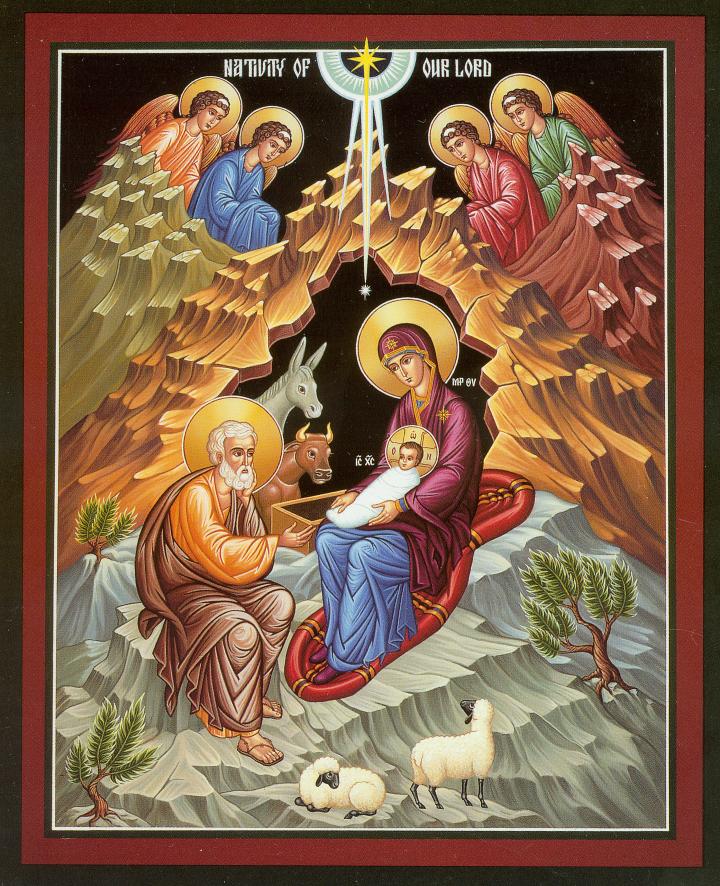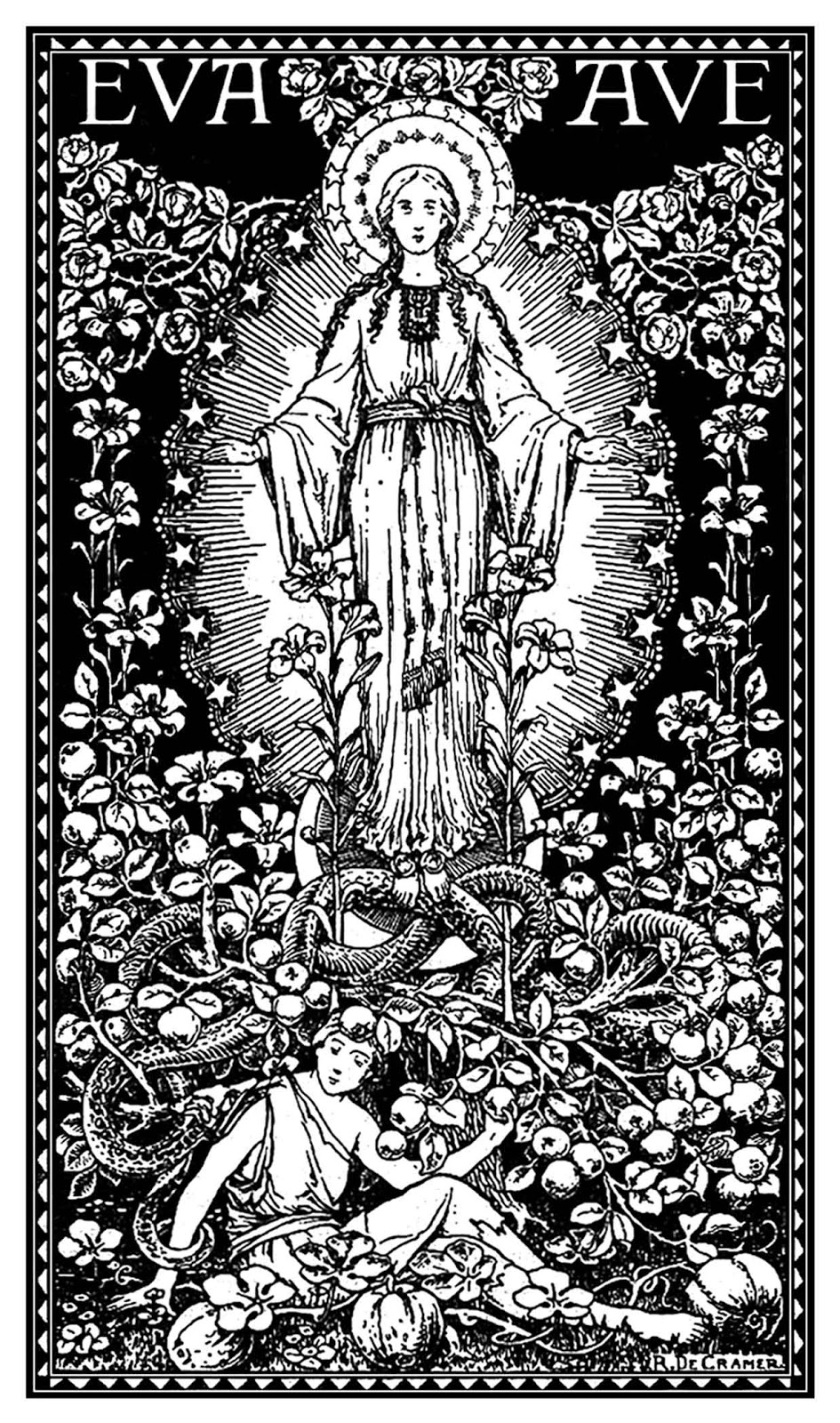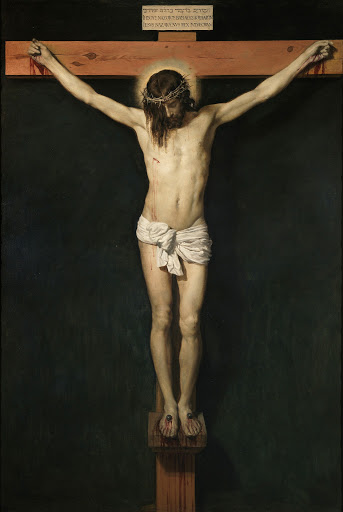
Easter V – Love another as I have loved you

God does not love us because we are lovely or loveable ; His love exists not on account of our character, but on account of His. Our highest experience is responsive not initiative. And it is only because we are loved by Him that we are loveable.

Fulton Sheen Rejoice 1984:9

In this morning’s Gospel we begin to see a change in the character of our celebration of Easter, as it begins to look forward to our celebration of the Lord’s Ascension, when He will return to the glory of Heaven and the bosom of the Father, when he will no longer be visibly present among us as he was before, but is also not absent. Before he goes, he gives his disciples teaching which is clear and simple: ‘I give you a new commandment, that you love one another. Just as I have loved you, you also should love one another. By this everyone will know that you are my disciples, if you have love for one another.

The Old Testament, the Hebrew Scriptures contain 613 commandments, starting with ‘Be fruitful and multiply’ in Genesis, including the Decalogue, the command to love God with all our heart, mind, and soul, to love our neighbour as ourselves. He has come not to abolish the law but to fulfil it, and love is the fulfilment of the law. As Jesus gives his disciples a new commandment he also enacts it Himself, He shows his love for humanity in dying for us, by bearing the burden of our sins, by going to death upon a Cross for love of us: this is what real love means and looks like in action. In this Christ establishes a pattern for Christians to live their lives by, as Christians, those who bear the name of Christ, we are to live like this too.

This is what following Christ means in practice: living and dying like Christ, together, so that by this all will know that we are his disciples, through love lived out in our lives we proclaim the reality and the truth of our faith. It’s something which we do together, and while it sounds easy in theory it is a bit harder in practice, and it is why we need to stay close to Christ in Word and Sacrament, to pray together, to support and forgive each other, so that we can live a life of love, not saccharin-sweet as the world sees it, but real, sacrificial love, the sort which has the power to transform the world so that it becomes more Christ-like.

These are not idealist pipe-dreams but the reason why we are Christians, we want to see a world transformed more and more into the likeness of Christ, into a place of peace, and joy, and love. Christ gives us this commandment so that we may have life and have it to the full, in and through Him, the source of all life and love. So as we continue to celebrate Christ’s triumph over sin and the world, over death itself, let us be filled with His life and joy, and share His love so that the world may believe and give glory to God the Father, God the Son, and God the Holy Spirit, to whom be ascribed as is most right and just all might, majesty, glory, dominion, and power, now, and forever.

Easter IV

In John’s Gospel, Jesus says of himself, ‘I am the Good Shepherd’  It discloses something important about who and what he is — he is one who tends, who looks after his sheep. The Jews in the Temple for Hanukkah don’t seem to have been listening. Jesus has told them and they do not believe that He is the Messiah. What he does in the Gospels testifies to who and what he is, the Word made flesh, God with us.

Those of us who are in the Church, through our Baptism belong to Him, we are His. So we are to listen to what Jesus tells us, in the words of Scripture and through prayer. Jesus knows us and we know him – in word and sacrament, through the outpouring of His grace, and so we follow Him, we do what He tells us to do, to love, to forgive each other, we are humble, we don’t think of ourselves as better than we are, we know our ned of, our dependance upon God. We put our faith into practice in our lives, so that it becomes a reality in the world.

Christ offers us eternal life, as we share in His death, so we too share in His Resurrection, and are assured of eternal life with Him, something wonderful and freely given, and a reason why we, as the Church, celebrate Easter in an extravagant and exuberant way, because it is a sign that God loves us, and saves us, that salvation first shown to the world by Noah , a man who trusts God, who listens to God, who obeys Him. We are sharing in that Eternal Life here and now, as we are nourished by Him, in Word and Sacrament, strengthened by Him, to live His risen life

We are to bear witness to our faith in the world so that it may believe. We are called to be witnesses regardless of the cost. We may not face persecution in this country; we are more likely to be faced with indifference, a coldness of heart, which denies the fact that what we are and what we say is important or has value. Yet we are to live lives which proclaim the fact that our life and death have meaning and value through Jesus Christ, who loves us, who died for us, and rose again so that we might have eternal life in him. It is a gift so precious that we have to share it, we cannot keep it for ourselves. In sharing it, it becomes a greater and more wonderful gift. In sharing it we are preparing for that moment seen by St John when all of creation will sing the praise of God, filled with his love, healed and restored by him.

We are preparing for that moment here and now preparing to be fed by him, to be fed with him, looking forward to that time when we and all creation will sing the praise of God the Father, God the Son, and God the Holy Spirit, to whom be ascribed as it most right and just, all might, majesty, glory, dominion, and power, now and forever.

Lent V

This morning’s Gospel asks us some serious questions: do we love Jesus this much? Would we risk being laughed at or criticised for our extravagance in being like Mary of Bethany and pouring ointment on Jesus?

How can we do this for Jesus in our lives? Can we really show him how much we love him, and how much we want to serve him? What might this look like in our lives, and how might we do it together as a Church, to proclaim God’s saving love to the world. As we begin Passiontide we look to the Cross that more radical costly act of generous love, the love of God for us. God does this for us, what are we going to do in return? Are we going to be like Judas and moan about the cost, the extravagance? Do we want to be a penny-pinching miserly church, or do we want to be something else, something which makes the world stop and take notice, which doesn’t make sense, which shows the world that there is another way, and it is the way of the Kingdom. God’s generosity gives his Son to die for us, he feeds us with His Body and Blood so that we might have life in Him. What are we going to do in return?

mary-anointing-jesus-feet-by-peter-paul-rubens

from Rhygyfarch’s Life of David

The holy Father David prescribed an austere system of monastic observance, requiring every monk to toil daily at manual labour and to lead a common life. So with unflagging zeal they work with hand and foot, they put the yoke to their own shoulders, and in their own holy hands, they bear the tools for labour in the fields. So by their own strength they procure every necessity for the community, while refusing possessions and detesting riches. They make no use of oxen for ploughing. Everyone is rich to himself and to the brethren, every man is his own ox. When the field work is done they return to the enclosure of the monastery, to pass their time till evening at reading, writing, or in prayer. Then when the signal is heard for evening prayer everyone leaves what he is at and in silence, without any idle conversation, they make their way to church. When, with heart and voice attuned, they have completed the psalmody, they remain on their knees until stars appearing in the heaven bring day to its close; yet when all have gone, the father remains there alone making his own private prayer for the well-being of the church.

Shedding daily abundance of tears, offering daily his sweet-scented sacrifice of praise, aglow with an intensity of love, he consecrated with pure hands the fitting oblation of the Lord’s body, and so, at the conclusion of the morning offices, attaining alone to the converse of angels. Then the whole day was spent undaunted and untired, in teaching, praying, on his knees, caring for the brethren, and for orphans and children, and widows, and everyone in need, for the weak and the sick, for travellers and in feeding many. The rest of this stern way of life would be profitable to imitate, but the shortness of this account forbids our entering upon it, but in every way his life was ordered in imitation of the monks of Egypt.

Lent III 

God does not love us because we are lovely or loveable; His love exists not on account of our character, but on account of His. Our highest experience is responsive, not initiative. And it is only because we are loved by Him that we are loveable.

Fulton Sheen Rejoice (1984) 9

There exists a great spiritual thirst both outside the church in the world around us and in the church itself. We are like people in the desert, not just in this period of 40 days but throughout our lives. The modern world is deeply consumerist: shopping centres replace cathedrals and yet we are still thirsty, thirsty for the living water, thirsty that our needs may be satisfied. We all of us realise, deep down, that commercialism cannot save us: that what we buy doesn’t really nourish or satisfy us. There can be no commercial exchange with God; we simply have to receive his gifts. We are not worthy of them are, that’s the point: God satisfies our deepest needs and desires out of love for us, wretched miserable sinners that we are, so that enfolded in his love we might become more lovely. Only if we are watered by God can we truly bear fruit, only if we are born again by water and the spirit in baptism can we have any hope. This is what the season of Lent is for: it is a time to prepare for baptism – to share in our Lord’s death and his new life. We do this as individuals and indeed as an institution, so that the church may be born again, renewed with living water, so that it may be poured out over all the world to satisfy the thirst which commercialism cannot.

In our second reading St Paul writes the church in Corinth to warn them to keep vigilant: the church can never be complacent. For us Lent is to be a time when we learn not to desire evil: we have to turn away from sexual immorality and idolatry. In the last couple of generations the laissez-faire attitude in the world around us has not empowered people, it is not made them happier, it has just given us a world of fornication and adultery, where people worship false gods: Reason, Consumerism, Fulfilment, Money and Power. The ways of the world will always leave humanity empty. It’s why the Gospels show Jesus living a radically different life, a life in all its fullness, which he offers to people: to turn their lives around, losing their lives to find true life in him. He suffers and dies for love of us, to heal us, and restore us, so that we may share in his life of love, nourished by his body and blood, strengthened by his word and sacraments, and to share this free gift of the world around us.

This morning’s gospel acts as a warning to us: that we are in danger if we continue to sin. We are, however, not simply condemned but offered another chance. The gardener gives a fig tree another chance. This is grace: the free gift of God, not something which we have earned, and only through God’s grace can we hope to bear fruit. The gardener, who created man in Paradise, who will offer himself as both priest and victim upon the tree of life, to bleed and die for love of us, this gardener will meet Mary Magdalene by the empty tomb on Easter day, so that we all humanity may share his risen life.

So let us turn away from the ways of the world, its emptiness, its false promises, its sexuality immorality, the ways of emptiness and death, to be nourished by the living water, which satisfies our deepest thirst, which makes us turn our lives around, so that we may live in him, who loves us, who heals us and who restores us. The world may not understand this, it may be scandalised by it, it will laugh at us and mock us, in the same way that it mocked our Lord on the way to Calvary and upon the cross. Let us share in his sufferings, knowing that we are loved by him who died for love of us. Let us live as a witness, to share in his work of drawing all humanity to him: so that all people may come to the living water and finds new life in God the Father, God the Son, and God the Holy Spirit, to whom be ascribed as is most right and just, all might, majesty, glory do-minion and power, now and forever

Lent II

It is easy to find Truth; it is hard to face it, and harder still to follow it.

Fulton Sheen Lift up your Heart, New York 1942: 106

Speaking the truth to power, speaking the uncomfortable word is a main aspect of the prophetic vocation, it is recognisable in Our Lord’s earthly ministry and throughout the history of the church. It is dangerous, and it can be costly but it is something which must be done.

 When we look at salvation history we cannot ignore Abraham, he believes in the Lord, and is reckoned as righteous: he trusts God and his relationship is sealed with a covenant, one which makes the Land of Israel the Promised Land to his descendants. There is a covenant, there is sacrifice, and this points to the cross, where God cuts a covenant with us in his Son’s death upon the Cross, the final demonstration of God’s love, which assures us of our heavenly homeland, Just as Abraham went from deep sleep and terrifying darkness to life in relationship with God, so we in the church have moved the darkness of sin and the terror of hell to new life in Christ.

 Our citizenship is in heaven, as St Paul writes to the Philippians. Heaven is our true and eternal home, where we can be with God forever. And as Christians we try to live lives which imitate the saints, one of the ways we learn is by copying, we’ve seen it, we’ve done it ourselves: it is normal and natural: we follow the example of others, which is why the choice of whom we should imitate matters. Paul writes this letter from prison, he’s seen people being tortured, and his belief in Christ will lead to his death, and yet he is happy, concerned for others more than himself, a wonderful example for us to follow. We don’t want to be like the enemies of Christ, people opposed to who and what Christ is and what he does. The world around us tends to show its enmity towards Christ more by indifference than persecution, we are ignored or patronised, but we can stand against this, together, in Christ, confident in the God who loves us. 

 In the Gospel we see Herod, a ruler who has killed John the Baptist for speaking against him, for standing up for morality which comes from God, turning his gaze towards Jesus. In the face of the threat of persecution Jesus stands up for who and what he is, and what he is doing, he is not intimidated as he has a job to do which speaks of God’s healing love, making the Kingdom of God a reality in people’s lives. Jesus sees Herod for what he is, a nothing and a nobody, a tyrant, interested in the spectacular He speaks a word over Jerusalem as a place which kills prophets, and in this he is looking towards his own death – he has to go away, so that he can come back. He prophesies that he will not return until people say ‘Blessed is he who comes in the name of the Lord’ he anticipates his entry on Palm Sunday. It makes it all the more amazing that Jesus can face the future in such a calm way, proclaiming the Love of God, and it should inspire us as we walk the journey of faith. In this our Lenten journey towards the Cross, and beyond, we travel with Christ, nourished by word and sacrament, knowing that to follow Christ is to share in His Passion, to take up our cross and follow Him, who is the Way, the Truth , and the Life. It involves standing up for truth, at the risk of persecution and death, and it is something which we do gladly because we can trust in a God who loves us, who heals us, who has made a covenant with us in the blood of His Son, Jesus Christ. We can have confidence that God loves us, and will never leave us, he is with us no matter what may come our way. It is a great comfort that we can travel on our pilgrimage of faith with one who will not leave us, or fail us, who knows our pain, who suffers and dies for love of us. So let us travel with Christ through Lent, through Life, knowing that we are living out our faith, and let us share that with others that the may believe and give glory to God the Father, God the Son, and God the Holy Spirit, to whom be ascribed as is most right and just, all might, majesty, glory dominion and power, now and forever.

A thought for the day from Leo the Great

O dearly beloved, let us therefore thank God the Father, through the Son, in the Holy Spirit. By means of the great love with which he loved us, he had mercy on us; and since we had died in sin, he gave us life back in Christ, so that in him we would be a new creation and a new work of his hands. Let us strip off the old man and his ways of action; and, given that  we have been admitted to participate I’m the family of Christ, let us renounce the the works of the flesh. Become aware, O Christian, of your dignity; and, having been made a participant in the divine nature, do not return to your prior baseness through behaviour unworthy of your family. Remember who your head is, and of whose body you are a member. Recall that you were stripped away from the power of the shadows and carried into the light of the Kingdom of God. The Sacrament of Baptism has made you a temple of the Holy Spirit: do not cause such a great guest to flee because e of your poor conduct; do not put yourself again into the slavery of the devil, for the price by which you were ransomed is the blood of Christ. he ransomed you out of mercy, but he will judge you in the truth of he who reigns with the Father and the Holy Spirit forever and ever. Amen.

Leo  Sermons 21:3

Impress this sign therefore upon your heart, therefore, and embrace this Cross to which we owe the salvation of our souls. It is indeed the Cross that has saved and converted the entire world, banished error, reestablished truth, made the earth into heaven, and made men into angels. Thanks to the Cross, demons have ceased to to be some cause for fear and have become detestable, and dying is longer death, but sleep. Through the Cross, everything that fought against us has been knocked to the ground and trampled over. So if someone asks you whether you adore the man who was crucified, respond with a clear voice and a joyful mien, ‘Yes I adore him, and I will never cease adoring him.’

John Chrysostom  Homilies on the Gospel of Matthew 54:4-5

First Sunday of Lent Year C

When St Antony was praying in his cell, a voice spoke to him, saying ‘Antony, you have not yet come to the measure of the tanner who is in Alexandria.’ When he heard this, the old man arose and took his stick and hurried to the city. When he had found the tanner …. he said to him, ‘Tell me about your work, for today I have left the desert and come here to see you.’

He replied, ‘I am not aware that I have done anything good. When I get up in the morning, before I sit down to work, I say that the whole of the city, small and great, will go into the Kingdom of God because of their good deeds while I will go into eternal punishment because of my evil deeds. Every evening I repeat the same words and believe them in my heart.’

When St Antony heard this he said, ‘My son, you sit in your own house and work well, and you have the peace of the Kingdom of God; but I spend all my time in solitude with no distractions, and I have not come near to the measure of such words.’

It is a very human failure, for far too often we make things far too complicated when all we need to do is to keep things simple. In the story from the Desert Fathers, which we have just heard, St Antony, the founder of monasticism, a great and a holy man, is put to shame by a man who spends his days treating animal skins. The key to it all is the tanner’s humility, his complete absence of pride, and his complete and utter trust in God – his reliance upon him alone.

In this morning’s Gospel we see Our Lord going into the desert for forty days. He goes to be alone with God, to pray and to fast, to prepare himself for the public ministry of the Proclamation of the Good News, the Gospel.

As he comes out of this he is tempted by the devil: he faces temptation just like every human being, but unlike us, he resists. The devil tempts him to turn stones into bread. It is understandable – he is hungry, but it is a temptation to be relevant, which the church seems to have given into completely: unless we what we are and what we do and say is relevant to people, they will ignore us. 

There is the temptation to have power, symbolised by worshipping the devil. It leads to the misuse of power. The church stands condemned for the mistakes of the past, but in recognising this there is the possibility of a more humble church in the future – reliant upon God and not on the exercise of power.

There is the temptation to put God to the test – to be spectacular and self-seeking. Whenever we say ‘look at me’ we’re not saying ‘look at God’.

Jesus resists these temptations because he is humble, because he has faith, and because he trusts in God. It certainly isn’t easy, but it is possible. It’s far easier when we do this together, as a community, which is why Lent matters for all of us. It’s a chance to become more obedient, and through that obedience to discover true freedom in God. It’s an obedience which is made manifest on the Cross – in laying down his life Jesus can give new life to the whole world. He isn’t spectacular – he dies like a common criminal. He has no power, he does not try to be relevant, he is loving and obedient and that is good enough.

It was enough for him, and it should be for us. As Christians we have Scripture and the teaching of the Church, filled with his Spirit, to guide us. We can use this time of prayer and fasting to deepen our faith, our trust, our understanding, and our obedience, to become more like Jesus, fed by his word and sacraments – to become more humble, more loving, living lives of service of God and each other, so that the world may believe and give glory to God the Father, God the Son, and God the Holy Spirit, to whom be ascribed as is most right and just, all might, majesty, glory dominion and power, now and forever

Homily for Sexagesima

The sum of all is that God the Lord of all, out of fervent love for his creation, handed over his own Son to death on the cross. ‘For God so loved the world that he gave his only-begotten Son for its sake.’ This was not because he could not have saved us in another way, but so that he might thereby the better indicate to us his surpassing love, so that, by the death of his only-begotten Son, he might bring us close to himself. Yes if he had anything more precious he would have given it to us so that our race might thereby be recovered. Because of his great love, he did not want to use compulsion on our freedom, although he would have been able to do so; but instead he chose that we should drawn near to him freely, by our own mind’s love.

St Isaac of Nineveh

Today the church celebrates Sexagesima, in recognition that we are about 60 days from Easter, it’s part of a countdown to Lent, a pre-Lent, which gets us in the mood for a season of fasting and penitence. I suspect that it has over the years raised a smile or a smirk from the first three letters of its name, derived for the Latin word for sixty rather than anything else. Though if you were someone who forms their opinion of the Church through the media you would be forgiven for thinking that it was the only thing that Christians think, talk or argue about. It has become a defining characteristic of how we are viewed by the world around us, and Christians can quite easily begin to believe that it is our sole ethical concern these days.

You may be glad to hear that I have no intention of launching into a diatribe against sexual immorality this evening, as it would be neither useful nor edifying. Instead, as we prepare to celebrate the feast of the Presentation of Christ in the Temple this week  It is a feast which sees both Simeon and Anna recognising who and what Christ is, and what he has done and will do, it looks back to Christmas and the wonder of the Incarnation, to the fact that God became human so that humanity might become divine, and looks forward to how this is achieved, once and for all by Christ’s sacrifice of himself upon the Cross. They recognise it and they proclaim it, to anyone who will listen, which reminds us that as Christians we to are to rejoice in these facts and to proclaim them to a world hungry for meaning, which longs for the transcendent, and for an alternative to the gratification of self, and material capitalist culture.

We need to proclaim by word and deed the saving love of God in Christ, through lives lived in ever closer union with him, or to quote the prophet Micah from this evening’s first lesson: ‘and what does the Lord require of you but to do justice, and to love kindness, and to walk humbly with your God?’ (Micah 6:8) To walk humbly is to know one’s need of God, of his forgiveness, his love, his mercy, and his grace, to ask him to heal our wounds, and forgive our sins. Humility is being close to the ground, from which we were created, not to see ourselves as other than we are, it is to know that we are wretched miserable sinners, whom God loves so much that he was born among us, and he lived and died and rose again for us, not because we are worthy, but so that through Him we might become so, through the transforming power of God’s love.

January is amongst other things a time for self-improvement, people diet and take up exercise, so when I hear the phrase  ‘your body is a temple’ I begin to shudder, perhaps because I’m overweight and unfit, and such phrases sound like the self-righteous and judgemental attitudes of fitness-obsessed, vegetarian teetotallers. Yet when Paul is talking to the church in Corinth he is not concerned with such matters, but rather that Christians, who make up the church, are people who have been baptised, so we have received the Holy Spirit, the indelible character of the sacrament of baptism. We are imbued with the virtues of faith, hope, and love, which we live out in the life of faith. We were bought at a price, namely the shedding of Christ’s blood on the Cross, and as the hymn puts it there is power, power, wonder-working power in the precious blood of the Lamb. It washes our souls clean, so that we can glorify God in our bodies by living lives of Christian virtue.

We will fail in our attempts to do this, but that’s where God’s love and forgiveness come in: it allows us to keep trying. We are never written off, providing that we do not despair of God’s amazing capacity to love, heal, and restore us. The world around us is not so kind, it is judgemental, it pays lip service to freedom, as the freedom to do whatever we please, reducing freedom to a physical rather than a moral power, whereas Christians are called to live in a servitude which is perfect freedom, God loves us and wills us to love him freely, and to live lives which glorify him, so that we can say with the Apostle Paul ‘it is no longer I who live, but Christ living in me’ (Gal 2:20)  We do this by walking humbly, by knowing our need of God, and relying upon him, and in his strength, a people forgiven and forgiving, who can truly offer this world an alternative to the ways of selfishness and sin, which we proclaim by lives lived in and through Christ, nourished by his word and sacraments, close to him in prayer, so let us do this together so that the world may believe and give glory to God the Father, God the Son, and God the Holy Spirit, to whom be ascribed as is most right and just, all might, majesty, glory, dominion and power, now and to the ages of ages.

The Fourth Sunday of Year C

The sum of all is that God the Lord of all, out of fervent love for his creation, handed over his own Son to death on the cross. ‘For God so loved the world that he gave his only-begotten Son for its sake.’ This was not because he could not have saved us in another way, but so that he might thereby the better indicate to us his surpassing love, so that, by the death of his only-begotten Son, he might bring us close to himself. Yes if he had anything more precious he would have given it to us so that our race might thereby be recovered. Because of his great love, he did not want to use compulsion on our freedom, although he would have been able to do so; but instead he chose that we should drawn near to him freely, by our own mind’s love.

St Isaac of Nineveh

Love along with forgiveness are at the heart of our faith, and they characterise our relationships both with each other and with God. The revelation of God in the person of Jesus Christ is the showing of God’s love, from the Annunciation, through the Incarnation, to His Death and Resurrection, there is not a moment which does not speak powerfully of love and forgiveness. Where Christ leads we should follow, he is the author and perfector of our faith. St Paul can speak to the Christians in Corinth of the centrality of love in the life of Christians. It shows how we are to live, to live in love, together. Christ shows us the cost and reality of self-giving love in His Death and Resurrection. This is the love we have to live in our lives: difficult, costly, and wonderful.

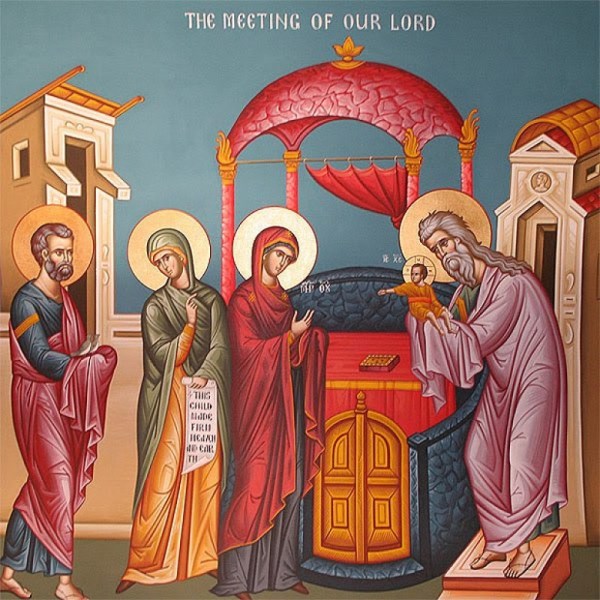
As the Church prepares to celebrate the Presentation of Christ in the Temple, also known as the Purification of the Blessed Virgin Mary and commonly called Candlemas, it is fair to say that nowadays we are not quite so used to ideas of ritual purity inherent in the Thanksgiving for a Woman after Childbirth, which used to be described as the Churching of Women. It feels strange and alien. The Holy Family go to the Temple to give thanks to God and to comply with the Law: they demonstrate obedience, they listen to what God says and do it – as such they are a model for all Christian families to follow.

When they go to the Temple the Holy Family encounter Simeon, a man of faith and holiness, devoted to God, and looking for the consolation of Israel, he knows that he will not die until he sees the Messiah, the Lord’s Anointed, and the Saviour of the World. As he takes the child Jesus in his arms he prays ‘Lord, now lettest thou thy servant depart in peace : according to thy word. For mine eyes have seen : thy salvation, Which thou hast prepared : before the face of all people; To be a light to lighten the Gentiles : and to be the glory of thy people Israel.’ The promise made to him by, revealed through His Holy Spirit has been fulfilled in the six-week-old infant in his arms. As Christ was made manifest to the Gentiles at Epiphany, so now His saving message is proclaimed, so that the world may know that its salvation has come in the person of Jesus Christ. Simeon speaks to Our Lord’s Mother of her Son’s future, and the pain she will endure. Before he dies Simeon is looking to the Cross, the means by which our salvation is wrought, the Cross at which Mary will stand to see humanity freed from its sin through the love and mercy of God, through grace, the free gift of God in Christ. So as Candlemas concludes our Celebration of Christmas, of the mystery of the Incarnation, so to it points to that which gives it its true meaning: the Death and Resurrection of Jesus Christ.

That is why we are here this morning, to be fed by Christ, to be fed with Christ, truly present in His Body and Blood, Soul and Divinity – God whom we can touch and taste. A God who shares His Divine Life with us, so that we can be transformed by Him, built up as living stones as a temple to His Glory, given a foretaste of Heaven here on Earth. This is our soul’s true food, the bread for the journey of faith, a re-presentation of the sacrifice which sets us free to live for Him, to live with Him, through Him and in Him.

The significance of what is happening is not just recognised by Simeon, but also by Anna, a holy woman, a woman of prayer, a woman who is close to God – she to recognises what God is doing in Christ, and she proclaims it, so that God’s redemption of His people may be known. Let us be like her, and let all of our lives, everything which we say, or think, or do, proclaim the saving truth of God’s love to the world. Let us burn, with that same love in our lives, in all that we say, and think, or do, so that the world may believe and give glory to God the Father, God the Son, and God the Holy Spirit, to whom be ascribed as is most right and just all might, majesty, glory, dominion, and power, now and forever.

Third Sunday of Year C ‘The Joy of the Lord is my Strength’

Every person is a precious mystery. An individual cannot be weighed by public opinion; he cannot be measured by his conditionings; he belongs to no-one but himself, and no creature in all the world can penetrate his mystery except the God who made him. The dignity of every person is beyond our reckoning.

Fulton J. Sheen Lift Up Your Heart

January is a time for many things: finding love, losing it, taking up a regime of exercise, of dieting, for turning away from the excess of Christmas, reacting against the short days, the wet and the cold. So at one level, when we hear in this morning’s Old Testament reading ‘Eat the fat and drink the sweet wine’ we could be quite concerned. But we are also told to ‘send portions to anyone who has nothing ready’ – to feast then in the Kingdom of God involves everyone eating. In a world where we produce more than enough food for all to eat and not go hungry, it is good that there is a campaign to put an end to Global Hunger, as this is what the Kingdom of God looks like in action, faith is not some private matter, but affects who and what we are, what we do, how we live our lives.

In St Paul’s First Letter to the Corinthians we see what it means to be the Church, the Body of Christ, through our common baptism. We may be different, but we all need one another, unity does not mean uniformity, after all. We are dependent on one another, in the church which is a place of unity in, through and with Christ. Looking back on this two thousand years later we can see the wounds which mar the Body of Christ  in our sin and division and also how they can be healed: in Christ, through Christ, through His saving death upon the Cross.

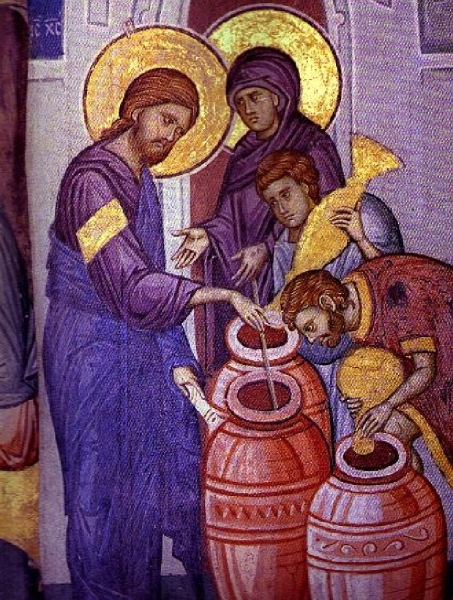
In the Gospels recently we have seen Our Lord baptised to sanctify the waters of baptism for the salvation of the human race, and as an act of loving obedience to the Father to show the world how to turn away from sin and how to be reconciled with God; we have seen the Kingdom of God come among us in the Wedding at Cana. It is a place of joy, which we cannot understand, just like the steward in the wedding feast  – the best wine has been kept for now, the new wine of the Kingdom, better than we have ever tasted, beyond our expectations and our efforts. We have seen in Our Lady’s word to the servants, ‘Do whatever He tells you’ that obedience is the key to new life in Christ, that same obedience which His mother recommends and shows, which Jesus Christ shows us, so that we might follow His example.

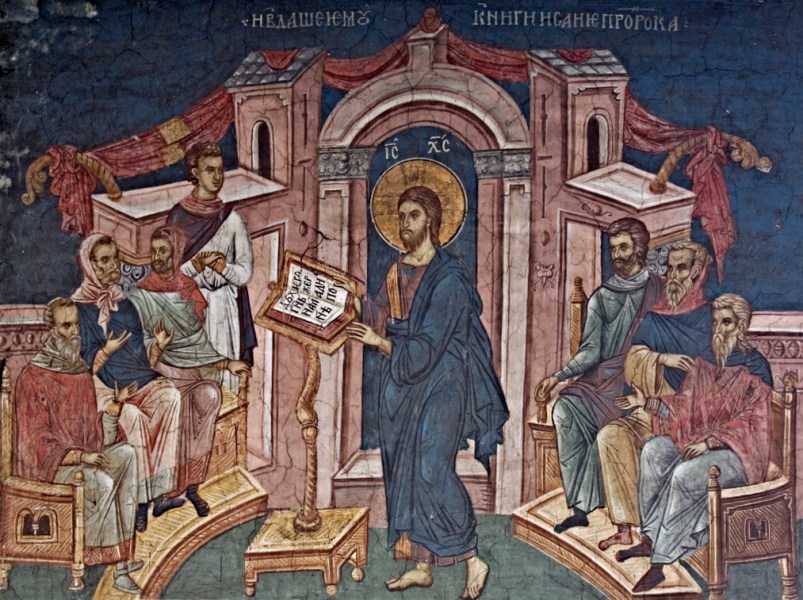
In this morning’s Gospel we Jesus back on home turf ‘full of the power of the Spirit’ teaching people, showing them the way, and being glorified by them – as they give to God what is due. When he comes to his home town and is given the scroll of the prophet Isaiah, he proclaims ‘good news to the poor’ ‘liberty to captives’ ‘new sight to the blind’ ‘freedom for the oppressed’ and ‘the year of the Lord’s favour’. He, the Word made Flesh is the fulfilment of the Word, of prophesy.

As He will say in the Sermon on the Mount ‘Blessed are the poor in spirit, for theirs is the Kingdom of God’. The good news of the Gospel is for those who know their need of God, their spiritual poverty. Those who are slaves to sin can find true freedom in Christ; it allows us to see the world with new eyes, where everyone is our brother and sister, where we can be one in Christ.

‘Today this Scripture has been fulfilled in your hearing’ we, here, today, have heard this among us, we have come to be fed with Word and Sacrament, to be fed by Christ, with Christ, to have new life in Him, and to share that new life with others, a new life and a freedom which the world cannot give. So let us be fed to have new life in him, to live that life and share it with others, for the joy of the Lord is our strength. It is our vocation as Christians to be filled with that joy and to share it with others

As Christians we are to live lives of joy and love in Christ, and through him, rejoicing in our new life in baptism, in the saving sacrifice of the Cross, in the hope of the Empty Tomb, in our unity in the Body of Christ, so that all creation may resound with the praise of God the Father, God the Son, and God the Holy Spirit, to whom be ascribed as is most right and just, all might, majesty, glory, dominion, and power, now and forever.

Homily for the Week of Prayer for Christian Unity: 1 Peter 2:9-10

Hold me worthy , O Lord, to behold your mercy in my soul before I depart from this world; may I be aware in myself at that hour of your comfort, along with those who have gone forth from this world in good hope. Open my heart, O my God, by your grace and purify me from any association with sin. Tread out in my heart the path of repentance, my God and my Lord, my hope and my boast, my strong refuge, by whom may my eyes be illumined, and may I have understanding of your truth, Lord. Hold me worthy, Lord, to taste the joy of the gift of repentance, by which the soul is separated from co-operating with sin and the will of flesh and blood. Hold me worthy, O Lord, to taste this state, wherein lies the gift of pure prayer. O my Saviour, may I attain to this wondrous transition at which the soul abandons this visible world, and at which new stirrings arise on our entering into the spiritual world and the experience of new perceptions.

St Isaac of Nineveh

The Apostle Peter is writing to a church which is undergoing persecution on account of their faith in Our Lord and Saviour, Jesus Christ. While you could argue that this is not happening to us here, now, openly, it does nonetheless happen to our brothers and sisters in Christ around the world who are called to bear witness to Christ regardless of the cost. If anything the persecution in this country is more to do with apathy, ignorance, and our dismissal from public discourse unless we are in agreement with popular whim or sentiment: such is the tyranny of secularism, which we must, as Christians resist, as we are called to conform the world to the will of God.

We are called to be a holy nation and a chosen race, not in exclusive ethnic terms, like the people of Israel, but rather because we are one in Christ, through our common baptism, having passed through that water greater than the Red Sea, which gives freedom to all the world: we can look beyond the simplistic divisions of the world to something greater, and far more wonderful, and while we are certainly not there yet, we are all nonetheless travelling on a journey towards unity, because it is the will of Our Lord and Saviour Jesus Christ, and his prayer to the Father in the garden of Gethsemane before his arrest in John 17.

Our highest allegiance then is not to the powers of this world, for we recognise a higher power, the King of Heaven and Earth, which is Christ. He makes us royal, he gives us entry into that greatest of palaces, that is heaven, through His Precious Blood which was shed to heal us and restore us, there is as the hymn puts it power, power, wonder-working power in the precious blood of the Lamb. It is through Christ’s priesthood, a priesthood of the new covenant in His Blood, after the order of Melchisedech, that the church continues a cultic priesthood to offer continually that one perfect and sufficient sacrifice for the sins of the whole world, so that the people of God may be made holy, by being fed with His Body and Blood so that our human nature may be transformed into his divine nature: Αὐτὸς γὰρ ἐνηνθρώπησεν, ἵνα ἡμεῖς θεοποιηθῶμεν· ‘He became human so that we might become divine’ Athanasius De Incarnatione Dei Verbi 54.3.

We are holy, set apart for God’s service and the proclamation of His Kingdom , proclaiming the saving acts of God in Christ, and calling the world to repent, to turn away from the ways of sin and self, and to believe and trust in a God who loves us and saves us. Christ calls us out of the darkness of sin, of the world into the glorious light of His Kingdom. This is the fulfilment of the prophesy of Hosea 1:6 and 1:9 Once we were no people, now we are God’s people (cf. Hosea 1:9 Call his name lo-ammi [not my people] 1:6 Call her name lo-ruhamah [who has not received mercy]) We are God’s people, God claims us for His own, through His Son, who shows us in His life, Death, and Resurrection exactly what mercy is: A God who suffers and dies for love of us, poor sinful humanity, that we might become something better, something greater. God sees that human sinfulness is such a problem that only an outpouring of Divine Love in the sacrifice of His Son can save us.

And having received mercy, love and forgiveness in Christ, we show it in our lives so that ours is a proclamation not only of words but of deeds, so that we play an active part in the reconciliation of the world to God in Christ. Mercy, with joy and peace are the fruit of charity: our love of God and our neighbour, we love because God loved us first, and as we show mercy, we shall receive mercy, we harvest what we sow.

As St Isaac says ‘Do not hate the sinner. Become a proclaimer of God’s grace, seeing that God provides for you even though you are unworthy. Although your debt to him is very great, there is no evidence of him exacting any payment from you, whereas in return for the small ways you do manifest good intention he rewards you abundantly. Do not speak of God as ‘just’, for his justice is not in evidence in his actions towards you. How can you call God just when you read the gospel lesson concerning the hiring of the workmen in the vineyard? How can someone call God just when he comes across the story of the prodigal son who frittered away all his belongings in riotous living — yet merely in response to his contrition his father ran and fell upon his neck, and gave authority over all his possession? In these passages it is not someone else speaking about God; had this been the case, we might have had doubts about God’s goodness. No it is God’s own Son who testifies about him in this way. Where then is this ‘justice’ in God, seeing that, although we were sinners, Christ died for us? If he is so compassionate in this, we have faith that he will not change.’

We show this love first in obedience, like Our Lord’s Mother, the Blessed Virgin Mary, as we heard in this morning’s Gospel in her words to the servants ‘Do whatever he tells you’ If we are obedient, like Mary, then model disciple and mother of the Church, the first and greatest Christian, then we can truly be salt and light to the world, proclaiming the Good News of the Kingdom.

The Good News is the announcement of God’s mercy, shown to us in Christ, in Him we see what God is really like, in Him we experience love, healing, forgiveness, reconciliation. Through Him we are healed and restored, we become God’s people, and proclaim God’s Kingdom, so that humanity may come to experience God’s love and mercy, and believe and give Glory to God the Father, God the Son, and God the Holy Spirit, to whom be ascribed as is most right and just, all might, majesty, glory, dominion, and power, now and unto the ages of ages.

The Wedding at Cana – The Second Sunday of Year C

In the marriage act, love is triune: wife gives self to husband and husband to self and out of that mutual self-giving is  born the ecstasy of love. The spirit too must have its ecstasy. What the union of husband and wife is in the order of the flesh, the union of the human and the Risen Christ is in Holy Communion

Fulton J. Sheen Those Mysterious Priests, 1974: 157

The Prophet Isaiah in this morning’s first reading looks forward to a a messianic future, a future which finds its fulfilment in the person of Jesus Christ. He uses the language of a wedding, between a man and a woman to express the joy between God and his people, Israel, and by extension, with the church, a new Israel and the fulfilment of prophesy. Though we live in a highly sexualised culture we can still find this imagery strange, and yet it speaks of deep love and joy: the kind which holds nothing back, the complete union, shown to us above all in the passion and death of Our Saviour Jesus Christ. As husband and wife are united in one flesh, we have come so that we may be fed, be fed by Christ, be fed with Christ, by the power of the Holy Spirit God is active in our lives, transforming us, by his grace, so that our human nature may be transformed, into His Divine nature.

If we were to listen to the many voices around us which criticise Christianity, we would think that we were of all people the most pitiable, ours is either a weak death-cult of a failed Jewish magician and wonderworker, or a strange oppressive force which actively works against human flourishing and actualisation.

Nothing could be further from the truth, as our vocation as Christians is JOY. The one whom we worship liked nothing better than to hang around at parties with social undesirables, and was accused of being a drunkard. Most of us have outside our houses one or two wheelie bins, which hold about 30 gallons, or 150 litres, or 200 bottles of wine. Multiply that by 6 and you’re looking at 1,200 bottles of wine, a hundred cases, and this after the wine ran out, what we’re dealing with in the wedding at Cana must have been some party, and it is only a foreshadowing of the joy of the Kingdom, it points to something greater than itself.

Our starting point as Christians is Mary’s advice to the servants: Do whatever He tells you. Our life is rooted in obedience: we listen to God and we obey, for our own good, and the good of the Kingdom, so that we are not conformed to the world and its ways, but rather to the will of God, so that we can truly enter into the joy of the Lord, in humble obedience, fed by Him, and fed with Him, who died for love of us in obedience to the will of the Father.

The world around us struggles somewhat with extravagance, and rightly so: when we see Arabian oil magnates riding around in gold-plated supercars we are right to be concerned, yet in the Gospel we see something strange. The steward had a point: you serve the best wine first, while people are sober and can appreciate it, but the Kingdom of God turns human values on their head – the joyous new wine of the Kingdom is finer than any human wine and is lavished upon undeserving humanity, so that it might transform us, so that we might come to share in the glory of God, and his very nature. Thus, at the Epiphany we celebrate three feasts: Our Lord’s manifestation to the Gentiles, the proclamation of the Messiah to the whole world, his baptism, to show us the way to the Father, a sign of love and obedience, and the Wedding Feast at Cana, as a sign of the superabundance of God’s love, shown to us here today in the Eucharist where we drink the wine of the Kingdom the Blood of Christ so that we may be transformed by the power and the grace of God, so that we may share his Divine life, and encourage others to enter into the joy of the Lord.

The Baptism of Christ

Though time is too precious to waste, it must never be thought that what was lost is irretrievable. Once the Divine is introduced, then comes the opportunity to make up for losses. God is the God of the second chance …. Being ‘born again’ means that all that went before is not held against us.

Fulton J. Sheen Peace of Soul

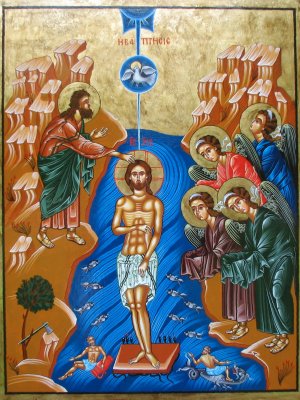
The Baptism of Our Lord in the River Jordan by John the Baptist, which we celebrate today, can leave us asking a question: if we are baptised to be born again by water and the Spirit, for our sins to be washed away, and to become part of the Body of Christ, the Church, why is Our Lord, who is without sin, being baptised. He does not need to be, but in being baptised shows us that God is not constrained by necessity. Christ does not need to be baptised, as we do, but does so to fulfil all righteousness and to sanctify the waters of baptism for those whom he would redeem., to show us the way to new life in him.

In Christ’s Baptism we see a God who walks with us, who is not a cold, remote figure; but who, for love of us, comes among us, and is one with us, and who shows us the way to his Father. Christ’s Baptism is an act of obedience to God the Father, an act of humility and of healing and restoration – the work of God in Christ, done for our sake, and the sake of all humanity. What began at the Annunciation, and was brought about at the Incarnation, and made manifest to the whole world at the Epiphany, is deepened: the world is invited to share in the saving love of God through baptism.

At the beginning of his public ministry, Jesus shows humanity the way to the Father, through himself. The world sees the generous love of God, which heals and restores us, from the darkness of the dungeon of sin and evil, to the light and life of the Kingdom of God. As our baptism is a sharing in the death and resurrection of Jesus, so his baptism points to the Cross, where streams of blood and water flow to cleanse and heal the world. We see the love of the Father, the power of the Spirit, and the obedience of Son, and all for us, who are so weak and foolish, and who need God’s love and healing, and forgiveness.

We need this, the whole world needs it, but is too proud to turn to a God of love, for fear of judgement, knowing that they deserve to be cut off forever, and yet it is exactly such people, such lost sheep that Our Lord comes to seek, whom he enfolds in his loving arms on the Cross, whom he washes in the waters of baptism, so that all may be a part of him, regardless of whom or what they are, and what they have done. Salvation is the free gift of God and open to all who turn to him.

In our suspicious modern world that gift is spurned and mocked, by those who feel that they can no longer trust the church, or denounce it is as hypocritical, an oppressor of one group or another. To which we can only reply with open doors, open arms, and open hearts – the church may be full of sinners and hypocrites and there’s always room for a few more! God in Christ is nothing if not generous, and so the Church, his body is called to the same generosity of spirit. With the open invitation comes a call to repentance, to a fundamental change of mind, which sees us turn away from sin to God.

Here is where I suspect it gets difficult for humanity, we know that sin is wrong, but we enjoy it, we can soothe our conscience with the fiction that something is not a sin: that it doesn’t hurt or harm us, we can even twist the Gospel to our own ends. But these will not do, because in them we say that we know better than God – the sin of pride, that primal sin which separates humanity from God. This was the problem Christ comes to fix, to heal and restore our nature, through his grace, to feed us with Word and Sacrament that we might share in the life and love of God.

We need to take to heart the words of advice written by St Paul to Titus and the Church in Crete: given that ‘the grace of God has appeared, bringing salvation for all people’ (Titus 2:11) the Church has to respond to that grace, that free gift of a loving God, by living in a certain way, the Church is there to train us to renounce, to turn our back on ‘ungodliness and worldly passions’ – using our lives and our bodies which fall short of what is expected of us. Notice the word ‘train’: it’s a process, very few people indeed can run a marathon without training; we need help and practice to turn our lives around together, as a community of faith. It takes time, and hard work and love, but it is something which we can do together – people will fail, but can be picked up, and helped to continue, that’s what healing and repentance are all about. It’s about saying ‘we can be better, we can do better together’ if we truly let the love of God into our hearts and turn away from the past and look forward to a future of hope and glory in Christ. So then, let us live out our faith and our baptism together, turning from sin to new life in Christ, and encourage others so to do, so that all creation may resound with the praise of God the Father, God the Son, and God the Holy Spirit, to whom be ascribed as is most right and just, all might, majesty, glory, dominion, and power, now and forever.

Fr Stanton on The Miracle of the Christian Faith


If there be not God, there is no miracle. If there be no miracle, there is no God, and this is the miracle of Christ crucified. They say, ‘You teach men the miracle of the Mass.’ We teach the miracle of Christ that He was born of the Virgin Mary by the power of the Holy Ghost for us men and our salvation. We teach the miracle that Christ died on Calvary for all men. For whom did Christ die? Christ died for sinners, and that is the miracle of Calvary. We teach the miracle of the Resurrection, that when Christ all shall rise again in His glorious Resurrection. We teach the miracle of the Ascension, that He who went up into Heaven shall so come again as we have seen Him go up. Our whole faith is miracle from the beginning to the end. It is all miracle. It is the miracle of God. And the greatest of all miracles to me is this: that I can say ‘He loved me and died for me.’ You cannot get any greater miracle than that. And so, dear brethren, death is swallowed up in victory, the sadness is swallowed up in the the gladness of God, and the agony in the peace of God, and the misery in the happiness of God. The redemption of Christ is infinite.

Father Stanton’s Last Sermons in S. Alban’s, Holborn, ed E.F. Russell, London, 1916, p. 295

A Thought from Fr Stanton: Never be ashamed of the Blood of Christ

Never you be ashamed of the Blood of Christ. I know it is not the popular religion of the day. They will call it mediævalism, but you know as well as possible that the whole Bible from cover to cover is incarminated, reddened with the Blood of Christ.

Never you be ashamed of the Blood of Christ. You are Blood-bought Christians. It is the song of the redeemed, of the saints, and of all Christians on earth—redeemed by His Blood. You never be ashamed of it. The uniform we Christians wear is scarlet. If you are ashamed of the uniform, for goodness’ sake, man, leave the service. Oh! never be ashamed of Christ! That is the song of the redeemed: ‘To Him be glory and praise for ever, Amen.’

And the second thing is this: Let us all remember that our religion is the religion of a personal Saviour. It is not a system of ethics, it is not a scheme of philosophy, it is not a conclusion of science, but it is personal love to a personal living Saviour—that is our religion! Why, when you can hear the voice of Christ off the altar to-day at Mass, ‘DO this in remembrance of Me.’ ‘You’ and ‘Me.’ He ‘Christ’—“me”—remembrance’—‘Don’t forget Me here at the Altar’ our Lord says to you—‘I will never forget you—don’t you ever forget Me.’ ‘Do this in remembrance of Me.’ It is a personal religion, by which we can say, ‘He loved me, and gave Himself for me’—‘The life which I now live in the flesh, I live by faith of the Son of God, who loved me and gave Himself for me.’ And then, in all your experiences, however deep they may be, when you enter into the shadow of death, and go through the agony of the dissolution of your body—you can say: ‘He loved me, and gave Himself for me.’ He loved me and washed me from my sins His Blood, to Him be glory and dominion and praise henceforth for ever, Amen.

Father Stanton’s Last Sermons in S. Alban’s, Holborn, ed E.F. Russell, London, 1916, pp. 312-3

Christmas II

We live in a world which is obsessed by time. The pace of modern life is quite different to that of a generation or two ago. Despite the advent of labour-saving devices and technology we seem if anything busier than ever as other things come along to fill our time – we can feel pressured, worried, and anxious. This isn’t good; we can’t help feeling that this isn’t how it is supposed to be. Thankfully God doesn’t work like this. The people of Israel have been waiting for a Messiah, for a Saviour to be born, who will save Israel from their sins, but it isn’t a case of birth on demand. As St Paul writes to the church in Ephesus ‘In him we have redemption through his blood, the forgiveness of our trespasses, according to the riches of his grace that he lavished on us. With all wisdom and insight he has made known to us the mystery of his will, according to his good pleasure that he set forth in Christ, as a plan for the fullness of time, to gather up all things in him, things in heaven and things on earth. In Christ we have also obtained an inheritance, having been destined according to the purpose of him who accomplishes all things according to his counsel and will, so that we, who were the first to set our hope on Christ, might live for the praise of his glory..’ God’s time is not our time, and the Incarnation happens not at a convenient time, but in the fullness of time – after the message has been proclaimed by the prophets, who prepare the way for the Saviour; after Mary has said ‘yes’ to God, a ‘yes’ which can undo the ‘no’ of Adam and Eve.

This is why, at the start of his Gospel, St John, the beloved disciple, can begin right at the start of salvation history, indeed with Creation itself: his opening words ‘In the beginning’ point us straight back to the opening words of Genesis, in Hebrew Beresith ‘In the beginning’. This is where it all starts, where everything that is starts,  and the Word through which God speaks creation into existence, this creative power of God is what will take human flesh and be born of the Virgin Mary. The enormity of this situation should not be lost on us, we cannot think about it too much, the helpless infant born in a stable is God, who created all that is, or has been, or will be, and who comes among us weak, helpless and vulnerable, dependent upon the love and support of father and mother for everything. Christ shares our human existence from birth to death, so that we may know that ours is a God who comes among us, who comes alongside us, who is not remote, but involved, a God of love.

St John take us back to the beginning so that we can see what we are dealing with, and how it fits into the bigger picture. What we are celebrating at Christmas is something which extends through time, both in its nature and its effects. It is why we as Christians make such a big deal of Christmas – it isn’t just something nice to do in the middle of winter, but along with Our Lord’s Passion, Death, and Resurrection , the most wonderful and important moment of history, which affects us here and now. What was made known to the shepherds we now proclaim to the world, what symbolically is shown in the Solemn Feast of the Epiphany, which we prepare to celebrate, where the Wise Men point to the manifestation of Christ’s Divinity to the whole world – the recognition of God’s saving love .

‘And the Word was made flesh and dwelt among us, and we have seen his glory, the glory as of a father’s only son, full of grace and truth.’ The reality of the Incarnation, of God with us, Emmanuel, that God lives with us, sharing our human life, shows us the glory of God, that from which Moses hid his face in the Exodus is now made plain, and displayed for all to see, a proclamation of the glory, the love, and the goodness of God, shown in our adoption as children of God, given an inheritance – eternal life and a relationship with God – a humanity restored and healed. This is the light which shines in the darkness of our world, which it cannot overcome. John the Baptist testifies to this, the Wise Men kneel in adoration before Him, bringing gold for a King, Incense for the worship of God, and myrrh which points to His Death on the Cross for our salvation. Their gifts show that they understand and value who and what Christ is, and what He does.

Are we to be like the world, which though it was created through Him does not know him? Or like his own people, who did not accept Him? Or do we receive Him, and believe in His Name, which is above every name? Do we accept the invitation to become children of God, and do we respond to it? Do we accept the challenge to live as the family of God, loving and forgiving, as those who are loved and forgiven by God, so that our lives, yours and mine, proclaim the glory and truth of God, and the message of salvation for all the world to hear? If we accept our inheritance, the fact that there is now a familial relationship between us and God, we need to understand that with that relationship comes duty and responsibility.

And yet we do not see this as something imposed upon us, but rather as the truth which sets us free: a relationship with a God whose service is perfect freedom. So let us walk in His light, dwell in His love, and know the fullness of His joy, let us be glad that as a pledge of His love He gives Himself, under the outward forms of bread and wine, to feed us with His Body and His Blood, a sign that His promise is true, that we can have a foretaste of Heaven, food for our journey of faith here on earth, so that we may know his love, and touch it and taste it, so that we can be strengthen to live that faith and to proclaim it by word and deed, so that all the world may enter into His joy, and live His life.

The Solemnity of Mary, Mother of God

Those who dislike any devotion to Mary are those who deny His Divinity or who find fault with Our Lord because of what He says.

These words of the Venerable and Most Reverend Fulton J. Sheen remind us of an important truth when we consider the Blessed Virgin Mary: she is always pointing to God – it’s all about God and not about Mary. But, I hear you cry, we have come here to celebrate the Solemn Feast of Mary, Mother of God, surely it’s all got to be about her? Well I am sorry to disappoint you, but it isn’t.

People who dislike Marian devotion, because it’s ‘a bit too ‘igh for ‘em’ or ‘it detracts from Jesus’, have got things wrong, and generally they err with how they understand one or all of the three Persons of the Trinity. For the last 1,585 years the Church has referred to Our Lady as the Mother of God, not the Mother of Christ, the Mother of Jesus, or some poor Jewish girl raped by a Roman soldier. The Mother of God, the Theotokos or God-bearer is her title which we celebrate today. The words we use matter. It matters that Mary bears in her womb the Word of God Incarnate, True God and True Man, for our salvation.

We celebrate the wonderful truth that God shows his love for us in being born, in being a vulnerable child who needs a mother’s love and tender care. Mary is obedient and says ‘Yes’ to God – she is the model Christian, Mother of God and Mother of the Church, who as she stands at the foot of the Cross becomes our Mother too.

At the Wedding in Cana she tells the servants ‘Do whatever he tells you’ she urges people to be obedient, to be close to God. She lives a life of faith: treasuring things and ‘pondering them in her heart’ so that we can be adopted children of God, and share in her Son’s gift of new life to the world. We honour her, because she points us to her Son. We rejoice that her obedience brings about the possibility of salvation in her Son. We love her because we love her Son, our God and Lord, Jesus Christ. If we honour him, how can we not honour she who bore him in her womb for our sake? If we believe that He is the Incarnate Word eternally begotten of the Father, and that they are con-substantial and co-eternal, true God and true man in two natures without confusion, change, division or separation, it surely follows that His Mother is the Mother of God. We rejoice that in her, the New Eve, the Ark of the new Covenant, the Tabernacle of the Most High, the possibility of new life in her Son has come about.

So, today, let us pause to ponder the love of God shown to us in Mary, let us be fed by word and sacrament, the Body of Christ, which became incarnate in the womb of the Virgin Mary, let us treasure him, and let us respond by loving and trusting God, by living lives of service, of God and of one another, and proclaiming the Good News in Jesus Christ, so that all creation may resound with the praise of God the Father, God the Son, and God the Holy Spirit, to whom be ascribed as is most right and just, all might, majesty, glory, dominion, and power, now and forever.

Christmas 2015


Αὐτὸς γὰρ ἐνηνθρώπησεν, ἵνα ἡμεῖς θεοποιηθῶμεν· ‘He became human so that we might become divine

Athanasius De Incarnatione Dei Verbi 54.3


Love tends to become like the one loved; in fact, it even wishes to become one with the one loved. God loved unworthy man. He willed to become one, and that was the Incarnation.

Fulton Sheen The Divine Romance New York 1930: 70

3689929886_206d540f30_o.jpg

We have come here tonight to celebrate something which defies our understanding and expectations. The simple fact that the God who created all that is took flesh in the womb of the Virgin Mary and was born for us in Bethlehem as the Messiah, the Anointed of God, who would save us from our sins, should still feel strange and odd. It simply doesn’t make sense, nor indeed should it. In human terms, Mary should have been stoned to death for extra-marital infidelity, and some thirty three years later her son is executed as a blasphemer, a rabble-rouser, a trouble maker, in an awkward backwater of the Roman Empire, having gathered round himself a small group of misfits and undesirables appealing to the baser elements of society. There is nothing respectable here, just the rantings of religious extremists.

And yet here we are, some two thousand years later, celebrating the birth of a child who changed human history and human nature, because we do not judge things solely by human standards. We come together so that we may ponder the mystery of God’s love for us, a God who heals our wounds, who restores broken humanity, who offers us a fresh start, who can see beyond our failures and shortcomings, and who becomes a human being so that humanity might become divine, so that we may share in the divine life of love, both here on earth and in heaven.

If that isn’t a cause for celebration, I honestly don’t know what is. We are so familiar with the story of Christmas that I wonder whether we, myself included, really take the time to ponder, to marvel at the mystery which unfolded two thousand years ago in Bethlehem. God, who made all that is, comes among us, taking flesh in the womb of a young girl through the power of His Holy Spirit, so that in His Son we might see and experience God and His love for us.

God comes among us not in power or splendour but as a weak, vulnerable child, depending on others for love, and food, and warmth, laid in an animal’s feeding trough, insulated from the cold hard stone by straw – beginning his life as he will end it placed in a stranger’s tomb.

Throughout his life all that Christ says and does shows us how much God loves us. The Word becomes flesh, and enters the world, he dwells among us, a wondrous mystery which provokes us to worship, to kneel with the shepherds and to adore the God who comes among us, who shares our human life so that we might share His divine life, not because we asked for it, not because we deserve it, we haven’t worked for it, or earned it, rather it is the free gift of a loving and merciful God, this then is the glory of God – being born in simple poverty, surrounded by outcasts, on the margins of society, to call humanity to a new way of being together, where the old order is cast aside, turning the world upside down and offering us the possibility of living in a radically different way, a way of peace and love and joy, not one of power. Heaven comes to earth, born in the womb of a Virgin, so that we might behold the glory of God in a new-born child. So that we might experience the love and truth of God.

The word is made flesh so that prophesy might be fulfilled, so that the hope of salvation might be dawn, so that a people who have languished long in darkness might behold the glory of God where heaven and earth meet, in a stable in Bethlehem, where men and angels may sing together ‘Alleluia, Glory be to God on high, and on earth peace to people of goodwill’ The worship of heaven is joined with earth on this most holy night, that in the quiet and stillness all the earth might be filled with the praises of Almighty God, who stoops to save humanity in the birth of His Son.

The Son who lives and dies and rises again for us will be here tonight under the outward forms of bread and wine so that the heavenly banquet may nourish our souls. He gives Himself so that we might share His Divinity, that God’s love can transform our human nature, having redeemed it in His Nativity. So let us come to sing his praises, and be nourished with His Body and Blood and experience here on earth the joy of Heaven and the closeness and the love of God, let it fill our souls with joy, and let us live lives which recognise the wondrous thing which happens tonight, that it may be a reality in our lives, that we may may proclaim in word and deed the reality of the Word made flesh, so that others may be drawn to kneel and worship like the shepherds, like the Holy Family of Mary and Joseph, and come to believe and give glory to God the Father, God the Son, and God the Holy Spirit, to whom be ascribed all might, majesty, glory, dominion and power, now and forever.

St John Chrysostom on the Incarnation

nativitycardBEHOLD a new and wondrous mystery. My ears resound to the Shepherd’s song, piping no soft melody, but chanting full forth a heavenly hymn. The Angels sing. The Archangels blend their voice in harmony. The Cherubim hymn their joyful praise. The Seraphim exalt His glory. All join to praise this holy feast, beholding the Godhead here on earth, and man in heaven. He Who is above, now for our redemption dwells here below; and he that was lowly is by divine mercy raised.
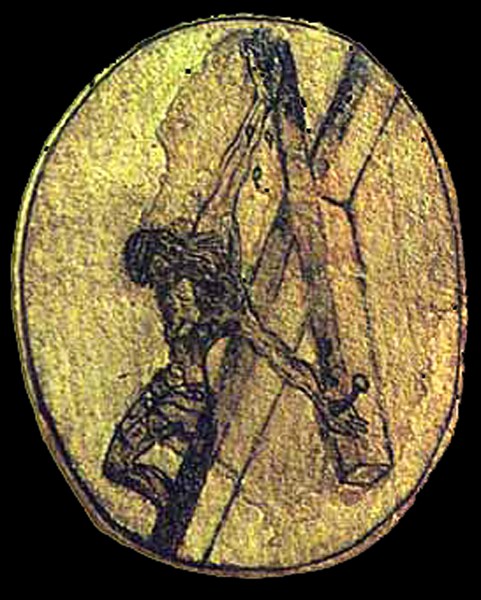
Bethlehem this day resembles heaven; hearing from the stars the singing of angelic voices; and in place of the sun, enfolds within itself on every side, the Sun of justice. And ask not how: for where God wills, the order of nature yields. For He willed; He had the power; He descended; He redeemed; all things yielded in obedience to God. This day He Who is, is Born; and He Who is, becomes what He was not. For when He was God, He became man; yet not departing from the Godhead that is His. Nor yet by any loss of divinity became He man, nor through increase became He God from man; but being the Word He became flesh, His nature, because of impassability, remaining unchanged.

And so the kings have come, and they have seen the heavenly King that has come upon the earth, not bringing with Him Angels, nor Archangels, nor Thrones, nor Dominations, nor Powers, nor Principalities, but, treading a new and solitary path, He has come forth from a spotless womb.

Since this heavenly birth cannot be described, neither does His coming amongst us in these days permit of too curious scrutiny. Though I know that a Virgin this day gave birth, and I believe that God was begotten before all time, yet the manner of this generation I have learned to venerate in silence and I accept that this is not to be probed too curiously with wordy speech.

For with God we look not for the order of nature, but rest our faith in the power of Him who works.

What shall I say to you; what shall I tell you? I behold a Mother who has brought forth; I see a Child come to this light by birth. The manner of His conception I cannot comprehend.

Nature here rested, while the Will of God labored. O ineffable grace! The Only Begotten, Who is before all ages, Who cannot be touched or be perceived, Who is simple, without body, has now put on my body, that is visible and liable to corruption. For what reason? That coming amongst us he may teach us, and teaching, lead us by the hand to the things that men cannot see. For since men believe that the eyes are more trustworthy than the ears, they doubt of that which they do not see, and so He has deigned to show Himself in bodily presence, that He may remove all doubt.

Christ, finding the holy body and soul of the Virgin, builds for Himself a living temple, and as He had willed, formed there a man from the Virgin; and, putting Him on, this day came forth; unashamed of the lowliness of our nature.

For it was to Him no lowering to put on what He Himself had made. Let that handiwork be forever glorified, which became the cloak of its own Creator. For as in the first creation of flesh, man could not be made before the clay had come into His hand, so neither could this corruptible body be glorified, until it had first become the garment of its Maker.

What shall I say! And how shall I describe this Birth to you? For this wonder fills me with astonishment. The Ancient of days has become an infant. He Who sits upon the sublime and heavenly Throne, now lies in a manger. And He Who cannot be touched, Who is simple, without complexity, and incorporeal, now lies subject to the hands of men. He Who has broken the bonds of sinners, is now bound by an infants bands. But He has decreed that ignominy shall become honor, infamy be clothed with glory, and total humiliation the measure of His Goodness.

For this He assumed my body, that I may become capable of His Word; taking my flesh, He gives me His spirit; and so He bestowing and I receiving, He prepares for me the treasure of Life. He takes my flesh, to sanctify me; He gives me His Spirit that He may save me.

Come, then, let us observe the Feast. Truly wondrous is the whole chronicle of the Nativity. For this day the ancient slavery is ended, the devil confounded, the demons take to flight, the power of death is broken, paradise is unlocked, the curse is taken away, sin is removed from us, error driven out, truth has been brought back, the speech of kindliness diffused, and spreads on every side, a heavenly way of life has been ¡in planted on the earth, angels communicate with men without fear, and men now hold speech with angels.

Why is this? Because God is now on earth, and man in heaven; on every side all things commingle. He became Flesh. He did not become God. He was God. Wherefore He became flesh, so that He Whom heaven did not contain, a manger would this day receive. He was placed in a manger, so that He, by whom all things are nourished, may receive an infants food from His Virgin Mother. So, the Father of all ages, as an infant at the breast, nestles in the virginal arms, that the Magi may more easily see Him. Since this day the Magi too have come, and made a beginning of withstanding tyranny; and the heavens give glory, as the Lord is revealed by a star.

To Him, then, Who out of confusion has wrought a clear path, to Christ, to the Father, and to the Holy Spirit, we offer all praise, now and forever. Amen.

A thought from St Isaac the Syrian

The whole fabric of your prayer should be succinct. One word saved the publican, and one word made the thief on the cross heir to the heavenly kingdom

A Thought from St John of the Cross

Whoever loves another does so according to his own attributes and properties. Therefore since the Lord the Bridegroom is within you and is all powerful, he gives you power and loves you with the same.

Since he is wise he loves you with wisdom

Since he is good he loves you with goodness

Since he is holy he loves you with holiness

Since he is just he loves you with justice

Since he is merciful he loves you with mercy

Since he is compassionate and understanding he loves you with gentleness and sweetness

He loves you with the greatest humility and the deepest respect, making himself your equal and making you his equal. He joyfully reveals his face to you saying to you, ‘I am yours, completely yours. And my happiness is to be who I am so that I may give myself to you and be all yours.’

Advent III

It is easy to find the truth; it is hard to face it, and harder still to follow it …. The only people who ever arrive at a knowledge of God are those who, when the door is opened, accept that truth and shoulder the responsibilities it brings. It requires more courage than brains to learn to know God: God is the most obvious fact of human experience, accepting him is one of the most arduous

Fulton J. Sheen Lift up your Heart

In the Gospel John the Baptist has been preaching a baptism of repentance, a turning away from sin towards the arms of a loving God. He has been stark and uncompromising and the people to whom he has been preaching find themselves in an awkward situation. Some 2000 years later we find ourselves asking very much the same question, ‘What then shall we do?’ The world, the state, the church all seem to be in a mess. The peace which the Messiah came to bring it seems as elusive as ever, whereas the human capacity to create misery in the most dreadful ways makes us realise that we still have some considerable distance to travel. One possible answer is the need for repentance: to change our hearts and minds and to follow Christ.
Our readings this morning speak of the kingdom of God, the God who is in our midst, a mighty one who will save us; he will rejoice over us with gladness; he will quieten us by his love. In all our sadness and sin, we look forward to our yearly remembrance of our Lord’s incarnation. We prepare our hearts, our minds, and our lives, to go to Bethlehem, to see God come into the world naked, vulnerable, and homeless. We prepare to meet him as he will come again, as our saviour and our judge, daunting though this may be, in the knowledge and trust that he saves us, that by his wounds on the cross we are healed.
We are to rejoice, strange though it might seem, just like the people of Israel in captivity, since the Lord God is our strength and our song and has become our salvation. We draw living water, the water of baptism, which saves us. In the midst of our sorrow we are to place all I hope and trust in God who loves us, and who saves us.
We are to rejoice, because as S. Paul reminds the Galatians joy is a fruit of the spirit. As the people who have received the spirit in the sacrament of baptism, of confirmation, or indeed of holy order, our joy in the Lord should set our hearts on fire, with love for him and each other; we shouldn’t worry about anything, but instead we should trust in God: the God whose peace surpasses all understanding.
We are to share this joy with others, to share the good news of Jesus Christ to all people, and not just in our words but our deeds. If we share what we have, if we are generous, if we work for justice and are clothed with humility, showing our joy in mutual love, God’s kingdom will be advanced. We, here, now, know that Jesus will come and will judge us by the standard of love which he set for us to follow. Let us trust God and share that trust in prayer, that his will may be done, and that he may quieten us with his love.
The world around us is full of pain and anguish, and the only way for it to be healed is in Christ, who was bruised for our transgressions and wounded for our iniquities. He still bears those wounds as the wounds of love. As he flung out his arms on the cross, so he longs to embrace the world and fill it with his peace and love. He will not force us; he is no tyrant in the sky. It is the world which must turn to him in love and in trust, and turn away from sin. Our task is always only all things to be joyful in the Lord, and to live out our faith to help the world turn to him.
It isn’t an easy thing to do, and after 2000 years of trying we may seem as far away as when John proclaimed the coming of God’s kingdom
We can just give up, or we can try, and keep trying, no matter how many times we fail, secure in the knowledge that God loves us and forgives us, and that we are to do the same to each other. That in this and all things we may give glory to God the Father, God the Son, and God the Holy Spirit, to whom be ascribed as is most right and just, all might, majesty, glory, dominion, and power, now and forever.

The Immaculate Conception of the Blessed Virgin Mary

For you preserved the Most Blessed Virgin Mary
from all stain of original sin,
so that in her, endowed with the rich fullness of your grace,
you might prepare a worthy Mother for your Son
and signify the beginning of the Church,
his beautiful Bride without spot or wrinkle.
She, the most pure Virgin, was to bring forth a Son,
the innocent Lamb who would wipe away our offences;
you placed her above all others
to be for your people an advocate of grace
and a model of holiness.

Homily for Sexagesima (BCP ) The Parable of the Sower


Faith lights up all the faculties of a person, as light inside reveals the pattern of a stained-glass window. For faith is far more than the passive acquiescence to a proof; it is a dynamic thing accompanied by an intense desire for the possession of God as author and finisher of our life
Fulton J. Sheen Lift up your Heart
Christianity has, of late, not looked terribly good in the eyes of the world and the media. If we were to believe what is said of us, it would appear that we are obsessed by matters of gender and sex: the ordination of women, clergy in civil partnerships and the proposed redefinition of marriage to include same-sex couples. In the eyes of the world we are wrong, we are completely out of touch, and we need to conform ourselves and the Church to the ways of the world. We cannot, I would suggest, allow this to happen; we need instead to stand up and be counted, proclaiming a truth rooted in Scripture and the Tradition of the Church even if it means that we appear foolish in the eyes of the world: for our faith is foolishness and a stumbling block, but the foolishness of God is wiser than men.
            In this morning’s Gospel we have St Luke’s account of the parable of the Sower and its explanation – Jesus is showing us what the Church and the Proclamation of the Gospel look like in practice. He uses an agricultural image which is as clear to us today as it was two thousand years ago. It’s designed to be transparent, it isn’t complicated, but it does not necessarily make for terribly easy reading. The sower casts out a great deal of seed, and not all of it even lands on soil. Even when it does it necessarily lead to much – the plants bolt and die or are choked by weeds. Only a few seeds grow up into healthy plants, which produce a wonderful harvest, even an hundredfold.
            There are people, who are initially very enthusiastic about the Christian Faith, but who quickly lose interest; others find themselves distracted by the cares of the world, by their riches, and the enticements of pleasure. This reminds us of the salutary fact that living the Christian life is not easy: things get in the way, we get distracted, it is a huge struggle and if we were just left to our own devices then we, generally speaking, are not terribly good at resisting. So what do we do? We need to rely upon God as our help and strength, and also to support each other as we grow together in a community of faith and love, helping each other, through God’s grace, to resist the ways of sin and the world.
            Only a few plants produce a great deal of seed – the Church grew from a small but committed community of faith gathered around Our Lord and the Twelve Apostles. Instead of hearts hardened by superficialities or worldly preoccupations, they display hearts which are open, open to the God who loves them, to the God who heals them, and to the God who saves them, who shed his blood on the Cross for their sake and ours, to take away their sin. They are people who trust God, and who live lives which proclaim God’s saving truth regardless of the cost to themselves, gladly laying down their lives to serve the truth which sets them free. They then reap a harvest of billions of souls saved over the past two thousand years; and we are called to be like them, to live lives like theirs, to trust like them, to be fearless in our proclamation of the Gospel, supporting each other in our lives and in spreading the Good News of Jesus Christ in word and in deed, so that the world may believe and give glory to God the Father, God the Son, and God the Holy Ghost, to whom be ascribed as is most right and just, all might, majesty, glory dominion and power, now and forever

Homily for the 3rd Sunday of Year C ‘The Joy of the Lord is your strength’

Every person is a precious mystery. An individual cannot be weighed by public opinion; he cannot be measured by his conditionings; he belongs to no-one but himself, and no creature in all the world can penetrate his mystery except the God who made him. The dignity of every person is beyond our reckoning.
Fulton J. Sheen Lift Up Your Heart

January is a time for dieting, for turning away from the excess of Christmas, and so at one level when we hear in this morning’s Old Testament reading ‘Eat the fat and drink sweet wine’ we could be quite concerned. But we are also told to ‘send portions to anyone who has nothing ready’ – to feast then in the Kingdom of God involves everyone eating. In a world where we produce enough food for all to eat and not go hungry, it is good that there is a campaign to put an end to Global Hunger, as this is what the Kingdom of God looks like in action.

In St Paul’s First Letter to the Corinthians we see what it means to be the Church, the Body of Christ, through our common baptism. We may be different, but we all need one another, and are dependent on one another, a place of unity in, through and with Christ. Looking back on this two thousand later we can see the wounds which mar the Body of Christ and also how they can be healed.

In the Gospels we have seen Our Lord baptised to show the world how to turn away from sin and how to be reconciled with God, we have seen the Kingdom of God come among us in the Wedding at Cana. It is a place of joy, which we cannot understand, like the steward – the best wine has been kept for now, the new wine of the Kingdom, better than we have ever tasted, beyond our expectations and our efforts. We have seen in Our Lady’s word to the servants, ‘Do whatever He tells you’ that obedience is the key to new life in Christ.

In this morning’s Gospel we Jesus ‘full of the power of the Spirit’ teaching people, showing them the way, and being glorified by them – they give to God what is due. When he comes to his home town and is given the scroll of the prophet Isaiah, he proclaims ‘good news to the poor’ ‘liberty to captives’ ‘new sight to the blind’ ‘freedom for the oppressed’ and ‘the year of the Lord’s favour’. As He will say in the Sermon on the Mount ‘Blessed are the poor in spirit, for theirs is the Kingdom of God’. The good news of the Gospel is for those who know their need of God, their spiritual poverty. Those who are slaves to sin can find true freedom in Christ; it allows us to see the world with new eyes, where everyone is our brother and sister, where we can be one in Christ.

‘Today this Scripture has been fulfilled in your hearing’ we, here, today, have heard this among us, we have come to be fed with Word and Sacrament, to be fed by Christ, with Christ, to have new life in Him, and to share that new life with others, a new life and a freedom which the world cannot give. So let us be fed to have new life in him, to live that life and share it with others, for the joy of the Lord is our strength.

As Christians we are to live lives of joy and love in Christ, and through him, rejoicing in our new life in baptism, in the saving sacrifice of the Cross, in the hope of the Empty Tomb, in our unity in the Body of Christ, so that all creation may resound with the praise of God the Father, God the Son, and God the Holy Spirit, to whom be ascribed as is most right and just, all might, majesty, glory, dominion, and power, now and forever.

A thought for the day from Fulton J. Sheen

“The world may disagree with the Church, but the world knows very definitely with what it is disagreeing. In the future as in the past, the Church will be intolerant about the sanctity of marriage, for what God has joined together no man shall put asunder; she will be intolerant about her creed, and be ready to die for it, for she fears not those who kill the body, but rather those who have the power to cast body and soul into hell.”

What it’s all about…

The nature, gender, and function of priests are apparently all up for discussion these days. I suspect people know where I stand and why. I do not wish to comment; all I can offer is the following prayer (taken from a Holy Card). I can only ask you to pray it.


O Jesus, Eternal High Priest, bless abundantly those whom you have called to share Thy Priesthood. You have chosen them apart to continue your work on earth. Daily they offer Holy Mass, they administer the sacraments, they preach, and in all their work they unite us to you. Grant that their conduct may be a pattern of holy living so that hereafter, giving a good account of the stewardship committed to them, they may obtain the reward of everlasting bliss. Amen

Homily for Christmas Jn 1:1-14 ‘And the Word became flesh, and dwelt among us’

Christ’s coming into the world was not like that of a sightseer to a strange city, but rather like that of an artist visiting his own studio or an author paging the books he himself has written, for in becoming incarnate, the divine Word was tabernacling himself in his own creation.

Fulton J. Sheen In the Fullness of Time
It is a strange time to be a Christian. We live in a world where scepticism abounds, where trust is in short supply, and where the yearly celebration of Our Lord and Saviour’s Nativity has become an excuse for consumerist excess. In the midst of all the madness and froth of our modern existence, I’d like to take a few minutes to explore the profound mystery which we celebrate tonight.
            In a stable attached to an inn, in a backwater town in the far corner of the Roman Empire, a woman gives birth to a son. It is a birth which has been foretold by the prophets: salvation will come from Bethlehem, the town of David, and from the line of David. Unlike the first David, who sends a man (Uriah the Hittite, the husband of Bathsheba) to die, so that he may sin, the second David will gladly die to save all humanity from its sins, even those who kill him. The ruler and shepherd of Israel will reign in glory hanging from a tree like a common criminal. The first people to come and worship him are shepherds, ritually impure men, outcasts from Jewish society. It is a life that begins and ends on the margins, among those whom the world despises and casts aside. This doesn’t look much like how the world understands glory, indeed it doesn’t look much like how the world understands God, and that is, I suspect, the point. If we try and understand what we are celebrating in purely worldly terms then we will go horribly wrong.
            As he ponders the mystery of Our Lord’s Incarnation, St John begins at the beginning, taking us back to the beginning of Creation so that we may discern the loving purposes of God, in the midst and messiness of human history. It ends with the last of the prophets, John the Baptist, the forerunner who even in his mother’s womb leaps for joy to announce the coming of the Saviour of the World. He bears witness in his life that all might believe: he sets us the example of how to live a Christian life – we are in all things and at all times to bear witness to Christ, the Saviour of the World. It may cost us dear – imprisonment, torture and even death, but throughout the entire world and for all of the last two thousand years Christians have done just this, to bear witness to the truth regardless of the cost, so that the WORLD may believe. The world knew him not, and still fails to know him, to recognise him, but their failure does not mean that we should lessen our efforts; rather we should proclaim the saving truth of God’s love all the more and live lives which embody that truth and make it real and visible to the world, which make it credible, trustworthy, and attractive.
            To those who received him he gave power to become children of God – through faith we enter into a relationship with the God who creates, who redeems and who loves. It isn’t about giving our assent to philosophical propositions – the salvation of humanity is not about logic, but love.
            And the Word became esh, and dwelt among us (and we beheld his glory, the glory as of the only-begotten of the Father) full of grace and truth. The Word becomes flesh – God becomes a human being in the womb of a virgin, ‘the invasion of time by eternity’. God tabernacles among us and the womb of the Blessed Virgin Mary, the Mother of God, becomes the Ark of the New Covenant for the New Israel, the People of God.
God does not give us explanations; we do not comprehend the world, and we are not going to. It is and it remains for us a confused mystery of bright and dark. God does not give us explanations; he gives up a Son. Such is the spirit of the angel’s message to the shepherds: “Peace upon earth, good will to men … and this shall be the sign unto you: ye shall find a babe wrapped in swaddling clothes, and lying in a manger.” A Son is better than an explanation. The explanation of our death leaves us no less dead than we were; but a Son gives us a life, in which to live.’ [Austin Farrer Said or Sung pp. 27, 28]
God gives us a life to live – with Him and each other, a relationship through which we may grow, fed by His Word and Sacraments, so that His grace may perfect our nature and that we may live that divine life of love poured out on the world in His Son and the Holy Spirit, so that the world might believe and all creation resound with the praise of God the Father, God the Son, and God the Holy Ghost, the consubstantial and coeternal Trinity, to whom be ascribed as is most right and just, all might, majesty, glory, dominion, and power, now and forever.

Homily for Advent IV Year C : ‘Blessed are you among women, and blessed is the fruit of your womb!


God does not love us because we are loveable of and by ourselves, but because he has put his own love into us. He does not even wait for us to love; his own love perfects us. Letting it do this with no resistance, no holding back for fear of what our egotism must give up, is the one way to the peace that the world can neither give nor take away
Fulton J. Sheen Lift up your Heart


The prophet Micah, after the destruction of Samaria, looks back to David of the tribe of Ephraim, to look forward to the saviour who will save Israel, who will be a true shepherd to his flock, who will bring Peace. Whereas the first David sinned by sending a man to die, Uriah the Hittite, the husband of Bathsheba, the second of David will go to his death willingly to save from their sins even those who kill him. Prophecy is fulfilled, humanity is restored, and the peace of God’s kingdom can be brought about. His coming forth is from old from ancient days. Our salvation is the fulfilment of prophesy and the outworking of God’s love.
 In the letter to the Hebrews we see the prophecy of Psalm 40:6-8 fulfilled in Christ. The sacrifices of the old covenant are replaced in the new covenant with the sacrifice of God for humanity: sacrifice is fulfilled and completed, once and for all. It is this sacrifice, which the church, through its priests of the new covenant pleads and re-presents: the eternal offering of a sinless victim, to free humanity of its sins, to restore our relationship with God and one another. It is an act of perfect obedience: the body prepared by God for Christ will do his will and will sanctify humanity, heal us and restore us.
In this morning’s Gospel Mary does not tell Elizabeth that she is pregnant. But by the power of the Holy Spirit John the Baptist, the forerunner, the last of the prophets announces the coming of the saviour by leaping of the joy in his mother’s womb. It’s important, there’s no time to waste: Mary arose and went with haste. Time is of the essence, not for the frantic fulfilment of consumerism: last-minute presents, or enough food to satisfy even the most gluttonous, no, we have to prepare our hearts, our minds, and our lives, so that Christ may be born again in us, so that we may live his life and proclaim his truth to the world.
Through the prompting of her son and the gift of the Holy Spirit, Elizabeth can cry ‘Blessed are you among women, and blessed is the fruit of your womb!’ She recognises that Mary’s obedience, her humble ‘Yes’ to God undoes the sinfulness of Eve. That she who knew no sin might give birth to Him who would save us and all humanity from our sin. It is through the love and obedience of Mary that God’s love and obedience in Christ can be shown to the world, demonstrated in absolute perfection, when for love of us he opens his arms to embrace the world with the healing love of God. He will be the good Shepherd, laying down his life for his flock that we may dwell secure. We prepare to celebrate Christmas because it points us to the Cross and beyond, in showing us once and for all that God loves us. 
Safe in the knowledge that God loves us, that he feeds us with word and sacrament, that he heals us, let us love God and love one another, truly, deeply, with all our lives. Let us prepare the greatest gift we can, ourselves:  that Christ may truly be born in us, that as the Sanctified People of God, we may live that goodness, that holiness, that charity, which reflects the bountiful goodness of God who gives himself to be born and to die and rise again that we might truly live and have life in all its fullness, sharing the joy and the love of God with everyone we meet. As he will come to be our judge let us live His life proclaim his saving love and truth to a world hungry for meaning and love and thereby honour God the Father, God the Son, and God the Holy Spirit, the consubstantial and co-eternal Trinity, to whom be ascribed as is most right and just, all might, majesty, glory, dominion, and power, now and forever.

Homily for Advent III Year C: And the crowds asked him ‘What then shall we do?’


It is easy to find the truth; it is hard to face it, and harder still to follow it …. The only people who ever arrive at a knowledge of God are those who, when the door is opened, accept that truth and shoulder the responsibilities it brings. It requires more courage than brains to learn to know God: God is the most obvious fact of human experience, accepting him is one of the most arduous Fulton J. Sheen Lift up your Heart

John the Baptist has been preaching a baptism of repentance, a turning away from sin towards the arms of a loving God. He has been stark and uncompromising and the people to whom he has been preaching find themselves in an awkward situation. Some 2000 years later we find ourselves asking very much the same question, ‘What then shall we do?’ The world, the state, the church all seem to be in a mess. The peace which the Messiah came to bring it seems as elusive as ever, whereas the human capacity to create misery in the most dreadful ways makes us realise that we still have some considerable distance to travel. One possible answer is the need for repentance: to change our hearts and minds and to follow Christ.
                Our readings this morning speak of the kingdom of God, the God who is in our midst, a mighty one who will save us; he will rejoice over us with gladness; he will quieten us by his love. In all our sadness and sin, we look forward to our yearly remembrance of our Lord’s incarnation. We prepare our hearts, our minds, and our lives, to go to Bethlehem, to see God come into the world naked, vulnerable, and homeless. We prepare to meet him as he will come again, as our saviour and our judge, daunting though this may be, in the knowledge and trust that he saves us, that by his wounds on the cross we are healed.
                We are to rejoice, strange though it might seem, just like the people of Israel in captivity, since the Lord God is our strength and our song and has become our salvation. We draw living water, the water of baptism, which saves us. In the midst of our sorrow we are to place all I hope and trust in God who loves us, and who saves us.
                We are to rejoice, because as S. Paul reminds the Galatians joy is a fruit of the spirit. As the people who have received the spirit in the sacrament of baptism, of confirmation, or indeed of holy order, our joy in the Lord should set our hearts on fire, with love for him and each other; we shouldn’t worry about anything, but instead we should trust in God: the God whose peace surpasses all understanding.
                We are to share this joy with others, to share the good news of Jesus Christ to all people, and not just in our words but our deeds. If we share what we have, if we are generous, if we work for justice and are clothed with humility, showing our joy in mutual love, God’s kingdom will be advanced. We, here, now, know that Jesus will come and will judge us by the standard of love which he set for us to follow. Let us trust God and share that trust in prayer, that his will may be done, and that he may quieten us with his love.
                The world around us is full of pain and anguish, and the only way for it to be healed is in Christ, who was bruised for our transgressions and wounded for our iniquities. He still bears those wounds as the wounds of love. As he flung out his arms on the cross, so he longs to embrace the world and fill it with his peace and love. He will not force us; he is no tyrant in the sky. It is the world which must turn to him in love and in trust, and turn away from sin. Our task is always only all things to be joyful in the Lord, and to live out our faith to help the world turn to him.
It isn’t an easy thing to do, and after 2000 years of trying we may seem as far away as when John proclaimed the coming of God’s kingdom    .  We can just give up, or we can try, and keep trying, no matter how many times we fail, secure in the knowledge that God loves us and forgives us, and that we are to do the same to each other. That in this and all things we may give glory to God the Father, God the Son, and God the Holy Spirit, to whom be ascribed as is most right and just, all might, majesty, glory, dominion, and power, now and forever.

Perfect love casts out fear


Many people nowadays want God, but on their terms, not his. They insist that their wishes to determine the kind of religion that is true, rather than letting God revealed his truth to them. So their dissatisfaction continues and grows. But God finds us lovable, even in our rebellion against him.
God does not love us because we are lovable of and by ourselves, but because he has put his own life into us. He does not even wait for us to love; his own love affects us. Letting it to do this, with no resistance, no holding back for fear of what our egotism must give up, it’s the one way to the peace of the world can neither give nor take away.
The Ven. Abp Fulton J. Sheen Lift up your heart,  taken from  Advent Meditations with Fulton J. Sheen, Liguori Publications: Liguori MO, 2007

Let Christ be formed in you

As God was  physically formed in Mary, so he wills to be spiritually formed in you. If you knew he was seeing through your eyes, you would see everyone as a child of God. If you knew that he worked through your hands, they would bless all the day through …. If you knew that he wants to use your mind, your will, your fingers, and your heart, how differently you would be. If half the world did this there would be no war!

The Ven. Abp Fulton J. Sheen How to find Christmas Peace,  taken from  Advent Meditations with Fulton J. Sheen, Liuori Publications: Liguori MO, 2007

Homily for the Second Sunday of Advent (Year C)

Peace through integrity, and honour through devotedness
The prophets proclaim the message of hope to Israel, in the midst of exile, when times look dark, they are to wrap the cloak of integrity around themselves, and put the crown of the glory of God upon their heads. It is the message of trust, trust in God alone as the source of our hope, the only rock on which to build a life of faith.
As the people of God we are to trust in him and to live lives which prepare for the second coming of our Lord and saviour Jesus Christ, our saviour and our judge. To be a Christian, then, is to live a life where our love for each other and for God increases day by day as Paul puts it. We are to grow in virtue by being virtuous.
In this morning’s gospel we see the last of the prophets, John the Baptist, the son of Elizabeth and Zechariah, as he prepares the way for the Lord. He proclaims a baptism of repentance for the forgiveness of sins. In our baptism we promise to turn away from sin, the world, and the devil; we turn away from what the world thinks and does, because our baptism makes us pure and blameless, following the Commandments of God, and shown to us in the life of Jesus Christ.
The church, then, must be a voice crying in the wilderness. What we proclaim may well be at odds with what the world thinks we should say and do, but we are not called to be worldly, to conform ourselves to the ways of the world. We live in a fallen world, which is not utterly depraved, but the church exists to conform the world to the will of God. To say to the world, come and have life in all its fullness, turn away from selfishness and sin, to have life in all its fullness in Jesus Christ.
The world may not listen to us when we proclaim this; it may well choose to ignore us, to persecute us. We have to be prepared to do this regardless of the cost. We must bear witness to God the Father, God the Son, and God the Holy Spirit, and their saving work even if it means shedding blood of losing our lives, because it says to the world: we trust in something greater than you, we know the truth and it has set us free, free to love God and to serve him, and to invite others to do the same, to be baptised, to turn away from the world, and be fed by word and sacrament, built up into a community of love, offering the world a radical alternative, and holding fast to the truths which the church holds dear, since they are given us by God.
It’s a big, a daunting task, which if it were up to us individually, we would have no chance of achieving. But it is something which we do together, as the body of Christ, and relying upon God alone: it is his gospel, his church, and his strength in which we will accomplish this. Too often we trust in ourselves and fail, we need to trust in God and ask him to bring about the proclamation of the Gospel through us. We need to be like John the Baptist, preparing the way for the Lord who will come again as our Saviour and our Judge.
This is what we await in Advent, the coming of Our Lord as a baby in Bethlehem and his second coming as Our Judge, bearing in his glorious body the wounds of love, borne for us and our salvation. So let us prepare to meet him and live lives which proclaim his saving love and truth to a world hungry for meaning and love and thereby honour God the Father, God the Son, and God the Holy Spirit, the consubstantial and coeternal Trinity, to whom be ascribed as is most right and just all might, majesty, glory, dominion and power, now and forever.

Homily for the Immaculate Conception


Those who dislike any devotion to Mary are those who deny His Divinity or who find fault with Our Lord because of what He says.
These words of the Venerable and Most Reverend Fulton J. Sheen remind us of an important truth when we consider the Blessed Virgin Mary: she is always pointing to God – it’s all about God and not about Mary. But, I hear you cry, we have come here to celebrate the Feast of the Immaculate Conception of the Blessed Virgin Mary, surely it’s all got to be about her? Well I am sorry to disappoint you, but it isn’t. 
We are not here today to celebrate a doctrine, or a philosophical concept, because that is not what the church does. We celebrate a person, and through her, God. Mary, the spotless vessel, through whose loving obedience our Lord and Saviour Jesus Christ became incarnate and was born, for the salvation of all humanity, is marked out for a life of perfect love and obedience. She becomes the first Christian, the tabernacle, the Ark of the new covenant, the new Eve, Mother of God and Mother of the Church.
In her response to the angel’s message Mary becomes totally open to God, totally vulnerable and totally reliant upon him alone. In her openness and her vulnerability there is the space in which God can be at work. In Adam and Eve we see how sin can separate us from God. In Mary we see how God begins to put that right. From the moment of her Conception she lives the life of the baptised: filled with sanctifying grace, united with God, because of what her Son will do. She is the model of what humanity can be, she gives us hope as Christians, and points us to her Son, Our Lord and Saviour, whose coming as our Judge and as a baby in Bethlehem we prepare for in this season of Advent. 
Mary trusts in God, she says ‘yes’, and is filled with love, a gift which must be shared. She offers the church the perfect example of how to live a Christian life, in joyful hope and obedience: at the Marriage in Cana she says to the servants ‘Do whatever he tells you’. She stands at the foot of the Cross and watches her Son die to reconcile God and humanity. But in her joy and her sorrow she is truly free, to love and serve God. She is freed to show us, as Christians, how to live our lives loving and serving God and one another, and to show us the wonderful work of her Son who frees all humanity, who saves them, and who loves them.
So, today, let us pause to ponder the love of God shown to us in Mary, let us be fed by word and sacrament, the Body of Christ, which became incarnate in the womb of the Virgin Mary, let us treasure him, and let us respond by loving and trusting God, by living lives of service, of God and of one another, and proclaiming the Good News in Jesus Christ, so that all creation may resound with the praise of God the Father, God the Son, and God the Holy Ghost, to whom be ascribed as is most right and just, all might, majesty, glory, dominion, and power, now and forever.

Consecration to Jesus through Mary


A prayer written by Fr Jean Jacques Olier, S.S. (1608-1657)
O Jesu vivens in Maria
Veni et vive in famulis tuis,
In spiritu sanctitatis tuae,
In plenitudine virtutis tuae,
In perfectione viarum tuarum,
In veritate virtutum tuarum,
In communione mysteriorum tuorum;
Dominare omni adversae potestati,
In Spiritu tuo ad gloriam Patris.
O Jesus, living in Mary,
come and live in thy servants,
in the spirit of thy holiness,
in the fullness of thy might,
in the truth of thy virtues,
in the perfection of thy ways,
in the communion of thy mysteries.
Subdue every hostile power
in thy spirit, for the glory of the Father.

A thought for the day

‘We tend to manage life more than just live it. We are all overstimulated and drowning in options. We are trained to be managers, to organize life, to make things happen. This is what built our culture. It is not all bad, but if you transfer that to the spiritual life, it is pure heresy. It is wrong it doesn’t work. It is not gospel.’

from Richard Rohr, Preparing for Christmas – Daily Meditations for Advent, Cincinatti, 2008, p. 31

If only bishops and others could realize this is what they try to do to the church

Homily for the First Sunday of Advent

Not in strife and envying: but put on the Lord Jesus Christ
I don’t know if you’re anything like me, but at any time of year and especially now with the dark mornings, I can be somewhat reluctant to leave my bed. It’s nice, it’s warm, and it’s comfortable. So when I hear the words ‘now it is high time to awake out of sleep’ I want to reach for the snooze button. It is sad to say that for many people their spiritual lives can be a bit like this: it’s a bit too much effort, can we really be bothered? But this is what we need to do: Advent is after all a season of preparation, of turning away from the world and sin, and preparing to meet the Son of God, who is born in Bethlehem and who will come to be our judge. We may not be able to recognise the signs, we may not know when it is going to happen, but as we have celebrated the Universal Kingship of Our Lord and Saviour Jesus Christ, we know that he will come again in glory to judge both the living and the dead. He fulfils prophesies but also proclaims the kingdom in word and deed and overthrows the tables in the temple. This doesn’t mean that the Cathedral Gift Shop is an abomination, but rather that the Church needs to be vigilant. When a house of prayer becomes a den of thieves the interests of the world have taken over; when the Church is conformed to the ways of the world, when it seeks the world’s approval or bows to its will, it sells the Gospel short and for that it too will be judged and found wanting.
        The only solution is to be found in Christ. It is he whom the church must put on, his is the standard by which we will be judged. Note also that love is the fulfilling of the law. The law is not abolished in Christ, but rather it is fulfilled, its meaning is deepened. It is through the framework of the Law and the Prophets that we can hope to understand who and what Christ is and what he does. It is our frame of reference; truth is revealed in and as the Word of God. So we are called to ‘cast off the works of darkness and to put on the armour of light’ we are to turn away from sin, from the ways of the world and walk in the way of him who is the Light of the World. We are to watch and pray, and to live lives which proclaim the truth of God’s saving love in Christ. We are to treat our lives on this earth as a preparation for the life to come, not because we can earn salvation through our works, but because in living Christ-like lives we conform ourselves to the will of God, we show the world how we love and serve God, our lives have true meaning, and we truly flourish as human beings.
        So let us lose our lives in order that we may truly find them in Christ, let us live out our baptism when we are clothed with Christ. Let us be fed with him, in Word and Sacrament, turning away from our sins, and looking to him to heal us and restore us, to prepare us to be with him forever, contemplating the vision of God the Father, God the Son, and God the Holy Ghost, to whom be ascribed as is most right and just, all might, majesty, glory, dominion, and power, now and forever.

Christ the King: John 18: 33-37


IF I were to ask you the question, what does a king look like, you may well reply that he wears a crown of gold, and a cloak of red or purple velvet. He looks impressive and dignified; everything about him makes you go ‘Wow!’ It’s quite understandable – it’s how we expect a king to look, it’s what we’ve grown up to expect: whenever we see pictures of kings they look like this.
In this morning’s gospel we are given an entirely different picture of kingship. Our Lord will soon receive the outward trappings and will be hailed as a King. And in the mockery people will not realise that the joke is really on them. Christ is truly a King, but not in a way that the world can easily understand. His kingdom is not of this world; the way of God is not to use threats, mockery, or violence. Instead, Christ becomes incarnate, becomes a human being, to bear witness to the truth. He who is the way, the truth, and the life, comes that we might know the truth and that the truth might set us free. As those who follow him, we as Christians are to be free, to stand against this world and its power, to show it another way: where weakness can triumph in the face of anger, where love can overcome bitterness. The world around us cannot understand this, it could not at the time of our Lord’s passion, and it cannot even today. It needs to experience it before it can begin to understand it. Christ shows the world his reign of glory by being nailed to a cross and now exalted in glory and coming to be our judge he bears in his body the wounds of nail and spear, the wounds of love, wounds which heal and reconcile humanity.
In his dealings with Pilate, Christ foreshadows the church and its dealings with secular power. Just as Pilate could not wait for an answer, so the world around us can only treat the church with impatience and contempt: neither then nor now can we hope to be understood, we are instead to be threatened to capitulate to a secular power – for the Romans and their power, read the whim of politicians and the tyranny of so-called ‘equality legislation’. As the body of Christ, we exist to love and to serve God and one another, and call the world to repent and to believe and to be healed by God. We have bishops to be our Chief shepherds, as successors of the apostles, those called and set apart by Christ to be shepherds and not hirelings, laying down their lives like Christ and for Christ, and not solely to sit in the High Court of Parliament. We then may advise the state, for its own good, but primarily so that the church may continue to preach the gospel and make disciples of this nation and every nation. The world may not understand us, it may not listen to us, or like whom we are and what we do or do not do on, but we cannot allow ourselves to be conformed to the world and its ways. In loving and serving God we call the world to conform itself to his will.
Only then can we bring about that radical transformation envisaged in the Gospels: living as a community of love and not fear. It is through living it out in our lives and as the church that we can show the world a better way of being, a way which acknowledges Jesus Christ as King of all the universe, where his way of love washes away our sins with his blood, reconciles us to God and each other, and forgiving others as we ourselves are forgiven. Where the world wants blame we have to live out the love and forgiveness, which we ourselves have received from God in Christ Jesus. This then can truly be a kingdom and not of this world.
          So as we prepare to enter the season of Advent, where we will prepare ourselves to greet the King of the Universe born in a stable in Bethlehem, let us acknowledge Christ as our King, whose Sacred Heart burns with love for us, whose wounds still pour out that love upon the world, and let us live as people loved, healed, restored and forgiven, that the world may believe and all creation acknowledge God the Father, God the Son, and God the Holy Spirit, to whom be ascribed as is most right and just, all might, majesty, glory, dominion, and power, now and forever.

A thought for the day

from Thomas Merton, Thoughts in Solitude p. 13-14

No amount of technological progress will cure the hatred that eats away the vitals of materialistic society like a spiritual cancer. The only cure is, and must always be, spiritual. There is not much use talking to men about God and love if they are not able to listen. The ears with which we hear the message of the Gospel are hidden in our hearts, and these ears do not hear anything unless they are favoured with a certain interior solitude and silence.

In other words, since faith is a matter of freedom and self-determination – the free receiving of a freely given gift of grace -we cannot assent to a spiritual message as long as our minds and hearts are enslaved by automatism We will always remain so enslaved as long as we we are submerged in a mass of other automatons, without individuality and without our rightful integrity as persons.

What is said here about solitude is not just a recipe for hermits. It has a bearing on the whole future of us and our world: and especially, of course, on the future of our religion.

More Thomas Merton

There is no true spiritual life outside the love of Christ. We have a spiritual life only because we are loved by him. The spiritual life consists in receiving the gift of the Holy Spirit and his charity, because the Sacred Heart of Jesus has willed in his love that we should live by his Spirit – the same spirit who proceeds from the Word and from the Father, and who is Jesus’ love for the Father.
If we know how great is the love of Jesus for us we will never be afraid to go to him in all our poverty, all our weakness, all are spiritual wretchedness and infirmity. Indeed, when we understand the true nature of his love for us, we will prefer to come to him poor and helpless. We will never be ashamed of our distress. Distress is to our advantage when we have nothing to seek but mercy. We can be glad of our helplessness when we really believe that his power is made perfect in our infirmity.
The surest sign that we have received a spiritual understanding of God’s love for us is the appreciation of our poverty in the light of his infinite mercy.
We must love our own poverty is Jesus loves it. It is so valuable to him that he died on the cross to present our poverty to his Father, and endow us with the riches of his own infinite mercy. We must love the poverty of others as Jesus loves it. We must see them with the eyes of his own compassion. We, it cannot have true compassion on others unless we are willing to accept a pity and receive forgiveness for our own sins. We do not really know how to forgive until we know what it is to be forgiven. Therefore we should be glad that we can be forgiven by our brothers. It is after forgivingness of one another that makes the love of Jesus for us manifest in our lives, for in forgiving one another we act towards one another as he has acted towards us.
from Thoughts in Solitude pp. 37–8

A thought for the day, and the coming week

“The desert is the home of despair. And despair, now, is everywhere. Let us not think that our interior solitude consists in the acceptance of defeat. We cannot escape anything by consenting tacitly to be defeated. Despair is an abyss without bottom. Do not think to close it by consenting to it and trying to forget you have consented.
This, then, is our desert: to live facing despair, but not to consent. To trample it down under hope in the Cross. To wage war against despair unceasingly. That war is our wilderness. If we wage it courageously, we will find Christ at our side. If we cannot face it, we will never find Him.”
 
from Thomas Merton Thoughts in Solitude, Burns & Oates, Tunbridge Wells, 3rd ed. (1997) 22-23

Sermon for Trinity XXII: Mt 18:21–35


St Isaac the Syrian, the 7th century Bishop of Nineveh and monk wrote: ‘as a handful of sand thrown into the ocean, so are the sins of all flesh as compared with the mind of God’ and ‘just as a strongly-flowing fountain is not blocked up by a handful of earth, so the compassion of the Creator is not overcome by the wickedness of his creatures.’ Now, it is salutary to be reminded on a regular basis of the infinite nature of God’s love and mercy. I suspect that if the truth be told, many of us, and I count myself among this number, struggle with this fact. We do so because we struggle to believe that we can be forgiven: our awareness of our frail and sinful nature means that we cannot see how God can love such a thing. Yet, God’s love and forgiveness is not something which we can earn. Herein lies the fault of Pelagius (among others): that humanity can somehow earn its way into heaven. It doesn’t work like that; what God offers us in Christ is something far more radical, far stranger: love and forgiveness to heal our wounds, to restore us, to do that which we cannot.
          In answer to Simon Peter’s question at the start of this morning’s Gospel, Jesus offers a vision of a community of love and forgiveness. The number 77 echoes the establishment of the Jubilee in Leviticus: what is promised in the law becomes real in the person and teaching of Jesus, the Messiah, who gives true liberty to the people of God, the new Israel. It anticipates and gives a concrete example of Our Lord’s summary of the Law: cf. Mt 22:40 ‘on these two hang all the law & the prophets’. In finding the lost sheep and bringing them back, the community is restored.
          So we have a vision of God’s love and forgiveness and how this can heal the wounds of our human nature. In the parable which Jesus tells in the Gospel this morning we both how God forgives and loves us and how we as Christians, people loved and forgiven by God are to act towards each other: by showing to others what God shows us. It is why, when Jesus teaches us how to pray, we are told to ask ‘forgive us our trespasses, as we forgive those who trespass against us’. We are, as Christians, to be a community which displays, and which embodies what God is and does for us.
          We are not to hold a grudge; we are instead to live out in our lives what God in Christ does for us. The Cross thus becomes a demonstration of God’s love and healing for the world. We meet today to be fed by word and sacrament; to feed on God’s love, to allow God’s love to transform and transfigure our human nature, and by living it out in our lives, to offer the world something radically different: a vision of humanity both loved and loving, forgiven and forgiving.
          It is both difficult and challenging, and it makes great demands on us. We can only live as God intends us to by embarking upon this costly and counter-cultural way of life, in a relationship with God and each other. It is truly difficult and yet deceptively easy, we have to do it, and we have to do it together, to become a community of love, to offer the world an alternative to the ways of selfishness and anger.
          We are called to do nothing less than to change the world, by whom and what we are, by loving and forgiving, as we are loved and forgiven. So let us live out this love and forgiveness in our lives, continuing the transformation of ourselves and of the world, through love lived out in our lives, so that we and all creation may give glory to God the Father, God the Son, and God the Holy Ghost, to whom be ascribed as is most right and just, all might, majesty, glory, dominion, and power, now and forever.

Homily for the 30th Sunday of Year B: Jer 31:7-9; Heb 5:1-6; Mk 10:46-52


Life is dreadful, you’ve seen the city and the country you love ravaged by war, the people you know and love taken prisoner to a foreign land. All seems lost, but in the midst of this the prophet Jeremiah in this morning’s first reading is filled with hope, that God will save and comfort his people. It may seem strange that the prophet can give such a joyous message in such an awful situation, but his trust is in a God who can heal our wounds and restore us. In the Letter to the Hebrews we see as Jesus Christ is without sin he is able to make a perfect offering of himself, upon the Cross, to restore and heal humanity.
In last week’s Gospel we saw how Jesus knew this of himself, saving humanity through his death and resurrection, healing our wounds, giving us the hope of eternal life in him, and living a life of service, fulfilling the prophesy of Jeremiah.
In this morning’s gospel we have a blind beggar, Bartimaeus. When he hears that Jesus is coming he cries out ‘Jesus, son of David, have mercy on me’. He cannot see but he knows his need of God. Jesus does not turn him away, he does not ignore him; instead he asks him ‘what do you want me to do for you?’ Bartimaeus’ faith makes him well, it saves him, and allows his to follow Jesus and walk along the right path.
We all long to be on the path that leads to God, a God who saves us, who loves us, who heals and restores us. As it says in John’s Gospel ‘I am the light of the world, whoever follows me will not walk in darkness but will have the light of life.’ If we walk with the eyes of faith we will be on a straight path, to the one who heals and restores humanity.
All the world needs to cry ‘Jesus, son of God have mercy on me’. We need to know our need of God, we need to be healed and restored by him, like Bartimaeus. The world needs this to be fully alive in God, to turn away from sin and the ways of the world: living for others rather than ourselves, loving God and our neighbour. We should remember what Jesus said earlier in Mark’s Gospel (Mk 2:17) ‘Those who are well have no need of a physician, but those who are sick. I came not to call the righteous, but sinners.’ Christ came on our behalf, to bind up our wounds.
The sin which mars God’s image in us, which separates us from God, which stops us from being what we can be, is borne by Jesus on the Cross. He binds our wounds by bearing the mark of nails, he heals us with the stream of his blood which flows on Calvary. By his stripes we are healed. We are healed by him so that we may see clearly and travel along the path of faith, a straight path on which we should not stumble, journeying with our wounded healer, to live out our faith in our lives as those healed and called by Christ and made part of his body, the church, healed by his sacraments, fed by his word and his Body and Blood, to be strengthened on our journey of faith, it is why we are here today, to be fed by him and with him, that our wounds may be healed.
We are all of us sinners in need of the love and mercy of him who bled for us on Calvary and who rose again for us, that we might share new life in him. Let us be fed by him, restored and healed by him, to have life in all its fullness. For we follow the one who heals us not out of blind obedience or fear but through joy, the joy of being free and truly alive in Christ. So let us live that life and give glory to God the Father, God the Son, and God the Holy Ghost, to whom be ascribed as is most right and just, all might, majesty, glory dominion, and power, now and forever.

Homily for the 29th Sunday of Year B: Isa 53:10-11; Heb 4:14-16; Mk 10:35-45


There has been a great deal in the press about the next Archbishop of Canterbury.  We’ve had rumours, leaks from the Crown Nominations Committee, a great deal of detail on the various odds offered by bookmakers, as though this where the church’s equivalent of the Grand National. Will he be a ‘liberal catholic’ or a ‘liberal evangelical’? To be honest with you, the only thing that I care about is that he looks and feels like Christ, an authentic Christian. This morning’s gospel reminds us that Christian leadership is not about lording it over people, but being like Christ. It doesn’t matter whether you’re a bishop, a priest, a deacon, or simply a baptised Christian; we all have to live up to the same standard: Jesus Christ.
          It is a big ask, I grant you, we will all of us fall short, fail to hit the mark, but we are to try, and keep trying, and we can have confidence ‘since we have a great High Priest who has passed into the heavens, Jesus the Son of God’. The author of the letter to the Hebrews encourages to do this, and to hold fast to our confession: we can be sure about both WHO Jesus is, and WHAT he does. He is truly God and man, tempted but without sin, He loves us and makes peace by the blood of the Cross. The Cross is at the centre of all this, through the mystery of the Atonement we can ‘have confidence to draw near to the throne of grace and receive help in time of need’. It is a mystery, not something to be explained, but something both to be experienced and lived out. It is a mystery prefigured in the prophets, especially Isaiah. In Acts when Philip meets the Ethiopian eunuch he is reading this passage and he cannot understand it, or what it means, so Philip tells him about Jesus, and how Isaiah’s prophesy is fulfilled in the person and work of Jesus, and he is baptised.
          But in worldly terms Jesus looks like a failure: he is deserted, denied, and dies the death of a common criminal. But we are NOT to judge by the standards of this world: ‘it shall not be so among you’. We are not being counter-cultural to be rebellious, to swim against the tide; instead we are being faithful to Christ, we are holding fast to our confession, because it is TRUE, because it comes from him who is the WAY, who is the TRUTH, and the LIFE, Our Lord and Saviour Jesus Christ.
          In the verses which precede this morning’s Gospel, Our Lord has foretold his suffering and death for the third time in Mark’s account. He knows the cost, he knows what will happen: ‘to give his life as a ransom for many’. He does it willingly, gladly, for love of us, a love made manifest in his birth, life and death, made manifest in the grace and mercy of God who creates and redeems the world, and who comes among us not as a king but as a servant. This changes us, and changes the world, it turns it around, and it asks us to do the same.
          In the person of James and John we see what it is to be a Christian, to live a Christian life: it is to be conformed to Christ. It is to be open to the possibility of suffering and to accept it. In worldly terms it looks like a failure, but in bearing witness to our faith we show how that we too are able to drink the cup. We are able to become an example which people want to imitate and follow because we point them to Christ, the restorer of all relationships, the healer of the world, who offers life in all its fullness. It is the most terrific news. People may not want to hear it but they need to. They prefer to ‘lord it over’ others and to go after the false gods of worldly power, money, and success: things which are empty, things which are of no value or worth compared to the love of God in Christ Jesus, the greatest free gift to humanity.
          In this all human existence, all life, all death, and all suffering find both meaning and value. This truth is unsettling, it is deeply uncomfortable, and yet it is deeply liberating. In living out the truth in our lives we live a service which is perfect freedom. In conforming ourselves to Christ we find meaning and identity. So let us lay down our lives that we may live fully and give glory to God the Father, God the Son, and God the Holy Ghost, to whom be ascribed as is most right and just, all might, majesty, glory dominion, and power, now and forever.

The Fifteenth Sunday after Trinity – Evensong: Exod 18:13–26, Mt 7:1–14 ‘which one of you, if his son asks him for bread will give him a stone?’

From the Sayings of the Desert Fathers: A brother asked Abba Poemen ‘If I see my brother sin, is it right to say nothing about it?’ The old man replied, ‘Whenever we cover our brother’s sin, God will cover ours; whenever we tell people about our brother’s guilt, God will do the same about ours.’
They said of Abba Macarius that he became as it is written a god upon earth, because just as God protects the world, so abba Macarius would cover the faults that he saw as though he did not see them, and those which he heard as though he did not hear them.
The early monks and nuns who lived in the Egyptian desert managed to get to the heart of not judging others, or of thinking that you or I are somehow a better person. The gentleness which they show when dealing with the faults of others is quite staggering. It is a truly difficult thing to do: not to judge others, but to treat everyone with love, forgiving them as we hope to be forgiven ourselves for the manifold sins which we commit on a daily basis. But to live out God’s love and forgiveness in your life is exactly what Jesus calls us to do. It is the narrow gate, and the way is HARD, and those who find it are few, but we should not let the difficult of living the Christian life authentically put us off trying to do it in the first place, or indeed persevering with it when times are hard.
It is hard, I struggle with it and fail often, but I know that as a Christian I am part of a community who can and indeed will forgive me, and so I can keep trying and failing, and trying some more. It is this through this process of trying, failing and trying again, that we as a community of Christians, as the Body of Christ, His Church, can help each other to progress in the Christian life, and in our individual vocations. We will all fail, but if we love and forgive each other, then we can live out God’s love in the world. We will have to live with upset and disappointment on a daily basis, but if we are rooted in the wellspring of divine love, fed with living water, then we can flourish.
What is more, in living out God’s love in our lives, we have an authenticity, an attractiveness which is captivating, which satisfies the deep spiritual hunger and thirst out there in the world, amongst those who have begun to see that the ways of the world are futile, empty and vain. We can offer a glimpse of the kingdom of God enfleshed in our own lives, and we can know that we are doing God’s will, that we are living as God intends to. We will be doing for others what we wish they would do for us. We have discovered the pearl of great price, the treasure hidden in a field, and are freely sharing it with others, so that they may do the same.
We need to have the confidence to do this, a confidence which comes from God and not from mankind. It isn’t easy, especially when the wider church appears to be giving us stones when we as Catholic Anglicans have asked for bread. But we must judge them, no we are to love them, as there is no sin which God cannot forgive, even heresy, or opening the episcopate to women. We need to let go of the bitterness, of the pain which we feel, in the sure and certain knowledge that it is as nothing compared to the pain experienced by our Lord and Saviour, Jesus Christ, as he hung upon the cross, wounded for our transgressions and bruised for our iniquities. For in loving all as Christ loves us, and sharing that love with others, there is nothing which the world or even the Church of England can do to us. We have our treasure, which we keep in the clay jars of our weak, feeble and sinful lives. But our joy and our hope as Christians is in something more, something greater. If the Church is the body of Christ, wounded, and ill-treated, then we know that we await a glory, a bliss which surpasses all that we know or can hope to understand.
So, let us live out God’s love and forgiveness in our lives, filled with joyful hope as we await the coming of God’s kingdom, and in the knowledge that it is very near, it is among us, so that the world may believe and give glory to God the Father, God the Son, and God the Holy Ghost, to whom be ascribed as is most right and just, all might, majesty, glory dominion, and power, now and forever.

The Fifteenth Sunday after Trinity Gal 6:11, Mt 6:24 ‘But God forbid that I should glory, save in the cross of our Lord Jesus Christ’

Abba Poemen said ‘There is no greater love than that a man lays down his life for his neighbour. When you hear someone complaining and you struggle with yourself and do not answer him back with complaints; when you are hurt and bear it patiently, not looking for revenge; then you are laying down your life for your neighbour.
The Cross of our Lord Jesus Christ is a wonderful thing for the simple reason that it turns the world around. In the Cross we see the values of the world turned on their head. What looks like a shameful defeat and a failure, to be executed like a common criminal, naked, vulnerable, mocked, abused, and tortured, is the true victory.
It is a victory which the powers of this world cannot understand. To many people it still seems strange, that we as Christians should celebrate torture and failure; and yet we do, because we know that the Cross is not the end, that it leads to the new life of Easter. It is a cross which brings both peace and mercy. It demonstrates them in the clearest possible terms: ‘Father forgive them, for they know not what they do’ ‘Today you shall be with me in paradise’. This is what the love of God looks and feels like. It gives us the true gifts of God’s peace and God’s mercy. They cannot be bought with money, or power, or privilege, or status, with fine clothes, or fine words, or indeed anything of this world. They cannot be bought at all; they are pure gift, freely given, and of no worth in the eyes of the world but of infinite value.
So then, we have a choice. What will you choose? Christ, or the ways of the world? Whom will you serve? We can have a comfortable life; we can fill our barns full and build bigger ones, or we can be crucified with Christ. It may not appear quite as tempting an offer. People prefer the easy life, and the devil can tempt you to go after the ways of the world. Many do, but ultimately what they go after is vain, empty, without substance. Instead, we follow our Lord’s footsteps which will lead to the Cross in any number of different ways. But we are to do this gladly, to embrace it, and live it out joyfully. This is why our Lord summarises his teaching with advice ‘But seek ye first the kingdom of God and his righteousness, and all these things shall be added unto you.’ What Christ offers is TRUE life, TRUE abundance, not material satisfaction, or the absence of pain. So then let us choose to serve him who gave his life for us. Let us live out our faith in our lives. So that everything that we say, or think, or do, every last thing, will proclaim to the world the truth of Christ’s victory and his love. It’s up to us, you see, to keep proclaiming the Gospel in thought, and word, and deed, so that the world may believe and give glory to God the Father, God the Son, and God the Holy Spirit, to whom be ascribed as is most right and just, all might, majesty, glory dominion, and power, now and forever.

Sermon for Trinity XIV Evensong

They asked abba Macarius “How should we pray?” And the old man replied, “There is no need to speak much in prayer; often stretch out your hands and say, ‘Lord, as you will and as you know, have mercy on me.’ But if there is war in your soul, add, ‘Help me!’ and because he knows what we need, he shows mercy on us”
Prayer can be an easy and a difficult thing. The great temptation with it, just as with the writing of sermons is to use too many words. Many people get it wrong and ‘heap up empty phrases’ as though the more we say to God, the more likely he is to listen to us, and no doubt if we pester him for long enough then it’s bound to work in the end. The first monks in the Egyptian desert preferred to say little, or to use short phrases ‘O Lord open thou my lips, and my mouth shall show forth thy praise’ ‘O God make speed to save me, O Lord make haste to help me’. God knows what we want or need before we ask – it is the quality rather than the quantity of our prayer which matters.
The prayer which Jesus teaches us in this evening’s second lesson is a model of concision. In fifty six words of Greek (or 49 words of Latin), Jesus covers all that needs to be said in prayer. But the reason why we as Christians say it every day is not just because Jesus told us to pray this way, or that it sums up our prayers, but that as well as showing us how to pray it shows us how to live out our faith in our lives. Our lives and our prayer are not distinct; there are not separate boxes, for each affects the other. We are to go to God with the world on our hearts and to the world with God in our hearts. This is how we live out our faith in our lives, not to be seen by people, so that they can say ‘Oh look, there’s someone religious’ but so that our faith in a God who loves us, who heals and restores us, who feeds us in word and sacrament, may be something which attracts others to ‘come and see’.
 Likewise, our fasting, our abstaining from meat on Fridays, is not done for show, to show how religious we are, or done with a miserable face, but to hold our souls and bodies in check, to help us to remember that while we may have plenty, there are those who will go hungry and die for lack of proper food and clean water. The more we do such things, the more we deepen our faith, and our relationship with the God who loves us.
As people forgiven and loved by God, we are to show this love and forgiveness to each other and to the world, in a way makes our faith both authentic and attractive that the world may believe and may give Glory to God the Father, God the Son, and God the Holy Spirit, to whom be ascribed as is most right and just, all might, majesty, glory dominion, and power, now and forever.

Homily for the Twenty-third Sunday of Year B

When blessed Antony was praying in his cell, a voice spoke to him, saying, “Antony, you have not yet come to the measure of the tanner who is in Alexandria.” When he heard this, the old man got up and took his stick and hurried into the city. When he had found the tanner … he said to him “Tell me about your work, for today I have left the desert and come here to see you.”
He replied, “I am not aware that I have done anything good. When I get up in the morning, before I sit down to work, I say that the whole of this city, small and great will go into the Kingdom of God because of their good deeds, while I alone will go into eternal punishment because of my evil deeds. Every evening I repeat the same words and believe them in my heart.”
When blessed Antony heard this he said “My son, you sit in your own house and work well, and you have the peace of the Kingdom of God; but I spend all my time in solitude with no distractions, and I have not come near the measure of such words
When Our Lord begins the Sermon on the Mount, he starts by saying ‘Blessed are the poor in spirit for theirs is the Kingdom of God’ To be poor in spirit is not to have a false idea of who and what you are, and it is to know your need for and dependence upon God, and God alone.  That is how we are to live. In this morning’s Old Testament reading we see Isaiah prophesying about the Kingdom of God: it speaks of joy, refreshment and new life in God, it’s what the Kingdom of God looks and feels like.
This is why Jesus performs miracles, not to show off his power, but to show God’s healing love for people who know their need of God. The miracles are prophetic acts which announce God’s Kingdom among us. This morning’s second reading from the Letter of St James shows us how to live our lives as Christians in an authentic manner. Just as St Antony was not afraid to see a greater example of faith than his own lived out in the world, by a man who tanned animal hides in urine all day long, hard, demanding and smelly work; so we should not make the distinctions of which the world is so fond. If we live our lives without judging others, we can be as free as the deaf mute healed by Jesus. The ways of the world will not bind and constrain us.
To return to the desert for an example ‘A brother in Scetis committed a fault. A council was called to which abba Moses was invited, but refused to go to it. Then the priest sent someone to him saying “Come for everyone is waiting for you”. So he got up and went. He took a leaking jug with him filled with water and carried it with him. The others came to meet him and said, “What is this, father?” The old man said to them “My sins run out behind me, and I do not see them, and today I am coming to judge the errors of another.” When they heard that, they said no more to the brother but forgave him
This morning’s Gospel shows us God’s love and God’s healing. As those loved and healed by him we need to live out the reality of our faith in our lives, showing the love and forgiveness to others which God shows to us. So that all of our lives may give Glory to God the Father, God the Son, and God the Holy Spirit, to whom be ascribed as is most right and just, all might, majesty, glory dominion, and power, now and forever.