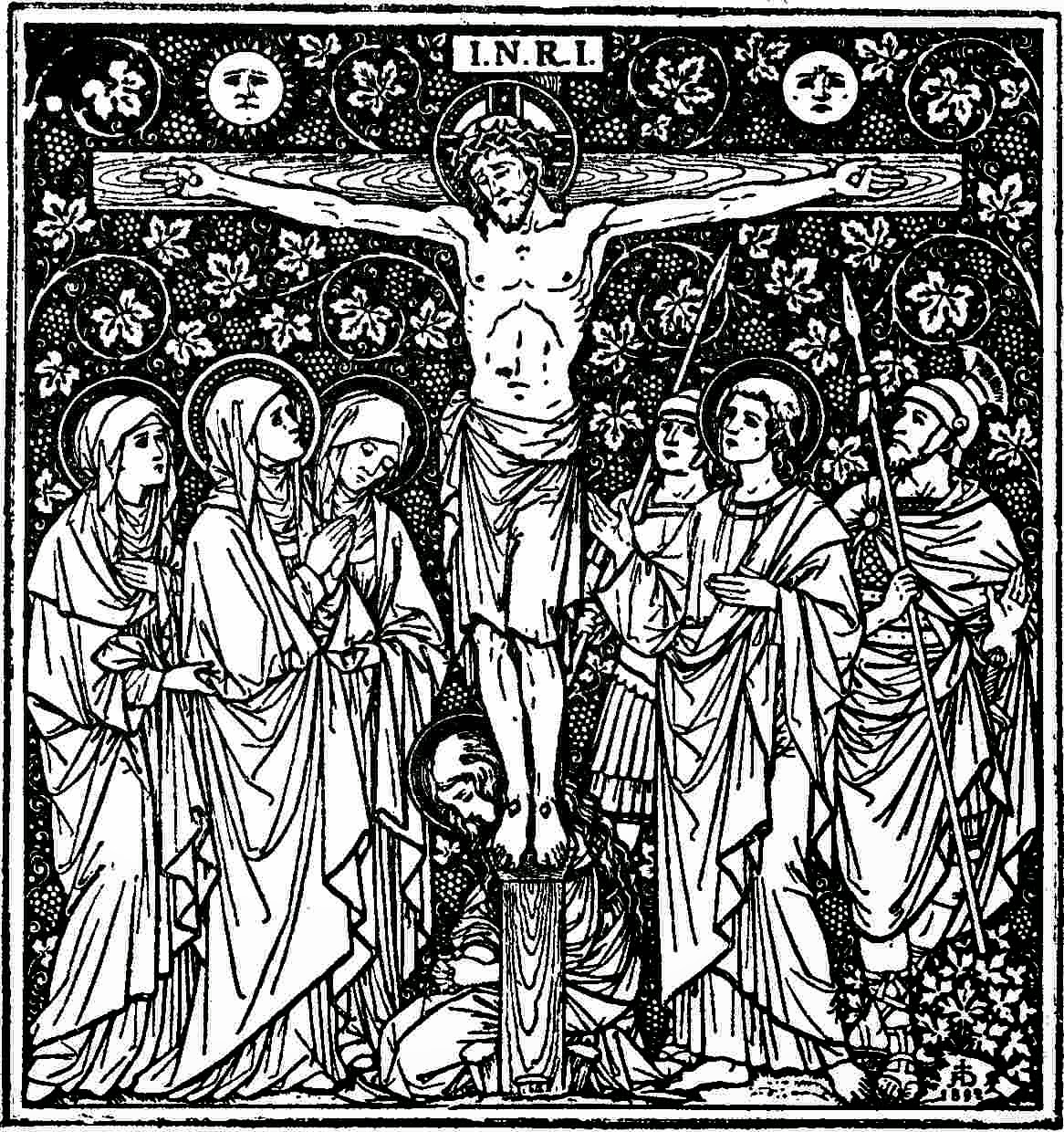
A Thought from S. Teresa of Avila – When discouraged trust in God’s Mercy

Beware, daughters, of a certain kind of humility suggested by the devil which is accompanied by great anxiety about the gravity of our sins.

He disturbs souls in many ways by this means, until at last he stops them from receiving Holy Communion and from private prayer by doubts as to whether they are in a fit state for it, and such thoughts as: ‘Am I worthy of it? Am I in a good disposition?I am unfit to live in a religious community. ‘

Thus Christians are hindered from prayer, and when they communicate, the time during which they ought to be obtaining graces is spent in wondering whether they are well prepared or no.

Everything such a person says seems to her on the verge of evil, and all her actions appear fruitless, however good they are in themselves. She becomes discouraged and unable to do any good, for what is right in others she fancies is wrong in herself.

When you are in this state, turn your mind so far as you can from your misery and fix it on the mercy of God, his love for us, and all that He suffered for our sake.

The Way of Perfection 39:1, 3

mostsacredheartofjesus-bruges

The Ascension

One of the loveliest things about today is that it tends to focus, in religious art at least, on feet:  the smelly things we like to keep hidden away from the world. Today we see Jesus’ in all their glory going back to where they came from, but they go back differently than they descended: they go back marked with nails, wounded, bearing the marks of God’s love, it is this love which fills us in the Church, the same love which feeds us in His Body and Blood.

We have come here today to celebrate Our Lord’s Ascension into heaven. The world around us may well find the idea quaint or laughable – or at least physically impossible. But it is no less hard to believe than Our Lord becoming incarnate by the power of the Holy Spirit in the womb of the Blessed Virgin Mary, or his rising from the dead at Easter. The world, with the greatest confidence, will tell us that what we are celebrating are myths and fairy stories, but they fail to get the point of what’s really going on.

Our Lord ascends, body and soul into heaven, to the closer presence of God the Father, and to prepare for the sending of the Holy Spirit on his disciples at Pentecost. He who shares our humanity takes it into heaven, into the very life of the Godhead; so that where he is we may be also. We have seen the promise of new life in Easter, a new life which is in the closer presence of God, which we celebrate today. We can see where it leads – what started at the Incarnation finds its goal and truest meaning in the unity of the human and the divine.

But rather than seeing this as an end it is surely far better to see in it a beginning – a beginning of the Church as we know it – a church which goes and makes disciples of all nations, baptizing them in the Father and of the Son and of the Holy Spirit, teaching them to observe all that Our Lord commanded us. This is exactly where we have been for nearly two thousand years. Inspired by the Holy Spirit they did what their Lord commanded them to do and that is why we are here today celebrating this fact.

But like them we too are called to follow Our Lord’s commands and to share his good news with the world so that it may believe. We are called to live lives where our faith is enfleshed in us – it is not abstract and private, but concrete and public. The Atheist who finds our beliefs laughable now joins forces with an Enlightenment Rationalist who wishes faith to be a private matter rather than a public one. This will not do: Our Lord did not say ‘Don’t do this if it’s inconvenient’ or ‘There’s no need to make a fuss in public about me’. He speaks as one given authority, ‘all authority in heaven and on earth’, so we can gladly place ourselves under His authority, to do his will.

He makes us a promise: ‘Behold, I am with you always, to the end of the age.’ He is with us by sending His Spirit on the Church at Pentecost and ever since. He is with us in his Word, Holy Scripture and in the Sacrament of His Body and Blood. It is through this (and the other Sacraments of the Church) that God’s grace can perfect our human nature – so that we can prepare to share the divine life of love in Heaven. Where our Lord goes we can hope to follow, through his sacrifice of Himself upon the Cross, a sacrifice made present here and on the altars of churches all throughout the world, to strengthen us, so that we may be close to him, sharing in the divine life of love poured out on us.

Once Jesus has ascended in glory and before he returns as our judge the only place where we can encounter him is in and through the Church, in its sacraments, in the word of Holy Scripture, and in people, filled with His Holy Spirit: it is a huge responsibility, but a movement which started with 12 men in Jerusalem is still going strong nearly two thousand years later. We have been given the gift of faith and it is up to us to pass it on, so that others may come to share in the joy of the Lord.

We can all hope to follow Him, and to spend eternity contemplating the Beatific Vision, caught up in that love which is the Divine Nature, sharing in the praise of all creation of the God who creates, who redeems, and who sustains all. We can have this hope because Christ has gone before us, he has prepared the way for humanity to follow him and share in the divine life of love.

Let us prepare for this by living the life of faith, strengthened by Him, proclaiming his truth, praying for the gift of His Spirit at Pentecost, that the Church may be strengthened to proclaim His saving truth and the baptism of repentance, so that we and all the world may sing the praise of God the Father, God the Son, and God the Holy Spirit, to whom be ascribed as is most right and just all might, majesty, glory, dominion, and power, now and forever.

Easter IV

In John’s Gospel, Jesus says of himself, ‘I am the Good Shepherd’  It discloses something important about who and what he is — he is one who tends, who looks after his sheep. The Jews in the Temple for Hanukkah don’t seem to have been listening. Jesus has told them and they do not believe that He is the Messiah. What he does in the Gospels testifies to who and what he is, the Word made flesh, God with us.

Those of us who are in the Church, through our Baptism belong to Him, we are His. So we are to listen to what Jesus tells us, in the words of Scripture and through prayer. Jesus knows us and we know him – in word and sacrament, through the outpouring of His grace, and so we follow Him, we do what He tells us to do, to love, to forgive each other, we are humble, we don’t think of ourselves as better than we are, we know our ned of, our dependance upon God. We put our faith into practice in our lives, so that it becomes a reality in the world.

Christ offers us eternal life, as we share in His death, so we too share in His Resurrection, and are assured of eternal life with Him, something wonderful and freely given, and a reason why we, as the Church, celebrate Easter in an extravagant and exuberant way, because it is a sign that God loves us, and saves us, that salvation first shown to the world by Noah , a man who trusts God, who listens to God, who obeys Him. We are sharing in that Eternal Life here and now, as we are nourished by Him, in Word and Sacrament, strengthened by Him, to live His risen life

We are to bear witness to our faith in the world so that it may believe. We are called to be witnesses regardless of the cost. We may not face persecution in this country; we are more likely to be faced with indifference, a coldness of heart, which denies the fact that what we are and what we say is important or has value. Yet we are to live lives which proclaim the fact that our life and death have meaning and value through Jesus Christ, who loves us, who died for us, and rose again so that we might have eternal life in him. It is a gift so precious that we have to share it, we cannot keep it for ourselves. In sharing it, it becomes a greater and more wonderful gift. In sharing it we are preparing for that moment seen by St John when all of creation will sing the praise of God, filled with his love, healed and restored by him.

We are preparing for that moment here and now preparing to be fed by him, to be fed with him, looking forward to that time when we and all creation will sing the praise of God the Father, God the Son, and God the Holy Spirit, to whom be ascribed as it most right and just, all might, majesty, glory, dominion, and power, now and forever.

Christmas 2015


Αὐτὸς γὰρ ἐνηνθρώπησεν, ἵνα ἡμεῖς θεοποιηθῶμεν· ‘He became human so that we might become divine

Athanasius De Incarnatione Dei Verbi 54.3


Love tends to become like the one loved; in fact, it even wishes to become one with the one loved. God loved unworthy man. He willed to become one, and that was the Incarnation.

Fulton Sheen The Divine Romance New York 1930: 70

3689929886_206d540f30_o.jpg

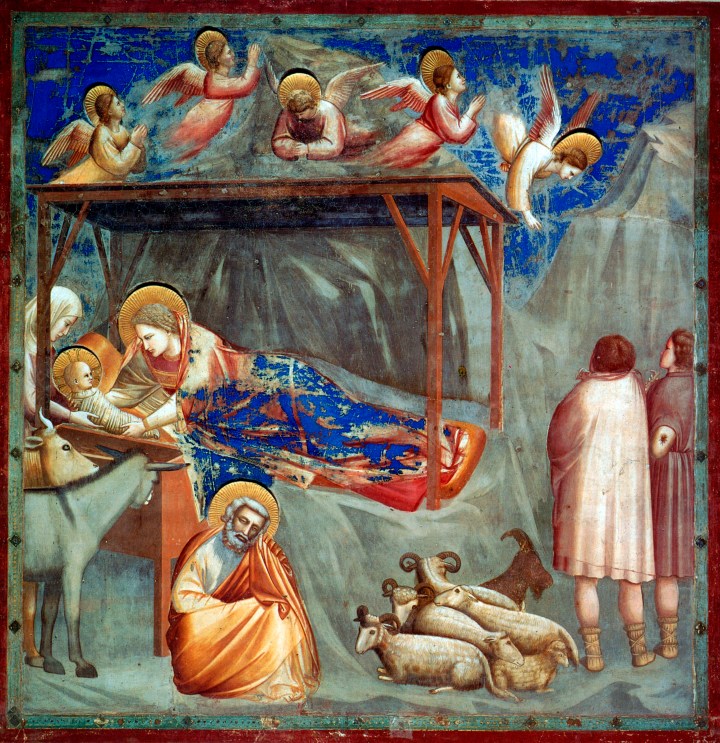
We have come here tonight to celebrate something which defies our understanding and expectations. The simple fact that the God who created all that is took flesh in the womb of the Virgin Mary and was born for us in Bethlehem as the Messiah, the Anointed of God, who would save us from our sins, should still feel strange and odd. It simply doesn’t make sense, nor indeed should it. In human terms, Mary should have been stoned to death for extra-marital infidelity, and some thirty three years later her son is executed as a blasphemer, a rabble-rouser, a trouble maker, in an awkward backwater of the Roman Empire, having gathered round himself a small group of misfits and undesirables appealing to the baser elements of society. There is nothing respectable here, just the rantings of religious extremists.

And yet here we are, some two thousand years later, celebrating the birth of a child who changed human history and human nature, because we do not judge things solely by human standards. We come together so that we may ponder the mystery of God’s love for us, a God who heals our wounds, who restores broken humanity, who offers us a fresh start, who can see beyond our failures and shortcomings, and who becomes a human being so that humanity might become divine, so that we may share in the divine life of love, both here on earth and in heaven.

If that isn’t a cause for celebration, I honestly don’t know what is. We are so familiar with the story of Christmas that I wonder whether we, myself included, really take the time to ponder, to marvel at the mystery which unfolded two thousand years ago in Bethlehem. God, who made all that is, comes among us, taking flesh in the womb of a young girl through the power of His Holy Spirit, so that in His Son we might see and experience God and His love for us.

God comes among us not in power or splendour but as a weak, vulnerable child, depending on others for love, and food, and warmth, laid in an animal’s feeding trough, insulated from the cold hard stone by straw – beginning his life as he will end it placed in a stranger’s tomb.

Throughout his life all that Christ says and does shows us how much God loves us. The Word becomes flesh, and enters the world, he dwells among us, a wondrous mystery which provokes us to worship, to kneel with the shepherds and to adore the God who comes among us, who shares our human life so that we might share His divine life, not because we asked for it, not because we deserve it, we haven’t worked for it, or earned it, rather it is the free gift of a loving and merciful God, this then is the glory of God – being born in simple poverty, surrounded by outcasts, on the margins of society, to call humanity to a new way of being together, where the old order is cast aside, turning the world upside down and offering us the possibility of living in a radically different way, a way of peace and love and joy, not one of power. Heaven comes to earth, born in the womb of a Virgin, so that we might behold the glory of God in a new-born child. So that we might experience the love and truth of God.

The word is made flesh so that prophesy might be fulfilled, so that the hope of salvation might be dawn, so that a people who have languished long in darkness might behold the glory of God where heaven and earth meet, in a stable in Bethlehem, where men and angels may sing together ‘Alleluia, Glory be to God on high, and on earth peace to people of goodwill’ The worship of heaven is joined with earth on this most holy night, that in the quiet and stillness all the earth might be filled with the praises of Almighty God, who stoops to save humanity in the birth of His Son.

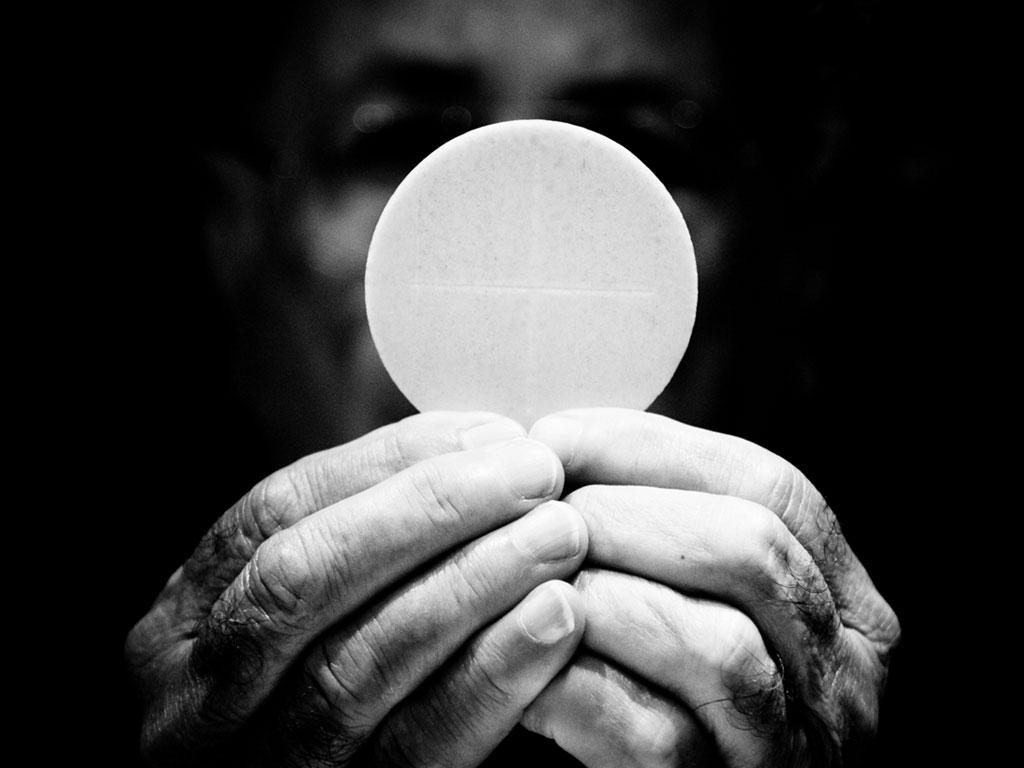
The Son who lives and dies and rises again for us will be here tonight under the outward forms of bread and wine so that the heavenly banquet may nourish our souls. He gives Himself so that we might share His Divinity, that God’s love can transform our human nature, having redeemed it in His Nativity. So let us come to sing his praises, and be nourished with His Body and Blood and experience here on earth the joy of Heaven and the closeness and the love of God, let it fill our souls with joy, and let us live lives which recognise the wondrous thing which happens tonight, that it may be a reality in our lives, that we may may proclaim in word and deed the reality of the Word made flesh, so that others may be drawn to kneel and worship like the shepherds, like the Holy Family of Mary and Joseph, and come to believe and give glory to God the Father, God the Son, and God the Holy Spirit, to whom be ascribed all might, majesty, glory, dominion and power, now and forever.

Advent IV (Year C)

bvm-visitation-web‘God does not love us because we are loveable of and by ourselves, but because he has put his own love into us. He does not even wait for us to love; his own love perfects us. Letting it do this with no resistance, no holding back for fear of what our egotism must give up, is the one way to the peace that the world can neither give nor take away’

Fulton J. Sheen Lift up your Heart

The fulfilment of prophesy is the great hope of Israel in times of tribulation, it speaks of their relationship with a loving God. The prophet Micah, after the destruction of Samaria, looks back to David of the tribe of Ephraim, to look forward to the saviour who will save Israel, who will be a true shepherd to his flock, one who will bring Peace. Whereas the first David sinned by sending a man to die: Uriah the Hittite, the husband of Bathsheba, the second of David will go to his death willingly to save from their sins even those who kill him. Prophecy is fulfilled, humanity is restored, and the peace of God’s kingdom can be brought about. His coming forth is from old from ancient days. Our salvation is both the fulfilment of prophesy and the outworking of God’s love. This is what we are preparing to celebrate

In the letter to the Hebrews we see the prophecy of Psalm 40:6-8 ‘In sacrifice and offering you have not delighted, but you have given me an open ear. Burnt offering and sin offering you have not required. Then I said, “Behold, I have come; in the scroll of the book it is written of me: I delight to do your will, O my God; your law is within my heart.”’ fulfilled in Christ. The sacrifices of the old covenant are replaced in the new covenant with the sacrifice of God for humanity: sacrifice is fulfilled and completed, once and for all. It is this sacrifice, which the church, through its priests of the new covenant pleads and re-presents: the eternal offering of a sinless victim, to free humanity of its sins, to restore our relationship with God and one another. It is an act of perfect obedience: the body prepared by God for Christ will do his will and will sanctify humanity: heal us and restore us.

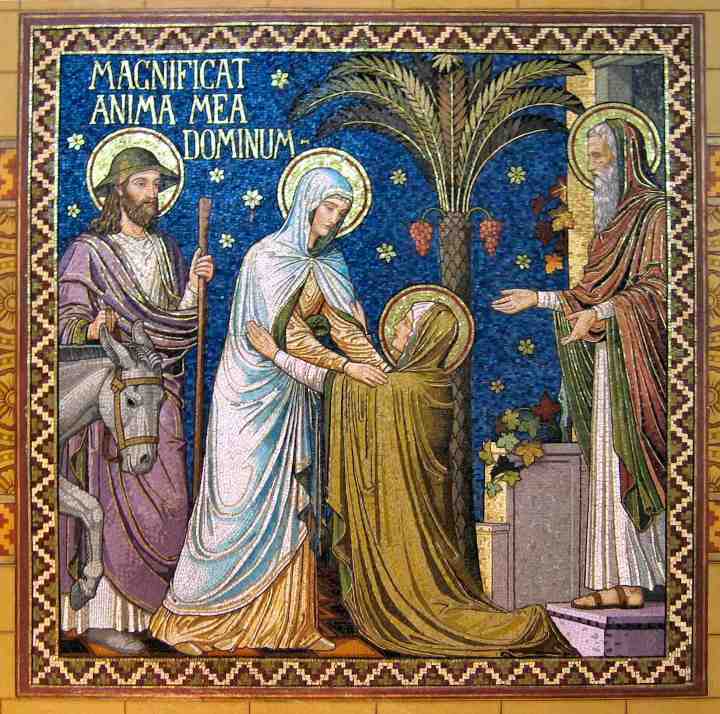
In this morning’s Gospel Mary does not tell Elizabeth that she is pregnant. But by the power of the Holy Spirit John the Baptist, the forerunner, the last of the prophets announces the coming of the saviour by leaping of the joy in his mother’s womb. It’s important, there’s no time to waste: Mary arose and went with haste. Time is of the essence, for us too, not for the frantic fulfilment of consumerism: last-minute presents, or enough food to satisfy even the most gluttonous, no, we have to prepare our hearts, our minds, and our lives, so that Christ may be born again in us, so that we may live his life and proclaim his truth to the world.

Through the prompting of her son and the gift of the Holy Spirit, Elizabeth can cry ‘Blesséd are you among women, and blesséd is the fruit of your womb!’ She recognises that Mary’s obedience, her humble ‘Yes’ to God undoes the sinfulness of Eve. That she who knew no sin might give birth to Him who would save us and all humanity from our sin. It is through the love and obedience of Mary that God’s love and obedience in Christ can be shown to the world, demonstrated in absolute perfection, when for love of us he opens his arms to embrace the world with the healing love of God. He will be the good Shepherd, laying down his life for his flock that we may dwell secure. We prepare to celebrate Christmas because it points us to the Cross and beyond, in showing us once and for all that God loves us, how much he does, and why he does. It is this trust and confidence in a loving God which means that Mary can sing her great song of praise, the Magnificat: a song of joy, and trust in in a God who can turn the world around. It is a song of revolution, which turns the established order of sin and human power on its head: God’s way is different, it is the way of suffering love, of self-giving, it is truly revolutionary, and it still has the power to change the world two thousand years after it was first sung with joy.

Safe in the knowledge that God loves us, that he feeds us with word and sacrament, that he heals us, let us love God and love one another, truly, deeply, with all our lives. Let us prepare the greatest gift we can, ourselves:  that this Christmas Christ may truly be born in us, that as the Sanctified People of God, we may live that goodness, that holiness, that charity, which reflects the bountiful goodness of God who gives himself to be born and to die and rise again that we might truly live and have life in all its fullness, sharing the joy and the love of God with everyone we meet, safe in the knowledge that he has the power to change the world through us. As he will come to be our judge let us live His life, proclaim his saving love and truth to a world hungry for meaning and love and thereby honour God the Father, God the Son, and God the Holy Spirit, the consubstantial and co-eternal Trinity, to whom be ascribed as is most right and just, all might, majesty, glory, dominion, and power, now and forever.

Homily for All Saints


The feast which we celebrate today is something of an historical accident, it began as the dedication of a chapel to All Saints in St Peter’s in Rome by Pope Gregory III in the eighth century, but it gives us a chance to consider saints, what they are, and what it means to be one. In short there are two things which we need to know about all the saints: that there are many of them and that they are all on our side.
Though, at first glance, the example of the saints and their number can also appear unnerving, even off-putting: when we consider the example of the saints, of lives lived in unity with God’s will and purpose we can begin to feel that we humble Christians with our ordinary hum-drum lives and simple faith cannot live up to the example set by the saints and that heaven has no place for us.
       But on this feast of All Saints, I would like to begin by considering the saints themselves.  Many people, if you were to ask them what they thought about a Saint would probably reply that they are better than the rest of us, but they somehow earned their reward amongst the church triumphant, but this is quite wrong. No one can earn their way into heaven, and the church has never subscribed to a doctrine of salvation through works. This is not to say that a Saint is simply a sinner, revised and edited. The lives and examples of the saints show us the way to Heaven because they reflect the gospel and the person of Jesus Christ. All of us, in our baptism, receive the grace of God, his free gift whereby our souls are infused with the theological virtues of faith, hope, and love. We all of us receive the same grace as all the Saints Triumphant, we are given, through our baptism all that we need to get to heaven, through the free gift of God.
We as Christians need to follow the example of the Queen of the Saints, the Blessed Virgin Mary, and like her say yes to God, and conform our lives to His will. We have to accept the divine invitation, cooperate fully with the divine will, and live out our faith in our lives.
       It is no surprise then that Jesus begins his teaching in the Sermon on the Mount with the phrase, ‘Blessed are the poor in spirit for theirs is the kingdom of heaven’. To be poor in spirit is to lack a sense of one’s own importance, it is the exact opposite of feeling self-satisfied or rejoicing in the fact that we have attained wealth or status or anything that is seen as important in the eyes of the world. The kingdom of God, as proclaimed by Jesus turns our human expectations on their head. Thus, the fact that we do not count ourselves worthy of a place means that we are in fact worthy of one.
We are used nowadays to a ‘go-getting’ world where you are deemed to have succeeded by a confidence bordering on arrogance, where all that matters is your own success. Whereas, in the kingdom of heaven those who are meek, and gentle and kind, those who think about others before themselves will be rewarded in a way which exceeds their expectations – Jesus’ vision of the world lived in accordance with the will of God does turn our understanding upside down.
To be poor in spirit is to be humble, to know that you’re a sinner, that you are no better than anyone else, and that you need God’s love and mercy. It is the exact opposite of pride, that foundational sin, whereby humanity thinks it knows better than God, and wants to go its own way. It is not masochism or self-pity, but instead a recognition of our reliance upon God and God alone. If the way to salvation is narrow then the door itself is low down, and only through humility may we stoop to enter. That is why Jesus says this first, because those who are poor in spirit, those who are humble and know their need of God, can live out lives in accordance with God’s will.
The church has always been a school for sinners; we will all of us get it wrong, fail miserably, but hopefully love and forgive one another, and ask God for forgiveness, remembering that he is loving and merciful. In all this, we can be sure that the world will not understand us.
We as Christians have to practice what we preach, and live out our faith in our lives, so that it can become something infectious (in a good way) and bring about the transformation of the world we as Christians long for (by the grace of God).
If we are courageous, kind, and humble, then we can give the world an example to follow, as opposed to the violence, greed, corruption, and a shallow cult of celebrity, which seem to characterise our modern world. We can truly offer an alternative, which shows that we are in the world but not of it, and in which the light of the Gospel will shine.
Thus when we consider what constitutes proper behaviour for human beings and how we should live out our faith in our lives the picture of the saints in heaven becomes a far less off-putting one. What God requires of us, and what the saints have demonstrated was their willingness to do what God asks of us, no more and no less.
So let us, on this feast of All Saints, be filled with courage, ready to conform our lives to God’s will and live out our baptism and our faith in the world – as this is what we are called to do, and our reward will be great in heaven.

A thought from Henri Nouwen

All of this is simply to suggest how horrendously secular our ministerial lives tend to be. Why is this so? Why do we children of the light so easily become conspirators with the darkness? The answer is quite simple. Our identity, our sense of self , is at stake. Secularity is a way of being dependant upon the responses of our milieu. The secular or false self is the self which is fabricated, as Thomas Merton says, by social compulsions. ‘Compulsive’ is indeed the best adjective for the false self. It points to the need for ongoing and increasing affirmation. Who am I? I am the one who is liked, praised, admired, disliked, hated or despised. Whether I am a pianist, a businessman or a minister, what matters is how I am perceived by the world. If being busy is a good thing, then I must be busy. If having money is a sign of real freedom, then I must claim my money. If knowing many people proves my importance, I will have to make the necessary contacts. The compulsion manifests itself in the lurking fear of failure and the steady urge to prevent this by gathering more of the same – more work, more money, more friends.

These very compulsions are at the basis of the two main enemies of the spiritual life: anger and greed. They are the inner side of the secular life, the sour fruits of our worldly dependencies. What else is anger other than the impulsive response to the experience of being deprived? When my sense of self depends on what others say of me, anger is a quite natural reaction to a critical word. And when my sense of self depends on what I can acquire, greed flares up when my desires are frustrated. Thus greed and anger are the brother and sister of a false self fabricated by the social compulsions of the unredeemed world.

Anger in particular seems close to a professional vice in the contemporary ministry. Pastors are angry at their leaders for not leading and at their followers for not following. They are angry at those who do not come to church for nit coming and angry at those who do come for coming without enthusiasm. They are angry at their families, who making them feel guilty, and angry at themselves for not being who they want to be. This is not open, blatant, roaring anger, but an anger hidden behind the smooth word, the smiling face, and the polite handshake. It is a frozen anger, an anger which settles into a biting resentment and slowly paralyzes a generous heart. If there is anything that makes ministry look grim and dull, it is this dark, insidious anger in the servants of Christ.

It is not so strange that Anthony and his fellow monks considered it a spiritual disaster to accept passively the tenets and values of their society. They had come to appreciate how hard it is not only for the individual Christian but also for the church itself to escape the seductive compulsions of the world. What was their response? They escaped from the sinking ship and swam for their lives. And the place of salvation is called desert, the place of solitude.


Henri Nouwen, The Way of the Heart, London: DLT, 1990: 14-16

Trinity XIII 22nd Sunday of Yr B ‘Be doers of the word, and not merely hearers’


From the Sayings of the Desert Fathers: an instruction sent by Abba Moses to Abba Poemen
A brother asked the old man, ‘Here is a man who beats his servant because of the fault he has committed; what will the servant say?’ The old man said, ‘If the servant is good, he should say, “Forgive me, I have sinned.”’ The brother said to him, ‘Nothing else?’ The old man said, ‘No for the moment he takes upon himself the responsibility for the affair and says “I have sinned,” immediately the Lord will have mercy on him. The aim in all these things is not to judge one’s neighbour. For truly, when the hand of the Lord caused all the first-born of Egypt to die, no house was without its dead.’ The brother said, ‘What does this mean?’ The old man said, ‘If we are on the watch to see our own faults, we shall not see those of our neighbour. It is folly for a man who has a dead person in his house to leave him there and go to weep over his neighbour’s dead. To die to one’s neighbour is this: To bear your own faults and not pay attention to anyone else’s wondering whether they are good or bad. Do no harm to anyone, do not think anything bad in your heart towards anyone, do not scorn the man who does evil, do not put confidence in him who does wrong to his neighbour, do not rejoice with him who injures his neighbour. This is what dying to one’s neighbour means. Do not rail against anyone, but rather say, “God knows each one.” Do not agree with him who slanders, do not rejoice at his slander and do not hate him who slanders his neighbour. This is what it means not to judge. Do not have hostile feelings towards anyone and do not let dislike dominate your heart; do not hate him who hates his neighbour. This is what peace is: Encourage yourself with this thought, “Affliction lasts but a short time, while peace is for ever, by the grace of God the Word. Amen.”’ [1]
In this morning’s Gospel, Jesus is uncompromising when dealing with the hypocrisy of the Scribes and the Pharisees: their religion is a façade, a sham, something done for show, for outward appearance, whereas we know, from the prophets onward that God looks on the heart, and if our motives are suspect then, we’re in trouble. The point is simple: what we do affects who and what we are, hence the need for the people of Israel to observe the statutes and ordinances without addition or subtraction. Likewise, the advice of the Letter of James is that people should in all gentleness and humility both listen to the word of God and do what it says, so that their thoughts and words and actions proclaim the truth that Christ died to save them from their sins and rose again that they might have new life in Him.
Rather than the pharisaic obsession with exterior cleanliness (and the letter of the Law) Our Lord and Saviour is concerned with the cleanliness of people’s souls, as it is from within, from the human heart that sinfulness can spring: his point is a simple one we become what we do, and thus the formation of a moral character is important, and can only be brought about by doing the right things.
There is a problem, however, that despite our best intentions we will fail in our endeavours. So what do we do? Is it simply a case that having tried and failed we are written off, cast aside and prepared for hell and damnation? By no means! Just as in the Gospel Jesus commands his followers to keep forgiving those who sin; our lives should be ones where we are continually seeking God’s forgiveness and that of our brothers and sisters in Christ, so that slowly and surely, as part of a gradual process, as people forgiven and forgiving, we try day by day to live out our faith in our lives. It is something which affects us all, each and every one of us, and it is only when we can live it out in our lives that our proclamation of the Kingdom can look authentic rather than running the risk of  being accused of hypocrisy.
So, by seeking forgiveness and forgiving others, by being close to God in prayer, in reading the Bible, and in the sacraments of the Church, and in the love which we have for each other as a Christian community, which recognises both that we fail but also that together we can be something greater and more wonderful than we could apart, through the love of God being poured into our hearts, and through that love forming who we are and what we do, that self-giving sacrificial love shown to us by Our Lord and Saviour Jesus Christ, in his dying for us, so that we might live in Him, let us be attentive to the Word of God, the Word made flesh, and not simply listen but also act – relying not upon our own strength but upon the love and mercy of God, seeking His forgiveness, to do His Will. 
When we do this together then we can be built up in love, as living stones, a temple to God’s glory, which proclaims his love and truth to the world, which shows how forgiveness and sacrificial love can build up, rather than being bitter and judgemental and blind to our own faults: like the scribes and Pharisees, eager to point out the sins of others and yet blind to their own faults, failures and shortcomings. Instead, clothed in the humility of our knowledge of our need of God, his love and mercy, let us come to Him, to be fed by Him, to be fed with Him, to be healed and restored by him, so that we can live lives which speak of the power of his kingdom so that the world may believe and give glory to God the Father, God the Son, and God the Holy Spirit, to whom be ascribed as is most right and just, all might, majesty, glory, dominion, and power, now and forever.


[1] Sr Benedicta Ward(tr.) The Sayings of the Desert Fathers: The Alphabetical Collection, London: A. R. Mowbray 1975: 120-121

‘I am the Bread of Life’ Trinity X (19th of Year B)


I was somewhat troubled when I first read this morning’s Gospel. I find it all too easy to moan about all sorts of things, it is a very human failing, one to which we all, from time to time, succumb. But it’s something which Our Lord tells us not to do, and so I pray that through God’s grace I may live a life which more closely imitates Jesus, and follows His commands. It reminds me of a passage in the sermons of St Augustine, Bishop of Hippo and Doctor of the Church: ‘“You all say, ‘The times are troubled, the times are hard, the times are wretched.’ Live good lives and you will change the times. By living good lives you will change the times and have nothing to grumble about.”’ (Sermo 311.8) It reminds us that the work of the Gospel is at one level up to us, the Body of Christ, His Church. We have to live our faith out in our lives (as fine words butter no parsnips) and we have to live the change we want to see in the world. Christianity is a way of life, a way mocked and scorned by the world around us, written off as irrelevant, and yet close to the God who loves us and saves us.

       In the Old Testament reading this morning we see the prophet Elijah being fed, we see God providing food which gives strength, strength for the journey. It prefigures the Eucharist, it looks forward to the reason why we are here today: to be fed by God. We can have the strength for our journey of faith, and the hope of eternal life.
       In the letter to the Ephesians we see that as children of God, loved by God, we are to imitate him, after the pattern of Christ, who offered himself, who was a sacrifice who has restored our relationship with God. It is this sacrifice, the sacrifice of Calvary, which has restored our relationship with God, which will be re-presented, made present here today, that you can touch and taste, that you can know how much God loves you; that you can be strengthened and given the hope of eternal life in Christ – that God’s grace can transform your human nature so that you come to share in the Divine Nature forever. Paul’s hope for the church in Ephesus should be ours to. This is how are supposed to live together as a Christian community, living in love, fed with love itself, here in the Eucharist, where we thank God for His love of us.
       In this morning’s Gospel we see Jews complaining, ‘how can he be from Heaven, from God, we know his Mum and Dad’. It is a difficult thing to understand, especially before Jesus suffers and dies, and rises again. It can be hard to understand who and what Jesus is. The Jews can see him only in purely human terms, they cannot see beyond this, the Messiah whom they long for is in their midst and they fail to recognise him. The notion of consuming human flesh and blood is so abhorrent to Jews that it would represent something sinful and polluting. Jesus’ answer is simple and challenging: stop complaining. We are to accept, we are not to moan, to complain, but instead to trust him who is the Way, the Truth, and the Life.
       Jesus is the Bread of Life, the true nourishment of our souls. It is through him that we can have life as Christians. He came down from heaven and became incarnate by the Holy Spirit of the Virgin Mary. He was born as a human being, and in him our human flesh has been raised to eternal life, to glory with God. Jesus speaks of the Eucharist, the sacrament of his body and blood as providing us with eternal life, of opening the way to heaven. So we come to be fed by God, to be fed with God, to have a pledge and foretaste of the joy of heaven, of eternal life with God, to experience true love in the source of love – the Triune God, Father, Son and Holy Spirit.
       We can have such a hope because Jesus gives himself, to suffer and die, and rose again, for love of us. It is this life of love and sacrifice which we are to imitate. Jesus gives himself to us for the life of the world – it is through being fed by him that the world can truly live. It is in experiencing God’s self-giving love that the world can find true meaning. Life in Christ is what true life means. Fed by him, strengthened by him, to imitate him and live out lives of self-giving love, to draw others closer to Christ so that the world may believe and give glory to God the Father, God the Son, and God the Holy Spirit, to whom be ascribed as is most right and just, all might, majesty, glory, dominion, and power, now and forever.

Evensong Trinity IX (2Peter 1:1-15)


A brother came to Scetis to see abba Arsenius. Having knocked on the door, the visitor and the monk who was with him entered; the old man greeted them and they sat down without saying anything. The brother from the church said, ‘I will leave you; pray for me.’ But the visiting brother did not feel at ease with the old man and said, ‘I will come with you,’ so they left together. Then the visitor said, ‘Take me to abba Moses who used to be a robber.’ When they arrived, the father welcomed them joyfully and then took leave of them with delight… That night the father prayed to God, saying, ‘Lord explain this matter to me; for thy name’s sake one flees from men, and the other for thy name’s sake receives them with open arms.’ Then two large boats were shown him on the river, and he saw abba Arsenius and the Spirit of God sailing in one in perfect peace; and in the other was abba Moses with the angels of God, and they were all eating honey cakes.’
Receiving letters: first loves, pen friends, when you’re far away – important, meaningful, something we’ve lost in a modern world with mass instant communication.
It’s hard for us to imagine just how it felt to be a Christian in the Early Church – small isolated communities, persecuted, illegal, in desperate need of encouragement, prone to going astray. A situation with profound differences and similarities to ours, here and now.
They need help – which starts with faith – what and whom they believe in – God the Father, the Creator of all, God the Son, Our Saviour Jesus Christ, and the Holy Spirit which sanctifies the people of God, the bond of love.
They and we become partakers of the divine nature, how and what God is , not by the abolition of our human nature, but by its transformation, through the grace, the free gift of God. Grace perfects nature, it does not abolish it. Likewise when we talk of the Incarnation of the Son of God, we should be mindful of a phrase in the Athanasian Creed ‘not by the conversion of the Godhead into flesh but by the taking of the manhood into God’ The miracle of the incarnation is the means by which humanity can come to share in the very life of God, the fleshiness of God will lead to the Eucharist where God gives us his flesh and blood to eat and drink, so that our nature might be transformed. This is also what the Cross and the Resurrection achieve – a complete victory over this world, it makes it possible.
     So then what are we to do? We are to supplement our faith with virtue – in that human beings are creatures of habit, we become what we do often, hence the need to cultivate the practice of the moral virtues, the more that we do them the more they become not only what we do but what we are. It helps us to keep on keeping on with the Christian life , the life of faith, a process which began with our baptism, wherein we are regenerate, born again in the Spirit, freed from sin and its power, and our souls are infused with the theological virtues of faith, hope, and charity so that we be prepared for life forever with God.
     So far so good, in theory, but in practice it isn’t quite that simple, we need to live out our faith in our lives, we have to live with other people, and that is where it gets difficult. It always has. It would be easy to have a rose-tinted picture of Christian communities like those of the Egyptian desert, but they squabbled and quarrelled and bickered and fought just like us, they needed to be reminded of who and what they were, they needed encouragement, cheering up as they tried to live the Christian life together. They failed, as do we, which is where God’s forgiveness, and his love and mercy come in. The Cross cancels the debt we cannot pay, and if we can say sorry, and repent – make a conscious decision to turn away from sin, and to turn to Christ, then we can keep going on our journey of faith, forgiven, and forgiving others, so that we can be built up in love, a loving forgiving community which makes Jesus Christ known by what it is and what it does, that communicates the Good News of the Kingdom and shares it so that others may come to believe and give glory to…

Sermon for Trinity IX (18th of Yr B) John 6:24-35

Jan van Eyck The Adoration of the Lamb from the Ghent Altarpiece


In Exodus the people of Israel moan an awful lot, in this morning’s reading they are hungry and they long to be fed, and so God answers their prayer and gives them manna and quails, they are fed with bread and meat, a miracle which points forward to the more miraculous feeding when Christ will give his flesh, the bread of life, so that we his people may have life in Him, so that we may be built up in love, so that His Divine nature may transform our human nature and prepare us for heaven.
In this morning’s Gospel, we see people who have been fed in the miraculous feeding, the feeding of the five thousand, following Jesus around. Perhaps they’re hoping for another free lunch? They have seen and yet they have not seen the signs; they haven’t understood what’s going on. They haven’t seen what Jesus is doing and why he is doing it
Jesus feeds people not as a combination of magic trick and mass catering, but as a sign of God’s generous love, his healing and forgiveness. That God loves us, you and me, all of us, so much, that he longs to feed us with himself, that he gives himself to be tortured and die on the Cross for us, to show us that he loves us, to heal our wounds, to take away our sins. His feeding of the people of God points to this, so that they might believe in Him. And believing in Him, be fed by Him, fed with him, so that they might have life, and life in all its fullness.
Jesus wants us to believe in him, to trust in him, to be fed by him, with him, the Word of God made flesh, to be fed by word and sacrament, to be strengthened to live our life of faith, growing into His likeness, and to live out that faith in the world around us. Jesus is the true bread come down from heaven which satisfies our spiritual hunger in a way which the world: success, money, possessions, what we have and what we do, cannot. He is the living water which satisfies the thirst of our souls. If we believe in Him, and in Him alone, we will never be thirsty. He gives us not what we want, but what we need: a love, a true love which gives meaning to human love, and to all of human existence: a generous self-giving love.
One of the Desert Fathers was asked by a soldier if God accepted repentance. After the old man had taught him many things, he said, ‘Tell me my dear, if your cloak is torn do you throw it away?’ He replied, ‘No, I mend it and use it again.’ The old man said to him, ‘If you are so careful with your cloak, will not God be equally careful about his creature?’ God’s grace does not abolish our human nature but transforms it, through the power of the Holy Spirit, so that we may live forever in Him, living out our faith.
If we trust in God, and live our lives according to his will, loving God and each other, with faith in him alone we can win a reward which lasts far longer than human praise or glory: the crown of eternal life and the glory of heaven. So let us be fed by him, with him, let us be nourished by word and sacrament, let us believe in him, let us love Him and love one another, and live lives which proclaim his life, his truth and his victory to the world around us: a victory which allows us to win a greater prize, a greater glory than anything this world can offer – true life, true glory, and true joy with him forever in Heaven, who is the Way, the Truth and the Life.

Seventeenth Sunday of Year B (John 6:1-15)


As you were getting up this morning, to get ready to come to church, you probably went into your bathroom to wash your face and brush your teeth and turned on the tap marked ‘C’, and all was well. If you went on holiday to Italy and you wanted to have a drink, wash your face or brush your teeth, you may well stand by a sink and turn on the tap marked ‘C’ and you would get a nasty shock. It stands for Caldo the Italian word for Hot. What you needed to do instead was to turn on the tap marked ‘F’ for Fredo or Cold.
This mistake is easily made, especially since we are so used to seeing the letter ‘C’ on cold taps back home. But it shows us the problem of misreading the signs. In today’s Gospel we have several examples of people misreading signs. First, we have Philip: he is asked by Jesus where they can buy bread for the crowd to eat. He replies that 200 denarii would only buy them a mouthful each. Six months wages just for a mouthful! So Philip can see no way that the people can be fed. He is unable to see past the practicalities.
Andrew begins better. He shows Jesus a boy with two fish and five barley loaves, the bread of the poor. But he cannot see the point and asks ‘what is that between so many?’ The disciples cannot read the signs and give the wrong answers to Jesus’ questions
The people are also a bit of a mixed bag. They have followed Jesus as they are impressed by outward things, his miraculous healing of the sick. Once they have been fed, they recognise the sign as a declaration of Jesus’ identity, but they misinterpret it. They are about to take him by force and make him king. This is not what Jesus’ kingship is about, he isn’t a political ruler, and his kingship is not of this world. All three have expectations which are met, but not in the way they were expecting.
The context of the Gospel story is important. It was just before the Passover, the festival commemorating Israel’s journey from slavery in Egypt, across the Red Sea towards the Promised Land. It is a festival of Hope and Freedom, of Liberation, of a God who will feed them with manna from heaven.
It is also the same time that Jesus will celebrate the Last Supper with his disciples, instituting the Eucharist, which Christians have faithfully celebrated ever since and the reason why WE are here today. The blessing, breaking and sharing of bread is a serious matter then, and not just an excuse for a conjuring trick.
The fact that it is a serious matter explains why Jesus will devote so much time and effort to teaching the people about this in the Gospel passages we will read over the next few weeks. It matters because it is how we encounter Jesus and are fed by him.
In the Gospel, it is Jesus who takes the initiative. He recognises that people are hungry, and that they need to be fed. He takes the basic foodstuff, bread, to show us how God works with simple things. These may be, like the barley loaves, poor, the kind that the world despises and looks down its nose at, but for God, nothing or indeed nobody is scorned or cast aside. Ours is a God who takes what is available and uses it. Jesus takes what he is given and thanks God for it, in recognition that all we have, our lives and all of creation is a gift, for which we should thank God.
It is through prayer and blessing that bread can be broken and distributed and provide sustenance, on a scale and in a way that defies our expectation and understanding. Not only are the people fed but as a sign of the superabundance of God’s love and mercy, there is more left over at the end than there was to begin with. Thus, in giving thanks to God and sharing his love, the kingdom of God of which the bread is a sign, grows, is shared, and satisfies people’s deepest needs.
Jesus takes, blesses, breaks and distributes bread to demonstrate what the Kingdom of God and the message of the Gospel is. This looks forward to the Institution of the Eucharist, just before Passover. It points to the great Passover, where the world is freed from the slavery of sin, washed in the Red Sea that flows from Calvary, and given the Law of love of God and neighbour.
This miraculous feeding by the shore of the Sea of Galilee will happen here today, when we, the people of God, united in love and faith offer ourselves and like the little boy, give the bread that we have, so that it may be taken, blessed, broken and given that we may be partakers in the mystical supper of the Kingdom of God. We eat the Body of Christ not as ordinary food – that it may become what we are – but that WE may become what HE is. THIS is our bread for the journey of faith. THIS is the sign and token of God’s love. THIS is the means by which we too may enjoy forever the closer presence of God.
So then, as the five thousand received and were satisfied, let us prepare to eat that same bread, the body of Christ, which satisfies our every need and fills us with a foretaste of the Kingdom of God

Trinity VII Yr B

Some monks came to see Abba Poemen and said, ‘Abba, we have noticed some of the brothers falling asleep during the early morning service, should we wake them up so that they may pray more devotedly?’ He said, ‘Well I, for my part, when I notice a brother falling asleep lay his head in my lap so that he may sleep more soundly’
 
It is perhaps not surprising that amongst the men and women who lived in the Egyptian desert, and who developed the monastic tradition one of the most inspiring is a man whose name means ‘Shepherd’ in Greek. His care and gentleness towards his brothers is an example of how to be a Christian: gentle, non-judgmental, forgiving.

Living as we do here, out in the countryside, surrounded by fields, I suspect that the imagery in this morning’s readings is not completely lost on us. We are used to sheep and the shepherds who look after them. The care and devotion which a Shepherd should devote to his flock is a sign of God’s love and care for us, and to those of us who have been given any sort of pastoral responsibility in the church it serves as a reminder of who and what we are supposed to be: its cost, and the responsibility we share for the care of Christ’s flock, the burden and the joy. It is frightening to think how little our own strength and skill is compared to the task – we have to rely upon God, and his strength and not our own.

In this morning’s first reading, we see what happens when it goes wrong (there’s advice for bishops here). The Kings of Israel are not true shepherds as they exercise power which destroys and drives away the sheep. They don’t care for the well-being of the people, who have scattered, gone wandering off, as the mood takes them. It’s all gone horribly wrong; and yet God, the true shepherd of our souls, does not leave his people comfortless. He promises to give them a good Shepherd, and points towards his son, the Good Shepherd, who will lay down his life for his sheep. The prophet Jeremiah looks forward to a future when there is a Good Shepherd, who is Christ, who lays down his life for his sheep. This is care, this is self-giving love.

In St Paul’s letter to the Ephesians we see the work of the Good Shepherd and its fruits. He gives us life through his death. Through him the flock is united; sin, that which divides, that which keeps us apart has been overcome by Jesus, he restores our relationship to one another and to God the Father, by laying down his life, by giving himself for us upon the cross and here in the Eucharist, where we the people of God are fed by God, are fed with God, to be built up into a holy nation, to become more like him, to have a hope of heaven, and of eternal peace and joy with him.
In conquering the world and sin, Christ shows us that there is nothing God cannot do or indeed will not do for love of us. All divisions, all human sinfulness can be reconciled through Him who was sinless, who gave himself to be tortured and killed that we might be free and live forever.

In this morning’s Gospel we see a picture of what good shepherds are like. Jesus and the apostles have been teaching the people, it’s a wonderful thing but it does take its toll. The disciples tell Jesus that it’s time to have a rest, to spend some time alone, in prayer and refreshment. The people are so many; their needs are so great that the apostles have not had time to even eat. It is a recognisable picture, and it shows us how great was the people’s need for God, for God’s teaching, for his love and reconciliation. Jesus does not send them away he takes pity on them because they are like sheep without a Shepherd, and he, the good Shepherd, will lay down his life for his sheep. His people are hungry so they will be fed by God, and fed with God. God offers himself as food for his people and continues to do so: he will feed us here today, feed us with his body and blood, with his word, so that we may be fed, so that we may be nourished, so that we may be strengthened to live our lives, that we may live lives which follow him, that we may have the peace which passes all understanding.

It’s a wonderful gift, which comes at a tremendous cost, which shows us how loving and generous God is towards us His people. Our response should be gratitude that we are fed in this way, that we have been reconciled to God through him. We should live lives fashioned after his example, lives which show his love and his truth to the world, lives which proclaim his victory, lives which will attract people to come inside the sheep-fold, to have new life in Jesus, to be with Jesus, to be fed by him, to be fed with him.

It’s a difficult thing to do, to live this life, to follow His example but with God’s help, and by helping each other to do it together, we can, and thereby give glory to God the Father, God the Son, and God the Holy Spirit, to whom be ascribed as is most right and just, all might, majesty, glory dominion, and power, now and forever.

10th Sunday of Year B


This morning’s readings start at the beginning, which, as we know, is a very good place to start, we go back to the root of the problem of the human condition – sin, not listening to God, and not obeying God, and suffering which we experience as a result of it. It is the common inheritance of humanity – we think we know better, that we can assume a place which rightly belongs to God and not suffer as a result. Worst of all, in the Genesis story Adam and Eve cannot even own up to their failing, they eschew the humility of being honest to God, preferring to try and shift the blame to someone else.  If that were the end of the story, then it would make for some fairly bleak reading and we would have every right to feel rather glum this morning, but thankfully this morning’s second reading from Paul’s Second Letter to the Corinthians can give us hope that this is not the end of the story, that we can have hope of a new future in Jesus Christ, and an eternal destiny thanks to him. Such is grace, the undeserved free gift of God, which should make us hopeful and thankful, and to live our lives in the light of Jesus Christ’s death and resurrection for our sake.
In this morning’s gospel we see that Jesus can provoke some strong reactions: it’s all a bit hot and bothered in Nazareth, there’s such a crowd around Jesus that he cannot even eat a meal, it’s clearly chaotic. Members of his family are so concerned for his safety and well-being that they want to restrain him, as they are not sure that he’s in his right mind – they cannot understand what is happening around them, and how it is that someone whom they know is doing this; the religious authorities likewise cannot understand his actions and accuse him of being possessed by an evil spirit.
Thankfully, Jesus is having none of it, and speaks to them in parables – How can Satan cast out Satan? How can they ascribe this to the devil? What they have witnessed are healings: they have seen humanity restored before their very eyes . The scribes have mistaken the kingdom of God for the action of the evil one, they, like Jesus’ relatives have fundamentally misread the situation. In ascribing Jesus’ actions, his preaching and his miraculous healing, to the powers of darkness, they have sinned against the Holy Ghost, which is apparently unforgiveable: they have mistaken the actions of God for those of the devil, they are blind, they are unable to see that what they are witnessing is the Messianic future foretold by the prophets – scripture is being fulfilled but they are unable or unwilling to recognise the fact.
       Then Jesus shows us that compared to our earthly ties, those of the kingdom are far wider, if whoever does the will of God is Jesus’ brother and sister then that should include all of us, and a whole lot more people – we are called into a relationship with God and with each other which transcends earthly ties and gives us a new paradigm within which to live. Thus to be in the church is to be part of Jesus’ extended family, called into a relationship with Him. It is a relationship characterised by the outpouring of God’s healing love upon us – Jesus’ miraculous healings in the Gospel are a sign of the Messianic kingdom, and they point to that great healing of all of humanity upon Calvary, where Jesus suffers and dies, taking our sins upon himself, paying the price which we cannot, so that in Christ humanity may be healed from the guilt and power of sin. It is that same sacrifice which is made present here, this morning, where we the people of God are given a foretaste of heaven, where we receive His Body and Blood, as a pledge of future glory, a healing remedy, the balm of Gilead to heal our sin-sick souls, the greatest spiritual medicine in all of creation, in all of history, is here for us now. So let us come to him, to be healed and restored by him, filled with his love and sharing that love with others.

Trinity Sunday


Today’s apparently the day which clergy dread, apparently we are petrified of the fact that today the Church celebrates the Triune nature of God, and that being required to preach about it, we might need to know some theology, and explain it to you. Apparently you don’t want this, though I cannot understand why – how could a Christian not want to deepen their faith and their understanding? At one level the Trinity could be seen as baffling: Father, Son, and Holy Spirit, three persons and one God, not three Gods, but a trinity of persons, co-equal, co-eternal, consubstantial. Yet what the Church celebrates today is not something abstract but something concrete and personal.
       The Church is a community, the Body of Christ, a fellowship of the baptised, who are loved, redeemed, and sanctified, by Father, Son, and Holy Spirit. We like to think of ourselves as loveable, as fairly good, decent, well-meaning people, but by divine standards we fail to come up to the mark, we’re not good enough, and all our efforts cannot make us get to heaven, such us the power of sin, of the human condition, and yet by the will of the Father, and through the overshadowing of the Holy Spirit, Our Lord and Saviour Jesus Christ became incarnate for our sake, and was born of the Blessed Virgin Mary, he showed us that God was not an angry, vengeful deity, but a loving Father who longs to welcome his prodigal children. God loves us not because we are loveable, that’s sin for you, but rather so that in being loved we might become loveable, so that God’s grace might transform our human nature, and prepare us for eternity with God. Along the way we will fail, again and again, we will get on each other’s nerves, but if we seek, give and receive forgiveness, then we can allow God’s redeeming love and forgiveness to be at work in us: ‘love to the loveless shown that they might lovely be, oh who am I that for my sake my Lord should take frail flesh and die’.
       Jesus Christ proclaimed the Good News of God’s love, which some accepted, many rejected, he was crucified to show us just how much God loves us, wretched sinful humanity, he sends his Spirit on the Church at Pentecost to strengthen it, to give it life, to live for God, and in God. We do not deserve it, I certainly don’t, the fact that I have been ordained does not make me a better Christian, I don’t have a hotline to the Divine, I can’t ‘have a word with the Man upstairs about the weather’, it just doesn’t work like that: all I know is that I am a wretched sinner who needs God’s love and mercy, every moment of every day. Thankfully, through the comfort of prayer, Holy Scripture, and the Sacraments of the Church, we can be built up in love – that’s how God works – we are not left comfortless, or without help or guidance, but like any loving relationship it cannot be one-sided, we have a part to play, which begins with our recognising our need for God, and for his love to be at work in us, to seek his forgiveness, and to be loving and forgiving to others, where we stay close to the channels of Divine Grace, so that our lives may be filled with them, so that they can transform our nature. It is an ongoing project, the work of a lifetime and beyond, which starts with humility, develops through obedience, and flourishes in charity.
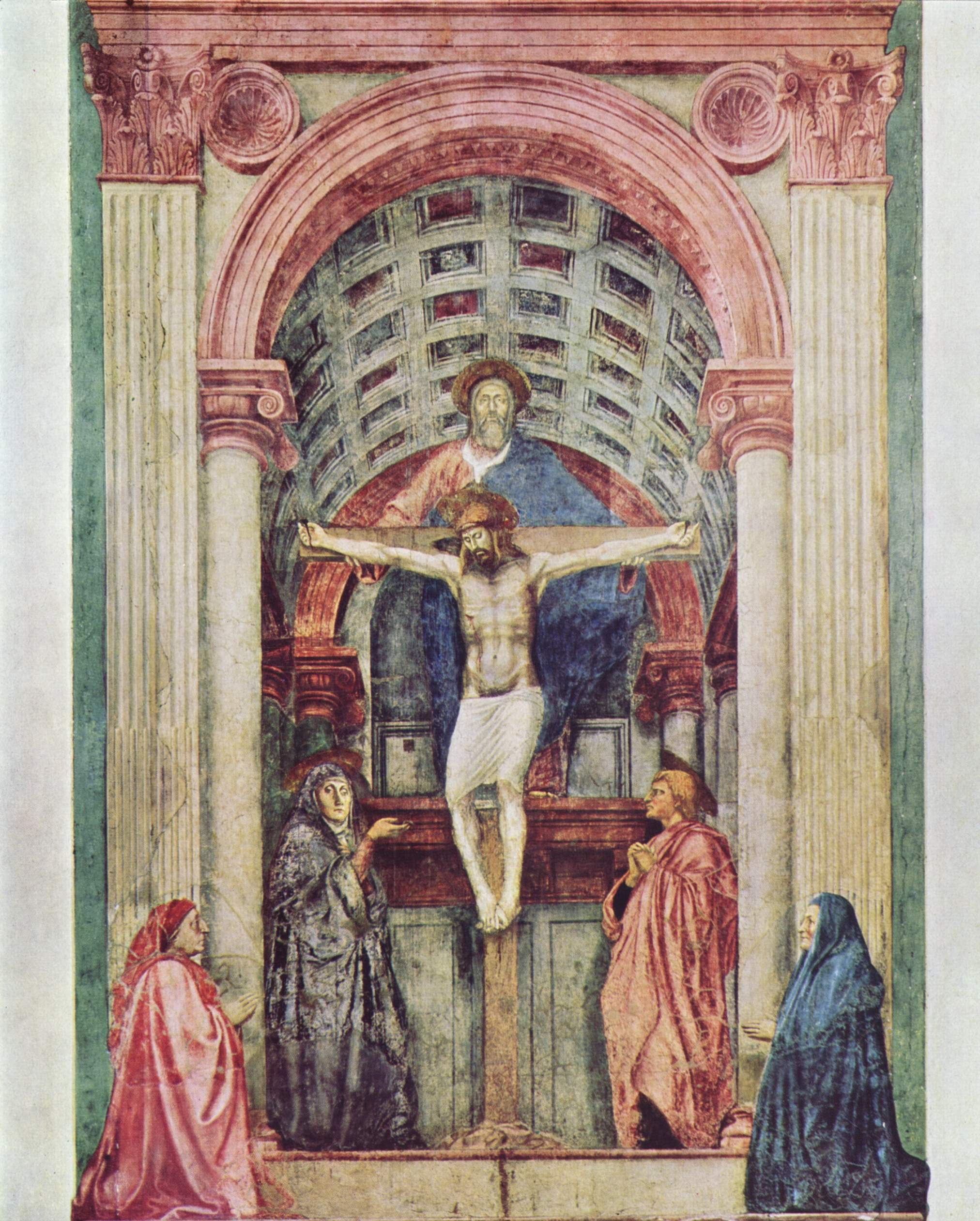
       For God so loved the world, that he gave his only Son, that whoever believes in him should not perish but have eternal life. For God did not send his Son into the world to condemn the world, but in order that the world might be saved through him.’ John 3:16-17 (ESV) These few words spoken by Jesus to Nicodemus in John’s Gospel encapsulate what we believe as Christians, and why we believe it, may we live them, strengthened through prayer, our study of the Bible, nourished by Our Lord’s Body and Blood, forgiven and forgiving, preparing to be caught up forever in the love of the consubstantial and coeternal Trinity, God the Father, God the Son and God the Holy Spirit, to who be ascribed as is most right and just, all might, majesty, glory, dominion, and power, now and forever.

Pentecost 2015

Before our Lord ascended to his Father in heaven he told his disciples to wait, to wait for the gift of the Holy Spirit. Around them in Jerusalem people would have been waiting to celebrate Pentecost where they gave thanks for the Law, given to Moses on Mt Sinai. It was a time of celebration, of joy, but for the Church it was something more.

       Jesus promised his disciples that he will send ‘the Spirit of truth, who proceeds from the Father, he will bear witness about me. And you will bear witness, because you have been with me from the beginning.’ (Jn 15:26-27 ESV) He also promises that ‘When the Spirit of truth comes, he will guide you into all the truth, for he will not speak on his own authority, but whatever he hears he will speak, and he will declare to you the things that are to come. He will glorify me, for he will take what is mine and declare it to you. All that the Father has is mine; therefore I said that he will take what is mine and declare it to you.’ (Jn 16:13-15 ESV) We know that Jesus speaks the truth, that his promises can be trusted, that he pours his Holy Spirit upon the Church on the day of Pentecost, and continues so to do until he comes in glory as our Saviour and our Judge.

       The Apostles have obeyed Jesus’ command, they have waited and prayed, and they are filled with the Holy Spirit, so that they can proclaim the good news of the Kingdom, so that they can make Jesus known, so that people can come to know him and be filled with his love. People are amazed and perplexed, they simply cannot understand what is going on, some people assume that the disciples are drunk. Just as once people called Jesus a drunkard and a glutton because he used to hang around with the wrong sort of people. Instead St Peter can show that what is happening has been prophesied by the prophet Joel, whom he quotes (Acts 2:16-21) to show that Christ, the Word made flesh is the fulfilment of Scripture, it finds its true meaning in and through Him. He can preach Christ crucified and risen, for our salvation: ‘This Jesus God raised up, and of that we all are witnesses’ they have seen and can testify that Jesus is alive. “Let all the house of Israel therefore know for certain that God has made him both Lord and Christ, this Jesus whom you crucified.” (Acts 2:36) Peter and the apostles can confess their faith in Christ and bear witness to him. It has an immediate effect: (Acts 2:37) ‘Now when they heard this they were cut to the heart, and said to Peter and the rest of the apostles, “Brothers, what shall we do?”’ To which Peter replies, ‘Repent and be baptized every one of you in the name of Jesus Christ for the forgiveness of your sins, and you will receive the gift of the Holy Spirit. For the promise is for you and for your children and for all who are far off, everyone whom the Lord our God calls to himself.’ (Acts 2:38-39) This is what the church, you and me are called to proclaim, so that people can come and have new life in Christ. Then we see them all living a recognisable Christian life: ‘And they devoted themselves to the apostles’ teaching and the fellowship, to the breaking of bread and the prayers.’ (Acts 2:42) This is what we are called to be and to do as Christians, to a life where we are close to Christ, in Word and Sacrament, so that we may be strengthened to live the life of faith, and to proclaim the Good News of Jesus Christ so that the world may believe.

Sermon for Evensong of the First Sunday after Easter

An old man said, ‘Joseph of Arimathea took the body of Jesus and placed it in a clean garment within a new tomb, which signifies a new humanity. Therefore let each one strive attentively not to sin so that they do not mistreat the God who dwells within themselves and drive him away from their soul.’
It is a good thing that we have time at Easter to take in and make sense of what we have commemorated: Our Lord’s Passion, Death, & Resurrection. They are linked and form part of a larger whole of the history which stretches back through the Incarnation, of the Word made flesh for our sake, to the Creation of the World.
 In the 8th Chapter of the Acts of the Apostles we see the meeting of Philip and an Ethiopian eunuch, who is reading the very passage which we have just heard  as our first lesson this evening– the Suffering Servant. Philip asks him if he can understand what he is reading. He replies that he cannot, unless someone shows him the way. ‘Then Philip opened his mouth, and beginning with this Scripture he told him the good news about Jesus.’ (Acts 8:35 ESV). Isaiah’s prophesy is fulfilled in Jesus and this is the proclamation of the Church: we proclaim Jesus Christ and him crucified.
We read scripture so that we can understand it, and see in its words how it discloses the truth of the Word made flesh, who suffered and died for our sake. Isaiah prophesies Our Lord’s Passion and Death, it, like the rest of Scripture points to Christ and finds its true meaning in Him, and thus it makes sense, it can be understood, and the more we come to understand, the more we come to know just how much God loves us.
Thus for Paul in the Letter to the Romans he needs to show them how Abraham, the father of our faith is rewarded by God not through his observance of the Law, as the Pharisees would argue,  but rather by the obedience of his faith in God which can lead to his righteousness.
As Christians we believe that we are saved by grace through faith – by grace, by the unmerited free gift of God who gives his own Son to be born, to suffer and die and to rise again for us, so that we might have life in Him, through our faith, through believing in the God who does this.  We can put our trust in a God who loves us, who dies this for us, to heal us and restore us, and thus we can have new life and eternal life in Him. It is unmerited: we do not deserve it, but it is a free gift rather than a reward, something earned.
In Christ the promise made to Abraham comes true in that through the proclamation of the Gospel, the Good News of Jesus Christ to the whole world Abraham can become the father of many nations, the word for the non-Jewish peoples of the world – he becomes a spiritual parent to Christians because of Abraham’s faith in God, he trusts God, even to the point of being ready to sacrifice his only son, which itself points to Christ, who as the Lamb of God who takes  away the sins  of the world is a type of the lamb caught in the thicket at Bethel. Abraham trusts in God, puts his faith in Him, and is rewarded for that faith. We put our faith in Him, and are fed by Him, fed with Him, so that we may share in his Divine life, strengthened and nourished by God, so that his grace may perfect our nature.
Thus we are to follow Abraham’s example and put our faith in the God who loves us and saves us by His Son, who suffered and died and rose again for our sake. It’s all about faith: faith in Jesus Christ, who died and rose again for us, who was delivered up for our sins and raised for our justification, this is what we believe, we have to be like Philip and share it with others, so that they too may believe and give glory to God the Father, God the Son, and God the Holy Spirit, to whom ….
            

Easter Homily 2015

It is early in the morning; the sun has not yet risen when Mary Magdalene, Peter and John come to the tomb. They have seen their Lord and Saviour betrayed, falsely accused, flogged, and killed. We can scarcely imagine what’s going through their minds: grief, anguish, bitterness, Peter’s regret at having denied Jesus, of not being brave enough to say that he was a follower of Jesus, Mary and John who stood by the Cross, just want to be close to him in death as in life. They can’t take in what has happened: a week ago he was hailed as the Messiah, God’s anointed, the successor of David, now he has been cast aside: all his words of God’s love have fallen on deaf ears, he has been cast aside, ignored, a failure, a madman who wanted to change the world.
        Mary sees the stone rolled away, in the darkness, she doesn’t understand but says to Simon Peter ‘they have taken away the Lord out of the sepulchre and we know not where they have laid him’ her concern is for the dead body of Jesus. She does not know, she does not believe. As Mary has run away from the tomb, John and Simon Peter run towards it. John sees the cloths but does not go in. Peter goes in first and sees everything. Then John sees and believes: he believes that God has raised Jesus from the dead. It is his love for Our Lord and Saviour which allows him to see with the eyes of faith, to make sense of the impossible, of the incomprehensible.
        As Christians we need to be like the Beloved Disciple: to love Our Lord and Saviour above all else, to see and believe like him, and through this to let God work in our lives. For what happened on that hillside nearly two thousand years ago, early in the morning, on the first day of the week is either nothing at all: just a delusion of foolish people, a non-event of no consequence or interest, something which the world can safely ignore or laugh at, mocking our credulity in the impossible, childish fools that we are; or it is something else: an event of such importance that the world will never be the same again.
        In dying and rising again, Jesus has changed history; he has changed our relationship with God, and with one another. He has broken down the gates of Hell to lead souls to Heaven, restoring humanity to the loving embrace of God, to open the way to heaven for all humanity, where we may share in the outpouring of God’s love, which is the very life of the Trinity. His death means that our death is not the end, that we have an eternal destiny, a joy and bliss beyond our experience or understanding: to share in the life and love of God forever – this is what God does for us, for love of us, who nailed him to a tree, and still do with our dismissals or half-hearted grudging acceptance, done for propriety’s sake.
        There can be no luke-warm responses to this; there is no place for a polite smile and blithely to carry on regardless as though nothing much has happened. Otherwise, we can ask ourselves: why are we here? Why do Christians come together on the first day of the week to listen to the Scriptures, to pray to God, to ask forgiveness for our manifold sins, to be fed by Christ, to be fed with Christ: with his body and his blood, for Christ: to be his mystical body, the Church in the world?
        We are called to be something different, something out of this world, living by different standards and in different ways, living lives of love not selfishness, self-satisfaction and sin. In baptism we died with Christ and were raised to new life with him, we are to live this life, and to share it with others: ours is a gift far too precious to be kept to ourselves, it is to be shared with the whole world, every last human soul, that they too may believe, perfecting creation, and bringing all of prodigal humanity into the embrace of a loving Father, filled with His Spirit, conformed to the pattern of His Son. This is our life, our calling, to have the singularity of purpose of those first disciples, who saw and believed, who let God in Christ change their lives and share this great free gift of God’s love.

So let our hearts be filled with joy, having died with Christ and raised to new life with him. Let us take that new life, and live it, in our thoughts, our words, and deeds, and share that life with others that the world may believe, that what happened outside a city two thousand years ago has changed all of human history and is still changing lives today. Christ died and is alive so that we and all the earth may have life and have it to the full, sharing in the life and love of God the Father, God the Son, and God the Holy Spirit, to whom be ascribed as is most right and just, all might, majesty, glory, dominion, and power, now and forever. 

Monday of Holy Week Reflection

Gospel
John 12:1-11

Judas really cannot understand why the myrrh is being lavished on Jesus. He doesn’t care for the poor, he’s looking for a chance to embezzle from the common fund. He’s thinking about himself and about worldly things. Jesus enjoys the things of this world: he’s having dinner with friends, he hangs around with all sorts and is accused of being a drunkard. He doesn’t care a jot for social convention, for keeping up appearances. It’s what on the inside that counts. He knows that Mary is acting out of love. As a costly extravagant act it points to his own death on the cross for love of us, wretches that we are. There is something wonderful and exuberant about divine generosity: it’s over the top, it is lavish and excess – such is the love of God, who spared not his own son for love of us. That’s how much God loves us. Can our response to that love be exuberant, or will we be like Judas: miserly, thinking of ourselves.

The Jews don’t get it either. They can see an event: Jesus is news and so is Lazarus: celebrity culture is not a new thing. The Religious Authorities think it’s all about power and influence: they don’t get it either. They can only see a zero-sum game. They are concerned with things of this world and are unable to the Kingdom of God in their midst. It’s always troubling when the church starts to look like the Pharisees: concerned with the things of this world, power, influence, courting popular opinion or popularity with politicians. Jesus has always had the ability to unsettle the powerful. They feel threatened by the freedom of the Kingdom, a freedom which sees Christ lay down his life freely. Such things can truly change the world. And they do. The Cross will show God’s power in weakness, his love in rejection and humiliation. It’s scandalous insofar as it turns the values of the world on their head. It announces and inaugurates the Kingdom of Christ: let us stay close to him, follow in his footsteps, and live his life by his rules, spurning the ways of the world to have life in all its fullness in Him.

Lent IV – Looking to the Cross

For God sent his Son into the world not to condemn the world, but that through him the world might be saved.
It is far too easy nowadays to see the church in a negative way –  it’s the fashionable thing to do – as the church we’re corrupt, we’re filling people’s heads with nonsense. We can be characterised as strange, quaint, and out of touch. It suits people to see us entirely in negative terms: as opposed to certain things. We are prescriptive: we limit people’s freedom, and in failing to practice what we preach, we can be written off as hypocrites, with no right to proclaim objective truth, to offer the world a moral framework, within which to live its life; to offer the world an alternative paradigm, a new way of living and of being through which to have life, and have life in all its fullness. It’s less a valid criticism and more of an excuse for people not to bother. It’s an easy way out, which saves people from the more difficult task of living Christ-like lives of love and self-sacrifice. The church does not claim to be perfect, but rather a collection of sinners justified by the grace of God, through faith in Christ.
          The simple truth is that people like to moan and grumble – we all do, and I’m as guilty of it as anyone, but there is a fundamental difference between being dissatisfied with the way things are and longing for change, and hopefully bringing about good change, change in a god-ward direction, and the corrosive moaning rooted in selfishness, which betrays a lack of trust in God. The Israelites in the desert represent this negative moaning, they are unable or unwilling to trust God to lead them on a journey towards the Promised Land, and while they realise their mistake their poisonous moaning has disastrous consequences for them. And yet even in this they are not abandoned by God, they gaze on the bronze serpent, they look to that which prefigures the Cross, through which God heals his people, taking their sins upon himself. That’s why it appears in stained-glass windows in churches, because it points to the Cross, it’s why when talking about the Cross Jesus mentions it, so that people might understand how and why God loves them and how it might affect their lives.
St Paul in his letter to the Ephesians can state with confidence, ‘For by grace you have been saved through faith, and this is not your own doing; it is the gift of God – not the result of works, so that no one may boast(Eph 2:8-9). It’s not about what we can do, but about what God can do for us. Our relationship with God is the result of a gift, which we can receive and which can transform our lives, if we only let go, and let God…
          This morning’s gospel reminds us of the fundamental truth that God loves us – it is the heart of the Good News – the Gospel, what we preach and what we live as Christians. There are few words as comforting as ‘For God so loved the world that he gave his only Son, so that everyone who believes in him may not perish but may have eternal life. ‘Indeed, God did not send the Son into the world to condemn the world, but in order that the world might be saved through him’ (Jn 3:16-17). They may be familiar to us, they certainly should be, but we must not let our familiarity with them cloud the significance of simply stating that God loves us, does not condemn us, but saves us, in and through Jesus Christ. That’s why we are Christians, it’s why we’re here, and recognising God’s love for us will have a transforming effect upon our lives.
In the Incarnation Jesus comes among us as a poor helpless baby, laid to rest in the rough wood of an animals’ feeding trough. He is cared for through the love of his mother, the Blessed Virgin Mary, who in her love, her service, and obedience, stands as the model for all Christians to follow. She is the first Christian, the greatest, a pattern for us to imitate, of loving trust and obedience, of care and costly love, and a foreshadowing of our great mother the church, through which we are saved by grace through faith.
          Upon the rough wood of the cross, Jesus will suffer and die for us – such is the cost of human sin. His mother, Mary, stands by and watches and weeps. As the church we too should watch and weep for the wounds of human sin and division which still scar Christ’s body. We feel helpless. What can we do? We should do all that we can to live God’s life of sacrificial self giving love: living lives of light, which shine in the darkness. It isn’t easy, but if we try and do it together then all things are possible, through him who loves us.
          The salvation and eternal life which Christ offers freely to all, comes through the church, which we enter in baptism, where we are nourished in word and are sacrament, where we are nourished, given food for the journey, strengthened and taught, to live his risen life, to share in the joys of Easter.
          God cares so much about the world and its people that he takes flesh, and lives a life of love, amidst the messiness of humanity, to show us how to live lives filled with love, life in all its fullness. God in Christ comes among us not to condemn the world but to offer it a way of being, of being truly alive in Him. God has made us for himself, and our hearts are restless until they find their rest in him. The spiritual needs and searching which characterise people in the world around us can be satisfied in God and in God alone, through the church. We can rejoice, and relax our Lenten discipline for a little while to give thanks for the wonderful gift of God’s love in our lives, in the church, and for the world.
          But we also need to trust God, to listen to what he says through Scripture, to be fed by him, and to live lives in accordance with his will and purpose, together, as a family, as a community of love, cared for and supported by our mother, the church. And in so doing we look to Our Lady as Mother of Our Lord and Mother of the Church, as a pattern for love and obedience, as a model for all mothers: loving and tender, putting the needs of others before self, self-giving, sacrificial, and open to both joy and pain, trusting in God.

This, as any mother can tell you, is not easy, it’s difficult, really hard, but its rewards are likewise great. So let us, as we continue our Lenten journey towards the cross, where God shows his love for us most fully and completely, giving his body to be broken and his blood be shed for us, a sacrifice which will be made present here today under the outward forms of bread and wine, to strengthen us to live the risen life of Easter, to offer the world an alternative to selfishness, to self-centredness, to the sin which continues to separate us from God, an alternative shown to us in a self-giving love of mothers, and of our mother the church. So that we may join the Angels in our song of love and praise to the Trinity: Father, Son, and Holy Spirit, to whom..

Homily for Lent I

It is all too easy to see the forty days of Lent, the season of preparation for our celebration of Our Lord’s Passion, Death and Resurrection as a time of sadness and misery. Too often it is seen in entirely negative terms: we focus on what we are giving up. Now the practice of abstaining from bodily pleasures is a good and ancient one, not in and of itself, it is not some sort of holy diet, but rather we turn away from something we enjoy so that we may focus upon something else. The other practices of Lent: prayer and almsgiving are there to focus our minds upon God and other people, so that we may enter the desert of repentance with joy, thinking of the needs of others and growing closer to the God who loves us and longs for our healing, our repentance.
     
  In this morning’s first reading we see a covenant between God and humanity, a sign of God’s love for us, and a promise of reconciliation between God and the world which underlies what Jesus does for us, it allows us to have hope, to see things in an entirely positive way, and to see behind what we do, that it is a means, a means to an end, namely our sanctification, rather than an end in itself. In our second reading from the first letter of Peter, he draws the link between Noah’s ark, which saves people through water, and baptism, which is prefigured in it. Lent is a season of preparation for baptism, so that we can die with Christ and be raised like him and with him to new life in him. For those of us who have been baptised it is good to have a chance to spend the time in Lent praying, drawing closer to the God who loves us, and living out our faith in our lives – we can all do better, especially when we try, and try together, supporting each other, so that we might grow in holiness as the people of God.
When St Antony was praying in his cell, a voice spoke to him, saying ‘Antony, you have not yet come to the measure of the tanner who is in Alexandria.’ When he heard this, the old man arose and took his stick and hurried to the city. When he had found the tanner …. he said to him, ‘Tell me about your work, for today I have left the desert and come here to see you.’
He replied, ‘I am not aware that I have done anything good. When I get up in the morning, before I sit down to work, I say that the whole of the city, small and great, will go into the Kingdom of God because of their good deeds while I will go into eternal punishment because of my evil deeds. Every evening I repeat the same words and believe them in my heart.’
When St Antony heard this he said, ‘My son, you sit in your own house and work well, and you have the peace of the Kingdom of God; but I spend all my time in solitude with no distractions, and I have not come near to the measure of such words.’
It is a very human failure, for far too often we make things far too complicated when all we need to do is to keep things simple. In the story from the Desert Fathers, which we have just heard, St Antony, the founder of monasticism, a great and a holy man, is put to shame by a man who spends his days treating animal skins. The key to it all is the tanner’s humility, his complete absence of pride, and his complete and utter trust in God – his reliance upon him alone.
In this morning’s Gospel we see the beginning of Our Lord’s public ministry – he is baptised by John in the River Jordan before immediately  going into the desert for forty days. He goes to be alone with God, to pray and to fast, to prepare himself for the public ministry of the Proclamation of the Good News, the Gospel.
During this he is tempted by the devil: he faces temptation just like every human being, but unlike us, he resists. The devil tempts him to turn stones into bread. It is understandable – he is hungry, but it is a temptation to be relevant, which the church seems to have given into completely: unless we what we are and what we do and say is relevant to people, they will ignore us.
There is the temptation to have power, symbolised by worshipping the devil. It leads to the misuse of power. The church stands condemned for the mistakes of the past, but in recognising this there is the possibility of a more humble church in the future – a church reliant upon God and not on the exercise of power.
There is the temptation to put God to the test – to be spectacular and self-seeking. Whenever we say ‘look at me’ we’re not saying ‘look at God’.
Jesus resists these temptations because he is humble, because he has faith, and because he trusts in God. It certainly isn’t easy, but it is possible. It’s far easier when we do this together, as a community, which is why Lent matters for all of us. It’s a chance to become more obedient, and through that obedience to discover true freedom in God. It’s an obedience which is made manifest on the Cross – in laying down his life Jesus can give new life to the whole world. He isn’t spectacular – he dies like a common criminal. He has no power, he does not try to be relevant, he is loving and obedient and that is good enough.
It was enough for him, and it should be for us. As Christians we have Scripture and the teaching of the Church, filled with his Spirit, to guide us. We can use this time of prayer and fasting to deepen our faith, our trust, our understanding, and our obedience, to become more like Jesus, fed by his word and sacraments – to become more humble, more loving, living lives of service of God and each other.  It leads to Jesus’ proclamation of the kingdom: ‘The time is fulfilled, and the kingdom of God has come near; repent, and believe in the good news.’ Words as true now as then, which the world still longs to hear, and which we need to live out in our lives, so that the world may believe and give glory to God the Father, God the Son, and God the Holy Spirit, to whom be ascribed as is most right and just, all might, majesty, glory dominion and power, now and forever.
duccio_di_buoninsegna_040

Sermon for Evensong (2nd Sunday after Epiphany)

Our two lessons this evening provide us with contrasting pictures of people in their relationship with God and each other, understood in sexual terms. Now it is an accusation often levelled at the Church that it is all we are concerned with, though that is in fact far from the case, and whereas the Victorians pretended that sex did not exist, modern humanity especially since the 1960s has acted as though nothing else does.
       In our first lesson the Prophet Isaiah is looking forward to a future when Israel, having returned to God and been purified, is understood as a land wedded to God. It looks forward to a Messianic future, one which we as Christians see as brought to fulfilment in Jesus Christ, who is the righteousness and the salvation of Israel, who gives himself for love of us, that we may be pure and holy and through Him. The image of married love and intimacy is profound: it speaks of mutual love and generosity, it is what God wills for our human flourishing, it is the place for children to be born and brought up, in love.
       Whereas the Church in Corinth is in a really bad way: as well as taking each other to court, Christians would appear to be behaving in a way which falls short of Christian morality. They appear to have understood freedom from the law as though it were freedom from any law: extreme antinomianism – that anything goes; that they can just do as they please. This is, however, not the case. How we live our lives, and what we do with our bodies matters. For those of us who have been washed, sanctified, and justified in the name of the Lord Jesus Christ and by the Holy Spirit, we are called to be in Christ, clothed with him, and living a new life, conformed to him and not to the ways of the world.
       There are some in the Church in Corinth who have been arguing that all things are lawful, to which Paul has to counter that while something may be lawful, it may not be advantageous, as Christians like others in the ancient world would generally subscribe to an idea of virtue ethics, put simply ‘you are what you do’ or in greater depth, our actions help form our moral character – we become what we do habitually, and thus the more we do the right thing, the more we are disposed to do such things, and thus to progress in virtue.
       While they claim the freedom from being made subject to anyone, they would appear to be subject to base appetites, to lust and gluttony, neither of which help in our relationship with Jesus Christ. Thus the proper place for sexual activity remains holy matrimony, where a man and woman are joined; they become one flesh, in a life-long exclusive union where children may be born.
       Christians are to love their bodies, as ours is not a spiritual religion, which despises the flesh, but which rather wishes to see it used for the glory of God and for our mutual flourishing. We receive the Holy Spirit and the grace of God, and the theological virtues of faith, hope, and charity in our baptism, where we are regenerate, born anew in Christ, we are not our own in that we now live for God, and we glorify him in our bodies by how we live our lives.

       The messianic hope expressed in this evening’s first lesson finds its fulfilment in Christ and in the Church which is his body, we were bought at a price, not thirty pieces of silver, but life of God’s only-begotten Son, who suffered and died for us, for you and for me, and for the sins of the whole world, past, present, and future. How else can we begin to try and repay such love and such generosity than by living the life that God wills for our human flourishing – gentle, generous, and exhibiting the same costly love which Christ showed to us.  This glorifies God and shows due respect to the wonders of creation and salvation, it helps to form our moral character and to live out true faith and charity in our lives, supporting one another, praying for each other, forgiving one another when we fail, and being built up in love, as living stones, a temple to God’s glory. And by living out our faith in our lives we will proclaim the truth and the freedom of the Gospel – others will come and see and enter into the joy of the Lord and give glory to God the Father, God the Son, and God the Holy Spirit, to whom be ascribed, as is most right and just, all might, majesty, glory, dominion, and power, now and forever.

Epiphany II: John 1:43-51

In John’s Gospel we have seen Jesus baptised by John the Baptist, we have heard John declare ‘Behold the Lamb of God, who takes away the sins of the world’, we have seen Jesus call Andrew and Simon Peter, disciples of John, to follow him. Now Jesus decides to go from Bethany to Galilee, to go back home. He begins by saying to Philip ‘Follow me’ a simple invitation, which he accepts. Coming from Bethsaida, the same city as Andrew and Peter it is certain that Philip knows them, and is well-disposed to join in with them, and to answer Jesus’ invitation. He then finds Nathanael and testifies that Jesus is he who is spoken of in the Law of Moses and the prophets, the Messiah, the saviour of Israel. Nathanael’s reply, ‘Can anything good come out of Nazareth?’ looks like a proverbial saying – it reminds us of Jesus’ ordinary earthly existence, growing up in a backwater town. Nathanael’s initial scorn will be transformed; such is the power of God. Philip counters by saying ‘Come and see’, Jesus’ answer to John’s disciples who want to know where he is staying. This invitation to come and see for oneself lies at the heart of the proclamation of the Good News, it remains as key now as it did nearly two thousand years ago.
       Jesus sees Nathanael coming towards him and says ‘Here is an Israelite in whom there is no guile’ he’s plain-speaking, honest, there’s no flannel here. Nathanael is amazed before long has acclaimed Jesus as a teacher, the Son of God and King of Israel. Clearly something good can come out of Nazareth, good enough to save the world. For the kingdom to grow we cannot simply expect to open our doors and see people flood in, we have to invite people in, to say to them ‘Come and see’ and make sure that they see Jesus in Word, Sacrament, and in the lives of those around them. Having been called, they can respond to that call. This is what the church is for – to call people to be in a relationship with Jesus, to be nourished by him. We need to continue to repeat the simple invitation of Jesus ‘Come and see’, to come and see the one who is shown in the Law and the Prophets as the Messiah, the Anointed Saviour, so that people can become close to Him.
       This openness, this willingness to be changed by an encounter with Christ, encourages us to look outwards and share our faith with others – to live lives of joy, in the knowledge that God loves us and saves us. Our faith as Christians is not something which we keep to ourselves, but rather something which we share, and which affects all of who and what we are, and think, and say, and do. Ours is a radical faith which has at its aim to change the world. It may sound strange or overambitious, but if we acknowledge Jesus Christ as the King of Heaven and Earth, who came to save humanity, we have to call the world to follow him. Our faith then is not a private matter, or something which we just do on a Sunday morning for an hour or so, but rather something which changes our lives, and affects every part of who we are and what we do. What we see starting in this morning’s Gospel is something which we can bear fruit in our lives, if we accept the invitation to ‘Come and see’ and encourage others so to do.

       The Gospel is the Good News of Jesus Christ, good news that God loves humanity, that He saves us, that He gives Himself to save us from our sins, and nourishes us with His Word and His Sacraments, so that we can have life in Him, and life in all its fullness. What starts with the Incarnation is still bearing fruit here and now, still encouraging people to come and see, to meet Jesus, to be nourished and changed by Him, let us accept His invitation, and offer it to others that they too may enter into the joy of the Lord and give glory to God the Father, God the Son, and God the Holy Spirit, to whom be ascribed, as is most right and just, all might, majesty, glory, dominion, and power, now and forever.

Homily for Christmas ‘And the Word became flesh and dwelt among us’

Ατς γρ νηνθρώπησεν, να μες θεοποιηθῶμεν·
Athanasius De Incarnatione Dei Verbi 54.3
‘He became human so that we might become divine’
IT may well surprise you to know that I have, on occasion, had recourse to the services of a turf accountant, I perhaps ought to explain the situation a little further. At the time I happened to have a friend whose Uncle was a world-famous Horse-Racing Trainer; he would, from time to time, mention a horse and a race and a date to me and I would pop down to the betting shop and put a few pounds on the horse to win, which it invariably did. It was, though without my parents’ knowledge or approval, a way of increasing my pocket money, which was welcome. Yet, due to the quality of the knowledge and information I had received, I was, unlike the rest of the people in the betting shop, not really taking much of a risk.
       Thankfully, God isn’t like this. The mystery of the Incarnation, of the Word made Flesh, which we celebrate tonight, tells us above else that God takes risks. In sending the Angel Gabriel to a young unmarried Jewish girl to tell her that she is going to bear God as a human baby, God is taking a risk. Mary could have said ‘No’ instead of which she says ‘Behold the handmaid of the Lord, be it unto me according to thy word.’ It is this ‘yes’ which undoes the ‘No’ of Adam and Eve to God; but there was no guarantee that God’s offer would be taken up. Mary risked being shunned by her fiancé and by society in general: as a woman bearing a child ‘conceived out of wedlock’. The Incarnation was a source of shame: it was a scandal which put Mary, her unborn child and the Holy Family beyond the pale, outside the conventions of polite society, it broke the rules. It was scandalous, risky, and beyond our expectation or understanding, but it worked.
       Likewise, the place where the King of all the Nations was born was not a palace, nor even a private house – people could not or would not give them a place for Mary to give birth to her son.  Instead, in a stable, surrounded by animals, with no bed other than a feeding trough filled with straw, our salvation was wrought – though hardly the site one would expect. The first people to whom the birth was announced were shepherds – people on the margins of society, ritually unclean – unable to worship in the Temple, beyond the pale. Yet, as the prophets had envisaged God as the shepherd of His people Israel, caring for them and guarding them, so these simple shepherds, filled with simple faith, obeying the message of the angel, went, as they were – tired and dirty to worship the Messiah, the Saviour of the world. They like Mary said ‘Yes’ to God – they came as they were and they worshipped. The kingdom of God, as instituted by the birth of Jesus Christ, welcomes the outcast, the sinner – it defies our human expectation, it turns our world around.
       People had expected a Messiah from the family of David – it had been foretold by the prophets, Herod was afraid at the thought of being deposed, so afraid in fact that he arranged a mass murder in Bethlehem to try to safeguard his position. The zealous expected a great warrior leader to drive the Romans and Greeks out of Israel. But what God gives his world is something completely different – a weak, tender and vulnerable infant, who needs the love, care, and protection of a human family, to show us what love, simple faith and a trust in the intrinsic goodness of humanity can be. Rather than bringing war, the King of Peace was born, in Bethlehem, the House of Bread, a King who continues to feed us with his life-giving bread – his own Body and Blood, a scandal and yet a great gift, upon which we will feed this Christmas night.
‘And the Word was made flesh and dwelt among us’ God, the Creator of the Universe, becomes a human being, so that we, all of us, might become divine – a profoundly strange and surprising turn of events. But just as the people of Israel had put a tent around the Ark of the Covenant and carried it around until the building of the Temple in Jerusalem, so now God would be with his pilgrim people on earth – sharing all of human life, from birth to death, so that we might, through him, share the Divine Life of Love, that of God the Holy Trinity: a relational God who invites humanity to share that relationship, who offers it freely, and to all. The sheer exuberance of such an offer, is almost profligate: it is generous in a way which defies our human expectation and our human understanding. Yet the person of Christ is a gift to the world, a gift which cuts through all our human conventions; a person who can be born, live and die and rise again and reign in a way which is scandalous – so scandalous in fact that people then and now prefer to deny the truth of God and cling to a neater human picture. Better to deny His divinity or His humanity than accept a mysterious reality.
All that God asks of us is that like Our Lady and the Shepherds, we say ‘Yes’ to him, that we accept the mystery, and let the birth of this little child change our lives and our world. For to be a Christian is to accept the risk and invitation of a vulnerable God, and to live out our lives in the light of this relationship, to live our lives in the knowledge of the reality and truth of the love of God. We need to let the light of the world shine through us, that the world may believe. We need to bear witness to Jesus, the Way, the Truth and the Life. In the face of a world wearied by cynicism, which finds it easy to mock, we need to let our hearts, our homes and our lives be filled with the love which Jesus came to share. Amen


Advent II Year B ‘Repent the Kingdom is close at hand’

As Christians we are called to live in between Our Lord’s Resurrection and his coming as our Saviour and our Judge. We know that our redemption has been brought about: by Jesus’ birth and by His Death and Resurrection. This is the greatest news of all human history, and, as Christians, we should be glad, we should live lives full of joy. And yet somehow we don’t – we are tired of waiting, or perhaps we are not convinced of the truth of the message, or perhaps too distracted by the cares and worries of daily life.
I wish that I could say that this doesn’t apply to me, but I’m afraid that it does, I’m not a better Christian, though I long so to be. Thankfully, Advent is a time of preparation, of waiting, and hopefully of putting our own spiritual house in order, to greet our Lord when he comes, as the baby born in Bethlehem and as the Judge of all mankind.
       At one level, the idea of judgement worries me deeply, as I suspect if I were all up to me and my efforts, and were I simply to be judged on my own life I would not get to heaven – I cannot earn my way there. I, like all of you, and indeed all of humanity, are simply miserable sinners in need of God’s grace, his love and his mercy. We need Christ to be born, we need Him to die for our sins, and to rise again to give us the hope of eternal life with Him.
It probably does us all some good to think like this from time to time, not so that we feel wretched and depressed, but so that we recognise our need for God, that we turn to him again, that this time of Advent is part of our ongoing spiritual journey – turning away from sin and towards Christ. The Christian faith is the work of a lifetime, and of a community: it is something we all haveto do together.
Thankfully, we as Christians know that he will come to be our judge is our redeemer, who bore our sins upon the cross, he is loving and merciful. Just as the arms of the prodigal son’s father are wide open to embrace him, so too Christ’s arms are flung wide upon the cross to embrace the world, our judge will come bearing wounds in his hands, his feet, and his side, because they are the wounds of love. We can have hope and confidence in this.
       John the Baptist, the last of the prophets is the voice crying in the wilderness of which the prophet Isaiah spoke. He has an uncomfortable and uncompromising message: Repent for the Kingdom of God is close at hand. It may not be what people want to hear, but it is, however, what people NEED to hear. Thus people flock to him, they are aware of their sin, aware of their need of God, of His love, mercy, and forgiveness. His message is one of repentance, of turning away from sin, from the ways of the world, a world which seeks to change our celebration of our Lord’s nativity into an orgy of consumerist excess. His is the birth, his is the way by which we can find true peace, we can turn to Christ, we can be like Him.
       John the Baptist’s message is uncomfortable and yet it is GOOD NEWS – our prayers are answered- that for which we hope, for which our soul deeply longs is ours.
 Regardless of what we might think or feel, from a divine perspective things look very different. A thousand years are like a day, just as the Psalmist says. Ours is a God of patience and mercy, who wants all to come to repentance, a God who loves Creation, and who created us in His image – He’s interested in the long game – a God of love and patience.

How then  do we respond? We respond by living lives of godliness and holiness, by striving to be found by him at peace, a peace which prepares for His coming. We are patient, we wait in expectant hope, living out our faith, and encouraging others so to do so that all the world may be saved and give glory to God the Father, God the Son, and God the Holy Spirit, to whom be ascribed as is most right and just, all might, majesty, glory, dominion, and power, now and to the ages of ages.

Living the life of the Kingdom – The parable of the Talents

Oh No! It’s a parable about money. Does it mean that the vicar is going to keep on about the Parish Share and the state of the Diocesan Finances? Well I’m sorry to disappoint you, I’m not. I just thought that I’d clear that one up right away, just to put your minds at rest, so that we can get on with the task of drawing closer to the word of God, and to be nourished and strengthened by it.
Reading Holy Scripture, the Bible, can be a strange affair: sometimes it fills us with joy, sometimes it just leaves us confused. Speaking personally, I find the parable of the talents troubling, mostly because I tend to feel rather like the slave who was given one talent and who hid it in the ground. That may well be my own sense of unworthiness informing my reading of the passage, which reminds me of the need in all things to trust in God, and for his grace to be at work in me. The judgement thankfully is not my own, but rather God’s – a loving father who runs to meet his prodigal children. This is a God we can trust, who wants to see us flourish.
No parable has been more misused than Jesus’ parable of the talents. Once a parable is abstracted from Jesus proclamation of the kingdom of God, once it is divorced from its apocalyptic context – pointing to the future, such misreading is inevitable:  speculation begins, for example, about how much talent might be or whether the Master’s observation that the money could have been put in a bank might mean that Jesus approves of taking interest. Speculative uses of the parable have even been employed to justify economic practices that are antithetical to Jesus’ clear judgement that we cannot serve both God and mammon. After all, money is a means, and not an end – which is where we and the world often go wrong.
Jesus is not using this parable to recommend that we should all work hard, make all that we can, to give all that we can. Rather, the parable is a clear judgement against those who think they deserve what they have earned as well as those who do not know how precious is the gift they have been given.
          The slaves have not earned their five, two, and one talents. They have been given those talents. In the parable of the Sower, Jesus indicated that those called to the kingdom would produce different yields. These differences should not be the basis for envy and jealousy, because our differences are gifts given in service to one another – so are the talents given to the slaves of a man going on a journey. It is not unfair that the slaves were given different amounts. Rather what is crucial is how they regarded what they had been given.
          The one who received one talent feared the giver. He did so because he assumed that the gifts that could only be lost or used up. In other words the one with one talent assumed that they were part of a zero-sum game – if someone wins, someone else must lose. Those who assume that life is a zero-sum game think that if one person receives an honour someone else is made poorer. The slave who feared losing what he had, he turned his gifts into a possession – it was a thing, and it was his thing. But by contrast, the first two slaves recognised that trying to secure the gifts that they had been given means that the gifts would be lost – so they use the gifts for the glory of God. The joy of the wedding banquet is the joy into which the Master invites the slaves who did not try to protect what they had been given is the joy that comes from learning to receive the gift without regret, without fear – simply humbly, joyfully and lovingly.
          The parable of the talents just like the parable of the five wise and five foolish bridesmaids are commentaries on the slaves who continue to work,  who continue to feed their fellow slaves, until their master returns – they are parables which teach us how to be a church of loving service. Each of these parables teaches us to wait patiently as those who have received the gift of being called a disciple of Jesus. Jesus’ disciples are not necessarily called to great things. Rather, Jesus’ disciples are called to do the work that Jesus has given us to do: our work is simple and it is learning to tell the truth and love our enemies. Such work is the joy that our Master invites us to share. It is in doing this work that we are separated – sheep from goats.
          It may sound pedestrian, or even humdrum, but living the Christian life, living the life of the Kingdom, is at a day to day level about keeping on keeping on – loving, forgiving, praying – nourished by the Body and Blood of Christ, fed by Him, and with Him, freed from the fear which is the antithesis of the Kingdom, rejoicing in the gifts which God gives us, being thankful for them, and using them for God’s glory. It is what each of us, and indeed all of us together are called to be, in this we can be built up in love, together, and invite others to enter into the joy of the Kingdom, so that they may come to believe in and serve God the Father, God the Son, and God the Holy Spirit, be ascribed this is most right and just all Might,  Majesty, Glory, Dominion, and Power now and for ever…

Be Prepared – Matthew 25:1-13

The Scouting Movement has as its motto ‘Be Prepared’ which rather sums up the message of this morning’s Gospel. As people who live in the countryside we are more than used to having a supply of candles and batteries ready at hand to deal with the inevitable winter power cuts caused by bad weather. It makes sense, so that we are not caught out – having to endure the cold and dark.
      The Gospel speaks of a more serious preparedness, one which we must all face.  Our earthly lives are finite, and we have to be prepared for our end. We know that as Our Lord came among us born as a baby in Bethlehem, so he will come as Our Judge, and we have to be ready to meet Him. Rather than face this future with a feeling of uncertainty, of dread, we can as Christians have hope, we can watch and wait in hope, in the darkness, in the knowledge that Christ loves us, that he gave himself for us, he died to take away our sins, and that we can live for and through Him. It need not catch us unawares, as we have been warned, so that we can be prepared, we can be ready, with the lamp of faith and good works ready, trimmed and burning – a light burning in the darkness.
      It is a very human fear, and clearly the Christians in Thessaly around ad55 were more than a little concerned about what might happen. They can have the hope that ‘so we will be with the Lord forever.’ (1Thes 4:17) and therefore confident in that hope, they can begin to live out their faith here and now. They can live out the justice and righteousness which is pleasing to God, as it is how he wants us to live, so that we can have life in its fullness in Him.
      If what we believe in our hearts and how we live our lives are in perfect sync with each other, then we need have no fear, as the promise of sharing in Christ’s Resurrection is there for us – we do not need to be afraid, and we can get on with the business of living our lives secure in our faith. When we do this we can begin to see something of the just and gentle rule of Christ, as we will transform the world, and will be truly alive, living the life of heaven here in earth. Each day, as Christians, we pray, and we say the prayer that Jesus taught us which includes the petition ‘Thy kingdom come, Thy will be done on earth as it is in heaven’. So that our words are not empty, as well as praying for the coming of God’s kingdom, we have to do something about it – we have to show how prepared we are by listening to God and doing what he tells us.

      We pray, we are nourished by the word of God, in reading the Bible, we are nourished by the sacraments of the Church, by the Body and Blood of Christ in the Eucharist, so that we may be strengthened in our faith, strengthened to live it out in our lives, living out the sacrifice so that we may be drawn into its mystery, carrying our own Cross, and being conformed ever more and more to the example of Our Lord and Saviour, living in Him, living like Him, living the life of the Kingdom here and now, so Christ’s kingdom may come here on earth, that His will may be done. 

A thought for the day from S. Charles Borromeo

Practise what you preach

I admit that we are all weak, but if we want help, the Lord God has given us the means to find it easily. One priest may wish to lead a good, holy life, as he knows he should. He may wish to be chaste and to reflect heavenly virtues in the way he lives. Yet he does not resolve to use suitable means, such as penance, prayer, the avoidance of evil discussions and harmful and dangerous friendships. Another priest complains that as soon as he comes into church to pray the office or to celebrate Mass, a thousand thoughts fill his mind and distract him from God. But what was he doing in the sacristy before he came out for the office or for Mass? How did he prepare? What means did he use to collect his thoughts and to remain recollected?
  Would you like me to teach you how to grow from virtue to virtue and how, if you are already recollected at prayer, you can be even more attentive next time, and so give God more pleasing worship? Listen, and I will tell you. If a tiny spark of God’s love already burns within you, do not expose it to the wind, for it may get blown out. Keep the stove tightly shut so that it will not lose its heat and grow cold. In other words, avoid distractions as well as you can. Stay quiet with God. Do not spend your time in useless chatter.
  If teaching and preaching is your job, then study diligently and apply yourself to whatever is necessary for doing the job well. Be sure that you first preach by the way you live. If you do not, people will notice that you say one thing, but live otherwise, and your words will bring only cynical laughter and a derisive shake of the head.
  Are you in charge of a parish? If so, do not neglect the parish of your own soul, do not give yourself to others so completely that you have nothing left for yourself. You have to be mindful of your people without becoming forgetful of yourself.
  My brothers, you must realise that for us churchmen nothing is more necessary than meditation. We must meditate before, during and after everything we do. The prophet says: I will pray, and then I will understand. When you administer the sacraments, meditate on what you are doing. When you celebrate Mass, reflect on the sacrifice you are offering. When you pray the office, think about the words you are saying and the Lord to whom you are speaking. When you take care of your people, meditate on how the Lord’s blood that has washed them clean so that all that you do becomes a work of love.
  This is the way we can easily overcome the countless difficulties we have to face day after day, which, after all, are part of our work: in meditation we find the strength to bring Christ to birth in ourselves and in other men.

All you need is love

John, Paul, George, and Ringo, are not exactly what one might call theologians, but the title of their 1967 hit ‘All You Need is Love’ does seem (at one level) to encapsulate the message of this morning’s Gospel.
At its heart, Our Lord’s teaching combines two of the central commandments of the Law of Moses: Loving God with all our heart, and soul, and mind, and loving our neighbour as our self. Out of the 613 commandments of the Torah, these two are central – Jesus cuts right to the heart of the Old Covenant to show that what he is teaching is the fulfilment rather than the abolition of the Law and the Prophets. We know from elsewhere in the Gospels that when someone asks the follow-up question, Our Lord tells the parable of the Good Samaritan, to show what costly love in action looks like.
It is a big ask – in Leviticus the Lord says ‘You shall be holy, for I the Lord your God am holy.’ (Lev 19:2) As people created in the image of God, we are called to be holy, to be like God, to live out this love and holiness in our lives, in what we say and do, and in how we treat people. It is something we do together, as the body of Christ in the world.
Christ shows the world what love looks like when he dies on the Cross – embracing the world with love, and reconciling the world to God and itself. This is what being the Messiah is all about. It is why Christ continues to give himself under the outward forms of bread and wine to heal and restore the world. This is why we are here today – to be fed by him, fed with him, so that our souls and bodies may be transformed more and more into his likeness. It is our food for the journey of faith, our manna in the wilderness of this world, to strengthen us to live out our faith. This is not some optional extra, but the heart of who and what we are. We listen to what Jesus tells us, and we are obedient to Him.
We do this together as people redeemed by Him, saved from self-absorption, singing a new song to call the world to have life and have it to the full. It is the most wonderful good news, which fills us with joy and confidence – a gift far too precious for us not to give it away, to share it with others so that they may be free.
The Pharisees are reduced to silence because they are faced with Truth, with God himself speaking to them. They cannot answer Jesus because he is what the Law and the Prophets look to for fulfilment. He shows how our duty to love God and to worship him is tied up with loving our neighbour, and living out our faith in our lives. He provides us with an ethical framework within which to live, to guide our thoughts and actions, not by casting aside the moral law but by fulfilling it – by showing us what love looks like. His death and resurrection shows us what love looks like in action. It is the same love which we can taste and eat here today, which shows us how to live – following Jesus’ example and his commands. We are to be people of love, not the saccharin-sweet sentiment of the movies, but the costly self-giving love shown to us by Christ, the love which gives without counting the cost – a love which can heal the wounds of the world, which can give us that which we truly long for.
We love God when we worship Him, when we listen to what he says and obey Him. We love our neighbour through living out the forgiveness which we have received through Christ, by showing the same love and care which Christ shows to us, in giving himself to die for us, and to be raised to give us the hope of eternal life with Him.
It is all about Love, a love which gives itself to fill us, so that we can have life and have it to the full. It is a love which we can touch and taste, which can transform our souls so that we can grow into the likeness of Christ. We are nourished by Word and Sacrament so that we can live out the holiness which is our calling. We live it out together, strengthening each other, building each other up in love, praying for our needs and those of the whole world, relying upon the God who loves us, and who gives himself for us, in his strength and power, transformed by his grace.

So let us come to Him, so that we can be transformed more and more into His likeness, and invite others to so that they may believe and give Glory to God the Father, God the Son, and God the Holy Spirit, to whom be ascribed as is most right and just all might, majesty, glory, dominion, and power, now and forever.  

Matthew 22:15-22 Trinity XVIII 29th Sunday of Year A

Jesus and the Pharisees had something of a troubled relationship: they just don’t seem to be able to get him – to understand what he is saying or why. All they can do is to try and catch him out, to find a way to entrap him. In this morning’s gospel they must think that they have finally got him on the horns of a dilemma – they ask him the question ‘Is it lawful to pay taxes to Caesar or not?’ If he says ‘no’ then he’s allied himself with zealots, religious extremists, he has made a provocative political statement for which he can be denounced, if  he says ‘yes’ then they can write him off as a collaborator, he is not one of us – he is not a real prophet, a true son of Israel. All they are interested in is understanding what he says in political terms. Their opening pleasantries ring hollow, they don’t mean what they say; they are just trying to butter him up with empty flattery.
       He turns the tables on them by asking them to show him a coin used to pay the tax, so that he can ask ‘Whose head is this, and whose title?’ They answer ‘Caesar’s’ allowing him to say ‘Render therefore unto Caesar the things that are Caesar’s and unto God the things that are God’s’. Whereas they come filled with malice, with a desire to catch him out, Jesus uses this as an opportunity to show them the proper order of things: pay your taxes but give God what is owed to him – a heart filled with love, love of God and of each other, a life which proclaims this love in the service of others and through the worship of Almighty God. This is where real power lies, this is the truly subversive aspect of Jesus’ teaching, which he proclaims in the Temple, in the heart of the religious establishment – to show them how to live, and live life to the full.
       In the power of the Holy Spirit the Truth can be proclaimed, the truth which sets us free from the ways of the world, free to love and serve God. This freedom can be seen in the lives of the Thessalonian Christians to whom Paul writes. Rather than worshipping idols, they serve the living and true God, they are an example to Christians of how to live. Their lives proclaim the truth which they serve. This is the dark truth of which the prophet Isaiah speaks, these are the hidden riches.
       As opposed to either the collaboration of the Herodians or the rigorist harshness of the Pharisees, Jesus proclaims the freedom and love of the Kingdom of God. It is a place of welcome – the image is that of the wedding feast to which all people are invited. People are too busy or preoccupied to come; others just don’t want to be invited: they mistreat the people who invite them. This does not stop the invitation being offered to all, it still is. It is why we are here today, so that we can be nourished by Word and Sacrament, so that we can be strengthened in love and in faith, to proclaim the reality of the Kingdom of God, to be an example to others to draw them in to the loving embrace of God – to be healed and restored by Him.
       We see this love and healing most fully in the death and resurrection of Jesus Christ. This is the costly love in action which restores our relationship with God and each other. Thanks to this we are here today to be restored and renewed, to be built up in love together, it is a reality in our lives.

       Let us come to him, to be healed and renewed, strengthened, built up in love.                                            

A Harvest Sermon

It is good to celebrate Harvest because it is a celebration of what the Church is all about.
If you were about to go to a foreign country the first words you would learn would probably be ‘Please, Thank you, and I’m sorry’ ‘os gwelwch yn dda, diolch, mae’n ddrwg gen i’ along with greetings like Hello and How are you? They’re basics of conversation, they help us to be understood, they make people willing to listen to us, because to use them is polite, not to use them is impolite.
We teach them to our children and encourage them to use them. And in the same way theta they’re useful in conversation when we pray, when we talk to God, and listen to Him, as we do in Church and in our lives we need to use these words in prayer. In our prayer we ask God for things, we say thank you to God for things, and we say sorry for what we’ve done wrong or haven’t done. It is important that our prayers just like our every day conversation are appropriate and polite – it helps form our character, and helps us to live out our faith.
Harvest is mostly about saying thank you to God, for the gifts of his creation, for the food we eat, for all that the earth provides As well as recognising the gift we realise that it is also our duty to share what we are given with the hungry, the poor and the need, so that all may be fed – it is no good living in a world where people go hungry – it produces enough food so that everyone can have enough to eat, so that everyone can say thank you to God for the gifts of his creation. It is up to us as the church to ensure that we live out the generosity which we receive from God in Our Lives.
This caring sharing vision of the world is what the prophet Isaiah envisions in his vision of the Kingdom of the Messiah – That’s here and now, it’s not some future hope, but rather it’s how we’re meant to be right here and now.
The celebration of harvest is not a new thing – it goes back to the central festivals of Judaism – Jesus gave thanks for the harvest – and so should we, because in giving thanks we recognise the greatness of God’s generosity, we recognise our own dependence upon God and each other, and we help to ensure a culture of thankfulness.
        In the feeding stories in the Gospels, one of which follows our second reading, Jesus thanks God and blesses the offerings of food. When the Church celebrates the Eucharist bread and wine are taken, blessed shared and given so that we the Church can carry on doing exactly what Jesus did, not because it’s nice or fuzzy or nostalgic but because he tells us to do it, and we listen to him. Christ alone can satisfy our spiritual hunger and thirst – only when we are fed by Him, the living bread which came down from heaven can we have eternal life in Him.
As the Prophet Isaiah says: ‘For as the heavens are higher than the earth, so are my ways higher than your ways and my thoughts than your thoughts.’ We see this most fully in God’s gift of His Son, to show humanity how to live and to give Himself to die and be born again, to take away our sins and to restore our relationship with God and each other. It is an act of supreme love and generosity – giving people something which they do not deserve so that they may be transformed by it into the loving generous people God longs for us to be.
The miraculous feedings and the Eucharist point to the Cross where Christ gives himself for love of us- our response should be one of generosity and service, because it matters. The Church is decorated with the fruits of the Harvest through the generosity and effort of people who want to put their faith into action – we are grateful that they have done so much to help us celebrate – to help us to say thank you to God, to recognise all that we have to be thankful for. In our saying thanks to God, let our thankfulness not be something we do here once, but rather let it form our lives so that we may be thankful at all times and in all places. May we be grateful people, loving people, sharing people, whose faith shines through all that we are or say or do, nourished by the Word of God, by the sacraments of the Church so that we may filled with God’s love and transformed by His Grace, that we too may be an offering to God, sharing our love and our faith with the world around us, putting it into practice so that it too may reap a great harvest, a harvest of souls, to the Glory of God.
Let us work to prepare for a harvest of love, of generosity, and forgiveness, sowing seeds of love in the soil of our lives, and those of others, confident in the promises of God that He may reap the harvest, that the world may be transformed to sing his praise, to rejoice in his love, and to share it with others.

 Here is the proclamation of the covenant faithfulness of God, which finds its fulfilment in Christ, As we are mindful of this we give thanks to God and let that thankfulness become a defining characteristic of our lives, overflowing into all that we are or think or do, Thus we live out our faith, we live life in all its fullness and encourage others so to do so that they may believe and give Glory to God the Father, God the Son, and God the Holy Spirit, to whom be ascribed as is most right and just all might, majesty, glory, dominion, and power, now and forever.

A thought for the day from Jean-Pierre de Caussade

Endeavour to become humble and simple as a little child for love of the Lord, in imitation of him, and in a spirit of peace and recollection. If God finds this humility in us he will prosper his work in us himself. Persevere in being faithful to grace for the greater glory of God and for the pure love of him. All consists in loving well, and with all your heart and in all your employments, this God of all goodness. When God grants us attractions and sensible devotions let us profit by them to attach ourselves more firmly to him above all his gifts. But in times of dryness let us go on always in the same way, reminding ourselves of our poverty and also thinking that, perhaps, God wishes to prove our love for him by these salutary trials. Let us be humble, occupied in correcting our own faults, without reflecting on those of others. Let us see Jesus Christ in our neighbours, and then we shall have no difficulty in excusing them as well as helping them. Besides, we must bear with ourselves also out of charity.

Abandonment to Divine Providence 2:6

Walking on Water

Fear is a very human feeling, we acquire it through learning, and yet it can be overcome, if we trust in God. Christains in Iraq, China, North Korea & Palestine – they face real danger, real persecution (we’re safe and comfortable by comparison) – and yet they trust, they pray (and so should we) and we should do all that we can to help them.
Immediately he made the disciples get into the boat and go on ahead to the other side, while he dismissed the crowds.
This morning’s Gospel carries straight on from the miraculous feeding last week, as Jesus goes to send the crowds back home, he sends disciples ahead so that they might be ready.
 And after he had dismissed the crowds, he went up the mountain by himself to pray.
Prayer is important, it is as important as the food we eat, the air we breathe, because it is about our relationship with God. Throughout the Gospels Jesus spends time alone, spends time close to the Father as this relationship is crucial. Where Jesus leads we should follow, follow his example.
When evening came, he was there alone, but by this time the boat, battered by the waves, was far from the land, for the wind was against them.
It’s getting dark, and the disciples are out in the middle of the lake, in deep water; will the boat sink, what can they do?
And early in the morning he came walking towards them on the lake. But when the disciples saw him walking on the lake, they were terrified, saying, ‘It is a ghost!’ And they cried out in fear.
But immediately Jesus spoke to them and said, ‘Take heart, it is I; do not be afraid.’
The disciples cannot believe that they are seeing Jesus, so he encourages them, his presence can give them confidence.
Peter answered him, ‘Lord, if it is you, command me to come to you on the water.’ He said, ‘Come.’
As usual, Peter is the first to react, he takes the lead – Jesus speaks a single word to him, ‘Come’ he speaks it to each and every one of us as Christians, to come, to follow him, to be close to him, to live out our faith in our lives strengthened by prayer.
 So Peter got out of the boat, started walking on the water, and came towards Jesus. But when he noticed the strong wind, he became frightened, and beginning to sink, he cried out, ‘Lord, save me!’ Jesus immediately reached out his hand and caught him, saying to him, ‘You of little faith, why did you doubt?’ When they got into the boat, the wind ceased.
 And those in the boat worshipped him, saying, ‘Truly you are the Son of God.’
Peter listens to what Jesus says, and obeys him, and does something miraculous, something extraordinary, until he is distracted by the world around him, and becomes frightened, likewise we, in our lives can in the power of God do wonderful things, if we are not distracted by the cares of the world around us, if we listen to what Jesus tells us and do it.
Peter becomes frightened; he starts to sink, as do we all when the cares of this world overwhelm us. His reaction is to cry ‘Lord, save me’ which Jesus does, indeed, through his offering of himself upon the Cross he saves each and every one of us, taking the sin of the world upon himself so that we might be freed from sin, fear and death, that same sacrifice which will be made present here, so that we the people of God, can be fed by God, with God, with his Body and Blood to be strengthened to have life in him, to be close to him.
Peter is told off for lacking faith, because it is important, we need to trust God, to have faith in Him, so that He can be at work in us and through us.

At the end, once the wind has died down the disciples worship Him, saying, ‘Truly you are the Son of God.’ The end of it all is worship, it is what we as humans and as Christians are for, to worship God, in our love and our prayer, so that all of our lives are an act of worship, drawing us ever closer to the source of life and love. So that all we say or think or do may give glory to God the Father, God the Son, and God the Holy Spirit, to who whom be ascribed as is most right and just, all might, majesty, glory, dominion and power, now and forever.

A thought for the day from S. Isaac of Nineveh

The sum of all is that God the Lord of all, out of fervent love for his creation, handed over his own Son to death on the Cross. ‘For God so loved the world that he gave his only-begotten Son for its sake’ (Jn 3:16). This was not because he could not have saved us in another way, but so that he might thereby the better indicate to us his surpassing love, so that, by the death of his only-begotten Son, he might bring us close to himself. Yes, if he had had anything more precious he would have given it to us so that our race might thereby be recovered. Because of his great love, he did not want to use compulsion on our freedom, although he would have been able to do so; but instead he chose that we should draw near him freely, by our own mind’s love.

Living the Life of the Kingdom

At one level, God is completely beyond our understanding, we cannot comprehend the majesty of God, the depth of God’s love for us, and yet in Christ, the Word made flesh, we catch a glimpse of what God is like. Likewise Christ speaks in parables to explain what the Kingdom of God is like – to convey in words and images which we can understand, something of the majesty and wonder of the life lived in union with God.
       This morning’s gospel gives us four images to ponder: the Kingdom is like a mustard seed, a small thing, a couple of millimetres across, which can grow into a plant large enough that birds can nest in it. Likewise our faith may be small, we may not think that we’re terribly good at being a Christian, at following Jesus, but if we live out our faith in our lives together, then our faith can, like a mustard seed, grow into something amazing: it can be a place of welcome, a place that birds can call home. It becomes a reality in the world, something which we share, a place of joy, filled with the Holy Spirit.
       The kingdom is like yeast – a small bit can rise an awful lot of dough. It’s alive, and it makes bread – a basic foodstuff – that nourishes us, that gives us life. It reminds us that Jesus is the living bread who came down from heaven, which is why we are here, now, today, to share in that same living bread, to partake in the feast of the Kingdom, where Christ gives himself for us, under the outward forms of bread and wine, so that we may have life in him, and have it to the full, it gives us life, it nourishes us, and gives us a foretaste of heaven, and of eternal life in Him.
       The kingdom is like treasure hidden in a field, or a pearl of great price, it is something so wonderful, so valuable, that it becomes the single most important thing in our life: it comes before everything else, because it is about our relationship with the God who created us, who loves us, and who redeems us. We celebrate the single most significant event in human history, which shows us how much God loves us, the riches of His grace poured out upon us, and the wonder of having faith in Him.
       The kingdom is like a net full of fish – good and bad. It hasn’t been sorted out yet, it is a work in progress – we should not be so presumptuous to think that we are good fish, nor so pessimistic to think that we are bad. Rather we show our faith by living it out in our lives – the kingdom is here among us, right here, right now, we are to live resurrection lives and to proclaim the truth of our faith to the world, so that it too may believe.
       The kingdom is like someone who brings things out, both old and new – rooted in scripture, the Word of God, and in the tradition of the Church – rooted, grounded, authentic, recognisable, not making things up as we go along, or going along with the ways of the world, because it suits us. There is something refreshing and new about orthodoxy, because it is rooted in truth, the source of all truth, namely God. It is old and new, a well which never runs dry, because it is fed by God, which can refresh us, and which gives true life to the Church.
       The challenge for us, as Christians is to live out our faith in the God who loves us and who saves us, to live it out in our lives, not compartmentalising our lives so that our faith is a private matter, but rather so that it affects all of who and what we are, what we think or say or do, something primary, and foundational, not an optional extra, not some add-on, but the very ground of our being. It is a big ask; and if it were simply up to each and every one of us, then we would, without doubt, completely and utterly fail to do it. Yet such is the love and forgiveness of God, that His mercy is never-ending, and as people forgiven by God, we likewise forgive each other and are built up in love together, so that the work of the Kingdom is a corporate matter, a joint effort – we’re all in it together – it is what the church is for – a bunch of sinners trying to love God and serve Him, and likewise loving and serving each other, and the whole world.

       We can do it in the strength of the Holy Spirit of God, so that we can pray, so that we can to talk to and listen to God. The Spirit is poured out upon each and every one of us in our baptism, whereby our souls are infused with all the spiritual grace we need to get to heaven. We can follow in the footsteps of the Apostles, and likewise spread the good news, and live the life of the Kingdom. We can be confident in Christ’s victory, over sin, death, and the world, and strong in the power of His Spirit, live out our faith and share the joy of being known and loved by God, so that the world may believe and give glory to God the Father, God the Son, and God the Holy Spirit, to who whom be ascribed as is most right and just, all might, majesty, glory, dominion and power, now and forever.

National Apostasy

Preached at St. Mary’s, Oxford, on July 14, 1833
NATIONAL APOSTASY
‘As for me, God forbid that I should sin against the Lord in ceasing to pray for you: but I will teach you the good and the right way.
—1 SAM xii. 23.
On public occasions, such as the present, the minds of Christians naturally revert to that portion of Holy Scripture, which exhibits to us the will of the Sovereign of the world in more immediate relation to the civil and national conduct of mankind. We naturally turn to the Old Testament, when public duties, public errors, and public dangers, are in question. And what in such cases is natural and obvious, is sure to be more or less right and reasonable. Unquestionably it is mistaken theology, which would debar Christian nations and statesmen from the instruction afforded by the Jewish Scriptures, under a notion, that the circumstances of that people were altogether peculiar and unique, and therefore irrelevant to every other case. True, there is hazard of misapplication, as there is whenever men teach by example. There is peculiar hazard, from the sacredness and delicacy of the subject; since dealing with things supernatural and miraculous as if they were ordinary human precedents, would be not only unwise, but profane. But these hazards are more than counterbalanced by the absolute certainty, peculiar to this history, that what is there commended was right, and what is there blamed, wrong. And they would be effectually obviated, if men would be careful to keep in view this caution:—suggested everywhere, if I mistake not, by the manner in which the Old Testament is quoted in the New:—that, as regards reward and punishment, God dealt formerly with the Jewish people in a manner analogous to that in which He deals now, not so much with Christian nations, as with the souls of individual Christians.
Let us only make due allowances for this cardinal point of difference, and we need not surely hesitate to avail ourselves, as the time may require, of those national warnings, which fill the records of the elder Church: the less so, as the discrepancy lies rather in what is revealed of God’s providence, than in what is required in the way of human duty. Rewards and punishments may be dispensed, visibly at least, with a less even hand; but what tempers, and what conduct, God will ultimately reward and punish,—this is a point which cannot be changed: for it depends not on our circumstances, but on His essential, unvarying Attributes.
I have ventured on these few general observations, because the impatience with which the world endures any remonstrance on religious grounds, is apt to show itself most daringly, when the Law and the Prophets are appealed to. Without any scruple or ceremony, men give us to understand that they regard the whole as obsolete: thus taking the very opposite ground to that which was preferred by the same class of persons two hundred years ago; but, it may be feared, with much the same purpose and result. Then, the Old Testament was quoted at random for every excess of fanatical pride and cruelty : now, its authority goes for nothing, however clear and striking the analogies may be, which appear to warrant us in referring to it. The two extremes, as usual, meet ; and in this very remarkable point : that they both avail themselves of the supernatural parts of the Jewish revelation to turn away attention from that, which they, of course, most dread and dislike in it: its authoritative confirmation of the plain dictates of conscience in matters of civil wisdom and duty.
That portion, in particular, of the history of the chosen people, which drew from Samuel, the truest of patriots, the wise and noble sentiment in the text, must ever be an unpleasing and perplexing page of Scripture, to those, who would fain persuade themselves, that a nation, even a Christian nation, may do well enough, as such, without God, and without His Church. For what if the Jews were bound to the Almighty by ties common to no other people? What if He had condescended to know them in a way in which He was as yet unrevealed to all families of the earth besides? What if, as their relation to Him was nearer, and their ingratitude more surpassing, so they might expect more exemplary punishment? Still, after all has been said, to exaggerate their guilt, in degree, beyond what is supposed possible in any nation whatever now, what can it come to, in kind and in substance, but only this;— that they rejected God? that they wished themselves rid of the moral restraint implied in His peculiar presence and covenant? They said, what the prophet Ezekial, long after, represents their worthy posterity as saying, ‘We will be as the heathen, the families of the countries.’ (Ezek. xx. 32.) ‘Once for all, we will get rid of these disagreeable, unfashionable scruples, which throw us behind, as we think, in the race of worldly honour and profit.’ Is this indeed a tone of thought, which Christian nations cannot fall into? Or, if they should, has it ceased to be displeasing to God? In other words, has He forgotten to be angry with impiety and practical atheism? Either this must be affirmed, or men must own, (what is clear at once to plain unsophisticated readers,) that this first overt act, which began the downfall of the Jewish nation, stands on record, with its fatal consequences, for a perpetual warning to all nations, as well as to all individual Christians, who, having accepted God for their King, allow themselves to be weary of subjection to Him, and think they should be happier if they were freer, and more like the rest of the world.
I do not enter into the question, whether visible temporal judgements are to be looked for by Christian nations, transgressing as those Jews did. Surely common sense and piety unite, in representing this inquiry as, practically, one of no great importance. When it is once known for certain that such and such conduct is displeasing to the King of kings, surely common sense and piety concur in setting their mark of reprobation on such conduct, whether the punishment, sure to overtake it, come to-morrow, or a year hence, or wait till we are in another world.
Waiving this question, therefore, I proceed to others, which appear to me, I own, at the present moment especially, of the very gravest practical import.
What are the symptoms, by which one may judge most fairly, whether or no a nation, as such, is becoming alienated from God and Christ?
And what are the particular duties of sincere Christians, whose lot is cast by Divine Providence in a time of such dire calamity?
The conduct of the Jews, in asking for a king, may furnish an ample illustration of the first point : the behaviour of Samuel, then and afterwards, supplies as perfect a pattern of the second, as can well be expected from human nature.
I. The case is at least possible, of a nation, having for centuries acknowledged, as an essential part of its theory of government, that, as a Christian nation, she is also a part of Christ’s Church, and bound, in all her legislation and policy, by the fundamental rules of that Church—the case is, I say, conceivable, of a government and people, so constituted, deliberately throwing off the restraint, which in many respects such a principle would impose on them, nay, disavowing the principle itself ; and that, on the plea, that other states, as flourishing or more so in regard of wealth and dominion, do well enough without it. Is not this desiring, like the Jews, to have an earthly king over them, when the Lord their God is their King? Is it not saying in other words, ‘We will be as the heathen, the families of the countries,’ the aliens to the Church of our Redeemer?
To such a change, whenever it takes place, the immediate impulse will probably be given by some pretence of danger from without,—such as, at the time now spoken of, was furnished to the Israelites by an incursion of the children of Ammon; or by some wrong or grievance in the executive government, such as the malversation of Samuel’s sons, to whom he had deputed his judicial functions. Pretences will never be hard to find ; but, in reality, the movement will always be traceable to the same decay or want of faith, the same deficiency in Christian resignation and thankfulness, which leads so many, as individuals, to disdain and forfeit the blessings of the Gospel. Men not impressed with religious principle attribute their ill success in life,—the hard times they have to struggle with,—to anything rather than their own ill-desert: and the institutions of the country, ecclesiastical and civil, are always at hand to bear the blame of whatever seems to be going amiss. Thus, the discontent in Samuel’s time, which led the Israelites to demand a change of constitution, was discerned by the Unerring Eye, though perhaps little suspected by themselves, to be no better than a fresh development of the same restless, godless spirit, which had led them so often into idolatry. ‘They have not rejected thee, but they have rejected Me, that I should not reign over them. According to all the works, which they have done since the day that I brought them up out of Egypt even unto this day, wherewith they have forsaken Me, and served other gods, so do they also unto thee’ (I Sam. viii. 7,8).
The charge might perhaps surprise many of them, just as, in other times and countries, the impatient patrons of innovation are surprised, at finding themselves rebuked on religious grounds. Perhaps the Jews pleaded the express countenance, which the words of their Law, in one place (Deut. xvii. 14-20), seemed, by anticipation, to lend to the measure they were urging. And so, in modern times, when liberties are to be taken, and the intrusive passions of men to be indulged, precedent and permission, or what sounds like them, may be easily found and quoted for everything. But Samuel, in God’s Name, silenced all this, giving them to understand, that in His sight the whole was a question of motive and purpose, not of ostensible and colourable argument;—in His sight, I say, to Whom we, as well as they, are nationally responsible for much more than the soundness of our deductions as matter of disputation, or of law ; we are responsible for the meaning and temper in which we deal with His Holy Church, established among us for the salvation of our souls.
These, which have been hitherto mentioned as omens and tokens of an Apostate Mind in a nation, have been suggested by the portion itself of sacred history, to which I have ventured to direct your attention. There are one or two more, which the nature of the subject, and the palpable tendency of things around us, will not allow to be passed over.
One of the most alarming, as a symptom, is the growing indifference, in which men indulge themselves, to other men’s religious sentiments. Under the guise of charity and toleration we are come almost to this pass; that no difference, in matters of faith, is to disqualify for our approbation and confidence, whether in public or domestic life. Can we conceal it from ourselves, that every year the practice is becoming more common, of trusting men unreservedly in the most delicate and important matters, without one serious inquiry, whether they do not hold principles which make it impossible for them to be loyal to their Creator, Redeemer, and Sanctifier? Are not offices conferred, partnerships formed, intimacies courted,—nay, (what is almost too painful to think of,) do not parents commit their children to be educated, do they not encourage them to intermarry, in houses, on which Apostolical Authority would rather teach them to set a mark, as unfit to be entered by a faithful servant of Christ?
I do not now speak of public measures only or chiefly; many things of that kind may be thought, whether wisely or no, to become from time to time necessary, which are in reality as little desired by those who lend them a seeming concurrence, as they are, in themselves, undesirable. But I speak of the spirit which leads men to exult in every step of that kind; to congratulate one another on the supposed decay of what they call an exclusive system.
Very different are the feelings with which it seems natural for a true Churchman to regard such a state of things, from those which would arise in his mind on witnessing the mere triumph of any given set of adverse opinions, exaggerated or even heretical as he might deem them. He might feel as melancholy,—he could hardly feel so indignant.
But this is not a becoming place, nor are these safe topics, for the indulgence of mere feeling. The point really to be considered is, whether, according to the coolest estimate, the fashionable liberality of this generation be not ascribable, in a great measure, to the same temper which led the Jews voluntarily to set about degrading themselves to a level with the idolatrous Gentiles? And, if it be true anywhere, that such enactments are forced on the Legislature by public opinion, is APOSTASY too hard a word to describe the temper of that nation?
The same tendency is still more apparent, because the fair gloss of candour and forbearance is wanting, in the surly or scornful impatience often exhibited, by persons who would regret passing for unbelievers, when Christian motives are suggested, and checks from Christian principles attempted to be enforced on their public conduct. I say, ‘their public conduct,’ more especially ; because in that, I know not how, persons are apt to be more shameless, and readier to avow the irreligion that is in them ;—amongst other reasons, probably, from each feeling that he is one of multitude, and fancying, therefore, that his responsibility is divided.
For example:—whatever be the cause, in this country of late years, (though we are lavish in professions of piety,) there has been observable a growing disinclination, on the part of those bound by VOLUNTARY OATHS, to whatever reminds them of their obligation ; a growing disposition to explain it all away. We know what, some years ago, would have been thought of such uneasiness, if betrayed by persons officially sworn, in private, legal, or commercial life. If there be any subjects or occasions, now, on which men are inclined to judge of it more lightly, it concerns them deeply to be quite sure, that they are not indulging or encouraging a profane dislike of God’s awful Presence ; a general tendency, as a people, to leave Him out of all their thoughts.
They will have the more reason to suspect themselves, in proportion as they see and feel more of that impatience under pastoral authority, which our Savior Himself has taught us to consider as a never-failing symptom of an unchristian temper. ‘He that heareth you, heareth Me ; and he that despiseth you, despiseth Me’ (S. Luke x. 16). Those words of divine truth put beyond all sophistical exception, what common sense would lead us to infer, and what daily experiences teaches;—that disrespect to the Successors of the Apostles, as such, is an unquestionable symptom of enmity to Him, Who gave them their commission at first, and has pledged Himself to be with them for ever. Suppose such disrespect general and national, suppose it also avowedly grounded not on any fancied tenet of religion, but on mere human reasons of popularity and expediency, either there is no meaning at all in these emphatic declarations of our Lord, or that nation, how highly soever she may think of her religion and morality, stands convicted in His sight of a direct disavowal of His Sovereignty.
To this purpose it may be worth noticing, that the ill-fated chief, whom God gave to the Jews, as the prophet tells us, in His anger (Hosea xiii. II), and whose disobedience and misery were referred by himself to his ‘fearing the people, and obeying their voice’ (I Sam. xv. 24), whose conduct, therefore, may be fairly taken as a sample of what public opinion was at that time supposed to require,—his first step in apostasy was, perhaps, an intrusion on the sacrificial office (I Sam. xiii. 8-14), certainly an impatient breach of his engagement with Samuel, as the last and greatest of his crimes was persecuting David, whom he well knew to bear God’s special commission. God forbid, that any Christian land should ever, by her prevailing temper and policy, revive the memory and likeness of Saul, or incur a sentence of reprobation like his. But if such a thing should be, the crimes of that nation will probably begin in infringement on Apostolical Rights ; she will end in persecuting the true Church ; and in the several stages of her melancholy career, she will continually be led on from bad to worse by vain endeavours at accommodation and compromise with evil. Sometimes toleration may be the word, as with Saul when he spared the Amalekites ; sometimes state security, as when he sought the life of David; sometimes sympathy with popular feeling, as appears to have been the case, when violating solemn treaties, he attempted to exterminate the remnant of the Gibeonites, in his zeal for the children of Israel and Judah (2 Sam. xxi. 2). Such are the sad but obvious results of separating religious resignation altogether from men’s notions of civil duty.
II. But here arises the other question, on which it was proposed to say a few words ; and with a view to which, indeed, the whole subject must be considered, if it is to lead to any practical improvement. What should be the tenor of their conduct, who find themselves cast on such times of decay and danger? How may a man best reconcile his allegiance to God and his Church with his duty to his country, that country, which now, by the supposition, is fast becoming hostile to the Church, and cannot therefore long be the friend of God?
Now in proportion as any one sees reason to fear that such is, or soon may be, the case in his own land, just so far may he see reason to be thankful, especially if he be called to any national trust, for such a complete pattern of his duty, as he may find in the conduct of Samuel. That combination of sweetness with firmness, of consideration with energy, which constitutes the temper of a perfect public man, was never perhaps so beautifully exemplified. He makes no secret of the bitter grief and dismay, with which the resolution of his countrymen had filled him. He was prepared to resist it at all hazards, had he not received from God Himself directions to give them their own way; protesting, however, in the most distinct and solemn tone, so as to throw the whole blame of what might ensue on their wilfulness. Having so protested, and found them obstinate, he does not therefore at once forsake their service, he continues discharging all the functions they had left him, with a true and loyal, though most heavy, heart. ‘God forbid that I should sin against the Lord in ceasing to pray for you : but I will teach you the good and the right way.’
Should it ever happen (which God avert, but we cannot shut our eyes to the danger) that the Apostolical Church should be forsaken, degraded, nay trampled on and despoiled by the State and people of England, I cannot conceive a kinder wish for her, on the part of her most affectionate and dutiful children, than that she may, consistently, act in the spirit of this most noble sentence ; nor a course of conduct more likely to be blessed by a restoration to more than her former efficiency. In speaking of the Church, I mean, of course, the laity, as well as the clergy in their three orders,—the whole body of Christians united, according to the will of Jesus Christ, under the Successors of the Apostles. It may, by God’s blessing, be of some use, to show how, in the case supposed, the example of Samuel might guide her collectively, and each of her children individually, down even to minute details of duty.
The Church would, first of all, have to be constant, as before, in INTERCESSION. No despiteful usage, no persecution, could warrant her in ceasing to pray, as did her first fathers and patterns, for the State, and all who are in authority. That duty once well and cordially performed, all other duties, so to speak, are secured. Candour, respectfulness, guarded language,— all that the Apostle meant, in warning men not to ‘speak evil of dignities,’ may then, and then only, be practised, without compromise of truth and fortitude, when the habit is attained of praying as we ought for the very enemies of our precious and holy cause.
The constant sense of God’s presence and consequent certainty of final success, which can be kept up no other way, would also prove an effectual bar against the more silent but hardly less malevolent feeling, of disgust, almost amounting to misanthropy, which is apt to lay hold on sensitive minds, when they see oppression and wrong triumphant on a large scale. The custom of interceding, even for the wicked, will keep the Psalmist’s reasoning habitually present to their thoughts: ‘Fret not thyself because of the ungodly, neither be thou envious against the evil doers : for they shall soon be cut down like the grass, and be withered even as the green herb. . . . Leave off from wrath, and let go displeasure : fret not thyself, else shalt thou be moved to do evil’ (Ps. xxxvii. 1, 2, 8).
Thus not only by supernatural aid, which we have warrant of God’s word for expecting, but even in the way of natural consequence, the first duty of the Church and of Churchmen, INTERCESSION, sincerely practised, would prepare them for the second;—which, following the words of Samuel as our clue, we may confidently pronounce to be REMONSTRANCE. ‘I will teach you the good and the right way.’ REMONSTRANCE, calm, distinct, and persevering, in public and in private, direct and indirect, by word, look, and demeanour, is the unequivocal duty of every Christian, according to his opportunities, when the Church landmarks are being broken down.
Among laymen, a deep responsibility would appear to rest on those particularly, whose profession leads them most directly to consider the boundaries of the various rights and duties, which fill the space of civilized Society. The immediate machinery of change must always pass through their hands : and they have also very great power in forming and modifying public opinion. The very solemnity of this day may remind them, even more than others, of the close amity which must [20/21] ever subsist between equal justice and pure religion ; Apostolical religion, more especially, in proportion to her superior truth and exactness. It is an amity, made still more sacred, if possible, in the case of the Church and Law of England, by historical recollections, associations, and precedents, of the most engaging and ennobling cast.
But I return to the practical admonition afforded her, in critical periods, by Samuel’s example.
After the accomplishment of the change which he deprecated, his whole behaviour, to Saul especially, is a sort of expansion of the sentiment in the text. It is all earnest INTERCESSION with God, grave, respectful, affectionate REMONSTRANCE with the misguided man himself. Saul is boldly rebuked, and that publicly, for his impious liberality in sparing the Amalekites, yet so as not to dishonour him in the presence of the people. Even when it became necessary for God’s prophet to show that he was in earnest, and give the most effectual of warnings, by separating himself from so unworthy a person,—when Samuel came no more to see Saul’ (I Sam. xv. 35)—even then, we are told, he still ‘mourned for him.’
On the same principle, come what may, we have ill learned the lessons of our Church, if we permit our patriotism to decay, together with the protecting care of the State. ‘The powers that be are ordained of God,’ whether they foster the true church or no. Submission and order are still duties. They were so in the days of pagan persecution ; and the more of loyal and affectionate feeling we endeavour to mingle with our obedience, the better.
After all, the surest way to uphold or restore our endangered Church, will be for each of her anxious children, in his own place and station, to resign himself more thoroughly to his God and Saviour in those duties, public and private, which are not immediately affected by the emergencies of the moment: the daily and hourly duties, I mean, of piety, purity, charity, justice. It will be a consolation understood by every thoughtful Churchman, that let his occupation be, apparently, never so remote from such great interests, it is in his power, by doing all as a Christian, to credit and advance the cause he has most at heart; and what is more, to draw down God’s blessing upon it. This ought to be felt, for example, as one motive more to exact punctuality in those duties, personal and official, which the return of an Assize week offers to our practice ; one reason more for veracity in witnesses, fairness in pleaders, strict impartiality, self-command, and patience, in those on whom decisions depend ; and for an awful sense of God’s presence in all. An Apostle once did not disdain to urge good conduct upon his proselytes of lowest condition, upon the ground, that, so doing, they would adorn and recommend the doctrine of God our Savior (Titus ii. 10). Surely, then, it will be no unworthy principle, if any man be more circumspect in his behaviour, more watchful and fearful of himself, more earnest in his petitions for spiritual aid, from a dread of disparaging the holy name of the English Church, in her hour of peril, by his own personal fault or negligence.
As to those who, either by station or temper, feel themselves most deeply interested, they cannot be too careful in reminding themselves, that one chief danger, in times of change and excitement, arises from their tendency to engross the whole mind. Public concerns, ecclesiastical or civil, will prove indeed ruinous to those, who permit them to occupy all their care and thoughts, neglecting or undervaluing ordinary duties, more especially those of a devotional kind.
These cautions being duly observed, I do not see how any person can devote himself too entirely to the cause of the Apostolical Church in these realms. There may be, as far as he knows, but a very few to sympathize with him. He may have to wait long, and very likely pass out of this world before he see any abatement in the triumph of disorder and irreligion. But, if he be consistent, he possesses, to the utmost, the personal consolations of a good Christian : and as a true Churchman, he has that encouragement, which no other cause in the world can impart in the same degree:—he is calmly, soberly, demonstrably, SURE, that, sooner or later, HIS WILL BE THE WINNING SIDE, and that the victory will be complete, universal, eternal.
He need not fear to look upon the efforts of anti-Christian powers, as did the holy Apostles themselves, who welcomed the first persecution in the words of the Psalmist:
‘Why do the heathen rage, and the people imagine a vain thing?
‘The kings of the earth stand up, and the rulers take counsel together, against the Lord, and against His Anointed.
‘For of a truth against Thy Holy Child Jesus, Whom Thou hast anointed, both Herod and Pontius Pilate, with the Gentiles, and the people of Israel, were gathered together,
‘FOR TO DO WHATSOEVER THY HAND AND THY COUNSEL DETERMINED BEFORE TO BE DONE’ (Acts iv. 25-28).

The Parable of the Sower

I’ll let you into a secret – I’m really fond of church buildings, especially when they’re beautiful. There’s just something about them – built for the glory of God and as a foretaste of heaven, and a celebration of human creativity, they can lift the spirit. But at one level we can do without them. It would be sad if these stones which have echoed with the praise of Almighty God for nearly one thousand years were not here, and I’m certainly not advocating that we should simply knock down old buildings, and worship God in a garage or a front room. However a church is not a building, rather it is a gathering of the baptised, it always has been and always will be a group of people, people who are in Christ, whose nature and identity is bound up with and conformed to their Lord and Saviour.
        In this morning’s Gospel Jesus speaks of spreading the Good News of the Kingdom of God. He uses an image to tell His story. Whether we have a garden or farm, if it’s only a window-box, then we will at some point have sowed seeds. There’s something quite miraculous about it. The seed grows; it becomes a plant, which in turn produces seeds, which can grow into plants, and so on. Without this we could not live, we would have no food, the earth would be a desert, our life wouldn’t just be miserable; there wouldn’t be any life at all.
        As the people of God we are both the sower and the seed – it’s up to each and every one of us to deepen our faith and understanding – to get the roots which will nourish us so that we can grow and flourish in our Christian lives, but we also need to scatter seed, to invite other people into the Kingdom. Christians do not appear by magic, rather they have been made through their baptism, through being taught the faith, through coming to know and love Jesus. If we want, as I suspect that we all do, to see the Kingdom advanced, if we want to see the Church grow, then each and every one of us has to tell people about Jesus, in our thoughts, in our words and in our actions, so that people can be invited to share in the joy of the Kingdom.
        One of the saddest parts of the parable has to be the plants which are choked by weeds. I speak as someone who tries to garden – in the beds outside my home I’ve planted various things, lots of roses, which both look and smell lovely, but the soil is so fertile and there’s so much bindweed and chickweed, that if I didn’t weed the soil then, very quickly, the beds would become overgrown – I wouldn’t have lovely plants to look at, or smell, I’d have a patch of weeds. This would be sad, regardless of the cost of the plants, and the effort of nurturing them, I would be deprived of the joy of a garden. The world around us has changed and developed in ways which we scarcely thought imaginable, but the thing which concerns me is that nowadays the cares of the world, the variety of things which one is able to do on a Sunday morning mean that people no longer necessarily gather together week by week, as Christians, as the Church, to be fed with Word and Sacrament, so that their souls can be fed, so that they can be nourished to live the Christian life. ‘Oh we need to go shopping’, ‘Tommy’s got rugby’, ‘Jane wants to ride her pony’ – we can make any excuse we wish, I should know, I have myself. It’s sad to see such potential go to waste, choked by the cares and concerns of the world, where people do not grow and develop as Christians because other things get in the way. When the plants grow as they are supposed to they bear fruit, they bear a wonderful harvest. Can we help to keep the weeds down, so that people can grow and develop into fully-grown mature Christians, nourished and helped to flourish.
        Our faith matters, we need to help people to come to understand that just as a garden needs work and effort for it bear fruit, so likewise Christians are made rather than born: we need to do all that we can to come together day by day and week by week to be nourished by Word and Sacrament so that we can have life in Christ, and life in all its fullness, helped to grow and develop into spiritual maturity, to be given a foretaste of heaven, and to grow more and more into the likeness of Our Lord and Saviour, who gives himself for love of us, to heal and restore us, to take away our sin.

        So let us come to Him, and encourage others so to do, that they may believe and may bear fruit and give glory to God the Father, God the Son, and God the Holy Spirit, to who whom be ascribed as is most right and just, all might, majesty, glory, dominion and power, now and forever.

Trinity III ‘Cast your burden on the Lord’

‘There’s just no pleasing some people!’ If one wanted to sum up the opening of this morning’s Gospel then it would be hard to find better words. It is a truth as true now as it was two thousand years ago: it’s a facet of human nature, and something which God can redeem. The people of Israel have had the last of the prophets, John the Baptist, who came to them preaching repentance and the forgiveness of sins, living a simple life in the desert. His message is too hard for people, they think he’s mentally ill or possessed by an evil spirit. When Jesus comes, a friend of tax collectors and sinners, someone who clearly enjoys a party, as we see in the wedding at Cana in Galilee where he turns 180 gallons of water into the equivalent of 1100 bottles of wine, he’s a glutton and a drunkard. If you’re harsh and abstemious, it’s wrong, if you’re the life and soul of the party, that’s wrong too. The people of Israel are not searching for a golden mean, the midway between two extreme positions; they are simply unable or unwilling to accept either the difficult moral demands or the all-consuming joy of the Kingdom of God. ‘Yet wisdom is vindicated by her deeds’ Both John the Baptist and Our Lord bear witness to the truth of the Kingdom of God in their lives and in their deaths, and those who take no offense at Him will be blessed (Mt 11:6).
       The Kingdom of God preached by John and brought about by Jesus is not something for the wise and the intelligent – it does not require intellectual effort or knowledge. Instead it needs to be received like a child, simply, humbly and with trust. The key to it comes when we say ‘Yes’ to God, when we accept that we are loved and redeemed by Him, that His Love can save us from our sins, from pride, from intellectual arrogance, of thinking that weknow better, of being judgemental and unwilling to accept the harsh message of the prophet or the joyous celebration of the Messiah. At the heart of our faith is the mystery of the Incarnation, it’s why we celebrate Christmas, because the Word became flesh and dwelt among us, full of grace and truth. In Christ, God takes our humanity, so that He can redeem it.
       At the heart of this morning’s Gospel is the astounding statement “Come to me, all who labour and are heavy laden, and I will give you rest. Take my yoke upon you, and learn from me, for I am gentle and humble in heart, and you will find rest for your souls. For my yoke is easy, and my burden is light.” (Mt 11:28-30) Christ will bear the burden of our sins, the sins of the world, of the past, the present, and the future, upon Himself on the Cross. The message of the Gospel is to lay down your burden, to rest in the Lord, to bear Christ’s yoke and learn from Him. We do so with child-like trust in the God who loves us and saves us, we do so with humility, knowing our need of God, to cast ourselves upon his love and mercy. We cannot win our way to heaven, or gain salvation through our own efforts but rather in and through Christ, through our Baptism, nourished by His Word and His Body and Blood, so that we can have life in Him.
       There is something truly refreshing about the simplicity of the message – Christ says to each and every one of us, to the whole world, lay down your burdens and find life in all its fullness in Him.

       So let us come to Him, let us be fed by Him, fed with Him, to have life in Him. Let us take His burden and follow Him, learning from Him, freed from sin, freed from the ways of the world, from hardness of heart. Let us enter into the joy of the Lord, and encourage others to do so, so that they may believe and give glory to God the Father, God the son, and God the Holy Spirit, to who whom be ascribed as is most right and just, all might, majesty, glory, dominion and power, now and forever.

Trinity Sunday

“One in essence, distinction of persons, such is the mystery of the Trinity, such is the inner life of God. The three angles of a triangle do not make three triangles but one; as the heat, power, and light of the sun do not make three suns but one; as water, air, and steam are all manifestations of the one substance; as the form, color, and perfume of the rose do not make three roses, but one; as our soul, our intellect, and our will do not make three substances, but one; as one times one times one times one does not equal three, but one, so too in some much more mysterious way, there are three Persons in God and yet only one God.”
Archbishop Fulton Sheen (The Divine Romance)

Anglican Clergy can be strange. Amongst their peculiarities possibly the most galling has to be the habit of finding someone other than themselves: a curate, a visiting preacher, a lay reader, to preach this Sunday. On the First Sunday after Pentecost, since at least 1334 when it was granted an official place in the Calendar of the Western Church, and in some form since the Arian Controversy of the 4th Century, the Church has celebrated the mystery of God’s very self: a Trinity of Persons, consubstantial, co-equal and co-eternal.

I suspect that the problem lies with fact that the clergy themselves are frightened of the thought of preaching about a theological concept which they do not really understand, and which they fear their congregations will not either. I cannot claim to understand the mystery of the Holy and Undivided Trinity, but I’m certainly not going to patronise you by assuming that you cannot or do not wish to understand it. At the start of this morning’s Eucharist our worship began by invoking the Name of the Trinity and making the sign of the Cross, just as Christians have done for two thousand years. As Christians we are baptised in the name of the Father, Son, & Holy Spirit. We will soon say the Nicene Creed to profess our faith in the Triune God – it’s what makes us Christians and we express that faith in our worship of Almighty God. In the Offices of the Church, Psalms conclude with the Doxology: Glory be to the Father and to the Son and to the Holy Spirit. This is because we SAY what our worship DOES – we give Glory to God, who created us, who redeemed us, and who sanctifies and strengthens us. Thus we celebrate not a theological concept or philosophical proposition, but rather a relationship. When we say ‘Glory be to the Father and to the Son and to the Holy Ghost’ we are expressing what we as orthodox Christians believe. You cannot truly worship God and deny the divinity of Jesus Christ, or the procession of the Holy Spirit, for what we say and believe affects our lives and our relationship with God.

At the end of his Second Letter to the Corinthians, St Paul says to them ‘The Grace of the Lord Jesus Christ and the love of God and the fellowship of the Holy Spirit, be with you all’. They are words which we continue to use, to this day because they encapsulate our faith. We celebrate the fact that God the Father loves us, and spared not His Only Son for love of us, that His Son saves us by grace, through faith, so that we are built up in love, by the Spirit.

Our relationship with the Divine is intimate: the name Father speaks of a relationship, His Son taught us to pray to Him as Our Father, and dies for us, to heal us, restore us and save us from our sins, and sends His Spirit to strengthen us. This is the faith of our baptism, by which we enter the Church, in which we are nourished by Word and Sacrament, and which gives us the Hope of eternal life in the embrace of a loving God.

The words we use to worship God matter in that they express the faith which we believe, they form us into a community of belief where what we believe affects who we are and what we do. The gift of faith, and the life of love, and the hope of eternal life are something which we do not jealously guard but rather share with the world – we are called to make disciples, to share what we have received, so that others may experience the love of God.

And like all relationships, this goes beyond words, it is something which needs to be experienced, and which we can share. It is only in our experience of this relationship that we can begin to come to understand, and we will only do so fully when we experience this in heaven, in our contemplation of the beatific vision, when we see and experience the fullness of God’s love. So then let us prepare for this by sharing in God’s self giving love at this Eucharist – where God gives himself for us, to feed us, to strengthen us, to bind us together in love for one another and him, our bread for the journey which finds its end in the contemplation of God’s love in all its fullness, and which calls us to share with the world so that it may believe and give glory to God the Father, God the Son, and God the Holy Spirit, to whom be ascribed as is most right and just all might, majesty, glory, dominion, and power, now and forever.

Easter II Year A

The Cross had asked the questions; the Resurrection had answered them…. The Cross had asked ‘Why does God permit evil and sin to nail Justice to a tree?’ The Resurrection answered: ‘That sin, having done its worst, might exhaust itself and thus be overcome by Love that is stronger than either sin or death.’
          Thus there emerges the Easter lesson that the power of evil and the chaos of the moment can be defied and conquered, for the basis of our hope is not in any construct of human power but in the power of God, who has given to the evil of this earth its one mortal wound—an open tomb, a gaping sepulchre, an empty grave.
Fulton J. Sheen Cross-Ways
This morning as we rejoice in the joy of the Risen Lord, as we are filled with joy, with hope and with love, we can reflect on what the Resurrection does: when Jesus comes and stands among the disciples he says ‘Peace be with you’ Christ’s gift to the world in His Death and Resurrection is Peace, the Peace ‘which passes all understanding’. He shows the disciples his hands and side so that they can see the wounds of love, through which God’s Mercy is poured out on the world to heal it and restore it. In this peace Christ can say to them ‘As the Father sent me, so I send you’ as the baptised people of God the Church is to be a missionary community – one sent to proclaim the Good News of Jesus Christ to the world, that it may share the joy and life of the Risen Lord.
          As well as giving the Apostles the Holy Spirit, ordaining them as the first bishops of the Church, we see that the power of the Cross to bring peace to the world is also the power to absolve sins – priests and bishops can absolve the people of God in God’s name, and by God’s power – this is what the Cross achieves – reconciling us to God and each other. The Church, then, is to be a community of reconciliation, where we are forgiven and we, in turn, forgive, where we are freed from sin, its power and its effects.
          When Christ breathes on the disciples and says ‘Receive the Holy Spirit’ it is this gift of God’s Holy Spirit which transforms them from frightened people sat in a locked room in fear into the confident, joyous proclaimers of the Gospel, such as Peter in his sermon to the people of Jerusalem. In Peter’s sermon we see that all that Christ is and does is confirmed by Scripture – it is the fulfilment of prophesy, such as we find in Isaiah 25:6—9:
On this mountain the Lord of hosts will make for all peoples a feast of rich food, a feast of well-aged wine, of rich food full of marrow, of aged wine well refined. And he will swallow up on this mountain the covering that is cast over all peoples, the veil that is spread over all nations. He will swallow up death for ever; and the Lord God will wipe away tears from all faces, and the reproach of his people he will take away from all the earth, for the Lord has spoken. It will be said on that day, “Behold, this is our God; we have waited for him, that he might save us. This is the Lord; we have waited for him; let us be glad and rejoice in his salvation.”
          As the Church we know that Jesus is the Messiah, the one who gives freedom to Israel, a freedom from sin – a bringing to completion of what God started in the Exodus, in the crossing of the Red Sea – we too are free, freed by the waters of baptism, sharing in Christ’s Death and Resurrection.
          Thomas was not present with the disciples, he cannot believe in the reality of Jesus’ Resurrection unless he sees with his own eyes, and feels with his own hands – such is his grief, such is his love for Jesus. Our Lord says to him ‘Doubt no longer but believe’ which leads to his confession ‘My Lord and my God’. Blessed are we who have not seen and yet have come to believe, and through this belief we have live in Christ’s name, we have the hope of eternal life and joy with him forever.
          The disciples go from being scared and stuck in an upper room to missionaries, evangelists, spreading the Good News around the world, regardless of the cost, even of sacrificing their own lives to bear witness to the fact that Jesus Christ is the Son of God, that he died for our sins, and that he rose again, on this day for us, that God loves us and tells us to love Him and to love one another. It is a simple and effective message which people still want to hear – we need to tell it to them, in our thoughts, our words and our actions.
          The heart of our faith and the Gospel is forgiveness – no matter how many times we mess things up, we are forgiven. It is this reckless generosity of spirit which people find hard – to believe that they toocan be forgiven, by a loving God, and by their fellow Christians. That we can, despite our manifold shortcomings be a people of love, and forgiveness, and reconciliation. That God’s Grace will in the end not abolish our nature, but perfect it, that being fed by Christ, with Christ: so that we too may become what He is. That faced with the sad emptiness of the world, and its selfishness, its greed, we can be filled with joy, and life, and hope. That like the first apostles we too can spread the Gospel: that the world may believe.
It’s a tall order, perhaps, but one which God promises us. That is what the reality of the Resurrection is all about, it’s either nothing, in which case we are the most pitiable of deluded fools – idiots who are more to be pitied than blamed, orit is the single most important thing in the world. It should affect allof us, every part of our life, every minute of every day, allthat we do, all that we say, all that we are. This may not fit in with a reserved British mentality, we think we’re supposed to be polite and not force our views on others. But this simply will not do. We are, after all, dealing with people’s souls, their eternal salvation, it’s a serious matter. And what we offer people is entirely free, can change their lives for the better, and make life worth living.

So let us be filled with the joy of the Resurrection this Easter, let us share that joy with others, may it fill our lives and those of whom we meet with the joy and love of God, who has triumphed and who offers us all new life in Him, that all that we do, all that we are, all that we say or think may give glory to God the Father, God the Son, and God the Holy Spirit, to whom be ascribed as is most right and just, all might, majesty, dominion and power, now and forever.

Easter 2014

 
What is most peculiar about Easter is that although the followers of Jesus had heard him say he would break the bonds of death, when he actually did, no-one believed it …. The followers were not expecting a Resurrection and, therefore, did not imagine they saw something of which they were ardently hoping. Even Mary Magdalene, who within that very week had seen been told about the Resurrection when she saw her own brother raised to life from the grave, did not believe it. She came on Sunday morning to the tomb with spices to anoint the body—not to greet a Risen Saviour. On the way, the question of the women was: ‘Who will roll back the stone?’ Their problem was how they could get in; not whether the Saviour would get out.
Fulton Sheen The Way to Inner Peace
Early in the morning on that first Easter Day, Mary Magdalene, Peter, and John come to the tomb. They have seen their Lord and Saviour betrayed by a close friend, falsely accused, flogged, and killed. We can scarcely imagine what’s going through their minds: grief, anguish, bitterness, Peter’s regret at having denied Jesus, of not being brave enough to say that he was a follower of Jesus, Mary and John who stood by the Cross, just want to be close to him in death as in life. They can’t quite take in what has happened: a week ago he was hailed as the Messiah, God’s anointed, the successor of David, now he has been cast aside: all his words of God’s love have fallen on deaf ears, he has been cast aside, ignored, a failure, a madman who wanted to change the world.
          Mary sees the stone rolled away, in the darkness, she doesn’t understand but says to Simon Peter ‘they have taken away the Lord out of the sepulchre and we know not where they have laid him’ her concern is for the dead body of Jesus. She does not know, she does not yet believe. As Mary has run away from the tomb, John and Simon Peter run towards it. John sees the cloths but does not go in. Peter goes in first and sees everything. Then John sees and believes: God has raised Jesus from the dead. It is John’s love for Our Lord and Saviour which allows him to see with the eyes of faith, to make sense of the impossible, the incomprehensible.
          As Christians we need to be like the Beloved Disciple: to love Our Lord and Saviour above all else, to see and believe like him, and through this to let God work in our lives. For what happened on that hillside nearly two thousand years ago, early in the morning, on the first day of the week is either nothing at all: a delusion of foolish people, a non-event of no consequence or interest, something the world can safely ignore or laugh at, mocking our credulity in the impossible, poor childish fools that we are, or it is something else: an event of such importance that the world can and will never be the same again.
          In dying and rising again, Jesus has changed history; he has changed our relationship with God, and our relationship with one another. He has broken down the gates of Hell to lead souls to Heaven, restoring humanity to the loving embrace of God, to open the way to heaven for all humanity, where we may share in the outpouring of God’s love, which is the life of the Trinity. His death means that our death is not the end, that we have an eternal destiny, a joy and bliss beyond our experience or understanding: to share in the life and love of God forever – this is what God does for us, for love of us, who nailed him to a tree, and still do with our dismissals or half-hearted grudging acceptance, done for propriety’s sake.
          There can be no luke-warm responses to this; there is no place for a polite smile and blithely to carry on regardless as though nothing much has happened. Otherwise, we can ask ourselves: why are we here? Why do Christians come together on the first day of the week to listen to the Scriptures, to pray to God, to ask forgiveness for our manifold sins, to be fed by Christ, with Christ: His true body and His blood, and for Christ: to be his mystical body, the Church in the world?
          We are to be something different, something out of this world, living by different standards and in different ways, living lives of love not selfishness, self-satisfaction and sin. In baptism we died with Christ and were raised to new life with him, we are to live this life, and to share it with others: ours is a gift far too precious to be kept to ourselves, it is to be shared with the whole world, every last human soul, that they too may believe, perfecting creation, and bringing all of prodigal humanity into the embrace of a loving Father, filled with His Spirit, conformed to the pattern of His Son. This is our life, our calling, to have that same singularity of purpose of those first disciples, who saw and believed, who let God in Christ change their lives and share this great free gift of God’s love with all the world.
So let our hearts be filled with joy, having died with Christ and raised to new life with him. Let us take that new life, and live it, in our thoughts, our words, and deeds, and share that life with others that the world may believe, that what happened outside a city two thousand years ago has changed all of human history and is still changing lives today. Christ died and is alive so that we and all the earth may have life and have it to the full, sharing in the life and love of God the Father, God the Son, and God the Holy Spirit, to whom be ascribed as is most right and just, all might, majesty, glory, dominion, and power, now and forever. 

Palm Sunday Evensong

Gratitude is characteristic only of the humble. The egotistic are so impressed by their own importance that they take everything given them as if it were their due. They have no room in their hearts for recollection of the undeserved favours they have received.

Fulton Sheen On Being Human 1982: 325

In this evening’s second lesson we are given the parable of Lazarus and Dives. Jesus has been in the company of Pharisees, members of a religious elite, figures of authority, who have been described as ‘lovers of money’. It’s always slightly uncomfortable when clergy are faced with Our Lord’s views on religious authorities. His audience are selfish, avaricious, self-satisfied, and arrogant: we need to be careful that the Church never becomes like this.

The parable the has at its heart the important message that charity and generosity are at the heart of our faith. We see this charity and generosity above all in Our Lord’s life, his preaching, his healing, his miracles, his passion, and death. They act as a paradigm, an example for us to follow. We need to live our lives so that they look like his.

The rich man is singularly unable to do this. Even when he is in Hades he wants Lazarus to come and cool his tongue, and to go and warn his brothers: even now he’s still treating Lazarus like a servant – giving him orders, making him work for him, even in death he is still arrogant, and self-absorbed, he needs to learn humility, to know his need of God.

Quite rightly Jesus can say that the Rich Man’s brothers have the Law & the Prophets: as we know from our 1928 Prayerbooks that we hace Jesus’ own summary:

You shall love the Lord your God with all your heart and all your mind, and all your soul, and with all your strength, and your neighbour as yourself – on these two commandments hang all the Law and the Prophets.

It’s all about faith & action: putting it into practice in our lives, it’s exactly what Jesus is doing in Holy Week, in his passion and death, showing us how much God loves us and the lengths to which he will go to heal and restore humanity – for love of us, each of us, you and me.

How do we respond to this other than living it out in our lives: living out the same costly self-giving sacrificial love in our lives, so that we can be like Jesus, fed by him in Word and Sacrament, becoming ever more like Him. The world around us may not believe, it’s too selfish, too self-absorbed, to be like Jesus. The cost is too great, and yet it is what our faith is all about. Following Jesus means being like Him, doing what he did, and how he did it, so that we may be more and more conformed to him, living out our faith and drawing others to him so that the world may believe and give glory to God the Father, God the Son, and God the Holy Spirit …

Lent V Year A

As we continue our Lenten pilgrimage towards the Cross, towards the Passion and Death of Jesus Christ, today we are given a glimpse of what they lead to, Easter and the Resurrection of Our Lord. It reminds us that what we are celebrating is God’s love of us. Our Faith, what we believe, is in a Saviour who dies for us, and who rises again, to show us that death is not the end, that we can have hope that this life is not all that there is, that we are called to something greater, something more lasting, eternity in God’s loving presence.
          The Old Testament reading this morning from the prophet Ezekiel points to a future, it finds its fulfilment in Christ, the fulfilment of all prophesy, to which all prophesy points, and finds its fullest meaning. It reminds us of the truth of scripture, found in him who is the Way, the Truth, and the Life. As those who are in Christ we can trust in a promise clearly signposted in Scripture, which finds its meaning in Him. As those who are baptised into His Death and Resurrection, we are filled with His Spirit to have new life in Him.
          At the heart of this morning’s Gospel is the encounter between Jesus and Martha, which ends as follows: ‘‘I am the resurrection and the life. Those who believe in me, even though they die, will live, and everyone who lives and believes in me will never die. Do you believe this?’She said to him, ‘Yes, Lord, I believe that you are the Messiah, the Son of God, the one coming into the world.’’ Through our belief in Christ we may have eternal life in Him. We need to believe and trust in Him. He raises Lazarus to point to His own resurrection, to explain what will happen, to give people hope, to strengthen their faith and to help them to live out His love in their lives. As we prepare to enter the mystery of Our Lord’s Passion and Death, we can do so filled with hope, with our faith renewed and strengthened, and with a firm resolve to live out the costly self-giving love of Our Lord in our lives.

          But we can only hope to do this if we do it together: supporting each other through prayer, nourished by the sacraments, by meeting together regularly to be fed with Word and Sacrament, so that we can be strengthened, built up in love, together, in the power of the Spirit, to live out the love of God in the World, so that it may believe and give glory to God the Father, God the Son, and God the Holy Spirit, to whom be ascribed as is most right and just, all might, majesty, glory, dominion, and power, now and forever.

Lent IV Year A


As we celebrate motherhood, the love and nurture of mothers, the selflessness and devotion for which everyone one of us has great cause to be thankful, we need to remember that Christian motherhood finds its greatest expression in the example of the Blessed Virgin Mary, and is rooted in the motherhood of the Church, which nurtures us in our faith, which cares for us, so that we may grow in our faith and develop into fully-grown adult Christians, regular in our prayer and our attendance Sunday by Sunday, formed evermore into the likeness of Christ, fed by Him with Word and Sacrament, nourished and nurtured by Him.
          In this morning’s Gospel we see a man in need, it is not question of his sin, or his parents’ sin, but rather of a human being in need of healing, like each and every one of us. He wants to see, while those around him, who can see display blindness. He is told to go and wash in the pool of Siloam, he obeys and is healed. The Pharisees cannot agree as to who or what Jesus is; the man can state that Jesus is a prophet, but it does not end there. The Pharisees insist on questioning the man again, he can only reply ‘I have told you already, and you would not listen.’ When he meets Jesus again, he can say regarding the Son of Man ‘tell me, so that I may believe in him.’ Jesus tells him that he is speaking to him, and he says ‘Lord I believe’ and he worshipped him.  We see a man on a journey of faith, like each and every one of us, who experiences the healing presence of God in his life, and is brought to a deeper faith in God. He is nurtured, and through his belief, his trust in God, his life is changed.
          As we continue our Lenten pilgrimage, through prayer, fasting and works of charity, we prepare ourselves and our lives to celebrate the Passion, Death, and Resurrection of Our Lord and Saviour, Jesus Christ, we should be encouraged that at its heart what we celebrate is the self-giving love of God, poured out on the world to heal us, to restore our humanity, so that we like the blind man may see, so that we may understand what God does for us, so that we may have life in all its fullness in Him. We need to have faith and trust in Him, nurtured by the Church, built up in love, fed by God, fed with God, so that we can have a foretaste of heaven, and the joy of eternal life with Christ, healed and restored by Him. This is no private matter, something we put on for an hour on Sunday morning, but rather an all-encompassing reality which has the power to change our lives and transform the entire world, a world in need of the healing love of God, to turn from the blindness of this world to the new sight of the Kingdom, a place of nurture and healing, where we can all experience the love of God, shown to us in Christ, who gave Himself for love of us, so that we might see, so that we might be fully alive, encouraged and built up in love, and sharing that love with others in everything which we say, or think, or do, so that the world may believe and give glory to God the Father, God the Son, and God the Holy Spirit, to whom be ascribed as is most right and just, all might, majesty, glory, dominion, and power, now and forever.

Lent III Yr A (John 4:5-42)


‘God proves his love for us in that while we were still sinners Christ died for us’
People can be strange, stubborn creatures, and the picture given to us of the Israelites in Exodus should strike something of a chord – we can recognise something of ourselves in it. But lest we get too disheartened it is important to recognise that Moses strikes the rock at Horeb, as the Lord commands him, and out flows water. This water, like the parted water of the Red Sea prefigures our baptism, through which we enter the Church, through which we are regenerate, born again to eternal life in Christ Jesus, our Lord and Saviour, whose side was pierced on Calvary, and whence flowed blood and water, this water speaks to us of the grace of God poured out upon us, his people, to heal us and restore us, to help us live his risen life.
            So as we continue our Lenten pilgrimage, we can do so joyfully because God’s love has been poured into our hearts – what matters is what has been done to us, by God, out of love, so that we can be like him. He is the reconciliation which achieves what we cannot: restoring our relationship with God and each other, healing our wounds, and giving us eternal life in Him.
            Picture the scene – it’s the middle of the day, the sun is blazing overhead, he’s been walking for hours, days even. Jesus is tired – as a man, a human being, he is no different from you or me – he ate and drank, and was knackered. Mid-day is no time to be drawing water from a well – it’s something you do first thing in the morning. He asks the woman for a drink – he’s defying a social convention – he’s breaking the rules. She’s surprised – Jews are supposed to treat Samaritans as outcasts, they’re beyond the pale, they’re like the Roma in Eastern Europe. Jesus offers her living water, so that she may never he thirsty again. The woman desires it, so that she will never be thirsty again, or have to come to the well to draw water. Jesus knows who and what she is – he recognises her irregular lifestyle, but also her need of God – her need for the water of grace to restore her soul, and inspire her to tell people the Good News. Her testimony is powerful because she has experienced God’s love as a living reality and she simply has to tell people about it. She brings them to Christ so that they can be nourished, so that they too can experience the grace of God.
To live is to change and to be perfect is to have changed often. If we are changing into Jesus Christ, then we’re on the right track. If we listen to his word; if we talk to him in prayer and let him talk to us; if we’re fed by Him in the Eucharist, by Christ both priest and victim, to become what He is – God; if we’re forgiven by Him, through making confession of our sins, not only do we come to understand Jesus, we become like him, we come to share in his divine nature, you, me, all of humanity ideally. We, the People of God, the new humanity, enter into the divine fullness of life, we have a foretaste of the heavenly banquet.
            Lent should be something of a spiritual spring clean, asking God to drive out all that should not be there, preparing for the joy of Easter, to live the Risen Life, filled with God’s grace. In our baptism we died with Christ and were raised to new life in the Spirit. Let us prepare to live that life, holding fast to Our Lord and Saviour, clinging to the teachings of his body, the Church. Let us turn away from the folly of this world, the hot air, and focus on the true and everlasting joy of heaven, which awaits us, who are bought by his blood, washed in it, fed with it. So that we too may praise the Father, the Son and the Holy Spirit, to whom be ascribed as is most right and just, all might, majesty, glory, dominion, and power, now and forever…

A thought for the day from Sr Mary Clare

Today we can easily become paralysed by a sense that there is nothing we can do in the face of so much suffering, such a lack of love and justice in man’s relationship with man, but the Cross of Christ stands at the heart of it all, and the prayer of Christ, now as always is the answer to man’s need.

A thought for the day from Mother Mary Clare

We must try to understand the meaning of the age in which we are called to bear witness. We must accept the fact that this is an age in which the cloth is being unwoven. It is  therefore no good trying to patch. We must, rather, set up the loom on which the coming generations may weave new cloth according to the pattern God provides.

A thought for the day from Mother Mary Clare SLG


You are dedicated to love and reconciliation. Your life is directed to that end, and you must learn to stand at the Cross. It is a long learning, a long road, but a sure road if it is up the hill to Calvary.

It is a road on which you, by being stripped of all self, may mediate to the world the dawning knowledge of the glory that descends.

Homily for Sexagesima


‘Set your heart on his kingdom first, and on his righteousness’
In the Gospels over the past few weeks Jesus has been telling us quite a lot about how we should live our lives. This concentration should alert us to two facts: it is important and it isn’t easy. How we live our lives matters, as it is how we put our faith into practice and also it forms our moral character: we become what we do. Living a Christian life isn’t a matter of giving our assent to principles, or signing on the dotted line, it’s about a relationship with God and each other, which we demonstrate not only by what we believe, but how our beliefs shape our actions. 
The call to holiness of life is rooted in the goodness of the created order: God saw all that he had made and it was good. The path to human flourishing starts with the response of humanity to the goodness of God shown in the goodness of the world. It continues with the hope which we have in Christ that all things will be restored in Him, for in this hope we were saved. 
Living out our faith in the world can be a tricky business: we cannot serve both God and money. A world which cares only for profit and greed, for the advancement of self, is surely a cruel uncaring world which is entirely opposed to the values of the Gospel. The Church has to speak out against poverty, injustice, and corruption, in order to call the world back to its senses, to say to it ‘Repent, for the Kingdom of God is close at hand’. The kingdom is the hope that we will live in a world where the hungry are fed, the naked clothed, and all humanity lives in the peace of God. Christianity is a radical faith which looks to nothing less than the complete transformation of the world – you may see us as idealistic, as dreamers not rooted in reality, but this Kingdom is a reality here and now, and it’s up to us to help advance it. 
Such is the power of advertising that we are forever being bombarded with enticements to buy new clothes, to diet, to celebrate, to spend money so that it makes us happy, but also so that we feel guilty, we take out loans to finance our extravagance. Against this we need to hear the words of Jesus ‘Surely life means more than food, and the body more than clothing’. But, I hear you cry; you’re wearing fine clothes, and standing in a pulpit telling us about this. Indeed I am, but priests and deacons wear beautiful vestments not to point to themselves, not as a display, put to point us to God, the source of all beauty, to honour Him, in all that we do or say, to remind us why we are here today, to be fed by God, to be fed with God, in Word and Sacrament, so that we may be strengthened and transformed. A God who loves us so much that he died for us on the Cross, the same sacrifice present upon the altar here – given for us to touch and taste God’s love, this is the reality of God’s love in our lives.
So how do we respond to it? This is the kingdom of God, right here, right now, we’re living it, and we need to trust the God who loves us and saves us, and live out our faith in our lives, we need to embody the values of the Kingdom, and help others to live them so that we can carry on God’s work. Every day when we pray the Lord’s Prayer we say ‘Thy Kingdom come, Thy will be done on earth as it is in heaven’. As we look towards Lent let us all encourage each other to do God’s will in our lives so that we may hasten the coming of God’s Kingdom and do His will, living out our faith in our lives, helping each other to do this and inviting others in to share the peace and love and joy of the Kingdom, so that the world around us may believe and give glory to God the Father, God the Son, and God the Holy Spirit, to whom be ascribed, as is most right and just, all might, majesty, glory, dominion, and power, now and forever.

Homily for the Sixth Sunday of Year A (Septuagesima)


Septuagesima, roughly seventy days before Easter, or three weeks before the start of Lent, reminds us that in the Church names and time are important things: they are used to divide and to mark, to draw our attention to things. Historically, the countdown to Lent is a chance to change our focus, with Candlemas our celebration of Christmas drew to a close, and we began to look to the Cross, to Our Lord and Saviour’s Passion. So we begin the countdown to our Lenten observance of prayer and fasting, we begin to get ready to prepare for the most solemn part of the Christian Year: Holy Week and Easter. It’s the Church’s equivalent of an advanced warning – we need to be on the lookout, we need to be prepared, rather like dealing with the current spate of bad weather and power cuts.
What we do and how we do it are important things, and they matter – there are times when we make the sign of the Cross, when the names of the Trinity, the Father, The Son, and the Holy Spirit are mentioned, we bow our heads at the name of Jesus, and we bow or genuflect to altars and aumbries, from which we are fed with the Body and Blood of Christ to honour the God who loves us and who saves us. Many of us may have received flowers or other tokens of affection this week – they demonstrate in a physical way the feelings which we have inside. The church’s ritual is just like this – it enacts what it represents and allows us to make a physical demonstration of the faith which we have inside us. The gestures are not empty; rather they are full of meaning, and full of faith.
What we say, and what we do matter. For a start being a Christian isn’t something we just do for an hour on a Sunday morning, without any connection to the other 167 hours in a week. We enter the Church through baptism, and through prayer and the sacraments, being fed with the Word of God and His Body and Blood, we can be transformed to be like the one who saves us, and who loves us. It doesn’t cost us any money, it’s free, it’s all gift – the grace of God, poured out on us, on you and me, to heal us and to restore us. You’d be a fool to turn this down, wouldn’t you?
It is free, but with it there comes a commitment: a commitment to Christ and His Church, to living our lives in a way which is recognisably Christ-like. This morning’s Gospel tells us that we need to be careful – even the words which we use matter. To be a part of the Christian community has as its basis and starting point reconciliation: reconciliation to God and each other – we need to confess our sins, our faults, and our failings to God, and using the ministry of a priest. It isn’t something which we should leave to the secular courts, or the law of the land, because what is at stake is the state of our souls and our relationship with Christ and with His Body, the Church.
All of our life matters, even the smallest thing, even a glance. It matters because we are what we do, and what we do helps to form our moral character – we get used to it, it becomes normal and instinctive, it is how we put our faith into practice in our lives. It’s not easy, it’s difficult, and I’m not standing here as a moral super-hero telling people off, but rather as a sinner redeemed by God’s love and mercy, who knows that it’s something which we cannot do alone, we need God, and we need each other – it’s a community effort, and through God’s mercy, and our prayer and support we can be built as living stones as a temple to God’s glory. We can do it together, we are doing it, but we need to keep on trying, together – living simple, transparent lives, letting our ‘Yes’ be ‘Yes’ and our ‘No’ be ‘No’, so that the whole of our lives together proclaims the faith of our hearts, that we are set free to live the life of the Kingdom here and now, that we are prepared to keep renewing our commitment to God and each other, so that the world around us may believe and give glory to God the Father, God the Son, and God the Holy Spirit, to whom be ascribed, as is most right and just, all might, majesty, glory, dominion, and power, now and forever.