Sheep in Winter — John Clare
The sheep get up and make their many tracks
And bear a load of snow upon their backs,
And gnaw the frozen turnip to the ground
With sharp quick bite, and then go noising round
The boy that pecks the turnips all the day
And knocks his hands to keep the cold away
And laps his legs in straw to keep them warm
And hides behind the hedges from the storm.
The sheep, as tame as dogs, go where he goes
And try to shake their fleeces from the snows,
Then leave their frozen meal and wander round
The stubble stack that stands beside the ground,
And lie all night and face the drizzling storm
And shun the hovel where they might be warm.
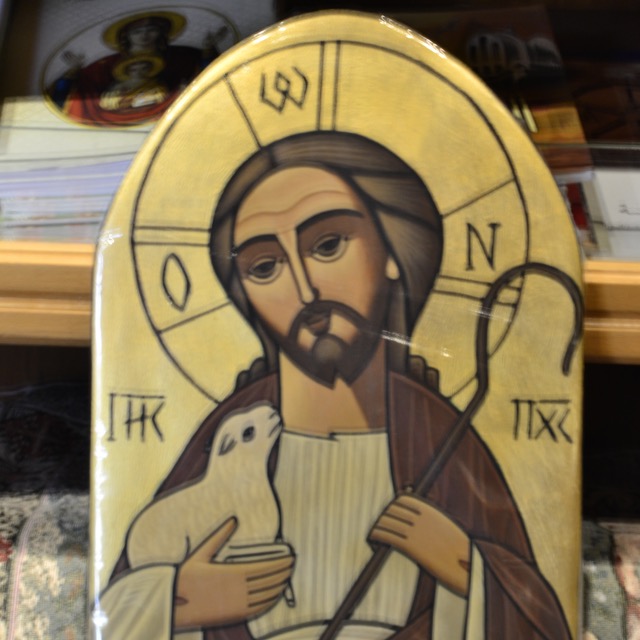
Living in Pembrokeshire we are used to seeing sheep, shepherds, and sheepfolds in the landscape around us. As most of you no doubt know, a sheepfold is a pen for a flock with a single entrance where the shepherd could sleep to keep the sheep safe. The relationship between God and the Israelites is often described as being like a shepherd and his sheep. They know each other, there is a close bond between them, and the sheep need the care and protection of a shepherd. Christ’s image is simple, clear, and taken from the everyday life of his audience. Jesus is the Good Shepherd, who lays down His life for His sheep; who dies so that we may have eternal life in Him. This model of self-sacrificial love lies at the heart of our faith, and because of it, we are able to live the new life of Easter.
The core of today’s Gospel reading is found in the last verse, where Jesus says:
‘I came that they may have life and have it abundantly’ (Jn 10:10)
Our Lord has come so that all of us may have life, in all its fullness. What does this look like? Firstly, it is a life lived in relationship with Jesus, through baptism, prayer, bible reading, and Holy Communion. This is clear from the Gospel passage where Jesus says:
‘The sheep hear his voice, and he calls his own sheep by name and leads them out. When he has brought out all his own, he goes before them, and the sheep follow him, for they know his voice.’ (Jn 10:3-4)
We recognise Jesus’ voice if we have heard it, if we know Him. Our recognition is the result of a relationship. I would like to focus for a moment on a few words: ‘the shepherd goes before them’. In this season of Easter we celebrate the fact that Jesus rose from the dead. In this Christ has truly gone before us, so that Christians need no longer fear death. Our Lord shows us that the New Life of Easter is open to all who believe in Him. Thanks to our relationship with Jesus we are offered a new way of living, filled with love and forgiveness.
Jesus talks of an abundant life. This is something that comes from a close relationship with God, who is the only who can satisfy the longing of the human heart. The things of this world: wealth, possessions, power, will always leave us wanting more. However, our connection with God, and with other Christians, as brothers and sisters in Christ, embodies life in all its fullness. This is because Our Lord dies and rises again so that we might enjoy eternal life with God in Heaven. We are given a foretaste on Earth of what we hope to enjoy in God’s closer presence. We taste this in Holy Communion, where Jesus gives Himself to feed us under the forms of bread and wine, so that we might have life in Him.
The first reading from Peter’s Pentecost sermon in the Acts of the Apostles is an early proclamation of the Good News of Jesus Christ. Peter tells the people of Jerusalem to repent and be baptized; to turn away from sin, to share in Christ’s Death and Resurrection, and to be filled with the Holy Spirit. In nearly two thousand years, the Church’s message has not changed. Repentance is a key aspect of who and what Christians are. We turn away from our failings and stop straying like sheep, but instead return to Our Shepherd (1Peter 2:25). This is what listening to the shepherd means: hearing what Jesus says, and obeying Him.
That is how we know Christ and follow Him. Being a Christian affects who we are and how we live: as people of love, who in turn are loved by God. Archbishop Michael Ramsay wrote in 1969: ‘God is Christlike, and in him is no un-Christlikeness at all’ [God, Christ & the World: A Study in Contemporary Theology, London 1969, 98]. When we see Jesus, we see God. When we hear Him speak, we hear the voice of God. We can know who God is — the creator and redeemer of the universe — through His Son, Jesus Christ. God is not a distant irate old man on a cloud. He is a loving Father, just like the Father in the Parable of the Prodigal Son. At the same time he is also a Son who loves us so much that He suffers and dies for us, to give us life in Him. This is the God who searches for lost sheep; who longs to love, to heal, and to reconcile. He can heal our wounds if we let Him. Such is the abundant life, offered to us by Our Lord, the Good Shepherd.
This conviction is central to Peter’s confession of faith. Christ is the example we are called to both follow, and to fashion our lives after. We can do this because of what Jesus has done for us:
‘He himself bore our sins in his body on the tree, that we might die to sin and live to righteousness. By his wounds you have been healed.’ (1Peter 2:24)
So, my brothers and sisters in Christ, as we continue to rejoice In Our Lord’s triumph. May we follow His example, and live the new life of Easter. Following Our Good Shepherd, who longs for us to be safe with Him forever in Heaven. Let us share the Good News of His Kingdom with others, so that all may come to know and love God the Father, God the Son, and God the Holy Spirit, Duw Dad, Duw y Mab a Duw yr Ysbryd Glân. To whom be ascribed all glory, dominion, and power, now and forever. Amen.