Easter IV – The Good Shepherd

Sheep in Winter — John Clare

The sheep get up and make their many tracks

And bear a load of snow upon their backs,

And gnaw the frozen turnip to the ground

With sharp quick bite, and then go noising round

The boy that pecks the turnips all the day

And knocks his hands to keep the cold away

And laps his legs in straw to keep them warm

And hides behind the hedges from the storm.

The sheep, as tame as dogs, go where he goes

And try to shake their fleeces from the snows,

Then leave their frozen meal and wander round

The stubble stack that stands beside the ground,

And lie all night and face the drizzling storm

And shun the hovel where they might be warm.

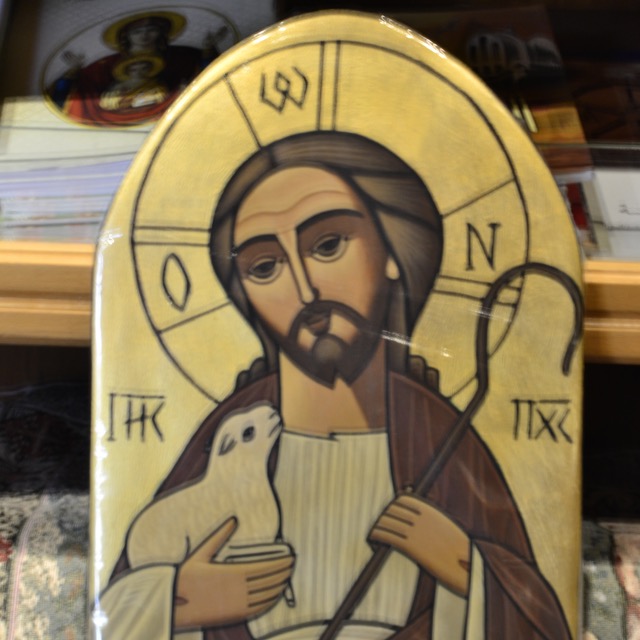
Living in Pembrokeshire we are used to seeing sheep, shepherds, and sheepfolds in the landscape around us. As most of you no doubt know, a sheepfold is a pen for a flock with a single entrance where the shepherd could sleep to keep the sheep safe. The relationship between God and the Israelites is often described as being like a shepherd and his sheep. They know each other, there is a close bond between them, and the sheep need the care and protection of a shepherd. Christ’s image is simple, clear, and taken from the everyday life of his audience. Jesus is the Good Shepherd, who lays down His life for His sheep; who dies so that we may have eternal life in Him. This model of self-sacrificial love lies at the heart of our faith, and because of it, we are able to live the new life of Easter.

The core of today’s Gospel reading is found in the last verse, where Jesus says:

‘I came that they may have life and have it abundantly’ (Jn 10:10)

Our Lord has come so that all of us may have life, in all its fullness. What does this look like? Firstly, it is a life lived in relationship with Jesus, through baptism, prayer, bible reading, and Holy Communion. This is clear from the Gospel passage where Jesus says:

‘The sheep hear his voice, and he calls his own sheep by name and leads them out. When he has brought out all his own, he goes before them, and the sheep follow him, for they know his voice.’ (Jn 10:3-4)

We recognise Jesus’ voice if we have heard it, if we know Him. Our recognition is the result of a relationship. I would like to focus for a moment on a few words: ‘the shepherd goes before them’. In this season of Easter we celebrate the fact that Jesus rose from the dead. In this Christ has truly gone before us, so that Christians need no longer fear death. Our Lord shows us that the New Life of Easter is open to all who believe in Him. Thanks to our relationship with Jesus we are offered a new way of living, filled with love and forgiveness.

Jesus talks of an abundant life. This is something that comes from a close relationship with God, who is the only who can satisfy the longing of the human heart. The things of this world: wealth, possessions, power, will always leave us wanting more. However, our connection with God, and with other Christians, as brothers and sisters in Christ, embodies life in all its fullness. This is because Our Lord dies and rises again so that we might enjoy eternal life with God in Heaven. We are given a foretaste on Earth of what we hope to enjoy in God’s closer presence. We taste this in Holy Communion, where Jesus gives Himself to feed us under the forms of bread and wine, so that we might have life in Him.

The first reading from Peter’s Pentecost sermon in the Acts of the Apostles is an early proclamation of the Good News of Jesus Christ. Peter tells the people of Jerusalem to repent and be baptized; to turn away from sin, to share in Christ’s Death and Resurrection, and to be filled with the Holy Spirit. In nearly two thousand years, the Church’s message has not changed. Repentance is a key aspect of who and what Christians are. We turn away from our failings and stop straying like sheep, but instead return to Our Shepherd (1Peter 2:25). This is what listening to the shepherd means: hearing what Jesus says, and obeying Him. 

That is how we know Christ and follow Him. Being a Christian affects who we are and how we live: as people of love, who in turn are loved by God. Archbishop Michael Ramsay wrote in 1969: ‘God is Christlike, and in him is no un-Christlikeness at all’ [God, Christ & the World: A Study in Contemporary Theology, London 1969, 98]. When we see Jesus, we see God. When we hear Him speak, we hear the voice of God. We can know who God is — the creator and redeemer of the universe — through His Son, Jesus Christ. God is not a distant irate old man on a cloud. He is a loving Father, just like the Father in the Parable of the Prodigal Son. At the same time he is also a Son who loves us so much that He suffers and dies for us, to give us life in Him. This is the God who searches for lost sheep; who longs to love, to heal, and to reconcile. He can heal our wounds if we let Him. Such is the abundant life, offered to us by Our Lord, the Good Shepherd.

This conviction is central to Peter’s confession of faith. Christ is the example we are called to both follow, and to fashion our lives after. We can do this because of what Jesus has done for us:

‘He himself bore our sins in his body on the tree, that we might die to sin and live to righteousness. By his wounds you have been healed.’ (1Peter 2:24)

So, my brothers and sisters in Christ, as we continue to rejoice In Our Lord’s triumph. May we follow His example, and live the new life of Easter. Following Our Good Shepherd, who longs for us to be safe with Him forever in Heaven. Let us share the Good News of His Kingdom with others, so that all may come to know and love God the Father, God the Son, and God the Holy Spirit, Duw Dad, Duw y Mab a Duw yr Ysbryd Glân. To whom be ascribed all glory, dominion, and power, now and forever. Amen.
Trinity VIII – ‘Like Sheep without a Shepherd’

Most of us who drive around these parts are used to slowing down or swerving to avoid a sheep on the road. Whether it is the warm tarmac, or a tasty morsel nearby, sheep are happy to lie down or move without any thought of the cars around them. These animals are often characterised as being foolish, stubborn, and easily led. Sheep need shepherds, to keep them safe and healthy, to watch over them, and to protect them from danger. Sheep, therefore, may not, at first glance, be the most flattering metaphor to use for God’s people (both as the people of Israel and the Church) but they represent an ancient image, with deep resonance in Scripture. David, Israel’s second king, was taken from the sheep-folds, and God is described as a shepherd in Psalm 23: ‘The Lord is my shepherd’. This image speaks of a relationship of love and care, and of someone who protects us from harm, and who is willing to defend us at all costs. This points to Jesus: the Good Shepherd, who lays down his life for us on Calvary.

The first reading this morning is taken from the prophet Jeremiah, who is castigating the leaders of Israel. According to the prophet, they have failed to look after God’s people: 

“Woe to the shepherds who destroy and scatter the sheep of my pasture!” declares the Lord. 

“Gwae chwi fugeiliaid, sydd yn gwasgaru defaid fy mhorfa ac yn eu harwain ar grwydr,” medd yr Arglwydd (Jer 23:1)

The Kings and Priests of Israel are supposed to act as shepherds, and protect and care for their flock. But they are not true shepherds because they exercise power selfishly, driving away and destroying the sheep. Such leaders seek power for its own sake, to make themselves feel grand and important. They become cruel and selfish. These types of rulers do not care for the well-being of their people. Jeremiah then contrasts the leaders who fail to look after the people, with God who loves and cares for them.

“Then I will gather the remnant of my flock out of all the countries where I have driven them, and I will bring them back to their fold, and they shall be fruitful and multiply. I will set shepherds over them who will care for them, and they shall fear no more, nor be dismayed, neither shall any be missing,” declares the Lord.

“Yr wyf fi am gasglu ynghyd weddill fy mhraidd o’r holl wledydd lle y gyrrais hwy, a’u dwyn drachefn i’w corlan; ac fe amlhânt yn ffrwythlon. Gosodaf arnynt fugeiliaid a’u bugeilia, ac nid ofnant mwyach, na chael braw; ac ni chosbir hwy,” medd yr Arglwydd. (Jer 23:3-4)

The prophet then speaks of a future when God will ‘raise up for David a righteous branch’ ‘y cyfodaf i Ddafydd Flaguryn cyfiawn’ (Jer 23:5). This is understood as pointing to Jesus, the righteous King, sent by God to care for His people.

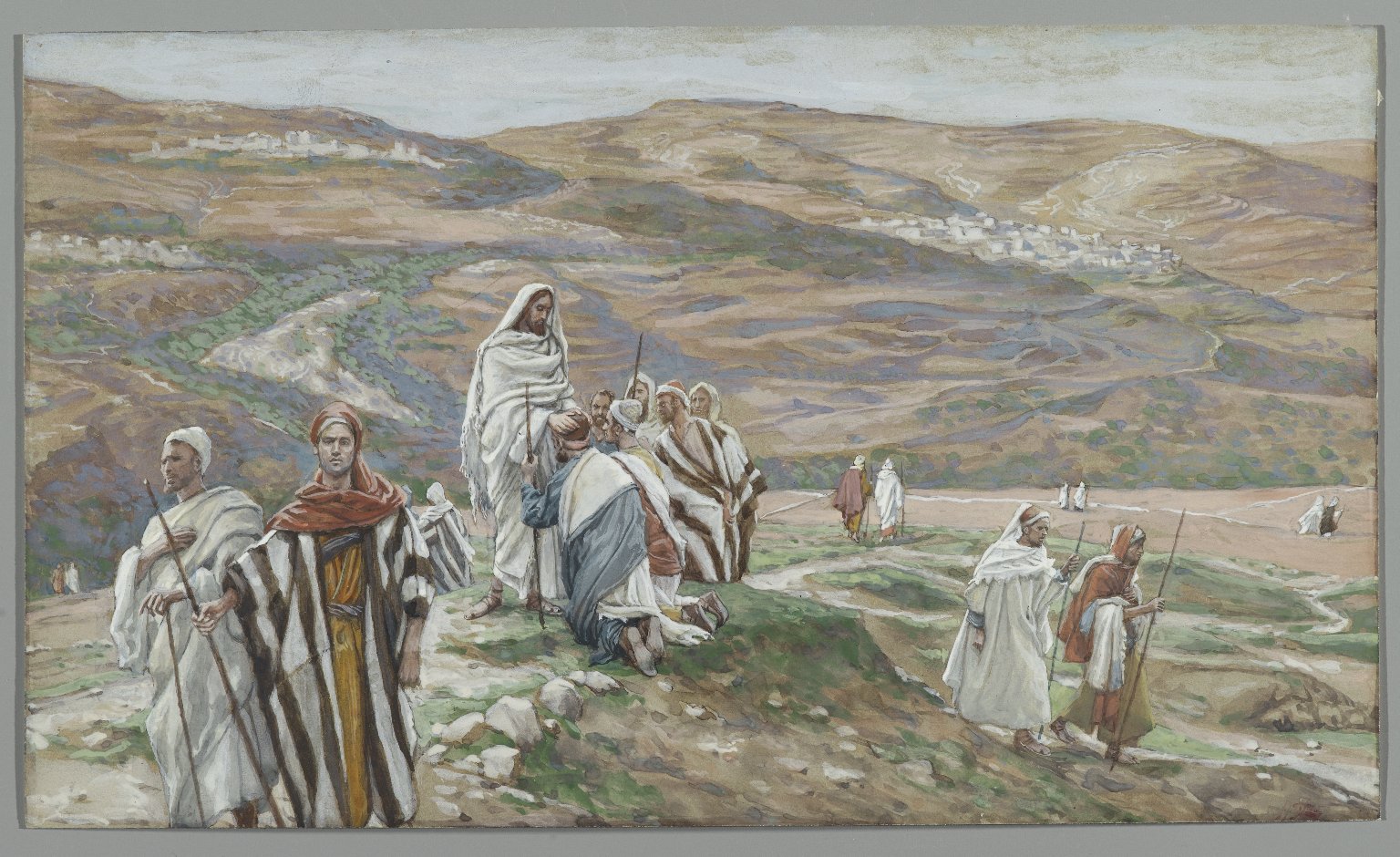
Meanwhile, in this morning’s Gospel, the disciples return to Jesus, after having been sent out  in pairs to preach, teach, and heal. Once they have told the Lord what they have done, He replies:

“Come away by yourselves to a desolate place and rest a while.”

“Dewch chwi eich hunain o’r neilltu i le unig a gorffwyswch am dipyn.” (Mk 6:31)

Jesus understands that for ministry to be effective there needs to be a balance between action, rest, and reflection. Otherwise, the disciples will end up exhausted, as their pastoral ministry is demanding:

‘For many were coming and going, and they had no leisure even to eat.’

‘Oherwydd yr oedd llawer yn mynd a dod, ac nid oedd cyfle iddynt hyd yn oed i fwyta.’ (Mk 6:32)

Clearly the apostles need time to rest and to have some food. They also need time to learn from Jesus, and to take care of the people. Our Lord takes them by boat to a secluded spot, but they are recognised, and crowds run to greet them. It looks like the situation is about to be repeated, when Jesus intervenes:

‘When he went ashore he saw a great crowd, and he had compassion on them, because they were like sheep without a shepherd. And he began to teach them many things.’

‘Pan laniodd Iesu gwelodd dyrfa fawr, a thosturiodd wrthynt am eu bod fel defaid heb fugail; a dechreuodd ddysgu llawer iddynt.’ (Mk 6:34)

Like sheep without a shepherd’ ‘fel defaid heb fugail’ these are people in great need. They have heard the proclamation of the Kingdom of God, and they come to learn more, to be healed, and to be fed and nourished. Christ recognizes their longings and ministers to them, giving His disciples an opportunity to eat and rest. Jeremiah’s prophecy is fulfilled by Our Lord, and the people of Israel are cared for. They are loved, and they are nourished. When their needs were not met by their political and religious leaders, they turn to Christ, the Good Shepherd, who looks after God’s people. 

On the Cross, the Good Shepherd lays down His life for His sheep. This sacrifice lies at the heart of St Paul’s message to the Ephesians in this morning’s second reading. Jesus gives humanity life through His suffering and death. On the night before He died He told us, His flock, what to do, so that God’s people might continue to be fed and nourished by Him, and with Him. Our Lord continues to care for us, because He loves us. God gives Himself to us, so that we might share in His life, and be transformed by His Grace, more and more into His likeness. 

So, my brothers and sisters in Christ, let us rejoice that we are nourished and cared for by the true Shepherd of our souls. Let us prepare for the banquet of the Kingdom, by allowing God’s grace to transform us. And let us sing the praises of God the Father, God the Son, and God the Holy Spirit. To whom be ascribed all glory, dominion, and power, now and forever. Amen.

James Tissot – He sent them out two by two (Brooklyn Museum)

Easter IV – The Good Shepherd

Living in Pembrokeshire, many of us know people who keep sheep. We are also aware of how difficult it has been for them, and all farmers, in the recent months with fields waterlogged due to unprecedented levels of rainfall. Sheep farming is a vital part of our rural life and so the image of Jesus as the Good Shepherd is something we find easy to identify with, unlike those who live in large cities.

Shepherds played an important part in Jesus’ life. Angels told them about the birth and they came down from the hills to worship Him in  the stable in Bethlehem. Not wishing to leave their animals behind, Nativity scenes depict the shepherds bringing sheep to the manger. This may be why Our Lord has an affinity with those who look after sheep and care for them. Jesus describes himself as the Good Shepherd, the one who lays down His life for His sheep. Christ dies so that we may have eternal life in Him. This model of self-sacrificial love lies at the heart of the Christian faith, and because of it, we are able to live the new life of Easter.

Jesus says, ‘I am the Good Shepherd’ ‘Myfi yw’r bugail da’ (Jn 10:11). This is straightforward: He cares for His flock. But then He says, ‘The good shepherd lays down his life for the sheep.’ ‘Y mae’r bugail da yn rhoi ei einioes dros y defaid’ (Jn 10:11). This goes above and beyond what we would expect of a shepherd, even a very good one! Jesus is using the image of the Good Shepherd to explain what will happen on Good Friday. He will suffer and die to protect us, His flock. 

Protect us from what? From Sin and Death. By dying for us, and rising from the dead, Jesus offers humanity freedom in Him. The Christian faith offers salvation, through faith. As St Peter puts it in this morning’s reading from the Acts of the Apostles: 

‘And there is salvation in no one else, for there is no other name under heaven given among men by which we must be saved.’

‘Ac nid oes iachawdwriaeth yn neb arall, oblegid nid oes enw arall dan y nef, wedi ei roi i’r ddynolryw, y mae’n rhaid i ni gael ein hachub drwyddo.’ (Acts 4:12)

Jesus offers what no-one else can: salvation and eternal life to those who believe in Him, and follow Him. Eccentric American millionaires employ bizarre methods in an attempt to defy the ageing process, but they are still going to die. Each and every human being is. That is the fate of all living things. But, because of who Christ is — namely true God and true man — and what He has done on the Cross and at the empty tomb, death is no longer something to be feared. Instead, it can be embraced, as the entry to eternal life, with God, forever. 

This way of looking at life and death is profoundly different from the world around us, because Christians are not bound by the primal human fear that our life is finite. Our Lord has opened to us the gates of Heaven, and shown us once and for all that God loves us.

At the heart of our faith as Christians is the profound conviction that we are people who are loved by God. As Archbishop Michael Ramsay said, ‘God is Christlike, and in him is no un-Christlikeness at all’ [God, Christ & the World: A Study in Contemporary Theology, London 1969, p.98]. When we see Jesus, we see God; when we hear Him speak, we hear the voice of God. We can know who God is, the Creator and Redeemer of the universe, through His Son, Jesus Christ. God is not a distant bearded man on a cloud. He is a loving Father, as illustrated in the Parable of the Prodigal Son. He loves us so much that He suffers and dies for us, to give us life in Him. This is the God who searches for lost sheep; who longs to love, restore, and reconcile; who can heal our wounds if we let Him. This is abundant life, offered to us by Our Lord, the Good Shepherd.

This life, this love is offered to us in the Eucharist, where we can touch and taste God’s profound love for us. In the bread and the wine we are given a foretaste of the heavenly banquet and a pledge of eternal life in Christ. Here today, as on a hundred thousand successive Sundays, we meet to be fed by Christ, and fed with Christ. To be healed, and to know His love. We are the sheep cared for by the Good Shepherd, who provides for all our needs. Who gives Himself so that we might have life.

So my brothers and sisters in Christ, as we continue to rejoice In Our Lord’s triumph over death, may we emulate His example and live the new life of Easter. Following Our Good Shepherd, who longs for us to be safe with Him forever in Heaven, let us share the Good News of His Kingdom with others. Let us pray that that all may come to know and love God the Father, God the Son, and God the Holy Spirit. To whom be ascribed all, glory, dominion, and power, now and forever. Amen.