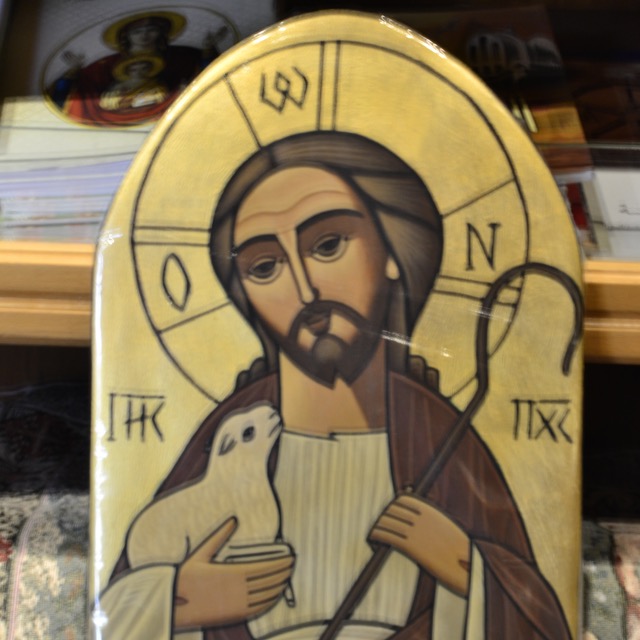
St Peter & St Paul 2026

‘And I tell you, you are Peter, and on this rock I will build my church,’

‘Ac ‘rwyf fi’n dweud wrthyt mai ti yw Pedr, ac ar y graig hon adeiladaf fy eglwys’ (Mt 16:18)

The city of Rome is famous for many things, and chief among them is that the city is the final resting place of two of the Apostles: Saints Peter and Paul. Both were martyred in Rome during the persecution of the emperor Nero, in the aftermath of the Great Fire of AD 64. Christ’s apostles bore witness to their faith, even to the point of death because it was that important to them. The tomb of the Apostle Peter is located below the main altar of the great church of St Peter’s on the Vatican Hill. Less well-known is the tomb of St Paul, the Apostle to the Gentiles. This is located in the Church of St Paul outside the Walls, which as the name suggests is just outside the old Roman City Walls, on the Via Appia, the great road south to Brindisi. The Apostle Paul is remembered for his letters and his missionary journeys recorded by St Luke in the Acts of the Apostles. However, his resting place attracts far fewer visitors and pilgrims, despite the fact that a magnificent church has been built over his shrine. 

Now I don’t know about you, but, speaking personally, when faced with the saints, I am confronted with my own sense of inadequacy and sinfulness. I just don’t think that I can live up to their example. I cannot quite come up to the mark. This need not, however, be such a bad thing, insofar as it points out our need to rely entirely upon God, and to trust in His mercy and grace. To trust in God to work in and through me. To trust in something which none of us deserve, but which nonetheless is poured out on us, so that in all things God may be glorified.

St Peter is a great choice as a patron of this Church. He was a fisherman, and this is a port town, where fishing once provided much employment. Peter tells it like it is: a plain-speaking saint for a plain-speaking town. There is something wonderfully transparent about St Peter: a man of imposing strength and stature, handy for the physically demanding life of a Galilean fisherman; a man of little learning (unlike St Paul), but possessing deep love and faith. Peter is known as being a man who speaks before he thinks, but whose instincts are often right. Fundamentally he is a man who loves and trusts Jesus. In contrast, St Paul goes from persecuting the Church to being the most eloquent proclaimer of the Good News of Jesus Christ. We can see the power of God working through both of these very different men.

In this morning’s Gospel Jesus asks His disciples ‘Who do people say that the Son of Man is?’ They report what people are saying, ‘Some say John the Baptist, but others Elijah, and still others Jeremiah or one of the prophets.’ Jesus then asks them the question ‘But who do you say that I am?’ The question He asks His disciples He asks each and every one of us: ‘Who do we say that Jesus is?’: ‘A prophet?’, ‘A well-meaning holy man?’, ‘A misguided revolutionary?’, or something more? 

Peter’s answer is profound: ‘You are the Messiah, the Son of the living God’. Jesus is the Christ, the anointed Saviour, the one who saves and rules Israel, and the Son of God. Peter is the first to confess the divinity of Christ, the first to recognise his Lord and Saviour. We need to do the same: to have the same faith and trust and love as Peter, to recognise Christ and confess Him as Our Lord and God.

Jesus’ response to Peter’s declaration is simple:

‘you are Peter, and on this rock I will build my church, and the gates of Hades will not prevail against it. I will give you the keys of the kingdom of heaven, and whatever you bind on earth will be bound in heaven, and whatever you loose on earth will be loosed in heaven’ (Mt 16:18-19)

In his confession of the Divinity of Christ, and in his reliance upon and trust in God, Peter is empowered to bear witness to the Messiah and to carry on God’s work of reconciliation. This will not be easy and at times he will fail. In the verses which follow this passage the Apostle argues that Jesus should not suffer and die, and is rebuked by Jesus. Later, after Our Lord’s arrest Peter, the rock, will deny Jesus not once, not twice, but three times. After the Resurrection Peter will need to be reminded by the Risen Christ to feed his sheep. There is also the story that during the first persecution in Rome under Nero, Peter tries to save his own skin and flees the city. As he does so, he sees Christ carrying His Cross towards Rome. So the Apostle turns back and He returns to bear witness to Christ. He feeds the flock; he values Christ above all things; and he bears witness to God, even at the cost of his own life.

St Peter is not exactly the person one might choose to be in charge. He certainly wouldn’t have won The Apprentice. But that’s the point, he is not a success. Peter does not possess the skillset for management: he is not a worldly leader. He is basically a cowardly failure, someone who speaks before he thinks. But at the same time, he is someone who knows God, who loves Him, who trusts Him, and who confesses Him; who proclaims Him in word and deed. Peter is someone that God can use and be at work through, calling him to be a herald of the Kingdom.

Above all else, and despite his failings, Peter bears true witness to Christ. Some two thousand years later, we the Church are called to do exactly the same. We, like Peter, are to be witnesses to Christ: who He is and what He does. We are called to proclaim the Gospel, the Good News of God’s saving love. That is why we are here today, this morning, to be nourished by Word and Sacrament — to be fed by Christ, with Christ, with His Body and Blood. Today we, like Peter, witness the offering of the Son to the Father, the sacrifice of Calvary, which restores our relationship with God and each other; which takes away our sins. Jesus pays the price which we cannot, giving us the hope of eternal life with God. Like St Peter, we won’t always get it right, but we can be healed, restored, and forgiven. God strengthens us in soul and body for our work of witness, the proclamation of His Kingdom.

So, my brothers and sisters in Christ, let us strive to be like St Peter. When we are asked, ‘Who do you say that the Son of Man is?’, let us confess that Jesus is the Son of God, the Messiah; the God who saves us and loves us, so that the world may rejoice and give glory to God the Father, God the Son, and God the Holy Spirit. Duw Dad, Duw y Mab, a Duw yr Ysbryd Glân. To whom be ascribed all glory, dominion, and power, now and forever. Amen.
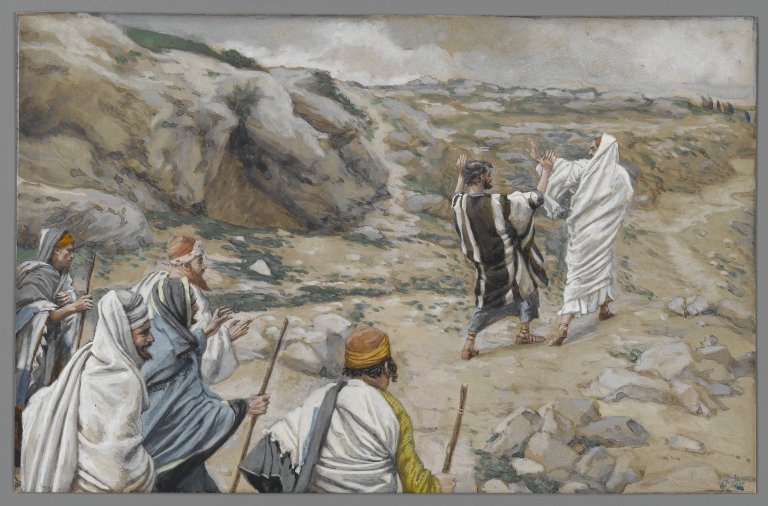
Easter IV – The Good Shepherd

Sheep in Winter — John Clare

The sheep get up and make their many tracks

And bear a load of snow upon their backs,

And gnaw the frozen turnip to the ground

With sharp quick bite, and then go noising round

The boy that pecks the turnips all the day

And knocks his hands to keep the cold away

And laps his legs in straw to keep them warm

And hides behind the hedges from the storm.

The sheep, as tame as dogs, go where he goes

And try to shake their fleeces from the snows,

Then leave their frozen meal and wander round

The stubble stack that stands beside the ground,

And lie all night and face the drizzling storm

And shun the hovel where they might be warm.

Living in Pembrokeshire we are used to seeing sheep, shepherds, and sheepfolds in the landscape around us. As most of you no doubt know, a sheepfold is a pen for a flock with a single entrance where the shepherd could sleep to keep the sheep safe. The relationship between God and the Israelites is often described as being like a shepherd and his sheep. They know each other, there is a close bond between them, and the sheep need the care and protection of a shepherd. Christ’s image is simple, clear, and taken from the everyday life of his audience. Jesus is the Good Shepherd, who lays down His life for His sheep; who dies so that we may have eternal life in Him. This model of self-sacrificial love lies at the heart of our faith, and because of it, we are able to live the new life of Easter.

The core of today’s Gospel reading is found in the last verse, where Jesus says:

‘I came that they may have life and have it abundantly’ (Jn 10:10)

Our Lord has come so that all of us may have life, in all its fullness. What does this look like? Firstly, it is a life lived in relationship with Jesus, through baptism, prayer, bible reading, and Holy Communion. This is clear from the Gospel passage where Jesus says:

‘The sheep hear his voice, and he calls his own sheep by name and leads them out. When he has brought out all his own, he goes before them, and the sheep follow him, for they know his voice.’ (Jn 10:3-4)

We recognise Jesus’ voice if we have heard it, if we know Him. Our recognition is the result of a relationship. I would like to focus for a moment on a few words: ‘the shepherd goes before them’. In this season of Easter we celebrate the fact that Jesus rose from the dead. In this Christ has truly gone before us, so that Christians need no longer fear death. Our Lord shows us that the New Life of Easter is open to all who believe in Him. Thanks to our relationship with Jesus we are offered a new way of living, filled with love and forgiveness.

Jesus talks of an abundant life. This is something that comes from a close relationship with God, who is the only who can satisfy the longing of the human heart. The things of this world: wealth, possessions, power, will always leave us wanting more. However, our connection with God, and with other Christians, as brothers and sisters in Christ, embodies life in all its fullness. This is because Our Lord dies and rises again so that we might enjoy eternal life with God in Heaven. We are given a foretaste on Earth of what we hope to enjoy in God’s closer presence. We taste this in Holy Communion, where Jesus gives Himself to feed us under the forms of bread and wine, so that we might have life in Him.

The first reading from Peter’s Pentecost sermon in the Acts of the Apostles is an early proclamation of the Good News of Jesus Christ. Peter tells the people of Jerusalem to repent and be baptized; to turn away from sin, to share in Christ’s Death and Resurrection, and to be filled with the Holy Spirit. In nearly two thousand years, the Church’s message has not changed. Repentance is a key aspect of who and what Christians are. We turn away from our failings and stop straying like sheep, but instead return to Our Shepherd (1Peter 2:25). This is what listening to the shepherd means: hearing what Jesus says, and obeying Him. 

That is how we know Christ and follow Him. Being a Christian affects who we are and how we live: as people of love, who in turn are loved by God. Archbishop Michael Ramsay wrote in 1969: ‘God is Christlike, and in him is no un-Christlikeness at all’ [God, Christ & the World: A Study in Contemporary Theology, London 1969, 98]. When we see Jesus, we see God. When we hear Him speak, we hear the voice of God. We can know who God is — the creator and redeemer of the universe — through His Son, Jesus Christ. God is not a distant irate old man on a cloud. He is a loving Father, just like the Father in the Parable of the Prodigal Son. At the same time he is also a Son who loves us so much that He suffers and dies for us, to give us life in Him. This is the God who searches for lost sheep; who longs to love, to heal, and to reconcile. He can heal our wounds if we let Him. Such is the abundant life, offered to us by Our Lord, the Good Shepherd.

This conviction is central to Peter’s confession of faith. Christ is the example we are called to both follow, and to fashion our lives after. We can do this because of what Jesus has done for us:

‘He himself bore our sins in his body on the tree, that we might die to sin and live to righteousness. By his wounds you have been healed.’ (1Peter 2:24)

So, my brothers and sisters in Christ, as we continue to rejoice In Our Lord’s triumph. May we follow His example, and live the new life of Easter. Following Our Good Shepherd, who longs for us to be safe with Him forever in Heaven. Let us share the Good News of His Kingdom with others, so that all may come to know and love God the Father, God the Son, and God the Holy Spirit, Duw Dad, Duw y Mab a Duw yr Ysbryd Glân. To whom be ascribed all glory, dominion, and power, now and forever. Amen.

Epiphany V 2025

THIS week’s readings focus on God’s call to humanity, so I would like to begin by sharing with you something of my own call. The first time I realised that I wanted to be a priest, I was about 10 years of age. It was in church at Margam, during a Sunday Morning Eucharist. The priest standing at the altar praying the Eucharistic Prayer, lived next door but one to us. He was a retired priest, called Fr Glyn — a great and holy man. I would go on to study at the same theological college as him (although this was something I only found out once I’d got there). As he stood at the altar and prayed the words that Jesus recited on the night before He died, I can remember a strong, overwhelming feeling: ‘I really want to do THAT!’ Even now, nearly forty years later, and after serving God as a priest for nearly fourteen years, that feeling still feels real. I still do not feel worthy of the call. But I’m not supposed to. That is the point: only God is worthy. However, God calls us not because we are worthy, but so that we might co-operate with Him in the outworking of His goodness, healing and love.

In our first reading this morning, the prophet Isaiah has a vision of heavenly glory. In his vision, Isaiah sees the throne room of the Heavenly Temple, with God surrounded by angels The prophet does not describe his emotional state, but he speaks of his human unworthiness in the divine presence. When Isaiah is confronted by the majesty of God, the singing of angels, the smoke of incense, all he can say is:

‘Gwae fi! Y mae wedi darfod amdanaf! Dyn a’i wefusau’n aflan ydwyf’

‘Woe is me. For I am lost; for I am a man of unclean lips’ (Isa 6:5)

Isaiah is aware of his human sinfulness and the gulf between himself and God. Yet his guilt is taken away, and his sin is atoned for. The prophet, who will foretell the coming of the Messiah who will save humanity, is prepared by God. He is set apart. When God asks, ‘Pwy a anfonaf? Pwy a â drosom ni?’’Whom shall I send, who will go for us?’ Isaiah can respond, ‘Dyma fi, anfon fi.‘Here I am! Send me’. This is quite a journey in a few verses, and that is the point. God doesn’t call those who are equipped. Rather, He equips those whom He calls.

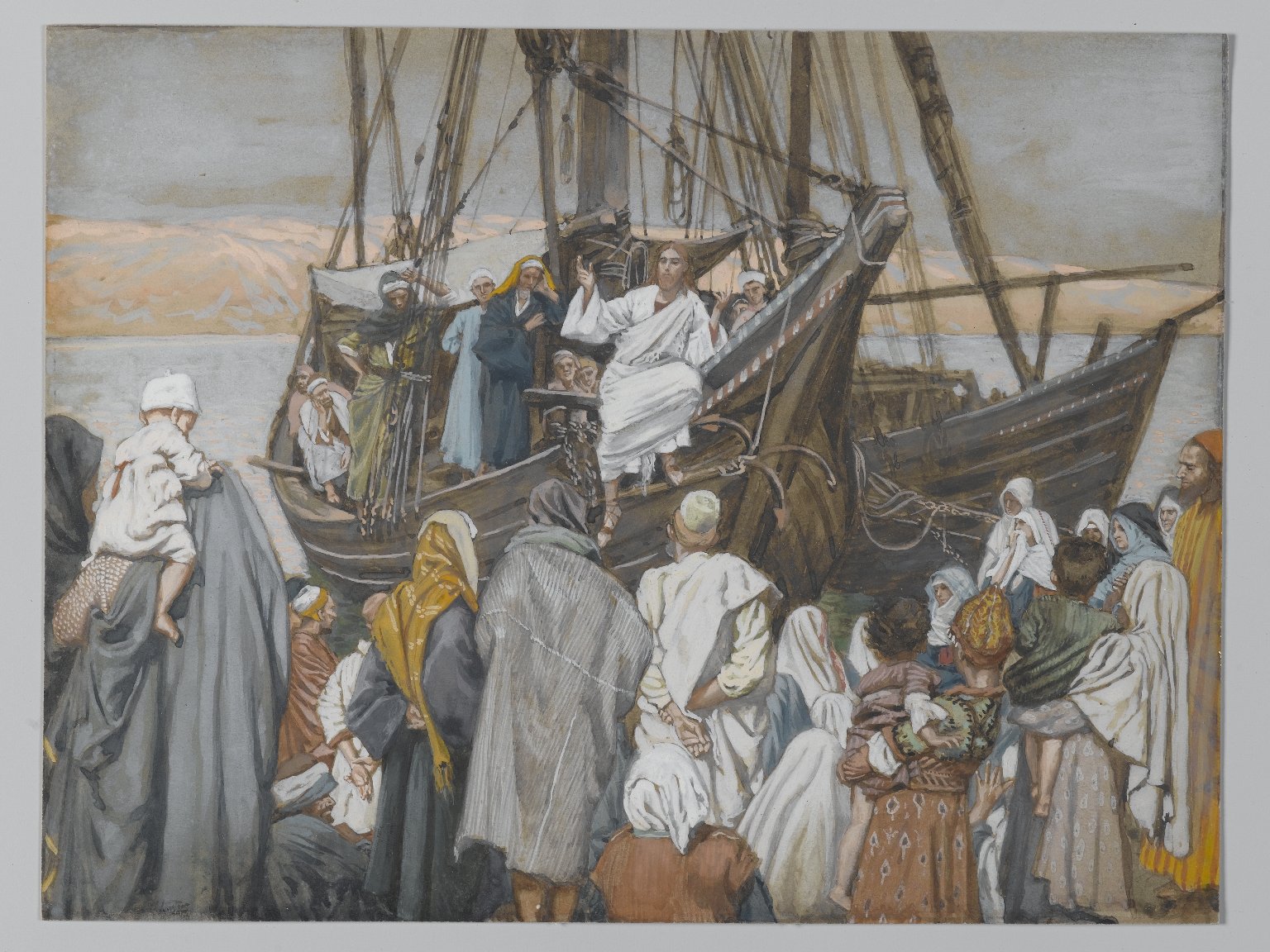
In the Gospel, the teaching ministry of Jesus, which we saw begin in the synagogue in Nazareth, continues. His fame is spreading and the crowd that has come to listen to Our Lord’s teaching is so large that He uses a boat to address them, so that the hills behind the crowd will help make Him more easily heard, acting like a natural theatre 

After speaking to the crowd, Jesus continues to draw disciples to Himself. On the Sea of Galilee the best time to catch fish is at night, but unfortunately Simon, James, John, and others have been out all night and caught nothing. It is the morning, now, and they are exhausted. Worst of all their effort has brought no reward. They have no fish to sell. 

Jesus says to Simon, 

‘Dos allan i’r dŵr dwfn, a gollyngwch eich rwydau am ddalfa.’

‘Put out into the deep and let down your nets for a catch.’ (Lk 5:4)

These words seem to be crazy. The time to catch fish on the lake is at night not during the daytime. Simon knows this, but he agrees to let down his nets. Suddenly the fishing nets are full to breaking point, and Simon calls his colleagues to help him pull in the catch. Both boats are so full of fish that they can barely float. 

Simon’s response is telling, he falls down at Jesus’ knees and says:

‘Dos ymaith oddi wrthyf, oherwydd dyn pechadurus wyf fi, Arglwydd.’

‘Depart from me, for I am a sinful man, O Lord.’ (Lk 5:8)

Simon appreciates that what has happened is a miracle, something that God has done. His response to the presence of God is contrition — awareness of his own unworthiness. Simon knows that he doesn’t deserve this outpouring of grace. The unmerited kindness of God, is too much for him. This humble fisherman recognises his own unworthiness to be in the presence of the Divine. It is understandable, and human, and we would likely feel exactly the same way.

Then Our Lord addresses Simon:

‘Paid ag ofni; o hyn allan dal dynion y byddi di’

’Do not be afraid; from now on you will be catching men.’ (Lk 5:10)

Paid ag ofni’ ‘Do not be afraid’ God begins by addressing our fear, our reluctance to commit. The point is that we are not alone in this, but rather that God wants to work with us, and through us, to proclaim and extend His Kingdom. God welcomes humanity into His embrace, to know the love for which we long. True, unconditional love, offered to each and every one of us to transform us.

The final words of the passage are instructive: 

‘Yna daethant a1’r cychod yn ôl i’r lan, a gadael popeth, a’i ganlyn ef.’

‘And when they had brought their boats to land, they left everything and followed him.’ (Lk 5:11)

The fishermen are literally leaving everything. They have just landed the biggest catch of fish in their entire lives. They were about to be rich in worldly terms, and they have to leave it all behind. Their sacrifice is a real one. Following Jesus comes at a cost. However, it is not without its rewards. The first disciples turn their backs on worldly riches and possessions in order to be free to do God’s work.

The calling of the disciples is also the calling of the entire baptised people of God. This is a calling not to be afraid, but to respond to the God who loves us and saves us. This is a calling to live out in our lives, by word and deed, the saving truths of God. So God can use us for His glory and to spread His Kingdom. So that others may come to know God’s Love, Mercy, and Forgiveness. This is what we have signed up for: to be disciples of Jesus; to profess the faith of Christ Crucified; to share this faith with others.

This treasure has been entrusted to each and every one of us. We are all called to share our faith with others, so that the world may believe. Like the first disciples we acknowledge the glory o Duw Dad, Duw y Mab, a Duw yr Ysbryd Glân. I’r hwn y priodoler pob gogoniant, arglwyddiaeth, a gallu, yn awr, ac yn oes oesoedd. Amen.

Jesus preaches from a boat – James Tissot (Brooklyn Museum)

Trinity XIII: Lord, to whom shall we go? You have the words of eternal life!

LIFE in the twenty-first century seems to involve an ever-increasing amount of decisions. If we want to buy a cup of coffee we have to make many quick decisions about size, strength, type of coffee, milk, sugar, etc. It can be quite exhausting. Our readings this week focus on the choices and decisions people make. To follow the Christian faith is something we choose to do. We choose to trust God, we are not forced to. The decision to follow Christ is the most important choice we ever make. It affects both our life on earth and in the hereafter.

This morning’s first reading is an account of the renewal of the covenant between God and Israel brought about by Joshua at Shechem. The people of Israel are asked if they want to worship God and follow his laws. Joshua makes his position clear:

“But as for me and my house, we will serve the Lord.”

“Ond byddaf fi a’m teulu yn gwasanaethu’r Arglwydd.” (Josh 24:15)

The people of Israel follow his example and renew their covenant with God:

“Therefore we also will serve the Lord, for he is our God.”

“Yr ydym ninnau hefyd am wasanaethu’r Arglwydd, oherwydd ef yw ein Duw.” (Josh 24:18)

Their religious faith is a conscious act of the will. They choose to serve the God who has saved them. God has shown that He is their God.

In a similar way, the events of Chapter 6 of St John’s Gospel happen around the time of Passover, the festival which marks Israel’s deliverance from slavery in Egypt and the start of their journey to the Promised Land. This is a key moment in Salvation history. Our Lord has been teaching about the Bread of Life, and stressing the importance of eating His flesh and drinking His blood. Such teaching was difficult for a Jewish audience to hear, as it violated fundamental principles of their dietary laws. 

When many of his disciples heard it, they said, “This is a hard saying; who can listen to it?”

Wedi iddynt ei glywed, meddai llawer o’i ddisgyblion, “Geiriau caled yw’r rhain. Pwy all wrando arnynt?” (Jn 6:60)

Jesus is teaching in a synagogue in Capernaum, and those present are not used to this kind of instruction. It turns everything they know on its head. In Hebrew the word for flesh (baśar) and the word for good news, glad tidings, or the Gospel(besorah), sound similar. Such word-play is intentional, and may be linked to the Hebrew Wisdom tradition, such as we heard last week in the Book of Proverbs. Our Lord does not, however, back down, or change His teaching, but instead develops it further:

“Do you take offence at this? Then what if you were to see the Son of Man ascending to where he was before? It is the Spirit who gives life; the flesh is no help at all. The words that I have spoken to you are spirit and life. But there are some of you who do not believe.”

“A yw hyn yn peri tramgwydd i chwi? Beth ynteu os gwelwch Fab y Dyn yn esgyn i’r lle’r oedd o’r blaen? Yr Ysbryd sy’n rhoi bywyd; nid yw’r cnawd yn tycio dim. Y mae’r geiriau yr wyf fi wedi eu llefaru wrthych yn ysbryd ac yn fywyd. Ac eto y mae rhai ohonoch sydd heb gredu.” (Jn 6:61-64)

Having described the Institution of the Eucharist as a way of understanding His Passion and Death, Jesus goes on to talk about events after His Resurrection, namely His Ascension, and the Sending of the Holy Spirit at Pentecost. These are all linked, because they form the culmination of Salvation History. This is the Good News of Jesus Christ. This is God saving His people, the outworking of the covenant at Shechem into the New Covenant of Our Lord and Saviour. However its proclamation does not draw people to Jesus, instead it has the opposite effect:

After this many of his disciples turned back and no longer walked with him. So Jesus said to the Twelve, “Do you want to go away as well?”

O’r amser hwn trodd llawer o’i ddisgyblion yn eu holau a pheidio mwyach â mynd o gwmpas gydag ef. Yna gofynnodd Iesu i’r Deuddeg, “A ydych chwithau hefyd, efallai, am fy ngadael?” (Jn 6:66-67)

Jesus does not force people to follow Him. Then, as now, the choice to follow (or not follow) Christ is a personal decision made freely by each individual. Our Lord asks the Twelve if they want to leave as well, which leads to the following declaration of faith by St Peter:

Simon Peter answered him, “Lord, to whom shall we go? You have the words of eternal life, and we have believed, and have come to know, that you are the Holy One of God.”

Atebodd Simon Pedr ef, “Arglwydd, at bwy yr awn ni? Y mae geiriau bywyd tragwyddol gennyt ti, ac yr ydym ni wedi dod i gredu a gwybod mai ti yw Sanct Duw.” (Jn 6:68-69)

Simon Peter trusts Our Lord. He expresses that faith and trust. No-one else can offer what Jesus does, because He is God. Only God can make such incredible claims. To be a Christian is to make the same confession as Peter, and to have the same hope of eternal life in and through Jesus Christ. 

Jesus’ teaching is hard to accept, and difficult to understand, but we can experience it, when we receive Holy Communion. For Peter, and for us, belief precedes knowledge. We believe and then we come to understand.

Faith revolves around the question of commitment. It involves love and sacrifice — the two go hand in hand. This is what marriage is all about, and commitment also describes God’s relationship with us, and ours with God. It will see Jesus die on the Cross for us, to show us just how much God loves us, and wants to restore our relationship with Him, and with each other. To be close to God is wonderful, but it isn’t something God forces us into: we may choose to accept God’s love, or to refuse it. This love is freely given.

St Paul’s advice to the Christians in Ephesus is another difficult text, which revolves around making a choice. For St Paul, Christian marriage is all about loving service of one another, as demonstrated by Christ. Jesus lays down His life for us, so we should do the same for each other. Thus, in marriage in particular, and in society in general, loving service and self-sacrifice are the ways by which we should live. It is a generous form of life, because its model is Jesus, the most unselfish person ever, who created all that there is, and who redeemed it by offering His life as a ransom for many. We see this on the Cross and we commemorate it in the Eucharist, where Christ continues to feed us —His people— with Himself, so that we might have life in Him.

So, my brothers and sister in Christ, let us follow the example of St Peter and St Paul in trusting Jesus and being fed with Him, to prepare us for Heaven. Let us demonstrate our commitment by singing the praises of God the Father, God the Son, and God the Holy Spirit. To whom be ascribed all glory, dominion and power, now and forever. Amen.
Jesus Teaches in the Synagogues – James Tissot (Brooklyn Museum)

Ascension 2024

Ascension Day is a time for celebration. However, we are not commemorating Jesus’ departure from the earth, but instead His return to God the Father. We celebrate Christ’s abiding presence with us, and also those things that He asks of us, and promises to us. It is a day of festivity and expectation, looking forward to the future in love and hope. 

Before Jesus returns to the Father, He makes the apostles a three-part promise: Firstly that they will be baptized with the Holy Spirit (Acts 1:4), secondly that they will receive power, and thirdly they will be Christ’s witnesses to the ends of the earth (Acts 1:8). Through this promise Christ is looking forward to Pentecost, and to the church’s future. To the time in which we live now.

One of the most important questions in the entire Bible is found in today’s Gospel: who do you say that Jesus is? How we answer this question can tell us a lot about our own faith. Who we say Jesus is matters. In fact it is central to who and what we are as Christians.

In the Gospel, Jesus and his disciples had ventured into the District of Caesarea Philippi, an area about 25 miles northeast of the Sea of Galilee. This region had tremendous religious implications. The place was littered with the temples of Syrian gods. Caesarea Philippi was where Herod the Great, father of the then-ruling Herod Antipas, had erected an elaborate marble temple. Here you could even worship the Roman Emperor as a God himself. You might say that the religions of the known world were on display in this town. It was with this multi-religious background that Jesus chose to ask the most crucial question of his ministry.

Jesus asks his disciples, ‘But who do YOU say that I am?‘A chwithau pwy meddwch chwi ydwyf fi?’ (Mt 16:15) Peter answers: ‘You are the Messiah, the Son of the Living God‘Ti yw’r Meseia, Mab y Duw byw’ (Mt 16:16). This is a big claim to make. Saying that Jesus is divine was problematic, as these words undermined both what Jews thought about religion, and also the claims made by Romans about the Emperor. To say that Jesus is the Anointed One, the Hope of Israel, who fulfils the promises in the Prophets is a very radical statement indeed.

Peter’s answer demonstrates his faith. He believes in Jesus, and trusts Him. Because of this, Our Lord makes him the principal disciple and gives him a primary role in leading and building the Church. Christ is looking towards the future where the disciples will carry on what He has started. They are charged with sharing the Good News, and offering forgiveness in Jesus’ name.

Our Lord ascends to Heaven forty days after the Resurrection, but Christ does not leave us. Instead He takes our humanity to be with God. This process began with the breaking open of the gates of Hell at Easter. Having conquered death itself, Jesus returns to the Father, taking us with Him. This is also a prelude to the outpouring of the Holy Spirit at Pentecost. God is generous. He saves humanity. He opens Heaven to us. He promises us the Holy Spirit, to strengthen us as we live our lives of faith. 

If we truly believe that Jesus Christ is the Son of the Living God, the Messiah — the anointed one who delivers us from our sins, who died, rose again, and who sends us His Holy Spirit — then this faith should have a profound effect on who we are and how we live our lives. This is why we have gathered here this evening to be nourished by Word and Sacrament. We have come together to pray for the world and for each other, and to be built up in love, as we await Our Lord’s Second Coming as Judge and Ruler of all.

Jesus makes promises which are true. We can trust Him, and like the apostles we can prepare for the Coming of the Holy Spirit at Pentecost in prayer, and joyful expectation. We know that we will never be abandoned, because we are always united with, and loved by the Triune God. United with our Christian brothers and sisters around the world we give praise to God the Father, God the Son, and God the Holy Spirit, to whom be ascribed all glory, dominion, and power, now and forever.

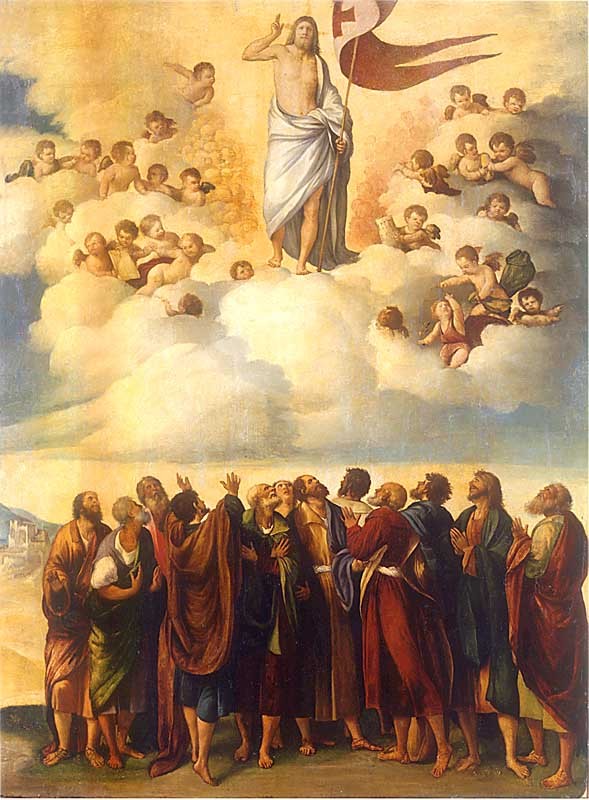
Dosso Dossi – The Ascension (Private Collection)

The Second Sunday of Year B

There is a common misconception that when the Church talks about vocation, being called, it is referring to the call to ordained ministry, to be a deacon or a priest. Nothing could be further from the truth. While this call is an important one, there remains a fundamental call which comes to us all in our baptism: the call to follow Christ. Each and every one of us is called to be a disciple of Jesus, to listen to what He says, and to let this call affect our lives. It is both a daunting prospect, and the most normal and natural thing in the world. 

Our first reading this morning tells the story of the call of Samuel, a young boy serving at the sanctuary in Shiloh with the high priest Eli. After his mother, Hannah, had prayed to God for a child whom she would dedicate to God as a Nazirite, she became pregnant and Samuel was born. Nazirites were not allowed to cut their hair, drink wine, or touch a dead body. Eli’s predecessor, Samson, the last of the Judges in the Book of Judges, was also a  Nazirite. Samuel is called three times. Each time he goes to Eli, whom he assumes is calling him. Eventually Eli tells Samuel to reply, ‘Speak, Lord, for your servant hears.’ (1Sam 3:9). So Samuel responds to God’s invitation, and it totally changes his life. Are we willing to take that risk, and answer God’s call?

Ancient Corinth was something like a cross between London and Las Vegas. It was a rich trading centre with a reputation for sexual immorality. This morning’s second reading from St Paul’s First Letter to the Corinthians, is an attempt to argue that our embodied existence, that is how we live our lives , matters. Often, we become what we do. It is therefore important to do the right thing, and not the wrong. Paul’s argument leads to his conclusion:

You are not your own, for you were bought with a price. So glorify God in your body. (1Cor 6:19-20) 

We are not our own, we belong to God, who bought us with the price of His Son, Jesus Christ. The world likes to tell us that we are autonomous, that we can do whatever we want to, but at a fundamental level we are God’s people, and belong to the God who made us, and who redeemed us out of love for us. God sets us free to love Him and serve Him, so how we live our lives is our response to that love and an act of loving service. We can choose to glorify God, not that God needs our glory, but because it is how we should live our lives, in love and service. Our faith affects our lived existence.

In today’s Gospel we move beyond the Baptism of Christ to the events of the following day. John has testified that Jesus is the Lamb of God, who takes away the sins of the world, and that He is the Son of God. When John sees Jesus walking by he again exclaims ‘Behold the Lamb of God’ (Jn 1:36). The phrase looks back to the Suffering Servant in Isaiah 52-53 who is led like a lamb to the slaughter. The beginning of Jesus public ministry points to its end on the Cross. Jesus is the Messiah and He will die to take away our sins. Two of John’s disciples hear him saying these words and follow Jesus. When Jesus asks them what they are looking for, the disciples answer ‘Rabbi’. They acknowledge Jesus as a teacher, and ask Him where He is staying. Jesus replies, “Come and you will see.” (Jn 1:39). Jesus invites them to follow Him, to see where He is staying and to spend time with Him. These two disciples of John become followers of Jesus, literally and metaphorically. The Church continues to make the same invitation to the world, to come and see, to follow Jesus. These two disciples stay with Jesus, they listen to Him, they eat with Him, and begin to have a relationship with Him. We then discover that one of the men is Andrew, and that he has a brother, called Simon. Andrew is convinced that he has found the Messiah and brings his brother to Jesus. When Jesus meets Simon he says,

“So you are Simon the son of John? You shall be called Cephas” (which means Peter) (Jn 1:42)

Jesus gives Simon a new name. He calls him Cephas, which means ‘rock’ in Aramaic, Petros in Greek, from which our name Peter comes. Peter will be the rock upon which Christ will build His Church (Mt 16:18). The name Jesus gives points to Peter’s future role as the leader of the Apostles. Jesus takes the initiative and begins to sketch out a future for the disciples who are following Him. It is quick, and matter of fact, and yet momentous. Jesus is gathering people to help Him with this ministry.

The Church therefore begins with a few Galilean fishermen following a rabbi whom they recognise as the Messiah. Thanks to them, and their faith in Jesus, we are in the Church today. Faith, where we put our trust, is an important thing. It affects both who we are, and how we live our lives. Faith turned Peter from a fisherman into a leader of the early Christians, and it has continued to transform lives for the past two thousand years. 

In our baptism, God in Christ invites each and every one of us to follow Him, to ‘come and see’, as the first disciples did, and to invite others, as Andrew invited Simon Peter. To come and see who Jesus is, to get to know Him, and start a relationship with Him. This begins with our sharing in His Death and Resurrection, and ends in the glory of Heaven. Where we, and all the Church, give glory to God the Father, God the Son, and God the Holy Spirit, to whom be ascribed, as is most right and just, all might, majesty, glory, dominion, and power, now and forever. Amen.