Trinity XVI: Who do you say that I am?

IF you were to ask someone, ‘Who do you say that I am?’ they would probably reply saying what you do for a living, your family relationships, where you’re from, or where you live now. If someone asked me, ‘Pwy wyt ti?’[Who are you?] I would reply ‘Dw i’n Tâd Adrian, offeiriad y plwyf hwn’ [I am Fr Adrian the priest of this parish]. However, these questions and their answers can only go so far in describing a person. We are all much more than these things. Also, how we live our lives says so much about who we are. 

In the Gospel today, Jesus and His Disciples are up north. Caesarea Philippi is about as far away from Jerusalem that one could go and sill remain in Israel. This is the source of the River Jordan, and lies at the foot of Mount Hermon. Caesarea Philippi had become Herod’s official Capital, and had pagan temples: including a shrine to Pan, and one where the Roman emperor was worshipped as a god. 

As Our Lord and His disciples are walking along the road, Jesus asks them a question:

“Who do people say that I am?”

“Pwy,” meddai wrthynt, “y mae pobl yn dweud ydwyf fi?” (Mk 8:27)

And they reply:

“John the Baptist; and others say, Elijah; and others, one of the prophets.”

“Mae rhai’n dweud Ioan Fedyddiwr, ac eraill Elias, ac eraill drachefn, un o’r proffwydi.” (Mk 8:28)

While Jesus is none of these, the people understand that His ministry is prophetic. He announces the Kingdom of God and calls people to repentance. Our Lord then asks a follow-up question:

“But who do you say that I am?”

“A chwithau, pwy meddwch chwi ydwyf fi?” (Mk 8:29)

To which Peter replies:

“You are the Christ.”

“Ti yw’r Meseia.” (Mk 8:29)

Our Lord asks this question to His disciples, and He also asks it to us. Who do we say He is? Jesus is not simply a prophet. He is the Anointed One, the Davidic King of Israel, and its Saviour. He is the Christ, conceived by the Holy Spirit, true God and true man. To lay claim to such titles, especially in a provincial capital and centre of the Imperial cult, is quite provocative. This is why Jesus says that they should tell no-one. It is not yet the right time to do so. If people heard this they would try and make Jesus an earthly king, and attempt to drive the Romans out. This is not God’s plan. Instead, Christ explains who and what He really is:

And he began to teach them that the Son of Man must suffer many things and be rejected by the elders and the chief priests and the scribes and be killed, and after three days rise again. And he said this plainly.

Yna dechreuodd eu dysgu bod yn rhaid i Fab y Dyn ddioddef llawer, a chael ei wrthod gan yr henuriaid a’r prif offeiriaid a’r ysgrifenyddion, a’i ladd, ac ymhen tridiau atgyfodi. Yr oedd yn llefaru’r gair hwn yn gwbl agored. (Mk 8:31-32)

Jesus explains what is about to happen. Having engaged in a ministry of preaching, teaching and healing, He is about to return to Jerusalem where He will suffer, die, and rise again. Our Lord’s Passion, Death, and Resurrection are the fullest demonstration of who and what He is. The Messiah is someone who will suffer, be rejected, put to death, and be raised to New Life. This is the heart of our faith as Christians. This is why we celebrate Baptism and the Eucharist, through which we share in Christ’s saving work. His fate is foretold in our first reading this morning from the prophet Isaiah, the first of the Servant Songs, where Jesus’ suffering and death are proclaimed. 

All of this is too much for Peter. Having made a profession of faith that Jesus is the Messiah, the Christ, Peter is now unhappy with what Jesus’ messianic ministry will look like. This is an understandably human reaction. As a disciple, Peter doesn’t understand how people could treat Jesus this way. He can only see things in human terms, and despite confessing that Jesus is the Messiah, Peter doesn’t want Jesus to suffer and die. He doesn’t yet fully understand what this all means. These things have to take place, so that Scripture might be fulfilled, and to show the world how much God loves us, His people.

Jesus responds by telling Peter to accept what is going to happen and to continue to follow Him. Despite his profession of faith Peter still has much to learn. So Christ calls the crowd and the disciples and addresses them:

“If anyone would come after me, let him deny himself and take up his cross and follow me. For whoever would save his life will lose it, but whoever loses his life for my sake and the gospel’s will save it.”

“Os myn neb ddod ar fy ôl i, rhaid iddo ymwadu ag ef ei hun a chodi ei groes a’m canlyn i. Oherwydd pwy bynnag a fyn gadw ei fywyd, fe’i cyll, ond pwy bynnag a gyll ei fywyd er fy mwyn i a’r Efengyl, fe’i ceidw.” (Mk 8:34-35)

Our Lord tells each of us, that we have to deny ourselves, take up our cross, and follow Him. Christ calls us to live lives which honour God regardless of the cost. To be a Christian is both difficult and costly, but it has its rewards both in this life and the next. If we can demonstrate God’s sacrificial love to the world, what greater witness is there? All the wealth and power in the world cannot save our soul. They cannot make us truly happy in the way that following Christ can. God’s love is shown most fully when Jesus dies for love of us; when He bears the weight of human sin, wounded for our transgressions and bruised for our iniquities. This is how the Messiah reigns, not on a throne, but on a Cross.

So, my brothers and sisters in Christ, may we, like Peter, confess that Jesus is the Messiah, and follow Him. Let us live lives which display Jesus’ healing love to the world. Let us proclaim the Good News of the Kingdom of God, so that others may come to know and love God the Father, God the Son, and God the Holy Spirit. To whom be ascribed all glory, dominion and power, now and forever. Amen.
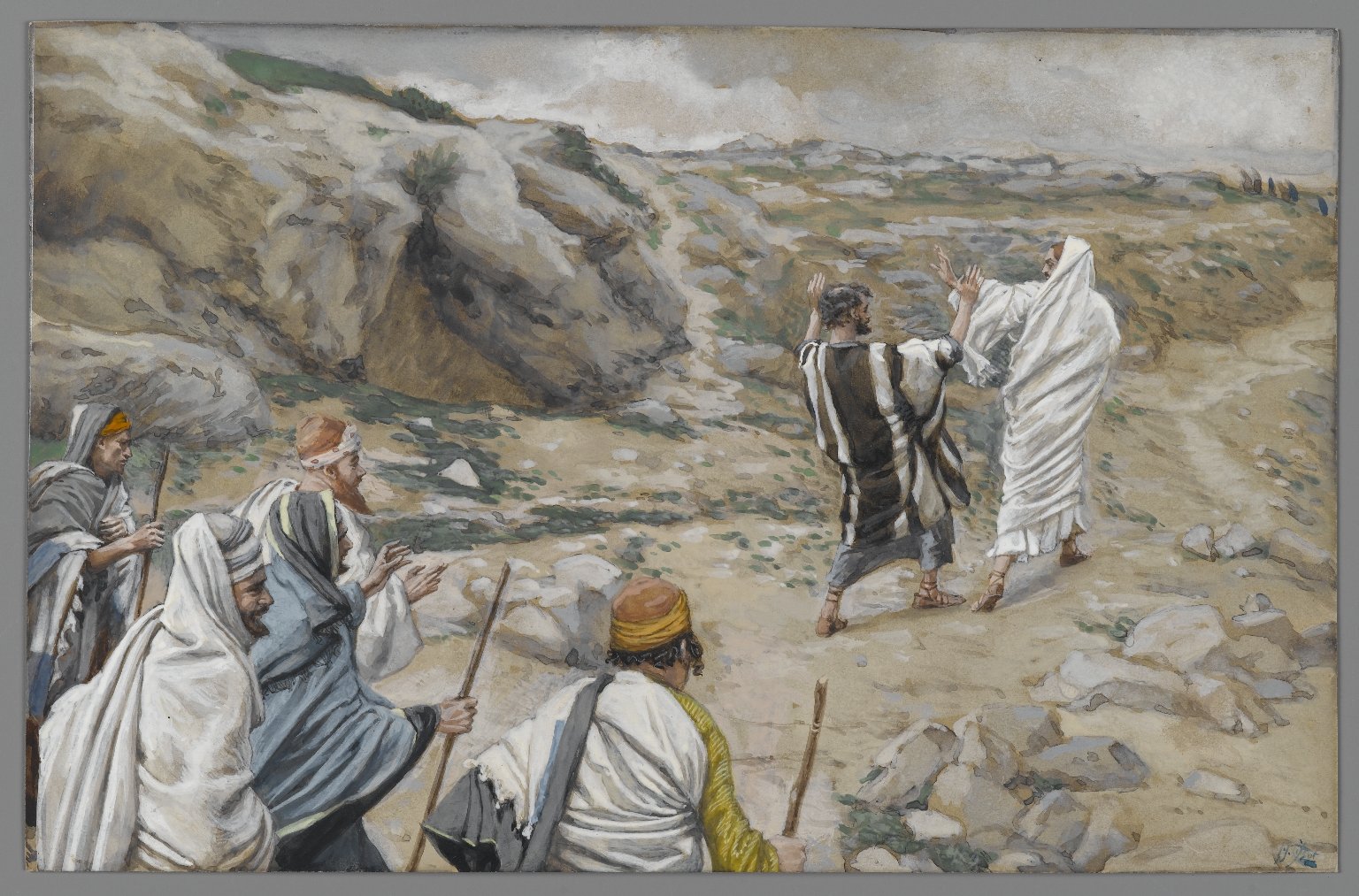
James Tissot: Get Thee Behind Me, Satan [Brooklyn Museum]

Good Friday 2024

The Practice of Crucifixion as a punishment was designed to be both as painful and as shameful as possible. Public torture was dressed up as execution, with the condemned having to struggle for each breath, before finally succumbing to asphyxiation. People could potentially hang there for days until exhaustion took its toll. It is possibly the most horrific and gruesome means to end a human life devised by humanity. A public crucifixion is also one of the central moments of the Christian Faith. This is how much God loves us. Jesus willingly undergoes a shameful death, and acts of brutal torture, for our sake. 

There are two Old Testament texts which are key to understanding this Good Friday Service. The first is Psalm 22, whose opening words are spoken by Jesus before He dies: ‘Fy Nuw, fy Nuw pam yr wyt wedi fy ngadael’ ‘My God, My God, why hast thou forsaken me’ (in Hebrew Eli, Eli, lama sabachthani). The second is the passage from Isaiah Chapters 52 and 53 which was today’s first reading. In Isaiah we see all of Christ’s suffering and death both foretold, and interpreted:

‘he bore the sin of many’ ‘with his stripes we are healed’ ‘He was oppressed, and he was afflicted, yet he opened not his mouth; like a lamb that is lead to the slaughter, and like a sheep that before its shearers is dumb, so he opened not his mouth.’ ‘he makes himself an offering for sin’. (Isa 53:12, 5, 7, 10)

The meaning is clear. The wounds of human sin, which cry out for healing, are healed in Christ. Such is God’s love for us. What disobedience has destroyed, love restores. Here we see the glory of God. In willingly accepting His death on the Cross, Our Lord fulfils Isaiah’s prophecy — the suffering servant is the Messiah, the Christ, God’s anointed. At the time when the Passover lambs are slaughtered in the Temple, Christ, as both priest and victim, offers himself upon the Altar of the Cross as the true lamb to take away the sins of the whole world. When Jesus dies the veil of the Temple is torn in two — the barrier between heaven and earth is taken away, and God is reconciled to humanity. This sacred drama takes place on a hill outside Jerusalem, close to where Abraham attempted to sacrifice Isaac.  Then a ram was sacrificed in the boy’s place, but now God sends His Son to die for us.

Two people are present at Calvary as witnesses. These are Mary, Jesus’ Mother, and John, the Beloved disciple. Thirty-three years before this day, the Archangel Gabriel announced to Mary that she would bear the Son of God. Now she stands at the foot of the Cross to see her beloved Son suffer and die. Simeon had once told her that a sword would pierce her soul, and now that prophecy comes true. But before He dies, Jesus does something wonderful:

‘When Jesus saw his mother and the disciple whom he loved standing nearby, he said to his mother, “Woman, behold, your son!” Then he said to the disciple, “Behold, your mother!” And from that hour the disciple took her to his own home.’ 

‘Pan welodd Iesu ei fam, felly, a’r disgybl yr oedd yn ei garu yn sefyll yn ei hymyl, meddai wrth ei fam, “Wraig, dyma dy fab di.” Yna dywedodd wrth y disgybl, “Dyma dy fam di.” Ac o’r awr honno, cymerodd y disgybl hi i mewn i’w gartref.’ (Jn 19:26-27)

Here we see a new family being formed. One not based on ties of blood, but of love. This is what the Church is, a family of love, and it starts here, at the foot of the Cross, where Christ, our great High Priest, offers Himself as both priest and victim. The Christian Church begins with three people on a hill outside Jerusalem. One of these three is about to die, condemned as a blasphemer and trouble-maker. Despite this less-than auspicious beginning we are gathered here today, nearly twenty centuries later. Christ’s Church starts as a failure in worldly terms. However it is a divine institution: it isn’t supposed to make sense in human terms. The Church’s mission is to draw us into the mystery of God’s love. Today we see that love made real in Jesus. This is love we can touch and taste, on the Cross, and in the Sacrament of the Altar. 

Let every one of us, today and every day, cling to the Cross, and find there all the grace we need. Let us rejoice that we have been redeemed at so great a cost. Let us glory in the Cross of our Lord Jesus Christ. He is our salvation, our life, and our resurrection, through whom each and every one of us is saved and set free. Amen

Diego Velazquez – Christ Crucified (Museo del Prado, Madrid)

Lent V: Sir, we want to see Jesus!

THERE are some texts in the Bible which just stick in your head. The Gospel today contains one of them: ‘Sir, we wish to see Jesus’ ‘Syr, fe hoffem weld Iesu’ (Jn 12:21). It is a text often placed on pulpits to remind preachers of their primary task. This sounds simple enough, but, at one level, when I hear these words they remind me of my own shortcomings. Have other people seen Jesus in what I say and do? We are our own harshest critics in this regard — it is far easier to see our own faults and failings, than what God might be doing through us. 

In today’s Gospel we are in Jerusalem. It is just before the Passover, the most important religious festival, commemorating the journey from slavery in Egypt to the Promised Land. There are some Greeks, who may or may not be Jewish converts, that approach Philip, who has a Greek name. He, along with Simon Peter and Andrew, was first a disciple of John the Baptist, before following Jesus. These Greeks ask Philip a simple question:

Sir, we wish to see Jesus.”

Syr, fe hoffem weld Iesu’ (Jn 12:21)

These Greeks are well-disposed and interested, and they desire an encounter with Our Lord. At a fundamental level human beings long for communion with the Divine. It is what we are made for. So the disciples tell Jesus, who makes the following reply:

The hour has come for the Son of Man to be glorified. Truly, truly, I say to you, unless a grain of wheat falls into the earth and dies, it remains alone; but if it dies, it bears much fruit. Whoever loves his life loses it, and whoever hates his life in this world will keep it for eternal life. If anyone serves me, he must follow me; and where I am, there will my servant be also. If anyone serves me, the Father will honour him.

‘Daeth yr awr y gogonedder Mab y dyn. Yn wir, yn wir, meddaf i chwi, Oni syrth y gronyn gwenith i’r ddaear, a marw, hwnnw a erys yn unig: eithr os bydd efe marw, efe a ddwg ffrwyth lawer. Yr hwn sydd yn caru ei einioes, a’i cyll hi; a’r hwn sydd yn casáu ei einioes yn y byd hwn, a’i ceidw hi i fywyd tragwyddol. Os gwasanaetha neb fi, dilyned fi: a lle yr wyf fi, yno y bydd fy ngweinidog hefyd: ac os gwasanaetha neb fi, y Tad a’i hanrhydedda ef’ (Jn 12:23-26)

This is a strange response: Our Lord doesn’t say, ‘Of course, bring them here’, or ‘I’d be delighted to meet them’. Instead He starts talking about His forthcoming Death. Jesus does so by using an image from the Parable of the Sower to make the point that life comes through death, freedom through service. These are paradoxes, the exact opposite of what one might expect Him to say, and yet they are true. Christ then experiences something of a moment of doubt, at which point God the Fathers speaks of future glory, and then Our Lord goes back to talking about His death:

“Now is the judgement of this world; now will the ruler of this world be cast out. And I, when I am lifted up from the earth, will draw all people to myself.”

‘Yn awr y mae barn y byd hwn: yn awr y bwrir allan dywysog y byd hwn. A minnau, os dyrchefir fi oddi ar y ddaear, a dynnaf bawb ataf fy hun.’ (Jn 12:31-32)

Because of Jesus’ Death and Resurrection, the Church, Christ’s Body exists to save people and to offer eternal life through Him. God shows the world the fullness of glory, the most profound expression of self-giving love in the events of His Passion. This is why we celebrate it: week by week and year by year. We prepare ourselves during Lent to walk with Christ to Calvary and beyond. We see how much God loves us, how much God gives himself for us. This message of salvation comes to us from the prophets. God makes His intentions clear:

“Behold, the days are coming, declares the Lord, when I will make a new covenant with the house of Israel and the house of Judah,”

‘Wele y dyddiau yn dyfod, medd yr Arglwydd, y gwnaf gyfamod newydd â thŷ Israel, ac â thŷ Jwda’ (Jer 31:31)

God renews the covenant with humanity, writing it on our hearts, forgiving us our iniquities. The Law of Love, which God makes real in Jesus Christ has genuine transformative power, because it is rooted in forgiveness and healing, something which only God can provide. Our loving Father does this on the Cross, where He gives His Son to die for us, to heal our wounds, and to offer eternal salvation to all who believe in Him. This is God’s glory, the glorification of His Son, dying the death of a slave, to save humanity and free us. If we want to share in Christ’s glory, then we need to follow the same path of suffering love which takes Him to His Cross, and will take us to ours.

To follow Christ means embracing the Cross as the mystery of God’s love. If we let God’s love transform us, then wonderful things can happen. There will be pain and suffering along the way, but this is far outweighed by the promise of future glory. So then, as we continue our journey through Lent our journey to the Cross and beyond to the empty tomb of Easter, let us lose our lives in love and service of him who died for us, who bore our sins, who shows us how to live most fully, to be close to God, and filled with his love. Let us encourage one another, strengthen one another, and help each other to live lives which proclaim the truth of God’s saving love. To offer the world the hope of Heaven, where we may sing the praises of God the Father, God the Son, and God the Holy Spirit. To whom be ascribed all glory, dominion, and power, now and forever. Amen.

James Tissot : The Gentiles Ask to See Jesus  (Brooklyn Museum)

Lent IV

IF you have ever been unwell while on holiday you probably sought out a Pharmacy. They are quite straightforward to locate as they tend to either have a cross on their sign, or a snake or two around a pole. This was the symbol of the Greek God of healing Aesculapius whose major shrine was at Epidaurus. Christians tend to associate the snake with the tempting of Adam and Eve in the Garden of Eden, but it is not this creature’s only occurrence in the Bible. 

This morning’s Gospel begins with Jesus explaining His forthcoming Crucifixion with a reference to Israel’s wanderings after the Exodus:

And the Lord said to Moses, “Make a fiery serpent and set it on a pole, and everyone who is bitten, when he sees it, shall live.” So Moses made a bronze serpent and set it on a pole. And if a serpent bit anyone, he would look at the bronze serpent and live.’ 

‘A dywedodd yr Arglwydd wrth Moses, Gwna i ti sarff danllyd, a gosod ar drostan: a phawb a frather, ac a edrycho ar honno, fydd byw. A gwnaeth Moses sarff bres, ac a’i gosododd ar drostan: yna os brathai sarff ŵr, ac edrych ohono ef ar y sarff bres, byw fyddai.’ (Numbers 21:8-9)

The people of Israel had been complaining about the journey, the lack of food and water, and that God has led them out into the desert to die, so God sent fiery serpents which killed them. The people then relented, and asked Moses to pray to God to take the serpents away. God listened to Moses, and provided a means for Israel to be saved. Jesus uses this example to explain why the Son of Man must be lifted up. Just as the bronze serpent saved people long ago, Jesus’ being lifted up on the Cross will save those who believe in Him. Our Lord’s death will occur at Passover, the festival which celebrates the people of Israel’s journey from slavery in Egypt, to the Promised Land. So Christ will deliver humanity from the slavery of sin and offer us eternal life in Him. He bears our burden, and reconciles us to the Father, and each other.

There then follows one of the most well-known verses in the Bible:

For God so loved the world, that he gave his only Son, that whoever believes in him should not perish but have eternal life. For God did not send his Son into the world to condemn the world, but in order that the world might be saved through him.

‘Canys felly y carodd Duw y byd fel y rhoddodd efe ei unig‐anedig Fab, fel na choller pwy bynnag a gredo ynddo ef, ond caffael ohono fywyd tragwyddol. Oblegid ni ddanfonodd Duw ei Fab i’r byd i ddamnio’r byd, ond fel yr achubid y byd trwyddo ef.’ (Jn 3:16-17) 

This is the heart of our faith as Christians. Christ was born for us, lived and died for us, and was raised to new life, so that we might have the promise of eternal life in Him. This is why we follow Christ into the desert of Lent for forty days, so that through prayer, fasting and charity we may be prepared in body and soul to celebrate the mystery of Christ’s Passion, Death, and Resurrection. Maundy Thursday, Good Friday and Easter are the ultimate embodiment of God’s generous Love towards humanity. God loves us, you and me, each one of us, so much that He gave His only Son to die for us, on the Cross.

God does not condemn humanity for falling short, instead He saves us. God is a God of love and generosity, who offers Himself to reconcile us to Him, and to each other. This generosity is at the heart of our faith as Christians. We worship a generous, loving God, and invite others to receive the free gift of God’s grace, and enter a relationship with the God who made us and who loves us. 

This relationship explains the joyful hope which St Paul has when he writes to the Church in Ephesus in our second reading this morning. Paul’s central message is that:

For by grace you have been saved through faith. And this is not your own doing; it is the gift of God,’ 

‘Canys trwy ras yr ydych yn gadwedig, trwy ffydd; a hynny nid ohonoch eich hunain: rhodd Duw ydyw’ (Eph 2:8)

Grace is unmerited kindness, something which we do not deserve, or earn. It is by the grace of God that we are saved, through faith, believing and trusting in Jesus Christ, who was born for us, died and rose again for us. We can put our trust in the God who loves us, and who shows us that love in His Son. It is not about what we can do, but about what God can do for us. Our relationship with God is the result of a gift, which we can accept and which can change our lives, if we only let go, and let God transform us, more and more into the likeness of His Son. 

Through prayer, the reading and study of scripture, living out our faith, and the sacraments of the Church, God brings about the work of transformation in us. As He gave Himself on the Cross for us, He gives us Himself in the Eucharist. During Communion we are fed with the Body and Blood of Christ, God’s very self, so that we can become what He is. Prepared by Lenten penitence we may look forward to sharing the new life of Easter, and singing the praises of God the Father, God the Son, and God the Holy Spirit. To whom be ascribed all glory, dominion, and power, now and forever. Amen.

Diego Velázquez – Christ Crucified (Museo del Prado, Madrid)

Lent II – The Transfiguration

One of the perils of driving in autumn or winter is the low Sun. Because of its angle and closeness to the Earth, we find ourselves dazzled by its brilliance. You have to avert your gaze or use a sun visor or sunglasses in order to drive. This can be inconvenient, but the brightness of our closet star is as nothing compared with the presence of God. Last week we heard the voice of God the Father at Jesus’ Baptism and we will hear Him again this week. 

Our first reading from Genesis, the story of Abraham and the Sacrifice of Isaac, is both well-known, and deeply shocking. The concept of human sacrifice was widespread in the Ancient World. It was not a common occurrence, but it did take place. It seems abhorrent to us, and so it should. In the passage God speaks to Abraham and says,

Take your son, your only son Isaac, whom you love, and go to the land of Moriah, and offer him there as a burnt offering on one of the mountains of which I shall tell you.”

‘Cymer yr awr hon dy fab, sef dy unig fab Isaac, yr hwn a hoffaist, a dos rhagot i dir Moreia, ac offryma ef yno yn boethoffrwm ar un o’r mynyddoedd yr hwn a ddywedwyf wrthyt.’ (Genesis 22:2)

Thankfully, just as Abraham is about to offer Isaac, God tells him to stop, as Abraham has demonstrated his complete devotion to God:

Do not lay your hand on the boy or do anything to him, for now I know that you fear God, seeing you have not withheld your son, your only son, from me.” 

‘Na ddod dy law ar y llanc, ac na wna ddim iddo: oherwydd gwn weithian i ti ofni Duw, gan nad ateliaist dy fab, dy unig fab, oddi wrthyf fi.’ (Genesis 22: 12)

Abraham sees a ram with its horns caught in a thicket, and offers it to God instead. The ram symbolises Christ. It looks forward to Jesus, recognised by John the Baptist as the Lamb of God, who takes away the sins of the world. The ram also points to the Passover Lamb in Exodus, which again prefigures Jesus, the fulfilment of the Paschal Sacrifice. Because Abraham has not withheld his son, he is blessed by God, and through his offspring, all people will be blessed. For Christians the Easter story is important because in it God, like Abraham, does not withhold His Only Son, but gives Him, to die for us. This narrative demands contemplation because it is the demonstration of the mystery of God’s love for humanity. The fact that God loves us that much is totally awesome, especially when we do not deserve it. The mystery of God’s love is that we are not loved because we are loveable. We are often quite the opposite! But God loves us anyway and His steadfast love transforms us. 

St Paul pondered such questions as he wrote to the Church in Rome:

‘He who did not spare his own Son but gave him up for us all’

‘Yr hwn nid arbedodd ei briod Fab, ond a’i traddododd ef trosom ni ol’ (Rom 8:32)

Christ’s death on the Cross is a demonstration of divine generosity, and the reason for our hope as Christians. God’s love for humanity is truly amazing. We should pause for a moment as we read or hear this. God loves me enough to die for me. If God can do this for us, what can we, in return, do for Him? During the Lenten Season we focus on the Cross and the Empty Tomb as the centre of our faith, three days which explain who we are, what we are, and why we are Christians. 

The Transfiguration, described in today’s Gospel, is strange because in it we see something of who Jesus really is: God. We have a brief glimpse of Divine glory as a prelude to Our Lord’s Passion and Death. The two are linked, as they both allow us to understand both who God is, and what He is doing. When God speaks from the cloud He tells us three things about Jesus. Firstly that Jesus is the Son of God, secondly that He is loved, and thirdly that we should listen to Him. What Jesus says and does should affect us and our lives. Like the disciples, we have to be open to the possibility of being radically changed by God. The opportunity of divine transformation is offered to us, so that we might come and share the Divine life of love.

Jesus tells the disciples not to tell anyone about their experience on the mountain until after He has risen from the dead. Jesus has another mountain He must climb: the hill of Calvary, where He will suffer and die upon the Cross. There He takes our sins upon Himself, restoring our relationship with God and each other. This then is real glory, not worldly glory, but the glory of God’s sacrificial love poured out on the world to heal and restore all humanity. The theologian Fulton Sheen spoke about the importance of mountains in Jesus’ life. He said:

Three important scenes of Our Lord’s life took place on mountains. On one, He preached the Beatitudes, the practice of which would bring a Cross from the world; on the second, He showed the glory that lay beyond the Cross; and on the third, He offered Himself in death as a prelude to His glory and that of all who would believe in His name

(Fulton Sheen, The Life of Christ, 1970 p.158)

The Transfiguration shows us the glory of heaven, the glory of the Resurrection at Easter, the glory that lies beyond the Cross. God’s love and God’s glory are intertwined, and cannot be separated because they given freely. God’s very nature is generous, beyond our understanding, and characterised by total self-gift. Our Heavenly Father does not hold anything back, and whereas Isaac is replaced at the last minute by a ram, there is no substitution for Jesus. God gives His Son, Jesus Christ, to die for us, and to rise again, so that we might enjoy eternity with Him in Heaven. The Transfiguration is a promise of our future heavenly glory. Through signs and glimpses, God shows us what future awaits us. He longs to heal and restore us, so that we might enjoy eternity with Him. 

The Transfiguration, therefore, looks to the Cross to help us to prepare ourselves to live the life of faith. It helps us to comprehend true majesty, true love and true glory. The wonderful glory that can change the world and which lasts forever, for eternity, unlike the fading glory of the world, which is here today but gone tomorrow.

So my brothers and sisters, as we celebrate God’s love and glory, let us prepare to  ascend the mountain ourselves and have an encounter with the living God in Holy Communion. Let us come to the source of healing and fount of love which is God’s very self. Let us touch and taste Our Lord and Saviour, given for us, so that we might live in Him. Let us be transformed by Him and enjoy the glories of Heaven singing the praises of God the Father, God the Son, and God the Holy Spirit. To whom be ascribed all glory, dominion, and power, now and forever. Amen.

Lent I

I don’t know about you, but for me years are definitely going by much more quickly these days. Not long ago it was Christmas and now we are already in Lent and preparing for Holy Week and Easter. Lent (Garawys) is a period of forty days, which prepares us to celebrate the Passion, Death and Resurrection of Jesus Christ. The symbolism of the number forty is rich in the Bible. It signifies a time of trial or testing, and recalls significant biblical events. Firstly, in the story of Noah’s Ark in Genesis 7:12, God floods the earth with water for forty days. Secondly, in the story of the Exodus, the people of Israel spend forty years in the desert before they reach the Promised Land. Thirdly, Moses remains with God on Mount Sinai for forty days before giving the people of Israel the Ten Commandments. And fourthly, in 1Kings 19:8, Elijah fasts for forty days on the way to Mount Horeb, before talking to God and finding Elisha. All of these examples point to Jesus Christ and foreshadow His saving work. 

Today’s first reading from Genesis takes us back to the aftermath of the flood, and the covenant which God establishes by setting His bow, a rainbow (enfys), in the clouds, so that all humanity can rest assured that they will not be destroyed by God. We can be confident that ultimately Our Creator is interested in reconciliation and healing: God is a God of love.

Our second reading from the First Letter of Peter, draws a link between Noah and the ark as a sign of salvation, and baptism, by which humanity is saved. It is a timely connection to make since Lent is traditionally a time for preparation for Baptism at Easter. The wider account of salvation history, and the life of Jesus in particular, become our life as Christians in our baptism: we share in them, they become part of us, and form both who and what we are. We enter into the drama of salvation as we die to sin, and are raised to new life in our baptism. Through our new life in Christ, we follow His example, and prepare for our annual celebration of Holy Week and Easter by going into the desert with Him for the forty days of Lent.

Keeping with the theme of Baptism, this morning’s Gospel begins with Our Lord’s Baptism in the River Jordan by His cousin, John. Jesus does not need to be baptised, He has not committed any sins for which He needs to repent. He does not require to be washed clean. We, on the other hand, do need to be cleansed of our sins. Christ shows humanity the way back to God, so that we might follow His example, and come to share in the same intimacy which characterises the life of God. During Jesus’ Baptism we hear the Father’s voice and see the Holy Spirit: three Persons, One God. It is a glimpse of Divine Glory, which awaits us in Heaven, the end and purpose of salvation history.

Then the Spirit drives Our Lord out into the desert: to be alone, to pray, to be with God. This is also a time of trial when Satan tempts Jesus. The devil attempts to deflect Christ from His mission to bring love and healing, and to proclaim the Kingdom of God. Unlike Matthew’s Gospel, which lists the temptations, Mark simply states that Jesus was tempted. Because He is without sin, Jesus is able to withstand temptation. Our Lord’s victory in the desert points to His great victory on the Cross. Christ then preaches to ‘the spirits in prison’ ‘ac a bregethodd i’r ysbrydion yng ngharchar’ (1Peter 3: 19). He does this to save humanity from sin and death, and restore the hope of Heaven. This is what we are preparing to celebrate at Easter. 

In the garden of Eden the animals were tame, but in the desert Jesus is with wild animals. Here the second Adam is beginning the work of the restoration of Creation. Mankind who fell because of a tree, will be restored by the tree of the Cross. While He is in the wilderness Our Lord is ministered to by angels. He is the Beloved Son, in whom the Father is well-pleased. After the trial of the temptations Christ is tired, and hungry. Experiencing temptation is a trying business, both physically and spiritually. This reminds us of the need for care, especially self-care, in our Lenten observances. Rest and nourishment are an important part of our spiritual and physical wellbeing, now more than ever.

After the forty days are over, Jesus returns to Galilee and starts to proclaim the Gospel, the Good News of the Kingdom of God:

“The time is fulfilled, and the kingdom of God is at hand; repent and believe in the gospel.” 

“Yr amser a gyflawnwyd, a theyrnas Dduw a nesaodd: edifarhewch, a chredwch yr efengyl.” (Mk 1:15)

This message is the same as the one announced by John the Baptist: Repent, turn away from your sins, turn back to God, and Believe the Gospel, proclaimed by Jesus Christ. As Christians, nearly two thousand years later, we believe and proclaim that same message. Jesus calls us to turn away from sin, to turn back to God, to trust Him, and to know that He longs for our healing and reconciliation. The Kingdom is a place where we are restored, and experience life in all its fulness.

During the weeks of Lent, we pray, fast, and are charitable in order to discipline our minds and bodies, so that we may grow in holiness and become more like Jesus. The Temptation of Jesus teaches us that we have to become weak, powerless and vulnerable, utterly reliant upon our Heavenly Father, so that God is able to be at work in us. Such weakness may be perceived as foolish in worldly terms, but that is the point. As Christians, we are not meant to be conformed to the world. In seeking to grow in faith, humility, and obedience, we allow God to transform us — taking us and shaping us into His likeness. Therefore, as we undertake to follow Christ in our Lenten pilgrimage, we do so in the knowledge of our weakness, and our total reliance upon God. If we turn away from what separates us from Our Heavenly Father, and believe in a God who loves us, then healing can take place. Following Jesus’ example we spend six weeks being close to Our Lord, so that He may renew and strengthen us.

So, my brothers and Sisters in Christ, let us use this time of Lent to draw close to God in prayer. Let us be nourished by the word of God in Holy Scripture, and by God’s very self, His Body and Blood in the Eucharist, so that He may transform us. By these means, may we share in the new life of the Kingdom and be prepared for the glory of Heaven where we, and all creation, may sing the praises of God the Father, God the Son, and God the Holy Spirit. To whom be ascribed all glory, dominion, and power, now and forever. Amen.

Quinquagesima – Imitate Jesus!

When we all were children, we learned through imitation, through copying others. Human beings learn to speak, and walk, and everything else, by seeing and hearing others. To imitate the actions of others is an important mechanism for social learning — that is, for acquiring new knowledge. So St Paul writes at the end of this morning’s second reading:

Be imitators of me, as I am of Christ’ 

‘Byddwch ddilynwyr i mi, megis yr wyf finnau i Grist.’ (1Cor 11:1)

Paul encourages the Corinthian church to imitate him, as he imitates Christ. He wants them to do so in order that they all might live out the love of God in their lives, for the glory of God, and to proclaim the truth of the Gospel to the world. This too is our calling as Christians. We are charged to follow the same example , live out the same faith, and proclaim the same truth in our daily lives. 

Today’s readings focus on leprosy, an infection of the skin which usually placed the sufferer on the margins of society. The position adopted in Leviticus is clear:

‘He is unclean. He shall live alone. His dwelling shall be outside the camp.

‘aflan yw efe: triged ei hunan; bydded ei drigfa allan o’r gwersyll.’ (Lev 13:46)

This verse is used by the author of the Letter to the Hebrews to describe Christ’s Crucifixion and death:

‘So Jesus also suffered outside the gate in order to sanctify the people through his own blood. Therefore let us go to him outside the camp and bear the reproach he endured. For here we have no lasting city, but we seek the city that is to come.’

‘Oherwydd paham Iesu hefyd, fel y sancteiddiai’r bobl trwy ei waed ei hun, a ddioddefodd y tu allan i’r porth. Am hynny awn ato ef o’r tu allan i’r gwersyll, gan ddwyn ei waradwydd ef. Canys nid oes i ni yma ddinas barhaus, eithr un i ddyfod yr ŷm ni yn ei disgwyl.’ (Heb 13:12-14)

The writer of the Letter to the Hebrews encourages us to follow Christ’s example and to become outcasts — unclean in terms of Jewish ritual purity — to share in Christ’s suffering and to be united with Him. Something previously seen as being shameful has now become glorious. This is a demonstration of God’s love and healing, where once there was condemnation there is now reconciliation.

Our gospel reading this morning continues the accounts of miraculous healings by Jesus, which we have encountered over the past few weeks. This morning Our Lord is met by a man who is suffering from leprosy, and who begs to be healed. Given the purity code in Leviticus, we can understand why the leper longs to be healed, and restored to his place in the community. The man suffering with leprosy kneels before Jesus, performing an act of submission, putting himself entirely at Christ’s mercy, and says:

“If you will, you can make me clean.”

‘Os mynni, ti a elli fy nglanhau’ (Mk 1:40)

Jesus is filled with emotion and touches him. Rather than simply saying, ‘Be healed’, or ‘Be clean’, Our Lord stretches out His hand and touches the man with leprosy. In Jewish ritual terms, by doing this Christ makes Himself unclean. He breaks the rules. and does what no-one would do. Instead of casting the man out, or ignoring him, Jesus touches the man and heals him. Here we see God’s healing love in action. The proclamation of the Kingdom of God is the proclamation of love and healing, to restore humanity. Having broken the rules, Jesus says to the healed leper:

“See that you say nothing to anyone, but go, show yourself to the priest and offer for your cleansing what Moses commanded, for a proof to them.” 

‘Gwêl na ddywedych ddim wrth neb: eithr dos ymaith, dangos dy hun i’r offeiriad, ac offryma dros dy lanhad y pethau a orchmynnodd Moses, er tystiolaeth iddynt hwy.’ (Mk 1:44)

Jesus tells the man to comply with the Law, to show himself to a priest. This is so that the former leper can undergo a ritual bath, and be restored to his rightful place in society. This also acts as proof to the religious authorities that a miraculous healing has taken place. God is announcing His Kingdom and the fulfilment of messianic prophecy. God is healing His people. 

Jesus wants the man not only to be restored, but also to enjoy life in all its fullness. This is why the religious authorities need to be aware of the fact that a man who was deemed unclean can now be pronounced clean. However, the man does not listen, and instead proclaims his miraculous healing to all and sundry. His actions, while understandable, are problematic. The man does not listen to what Jesus says, he does not obey Our Lord’s instructions. Jesus is not simply a charismatic healer seeking to garner popular support through miracles. The miracles are a sign of the Kingdom of God becoming a reality. The man’s exuberance does, however, cause problems:

‘so that Jesus could no longer openly enter a town, but was out in desolate places, and people were coming to him from every quarter’

‘fel na allai’r Iesu fyned mwy yn amlwg i’r ddinas; eithr yr oedd efe allan mewn lleoedd anghyfannedd: ac o bob parth y daethant ato ef.’ (Mk 1:45)

Jesus has become a celebrity, and people longing for healing flock to Him. This speaks of the deep and widespread need for healing in Galilee. As it was there then, so it is here, now. We long for God to heal us, to take away our fears, and fill us with His love. At a practical level this is bound to be exhausting for Our Saviour, so He goes out to desolate deserted places, in other words, the desert. Jesus retreats to the wilderness to be alone with God, to rest and to pray. This reminds us that in the Church’s calendar we are about to enter the season of Lent. The season of prayer and penitence which leads to Our Lord’s Passion. By going to the Cross Jesus makes His dwelling ‘outside the camp’. He becomes unclean to make humanity clean through the shedding of His Blood. During Lent we imitate Christ’s example, and go with Him to the desert and the Cross.

Christians prepare for Easter by going out into the desert with Jesus to be close to God, through prayer, fasting, and deeds of charity. We follow Jesus’ example, we imitate Him, so that we may draw closer to Him and experience His healing love. By journeying with Christ, we prepare to enter into the mystery of His Passion, Death, and Resurrection, so that we may rise with Him to new life. Let us then imitate Our Lord, by proclaiming to a world, longing for healing and wholeness, the love of God the Father, God the Son, and God the Holy Spirit. To whom be ascribed all glory, dominion, and power, now and forever. Amen.

James Tissot – Healing of the lepers at Capernaum (Brooklyn Museum)

Ash Wednesday 2022

Today the Church celebrates Ash Wednesday, the beginning of her Lenten journey towards the great festival of Easter. The entire Christian community is invited to live this period of forty days as a pilgrimage of repentance, conversion and renewal.

In the Bible, the number forty is rich in symbolism. It recalls Israel’s journey in the desert: a time of expectation, purification and closeness to the Lord, but also a time of temptation and testing. It also evokes Jesus’ own sojourn in the desert at the beginning of His public ministry. This was a time of profound closeness to the Father in prayer, but also of confrontation with the mystery of evil.

The Church’s Lenten discipline is meant to help deepen our life of faith and our imitation of Christ in his paschal mystery. In these forty days may we strive to draw nearer to the Lord by meditating on his word and example. We seek to conquer the desert of our spiritual aridity, selfishness and materialism. For the whole Church may this Lent be a time of grace in which God leads us, in union with the crucified and risen Lord, through the experience of the desert to the joy and hope brought by Easter.

Pope Benedict XVI Catechesis at the General Audience 22.ii.12: 
http://www.news.va/en/news/pope-conquering-our-spiritual-desert 

Today we go with Christ into the desert for forty days. Deserts are places of lack and isolation, something which we have all experienced over the past two years. We have been cut off from people, places, and things we are accustomed to do. In many ways the last two years have felt like a continual Lent. Despite this, as Christians, we thoughtfully prepare to celebrate the Passion, Death and Resurrection of Jesus Christ, who began his public ministry after His Baptism by going into the de

To go into the desert is to go to a place to be alone with God, in prayer, to face temptation, and to grow spiritually. It is something which Christians do together over the next six weeks or so, to draw closer to Jesus Christ. By imitating Him, and listening to what He says to us, we prepare ourselves to enter into and share the mystery of His Passion, Death, and Resurrection, so that we may celebrate with joy Christ’s triumph over sin and death, and His victory at Easter. 

In our Gospel reading today, Jesus teaches His disciples how to fast. The point is not about making an outward show of what we are doing, but rather about how the practice affects our interior disposition. This is clear from our first reading, from the prophet Joel, who gives this advice:

“Yet even now,” declares the Lord, “return to me with all your heart, with fasting, with weeping, and with mourning; and rend your hearts and not your garments.” Return to the Lord your God, for he is gracious and merciful, slow to anger, and abiding in steadfast love; and relents over disaster. (Joel 2: 12-13)

Through the prophet, God is calling His people back to Himself, in love and mercy, and rather than the outward show of mourning through the tearing of one’s clothing, to instead to open our hearts to God, so that He can heal us. We can only find healing if we first recognise our need for healing, and that it is something that God can do for us, we cannot do it for ourselves.

Human beings, by nature like to show off, to engage in display, and to tell people about things. Yet in the Gospel today, Christ tells us to do the exact opposite. We are told not to show what we are doing, to keep it hidden. This is completely in line with the advice of the prophet Joel that fasting, like mourning, has an interior quality which is important.

By giving up something we love and enjoy, and regulating our diet we are not engaging in a holy weight-loss plan. What we are doing is training our bodies and our minds, becoming disciplined. Through this we express physically the radical purification and conversion which lies at the heart of the Christian life: we follow Christ.

We follow Christ into the desert, we follow Christ to the Cross, and beyond, to be united with Him, in love and in suffering. In this we should bear in mind St Paul’s words to the Church in Corinth that we are called to suffer with and for Christ, to bear witness to our faith, and to encourage people, as ‘ambassadors for Christ’. This starts with our reconciliation of each other, and God’s reconciliation and healing of us. Just as for any other role we undertake in life, it requires preparation. 

The Gospel talks of three ways to prepare ourselves: Firstly, Fasting — disciplining the body. Secondly, Prayer — drawing closer to God and deepening our relationship with Him, and listening to what He says to us. Thirdly, by Charity, or Almsgiving — being generous to those in need, as God is generous towards us, we follow Christ’s example. Matthew’s Gospel clearly states that we do not do these things in order to be seen to be doing them, in order to gain a reward in human terms, of power or prestige, but to be rewarded by God.

We should always remember that as Christians we cannot earn our forgiveness through our works. God forgives us in Christ, who died and rose again for us. We plead His Cross as our only hope, through which we are saved and set free. 

Being humble, and conscious of our total reliance upon God, allows us to be transformed by God, into what God wants us to be. God’s grace transforms our nature, and we come to know and live life in all its fulness, the joy of the Kingdom, and a foretaste of Heaven. Through this we are united with God, know and experience His love and forgiveness, and are transformed by Him, into His likeness, sharing His life and His love. 

Let us use this Lent, to draw ever closer to God and to each other, (spiritually, if not physically). Through our fasting, prayer, and charity, may we be built up in love, and faith, and hope, and prepare to celebrate with joy the Passion, Death, and Resurrection of Our Lord Jesus Christ. To whom, with God the Father, and God the Holy Spirit, be ascribed as is most right and just, all might, majesty, glory, dominion, and power, now, and forever. Amen.

Septuagesima (Year C)

One of the roles of the Church is to ask the world a question. This question is, ‘How do you want to live?’ The readings this morning outline two possibilities: living in accordance with God’s will, or living by our own. It is clear which is preferable, and which way leads to human flourishing. So we have the challenge set before us of living this way as children of God. As we begin the countdown to Lent over the next few weeks, it is good to ponder such questions, and explore how we can support each other in living our faith in our lives.

The prophet Jeremiah offers us two different pictures. The first is of life without God, while the second is of life with God. Jeremiah’s imagery is stark and uncompromising:

“Cursed is the man who trusts in man and makes flesh his strength, whose heart turns away from the Lord. He is like a shrub in the desert, and shall not see any good come. He shall dwell in the parched places of the wilderness, in an uninhabited salt land.” (Jer 17:5-6)

If we trust in ourselves, and our own strength, then things will not go well. Life without God looks hard and difficult. But another way is possible:

“Blessed is the man who trusts in the Lord, whose trust is the Lord. He is like a tree planted by water, that sends out its roots by the stream, and does not fear when heat comes, for its leaves remain green, and is not anxious in the year of drought, for it does not cease to bear fruit.” (Jer 17:7-8)

Clearly, the latter way of life is preferable to the former. Trusting God is better than trusting humanity. Putting our trust in God, allowing Him to be in charge is not an admission of failure, but rather an acknowledgement of how things are supposed to be. It is a vision of how we can flourish as human beings and continue to thrive, even in difficult times.

In Luke’s Gospel we see the continuation of Jesus’ ministry of teaching and healing. People come to Jesus because they want to know God, and they long for healing. They have come from a wide area, and are a diverse group of people, united by a common desire, to be closer to God. Unlike Matthew’s account, here Jesus does not go up a mountain to teach, but comes down to where people are. Before He teaches, Jesus heals the sick. This is important, because it reminds us that God comes among us to heal our wounds, and restore us. People want to touch Jesus, because they long for God’s healing love to transform them. Then Jesus proclaims the values of the Kingdom:

“Blessed are you who are poor, for yours is the kingdom of God.” (Lk 6:20)

To be poor in the world’s eyes is to lack money, possessions, power, and influence. All these worldly things do not matter. In the Kingdom of God, those who are poor, who recognise their complete dependance upon God, are truly rich. Because they have the humility to let God be at work in them, and rely upon God, rather than their own strength, they are able to be transformed. 

“Blessed are you who are hungry now, for you shall be satisfied.” (Lk 6:21)

Hunger here is both literal and metaphorical. Through a common life, and by practising radical generosity, Christians can deal with both. We long to see the world transformed, and Jesus points to a future when it will be. 

“Blessed are you who weep now, for you shall laugh” (Lk 6:21)

Jesus is announcing a Kingdom characterised by joy. The reality of the Kingdom has been demonstrated by the healings which precede the Sermon. We know from Nehemiah that ‘the joy of the Lord is [our] strength’ (Neh 8:10). Jesus is proclaiming a restored relationship with God so that humanity may enjoy life in all its fullness. 

Jesus recognises that His radical vision will meet with opposition:

Blessed are you when people hate you and when they exclude you and revile you and spurn your name as evil, on account of the Son of Man! Rejoice in that day, and leap for joy, for behold, your reward is great in heaven; for so their fathers did to the prophets.” (Lk 6:22-23)

The reaction towards persecution is to be joy, which seems a little strange. Israel tends to reject prophets. Calling people to repentance and to change their lives is not easy. The point is that it is what God calls us to do, so we do it. 

There follows a series of four statements beginning with ‘Woe to you’. These parallel the earlier positive statements about the Kingdom. They turn human values upside down, and say to those who trust in themselves, their riches and abilities, that all will not go well for them in the future. Those who will not listen to Jesus because they think they do not need to will soon find out that they were wrong. 

At its heart, Christianity looks dangerous and suspect to the world around us, and so it should. As Christians, we are not conformed to the ways of the world, but rather to the will of God. We don’t just go along with things, because that is what everyone does, instead we follow a higher authority. We cannot be bought off with baubles and trinkets, with wealth or power, things of this world. This is because we acknowledge someone greater, namely God. We try to live as God wants us to live, acknowledging Him before all things. There should be something strange and different about us, something that others can see, something that reflects Christ.

Jesus died to reconcile us to God and each other, and was raised from the dead to give humanity hope in the God who loves us. This hope inspired St Paul to preach the Good News, and it should inspire us as well. We need to live out our faith in our lives. Our beliefs need to make a difference to who and what we are, so that others might see the truth of the Gospel. What we do here in church helps us to love our neighbour. We hear God’s word, and are nourished by it. We pray together for the Church and the World, and those in need. In the Eucharist, Christ fill us with His grace to strengthen and transform us.

So let us prepare to rely upon God, be filled with His Joy and Love, and share it with others so that they may come to believe and give glory to God the Father, God the Son, and God the Holy Spirit. To whom be ascribed as is most right and just, all might, majesty, glory, dominion, and power, now and forever. Amen. 

James Tissot The Sermon of the Beatitudes (Brooklyn Museum)

Trinity IV

Each and every one of us is in need of healing, be it physical, psychological or spiritual. Our bodies, minds, and souls need it. It is a truth of human existence that we are all broken, and while medicine can heal our bodies, we still long for life in all its fulness. The Kingdom of God, proclaimed and inaugurated by Jesus Christ is a place of healing, and through our relationship with Jesus we can find the wholeness for which we long. This is why the Gospels contain healing miracles. These miraculous accounts are signs of God’s restoration of creation through His Son, something which will culminate with His Passion, Death, and Resurrection. 

In the Gospel Jesus has sailed back across the Sea of Galilee to the Jewish side. On His arrival He is greeted by the leader of a local synagogue whose daughter is close to death. Jairus longs for his child to be healed, and asked Jesus to place His hands on her, so that she might be saved and live.

While Jesus is going to heal Jairus’ daughter, another miracle takes place. Lots of people are following Jesus, which is understandable since He is a charismatic preacher and teacher, who heals people. In the crowd is a woman with a gynaecological complaint. It would have made her life extremely difficult, and in Jewish ritual terms she would have been regarded as impure. She would not have been able to play her part in religious life. Also she would not have been able to bear children, and her husband, according to Jewish law, could have divorced her. She was an outcast, unclean, thrown on the metaphorical scrapheap of society. What money the woman had, she had been spent on doctors in trying to find a cure, but they only made things worse. Now she was penniless and desperate. But this pale, weak woman had an idea:

She had heard the reports about Jesus and came up behind him in the crowd and touched his garment. For she said, “If I touch even his garments, I will be made well.” And immediately the flow of blood dried up, and she felt in her body that she was healed of her disease.’ (Mk 5:27-29)

Despite her physical infirmity, this woman has faith. She trusts Jesus, and believes that if she touches His clothing she will be healed. Such healing would restore her to community and allow her to take part in its religious life. She places her faith in God, realising that He can do for her what humanity could not. 

Jesus then notices that power has gone out from Him. He is aware of what has happened. Having asked who touched Him, Jesus’ disciples reply that it was accidental: they are surrounded by a crowd, anyone could have brushed against Him. Our Lord remains unconvinced:

And he looked round to see who had done it. But the woman, knowing what had happened to her, came in fear and trembling and fell down before him and told him the whole truth. And he said to her, “Daughter, your faith has made you well; go in peace, and be healed of your disease.”’ (Mk 5:32-34)

The woman comes ‘in fear and trembling’ not because she is afraid of Jesus, but because it is the proper way for humans to act in the presence of God. She is filled with awe at her experience of divine healing. Jesus’ reply is astounding for several reasons. Firstly, that He responds at all: talking to a woman who was not a member of your family was frowned upon, let alone a woman who is a ritually unclean outcast. Jesus is breaking a social taboo. He addresses her as ‘daughter’, a reminder that Jesus’ family are not those related to Him in earthly terms, but those who do God’s will. The woman is a daughter of God and her faith in God has healed her. She trusted God to do what the physicians could not. Faith is the route to salvation and healing, trusting God to be at work. She can go in peace because she has been restored to health. Peace is God’s gift to us, that we may experience wholeness. Finally, Jesus underlines that what has happened is not a temporary healing, but a permanent state of affairs.

While Jesus is still speaking to the woman, messengers come to give Jairus a message:

“Your daughter is dead. Why trouble the Teacher any further?” (Mk 5:35)

The situation is hopeless, and in their eyes there is nothing that Jesus can do. Thankfully, Our Lord has other ideas:

‘But overhearing what they said, Jesus said to the ruler of the synagogue, “Do not fear, only believe.”’ (Mk 5:36)

This fear is not the awe shown by the woman who has been healed, but a lack of trust in God. We know from the Letter to the Hebrews that:

Faith is the assurance of things hoped for, the conviction of things not seen. (Heb 11:1)

Jairus has demonstrated his faith by prostrating himself before Jesus and asking for healing. Now, in the face of his daughter’s apparent demise, Jairus must trust God to be at work. 

‘Taking her by the hand he said to her, “Talitha cumi”, which means, “Little girl, I say to you, arise.”’ (Mk 5:41)

Note the fact that Jesus takes the girl by the hand. To touch a dead body would make a person ritually impure. This is why the priest and Levite in the Parable of the good Samaritan pass by on the other side. Jesus disregards the taboo of uncleanness, and speaks to her. He speaks to her in Aramaic, her mother tongue, and says literally ‘little lamb, get up’. It is a term of endearment which also reminds us that Christ is the Good Shepherd who cares for His lambs, keeps them safe, and saves them from death. 

The people who are there: Jairus and his wife, Peter, James and John are all amazed. They are filled with awe, the holy fear of witnessing the mighty works of God. It reminds us that as humans we relate to God primarily through worship. Finally, Jesus tells her parents to give her something to eat, which shows us the reality of her resurrection. This also points towards the feast of the Kingdom, which we hope to enjoy in Heaven, and which is prefigured in the Eucharist. Through physical and spiritual communion Christ gives Himself to feed us, and heal our bodies and our souls, and assures us of eternal life.

Like Jairus and the haemorrhaging woman, may we have faith, and come to Jesus for healing. So that we may come to the Feast of the Lamb and may sing the praises of God the Father, God the Son, and God the Holy Spirit. To whom be ascribed, as is most right and just, all might, majesty, glory, dominion, and power, now and forever. Amen. 

James Tissot The woman with the Issue of Blood
James Tissot The Raising of Jairus’ Daughter

Easter V

It is difficult for us to understand just how hard it was for the disciples to accept Paul of Tarsus into the Christian community. We first meet St Paul during the martyrdom of St Stephen. Paul wants to do everything he can to eradicate the Church and the followers of Jesus. He is a zealous opponent of everything the Church stands for. Paul wants to persecute the Church, but thanks to a dramatic encounter with Jesus, he undergoes a conversion. Her greatest enemy becomes her most zealous advocate. Paul goes from one extreme to another: from hating the Church to loving her. Thus is it perfectly understandable that when Paul comes to Jerusalem and tries to see the disciples, they react in a negative way. 

This is the situation in our first reading this morning from the Acts of the Apostles. The disciples are afraid, and think, understandably, that it is an elaborate hoax, a trap designed to end in their arrest and subsequent death. They are wary of Paul, and doubt that his conversion is genuine. But their natural reluctance is overcome thanks to the faith and generosity of St Barnabas. Barnabas, whose name in Hebrew means ‘son of consolation’ (Acts 4:36), literally embodies the Holy Spirit. Everything that Barnabas says or does in the Acts of the Apostles can be understood in terms of how God acts in the world through the Holy Spirit. Here he vouches for Paul, and encourages the brethren that Paul’s conversion is genuine. He bears witness to the truth, and builds up the Church. 

St Paul starts to preach in Jerusalem, and engages in debate with the Hellenists, Greek-speaking Jews from around the Mediterranean, people that he and Barnabas would know well. These people are not happy that one of their own has converted, so they plot to kill Paul. They feel betrayed, and want to take their anger out on the traitor. So the disciples take Paul to Caesarea, from where he could set sail for his native Tarsus, in Asia Minor, and be safe. Peace returns to the Holy Land, and the Church thrives. The comfort of the Holy Spirit in Acts 9:31 describes perfectly how a loving and generous Christian, such as Barnabas, acts.

Our second reading reinforces this message by reminding us that for Christians love is not a word, but an action. Love is something you do. In other words, our faith is something which we live out in our lives. We are called to believe in Jesus and to love one another. As St Thomas Aquinas explained, to love is to will the good of another. To love, then, is not simply an act of passion or emotion: something which we feel, but rather something we choose to do. To choose someone else’s good reminds us that we do not exist for our own sake, and that our lives are lived in community and relationship with others. We are called to be loving and generous, just as God has been loving and generous towards us in Christ. We are to love each other as Jesus has loved us. We are to lay down our lives, as Christ has for us. In this love and service we can truly love each other. This makes who and what we are manifest to the world around us. It makes Christianity something attractive because people can see the difference it makes. We are people of love and a community of love, cooperating with God in promoting human flourishing. Such love is a radical and world-changing idea, underpinned by selfless love, of Christ, to help transform the world so that all humanity may experience life in all its fullness. 

In today’s Gospel Jesus is speaking to His Disciples after the Last Supper. He uses the image of Himself as the Vine, and the disciples are the branches. It is a powerful vision of what the Church is, people who are grafted onto and into Christ, connected to Him, and in a relationship with Him. We entered into that relationship in our baptism, and it is a relationship which will continue throughout and after our life on earth. 

When we were baptised we were clothed with Christ, we were grafted into the vine, which is Christ. It is Christ’s will that we, as Christians, bear much fruit. This means that we live out our faith in our lives, so that it affects who and what we are, and all that we say and do. We do this because it is what Christ expects of us, but also because, as we read in the First Letter of John, 

The love of God was made manifest among us, that God sent his only Son into the world, so that we might live through him’ (1Jn 4:9).

Because we are grafted into Christ we are in communion with Him. Christ gives Himself to us in the Eucharist, His Body and Blood, so that we can have life in Him. He gives Himself to us out of love, so that we might have life in Him, and have it forever. It is a pledge of eternal life with Him, united in this world and the next, given to us to strengthen us on the journey of faith. Partaking in the Eucharist, physically or spiritually, helps us live out our faith in our lives: fed by and with Christ, to live in Him and for Him. 

Christ gives Himself for us, and desires that we are united with Him so that we may be strengthened to live out our faith in our lives, and to continue to proclaim the Good News of the Kingdom by word and deed. Christ desires that we stay close to Him, and be united with Him, so that we can live lives of love. As Christians we are called to be Christ’s disciples, living in Him, living for Him, proclaiming Him, and bearing much fruit. We do this so that the world may believe and give glory to God the Father, God the Son, and God the Holy Spirit, to whom be ascribed, as is most right and just, all might, majesty, glory, dominion, and power, now and forever. Amen

Lent III: The Cleansing of the Temple

It is hard for us to imagine just how important the Temple in Jerusalem was. It was, quite literally, the centre of the world, the most important place on earth. At its centre was the Holy of Holies which contained the Ark of the Covenant. Inside the Ark were the two tablets containing the Ten Commandments, some of the manna from the desert, and Aaron’s staff. That is why, to this day, Jews continue to pray at the Western Wall in Jerusalem. This is all that remains of the Temple after its destruction by the Romans in ad 70. At the time of Jesus, Passover was the busiest time of year in Jerusalem. As the central festival of Judaism, Passover marks the journey from slavery in Egypt to the freedom of the Promised Land, Israel. Likewise, for Christians it is the time when we celebrate our freedom from the slavery of sin through the Death and Resurrection of Jesus Christ.

In our first reading this morning from the Book of Exodus, God gives the law to Moses on Mount Sinai in the desert. It describes both how to honour God, and how humanity should live. Our duty towards God and our neighbour is clearly shown. When Moses receives the Ten Commandments from God, the first is:

I am the Lord your God, who brought you out of the land of Egypt, out of the house of slavery; you shall have no other gods before me.’ (Exod 20:2-3)

The temple traders, in their desire to profit from people’s religious observance, have broken this first and most important commandment. Their desire for making money and profit has got in the way of what the Temple is supposed to be about: namely, worshipping God. It has become a racket, a money-making scheme to fleece pilgrims who have come from far away and who do not have the right money or the correct sacrificial animals with them. This is no way to worship God, a God who loves us, and who showed that love by delivering Israel from slavery in Egypt, and who will deliver humanity by His Son.

Jesus is angry when He sees this and drives out both the money-changers and the sellers of sacrificial animals. Those who sell sheep, oxen, and pigeons, represent the status quo, a sacrificial system where animals and their blood are used to honour God. Jesus has come to do away with this system by offering Himself, as the true sacrifice. When John the Baptist first sees Jesus in John’s Gospel, he says:

Behold, the Lamb of God, who takes away the sin of the world!.” (Jn 1:29)

Jesus is the true Lamb, foreshadowed in the story of Abraham and Isaac. He will be the true Passover sacrifice, as He will be crucified and die at the time when the Passover lambs are being slaughtered in the Temple. This is a sacrifice which will not need to be repeated, as Jesus will die once, for the sins of the whole world. 

The Jews ask Jesus, 

What sign do you show us for doing these things?” (Jn 2:18)

Jesus makes a cryptic reply:

Destroy this temple, and in three days I will raise it up.” (Jn 2:19)

His audience cannot understand what Jesus means. It took almost fifty years to build the Temple. The idea of destroying it and rebuilding it in three days is crazy. However, Jesus is talking about His own Death and Resurrection. His Body is the true Temple, the True Sacrifice, and He is both Priest and Victim. God will, in the person of His Son, bring about true worship. Likewise, the Temple is supposed to be a house of prayer for all the nations (Isaiah 56:7 & Mark 11:7), but the Court of the Gentiles has been filled with stalls for money-changers and animal-sellers. By clearing them out Jesus has made room for the old Temple to be used for prayer, while prophesying that a newer, greater Temple is here, in Him.

The Jews demand a sign, and Christ prophesies that if they destroy this temple then he will raise it up in three days. He looks to His death and resurrection to show them where true worship lies — in the person of Jesus Christ. Jesus said, ‘I have come not to abolish the law and the prophets but to fulfil them’ (Matthew 5:17). The Ten Commandments are not abolished by Christ, or set aside, but rather His proclamation of the Kingdom and Repentance show us that we still need to live the Law of Moses out in our lives: to show that we honour God and live our lives accordingly. In His cleansing of the Temple, Christ looks to the Cross and to the Resurrection, as the way that God will restore our relationship with Him. The Cross is a stumbling-block to Jews, who are obsessed with the worship of the Temple, and it is foolishness to Gentiles who cannot believe that God could display such weakness, such powerlessness. Instead the Cross, the supreme demonstration of God’s love for us, shocking and scandalous though it is, is a demonstration of the utter, complete, self-giving love of God. Here, love and mercy are offered to heal each and every one of us. Here we are restored. 

It is a shock to learn that God loves us enough to do this, to suffer dreadfully and die for us, to save us from our sins. We do not deserve this, and that is the point. Through Christ we are offered the opportunity to become something other and greater than we are. By putting away the ways of the world, of power and money, selfishness and sin, we can have new life in and through Him.

Lent is the opportunity for a spiritual spring clean. It is a time to ask God to drive out all that should not be there, and for preparing for the joy of Easter. In our baptism we died with Christ and were raised to new life in the Spirit. Let us prepare to live that life, holding fast to Our Lord and Saviour, clinging to the teachings of his body, the Church. Let us turn away from the folly of this world with all its hot air, and focus on the true and everlasting joy of heaven, which awaits us. Let us proclaim God’s love in our lives, so that others may believe, and that all may praise the Father, the Son and the Holy Spirit. To whom be ascribed, as is most right and just, all might, majesty, glory, dominion, and power, now and forever. Amen.

El Greco: The Purification of the Temple

Lent II

The readings set for this week ask us two questions: ‘Who is Jesus?’ and ‘What are we preparing to celebrate?’. First and foremost, Lent is a time for prayer and contemplation: spending time with Jesus before we celebrate His Passion, Death, and Resurrection. This moment of our salvation is the culmination of the Biblical narrative, and is found in all four Gospels. It represents the high-point of the Liturgical Year, the Feast of Feasts, and we prepare for it with forty days of prayer, fasting, and good works. 

Our first reading from Genesis, the story of Abraham and the Sacrifice of Isaac, is both well-known, and deeply shocking. The concept of human sacrifice was widespread in the Ancient World. It was not a common occurrence, but it did take place. It seems abhorrent to us, and so it should. In the passage God speaks to Abraham and says,

Take your son, your only son Isaac, whom you love, and go to the land of Moriah, and offer him there as a burnt offering on one of the mountains of which I shall tell you.” (Genesis 22:2)

Thankfully, just as Abraham is about to offer Isaac, God tells him to stop, as Abraham has demonstrated his complete devotion to God:

Do not lay your hand on the boy or do anything to him, for now I know that you fear God, seeing you have not withheld your son, your only son, from me.” (Genesis 22: 12)

Abraham sees a ram with its horns caught in a thicket, and offers it to God instead. The ram symbolises Christ. It looks forward to Jesus, recognised by John the Baptist as the Lamb of God, who takes away the sins of the world. It points to the Passover Lamb in Exodus, which also prefigures Jesus, the fulfilment of the Paschal Sacrifice. Because Abraham has not withheld his son, he is blessed by God, and through his offspring, all people will be blessed. For Christians the Easter story is important because in it God, like Abraham, does not withhold His Only Son, but gives Him, to die for us. This narrative demands contemplation because it is the demonstration of the mystery of God’s love for humanity. It is amazing that God could love us that much, especially when we do not deserve it. The mystery of God’s love is that we are not loved because we are loveable. We are often quite the opposite! But God loves us anyway and His love transforms us. 

St Paul pondered such questions as he wrote to the Church in Rome:

He who did not spare his own Son but gave him up for us all (Rom 8:32)

Christ’s death on the Cross is a demonstration of divine generosity, and the reason for our hope as Christians. God’s love for humanity is truly amazing. We should pause for a moment as we read this. God loves me enough to die for me. If God can do this for us, what can we, in return, do for Him?

Our Gospel reading this morning presents us with another vision that is hard to understand, the Transfiguration. Jesus and his closest disciples go up Mount Tabor in Galilee. Here, for a moment, the disciples experience the transcendent beauty and glory of God. God breaks into the world to give a glimpse of heaven, and the disciples experience the majesty of Christ’s divinity.  

Jesus appears with Moses and Elijah to show His disciples and the Church that He is the fulfilment of the Law (represented by Moses) and the Prophets (represented by Elijah). Just like Jesus, Moses and Elijah spend a period of forty days fasting and being close to God. They both point to Christ and they find their fulfilment in Him: He is the Messiah, the Son of God. On the mountain top, Peter makes a very human response to the strange situation he finds himself in. He knows that it is good to be here and realises that what he is experiencing is life-changing. Peter’s suggestion to make three booths points to the Feast of Tabernacles when Jews remembered the giving of the Law to Moses on Mt Sinai. But, despite Peter’s hope, this experience is not to be prolonged. This is just a glimpse of the future glory, a moment to be experienced, and not a place to dwell.

When God speaks from the cloud He tells us three things about Jesus. Firstly that Jesus is the Son of God, secondly that He is loved, and thirdly that we should listen to Him. What Jesus says and does should affect us and our lives. Like the disciples, we have to be open to the possibility of being radically changed by God.

Jesus tells the disciples not to tell anyone about their experience on the mountain until after he has risen from the dead. Jesus has another mountain He must climb: the hill of Calvary, where He will suffer and die upon the Cross. There He takes our sins upon Himself, restoring our relationship with God and each other. This then is real glory, not worldly glory, but the glory of God’s sacrificial love poured out on the world to heal and restore it.

Three important scenes of Our Lord’s life took place on mountains. On one, He preached the Beatitudes, the practice of which would bring a Cross from the world; on the second, He showed the glory that lay beyond the Cross; and on the third, He offered Himself in death as a prelude to His glory and that of all who would believe in His name

Fulton Sheen, The Life of Christ, 1970, p.158

The Transfiguration shows us the glory of heaven, the glory of the Resurrection at Easter, which lies beyond the Cross. God’s glory and God’s love are intertwined, and cannot be separated because they given freely. God’s very nature is generous, beyond our understanding, and characterised by total self-gift. God does not hold anything back, and whereas Isaac is replaced at the last minute by a ram, there is no substitution for Jesus. God gives His Son, Jesus Christ, to die for us, and to rise again, so that we might enjoy eternity with Him in Heaven. The Transfiguration is a promise of our future heavenly glory, offered to us because God is a God who keeps His promises. Through signs and glimpses, He shows us what future awaits us. He longs to heal and restore us, so that we might enjoy eternity with Him. 

The Transfiguration looks to the Cross to help us prepare ourselves to live the life of faith. It helps us to comprehend true majesty, true love and true glory. The wonderful glory that can change the world and which lasts forever, for eternity, unlike the fading glory of the world, which is here today and gone tomorrow.

So let us behold God’s glory. Let us prepare to be transformed by His love. That we may be healed, and restored, and given a foretaste of eternal life. May God take our lives and transform us, so that everything that we say, or think, or do, proclaims Him. Let us tell the world about Him, so that all people may believe and trust and have new life in God the Father, God the Son, and God the Holy Spirit. To whom be ascribed, as is most right and just, all might, majesty, glory, dominion, and power, now and forever. Amen.

The Third Sunday after Epiphany

At this moment, any discussion of celebration seems somewhat out of place, it doesn’t feel quite right, given the current circumstances. We cannot currently celebrate together, nor do we want to; nonetheless it is still important to ponder the words of Holy Scripture and through them to be brought ever closer to Our Lord and Saviour, Jesus Christ. This is the purpose of prayer, and Christian worship: to be drawn ever closer to the God who loves us, who gives himself for us, so that we might have life in Him. 

Our first reading this morning from the Book Genesis describes the meeting of Abram with Melchizedek the King of Salem in the context of a military victory. Melchizedek welcomes his guest by bringing out bread and wine. This is significant because it is royal food and drink, as shown by Jesse’s gift to Saul in 1Samuel 16:20:

And Jesse took a donkey laden with bread and a skin of wine and a young goat and sent them by David his son to Saul.

It is this royal food and drink, the food and drink which accompanies sacrifices, the food of celebration, rather than the simple fare of bread and water. For Christians it points forward to the Last Supper when Jesus takes bread and wine and says, ‘This is my Body … This is my Blood’ and commands us to do this in memory of Him. Melchizedek is a priest and a king, the ruler of Jerusalem, and he worships God, the God of Abram. He is generous and hospitable, and as a result Abram is generous in return, giving Melchizedek a tenth of what he has. 

Our second reading from Revelation gives us a glimpse of the worship of Heaven, and the marriage feast of the Lamb. The marriage feast is a sign of the unity between Christ and His Church, and points to the Eucharist as the earthly sign of the heavenly reality. Our worship here on earth mirrors the heavenly reality and indicates the future that God has in store for those who love Him.

Weddings are joyful occasions. They are a cause for personal and communal celebration. Unlike our current western practice, Jewish weddings in the time of Jesus were week-long celebrations to which the entire community was invited. The idea of a seven-day party is both appealing and terrifying, wonderful and yet a logistical nightmare. We are dealing with a culture motivated by shame and honour, where the loss of face involved in running out of food or drink would have been catastrophic. 

So it is no surprise that Jesus, His mother Mary, and the disciples are all invited to the wedding, as it is a celebration for the whole community. The lack of wine represents a big problem, and so Mary’s concern for the families is real and genuine. She does not want them to experience such shame and acts to avoid this nightmare situation. 

Jesus’ reply to His Mother, ‘Woman … come’, could be seen as curt and dismissive. However, Jesus is not being rude, instead His remark refers to a far larger context than the wedding, that is the whole of His Earthly ministry. He tells His Mother that it is isn’t their problem, and states that His hour has not yet come: It is not yet His time. Jesus’ hour comes with His Death upon the Cross, when He will wipe away our sins, and take all our shame upon Himself. 

Despite what Jesus says to her , Mary instructs the servants to, ‘Do whatever He tells you’. In this simple phrase she shows us that the key is obedience to the will of God: Listen to what God says and do it. It is that simple and straightforward. As Christians we need to follow her example. Our life should be rooted in obedience: we need to listen to God and obey, for our own good, and the good of the Kingdom. We need to follow the will of God and not be conformed to the world and its ways. We need to truly enter into the joy of the Lord, in humble obedience, be fed by Him, and fed with Him, who died for love of us, in submission to the will of the Father.

This is not the only celebration Jesus attends. We read in the Gospels that Jesus liked nothing better than to hang around at parties with all sorts of people, especially social undesirables. He was even accused by Scribes and Pharisees of being a glutton and a drunkard. In both Luke [7:34] and Matthew [11:19] we see Jesus rejoicing in such name-calling,

the Son of man came eating and drinking, and they say, ‘Behold, a glutton and a drunkard, a friend of tax collectors and sinners!’ Yet wisdom is justified by her deeds.”’ (Mt 11:19) [cf. Deut 21:20: ‘and they shall say to the elders of his city, ‘This our son is stubborn and rebellious; he will not obey our voice; he is a glutton and a drunkard.’’’ The next verse talks of death by stoning, and looks forward to Our Lord’s Crucifixion at Calvary.]

Jesus enjoys eating and drinking because feasting is a sign of the Kingdom of God. It is clearly shown in the prophecy of Isaiah:

On this mountain the Lord of Hosts will make for all peoples a feast of fat things, a feast of wine on the lees, of fat things full of marrow, of wine on the lees well refined. And he will destroy on this mountain the covering that is cast over all peoples, the veil that is spread over all nations. He will swallow up death for ever, and the Lord God will wipe away tears from all faces, and the reproach of his people he will take away from all the earth; for the Lord has spoken. It will be said on that day, “Lo, this is our God; we have waited for him, that he might save us. This is the Lord; we have waited for him; let us be glad and rejoice in his salvation.”’ (Isa 25:6-9)

Here prophecy is fulfilled and we see a glimpse of the banquet at the end of time which is our hope in Heaven, the hope of John’s vision in Revelation.

The extravagant Wedding party points to something greater than itself. It is a foreshadowing of the joy of the Kingdom. It is a taste of the lavish excess that our God, whose love and generosity are beyond our understanding, wishes to bestow on us, as a sign of His love for us.

The world today struggles somewhat with extravagance, and rightly so: when we see the super-rich with gold-plated taps in their mansions and super-yachts we are right to be concerned, yet in the Gospel we see something strange. The head steward has a point: you serve the best wine first, while people can most appreciate it. The Kingdom of God, however, turns human values on their head – the joyous new wine of the Kingdom is finer than any human wine. It is lavished upon undeserving humanity, so that it might transform us, so that we might come to share in the glory of God, and his very nature. Christ therefore becomes the true master of the feast, as He will feed humanity from the abundance of the Heavenly Wedding Feast.

Thus, as we start this new year, we see a three-fold dawning of the Glory of God in Christ Jesus. First , Our Lord’s manifestation to the Gentiles, is the proclamation of the Messiah to the whole world. Then, His Baptism, which shows us the way to the Father, is a sign of love and obedience. Now the Wedding Feast at Cana, is a sure sign of the superabundance of God’s love. Let us live out that love in our lives, and share it with others so that they may sing the praises of God the Father, God the Son, and God the Holy Spirit, to whom be ascribed as is most right and just, all might, majesty, glory, dominion and power, now and forever. Amen.
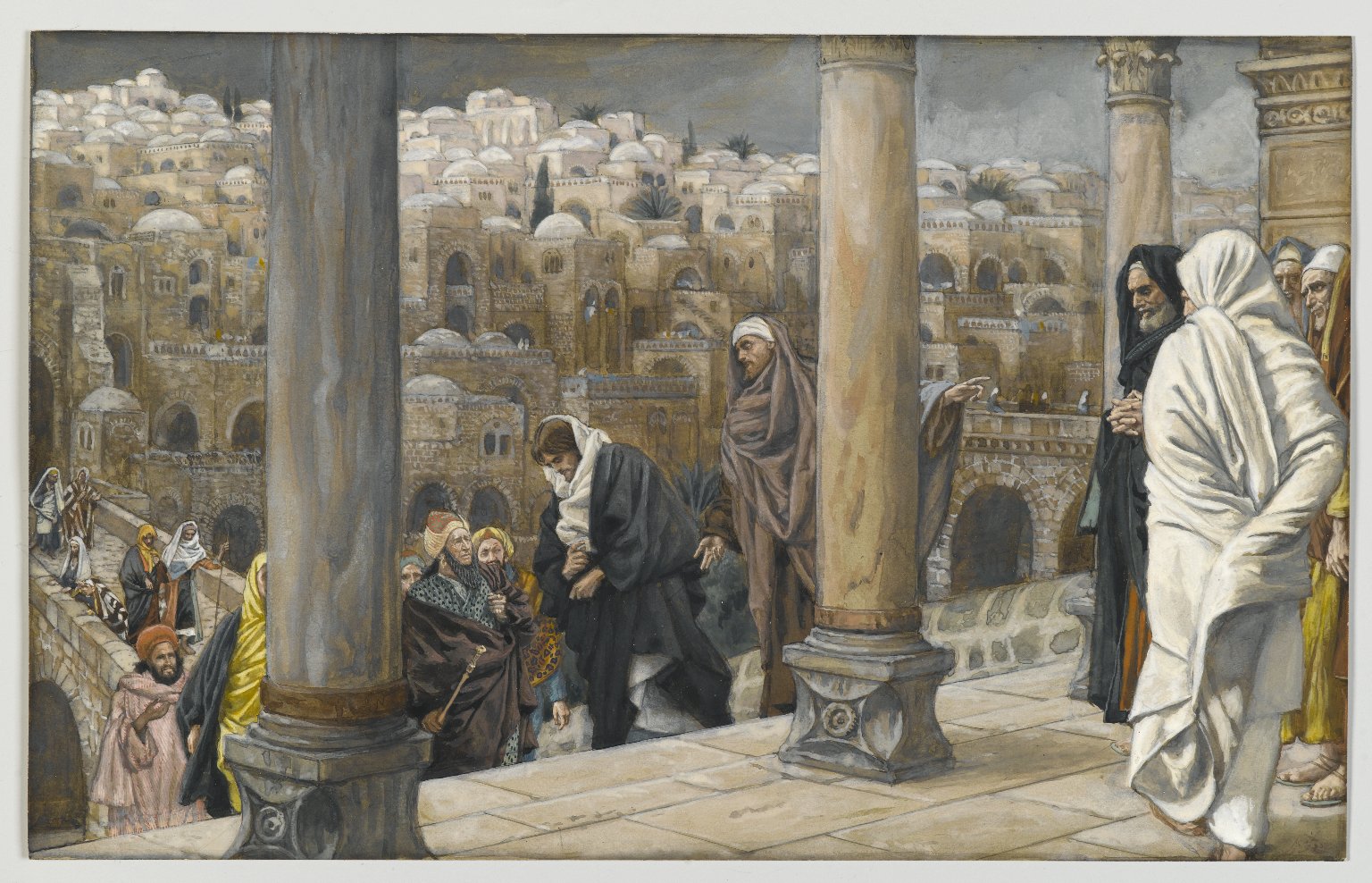
The Second Sunday of Year B

There is a common misconception that when the Church talks about vocation, being called, it is referring to the call to ordained ministry, to be a deacon or a priest. Nothing could be further from the truth. While this call is an important one, there remains a fundamental call which comes to us all in our baptism: the call to follow Christ. Each and every one of us is called to be a disciple of Jesus, to listen to what He says, and to let this call affect our lives. It is both a daunting prospect, and the most normal and natural thing in the world. 

Our first reading this morning tells the story of the call of Samuel, a young boy serving at the sanctuary in Shiloh with the high priest Eli. After his mother, Hannah, had prayed to God for a child whom she would dedicate to God as a Nazirite, she became pregnant and Samuel was born. Nazirites were not allowed to cut their hair, drink wine, or touch a dead body. Eli’s predecessor, Samson, the last of the Judges in the Book of Judges, was also a  Nazirite. Samuel is called three times. Each time he goes to Eli, whom he assumes is calling him. Eventually Eli tells Samuel to reply, ‘Speak, Lord, for your servant hears.’ (1Sam 3:9). So Samuel responds to God’s invitation, and it totally changes his life. Are we willing to take that risk, and answer God’s call?

Ancient Corinth was something like a cross between London and Las Vegas. It was a rich trading centre with a reputation for sexual immorality. This morning’s second reading from St Paul’s First Letter to the Corinthians, is an attempt to argue that our embodied existence, that is how we live our lives , matters. Often, we become what we do. It is therefore important to do the right thing, and not the wrong. Paul’s argument leads to his conclusion:

You are not your own, for you were bought with a price. So glorify God in your body. (1Cor 6:19-20) 

We are not our own, we belong to God, who bought us with the price of His Son, Jesus Christ. The world likes to tell us that we are autonomous, that we can do whatever we want to, but at a fundamental level we are God’s people, and belong to the God who made us, and who redeemed us out of love for us. God sets us free to love Him and serve Him, so how we live our lives is our response to that love and an act of loving service. We can choose to glorify God, not that God needs our glory, but because it is how we should live our lives, in love and service. Our faith affects our lived existence.

In today’s Gospel we move beyond the Baptism of Christ to the events of the following day. John has testified that Jesus is the Lamb of God, who takes away the sins of the world, and that He is the Son of God. When John sees Jesus walking by he again exclaims ‘Behold the Lamb of God’ (Jn 1:36). The phrase looks back to the Suffering Servant in Isaiah 52-53 who is led like a lamb to the slaughter. The beginning of Jesus public ministry points to its end on the Cross. Jesus is the Messiah and He will die to take away our sins. Two of John’s disciples hear him saying these words and follow Jesus. When Jesus asks them what they are looking for, the disciples answer ‘Rabbi’. They acknowledge Jesus as a teacher, and ask Him where He is staying. Jesus replies, “Come and you will see.” (Jn 1:39). Jesus invites them to follow Him, to see where He is staying and to spend time with Him. These two disciples of John become followers of Jesus, literally and metaphorically. The Church continues to make the same invitation to the world, to come and see, to follow Jesus. These two disciples stay with Jesus, they listen to Him, they eat with Him, and begin to have a relationship with Him. We then discover that one of the men is Andrew, and that he has a brother, called Simon. Andrew is convinced that he has found the Messiah and brings his brother to Jesus. When Jesus meets Simon he says,

“So you are Simon the son of John? You shall be called Cephas” (which means Peter) (Jn 1:42)

Jesus gives Simon a new name. He calls him Cephas, which means ‘rock’ in Aramaic, Petros in Greek, from which our name Peter comes. Peter will be the rock upon which Christ will build His Church (Mt 16:18). The name Jesus gives points to Peter’s future role as the leader of the Apostles. Jesus takes the initiative and begins to sketch out a future for the disciples who are following Him. It is quick, and matter of fact, and yet momentous. Jesus is gathering people to help Him with this ministry.

The Church therefore begins with a few Galilean fishermen following a rabbi whom they recognise as the Messiah. Thanks to them, and their faith in Jesus, we are in the Church today. Faith, where we put our trust, is an important thing. It affects both who we are, and how we live our lives. Faith turned Peter from a fisherman into a leader of the early Christians, and it has continued to transform lives for the past two thousand years. 

In our baptism, God in Christ invites each and every one of us to follow Him, to ‘come and see’, as the first disciples did, and to invite others, as Andrew invited Simon Peter. To come and see who Jesus is, to get to know Him, and start a relationship with Him. This begins with our sharing in His Death and Resurrection, and ends in the glory of Heaven. Where we, and all the Church, give glory to God the Father, God the Son, and God the Holy Spirit, to whom be ascribed, as is most right and just, all might, majesty, glory, dominion, and power, now and forever. Amen. 

Baptism of Christ

The Baptism of Christ by John the Baptist in the River Jordan at the start of His public ministry is one of the events found in all four Gospels (the others are the Feeding of the Five Thousand, and the account of the Lord’s Passion, Death, and Resurrection, from Palm Sunday to Easter Day). Each gospel contains accounts of the beginning and end of Jesus’ public ministry, as well as a miraculous feeding. If we take a moment to consider both what baptism is, and what it is for, we may come to understand why all four  gospel writers included it in their account of the life and teachings of Jesus. 

Baptism is symbolic washing with water for the forgiveness of sins. If Jesus was baptized does that mean that He sinned? The answer is, No. So, given the fact that Jesus committed no sins, did He need to be baptised by John? Again, the answer is. No. You may begin to wonder what is going on here? Why would Jesus begins His Public ministry in Galilee with a redundant action? If Jesus does not need to be baptised, what is the point of it? What is Jesus doing and why is it important for us?

Unlike all human beings, who commit sin, and become estranged from their relationship with God, Jesus is God become man. He is perfect, sinless, and united with God the Father, and the Holy Spirit, a Trinity of love. There is no need to restore the relationship, because it is one of perfect love. Mark’s account of the Baptism is prefaced by the words of John the Baptist:

After me comes he who is mightier than I, the strap of whose sandals I am not worthy to stoop down and untie. I have baptized you with water, but he will baptize you with the Holy Spirit.” (Mk 1:7-8)

John the Baptist is linking Christ’s baptism with the redemption of humanity in His death. The very beginning of Jesus’ public ministry points to the Cross, where salvation and freedom will be offered to all who turn to Christ. John baptises with water, but he looks forward to Jesus, who will baptise with the Holy Spirit. This is the baptism of the Church, to save and redeem humanity, by sharing in Christ’s Death and Resurrection.

Once Jesus has been baptised by John, extraordinary things happen:

And when he came up out of the water, immediately he saw the heavens being torn open and the Spirit descending on him like a dove. And a voice came from heaven, “You are my beloved Son; with you I am well pleased.” (Mk 1:10-11)

At the moment of Jesus’ baptism we hear God the Father, and see God the Son and God the Holy Spirit. The fulness of God is manifest to humanity in the Trinity. We can see and hear God’s saving work. Jesus does not need to be baptised, but does so for three reasons. Firstly to demonstrate His humility, and obedience to the will of the Father; secondly to sanctify the waters of baptism, and finally to act as an example for us to follow. Thus, God sends the Holy Spirit to demonstrate the bond of love between the Father and the Son. The Father speaks to demonstrate that Jesus is the Son of God. He is beloved of the Father, and His obedience and humility is pleasing in the sight of God. Jesus shows us the way back to the Father. By our own obedience and humility, by our repentance, and turning away from the ways of sin and the world, we return to the God who loves us. This is the message of the church: that God’s grace is available to us, to everybody, even though we haven’t worked for or earned it, even though we have done nothing to deserve it, God’s love and mercy is there for us. In Baptism we receive adoption, and become part of the family of God. Through Baptism we are born again, of water and the Spirit, we are ‘in Christ’, clothed with Him.

The unnecessary nature of the act of Jesus’ Baptism discloses something profound about the nature of God and His love for us. God gives us more than we ask for, because it is in God’s nature to be generous in a way which astounds us. There is something reckless, extravagant, utterly over the top, about the love of God, which should prompt us to love and care for others in a similar way.

John’s baptism of water prepares the way for the baptism of the Holy Spirit in Christ, through which we enter the Church. It shows us a new way of living. Life in the Spirit, life with God, has a profound effect on us, who we are and what we do. It opens up the possibility of living in a new way, a way of love, which mirrors the generosity shown to us by God. This way of life shows us in the Church what it is to be truly alive and how to live in a new way. It points to another act of God’s extravagant love: when Christ dies on the Cross, to take away our sin, to carry our burden, which separates us from God and each other. Our wounds are healed, the relationship is restored so that we can live the life of the Kingdom of God here and now: living out that self-giving, reckless, extravagant love and forgiveness in our own lives, and in the world around us.

Back in our first reading this morning the prophet Isaiah looks forward to the coming of the Messiah with a proclamation of extravagant generosity:

Come, everyone who thirsts, come to the waters” (Isa 55:1)

This invitation is also the invitation of the Church, for people to enter it by baptism and share in the unsearchable riches of Christ. Today we remember that salvation is offered to the world through baptism. We give thanks for the rebirth of our own baptism, and hope to share it with others. Baptism reminds us of the hope which we have in Jesus Christ, hope of new life, and eternal life with Him. Whatever is happening in the world, or in our own lives we can trust in who God is, and what He has done for us. In this trust we can live out our faith so that the world may be transformed and believe and give glory to God the Father, God the Son, and God the Holy Spirit, to whom be ascribed, as is most right and just, all might, majesty, glory, dominion, and power, now and forever. Amen. 

Advent IV

Those of you who are fans of The Sound of Music will know that to begin at the beginning is a very good place to start. This morning’s Gospel does exactly that, by going back to the Annunciation of the Angel Gabriel to the Blessed Virgin Mary, the beginning of the story of Christmas. As we prepare to celebrate Christ’s birth in a few days time,it is only natural to return to the point of His Conception to help us to ponder the wonderful mystery which God accomplishes for our sake.

Our Old Testament reading this morning begins and ends with promises about houses. It starts with King David concerned about the fact that while he lives in a fine palace, the Ark of the Covenant dwells in a tent. Such unease is understandable, and arises out of a desire to give the best to God. David is concerned that he is not doing so, and says:

“See now, I dwell in a house of cedar, but the ark of God dwells in a tent.” (2 Samuel 7:2)

So David plans to build God a Temple. To begin with, it appears that David’s plan to build a Temple is acceptable, but quickly we learn that this is not the case. At a fundamental level, God is not concerned whether he lives in a tent or a temple. It does not matter. God’s response is not to accept David’s offer, but instead to make an offer to David:

Moreover, the Lord declares to you that the Lord will make you a house. When your days are fulfilled and you lie down with your fathers, I will raise up your offspring after you, who shall come from your body, and I will establish his kingdom… I will be to him a father, and he shall be to me a son… And your house and your kingdom shall be made sure for ever before me. Your throne shall be established for ever.’” (2 Samuel 7:11-12, 14, 16)

God offers David a family, a Royal House a promise which he will keep, and which bears fruit with the coming of Jesus, born of the House of David, and the Son of God. Not only this but Jesus’ mother Mary will be the Ark of the New Covenant. This will be a covenant that is not made in stone, but rather in flesh; the flesh of the Son of God, who is born for us, and who dies for us. Her womb will be the place where the Son of God will begin to dwell with us:

Therefore the Lord himself will give you a sign. Behold, the virgin shall conceive and bear a son, and shall call his name Immanuel. (Isa 7:14)

Immanuel in Hebrew means ‘God (is) with us’ and this is what we are preparing to celebrate at Christmas: God being among us.

 Ours is a God who keeps his promises, and so St Paul can speak of:

the revelation of the mystery that was kept secret for long ages but has now been disclosed and through the prophetic writings has been made known to all nations (Rom 16:25-26)

For a moment I would like you to imagine how would you feel if one day a complete stranger turned up on your doorstep and told you something strange and unexpected? Surprised? Confused? Afraid? The fact that you are a teenage girl would most likely intensify these feelings. When you add to this the fact that the girl will conceive a child outside marriage, something for which she could be stoned to death, according to the Law of Moses, the Gospel passage which we have just heard should strike us as odd, and unsettling: this isn’t how God is supposed to work, it isn’t supposed to be like this. There is an unexpected strangeness strangeness about how God comes into the world.

At one level this is not surprising, because God does not follow human rules. He makes this clear through the prophet Isaiah:

For my thoughts are not your thoughts, neither are your ways my ways, declares the Lord. (Isa 55:8)

In the Annunciation God demonstrates this. Mary is confused, she cannot understand what is going on. So the angel Gabriel says ‘Paid ag ofni, Do not be afraid’. Mary does not need to be afraid because God is doing something wonderful. She will bear a son and call him Jesus, which means ‘God saves’. Jesus the Son of God will save God’s people from their sins, and the promise made to David we heard in our first reading will be fulfilled. 

Mary cannot understand how this will happen. The Holy Spirit, God active in the world, and the bond of love between God the Father and God the Son, will overshadow her. God will take flesh in her womb and be born as one of us. So Mary replies:

“Behold, I am the servant of the Lord; let it be to me according to your word.” (Lk 1:38)

Mary says ‘Yes’ to God. This is a ‘Yes’ which undoes the ‘No’ of Eve. It brings about the salvation of humanity, through the Life, Death, and Resurrection of her Son. Mary’s obedience to the will of God, ‘the obedience of faith’ (Rom 16:26), both trusts God to be at work, and makes it possible. God does not force salvation upon us, but offers it, and invites humanity into a relationship. 

The Church continues to make the same invitation, and to offer the same sacrifice, so that God, who became flesh and blood in the womb of Mary, offers us His Body and Blood in the Eucharist, so that we might share His Life. May we, like Mary, say yes to God, welcome him into our hearts, and show forth his love to the world, so that it may come to believe and trust in God the Father, God the Son, and God the Holy Spirit, to whom be ascribed, as is most right and just, all might, majesty, glory, dominion and power, now and forever. Amen

Fra Angelico The Annunciation

Christ the King

On November 23rd 1927 the last words uttered by Blessed Miguel Pro SJ before he was murdered were, ‘¡Viva Christo Rey!’ “Long live Christ the King!’. The Mexican regime of that time was cruel and went out of its way to persecute Christians, including Miguel Pro, a twentieth century Christian martyr who died confessing Christ’s sovereignty over all things. His words are powerful, and inspiring. When we acknowledge Christ as King we are saying that He is above all human power and authority, and we affirm that God is supreme. We, as Christians, declare that our primary allegiance is to God alone, and not to the things of this world. Secular power is threatened by this, because it wants to assume for itself something that rightly belongs to God alone. The Church resists this out of a desire to honour and worship God, and to see God’s Kingdom come and His will be done on earth as it is in Heaven. 

In our first reading this morning from the prophet Ezekiel we see God speaking as a shepherd caring for His flock. This image lies behind Jesus’ description of Himself as the Good Shepherd in John’s Gospel (Jn 10:11-18). Jesus uses imagery from Scripture to show us that it is fulfilled in Him, that God’s promises are coming true. Jesus the Good Shepherd is a hopeful and encouraging image, one which we need as much as ever. God is not absent or disinterested in us or how we live our lives, quite the opposite:

I myself will be the shepherd of my sheep, and I myself will make them lie down, declares the Lord God. I will seek the lost, and I will bring back the strayed, and I will bind up the injured, and I will strengthen the weak (Ezekiel 34:15-16)

This vision of care, healing, and reconciliation, is exactly what Jesus promises and demonstrates in the Gospels. This should not surprise us, as there is a continuity between the Old and New Testaments. What is promised in the Old is fulfilled in the New. The Word of God finds its fullest expression in the Word made Flesh, Jesus Christ. Christ takes the image for His Parable from the words of Ezekiel’s Prophecy:

“As for you, my flock, thus says the Lord God: Behold, I judge between sheep and sheep, between rams and male goats.” (Ezekiel 34:15-16)

So this morning we come to the last of Jesus’ parables concerning the end times, that of the Sheep and the Goats.  

As those involved in keeping animals will know, sheep and goats need to be separated. Sheep are hardier than goats, so they can sleep outside, whereas goats need shelter. Normally it is easy to distinguish them from each other since sheep’s tails point down, and goats’ tails point up. 

Once they are separated, Jesus speaks to the sheep:

‘Come, you who are blessed by my Father, inherit the kingdom prepared for you from the foundation of the world. For I was hungry and you gave me food, I was thirsty and you gave me drink, I was a stranger and you welcomed me, I was naked and you clothed me, I was sick and you visited me, I was in prison and you came to me.’ (Mt 25:34-36)

Jesus singles out those who have put their Christian faith into action in their lives. They have not simply believed in Jesus, but they have let their belief inform their actions, and done good works. They have fed the hungry, given refreshment to the thirsty, welcomed strangers, and visited the sick and prisoners. This is what God wants us to do, if we want to go to Heaven. The advice is clear, as with the other parables which we have been reading over the past few weeks. God is telling us how Christians should live in the world, making their love visible and demonstrating it in acts of service. 

God expects a lot from us. The Christian life is demanding, and a high standard is set for us. Likewise the choice is a stark one: eternal life or eternal punishment. It is important for us to remember that this morning’s Gospel is a parable which is meant to warn us, and give us the opportunity to live the way God wants us to, here and now, so that we can be prepared for the life to come. Each and every one of us can choose to try and live Gospel lives or not. God does not force us, we are free to reject His love, or to accept it and live lives which demonstrate that love to the world around us. It is clear that actions have consequences, and how we live our lives matters. That’s why Jesus’ teaching is clear and uncompromising.

We are faced with the question of how to live out our faith so that we are living lives of generous love and human flourishing. Can we manage on our own? No, alone we will not succeed. We need to rely upon each other, for help and support, but most importantly we need to rely upon God, and His Grace, as without it we are doomed to fail. Today we celebrate Christ’s universal kingship, that He is sovereign in Heaven and on earth, and that He rules in the hearts and lives of men and women everywhere. We serve him out of love, rather than obeying Him out of fear, and seek to make that love a reality in the world through acts of loving service. But we do this first and foremost because of our relationship with Christ. In showing mercy to others we are showing mercy to Christ, who in turn will be merciful towards us.

‘Truly, I say to you, as you did it to one of the least of these my brothers, you did it to me.’ (Mt 25:40)

In the Beatitudes Jesus says, ‘Blessed are the merciful, for they shall receive mercy’ (Mt 5:7). Now we see what this looks like in reality. The Kingdom of God is above all else a place of love, freely offered. The throne of God is in fact the Cross: here Christ is raised up and reigns in glory, the glory of self-giving generous love. Christ bears forever the marks of the nails and the spear because they are the marks of love. As a well-known hymn puts it, ‘Crown him the Lord of love! Behold his hands and side,— Rich wounds, yet visible above, In beauty glorified’. This is glory of the Kingdom, and we are called to share and participate in it, to make it a reality here and now. 

So let us try to live in such a way, that Christ may rule in our hearts and lives, and that we may all be built up in faith, hope, and love together, and share in the joy and generosity of the Kingdom, so that all may know and love God the Father, God the Son, and God the Holy Spirit, to whom be ascribed, as is most right and just, all might, majesty, glory, dominion, and power, now and forever. Amen. 

Diego Velázquez, Public domain, via Wikimedia Commons

The 33rd Sunday of Year A (Prov 31:10-13, 19-20, 30-31, 1 Thess 5:1-11, Mt 25:14-30)

In the ancient world, as in today’s world, the domestic life of women was difficult. Without modern labour-saving devices, household chores were even more laborious and time-consuming. A wife would be expected to run a household, and it was hard and difficult work. Such a demanding role means that paragons in the domestic sphere were to be praised and prized. And, in the Book of Proverbs, we see such an example of industry, of hard work. Throughout Ancient Wisdom Literature, wisdom and industry go hand in hand, they are beautiful and good, as they come from the source of all beauty and goodness, namely God. An excellent wife is more valuable than jewels, because while precious stones possess beauty and value, they are not capable of doing good. 

The heart of her husband trusts in her, and he will have no lack of gain. (Proverbs 31:11)

As a result of the relationship between a loving husband and wife, their mutual prosperity is assured. This then leads to generosity:

She opens her hand to the poor and reaches out her hands to the needy. (Proverbs 31:20)

The point of wealth is not for it to be acquired for its own sake, but so that it may be a blessing to others. God wants humanity to flourish by being loving and generous. This theme runs through all our readings this morning.

St Paul’s First Letter to the Thessalonians is written to a community that is afraid of two things: death and the return of Jesus in Judgement. These are understandable emotions. However, while death and judgement are inescapable, they do not need to be feared. They are compared with the labour pains of a pregnant woman, which are often sudden and sharp. But if we live lives characterised by love, and we have faith in Jesus Christ who died and rose again for us, we have the hope of salvation. This is good news, and leads St Paul to write:

For God has not destined us for wrath, but to obtain salvation through our Lord Jesus Christ (1Thess 5:9)

Paul’s letter is written to encourage his fellow Christians, to allay their fears and to build up their faith, hope, and love, as a community:

Therefore encourage one another and build one another up, just as you are doing (1Thess 5:11)

We all of us need encouragement, especially when times are difficult, and when we are as afraid or unsure, as we are at the moment. It is good to be reminded that, in trying to lift each others spirits, we are behaving as a Christian community should.

In today’s Gospel, Jesus continues to talk about the future using parables. Just as with the Parable of the Wise and Foolish Virgins, Jesus begins by showing that he is talking about a future reality: how things WILL BE, not how they are now. This future reality is Christ’s return. Christians believe that Jesus will come again to judge the world. The theme of today’s parable, the Parable of the Talents is judgement. These days, we are not comfortable with ideas of judgement. Many of us remember preachers using ideas of hell-fire and damnation to fill people with fear. But the heart of the Gospel is love not fear, and perfect love casts out fear. 

In the parable the master goes on a journey and entrusts his property to his servants. He puts his possessions into their care because he trusts them to look after it. The servants who are assigned five and two talents are both praised for being ‘good and faithful’. They have acted morally and demonstrated their faith, and they will be rewarded. The problem is with the servant who was given just one talent and hid it in the ground. He explains his actions, saying:

‘Master, I knew you to be a hard man, reaping where you did not sow, and gathering where you scattered no seed, so I was afraid, and I went and hid your talent in the ground. Here you have what is yours.’ (Mt 25:24-25)

This servant does not love his master, he fears him. He does not take care of what has been entrusted to him, because he simply sees it as a possession, a thing. The servant loves neither his master nor what was entrusted to him. By hiding the talent in the ground, he squanders the opportunity his master has given him, because he is jealous and resentful. As all gardeners know, seeds produce different results, just as in the Parable of the Sower, but they all need to be sown in the first place. What we learn here is that bitterness and resentment have no place in the Kingdom, they are not compatible with a Gospel of Love. The tragedy is that the fearful servant condemns himself to being outside the Kingdom, by failing to recognise both generosity, and the value of a relationship. 

The Parable of the Talents, just like the Parable of the Wise and Foolish Virgins, is a commentary on the life of the Kingdom. These are stories of servants who are prepared and continue to work, until their master returns. They are parables which teach us how to be a Church of loving generous service, not one of fear.

It may sound pedestrian, or even humdrum, but living the Christian life, living the life of the Kingdom, is, at a day to day level, boring, difficult and repetitive. It is about ‘keeping on keeping on’ — loving, forgiving, praying –- nourished by the Body and Blood of Christ, fed by Him, and with Him, freed from the fear which is the antithesis of the Kingdom, rejoicing in the gifts which God gives us, being thankful for them, and using them for God’s glory. None of us fully deserve the gift of God’s love and forgiveness in Jesus Christ: we have not earned it. It is not a reward, but rather the gift of a loving God. It is a gift which we are called to receive, and it transforms our lives. The God who will come to judge us, and all humanity, is a God of love and mercy, whose hands bear the mark of nails, wounded for love of us. Judgement and mercy go hand in hand, and if we love God and love our neighbour, we are living the life of the Kingdom, here and now, free from fear. 

So let us live out that life together, encouraging one another, so that we may all be built up in faith, hope, and love, and together share in the joy of the Kingdom, so that all may know and love God the Father, God the Son, and God the Holy Spirit, to whom be ascribed, as is most right and just, all might, majesty, glory, dominion, and power, now and forever. Amen. 

Rembrandt The Parable of the Talents

32nd Sunday of Year A: The Parable of the Wise and Foolish Virgins

There is a tradition of writing about Wisdom which can be found in the Bible, and across the Ancient Near East. Wisdom Literature seeks to explore the perennial questions of who God is and how humanity should live. The term ‘wisdom’ means much more than knowledge. It refers to how knowledge is used with judgement, something which comes with maturity and experience, and leads to our flourishing. In our first reading this morning we see Wisdom personified as a beautiful woman . If we love Wisdom, then we will recognise her easily. It stands to reason. Wisdom is an attractive quality. 

To fix one’s thought on her is perfect understanding, and one who is vigilant on her account will soon be free from care, because she goes about seeking those worthy of her, and she graciously appears to them in their paths, and meets them in every thought. (Wisdom 6:15-16)

To be wise is to be freed from care or anxiety. Nothing in life or death can trouble us because we have fixed our thoughts on Wisdom. Such wisdom comes from God, it is divine, and not human. In fixing our minds on Wisdom, we have fixed them upon God, the source of all wisdom, or as a prayer in the Prayerbook puts it:

Almighty God, the fountain of all wisdom, which knowest our necessities before we ask, and our ignorance in asking: We beseech thee to have compassion on our infirmities; and those things which for our unworthiness we dare not, and for our blindness we cannot ask, vouchsafe to give us for the worthiness of thy Son Jesus Christ our Lord. Amen 

Our second reading, from Paul’s First Letter to the Thessalonians, deals directly with questions of death and resurrection. Clearly some people have died, and there are members of the church community who are worried by this, so Paul is trying to allay their fears. He encourages them:

‘that you may not grieve as others do who have no hope. For since we believe that Jesus died and rose again, even so, through Jesus, God will bring with him those who have fallen asleep’. (1Thess 4:13-14)

This is our hope as Christians. Because Jesus died and rose again, and we share in His Resurrection, we know that our earthly life is not all that there is, that something greater awaits us. Paul has hope for the future, which is why our passage ends: 

‘Therefore encourage one another with these words’ (1 Thess 4:18)

Paul speaks of the future and Christ’s Second Coming to encourage the Church, to give it hope, and to remind us that God keeps His promises. We can have hope, because its source is God. Our ultimate aim is to be with God forever. Through what Christ has done we can have this hope. And on this Remembrance Sunday , we remember and give thanks for those who have gone before us and we encourage each other as a community.

In today’s Gospel Jesus continues His teaching about the Kingdom. Normally He says that, ‘The Kingdom of Heaven IS like…’ whereas in this passage He says, ‘the Kingdom of Heaven will be like…’ Jesus is teaching about the future, a future reality which will come to be, rather than something which is already the case. This future reality is His return. Christians believe that Jesus will come again to judge the world. 

The parable pictures this as the return of the bridegroom. The problem is that half of the virgins were not prepared and did not have spare oil to keep their lamps lit. The bridegroom has been  delayed and the virgins have become drowsy, and have fallen asleep. When the bridegroom eventually arrives half of them are not ready, and have to go to buy oil. They therefore miss meeting the Bridegroom and so are shut out of the marriage feast. This may sound harsh, but Jesus tells the parable to warn us to be prepared, to be vigilant. 

The point of the Parable of the Wise and Foolish Virgins, is that we will not know when Jesus will return, so we need to be ready to greet Him when He comes. This is not just to be ready in practical terms, but also in spiritual ones. How are we ready to meet Jesus? Are we living out our faith in our lives? Have we got things ‘in order’? Just as wisdom comes with age, so we can use our lives to prepare. Such preparations are wise, and a joint effort: we can prepare together. That is what the Church exists for: to help us to get ready to meet Jesus. 

There are two inescapable facts in our readings this morning: first that our earthly lives are finite, they will come to an end, and secondly that Jesus has promised that He will return. Death and Judgement may not be something that we like to think about, but they will happen, and we cannot, if we are serious, simply live our lives as though neither will take place. Many in the world around us live this way. Is it wise? Not at all, it is the opposite of wisdom.At this time ofRemembrance we, therefore, also reflect on our own mortality and the way in which we are living our lives and what we are doing for those in need.

To be prepared means to know what we are facing and to be ready for it. It is a mark of spiritual maturity that we can contemplate such things without fear. If we are prepared then we have lived out our faith, and we know that the God who will judge us is a God of love and mercy. God died for love of us, and to give us the hope of eternal life with Him. This is the Heavenly Marriage Feast which we, as Christians, look forward to.

If our lives are characterised by Faith, Hope, and Love, there is no need for fear. The world around us is scared of Death and Judgement, because it has no hope of eternal life. The promises of the world are empty, whereas what Jesus promises us is real, and is for everyone who turns to Him. This is Good News, in fact it is the best news possible! Our life on earth is meant to be a prelude to an eternity with God. This is what we believe and hope for as followers of Christ.

If what we believe in our hearts and how we live our lives are in perfect synchronisation with each other, then we need have no fear, as the promise of sharing in Christ’s Resurrection is there for us. We do not need to be anxious, and we can get on with the business of living our lives secure in our faith. This is what it means to be a wise virgin with a lit lamp and a flask of oil, ready to meet our Lord . This is the purpose of the parable: to warn us in advance so that we can be prepared and not be surprised, so that we can be wise. We can therefore be lamps of faith in a dark world, ready to shine love, and hope on those around us.

May our lamps of faith be filled with oil so that they may burn brightly to the honour of God the Father, God the Son, and God the Holy Spirit, to whom be ascribed, as is most right and just, all might, majesty, glory, dominion, and power, now and forever. Amen.

The Eighteenth Sunday of Year A (Mt 14:13-21) The Feeding of the Five Thousand

I must admit that our readings this morning have unsettled me somewhat. The joyful character of both Isaiah and the account of the Feeding of the Five Thousand in Matthew’s Gospel seem far removed from how life is here and now for many people. The feelings of hope, joy, celebration, and social interaction, are far removed from the fear and concern which have been characterising our daily lives. And yet, despite our fears, there remains in Scripture a promise of hope for the future, as God says in the words of the prophet Isaiah, ‘Paid ag ofni, Fear not, for I have redeemed you; I have called you by name, you are mine.’ (Isa 43:1). We respond in trust, not that things are fine now, but that they will be. God is someone whom we can trust, who will never disappoint us. As the Psalmist says, ‘our hope and strength, a very present help in trouble’ (Ps 46:1) if we cast our burden upon Him, He will sustain us (cf. Ps 55:22). 

In our first reading this morning we hear God’s generous promise to His people. In the manner of a market trader God offers nourishment and refreshment, but not for profit! It is free! God offers water, wine, milk, and bread, food to nourish us, and drink to refresh us. It is a foretaste of the banquet of the Kingdom, in the Eucharist, where we are nourished and fed by God. The passage speaks of God’s covenant with His people, a relationship of love, that we can trust. God, who knows our needs, freely gives to his people love and grace, so that they may have life in all in all its fullness. These promises are fulfilled in Christ, who makes an everlasting covenant with us through His Body and His Blood. 

God’s generosity is freely offered, but it can be rejected. We see this in our second reading from Paul’s Letter to the Romans. Unlike the joy and optimism of the previous chapter which we heard last week, here are Israelites who reject Christ and cause St Paul great sorrow and anguish. The rejection of God’s generosity is painful, but it is the price of freedom. We cannot be compelled to accept what God offers, that would not be generous. Instead, we are free to accept or reject what God holds out for us. 

Picture the scene: Jesus has just been told that his cousin, John the Baptist, has been put in prison and killed. Jesus has lately been to Nazareth, where he was rejected, by the very people who should have accepted him. It is not for nothing that this morning’s Gospel passage begins with Jesus withdrawing to the desert: to be alone, to pray, to be close to God.

When the people hear where Jesus has gone they follow him, they walk out from the towns into the desert, wanting to see Jesus, and to hear him teach them. When Jesus gets out of the boat he sees a great mass of people and has compassion on them. He is moved by the sight of them, and their need. Jesus heals the sick to show that the Kingdom of God is a place of healing, where humanity can be restored through an encounter with the divine. Jesus’ actions and words proclaim the power of God to heal and restore humanity.

It is getting late, the sun is fast moving towards the West, and the disciples tell him to send the crowds away so that they can buy food. Instead Jesus says that the people do not need to go away, and tells the disciples to give them something to eat. The disciples obey Him, but cannot see how five loaves and two fish can possibly feed the thousands of people who have come to be close to Jesus.

The five loaves represent the five books of Moses, the Pentateuch: Genesis, Exodus, Leviticus, Numbers, Deuteronomy. The Books of the Law, the Torah, which show Israel how to live, and how to love God. The two fish represent the Law and the Prophets, so that, ‘Man shall not live by bread alone, but by every word that proceeds from the mouth of God.’ (Mt 4:4) The law and the Prophets point to Jesus, the Word made flesh: they find their fulfilment and true meaning in Him. The hopes of Israel, for the future, for a Messiah, are fulfilled in Him. Just like Israel after crossing the Red Sea here the People of God are fed by God in the desert. There is so much food left over at the end that there is enough to fill twelve baskets, one for each of the disciples, and for each tribe of Israel. In human terms, five loaves and two fish is not enough to feed everyone, but it is more than sufficient in divine terms. Just like at the Wedding feast in Cana, here we see that the Kingdom of God is a place of joy and abundance, of generosity, which isn’t concerned with scrimping or with the ‘good enough’,rather it is a place of lavish excess. This is what the church is supposed to be like: this is meant to be the model for our lives as Christians.

The multiplication of the loaves is not some conjuring trick, meant to amaze us, or to show us how powerful God is. It is a sign of God’s generous love for humanity. This is what God does for us, so that we can respond in a profound and radical way, and thereby change the world. Jesus has been rejected by the people of Nazareth and He responds by feeding people until they are satisfied, until they have had enough, and there is still plenty left over. Likewise, God’s love and mercy are inexhaustible, and are shown and poured out upon the world in Jesus Christ and in his death upon the Cross for our salvation.

Jesus takes the bread and fish, He blesses them, He breaks them and He gives them, actions which look forward to the Last Supper on the night before He died. Jesus told His disciples to carry on doing this in remembrance of Him, so that the Church could continue to be fed by Him and with Him, as a sign of His love for us, so that we might have life and forgiveness in Him.

Let us today be fed with the living bread, the bread which came down from heaven, so that it may feed our souls, so that we may be healed and restored by him. Let us be moved by the lavish generosity of God, and encouraged to live it out in our lives, in our thoughts, our words, and our actions, so that all that we are, all that we say or think or do, will proclaim the truth of God’s saving love to the world, so that we too can enter into the joy of the Lord and come to the banquet of the Kingdom, where all are welcomed, and healed.

Filled with God’s grace, may we live generously and encourage others to share in the generosity of the Kingdom, so that all come to believe believe and give glory to God the Father, God the Son, and God the Holy Spirit, to who whom be ascribed as is most right and just, all might, majesty, glory, dominion and power, now and forever. Amen. 
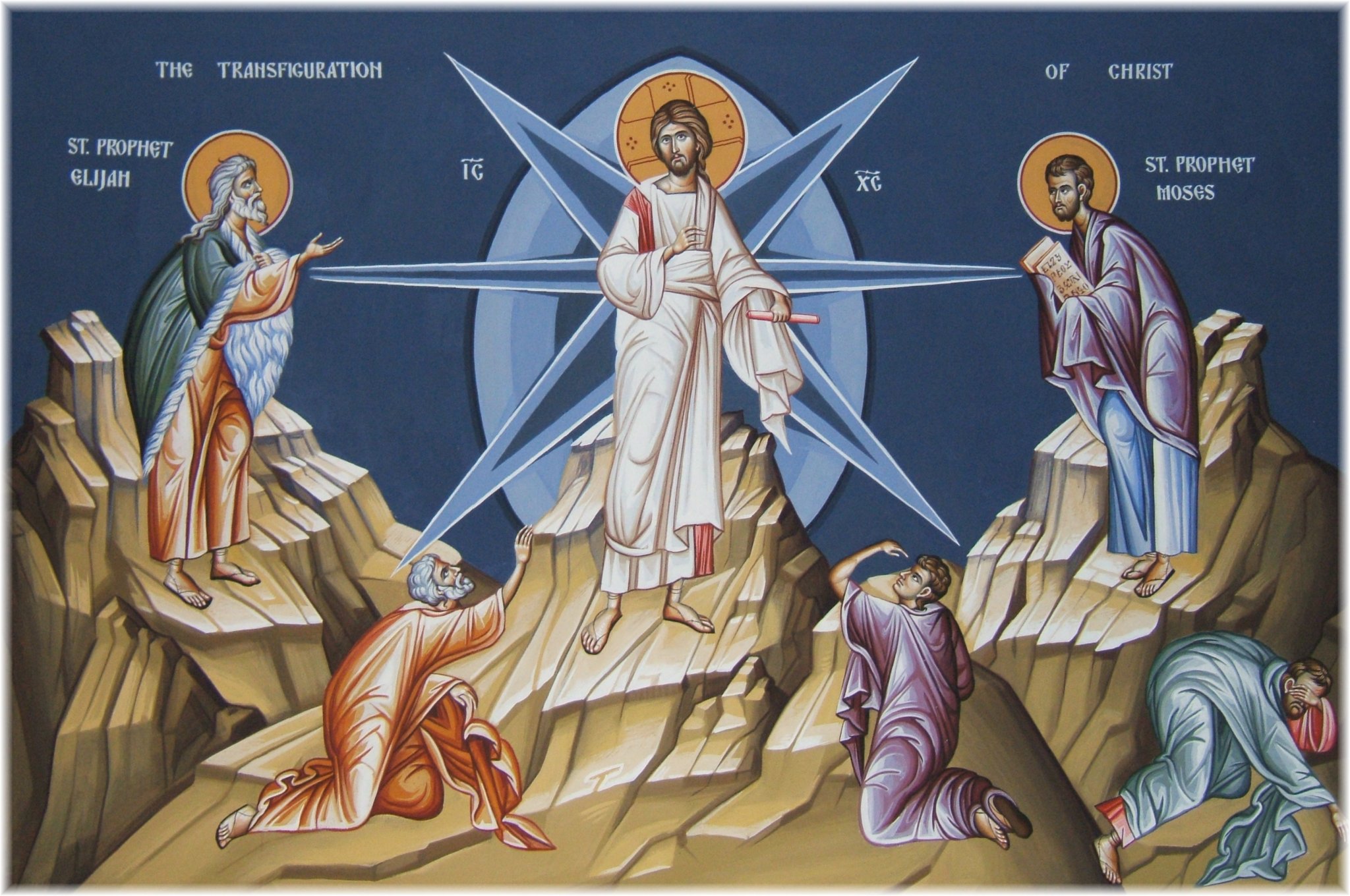
Brooklyn_Museum_-_The_Miracle_of_the_Loaves_and_Fishes_(La_multiplication_des_pains)_by_James_Tissot.jpg

Homily for the 17th Sunday of Year A

The last time the world experienced something like current pandemic was a century ago, in the  Spanish ‘Flu outbreak of 1918-1920. But because of news blackouts and the trauma of the Great War, it was largely forgotten about. It’s quite understandable. You want to shut the door on the past and get on with life. While it is understandable, it isn’t necessarily the most healthy way of dealing with a traumatic situation. Instead, we are much better when we acknowledge how we feel, and give ourselves permission to feel thaåt way. 

Over the last few months all of of us have felt some strong difficult emotions: Fear, Pain, Anger, Loneliness, Frustration, to name but a few. I know that I have, and that I’m not alone. These are perfectly normal and natural feelings. They occur many times in the Bible, throughout the Psalms, the Lamentations of Jeremiah, and the Book of Job. Closing churches for public worship is not something that happens often, normally only in times of plague or civil unrest. It is disconcerting, and while we are beginning the process of reopening, and worshiping together again, I suspect that it will continue to feel very strange for some time to come. That’s ok! We can acknowledge the strangeness and then try to get on with things together. This morning’s first reading gives us a starting point: Solomon replies to God’s invitation, ‘Ask what I shall give you’ by asking for understanding to discern what is right. We too need to rely on God to give us the wisdom to do the right thing. We also need to acknowledge that we are not in control, all things are in the hands of God, a God who loves us.

Likewise in Paul’s Letter to the Romans we see that when we cannot even find the words to pray to God, we need not worry. We have the words of others. We have the words of the Lord’s Prayer, how Jesus taught the disciples to pray. But when words, even those of others, fail us, we know that God hears the cry of the human heart. We simply need to put ourselves into the presence of God and trust Him to be at work in us. A God from whose love we can never be separated. This is something precious, something wonderful, something to give us encouragement and hope for the future. 

As Christians, we believe and proclaim the Good News of the Kingdom. Through repentance and faith, we enter into a relationship with a generous and loving God, who demonstrates that love and generosity most fully by dying on the Cross and rising from the Tomb. This is heart of our faith, that God does something wonderful for us, to show us how to live, and to deepen HIs relationship with us. 

That’s all well and good, but what difference does it make to us, here, now? The question is, how can the negative emotions which we feel be turned into something positive? The answer is: by handing them over to God whose Kingdom is a place of healing and reconciliation. This is what the Cross shows us: torture and death become the greatest demonstration of healing love. God doesn’t have a magic wand to wave in order to make everything right. No, love is costly, it involves sacrifice, and it can transform the world. 

So, at one level, God has done the hard work for us. The question is how do we cooperate with God and His grace, to make the Kingdom a reality here and now? Jesus gives us some advice in the Sermon in the Mount: ‘Blessed are the poor in spirit, for theirs is the kingdom of heaven’ (Mt 5: 3). To be poor in spirit is to be humble, to know and acknowledge our need of God, our reliance upon Him. We do this when we pray, ‘thy kingdom come, thy will be done, on earth as it is in heaven, deled dy deyrnas, gwneler dy ewyllys; megis yn y nef, felly ar y ddaear hefyd. ’ It’s God’s Kingdom, God’s Will, and God’s Church, not ours. If we truly believe this, then wonderful things are possible. 

Our experience over the last few months has taught us what really matters: the communities in which we live, our family, our relationships, the people we love. They cannot be bought or sold, but are of infinite value, because they are rooted and grounded in love. Only by living out the same costly love and reconciliation shown to us by Jesus Christ can we have any hope of achieving anything. Jesus’ teaching isn’t theory, but something we need to put into practice in our lives. Relationships are characterised by giving love and offering forgiveness, and through that we all grow in love together. The transformation starts with us, we have to be the change we want to see. It starts with conversion, turning towards a loving God, a God whose arms are flung wide to embrace the world upon the Cross. This is how we need to live, to live like Jesus: generously, loving and forgiving.

We have an example to follow, but the truth is that we aren’t very good at it. It is easy not to: just spread a bit of gossip, harbour a grudge, there are thousands of little ways to undermine the Kingdom. And we all fall into them, despite our best intentions. I know that I do, we all do. The point is not that we fail, but that we keep trying. That’s why it is the work of a lifetime, a lifetime of failing, seeking forgiveness, and trying to love, trying to live out the Kingdom. It is something we cannot achieve on our own, we need God, and we need each other: a community of faith. Only such a community of faith that we call the Church can offer the world the healing and reconciliation it longs for and needs, now more than ever. God’s love, lived out in our own lives, is the pearl of great price, the treasure which is old and new, two thousand years old, and yet lived out anew in the lives of Christians every day. We pray that we might live our lives for each other and for the glory of God the Father, God the Son, and God the Holy Spirit, to whom be ascribed as is most right and just, all might, majesty, glory, dominion, and power, now and forever. Amen. 

cropped-velazquezcrucifxion.jpg

Easter VII (The Sunday after Ascension) Acts 1:12-14, 1Peter 4:13-14, John 17:1-11

So that they may be one, as we are one

The ten days between Ascension and Pentecost is something of a strange time, a time of waiting, of anticipation, which speaks very powerfully to our present predicament. It is a time to wait and pray, which feels particularly apposite at this moment in time. Likewise the advice of the First Letter of Peter speaks powerfully when it says, ‘But rejoice insofar as you share Christ’s sufferings, … because the Spirit of glory and of God rests upon you’ (1Peter 4:13-14 ESV) We receive the Spirit in Baptism and Confirmation. He lives in us, and we can unite our sufferings with those of Christ, and be drawn ever closer to Him.

The Gospel this morning has taken us back to the Garden of Gethsemane, where in the seventeenth Chapter of John’s Gospel , after celebrating the Last Supper with His disciples, Jesus goes out to spend time in prayer. It can seem strange to suddenly look back to Maundy Thursday seven weeks after we have celebrated Jesus’ resurrection, but there is a very good reason to do such a thing. The prayer we have just heard is a conversation between God the Son and God the Father. It is a moment of intimacy, a private moment which shows us their relationship, something extraordinary, something wonderful, we don’t often think of prayer in these terms, but currently there is a world-wide initiative, called ‘Thy Kingdom Come’ which calls upon Christians everywhere to do something wonderful together. Between the Ascension and Pentecost we are asked to be like the Apostles in the first chapter of the Book of the Acts of the Apostles, and pray for the gift of the Holy Spirit, just like they did, and for us all to do this together, to pray for unity and the gift of the Holy Spirit. 

Prayer is a funny old thing, and most people probably think of it as asking God for things: please watch over my parents as they travel, please help me pass this examination, hopefully in our language of prayer we can also find time to say thank you for all the good things of this life, and to say sorry for when we’ve not been good enough, and also time to say, ‘I love you’ the prayer of adoration that we may be drawn closer to God. It’s a powerful thing, and a wonderful thing. It is ordinary, yet able to do amazing things:

It can be all to easy in life to think that what God wants is something big and difficult, when actually the opposite is what is required. The key to it all is humility: knowing our need of God. Those who are poor in Spirit, those who are humble can be filled with God’s Spirit, because they rely upon Him, they know their need of him. They know that God can do what we cannot, and they trust Him.

There it is plain and simple: prayer, it can change the world, and for the last two thousand years it has been changing the church and the world, one soul at a time, the wonderful revolution of God’s love at work in the world. In His prayer before his Passion, Jesus prays that we may be one, as He and the Father are one. He prays for unity, it is Jesus’ will for the church, and it is clear that the first apostles did what Jesus wanted them to do, as we can see form the Acts of the Apostles. They listened to Jesus, and did what He told them to do. We have to do the same.

‘And when they had entered, they went up to the upper room, where they were staying, Peter and John and James and Andrew, Philip and Thomas, Bartholomew and Matthew, James the son of Alphaeus and Simon the Zealot and Judas the son of James. All these with one accord were devoting themselves to prayer, together with the women and Mary the mother of Jesus, and his brothers.’ (Acts 1:13-14 ESV)

Here is unity, unity of will and purpose, and we hope to share that here and now. They are devoted to prayer, and we can be too. While the church is not as united as we would like it to be, or as God would like it to be, we can at least say that we are trying to do God’s will. It is something that we can all try and do together. So let us do it. Let us pray for unity, and the outpouring of God’s Holy Spirit, to fill the Church with love, with grace, with forgiveness, with reconciliation, that we can heal the wounds of the past, and be drawn into unity and love, by the power of the Holy Spirit, knowing our need of God, and our reliance upon Him. If we ask, God will both hear our request, and grant it (if it is His will). 

So as we stay put, and wait and pray with the Apostles for the gift of the Holy Spirit let us pray that God may be at work in us, that He will fill us with his love, and transform our lives, building us up, and giving us strength to live His life and to proclaim His truth, to offer the world that which it most earnestly desires, a peace, a joy and a freedom which pass human understanding, and the gift of eternal life in Christ. Let us pray that we are strengthened so that we can proclaim in word and deed what wonderful things God has done through his Son, Our Saviour Jesus Christ. That all that we are and do may confess that Jesus Christ is Lord to the glory of the Father, and that the world may be filled with his love so that all may come to believe and give glory to God the Father, God the Son, and God the Holy Spirit, to whom be ascribed as is most right and just, all might, majesty, glory, dominion, and power, now and forever. Amen. 

3a8ed5baf8ee2d2d1cfd265911689e5b

Homily for the Ascension (Acts 1:1-11 Eph 1:17-23 Mt 28:16-20)

Today can often feel a somewhat strange day, a day of slightly mixed emotions, and this year more than most, when we are not able to be together to pray, to worship Almighty God, and be nourished with Holy Communion. We are not celebrating Jesus’ departure from the earth, but His return to God the Father, Christ’s abiding presence with us, and what He asks of us, and promises to us. It is a day of celebration and expectation, looking forward to the future in love and hope. 

The disciples have had six weeks to used to the fact that Jesus has risen from the dead, having carried the burden of our sins and experienced the pain and estrangement which separates God and humanity. That wound has been healed by His glorious wounds. Before Jesus returns to the Father, He makes the apostles a promise: they will be baptized with the Holy Spirit (Acts 1:4), receive power, and be Christ’s witnesses to the ends of the earth (Acts 1:8). Christ is looking forward to Pentecost, to the church’s future, in which we live now.

In Matthew’s Gospel, before Jesus leaves the apostles, He gives them a commission, they are sent out to do something together. Jesus begins (Mt 28:18) by stating that all authority in heaven and earth has been given to Him. He is God, God is sovereign, and rules over everything, and it reminds us of the moment during Christ’s temptation by the devil, before the start of His public ministry, which we read on the First Sunday of Lent. The devil offers the world to Jesus, but it is not his to give, it belongs to God, who created it. Our worship is rooted in the fact that we have a relationship with a God who made us, redeemed us, and loves us. 

Jesus tells the apostles (28:19) to go and make disciples of all nations, baptizing them in the name of the Father, and of the Son, and of the Holy Spirit. The church exists to be sent out to make disciples. Baptism is what makes us Christians. In it we share in Christ’s life, death, and Resurrection, and through it God gives us the virtues of Faith, Hope, and Love. Through our faith in God: Father, Son, and Holy Spirit, filled with the hope of heaven, our supernatural end, to enjoy the vision of God, who is love. Loving God and our neighbour, this is the very heart of the proclamation of the Good News of the Kingdom, along with the call of Jesus and John the Baptist that we should ‘Repent and believe the Gospel, and be baptised’. For two thousand years our message has been the same. 

Jesus tells the apostles to teach us all that He has commanded them (28:20). The Church is called to hand on what has been delivered to it, this is tradition, and it stops us from making mistakes, by deviating from what Christ teaches us through the Church. Our religion makes demands of us, and calls us to be faithful to the apostles’ teaching, and to live it out in our lives, putting theory into practice and becoming living witnesses of the Kingdom. This is difficult, and it is where Christians fall down most often. But the Good News is that in Christ we have forgiveness of sin. We can repent, and turn away from our mistakes, and turn back to a God who loves us. We are not abandoned or cast aside, but embraced in love. 

Finally Jesus says to the apostles, ‘Behold I am with you always, to the end of the age.’ (28:20) Christ is with us. How? In four ways: first in Scripture, the Word of God, which speaks of Christ, and finds its fulfilment in Him. It is true, and the source of truth. He is with us in the Sacraments, outward visible signs of the inward spiritual grace God pours out upon us, to fill us with His love. He is with us in the Holy Spirit which he pours out upon us, to strengthen us, and fill us with love. And finally He is with us in the Church, which is His Body, where we are united with Christ, in a relationship with Him, and each other. 

Jesus makes promises which are true. We can trust Him, and like the apostles we can prepare for the Coming of the Holy Spirit at Pentecost in prayer, and joyful expectation, knowing that we will never be abandoned, but that we are always united to, and loved by God the Father, God the Son, and God the Holy Spirit, to whom be ascribed as it most right and just, all might, majesty, glory, dominion, and power, now and forever. Amen

giotto_di_bondone_-_no._38_scenes_from_the_life_of_christ_-_22._ascension_-_wga09226

Easter II (John 20:19-31)

AT this precise moment in time I suspect that many of us are feeling frustration. I know that I am. We are frustrated that we are not able to worship together, and celebrate the joy of Easter, of Christ’s triumph over Death and Hell. We feel left out and unhappy. This is perfectly understandable. We should feel deprived, because we are, even if it is to serve a greater good, preventing infection and saving human life. But it is also an opportunity for us to take our frustration and longing and offer it to God, that He may take it and transform it, by uniting it with the suffering of His Son, Jesus Christ. 

We are also in good company this week with the apostles, and one in particular: St Thomas, who was not with the other disciples when Our Lord appeared to them on that first Easter Day. Thomas is frustrated, angry even, he cannot believe that the Resurrection is a reality, he wants to experience it, and God takes his longing and transforms it into a profound expression of faith, love, and hope. What God did then, He continues to do now. He can take our emotions, sanctify them, and transform them, so that we are filled with Divine Love and Mercy, which ever flow from Our Lord’s Most Sacred Heart, pierced by a spear, and from which flowed blood and water: healing streams of compassion, poured out upon the world. 

When the disciples are sat in a locked room, afraid of persecution Christ comes among them and says, ‘Tangnefedd i chwi’ ‘Peace be with you’. Christ comes to give them peace. He gives them a peace which the world cannot give, because it is not of this world. The peace Christ which comes to give us is the peace won on the Cross, which has reconciled God and humanity. This wonderful relationship leads to the disciples being sent, as Christ was, to proclaim the Good News of the Kingdom, and of new life in Christ. Christ empowers His Apostles with the Holy Spirit, to forgive sins, and carry on Christ’s work of reconciliation. The church exists to do just this, to proclaim and reconcile, to carry on Christ’s work in the world in the power of the Holy Spirit.

All of us can, I think, understand Thomas’ frustration at not being there, particularly at this moment in time. It isn’t that Thomas doubts, he wants to believe, and to experience the reality of his Risen Lord, and not to be left out. It’s a very human reaction. So when Jesus is with them again on Sunday, He greets them with Peace, and offers his hands and side to Thomas. Christ gives Thomas what he wants, proof that it is really Jesus, who has truly risen from the dead. When faced with the reality of the Risen Jesus, Thomas can only say, ‘My Lord and My God’. Thomas confesses that Jesus is Lord and God, the sole supreme authority, above anything of this world. He worships God in Christ. We do the same, and we are blessed because we have not seen and yet believe. We believe because of the witness of Thomas, and others, down through the centuries, who have proclaimed the Good News of Jesus Christ, even at great personal cost. As St Peter and the apostles said, ‘We must obey God rather than men’ (Acts 5:29 ESV) Christians around the world follow their lead, and to this day face imprisonment, torture, and death, for their belief in Christ. They do so gladly, because of who Christ is, and what He has done. We may not face suicide bombers in our churches, thank God. But we are no less resolved to bear witness to Christ. We may be ignored by the world around us, but we carry on bearing witness to the love and reconciliation which Christ brings, and which nothing else can. We continue, ‘so that you may believe that Jesus is the Christ, the Son of God, and that by believing you may have life in his name’ (John 20:31 ESV) Christ comes to bring us life, in His Incarnation, in His Life and Preaching, and in His Death and Resurrection. He gives us His Life, through our Baptism, and through the Eucharist. We are united with Christ, and transformed by Him, to live His life in the world, filled with His Holy Spirit. This is good news, which we long to share with others, so that they may come to know Christ, and experience His Love. The Church exists to deal with the mess we make as human beings, through what Jesus has done for us, in the power of His Holy Spirit. The Church is to be a community of reconciliation, where we are forgiven and we, in turn, forgive. It is to be a place where we are freed from sin, its power and its effects.

The disciples go from being scared and stuck in an upper room to become missionaries, evangelists, spreading the Good News around the world, regardless of the cost, even of sacrificing their own lives simply to bear witness to the fact that Jesus Christ is the Son of God, that he died for our sins, and that he rose again, on this day for us, that God loves us and tells us to love Him and to love one another. It is a simple and effective message which people still want to hear — we need to tell it to them, in our thoughts, our words and our actions.

The heart of our faith and the Gospel is forgiveness and mercy — no matter how many times we mess things up, we are forgiven. It is this reckless generosity of spirit which people find hard to believe that they too can be forgiven, by a loving God, and by their fellow Christians. That we can, despite our manifold shortcomings be a people of love, and forgiveness, and reconciliation. That God’s Grace will in the end not abolish our nature, but perfect it, that being fed by Christ, with Christ: so that we too may become what He is. That faced with the sad emptiness of the world, and its selfishness, its greed, we can be filled with joy, and life, and hope. That like the first apostles we too can spread the Gospel: that the world may believe.

So let us be filled with the joy of the Resurrection this Easter, let us share that joy with others, may it fill our lives and those of whom we meet with the joy and love of God, who has triumphed and who offers us all new life in Him, that all that we do, all that we are, all that we say or think may give glory to God the Father, God the Son, and God the Holy Spirit, to whom be ascribed as is most right and just, all might, majesty, dominion and power, now and forever. Amen.

7ec0d-the_incredulity_of_saint_thomas-caravaggio_1601-2

Lent III

The people of Israel in the Book of Exodus are a rum old lot. They have been saved from slavery and misery in Egypt, and all they can do is complain and find fault. People can be strange, stubborn infuriating creatures. We can I hope recognise something of ourselves in them: stubborn, wilful, and sinful. But lest we get too disheartened it is important to recognise that Moses strikes the rock at Horeb, as the Lord commands him, and out flows water. As St Paul puts it ‘For they drank from the spiritual Rock that followed them, and the Rock was Christ.’ (1Cor 10:4 ESV) This water, like the parted water of the Red Sea prefigures Christ, the living water, and our baptism, through which we enter the Church. Through it we are regenerate, born again to eternal life in Christ Jesus, our Lord and Saviour, whose side was pierced on Calvary, and whence flowed blood and water. This water speaks to us of the grace of God poured out upon us, his people, to heal us and restore us, to help us live his risen life.

So as we continue our Lenten pilgrimage, we can do so joyfully because God’s love has been poured into our hearts — what matters is what has been done to us, by God, out of love, so that we can be like him. He is the reconciliation which achieves what we cannot: restoring our relationship with God and each other, healing our wounds, and giving us eternal life in Him. This is our faith as Christians, which can help us and strengthen us in times of uncertainty, such as we are living in today. Christ died for us, because God loves us, and we can trust in that.

Picture the scene — it’s the middle of the day, the sun is blazing overhead, he’s been walking for hours, days even. Jesus is tired — as a man, a human being, he is no different from you or me — he ate and drank,  he was thirsty.. Mid-day is certainly no time to be drawing water from a well — it’s something you do first thing in the morning, as the sun is rising. What sort of a woman is drawing water at mid-day? Hardly a respectable one, but rather someone shunned, someone beyond the pale, cast out of polite society as an adulteress who is living in sin. Jesus asks the woman for a drink — Jesus is defying a social convention — He’s breaking the rules. The woman is really surprised — Jews are supposed to treat Samaritans as outcasts, they are beyond the pale: treated something like the Roma in Eastern Europe – outcasts, second class, scum, to be despised and looked down upon. And yet Jesus asks her for water, he initiates the conversation and the encounter, with an outsider, to bring her in.

Jesus offers her living water, so that she may never be thirsty again. The woman desires it, so that she will never be thirsty again, or have to come to the well to draw water, she’s fed up of the work, and fed up of being an outcast, and having to do it at antisocial hours when the community can see who and what she is. Jesus knows who and what she is – He recognises her irregular lifestyle. He also sees her need of God — her need for the water of grace to restore her soul, and inspire her to tell people the Good News. The woman’s testimony is powerful because she has experienced God’s love as a living reality and she simply has to tell people about it. She brings them to Christ so that they can be nourished, so that they too can experience the grace of God.

People are interested in who and what Jesus is, what He’s got to say, and they believe and trust in Him as the Messiah the Anointed of God, as the Saviour of the World, a title recently taken up by the Roman Emperor. These are big claims to make, and dangerous ones, which along with Christ’s healings will soon lead to His condemnation and death. In plenty of parts of the world the proclamation of the Good News still leads to imprisonment, torture and death, even today. And yet as Christians we are called to bear witness regardless of the personal cost, so that the world may believe. Here in the West we have as a church become comfortable, we forget about persecution, or view it at a safe distance. We’re not involved, it doesn’t matter that much to us. Are we far from the grace of our baptism? Have we not encountered Jesus in Word and Sacrament? Are we too afraid of the World? The world which Christ overcomes on the Cross.

To live is to change and to be perfect is to have changed often. If we are changing into Jesus Christ, then we’re on the right track. If we listen to His word; if we talk to Him in prayer and let him talk to us; if we’re fed by Him in the Eucharist, by Christ both priest and victim, to become what He is — God; if we’re forgiven by Him, through making confession of our sins, not only do we come to understand Jesus, we become like him, we come to share in his divine nature. We, the People of God, the new humanity, enter into the divine fullness of life, we have a foretaste of the heavenly banquet. This is what we are preparing to celebrate at Easter. Christ gives us the living water of baptism, and His Body and Blood so that we might have the promise of eternal life, and be transformed into His likeness. This is the point of the Incarnation, God becomes human, so that humanity can share the life of God. 

The Samaritans are right, for they know that, ‘that this is indeed the Saviour of the world.’ (Jn 4:42 ESV), and they like St Paul can rejoice in their sufferings, and so can we, because God has given us hope, and poured His love into our hearts, the love that casts out fear. Whatever happens, we can put our trust in someone who will never disappoint us, whose promises are sure, and who loves us. So let us come to Him, let us trust Him that He may take us and fill us with His love so that we may share it with others so that the world may believe and sing the praises of God the Father, God the Son, and God the Holy Spirit, to whom be ascribed, as is most right and just, all might, majesty, glory, dominion, and power, now and forever. Amen

Veronese.Jesus_and_the_Samaritan_Woman01.jpg

Lent I

The Church has entered the season of Lent, and she goes, with her Lord, into the desert for forty days, to pray, to turn away from sin, to turn back to God, to fast, to be generous in almsgiving. We do this to prepare to celebrate Jesus’ passion, Death and Resurrection in Holy Week and Easter. We get ready to celebrate the holiest week of the Church’s year by having something of a spiritual spring clean. This is a very good thing indeed. We need to do it, so that we can be reminded where we need to put some work in.

Our first reading this morning take us right back to the start of the problem of human sin: Adam & Eve in the Garden of Eden. They are tempted by the serpent to do what God has told them not to do. Thinking that you know better than God, and choosing to do what you want to do is where the sin of pride comes from. Adam and Eve prefer to trust the serpent, who promises that they will become like God. They are disobedient: they do not listen to what God says, and act in accordance with it. But rather than knowing good and evil, all they know is that they are naked, and cover their nakedness. The serpent makes empty promises, and they are taken in by them. Such is the power of lies. 

But while we have heard how sin and death came into the world, we also hear in our second reading from Paul’s Letter to the Romans how disobedience is countered by the obedience of Jesus Christ. It is obedience which will see Our Lord die on the Cross for us. Christ will bear the burden of our sin, to pay the debt which we cannot. This is what we are preparing to celebrate: one act of righteousness which ‘leads to justification and life for all men’ (Rom 5:18 ESV). To be justified is to be declared righteous in the sight of God. We are guilty, yet God declares us innocent. We deserve punishment, and yet are rewarded. It is remarkable. Such is God’s love for us that our slate is wiped clean. Each and every one of us deserves to be cast aside, for our sins, like those of Adam & Eve separate us from God and each other. Yet God did not leave us in slavery to sin, but sent His Son, so that we might have life in and through Him. This is the Good News of the Gospel. 

In the Gospel this morning we see Jesus at a crucial point, between His Baptism and the calling of the first disciples: Peter and Andrew, James and John. Christ goes into the desert for forty days, to be alone, to pray and to fast, and the church keen to imitate our Saviour likewise goes into the desert so that we may grow closer to God, that we may be purged and prepared to celebrate the mystery of the Lord’s Passion, Death, and Resurrection. 

Jesus is led by the Holy Spirit into the wilderness, a place traditionally associated with the prophets and with encounter with God. After fasting for forty days and forty nights He is hungry. This is no surprise at all. He has been fasting for forty days, Our Lord is starving – he is fully human not some superhero who is immune to human feelings and needs. So the devil tempts Him by saying, ‘If you are the Son of God, command these stones to become loaves of bread.’ (Mt 4:3 ESV). The temptation works on several levels. By doubting that Jesus is God and asking Him to prove it the devil is continuing to mock the God he refuses to serve. It is a temptation to be relevant: Jesus is hungry and needs to eat, but is being tempted to use the creative power of God simply to serve an appetite. The world tempts us to be relevant, and to conform ourselves to it, rather than let the world be conformed to the will of God. Jesus’ reply to the devil, that man does not live by bread alone but by every word which proceeds from the mouth of God, reminds us that as Christians we are fed by Word and Sacrament, nourished by God so that we may grow in faith, and hope, and love. 

Christ is taken to the pinnacle of the Temple in Jerusalem and told to throw Himself down. This is the temptation to be spectacular, to do something for show, again something which the contemporary church seems rather keen on. But nothing should be done for show; we are called to follow Christ simply and humbly, trusting in Him. The devil wants to put God to the test, it is an act of disobedience, contrary to the humble obedience which sees us live trusting in God, relying upon Him, formed by Him.

Christ is finally tempted to turn away from God the Father, to worship a false god. He is offered much in material terms –- all the world and its splendour -– wealth and power –- a huge temptation for humanity, and one into which many people give. The Church too has given in, and continues so to do. We have to be weak, powerless and vulnerable, utterly reliant upon God so that God can be at work in us, as we humbly worship and serve Him. It may look foolish in worldly terms, but that is the point –- we are not meant to be conformed to the world, but as we seek to grow in faith, in humility, and obedience, we allow God to be at work in us –- taking us and transforming us into His likeness.

The temptation to worship a false God: money, power, or success is always there, and many in the church give in to feelings of ambition, and if they are not ‘successful’ end up bitter, cynical, and miserable. But success is itself empty, popular favour can disappear like a puff of smoke. It is fleeting, it does not last. Whereas in Christ we are offered something that will last: eternal life with God in heaven. 

So as we undertake to follow Christ in our Lenten pilgrimage we do so in our weakness, so that we may rely upon God, and Him alone. We do so joyfully, knowing that Christ’s victory which we will celebrate at Easter is total and complete – it is justification and life for all.

Let us pray that we may receive grace to follow Christ so that we may prepare to celebrate His Death and Resurrection and sing the praises of God the Father, God the Son, and God the Holy Spirit, to whom be ascribed as is most right and just, all might, majesty, glory, dominion, and power, now and forever. Amen.

00.159.51

Quinquagesima (7th Sunday of Year A)

Generally speaking the ageing process is not one that people tend to enjoy: you cannot do what you used to do, and you ache more than you ever did when you were young. There are however great consolations: chief among them is wisdom, and in particular the wisdom of not bearing a grudge, anger, or hatred. Life is too short, and they do no good. In fact they harm us, far more than others. Over time they can eat us up, and it isn’t pretty or good, or healthy. 

This is why our first reading this morning tells us in no uncertain terms how we are to live our lives: not in hatred, bitterness or anger, not with vengeance or grudges, but with love, for we are to be holy as God is holy, and God is also love, so we are to love. It is easy to forget this, and we do regularly, which is why we need forgiveness. 

The church in Corinth knew this all too well. They had given themselves over to bitterness and quarrelling, forming cliques, and setting rich against the poor. That is why St Paul is writing to them. In this morning’s reading St Paul begins by reminding the Corinthian Christians that they are living stones, built into the temple of God, and filled with the Holy Spirit. It is as true for us as it was for them. We too are called to holiness, and love. Love and forgiveness can look quite foolish to the world around us. The world tells us that we should get angry, and the media encourages this: in print, on the television, on the internet. It sells, and it makes us feel lousy. It creates a problem which we attempt to solve through retail therapy, or some other means, to dull our senses, and take away the pain and misery. Thankfully God knows better. While God’s wisdom looks like foolishness, it is the world that is truly foolish, while God is truly wise. The only way to heal our many wounds is through God who gave His only Son Jesus Christ to die for us, and rise again, that we might have life in Him. As St Paul says: ‘For since, in the wisdom of God, the world did not know God through wisdom, it pleased God through the folly of what we preach to save those who believe. For Jews demand signs and Greeks seek wisdom, but we preach Christ crucified, a stumbling block to Jews and folly to Gentiles, but to those who are called, both Jews and Greeks, Christ the power of God and the wisdom of God. For the foolishness of God is wiser than men, and the weakness of God is stronger than men.’ (1Cor 1:21-25 ESV) For two thousand years our message has been the same, and may it continue until the Lord comes again. 

In the Gospel this morning, Jesus turns accepted wisdom on its head. While the Law of Moses allowed for limited revenge to take place, Jesus deepens the moral law, and makes it much more demanding. We are not to offer any resistance to mistreatment, and we are to be generous to anyone who asks of us, regardless of who they are. Only gentle non-violent love can truly change the world. It is exacting and challenging. God asks a lot of us who follow Him, so that we might live lives of love. But by so doing we can be a powerful witness to the world, calling it back to the path it should tread, and proclaiming the values of the Kingdom.

It was accepted in the ancient world that you would love your friends and hate your enemies, it is, after all, human nature. But Jesus demands that we love our enemies and pray for those who persecute us, and in the first three centuries of the church there was quite a lot of persecution. There still is today. We continue to pray for those who persecute our brothers and sisters in Christ, that God would turn their hearts, and that they might come to know the love and forgiveness of God. It might seem foolish to do such a thing, but as Christians we know that prayer works, it changes things, and also that the example of Christians living out their faith, bearing witness to it in the world draws people to Jesus Christ. This authentic witness is powerful, and proof that the church will outlast unjust regimes. 

It isn’t an easy thing to do. It is much easier to give in to feelings like hate. That’s the problem: loving your enemies is difficult, it takes effort, it is an act of the will, to will the good of another, one who has hurt us. But only love and forgiveness have the power to heal and restore, to make the world a better place. There is a cost, certainly, but it is what we are called to do, by a God who loves us, for our sake. We are called to be perfect, as our Heavenly Father is perfect, to live out love and forgiveness in our lives, to make them a reality in the world. This is what the Kingdom of God looks like in practice. This is how we change the world, one soul at a time, by living out the same love which sees Jesus die on the Cross for us. It is difficult, and costly, and we can only do it through the love and mercy of God, in His strength and not our own. By letting God be at work in our lives, trusting Him to be at work in us, through His Grace.

As we prepare to begin the season of Lent, we look to the Cross as our only hope, the greatest demonstration of God’s love for us. May we live out the love and forgiveness which we see in Christ. May we turn away from our sins, and live out the perfection of Christ, to proclaim the truth of His Kingdom, and to call men and women to live lives from hatred and anger, filled with love and forgiveness so that they and all creation may sing the praises of God the Father, God the Son, and God the Holy Spirit, to whom be ascribed as is most right and just, all might, majesty, glory, dominion, and power, now, and forever. Amen.

Fra_Angelico_-_Die_Bergpredigt

Sexagesima (6th Sunday of Yr A)

People nowadays can often have a rather negative view of the Old Testament. This is a terrible shame. They think the God of the Old Testament is angry, and nasty, and horrible. The New Testament, on the other hand, is all about how God loves us, and it has a much more sympathetic picture of the deity. The first position is entirely wrong, it represents a misunderstanding of who God is, and how God acts. Thus Jesus is completely right when He says, ‘Do not think that I have come to abolish the Law or the Prophets; I have not come to abolish them but to fulfil them’(Mt 5:17 ESV). Christ does not abolish the Law or the Prophets. The prophets speak of Him, they foretell a coming Messiah, He fulfils their prophecies. 

Our first reading this morning from Eccesiasticus, or the Wisdom of Jesus son of Sirach, presents us with a number of alternatives. We are free to choose. Do we want to keep God’s commandments and act faithfully? We can choose between fire and water, life and death. God does not force us to choose one or the other, but one is clearly good, and the other bad. The problem is that we often choose the wrong one. This is what sin is: choosing the wrong thing. God does not tell us to be ungodly, or give us permission to sin, and yet WE do. This is why forgiveness of sin is such a big deal: we all need it regularly. Also, holiness of life matters: God wants us to flourish, and we flourish by trying to live holy lives in accordance with God’s will.

In the Gospel this morning Jesus expects a lot from us. Jesus does not abolish the Law of Moses, quite the opposite. He makes it a lot stricter. ‘Therefore whoever relaxes one of the least of these commandments and teaches others to do the same will be called least in the kingdom of heaven, but whoever does them and teaches them will be called great in the kingdom of heaven. For I tell you, unless your righteousness exceeds that of the scribes and Pharisees, you will never enter the kingdom of heaven.’ (Mt 5:19-20 ESV) The point is that we are free to choose. We can choose to do the right thing, if we listen to God, if we read Holy Scripture, if we pray, if we trust God to guide us. It is possible: Jesus spends His entire life giving us the example of how to live as humans, made in God’s image. It is possible, but it is difficult, and we will fail, especially if we trust in our own strength alone. As Christians we believe that God is loving and merciful, that our sins are forgiven, if we repent, and turn away from our sins, and ask for God’s forgiveness. Indeed sin is such a big deal that Jesus dies to take away our sins. God dies for us, for you and me, hands Himself over willingly to suffer and die on our behalf. This why we regularly celebrate the Eucharist, the Lord’s Supper, because Jesus took bread and wine, blessed them, broke the bread, and gave them to His disciples saying, ‘This is My Body … This is My Blood’ and to them to do this. So we do. So that we might feed on the most precious food and drink there is, to heal our wounded souls and bodies, to have a foretaste of the Heavenly Banquet prepared for us, to strengthen us to live the life of faith. Without it we cannot live, without God’s help we will fail, so we need it, and we need to trust in God to help us to do His will, and walk in His way. 

We can do this because of what God in Christ has done for us. The Cross is the place where the world, the flesh, and the devil are conquered. Here, sin which separates us from God and each other is dealt with. Because of what God has done in Christ we are able to make the choice to try to be righteous. We can do this if we rely upon God. The failure of the Scribes and Pharisees is that they rely upon the Law and their  human strength and will. Jesus expects perfection from His disciples because they are following His example, and trusting God to be at work in them. 

The Eucharist is a foretaste of the Heavenly Banquet: something God has in store for us, or as St Paul says, quoting the prophet Isaiah (64:4), ‘What no eye has seen, nor ear heard, nor the heart of man imagined, what God has prepared for those who love him’ (1Cor 2:9 ESV). Heaven is our true home, and its glory is beyond our understanding. Enfolded in the love of God, we may spend eternity worshipping the God who loves us and who made us. This is why the Lord of Glory died: to give us the hope of heaven. This is what we are preparing for here and now. 

Jesus makes demands of us because following Him is not easy: it is demanding, and it comes with a cost. Thus, the church is to be a place of reconciliation, where sins are forgiven, where wounds are healed. It is hard to be reconciled to someone. We have to recognise our own failures and shortcomings, and seek forgiveness ourselves. It is a difficult and costly process, which sees us stripped of pride, humble and reliant upon God as the only one who can heal us. We are powerless, and have to rely on One whose Love and Generosity can do in us what we cannot. We can forgive because we are forgiven, we can love because we are loved. 

Jesus expects much of us, because that is what the Christian life is: difficult, and demanding. Much is asked of us, in how we live our lives. We are to be in the world, but not of the world, living differently. As Christians, if we are to be salt and light then we need to live lives which make people think, ‘They’re not like us’ ‘They don’t do what we do’. We can choose life or death. We have through Christ the possibility of eternal life with God. May we choose wisely, and live as an example to others so that all creation may sing the praises of God the Father, God the Son, and God the Holy Spirit, to whom be ascribed as is most right and just, all might, majesty, glory, dominion, and power, now, and forever. Amen

Fra_Angelico_-_Die_Bergpredigt

Septuagesima (5th Sunday of Yr A)

The traditional name for this Sunday, Septuagesima, means seventieth, approximately seventy days before Easter, and it marked the beginning of a three-week period which looks forward to the beginning of Lent. It had a penitential character: purple or violet vestments were worn, and in the Eucharist and the Daily Office the church fasted from hymns of praise, to prepare for the Great Fast. It reminds us that what we Do affects who we ARE. Such discipline helps to form us as more loving and generous people.

Such concerns lie at the heart of our first reading this morning from the prophet Isaiah. In verse 6 the prophet cries, ‘Is not this the fast that I choose: to loose the bonds of wickedness, to undo the straps of the yoke, to let the oppressed go free, and to break every yoke?’ What God desires is to say sorry for the wrongs we have done that we show that contrition by doing the right thing: being loving and generous, the way God wants us to be. 

Thus, the prophet advises us to share our bread with the hungry, to give shelter to the homeless in our own homes, to clothe the naked. We also need to take away the yoke which is a burden to others, the pointing finger of accusation, and speaking wickedness: being harsh, not telling the truth, or telling it in a way that is designed to cause pain. We all need to hear this, and be reminded of how we can, each and every one of us, fall short. I know I do, and I ask for your forgiveness. 

The point is that we can ask the forgiveness, of a God who loves, which is why St Paul simply proclaims, ‘Jesus Christ and him crucified’. On the Cross Christ bears the yoke, the burden of our sins, and demonstrates the LOVE God has for us: real costly love, which sees Him die for us. This is love put into practice to heal and to restore the world, a simple act, seen by many as the execution of a common criminal, dying a slave’s death. Yet THIS brings about the greatest freedom humanity has ever known.

In the Gospel this morning Jesus begins by using metaphors to describe His disciples, They are salt. Nowadays we are used to salt as a bad thing, something of which we eat too much. Salt helps to give food flavour, it preserves food, keeping it edible, and without it we would die. Salt was expensive, a luxury, but if it is no longer good needs to be thrown out. You cannot use it. Jesus’ disciples need to be salty, there should be something about how we live out and proclaim the Gospel in word and deed that makes people go, ‘Mmm!’ Otherwise there is not much point. 

As well as being salt the disciples are light. Light illuminates, it scatters darkness, it helps us to see and keeps us safe. None of us would drive a car at night without the lights on, obviously. It would cause an accident, it might get us killed. Lampposts are high up in the air, so that they can illuminate the street below. We have lights which hang from our ceilings for the same reason. A covered light does not give out light, a light on the floor cannot light up a room. Our Lord encourages His disciples to ‘let your light shine before others, so that they may see your good works and give glory to your Father who is in heaven.’ Our faith then is not simply something that we believe, but rather it is something that we DO. Our actions and our words proclaim the truth of the Gospel to the world around us.

Just as a city on a hill cannot be hidden, so it is with Christians. We are visible, and for our many failings people will call us hypocrites, and while they have a point, our failings should always lead us to ask forgiveness, and repent. Because of what Christ has done for us on the Cross we have access to God’s forgiveness. The point is that while we fail, we repent and keep on trying to live out our faith in our lives. It is simple and clear, like St Paul’s proclamation to the church in Corinth. Our faith does not ‘rest in the wisdom of men but in the power of God.’ It looks foolish and weak, and so it should, in worldly terms. God’s weakness is greater than human strength, that is its power. 

Christ shows us how to live in the Beatitudes, and encourages us to put it into practice in our lives, and to follow His example of going to the Cross to proclaim the fact that God loves us, a God who is Love. Love forgives, so that it can transform us. We that transformation in Isaiah, put into practice to help transform the world. Paul is transformed from a persecutor of the Church into its greatest evangelist, who spends the rest of his life telling people about Jesus, and how He has transformed lives, and continues to do so. For two thousand years the Church has lived the truth of this transformation, and continues to do so, and invites men and women to come and have their lives transformed by the God who loves them.

So we begin to prepare for Lent, the great season of repentance, when we acknowledge our sins, and turn back to God, and prepare to celebrate the Passion, Death, and Resurrection of Jesus Christ. 

As we look towards the Cross, our only hope, our only salvation, may we live generous and loving lives. May we be salt and light in the world, giving it taste and illumination, offering it the chance for conversion, to turn back to the Lord who loves them, who shows them that love on the Cross, that they may have life in and through Him, that they may give glory to God the Father, God the Son, and God the Holy Spirit, to whom be ascribed as is most right and just, all might, majesty, glory, dominion, and power, now, and forever. Amen.

Fra_Angelico_-_Die_Bergpredigt.jpeg

The Presentation of Christ in the Temple

Once upon a time it was not uncommon to hear of the Churching of Women, sometimes called Thanksgiving after Childbirth, as it was a dangerous and risky business. We are perhaps now not quite so used to ideas of ritual purity inherent in the Thanksgiving for a woman after Childbirth, or her re-admission into society after a period of confinement. But the Law of Moses required that forty days after giving birth the mother was purified in a mikvah, a ritual bath. The law also required that her son, as a first-born male, was presented to the Lord, and sacrifices were made. Today the Church celebrates the Presentation of Christ in the Temple, also known as the Purification of the Blessed Virgin Mary, and commonly called Candlemas. The name is derived from the ceremonies which saw the candles for the coming year blessed at this service, so that they may burn as lights which proclaim Christ, the true Light, the light to lighten the Gentiles. They are different titles, but one feast, which make us think about who and what Jesus Christ is, and what he does.

This feast then is the fulfilment of the prophecy spoken by Malachi in our first reading, which also looks to our purification in and through the death of Christ and His atoning sacrifice of Himself, which will be be re-presented here, made present so that we can share in it, so that we can be healed and restored by the very Body and Blood of Our Lord and Saviour Jesus Christ. As the Letter to the Hebrews puts it:

Therefore he had to become like his brothers and sisters in every respect, so that he might be a merciful and faithful high priest in the service of God, to make a sacrifice of atonement for the sins of the people. Because he himself was tested by what he suffered, he is able to help those who are being tested. 

It is hard to see how it could be any clearer. Just as Abraham was willing to sacrifice Isaac on Mt Moriah, so now God will gladly give His only Son, Jesus Christ, on the altar of the Cross, to restore our relationship with Him.

The Holy Family go to the Temple to give thanks to God and to comply with the Law, just as they had in circumcising their baby on the eighth day: and in so doing they demonstrate obedience, they listen to what God says and do it and as such they are a model for all Christian families to follow — we need to be like them, listening to what God tells us and doing it, regardless of the cost.

When the Holy Family go to the Temple they encounter Simeon, a man of faith and holiness. A man devoted to God, who is looking for the consolation of Israel. He knows that he will not die until he sees the Messiah, the Lord’s Anointed, and the Saviour of the World. As he takes the child Jesus in his arms he prays: ‘Lord, now lettest thou thy servant depart in peace : according to thy word. For mine eyes have seen : thy salvation, Which thou hast prepared : before the face of all people; To be a light to lighten the Gentiles : and to be the glory of thy people Israel.

The promise made to him by God, revealed through the Holy Spirit, has been fulfilled in the six-week-old infant in his arms. Simeon can prepare to meet his God happy in the knowledge that Salvation has dawned in this little child. As Christ was made manifest to the Gentiles at Epiphany, so now His saving message is proclaimed, so that the world may know that its salvation has come in the person of Jesus Christ. Simeon speaks to the Blessed Virgin Mary of her Son’s future, and the pain she will endure at the foot of the Cross. Before he dies Simeon is looking to the Cross, the means by which our salvation is wrought, the Cross at which Mary will stand to see humanity freed from its sin through the love and mercy of God, through grace, the free gift of God in Christ. So as Candlemas concludes our celebration of Christmas, and the mystery of the Incarnation, so to it points to that which gives it its true meaning: the Death and Resurrection of Jesus Christ. Candlemas prepares for the coming season of Lent by changing our focus and attention from Jesus’ birth to His death, for our sins.

That is why we are here this morning, to be fed by Christ, to be fed with Christ, truly present in His Body and Blood, Soul and Divinity. A God whom we can touch and taste. A God who shares His Divine Life with us, so that we can be transformed by Him, built up as living stones as a temple to His Glory, and given a foretaste of Heaven here on Earth. This is our soul’s true food, the bread for the journey of faith, which sets us free to live for Him, to live with Him, through Him and in Him.

The significance of what is happening is not just recognised by Simeon, but also by Anna, a holy woman, a woman of prayer, a woman who is close to God, she recognises what God is doing in Christ, and she proclaims it, so that God’s redemption of His people may be known. Let us be like her, and let all of our lives, everything which we say, or think, or do, proclaim the saving truth of God’s love to the world.

And finally the Holy Family go back to Nazareth, and Jesus begins to grow up, in the favour of God, obedient to God and His parents in the Gospel we see all of human life: birth, death, work, normality hallowed by the God who loves us, who gives His Son for us. God shares our human life, as He will share our death, to restore us, to heal us,

So let us burn, like the candles which God has blessed, let our faith be active to give light and warmth and hope to the world, so that it may feel that love and warmth, and come to believe and give glory to God the Father, God the Son, and God the Holy Spirit, to whom be ascribed as is most right and just all might, majesty, glory, dominion, and power, now and forever, Amen.

Giotto_di_Bondone_-_No._19_Scenes_from_the_Life_of_Christ_-_3._Presentation_of_Christ_at_the_Temple_-_WGA09197.jpg

2nd Sunday of Year A – ‘Behold the Lamb of God!’

John the Baptist looked at Jesus as he walked by and said, ‘Behold the Lamb of God!’ Lambs were a central part of the Jewish festival of Passover. In order to avert the tenth plague in Egypt, the people of Israel were instructed to take a young lamb without any blemish and slaughter it. They were then to anoint the doorposts of their house with it, so that their firstborn would be saved, not killed by the Angel of Death. The lamb was to be roasted over the fire and eaten standing up whilst dressed for a journey. This festival of Passover is the high point of the Jewish religious calendar, and marks the start of their journey from slavery in Egypt to the Promised Land of Israel. It is also the time of Jesus’ Passion, Death, and Resurrection.

In order to meet the needs the large number of people celebrating the passover festival in the early 1st century AD, there needed to be a lot of shepherds raising flocks of animals for slaughter. In the Christmas story we see that the first visitors to the Holy Family in Bethlehem were shepherds. As Bethlehem is only six miles from Jerusalem, these shepherds were raising the lambs that would be consumed at Passover in nearby Jerusalem in their thousands. Jesus, like these lambs was also without blemish and would be killed at Passover. So from the very moment of Christ’s birth, His Death is foreshadowed. 

Traditionally Jesus’ death is understood to have happened at the ninth hour, 3pm, which is the same time that the passover lambs began to be slaughtered in the Temple in Jerusalem for the feast of Passover. This is not mere coincidence, but rather signal proof that Christ’s death is sacrificial, and represents the new Passover, and the freedom of the people of God. In this morning’s Gospel Jesus’s cousin, John the Baptist, greets Him, saying, ‘Behold the Lamb of God, who takes away the sins of the world’. John understands that Jesus is the passover Lamb.

The image of a lamb brings to mind a passage in the prophet Isaiah, where the Suffering Servant is compared to, ‘a lamb that is led to the slaughter, and like a sheep that before its shearers is dumb’ (Isa 53:7). This prophecy will be fulfilled in Holy Week on Good Friday. Here, at the start of John’s Gospel, just after the Baptism of Jesus in the Jordan, when John the Baptist saw the Spirit descend on Him, (before the first sign of turning water into wine at the marriage of Cana), John’s description of Jesus is a prophetic utterance which points forward to Jesus’ death on the Cross. So then, from the very start of Our lord’s life, as with the gift of myrrh at Bethlehem, the beginning points to the end: to Calvary (and beyond). 

In Genesis, we read of Abraham’s sacrifice of Isaac, who is saved when at the last moment a ram appears in a thorn bush. Isaac carrying wood for the sacrificial fire, prefigures Christ carrying the wood of the Cross. The ram in the thorns foreshadows Christ, the Lamb of God, crowned with thorns. Mt Moriah, where these events take place, is the mountain on which Jerusalem was built, and whose highest point is Golgotha, which is where Our Lord was crucified. The old foretells the new, and is completed by it.Prophecy is fulfilled. In Christ, God is glorified, and of Him the prophet Isaiah says, ‘I will make you as a light for the nations, that my salvation may reach to the end of the earth’ (Isa 49:5 ESV). 

In the Eucharist, just before we receive Communion I will repeat the words of John the Baptist, ‘Behold the Lamb of God…’ so that we may recognise Christ in our midst; we respond with the words of the Centurion, in Luke 7:6-7, ’Lord I am not worthy…’ It is this sense of unworthiness which keeps us both humble and reliant upon God to transform us. We hear John the Baptist’s words so that we may join in his confession that this is the Son of God. Christ is truly present in the Eucharist in a way which we cannot understand, which words and language cannot express, because that is how God is. As a result of the Word becoming flesh and dwelling amongst us, God incarnate makes himself known so that we might worship God, and that God might be at work in us. Unlike the sacrifices of Passover and the Day of Atonement which needed to be repeated annually, the Sacrifice of Christ on the Cross happens once, to deal with all sin, past, present, and future, to reconcile humanity to God and to each other. It is this reality which we celebrate today: we have been set free. 

This is the Good News of the Kingdom. We are loved by God, who flings His arms wide on the Cross to embrace the world with love. A God who embraces the shame of a slave’s death, the most brutal demonstration of Roman power, the most degrading way to die, to show the world love. It isn’t what you’d expect, and that’s the point. God does not want to compel us to love Him or worship Him, but rather makes a relationship possible, so that we might come to know Him, and love Him. As we approach the altar, this is what we are to receive, the Body and Blood of Christ, the self same body and blood which were nailed to the Cross for our sins and the sins of the whole world. Our hands will hold and our lips will touch him who created the entire universe. How can we not fail to be shocked by the generosity of a God who gives himself to us in such a personal way, in a way that we do not deserve? Yet, we can never deserve such a gift, that is why God takes the initiative and gives himself to us, freely and gladly. Like the Father of the Prodigal Son, God rushes to meet us, to embrace us and to celebrate with us, to show his love for us. God became a human being at Christmas so that we might become divine, through our baptism and our participation at the altar, in the feast of the Lamb.

The Eucharist is the sacrament of unity, uniting heaven and earth through the sacrifice of Calvary, allowing all humanity to share the body and blood of Our Saviour Jesus Christ, feeding on him so that we may become what he is; enabling us to share eternity with him, and to live lives of faith and hope, and love. So then, let us join the Wedding Banquet of the Lamb and enter into the mystery of God’s self-giving love, so that we may believe and give glory to God the Father, God the Son, and God the Holy Spirit, to whom be ascribed as is most right and just, all might, majesty, glory dominion and power, now, and forever.

img_0215

The Baptism of Christ

Baptism is something with which we are familiar in the Church. But for the vast majority of Christians baptised as infants, it isn’t something we necessarily remember. We are too young to recall the event. But whether we can remember it or not, we know that it happened, and that it marked our entry into the Church, where we were clothed with Christ and  we were born again, by water and the Holy Spirit. And as Christians we are baptised for many reasons, the first of which is that Jesus was baptised, something which the Church celebrates today. 

At one level it looks a little strange. Baptism washes us from our sins, and Jesus is not a sinner, so He does not need to baptized. Hence John the Baptist’s response, “I need to be baptized by you, and do you come to me?” (Mt 3:14 ESV). Our Lord replies by saying, “Let it be so now, for thus it is fitting for us to fulfil all righteousness.” (Mt 3:15 ESV). Jesus’ baptism is one of obedience to the will of God the Father. That is why our first reading is the first of the Servant Songs in the prophecy of Isaiah. The prophecy is fulfilled when the Father speaks the first verse, at the moment of Jesus’ baptism. He gives Him as a covenant to the nations, a covenant that will be made on the Cross, to save humanity. Christ is a light for the nations, as Simeon states at the Presentation in the Temple, Christ will open the eyes of the blind, and set prisoners free. This is the reality of the Kingdom of God, something of we, through our baptism, are a part.

Today God does a new thing, which lies at the heart of the proclamation of the Good News of the Kingdom by St Peter in this morning’s second reading from the Acts of the Apostles. It is the same proclamation that we find in Isaiah. There is a consistency in proclamation down through the centuries, a guarantee of its truth. God the Father expresses His love for His Son, whose obedience to His Father’s will shows humanity that by saying ‘Yes’ to God, the ‘No’ of Adam and Eve can be undone. Christ fulfils all righteousness, and in so doing points His public ministry towards the Cross.  This is where righteousness and obedience lead: to death and suffering, to display God’s love and finally, once and for all to restore humanity. What is foolish in the eyes of the world, is in fact the greatest possible demonstration of love. We will see that love made visible here this morning, where Christ offers Himself to the Father, and offers the Church His Body and Blood in the Eucharist, so that we may feed on Him, so that He may transform us, so that we may come to share in the very life and nature of God. Through our Baptism and the Eucharist the Kingdom becomes a living reality in us. We are transformed to live its life, and transform the world.

Last Sunday we celebrated Our Lord’s manifestation to the Gentiles. Now this Sunday, at the start of Christ’s public ministry, He is again made manifest. God the Father acknowledges the Son in the flesh, and sends the Holy Spirit, the bond of their love. The fulness of the Divine Trinity is united and manifest on earth to proclaim that Christ is Lord, and the Kingdom has become a reality. Christ does not need to be baptised, as we do, but does so to fulfil all righteousness and to sanctify the waters of baptism for those whom He would redeem, to show us the way to new life in Him. At the beginning of his public ministry, Jesus shows humanity the way to the Father, through himself. The world sees the generous love of God, which heals and restores us, from the darkness of the dungeon of sin and evil, to the light and life of the Kingdom of God. As our baptism is a sharing in the death and resurrection of Jesus, so His baptism points to the Cross, where streams of blood and water flow to cleanse and heal the world. We see the love of the Father, the power of the Spirit, and the obedience of Son, and all for us, who are so weak and foolish, and who need God’s love and healing, and forgiveness.

We need this, the whole world needs it, but is too proud to turn to a God of love, for fear of judgement, knowing that they deserve to be cut off forever, and yet it is exactly such people, such lost sheep that Our Lord comes to seek, whom He enfolds in His loving arms on the Cross, whom He washes in the waters of baptism, so that all may be a part of Him, regardless of whom they are, and what they have done. Salvation is the free gift of God and open to all who turn to him.

Ours is a faith which can transform the world, so that all humanity can share in God’s life and love, each and every one of us can become part of something radical and revolutionary, which can and will transform the world one soul at a time, it may sound strange, crazy even, but that is the point. Rather than human violence, cruelty, and murder, the only way to transform the world is through the love of God. This is what the church is for, what it’s all about; it is why we are gathered here, to be strengthened and nourished, through prayer, the Word of God, and the Sacraments of the Church, strengthened and nourished to live out our faith in our lives to transform the world. Nothing more, nothing less, just a revolution of love, of forgiveness, and healing, which the world both wants and needs, so let us live it so that the world may be transformed and believe and give glory to God the Father, God the Son, and God the Holy Spirit, to whom be ascribed as is most right and just, all might, majesty, glory, dominion, and power, now and forever.

chris07.jpg

Midnight Mass 2019

The journey from Nazareth to Bethlehem is about ninety miles, with some fairly large hills involved. It would probably have taken Mary and Joseph ten days to travel there, walking with a donkey. It was a huge effort: in order to be with family, and to comply with the demands of the census. Amidst the joy and the wonder of this holy night it is good to begin by pondering the fact that the Holy Family were tired, even before the Blessed Virgin Mary went into labour. Tonight is a time for many emotions: joy, wonder, love and fear, as we celebrate God working among us. 

The prophet Isaiah in tonight’s first reading speaks of a future centred upon the birth of a royal baby. It is a message of hope, a light shining in the darkness, which looks forward to the star of Bethlehem, announcing the birth to the world. The boy will free us from burdens and break the rod of our oppressor. The wonderful mystery which we celebrate here tonight is that through Jesus Christ sin will have no power over us. He will bear our burden on the Cross. Christ is born for us so that He may die for us. His life begins lying against the wood of the manger, as it will end against the wood of the Cross. This is the justice and righteousness to which Isaiah looks forward: a God whose entire life and being proclaim the love of God. Christ is the true son of David, a Wonderful Counsellor, in Him God shows His true might, the Eternal Son show us the heart of love of the Everlasting Father, Christ is the Prince of Peace, as He gives us peace from God, not human peace, but something far more wonderful. All that Isaiah proclaims is made manifest tonight in this little child. The world can never be the same.

St Paul writes to Titus to remind him that God’s grace has been revealed. Her tonight we see the kindness of God in giving His only Son to be born for us, making the salvation of the human race possible. Christ gave Himself for us, to redeem us from sin. Here tonight God is born as a baby, so that humanity might become divine. This is generosity on a scale we can hardly imagine, because God’s love is so all-encompassing, so utterly wonderful. As we celebrate His coming in the flesh we also look forward to His Second Coming, when our Saviour will return. We are to prepare for this by celebrating the mystery of our salvation, and allowing it to transform our lives.

So the King of Israel, the Saviour of the World is born not in a palace, but surrounded by farm animals. As Isaiah prophesied, at the very start of his prophecy: ‘The ox knows its owner, and the donkey its master’s crib’ (Isa 1:3 ESV). So the animals kneel to honour their Creator, born in their midst. ‘He whose godhead made him rich became poor for our sake, so as to put salvation within the reach of everyone’ [Theodotus of Ancyra (Homily 1 on Christmas: PG 77: 1360-1361) ]. 

Meanwhile out in the fields there are shepherds, looking after their sheep. Jerusalem is only six miles away, and these are the sheep needed for Passover, and other Jewish festivals. Shepherds are interesting in that David, Israel’s second king was one, and scripture talks of God shepherding His people Israel. The Messiah, the saviour, is prophesied in terms of a shepherd. St Matthew quotes the prophet Micah: ‘And you, O Bethlehem, in the land of Judah, are by no means least among the rulers of Judah; for from you shall come a ruler who will shepherd my people Israel’ (Matt 2:6 ESV quoting Micah 5:2). An angel comes to the shepherds to tell them the wondrous news which has just taken place. They are afraid, terrified in fact, and rightly so. It is so completely out of the ordinary. We have so domesticated this pastoral scene that we forget that here we have ordinary people faced with an angel and the glory of God, something so amazing that humans cannot bear to look at it. It’s too bright, too wonderful. And there’s not just one angel, but a multitude of the heavenly host, an army of angels, thousands of them, more than you can count, singing the praise of Almighty God. The worship of heaven comes down to earth for a moment to celebrate this wonderful event. Words cannot describe it, though we will get close to it this night as we celebrate the Eucharist. For here too heaven and earth will meet, and Christ who is the living bread come down from heaven, born in Bethlehem, the House of Bread, will take bread so that it may become His Body, to feed us, so that we might share His divine life.

It’s a radical action, which turns our world upside down. Ours is a God who shows strength and power in His weakness, in His dependance upon others, to show us what true kingship is really like. Whereas Caesar claims the title Augustus, literally one who is worthy of honour, the one worthy of true honour is born not in Rome, but in Bethlehem. As the angel announces to the shepherds, ‘For unto you is born this day in the city of David a Saviour, who is Christ the Lord’ (Lk 2:11 ESV). Jesus is our saviour, not some Roman Emperor. He is the Messiah, the one who can save us and all humanity, and he is lying not in a cot in a palace, but in a manger, surrounded by animals. God defies human expectations, and human understanding, to do something wonderful, and unexpected, because this is what the Kingdom of God looks like: it turns our human world on its head. The Son of God is born in a stable, and adored by shepherds. The most important event in human history happens tonight, and for two thousand years the Church has proclaimed its truth, that God is with us, is born for us, to set us free from sin, to give us eternal life, and to pour out God’s love and reconciliation upon a world that longs for healing and wholeness. Tonight the mystery of God’s love is made manifest, may we be filled with that love, and may our voices echo the song of the angels in giving praise to God the Father, God the Son, and God the Holy Spirit, to whom be ascribed as is most right and just all might, majesty, glory, dominion, and power, now and forever.

the-mystical-nativity(1)

Advent IV ‘He will save his people from their sins’

The story of salvation history, of humanity’s relationship with God can be characterised by one phrase: , ‘Paid ag ofni, Do not be afraid!’ Again and again God speaks to His people to tell them to be of good heart, to reassure and encourage them. This morning’s readings are a case in point. Joseph is afraid at the fact that his intended wife, Mary is with child. Rather than take her to court and divorce her publicly for infidelity, he intends to deal with the matter privately. Joseph is a just man, one who walks in the Law of the Lord. Joseph is someone close to God, so it is no surprise that God speaks to him in a dream. The angel is clear: the child that will be born is of the Holy Spirit, He will be the Son of God, and His name will be Jesus, because He will save His people from their sins. 

St Matthew clearly understands the Birth of Jesus as fulfilling the prophecy of Isaiah, which we heard as our first reading this morning. You ‘shall call his name Immanuel.’ (Isa 7:14 ESV) Jesus: God saves, Immanuel, God is with us. Names matter. What does is mean to say that God is with us? Is it an expression of solidarity? Or something more? In Jesus God is with us, and shares our human life, from birth to death. This is not some remote divine figure, but one intimately acquainted with all of human existence. This changes the dynamics of our relationship somewhat. God is not external, but someone who understands us, and loves us, whose entire existence is about communicating Divine Love and Reconciliation. This is all the Church has been about at its core for the past two thousand years, proclaiming the same message of hope and salvation.

He will save his people from their sins: the angel’s words to Joseph could not be clearer. Jesus is God’s rescue mission, to save humanity from their sins. It leads to the Cross, and so as we prepare to celebrate His Birth, we know that His life will end here, on Cross, where He who was without sin, became sin, experiencing all the alienation and estrangement which it produces. As we prepare the most joyous of feasts, we are mindful of the cost of God’s love. This is a love which will see the bonds of love which unite Father, Son, and Holy Spirit, ruptured, as the Son experiences death and desolation, so that we no longer have to. This is the Good News of the Kingdom of God, which the Church exists to proclaim and live out, to continue God’s work of love and reconciliation. 

Jesus will be born so that Scripture might be fulfilled, or as St Paul puts it in the beginning of his Letter to the Romans: ‘which he promised beforehand through his prophets in the holy Scriptures’ (Rom 1:2 ESV). The Church has always proclaimed this truth, because it is true. On the road to Emmaus, before He reveals Himself to them in the Eucharist,  Jesus explains the Hebrew Scriptures to them: ‘And beginning with Moses and all the Prophets, he interpreted to them in all the Scriptures the things concerning himself’ (Lk 24:27 ESV) The Church interprets Scripture as pointing to Jesus Christ because that is what Our Lord Himself does. We follow His example. It is how the Apostle Philip explains Scripture to the Ethiopian eunuch in Acts 8:35. Scripture, the Word of God, points to the Word made flesh who dwelt among us. He is its author, its focus, and the interpretative key, who unlocks its meaning. 

The final words Jesus says to His disciples before His Ascension are ‘And behold, I am with you always, to the end of the age.’ (Matt 28:20 ESV) The one who is God with us, as he departs this earth, promises to remain with us. And through His Holy Spirit, he does. He is with us in Scripture, and especially in the Eucharist, when we feast on His Body and Blood, given for us, so that we might have life in Him. God gives Himself for us, so that we might become what He is, so that we might share the Divine life of love forever. This is what salvation looks like, and tastes like. The act of love which we are preparing to celebrate in Our Lord’s Nativity should draw us to love God and our neighbour, to live out the love which becomes flesh in the womb of the Virgin Mary, which will become flesh and blood that we can touch and taste, here, this morning, to feed us, so that we might share His divine life. So let us imitate the mystery we celebrate, let us be filled with and transformed by the divine life of love, let us like Mary and Joseph wait on the Lord, and be transformed by him, to live out our faith in our lives so that the world might believe and sing the praise of God the Father, God the Son, and God the Holy Spirit, to whom be ascribed as is most right and just all might, majesty, glory, dominion, and power, now and forever. Amen.
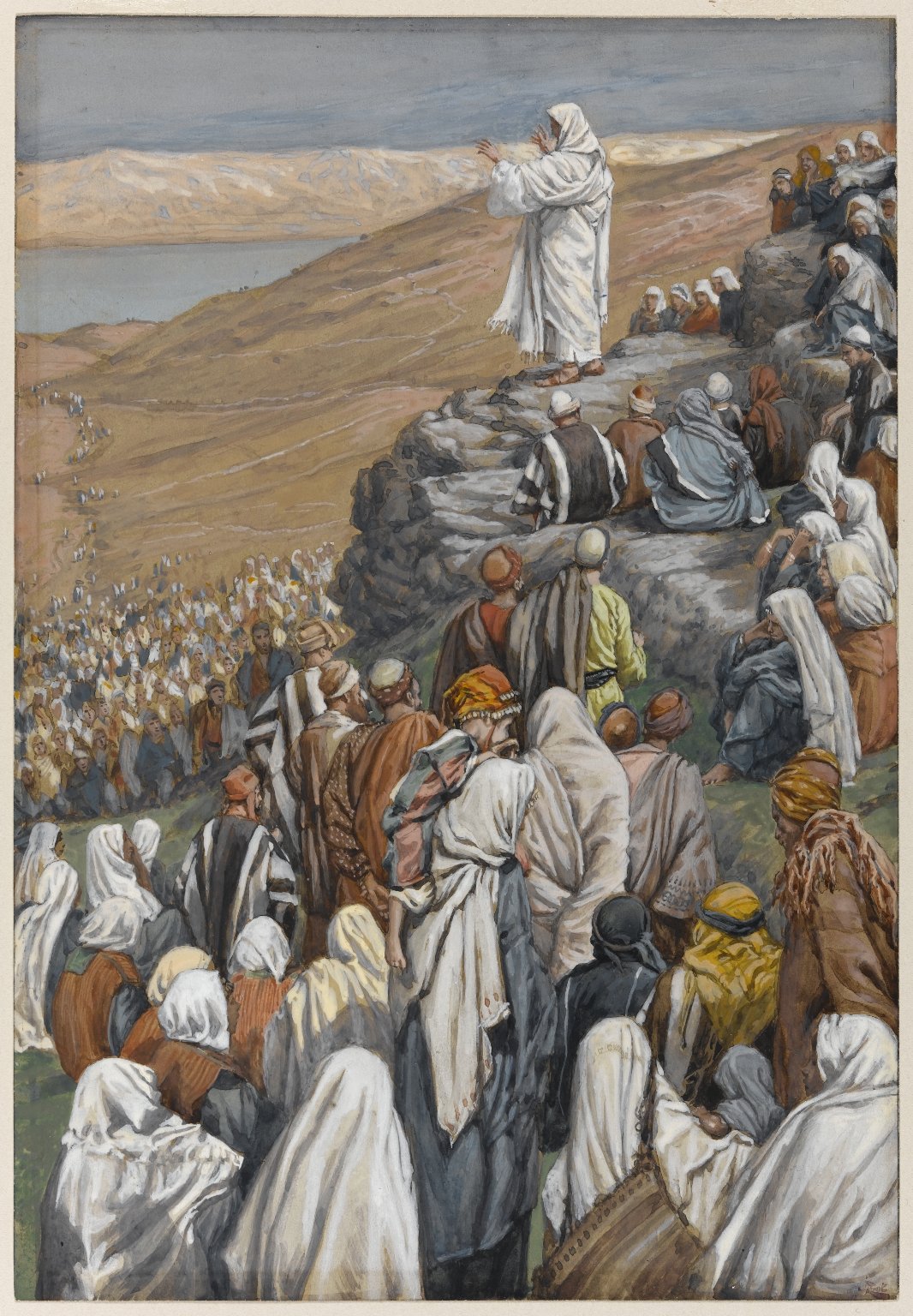
T'oros_Roslin_-_Joseph's_Dream_-_Walters_W53917R_-_Detail_A.jpg

Advent III – He that will come

The prophet Isaiah provides our first readings during Advent this year, and he is particular strong on the idea that the Messiah will come to deliver Israel. As Christians we use the period of Advent to reflect upon the fact that Christ is coming, He is coming as a baby born in Bethlehem, He is coming to us here today in the Eucharist, and He is coming with vengeance to judge the world. Should we be afraid? On the contrary, as the prophet says, ‘Strengthen the weak hands, and make firm the feeble knees. Say to those who have an anxious heart,“Be strong; fear not! Behold, your God will come with vengeance, with the recompense of God. He will come and save you’ (Isa 35:3-4 ESV). 

Isaiah has a vision where the desert, a dry wilderness is carpeted with flowers, a sign of new life, of hope. This is the flourishing which the Messiah will bring, ‘the glory of the Lord, the majesty of our God’ (Isa 35:2 ESV). As Christ Himself says ‘I came that they may have life and have it abundantly’ (Jn 10:10 ESV) This is good news, a reason to rejoice and be glad, and to mark this the Church instead of penitential purple wears rose today, to mark the joyful character of this day, and to remind us that Christ is coming. As Isaiah says, ‘the ransomed of the Lord shall return and come to Zion with singing; everlasting joy shall be upon their heads; they shall obtain gladness and joy, and sorrow and sighing shall flee away’ (Isa 35:10 ESV).

The time is both now, and not yet. As St James writes, ‘You also, be patient. Establish your hearts, for the coming of the Lord is at hand’ (Jas 5:8 ESV). Patience is a hard thing to master. We are naturally impatient, we don’t want to wait, but we have to. The question is how we wait: in joyful expectation, preparing ourselves for what is to come? 

John the Baptist has been waiting for the Messiah, and while he leapt in his mother’s womb at the Visitation, in this morning’s Gospel he appears to be having doubts. He is expecting a Messiah of judgement, and he is isn’t sure what is going on. John has been imprisoned for criticising Herod’s marriage to his brother’s wife. He is hoping for a messiah to sweep away an unjust and corrupt regime, hence his doubts about Jesus, who doesn’t seem to be a political messiah. Jesus tells John’s disciples, ‘Go and tell John what you hear and see:  the blind receive their sight and the lame walk, lepers are cleansed and the deaf hear, and the dead are raised up, and the poor have good news preached to them’ (Mt 11:4-5 ESV). 

The vision of a messianic future envisaged by Isaiah in this morning’s first reading has become a reality: prophecy has been fulfilled, God keeps his promises. The Kingdom of God is a place of healing, and Christ is the great physician, who has come to heal our souls. Jesus is the one who is to come, He has come, and will come again. The establishment of God’s kingdom can look strange in human terms: going to those on the margins, the sick, the poor, and the oppressed and marginalised is not a grand gesture. That is the point! The greatest grand gesture Jesus will make will be in handing Himself over to be crucified and die the death of a common criminal. This is how the messiah will reign as the true King of Israel. 

It defies human expectations, which is the point: God’s ways are not our ways, nor His thoughts ours. That’s the core message of this morning’s Gospel, if we expect God’s rule to look like human kingship, then we will be disappointed. God has something else in store, something far more wonderful than we could ever imagine, and at its heart is the transformation of humanity by love. God heals His people, because God is a God of love. God loves us not because we are loveable, we are sinners, who don’t deserve to be loved, and cannot earn that love. But rather than what we are, God loves us for WHO we are, His sons and daughters, created in His image. 

This is grace: loving sinful humanity so that we may be transformed by love. Hence the focus on healing, something which only God can do, to heal our souls with His love. This is the cause of our joy, what the prophet Isaiah hoped for has been fulfilled, and continues to be fulfilled. The Church exists to carry on God’s healing in the world, to take humanity, and heal it with God’s love. This is what we are about to celebrate in the Eucharist where we thank God for loving us, and prepare to experience that healing love, so that it may transform us. We do so with reverence, because we are not simply consuming human food and drink, but the very Body and Blood of Christ, given for us, to heal us. The greatest medicine our souls could ever wish for. Soon we ‘shall see the glory of the Lord, the majesty of our God’ (Isa 35:2 ESV) God’s glory and majesty is to die on a Cross for us, and to feed us with Himself. Come to the banquet my brothers and sisters, and experience the love of God, and let it heal and transform you, so that you and all creation may sing the praises of God the Father, God the Son, and God the Holy Spirit, to whom be ascribed as is most right and just all might, majesty, glory, dominion, and power, now and forever. Amen.
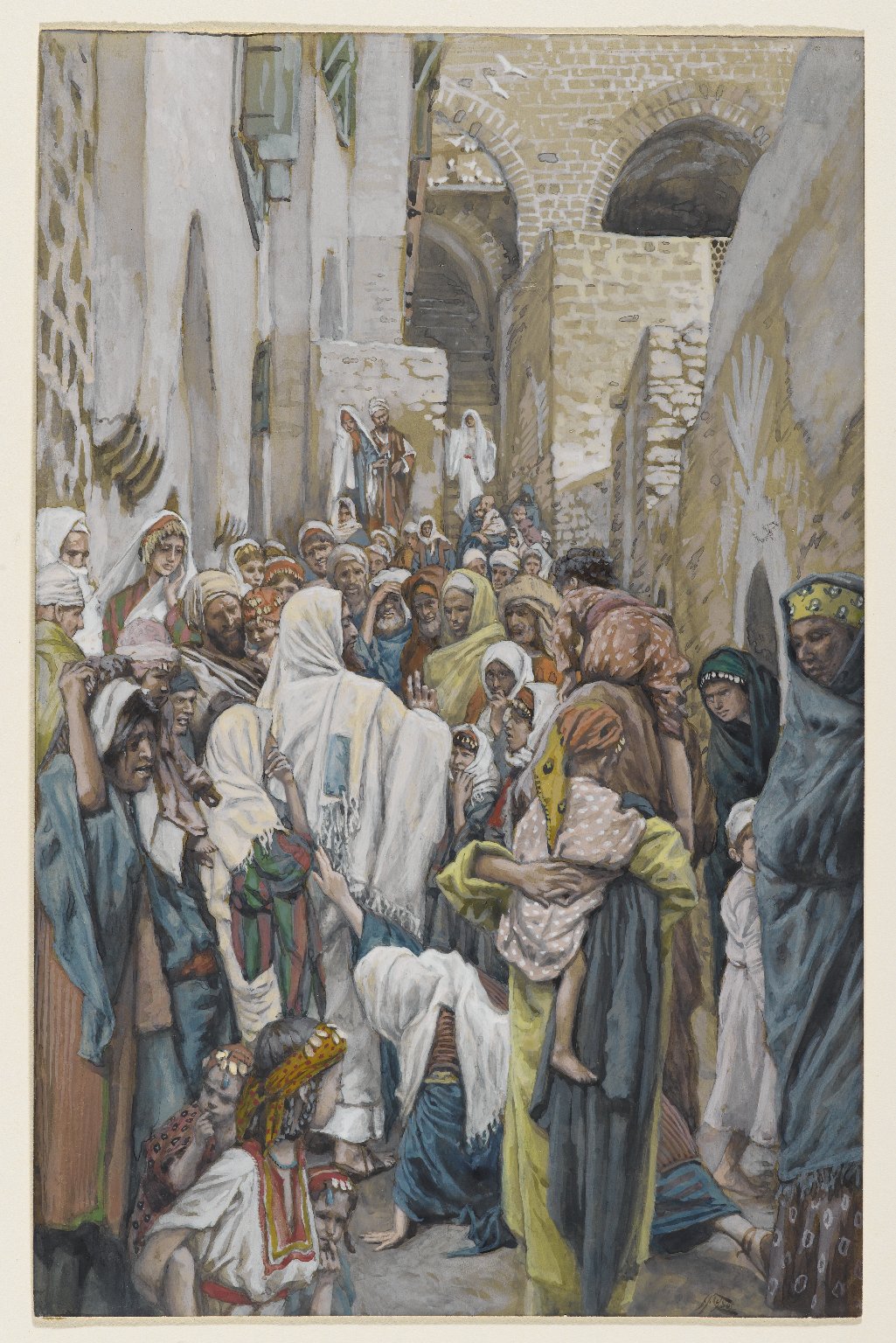
Raphael_-_Madonna_in_the_Meadow_-_Google_Art_Project.jpg

Advent II Yr A – REPENT

John the Baptist appears in this morning’s Gospel in stark un-compromising fashion. His message is simple, ‘Repent, for the Kingdom of God is at hand’ (Mt 3:2 ESV). It is a clear message, but to understand it takes some work. To repent means to change ones mind: to turn away from sin, and turn back to God. We are called to think differently, and as a result of this to act differently, to follow Jesus, and thereby to change the world, by co-operating with God to make the Kingdom a lived reality here and now, and to share in it forever. To repent is to turn away from sin, which separates us from God, and each other. Sin makes us selfish, self-absorbed, concerned with pleasure, wealth, power. It’s all about ME, how I feel, what I want. The proclamation of the Kingdom of God tells us that another way is possible, by the grace of God. It sounds exciting, doesn’t it? Freeing, liberating: living for others rather than ourselves. At its heart the Kingdom is a place of generosity and real love, life in all its fullness. The Church exists to proclaim this same message, and to say to the world: Another way is possible.

It is not surprising that in those times people came out into the desert to hear John. He was charismatic, his message was a refreshing antidote to the Religious Establishment of his day. People come, confess their sins, and are baptised, they are washed clean, to serve God, and to love Him. They also come because in John the people of Israel see prophecy fulfilled, and a new Elijah is in their midst. One who points to the Messiah, and has done ever since he leapt in his mother Elizabeth’s womb at the Visitation. Before John was even born he proclaimed that Jesus was the Christ, the Messiah, the One who would save Israel from their sins. We see this Messianic kingdom hoped for in the vision of Isaiah in this morning’s first reading. The branch which comes forth from the stem of Jesse is the Blessed Virgin Mary, who filled with God’s Holy Spirit, conceived and bore Our Saviour, the true King of all that is, or has been, or will be. He will be on the side of the poor and the meek, people who are left behind, and ignored because they are not rich or powerful. It’s a radical vision, which reminds us that we still have some way to go in order to put it into practice in the world around us. Isaiah’s vision of Messianic peace looks impossible, but it signifies a world-changing peace, which alters how things are, how we behave. For with, and through God another way is possible. It is not simple, or easy, but it is possible, if we rely upon God to help us. As St Paul says to the Christians in Rome, ‘May the God of endurance and encouragement grant you to live in such harmony with one another, in accord with Christ Jesus, that together you may with one voice glorify the God and Father of our Lord Jesus Christ. Therefore welcome one another as Christ has welcomed you, for the glory of God.’ (Romans 15:5-7 ESV) and again ‘May the God of hope fill you with all joy and peace in believing, so that by the power of the Holy Spirit you may abound in hope’ (Romans 15:13 ESV). We receive the Holy Spirit in our Baptism and Confirmation to strengthen us to live out our faith in our lives.

Hope can feel in pretty short supply when we look at the world around us, and if we look to humanity we will be disappointed. Our hope comes from God, our hope is God, God with us, whose Birth we are preparing to celebrate at Christmas. Advent is a time of preparation, when we prepare for Christ to come, both as a baby in Bethlehem, and as our saviour and our Judge. As the son of Jesse, and the son of David, Jesus is Israel’s true king, who rules over all. Isaiah has hope in the peace the Messiah will bring. Injustice and affliction, the fruit of sin is dealt with on the Cross, where He ‘shall stand as a signal for the peoples’ (Isa 11:10 ESV). Christ comes to die, out of love for humanity. In Him God can make things put right, and restore Creation, so that the entire Universe may praise the God who created it. 

Our Saviour is also our judge. ‘His winnowing fork is in his hand, and he will clear his threshing floor and gather his wheat into the barn, but the chaff he will burn with unquenchable fire.’ (Matt 3:12 ESV) It’s real, and it should make us stop and think for a moment. Are we living the way God wants us to? If we are not then we need to repent, say sorry, and live the way God wants us to live. This is how we flourish as people. John the Baptist calls us to make a spiritual u- turn, to turn our life around, to turn away from what separates us from God, our sins. He calls us to the waters of baptism, so that we can be healed and restored by God, filled with his grace, and prepared to receive the Holy Spirit: “I baptize you with water for repentance, but he who is coming after me is mightier than I, whose sandals I am not worthy to carry. He will baptize you with the Holy Spirit and fire” (Mt 3:11). The problem with the Pharisees and Sadducees who come to John is that they do not show the repentance necessary, they haven’t made the u-turn, they don’t have the humility to recognise there sinfulness, and the need to be washed in the waters of baptism. They are confident that they are children of Abraham; they don’t have the right attitude for God to be at work in their lives.

As well as seeing Jesus as our Saviour, John the Baptist sees Jesus as Our Judge, he points to the second coming of the Lord when, as St John of the Cross puts it, ‘we will be judged by love alone’.  It is love that matters – in Christ we see what love means it is costly, self-giving and profound. As we are filled with His Spirit, nourished by Word and Sacrament, we need to live out this love in our lives. This is how we prepare to meet him as we prepare to celebrate His Birth and look forward to his Second Coming. So let us be prepared, let us live out God’s love in our lives, let us turn away from everything which separates us from God and each other, let us live out that costly, self-giving love in our lives, as this is what God wants us to do. It is through doing this that the world around us can see what our faith means in practice, how it affects our lives, and why they could and should follow Him, and sing the praises of God the Father, God the Son, and God the Holy Spirit, to whom be ascribed as is most right and just all might, majesty, glory, dominion, and power, now and forever. Amen.  

n-6480-00-000022-hd.jpg

Advent I (Year A)

Just over one hundred and one years ago a war ended that was supposed to be ‘the war to end all wars’. Instead the last century has seen very little peace. We are lucky in Western Europe that we have experienced 70 years without conflict, but there have been wars elsewhere. Humanity is still plagued by warfare: the loss of life, the crimes committed, lives blighted. So when we hear the prophecy of Isaiah in this morning’s first reading it is truly joyful. Beating swords into ploughshares and turning spears into pruning hooks sounds wonderful indeed. Growing crops and tending vines provides us with food and drink. It is a sign of peace, joy, and prosperity. And at the time when Christ was born, and we are preparing to celebrate the yearly memorial of his birth at Christmas, this prophecy was fulfilled. There was peace in the Roman World when Christ was born, scripture was fulfilled. And we look forward to such peace coming again, and we work for it, together. The messianic age which we look forward to  shows us what truly following Christ looks like in practice. If we walk in the light of the Lord, we are freed from the darkness of sin and destruction, which threatens to overwhelm us. 

This same message is found in St Paul’s Letter to the Romans, our second reading this morning. It is an encouraging message, that another way is possible. Instead of sleep-walking towards damnation and destruction, we can be awake and ready to follow Christ. Every day is another day closer to Christ’s Second Coming. He will come again, as our Saviour and our Judge. We need to be ready, putting on the armour of light, putting on Christ, through our baptism, and living out the faith of our baptism in our lives. The capital of the Roman Empire was renowned for tolerating some pretty immoral behaviour. It was everywhere, all around the Christian community there. Were they tempted to join in? Of course! But St Paul advises them to resist the pleasures of the flesh, drunkenness, quarrelling, nastiness: all the sorts of things we can get up to if left to our own devices.

St Paul speaks to us, to encourage the church and its members, you and me, not to give into the culture of the world around us, but to stay close to Christ. It is easy in theory, but tricky in practice. It’s easier when you’re part of a community. We can help and support each other, in good times and bad. It’s why people join Slimming World or Weightwatchers. They’re trying to change their lifestyle and eating habits, and find the support of a group a great help. Never think that small groups do not have the power to change the world. We are living proof of it as Christians, and it is why we are HERE today: to support each other, to be built up in love together, to turn away from the ways of the world, and to follow Christ. 

We follow Christ and we are ready. We prepare for Christ to come among us. That’s what Advent means, Christ’s coming. We prepare for three comings: the first our annual commemoration of His birth in Bethlehem, at Christmas, where the Word became flesh and dwelt among us. The second coming of Christ will be at the end of time, when He will be our Saviour and our Judge. The third coming we prepare for is even nearer. It happens day by day, and week when Christ comes to us in the Eucharist, in His Body and Blood, under the outward forms of Bread and Wine, the Banquet of the Kingdom, anticipated by the ploughshares and pruning hooks of Isaiah, tools to help produce Bread and Wine, a prophecy which looks forward to the peace of the Messiah and a banquet of Bread and Wine. Food of the Kingdom, food for our journey of faith, to give us strength and new life in Christ. Christ comes to us in the Eucharist to give us strength and to transform us, into His likeness. This is the reality of God’s love for us, shown to us on the Cross, and in the Resurrection, a pledge, a sure sign of love, love we can touch and taste, love which transforms us.

We need it, and we need it together. It is why we gather together on the day when Christ rose from the dead to celebrate His triumph, and ask for His prayers. Because as St Matthew’s Gospel tells us, we need to be ready. We need to be ready because ‘the Son of Man is coming at an hour you do not expect.’ (Mt 24:44 ESV) It could be that between my writing these words and delivering them, Christ will come. Christ could come today, or in thousands of years’ time. It doesn’t matter when He comes. We need to be ready, prepared to meet Him, freed from sin, and living out our faith in our lives, having heeded the warnings to prepare ourselves. That’s why Advent is a penitential season, we are reminded of how we fall short, and try, with God’s grace, to amend our lives and follow Christ.

That is why in this morning’s Gospel reading Christ says, ‘For as were the days of Noah, so will be the coming of the Son of Man.’ (Mt 24:37 ESV). Before the flood in Genesis we se that humanity was corrupt and violent, and sinful. The point Christ is making is that this is how the world will be; Christians should not be like this, because we have put on Christ, we are walking in the light, supporting each other, as a community of faith, living out the love we have been shown in Christ. At a time we do not expect, Our Lord will return, so we need to be ready, so that whenever He comes Christ may find us ready, and prepared to meet him.  

We need to prepare our hearts, our souls, our minds, all of our life, we need to live and act, to think and speak like the people of God, fully alive in him, having turned away from the ways of the world, to live fully in him, we are to live this way, and invite others so to do, so that the Kingdom of God’s peace and love may truly be found here in earth, where humanity is truly valued, where violence, death, murder, and immorality are no more.

The time is short, the time is now, it really matters; we need to come to the Lord, learn his ways and walk in his paths, living decently, living vigilantly, preferring nothing to Christ, and inviting all the world to come to the fullness of life in Him. This is how we celebrate His coming at Christmas and as Our Saviour and Judge, by following him, fed by Him, restored and healed by Him, and sharing His church’s message with all the world, so that it too may believe and sing the praise of God the Father, God the Son, and God the Holy Spirit, to whom be ascribed as is most right and just all might, majesty, glory, dominion, and power, now and forever.

Last_Judgement_(Michelangelo).jpg

Christ the King Year C

To celebrate the Kingship of Christ is something both old and new. The feast which the Church celebrates today was instituted by Pope Pius XI in 1925. In a world traumatised by the Great War, with class divisions and a surge in nationalism, the Pope wished to stress that Christ is the Prince of Peace, His Kingship was not obtained by violence, and our supreme allegiance belongs to Him. We are not Welsh, or British, or European, but first and foremost we belong to Christ. While we are currently earthly subjects of Queen Elizabeth II, our primary allegiance is a spiritual one: to the God who loves us and saves us. The feast of Christ the King also reminds us that Heaven is our true home, that we are made for a relationship with God above all else, a God who loves us. 

Our first reading this morning recalls David’s anointing as King of Israel. He was chosen by God to be the shepherd of God’s people Israel. David points to Jesus Christ, the Christ, the Messiah, the Anointed One, who is the Good Shepherd, who lays down His life for His sheep. 

In our second reading from St Paul’s Letter to the Colossians, we hear what God has done for us, and who Christ is. God has qualified us to share in the inheritance of the saints in light. We can go to Heaven, we have been delivered from darkness, into the kingdom of God’s beloved Son. In Christ we have redemption and the forgiveness of sins. Christ has paid the debt we owe, our sins are forgiven. We don’t need to slaughter lambs and be sprinkled with their blood, because we have been sprinkled with the Blood of the Lamb of God in our Baptism. We are redeemed and our sins are forgiven because of what Christ does for us on the Cross. This is the heart of our faith: Christ died for us, because Christ loves us. 

In Christ we see God, we know who and what God is because He was born in Bethlehem, yet begotten in eternity. In Christ we see that God loves us. He created all that is, so all is subject to Him. He is the head of His Body, the Church, of which we are a part through our baptism, and our participation in the Eucharist, where we, the mystical Body, are fed with the mystical Body, so that we might become what we eat. As the firstborn from the dead, Christ, in His Resurrection shows us that death is not the end, that our lives will be changed not ended. The fullness of God was pleased to dwell in Christ: our bodies are not something to escape, but we are made in the image and likeness of God, and Christ is truly God, not just a mere man, not just a good moral teacher, an inspiration, but God. And through Christ God was pleased to reconcile all things to Himself ‘making peace by the blood of His Cross’. (Col 1:23). Let’s think about that for a moment.

Reconciliation is a big deal, restoring friendly relations where there has been strife and enmity, debts are paid, the account is balanced. The problem caused by human sin, first seen in Adam and Eve in the Garden of Eden, has been dealt with, once, and for all. God wipes the slate clean, cancels the debt we owe, because He has paid it in the Blood of His only Son. Because of what God has done for us, the Church is to be a community of reconciliation, where wounds are healed, and our relationships are restored both with each other and with God. That’s quite something! It’s radically different to how we normally are as human beings. We’re wounded and scarred, we hold grudges, we’re afraid and angry. Instead God in Christ offers us healing, love, and forgiveness, so that we can experience true peace, how life is supposed to be lived, life in all its fulness. It’s not a pipe-dream, but rather a reality, here and now, if only we accept it. God’s love is offered to us, only we can reject it. Even if we do, God doesn’t stop offering it to us, such is His love for us. It’s astounding, that God could loves us that much. But as C.S. Lewis says, God does not love us ‘because we are lovable, but because He is love, not because He needs to receive but because He delights to give.’ Through Him, we may be transformed more and more into His image and likeness. This is the generosity of God: a gift freely given. That’s why we celebrate today the Supreme Kingship of God in Jesus Christ. Human kings reign because they have conquered in war. Our God reigns, because He gives himself to die for us. Christ turns human ideas of power on their head.

We see this in the account of the Crucifixion in St Luke’s Gospel. The sign on the Cross reads, ‘This is the King of the Jews’. It is meant to be a joke, it is meant to mock Him, like the purple robe, and the Crown of Thorns, but it is self-defeating. It proclaims Christ’s kingship. He is the King of the Jews, the Anointed King, of the line of David. The people there mock Him, and tell Him to save Himself, but they’ve got it all wrong: He is there to save humanity and not Himself. Then one of the thieves goes a bit further: You’re the Messiah, save yourself and save us too. The ‘good thief’ recognises what’s going on, and says to his colleague, ‘we’re being punished because we committed a crime, but this man has done nothing wrong. Jesus, remember me when you come into your kingdom’. 

The thief’s recognition of who and what Christ is brings about his salvation. He saved others, himself he cannot save. It is isn’t that Christ cannot save Himself, but that He doesn’t want to. He wants to save others, because He is the Messiah, and He is God. God is saving his people. God saves, it’s what the Hebrew Yeshua means. Here on the Cross Jesus fulfils His life’s work, this is who and what He is. God saves His people by dying for them. This is real kingship, not robes, or power, but love, dying the death of a common criminal. It doesn’t make sense, and it isn’t supposed to. God’s ways are not our ways, nor His thoughts our thoughts. It’s crazy and reckless in human terms, but it works. We can’t save ourselves, only God can do that, in an act of generous love, extravagant, exuberant, a gift we cannot repay. 

Christ’s kingship puts human kingship into context: the good ones are a reflection of Him, generous and loving, the bad ones are concerned with wealth and power. They may possess temporal power, they can put people to death, but as Christians we can laugh in their face, because first and foremost we serve a higher and a greater power, who will return to judge the world. As we come to the end of another liturgical year, and we prepare to celebrate Advent it is good to be reminded of the three comings of our Lord Jesus Christ. He comes as a baby in Bethlehem, He comes in the Eucharist, week by week, and day by day, and He will come again as our Judge. Christ our King was born for us, died for us, gives Himself for us in the Eucharist, so that we might become what He is, and He will come to be our Judge, as one who has paid our penalty, and restored us to God and each other, a God of love, a God of mercy and reconciliation. 

This is the God we worship, and whom we hail as our true King. Christ has conquered on the Cross, Christ reigns as King of the Universe, and Christ reigns in our hearts, and in our lives, so that all we are, and all we do may sing the praises of God the Father, God the Son, and God the Holy Spirit, to whom be ascribed as is most right and just all might, majesty, glory, dominion, and power, now and forever. Amen.
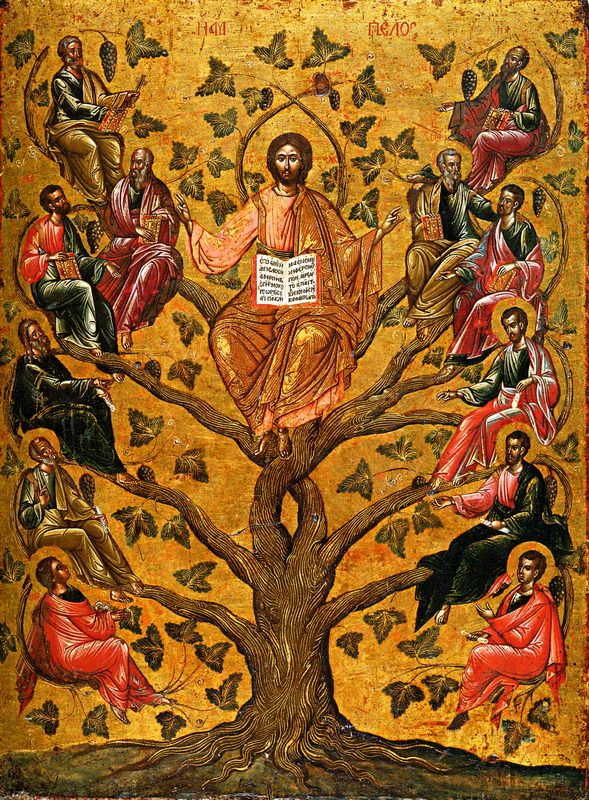
FqWwy2W.jpg

Trinity XXII

As Christians are we simply satisfied with the world, with the way things are? No. Do we want things to be different? I hope so, yes. That’s good, as the prophet Malachi in our first reading this morning has a vision of the future, when the arrogant and evil doers will be like stubble in a furnace, ‘But for you who fear my name, the sun of righteousness shall rise with healing in its wings. You shall go out leaping like calves from the stall.’ (Malachi 4:2). This is a vision of a future where God is in control, and things will be put right, and at one level He already has. Christ is risen from the dead, the one who heals God’s people has risen. The time is both not yet, and now, a work in progress, and a reality. 

We have a part to play in it. We cannot just sit back and wait for God to sort everything out, we need to co-operate with God, and help to make the Kingdom a reality. Hence S. Paul’s advice to the Thessalonians, ‘As for you, brothers, do not grow weary in doing good’ (2Thess 3:13). We’ve been trying and failing for nearly two thousand years. That’s what a work in progress is. It isn’t easy, and no one can fail to notice that the world around us is often rather hostile to who we are, and what we stand for. It is not easy to be a Christian, nor has it ever been, for that matter. 

We will be hated by all people for Christ’s name’s sake (Lk 21:17). Hate is a strong word, but as we are directly opposed to many in this world, it is not surprising. With hatred comes persecution, and we only have to look to China, North Korea, the Middle East, India, and Pakistan, to see it. Christians are being killed for believing in God who loves us, who died to save from our sins. To follow Christ is to walk the way of the Cross, to risk imprisonment, torture and death, for the love of His name. But ‘there is salvation in no one else, for there is no other name under heaven given among men by which we must be saved’ (Acts 4:12). Only Jesus can save us, we cannot save ourselves. We are called to bear witness to Him. 

Jews in the first century AD loved the Temple, it was the centre of their world, it was where they could be close to God, it was where sacrifices happened which took away their sins. But less than forty years after Jesus spoke this prophecy a Roman Army destroyed it. But as Christians we know that Jesus Christ is the new Temple, the place to meet God, the place of sacrifice. Destroy it in three days, and I will raise it up. Christ speaks of His body, and that is us: we are the Body of Christ. Churches are not buildings, they are groups of people who love Jesus, and each other. Jesus speaks of false Christs, who will lead people astray, and warns ‘ do not go after them’ (Lk 21:8). It is a temptation, especially when times are hard, when there are war and natural disasters. 

But we know that Our Lord Jesus Christ is victorious, he is the true worship of God. In Him we can have confidence. He gives us Himself, His Body and Blood, to nourish us and to heal us, and give us strength to prepare us for the trials we will face. Here in Britain it is more likely to be indifference than anything else. Indifference speaks of a hardness of heart, being deaf to the Good News of the Kingdom. At its root is Sin, our separation from God by our following our will, and not God’s. We think we know better, and do what we want to do, rather than letting God work through us. The human condition hasn’t actually changed since the Garden of Eden. We continue to make the same mistakes over and over again. There is, however, a way out of this. God in Christ deals with the problem of our sin on the Cross, where He offers himself as a sacrificial victim to atone for all the sins of humanity. It’s what Christ was born for, as the angel says to Joseph, ‘She will bear a son, and you are to name him Jesus, for he will save his people from their sins.’ (Mt 1:21) The name Jesus (Hebrew Yeshua) means ‘God saves’ and He does. This is what we believe as Christians, where we put our trust, our hope, in a God who loves us and saves us, the same God who inspired the prophecies of Malachi, which look forward to Christ. 

That same Christ who heals us and sustains us will be with us in our trials, and whereas our family and friends may prove false to us, we can have confidence that Christ will never let us down. He’s been through this. Through the gift of the Holy Spirit we are strengthened to bear witness to Him. For the same Christ who died for us, and rose again, who ascended into heaven, will come again to judge us and all the world. It sounds scary and intimidating, and at one level it is, and it should be. It matters; hence our urgency in proclaiming the Kingdom of God. But the one who will judge us, is the same one who died to set us free, the God who loves us, who heals us, and restores us. A God of love and mercy, risen with healing in his wings. Let us come to Him, be healed by Him, nourished with His Body and Blood and strengthened to proclaim Him in word and deed, so that the world may come to believe and sing the praises of God the Father, God the Son, and God the Holy Spirit, to whom be ascribed as is most right and just all might, majesty, glory, dominion, and power, now and forever. Amen.Enrique_Simonet_-_Flevit_super_illam_-_1892-1.jpg

Remembrance 2019

We are gathered here on this special day to do a number of things together. First and foremost we give thanks for the safe deliverance of these islands from the World Wars of the previous century. These were wars on a scale never before seen. The first was supposed to be the ‘war to end all wars’, yet within twenty years a greater conflict began which brought even more death and suffering to millions across the world. Hardly a day has gone by in the past century when there has not been a conflict somewhere in our world. 

It is now one hundred years since we first marked the anniversary of the Armistice by stopping in silence for two minutes, and praying: in remembrance of all those who gave their lives for our country, and for all who suffer as a result of war. For one hundred years we have engaged in a public act of remembrance. 

In 1919 the Prime Minister, David Lloyd George, commissioned a cenotaph (which means empty tomb) to stand in Whitehall, London, as a focus for an act of remembrance, when most of the war dead lay buried overseas. The original wood and plaster structure, designed by Sir Edward Lutyens, was only intended to stand for one week, but it proved so popular that a permanent one was created in Portland Stone ready for the 1920 Armistice Day.

Since 1919, the Cenotaph has become the central focus for national commemoration especially during the National Service of Remembrance held on Remembrance Sunday, the Sunday nearest to 11th November. Its meaning has developed and the Cenotaph now memorialises those who have given their lives in all conflicts since the First World War.

Throughout the country, local memorials were erected to remember the dead of the First and then the Second World War. Like the Cenotaph in London, these became the focus for local Remembrance ceremonies and we keep this tradition here in Maenclochog today, starting our Remembrance Service outside at our Village War Memorial. 

Our act of remembrance is not simply to recall a past event, or to bring the dead to mind, but something more. By remembering today, the sacrifice of countless men and women, we continue to show our thanks for the peace and prosperity which we now enjoy. 

We give thanks for to all those who have served, and continue to serve this country, both at home and abroad, and for the continuing work of the Royal British Legion in supporting veterans and their families. As a country we have asked much of our sons and daughters, and we continue so to do. ‘Cariad mwy na hwn nid oes gan neb; sef, bod i un roi ei einioes dros ei gyfeillion.’ ‘Greater love has no one than this, that someone lay down his life for his friends’ (Jn 15:13). They died that we might live. 

Their sacrifice calls to mind another sacrifice, made on a hill outside Jerusalem, ‘ble bu farw ein Harglwydd Iesu Grist drosom ni’. We remember this sacrifice too, as Jesus died for us. It is the heart of the Christian Faith, and the greatest demonstration possible of the saving power of love.

Love is at the heart of remembrance. Our human love comes from God, the source of all love. This love has the power to heal wounds, to comfort grief and loss. One hundred years on from the end of the First World War, the world still needs healing. This is beyond our capabilities as human beings. We need God’s help. Our God loves us, and longs to heal our wounds. He gave His Son to die for us, on the Cross, a painful death at the hands of enemy soldiers. Three days later, Jesus rose from the dead. His tomb was empty, and just as with the empty Cenotaph in London we are reminded that death is not the end. The Christian belief in the Resurrection of the dead and the life to come gives us all hope.

On the first Remembrance Day, one hundred years ago, two minutes silence was introduced. At 11 o’clock, as well as remembering the fallen, we take time to pray for peace. There are two words for peace in Welsh, ‘heddwch’, and ‘tangnefedd’. The first, ‘heddwch’ means an end to hostilities, the Armistice ceasefire which we celebrate today. But ‘tangnefedd’, the other kind of peace, is something far deeper and richer. It is the peace of God, the shalom of the Hebrew Old Testament. This is the gift of God, a feeling of wholeness, which brings about healing. So when Jesus says, ‘Blessed are the peacemakers, for they shall be called sons of God.’ ‘Gwyn eu byd y tangnefeddwyr: canys hwy a elwir yn blant i Dduw’ (Mt 5:9) He is envisaging something both radical and world-changing: something which heals, which forgives, and which loves. Today we commit ourselves to making peace a reality: here and now — in our community, in our families, in our relationships, in what we are, in what we say, and in what we do. We can never be too busy to do this. When we take the path of peace we honour the memory of those who gave their lives so that we might live. 

So let us therefore commit ourselves to help create the peace which Christ came to bring, for the glory of God, and the good of all human kind. Our Lord Jesus Christ has shown us another way to live — the way of love and gentleness. In memory of what Christ did here on earth, and continues to do, we can experience the peace of the Kingdom of God, where wounds are healed and divisions are reconciled. Today we give our thanks for those who sacrificed themselves for us, and we honour their memory by treasuring the peace won at so great a cost. 

Almighty God, hear our prayers and thanksgivings for all whom we remember this day. In the name of the Father, and of the Son, and of the Holy Spirit, Amen. 

Walter Kleinfeldt’s album showing the aftermath of a skirmish during the Battle of Somme, 1916 (7).jpg

Trinity XIX

It is hard to find something as universally loathed as paying taxes. We just don’t like doing it. We know we have to pay them, but we would prefer not to do so. At its root, celebrations of the Harvest have their roots in taxation. They were a way to thank God for the good things of creation, but also to thank the tribe of Levi which had no ancestral land, as their inheritance was the Lord their God. 

That’s all well and good, we should be grateful to God, and we should demonstrate it openly. Saying, ‘thank you’ to God is important, just like saying, ‘please’, ‘I’m sorry’ and ‘I love you’. We communicate with God because we have a relationship with Him. We recognise that everything comes from Him as gift, and so we hope that our service is pleasing to the Lord, we don’t earn our justification through our works, but we are grateful.

This morning’s Gospel presents us with two very different figures: a Pharisee, a member of a religious élite and a tax-collector, one of the most loathed people in the Roman World. He was a traitor who had sold out, he had bought the right to collect taxes on behalf of the occupying power, the Romans. He would recoup the cost by charging a premium, on top of the taxes. He extorted his costs from people who had no choice but to pay him, and that’s how life was. No one likes to pay taxes, but when you know that the tax-collector is charging you more than you should be paying, you despise him even more. It isn’t fair, but the rights to collect taxes were auctioned off to the highest bidder, who was expected to recoup their costs. 

The Pharisee is a member of the religious élite, a student of the law, the power behind the synagogues, someone who keeps the Letter of the Law. Jesus himself was much more like a Pharisee than a tax collector. Jesus was educated and articulate about the scriptures. He, too, added his own oral interpretation to the laws that were written. The apostle Paul was a Pharisee. Are we Pharisees? What does Jesus want us to see of ourselves in this parable? If we return to the text, we’ll see that Luke tells us that Jesus directed this parable at ‘some who trusted in themselves that they were righteous and despised others’. I’m ok. I’m a fine upstanding member of the community. I’m not like this or that person who has done something wrong. Each an every one of us does this. We want to find someone to look down on, to say I’m better than them. Well, here’s a home truth, WE ARE NOT! Because in God’s eyes, we are all sinners, we all fall short, and it doesn’t matter by how much. 

So, this story, though it may at first seem straight-forward, quickly raises many questions. The text obviously indicates that the behaviour of the tax collector is preferred over the behaviour of the Pharisee. That much is clear. But the question is: why? Why, exactly, is the one right and the other wrong? Is this a story about prayer and how we should pray? Is the Pharisee wrong in thanking God for what he considers the blessings in his life? Is he wrong to be glad that he is not a thief or an adulterer? Often when we characterize this story, we think of the Pharisee as standing in the centre of the room, trying to draw attention to himself, praying loudly. Based on those assumptions, we criticize the Pharisee for his showiness, his pride, his big ego. But the text only shows that he was standing by himself, praying, and that the tax collector was standing far off, praying as well. What is it that is misguided in the Pharisee? What is it that the tax collector has struck on? 

Nothing that the Pharisee says or does is in itself wrong. But where he goes off-course is in thinking that his list of righteous acts will earn him God’s favour. But he is wrong in two important ways: First, he is wrong because he acts as if without his list of good deeds he is not good enough to receive God’s grace. And secondly, he is wrong because he acts as if he is so great as to by his own actions make himself worthy of God’s grace. This Pharisee seems to get the picture wrong from both angles. And I think we might be able relate to this. We often feel like we don’t really deserve or aren’t truly worthy of God’s love, as though we need to earn it. On the other hand, our actions, and our attitudes about our actions sometimes suggest that we become too full of pride about how good we are, or at least about how much better we’re doing than some others of whom we know! We begin to act as though we just have to do enough good things and we’ll be fine, as if we have a quota of righteous acts to fulfil before God will be forced to let us in on the grace deal.

In truth, it’s the tax collector, standing far off, beating his breast, who’s got it right. He cries, “God, be merciful to me, a sinner.” This is enough — not too little: this tax collector admits his sin and his need for God. And not too much: this man doesn’t make any claims about himself, try to puff himself up, try to act as though he could possibly manage without God. 

Can we do the same? We forget that none of us are worthy of God’s grace — as the letter to the Romans tells us, ‘all have sinned and fall short of the glory of God.’ But we also forget that none of us are excluded from God’s grace, unworthy though we are. And that means for the Pharisee and the tax collector, that our good deeds, and our ever-present sinful behaviour — neither of these privilege us or exclude us — or privilege or exclude our neighbours — from God’s grace. God asks us to live faithfully — not as a test to see if we deserve grace, but as a path of discipleship that will give us deeper satisfaction in our relationship with God.

The Eucharist, Christ’s gift of Himself to us, is not a reward which we earn, bur neither is it to be treated lightly, ignored, or downplayed. It is the most precious thing which we have. Far more precious than the silver or gold that we use to contain it. Because it is Jesus Christ, who gives Himself to us, so that He can transform us, so that we can grow together in love, more and more into His image and likeness. Christ comes to preach the Good News of the Kingdom, to call people to repent, to turn away from their sins. He heals the sick, the blind, the lame. He raises the dead to life. This is God’s love for us. What can we give God? Our love and our thanks. Have mercy upon us sinners, and help us to live faithfully so that we might sing the praise of God the Father, God the Son, and God the Holy Spirit, to whom be ascribed as is most right and just all might, majesty, glory, dominion, and power, now and forever. Amen.

00.159.178_PS2.jpg

Trinity 18

What’s the point of it all? It’s a question people ask, and thankfully the church has an answer. Humanity exists to love God and serve him in this life, and to enjoy Him in the next. We are made for worship. Nothing else matters: work, family, friends. They’re not bad in themselves, but compared to our relationship with God, they are secondary. Worshipping God is a way of saying that God is the most important thing in our lives. We love God more than our family, our friends, even ourselves. It’s radical and counter-cultural, because it says that our immortal soul matters more than wealth, or power, or prestige. What we are doing is the most important thing we can ever do. It’s what we are made for. To worship God.

In the first reading this morning from Exodus we see what prayer can achieve. Our life is a battle, just like that fought between Israel and the Amalekites. And we can conquer in spiritual matters by keeping our arms raised in prayer, and helping others by supporting them. The church is a community where we help each other, where we bear each other’s burdens. We pray for ourselves and others, and we are prayed for, so that all around the world, every moment of every day, we are surrounded and upheld by Christians praying for us, not to change God’s mind, but to change us.

It is something which Paul’s Second Letter to Timothy shows us is something we need to learn, to believe, and to continue doing. Prayer isn’t grand, it’s a bit of a slog, it takes a lifetime. It has to be taught, it is what preaching is for. Teaching the faith, and telling people who Jesus is (the Son of God, born of the Virgin Mary) and what He does (preaches repentance, the forgiveness of sins, dies on the Cross, and rises again). It is easy to pervert this into a message which makes few demands upon us, that says, “yes, you’re all fine, you don’t need to do anything”. Christianity makes demands of us. We have to do certain things, which we might prefer not to do, and not do things we might rather like to do. We all need to reminded about this regularly, to help us stay on track. This also helps us to pray well together. 

In this morning’s Gospel Jesus teaches us ‘to pray and not lose heart’ (Lk 18:1) It is important advice. Especially when times are difficult. He teaches us with a parable. There is an unjust judge. He’s corrupt, and he’s fed up, so he gives in, for a quiet life, with the result that the widow receives what is right. God can indeed use many things The point is that the widow is persistent: she keeps on, so that he has to listen to her in the end. So likewise Christian prayer should be unceasing. The widow’s prayers turn wickedness and injustice into mercy and justice. Likewise our prayers do not change God, but instead they change us. That’s the point of prayer not to change God’s mind, but to change us, into what God wants us to be. Persistent prayer can, and will change us. It is how saints are made: through prayer. It takes WORK, but it is wonderful, and worth it. 

The parable reminds us that God hears prayer. He may not always answer it in a way we might like. Sometimes God says no, or not yet, which we might not want to hear. It teaches us patience and wisdom, and even if we suffer, we grow through it. Our growth in holiness can be painful and difficult. In the first reading from Exodus, Moses is clearly tired, he has to be held up by Aaron and Hur. In Paul’s letter to Timothy, he is not advising something popular, but something unpopular, that people will not want to hear. 

The Gospel ends with the question (v. 8): ‘Nevertheless, when the Son of Man comes, will he find faith on earth?’ It’s an important question. If we look at statistics, then people in this country are becoming less religious. Fewer people have faith. There are many reasons for this, and this is not the place to explore them. Solutions are likewise not simple, or straightforward. We can do many things, but we need to make sure that our own faith is strong and attractive, and be prepared to bear witness to it, regardless of the cost. Our faith can only be attractive when it is REAL. This is what will encourage people to follow our example, and come to know and love Jesus Christ. Only in this way can real living faith be transferred so then when Christ comes, as He surely will, He will find faith on earth. So let us trust Christ, knowing that His promises are true, that He feeds us with His Body and Blood in the Eucharist to give us life in Him. Let us love the one who loves us, who gave His life for us, to take away our sins, to heal us and restore us. And healed and restored by Him, let us bear witness to Him, so that the world may come to believe and give glory to God the Father, God the Son, and God the Holy Spirit, to whom be ascribed as is most right and just all might, majesty, glory, dominion, and power, now and forever. Amen.
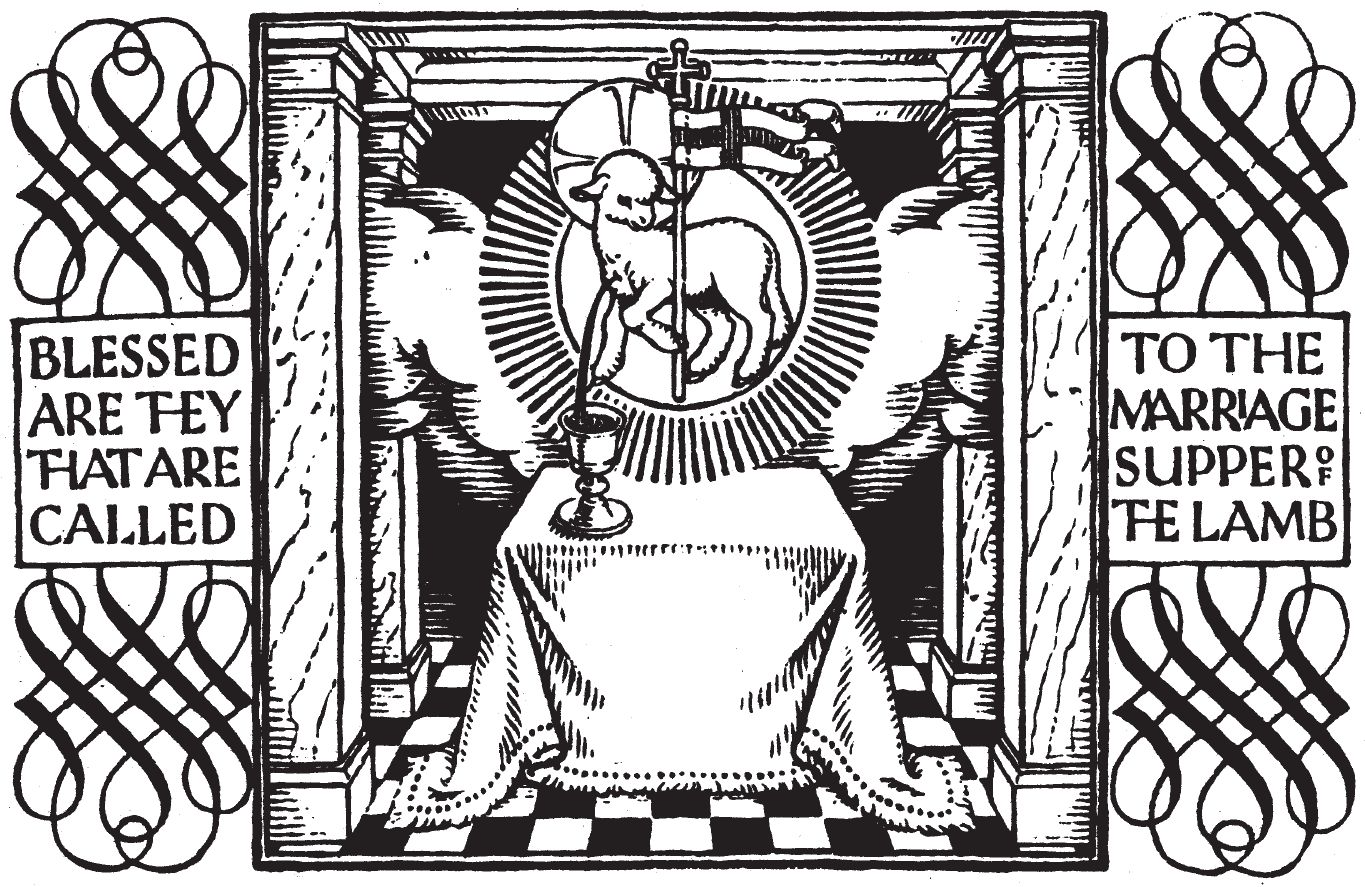
NWM_AU_OP2.jpg

A thought from S. Teresa of Avila

Beware, daughters, of a certain kind of humility suggested by the devil which is accompanied by great anxiety about the gravity of our sins.

He disturbs souls in many ways by this means, until at last he stops them from receiving Holy Communion and from private prayer by doubts as to whether they are in a fit state for it, and such thoughts as: ‘Am I worthy of it? Am I in a good disposition?I am unfit to live in a religious community. ‘

Thus Christians are hindered from prayer, and when they communicate, the time during which they ought to be obtaining graces is spent in wondering whether they are well prepared or no.

Everything such a person says seems to her on the verge of evil, and all her actions appear fruitless, however good they are in themselves. She becomes discouraged and unable to do any good, for what is right in others she fancies is wrong in herself.

When you are in this state, turn your mind so far as you can from your misery and fix it on the mercy of God, his love for us, and all that He suffered for our sake.

The Way of Perfection 39:1, 3

web3-saint-theresa-avila-public-domain.jpg

Homily for Trinity XVI

Being a Christian can be hard and difficult at times. It can be very easy to feel as though we are experiencing something of the vision of the prophet Habakkuk in this morning’s first reading. The best advice comes from St Augustine, who said the following words to his people over sixteen hundred years ago: ‘“You all say, ‘The times are troubled, the times are hard, the times are wretched.’ Live good lives and you will change the times. By living good lives you will change the times and have nothing to grumble about.”’ (Sermo 311.8). It can be easy to see bad things happening, but not realise is ours to be the change we want to see. For ‘the righteous shall live by his faith’ (Hab 2:4). If we want to live in a word filled with love, kindness and generosity, then it is up to us to do something about it. 

In Luke’s Gospel this morning the apostles ask for the Lord to increase their faith. He does this firstly after His Resurrection, and secondly with the gift of the Holy Spirit at Pentecost. Likewise our growth in faith is a gradual process: it takes time, a lifetime in fact. It happens by the grace of God. We may long for something instant, but God’s ways are not our ways. Faith is like a mustard seed, it starts small, but in time can grow into something large. How does it happen? The parable which Jesus tells gives us the answer: through service. Not the most glamorous of answers, certainly, and that’s the point. All we can say is, ‘We are unworthy servants; we have only done what was our duty.’ (Lk 17:10). We are not worthy: God makes us worthy, through His Son, who dies for us and fils us with His love. The work of the Gospel is at one level up to us, the Body of Christ, His Church. We have to live our faith out in our lives (as fine words butter no parsnips). Christianity is a way of life, a way mocked and scorned by the world around us, written off as irrelevant, and yet close to the God who loves us and saves us.

We should not be afraid as God has given us ‘a spirit not of fear but of power and love and self-control.’ (2Tim1: 7) Self-control is not exactly the most glamorous of things, but it is crucial if we want to grow in faith. Through it we grow in virtue by the grace of God. It goes hand in hand with the service envisaged by the Gospel passage this morning. We imitate the example of the saints, we ‘follow the pattern of the sound words that you have heard from me, in the faith and love that are in Christ Jesus. By the Holy Spirit who dwells within us, guard the good deposit entrusted to you.’ (2Tim 1:13-14) By imitation of virtuous examples our characters are formed. We become what we imitate, and most of all we imitate Christ, who gave himself for us, and who comes to us this morning under the outward forms of bread and wine to feed us with Himself, so that we might become what He is. So that we might be transformed, more and more into His likeness, to live out our faith in the world, and share our faith with others so that they might come to believe and sing the praise of God the Father, God the Son, and God the Holy Spirit, to whom be ascribed as is most right and just, all might, majesty, glory, dominion, and power, now and forever.

img_0270

Homily for Trinity XII

At one level things could not be simpler: we have a choice between life and prosperity or death and adversity. It all depends on whether we love God, obey His commandments and walk in His ways, or go after false gods and die. This morning’s first reading from Deuteronomy presents us with the choice at the heart of the moral life. Do we walk in the way which leads to human flourishing or not? In the short term it is more challenging, but the pay off in the long term is clearly worth it. There is also the simple fact that it is the right thing to do. It may seem a little old fashioned, but as Christians we do things because they are right, not because they are easy. Also we do them TOGETHER. Our religion is a corporate matter, and not just an individual choice. 

What we do and how we live affects other people, and this is nowhere more apparent than in this morning’s reading from Paul’s Letter to Philemon. The Apostle is writing to a fellow Christian, sending back to him his slave, Onesimus. The letter encourages Philemon to be generous and loving and to treat Onesimus not like a slave, but like a beloved brother. There is at the heart of the Christian Faith a radical equality. We are all the same, you and I, and all human distinctions of class, wealth, or status disappear, because we are all one in Christ. It’s a radical, counter-cultural message, the same nowadays as it was two thousand years ago. It encourages us to live differently, not conformed to the ways of the world, but living in the love and freedom of the Gospel, which while it looks like slavery is in fact the most liberating way to live.

The Christian faith can appear paradoxical. We are called to love our enemies, but also to hate our parents, our family, our nearest and dearest. It seems strange, and it is. Our Lord uses strong and disturbing language to shock us, and remind us that in Him we are called to a new relationship which takes us away from traditional social structures, so that we can see everyone in the Church as our brother and sister, and that our primary responsibility is to love Christ, and follow Him, imitating Him, and taking up our own Cross. 

While our mother gives us life, it is holy mother Church who, through Christ gives us eternal life, and feeds us not with earthly food, but heavenly food, food which lasts for ever, food which strengthens us to live the life of faith: the Eucharist. 

It is why we gather week by week, to hear God’s word read and explained, to pray together, and to be nourished together. We do this so that we may grow together in love, and also so that we might embrace the Cross, having died with Christ in our baptism, and being raised to new life with Him, we live out our faith in our lives. Our discipleship is costly and difficult, it calls us to renounce the world and rely upon God, together, as a community of faith. A new community where old ties and distinctions are done away with, where we have a new identity, and are called to a higher purpose. 

It’s difficult, and for two thousand years the Church has been trying to do it, and failing. But ours is a God who forgives sins and failings, who understands humanity from the inside, we are not written off, or cast aside. We are not abandoned or discarded, because we are all made in God’s image, people of infinite intrinsic value. Christ died for us, to give us eternal life, to heal our wounds. He calls us to follow Him, so that we may find His freedom, and share in His triumph over death and sin. 

We are called to something great and wonderful, to stand, like Christ as a contradiction, offering the world a new way to live, a way of life not of death. A way of generosity and not of selfishness, renouncing the world to embrace the freedom, joy, and life of the Kingdom of God. 

It is truly liberating to look at the world and say that it doesn’t really matter. All that really does is loving God, and loving our neighbour. It can be difficult, especially when times are uncertain, but we know that we can trust the God who loves us, who gives His life for us, who comes to us to feed us with Himself. So let us come and follow him and invite others to do so, so that all may sing the praises of God the Father, God the Son, and God the Holy Spirit, to whom be ascribed as is most right and just all might, majesty, glory, dominion, and power, now and forever. Amen.

sorrow5

Homily for Trinity XI

In the Ancient World where you sat at a meal mattered an awful lot. The closer you were to the host, the more important you were. The further away, the less important you were. We’re not really used to eating like this, other than at wedding breakfasts: the top table is reserved for the bride and groom, their family, and important guests. Nowadays a seating plan gets round the problem envisaged by Jesus in the start of this morning’s Gospel reading, but the Pharisees were not like this at all. Quite the opposite in fact! They loved rigid hierarchy, they love human honour, and are watching Jesus closely in case He transgresses any social norms. Rather Christ will show them what God has to say about who sits where, and who is invited.

The situation envisaged in the Gospel would be highly embarrassing, in a culture motivated by honour and shame. The last thing you want to do is to lose face, by being asked to move. Instead, by taking the lowest place you make it possible to honoured and loved. The key then is HUMILITY: not thinking less of yourself, but thinking less of yourself and more about others, and putting them first. It’s a case of not saying, ‘It’s all about me!’ which is an example of pride, that greatest of human sin, where we put ourselves at the centre of things, and take a place which belongs to God. Instead we need to learn to trust God, and to let Him be at work in us. We need to recognise our need of God, and our utter dependance upon Him. 

In our first reading this morning we hear what happens to the proud: dreadful terrible things. God prefers the lowly: ‘The Lord overthrows the thrones of rulers, and enthrones the lowly in their place. The Lord plucks up the roots of the nations, and plants the humble in their place.’ (Ecclus 10:14-15) We hear this in the song of Hannah in Exodus and in the Magnificat, where Mary is the great model of humility and trust in God. Human power is often exercised in a way which does not correspond with the will of God. In the world around us and throughout human history we can see this. Power is fleeting, whereas the justice envisaged is wholesome and long-lasting.

In the Letter to the Hebrews we hear advice on how Christians should live: in love, love of each other, and God. It is a life of generosity, hospitality to all, care for those less fortunate than ourselves, respectful  of the moral order. It’s how God wants us to live, and it leads to human flourishing. Our response to God who sacrificed His Son upon the Cross for us is a sacrifice of praise through how we live our lives, what we say and do.

So, to return to the Gospel, Christ has an important and strong message for His host. We see Our Lord advising people not to be generous and seek a reward. Human Society is complex. The giving and receiving of gifts is a crucial part of how society works. It creates networks of obligation: if you give me something, I am obliged to return the favour. That is fine in human terms, but when we transfer it to the divine realm we are faced with a problem. What can we give God? Does God need or want anything? No! Because God is by nature, perfect, complete, and self-sufficient, God cannot want anything, or need anything. As a result of this God is able to give the purest form of gift, which does not require anything in return. There can be no obligation, because humanity cannot give God anything. God is able give without expecting anything in return. This is what happens in the Incarnation when Our Lord is given to us, and throughout His life and ministry, to His Passion, Death, and Resurrection all He is and does is for us. All is for our benefit. God is generous to us, not so that we can be generous in return, but simply for our good. Likewise our sacrifice of praise is not for God’s benefit, but ours in that we are living the way we should, flourishing, loving and generous. 

Instead of normal human interaction and obligation, Christ presents us with a completely different paradigm. The dinner invitations in the Kingdom are for the ‘poor, the crippled, the lame, and the blind’ (Lk 14:13) That’s us! Because God longs to lavish His riches upon us, heal our wounds, and restore our sight. In our care for those who are weak, outcast, or socially undesirable we, in our actions, proclaim the Kingdom of God. We call them to the banquet here and now, that their souls may be nourished with Word and Sacrament. The Eucharist is the banquet of the Kingdom, which heals us, and transforms us, more and more into God’s likeness.

God gives Himself, so the we might live in Him. This is true generosity, generosity which expects nothing in return. All that we are or do is for our good, and the good of humanity, that it may flourish in the Kingdom, living lives of love. Christ is the model of humility and loving service that we should imitate. Christ takes the lowest place, bearing the weight of our sin, on the Cross. There He dies that we might live. There He dies to make us free. May we, in humility, recognise our need of God, and respond to His invitation to the banquet, that He may heal us, restore us and strengthen us to live lives of humility and love, and encourage others to, so that all may sing the praises of God the Father, God the Son, and God the Holy Spirit, to whom be ascribed as is most right and just all might, majesty, glory, dominion, and power, now and forever. Amen. 
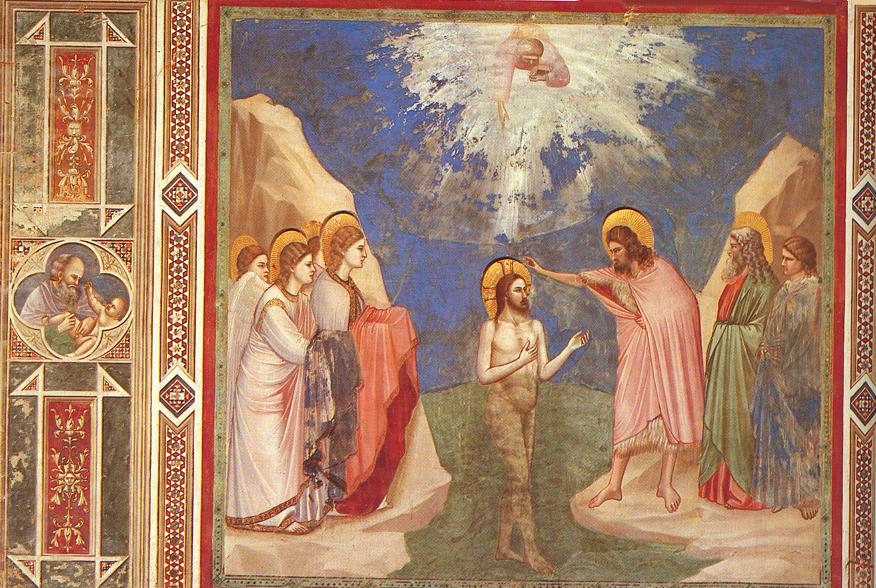
1d193-last_supper

Twenty first Sunday of Year C

There are times when Jesus’ words in the Gospel make us feel uncomfortable and uneasy. But this isn’t necessarily a bad thing. Our faith should challenge us. Challenge us to follow Christ. Challenge us to live out our faith in our lives. This isn’t easy. Quite the opposite. It is hard work, but then anything worthwhile usually is. It takes effort. And yet the effort on our part is as nothing compared to that of God, who sent His Son to be born for us, and to show us how to live. Jesus demonstrates the Love of God in action, to show us how to live lives of radical generosity.

The prophet Isaiah has a vision of a future which sees a God who knows us and loves us. He gathers the people of the world together, so that they may see God’s glory. As Christians, we believe that this points forward to Jesus Christ, who is the Word made flesh, the true demonstration of God’s glory in the world. He will show that glory most fully on the Cross, when He suffers and dies for humanity, to take away our sin. This is the sign God sets among us, so that the Church may declare God’s glory among the nations. 

Declaring God’s glory is the prophetic aspect of the church — sharing the Good News. With it comes a commitment to holiness of life, so that our words and actions are in tune with each other. We cannot succeed in this by our own strength or efforts. Instead we must rely upon God’s grace. We should humbly acknowledge our need for God. Only God can transform us. Only God can forgive our sins, our failures and shortcomings. Through grace God can transform us, more and more into His likeness. 

This recognition of our limitations and failings opens up a space where God can be at work in our lives, transforming us to live the Divine life of Love. This is the narrow door of this morning’s gospel: narrow because if we have a sense of our own self-importance or our worth which is too large then we cannot enter –- our sense of who and what we are gets in the way. It’s not enough to have eaten and drunk in God’s presence, to have been around when he taught in our streets.–It is a question of engagement. We are challenged to ask ourselves, ‘Am I a bystander or have I been fed by God? By the grace of the sacrament am I living out the love of God in my life? Have I been there when the Gospel has been taught? Have I both listened to it and lived it out in my life?’

These are not simple things to do. It is easier to coast along and take the easy options. That is why we meet together to encourage and support each other. That’s after all what the Church is for. We are a collection of sinners trying to live in response to the love of God which has been poured out on each of us. It is something which we need to do together — loving each other, loving our enemies, living out forgiveness as we have been forgiven and loved by God. This is a radically different way of life to that which the world encourages us to practise. It can be really difficult, and we will fail at it, but that’s alright! The point is not that we fail and give up, but that we keep trying, loving and forgiving, together, and become built up as the body of Christ, humble enough to let God be at work in us. He, by His Grace will transform our nature and make us the people of God, able to live out His out his love in our communities.

We have come here today to be fed by Word and Sacrament, to be nourished by God, and with God. In order to ‘recline at table’ as the Gospel puts it, we need to have false ideas of who and what we are stripped away. We need to recognise our dependence upon God, and each other, to help us to live out our faith –- to grow in holiness together as the people of God, loved, healed, and restored by Him. This is the only way that we can transform the world that it reflects more fully the great glory of God. The Gospel really is this radical, it’s not nice, or comfortable, it’s challenging and difficult, and utterly wonderful. It is Good News which releases people from the slavery of this world and all its false ideas, to live in the freedom and love of God.

We just have to look to Jesus and to His Cross to see God’s love for us. What is shameful in the eyes of the world, we can see as glorious — true love which gives regardless of the cost,, which heals and restores broken sinful humanity, which gives us the hope of new life in heaven. This is grace, the free gift of God, who shared our humanity so that we might share His divinity, and be strengthened by Word and Sacrament to live out our faith.

Living out our faith will be hard: the world will mock us and our feeble attempts to follow God. Yet, we believe in a God who loves us, and who would never belittle our feeble efforts to follow Him. So may the fire of God’s love be kindled in our hearts and lives, that we may be ablaze for Him, aflame with love for God and neighbour, love our enemies and our friends, and lets us change the world, not just this village, or this county, but all of God’s creation, all of humanity, that they may know God’s love and that it may rule in their hearts and lives.

So let us hasten to enter through the narrow gate, so that God may continue to transform our human nature, that His saving love and power may be at work in our hearts and our lives, so that we may be transformed with all the world, so that it may believe and sing the praise of God the Father, God the Son, and God the Holy Spirit, to whom be ascribed as is most right and just all might, majesty, glory, dominion, and power, now and forever. Amen. 

cropped-velazquezcrucifxion.jpg

Homily for the Ninth Sunday after Trinity

Fire is a powerful thing. It gives us heat and light. It cooks our food. When fire is controlled is a source of great joy. But when it is unchecked it is destructive and deadly. 

In the Church we are most used to the imagery of fire at Pentecost, when flames appear on the heads of the disciples as they are filled with the Holy Spirit. That same Spirit is given to us, in our Baptism, at ourConfirmation, and in the Sacraments of the Church. It is in the Spirit that we are be built up, and made holy, so that the image of God may be restored in us. It inspires us, and equips us to proclaim the Good News of the Kingdom of God.

In our first reading this morning from the prophet Jeremiah we hear the continuation of the argument against false shepherds and prophets who have been leading Israel astray. God reminds us that He is near, and has not abandoned us, even though falsehood is uttered in His Name. Thanks to the faithfulness of men like Jeremiah the truth will out in the end. As He says, ‘let him who has my word speak it faithfully’ (Jer 23:28 ESV). The faithful proclamation of the Word of God, first in Israel, and now in the Church, is truly Good News. ‘Is not my word like fire, declares the Lord’ (Jer 23:29 ESV). As Christians we follow the Word made flesh, who sends the Holy Spirit, which came like fire, so that we might be united with the God who loves us and saves us. 

In our reading from the Letter to the Hebrews, which continues where last week’s reading finished, we hear more of salvation history. The Exodus, and Israel’s entry into the Promised Land, are presented as examples of living by faith. The writer develops this to explain that through who Christ is, and what He has done for us, we have a greater Passover, from death and sin, to eternal life. We are surrounded by ‘a great cloud of witnesses’ by the providence of God, and His love for humanity. First and foremost we look to Jesus Christ, ‘the founder and perfecter of our faith, who for the joy that was set before him endured the cross, despising the shame, and is seated at the right hand of the throne of God.’ (Heb 12:2 ESV).

At the heart of it all is the Cross, which has reconciled us to God, and to each other. By the power of the Holy Spirit He took flesh in the womb of His mother, the Blessed Virgin Mary, and was born for us, so that he might be offered as a lamb without blemish, a perfect offering of love to God the Father. 

In the Gospel, Our Lord says that He came to cast fire on the earth, and looks towards His Passion. The fire speaks of a choice to be made, a decision on our part, whether we will follow Him, or not. It also anticipates to the sending of the Holy Spirit at Pentecost. This is a fire of renewal and inspiration, to fill His Church with life and power. From the Incarnation, Christ comes to infuse us with the love of God. The outpouring of the Holy Spirit is nothing more than humanity being completely filled with God’s love. 

We have been imbued with the same Spirit as the first apostles. The same love should burn in our hearts. Has God abandoned us? Surely not! Then we must pray that God will kindle that fire in our hearts. 

Holy Spirit, Divine Consoler, We adore You as our true God, with God the Father and God the Son. Amen. 

We pray that God pours out His Holy Spirit upon us so that we are built up in love, together. We pray that we are inspired to continue the work of God’s kingdom, here and now. So that we and all creation will sing the praise of God the Father, God the Son, and God the Holy Spirit, to whom be ascribed as is most right and just all might, majesty, glory, dominion, and power, now and forever. Amen. 
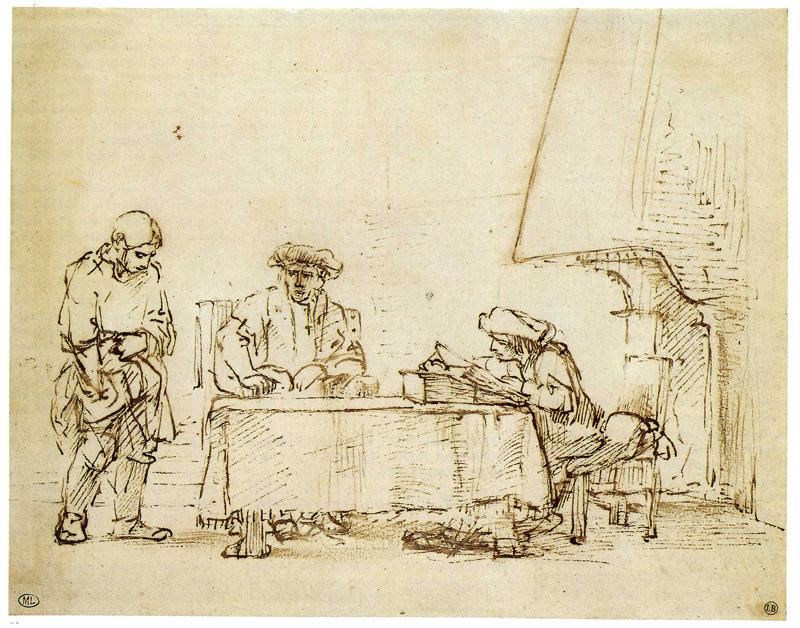
pentecost_maronite_icon

The Eighth Sunday after Trinity Year C

Ours are certainly interesting times in which to live. But as Our Lord says in this morning’s Gospel, ‘Do not be afraid’ (Lk 12:32) or as the Lord says to Abram ‘Do not be afraid…I am your shield’ (Gen 15:1). We can put our trust in one who will not abandon us, a God who loves us.

In our first reading this morning we see how Abram trusts in God to continue his household. It is an example of faith, of trusting the promises and providence of God, even when the situation looks bleak. 

In our second reading from the Letter to the Hebrews, we hear words addressed to a community of believers facing persecution, who are tempted not to believe in Jesus, and revert to their former Jewish faith. The author has explained that Christ is our great High Priest, and that His Sacrifice has atoned for our sins. In today’s passage we hear an overview of salvation history from the creation of the universe to the time of the patriarchs. Just as the people of Israel sought to return from their exile in Egypt, we too seek our eternal homeland: heaven. We ‘desire a better country, that is a heavenly one’ and we trust that our real homeland is in Heaven with God. This is the end of our journey of faith; a better place where the worries of this world are cast aside.
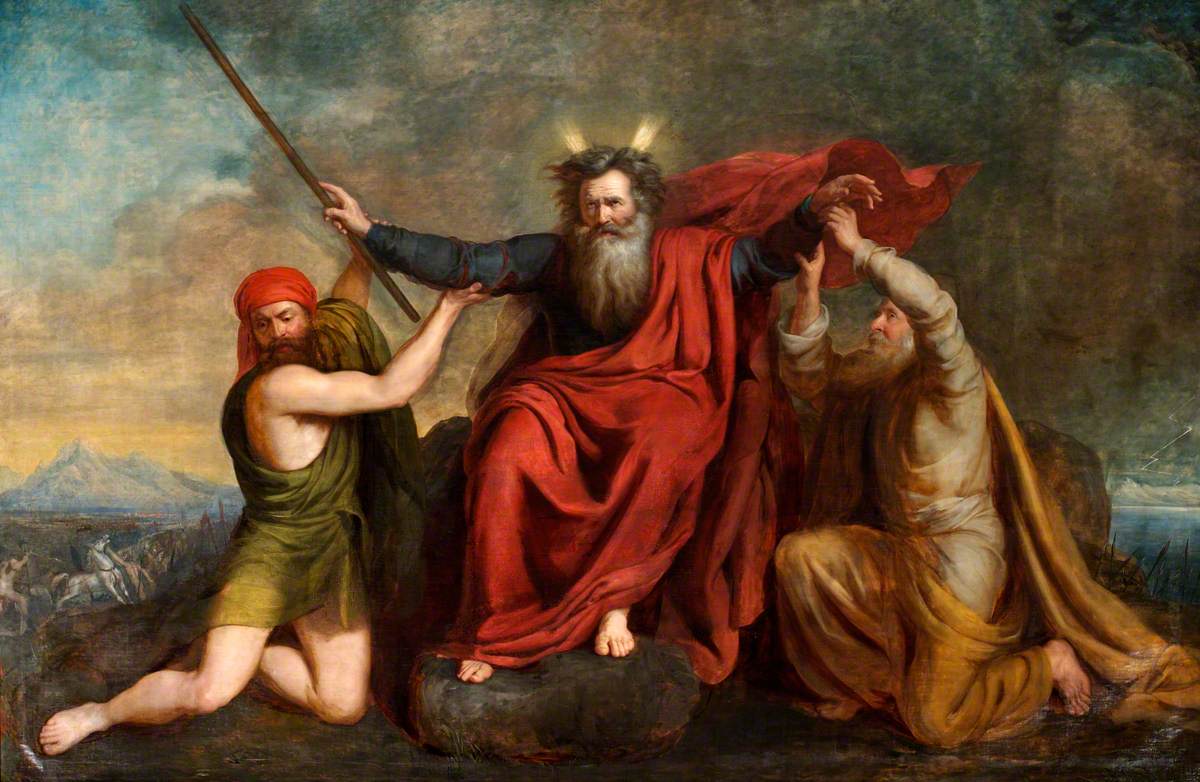
In this morning’s Gospel Jesus comforts his followers. It reminds us that the Church began small. Two thousand years later it looks huge. We may feel that we are only a tiny part of it, that we are not big enough, and that is ok. When the Church began it was fragile and faithful, a flock uncertain of what the future would hold. But God loved the early Christians, just as He loves us, and longs to see us flourish. God gives us the Kingdom, a realm where where God is in charge, and we live lives of freedom, love, and fulfilment. The kingdom is a place of generosity, where gifts are shared. It looks radically different to the world around us, where wealth, status, power, and possessions matter, and give people value. But these are in Luke’s words ‘purses that wear out.’ In the kingdom of God, on the other hand, all of humanity has infinite value and dignity. This is because we are all made in the image and likeness of God. This is what gives us value, and not any other reason. God pours out His Grace upon the church freely, out of love, so that humanity might flourish, and have life in all its fulness. 
Christians have the hope of heaven, of sharing in the divine nature, together, with the saints. To be united with love itself, the love that created all that is. The love which redeemed us through the Suffering, Death, and Resurrection of Our Lord and Saviour, Jesus Christ. That is why the second part of our Gospel reading this morning tells us to be prepared and ready for Our Lord’s Return.

Jesus, having ascended to the right hand of God the Father in Heaven will return, as our Saviour and as Judge of all. Should we be afraid? Jesus tells us constantly not to be afraid. There is a choice for the hereafter: Heaven or Hell. It is up to us: what we believe and how we live our lives. The central message in the proclamation of the Kingdom is ‘Repent and Believe’. We can choose to turn away from sin, to turn to God, believe in Him, and live our lives accordingly. Or we can choose not to. We have a greater choice to make, which lasts for ever. Do we trust in a God who loves us so much that His Only Son died for us. Do we gather at this altar and receive the Eucharist so that we may be transformed by Him? 

If we do these things, we will open ourselves to living the Christian Life. The faith of our hearts will affect who we are and what we do. We can be filled with joy as we await a judge who comes in mercy and love. One who heals our wounds, and restores in us the image of the God who not only created us but all that exists. Our Christian faith leads us to action, which can transform the world around us, so that God’s kingdom becomes a reality, here and now. For where our treasure is, there our heart will be also. What greater treasure is there than eternal life in heaven with God? This is offered to us freely. Nothing this world proffers comes close. It is all fleeting: wealth, power, privilege, do not last. But we can trust in the eternal promise of a God who loves us, and we can be ready to greet Him, when he comes again. Through the power of Christ’s sacrificial Death we have the hope of heaven and the assurance of sins forgiven. This is GOOD NEWS. It helps us see the vanity of the world for what it is. 

We all need to be ready for Jesus, when He comes. We don’t know when this will be, but we are told it will be late and when we do not expect. Also Jesus will not come as we might expect. Instead of appearing as a judge, as someone powerful, Jesus reconfigures our understanding of power and authority. Rather than being someone who expects to be served, Jesus will come again to continue to serve. God, the creator, redeemer, and sustainer of all creation, will come and put on an apron and care for us. This image defies our expectation and understanding. It gives us a foretaste of the glory that is to come, where we will be transfigured like Our Lord, and experience the fulness of God’s kingdom.

But for this to take place we need to be careful, we need to be vigilant. Just because we don’t know when Jesus will return doesn’t mean that we can take things easy. Nor can we afford to be lax or lazy, and negligent in the way we treat others. That would be to go against the message of the Gospel. We need to both think and act as though Jesus will return NOW, during this very Eucharist to judge and serve us. As we will welcome His Eucharistic presence with open hands and open hearts, so all of our lives should be open and welcoming to Him. We need to prefer Jesus and His Kingdom to anything else, for where our treasure is, there will our heart be also. We can have no excuse for not choosing Jesus and His message of the Kingdom over the cares and concerns of this world. This is, of course, easier said than done, but if we, as a Christian community, support one another, then we can do this together. The Kingdom of God is not something we can bring about in isolation, or as individuals. We need to do it together, as the body of Christ, by building up a community of love, and encouraging one another. 

What we believe and how we act together are a sign and symbol of our relationship with God and one another. So then, let us live lives together which proclaim the Gospel in word and deed, so that when Our Lord comes He may find us ready and doing his will, and singing the praise of God the Father, God the Son, and God the Holy Spirit, to whom be ascribed as is most right and just all might, majesty, glory, dominion, and power, now and forever.