Trinity 15: Forgive one another, as God has forgiven you

Jesus said to him, ‘I do not say to you seven times, but seventy times seven

Meddai Iesu wrtho, ‘Nid hyd seithwaith a ddywedaf wrthyt, ond heb saith deg seithwaith.’ (Mt 18:22)

The act of forgiveness if often one of the hardest things that we are called to do as Christians. The word forgiveness includes the term ‘give’. To forgive is, therefore, to give something of ourselves. This is not an easy thing to do as it demands that we give up a part of our self. This may mean giving up our anger, bitterness, or resentment, in order to make room for forgiveness. Jesus was able to forgive those responsible for his death because he did not hold on to these negative emotions.

In our first reading this morning, Ben Sirach, the writer of Ecclesiasticus, focuses on the human condition and the book forms part of the Wisdom tradition of Scripture: offering wise advice for humanity. Nowadays, many people seem to think that sexual sin is all that matters to God. Nothing could be further from the truth. Sin gnaws away at us, in many ways. It can dim, and even extinguish, the spark of divine life which we receive in our baptism. Sin is a serious business and it affects us all, both as individuals and in our life together.

Anger, wrath, and the desire for vengeance are, by their very nature, corrosive things. They eat us up, growing like a bitter cancer inside us. We often try to repress these strong emotions, but they can erupt in outbursts, or as calculated passive aggression. Is there a way to stop this happening? Yes, there is, and we are told how in our first reading: 

Forgive your neighbour the wrong he has done,

    and then your sins will be pardoned when you pray (Sir 28:2)

If we want to be forgiven then we have to forgive. It is as simple as that. And as difficult as that. However, there is no room for any half-measures, we need to forgive fully. Can we do this on our own? No, we need to do it as a community, a community which relies upon God to assist us. Only with God’s help, and in His strength, can we find the strength needed to forgive those who have hurt us deeply. 

There is very similar advice in this morning’s second reading from the Letter to the Romans. Paul writes that we should not pass judgement — whether someone does something they should not or does not do something they should. The point is not what we do, but why we do what we do. Are we trying to honour God in our actions? That is what really matters. Are we learning to live as people of love, freed from all that hinders our common life together? 

Let us consider the fact that throughout history Christians have often been persecuted for their faith. Some people have even been sentenced to death for preferring Christ to the ways of the world. Despite what we would expect, these martyrs were not angry with their persecutors or even with God. Instead they chose to live out the love and the forgiveness that they had received. Through this powerful witness many others have come to believe in and follow Christ. Each of us are called to copy their example and to try live authentic lives together, by forgiving each other, and living in love.

Forgiveness is at the heart of all three readings today, including Matthew’s Gospel where Peter asks Our Lord how many times he should forgive someone who sins against him. He wonders if it might be seven times, but Jesus replies, ‘Not seven times, but, I tell you, seventy-seven times’. This answer looks back to the establishment of the jubilee year in Leviticus 25:8 – ‘You shall count seven weeks of years, seven times seven years, so that the time of the seven weeks of years shall give you forty-nine years.’ The jubilee of the Old Covenant was all about the forgiveness of debts. This is made real in Jesus. In Him is the forgiveness and the renewal which Israel has longed for. It is radical and powerful forgiveness which can transform us, and the whole world. 

Jesus explains his message of forgiveness by the use of a parable. A dishonest servant who owes a debt which he cannot pay, begs for more time. His master, instead, cancels the whole debt. However, when faced with a debtor of his own, this same man fails to exhibit the mercy, the kindness which has been shown to him. For this he is rightly and justly punished. The parable shows us that, as we beg God to forgive our sins, we need at the same time to forgive the sins of others. Just like the man in the parable, we too are dishonest servants, we all owe God a debt which we cannot pay, yet God releases us from our debt. However, despite having been forgiven so much by our Heavenly Father, we still fail to be loving and forgiving to each other. The point is not to make us feel bad about ourselves, but to remind us of how much God loves us, and to encourage us to be loving in return. This is how we should live as human beings, loving and forgiving each other. This is how we can flourish as individuals and as a Christian community. 

The world around us often tells us be angry and to feel aggrieved. When we access any news outlet, we usually find headlines reported in such a way as to provoke a variety of negative emotions. We are encouraged to feel angry, sad, or even afraid. Yes, there are many things out there right now to make us feel this way, But being surrounded by a judgemental news culture makes it harder for us to live as Christian people. Often, without thinking, we pick up a negative mindset. As if by osmosis, it just seeps in, and before we know it we are thinking and speaking in a harsh, judgemental, way. It is hard to resist, and that is why Jesus tells us to forgive seventy times seven times, i.e., an uncountable number of times. But, to do so is very difficult indeed. We have to be vigilant so that we do not fall into patterns of behaviour which may decrease the fullness and happiness of our lives. We have to try together, as a Christian community, to live out the faith which we profess. We will, naturally, often fail in this, but we can always seek forgiveness from each other, and from God, and we can keep trying. 

The world may tell us that our endeavour is impossible, yet we know that, ‘with God all things are possible’ (Mt 19:26). These are not idle words, but a promise of Jesus that we can trust, and live out together, as a community of love and reconciliation — real, costly, and wonderful. That is why we celebrate the Cross of Christ: the fact that, for love of us, Jesus bore the weight of our sins upon Himself. He suffered and died for us, to show that there was no length to which God would not go to demonstrate, once and for all, what love and forgiveness truly mean. The Cross is our only hope, the one thing that can save us from ourselves, from all that divides and wounds and which separates us from each other and from God. It is our healing, our salvation, and our sanctification. Through the Cross we are saved and made free, to sing the praise of God the Father, God the Son, and God the Holy Spirit, Duw Dad, Duw y Mab, a Duw yr Ysbryd Glân. To whom be ascribed all glory, dominion, and power, now and forever. Amen.
Second Sunday after Christmas

‘And the Word became flesh and lived among us’

‘A daeth y Gair yn gnawd a phreswylio yn ein plith’ (Jn 1:14)

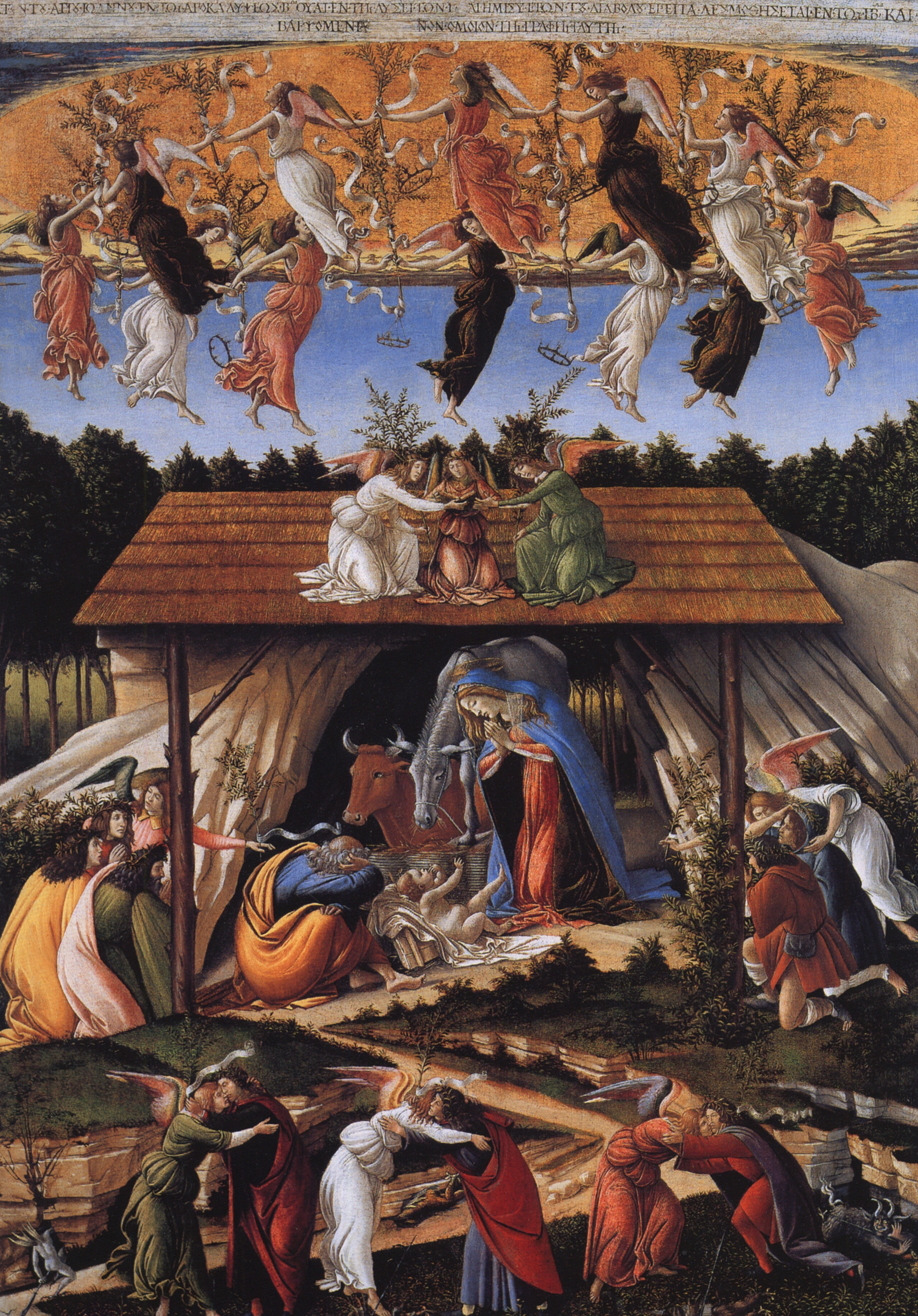
After all the excitement and bustle of Christmas and New Year, there is a certain slowness about January. The days are short, the weather usually takes a turn for the worst. Also, despite our resolutions, we often don’t feel all that lively or full of energy. It is understandable. Thankfully the Lectionary helps by giving us the opportunity to revisit some Christmas texts, allowing us to ponder the mystery of the Incarnation. While the world around us has taken their decorations down, in Church we are still celebrating Christmas, and will continue so to do for some time yet. The awesome mystery of God taking human flesh and being born among us needs more than a day’s celebration. Indeed we could spend a whole lifetime contemplating the wonderful fact that God has come down to earth to share our human life, and to bring about our restoration and our redemption.

Today’s Old Testament Reading is from The Wisdom of Sirach, also known as Ecclesiasticus. This is a later writing in the Jewish Wisdom Tradition, dated to roughly 125 years before the birth of Jesus. It was composed in Hebrew and soon after was translated into Greek. Our reading this morning comes from the beginning of a hymn to Wisdom. Wisdom is likened to the Word of God, and so becomes important as a way of reflecting upon Jesus. This is especially true of the following verse: 

‘Then the Creator of all things gave me a command, and my Creator chose the place for my tent.’ (Sir 24:8)

In John’s Gospel we are familiar with the verse:

‘And the Word became flesh and lived among us’ (Jn 1:14)

The Greek word ‘ἐσκήνωσεν’, we translate as ‘lived’, actually means ‘pitched his tent’. John’s Gospel is looking back to the Jewish Wisdom tradition to understand the Incarnation, and to place Christ’s birth in a wider scriptural context. The author of Ecclesiasticus was looking forward to a Messiah, and now He has been born. The longed-for salvation has become a reality. 

This assurance lies behind St Paul’s joyful greeting to the Christians in Ephesus. Like the Ephesian faithful, we too we have entered into a new relationship with God the Father: 

‘He destined us for adoption as his children through Jesus Christ, according to the good pleasure of his will, to the praise of his glorious grace that he freely bestowed on us in the Beloved’ (Eph 1:5-6)

Our primary identity is as children of God; as brothers and sisters in Christ. This is brought about through an outpouring of God’s grace — unmerited kindness and generosity  given freely because Our Heavenly Father loves us. This is the heart of the Christian Faith, and the message of Christmas: God loves us! How we respond to His divine love is our choice. Paul prays that Christ:

‘may give you a spirit of wisdom and revelation as you come to know him, so that, with the eyes of your heart enlightened, you may know what is the hope to which he has called you, what are the riches of his glorious inheritance among the saints.’ (Eph 1:17-18)

Our hope is in Heaven. We desire to spend eternity in God’s close presence, and to join the Church Triumphant. This is the reason why Christ is born in Bethlehem: to give us this hope, and to bestow this grace upon us. Through our celebration of Christmas we know that ours is a God who comes among us, and alongside us; who is not remote, but involved in every part of our lives.

Saint John take us back to the beginning of all things, to the Creation, so that we can see the bigger picture. What we are celebrating at Christmas is an event which extends through time, both in its nature and its effects. This is why we, as Christians, make such a big deal of Christmas. It isn’t just something nice to do in the middle of winter. Along with Our Lord’s Passion, Death, and Resurrection, the Birth of Jesus is the most wonderful and important moment of history, and it affects us here and now. What was made known to the shepherds, we now proclaim to the world. This is shown symbolically in the Feast of the Epiphany, where the Wise Men point to the manifestation of Christ’s Divinity made visible to the whole world — the recognition of God’s saving love:

‘And the Word was made flesh and dwelt among us, and we have seen his glory, the glory as of a father’s only son, full of grace and truth.’ (Jn 1:14)

The reality of the Incarnation, of God with us (Emmanuel), is that Our Lord lives with us, sharing our human life, and showing us His glory. That which Moses hid his face from in the Book of Exodus is now made plain, and displayed for all to see. It is a proclamation of the divine glory; the love, and the goodness of God. This is demonstrated by our adoption as children of God, and the inheritance we are given. This inheritance consists of eternal life, as well as a close relationship with God who restores and heals us. 

The last few years have shown us that humanity desperately needs both healing and restoration. This is possible through Christ who can heal our wounds, and restore in us the image of the God who created us. As Christians, we long for this, and we pray for it. If we are willing to let God be at work in us, the Kingdom of God can become a reality here and now. 

As we begin 2026, we are grateful that we are able to meet together in worship. We look forward in hope to a future much brighter than the dark days we have endured. Let us walk in the light of Christ, and know the fullness of His joy. Let us be glad that as a pledge of His Love Christ gives Himself, to feed us with His Body and His Blood. Through the bread and wine of Communion we have a foretaste of Heaven. This is food for our journey of faith here on earth. By participation in the Eucharist, physically or spiritually, we are strengthened to live out our faith and to proclaim it by word and deed. Therefore my brothers and sisters in Christ, at the start of this new year, we pray that all the world may come to know the love of Our Lord Jesus, and experience His healing touch. We lift up our hearts with joy, and join with the angels, to sing the praise of to God the Father, God the Son, and God the Holy Spirit, Duw Dad, Duw y Mab, a Duw yr Ysbryd Glân. To whom be ascribed all might, majesty, glory, dominion, and power, now and forever. Amen.

Quinquagesima 2025

LIVING in the Welsh countryside we are surrounded by trees (coed). At this time of year we notice changes in them as catkins and buds appear. Spring is arriving, a new season, and the trees prepare for the transformations they will undergo during the months ahead. Likewise, we too need to prepare to enter a new season: Lent. The time of preparation for the transformation of Easter, when death turns to life through the Resurrection of Our Lord Jesus Christ.

In our first reading this morning we are given a criterion for judgement:

‘Fel y mae ffrwyth pren yn dangos y driniaeth a gafodd, felly y mae mynegiant rhywun o’i feddyliau yn dangos ei ddiwylliant’

‘The fruit discloses the cultivation of a tree; so the expression of a thought discloses the cultivation of a person’s mind.’ (Eccles. 27:6)

However, mention of trees and fruit makes us look both backwards and forwards. Back to Genesis, where humanity falls through eating forbidden fruit, and forward to Calvary, where the Cross becomes the tree of salvation. Christ is the fruit that hangs upon this tree, who heals our wounds, and who offers us eternal life.

In today’s Gospel, Jesus begins by telling a parable which seeks to criticise the Pharisees, and Religious Authorities of His day. 

“Adroddodd Iesu ddameg wrth ei ddisgyblion: “A fedr y dall arwain y dall? Onid syrthio i bydew a wna’r ddau? Nid yw disgybl yn well na’i athro; ond wedi ei lwyr gymhwyso bydd pob un fel ei athro.”

“Jesus told his disciples a parable: ‘Can a blind man lead a blind man? Will they not both fall into a pit? A disciple is not above his teacher, but everyone when he is fully trained will be like his teacher. ”(Lk 6:39-40)

The Pharisees are described as the blind leading the blind; teachers leading people the wrong way, oblivious to their own faults and shortcomings, yet judging others. They appear as hypocrites, as the teaching goes on to explain:

“Pam yr wyt yn edrych ar y brycheuyn sydd yn llygad dy gyfaill, a thithau heb sylwi ar y trawst sydd yn dy lygad dy hun? Sut y gelli ddweud wrth dy gyfaill, ‘Gyfaill, gad imi dynnu allan y brycheuyn sydd yn dy lygad di’, a thi dy hun heb weld y trawst sydd yn dy lygad di? Ragrithiwr, yn gyntaf tyn y trawst allan o’th lygad dy hun, ac yna fe weli yn ddigon eglur i dynnu’r brycheuyn sydd yn llygad dy gyfaill.”

“Why do you see the speck that is in your brother’s eye, but do not notice the log that is in your own eye? How can you say to your brother, ‘Brother, let me take out the speck that is in your eye’, when you yourself do not see the log that is in your own eye? You hypocrite, first take the log out of your own eye, and then you will see clearly to take out the speck that is in your brother’s eye.” (Lk 6:41-42)

To recognise that you have ‘a log in your own eye’ requires both self-examination and the humility to recognise your own failures and shortcomings before making any criticism of others. Here Jesus is clearly telling His followers not to be judgemental. Logs and splinters are made of wood, which comes from trees. With a beam in our own eyes we cannot see anything, let alone assist someone with a splinter in their eye. Making the world a better place starts with each of us as individuals, and not with someone else.

Our Lord then goes on to point out the need to bear good fruit, using an analogy from the natural world:

“Oherwydd nid yw coeden dda yn dwyn ffrwyth gwael, ac nid yw coeden wael chwaith yn dwyn ffrwyth da. Wrth ei ffrwyth ei hun y mae pob coeden yn cael ei hadnabod; nid oddi ar ddrain y mae casglu ffigys, ac nid oddi ar lwyni mieri y mae tynnu grawnwin.”

“For no good tree bears bad fruit, nor again does a bad tree bear good fruit, for each tree is known by its own fruit. For figs are not gathered from thorn bushes, nor are grapes picked from a bramble bush.” (Lk 6:43-44)

This vivid imagery is simple and straightforward. If we as Christians are to bear good fruit, then we need to live good lives. The Pharisees are trees bearing bad fruit, whereas Our Lord has come to offer humanity life in all its fulness. But for this, He will be rejected and hung on a tree. However, this fruit is the greatest that there is. God gives himself for us and to us, so that we may have life in Him. So that we may grow and flourish.

Our taking part in and receiving of the Eucharist is the way in which we are strengthened as Christians. It is the medicine for our souls. If we are nourished by Jesus then we can be built up in love and faith, and strengthened to bear witness to Christ. We need God’s grace to be at work in us, to fortify, and sustain us. 

At its heart Christianity is a religion of transformation. In the Incarnation Christ became what we are, so that we might share His Divine Life. God does not want us to stay as we are. When we encounter Him in prayer, in reading Holy Scripture, and in the Sacraments, we are changed by that experience. We become something which we were not before. Our faith is deepened, we grow in holiness, and we reflect more fully the light of Him in whose image we were created.

So, let us prepare to deepen our encounter with God as we approach the season of Lent. Let us use self-examination, and prayer, so that we may grow in holiness. Let us become firmly rooted in Christ, living out our faith to proclaim the Good News of the Kingdom, so that the world may believe and give glory i Duw Dad, Duw y Mab, a Duw yr Ysbryd Glân. I’r hwn y priodoler pob gogoniant, arglwyddiaeth, a gallu, yn awr, ac yn oes oesoedd. Amen.

Trinity XII: The Bread of Life

THE poet Robert Browning once wrote: ‘If thou tastest a crust of bread, thou tastest all the stars and all the heavens’. This connection between bread and Heaven is the subject of today’s Gospel.

Our Lord has been teaching His followers about the Bread of Life. This is a topic which He returns to at the Last Supper. Seated with His disciples, Jesus says, ‘This is My Body’ ‘hwn yw nghorff’ and ‘This is My Blood’ ‘hwn yw fy ngwaed i’. He means what He says. For a hundred thousand successive Sundays the Church has followed Christ’s instruction to ‘do this in memory of me’. Not simply as a memorial, but to feed God’s people with God Himself: Body, Blood, Soul, and Divinity. To transform us, and prepare us for Heaven.

During the Roman Empire, when the Church was persecuted, followers of Jesus were accused of three false things. Firstly, atheism, because of their refusal to believe in, or worship pagan gods. Secondly, incest, because Christians called each other brother and sister, and loved each other. Thirdly, cannibalism — Christians were accused of eating human flesh. These last two charges are rooted in a misunderstanding of Christian worship. They are also evidence that, from the beginning, Christians were gathering for worship and consuming the Body and Blood of Christ.

Christ is being controversial when He teaches the people,

“I am the living bread that came down from heaven. If anyone eats of this bread, he will live for ever. And the bread that I will give for the life of the world is my flesh.”

“Myfi yw’r bara bywiol hwn a ddisgynnodd o’r nef. Caiff pwy bynnag sy’n bwyta o’r bara hwn fyw am byth. A’r bara sydd gennyf fi i’w roi yw fy nghnawd; a’i roi a wnaf dros fywyd y byd.” (Jn 6:51)

Our Lord is greater than the manna which God sent down to the Israelites during their wanderings in the desert. He is living bread. He is the bread which gives eternal life. God shares Himself with us, so that we might live in Him. But Christ’s teaching is deeply problematic for His audience. Jewish law prohibited the consumption of blood and human flesh. So what Jesus is proposing is impossible for His followers to accept. It is something that they cannot do, and yet they are told that they must. 

Jesus then repeats His teaching. He explains that anyone who wants to have life, needs to eat His Flesh and drink His Blood. Christ invites believers to the Eucharist and, in doing so, pledges to them that they will share in His Resurrection:

‘Whoever feeds on my flesh and drinks my blood has eternal life, and I will raise him up on the last day.’

‘Y mae gan y sawl sy’n bwyta fy nghnawd i ac yn yfed fy ngwaed i fywyd tragwyddol, a byddaf fi’n ei atgyfodi yn y dydd olaf.’ (Jn 6:54)

The purpose of the Eucharist is to transform us, to give us Eternal Life in Christ, so that we are part of Him. United with God and incorporated with Him forever.  As the bread is broken, and the wine is poured, so Jesus suffers and dies on the Cross. Our Lord’s Passion, Death and Resurrection are the core of our faith as Christians. In them we see how much God loves us. God’s love is freely given. We do not earn it, we do not deserve it; yet it is given to us. It is through Divine love that we may grow into something better, something greater, something more Christ-like. Such is the power of God’s sacrificial love at work in our lives. This is the treasure which we have come here to receive today. If it were ordinary food then we would eat it, and remain unchanged. But, instead, we who eat the Bread of Heaven are united with Christ. This is strong food! 

The Book of Proverbs speaks of Wisdom, which in the Christian tradition is identified with Christ, the Word made Flesh. Wisdom issues an invitation. She has constructed a house — the Church — and she has built seven pillars — the sacraments of the Church — the means of God’s grace to be active in our lives. The people of God are called to eat and drink, to live, and to walk in the way of wisdom, by following Jesus Christ. The message of New Testament is prefigured in the Hebrew Scriptures, which point to — and find their fulfilment in — Jesus Christ. He is the Wisdom of God, and the Word made Flesh. Christ’s invitation is an echo of the words of the Book of Proverbs:

“Come, eat of my bread and drink of the wine I have mixed. Leave your simple ways, and live, and walk in the way of insight.”

“Dewch, bwytewch gyda mi, ac yfwch y gwin a gymysgais. Gadewch eich gwiriondeb, ichwi gael byw; rhodiwch yn ffordd deall.” (Prov 9:5-6)

Throughout the Scriptures God issues an invitation to His people to be nourished, and walk in the way of truth. So my brothers and sisters in Christ, let us come to the banquet of the Lord, the feast of the Kingdom. May God’s grace transform us more and more into His likeness, and give us eternal life in Him. In the name of God the Father, God the Son, and God the Holy Spirit. Amen.