‘And the Word became flesh and lived among us’
‘A daeth y Gair yn gnawd a phreswylio yn ein plith’ (Jn 1:14)
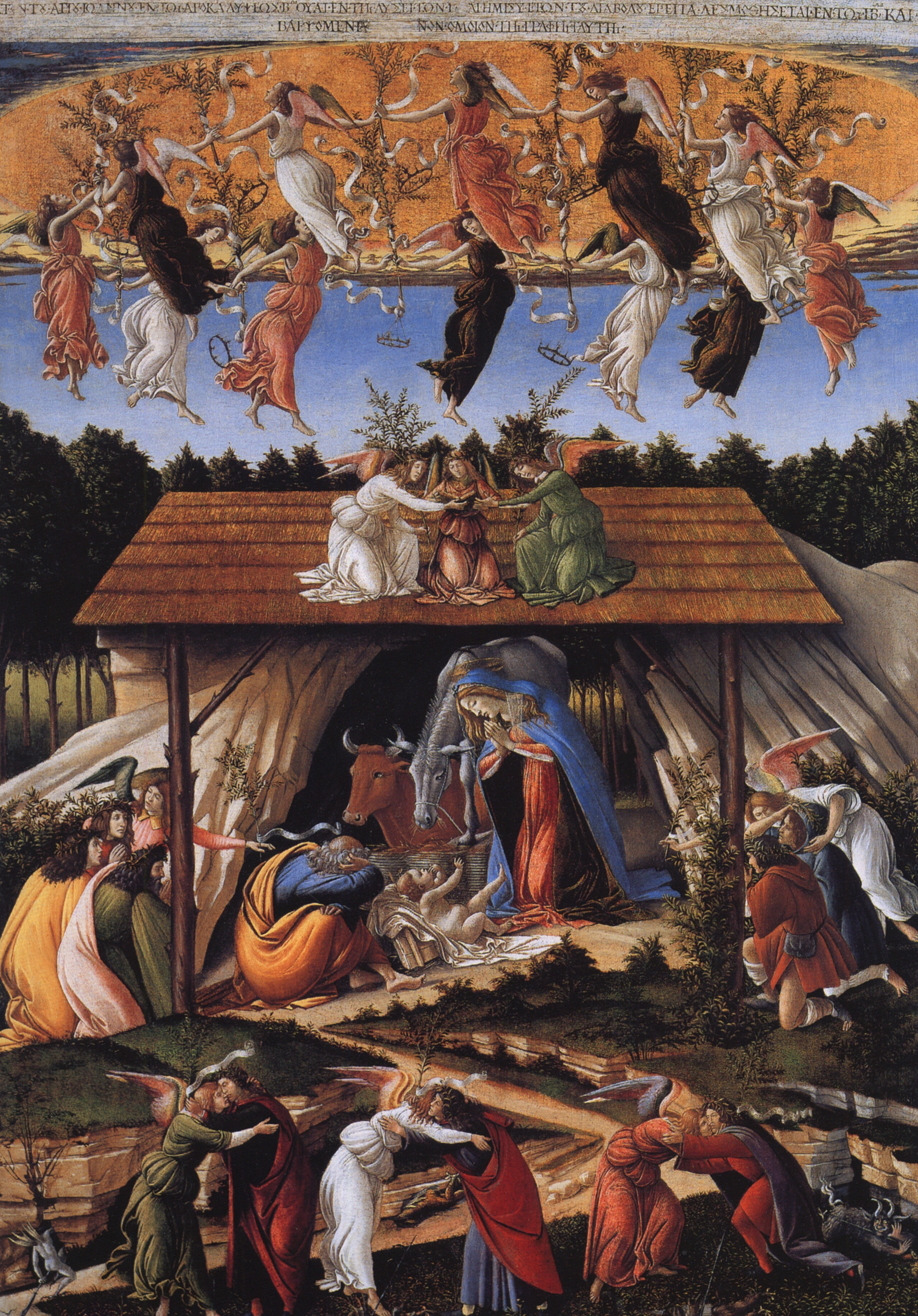
After all the excitement and bustle of Christmas and New Year, there is a certain slowness about January. The days are short, the weather usually takes a turn for the worst. Also, despite our resolutions, we often don’t feel all that lively or full of energy. It is understandable. Thankfully the Lectionary helps by giving us the opportunity to revisit some Christmas texts, allowing us to ponder the mystery of the Incarnation. While the world around us has taken their decorations down, in Church we are still celebrating Christmas, and will continue so to do for some time yet. The awesome mystery of God taking human flesh and being born among us needs more than a day’s celebration. Indeed we could spend a whole lifetime contemplating the wonderful fact that God has come down to earth to share our human life, and to bring about our restoration and our redemption.
Today’s Old Testament Reading is from The Wisdom of Sirach, also known as Ecclesiasticus. This is a later writing in the Jewish Wisdom Tradition, dated to roughly 125 years before the birth of Jesus. It was composed in Hebrew and soon after was translated into Greek. Our reading this morning comes from the beginning of a hymn to Wisdom. Wisdom is likened to the Word of God, and so becomes important as a way of reflecting upon Jesus. This is especially true of the following verse:
‘Then the Creator of all things gave me a command, and my Creator chose the place for my tent.’ (Sir 24:8)
In John’s Gospel we are familiar with the verse:
‘And the Word became flesh and lived among us’ (Jn 1:14)
The Greek word ‘ἐσκήνωσεν’, we translate as ‘lived’, actually means ‘pitched his tent’. John’s Gospel is looking back to the Jewish Wisdom tradition to understand the Incarnation, and to place Christ’s birth in a wider scriptural context. The author of Ecclesiasticus was looking forward to a Messiah, and now He has been born. The longed-for salvation has become a reality.
This assurance lies behind St Paul’s joyful greeting to the Christians in Ephesus. Like the Ephesian faithful, we too we have entered into a new relationship with God the Father:
‘He destined us for adoption as his children through Jesus Christ, according to the good pleasure of his will, to the praise of his glorious grace that he freely bestowed on us in the Beloved’ (Eph 1:5-6)
Our primary identity is as children of God; as brothers and sisters in Christ. This is brought about through an outpouring of God’s grace — unmerited kindness and generosity given freely because Our Heavenly Father loves us. This is the heart of the Christian Faith, and the message of Christmas: God loves us! How we respond to His divine love is our choice. Paul prays that Christ:
‘may give you a spirit of wisdom and revelation as you come to know him, so that, with the eyes of your heart enlightened, you may know what is the hope to which he has called you, what are the riches of his glorious inheritance among the saints.’ (Eph 1:17-18)
Our hope is in Heaven. We desire to spend eternity in God’s close presence, and to join the Church Triumphant. This is the reason why Christ is born in Bethlehem: to give us this hope, and to bestow this grace upon us. Through our celebration of Christmas we know that ours is a God who comes among us, and alongside us; who is not remote, but involved in every part of our lives.
Saint John take us back to the beginning of all things, to the Creation, so that we can see the bigger picture. What we are celebrating at Christmas is an event which extends through time, both in its nature and its effects. This is why we, as Christians, make such a big deal of Christmas. It isn’t just something nice to do in the middle of winter. Along with Our Lord’s Passion, Death, and Resurrection, the Birth of Jesus is the most wonderful and important moment of history, and it affects us here and now. What was made known to the shepherds, we now proclaim to the world. This is shown symbolically in the Feast of the Epiphany, where the Wise Men point to the manifestation of Christ’s Divinity made visible to the whole world — the recognition of God’s saving love:
‘And the Word was made flesh and dwelt among us, and we have seen his glory, the glory as of a father’s only son, full of grace and truth.’ (Jn 1:14)
The reality of the Incarnation, of God with us (Emmanuel), is that Our Lord lives with us, sharing our human life, and showing us His glory. That which Moses hid his face from in the Book of Exodus is now made plain, and displayed for all to see. It is a proclamation of the divine glory; the love, and the goodness of God. This is demonstrated by our adoption as children of God, and the inheritance we are given. This inheritance consists of eternal life, as well as a close relationship with God who restores and heals us.
The last few years have shown us that humanity desperately needs both healing and restoration. This is possible through Christ who can heal our wounds, and restore in us the image of the God who created us. As Christians, we long for this, and we pray for it. If we are willing to let God be at work in us, the Kingdom of God can become a reality here and now.
As we begin 2026, we are grateful that we are able to meet together in worship. We look forward in hope to a future much brighter than the dark days we have endured. Let us walk in the light of Christ, and know the fullness of His joy. Let us be glad that as a pledge of His Love Christ gives Himself, to feed us with His Body and His Blood. Through the bread and wine of Communion we have a foretaste of Heaven. This is food for our journey of faith here on earth. By participation in the Eucharist, physically or spiritually, we are strengthened to live out our faith and to proclaim it by word and deed. Therefore my brothers and sisters in Christ, at the start of this new year, we pray that all the world may come to know the love of Our Lord Jesus, and experience His healing touch. We lift up our hearts with joy, and join with the angels, to sing the praise of to God the Father, God the Son, and God the Holy Spirit, Duw Dad, Duw y Mab, a Duw yr Ysbryd Glân. To whom be ascribed all might, majesty, glory, dominion, and power, now and forever. Amen.


 Novus Motus Oxoniensis