Trinity XII: Take up your Cross

One of the curious aspects of life as a clergyman is the number of times that people ask you to pray for specific weather: be it rain, or sunshine. The 1662 Book of Common Prayer actually contains prayers for rain and fair weather, just after the Litany, after Morning and Evening Prayer. Therefore, I can only assume that weather-related prayers have always been high on the list of people’s priorities. Generally speaking, however, my response has been to say, “Sorry I’m in Sales, not Management”. I have always been concerned that people seem to think that I am somehow able to influence the Almighty when it comes to matters meteorological. Fundamentally, prayer doesn’t change God, it changes us. Now, on reflection, I’m more inclined to listen to their prayer request and honour it, as I do every other. 

All Christians are called to evangelise, to share the Good News of the Kingdom of God. However, doing so can feel a bit like being a salesperson. To some people you are just annoying. Most people show varying degrees of disinterest, but a few people are genuinely interested in what you have to say. However, if you were to use this morning’s Gospel as a sales-pitch, I doubt that you would meet with much success. Jesus’ stark presentation of the cost of discipleship is not necessarily an easy way to win people round. 

Christ has attracted a large group of people eager to hear what He has to say, so Our Lord explains what discipleship is all about:

“Os daw rhywun ataf fi heb gasáu ei dad ei hun, a’i fam a’i wraig a’i blant a’i frodyr a’i chwiorydd, a hyd yn oed ei fywyd ei hun, ni all fod yn ddisgybl imi.”

“If anyone comes to me and does not hate his own father and mother and wife and children and brothers and sisters, yes, and even his own life, he cannot be my disciple. Whoever does not bear his own cross and come after me cannot be my disciple.” (Lk 14:26-27)

Families do not always get on well, but Christians are called to ‘love their enemies’ (Lk 6:27) and to despise our own families, and even our own lives. This seems strange, and paradoxical. Aren’t Christians called to be people of love? Indeed we are, and the primary focus of our love as Christians should be God. Jesus is saying that God must be the most important thing in our life. Nothing should get in the way of the fact that our primary relationship is not with our parents, siblings, spouse, or offspring, but with the God in whose image we were created.

To make this a reality each and every one of us is called to bear a cross, to risk torture and death, and offer the whole of our lives to God. We are told we must follow Jesus, wherever that may lead. Our commitment has to be total, there is no room here for half-measures. Hence the stark imagery employed by Our Lord. Jesus uses strong and disturbing language to shock us. He reminds us that in Him we are called to a new relationship which takes us away from traditional social structures. That means that everyone in the Church becomes our brother and sister, and that our primary responsibility is to love Christ, and follow Him. To imitate Him, and take up our own Cross.

Our Lord then uses the images of a construction project and of warfare to reinforce the point that we need to see the matter through to its conclusion. Jerusalem was no stranger to either. King Herod’s rebuilding of the Temple took 46 years to complete, and war (or the threat of it) was a constant factor of everyday life. The point is being made that there is nothing worse than a half-finished building. It says, ‘The constructors didn’t plan properly, or get the finances in place first’. Likewise, in war you fight believing that you can win, otherwise you sue for peace. At this point, we remember and pray for our brothers and sisters in Ukraine and the Holy Land and throughout all the world where there is violence and war.

At the end of the Gospel passage Jesus reiterates His main point:

“Yr un modd, gan hynny, ni all neb ohonoch nad yw’n ymwrthod â’i holl feddiannau fod yn ddisgybl i mi.”

“So therefore, any one of you who does not renounce all that he has cannot be my disciple.” (Lk 14:33)

Over-attachment to material things is a problem: our stuff cannot save us, only God can. Are possessions useful or pleasant? Certainly. Can we enjoy them? Yes. But the problem occurs when their importance becomes misplaced. All that really matters is eternal life with God, sharing the Divine life of Love. Nothing we ‘have’ is really ours. We can enjoy material things and share them with others, but in a few years time our earthly life will have ended. There are no pockets in shrouds! As the old saying goes: ‘you can’t take it with you when you go’. 

As Christians, we gather, to hear God’s word read and explained; to pray together; to be nourished together. We do these things so that we may grow together in love, and to embrace the Cross. Having died with Christ in our baptism, and being raised to new life with Him, we live out our faith in our lives. Our discipleship can be costly and difficult. It calls us to renounce the world and rely upon God, together, as a community of faith. To form a new community where old ties and distinctions are done away with, where we have a new identity, and where we are called to a higher purpose. 

These are not easy things to achieve, and the Christian community has, for two thousand years, struggled to live up to these goals. But we put our trust in a God who forgives our sins and failings, who understands our humanity from the inside. We are not written off, or cast aside. We are not abandoned or discarded. This is because we are all made in God’s image, people of infinite intrinsic value. Christ died for us, to give us eternal life, to heal our wounds. He calls us to follow Him, so that we may find His freedom, and share in His triumph over death and sin. 

As Christians, we are called to something great and wonderful: to stand, like Christ as a contradiction, offering the world a new way to live; a way of life not of death; a way of generosity rather than selfishness. We are called to renounce the world and instead to embrace the freedom, and joy, that is the life of the Kingdom of God. 

It is truly liberating to look at the world as Jesus wants us to, knowing that all that really matters is loving God, and loving our neighbour. Doing this can be difficult, especially when times are uncertain as they are today, but we know that we can trust the God who loves us, who gives His life for us. The God who comes to us to feed us with Himself. So let us together follow him and invite others to do so. Let us give thanks for all our blessings and sing the praises of God, Duw Dad, Duw y Mab, a Duw yr Ysbryd Glân. God the Father, God the Son, and God the Holy Spirit. I’r hwn y priodoler pob gogoniant, arglwyddiaeth, a gallu, yn awr, ac yn oes oesoedd. To whom be ascribed all glory, dominion and power, now and forever. Amen

Trinity XI: Come to the Banquet

Organising seating plans for a banquet is not something most of us have a great deal of experience doing. Most of our dining nowadays is not that formal. The closest we might come is organising the seating at a Wedding Breakfast. So it is difficult for us to understand quite how important seating arrangements at dinner were in the Ancient World. Where you sat mattered. Where you were seated was signified by your rank in society, with the most important placed next to the host. This morning’s Gospel begins with Jesus having been invited to a Friday night dinner, the most important meal in the Jewish week, by a senior Pharisee. Luke’s comment is instructive:

‘ac yr oeddent hwy â’u llygaid arno’

‘they were watching him closely’ (Lk 14:1)

Jesus is on display. He is being studied by all those present at the dinner — presumably other leading Pharisees. They want to see if Our Lord will do, or say, something that they can find fault with. They are keen to catch Him out, in order to criticise Him. Jesus uses this experience as a teaching opportunity:

‘Yna adroddodd ddameg wrth y gwesteion, wrth iddo sylwi sut yr oeddent yn dewis y seddau anrhydedd’

‘Now he told a parable to those who were invited, when he noticed how they chose the places of honour’ (Lk 14:7)

The self-important dinner guests are all trying to get as close to the host as possible. They want the best places, the best food, and to be seen as being superior. So Jesus tells the following parable:

“Pan wahoddir di gan rywun i wledd briodas, paid â chymryd y lle anrhydedd, rhag ofn ei fod wedi gwahodd rhywun amlycach na thi; oherwydd os felly, daw’r sawl a’ch gwahoddodd chwi’ch dau a dweud wrthyt, ‘Rho dy le i hwn’, ac yna byddi dithau mewn cywilydd yn cymryd y lle isaf. Yn hytrach, pan wahoddir di, dos a chymer y lle isaf, fel pan ddaw’r gwahoddwr y dywed wrthyt, ‘Gyfaill, tyrd yn uwch’; yna dangosir parch iti yng ngŵydd dy holl gyd-westeion.

“When you are invited by someone to a wedding feast, do not sit down in a place of honour, lest someone more distinguished than you be invited by him, and he who invited you both will come and say to you, ‘Give your place to this person’, and then you will begin with shame to take the lowest place. But when you are invited, go and sit in the lowest place, so that when your host comes he may say to you, ‘Friend, move up higher.’ Then you will be honoured in the presence of all who sit at table with you.” (Lk 14:8-1o)

In practical terms, what Jesus is advising is sensible, and wise, because it removes the possibility of losing face. To this day in the Middle East, and elsewhere, the situation envisaged in the parable would be seen as a source of shame, or honour, depending on whether you were promoted to a place near the host, or demoted to a more distant seat. We tend not to be so aware of such considerations, and many people instinctively gravitate towards the back. Christ’s parable makes the point that humility is better than pride: 

“Oherwydd darostyngir pob un sy’n ei ddyrchafu ei hun, a dyrchefir pob un sy’n ei ddarostwng ei hun.”

“For everyone who exalts himself will be humbled, and he who humbles himself will be exalted.” (Lk 14:11)

To have an attitude which does not seek out the place of honour contrasts strongly with the guests who have done exactly that. Our Lord is pointing out that humility is the better way.

Christianity is a religion of humility. It starts from the premise that we have to rely upon God’s grace to save us, through faith. God takes the initiative, and we respond. We do not save ourselves. The point of salvation is that God is the host who says: ‘Friend come up higher’. We do not deserve a seat of honour, nor have we thought ourselves worthy of it. Yet a loving and generous God says to all who turn to Him: ‘Friend come up higher’. This is the Good News of the Kingdom, and it turns our human expectations on their head. Jesus then develops His teaching: 

Meddai hefyd wrth ei wahoddwr, “Pan fyddi’n trefnu cinio neu swper, paid â gwahodd dy gyfeillion na’th frodyr na’th berthnasau na’th gymdogion cyfoethog, rhag ofn iddynt hwythau yn eu tro dy wahodd di, ac iti gael dy ad-dalu. Pan fyddi’n trefnu gwledd, gwahodd yn hytrach y tlodion, yr anafusion, y cloffion, a’r deillion; a gwyn fydd dy fyd, am nad oes ganddynt fodd i dalu’n ôl iti; cei dy dalu’n ôl yn atgyfodiad y cyfiawn.”

He said also to the man who had invited him, “When you give a dinner or a banquet, do not invite your friends or your brothers or your relatives or rich neighbours, lest they also invite you in return and you be repaid. But when you give a feast, invite the poor, the crippled, the lame, the blind, and you will be blessed, because they cannot repay you. For you will be repaid at the resurrection of the just.” (Lk 14: 12-14)

People were having parties to display their wealth, social status, and connections. This still happens today. But God has a different understanding of hospitality. In His vision it is not about what you get, but what you can give to others. Generosity is what really matters. By inviting those who cannot invite you back in return, you are being generous to those who are in no position to repay you. Jesus’ teaching here is also about the banquet of the Kingdom of God, the Eucharist. Jesus, as God, invites the poor, those in need of healing — in other words all of humanity, you and me — to the feast of the Kingdom. The purpose of the Eucharist is so that God can feed us, with His Body and Blood, to heal us. In this divine banquet God does for us what we cannot do for ourselves, and gives us a foretaste of Heaven. We cannot repay God, but we can be thankful, and accept what is offered, allowing it to transform us. 

Christ has an important and strong message for His host and his fellow diners. We see Our Lord advising them to be generous and not to seek any reward. Human Society is complex. The giving and receiving of gifts has always been a crucial part of how society works. It creates networks of obligation: if you give someone something, they may feel obliged to return the favour. That is fine in human terms, but when we transfer it to the divine realm we are faced with a problem. What can we give God? Does Our Heavenly Father need or want anything? No! Because God is by nature, perfect, complete, and self-sufficient. Almighty God cannot want or need anything. As a result of this God is able to give the purest form of gift, which does not require anything in return. There can be no obligation, because humanity cannot give Our Creator anything. God is able give without expecting anything in return. This is what happens in the Incarnation when Our Lord is given to and for us. Throughout His life and ministry, to His Passion, Death, and Resurrection all He is and does is for our benefit. God is generous to us, not so that we can be generous in return, but simply for our own good. Likewise our sacrifice of praise is not for God’s benefit, but ours, demonstrating that we are living the way we should: flourishing by being loving, generous, and thankful. 

Instead of the norms of human interaction and obligation, Christ presents us with a completely different paradigm. The dinner invitations in the Kingdom are for the ‘poor, the crippled, the lame, and the blind’ (Lk 14:13). That means us! God longs to lavish His riches upon us; to heal our wounds, and to restore our sight. In turn, by our care for those who are weak, outcast, or deemed socially undesirable, we proclaim the Kingdom of God in our actions. Each one of us is called to the banquet here and now, in order that our souls may be nourished with Word and Sacrament. The Eucharist is the banquet of the Kingdom, which heals us, and transforms us more and more into God’s likeness.

God gives Himself, so the we might live in Him. This is true generosity — a generosity which expects nothing in return. Christ is the model of humility and loving service that we should imitate. Jesus takes the lowest place, bearing the weight of our sin, on the Cross. There He dies that we might live. There He dies to make us free.

Therefore, may we, in humility, recognise our need of God, and respond to His invitation to the Divine banquet. We pray that God will heal us, restore us and strengthen us to live lives of humility and love. In response we give thanks and sing the praises of God, Duw Dad, Duw y Mab, a Duw yr Ysbryd Glân. God the Father, God the Son, and God the Holy Spirit. I’r hwn y priodoler pob gogoniant, arglwyddiaeth, a gallu, yn awr, ac yn oes oesoedd. To whom be ascribed all glory, dominion and power, now and forever. Amen

Trinity VI – Lord teach us how to pray

If I were to ask you if you could recite a text off by heart you might regale me with a poem, a passage from a book, or a speech from Shakespeare learned at school. If I then asked whether you knew any prayers off by heart you would probably say ‘The Lord’s Prayer’, ‘Y Gweddi’r Arglwydd’. Even if they do not know all the words, most people have heard the Lord’s Prayer. It is an important part of our Christian heritage.

Our readings this week focus on prayer. Christians know that God answers prayer. However, God may say, ‘Yes’ or ‘No’ or even ‘Not yet’. We may not like the answer, but one will be forthcoming. Prayer is both simple and mysterious. Simple, insofar as it is our conversation with the divine. Mysterious, in the fact that prayer changes us, and not the Almighty. So prayer is something of a paradox, being at the same time quite straightforward and also an enigma. We pray to God, but prayer doesn’t change God, it changes us. Pagans in Greece and Rome would bargain with their gods: if you do this for me, I will give you that. Jews and Christians, however, are profoundly different. We do not bargain with God, and we do not need to, because we are in a covenant relationship with our Heavenly Father who loves us.

It would be all too easy to see this morning’s first reading, where Abraham tries to save Sodom and Gomorrah, as being concerned with bargaining with God. However, prayer does not work in that way. What the reading from Genesis shows us is that we are in a covenant, a relationship with God, and that God is generous and loving. He wants the best for us.

The American Bishop Fulton J. Sheen summed it up as follows:

‘Prayer is helplessness casting itself on Power, infirmity leaning on Strength, misery reaching to Mercy, and a prisoner clamouring for Relief.’ Life Is Worth Living, Second Series (New York, 1954), p. 213.

In today’s Gospel the disciples ask Jesus:

“Arglwydd, dysg i ni weddïo, fel y dysgodd Ioan yntau i’w ddisgyblion ef.”

‘Lord teach us to pray, just as John taught his disciples’ (Lk 11:1).

Jesus and John the Baptist were cousins. They both preached about the need for both repentance and belief in the Good News. Also, they both taught their disciples how to pray. Virtually all Christian prayer can be described by one or more of four phrases: ‘please’, ‘thank you’, ‘I’m sorry’, and ‘I love you’. God does not need our prayers, we do. This is because praying allows us to open our hearts and lives to God, allowing Him to change us. Jesus answers His disciple’s request to teach them how to pray as follows:

Ac meddai wrthynt, “Pan weddïwch, dywedwch: ‘Dad, sancteiddier dy enw; deled dy deyrnas; dyro inni o ddydd i ddydd ein bara beunyddiol; a maddau inni ein pechodau, oherwydd yr ydym ninnau yn maddau i bob un sy’n troseddu yn ein herbyn; a phaid â’n dwyn i brawf.’” 

He said to them, ‘Say this when you pray: ‘“Father, may your name be held holy, your kingdom come; give us each day our daily bread, and forgive us our sins, for we ourselves forgive each one who is in debt to us. And do not put us to the test.”’  (Lk 11:2-4)

The version of Jesus’ words we are most familiar with is that found in Matthew’s Gospel, which is slightly longer than Luke’s prayer. But both contain the same elements. The prayer begins by calling God, ‘Abba’ ‘Father’ ‘Tâd’. Such a term expresses our close relationship with our Creator. The idea that God’s name should be kept holy goes hand in hand with the desire that God’s Kingdom may come. Christianity is all about the establishment of the Kingdom of God: that God may rule over our hearts and our lives.

Next, we ask God to feed us, to forgive us our sins, as we forgive those who sin against us, and to free us from temptation. It is important to note that every celebration of the Eucharist begins with us all acknowledging our own shortcomings and asking God’s forgiveness. Saying sorry to God is important, because it keeps us humble, and helps to maintain our relationship with God, and with each other. We all make mistakes, you do, I certainly do. Recognizing this is the start of a process which allows us to grow in virtue and holiness, through God’s love. The high point of the Eucharist is when God feeds us with His Body and Blood, providing us with spiritual food to nourish our souls. All our food is a gift from God, and being thankful for it, just like being humble, helps to keep us close to God. If you don’t already do so, try to get into the habit of saying a few words of thanks to God before you eat a meal.

There are good reasons why Christians regularly pray this prayer, which we call The Lord’s Prayer, Y Gweddi’r Arglwydd. Jesus has told us how to pray and gave us these words. Similarly, we celebrate the Eucharist because Jesus told us to ‘do this in memory of Him’ and so we do. We use the Lord’s Prayer when we pray, because it honours God, and it forms us as Christians. We will soon pray it together before Communion, asking that God will continue the process of transforming us day by day into His image and likeness. 

In the Gospel reading Jesus continues to teach His disciples using parables. In this narrative, there is a late-night hospitality emergency. A friend is on a journey (just like Jesus and His disciples), and arrives at your home (just like Jesus visited Mary and Martha last week). Naturally you want to be hospitable as a sign of your friendship. So, you pop round to a next door and ask to borrow some food. However, the initial response you receive from your neighbour is not very positive:

‘Paid â’m blino; y mae’r drws erbyn hyn wedi ei folltio, a’m plant gyda mi yn y gwely; ni allaf godi i roi dim iti’, rwy’n dweud wrthych, hyd yn oed os gwrthyd ef godi a rhoi rhywbeth iddo o achos eu cyfeillgarwch, eto oherwydd ei daerni digywilydd fe fydd yn codi ac yn rhoi iddo gymaint ag sydd arno ei eisiau.’

“Do not bother me. The door is bolted now, and my children and I are in bed; I cannot get up to give it you.” I tell you, if the man does not get up and give it him for friendship’s sake, persistence will be enough to make him get up and give his friend all he wants. (Lk 11:7-8)

Jesus shows that, despite the neighbour not wanting to get up and be bothered with the request for food, because the person is persistent and stays there, disregarding the initial reluctance, his request is granted. Perseverance is rewarded. The point Our Lord is making is that God hears our prayers and answers our requests. We might need to ask more than once, and commit time to prayer, but we will not be ignored.

‘Ac yr wyf fi’n dweud wrthych: gofynnwch, ac fe roddir i chwi; ceisiwch, ac fe gewch; curwch, ac fe agorir i chwi. Oherwydd y mae pawb sy’n gofyn yn derbyn, a’r sawl sy’n ceisio yn cael, ac i’r un sy’n curo agorir y drws.’

‘So I say to you: Ask, and it will be given to you; search, and you will find; knock, and the door will be opened to you. For the one who asks always receives; the one who searches always finds; the one who knocks will always have the door opened to him.’ (Lk 11:9-10)

The phrase ‘knock, and the door will be opened to you’ ‘curwch, ac fe agorir i chwi’ reinforces the teaching in the parable. The neighbour opens the door and gives the requested provisions. Jesus then develops His teaching, by drawing a comparison between the lesser and the greater. This is a common rabbinic practice:

‘Os bydd mab un ohonoch yn gofyn i’w dad am bysgodyn, a rydd ef iddo sarff yn lle pysgodyn? Neu os bydd yn gofyn am wy, a rydd ef iddo ysgorpion? Am hynny, os ydych chwi, sy’n ddrwg, yn medru rhoi rhoddion da i’ch plant, gymaint mwy y rhydd y Tad nefol yr Ysbryd Glân i’r rhai sy’n gofyn ganddo.’

‘What father among you would hand his son a stone when he asked for bread? Or hand him a snake instead of a fish? Or hand him a scorpion if he asked for an egg? If you then, who are evil, know how to give your children what is good, how much more will the heavenly Father give the Holy Spirit to those who ask him!’ (Lk 11:11-13)

The Good News of the Kingdom is that God answers prayer. Not only that, but He gives us more than we ask Him for. God also grants us the Holy Spirit. This is an important concept in the wider narrative of Luke’s Gospel and the Acts of the Apostles, where the Church is filled with God’s Spirit. God answers prayer because He is our Creator, and we are in a special relationship with Him. In today’s Old Testament reading God listens to Abraham’s pleas for mercy and then grants them. 

Turning to St Paul’s Letter to the Colossians, the apostle can proclaim baptism as the way to salvation, because this enables us to share in Christ’s Death and Resurrection, and the forgiveness of our sins:

‘Y mae wedi ei bwrw hi o’r neilltu; fe’i hoeliodd ar y groes.’ 

‘he has done away with it by nailing it to the cross’ (Col 2:14)

God cancels our debt by paying it Himself, overcoming evil and sin through an outpouring of healing love. This is the demonstration that God loves us and hears our prayers, and so we continue to remember the Passion through our celebration of the Eucharist. God forgives our sins, and gave His life for us, nailing our sins to the Cross. He suffered in His flesh so that we who have died with Christ in our baptism may also share His risen life. That is why Jesus can assure us that God listens to our prayers and answers them, giving us the good things we need.

My brothers and sisters in Christ, through practising both prayer and action, may we be agents of God’s love and grace in the world. May we transform our homes, our communities, and the whole world. Filled with God’s generous love, compassion and forgiveness, let us give glory to God, Duw Dad, Duw y Mab, a Duw yr Ysbryd Glân. God the Father, God the Son, and God the Holy Spirit. I’r hwn y priodoler pob gogoniant, arglwyddiaeth, a gallu, yn awr, ac yn oes oesoedd. To whom be ascribed all glory, dominion and power, now and forever. Amen.

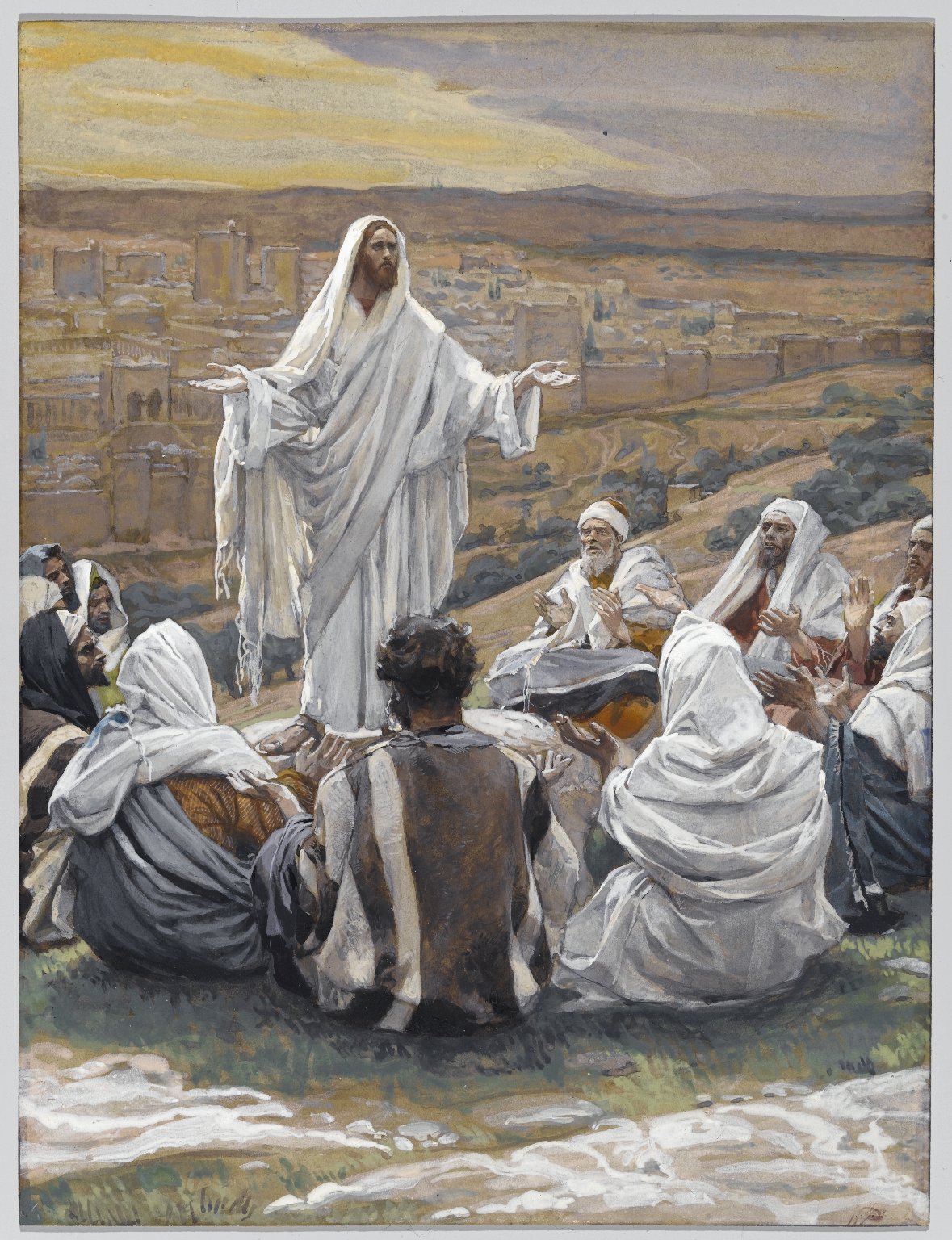
James Tissot – The Lord’s Prayer [Brooklyn Museum]

Trinity I

Children love to ask questions: who? what? where? when? and, especially, why? The Questions we ask and the Answers we give can say an awful lot about who we are. One of the most fundamental question is one concerning identity: ‘Pwy wyt ti?’ ‘Who are you?’ My response would be: ‘I am Adrian, and I am a priest’. The name I was given in baptism, and the fact that God has called me to share in the priesthood of His Son Jesus Christ, define who I am, and what I do. They are why I am standing here, saying this to you, today.

From the time of their exile in Babylon, and before, the people of Israel had looked for a Messiah, a leader of the House of David. They sought someone who would bring them the peace and security that they longed for. The first reading this morning comes from the prophecy of Zechariah, and was written perhaps as late as two hundred years before the birth of Jesus Christ. At this time the Jewish people were struggling under Greek rulers who tried to abolish their identity, and all that they held sacred. The prophet Zechariah looks forward to a messianic future, when the people of the House of David :

‘edrychant ar yr un a drywanwyd ganddynt, a galaru amdano fel am uniganedig, ac wylo amdano fel am gyntafanedig.’

‘They will look on the one whom they have pierced; they will mourn for him as for an only son, and weep for him as people weep for a first-born child’ (Zech 12:10)

The mention of looking upon one whom they have pierced anticipates Christ and His Crucifixion, as noted by John’s Gospel: ‘They will look on him whom they have pierced’ (19:37). Zechariah also writes of the outpouring of a ‘spirit of kindness and prayer’, just as we have seen at Pentecost. Here Jesus’ Death, Resurrection and gift of the Holy Spirit are clearly prefigured: God’s saving plan is announced in the words of the prophet. A few verses later, Zechariah prophesies:

‘Yn y dydd hwnnw bydd ffynnon wedi ei hagor i linach Dafydd ac i drigolion Jerwsalem, ar gyfer pechod ac aflendid.’

‘On that day there shall be a fountain opened for the house of David and the inhabitants of Jerusalem to cleanse themselves from sin and uncleanness.’ (Zech 13:1)

This is what the Cross achieves for those who are washed in the Blood of Lamb, as we are at our Baptism. Christ’s death takes away our sins. Through Baptism and the Eucharist we share in Jesus’ Death and are raised to new life with Him. When St Paul writes to the Galatian Church, he stresses their common baptism:

‘Oblegid yr ydych bawb, trwy ffydd, yn blant Duw yng Nghrist Iesu. Oherwydd y mae pob un ohonoch sydd wedi ei fedyddio i Grist wedi gwisgo Crist amdano. Nid oes rhagor rhwng Iddewon a Groegiaid, rhwng caeth a rhydd, rhwng gwryw a benyw, oherwydd un person ydych chwi oll yng Nghrist Iesu.’

‘You are, all of you, sons of God through faith in Christ Jesus. All baptised in Christ, you have all clothed yourselves in Christ, and there are no more distinctions between Jew and Greek, slave and free, male and female, but all of you are one in Christ Jesus.’ (Gal 3:26-28)

St Paul is preaching a profound message. He explains that none of the distinctions which the world makes matter in God’s eyes. There is no difference. All people are one in Christ. There is a radical equality in the Church: all are welcome to come and experience God’s saving love. When Paul preached, nearly two thousand years ago, this was a revolutionary idea, and it still is today. We are all one in Christ: young and old, rich and poor. It doesn’t matter who we are, where we are from, or anything else. All that matters is that we find our true identity in Christ. This makes us heirs of God’s promise: that we would enjoy eternity in Heaven with our Creator and Sustainer.

In today’s Gospel Jesus begins by asking His disciples this question:

“Pwy y mae’r tyrfaoedd yn dweud ydwyf fi?”

“Who do the crowds say that I am?” (Lk 9:18)

His followers reply that the people think a variety of things: John the Baptist, Elijah, or another of the prophets. They recognise Jesus’ proclamation of the Good News of the Kingdom and understand Him in terms that are familiar to them. Christ, however, presses the issue by asking His disciples another question:

“pwy meddwch chwi ydwyf fi?”

“But who you say that I am?” (Lk 9:20)

Peter answers, ‘Meseia Duw, the Christ of God’ (Lk 9:20). By this answer Peter confesses that Jesus is the Messiah, God’s Anointed, the fulfilment of Zechariah’s prophecy. The disciple’s confession of belief is also our confession of belief as Christians: Jesus is the Christ, the Saviour, the Son of God. As we will soon declare in the words of the Nicene Creed.

Jesus instructs the disciples that they should not communicate this knowledge to anyone, at this time. He then explains what is about to happen:

“”Y mae’n rhaid i Fab y Dyn,” meddai, “ddioddef llawer a chael ei wrthod gan yr henuriaid a’r prif offeiriaid a’r ysgrifenyddion, a’i ladd, a’r trydydd dydd ei gyfodi.”

“The Son of Man is destined to suffer grievously, to be rejected by the elders and chief priests and scribes and to be put to death, and to be raised up on the third day” (Lk 9:22)

Jesus tells the disciples about His Passion, Death and Resurrection, because it is His mission. He has come to reconcile God and humanity, and to restore and heal our broken relationship. Christ then invites His followers to follow His example:

“Os myn neb ddod ar fy ôl i, rhaid iddo ymwadu ag ef ei hun a chodi ei groes bob dydd a’m canlyn i. Oherwydd pwy bynnag a fyn gadw ei fywyd, fe’i cyll, ond pwy bynnag a gyll ei fywyd er fy mwyn i, fe’i ceidw. Pa elw a gaiff rhywun o ennill yr holl fyd a’i ddifetha neu ei fforffedu ei hun?

‘If anyone wants to be a follower of mine, let him renounce himself and take up his cross every day and follow me. For anyone who wants to save his life will lose it; but anyone who loses his life for my sake, that man will save it.’ (Lk 9:23-24)

At the beginning of His public ministry, Jesus invites people to repent and believe. Now He calls us to self-denial, and to embrace the Cross. Christ asks us to accept the most shameful way to die, a form of torture, used by the Romans to execute slaves. As those saved and made free by the Cross of Christ, we take up our own cross and follow Jesus. We imitate Him, in selfless love and devotion, and we bear the weight of the cross in life’s difficulties and disappointments. Following Christ is hard. It is a struggle, and we cannot just rely solely upon our own willpower to succeed. Instead, the Christian life needs to be a corporate effort, something we do together, trusting in God’s Grace to be at work in us, both individually and as a community.

Christ wants us to lose our lives for His sake, and find freedom in His service. There is something paradoxical in Jesus’ teaching. We are to find perfect freedom in obedience, in service of God and each other. Each of us needs to be humble enough to accept what God offers us, and be prepared to try to live it out together. It isn’t about us, but rather letting God be at work in us. When we co-operate with God, and live in love, and joy, and peace, we flourish as human beings. This is liberating, and it is what Our Heavenly Father wants for us. This is what true freedom looks like, and we are called to live it together, today and every day.

So, as we celebrate the joy of our Salvation, let us pray that we may be changed by God’s love, and share this love with others. Let us give thanks for the mystery and wonder that is God, Duw Dad, Duw y Mab, a Duw yr Ysbryd Glân. God the Father, God the Son, and God the Holy Spirit. I’r hwn y priodoler pob gogoniant, arglwyddiaeth, a gallu, yn awr, ac yn oes oesoedd. To whom be ascribed all glory, dominion and power, now and forever. Amen.

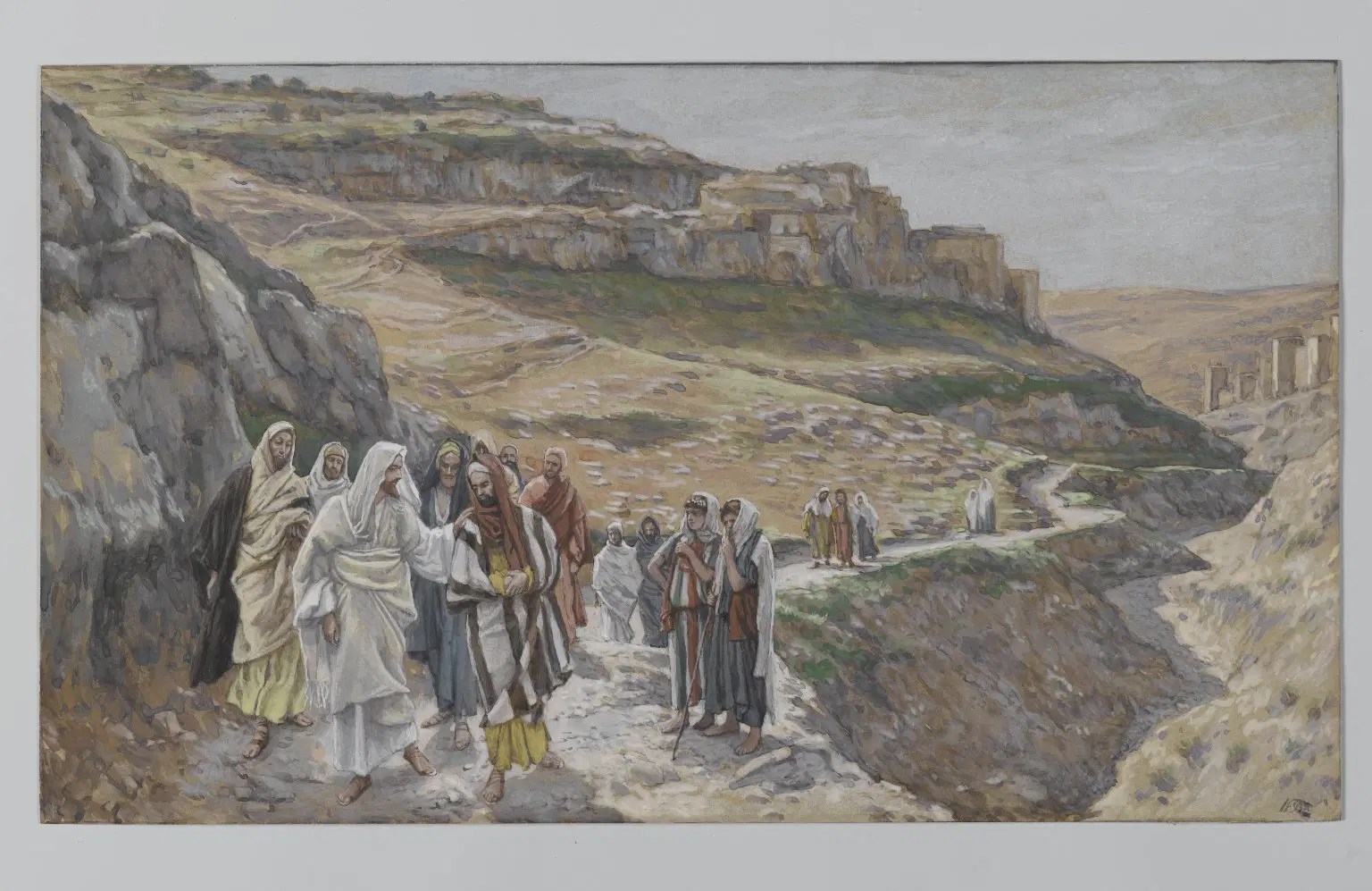
Jesus discourses with his disciples – James Tissot (Brooklyn Museum)

The Baptism of the Lord 2025

TWO of the most important days of our lives are ones that many of us cannot remember. The first is the day of our birth, and the second is the day of our baptism. While people are often baptised when they are children or adults, many people in this country are baptised as infants. We may have photos of our baptism, and we may remember it or have been told about it by our families. People usually know where and when their baptism took place. Also, having been to other baptisms we know what will have happened on this significant day of our life, when we were welcomed as a member of the Christian community. Jesus’ baptism was in many ways similar to our own, and in some ways it was significantly different.

Early in Luke’s Gospel we hear about John the Baptist, a holy man who has been proclaiming a baptism of repentance for the forgiveness of sins (Lk 2:3). John has been calling people to turn away from their sins, and to turn back to God, and live holy lives. This has a significant effect on the people of Judea. There is an increase in religious observance; something like a religious revival. This, in turn, leads to speculation:

‘Gan fod y bobl yn disgwyl, a phawb yn ystyried yn ei galon tybed ai Ioan oedd y Meseia,’

‘As the people were filled with expectation, and all were questioning in their hearts concerning John, whether he might be the Christ,’ (Lk 3:15)

The people of Israel were longing for the Messiah, the Christ, the Anointed One. The prophesied Messiah is a charismatic King figure, anointed by God, and descended from David, who will make Israel flourish and re-establish the Kingdom of God. 

John the Baptist goes to great lengths to argue that he is not the Messiah. John is the messenger, preparing the way:

‘Yr wyf fi yn eich bedyddio â dŵr; ond y mae un cryfach na mi yn dod. Nid wyf fi’n deilwng i ddatod carrai ei sandalau ef. Bydd ef yn eich bedyddio â’r Ysbryd Glân ac â thân.’

‘I baptize you with water, but he who is mightier than I is coming, the strap of whose sandals I am not worthy to untie. He will baptize you with the Holy Spirit and with fire.’ (Lk 3:16)

The Baptist sees himself as not even worthy to untie the sandals of the Messiah, something a servant would do for their master. John demonstrates great humility, and his actions point forward to the baptism of the Church, instituted by Jesus in the River Jordan. Whereas John baptizes with water, Jesus will baptize with the Holy Spirit and fire. This looks forward to both Our Lord’s death on the Cross, and to Pentecost, when the Apostles are filled with the Holy Spirit.

‘Pan oedd yr holl bobl yn cael eu bedyddio, yr oedd Iesu, ar ôl ei fedydd ef, yn gweddïo. Agorwyd y nef, a disgynnodd yr Ysbryd Glân arno mewn ffurf gorfforol fel colomen; a daeth llais o’r nef: “Ti yw fy Mab, yr Anwylyd; ynot ti yr wyf yn ymhyfrydu.”’

‘Now when all the people were baptized, and when Jesus also had been baptized and was praying, the heavens were opened, and the Holy Spirit descended on him in bodily form, like a dove; and a voice came from heaven, “You are my beloved Son; with you I am well pleased.”’ (Lk 3:21-22)

We then have to ask ourselves why is Jesus being baptized? Jesus is not a sinner. He has no sins from which to repent, and yet He is in the River Jordan, being baptized by John. An explanation is that in His Baptism Jesus is in solidarity with sinful humanity: He does not wish us, His followers, to undergo anything that He would not undergo Himself. Christ is an example of how to come to God and have new life: He shows us the Way. As a sign of divine approval after the Baptism, as Jesus is praying, the heavens open, and the Holy Spirit descends upon Him in the form of a dove. God then says: ‘Ti yw fy Mab, yr Anwylyd; ynot ti yr wyf yn ymhyfrydu. You are my beloved Son; with you I am well pleased.’ (Lk 3:22)

At the beginning of his public ministry, Jesus shows humanity the way to the Father, through Himself. The world sees the generous love of God, which heals and restores us to the light and life of the Kingdom of God. As our baptism is a sharing in the death and resurrection of Jesus, so His Baptism points to the Cross, where streams of blood and water flow to cleanse and heal the world. We see the love of the Father, the power of the Spirit, and the obedience of Son, all for us — people who need God’s love, forgiveness, and healing.

At the moment of Jesus’ Baptism, the fullness of the Godhead is manifested in glory and the divine presence. In the account of Noah’s Ark God makes his love manifest in the form of a dove. At the end of the Flood a dove brings an olive branch back to the Ark, a sign of peace and new life. So now, the Holy Spirit appears in the form of a dove to show us the fullness of God, a relationship of love, which is opened up to us in our baptism. Through our baptism we are invited into the embrace of God’s eternal love. 

The Divine Trinity makes itself manifest in recognition of the Son’s obedience to the Father, and looks forward to the Cross, where God’s love is poured out upon the world, and through which we are saved. In our own baptism, we share in Christ’s Death and Resurrection. In His Baptism, as in His Death, Christ shows us the way to the Father in the power of the Holy Spirit. We are baptised in the name of the Holy and life-giving Trinity. Similarly, our worship this morning began by invoking the name of the Trinity: the Father, the Son, and the Holy Spirit (Yn enw’r Tad, a’r Mab, a’r Ysbryd Glân). And so all of our life as Christians is Trinitarian.

As we celebrate Our Lord’s Baptism in the River Jordan, and as we remember our own baptism, we also look forward to His first miracle at the Wedding at Cana. Christ, He who is without sin, shows humanity how to be freed from transgression and to have new life in Him.

So, today and every day, let us all draw strength from our Baptism and grow in faith, hope, and love, nourished by Christ, and with Christ. Let us share that love with others and give praise and honour i’r Duw Dad, Duw y Mab, a Duw yr Ysbryd Glân. I’r hwn y priodoler pob gogoniant, arglwyddiaeth a gallu, yn awr ac yn oes oesoedd. Amen.

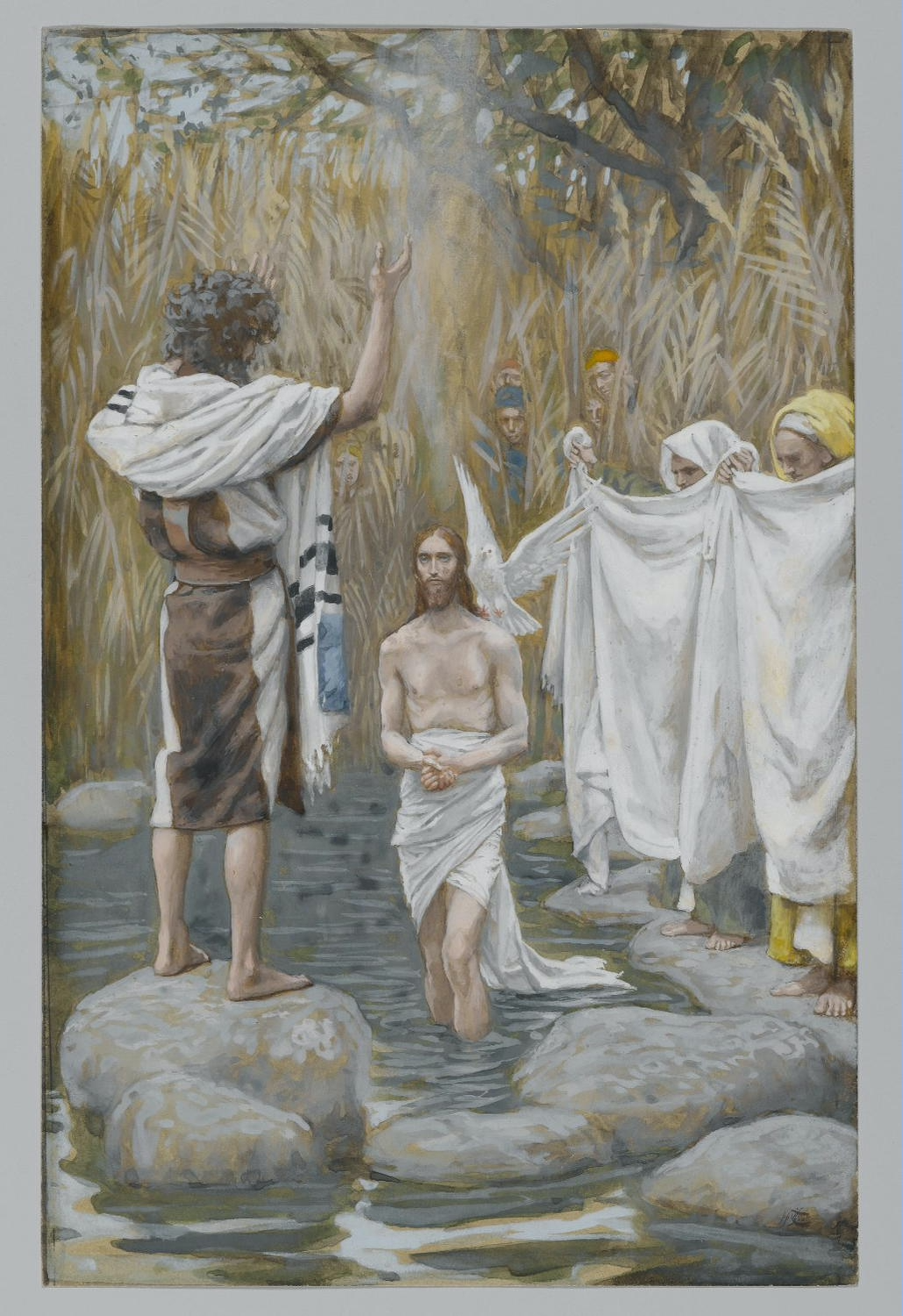
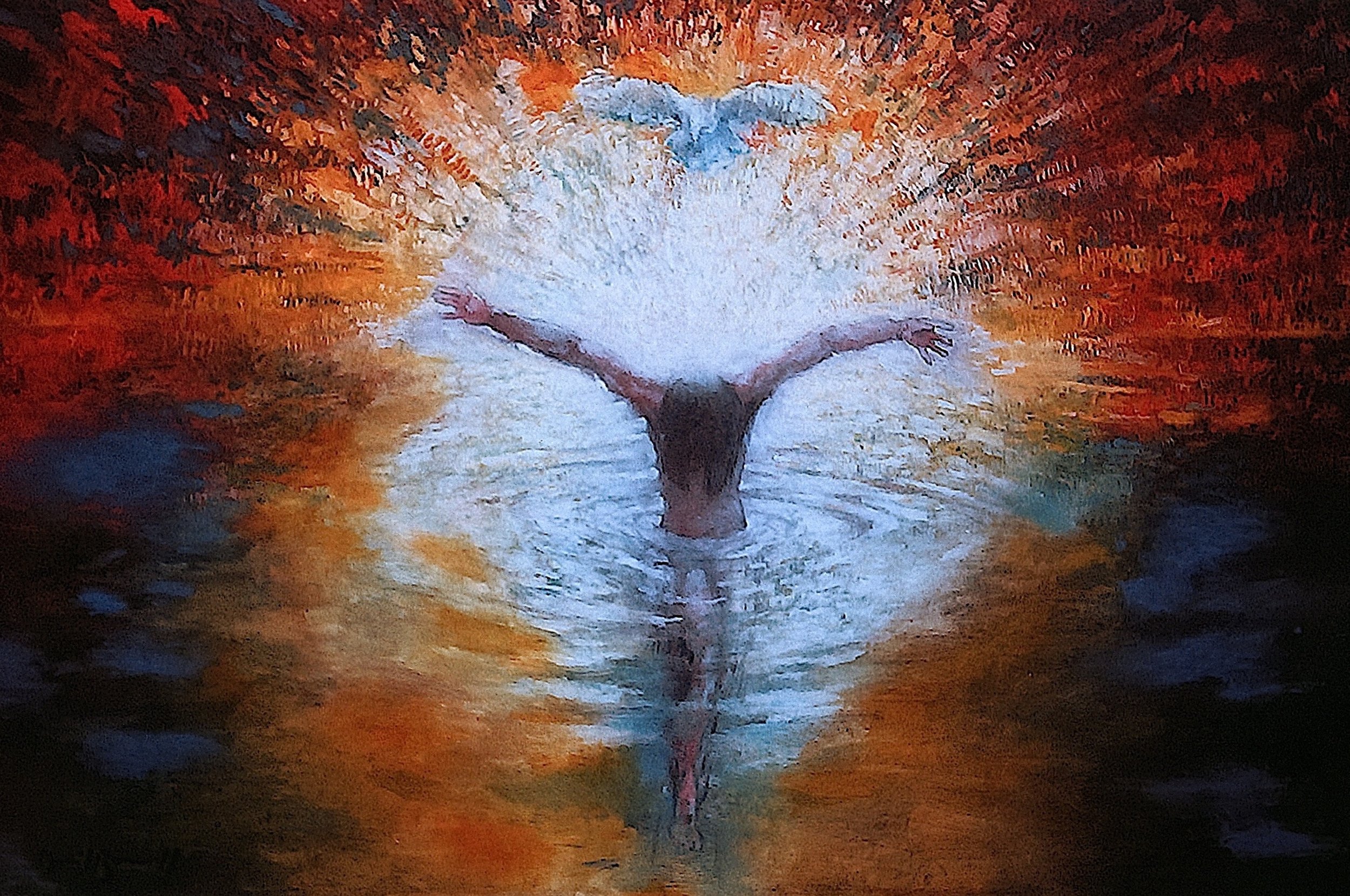
The Baptism of Christ – Daniel Bonnell

Christ the King 2024

LIVING on the edge of Western Europe it is not surprising that many British people have something of a fascination with the Roman Empire. In the first century AD, the Romans conquered Britain and ruled here for nearly four hundred years. They gave us many things: including straight roads, plumbing and under-floor heating, and founded towns many towns such as Carmarthen. Just off Priory Street in Carmarthen are the remains of a Roman amphitheatre which could hold about five thousand spectators. It isn’t quite the size of Colosseum in Rome — and it is highly unlikely that it was ever flooded to stage a mock sea-battle — but it is a reminder of how far Roman influence stretched. 

Rome was an empire, with an emperor at its head. The bad emperors are generally portrayed as cruel autocrats in films like Gladiator. However, these depictions tend to gloss over the fact that these emperors were worshipped as  being divine. One of their first acts on accession to the throne would be for the new Emperor to declare their predecessor, or father, a God. They would then be referred to as ‘DIVI FILIVS’, ‘Son of a god’, ‘Fab duw’. This feels alien to us, because we are Christians, and we are followers of Jesus, the Son of God the Father, the Creator and Sustainer of us all. 

In this morning’s Gospel, Jesus is in Pilate’s headquarters, being questioned, before He is condemned to death on the Cross. Since Our Lord’s triumphal entry into Jerusalem a few days earlier, He has been hailed as the Davidic King, the Messiah. This is viewed as a clear challenge to Herod, and thus to the Roman occupation. Pilate is afraid of an insurrection leading to a rebellion and a change of government, all of which could mean his own death. So he asks Jesus:

“Ai ti yw Brenin yr Iddewon?”

“Are you the King of the Jews?” (Jn 18:33)

Our Lord does not answer, but instead asks Pilate a question:

“Ai ohonot dy hun yr wyt ti’n dweud hyn, ai ynteu eraill a ddywedodd hyn wrthyt amdanaf fi?”

“Do you say this of your own accord, or did others say it to you about me?” (Jn 18:34)

Pilate then replies:

“Dy genedl dy hun a’i phrif offeiriaid sydd wedi dy drosglwyddo di i mi. Beth wnaethost ti?”

“Your own nation and the chief priests have delivered you over to me. What have you done?” (Jn 18:35)

The back and forth is an attempt by the Roman Governor to see if there is substance to the charges, and to see whether Jesus will confess, or whether evidence can be gleaned, which would substantiate the accusation against Him. This leads Our Lord to make the following declaration:

“Nid yw fy nheyrnas i o’r byd hwn. Pe bai fy nheyrnas i o’r byd hwn, byddai fy ngwasanaethwyr i yn ymladd, rhag imi gael fy nhrosglwyddo i’r Iddewon. Ond y gwir yw, nid dyma darddle fy nheyrnas i.”

“My kingdom is not of this world. If my kingdom were of this world, my servants would have been fighting, that I might not be delivered over to the Jews. But my kingdom is not from the world.” (Jn 18:36)

Jesus Christ is not an earthly king, concerned with power, honour, wealth, and prestige, but rather a heavenly one, seeking to establish the Kingdom of God in the hearts and minds of men, women, and children. He seeks to build a kingdom of peace, love, and joy, and of healing and reconciliation. Pilate fails to grasp the nuance of Jesus’ proclamation, and instead focuses on what Jesus says, rather than what He means.

‘Yna meddai Pilat wrtho, “Yr wyt ti yn frenin, ynteu?”’

‘Then Pilate said to him, “So you are a king?”’ (Jn 18:37)

The Roman Governor is concerned with law, and not theology. He takes Our Lord’s words as a statement that Christ considers Himself a King, and that the charges against Him are true. So Jesus makes the following reply:

“Ti sy’n dweud fy mod yn frenin,” atebodd Iesu. “Er mwyn hyn yr wyf fi wedi cael fy ngeni, ac er mwyn hyn y deuthum i’r byd, i dystiolaethu i’r gwirionedd. Y mae pawb sy’n perthyn i’r gwirionedd yn gwrando ar fy llais i.”

“You say that I am a king. For this purpose I was born and for this purpose I have come into the world—to bear witness to the truth. Everyone who is of the truth listens to my voice.” (Jn 18:37)

Christ’s purpose is to bear witness to the truth, that He is God, and is calling people to repent and believe in Him. Pilate, however, is not listening to Jesus. The Governor focuses on the surface meaning, ignoring the truth beneath Christ’s words. And yet the truth will out in the end. A few hours later Our Lord will be crucified and the title fixed to the Cross will read: ‘Iesu o Nasareth, Brenin yr Iddewon’, ‘Jesus of Nazareth, King of the Jews’, in Hebrew, Latin, and Greek. In this way Pilate will proclaim Christ’s Kingship to the whole world. Because of this all people can see and know what a true King looks like; not robed in splendour in a palace, but nailed to a Cross, and dying the death ascribed to a criminal. In His Passion and Death, Christ bears witness to the truth, namely that:

‘Do, carodd Duw y byd gymaint nes iddo roi ei unig Fab, er mwyn i bob sy’n credu ynddo ef beidio â mynd i ddistryw ond cael bywyd tragwyddol. Oherwydd nid i gondemnio’r byd yr anfonodd Duw ei Fab i’r byd, ond er mwyn i’r byd gael ei achud trwyddo ef.’

‘God so loved the world that he gave his only Son, that whoever believes in him should not perish but have eternal life. For God sent the Son into the world, not to condemn the world, but that the world might be saved through him.’ (Jn 3:16-17) 

This is what real kingship looks like: selfless love and sacrifice. This is what Jesus offers the world in the Eucharist — His self-giving love with the power to transform the world. God gives Himself to us, so the world can share Eternal Life in Him. It is not about acquiring and displaying wealth, power, or privilege — things of this world. Instead, as Christians, we look to God and Heaven, as both the source of our being and as our eternal home.

To acknowledge Christ’s kingship is to do something truly radical. It is to say to those with worldly power, ‘We recognize something far greater and more powerful than you!’ This is a profound political act, which terrifies those who are insecure, just as it terrified Pilate and Herod. As followers of Jesus we have built the house of our faith on the rock which is Christ, and not the shifting sands of this world. 

So, my brothers and sisters, let us acknowledge Christ as our King. Let us serve Him, filled with His love for us, and for all people. Let this love form a Kingdom with God as its head. And as citizens of God’s Kingdom let us give praise and honour to God the Father, God the Son, and God the Holy Spirit. To whom be ascribed all glory, dominion and power, now and forever. Amen.

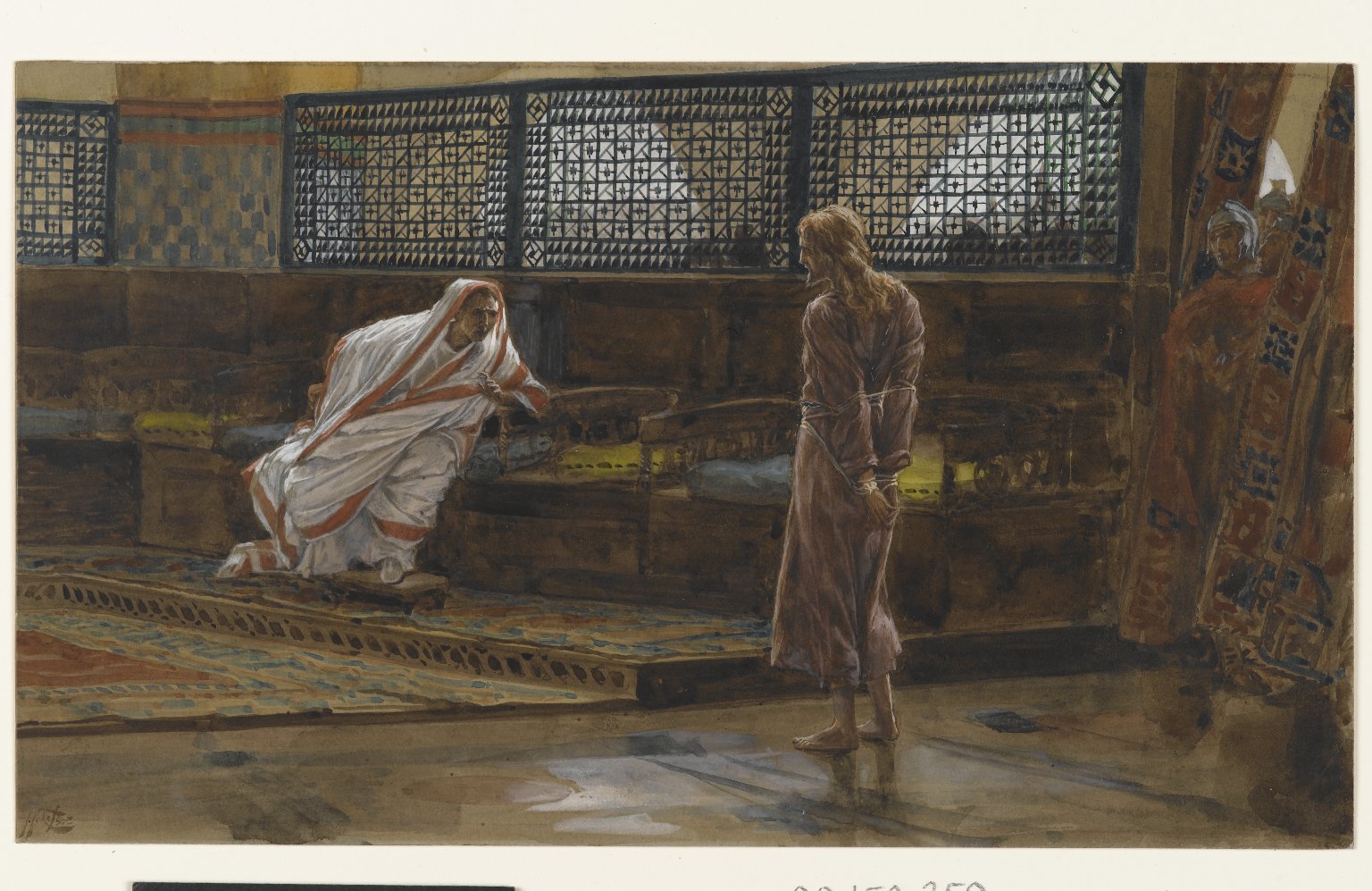
James Tissot: Jesus before Pilate (First interview) Brooklyn Museum

Trinity XIII: Lord, to whom shall we go? You have the words of eternal life!

LIFE in the twenty-first century seems to involve an ever-increasing amount of decisions. If we want to buy a cup of coffee we have to make many quick decisions about size, strength, type of coffee, milk, sugar, etc. It can be quite exhausting. Our readings this week focus on the choices and decisions people make. To follow the Christian faith is something we choose to do. We choose to trust God, we are not forced to. The decision to follow Christ is the most important choice we ever make. It affects both our life on earth and in the hereafter.

This morning’s first reading is an account of the renewal of the covenant between God and Israel brought about by Joshua at Shechem. The people of Israel are asked if they want to worship God and follow his laws. Joshua makes his position clear:

“But as for me and my house, we will serve the Lord.”

“Ond byddaf fi a’m teulu yn gwasanaethu’r Arglwydd.” (Josh 24:15)

The people of Israel follow his example and renew their covenant with God:

“Therefore we also will serve the Lord, for he is our God.”

“Yr ydym ninnau hefyd am wasanaethu’r Arglwydd, oherwydd ef yw ein Duw.” (Josh 24:18)

Their religious faith is a conscious act of the will. They choose to serve the God who has saved them. God has shown that He is their God.

In a similar way, the events of Chapter 6 of St John’s Gospel happen around the time of Passover, the festival which marks Israel’s deliverance from slavery in Egypt and the start of their journey to the Promised Land. This is a key moment in Salvation history. Our Lord has been teaching about the Bread of Life, and stressing the importance of eating His flesh and drinking His blood. Such teaching was difficult for a Jewish audience to hear, as it violated fundamental principles of their dietary laws. 

When many of his disciples heard it, they said, “This is a hard saying; who can listen to it?”

Wedi iddynt ei glywed, meddai llawer o’i ddisgyblion, “Geiriau caled yw’r rhain. Pwy all wrando arnynt?” (Jn 6:60)

Jesus is teaching in a synagogue in Capernaum, and those present are not used to this kind of instruction. It turns everything they know on its head. In Hebrew the word for flesh (baśar) and the word for good news, glad tidings, or the Gospel(besorah), sound similar. Such word-play is intentional, and may be linked to the Hebrew Wisdom tradition, such as we heard last week in the Book of Proverbs. Our Lord does not, however, back down, or change His teaching, but instead develops it further:

“Do you take offence at this? Then what if you were to see the Son of Man ascending to where he was before? It is the Spirit who gives life; the flesh is no help at all. The words that I have spoken to you are spirit and life. But there are some of you who do not believe.”

“A yw hyn yn peri tramgwydd i chwi? Beth ynteu os gwelwch Fab y Dyn yn esgyn i’r lle’r oedd o’r blaen? Yr Ysbryd sy’n rhoi bywyd; nid yw’r cnawd yn tycio dim. Y mae’r geiriau yr wyf fi wedi eu llefaru wrthych yn ysbryd ac yn fywyd. Ac eto y mae rhai ohonoch sydd heb gredu.” (Jn 6:61-64)

Having described the Institution of the Eucharist as a way of understanding His Passion and Death, Jesus goes on to talk about events after His Resurrection, namely His Ascension, and the Sending of the Holy Spirit at Pentecost. These are all linked, because they form the culmination of Salvation History. This is the Good News of Jesus Christ. This is God saving His people, the outworking of the covenant at Shechem into the New Covenant of Our Lord and Saviour. However its proclamation does not draw people to Jesus, instead it has the opposite effect:

After this many of his disciples turned back and no longer walked with him. So Jesus said to the Twelve, “Do you want to go away as well?”

O’r amser hwn trodd llawer o’i ddisgyblion yn eu holau a pheidio mwyach â mynd o gwmpas gydag ef. Yna gofynnodd Iesu i’r Deuddeg, “A ydych chwithau hefyd, efallai, am fy ngadael?” (Jn 6:66-67)

Jesus does not force people to follow Him. Then, as now, the choice to follow (or not follow) Christ is a personal decision made freely by each individual. Our Lord asks the Twelve if they want to leave as well, which leads to the following declaration of faith by St Peter:

Simon Peter answered him, “Lord, to whom shall we go? You have the words of eternal life, and we have believed, and have come to know, that you are the Holy One of God.”

Atebodd Simon Pedr ef, “Arglwydd, at bwy yr awn ni? Y mae geiriau bywyd tragwyddol gennyt ti, ac yr ydym ni wedi dod i gredu a gwybod mai ti yw Sanct Duw.” (Jn 6:68-69)

Simon Peter trusts Our Lord. He expresses that faith and trust. No-one else can offer what Jesus does, because He is God. Only God can make such incredible claims. To be a Christian is to make the same confession as Peter, and to have the same hope of eternal life in and through Jesus Christ. 

Jesus’ teaching is hard to accept, and difficult to understand, but we can experience it, when we receive Holy Communion. For Peter, and for us, belief precedes knowledge. We believe and then we come to understand.

Faith revolves around the question of commitment. It involves love and sacrifice — the two go hand in hand. This is what marriage is all about, and commitment also describes God’s relationship with us, and ours with God. It will see Jesus die on the Cross for us, to show us just how much God loves us, and wants to restore our relationship with Him, and with each other. To be close to God is wonderful, but it isn’t something God forces us into: we may choose to accept God’s love, or to refuse it. This love is freely given.

St Paul’s advice to the Christians in Ephesus is another difficult text, which revolves around making a choice. For St Paul, Christian marriage is all about loving service of one another, as demonstrated by Christ. Jesus lays down His life for us, so we should do the same for each other. Thus, in marriage in particular, and in society in general, loving service and self-sacrifice are the ways by which we should live. It is a generous form of life, because its model is Jesus, the most unselfish person ever, who created all that there is, and who redeemed it by offering His life as a ransom for many. We see this on the Cross and we commemorate it in the Eucharist, where Christ continues to feed us —His people— with Himself, so that we might have life in Him.

So, my brothers and sister in Christ, let us follow the example of St Peter and St Paul in trusting Jesus and being fed with Him, to prepare us for Heaven. Let us demonstrate our commitment by singing the praises of God the Father, God the Son, and God the Holy Spirit. To whom be ascribed all glory, dominion and power, now and forever. Amen.

Jesus Teaches in the Synagogues – James Tissot (Brooklyn Museum)

Trinity IV: Transformed by Faith -Embracing God’s Love in the Midst of Life’s Storms

There are few things that can compare with a storm for making human beings feel small and helpless. When we are faced with strong winds, lashing rain and lightning, we can feel insignificant, powerless, and aware of our own mortality. I was caught in a storm, fairly recently, and it was absolutely terrifying. Such feelings are uncomfortable, and we would prefer not to experience them. They are, however, an important part of the human condition. Fear is one of the most powerful emotions we have, and it drives us to seek safety and security. Thankfully, as Christians, we know that we can find safety and security in God, our loving Creator and Sustainer. 

This loving nature of God is highlighted in the passage from the Book of Job, which is the first reading this morning. God is truly powerful, but cares for humanity:

Who shut in the sea with doors when it burst out from the womb,Thus far shall you come, and no farther, and here shall your proud waves be stayed’ 

‘Pan gaewyd ar y môr â dorau, pan lamai allan o’r groth…Hyd yma yr ei, a dim pellach, ac yma y gosodais derfyn i ymchwydd dy donnau’ (Job 38:8, 11)

God’s power over nature is also central to this morning’s Gospel. Jesus and His disciples are crossing the Sea of Galilee when a violent storm blows up. The disciples are terrified. Despite many of them being fishermen, they are afraid that they are about to drown. This passage throws up a number of questions. Why are Jesus and His disciples crossing from the Jewish side of the Sea of Galilee to the non-Jewish side? Why are they sailing at night, rather than waiting until the next morning? We are not told the answers to these questions. However, this incident acts as a bridge between the section in Mark’s Gospel where Jesus has been teaching, to one where He will perform miracles, and put that teaching into practice. 

As the boat begins to fill with water, the disciples are becoming desperate:

And they woke him and said to him, “Teacher, do you not care that we are perishing?” And he awoke and rebuked the wind and said to the sea, “Peace! Be still!” And the wind ceased, and there was a great calm.

‘Deffroesant ef a dweud wrtho, “Athro, a wyt ti’n hidio dim ei bod ar ben arnom?” Ac fe ddeffrôdd a cheryddu’r gwynt a dweud wrth y môr, “Bydd ddistaw! Bydd dawel!” Gostegodd y gwynt, a bu tawelwch mawr.’ (Mk 4:38-39)

Jesus’ followers are afraid. There are thirteen of them packed into a boat twenty-six feet long, eight feet wide, and four feet deep.The boat is tossing, yet Jesus calmly sleeps. Once He is awoken He quickly takes control of the situation. Jesus can command the storm to cease because He is God. The ability to control the sea and its storms is a sign of divine power: God is the one who brings peace. Jesus has come to bring peace to troubled hearts. Having performed a miracle, He questions His disciples:

He said to them, “Why are you so afraid? Have you still no faith?” And they were filled with great fear and said to one another, “Who then is this, that even the wind and the sea obey him?”’ 

‘A dywedodd wrthynt, “Pam y mae arnoch ofn? Sut yr ydych heb ffydd o hyd?” Daeth ofn dirfawr arnynt, ac meddent wrth ei gilydd, “Pwy ynteu yw hwn? Y mae hyd yn oed y gwynt a’r môr yn ufuddhau iddo.”’ (Mk 4:39-41)

The answer to the disciples’ question is that Jesus is God. No-one else could do what He does. Jesus then questions why His followers feel fear and why they lack faith. To put it simply, the Disciples have not yet fully understood either who Jesus is, or what He is doing. Once they have experienced Christ’s Passion and Resurrection and seen His triumph over death, they will come to understand what is happening here. 

Jesus calms storms both real and metaphorical: on the Sea of Galilee, and in our own lives. By dealing with sin once and for all on the Cross, He has brought us a peace which passes all understanding. In every Eucharist service there is a point after the prayers when we greet each other with ‘Peace’ ‘Tangnefedd’. Being at peace allows the Christian community to:

no longer live for themselves but for him who for their sake died and was raised.

‘er mwyn i’r byw beidio â byw iddynt eu hunain mwyach, ond i’r un a fu farw drostynt, ac a gyfodwyd’ (2Cor 5:15)

Our life is not our own, because the love of Christ controls us, as St Paul writes in his Second Letter to the Corinthians (2Cor 5:14). Jesus’ Death and Resurrection provide an answer to the questions about suffering asked by Job, and by all humanity. By entering into the mystery of apparently meaningless pain and suffering, we can discover the source of all meaning, namely God. 

To be in Christ is to be a new Creation. Through our Baptism we share in Our Lord’s Death and Resurrection. In the Eucharist we are given the pledge of Eternal Life: Christ’s Body and Blood, so that we might continue to be transformed more and more into His likeness. This is the journey of Faith — trusting God, so that He may make us into what He is. We put our trust in Him, safe in the knowledge that God alone can still the storms of our life, and that His perfect love can drive out our fear. We cling to the Cross as our source of Hope, knowing that whatever happens we are loved, and that this love has the power to save us. God’s love can free us from fear.

Released from anxiety, we, like the disciples, can be truly alive and share God’s love with others. We pray that all humanity may experience the peace of the Lord and give glory to God the Father, God the Son, and God the Holy Spirit. To whom be ascribed all glory, dominion, and power, now and forever. Amen.

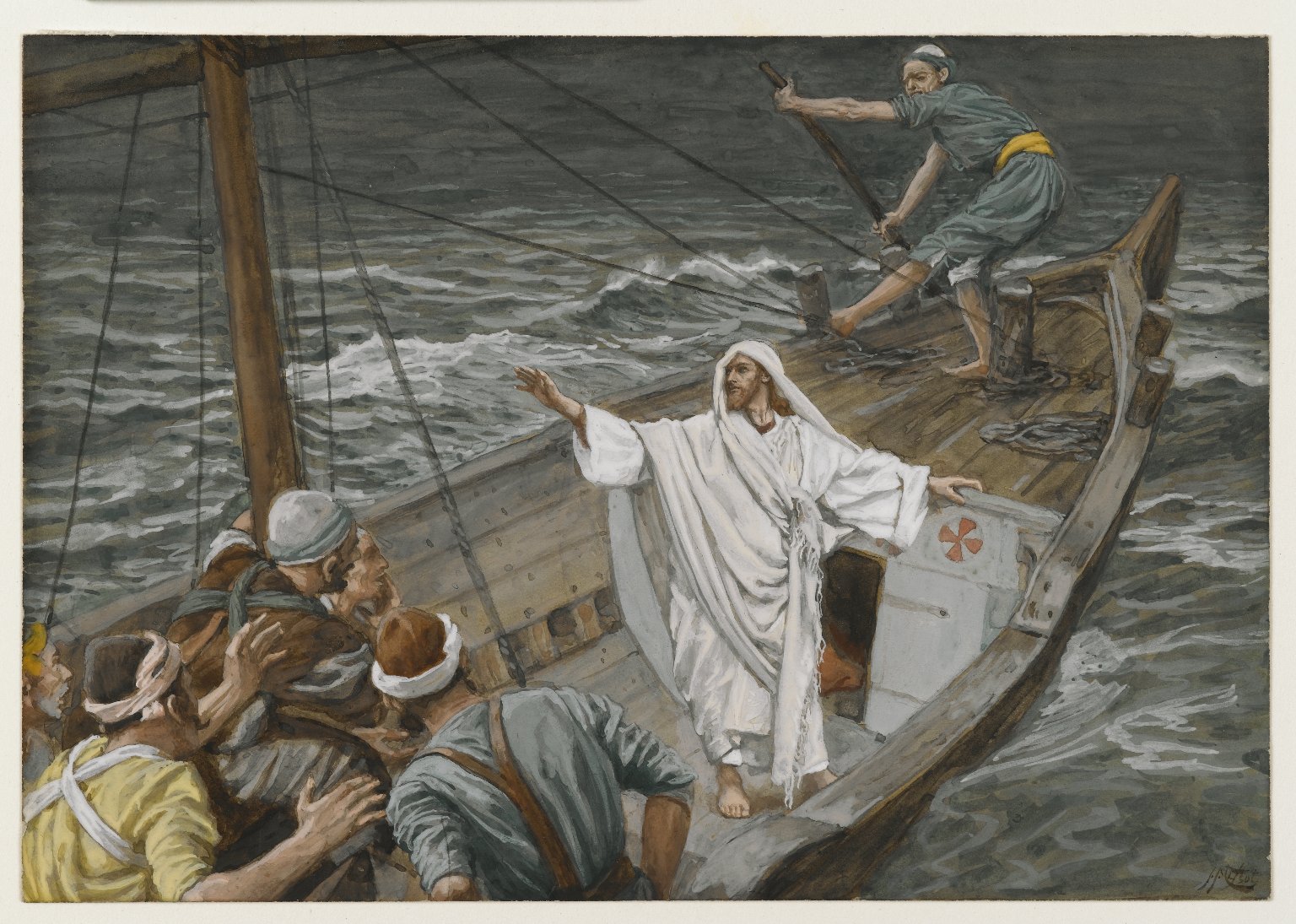
James Tissot – Jesus stilling the storm (Brooklyn Museum)

Trinity Sunday 2024: Transformed by God’s Love: Exploring the Trinitarian Faith and Sacramental Life

WE are all extremely fortunate to live in North Pembrokeshire for many reasons, and especially because we are close to so many hills. Mountains and hills take a lot of effort to climb, but once you have ascended, you can see for miles around. Hilltops are special places, and today’s Gospel takes place on one. Also, many other important and significant moments in Matthew’s Gospel take place on mountains including the Temptation, the Sermon on the Mount, the Transfiguration, and the Crucifixion. Our Lord also speaks His final words before his Ascension on a hilltop. 

Last Sunday we celebrated Pentecost, the outpouring of the Holy Spirit upon the Church: a revelation of who God is, and how much God loves us, His people. This week we continue to meditate upon God’s love. This love forms a relationship so intimate that God is closer to us than we are to ourselves — that is something quite hard to get our heads around! Above all, God’s love is something to be experienced, rather than understood. Through this experience God transforms us, so that we can experience that love more fully, and finally enjoy it for eternity, in Heaven.

In today’s Gospel Jesus’ disciples have been told to go to Galilee, to a particular mountain, to meet the Risen Lord. They are obedient, and head north from Jerusalem. When the disciples arrive at the mountain, they see Our Lord and bow down and worship Him — just like the Wise Men did at His birth. Some of the apostles, however, doubt. They have not yet fully grasped the reality of the situation: the fact that Jesus has risen from the dead, is preparing to ascend to His Father, and send the Holy Spirit. Before His Ascension, Jesus comes to them, and speaks to them saying:

‘All authority in heaven and on earth has been given to me.’

‘Rhoddwyd i mi, bob awdurdod yn y nef ac ar y ddaear’ (Mt 28:18)

This, at one level, is a grand claim to make. But, it is the fulfilment of a prophecy about the Son of Man made by the prophet Daniel:

‘And to him was given dominion and glory and a kingdom, that all peoples, nations, and languages should serve him; his dominion is an everlasting dominion, which shall not pass away, and his kingdom one that shall not be destroyed.’

‘Rhoddwyd iddo arglwyddiaeth a gogoniant a brenhiniaeth, i’r holl bobloedd o bob cenedl ac iaith ei wasanaethu. Yr oedd ei arglwyddiaeth yn dragwyddol a digyfnewid, ac ni ddinistrir ei frenhiniaeth.’ (Dan 7:14)

Jesus is true God and true man. He fulfils the prophecies of scripture. He also has authority, which He shares with His Church, empowering it to act in His name.

Our Risen Lord tells the disciples to ‘Go therefore’ ‘Ewch, gan hynny’ (Mt 28:19). They are not to stay put, but are called to be active in the world. The Church is given a mission to: ‘make disciples of all nations’ ‘gwnewch ddisgyblion o’r holl genhedloedd’ (Mt 28:19). The disciples, having been taught by Jesus, are empowered to teach the faith to others. The Church has a universal mission. No-one is to be excluded or left out. As well as being proclaimers of the faith, the apostles are also instructed to baptize new converts:

‘baptizing them in the name of the Father and of the Son and of the Holy Spirit’

‘gan eu bedyddio hwy yn enw’r Tad a’r Mab a’r Ysbryd Glân’ (Mt 28:19)

This small detail is important. It matters. From the very beginning, the Christian Faith is a Trinitarian Faith. We believe in One God, who is Father, Son, and Holy Spirit. Three persons, bound together in love, who invite the world to be in a relationship with Them.

Our Eucharist this morning began, ‘Yn enw’r Tad, a’r Mab, a’r Ysbryd Glân, In the name of the Father, and of the Son, and of the Holy Spirit’, because this is the God whom we worship. We express our belief in the words that we use, and also in our actions. Our deeds show in a physical way what we believe. As Christians, we are called to live out the faith of our baptism in our lives. God, who is love, has shown that love to the world through His Son, Jesus Christ, and in the sending of the Holy Spirit. To be a Christian is to have encountered that love, and been changed by it. We are changed in our baptism, when we are born again to new life in Christ. Also, we are changed each and every time we receive Holy Communion. By God’s grace, Communion, whether physical or spiritual, transforms us. Through this Sacrament we are united with Christ, so that we may become what He is, and share in the love which is the life of God.

Before Our Lord leaves His disciples He makes them a promise:

‘And behold, I am with you always, to the end of the age.’

‘Ac yn awr, yr wyf fi gyda chwi bob amser hyd ddiwedd amser.’ (Mt 28:20)

We are not alone. Christ is with us. He hears our prayers, and speaks to us in Scripture. This is very comforting to know. Jesus is with us in three ways. Firstly, through the sending of the Holy Spirit. Secondly, by being in the Church, which is His Body, and of which He is the Head. And thirdly, in the Sacraments which are outward signs of inward spiritual Grace. All these things are freely given to transform us into children of God. These blessings allow us, and all Christians, to share in the very life of God the Father, God the Son, and God the Holy Spirit. To whom be ascribed all, glory, dominion, and power, now and forever. Amen.

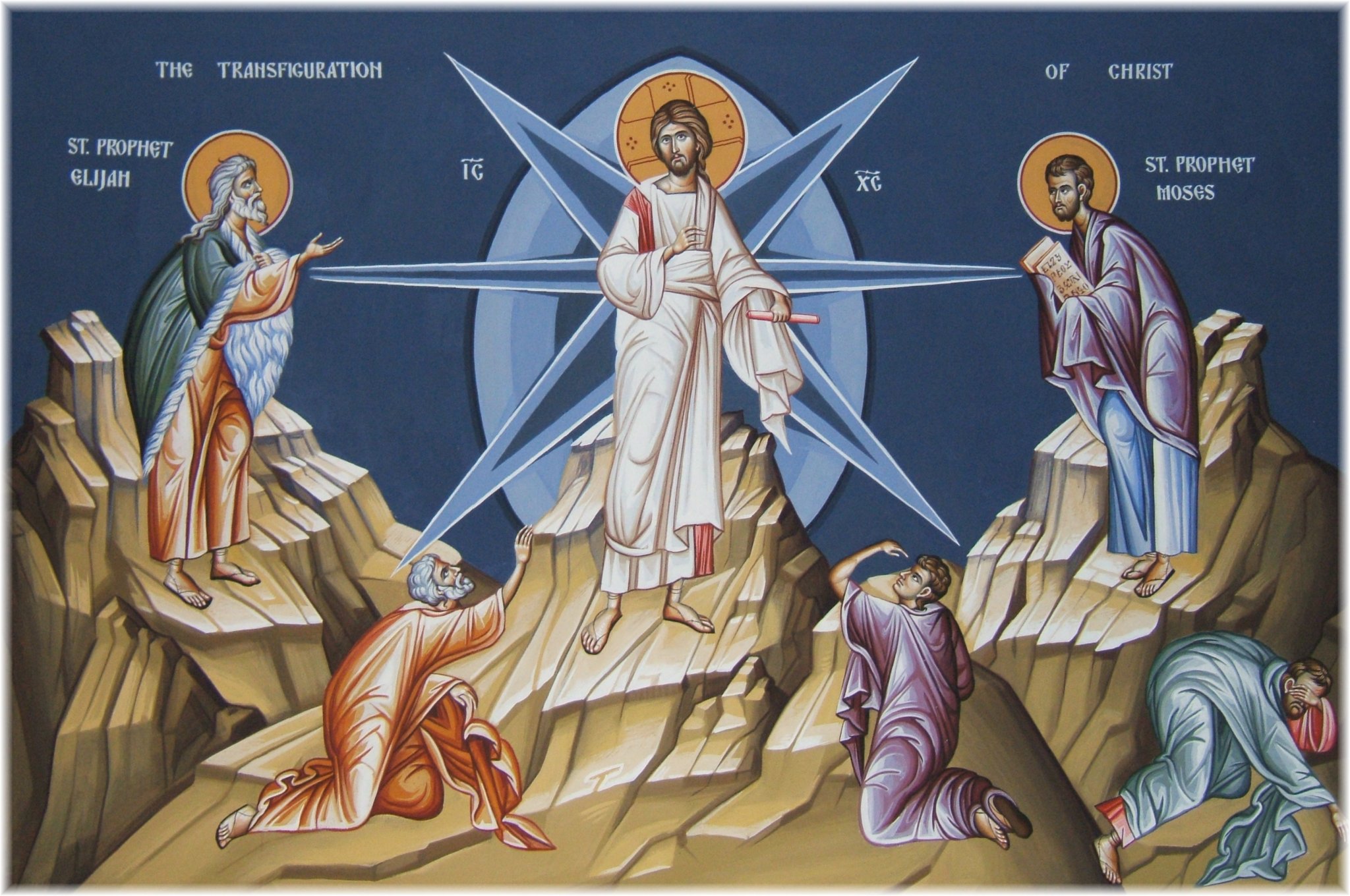
Lent II – The Transfiguration

One of the perils of driving in autumn or winter is the low Sun. Because of its angle and closeness to the Earth, we find ourselves dazzled by its brilliance. You have to avert your gaze or use a sun visor or sunglasses in order to drive. This can be inconvenient, but the brightness of our closet star is as nothing compared with the presence of God. Last week we heard the voice of God the Father at Jesus’ Baptism and we will hear Him again this week. 

Our first reading from Genesis, the story of Abraham and the Sacrifice of Isaac, is both well-known, and deeply shocking. The concept of human sacrifice was widespread in the Ancient World. It was not a common occurrence, but it did take place. It seems abhorrent to us, and so it should. In the passage God speaks to Abraham and says,

Take your son, your only son Isaac, whom you love, and go to the land of Moriah, and offer him there as a burnt offering on one of the mountains of which I shall tell you.”

‘Cymer yr awr hon dy fab, sef dy unig fab Isaac, yr hwn a hoffaist, a dos rhagot i dir Moreia, ac offryma ef yno yn boethoffrwm ar un o’r mynyddoedd yr hwn a ddywedwyf wrthyt.’ (Genesis 22:2)

Thankfully, just as Abraham is about to offer Isaac, God tells him to stop, as Abraham has demonstrated his complete devotion to God:

Do not lay your hand on the boy or do anything to him, for now I know that you fear God, seeing you have not withheld your son, your only son, from me.” 

‘Na ddod dy law ar y llanc, ac na wna ddim iddo: oherwydd gwn weithian i ti ofni Duw, gan nad ateliaist dy fab, dy unig fab, oddi wrthyf fi.’ (Genesis 22: 12)

Abraham sees a ram with its horns caught in a thicket, and offers it to God instead. The ram symbolises Christ. It looks forward to Jesus, recognised by John the Baptist as the Lamb of God, who takes away the sins of the world. The ram also points to the Passover Lamb in Exodus, which again prefigures Jesus, the fulfilment of the Paschal Sacrifice. Because Abraham has not withheld his son, he is blessed by God, and through his offspring, all people will be blessed. For Christians the Easter story is important because in it God, like Abraham, does not withhold His Only Son, but gives Him, to die for us. This narrative demands contemplation because it is the demonstration of the mystery of God’s love for humanity. The fact that God loves us that much is totally awesome, especially when we do not deserve it. The mystery of God’s love is that we are not loved because we are loveable. We are often quite the opposite! But God loves us anyway and His steadfast love transforms us. 

St Paul pondered such questions as he wrote to the Church in Rome:

‘He who did not spare his own Son but gave him up for us all’

‘Yr hwn nid arbedodd ei briod Fab, ond a’i traddododd ef trosom ni ol’ (Rom 8:32)

Christ’s death on the Cross is a demonstration of divine generosity, and the reason for our hope as Christians. God’s love for humanity is truly amazing. We should pause for a moment as we read or hear this. God loves me enough to die for me. If God can do this for us, what can we, in return, do for Him? During the Lenten Season we focus on the Cross and the Empty Tomb as the centre of our faith, three days which explain who we are, what we are, and why we are Christians. 

The Transfiguration, described in today’s Gospel, is strange because in it we see something of who Jesus really is: God. We have a brief glimpse of Divine glory as a prelude to Our Lord’s Passion and Death. The two are linked, as they both allow us to understand both who God is, and what He is doing. When God speaks from the cloud He tells us three things about Jesus. Firstly that Jesus is the Son of God, secondly that He is loved, and thirdly that we should listen to Him. What Jesus says and does should affect us and our lives. Like the disciples, we have to be open to the possibility of being radically changed by God. The opportunity of divine transformation is offered to us, so that we might come and share the Divine life of love.

Jesus tells the disciples not to tell anyone about their experience on the mountain until after He has risen from the dead. Jesus has another mountain He must climb: the hill of Calvary, where He will suffer and die upon the Cross. There He takes our sins upon Himself, restoring our relationship with God and each other. This then is real glory, not worldly glory, but the glory of God’s sacrificial love poured out on the world to heal and restore all humanity. The theologian Fulton Sheen spoke about the importance of mountains in Jesus’ life. He said:

Three important scenes of Our Lord’s life took place on mountains. On one, He preached the Beatitudes, the practice of which would bring a Cross from the world; on the second, He showed the glory that lay beyond the Cross; and on the third, He offered Himself in death as a prelude to His glory and that of all who would believe in His name

(Fulton Sheen, The Life of Christ, 1970 p.158)

The Transfiguration shows us the glory of heaven, the glory of the Resurrection at Easter, the glory that lies beyond the Cross. God’s love and God’s glory are intertwined, and cannot be separated because they given freely. God’s very nature is generous, beyond our understanding, and characterised by total self-gift. Our Heavenly Father does not hold anything back, and whereas Isaac is replaced at the last minute by a ram, there is no substitution for Jesus. God gives His Son, Jesus Christ, to die for us, and to rise again, so that we might enjoy eternity with Him in Heaven. The Transfiguration is a promise of our future heavenly glory. Through signs and glimpses, God shows us what future awaits us. He longs to heal and restore us, so that we might enjoy eternity with Him. 

The Transfiguration, therefore, looks to the Cross to help us to prepare ourselves to live the life of faith. It helps us to comprehend true majesty, true love and true glory. The wonderful glory that can change the world and which lasts forever, for eternity, unlike the fading glory of the world, which is here today but gone tomorrow.

So my brothers and sisters, as we celebrate God’s love and glory, let us prepare to  ascend the mountain ourselves and have an encounter with the living God in Holy Communion. Let us come to the source of healing and fount of love which is God’s very self. Let us touch and taste Our Lord and Saviour, given for us, so that we might live in Him. Let us be transformed by Him and enjoy the glories of Heaven singing the praises of God the Father, God the Son, and God the Holy Spirit. To whom be ascribed all glory, dominion, and power, now and forever. Amen.