Pentecost 2025

Every Sunday, and also on solemn Feast days, Christians make a public declaration of their faith in God, Father, Son, and Holy Spirit, using the words of the Nicene Creed — which we will all say together in a few minutes time. This statement of belief was drawn up seventeen hundred years ago at the First Ecumenical Council, which was called by the Roman Emperor Constantine to sort out divisions within the Church concerning the Divinity of Jesus Christ. The council met at Nicaea in Asia Minor (modern day Turkey) and comprised of three hundred and eighteen bishops of the Church. One of these was Nicholas of Myra, St Nicholas, the patron saint of this church. 

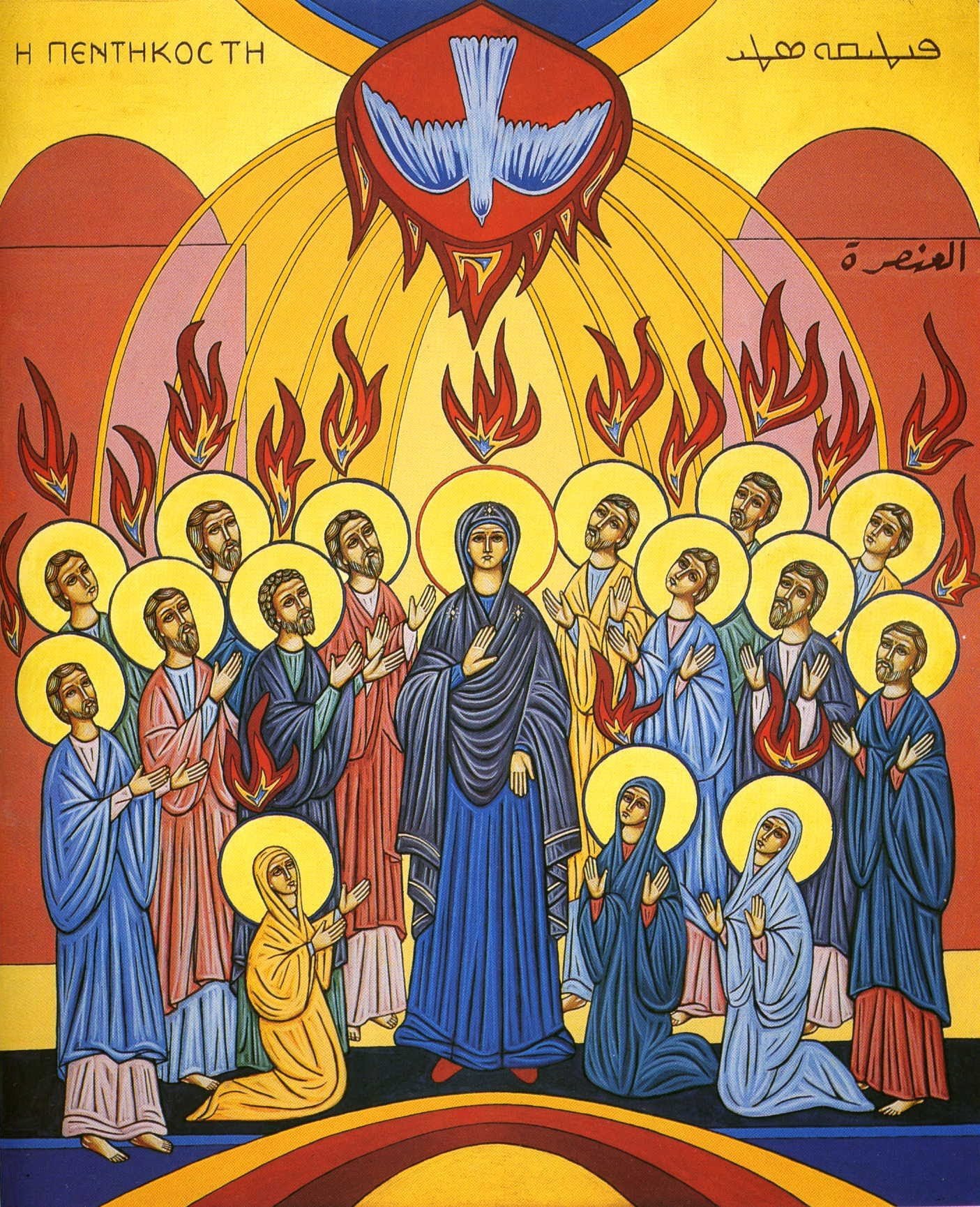
Questions about belief matter. They have the potential to divide the Church. Taking it away from its core purpose of being united in a common faith, and making a consistent proclamation of that faith. This is the situation in today’s reading from the Acts of the Apostles. Having been promised the Holy Spirit by Our Lord at His Ascension, the disciples wait and pray. At Pentecost they are filled with the Spirit. Emboldened, they are able to tell Jews from all over the Mediterranean world, who have gathered in Jerusalem, who Jesus is, and what He has done. From this moment on the disciples are known as Apostles from the Greek ἀπόστολος (meaning one who is sent, a messenger). The message they deliver is that all people should repent and believe the Good News of Jesus Christ. 

The outpouring of the Holy Spirit is not a one-off event, but rather a permanent state of affairs. This is how God continues to be active in the world: inspiring and strengthening Christ’s followers in living and proclaiming their faith. In John’s Gospel, Jesus promises His disciples:

‘Os ydych yn fy ngharu i, fe gadwch fy ngorchmynion i. Ac fe ofynnaf finnau i’m Tad, ac fe rydd ef i chwi Eiriolwr arall i fod gyda chwi am byth,’

‘If you love me, you will keep my commandments. And I will ask the Father, and he will give you another Helper, to be with you for ever.’ (Jn 14:15-16)

The promise is that God’s Spirit will be present in perpetuity. God will continue to pour out His Spirit to strengthen the Church. This is what we are celebrating today at Pentecost. Indeed, during the Eucharistic Prayer I, as your priest,  will pray that God continues to do this and ‘trwy nerth dy Ysbryd, i’r rhoddion hyn o fara a gwin fod i ni ei gorff a’i waed ef’ ‘that, by the power of your [God’s] Spirit, these gifts of bread and wine may be for us his body and blood’. Our heavenly Father makes wonderful things happen. Disciples who have been scared and have been in hiding are transformed into fearless evangelists, going out to preach Christ’s message of love and forgiveness. They become enthusiastic fellow-workers in the vineyard. God is able to completely change people and situations, because His love for us knows no bounds.  

The 318 bishops, who met at Nicaea, in 325AD, were able to put into words what Christians believe because they began their deliberations by praying for the gift of the Holy Spirit to guide and direct their thoughts and actions. This is entirely in line with Our Lord’s teaching in the Gospel: 

‘Ond bydd yr Eiriolwr, yr Ysbryd Glân, a anfona’r Tad yn fy enw i, yn dysgu popeth ichwi, ac yn dwyn ar gof ichwi y cwbl a ddywedais i wrthych.’

‘But the Helper, the Holy Spirit, whom the Father will send in my name, he will teach you all things and bring to your remembrance all that I have said to you.’ (Jn 14:26)

The Bishops, including St Nicholas, were strengthened by God to proclaim the truth, and to bear witness to it, in the face of those who would deny it. They bore witness to the truth of Jesus Christ: true God and true man, who promised the gift of the Holy Spirit. God’s Spirit gives Christians strength and brings us together as brothers and sisters in a new family, which we call the Church. 

It is thanks to the preaching of the Gospel begun by the Apostles at Pentecost, and continued by their successors at Nicaea, that we are here today. It is how billions of people have come to know, love, and serve Our Lord Jesus Christ. As people who are in Christ, who have entered the Church through our Baptism, we are given a very important job to do. We need to tell people about Jesus!

The world-wide Christian Church is wonderful in its diversity. We are all different, we do not speak the same language, or have the same culture. However, we are all equally empowered through having received the Holy Spirit at our Baptism, in our Confirmation, and through all the sacramental actions of the church, which are the outward and visible signs of the inward and spiritual grace of God. This is how the Holy Spirit works. This is how God builds us up together in love. Through the Eucharist, through prayer and through Scripture, we are nourished spiritually to keep doing all that God desires of us.

So, my brothers and sisters in Christ, let us pray earnestly for the gift of the Spirit. Just as St Nicholas was inspired by the Spirit, may God also fill us with His love and equip us to proclaim the Good News of the Kingdom. May the fire of the Holy Spirit embolden us to encourage others to come to know, and love Duw Dad, Duw y Mab, a Duw yr Ysbryd Glân. God the Father, God the Son, and God the Holy Spirit. I’r hwn y priodoler pob gogoniant, arglwyddiaeth, a gallu, yn awr, ac yn oes oesoedd. To whom be ascribed all glory, dominion and power, now and forever. Amen.
Lent I

The first reading this morning taken from the book of Deuteronomy, is part of the account of the Feast of First-fruits, called Shavuot. This feast celebrates the grain harvest in Israel, seven weeks after Passover. ‘What?’ you say, “Harvest Festivals?’ This seems a strange topic when we have just begun a six-week penitential season which is characterised by, amongst other things, fasting, abstaining from food. Yes, at first glance it does appear somewhat strange, but there is a reason. 

The reading from Deuteronomy is mostly an account of the words and actions made by the person offering the fruits of the earth to God. This includes a narration of preceding events: Israel’s journey from slavery in Egypt to Freedom in the Promised Land. It is a prayerful retelling of the Passover story, which gives thanks to God for His mighty acts. At the same time that the Jews re-live salvation history, we as Christians are preparing to do the same. Lent precedes Our Lord’s Passion, Death, and Resurrection (around the time of Passover), and also commemorates Jesus’ fasting in the desert at the beginning of His public ministry. 

The Christian journey through Lent is something of a trek through the desert. It is characterised by fasting, penitence and charity. These are the ways by which we prepare our souls and bodies to celebrate Our Lord’s Passion, Death, and Resurrection. We take time to solemnly ask forgiveness for all our wrongdoings, but we are also joyful knowing that Christ has overcome sin and death. There is a joy in what we do, and who we are, because of all that Christ has taught us and done for us. Lent is a hopeful and a healing time. And the world certainly needs hope and healing at the moment! These six weeks are both an opportunity to give ourselves a bit of encouragement in our spiritual lives, and they are also a time to prepare. As Christians, we travel with Christ from the wilderness of sin to the promised land of reunion with God the Father, and with each other.

The reading from Paul’s Letter to the Romans also begins by quoting from Deuteronomy (30:14), just before Moses offers Israel the choice between life and death, good and evil. But for Paul:

‘Os cyffesi Iesu yn Arglwydd â’th enau, a chredu yn dy galon fod Duw wedi ei gyfodi ef oddi wrth y meirw, cei dy achub.” Oherwydd credu â’r galon sy’n esgor ar gyfiawnder, a chyffesu â’r genau sy’n esgor ar iachawdwriaeth.’

‘if you confess with your mouth that Jesus is Lord and believe in your heart that God raised him from the dead, you will be saved. For with the heart one believes and is justified, and with the mouth one confesses and is saved.’ (Rom 10:9)

This is the heart of our faith as Christians: Jesus is Lord, not Caesar, nor any power of this world. Christ alone saves us, by His Death and Resurrection. We believe this and bear witness to our belief. 

Today’s Gospel takes us back to the time immediately after Jesus’ Baptism, when He begins His public ministry. Christ goes out into the desert to be alone, to be quiet, to fast and to pray, and to be close to God the Father. While He is in the desert, Jesus is tempted by the Devil. Satan uses three different approaches, beginning by saying: 

‘Os Mab Duw wyt ti, dywed wrth y garreg hon am droi’n fara.’

‘If you are the Son of God, command this stone to become bread.’ (Lk 4:3)

This is a temptation to be relevant, Jesus is hungry. The Devil is saying, ‘If you are the Son of God then do this’. This is the same thing that the crowd will say to Our Lord as He goes to be crucified. The Devil and the crowd both demand that God prove Himself, rather than accepting the presence of the Holy Spirit and the voice of God the Father at Christ’s Baptism: ‘Ti yw fy Mab, yr Anwylyd; ynot ti yr wyf yn ymhyfrydu.’ ‘You are my beloved Son; with you I am well pleased.’ (Lk 3:22) Jesus is pleasing to God because He is obedient, but Satan is all about disobedience; not listening to God, not obeying Him. Whereas Adam, the first man, causes sin to enter into the world by eating forbidden fruit. Christ, who is the second Adam, conquers by abstaining. The desert is the exact opposite of the garden of Eden. While Eden was full of plants, trees and animals, the desert is an empty, lifeless place.However, it becomes the setting for obedience, reconciliation and healing.

The second temptation put to Jesus is the allure of earthly power. The Devil says to Our Lord: 

‘I ti y rhof yr holl awdurdod ar y rhain a’u gogoniant hwy; oherwydd i mi y mae wedi ei draddodi, ac yr wyf yn ei roi i bwy bynnag a fynnaf. Felly, os addoli di fi, dy eiddo di fydd y cyfan.’

‘To you I will give all this authority and their glory, for it has been delivered to me, and I give it to whom I will. If you, then, will worship me, it will all be yours.’ (Lk 4:6-7)

Jesus chooses heavenly glory and the salvation of humanity rather than worldly power. The Devil can only offer a false god and fleeting influence, whereas Christ stands for what is true and eternal. The temptation to seek influence, and prestige, symbolised here by worshipping the Devil, leads to the misuse of power. It’s a very human failing. One that we see all too clearly in our world today.

The third temptation for Jesus, is to put God to the test. Here Christ is encouraged to be spectacular and self-seeking. Whenever we say, ‘look at me’ we are not saying, ‘look at God’. Jesus quotes Deuteronomy 6:16: ‘Peidiwch â gosod yr Arglwydd eich Duw ar ei brawf’ ‘You shall not put the Lord your God to the test’. God does not need to prove anything. He loves us, and sent His Son for us. If Jesus threw himself from the Temple it would be a great spectacle, but it wouldn’t achieve anything. The high place which Jesus will go up to is the Cross on the hill of Calvary. Here He will suffer and die to save humanity. This is where God shows His love for the world, through humiliation rather than by a glory-seeking stunt. 

Eventually the Devil gives up and departs. Christ’s faith and trust in God is stronger than temptation. We face the same temptations in our lives, but Jesus shows us that we can resist them. This isn’t easy — quite the opposite — but it is possible. This should encourage us as we try to follow Christ’s example, and grow in holiness this Lent. God does not ask the impossible of us, instead we try, and, when we fail, we ask for forgiveness. We grow in holiness in Lent through prayer, almsgiving, and fasting. Prayer offers us the opportunity to deepen our relationship with God. It is more about quality than quantity: expressing true repentance, for what we have done and failed to do, and resolving to do better in the future. Almsgiving helps us to be charitable and generous, to care for those in need, just as God is generous towards us.

Fasting is key, because it helps us to master our bodily cravings, to control what we eat and what we do, rather than being controlled by our appetites. This doesn’t mean that we should starve ourselves, but that we should be mindful of our actions and not give in to all our desires. Just as prayer is not about getting God’s attention or changing His mind, but rather changing who and what we are, making us more loving, humble and dependant on God. In the same way fasting stops us being slaves to our desires. It sets us free, and helps us to listen to God, and draw closer to Him. Through abstinence we enter into Christ’s suffering, so that we can follow the way of the Cross. We do this joyfully, because we are following Christ. We are learning to resist temptation, aided by prayer and a generous heart. Our aspiration is that this Lenten season will help us to grow in faith, hope, and love, and enable us to celebrate Our Lord’s Passion, Death and Resurrection with greater joy. 

So, my brothers and sisters, let us prepare ourselves to celebrate the Paschal mystery so that we, and all the world, may give glory i Duw Dad, Duw y Mab, a Duw yr Ysbryd Glân. I’r hwn y priodoler pob gogoniant, arglwyddiaeth, a gallu, yn awr, ac yn oes oesoedd. Amen.

The Baptism of the Lord 2025

TWO of the most important days of our lives are ones that many of us cannot remember. The first is the day of our birth, and the second is the day of our baptism. While people are often baptised when they are children or adults, many people in this country are baptised as infants. We may have photos of our baptism, and we may remember it or have been told about it by our families. People usually know where and when their baptism took place. Also, having been to other baptisms we know what will have happened on this significant day of our life, when we were welcomed as a member of the Christian community. Jesus’ baptism was in many ways similar to our own, and in some ways it was significantly different.

Early in Luke’s Gospel we hear about John the Baptist, a holy man who has been proclaiming a baptism of repentance for the forgiveness of sins (Lk 2:3). John has been calling people to turn away from their sins, and to turn back to God, and live holy lives. This has a significant effect on the people of Judea. There is an increase in religious observance; something like a religious revival. This, in turn, leads to speculation:

‘Gan fod y bobl yn disgwyl, a phawb yn ystyried yn ei galon tybed ai Ioan oedd y Meseia,’

‘As the people were filled with expectation, and all were questioning in their hearts concerning John, whether he might be the Christ,’ (Lk 3:15)

The people of Israel were longing for the Messiah, the Christ, the Anointed One. The prophesied Messiah is a charismatic King figure, anointed by God, and descended from David, who will make Israel flourish and re-establish the Kingdom of God. 

John the Baptist goes to great lengths to argue that he is not the Messiah. John is the messenger, preparing the way:

‘Yr wyf fi yn eich bedyddio â dŵr; ond y mae un cryfach na mi yn dod. Nid wyf fi’n deilwng i ddatod carrai ei sandalau ef. Bydd ef yn eich bedyddio â’r Ysbryd Glân ac â thân.’

‘I baptize you with water, but he who is mightier than I is coming, the strap of whose sandals I am not worthy to untie. He will baptize you with the Holy Spirit and with fire.’ (Lk 3:16)

The Baptist sees himself as not even worthy to untie the sandals of the Messiah, something a servant would do for their master. John demonstrates great humility, and his actions point forward to the baptism of the Church, instituted by Jesus in the River Jordan. Whereas John baptizes with water, Jesus will baptize with the Holy Spirit and fire. This looks forward to both Our Lord’s death on the Cross, and to Pentecost, when the Apostles are filled with the Holy Spirit.

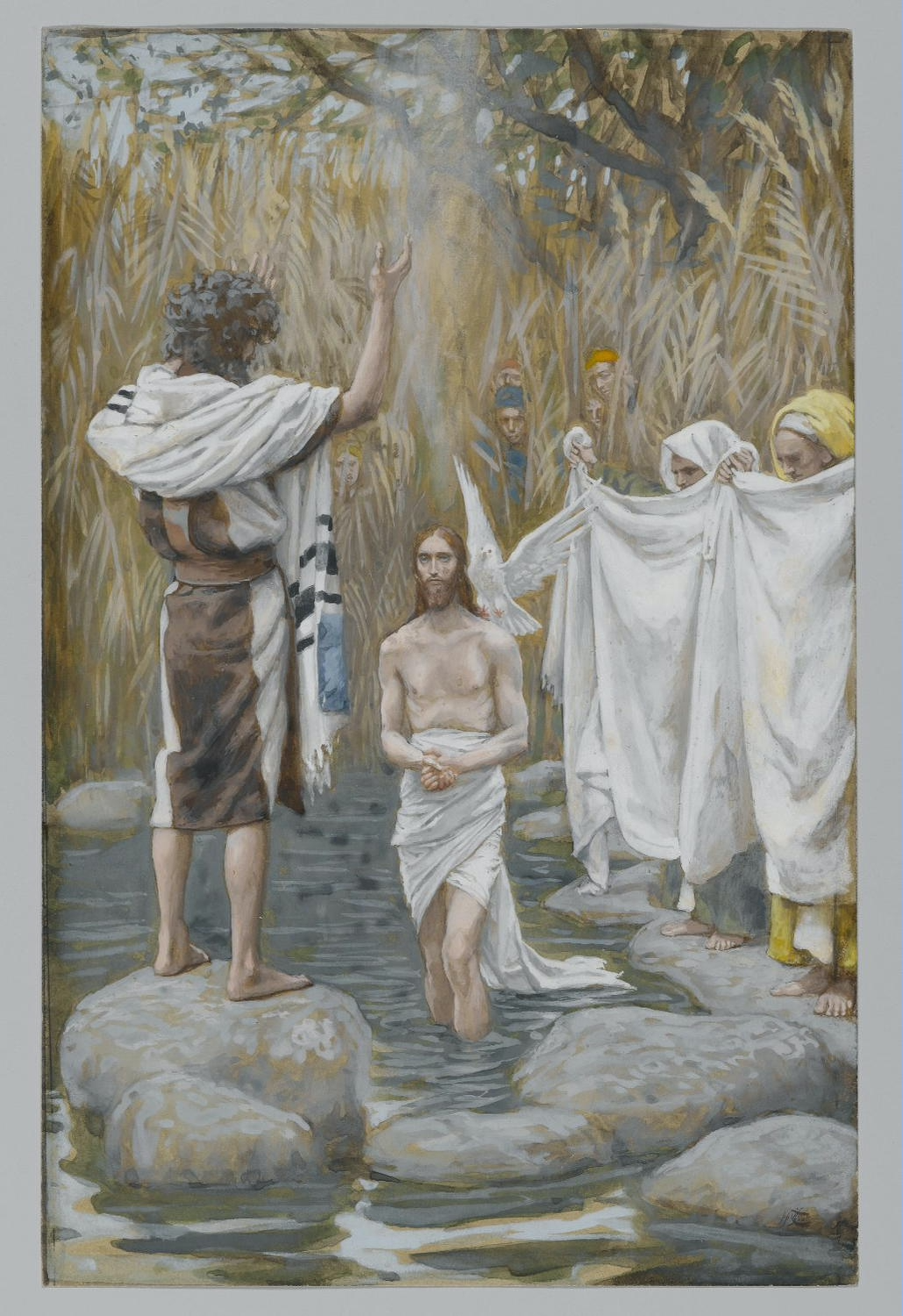
‘Pan oedd yr holl bobl yn cael eu bedyddio, yr oedd Iesu, ar ôl ei fedydd ef, yn gweddïo. Agorwyd y nef, a disgynnodd yr Ysbryd Glân arno mewn ffurf gorfforol fel colomen; a daeth llais o’r nef: “Ti yw fy Mab, yr Anwylyd; ynot ti yr wyf yn ymhyfrydu.”’

‘Now when all the people were baptized, and when Jesus also had been baptized and was praying, the heavens were opened, and the Holy Spirit descended on him in bodily form, like a dove; and a voice came from heaven, “You are my beloved Son; with you I am well pleased.”’ (Lk 3:21-22)

We then have to ask ourselves why is Jesus being baptized? Jesus is not a sinner. He has no sins from which to repent, and yet He is in the River Jordan, being baptized by John. An explanation is that in His Baptism Jesus is in solidarity with sinful humanity: He does not wish us, His followers, to undergo anything that He would not undergo Himself. Christ is an example of how to come to God and have new life: He shows us the Way. As a sign of divine approval after the Baptism, as Jesus is praying, the heavens open, and the Holy Spirit descends upon Him in the form of a dove. God then says: ‘Ti yw fy Mab, yr Anwylyd; ynot ti yr wyf yn ymhyfrydu. You are my beloved Son; with you I am well pleased.’ (Lk 3:22)

At the beginning of his public ministry, Jesus shows humanity the way to the Father, through Himself. The world sees the generous love of God, which heals and restores us to the light and life of the Kingdom of God. As our baptism is a sharing in the death and resurrection of Jesus, so His Baptism points to the Cross, where streams of blood and water flow to cleanse and heal the world. We see the love of the Father, the power of the Spirit, and the obedience of Son, all for us — people who need God’s love, forgiveness, and healing.

At the moment of Jesus’ Baptism, the fullness of the Godhead is manifested in glory and the divine presence. In the account of Noah’s Ark God makes his love manifest in the form of a dove. At the end of the Flood a dove brings an olive branch back to the Ark, a sign of peace and new life. So now, the Holy Spirit appears in the form of a dove to show us the fullness of God, a relationship of love, which is opened up to us in our baptism. Through our baptism we are invited into the embrace of God’s eternal love. 

The Divine Trinity makes itself manifest in recognition of the Son’s obedience to the Father, and looks forward to the Cross, where God’s love is poured out upon the world, and through which we are saved. In our own baptism, we share in Christ’s Death and Resurrection. In His Baptism, as in His Death, Christ shows us the way to the Father in the power of the Holy Spirit. We are baptised in the name of the Holy and life-giving Trinity. Similarly, our worship this morning began by invoking the name of the Trinity: the Father, the Son, and the Holy Spirit (Yn enw’r Tad, a’r Mab, a’r Ysbryd Glân). And so all of our life as Christians is Trinitarian.

As we celebrate Our Lord’s Baptism in the River Jordan, and as we remember our own baptism, we also look forward to His first miracle at the Wedding at Cana. Christ, He who is without sin, shows humanity how to be freed from transgression and to have new life in Him.

So, today and every day, let us all draw strength from our Baptism and grow in faith, hope, and love, nourished by Christ, and with Christ. Let us share that love with others and give praise and honour i’r Duw Dad, Duw y Mab, a Duw yr Ysbryd Glân. I’r hwn y priodoler pob gogoniant, arglwyddiaeth a gallu, yn awr ac yn oes oesoedd. Amen.

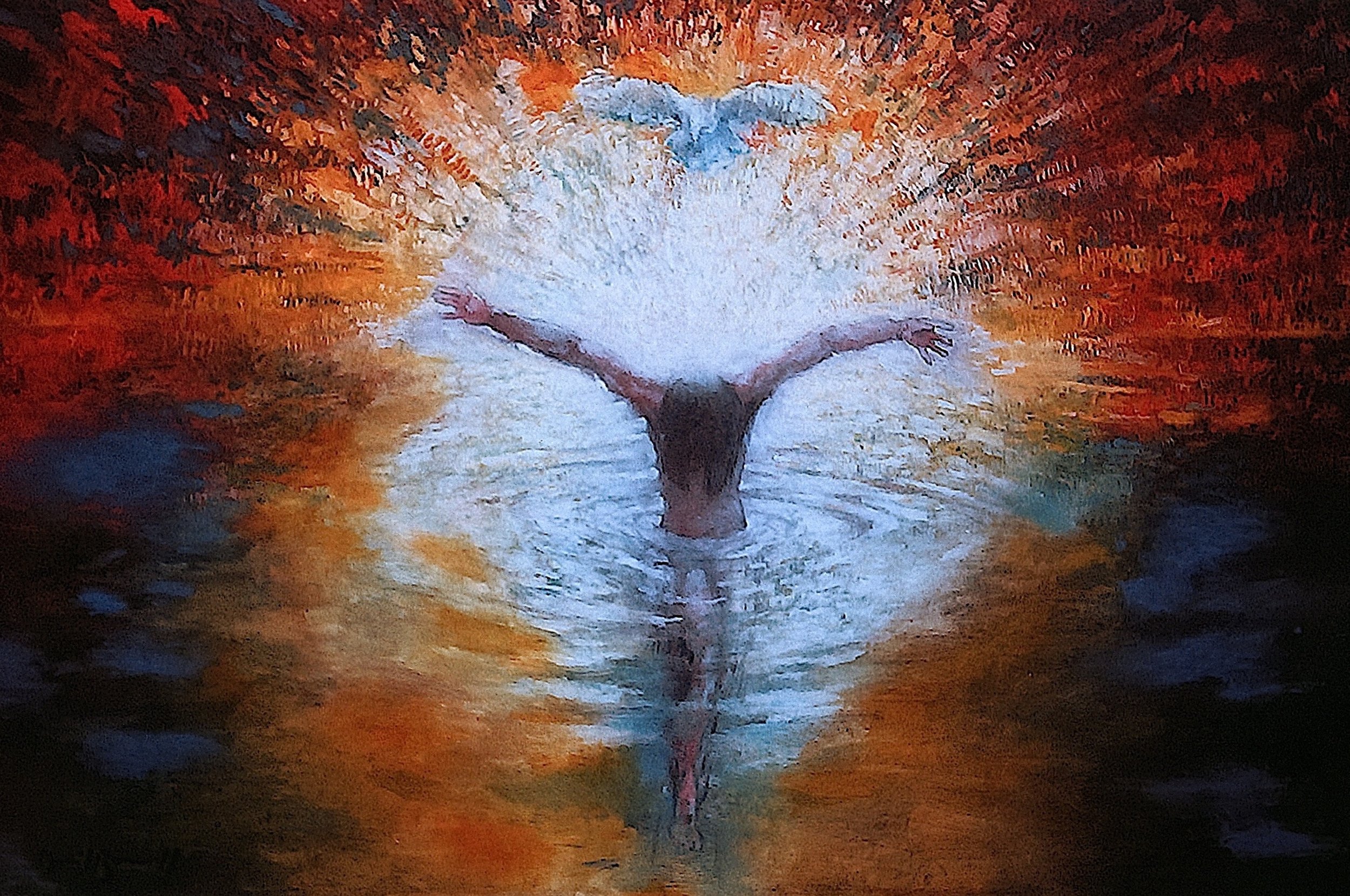
The Baptism of Christ – Daniel Bonnell

Christmas 2024

Christmas is a time for many seasonal activities, including spending time with family and friends, eating special foods and enjoying Christmas Carols. Also, most of us will spend some time over the festive period watching films on the television, or in the cinema. Movies can, surprisingly, be particularly useful when we try and get our heads around the wonderful events of Christmas. I would like to begin by focussing on a film from my childhood — the 1981 adventure Raiders of the Lost Ark. In this film, the intrepid archaeologist Indiana Jones is competing with Nazi forces to discover the Ark of the Covenant, which, it is believed, has the power to make an army invincible. At the climax of the film, the villains open the Ark on an island in the Aegean Sea. Immediately, spirits and bolts of lightning are released, which kill the Nazis and free Indiana and his companion Marion. Other than being the sort of film one might watch at Christmas, what is the relevance of the scene?

The film’s denouement relies upon the heroes averting their gaze, while the villains do not, and are therefore destroyed. The plot draws upon the biblical idea that the glory of God, which the Ark is said to contain, is not something which humanity should gaze upon. In the Book of Exodus, when Moses asks to see God, he is told that if he does so he will die. The glory of God is not something humans are able to behold. 

Yet, the first reading this morning reaches its climax with the statement that:

‘fe wêl holl gyrrau’r ddaear iachawduriaeth ein Duw ni’

‘all the ends of the earth shall see the salvation of our God.’ (Isa 52:10)

There appears to be something strange going on here. Likewise, the one who begins His life wrapped in cloth and placed in a stone feeding trough, will end it taken down from a Cross, wrapped in cloth and placed in a stone tomb. ‘In my beginning is my end …. In my end is my beginning’ wrote T.S. Elliot in his poem ‘East Coker’, the second of his Four Quartets. And yet this end is but a prelude to Christ’s Resurrection, Ascension, and the Second Coming. 

In the great turnaround of salvation history, humanity goes from being unable to look upon the divine, to being able to behold Him in a manger, surrounded by farm animals. To put the mystery of our salvation into context, this morning’s Gospel goes back to the beginning, which is a very good place to start. Not to the Annunciation, where in the power of the Holy Spirit Christ takes flesh in the womb of His Mother, but to the beginning of time and the Creation of the Universe:

‘Yn y dechreuad yr oedd y Gair, a’r Gair oedd gyda Duw, a Duw oedd y Gair. Hwn oedd yn y dechreuad gyda Duw.’

‘In the beginning was the Word, and the Word was with God, and the Word was God. He was in the beginning with God.’ (Jn 1:1)

The Word which spoke the Universe into being exists in eternity with God, and is God. This is whom we worship: the one who will save humanity, and who offers us eternal life with God. 

Today we celebrate Divine generosity and humility. God is among us. Mae Duw yn eich plith ni. Born as a weak and vulnerable baby, he is utterly dependent upon Mary and Joseph. In time this divine generosity will be refused:

‘At ei eiddo ei hun y daeth, a’r eiddo ei hun nis derbyniasant ef.’

‘He came to his own, and his own people did not receive him.’ (Jn 1:11)

Ours is a God who does not force Himself upon us. Instead, He comes to us in love, to draw us out in love, that we might share in that love, and share it with others: 

‘A’r Gair a wnaethpwyd yn gnawd, ac a drigodd yn ein plith ni, (ac ni a welsom ei ogoniant ef, gogoniant megis yr Unig‐anedig oddi wrth y Tad,) yn llawn gras a gwirionedd.’

‘And the Word became flesh and dwelt among us, and we have seen his glory, glory as of the only Son from the Father, full of grace and truth.’ (Jn 1:14)

God pitches His tent, and tabernacles among us. The invisible becomes visible. The God who is beyond human understanding becomes human, and shares our human life from its beginning to its end. This is no unapproachable divinity, remote and uncaring, but one who experiences our existence, who understands us from the inside out. Humanity beholds the glory of God, in a baby who will die on a Cross to redeem us. 

Not only that, but Christ continues to give Himself to us, every time the Eucharist is celebrated, so that the Word can continue to become flesh, so that we can be transformed by Him, and share in God’s life. 

As we celebrate the birth of Our Saviour we need to ask ourselves: have we made room for Jesus in our lives? Have we really? If we haven’t, we need to let our hearts and our lives become the stable in which the Christ-child can be born. We need to see Him in the outcast, in the stranger, in the people which the world shuns. As Christians, we have to welcome such people, for in welcoming them we welcome Our Lord and Saviour. This is how we live out His love in our lives.

This is the true meaning of Christmas — this is the love which can transform the world. It is radical and costly. This love terrified the might of the Roman Empire, and showed human power that it was as nothing compared to Divine Love. Soul by individual soul, for the past two thousand years, the world has been changed by ordinary people living out the love shown to the world by, and through, this little vulnerable child.

So, today as we celebrate Jesus’ birth, let us raise our voices to join with the angels and give praise and honour to God the Father, God the Son, and God the Holy Spirit. To whom be ascribed all glory, dominion and power, now and forever. Amen.
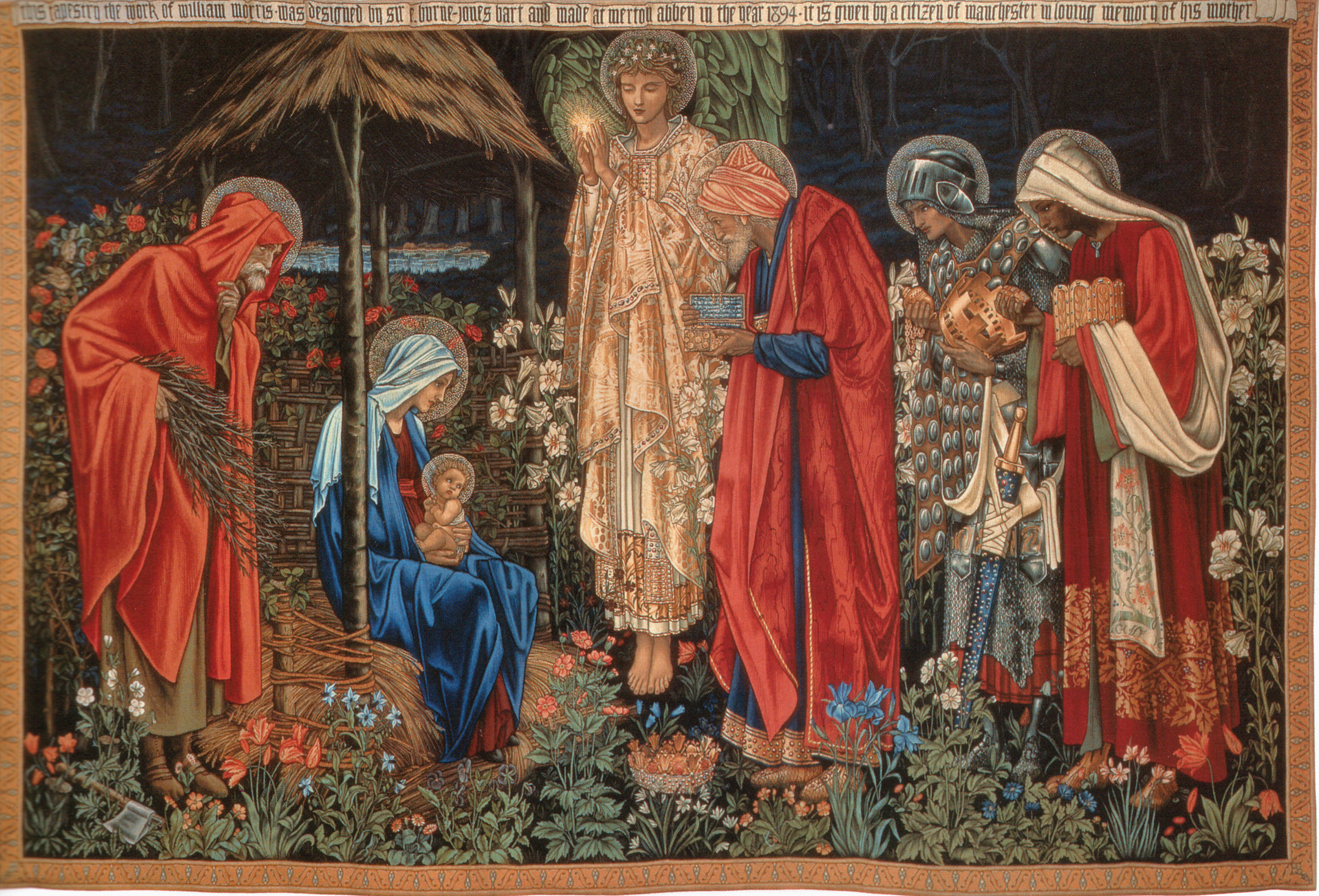
Merry Christmas to you all!

Nadolig Llawen i chi gyd! 

Advent Sunday 2024: Be Alert: Preparing for Christ’s Return

WHEN I was a young boy I was given a bookmark, on which was printed, ‘BE ALERT: The world needs all the lerts it can get!’ This pun amused me greatly, and it still does. However, it contains a serious message. As Christians we are called to be watchful and aware: both of the world around us, and of the signs of God’s Kingdom. We must also be watchful for Our Lord’s Return. There are two things of which we can be sure. Firstly, that our earthly lives are finite, and secondly, that Christ will come to judge the World. People often find both of these concepts somewhat off-putting, which is understandable. However, they are a reality which we need to face, and understand. Christians believe in God. We trust that we are loved by Our Heavenly Father, who is a God of love and mercy. He sent His Son, Jesus Christ, to reconcile us to Himself and with each other. This is why we can have hope, and prepare to meet Christ with joyful hearts.

The prophet Jeremiah, in our first reading this morning, speaks of prophecy being fulfilled:

‘“Y mae’r dyddiau’n dod,” medd yr Arglwydd, “y cyflawnaf y gair daionus a addewais i dŷ Israel ac i dŷ Jwda.”’

‘Behold, the days are coming, declares the Lord, when I will fulfil the promise I made to the house of Israel and the house of Judah.’ (Jer 33:14)

God promises to fulfil prophecy and to send His people a Saviour. This promise, made to the House of David, is fulfilled both by Jesus’ birth and His return in judgement. God promises to save His people and to rule in a way that is far beyond any human idea of justice. Earthly rulers and politicians will, and do, disappoint us: they always fall short of our expectations. They are human beings, and are therefore fallible. Instead, we call upon God to intervene, and make things right. Only our Heavenly Father can save us, we cannot save ourselves.

However, waiting for Jesus’ Return is not without its problems. St Paul writes to Christians in northern Greece who are expecting Christ’s Second Coming to be imminent. Their expectations need to be managed, and they need help to live out their faith, so that they grow in love together. Our time on earth is limited, so we need to take every opportunity to live in a way that is pleasing to God.

Jesus’ description of the end times is in agreement with the apocalyptic passages found in the prophets. In other words, when that day comes it will be clear. If we are alert, then we will know what is going on. We should look forward to this day, and not be afraid: 

“A’r pryd hwnnw gwelant Fab y Dyn yn dyfod mewn cwmwl gyda nerth a gogoniant mawr. Pan ddechreua’r pethau hyn ddigwydd, ymunionwch a chodwch eich pennau, oherwydd y mae eich rhyddhad yn agosáu.”

‘And then they will see the Son of Man coming in a cloud with power and great glory. Now when these things begin to take place, straighten up and raise your heads, because your redemption is drawing near.’ (Lk 21:27-28)

Christ’s return is a sign of the Kingdom of God. He will welcome us to our eternal Heavenly home. Mindful of our destiny, we should use this season of Advent as a time for preparation. We should make these four weeks leading to Christmas a time when we turn away from everything which separates us from God and each other. As Our Lord says in the Gospel:

“Cymerwch ofal, rhag i’ch meddyliau gael eu pylu gan ddiota a meddwi a gofalon bydol, ac i’r dydd hwnnw ddod arnoch yn ddisymwth fel magl; oherwydd fe ddaw ar bawb sy’n trigo ar wyneb y ddaear gyfan.”

‘But watch yourselves lest your hearts be weighed down with dissipation and drunkenness and cares of this life, and that day come upon you suddenly like a trap. For it will come upon all who dwell on the face of the whole earth’ (Lk 21:34-35)

These words are as relevant today as they were two thousand years ago. Human nature has not changed, nor has our propensity for doing the wrong things — squandering our time, energy, and resources. Instead, we should listen to Jesus and obey His commands:

“Byddwch effro bob amser, gan ddeisyf am nerth i ddianc rhag yr holl bethau hyn sydd ar ddigwydd, ac i sefyll yng ngŵydd Mab y Dyn.”

‘But stay awake at all times, praying that you may have strength to escape all these things that are going to take place, and to stand before the Son of Man.’ (Lk 21:36)

Vigilance, prayer, and complete reliance upon God are the weapons of our spiritual armoury with which to combat the darkness of this world. 

So, my brothers and sisters in Christ, let us be alert and watchful. Let us serve Christ our King who will return, filled with His love for us, and for all people. Let this love form a Kingdom with God as its head. And as we await the Christ’s Second Coming, let us give praise and honour to God the Father, God the Son, and God the Holy Spirit. To whom be ascribed all glory, dominion and power, now and forever. Amen.

Christos Pantokrator, St Catherine’s Monastery, Sinai

Christ the King 2024

LIVING on the edge of Western Europe it is not surprising that many British people have something of a fascination with the Roman Empire. In the first century AD, the Romans conquered Britain and ruled here for nearly four hundred years. They gave us many things: including straight roads, plumbing and under-floor heating, and founded towns many towns such as Carmarthen. Just off Priory Street in Carmarthen are the remains of a Roman amphitheatre which could hold about five thousand spectators. It isn’t quite the size of Colosseum in Rome — and it is highly unlikely that it was ever flooded to stage a mock sea-battle — but it is a reminder of how far Roman influence stretched. 

Rome was an empire, with an emperor at its head. The bad emperors are generally portrayed as cruel autocrats in films like Gladiator. However, these depictions tend to gloss over the fact that these emperors were worshipped as  being divine. One of their first acts on accession to the throne would be for the new Emperor to declare their predecessor, or father, a God. They would then be referred to as ‘DIVI FILIVS’, ‘Son of a god’, ‘Fab duw’. This feels alien to us, because we are Christians, and we are followers of Jesus, the Son of God the Father, the Creator and Sustainer of us all. 

In this morning’s Gospel, Jesus is in Pilate’s headquarters, being questioned, before He is condemned to death on the Cross. Since Our Lord’s triumphal entry into Jerusalem a few days earlier, He has been hailed as the Davidic King, the Messiah. This is viewed as a clear challenge to Herod, and thus to the Roman occupation. Pilate is afraid of an insurrection leading to a rebellion and a change of government, all of which could mean his own death. So he asks Jesus:

“Ai ti yw Brenin yr Iddewon?”

“Are you the King of the Jews?” (Jn 18:33)

Our Lord does not answer, but instead asks Pilate a question:

“Ai ohonot dy hun yr wyt ti’n dweud hyn, ai ynteu eraill a ddywedodd hyn wrthyt amdanaf fi?”

“Do you say this of your own accord, or did others say it to you about me?” (Jn 18:34)

Pilate then replies:

“Dy genedl dy hun a’i phrif offeiriaid sydd wedi dy drosglwyddo di i mi. Beth wnaethost ti?”

“Your own nation and the chief priests have delivered you over to me. What have you done?” (Jn 18:35)

The back and forth is an attempt by the Roman Governor to see if there is substance to the charges, and to see whether Jesus will confess, or whether evidence can be gleaned, which would substantiate the accusation against Him. This leads Our Lord to make the following declaration:

“Nid yw fy nheyrnas i o’r byd hwn. Pe bai fy nheyrnas i o’r byd hwn, byddai fy ngwasanaethwyr i yn ymladd, rhag imi gael fy nhrosglwyddo i’r Iddewon. Ond y gwir yw, nid dyma darddle fy nheyrnas i.”

“My kingdom is not of this world. If my kingdom were of this world, my servants would have been fighting, that I might not be delivered over to the Jews. But my kingdom is not from the world.” (Jn 18:36)

Jesus Christ is not an earthly king, concerned with power, honour, wealth, and prestige, but rather a heavenly one, seeking to establish the Kingdom of God in the hearts and minds of men, women, and children. He seeks to build a kingdom of peace, love, and joy, and of healing and reconciliation. Pilate fails to grasp the nuance of Jesus’ proclamation, and instead focuses on what Jesus says, rather than what He means.

‘Yna meddai Pilat wrtho, “Yr wyt ti yn frenin, ynteu?”’

‘Then Pilate said to him, “So you are a king?”’ (Jn 18:37)

The Roman Governor is concerned with law, and not theology. He takes Our Lord’s words as a statement that Christ considers Himself a King, and that the charges against Him are true. So Jesus makes the following reply:

“Ti sy’n dweud fy mod yn frenin,” atebodd Iesu. “Er mwyn hyn yr wyf fi wedi cael fy ngeni, ac er mwyn hyn y deuthum i’r byd, i dystiolaethu i’r gwirionedd. Y mae pawb sy’n perthyn i’r gwirionedd yn gwrando ar fy llais i.”

“You say that I am a king. For this purpose I was born and for this purpose I have come into the world—to bear witness to the truth. Everyone who is of the truth listens to my voice.” (Jn 18:37)

Christ’s purpose is to bear witness to the truth, that He is God, and is calling people to repent and believe in Him. Pilate, however, is not listening to Jesus. The Governor focuses on the surface meaning, ignoring the truth beneath Christ’s words. And yet the truth will out in the end. A few hours later Our Lord will be crucified and the title fixed to the Cross will read: ‘Iesu o Nasareth, Brenin yr Iddewon’, ‘Jesus of Nazareth, King of the Jews’, in Hebrew, Latin, and Greek. In this way Pilate will proclaim Christ’s Kingship to the whole world. Because of this all people can see and know what a true King looks like; not robed in splendour in a palace, but nailed to a Cross, and dying the death ascribed to a criminal. In His Passion and Death, Christ bears witness to the truth, namely that:

‘Do, carodd Duw y byd gymaint nes iddo roi ei unig Fab, er mwyn i bob sy’n credu ynddo ef beidio â mynd i ddistryw ond cael bywyd tragwyddol. Oherwydd nid i gondemnio’r byd yr anfonodd Duw ei Fab i’r byd, ond er mwyn i’r byd gael ei achud trwyddo ef.’

‘God so loved the world that he gave his only Son, that whoever believes in him should not perish but have eternal life. For God sent the Son into the world, not to condemn the world, but that the world might be saved through him.’ (Jn 3:16-17) 

This is what real kingship looks like: selfless love and sacrifice. This is what Jesus offers the world in the Eucharist — His self-giving love with the power to transform the world. God gives Himself to us, so the world can share Eternal Life in Him. It is not about acquiring and displaying wealth, power, or privilege — things of this world. Instead, as Christians, we look to God and Heaven, as both the source of our being and as our eternal home.

To acknowledge Christ’s kingship is to do something truly radical. It is to say to those with worldly power, ‘We recognize something far greater and more powerful than you!’ This is a profound political act, which terrifies those who are insecure, just as it terrified Pilate and Herod. As followers of Jesus we have built the house of our faith on the rock which is Christ, and not the shifting sands of this world. 

So, my brothers and sisters, let us acknowledge Christ as our King. Let us serve Him, filled with His love for us, and for all people. Let this love form a Kingdom with God as its head. And as citizens of God’s Kingdom let us give praise and honour to God the Father, God the Son, and God the Holy Spirit. To whom be ascribed all glory, dominion and power, now and forever. Amen.
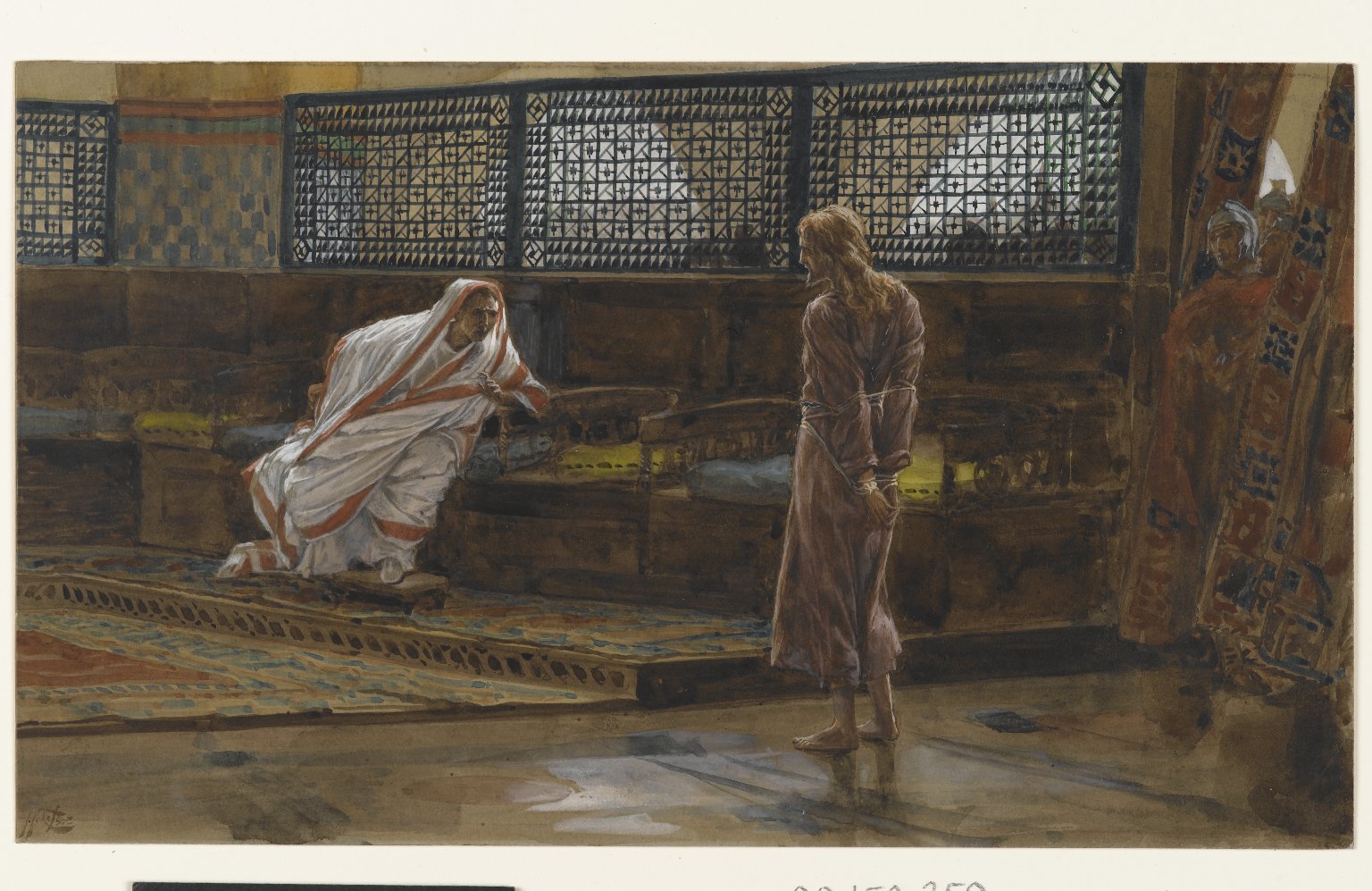
James Tissot: Jesus before Pilate (First interview) Brooklyn Museum

Trinity XII: The Bread of Life

THE poet Robert Browning once wrote: ‘If thou tastest a crust of bread, thou tastest all the stars and all the heavens’. This connection between bread and Heaven is the subject of today’s Gospel.

Our Lord has been teaching His followers about the Bread of Life. This is a topic which He returns to at the Last Supper. Seated with His disciples, Jesus says, ‘This is My Body’ ‘hwn yw nghorff’ and ‘This is My Blood’ ‘hwn yw fy ngwaed i’. He means what He says. For a hundred thousand successive Sundays the Church has followed Christ’s instruction to ‘do this in memory of me’. Not simply as a memorial, but to feed God’s people with God Himself: Body, Blood, Soul, and Divinity. To transform us, and prepare us for Heaven.

During the Roman Empire, when the Church was persecuted, followers of Jesus were accused of three false things. Firstly, atheism, because of their refusal to believe in, or worship pagan gods. Secondly, incest, because Christians called each other brother and sister, and loved each other. Thirdly, cannibalism — Christians were accused of eating human flesh. These last two charges are rooted in a misunderstanding of Christian worship. They are also evidence that, from the beginning, Christians were gathering for worship and consuming the Body and Blood of Christ.

Christ is being controversial when He teaches the people,

“I am the living bread that came down from heaven. If anyone eats of this bread, he will live for ever. And the bread that I will give for the life of the world is my flesh.”

“Myfi yw’r bara bywiol hwn a ddisgynnodd o’r nef. Caiff pwy bynnag sy’n bwyta o’r bara hwn fyw am byth. A’r bara sydd gennyf fi i’w roi yw fy nghnawd; a’i roi a wnaf dros fywyd y byd.” (Jn 6:51)

Our Lord is greater than the manna which God sent down to the Israelites during their wanderings in the desert. He is living bread. He is the bread which gives eternal life. God shares Himself with us, so that we might live in Him. But Christ’s teaching is deeply problematic for His audience. Jewish law prohibited the consumption of blood and human flesh. So what Jesus is proposing is impossible for His followers to accept. It is something that they cannot do, and yet they are told that they must. 

Jesus then repeats His teaching. He explains that anyone who wants to have life, needs to eat His Flesh and drink His Blood. Christ invites believers to the Eucharist and, in doing so, pledges to them that they will share in His Resurrection:

‘Whoever feeds on my flesh and drinks my blood has eternal life, and I will raise him up on the last day.’

‘Y mae gan y sawl sy’n bwyta fy nghnawd i ac yn yfed fy ngwaed i fywyd tragwyddol, a byddaf fi’n ei atgyfodi yn y dydd olaf.’ (Jn 6:54)

The purpose of the Eucharist is to transform us, to give us Eternal Life in Christ, so that we are part of Him. United with God and incorporated with Him forever.  As the bread is broken, and the wine is poured, so Jesus suffers and dies on the Cross. Our Lord’s Passion, Death and Resurrection are the core of our faith as Christians. In them we see how much God loves us. God’s love is freely given. We do not earn it, we do not deserve it; yet it is given to us. It is through Divine love that we may grow into something better, something greater, something more Christ-like. Such is the power of God’s sacrificial love at work in our lives. This is the treasure which we have come here to receive today. If it were ordinary food then we would eat it, and remain unchanged. But, instead, we who eat the Bread of Heaven are united with Christ. This is strong food! 

The Book of Proverbs speaks of Wisdom, which in the Christian tradition is identified with Christ, the Word made Flesh. Wisdom issues an invitation. She has constructed a house — the Church — and she has built seven pillars — the sacraments of the Church — the means of God’s grace to be active in our lives. The people of God are called to eat and drink, to live, and to walk in the way of wisdom, by following Jesus Christ. The message of New Testament is prefigured in the Hebrew Scriptures, which point to — and find their fulfilment in — Jesus Christ. He is the Wisdom of God, and the Word made Flesh. Christ’s invitation is an echo of the words of the Book of Proverbs:

“Come, eat of my bread and drink of the wine I have mixed. Leave your simple ways, and live, and walk in the way of insight.”

“Dewch, bwytewch gyda mi, ac yfwch y gwin a gymysgais. Gadewch eich gwiriondeb, ichwi gael byw; rhodiwch yn ffordd deall.” (Prov 9:5-6)

Throughout the Scriptures God issues an invitation to His people to be nourished, and walk in the way of truth. So my brothers and sisters in Christ, let us come to the banquet of the Lord, the feast of the Kingdom. May God’s grace transform us more and more into His likeness, and give us eternal life in Him. In the name of God the Father, God the Son, and God the Holy Spirit. Amen.