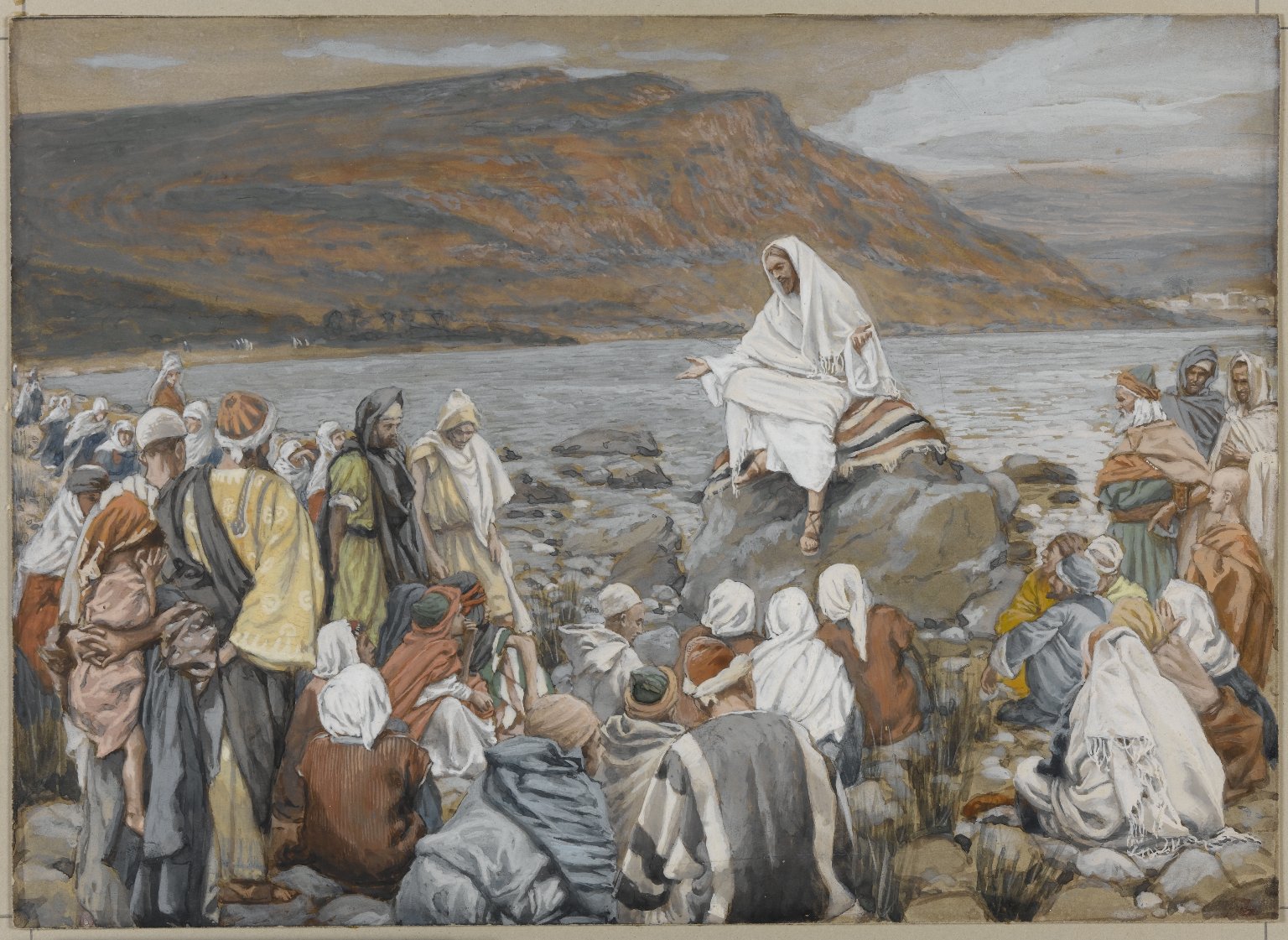
Trinity 18: Jesus teaching on the Kingdom

“Jesus said to them, ‘Truly, I say to you, the tax collectors and the prostitutes go into the kingdom of God before you.”

“Dywedodd Iesu wrthynt, ‘Yn wir, ‘rwy’n dweud wrthych fod y casglwyr trethi a’r puteiniaid yn mynd i mewn i Deyrnas Dduw o’ch blaen chwi” (Mt 21:31)

WHICH IS WORSE? Is it to refuse to do something you are asked to do? Or is it to say that you will do something and then not do it? That is the question posed in today’s Gospel. 

Our Lord is talking to the chief priests and elders. These are the religious leaders of His day, the people tasked with guiding the people of Israel in their relationship with God. Jesus has entered Jerusalem in triumph, and cast out the money-changers from the Temple, and cursed a fig tree for not bearing fruit. What we are witnessing in the Gospel is religious reform. Those who are supposed to have brought people closer to God are shown to be resistant and rebellious; they are the problem rather than the solution. 

The proclamation of both John the Baptist and Jesus is the same: ‘Repent and believe the Good News’. The message is a consistent one. We need to stop going the wrong way, and change direction. We need to go the way God wants us to, so that we can flourish as human beings, loved by Our Heavenly Father. This means that we will need to ask for, give, and receive forgiveness. We cannot keep score or remember past wrongs. To live Christian lives of repentance and forgiveness is difficult, and we need God’s help, because we cannot do it on our own.

In the Gospel, the chief priests and elders are concerned with authority, with power and influence. They want to know what gives Jesus the right to say and do what He does? Clearly Christ does not want to answer their question, for if He told the truth He would be accused of blasphemy, so Our Lord answers their question with another question:

“I also will ask you one question, and if you tell me the answer, then I also will tell you by what authority I do these things. The baptism of John, from where did it come? From heaven or from man?” (Mt 21:24-25)

The religious authorities are unable and unwilling to answer the question, so Jesus teaches them using a parable:

“What do you think? A man had two sons. And he went to the first and said, ‘Son, go and work in the vineyard today.’ And he answered, ‘I will not’, but afterwards he changed his mind and went. And he went to the other son and said the same. And he answered, ‘I go, sir’, but did not go. Which of the two did the will of his father?” (Mt 21:28-31)

Jesus begins by asking the chief priests and elders a question: ‘What do you think?’ These simple words (What do you think?) speak profoundly of the freedom given to humanity by Our Creator. We are not forced, but rather invited, to engage in a conversation. God does not compel us.

In the parable of the two sons, clearly the one who overcame his initial reluctance and actually did the will of his father, by working in the vineyard, is the example for us to follow. This son experiences repentance, and changes his behaviour to do what is best for him. He starts out as being stubborn, rebellious, and disobedient — but the important thing is that he repents, and does what his father asks of him. The other son begins with an outward show of respect. He appears to be a dutiful son, addressing his father as Sir. However, he is basically a hypocrite, because his actions do not match his words. True obedience is not in outward displays of respect, but in actually doing the will of God.

The point Our Lord is making is that the chief priests and elders appear to be doing the will of God, and keeping the Law. However, they are in fact very far from the ideal, because they are puffed up with pride and self-righteous indignation. This is why in Jesus’ reply to them He refers to tax collectors and prostitutes.

Two thousand years ago, tax-collectors and prostitutes were seen as the lowest of the low in society. The first were viewed as swindlers, the second as sexually immoral. Both, however, were on good terms with the Roman occupiers. Such people were certainly not the kind of company a religiously observant Jew would keep. And yet, despite their sins, these are the people who are willing to repent. They are aware of their need for God, and they understand that God loves them. They believe that God will be merciful, and that He will heal their wounds, and will welcome them into His kingdom. By recognising that it is more important to do the will of God rather than simply to say that you will, the religious authorities highlight their own hypocrisy and are condemned by their own lips. They have been told by John the Baptist what God wants, but they have ignored him, and now when Jesus tells them the same message they will also ignore the Lord their God.

Very soon the same chief priests and elders will soon call for Jesus’ death by crucifixion. Christ’s death on the Cross is a demonstration of humility and obedience by Our Lord. Jesus dies for us, offering His Body and His Blood to heal us, and give us eternal life in Him. 

As we prepare to receive Our Lord and Saviour in the Eucharist, may we have the humility to let Him transform us into His likeness. May we be conscious of our need of God, and our need to turn back and follow Him, so that we may have life in all its fullness. May we prepare to enjoy God’s closer presence and sing the praises of God the Father, God the Son, and God the Holy Spirit, Duw Dad, Duw y Mab, a Duw yr Ysbryd Glân. To whom be ascribed all glory, dominion, and power, now and forever. Amen.
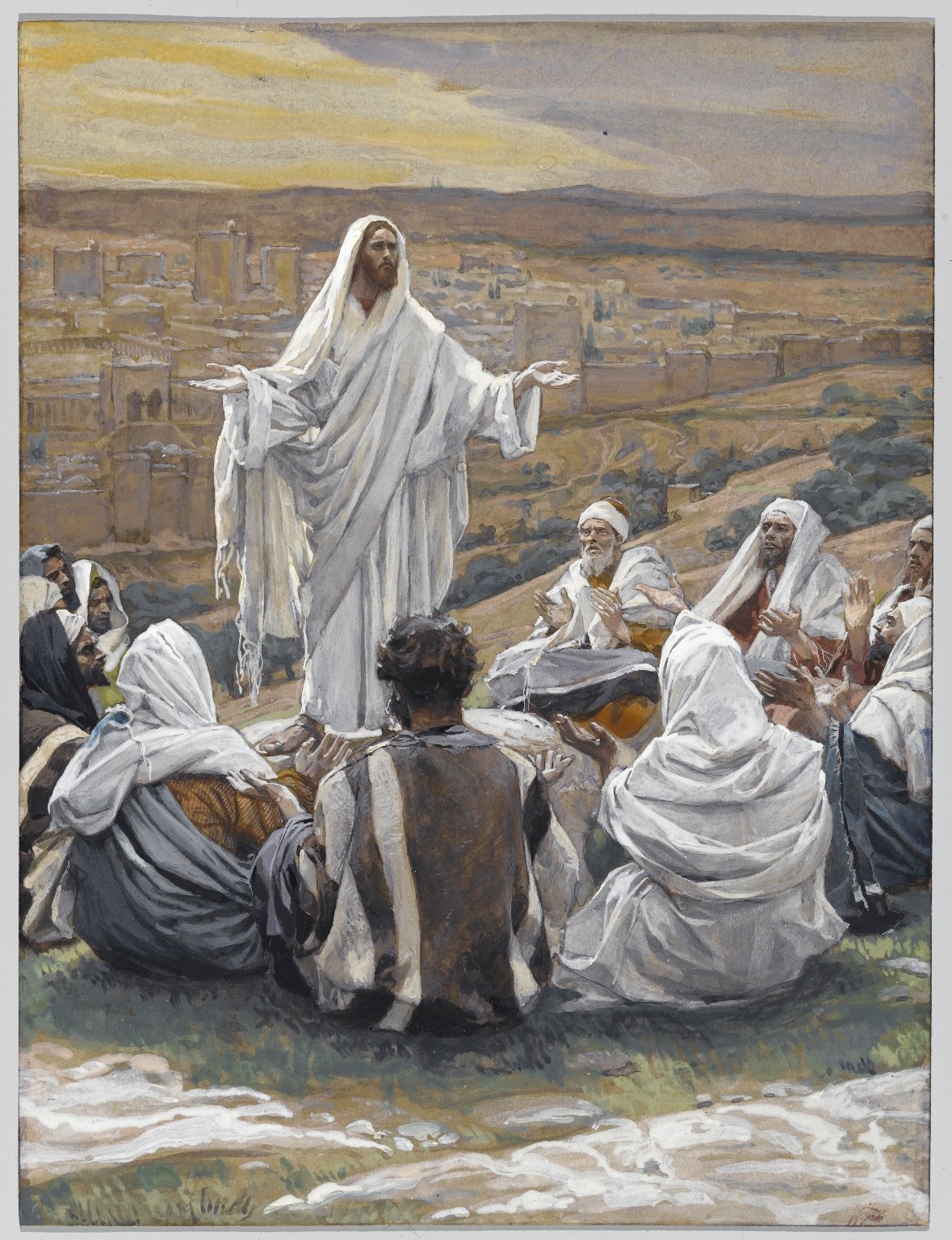
Trinity 16: The Parable of the Labourers in the Vineyard

‘For my thoughts are not your thoughts, neither are your ways my ways, declares the Lord.’

‘‘Oherwydd nid fy meddyliau i yw eich meddyliau chwi, ac nid eich ffyrdd chwi yw fy ffyrdd i’, medd yr Arglwydd’ (Isa 55:8)

Imagine this scene: a child stands in front of their mother with an unhappy look upon their face. ‘But mummy’ they cry, ‘I want some pudding!’ The mother explains that they must eat their dinner first. However, the child remains unconvinced. As they become aware that they are not going to get their own way, they say the immortal words: ‘It’s not fair!’ Many of us would prefer sponge and custard to Brussels sprouts. It’s just more fun to eat. In 2026, we are mindful that we still live in a world where people go hungry. At a deep level we are all concerned by matters of fairness. Our God gives us a vision of justice, where in the words of the Magnificat: ‘He puts down the mighty from their seat and has exalted the humble and meek’.

Our readings this morning all have something of a paradoxical quality to them. Both the Scriptures, and the Christian concept of God, are rooted in paradox. The ability to hold two contradictory views should be impossible and yet it is not. There is a good reason for this: God is a mystery, knowable, yet hidden; understandable, yet beyond our grasp. It can sometimes be a struggle to understand these paradoxes. Whilst this struggle is part of the process of coming to know God, we also have accept the fact that our mental efforts can never be enough. We simply have to experience the mystery.

The prophet Isaiah proclaims the Divine message to bring Israel back to God: 

Seek the Lord while he may be found; call upon him while he is near; let the wicked forsake his way, and the unrighteous man his thoughts (Isa 55:6-7)

The message is clear and simple. There is a right way to live and a wrong way. The prophet’s task is to proclaim God’s message, to call people back:

let him return to the Lord, that he may have compassion on him, and to our God, for he will abundantly pardon. (Isa 55:7)

God longs to treat humanity with compassion, and to forgive our human failings. He is a God of love and mercy, both in the Old Testament and in the New. In Scripture there is a consistent message of how God creates everything, sees that it is good, and loves what He has made. Our Heavenly Father is generous and loving because that is who He is. God cannot be otherwise. 

For my thoughts are not your thoughts, neither are your ways my ways, declares the Lord (Isa 55:8)

If God were to think and act in a human way then all we could expect would be punishment for having sinned and fallen short of what is expected of us. However, God shows divine justice and mercy. Therefore, we can put our hope in His love to heal and restore us, to an extent that we, as humans, cannot even imagine:

For as the heavens are higher than the earth, so are my ways higher than your ways and my thoughts than your thoughts. (Isa 55:9)

We are able to experience the mystery of divine love through the Church and her Sacraments, which are effective signs of grace that manifest God’s generous love in the world. These are just a part of the mystery of God’s love for us which we can never fully comprehend, this side of Heaven. 

In our second reading this morning, St Paul is writing to the first Christian community that he founded in Europe. He is under house arrest in Rome, facing trial and execution. It is a joyful letter, arguably his most joyful letter, despite being written as Paul faces martyrdom. As a society we have become more afraid of death and dying, and the subject of our own end is something many of us would prefer not to think about. For Paul, however,

to live is Christ, and to die is gain (Phil 1:21)

The Apostle states that if he lives, he will live in Christ, and he will proclaim the truth of the Gospel with his words and with his deeds. Paul believes that if he dies it is gain, because his death will bear witness to Jesus, by sharing in His suffering and death. Paul has hope in the resurrection to eternal life in Christ.

In today’s Gospel, Jesus continues His teaching about the Kingdom of Heaven with the Parable of the Labourers in the Vineyard. Our Lord explains that God’s Kingdom is a place where human values are turned on their head: 

So the last will be first, and the first last. (Mt 20:16)

This is why the first labourers to be paid are those who have only worked for only one hour. By the time the labourers who have toiled the full twelve hours come to be paid they expect to be given more, even though they had agreed on the standard wage for their day’s labour. The parable is fundamentally about salvation. Salvation is a gift from God and not a reward for work done by humanity. We cannot earn it. Instead, we receive it freely from a loving and generous God. Likewise there are no grades of salvation, just as there are no classes of Christian. We are all one. In the Kingdom of God we all are equal. 

This equality is a radical statement by Jesus. It is a clear declaration that God’s grace is abundant and inexhaustible, and is freely offered to all who accept it. There is no such thing as a higher rank of Christian. God treats us all in the same way and loves each and every one of us. Though I serve God and His people as a priest, I was not chosen for this role by being a better Christian in the first place. Clergy are not superior Christians. All the baptized are equal in the sight of God. This morning’s gospel reminds us of the important truth that salvation is the free gift of God, which we receive in our Baptism and which is strengthened through the Sacraments of the Church. We cannot earn our way to Heaven!

Speaking of Heaven, we often forget the fact that it is full of people who have sinned. However, they are loved by God and love God, and trust in His mercy and forgiveness. The more we experience and understand the overwhelming love and generosity of God, the more marvellous it becomes. To repeat the prophet Isaiah, God’s thoughts are not our thoughts, His ways are not our ways. 

As Christians we need to respond to God’s generous love. If we are to be truly thankful then our gratitude should affect who we are and how we live our daily lives. As we prepare to give thanks to God for another harvest safely gathered in, we share what we have, so that our harvest offerings will feed the hungry, and bring joy to those in need. By doing so, we put our faith into practice and make the Kingdom of God more visible. United with all creation, we sing the praise of God the Father, God the Son, and God the Holy Spirit, Duw Dad, Duw y Mab, a Duw yr Ysbryd Glân. To whom be ascribed all glory, dominion, and power, now and forever. Amen.

Trinity 17 [28th of Year C]

One of the arms of the River Cleddau which flows into the sea at Aberdaugleddau (Milford Haven) has its source near here in the Preseli Hills. The other flows from Llygad Cleddau, a few miles from here. These two rivers join together and flow through the County of Pembrokeshire and form one of the deepest natural harbours in the world. It is therefore fitting that I am travelling from the sources of the rivers to their estuary. Rivers flow from their springs to the sea. They provide us with water, and a means of transport. Historically, both were important, they transported Bluestones towards Stonehenge in Wiltshire, and brought Vikings, Normans and Flemings who have all left their mark on this county.

Sources of water have been important in our religious history. Ffynnon Fair, St Teilo’s Well, and Bernard’s Well would all have provided water for baptism, just as the stream is still used at Rhydwilym. Baptism is how we enter the Church, it is how we become members of the Church. Not through paying fees, but by sharing in Christ’s Baptism, His Death and Resurrection, and looking forward to eternal life with Him in Heaven. Water is poured in the name of the Father, the Son, and the Holy Spirit, and we are washed clean, and grafted into the Body of Christ. An act so simple, and yet so profound, which lies at the heart of who and what we are as Christians. Baptism is a Sacrament, an outward and visible sign of an inward and spiritual grace, by which we become united with Christ in this world and the next.

In our first reading this morning from the Second Book of Kings we meet Naaman, the commander of the Syrian army. He has been afflicted with leprosy, and he hears that there is a prophet in Samaria who can cure him. He writes to the King of Israel, to ask for the prophet to heal him. The King of Israel thinks that it is a trick, an excuse for the Syrians to start a war against Israel. The prophet Elisha reassures the king, and asks for Naaman to be sent to him. Elisha tells Naaman to wash seven times in the River Jordan. Naaman can’t quite believe his ears. He’s angry. This isn’t what healing is all about, it is far too simple, too easy. The point isn’t about having to do something difficult, but rather in letting God do something wonderful.


Eventually Naaman listens, and is obedient, and is healed. He goes back to Elisha to say that, ‘Dyma fi’n gwybod yn awr nad oes Duw mewn un wlad ond yn Israel’ ‘Behold, I know that there is no God in all the earth but in Israel’(v.15) Naaman is grateful, and comes to believe in God. The mention of washing in the Jordan reminds us of Baptism, how we were washed clean from sin, and given new life in Christ Jesus, sharing His Death and Resurrection, a sign of God’s generous love towards us. 


In this morning’s Gospel Jesus is in border country. He is in an uncomfortable place, heading towards Jerusalem, towards His Passion and Death. Ten people suffering from leprosy see Him, and cry, ‘Iesu, feistr, trugarha wrthym’ ‘Jesus, Master, have mercy on us’. Jesus tells them to go and show themselves to a priest, to prove that they are now clean and are no longer outcasts. Jesus complies with the law of Moses in Leviticus. The law commands them to sacrifice in order to be healed. Christ heals them, so that God might be glorified.


One of them returns to say, ‘Thank you’. The leper thanks God, and falls at Jesus’ feet. He shows gratitude. We wouldn’t want to live in a world where no-one said, ‘Thank you’. Thanksgiving is the heart of prayer, it’s why we celebrate Harvest in Autumn. We thank each other, but most importantly we thank God for what He has done for us. Thanksgiving goes hand in hand with faith, what we believe, and where we put our trust. As I prepare to bid you farewell, I give thanks to Almighty God for you, His people, and all that the last seven years have been. It has been a pleasure and a privilege to know you, to love you, to pray for and with you, and to serve you.


As Christians we thank God for many things, but first and foremost for what He has done in His Son, Jesus Christ, who died for us. This is why we celebrate the Eucharist, because Jesus told us to, and so that we might be fed with His Body and Blood. Not because we have earned it, certainly not because we deserve it, but so that we, like the lepers in Gospel, might be healed by Jesus. It is medicine for our sick souls, not a gold star or a prize for the righteous. Christ gives himself for us not because we are worthy, but so that we might BECOME worthy through Him. God loves us. He longs to heal us, and to reconcile us, to Himself, and each other. This is what the Church is for: to extend the saving work of God through both space and time.

Salvation is God’s work not ours, as Naaman and the lepers show us. God in Christ saves us and heals us. He dies for us, and rises again so that we might share His Risen life. This is true generosity. And we can receive God’s healing love here and now. We can prepare to be transformed into His likeness, by His Body and Blood, which cures not only lepers, but our sin-sick souls. So let us be thankful to God, for all that he has done for us. For giving us His Son, to bring about healing, to show mercy, to strengthen our faith. And may we follow Christ, and walk His Way of the Cross, enduring whatever sufferings come our way, with the assurance of God’s love and help.

Remember that Christ will never abandon us. His words are true. His promise is faithful:

‘os dyfalbarhawn, cawn deyrnasu hefyd gydag ef; …os ydym yn anffyddlon, y mae ef yn aros yn ffyddlon, oherwydd ni all ef ei wadu ei hun.’ ‘if we endure, we will also reign with Him …. if we are faithless, He remains faithful — for he cannot deny himself’ (2Tim 2: 12-13) 

As Christians, let us follow where Christ has gone before. Let us be confident in His promises, nourished with His Body and Blood. Let us turn from the shadows and images of this world, into the light of His Truth, who is the Truth, the Way, and the Life. And let us proclaim that truth to the world so that it may come to believe and give glory to Duw Dad, Duw y Mab, a Duw yr Ysbryd Glân. God the Father, God the Son, and God the Holy Spirit. I’r hwn y priodoler pob gogoniant, arglwyddiaeth, a gallu, yn awr, ac yn oes oesoedd. To whom be ascribed all glory, dominion and power, now and forever. Amen

Diolch yn fawr!

James Tissot The Healing of Ten Lepers (Guérison de dix lépreux) Brooklyn Museum

Septuagesima 2025

When we think back over our lives some of the people we remember the most vividly are our teachers. Teachers are important. They form us, they instruct us, they inspire us, and they shape our lives in countless ways. We would not be the people we are without their hard work and inspiration.

At one level Jesus, Christ is the greatest teacher humanity has ever had. This is because His mission was to proclaim the Kingdom of God and to educate humanity about it, so that we might flourish. Christ’s mission is rooted in the simple fact that God loves us. We may make plenty of mistakes, but nonetheless God comes to us, lives as one of us, and shows us how to live life in all its fulness.

The readings this morning outline two possibilities: living in accordance with God’s will, or living by our own desires. It is clear which is preferable, and which way leads to human flourishing. So we have the challenge set before us to live as children of God. It is not necessarily an easy path, and it may involve hardship and suffering. However, nothing worth achieving comes without effort, struggle, and even suffering. 

The prophet Jeremiah offers us a vision of what happens when we put our trust in God:

‘Bendigedig yw’r gŵr sy’n hyderu yn yr Arglwydd, a’r Arglwydd yn hyder iddo. Y mae fel pren a blannwyd ar lan dyfroedd, yn gwthio’i wreiddiau i’r afon, heb ofni gwres pan ddaw, a’i ddail yn ir; ar dymor sych ni prydera, ac ni phaid â ffrwytho’’

“Blessed is the man who trusts in the Lord, whose trust is the Lord. He is like a tree planted by water, that sends out its roots by the stream, and does not fear when heat comes, for its leaves remain green, and is not anxious in the year of drought, for it does not cease to bear fruit.” (Jer 17:7-8)

Here we see an image of human flourishing. This is how things should be. Also, references to trees in the Bible tend to look backwards to the Garden of Eden, and forwards to the tree of Calvary. Salvation history starts with humanity taking the wrong path after an interaction with a tree, and reaches a climax with God using a tree to make things right again. When my best friend got someone he’d worked with in Syria over here, he took them out into the British countryside, and they wept, because they had never seen so much green: grass and trees, and water. Coming from the Middle East, they were used to dryness and desert. The prophet Jeremiah is showing how good things can be, and paving the way for the proclamation which lies at the heart of today’s readings.

In Luke’s Gospel we see the continuation of Christ’s ministry of teaching and healing. People come to Jesus because they want to know God. They have travelled from a wide area, and are a diverse group of people, all united by a common desire: to be closer to God. Unlike in Matthew’s account, here Jesus does not go up a mountain to teach, but comes down to where people are. There He proclaims the values of the Kingdom:

‘Gwyn eich byd chwi’r tlodion, oherwydd eiddoch chwi yw teyrnas Dduw’

“Blessed are you who are poor, for yours is the kingdom of God.” (Lk 6:20)

To be poor in the world’s eyes is to lack money, possessions, power, and influence. All these worldly things do not matter in the Kingdom of God. There those who are poor, those who recognise their complete dependance upon God, are truly rich. This is because they have the humility to let God be at work in them, and they rely upon God, rather than their own strength, which enables them to be transformed. Two thousand years ago the poor were looked down upon, and their poverty was blamed on sin or fecklessness. They were at the bottom of the pile. To say that the Kingdom of God belongs to such people is to make a truly radical statement, turning societal norms and expectations on their head. What Our Lord is proposing is literally world-changing. This is the Good News of Jesus Christ. 

However, Our Lord recognises that His radical vision will meet with opposition:

‘Gwyn eich byd pan fydd dynion yn eich casáu a’ch ysgymuno a’ch gwaradwyddo, a dirmygi eich enw fel peth drwg, o achos Mab y Dyn. Byddwch lawen y dydd hwnnw a llamwch o orfoledd, oherwydd, ystyriwch, y mae eich gwobr yn fawr yn y nef.’

“Blessed are you when people hate you and when they exclude you and revile you and spurn your name as evil, on account of the Son of Man! Rejoice in that day, and leap for joy, for behold, your reward is great in heaven.” (Lk 6:22-23)

To live the Christian life is to be different, to offer the world something new, something challenging, and something disturbing. It will be resisted, and it will lead to difficult times. Our reaction towards any persecution, however, is to be joy. At first sight this seems a little strange and it is definitely a challenge

Jesus then makes a series of four statements beginning with ‘Gwai chwi …Woe to you’. These parallel the earlier positive statements about the Kingdom and turn human values upside down. These speak to those people who trust in themselves, their riches and abilities, saying that all will not go well for them in the future. Those who will not listen to Jesus’ words, because they think they do not need to, will find out that they are wrong. 

In some important ways, Christianity looks dangerous and suspect to the world around us, and so it should. As Christians, we are not conformed to the ways of the world, but rather to the will of God. We do not simply go along with things, because that is what everyone does. Instead, we follow a higher authority. We cannot be bought off with baubles and trinkets, with wealth or power — the things of this world. This is because we acknowledge someone greater, namely God. We try to live as God wants us to live, acknowledging Him before all things. As Christians, there should be something different about us, something that others can see, something that reflects Christ.

Jesus died to reconcile us to God and each other, and He was raised from the dead to give humanity hope in the God who loves us. This hope inspired St Paul to preach the Good News, and it should inspire us as well. We are called to live out our faith in our lives. Our beliefs need to make a difference to who and what we are, so that others might see the truth of the Gospel. What we do here, today, in church helps us to follow in Jesus’ footsteps. We hear God’s word, and we are nourished by it. We pray together for the Church and the World, and those in need. In the Eucharist, Christ fill us with His grace to strengthen and transform us, and then sends us out into the world to love our neighbour.

May we, today and every day, live out and proclaim the coming of God’s Kingdom, so that the world may believe and give glory i Duw Dad, Duw y Mab, a Duw yr Ysbryd Glân. I’r hwn y priodoler pob gogoniant, arglwyddiaeth, a gallu, yn awr, ac yn oes oesoedd. Amen.