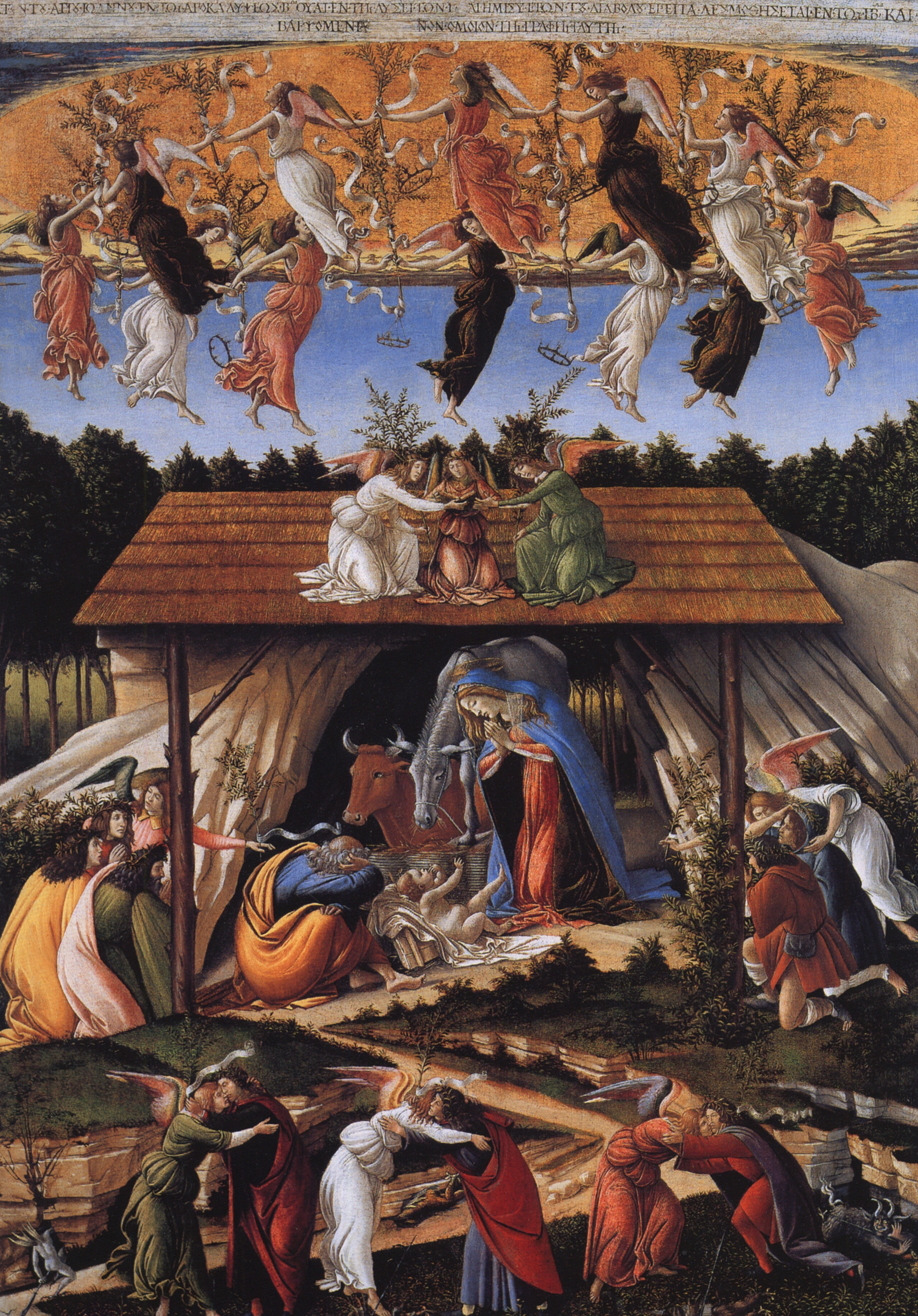
Advent IV: ‘He will save his people from their sins’

‘He will save his people from their sins.’

‘am mai ef a wareda ei bobl oddi wrth eu pechodau.’ (Mt 1:21)

Of all the figures in the story of Our Lord’s Nativity, the one most often overlooked is Joseph. It is fair to say that today’s Gospel finds Joseph in a particularly awkward situation. He is described in verse 19 as a ‘just man’. Just or righteous in this context means that he obeys Jewish Law. However, Deuteronomy 22:23-24 states that:

‘If there is a betrothed virgin, and a man meets her in the city and lies with her, then you shall bring them both out to the gate of that city, and you shall stone them to death with stones, the young woman because she did not cry for help though she was in the city, and the man because he violated his neighbour’s wife. So you shall purge the evil from your midst.’ (Deut 22:23-24)

Mary and Joseph are betrothed, and preparing to be married, but strictly speaking under Jewish Law because she is pregnant, Mary is guilty of a capital crime. It is perhaps for this reason that Luke’s account tells us that Mary spends time out in the country with her cousin Elizabeth, who is also pregnant. Joseph loves Mary, and rather than see her killed or publicly humiliated, he wants to put an end to the marriage quietly, without any fuss. It is at this moment that the Angel Gabriel appears to him in a dream saying:

“Joseph, son of David, do not fear to take Mary as your wife, for that which is conceived in her is from the Holy Spirit. She will bear a son, and you shall call his name Jesus, for he will save his people from their sins.” (Mt 1:20-21)

Joseph is a descendant of King David, a member of Israel’s Royal Family. This is an awkward fact when the current occupier of the throne is not part of that dynasty, but was put there by the Romans as a pliant puppet king. 

The angel says to Joseph: ‘Do not be afraid! Paid ag ofni!’ Again and again God speaks to His people to tell them not to fear and to be of good heart, to reassure and encourage them. God loves His people, there is nothing to be afraid about. The angel is clear: the child that will be born is of the Holy Spirit. He will be the Son of God, and His name will be Jesus, because He will save His people from their sins. ‘Yeshua’ means ‘God saves’ which is exactly what Jesus does. At a practical level the angel’s message to Joseph is designed to put him at ease, to stop him worrying. The message is Good News, through the angel the Gospel of Salvation is announced.

To reinforce this fact, St Matthew then quotes a prophecy of Isaiah, which is also found in the first reading today:

“Behold, the virgin shall conceive and bear a son, and they shall call his name Immanuel” (Mt 1:23)

The prophecy is being fulfilled; there will be a son born to the House of David, who will be God with us (Emmanuel), and He will save His people from their sins. This is why we celebrate Christmas, because it is the coming of our Saviour. What does is mean to say that God is with us? Is it an expression of solidarity? Or something more? In Jesus God is with us, and He shares our human life, from birth to death. Christ is not some remote divine figure, but one intimately acquainted with all of human existence. God is not distant, but instead is someone who understands us, and loves us. Christ’s entire existence is about communicating Divine Love and Reconciliation. The Church has also been proclaiming this same message of hope and salvation for the past two thousand years.

He will save his people from their sins’: the angel’s words to Joseph could not be clearer. Jesus is God’s rescue mission, sent to save humanity from their sins. This vocation ultimately leads to Calvary. Therefore, as we prepare to celebrate Christ’s Birth, we know that His life will end here, on the Cross. As we prepare for the most joyous of feasts, we are mindful of the cost and depth of God’s love.

It is important to notice what Joseph does when the dream is over:

‘When Joseph woke from sleep, he did as the angel of the Lord commanded him: he took his wife, but knew her not until she had given birth to a son. And he called his name Jesus.’ (Mt 1:24-25)

Joseph did what the angel commanded him to do. He was obedient. He listened and obeyed. Joseph is complete opposite of Ahaz, in today’s first reading, who neither listens to God nor obeys Him. Joseph is obedient in naming his son as he was instructed: ‘And he called his name Jesus’ (Mt 1:25). Jesus too will be obedient. His is an obedience to the Father’s will borne out through suffering, death and resurrection which characterises the mission of the Son. This is what brings about our salvation. We then, in obedience, look for His second coming as our Saviour and our Judge. As Christians, we are called to take time to ponder these mysteries — to stop for a while amid the business of our modern existence and reflect upon the wondrous nature of God’s love for us, and for all humanity. We need to take the opportunity to stop, and to ponder this wondrous fact; to reflect upon what ‘God-with-us’ means for each one of us, and for our lives.

As the people of God, members of the Christian Church, which we enter through our baptism, we have all been commissioned to proclaim the Good News of Jesus Christ, and to live out this example in our lives. Christians urge the world to pause and to consider exactly what is being celebrating at Christmas: the free gift, of hope and salvation for all people, through a baby, born in a stable, among the poor and the marginalised.

The act of Divine love, which we experience in Our Lord’s Nativity, should draw us, in turn, to love God and to love our neighbour; to live out the love which becomes flesh in the womb of the Virgin Mary. This same love will become the flesh and blood that we touch and taste, here, this morning, through the bread and wine. Feeding us, so that we might share His divine life. So, my brothers and sisters in Christ, let us be filled with, and transformed by, the divine gift of love. Let us, like Mary and Joseph, wait on the Lord and be reshaped by Him. Let us live out our faith in our lives so that others might believe and sing the praise of God the Father, God the Son, and God the Holy Spirit, Duw Dad, Duw y Mab, a Duw yr Ysbryd Glân. To whom be ascribed all might, majesty, glory, dominion, and power, now and forever. Amen.

James Tissot The Vision of St Joseph: Brooklyn Museum

Lent V

THE past sixty years in Britain and the West have seen societal change on a scale arguably never witnessed before in the history of humanity. The world in which we live has changed, and people have become used to the changes. On the whole, despite becoming more permissive, society is still judgemental. We put people on pedestals, and then we are surprised when they fall off. More than that, the media constantly encourages us to be critical of others. This is deeply corrosive, because it sets us up to think that we are somehow better than others. However, we too make mistakes. We all, each and every one of us, myself included, say and do things which we should not, which hurt others, and for which we need forgiveness.

Thankfully, we can ask God and each other for this forgiveness. Because of what Christ did for us, taking our sins upon himself, on the Cross, we are forgiven. God loves us. In turning to God for forgiveness, we are turning away from sin and trying to live our lives in a new way. The Christian life is, like the season of Lent, a constant repetition of this process: failing and trying again, and keeping going. So that bit by bit, gradually, we let God be at work in us, to transform us. This helps us to be less judgemental, more loving, and more forgiving. Drawing on God’s love, we can build up a community that is filled with this radical transforming love. We can become a force for good, a beacon of hope, sharing Christian love with the world around us.

Today’s Gospel finds Jesus is in the Temple in Jerusalem for the Feast of Tabernacles. According to the law of Moses the woman caught in adultery should be punished by being stoned to death. However, the Roman occupiers had taken from the Jews the power to put anyone to death. Jesus’ response shows the world that there is another way: a way of love and not of judgement. Interestingly, this passage is the only time when the Gospel writers record Jesus writing. After the Scribes and Pharisees have brought the unnamed woman to Him:

‘Plygodd Iesu i lawr ac ysgrifennu ar y llawr â’i fys.’

‘Jesus bent down and wrote with his finger on the ground.’ (Jn 8:6) 

This verse has puzzled people for centuries. What exactly did Jesus write? We cannot know for certain. An answer to this intriguing question may come from Scripture. A few verses earlier in John’s Gospel, Jesus talks of rivers of living water. In the prophet Jeremiah we find the following words:

‘O Arglwydd, gobaith Israel, gwaradwyddir pawb a’th adawa; torrir ymaith oddi ar y ddaear y rhai sy’n troi oddi wrthyt, am iddynt adael yr Arglwydd, ffynnon y dyfroedd byw.’

‘O Lord, the hope of Israel, all who forsake you shall be put to shame; those who turn away from you shall be written in the earth, for they have forsaken the Lord, the fountain of living water.’ (Jer 17:13)

We can speculate that at least part of this verse from Jeremiah is what Jesus wrote in the earth. Writing these words would both fulfil the prophecy of Jeremiah, and shame the woman’s accusers. Jesus is showing that the Scribes and Pharisees have turned away from God, towards legalism and judgmental behaviour. Those gathered would know the prophecy of Jeremiah, and also that Jesus has recently mentioned streams of living water. This verse is the key to understanding what is going on. Jesus is fulfilling Scripture, and demonstrating that God should be characterised by love, mercy, and forgiveness. 

The Religious Authorities have not quite understood the situation. They continue to press Jesus for an answer, which He does not give. Instead Jesus challenges them:

‘ymsythodd ac meddai wrthynt, “Pwy bynnag ohonoch sy’n ddibechod, gadewch i hwnnw fod yn gyntaf i daflu carreg ati.”’

‘he stood up and said to them, “Let him who is without sin among you be the first to throw a stone at her.”’ (Jn 8:7)

Jesus’ position is non-judgemental, and highlights the hypocrisy of the accusers. Christ then returns to His writing:

‘Yna plygodd eto ac ysgrifennu ar y llawr.’

‘And once more he bent down and wrote on the ground.’ (Jn 8:8)

It is possible that Jesus was finishing the verse from Jeremiah. We cannot be sure, but what we do know is that the combination of His words, both written and spoken have a profound effect:

‘A dechreuodd y rhai oedd wedi clywed fynd allan, un ar ôl y llall, y rhai hynaf yn gyntaf, nes i Iesu gael ei adael ar ei ben ei hun, a’r wraig yno yn y canol. Ymsythodd Iesu a gofyn iddi, “Wraig, ble maent? Onid oes neb wedi dy gondemnio?” Meddai hithau, “Neb, syr.” Ac meddai Iesu, “Nid wyf finnau’n dy gondemnio chwaith. Dos, ac o hyn allan paid â phechu mwyach.”’

‘But when they heard it, they went away one by one, beginning with the older ones, and Jesus was left alone with the woman standing before him. Jesus stood up and said to her, “Woman, where are they? Has no one condemned you?” She said, “No one, Lord.” And Jesus said, “Neither do I condemn you; go, and from now on sin no more.”’ (Jn 8:9-11)

It is interesting that the older (and wiser) ones are the first to grasp the full implications of what Jesus is saying. Christ does not condemn the woman: God is a God of mercy. However, Our Lord does say, ‘Dos, ac o hyn allan paid â phechu mwyach’ ‘go, and from now on sin no more’ (Jn 8:11). Forgiveness goes hand-in-hand with contrition and repentance. We are loved, healed and restored by God, but with forgiveness comes a challenge. As Christians we are to turn away from wrongdoing, from the ways of the world, and instead find life in Christ.

Lent gives us the opportunity to take a long, hard look at ourselves and at our lives. It is a time to recognise that we need to become more like Jesus — to live, and think, and speak like Him. We need to be nourished, healed and restored by Christ, so that we can live lives which proclaim His love and His truth to the world. Lent is also a time for us to realise that we are loved by God, and that God is merciful, forgives our sins, and longs for us to experience life in all its fulness.

It is interesting that today is Passion Sunday when we begin in earnest our commemoration of Jesus’ death and Resurrection. This morning’s Gospel speaks of a different type of passion (sexual desire) which when uncontrolled could lead to death — either of a person condemned for committing adultery or a relationship between a husband and wife.

As we pray today for couples preparing for marriage we also pray for those whose relationships are under strain and for all who have experienced marital breakdown. Let us be slow to judge, and quick to show compassion and mercy to those whose lives are not perfect.

Let us, as followers of Jesus, rejoice in the generous love of God and prepare ourselves to celebrate Christ’s Passion. Let us give thanks for our families and relationships and give glory i Duw Dad, Duw y Mab, a Duw yr Ysbryd Glân. I’r hwn y priodoler pob gogoniant, arglwyddiaeth, a gallu, yn awr, ac yn oes oesoedd. Amen.

Christ and the sinner, A Mironov 2011

Trinity XIV: Authentic Faith

‘For the Lord sees not as man sees: man looks on the outward appearance, but the Lord looks on the heart.’

oblegid nid yr hyn a wêl meidrolyn y mae Duw’n ei weld. Yr hyn sydd yn y golwg a wêl meidrolyn, ond y mae’r Arglwydd yn gweld beth sydd yn y galon.’ (1Sam 16:7)

People in general want to be taken seriously, and to be trusted. For a society to function and flourish, people need to be able to trust each other. One of the main ways in which we earn people’s trust is by honesty and authenticity. When our words and actions align, we are people of integrity. If what we do and what we say do not match up, we leave ourselves open to an accusation of hypocrisy: of playing a role rather than being genuine.

This morning’s Gospel begins with a striking scene. Jesus’ disciples are observed by the Scribes and Pharisees to be eating food without having washed their hands beforehand. The Pharisees are unhappy that the disciples are failing to comply with the outward practice of their religion. What the Religious Authorities are advocating is not just good hygiene but ritual cleanliness. After washing one’s hands, and before drying them, the tradition was to recite the following prayer:

Blessed are You, Lord our God, King of the universe, who has sanctified us with Your commandments, and commanded us concerning the washing of the hands.

The Gospel writer, Mark has to explain the practice to his non-Jewish audience, who are not necessarily familiar with such things. He shows how concerned the religious leaders are with what is going on, reporting their question to Jesus:

“Why do your disciples not walk according to the tradition of the elders, but eat with defiled hands?”

“Pam nad yw dy ddisgyblion di’n dilyn traddodiad yr hynafiaid, ond yn bwyta’u bwyd â dwylo halogedig?” (Mk 7:5)

This leads Our Lord to reply:

“Well did Isaiah prophesy of you hypocrites, as it is written, “‘This people honours me with their lips, but their heart is far from me; in vain do they worship me, teaching as doctrines the commandments of men.’ You leave the commandment of God and hold to the tradition of men.”

“Da y proffwydodd Eseia amdanoch chwi ragrithwyr, fel y mae’n ysgrifenedig: ‘Y mae’r bobl hyn yn fy anrhydeddu â’u gwefusau, ond y mae eu calon ymhell oddi wrthyf; yn ofer y maent yn fy addoli, gan ddysgu gorchmynion dynol fel athrawiaethau.’ Yr ydych yn anwybyddu gorchymyn Duw ac yn glynu wrth draddodiad dynol.” (Mk 7:6-8)

Jesus is questioning why the religious authorities are making up rules and stressing the importance of outward compliance with God’s commandments. He quotes from the prophet Isaiah to show that while the Scribes and Pharisees pay lip-service to God, they are not close to Him in their hearts. The Commandments are not an end in themselves, but a means to an end: namely, closeness with God. The Pharisees’ desire for outward conformity and rule-following has led them to drive people away from God, rather than bringing them closer.

The point Jesus is making is also made clear in this morning’s reading from the book of Deuteronomy, where Moses says to the people of Israel:

‘You shall not add to the word that I command you, nor take from it, that you may keep the commandments of the Lord your God that I command you.’

‘Peidiwch ag ychwanegu dim at yr hyn yr wyf yn ei orchymyn ichwi, nac ychwaith dynnu oddi wrtho, ond cadw at orchmynion yr Arglwydd eich Duw yr wyf fi yn eu gorchymyn ichwi.’ (Deut 4:2)

God has made His commands clear. The people should neither add to them, nor ignore them. However, in their desire to be seen to be keeping God’s commands the religious leaders are making up their own laws, and forcing them upon God’s people. They are reducing religion into something done for show, for outward appearance, rather than to help people to grow in holiness.

Christ then develops His teaching, stating:

“There is nothing outside a person that by going into him can defile him, but the things that come out of a person are what defile him.”

“Nid oes dim sy’n mynd i mewn i rywun o’r tu allan iddo yn gallu ei halogi; ond y pethau sy’n dod allan o rywun, dyna sy’n ei halogi.” (Mk 7:15)

Food does not defile us. Defilement is something that we do to ourselves. What we think and feel affects our relationship with God much more than our outward conformity with a religious ritual. This is made clear in God’s words to Samuel before anointing David King of Israel:

‘For the Lord sees not as man sees: man looks on the outward appearance, but the Lord looks on the heart.’

‘oblegid nid yr hyn a wêl meidrolyn y mae Duw’n ei weld. Yr hyn sydd yn y golwg a wêl meidrolyn, ond y mae’r Arglwydd yn gweld beth sydd yn y galon.’ (1Sam 16:7)

Jesus then proceeds to give examples of the human sins which come ‘out of the heart of man’ ‘o galon dynion’ and cause defilement. These include what became known as the seven deadly sins: pride, greed, wrath, envy, lust, gluttony and sloth. 

Christ is uncompromising in diagnosing the problem — these are all things which separate God and humanity. Our Lord is concerned with the cleanliness of people’s souls. It is from within, from the human heart, that sinfulness springs. Jesus’ point is a simple one: we become what we do. Thus, the formation of a moral character is important, and can only be brought about by doing the right things for the right reasons.

However, despite our best efforts, we will never fully succeed. Sin is a problem which only God can sort out. This is why Christ died for us: taking the burden of our wrongdoings upon Himself. He defeats Sin and Death, to reconcile us, and heal us. The Cross is the most important demonstration of Divine Love and Forgiveness. The right action can help form our moral character, but it is God’s Grace which brings about the reconciliation which our efforts cannot.

My brothers and sisters in Christ, let us live out our faith in our lives. Let us proclaim the kingdom in an authentic way, so that others will be drawn to the words and example of Jesus. Clothed in the humility of our need of God, His love and mercy, let us come to Him. To be fed by Him, to be fed with Him, to be healed and restored by Him. With pure hearts, let us give praise to God the Father, God the Son, and God the Holy Spirit. To whom be ascribed all glory, dominion and power, now and forever. Amen.

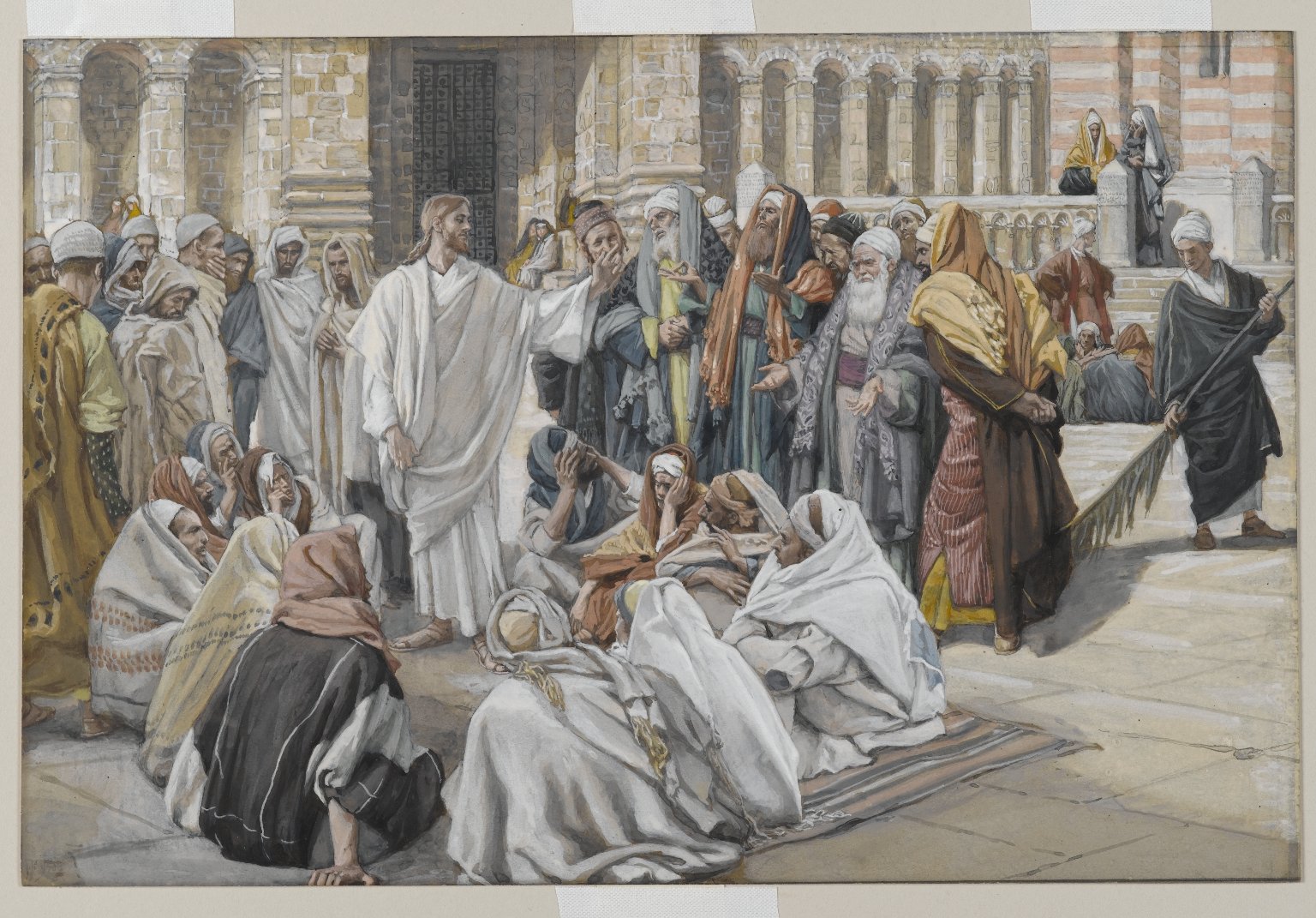
James Tissot – The Pharisees question Jesus (Brooklyn Museum)

Twenty Third Sunday of Year A

The emergency services were not well-developed in the Ancient World. However, cities did have a night watch who functioned as a combination of a police force and fire brigade. It is to such an office that God appoints the prophet Ezekiel in this morning’s first reading. He is to be a night watchman, someone who is vigilant against fire and crime, someone concerned with safety and people’s well-being. Prophets exist to speak warnings to God’s people, to show them where they are going wrong and to show them how to get back on the right path. The role of a prophet is to call sinners to repent from their evil ways. Through the prophet God calls His people back to Him. Though people are, then as now, wayward they are given a chance to repent, to return to the ways of human flourishing. The choice is a stark one: life or death. It is important, and a lot depends upon the choices we make. This is why the central proclamation of the Church is to call God’s people to repentance: to turn away from sin, and to turn back to God. 

This week’s second reading from Paul’s Letter to the Romans continues the Apostle’s advice on how Christians should live out their faith in their lives. Living a Christian life  is a difficult thing to do, and for two thousand years Christians have struggled to do it well. As followers of Christ we are called to love God and to love one another. Paul quotes from the Ten Commandments to make the point that the basis for the moral code found in the Mosaic Law is Love. If you love someone then you will not do such things to them. To love is to will the good of another, to make the right choice, one which leads to human flourishing.

Having shown the Church how to live, Paul widens his focus, to reinforce something we heard last week: 

Do not be conformed to this world, but be transformed by the renewal of your mind, that by testing you may discern what is the will of God, what is good and acceptable and perfect. (Romans 12:2)

Paul can see the wider significance of what he is encouraging people to do. The Church knows that Jesus will come to judge the world, so Paul is encouraging Christians to live moral lives. The first Christians were surrounded by a decadent and morally corrupt society, justas we are today, and have been for two thousand years. Human nature is surprisingly consistent. We, however, are called to live differently. In our baptism, we put on Christ, and we were clothed with Him, sharing His Death, but we were also raised to new life in Him. We pray for the strength to live that new life, here and now! This is how we should prepare to meet our Redeemer, when He comes again.

How do we deal with problems as a church? This is an important and difficult question. This morning’s Gospel shows us how, in a number of clear simple steps. First we should approach the person in private. If they listen, and presumably admit their mistake and ask for forgiveness, or try to put things right, then that is an end to the matter. They are reconciled, and the matter is forgiven and forgotten. If this does not work, Paul instructs us to take one or two people, so that there are witnesses, and if this does not work, it becomes a matter for the church as a whole. If the person at fault still refuses to listen, they are excluded, not as a punishment, but so that they may have another opportunity to think things over, to admit that they are wrong, and to seek forgiveness and reconciliation. The point is not to cast people out, but to try and keep them in, and give them all possible opportunities to repent and be reconciled. In worldly terms this provision is generous. The church, which Christ founded, is meant to do things differently, as Jesus says:

The thief comes only to steal and kill and destroy. I came that they may have life and have it abundantly. (Jn 10:10)

God wants us all to have life in all its fulness, which includes healing and reconciliation. The world, however, often sees things in terms of punishment and retribution, whereas the church views things in terms of restoration. Our God is a God of justice and mercy. This is why Jesus goes to the Cross willingly, to bear our sins, and to heal our wounds. We cannot sort out the problem of our sin and woundedness on our own; if we could we would not need a Saviour. 

This is why Jesus reiterates His teaching about sin:

Truly, I say to you, whatever you bind on earth shall be bound in heaven, and whatever you loose on earth shall be loosed in heaven. (Mt 18: 18) 

This is a reality because of all that God has done for us in Christ. The Church exists to continue the redemptive work of God within the world. Through God’s forgiveness we can be truly reconciled and the healing, which can become a reality in our lives. Jesus says in the words which follow:

Again I say to you, if two of you agree on earth about anything they ask, it will be done for them by my Father in heaven. (Mt 18:19)

Through God’s reconciliation we can make requests in prayer, and those requests will be answered. In addition, as a Christian community we can be encouraged by Christ’s presence in our midst:

For where two or three are gathered in my name, there am I among them. (Mt 18:20)

Christ is among us, here and now! And we receive His Sacramental Presence in the Eucharist, His Very Flesh and Blood, so that He may transform us; so that we may have a foretaste of the Heavenly Banquet and be built up and strengthened in love, both here and now. We have the medicine for which our souls cry out. This is the healing which Christ accomplishes on the Cross, He longs to pour out His Love on us, so that we can know true freedom, true joy, and true love, in Him. So let us come to Him and let His Grace transform our lives, so that we, and all creation, may give glory to God the Father, God the Son, and God the Holy Spirit, to who whom be ascribed as is most right and just, all might, majesty, glory, dominion and power, now and forever. Amen. 

The Second Sunday before Advent: Mk 13:1-8

There was a time when you would see men walking around with sandwich boards, which declared, ‘The End is Nigh!’ It would be all too easy to mock them, or write them off as crackpots. They do, however, make a serious point. For all Christians, after Jesus’ Ascension, we are waiting for Jesus to come again, as our Saviour and our Judge. It might be today, or in a thousand years from now, but He is coming, and we need to be ready. We need to be prepared to meet Him. It is why, in the Season of Advent, which will soon be upon us, we consider the two comings of Jesus. The first is as a baby born in Bethlehem, the second will be as Our King, Our Saviour and Our Judge. The two comings are linked, and we need to be ready for both. 

People nowadays are worried by many things: Britain’s departure from the EU, the President of the United States of America, the threat of nuclear war, global climate change, the end of the world. The latter part of the twentieth century and the start of the twenty-first are full of dire warnings of impending doom. It’s scary stuff, it really is. But as Christians we know that whatever happens, we are loved by and saved by God, that we, and all things are in His hands. It can be hard to hold onto hope like this, but we can. 

The buildings of the Temple complex were soon to be destroyed by the Romans. The single most holy place in the world for Jews was about to be destroyed. It’s a frightening prospect, but it teaches an important lesson: not to be overly concerned with the stuff of this world, as it isn’t as important as we tend to make it. The disciples can’t quite understand that yet, but they will, in time.

What’s more important for Jesus is that the disciples aren’t led astray into strange beliefs, or following false Christs. The last two thousand years have seen some very strange versions, some might say perversions, of Christianity. What we believe matters, because it affects how we live our lives, it helps us give right praise to God, rather than something distorted, ugly and man-made. When Mark wrote his Gospel there were lots of strange ideas floating around about Jesus, and there still are today. It was a time of great uncertainty then, as now. There were wars and natural disasters which portend the end times. Christians were facing persecution then, and they are now too, all over the world. We are more likely to face indifference than persecution, but it knocks your confidence somewhat. You want hope and comfort, and the promise of something better. 

And we have that in Jesus Christ, who died for our sins, and who rose again to show us that we have the promise of eternal life with God, ‘For by a single offering he has perfected for all time those who are sanctified’ (Heb 10:14). This is truly good news to a troubled world. It is the heart of our faith, and the source of our joy. Peter and Andrew, James and John want to know when it will take place. Jesus doesn’t tell them, but he gives them signs to be alert for, so that they can be ready.

I wasn’t a boy scout, but their motto ‘Be Prepared’ is a good one, especially for Christians, because Jesus is coming, and we need to be ready to meet Him. It is good to think about this as we prepare to enter Advent, the penitential season which looks towards Christmas, and our yearly celebration of Jesus’ birth. It is truly amazing thing, that God should be born as one of us, to save us from our sins, to give us the hope of Heaven. We need to prepare for it, because it is important: not the turkey and tinsel and the rampant consumerism, but the Incarnation of the Word of God. It changes the world, and has been doing so for the last two thousand years. We also know that Jesus will come to judge the world. It’s tricky that one, knowing that we will be called to account for what we have been, said, thought, and done.None of us deserve to go to Heaven, but God is loving and merciful, and forgives our sins when we are penitent, He gives us another chance when we make a mess of it. We keep doing it, and God keeps forgiving us, so that we can try to do what God wants us to do. I find such generosity staggering. The world around us can be judgmental, it likes to write people off as no good, as failures. Thankfully God isn’t like that, and the church shouldn’t be either. We have to be a community of healing and reconciliation, so that we can offer the world an alternative. It is both liberating and exciting to that you and I are part of it, and hopefully we want others to be as well. 

This is the covenant that I will make with them after those days, says the Lord: I will put my laws on their hearts, and write them on their minds,’ (Heb 10:16). The author of the Letter to the Hebrews quotes Jeremiah (31:33) to show us how Scripture is fulfilled in the Person of Jesus, who makes a new covenant with His Precious Blood on Calvary. God makes it possible for us to live this new life, triumphing over sin and death. Christ does this for us, what can we do for Him?

We can be ready to meet Him, and we can live the life He wants us to live, not worry whether Christ will come tomorrow or in a thousand years.