The Second Sunday of Advent

‘May the God of hope fill you with all joy and peace in believing’ (Rom 15:13)

A bydded i Dduw, ffynhonnell gobaith, eich llenwi â phob llawenydd a thangnefedd wrth ichwi arfer eich ffydd

The book of the prophet Isaiah has sometimes been called the ‘Fifth Gospel’. This is because so many of Isaiah’s prophecies look forward to the Messiah, and find their fulfilment in Jesus. We, too, are currently in a time of anticipation. Advent is when we prepare for Christ to come, both as a baby in Bethlehem, and as our Saviour and our Judge. As the son of Jesse, and the son of David, Jesus is Israel’s true king, who rules over all:

‘There shall come forth a shoot from the stump of Jesse, and a branch from his roots shall bear fruit. And the Spirit of the Lord shall rest upon him, the Spirit of wisdom and understanding, the Spirit of counsel and might, the Spirit of knowledge and the fear of the Lord. And his delight shall be in the fear of the Lord.’ (Isa 11:1-3)

Isaiah has hope in the peace the Messiah will bring. Injustice and affliction, the fruit of sin, is dealt with on the Cross, where Jesus ‘shall stand as a signal for the peoples’ (Isa 11:10). This is the great demonstration of God’s love to the world. A love which heals and reconciles humanity. 

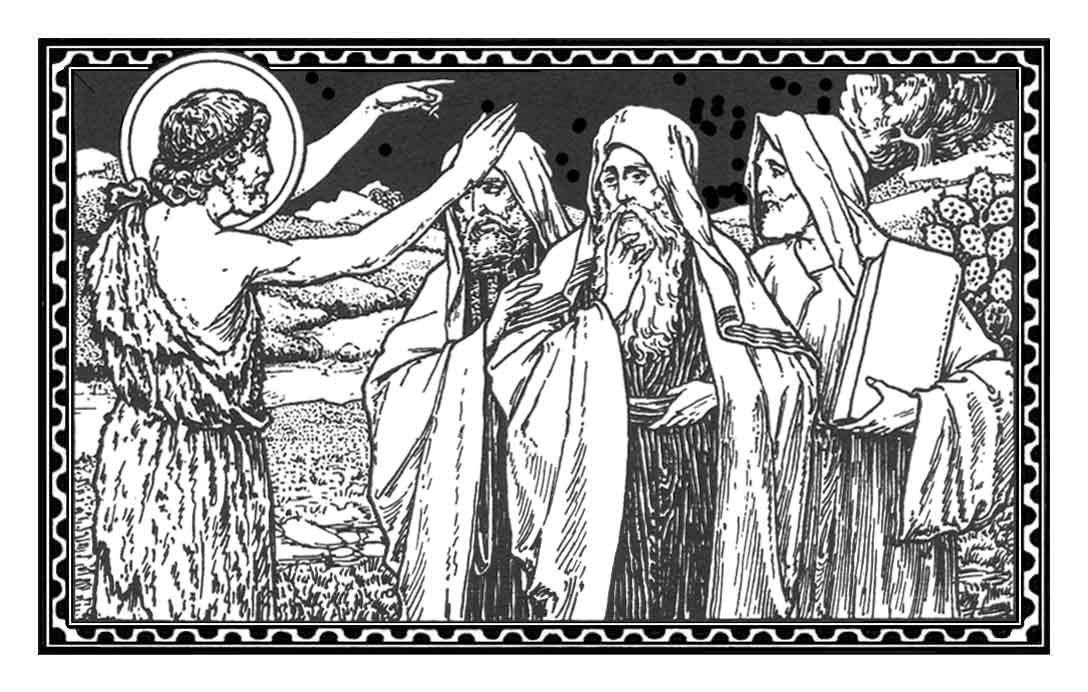
To prepare the way for the Messiah, Israel needed prophets like Isaiah and John the Baptist both to announce His coming and to prepare people for His arrival. A prophet’s role is a difficult one because they are often required to tell people home truths. Those chosen by God to act as prophets point out the sorts of things which, if left to our own devices, we would rather ignore. John’s message is simple, plain, and direct:

‘Repent, for the kingdom of heaven is at hand’ (Mt 3:2)

To repent is to express sincere regret about one’s wrongdoing. The Greek word used —metanoia— literally means to ‘change your mind’. It is a proclamation, rather like a road sign which reads: ‘You are going the wrong way!’ Repentance is recognising this and turning around. 

For two thousand years the Church has worked to continue John’s proclamation, and to say to the world: turn around, and follow Jesus! The season of Advent is penitential because it highlights this call to conversion and says to everyone, both inside and outside the Church, that our lives are supposed to be a perpetual turning back to Our Lord. We all need to be reminded of our shortcomings, and to be encouraged to let God be at work in and through us.

John the Baptist’s blunt message struck a chord and sparked something of a revival in Israel. People took him seriously:

‘Then Jerusalem and all Judea and all the region about the Jordan were going out to him, and they were baptized by him in the River Jordan, confessing their sins.’ (Mt 3:5-6)

It is not surprising that in those times people travelled out into the desert to hear John. He was charismatic, and his message was a refreshing antidote to the Religious Establishment of his day. People came, confessed their sins, and were baptised. They were washed clean, to love and serve God. The crowds also came because, in John, the people of Israel saw prophecy fulfilled, and a new Elijah in their midst. One who points to the Messiah, and has done so ever since he leapt in his mother Elizabeth’s womb at the Visitation. Before John was even born he proclaimed that Jesus was the Christ, the Messiah, the One who would save us from our sins.

We see this Messianic kingdom, hoped for in the vision of Isaiah, in this morning’s first reading. The branch which comes forth from the stem of Jesse is the Blessed Virgin Mary. Filled with God’s Holy Spirit, she conceived and bore Our Saviour; the true King of all that is, or has been, or will be. Christ is on the side of the poor and the meek, people who are left behind, and ignored because they are not rich or powerful. This is a radical concept, one which still has some way to go before it is fully put into practice in the world around us. Isaiah’s vision of Messianic peace may appear impossible, but it signifies a world-changing harmony, which alters how things are, and how people behave. For, with and through God, another way is possible. This path is not simple, nor is it easy, but it is possible if we rely upon God to help us. As St Paul says to the Christians in Rome:

‘May the God of endurance and encouragement grant you to live in such harmony with one another, in accord with Christ Jesus, that together you may with one voice glorify the God and Father of our Lord Jesus Christ. Therefore welcome one another as Christ has welcomed you, for the glory of God.’ (Romans 15:5-7),

and a little later in the same passage:

‘May the God of hope fill you with all joy and peace in believing, so that by the power of the Holy Spirit you may abound in hope’ (Romans 15:13).

Hope can feel in pretty short supply when we look at the world around us, and if we just look to humanity then we will be disappointed. Our hope comes from God. Our hope is God. God is with us. It is His Birth that we are preparing to celebrate at Christmas. In Advent we prepare for Christ to come as our Saviour and our Judge: 

‘His winnowing fork is in his hand, and he will clear his threshing floor and gather his wheat into the barn, but the chaff he will burn with unquenchable fire.’ (Mt 3:12) 

Judgement is real, and it should make us stop and think for a moment. Are we living the way God wants us to? If we are not then we need to repent, we need to say sorry, and we need to live the way that God wants us to live. This is how we flourish as Christians. John the Baptist calls us to make a spiritual u-turn, to turn our life around, and to turn away from our sins, which separate us from God. John calls us to the waters of baptism, so that we can be healed and restored by God, filled with his grace, and prepared to receive the Holy Spirit:

“I baptize you with water for repentance, but he who is coming after me is mightier than I, whose sandals I am not worthy to carry. He will baptize you with the Holy Spirit and fire” (Mt 3:11).

The problem with the Pharisees and Sadducees who come to John is that they do not show any repentance. They haven’t made the necessary u-turn, and they do not have the humility to recognise their own sinfulness, and their need to be washed in the waters of baptism. They, therefore, do not possess the right attitude to allow God to be at work in their lives.

As well as recognising Jesus as our Saviour, John the Baptist sees Him as Our Judge. John points to the second coming of the Lord when, as St John of the Cross puts it, ‘we will be judged by love alone’. It is love that matters. In Christ we see what love means. True, deep, love is costly, self-giving and profound. As we are filled with God’s Spirit, nourished by Word and Sacrament, we need to live out this love in our lives. This is how we prepare to meet Jesus as we prepare to celebrate His Birth and look forward to His Second Coming.

So, my brothers and sisters in Christ, let us re-commit ourselves to live out God’s love in our lives. Let us turn away from everything which separates us from God, and from each other. Let us live out deep, costly, and self-giving love in our lives. This is both what Christ and John the Baptist call us to do. By acting in this way we demonstrate to the world around us what our faith means in practice. How our beliefs affect our lives, and why others should follow Jesus, and sing the praises of God the Father, God the Son, and God the Holy Spirit, Duw Dad, Duw y Mab, a Duw yr Ysbryd Glân. To whom be ascribed all might, majesty, glory, dominion, and power, now and forever. Amen.
Advent Sunday

‘Gwisgwch yr Arglwydd Iesu Grist amdanoch’

‘But put on the Lord Jesus Christ.’ (Rom 13:14)

Today is Advent Sunday, the start of the season of Advent. The next four weeks are a time of waiting, of expectation: for the coming of Jesus Christ. Both as we prepare to celebrate His Birth at Christmas, and for the Second Coming of Christ as our Saviour and our Judge. The idea of Jesus’ return has not always been seen as something to look forward to. Judgement has been equated with condemnation, and fear of the coming judgement has been used to control people. Yet, as Christians, we look forward to Our Lord’s Second Coming, just as we look forward to our annual celebration of His First Coming, at Christmas.

In today’s Gospel Jesus is teaching His disciples about the end times. Our Lord draws a comparison between the Last Day and the Flood:

‘For as were the days of Noah, so will be the coming of the Son of Man. For as in those days before the flood they were eating and drinking, marrying and giving in marriage, until the day when Noah entered the ark, and they were unaware until the flood came and swept them all away, so will be the coming of the Son of Man.’ (Mt 24:37-39)

The point is that, just like the arrival of the Great Flood, no-one knows when the Last Day is going to happen. People are carrying on with their lives as normal. It is an unexpected event. One of the reasons Noah was saved was that he was prepared. He had built an ark. Our ark is the Church, which we enter through Baptism. For us the waters bring life not death. We are ready, and preparation is the key to Jesus’ message. Whenever the Lord comes, we need to be in a fit state to meet Him. 

How do we prepare? By following the advice in the first reading from the prophet Isaiah:

‘O house of Jacob, come, let us walk in the light of the Lord.’ (Isa 2:5)

If we walk in the light of the Lord, then we are not walking in darkness. We live out our faith in our lives, and our moral characters are formed by our behaviour. We become what we do often in our actions.

About sixteen hundred years ago, one of Christianity’s great figures, St Augustine, had been struggling towards the journey of faith. One day, as he sat under a fig tree, he kept hearing a child say, ‘Pick up and read’ (Aug. Conf. 8.29). And so he opened a Bible and read in the Letter to the Romans:

‘Not in revelling and drunkenness, not in debauchery and licentiousness, not in quarrelling and jealousy. But put on the Lord Jesus Christ, and make no provision for the flesh, to gratify its desires.’ (Rom 13:13-14)

Drunkenness, fornication, the sort of behaviour often associated with the Christmas Office Party in particular, and the modern society in general, can be dismissed as ‘just a bit of fun’ or of ‘no consequence in the great scheme of things’. However, what we do affects our lives: we become what we do often. The Christian Life is most definitely not a ‘fun-free zone’. Rather, it is a way of being which allows us to be fully alive; doing what we should be doing in the way we should be doing it. Today’s world is filled with examples of the behaviour which St Paul sees as problematic: people being quarrelsome and subject to baser appetites. One need only read a newspaper, look at the Internet, or turn on the television, to see a world which has got things wrong, in which we are not living decently. Our lives, our characters, are formed by what we think and do, by the decisions we make. This is a cumulative process, where we build on the choices we have made in the past. Therefore, we need to start down the right path as soon as possible, or turn back if we have gone astray.

The first reading, from the prophet Isaiah, looks forward to a Messianic Age of peace:

‘and they shall beat their swords into ploughshares, and their spears into pruning-hooks; nation shall not lift up sword against nation, neither shall they learn war any more.’ (Isa 2:4)

Swords and spears will be turned into agricultural tools for ploughing fields and cultivating vines.They will no longer be used for warfare, but instead for growing grain and grapes, to make bread and wine. These are the very foodstuffs Our Lord takes at the Last Supper, when He institutes the Eucharist. This feast of thanksgiving is the fulfilment of Isaiah’s prophecy, and represents the Messianic Kingdom where love will triumph over violence.

At this time of year, The Church prepares for three comings: the first is our annual commemoration of Jesus’ birth in Bethlehem, at Christmas, where the Word became flesh and dwelt among us. The second coming of Christ will be at the end of time, when He will be our Saviour and our Judge. The third coming we prepare for is even nearer. It happens day by day, and week by week, when Christ comes to us in the Eucharist, through His Body and Blood, under the outward forms of Bread and Wine. This is the Feast of the Kingdom, anticipated by the ploughshares and pruning hooks of Isaiah: tools used to help produce Bread and Wine. Isaiah’s prophecy looks forward to the peace of the Messiah and the banquet of Bread and Wine. These are the Foods of the Kingdom, which provide nourishment for our journey of faith, and give us strength and new life in Christ. Jesus comes to us in the Eucharist to fortify us, and to transform us into His likeness; to help us to live out our faith in the whole of our lives.

So, my brothers and sisters in Christ, let us prepare to meet Our Lord by living out our faith, in all aspects of our lives , nourished with Word and Sacrament. The time is short. The time is now. How we live really matters. We need to grow in the Lord, to learn His ways and walk in His paths. As Christians, we are called to live decently and vigilantly, preferring nothing to Christ, and inviting all the world to come to the fullness of life in Him. This is how we prepare for His coming at Christmas and as Our Saviour and Judge. By following Jesus, and being fed by Him, we are restored and healed by Him. And so, on this Advent Sunday, we sing the praise of God the Father, God the Son, and God the Holy Spirit, Duw Dad, Duw y Mab, a Duw yr Ysbryd Glân. To whom be ascribed all might, majesty, glory, dominion, and power, now and forever. Amen.
Fra Angelico The Conversion of St Augustine, [Musée Thomas-Henry, Cherbourg-en-Cotentin, France]

Christmas 2024

Christmas is a time for many seasonal activities, including spending time with family and friends, eating special foods and enjoying Christmas Carols. Also, most of us will spend some time over the festive period watching films on the television, or in the cinema. Movies can, surprisingly, be particularly useful when we try and get our heads around the wonderful events of Christmas. I would like to begin by focussing on a film from my childhood — the 1981 adventure Raiders of the Lost Ark. In this film, the intrepid archaeologist Indiana Jones is competing with Nazi forces to discover the Ark of the Covenant, which, it is believed, has the power to make an army invincible. At the climax of the film, the villains open the Ark on an island in the Aegean Sea. Immediately, spirits and bolts of lightning are released, which kill the Nazis and free Indiana and his companion Marion. Other than being the sort of film one might watch at Christmas, what is the relevance of the scene?

The film’s denouement relies upon the heroes averting their gaze, while the villains do not, and are therefore destroyed. The plot draws upon the biblical idea that the glory of God, which the Ark is said to contain, is not something which humanity should gaze upon. In the Book of Exodus, when Moses asks to see God, he is told that if he does so he will die. The glory of God is not something humans are able to behold. 

Yet, the first reading this morning reaches its climax with the statement that:

‘fe wêl holl gyrrau’r ddaear iachawduriaeth ein Duw ni’

‘all the ends of the earth shall see the salvation of our God.’ (Isa 52:10)

There appears to be something strange going on here. Likewise, the one who begins His life wrapped in cloth and placed in a stone feeding trough, will end it taken down from a Cross, wrapped in cloth and placed in a stone tomb. ‘In my beginning is my end …. In my end is my beginning’ wrote T.S. Elliot in his poem ‘East Coker’, the second of his Four Quartets. And yet this end is but a prelude to Christ’s Resurrection, Ascension, and the Second Coming. 

In the great turnaround of salvation history, humanity goes from being unable to look upon the divine, to being able to behold Him in a manger, surrounded by farm animals. To put the mystery of our salvation into context, this morning’s Gospel goes back to the beginning, which is a very good place to start. Not to the Annunciation, where in the power of the Holy Spirit Christ takes flesh in the womb of His Mother, but to the beginning of time and the Creation of the Universe:

‘Yn y dechreuad yr oedd y Gair, a’r Gair oedd gyda Duw, a Duw oedd y Gair. Hwn oedd yn y dechreuad gyda Duw.’

‘In the beginning was the Word, and the Word was with God, and the Word was God. He was in the beginning with God.’ (Jn 1:1)

The Word which spoke the Universe into being exists in eternity with God, and is God. This is whom we worship: the one who will save humanity, and who offers us eternal life with God. 

Today we celebrate Divine generosity and humility. God is among us. Mae Duw yn eich plith ni. Born as a weak and vulnerable baby, he is utterly dependent upon Mary and Joseph. In time this divine generosity will be refused:

‘At ei eiddo ei hun y daeth, a’r eiddo ei hun nis derbyniasant ef.’

‘He came to his own, and his own people did not receive him.’ (Jn 1:11)

Ours is a God who does not force Himself upon us. Instead, He comes to us in love, to draw us out in love, that we might share in that love, and share it with others: 

‘A’r Gair a wnaethpwyd yn gnawd, ac a drigodd yn ein plith ni, (ac ni a welsom ei ogoniant ef, gogoniant megis yr Unig‐anedig oddi wrth y Tad,) yn llawn gras a gwirionedd.’

‘And the Word became flesh and dwelt among us, and we have seen his glory, glory as of the only Son from the Father, full of grace and truth.’ (Jn 1:14)

God pitches His tent, and tabernacles among us. The invisible becomes visible. The God who is beyond human understanding becomes human, and shares our human life from its beginning to its end. This is no unapproachable divinity, remote and uncaring, but one who experiences our existence, who understands us from the inside out. Humanity beholds the glory of God, in a baby who will die on a Cross to redeem us. 

Not only that, but Christ continues to give Himself to us, every time the Eucharist is celebrated, so that the Word can continue to become flesh, so that we can be transformed by Him, and share in God’s life. 

As we celebrate the birth of Our Saviour we need to ask ourselves: have we made room for Jesus in our lives? Have we really? If we haven’t, we need to let our hearts and our lives become the stable in which the Christ-child can be born. We need to see Him in the outcast, in the stranger, in the people which the world shuns. As Christians, we have to welcome such people, for in welcoming them we welcome Our Lord and Saviour. This is how we live out His love in our lives.

This is the true meaning of Christmas — this is the love which can transform the world. It is radical and costly. This love terrified the might of the Roman Empire, and showed human power that it was as nothing compared to Divine Love. Soul by individual soul, for the past two thousand years, the world has been changed by ordinary people living out the love shown to the world by, and through, this little vulnerable child.

So, today as we celebrate Jesus’ birth, let us raise our voices to join with the angels and give praise and honour to God the Father, God the Son, and God the Holy Spirit. To whom be ascribed all glory, dominion and power, now and forever. Amen.

Merry Christmas to you all!

Nadolig Llawen i chi gyd! 

Advent Sunday 2024: Be Alert: Preparing for Christ’s Return

WHEN I was a young boy I was given a bookmark, on which was printed, ‘BE ALERT: The world needs all the lerts it can get!’ This pun amused me greatly, and it still does. However, it contains a serious message. As Christians we are called to be watchful and aware: both of the world around us, and of the signs of God’s Kingdom. We must also be watchful for Our Lord’s Return. There are two things of which we can be sure. Firstly, that our earthly lives are finite, and secondly, that Christ will come to judge the World. People often find both of these concepts somewhat off-putting, which is understandable. However, they are a reality which we need to face, and understand. Christians believe in God. We trust that we are loved by Our Heavenly Father, who is a God of love and mercy. He sent His Son, Jesus Christ, to reconcile us to Himself and with each other. This is why we can have hope, and prepare to meet Christ with joyful hearts.

The prophet Jeremiah, in our first reading this morning, speaks of prophecy being fulfilled:

‘“Y mae’r dyddiau’n dod,” medd yr Arglwydd, “y cyflawnaf y gair daionus a addewais i dŷ Israel ac i dŷ Jwda.”’

‘Behold, the days are coming, declares the Lord, when I will fulfil the promise I made to the house of Israel and the house of Judah.’ (Jer 33:14)

God promises to fulfil prophecy and to send His people a Saviour. This promise, made to the House of David, is fulfilled both by Jesus’ birth and His return in judgement. God promises to save His people and to rule in a way that is far beyond any human idea of justice. Earthly rulers and politicians will, and do, disappoint us: they always fall short of our expectations. They are human beings, and are therefore fallible. Instead, we call upon God to intervene, and make things right. Only our Heavenly Father can save us, we cannot save ourselves.

However, waiting for Jesus’ Return is not without its problems. St Paul writes to Christians in northern Greece who are expecting Christ’s Second Coming to be imminent. Their expectations need to be managed, and they need help to live out their faith, so that they grow in love together. Our time on earth is limited, so we need to take every opportunity to live in a way that is pleasing to God.

Jesus’ description of the end times is in agreement with the apocalyptic passages found in the prophets. In other words, when that day comes it will be clear. If we are alert, then we will know what is going on. We should look forward to this day, and not be afraid: 

“A’r pryd hwnnw gwelant Fab y Dyn yn dyfod mewn cwmwl gyda nerth a gogoniant mawr. Pan ddechreua’r pethau hyn ddigwydd, ymunionwch a chodwch eich pennau, oherwydd y mae eich rhyddhad yn agosáu.”

‘And then they will see the Son of Man coming in a cloud with power and great glory. Now when these things begin to take place, straighten up and raise your heads, because your redemption is drawing near.’ (Lk 21:27-28)

Christ’s return is a sign of the Kingdom of God. He will welcome us to our eternal Heavenly home. Mindful of our destiny, we should use this season of Advent as a time for preparation. We should make these four weeks leading to Christmas a time when we turn away from everything which separates us from God and each other. As Our Lord says in the Gospel:

“Cymerwch ofal, rhag i’ch meddyliau gael eu pylu gan ddiota a meddwi a gofalon bydol, ac i’r dydd hwnnw ddod arnoch yn ddisymwth fel magl; oherwydd fe ddaw ar bawb sy’n trigo ar wyneb y ddaear gyfan.”

‘But watch yourselves lest your hearts be weighed down with dissipation and drunkenness and cares of this life, and that day come upon you suddenly like a trap. For it will come upon all who dwell on the face of the whole earth’ (Lk 21:34-35)

These words are as relevant today as they were two thousand years ago. Human nature has not changed, nor has our propensity for doing the wrong things — squandering our time, energy, and resources. Instead, we should listen to Jesus and obey His commands:

“Byddwch effro bob amser, gan ddeisyf am nerth i ddianc rhag yr holl bethau hyn sydd ar ddigwydd, ac i sefyll yng ngŵydd Mab y Dyn.”

‘But stay awake at all times, praying that you may have strength to escape all these things that are going to take place, and to stand before the Son of Man.’ (Lk 21:36)

Vigilance, prayer, and complete reliance upon God are the weapons of our spiritual armoury with which to combat the darkness of this world. 

So, my brothers and sisters in Christ, let us be alert and watchful. Let us serve Christ our King who will return, filled with His love for us, and for all people. Let this love form a Kingdom with God as its head. And as we await the Christ’s Second Coming, let us give praise and honour to God the Father, God the Son, and God the Holy Spirit. To whom be ascribed all glory, dominion and power, now and forever. Amen.

Christos Pantokrator, St Catherine’s Monastery, Sinai

The Second Sunday before Advent: Mk 13:1-8

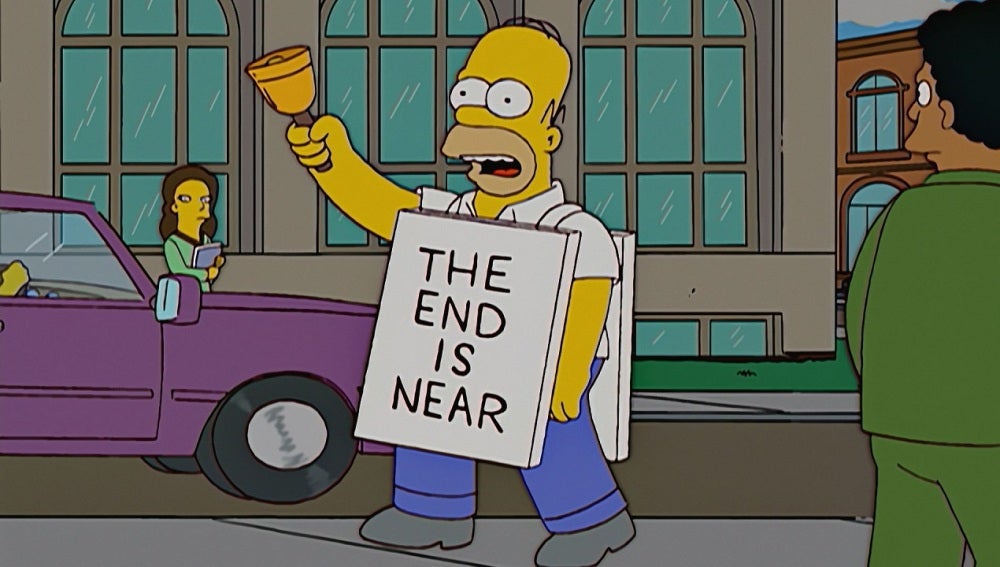
There was a time when you would see men walking around with sandwich boards, which declared, ‘The End is Nigh!’ It would be all too easy to mock them, or write them off as crackpots. They do, however, make a serious point. For all Christians, after Jesus’ Ascension, we are waiting for Jesus to come again, as our Saviour and our Judge. It might be today, or in a thousand years from now, but He is coming, and we need to be ready. We need to be prepared to meet Him. It is why, in the Season of Advent, which will soon be upon us, we consider the two comings of Jesus. The first is as a baby born in Bethlehem, the second will be as Our King, Our Saviour and Our Judge. The two comings are linked, and we need to be ready for both. 

People nowadays are worried by many things: Britain’s departure from the EU, the President of the United States of America, the threat of nuclear war, global climate change, the end of the world. The latter part of the twentieth century and the start of the twenty-first are full of dire warnings of impending doom. It’s scary stuff, it really is. But as Christians we know that whatever happens, we are loved by and saved by God, that we, and all things are in His hands. It can be hard to hold onto hope like this, but we can. 

The buildings of the Temple complex were soon to be destroyed by the Romans. The single most holy place in the world for Jews was about to be destroyed. It’s a frightening prospect, but it teaches an important lesson: not to be overly concerned with the stuff of this world, as it isn’t as important as we tend to make it. The disciples can’t quite understand that yet, but they will, in time.

What’s more important for Jesus is that the disciples aren’t led astray into strange beliefs, or following false Christs. The last two thousand years have seen some very strange versions, some might say perversions, of Christianity. What we believe matters, because it affects how we live our lives, it helps us give right praise to God, rather than something distorted, ugly and man-made. When Mark wrote his Gospel there were lots of strange ideas floating around about Jesus, and there still are today. It was a time of great uncertainty then, as now. There were wars and natural disasters which portend the end times. Christians were facing persecution then, and they are now too, all over the world. We are more likely to face indifference than persecution, but it knocks your confidence somewhat. You want hope and comfort, and the promise of something better. 

And we have that in Jesus Christ, who died for our sins, and who rose again to show us that we have the promise of eternal life with God, ‘For by a single offering he has perfected for all time those who are sanctified’ (Heb 10:14). This is truly good news to a troubled world. It is the heart of our faith, and the source of our joy. Peter and Andrew, James and John want to know when it will take place. Jesus doesn’t tell them, but he gives them signs to be alert for, so that they can be ready.

I wasn’t a boy scout, but their motto ‘Be Prepared’ is a good one, especially for Christians, because Jesus is coming, and we need to be ready to meet Him. It is good to think about this as we prepare to enter Advent, the penitential season which looks towards Christmas, and our yearly celebration of Jesus’ birth. It is truly amazing thing, that God should be born as one of us, to save us from our sins, to give us the hope of Heaven. We need to prepare for it, because it is important: not the turkey and tinsel and the rampant consumerism, but the Incarnation of the Word of God. It changes the world, and has been doing so for the last two thousand years. We also know that Jesus will come to judge the world. It’s tricky that one, knowing that we will be called to account for what we have been, said, thought, and done.None of us deserve to go to Heaven, but God is loving and merciful, and forgives our sins when we are penitent, He gives us another chance when we make a mess of it. We keep doing it, and God keeps forgiving us, so that we can try to do what God wants us to do. I find such generosity staggering. The world around us can be judgmental, it likes to write people off as no good, as failures. Thankfully God isn’t like that, and the church shouldn’t be either. We have to be a community of healing and reconciliation, so that we can offer the world an alternative. It is both liberating and exciting to that you and I are part of it, and hopefully we want others to be as well. 

This is the covenant that I will make with them after those days, says the Lord: I will put my laws on their hearts, and write them on their minds,’ (Heb 10:16). The author of the Letter to the Hebrews quotes Jeremiah (31:33) to show us how Scripture is fulfilled in the Person of Jesus, who makes a new covenant with His Precious Blood on Calvary. God makes it possible for us to live this new life, triumphing over sin and death. Christ does this for us, what can we do for Him?

We can be ready to meet Him, and we can live the life He wants us to live, not worry whether Christ will come tomorrow or in a thousand years.