The Second Sunday of Advent

‘May the God of hope fill you with all joy and peace in believing’ (Rom 15:13)

A bydded i Dduw, ffynhonnell gobaith, eich llenwi â phob llawenydd a thangnefedd wrth ichwi arfer eich ffydd

The book of the prophet Isaiah has sometimes been called the ‘Fifth Gospel’. This is because so many of Isaiah’s prophecies look forward to the Messiah, and find their fulfilment in Jesus. We, too, are currently in a time of anticipation. Advent is when we prepare for Christ to come, both as a baby in Bethlehem, and as our Saviour and our Judge. As the son of Jesse, and the son of David, Jesus is Israel’s true king, who rules over all:

‘There shall come forth a shoot from the stump of Jesse, and a branch from his roots shall bear fruit. And the Spirit of the Lord shall rest upon him, the Spirit of wisdom and understanding, the Spirit of counsel and might, the Spirit of knowledge and the fear of the Lord. And his delight shall be in the fear of the Lord.’ (Isa 11:1-3)

Isaiah has hope in the peace the Messiah will bring. Injustice and affliction, the fruit of sin, is dealt with on the Cross, where Jesus ‘shall stand as a signal for the peoples’ (Isa 11:10). This is the great demonstration of God’s love to the world. A love which heals and reconciles humanity. 

To prepare the way for the Messiah, Israel needed prophets like Isaiah and John the Baptist both to announce His coming and to prepare people for His arrival. A prophet’s role is a difficult one because they are often required to tell people home truths. Those chosen by God to act as prophets point out the sorts of things which, if left to our own devices, we would rather ignore. John’s message is simple, plain, and direct:

‘Repent, for the kingdom of heaven is at hand’ (Mt 3:2)

To repent is to express sincere regret about one’s wrongdoing. The Greek word used —metanoia— literally means to ‘change your mind’. It is a proclamation, rather like a road sign which reads: ‘You are going the wrong way!’ Repentance is recognising this and turning around. 

For two thousand years the Church has worked to continue John’s proclamation, and to say to the world: turn around, and follow Jesus! The season of Advent is penitential because it highlights this call to conversion and says to everyone, both inside and outside the Church, that our lives are supposed to be a perpetual turning back to Our Lord. We all need to be reminded of our shortcomings, and to be encouraged to let God be at work in and through us.

John the Baptist’s blunt message struck a chord and sparked something of a revival in Israel. People took him seriously:

‘Then Jerusalem and all Judea and all the region about the Jordan were going out to him, and they were baptized by him in the River Jordan, confessing their sins.’ (Mt 3:5-6)

It is not surprising that in those times people travelled out into the desert to hear John. He was charismatic, and his message was a refreshing antidote to the Religious Establishment of his day. People came, confessed their sins, and were baptised. They were washed clean, to love and serve God. The crowds also came because, in John, the people of Israel saw prophecy fulfilled, and a new Elijah in their midst. One who points to the Messiah, and has done so ever since he leapt in his mother Elizabeth’s womb at the Visitation. Before John was even born he proclaimed that Jesus was the Christ, the Messiah, the One who would save us from our sins.

We see this Messianic kingdom, hoped for in the vision of Isaiah, in this morning’s first reading. The branch which comes forth from the stem of Jesse is the Blessed Virgin Mary. Filled with God’s Holy Spirit, she conceived and bore Our Saviour; the true King of all that is, or has been, or will be. Christ is on the side of the poor and the meek, people who are left behind, and ignored because they are not rich or powerful. This is a radical concept, one which still has some way to go before it is fully put into practice in the world around us. Isaiah’s vision of Messianic peace may appear impossible, but it signifies a world-changing harmony, which alters how things are, and how people behave. For, with and through God, another way is possible. This path is not simple, nor is it easy, but it is possible if we rely upon God to help us. As St Paul says to the Christians in Rome:

‘May the God of endurance and encouragement grant you to live in such harmony with one another, in accord with Christ Jesus, that together you may with one voice glorify the God and Father of our Lord Jesus Christ. Therefore welcome one another as Christ has welcomed you, for the glory of God.’ (Romans 15:5-7),

and a little later in the same passage:

‘May the God of hope fill you with all joy and peace in believing, so that by the power of the Holy Spirit you may abound in hope’ (Romans 15:13).

Hope can feel in pretty short supply when we look at the world around us, and if we just look to humanity then we will be disappointed. Our hope comes from God. Our hope is God. God is with us. It is His Birth that we are preparing to celebrate at Christmas. In Advent we prepare for Christ to come as our Saviour and our Judge: 

‘His winnowing fork is in his hand, and he will clear his threshing floor and gather his wheat into the barn, but the chaff he will burn with unquenchable fire.’ (Mt 3:12) 

Judgement is real, and it should make us stop and think for a moment. Are we living the way God wants us to? If we are not then we need to repent, we need to say sorry, and we need to live the way that God wants us to live. This is how we flourish as Christians. John the Baptist calls us to make a spiritual u-turn, to turn our life around, and to turn away from our sins, which separate us from God. John calls us to the waters of baptism, so that we can be healed and restored by God, filled with his grace, and prepared to receive the Holy Spirit:

“I baptize you with water for repentance, but he who is coming after me is mightier than I, whose sandals I am not worthy to carry. He will baptize you with the Holy Spirit and fire” (Mt 3:11).

The problem with the Pharisees and Sadducees who come to John is that they do not show any repentance. They haven’t made the necessary u-turn, and they do not have the humility to recognise their own sinfulness, and their need to be washed in the waters of baptism. They, therefore, do not possess the right attitude to allow God to be at work in their lives.

As well as recognising Jesus as our Saviour, John the Baptist sees Him as Our Judge. John points to the second coming of the Lord when, as St John of the Cross puts it, ‘we will be judged by love alone’. It is love that matters. In Christ we see what love means. True, deep, love is costly, self-giving and profound. As we are filled with God’s Spirit, nourished by Word and Sacrament, we need to live out this love in our lives. This is how we prepare to meet Jesus as we prepare to celebrate His Birth and look forward to His Second Coming.

So, my brothers and sisters in Christ, let us re-commit ourselves to live out God’s love in our lives. Let us turn away from everything which separates us from God, and from each other. Let us live out deep, costly, and self-giving love in our lives. This is both what Christ and John the Baptist call us to do. By acting in this way we demonstrate to the world around us what our faith means in practice. How our beliefs affect our lives, and why others should follow Jesus, and sing the praises of God the Father, God the Son, and God the Holy Spirit, Duw Dad, Duw y Mab, a Duw yr Ysbryd Glân. To whom be ascribed all might, majesty, glory, dominion, and power, now and forever. Amen.

Christ the King 2025

‘God’s weakness is stronger than human strength.’

‘gwendid Duw yn gryfach na chryfder dynol.’ (1Cor 1:25)

On November 23rd 1927 the Mexican Jesuit priest Fr Miguel Pro SJ was arrested on false charges and placed in front of a firing squad. He refused a blindfold and spread his arms out into the shape of a cross. His last words were: ‘¡Viva Christo Rey!’ ‘Long live Christ the King!’. The Mexican regime of that time was cruel and went out of its way to persecute Christians, including thirty-six year old Miguel Pro, a twentieth century Christian martyr who died confessing Christ’s sovereignty over all things. His words are both powerful and inspiring. When we acknowledge Christ as King we are saying that He is above all human power and authority. We are affirming that God is supreme. As Christians, our primary allegiance is to God alone, and not to the things of this world. To proclaim Our Lord as King of Heaven and Earth will always challenge and trouble those who lay claim to an authority and a power which is not their own. There are plenty of examples in the world around us of those who are unwilling to recognize a power greater than themselves. 

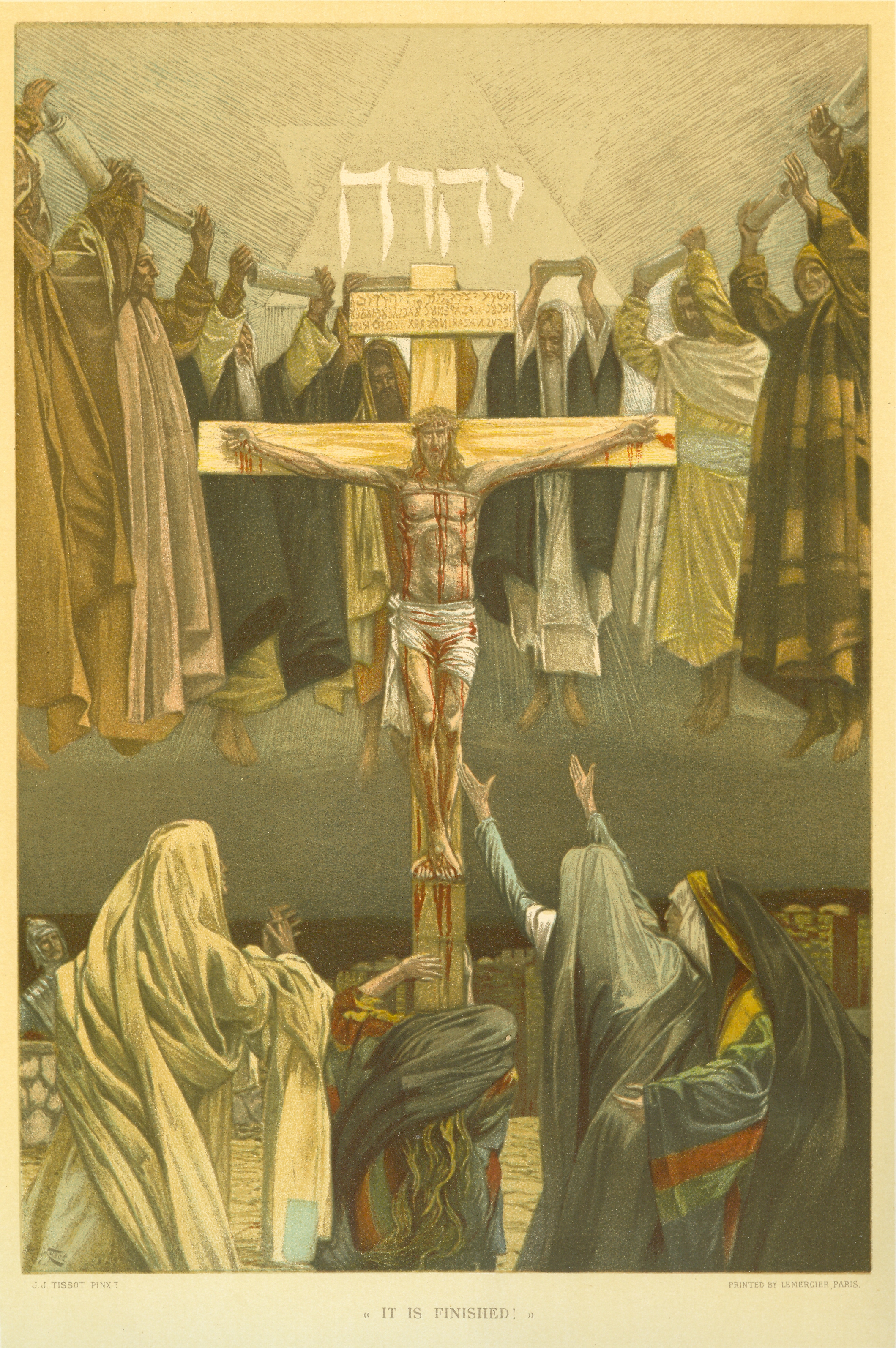
Christians profess the sovereignty of God primarily on the basis of the Crucifixion of Our Lord and Saviour Jesus Christ. We worship a Crucified God. This should strike us as something strange and disconcerting. At one level it doesn’t quite make sense, and yet it does. St Paul expresses the paradox at the heart of the Christian Faith in his First Letter to the Corinthians:

‘For God’s foolishness is wiser than human wisdom, and God’s weakness is stronger than human strength.’ (1Cor 1:25)

God is doing something amazing, which we cannot fully comprehend, or understand. This is because it is the mystery of God’s love. This is a love which we can never fully understand but it is something that we can experience in our lives.

Today’s Gospel is from St Luke’s account of the Crucifixion. It begins with Jesus being mocked by religious leaders: 

“He saved others; let him save himself, if he is the Christ of God, his Chosen One!” (Lk 23:35)

They demand action — that Jesus saves Himself — because they have completely misunderstand Our Lord’s mission, which is not to save Himself, but to save others. The Roman soldiers then join in and mock Christ saying:

“If you are the King of the Jews, save yourself!” (Lk 23:37)

In these words, power has been conflated with self-interest. Jesus, however, is not interested in saving Himself, but rather in saving us. He is the King of the Jews, born in Bethlehem of the line and lineage of David. And here Christ, in saving humanity, is doing what a proper King does: caring for His people, even at the cost of His own life. While the soldiers are mocking Jesus, they are actually proclaiming Him as a King. 

One of the men crucified with Jesus asks:

“Are you not the Christ? Save yourself and us!” (Lk 23:39)

This man has been condemned to death for acts of robbery and rebellion, and he is only able to understand the Messiah in political terms. He is looking for a revolutionary leader, who can save him. This causes the other man being crucified to rebuke the first one, saying:

“Do you not fear God, since you are under the same sentence of condemnation? And we indeed justly, for we are receiving the due reward of our deeds; but this man has done nothing wrong.” (Lk 23:40-41)

This second man understands that Jesus is innocent. This leads to one of the most memorable interactions in Luke’s Gospel, a demonstration of faith followed by its reward:

And he said, “Jesus, remember me when you come into your kingdom.” And he said to him, “Truly, I say to you, today you will be with me in Paradise.” (Lk 23:42-43)

This man does not ask to be saved. He simply requests that Jesus keep him in mind, when He comes into His Kingdom. Christ immediately grants his request. The condemned man’s recognition of Jesus’ Kingship is rewarded with the promise of eternal life with God in Heaven. Here, in two sentences, we see salvation and redemption at work. Jesus’ death saves people — starting with the condemned man. That is what Christ’s kingship is all about: bringing healing and the forgiveness of sins to all who turn to Him in faith. 

We worship a Crucified God. One who suffers and dies for us, to offer us eternal life in Him. This is true kingship, shown in self-sacrificial love. Christ is the Good Shepherd, who lays down His life for His sheep. He wants to save others, because He is the Messiah, and He is God saving his people. The Hebrew for Jesus is Yeshua and means ‘God saves’. Here on the Cross Jesus fulfils His destiny: this is who and what He is. God saves His people by dying for them. This is real kingship — not robes, or power, but love — dying the death of a common criminal. It doesn’t make sense, and it isn’t supposed to. God’s ways are not our ways, nor His thoughts our thoughts. We cannot save ourselves. Only God can do that, in an act of generous love; an extravagant and exuberant gift that we can neither earn nor repay.

In the reading from St Paul’s Letter to the Colossians, we hear both what God has done for us, and who Christ is. God has qualified us to share in the inheritance of the saints in light. We are able to go to Heaven because we have been delivered from darkness, into the kingdom of God’s beloved Son. In Christ we have redemption and forgiveness. Jesus has paid the debt we owe; our sins are forgiven. We do not need to slaughter lambs and be sprinkled with their blood, because we have been sprinkled with the Blood of the Lamb of God in our Baptism. We are redeemed, and our transgressions are forgiven, because of what Christ does for us on the Cross. This is the heart of our faith: Jesus died for us, because He loves us. 

In Christ we see that God loves us. He created all that is, therefore things are subject to Him. He is the head of His Body, the Church, of which we are a part through our baptism, and our participation in the Eucharist. As the firstborn from the dead, Christ, in His Resurrection, shows us that death is not the end.

This is the God we worship, and whom we hail as our true King: the God of love and healing. Christ has conquered on the Cross; Christ reigns as King of the Universe; Christ reigns in our hearts, and in our lives. May we then lift our hearts and voices to sing the praises of our Divine King: God the Father, God the Son, and God the Holy Spirit, Duw Dad, Duw y Mab, a Duw yr Ysbryd Glân. To whom be ascribed all might, majesty, glory, dominion, and power, now and forever. Amen.

Trinity VI – Lord teach us how to pray

If I were to ask you if you could recite a text off by heart you might regale me with a poem, a passage from a book, or a speech from Shakespeare learned at school. If I then asked whether you knew any prayers off by heart you would probably say ‘The Lord’s Prayer’, ‘Y Gweddi’r Arglwydd’. Even if they do not know all the words, most people have heard the Lord’s Prayer. It is an important part of our Christian heritage.

Our readings this week focus on prayer. Christians know that God answers prayer. However, God may say, ‘Yes’ or ‘No’ or even ‘Not yet’. We may not like the answer, but one will be forthcoming. Prayer is both simple and mysterious. Simple, insofar as it is our conversation with the divine. Mysterious, in the fact that prayer changes us, and not the Almighty. So prayer is something of a paradox, being at the same time quite straightforward and also an enigma. We pray to God, but prayer doesn’t change God, it changes us. Pagans in Greece and Rome would bargain with their gods: if you do this for me, I will give you that. Jews and Christians, however, are profoundly different. We do not bargain with God, and we do not need to, because we are in a covenant relationship with our Heavenly Father who loves us.

It would be all too easy to see this morning’s first reading, where Abraham tries to save Sodom and Gomorrah, as being concerned with bargaining with God. However, prayer does not work in that way. What the reading from Genesis shows us is that we are in a covenant, a relationship with God, and that God is generous and loving. He wants the best for us.

The American Bishop Fulton J. Sheen summed it up as follows:

‘Prayer is helplessness casting itself on Power, infirmity leaning on Strength, misery reaching to Mercy, and a prisoner clamouring for Relief.’ Life Is Worth Living, Second Series (New York, 1954), p. 213.

In today’s Gospel the disciples ask Jesus:

“Arglwydd, dysg i ni weddïo, fel y dysgodd Ioan yntau i’w ddisgyblion ef.”

‘Lord teach us to pray, just as John taught his disciples’ (Lk 11:1).

Jesus and John the Baptist were cousins. They both preached about the need for both repentance and belief in the Good News. Also, they both taught their disciples how to pray. Virtually all Christian prayer can be described by one or more of four phrases: ‘please’, ‘thank you’, ‘I’m sorry’, and ‘I love you’. God does not need our prayers, we do. This is because praying allows us to open our hearts and lives to God, allowing Him to change us. Jesus answers His disciple’s request to teach them how to pray as follows:

Ac meddai wrthynt, “Pan weddïwch, dywedwch: ‘Dad, sancteiddier dy enw; deled dy deyrnas; dyro inni o ddydd i ddydd ein bara beunyddiol; a maddau inni ein pechodau, oherwydd yr ydym ninnau yn maddau i bob un sy’n troseddu yn ein herbyn; a phaid â’n dwyn i brawf.’” 

He said to them, ‘Say this when you pray: ‘“Father, may your name be held holy, your kingdom come; give us each day our daily bread, and forgive us our sins, for we ourselves forgive each one who is in debt to us. And do not put us to the test.”’  (Lk 11:2-4)

The version of Jesus’ words we are most familiar with is that found in Matthew’s Gospel, which is slightly longer than Luke’s prayer. But both contain the same elements. The prayer begins by calling God, ‘Abba’ ‘Father’ ‘Tâd’. Such a term expresses our close relationship with our Creator. The idea that God’s name should be kept holy goes hand in hand with the desire that God’s Kingdom may come. Christianity is all about the establishment of the Kingdom of God: that God may rule over our hearts and our lives.

Next, we ask God to feed us, to forgive us our sins, as we forgive those who sin against us, and to free us from temptation. It is important to note that every celebration of the Eucharist begins with us all acknowledging our own shortcomings and asking God’s forgiveness. Saying sorry to God is important, because it keeps us humble, and helps to maintain our relationship with God, and with each other. We all make mistakes, you do, I certainly do. Recognizing this is the start of a process which allows us to grow in virtue and holiness, through God’s love. The high point of the Eucharist is when God feeds us with His Body and Blood, providing us with spiritual food to nourish our souls. All our food is a gift from God, and being thankful for it, just like being humble, helps to keep us close to God. If you don’t already do so, try to get into the habit of saying a few words of thanks to God before you eat a meal.

There are good reasons why Christians regularly pray this prayer, which we call The Lord’s Prayer, Y Gweddi’r Arglwydd. Jesus has told us how to pray and gave us these words. Similarly, we celebrate the Eucharist because Jesus told us to ‘do this in memory of Him’ and so we do. We use the Lord’s Prayer when we pray, because it honours God, and it forms us as Christians. We will soon pray it together before Communion, asking that God will continue the process of transforming us day by day into His image and likeness. 

In the Gospel reading Jesus continues to teach His disciples using parables. In this narrative, there is a late-night hospitality emergency. A friend is on a journey (just like Jesus and His disciples), and arrives at your home (just like Jesus visited Mary and Martha last week). Naturally you want to be hospitable as a sign of your friendship. So, you pop round to a next door and ask to borrow some food. However, the initial response you receive from your neighbour is not very positive:

‘Paid â’m blino; y mae’r drws erbyn hyn wedi ei folltio, a’m plant gyda mi yn y gwely; ni allaf godi i roi dim iti’, rwy’n dweud wrthych, hyd yn oed os gwrthyd ef godi a rhoi rhywbeth iddo o achos eu cyfeillgarwch, eto oherwydd ei daerni digywilydd fe fydd yn codi ac yn rhoi iddo gymaint ag sydd arno ei eisiau.’

“Do not bother me. The door is bolted now, and my children and I are in bed; I cannot get up to give it you.” I tell you, if the man does not get up and give it him for friendship’s sake, persistence will be enough to make him get up and give his friend all he wants. (Lk 11:7-8)

Jesus shows that, despite the neighbour not wanting to get up and be bothered with the request for food, because the person is persistent and stays there, disregarding the initial reluctance, his request is granted. Perseverance is rewarded. The point Our Lord is making is that God hears our prayers and answers our requests. We might need to ask more than once, and commit time to prayer, but we will not be ignored.

‘Ac yr wyf fi’n dweud wrthych: gofynnwch, ac fe roddir i chwi; ceisiwch, ac fe gewch; curwch, ac fe agorir i chwi. Oherwydd y mae pawb sy’n gofyn yn derbyn, a’r sawl sy’n ceisio yn cael, ac i’r un sy’n curo agorir y drws.’

‘So I say to you: Ask, and it will be given to you; search, and you will find; knock, and the door will be opened to you. For the one who asks always receives; the one who searches always finds; the one who knocks will always have the door opened to him.’ (Lk 11:9-10)

The phrase ‘knock, and the door will be opened to you’ ‘curwch, ac fe agorir i chwi’ reinforces the teaching in the parable. The neighbour opens the door and gives the requested provisions. Jesus then develops His teaching, by drawing a comparison between the lesser and the greater. This is a common rabbinic practice:

‘Os bydd mab un ohonoch yn gofyn i’w dad am bysgodyn, a rydd ef iddo sarff yn lle pysgodyn? Neu os bydd yn gofyn am wy, a rydd ef iddo ysgorpion? Am hynny, os ydych chwi, sy’n ddrwg, yn medru rhoi rhoddion da i’ch plant, gymaint mwy y rhydd y Tad nefol yr Ysbryd Glân i’r rhai sy’n gofyn ganddo.’

‘What father among you would hand his son a stone when he asked for bread? Or hand him a snake instead of a fish? Or hand him a scorpion if he asked for an egg? If you then, who are evil, know how to give your children what is good, how much more will the heavenly Father give the Holy Spirit to those who ask him!’ (Lk 11:11-13)

The Good News of the Kingdom is that God answers prayer. Not only that, but He gives us more than we ask Him for. God also grants us the Holy Spirit. This is an important concept in the wider narrative of Luke’s Gospel and the Acts of the Apostles, where the Church is filled with God’s Spirit. God answers prayer because He is our Creator, and we are in a special relationship with Him. In today’s Old Testament reading God listens to Abraham’s pleas for mercy and then grants them. 

Turning to St Paul’s Letter to the Colossians, the apostle can proclaim baptism as the way to salvation, because this enables us to share in Christ’s Death and Resurrection, and the forgiveness of our sins:

‘Y mae wedi ei bwrw hi o’r neilltu; fe’i hoeliodd ar y groes.’ 

‘he has done away with it by nailing it to the cross’ (Col 2:14)

God cancels our debt by paying it Himself, overcoming evil and sin through an outpouring of healing love. This is the demonstration that God loves us and hears our prayers, and so we continue to remember the Passion through our celebration of the Eucharist. God forgives our sins, and gave His life for us, nailing our sins to the Cross. He suffered in His flesh so that we who have died with Christ in our baptism may also share His risen life. That is why Jesus can assure us that God listens to our prayers and answers them, giving us the good things we need.

My brothers and sisters in Christ, through practising both prayer and action, may we be agents of God’s love and grace in the world. May we transform our homes, our communities, and the whole world. Filled with God’s generous love, compassion and forgiveness, let us give glory to God, Duw Dad, Duw y Mab, a Duw yr Ysbryd Glân. God the Father, God the Son, and God the Holy Spirit. I’r hwn y priodoler pob gogoniant, arglwyddiaeth, a gallu, yn awr, ac yn oes oesoedd. To whom be ascribed all glory, dominion and power, now and forever. Amen.
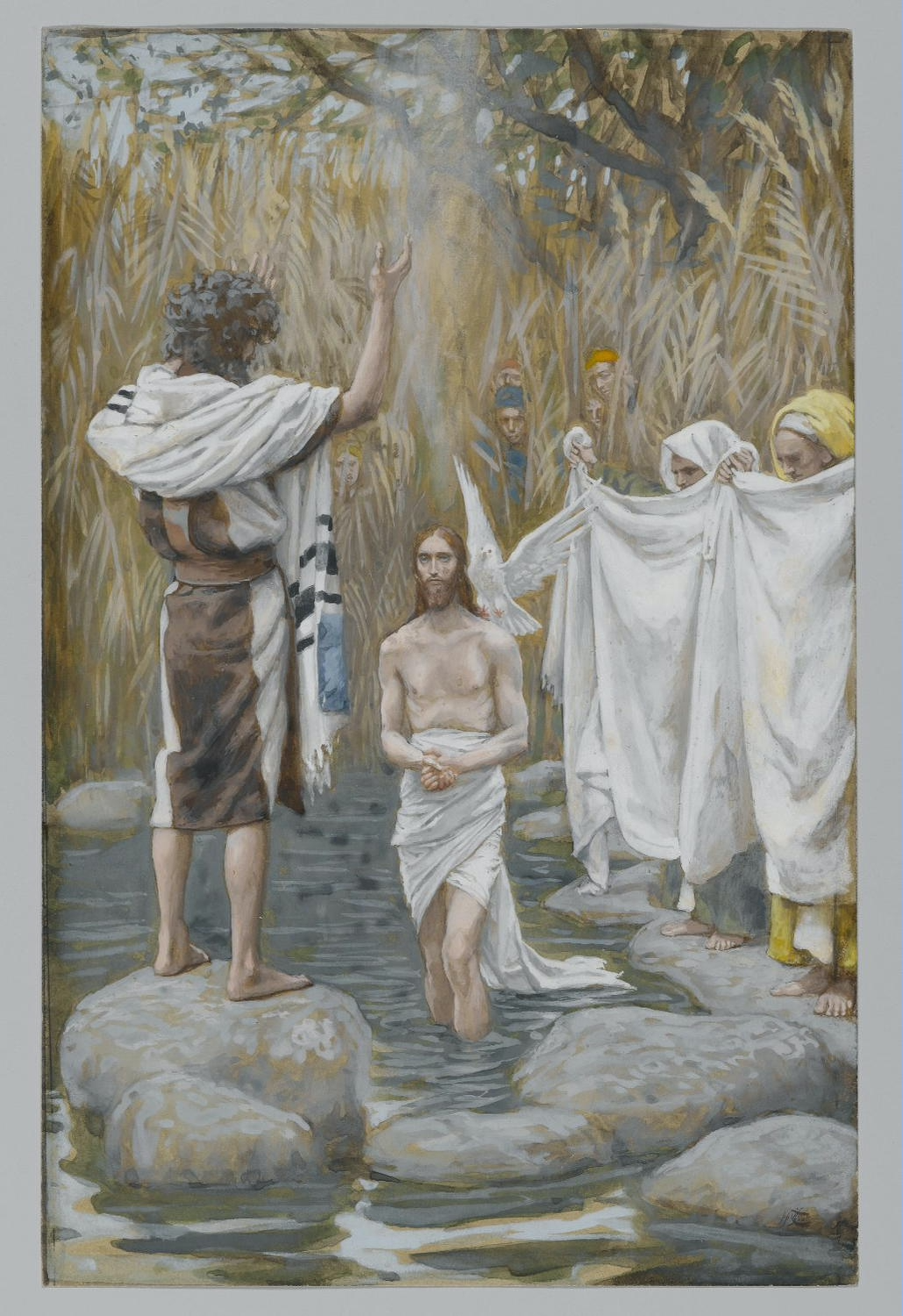
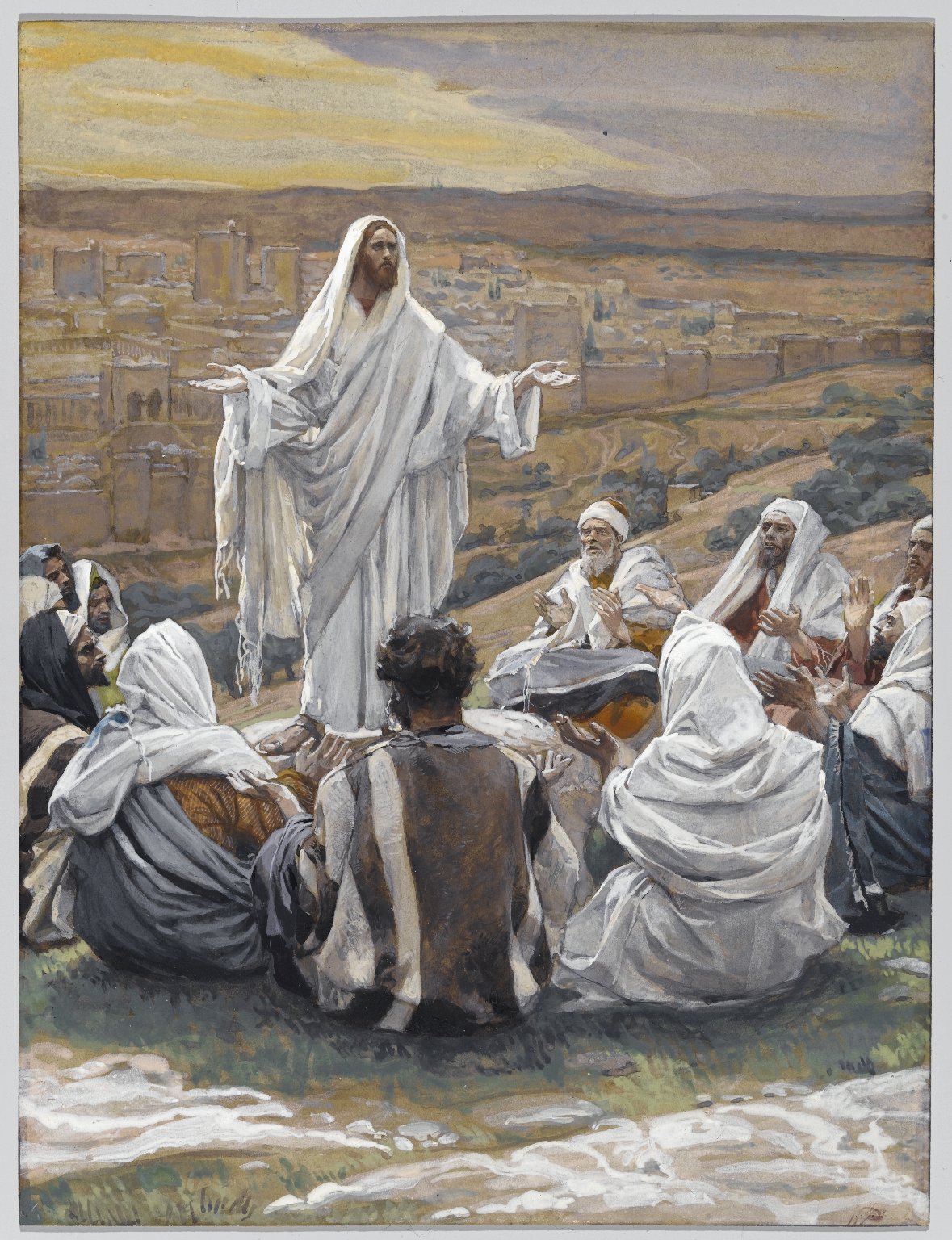
James Tissot – The Lord’s Prayer [Brooklyn Museum]

Pentecost 2025

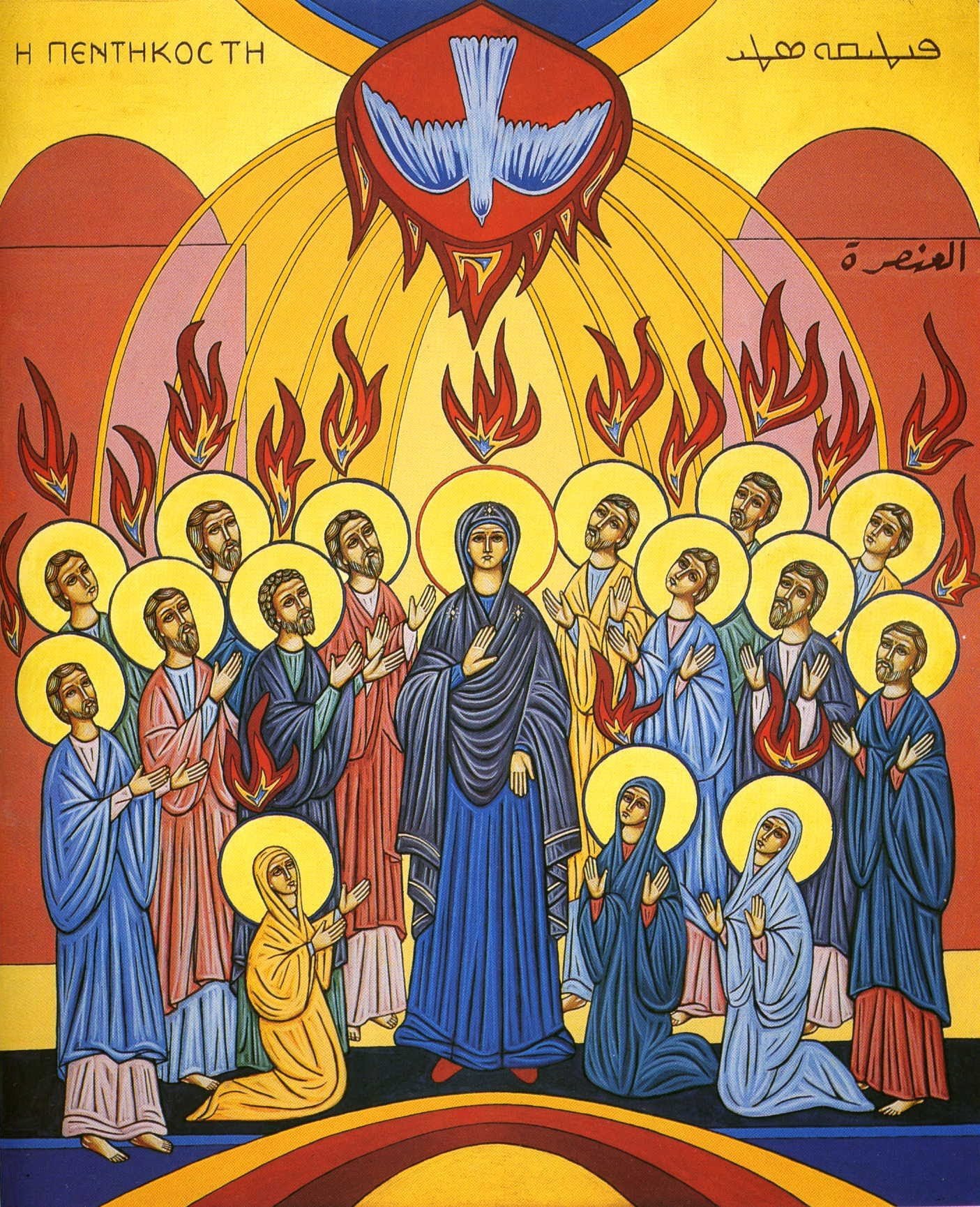
Every Sunday, and also on solemn Feast days, Christians make a public declaration of their faith in God, Father, Son, and Holy Spirit, using the words of the Nicene Creed — which we will all say together in a few minutes time. This statement of belief was drawn up seventeen hundred years ago at the First Ecumenical Council, which was called by the Roman Emperor Constantine to sort out divisions within the Church concerning the Divinity of Jesus Christ. The council met at Nicaea in Asia Minor (modern day Turkey) and comprised of three hundred and eighteen bishops of the Church. One of these was Nicholas of Myra, St Nicholas, the patron saint of this church. 

Questions about belief matter. They have the potential to divide the Church. Taking it away from its core purpose of being united in a common faith, and making a consistent proclamation of that faith. This is the situation in today’s reading from the Acts of the Apostles. Having been promised the Holy Spirit by Our Lord at His Ascension, the disciples wait and pray. At Pentecost they are filled with the Spirit. Emboldened, they are able to tell Jews from all over the Mediterranean world, who have gathered in Jerusalem, who Jesus is, and what He has done. From this moment on the disciples are known as Apostles from the Greek ἀπόστολος (meaning one who is sent, a messenger). The message they deliver is that all people should repent and believe the Good News of Jesus Christ. 

The outpouring of the Holy Spirit is not a one-off event, but rather a permanent state of affairs. This is how God continues to be active in the world: inspiring and strengthening Christ’s followers in living and proclaiming their faith. In John’s Gospel, Jesus promises His disciples:

‘Os ydych yn fy ngharu i, fe gadwch fy ngorchmynion i. Ac fe ofynnaf finnau i’m Tad, ac fe rydd ef i chwi Eiriolwr arall i fod gyda chwi am byth,’

‘If you love me, you will keep my commandments. And I will ask the Father, and he will give you another Helper, to be with you for ever.’ (Jn 14:15-16)

The promise is that God’s Spirit will be present in perpetuity. God will continue to pour out His Spirit to strengthen the Church. This is what we are celebrating today at Pentecost. Indeed, during the Eucharistic Prayer I, as your priest,  will pray that God continues to do this and ‘trwy nerth dy Ysbryd, i’r rhoddion hyn o fara a gwin fod i ni ei gorff a’i waed ef’ ‘that, by the power of your [God’s] Spirit, these gifts of bread and wine may be for us his body and blood’. Our heavenly Father makes wonderful things happen. Disciples who have been scared and have been in hiding are transformed into fearless evangelists, going out to preach Christ’s message of love and forgiveness. They become enthusiastic fellow-workers in the vineyard. God is able to completely change people and situations, because His love for us knows no bounds.  

The 318 bishops, who met at Nicaea, in 325AD, were able to put into words what Christians believe because they began their deliberations by praying for the gift of the Holy Spirit to guide and direct their thoughts and actions. This is entirely in line with Our Lord’s teaching in the Gospel: 

‘Ond bydd yr Eiriolwr, yr Ysbryd Glân, a anfona’r Tad yn fy enw i, yn dysgu popeth ichwi, ac yn dwyn ar gof ichwi y cwbl a ddywedais i wrthych.’

‘But the Helper, the Holy Spirit, whom the Father will send in my name, he will teach you all things and bring to your remembrance all that I have said to you.’ (Jn 14:26)

The Bishops, including St Nicholas, were strengthened by God to proclaim the truth, and to bear witness to it, in the face of those who would deny it. They bore witness to the truth of Jesus Christ: true God and true man, who promised the gift of the Holy Spirit. God’s Spirit gives Christians strength and brings us together as brothers and sisters in a new family, which we call the Church. 

It is thanks to the preaching of the Gospel begun by the Apostles at Pentecost, and continued by their successors at Nicaea, that we are here today. It is how billions of people have come to know, love, and serve Our Lord Jesus Christ. As people who are in Christ, who have entered the Church through our Baptism, we are given a very important job to do. We need to tell people about Jesus!

The world-wide Christian Church is wonderful in its diversity. We are all different, we do not speak the same language, or have the same culture. However, we are all equally empowered through having received the Holy Spirit at our Baptism, in our Confirmation, and through all the sacramental actions of the church, which are the outward and visible signs of the inward and spiritual grace of God. This is how the Holy Spirit works. This is how God builds us up together in love. Through the Eucharist, through prayer and through Scripture, we are nourished spiritually to keep doing all that God desires of us.

So, my brothers and sisters in Christ, let us pray earnestly for the gift of the Spirit. Just as St Nicholas was inspired by the Spirit, may God also fill us with His love and equip us to proclaim the Good News of the Kingdom. May the fire of the Holy Spirit embolden us to encourage others to come to know, and love Duw Dad, Duw y Mab, a Duw yr Ysbryd Glân. God the Father, God the Son, and God the Holy Spirit. I’r hwn y priodoler pob gogoniant, arglwyddiaeth, a gallu, yn awr, ac yn oes oesoedd. To whom be ascribed all glory, dominion and power, now and forever. Amen.
Lent I

The first reading this morning taken from the book of Deuteronomy, is part of the account of the Feast of First-fruits, called Shavuot. This feast celebrates the grain harvest in Israel, seven weeks after Passover. ‘What?’ you say, “Harvest Festivals?’ This seems a strange topic when we have just begun a six-week penitential season which is characterised by, amongst other things, fasting, abstaining from food. Yes, at first glance it does appear somewhat strange, but there is a reason. 

The reading from Deuteronomy is mostly an account of the words and actions made by the person offering the fruits of the earth to God. This includes a narration of preceding events: Israel’s journey from slavery in Egypt to Freedom in the Promised Land. It is a prayerful retelling of the Passover story, which gives thanks to God for His mighty acts. At the same time that the Jews re-live salvation history, we as Christians are preparing to do the same. Lent precedes Our Lord’s Passion, Death, and Resurrection (around the time of Passover), and also commemorates Jesus’ fasting in the desert at the beginning of His public ministry. 

The Christian journey through Lent is something of a trek through the desert. It is characterised by fasting, penitence and charity. These are the ways by which we prepare our souls and bodies to celebrate Our Lord’s Passion, Death, and Resurrection. We take time to solemnly ask forgiveness for all our wrongdoings, but we are also joyful knowing that Christ has overcome sin and death. There is a joy in what we do, and who we are, because of all that Christ has taught us and done for us. Lent is a hopeful and a healing time. And the world certainly needs hope and healing at the moment! These six weeks are both an opportunity to give ourselves a bit of encouragement in our spiritual lives, and they are also a time to prepare. As Christians, we travel with Christ from the wilderness of sin to the promised land of reunion with God the Father, and with each other.

The reading from Paul’s Letter to the Romans also begins by quoting from Deuteronomy (30:14), just before Moses offers Israel the choice between life and death, good and evil. But for Paul:

‘Os cyffesi Iesu yn Arglwydd â’th enau, a chredu yn dy galon fod Duw wedi ei gyfodi ef oddi wrth y meirw, cei dy achub.” Oherwydd credu â’r galon sy’n esgor ar gyfiawnder, a chyffesu â’r genau sy’n esgor ar iachawdwriaeth.’

‘if you confess with your mouth that Jesus is Lord and believe in your heart that God raised him from the dead, you will be saved. For with the heart one believes and is justified, and with the mouth one confesses and is saved.’ (Rom 10:9)

This is the heart of our faith as Christians: Jesus is Lord, not Caesar, nor any power of this world. Christ alone saves us, by His Death and Resurrection. We believe this and bear witness to our belief. 

Today’s Gospel takes us back to the time immediately after Jesus’ Baptism, when He begins His public ministry. Christ goes out into the desert to be alone, to be quiet, to fast and to pray, and to be close to God the Father. While He is in the desert, Jesus is tempted by the Devil. Satan uses three different approaches, beginning by saying: 

‘Os Mab Duw wyt ti, dywed wrth y garreg hon am droi’n fara.’

‘If you are the Son of God, command this stone to become bread.’ (Lk 4:3)

This is a temptation to be relevant, Jesus is hungry. The Devil is saying, ‘If you are the Son of God then do this’. This is the same thing that the crowd will say to Our Lord as He goes to be crucified. The Devil and the crowd both demand that God prove Himself, rather than accepting the presence of the Holy Spirit and the voice of God the Father at Christ’s Baptism: ‘Ti yw fy Mab, yr Anwylyd; ynot ti yr wyf yn ymhyfrydu.’ ‘You are my beloved Son; with you I am well pleased.’ (Lk 3:22) Jesus is pleasing to God because He is obedient, but Satan is all about disobedience; not listening to God, not obeying Him. Whereas Adam, the first man, causes sin to enter into the world by eating forbidden fruit. Christ, who is the second Adam, conquers by abstaining. The desert is the exact opposite of the garden of Eden. While Eden was full of plants, trees and animals, the desert is an empty, lifeless place.However, it becomes the setting for obedience, reconciliation and healing.

The second temptation put to Jesus is the allure of earthly power. The Devil says to Our Lord: 

‘I ti y rhof yr holl awdurdod ar y rhain a’u gogoniant hwy; oherwydd i mi y mae wedi ei draddodi, ac yr wyf yn ei roi i bwy bynnag a fynnaf. Felly, os addoli di fi, dy eiddo di fydd y cyfan.’

‘To you I will give all this authority and their glory, for it has been delivered to me, and I give it to whom I will. If you, then, will worship me, it will all be yours.’ (Lk 4:6-7)

Jesus chooses heavenly glory and the salvation of humanity rather than worldly power. The Devil can only offer a false god and fleeting influence, whereas Christ stands for what is true and eternal. The temptation to seek influence, and prestige, symbolised here by worshipping the Devil, leads to the misuse of power. It’s a very human failing. One that we see all too clearly in our world today.

The third temptation for Jesus, is to put God to the test. Here Christ is encouraged to be spectacular and self-seeking. Whenever we say, ‘look at me’ we are not saying, ‘look at God’. Jesus quotes Deuteronomy 6:16: ‘Peidiwch â gosod yr Arglwydd eich Duw ar ei brawf’ ‘You shall not put the Lord your God to the test’. God does not need to prove anything. He loves us, and sent His Son for us. If Jesus threw himself from the Temple it would be a great spectacle, but it wouldn’t achieve anything. The high place which Jesus will go up to is the Cross on the hill of Calvary. Here He will suffer and die to save humanity. This is where God shows His love for the world, through humiliation rather than by a glory-seeking stunt. 

Eventually the Devil gives up and departs. Christ’s faith and trust in God is stronger than temptation. We face the same temptations in our lives, but Jesus shows us that we can resist them. This isn’t easy — quite the opposite — but it is possible. This should encourage us as we try to follow Christ’s example, and grow in holiness this Lent. God does not ask the impossible of us, instead we try, and, when we fail, we ask for forgiveness. We grow in holiness in Lent through prayer, almsgiving, and fasting. Prayer offers us the opportunity to deepen our relationship with God. It is more about quality than quantity: expressing true repentance, for what we have done and failed to do, and resolving to do better in the future. Almsgiving helps us to be charitable and generous, to care for those in need, just as God is generous towards us.

Fasting is key, because it helps us to master our bodily cravings, to control what we eat and what we do, rather than being controlled by our appetites. This doesn’t mean that we should starve ourselves, but that we should be mindful of our actions and not give in to all our desires. Just as prayer is not about getting God’s attention or changing His mind, but rather changing who and what we are, making us more loving, humble and dependant on God. In the same way fasting stops us being slaves to our desires. It sets us free, and helps us to listen to God, and draw closer to Him. Through abstinence we enter into Christ’s suffering, so that we can follow the way of the Cross. We do this joyfully, because we are following Christ. We are learning to resist temptation, aided by prayer and a generous heart. Our aspiration is that this Lenten season will help us to grow in faith, hope, and love, and enable us to celebrate Our Lord’s Passion, Death and Resurrection with greater joy. 

So, my brothers and sisters, let us prepare ourselves to celebrate the Paschal mystery so that we, and all the world, may give glory i Duw Dad, Duw y Mab, a Duw yr Ysbryd Glân. I’r hwn y priodoler pob gogoniant, arglwyddiaeth, a gallu, yn awr, ac yn oes oesoedd. Amen.

Epiphany V 2025

THIS week’s readings focus on God’s call to humanity, so I would like to begin by sharing with you something of my own call. The first time I realised that I wanted to be a priest, I was about 10 years of age. It was in church at Margam, during a Sunday Morning Eucharist. The priest standing at the altar praying the Eucharistic Prayer, lived next door but one to us. He was a retired priest, called Fr Glyn — a great and holy man. I would go on to study at the same theological college as him (although this was something I only found out once I’d got there). As he stood at the altar and prayed the words that Jesus recited on the night before He died, I can remember a strong, overwhelming feeling: ‘I really want to do THAT!’ Even now, nearly forty years later, and after serving God as a priest for nearly fourteen years, that feeling still feels real. I still do not feel worthy of the call. But I’m not supposed to. That is the point: only God is worthy. However, God calls us not because we are worthy, but so that we might co-operate with Him in the outworking of His goodness, healing and love.

In our first reading this morning, the prophet Isaiah has a vision of heavenly glory. In his vision, Isaiah sees the throne room of the Heavenly Temple, with God surrounded by angels The prophet does not describe his emotional state, but he speaks of his human unworthiness in the divine presence. When Isaiah is confronted by the majesty of God, the singing of angels, the smoke of incense, all he can say is:

‘Gwae fi! Y mae wedi darfod amdanaf! Dyn a’i wefusau’n aflan ydwyf’

‘Woe is me. For I am lost; for I am a man of unclean lips’ (Isa 6:5)

Isaiah is aware of his human sinfulness and the gulf between himself and God. Yet his guilt is taken away, and his sin is atoned for. The prophet, who will foretell the coming of the Messiah who will save humanity, is prepared by God. He is set apart. When God asks, ‘Pwy a anfonaf? Pwy a â drosom ni?’’Whom shall I send, who will go for us?’ Isaiah can respond, ‘Dyma fi, anfon fi.‘Here I am! Send me’. This is quite a journey in a few verses, and that is the point. God doesn’t call those who are equipped. Rather, He equips those whom He calls.

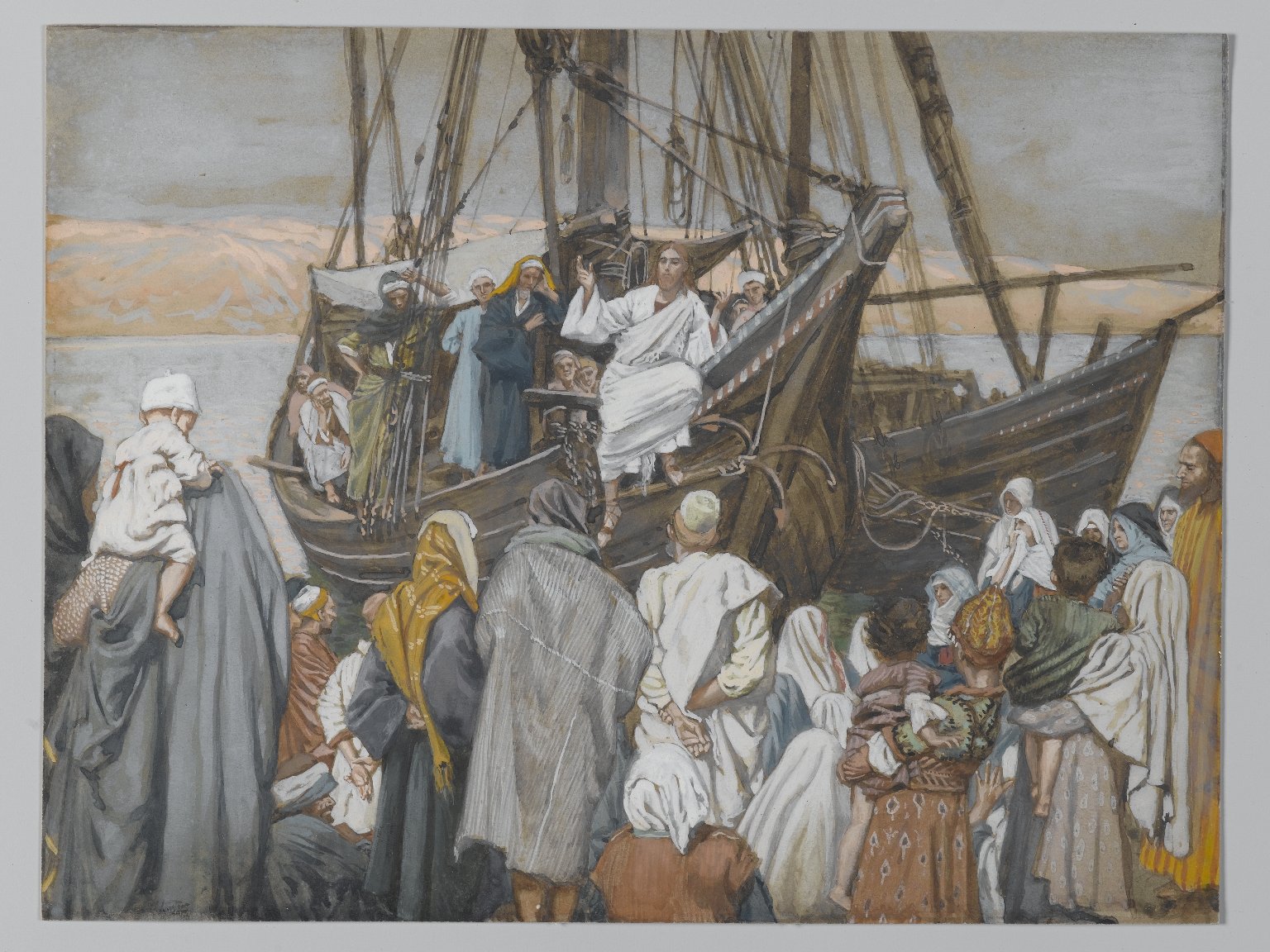
In the Gospel, the teaching ministry of Jesus, which we saw begin in the synagogue in Nazareth, continues. His fame is spreading and the crowd that has come to listen to Our Lord’s teaching is so large that He uses a boat to address them, so that the hills behind the crowd will help make Him more easily heard, acting like a natural theatre 

After speaking to the crowd, Jesus continues to draw disciples to Himself. On the Sea of Galilee the best time to catch fish is at night, but unfortunately Simon, James, John, and others have been out all night and caught nothing. It is the morning, now, and they are exhausted. Worst of all their effort has brought no reward. They have no fish to sell. 

Jesus says to Simon, 

‘Dos allan i’r dŵr dwfn, a gollyngwch eich rwydau am ddalfa.’

‘Put out into the deep and let down your nets for a catch.’ (Lk 5:4)

These words seem to be crazy. The time to catch fish on the lake is at night not during the daytime. Simon knows this, but he agrees to let down his nets. Suddenly the fishing nets are full to breaking point, and Simon calls his colleagues to help him pull in the catch. Both boats are so full of fish that they can barely float. 

Simon’s response is telling, he falls down at Jesus’ knees and says:

‘Dos ymaith oddi wrthyf, oherwydd dyn pechadurus wyf fi, Arglwydd.’

‘Depart from me, for I am a sinful man, O Lord.’ (Lk 5:8)

Simon appreciates that what has happened is a miracle, something that God has done. His response to the presence of God is contrition — awareness of his own unworthiness. Simon knows that he doesn’t deserve this outpouring of grace. The unmerited kindness of God, is too much for him. This humble fisherman recognises his own unworthiness to be in the presence of the Divine. It is understandable, and human, and we would likely feel exactly the same way.

Then Our Lord addresses Simon:

‘Paid ag ofni; o hyn allan dal dynion y byddi di’

’Do not be afraid; from now on you will be catching men.’ (Lk 5:10)

Paid ag ofni’ ‘Do not be afraid’ God begins by addressing our fear, our reluctance to commit. The point is that we are not alone in this, but rather that God wants to work with us, and through us, to proclaim and extend His Kingdom. God welcomes humanity into His embrace, to know the love for which we long. True, unconditional love, offered to each and every one of us to transform us.

The final words of the passage are instructive: 

‘Yna daethant a1’r cychod yn ôl i’r lan, a gadael popeth, a’i ganlyn ef.’

‘And when they had brought their boats to land, they left everything and followed him.’ (Lk 5:11)

The fishermen are literally leaving everything. They have just landed the biggest catch of fish in their entire lives. They were about to be rich in worldly terms, and they have to leave it all behind. Their sacrifice is a real one. Following Jesus comes at a cost. However, it is not without its rewards. The first disciples turn their backs on worldly riches and possessions in order to be free to do God’s work.

The calling of the disciples is also the calling of the entire baptised people of God. This is a calling not to be afraid, but to respond to the God who loves us and saves us. This is a calling to live out in our lives, by word and deed, the saving truths of God. So God can use us for His glory and to spread His Kingdom. So that others may come to know God’s Love, Mercy, and Forgiveness. This is what we have signed up for: to be disciples of Jesus; to profess the faith of Christ Crucified; to share this faith with others.

This treasure has been entrusted to each and every one of us. We are all called to share our faith with others, so that the world may believe. Like the first disciples we acknowledge the glory o Duw Dad, Duw y Mab, a Duw yr Ysbryd Glân. I’r hwn y priodoler pob gogoniant, arglwyddiaeth, a gallu, yn awr, ac yn oes oesoedd. Amen.

Jesus preaches from a boat – James Tissot (Brooklyn Museum)

Septuagesima (Year B)

The narration of stories is a skilled activity, whether they are told orally, or in writing. Setting the scene and introducing the characters are an important part of the process. Sometimes people begin with a long introduction, whereas others take you straight to the action. Mark’s Gospel definitely takes the latter approach. He does not set the scene by giving details of Jesus’ birth or childhood. Instead, he plunges straight into chronicling Our Lord’s public ministry in Galilee.

Mark’s Gospel begins with a description of Jesus’ ministry that proceeds at a frenetic pace. Jesus is baptised by John, goes into the desert for forty days, and calls two sets of brothers to follow Him: Simon and Andrew, James and John. In today’s passage Jesus teaches in a synagogue and heals a man possessed by an unclean spirit. Everything happens in quick succession, there is no time to waste. Part of this is a desire on the Gospel writer’s part to embody the vibrancy of Jesus’ proclamation of the Kingdom:

“The time is fulfilled, and the kingdom of God is at hand; repent and believe in the gospel.”

‘Yr amser a gyflawnwyd, a theyrnas Dduw a nesaodd: edifarhewch, a chredwch yr efengyl.’ (Mk 1:15)

Jesus is a man on a mission. He calls people to turn away from their sins, and to believe in the Good News: to love God and also to love your neighbour. As it is the Sabbath, people gather in the local synagogue. Worship in a synagogue involved singing Psalms, reading from Scripture, and teaching, rather like a sermon. This is familiar to us, as our Morning and Evening Prayer proceeds along similar lines. In this instance, instead of a Scribe or Teacher of Law explaining the biblical reading, Jesus Himself is teaching the people.

‘And they were astonished at his teaching, for he taught them as one who had authority not as the scribes’

‘A synasant wrth ei athrawiaeth ef: canys yr oedd efe yn eu dysgu hwy megis un ag awdurdod ganddo, ac nid fel yr ysgrifenyddion.’ (Mk 1:22)

Scribes relied on the authority of Moses, and would refer to other passages in the first five books of the Old Testament, and to previous interpretations, to make their point. Jesus does something different, and while Mark doesn’t tell us exactly what He said, it is clear that Our Lord’s interpretation of the Scriptures was both refreshing and authoritative. Jesus teaches like someone with authority. He isn’t a scribe or a Pharisee, He hasn’t spent years in theological training. Jesus stands outside traditional religious power structures. Our Lord’s teaching has authority not just because it is spoken with conviction, but because it is real and embodied in Him. Christ’s words are lived out in His life, because he is God: the Son of God, beloved of the Father (cf. Mk 1:11). He is filled with the Holy Spirit, and proclaims the Good News of the Kingdom. 

After Jesus has unpacked the Scriptures, He is addressed by a man who is clearly unwell:

“And immediately there was in their synagogue a man with an unclean spirit. And he cried out, ‘What have you to do with us, Jesus of Nazareth? Have you come to destroy us? I know who you are—the Holy One of God.’” 

‘Ac yr oedd yn eu synagog hwy ddyn ag ynddo ysbryd aflan: ac efe a lefodd, Gan ddywedyd, Och, beth sydd i ni a wnelom â thi, Iesu o Nasareth? a ddaethost ti i’n difetha ni? mi a’th adwaen pwy ydwyt, Sanct Duw.’ (Mk 1:23-24)

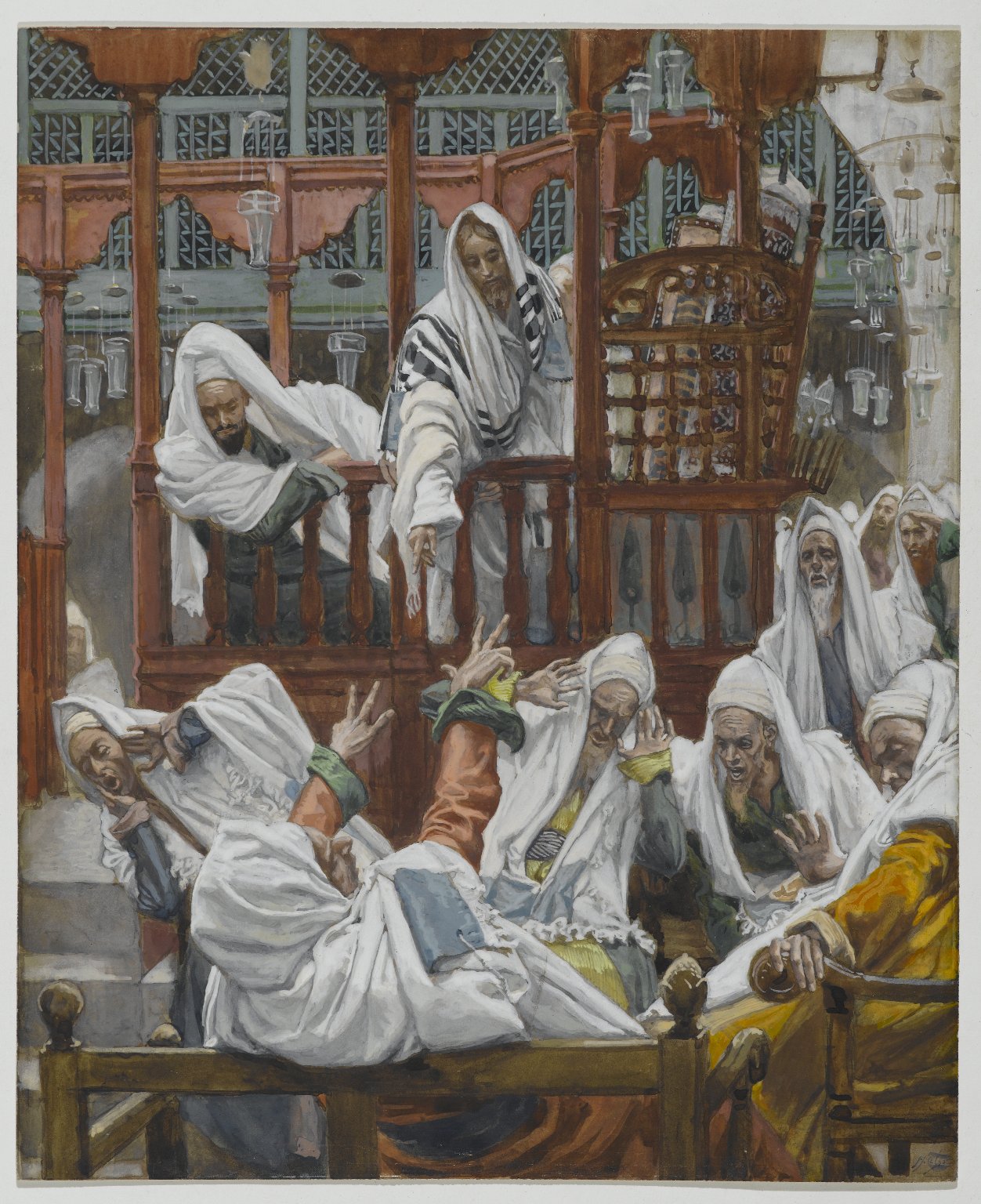
This is a man in need of healing, who is described as being possessed by an evil spirit, though nowadays we would probably prefer to describe him as suffering from mental illness. He is suffering, and longs to be healed. This weak, broken man recognises who and what Jesus is: He is the Holy One of God, the Messiah, Y Meseia. Our Lord speaks with authority telling the evil spirit to be silent and come out of the man. He can do this because He is God.

The Kingdom which Jesus proclaims in His teaching is a place of healing. Ours is a God who can heal our wounds, who can take broken humanity and restore it in love. This is why Christ’s teaching and the healing have to go together; they are both part of a larger whole, the coming Kingdom of God. Jesus proclaims our need to love God and each other, and puts this into practice, making the healing power of God’s love a reality in the world. Therefore, at the beginning of Jesus’ public ministry in Mark’s Gospel we see the proclamation of the Good News, and its application in a healing miracle. Jesus is the fulfilment of Moses’ prophecy, in today’s first reading, where he says:

“The Lord your God will raise up for you a prophet like me from among you, from your brothers—it is to him you shall listen” 

‘Yr Arglwydd dy Dduw a gyfyd i ti, o’th blith dy hun, o’th frodyr dy hun, Broffwyd megis finnau; arno ef y gwrandewch’ (Deut 18:15)

“And I will put my words in his mouth, and he shall speak to them all that I command him.”

‘a rhoddaf fy ngeiriau yn ei enau ef; ac efe a lefara wrthynt yr hyn oll a orchmynnwyf iddo.’ (Deut 18:18)

These verses are quoted, by both St Peter in Acts 3:22 and St Stephen in Acts 7:37, to refer to Jesus. For nearly two thousand years the Church has had a consistent interpretation of this passage as pointing to, and finding its fulfilment in, Jesus Christ. We can listen to Him with confidence because Jesus is God. He has authority, and He longs to heal us.

The message that Our Lord proclaims in His teaching is reinforced by His actions. Jesus shows that the Kingdom of God is a place where humanity can be healed and freed from sin. Christ demonstrates this most fully when He suffers and dies for us on the Cross. From the very beginning, Jesus looks to the Cross —not as a place of torture, humiliation, or defeat — but as the place of victory and healing. The Crucifixion is the supreme demonstration of God’s love for humanity. Through the Cross we learn how much God loves us. This is why God sends His Son to heal our wounds, to restore us, and to give us the hope of Heaven. Confident in His promises we can turn to God and pray for the healing that we all so desperately long for, and which the world needs. We can pray that His Divine nature might transform our human nature, and give us a foretaste of Heaven. We pray that our own wounds: physical and mental, will be healed, so that we might have life in Him, in this world and the next.

The possessed man asks Jesus, ‘Have you come to destroy us?’ ‘a ddaethost ti i’n difetha ni?’ The only thing that Christ has come to eradicate is the power of evil which separates man from God. We know that the Son of God has come not to destroy but to restore humanity, so that we may have life and have it to the full. This is the Good News of the Kingdom, which is still a reality here and now. We, in our brokenness, can approach the source of all healing, the God who loves us and gives himself for us, so that we can be restored by Him. God can take our lives and heal us in His love. Let us then come to Him, so that our lives may also be transformed. Let us proclaim to a world, which longs for healing and wholeness, the love of God the Father, God the Son, and God the Holy Spirit. To whom be ascribed all glory, dominion, and power, now and forever. Amen.

James Tissot The Possessed Man in the Synagogue (Brooklyn Museum)

Advent II – Repent!

ONE of the most important tasks for anyone bringing up children involves teaching them right from wrong, encouraging good conduct while avoiding bad behaviour. Children and adults alike learn by example, and we need people to teach us. The prophets of Ancient Israel take on this role, showing the people of God where they have gone wrong, and what they should do. John the Baptist is the last of the prophets, and points people towards the Messiah, Jesus. John is the last person to call Israel to repentance, and the first to proclaim the Kingdom of God, which finds its fulfilment in Christ. The Baptist looks back to the prophetic tradition of the Old Covenant, and forward to the New Covenant. Like the prophets of earlier generations, he educates God’s people and announces the reality of God’s saving love. Prophets can be divisive and unsettling figures because they speak with clarity and urgency. They tell it like it is, and are convinced of the importance of their message, because it comes from God.

Our first reading this morning from the prophet Isaiah is joyful and optimistic. Through the prophet, God speaks words of comfort to His people. Today we go back to the beginning of the Gospel of Mark. Here we find the words of Isaiah are quoted because they look forward to the coming of the Messiah:

A voice cries: “In the wilderness prepare the way of the Lord; make straight in the desert a highway for our God.” (Isaiah 40:3)

Jesus Christ is the fulfilment of biblical prophecy. In Him the glory of the Lord is revealed. Mark also quotes from the prophet Malachi:

“Behold, I send my messenger, and he will prepare the way before me. And the Lord whom you seek will suddenly come to his temple; and the messenger of the covenant in whom you delight, behold, he is coming, says the Lord of hosts.” (Malachi 3:1)

Mark includes both of these prophetic texts in his Gospel to show us that, from the beginning, prophecy is being fulfilled in Jesus. John the Baptist is the messenger, preparing the community for the coming of the Messiah: Jesus, who is God.

From his first appearance in the wilderness, John proclaims a baptism of repentance for the forgiveness of sins. Such a rite of initiation was usual for people converting to Judaism, but not for those who were already Jewish. It looks something like a revival: people are encouraged to take their faith more seriously, and to live it out in their lives. John then positions himself at a point where the busy road from Jerusalem crosses the River Jordan. There he challenges all those he meets to change their ways. The Baptist calls people to repentance, to turn away from sin and to turn back to God. It is good to be reminded that God’s love and mercy are available to all of us, even when we fall short of what Our Heavenly Father wants us to be. This is why the story of Jesus’ public ministry begins with His Baptism in the Jordan, and at the same time points to Golgotha. The place where Christ will die taking our sins, and those of all humanity upon Himself. Christ’s Death demonstrates God’s love for us and His mercy towards us. It is hard to comprehend how God could love us that much. And yet Christ gives us Himself in the Eucharist, so that His Body and Blood can transform us, so that we can share in His life on Earth and in Heaven.

John the Baptist is the last of the prophets and the voice crying in the wilderness of which the prophet Isaiah spoke. He has a challenging and uncompromising message: repent for the Kingdom of God is close at hand. This may not be what many people today want to hear, but it is, however, what people need to hear. Those who flock to him are aware of their sin, and aware of their need of God’s love, mercy, and forgiveness. The Baptist’s message may not be an easy one, but it is actually Good News. Our prayers are answered: that for which we hope, for which our soul deeply longs can be ours. Through our own baptism, we share in Christ’s Death and Resurrection, and we are washed from sin and given the gift of the Holy Spirit. It is difficult to make a proclamation similar to John’s in today’s society, where the Church is increasingly marginalised. Yet our message must still be ‘Repent!’. This is because the world needs to repent, to turn away from sin and selfishness, and back to a God of love, who longs for us to have life in all its fullness.

Repentance is both an event and a process. It is something that we need to do continuously, and do together. This is the life of faith which Christ calls us to live. Repentance is the work of a lifetime, we need to keep turning away from sin and turning back to God. The season of Advent is a good time for repentance. As we prepare to meet Jesus, we need to return to the God who loves us. As the prophet Isaiah wrote:

He will tend his flock like a shepherd; he will gather the lambs in his arms; he will carry them in his bosom, and gently lead those that are with young. (Isa 40:11)

We have been given clear instruction in how to live. The prophets tell us to return to the Lord. They too look forward to the coming of the Messiah. As we prepare to meet Him, let us prepare our hearts, our souls, and our lives. Let us, along with John the Baptist and all the saints, sing the praises of God the Father, God the Son, and God the Holy Spirit. To whom be ascribed all glory, dominion, and power, now and forever. Amen.

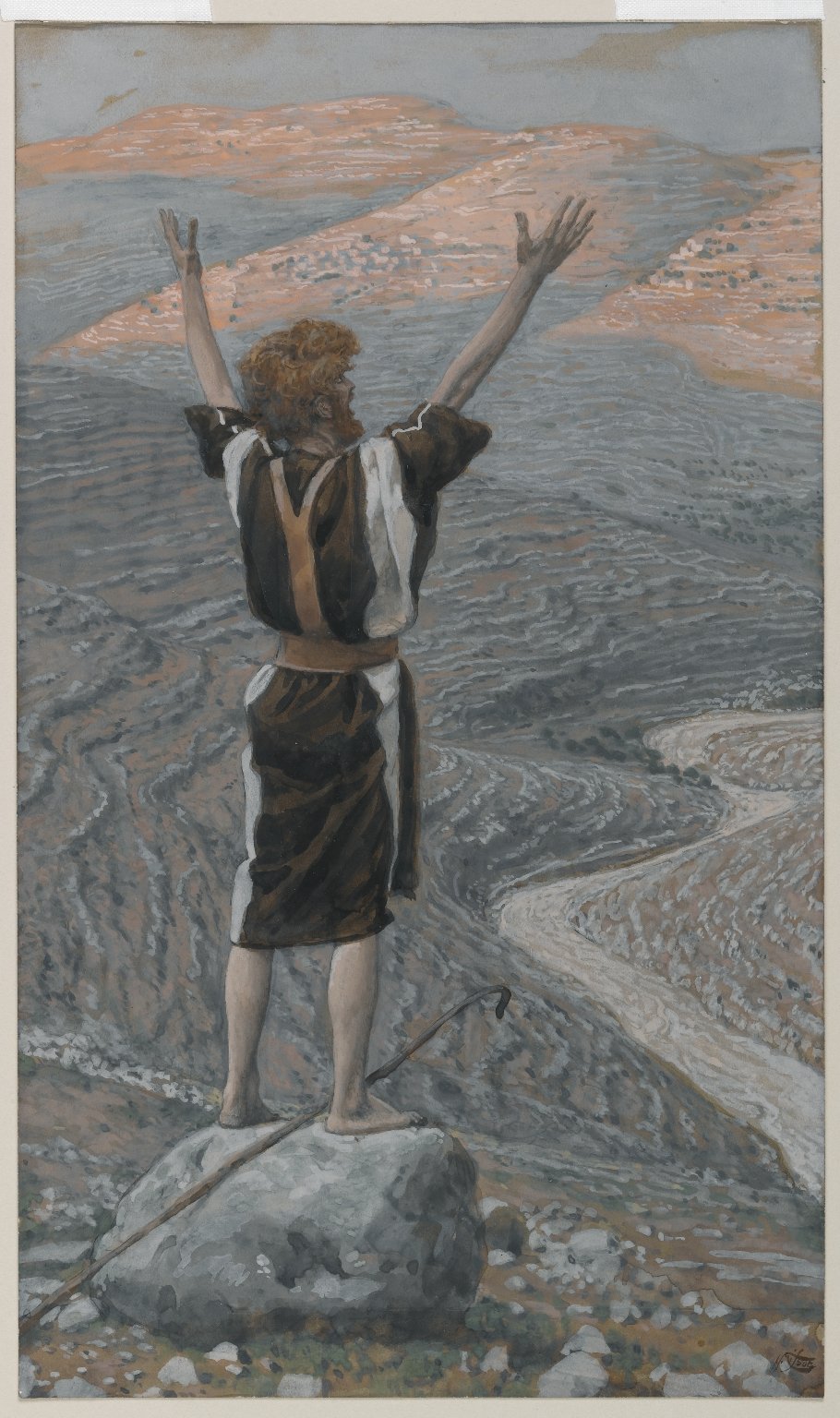
James Tissot – The voice in the desert (Brooklyn Museum)

Twenty Third Sunday of Year A

The emergency services were not well-developed in the Ancient World. However, cities did have a night watch who functioned as a combination of a police force and fire brigade. It is to such an office that God appoints the prophet Ezekiel in this morning’s first reading. He is to be a night watchman, someone who is vigilant against fire and crime, someone concerned with safety and people’s well-being. Prophets exist to speak warnings to God’s people, to show them where they are going wrong and to show them how to get back on the right path. The role of a prophet is to call sinners to repent from their evil ways. Through the prophet God calls His people back to Him. Though people are, then as now, wayward they are given a chance to repent, to return to the ways of human flourishing. The choice is a stark one: life or death. It is important, and a lot depends upon the choices we make. This is why the central proclamation of the Church is to call God’s people to repentance: to turn away from sin, and to turn back to God. 

This week’s second reading from Paul’s Letter to the Romans continues the Apostle’s advice on how Christians should live out their faith in their lives. Living a Christian life  is a difficult thing to do, and for two thousand years Christians have struggled to do it well. As followers of Christ we are called to love God and to love one another. Paul quotes from the Ten Commandments to make the point that the basis for the moral code found in the Mosaic Law is Love. If you love someone then you will not do such things to them. To love is to will the good of another, to make the right choice, one which leads to human flourishing.

Having shown the Church how to live, Paul widens his focus, to reinforce something we heard last week: 

Do not be conformed to this world, but be transformed by the renewal of your mind, that by testing you may discern what is the will of God, what is good and acceptable and perfect. (Romans 12:2)

Paul can see the wider significance of what he is encouraging people to do. The Church knows that Jesus will come to judge the world, so Paul is encouraging Christians to live moral lives. The first Christians were surrounded by a decadent and morally corrupt society, justas we are today, and have been for two thousand years. Human nature is surprisingly consistent. We, however, are called to live differently. In our baptism, we put on Christ, and we were clothed with Him, sharing His Death, but we were also raised to new life in Him. We pray for the strength to live that new life, here and now! This is how we should prepare to meet our Redeemer, when He comes again.

How do we deal with problems as a church? This is an important and difficult question. This morning’s Gospel shows us how, in a number of clear simple steps. First we should approach the person in private. If they listen, and presumably admit their mistake and ask for forgiveness, or try to put things right, then that is an end to the matter. They are reconciled, and the matter is forgiven and forgotten. If this does not work, Paul instructs us to take one or two people, so that there are witnesses, and if this does not work, it becomes a matter for the church as a whole. If the person at fault still refuses to listen, they are excluded, not as a punishment, but so that they may have another opportunity to think things over, to admit that they are wrong, and to seek forgiveness and reconciliation. The point is not to cast people out, but to try and keep them in, and give them all possible opportunities to repent and be reconciled. In worldly terms this provision is generous. The church, which Christ founded, is meant to do things differently, as Jesus says:

The thief comes only to steal and kill and destroy. I came that they may have life and have it abundantly. (Jn 10:10)

God wants us all to have life in all its fulness, which includes healing and reconciliation. The world, however, often sees things in terms of punishment and retribution, whereas the church views things in terms of restoration. Our God is a God of justice and mercy. This is why Jesus goes to the Cross willingly, to bear our sins, and to heal our wounds. We cannot sort out the problem of our sin and woundedness on our own; if we could we would not need a Saviour. 

This is why Jesus reiterates His teaching about sin:

Truly, I say to you, whatever you bind on earth shall be bound in heaven, and whatever you loose on earth shall be loosed in heaven. (Mt 18: 18) 

This is a reality because of all that God has done for us in Christ. The Church exists to continue the redemptive work of God within the world. Through God’s forgiveness we can be truly reconciled and the healing, which can become a reality in our lives. Jesus says in the words which follow:

Again I say to you, if two of you agree on earth about anything they ask, it will be done for them by my Father in heaven. (Mt 18:19)

Through God’s reconciliation we can make requests in prayer, and those requests will be answered. In addition, as a Christian community we can be encouraged by Christ’s presence in our midst:

For where two or three are gathered in my name, there am I among them. (Mt 18:20)

Christ is among us, here and now! And we receive His Sacramental Presence in the Eucharist, His Very Flesh and Blood, so that He may transform us; so that we may have a foretaste of the Heavenly Banquet and be built up and strengthened in love, both here and now. We have the medicine for which our souls cry out. This is the healing which Christ accomplishes on the Cross, He longs to pour out His Love on us, so that we can know true freedom, true joy, and true love, in Him. So let us come to Him and let His Grace transform our lives, so that we, and all creation, may give glory to God the Father, God the Son, and God the Holy Spirit, to who whom be ascribed as is most right and just, all might, majesty, glory, dominion and power, now and forever. Amen. 
Lent III John 4: 5–42


God proves his love for us in that while we were still sinners Christ died for us

Hyperichius said, ‘The tree of life is high, and humility climbs it.’

He also said, ‘Imitate the tax-collector, to prevent yourself being condemned with the Pharisee. Follow the gentleness of Moses, and hollow out the rocky places of your heart, so that you turn them into springs of water.’


People can be strange, stubborn infuriating creatures, and the picture given to us of the Israelites in Exodus should strike something of a chord. We can recognise something of ourselves in it: stubborn, wilful, and sinful. But lest we get too disheartened it is important to recognise that Moses strikes the rock at Horeb, as the Lord commands him, and out flows water. This water, like the parted water of the Red Sea prefigures Christ, the living water, our baptism, through which we enter the Church. Through it we are regenerate, born again to eternal life in Christ Jesus, our Lord and Saviour, whose side was pierced on Calvary, and whence flowed blood and water. This water speaks to us of the grace of God poured out upon us, his people, to heal us and restore us, to help us live his risen life.

So as we continue our Lenten pilgrimage, we can do so joyfully because God’s love has been poured into our hearts – what matters is what has been done to us, by God, out of love, so that we can be like him. He is the reconciliation which achieves what we cannot: restoring our relationship with God and each other, healing our wounds, and giving us eternal life in Him.

Picture the scene – it’s the middle of the day, the sun is blazing overhead, he’s been walking for hours, days even. Jesus is tired – as a man, a human being, he is no different from you or me – he ate and drank,  he was thirsty, and he was knackered. Mid-day is certainly no time to be drawing water from a well – it’s something you do first thing in the morning, as the sun is rising. What sort of a woman is drawing water at mid-day? Hardly a respectable one, but rather someone shunned, someone beyond the pale, cast out of polite society as an adulteress who is living in sin. Jesus asks the woman for a drink – he’s defying a social convention – he’s breaking the rules. She’s really surprised – Jews are supposed to treat Samaritans as outcasts, they’re beyond the pale: they’re treated something like the Roma in Eastern Europe – outcasts, second class, scum, to be despised and looked down upon. And yet Jesus asks her for water, he initiates the conversation and the encounter, with an outsider, to bring her in.

Jesus offers her living water, so that she may never be thirsty again. The woman desires it, so that she will never be thirsty again, or have to come to the well to draw water, she’s fed up of the work, and fed up of being an outcast, and having to do it at antisocial hours when the community can see who and what she is. Jesus knows who and what she is – he recognises her irregular lifestyle. He also sees her need of God – her need for the water of grace to restore her soul, and inspire her to tell people the Good News. Her testimony is powerful because she has experienced God’s love as a living reality and she simply has to tell people about it. She brings them to Christ so that they can be nourished, so that they too can experience the grace of God.

People are interested in who and what Jesus is, what he’s got to say, and they believe and trust in Him as the Messiah the Anointed of God, as the Saviour of the World, a title recently taken up by the Roman Emperor, big claims to make, and dangerous ones, which along with His healings will soon lead to His condemnation and death. In plenty of parts of the world the proclamation of the Good News still leads to imprisonment, torture and death, even today. And yet as Christians we are called to bear witness regardless of the personal cost, so that the world may believe. Here in the West we have as a church become comfortable, we forget about persecution, or view it at a safe distance. We’re not involved, it doesn’t matter that much to us. Are we far from the grace of our baptism, have we not encountered Jesus in Word and Sacrament? Are we too afraid of the World? The world which Christ overcomes on the Cross.

To live is to change and to be perfect is to have changed often. If we are changing into Jesus Christ, then we’re on the right track. If we listen to his word; if we talk to him in prayer and let him talk to us; if we’re fed by Him in the Eucharist, by Christ both priest and victim, to become what He is – God; if we’re forgiven by Him, through making confession of our sins, not only do we come to understand Jesus, we become like him, we come to share in his divine nature, you, me, all of humanity ideally. We, the People of God, the new humanity, enter into the divine fullness of life, we have a foretaste of the heavenly banquet.

Lent should be something of a spiritual spring clean, asking God to drive out all that should not be there, preparing for the joy of Easter, to live the Risen Life, filled with God’s grace. In our baptism we died with Christ and were raised to new life in the Spirit. Let us prepare to live that life, holding fast to Our Lord and Saviour, clinging to the teachings of his body, the Church. Let us turn away from the folly of this world, the hot air, and focus on the true and everlasting joy of heaven, which awaits us, who are bought by his blood, washed in it, fed with it. So that we too may praise the Father, the Son and the Holy Spirit, to whom be ascribed as is most right and just, all might, majesty, glory, dominion, and power, now and forever…

23
Guercino Jesus and the Samaritan Woman, Museo Thyssen-Bornemisza, Madrid, 1640-1