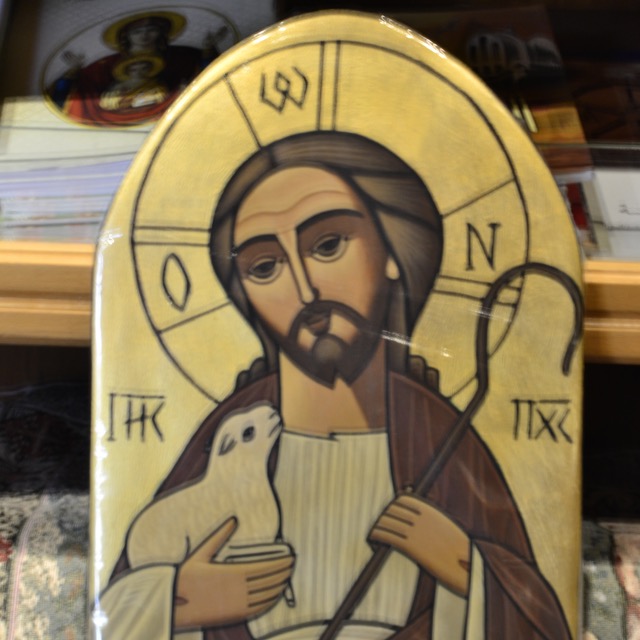
Lent IV

IF you have ever been unwell while on holiday you probably sought out a Pharmacy. They are quite straightforward to locate as they tend to either have a cross on their sign, or a snake or two around a pole. This was the symbol of the Greek God of healing Aesculapius whose major shrine was at Epidaurus. Christians tend to associate the snake with the tempting of Adam and Eve in the Garden of Eden, but it is not this creature’s only occurrence in the Bible. 

This morning’s Gospel begins with Jesus explaining His forthcoming Crucifixion with a reference to Israel’s wanderings after the Exodus:

And the Lord said to Moses, “Make a fiery serpent and set it on a pole, and everyone who is bitten, when he sees it, shall live.” So Moses made a bronze serpent and set it on a pole. And if a serpent bit anyone, he would look at the bronze serpent and live.’ 

‘A dywedodd yr Arglwydd wrth Moses, Gwna i ti sarff danllyd, a gosod ar drostan: a phawb a frather, ac a edrycho ar honno, fydd byw. A gwnaeth Moses sarff bres, ac a’i gosododd ar drostan: yna os brathai sarff ŵr, ac edrych ohono ef ar y sarff bres, byw fyddai.’ (Numbers 21:8-9)

The people of Israel had been complaining about the journey, the lack of food and water, and that God has led them out into the desert to die, so God sent fiery serpents which killed them. The people then relented, and asked Moses to pray to God to take the serpents away. God listened to Moses, and provided a means for Israel to be saved. Jesus uses this example to explain why the Son of Man must be lifted up. Just as the bronze serpent saved people long ago, Jesus’ being lifted up on the Cross will save those who believe in Him. Our Lord’s death will occur at Passover, the festival which celebrates the people of Israel’s journey from slavery in Egypt, to the Promised Land. So Christ will deliver humanity from the slavery of sin and offer us eternal life in Him. He bears our burden, and reconciles us to the Father, and each other.

There then follows one of the most well-known verses in the Bible:

For God so loved the world, that he gave his only Son, that whoever believes in him should not perish but have eternal life. For God did not send his Son into the world to condemn the world, but in order that the world might be saved through him.

‘Canys felly y carodd Duw y byd fel y rhoddodd efe ei unig‐anedig Fab, fel na choller pwy bynnag a gredo ynddo ef, ond caffael ohono fywyd tragwyddol. Oblegid ni ddanfonodd Duw ei Fab i’r byd i ddamnio’r byd, ond fel yr achubid y byd trwyddo ef.’ (Jn 3:16-17) 

This is the heart of our faith as Christians. Christ was born for us, lived and died for us, and was raised to new life, so that we might have the promise of eternal life in Him. This is why we follow Christ into the desert of Lent for forty days, so that through prayer, fasting and charity we may be prepared in body and soul to celebrate the mystery of Christ’s Passion, Death, and Resurrection. Maundy Thursday, Good Friday and Easter are the ultimate embodiment of God’s generous Love towards humanity. God loves us, you and me, each one of us, so much that He gave His only Son to die for us, on the Cross.

God does not condemn humanity for falling short, instead He saves us. God is a God of love and generosity, who offers Himself to reconcile us to Him, and to each other. This generosity is at the heart of our faith as Christians. We worship a generous, loving God, and invite others to receive the free gift of God’s grace, and enter a relationship with the God who made us and who loves us. 

This relationship explains the joyful hope which St Paul has when he writes to the Church in Ephesus in our second reading this morning. Paul’s central message is that:

For by grace you have been saved through faith. And this is not your own doing; it is the gift of God,’ 

‘Canys trwy ras yr ydych yn gadwedig, trwy ffydd; a hynny nid ohonoch eich hunain: rhodd Duw ydyw’ (Eph 2:8)

Grace is unmerited kindness, something which we do not deserve, or earn. It is by the grace of God that we are saved, through faith, believing and trusting in Jesus Christ, who was born for us, died and rose again for us. We can put our trust in the God who loves us, and who shows us that love in His Son. It is not about what we can do, but about what God can do for us. Our relationship with God is the result of a gift, which we can accept and which can change our lives, if we only let go, and let God transform us, more and more into the likeness of His Son. 

Through prayer, the reading and study of scripture, living out our faith, and the sacraments of the Church, God brings about the work of transformation in us. As He gave Himself on the Cross for us, He gives us Himself in the Eucharist. During Communion we are fed with the Body and Blood of Christ, God’s very self, so that we can become what He is. Prepared by Lenten penitence we may look forward to sharing the new life of Easter, and singing the praises of God the Father, God the Son, and God the Holy Spirit. To whom be ascribed all glory, dominion, and power, now and forever. Amen.

Diego Velázquez – Christ Crucified (Museo del Prado, Madrid)

Lent II – The Transfiguration

One of the perils of driving in autumn or winter is the low Sun. Because of its angle and closeness to the Earth, we find ourselves dazzled by its brilliance. You have to avert your gaze or use a sun visor or sunglasses in order to drive. This can be inconvenient, but the brightness of our closet star is as nothing compared with the presence of God. Last week we heard the voice of God the Father at Jesus’ Baptism and we will hear Him again this week. 

Our first reading from Genesis, the story of Abraham and the Sacrifice of Isaac, is both well-known, and deeply shocking. The concept of human sacrifice was widespread in the Ancient World. It was not a common occurrence, but it did take place. It seems abhorrent to us, and so it should. In the passage God speaks to Abraham and says,

Take your son, your only son Isaac, whom you love, and go to the land of Moriah, and offer him there as a burnt offering on one of the mountains of which I shall tell you.”

‘Cymer yr awr hon dy fab, sef dy unig fab Isaac, yr hwn a hoffaist, a dos rhagot i dir Moreia, ac offryma ef yno yn boethoffrwm ar un o’r mynyddoedd yr hwn a ddywedwyf wrthyt.’ (Genesis 22:2)

Thankfully, just as Abraham is about to offer Isaac, God tells him to stop, as Abraham has demonstrated his complete devotion to God:

Do not lay your hand on the boy or do anything to him, for now I know that you fear God, seeing you have not withheld your son, your only son, from me.” 

‘Na ddod dy law ar y llanc, ac na wna ddim iddo: oherwydd gwn weithian i ti ofni Duw, gan nad ateliaist dy fab, dy unig fab, oddi wrthyf fi.’ (Genesis 22: 12)

Abraham sees a ram with its horns caught in a thicket, and offers it to God instead. The ram symbolises Christ. It looks forward to Jesus, recognised by John the Baptist as the Lamb of God, who takes away the sins of the world. The ram also points to the Passover Lamb in Exodus, which again prefigures Jesus, the fulfilment of the Paschal Sacrifice. Because Abraham has not withheld his son, he is blessed by God, and through his offspring, all people will be blessed. For Christians the Easter story is important because in it God, like Abraham, does not withhold His Only Son, but gives Him, to die for us. This narrative demands contemplation because it is the demonstration of the mystery of God’s love for humanity. The fact that God loves us that much is totally awesome, especially when we do not deserve it. The mystery of God’s love is that we are not loved because we are loveable. We are often quite the opposite! But God loves us anyway and His steadfast love transforms us. 

St Paul pondered such questions as he wrote to the Church in Rome:

‘He who did not spare his own Son but gave him up for us all’

‘Yr hwn nid arbedodd ei briod Fab, ond a’i traddododd ef trosom ni ol’ (Rom 8:32)

Christ’s death on the Cross is a demonstration of divine generosity, and the reason for our hope as Christians. God’s love for humanity is truly amazing. We should pause for a moment as we read or hear this. God loves me enough to die for me. If God can do this for us, what can we, in return, do for Him? During the Lenten Season we focus on the Cross and the Empty Tomb as the centre of our faith, three days which explain who we are, what we are, and why we are Christians. 

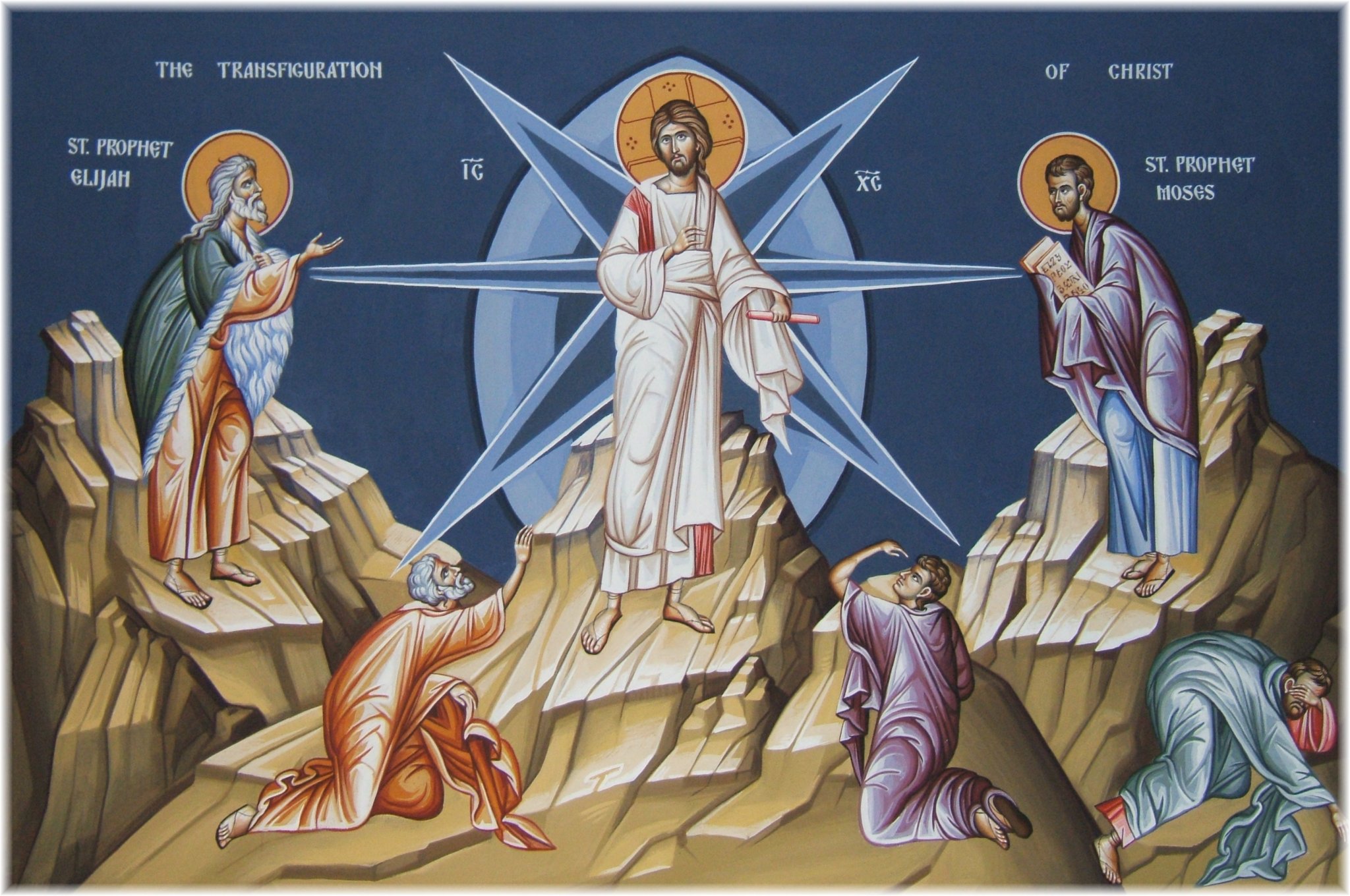
The Transfiguration, described in today’s Gospel, is strange because in it we see something of who Jesus really is: God. We have a brief glimpse of Divine glory as a prelude to Our Lord’s Passion and Death. The two are linked, as they both allow us to understand both who God is, and what He is doing. When God speaks from the cloud He tells us three things about Jesus. Firstly that Jesus is the Son of God, secondly that He is loved, and thirdly that we should listen to Him. What Jesus says and does should affect us and our lives. Like the disciples, we have to be open to the possibility of being radically changed by God. The opportunity of divine transformation is offered to us, so that we might come and share the Divine life of love.

Jesus tells the disciples not to tell anyone about their experience on the mountain until after He has risen from the dead. Jesus has another mountain He must climb: the hill of Calvary, where He will suffer and die upon the Cross. There He takes our sins upon Himself, restoring our relationship with God and each other. This then is real glory, not worldly glory, but the glory of God’s sacrificial love poured out on the world to heal and restore all humanity. The theologian Fulton Sheen spoke about the importance of mountains in Jesus’ life. He said:

Three important scenes of Our Lord’s life took place on mountains. On one, He preached the Beatitudes, the practice of which would bring a Cross from the world; on the second, He showed the glory that lay beyond the Cross; and on the third, He offered Himself in death as a prelude to His glory and that of all who would believe in His name

(Fulton Sheen, The Life of Christ, 1970 p.158)

The Transfiguration shows us the glory of heaven, the glory of the Resurrection at Easter, the glory that lies beyond the Cross. God’s love and God’s glory are intertwined, and cannot be separated because they given freely. God’s very nature is generous, beyond our understanding, and characterised by total self-gift. Our Heavenly Father does not hold anything back, and whereas Isaac is replaced at the last minute by a ram, there is no substitution for Jesus. God gives His Son, Jesus Christ, to die for us, and to rise again, so that we might enjoy eternity with Him in Heaven. The Transfiguration is a promise of our future heavenly glory. Through signs and glimpses, God shows us what future awaits us. He longs to heal and restore us, so that we might enjoy eternity with Him. 

The Transfiguration, therefore, looks to the Cross to help us to prepare ourselves to live the life of faith. It helps us to comprehend true majesty, true love and true glory. The wonderful glory that can change the world and which lasts forever, for eternity, unlike the fading glory of the world, which is here today but gone tomorrow.

So my brothers and sisters, as we celebrate God’s love and glory, let us prepare to  ascend the mountain ourselves and have an encounter with the living God in Holy Communion. Let us come to the source of healing and fount of love which is God’s very self. Let us touch and taste Our Lord and Saviour, given for us, so that we might live in Him. Let us be transformed by Him and enjoy the glories of Heaven singing the praises of God the Father, God the Son, and God the Holy Spirit. To whom be ascribed all glory, dominion, and power, now and forever. Amen.
Sexagesima

Recently we have begun to talk about the idea of work-life balance, due to an awareness that people in the modern world are spending more time at work, and need to make sure that their patterns of life and work are healthy. Clearly spending too much time at work and not enough at rest will be detrimental to our physical, mental and spiritual health. 

Our Gospel this morning follows on directly from last week. After teaching in the synagogue in Capernaum and healing the possessed man, Jesus and His disciples go back to the family home of Simon and Andrew. After what had been a draining experience, they were no doubt in need of both rest and nourishment. But before this can happen, there is a situation which requires Our Lord’s immediate attention:

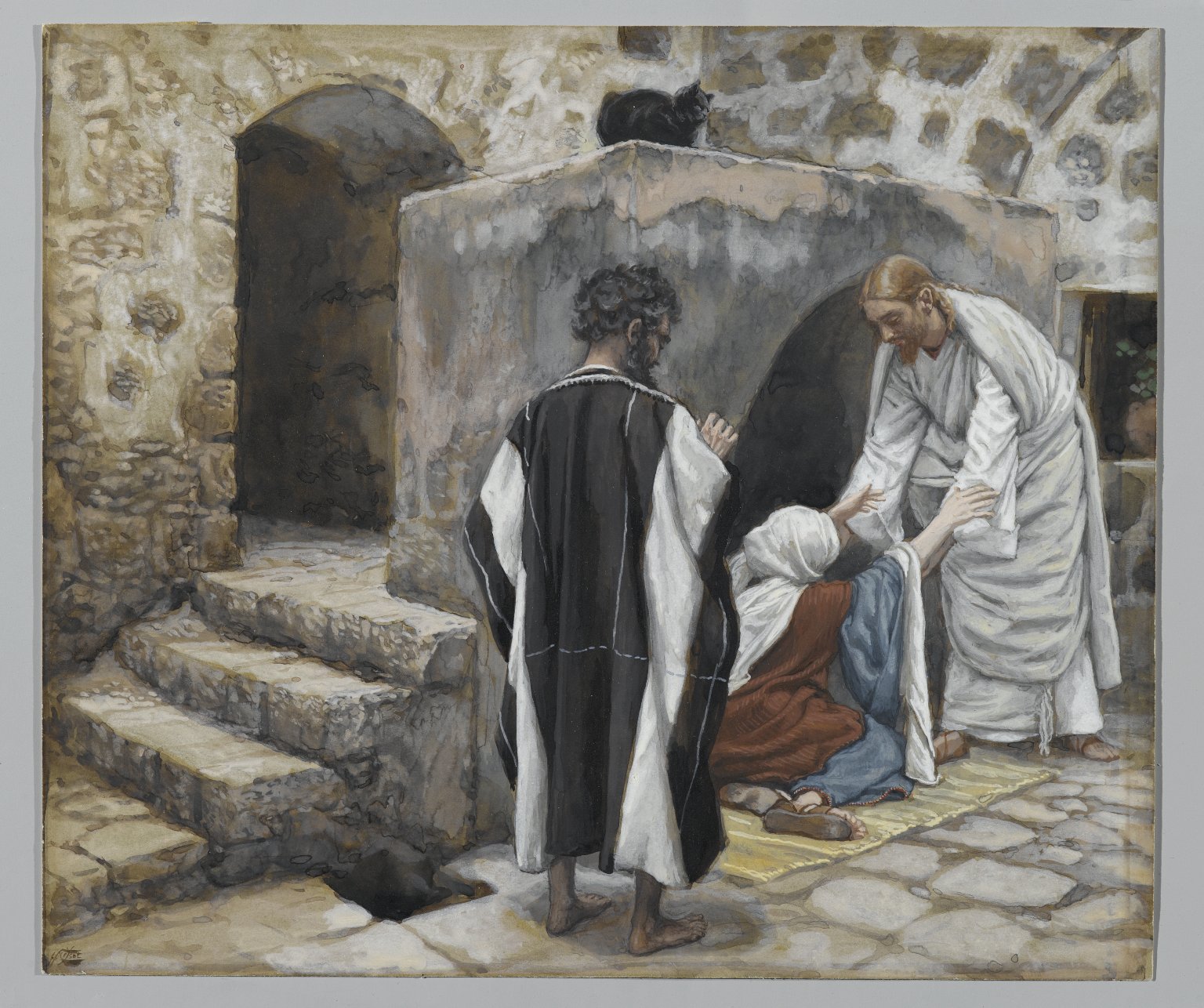
‘Now Simon’s mother-in-law lay ill with a fever, and immediately they told him about her. And he came and took her by the hand and lifted her up, and the fever left her, and she began to serve them.’ (Mk 1:30-31)

It’s serious, and it’s life-threatening. He takes her by the hand, lifts her up, and she is immediately restored to full health: she gets up and looks after them. Mark’s account is simple and straightforward, and goes along at a tremendous breathless pace. The healing is miraculous and instantaneous. It takes your breath away. It is a powerful demonstration of the reality of God’s love for us: if we let God be at work in our lives then wonderful things are possible, but we have to trust Him. I know that I really struggle with that, and I suspect that I’m not alone in feeling that way. 

Once the Sabbath was over at sundown, the people of Capernaum bring people to Him who are sick, and in need of healing, and he heals them. The Kingdom of God has become a reality in the person and actions of Jesus. And then early the next morning, before dawn Jesus goes away to pray. He finds a deserted place, a place where He can be alone with God to pray. It reminds us of the need for prayer and quiet in our own lives — we need time to be with God, to talk to Him, and to listen to what He has to say to us. We live in a world filled with noise and distraction, where social media and mobile phones vibrate and flash to get our attention to draw us in. Instead, if we want to be close to God and let His power be at work in us, we need to be silent and find a deserted place, if only for a few minutes, to let a healing encounter take place. God meets us when we are alone, when we are silent, when we are vulnerable, when we no longer rely on our own strength but hand ourselves over completely to Him. This is not an easy thing to do, but it is the only way for God to be at work in us: we need to make space for Him. 

And then it is over, Simon and the other disciples find Jesus and call Him back to the people who need Him. But rather than simply staying where He is, He moves them on to the next towns, so that He may preach there, for that is why He came out. As well as healing the sick Jesus has a message to proclaim: repent and believe the Good News (Mk 1:15). He calls people to turn away from sin, to turn back to God, and to know that the Kingdom is near. The disciples can only see people’s needs, they need to understand that there is a wider context too. So Jesus preaches, He explains the Scriptures so that people can understand that prophecies are being fulfilled in Him, and He casts out demons so that people can see the Healing which the kingdom promises is a reality there and then. 

Which of us can say that we don’t need Christ’s healing in our lives? I know that I do, the truth is that we all do. If we are close to Him in prayer, if we listen to Him, if we have the humility which says, ‘I need God’s help’ then we can be open to the transforming power of His Love. Here this morning, in the Eucharist, at the Altar, Christ will give Himself for us, His Body and His Blood, so that we can feed on Him, be fed by Him, and be fed with Him, so that our souls can be healed. What greater medicine could there be for us, than God’s very self? What gift more precious or more wonderful? Our soul’s true food. We eat Christ’s Body and drink His Blood so that we might share His Divine life, that we might be given a foretaste of Heaven here on earth. For two thousand years, on a hundred thousand successive Sundays, the Church has done THIS, to obey Christ’s command, and so that the healing work begun in Galilee might be continued here, now, among us. 

Let us listen to His words. Let us be close to Him in prayer. Let us come to Him, to the One who loves us, who heals us, who gives Himself upon the Cross to die for us. To the One who rises again to give us the promise of eternal life in Him. Let us come to be healed, to the table of the Lord to be fed with Him, so that He might heal us, and restore us, so that we might have life, and life to the full in and through Him.

Let us proclaim to a world, which longs for healing and wholeness, the love of God the Father, God the Son, and God the Holy Spirit. To whom be ascribed all glory, dominion, and power, now and forever. Amen.
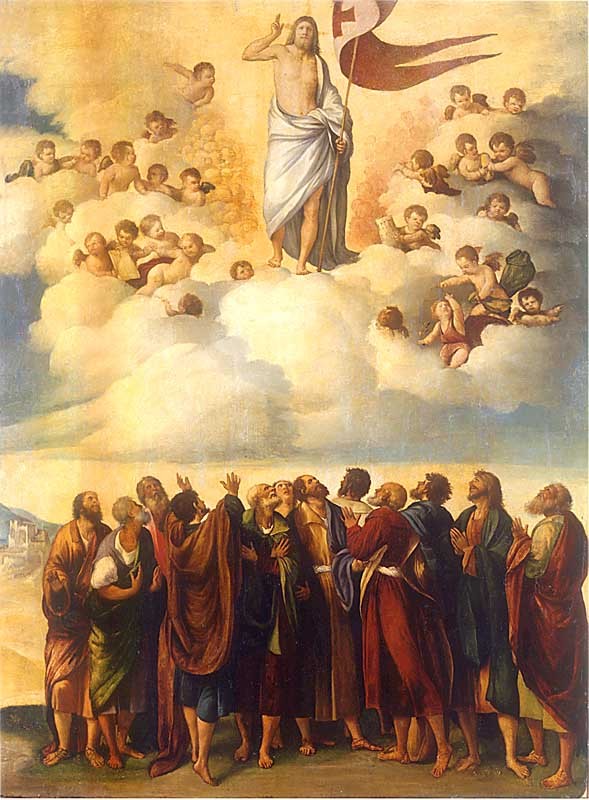
James Tissot – The Healing of Peter’s Mother-in-law (Brooklyn Museum)

The Third Sunday after Epiphany (Year B)

Organising a wedding is not an easy task. They can be complex and expensive undertakings, even when they are relatively modest affairs, with only family and a few friends. In some cultures, however, weddings can be more like celebrations for an entire community. Indeed, even today in the Middle East and Asia when a couple marry the celebrations can involve large numbers of guests, and last for several days. Clearly, the logistics of such festivities are complicated, and the financial outlay considerable. It is good to take a moment to consider how much the events in Cana, described in today’s Gospel reading, differ from most of the weddings that we have attended.

That Our Lord, His Mother, and His disciples are invited to the wedding should not be a surprise. This is a community celebration, with everyone present. The idea of running out of wine is not simply a failure of logistics and hospitality, but could represent a situation that would bring shame and disgrace on the hosts. It is a crisis which could stigmatise the family for years to come, with the couple thinking that their union had been cursed with bad luck. Suffice it to say, it would be a complete disaster for all concerned. Mary, wanting to prevent this, lets Jesus know that there is a serious problem. The situation is critical, and something needs to be done quickly. Our Lord, however, seems a little dismissive:

“Woman, what does this have to do with me? My hour has not yet come.”

‘Beth sydd i mi a wnelwyf â thi, wraig? ni ddaeth fy awr i eto.’ (Jn 2:4)

Jesus is looking ahead to when His hour will come, anticipating His Passion and Death on the Cross. That is also the next time that Mary will feature in John’s Gospel, when she stands with John at the foot of the Cross. The Wedding at Cana and the Crucifixion are two events that are clearly linked, both by what Our Lord says, and by who is present. What is about to happen at a Galilean wedding is a significant moment, which is underlined by Mary’s instruction to the servants:

‘His mother said to the servants, “Do whatever he tells you.”’

‘Ei fam ef a ddywedodd wrth y gwasanaethwyr, Beth bynnag a ddywedo efe wrthych, gwnewch’ (Jn 2:5)

Once again Mary demonstrates perfect obedience, and she encourages the servants to do the same. When we listen to what Jesus says and act on it we are following their example. Living the Christian life is essentially trying to do this. We listen to Jesus and do as He tells us. 

At the feast are six stone jars each holding thirty gallons which adds up to over eight hundred litres of water. This is a huge quantity of liquid, even for a large wedding. The servants fill the jars to the brim, making them fuller than they would usually be. This speaks of the abundance and generosity of God’s love. It defies our expectations, just as water being turned into wine defies expectation. The extravagant Wedding party points to something greater than itself. It is a foreshadowing of the joy of the Kingdom. The celebration at Cana is a taste of the lavish excess that our God wishes to bestow on us. His generosity, which is beyond our understanding, is a sign of His deep love for us.

The master of the feast does not seem to be bothered by the quantity of wine, but rather its quality. Moments ago the refreshments were running out, now they are plentiful. He addresses the bridegroom saying:

“Everyone serves the good wine first, and when people have drunk freely, then the poor wine. But you have kept the good wine until now.”

‘Pob dyn a esyd y gwin da yn gyntaf; ac wedi iddynt yfed yn dda, yna un a fo gwaeth: tithau a gedwaist y gwin da hyd yr awr hon.’ (Jn 2:10)

The steward has a point. It makes sense to serve the best wine first, and then serve inferior wine when people’s palettes are dulled. But this wedding feast represents a dramatic reversal of usual practice. It illustrates how God’s generosity stretches far beyond what we can expect or understand as humans. The Kingdom of God turns our values on their head, and its joyous new wine is finer than any earthly fruit of the vine. This is lavished upon humanity, so that it might transform us, so that we might come to share in the glory of God, and in His very nature. Our Lord therefore becomes the true master of the feast, just as He will feed humanity from the abundance of the Heavenly Banquet. The Wedding at Cana points to both Heaven, and to the Eucharist, where Christ nourishes us with the new wine of the Kingdom: His Blood, poured out to save and restore us. God loves us this much. How should we respond?

As Christians we are constantly called to live lives of joy and love in Christ. Through Him, rejoicing in our new life in baptism, and filled with the sober intoxication of the Spirit, we are nourished by Word and Sacrament. In this way we are restored to communion with God, and with each other, to live the life of the Kingdom, here and now. At the Wedding in Cana Jesus gives the world a sign, which shows both who and what He is, and which also points to heavenly and eternal realities. God manifests His glory, showing us who He really is: the personification of love and generosity.

This passage ends by explaining that, in response to this sign, Christs’s disciples  totally believe in Him. They put their trust in Him, as the one who fulfils prophecy, the Messiah, the Saviour of the world. Let us also put our trust in the God who loves us, and who feeds us with Himself, so that we might have life in and through Him. Let us share His joy both here on earth and in Heaven. And let us give praise to God the Father, God the Son, and God the Holy Spirit. To whom be ascribed all glory, dominion, and power, now and forever. Amen.
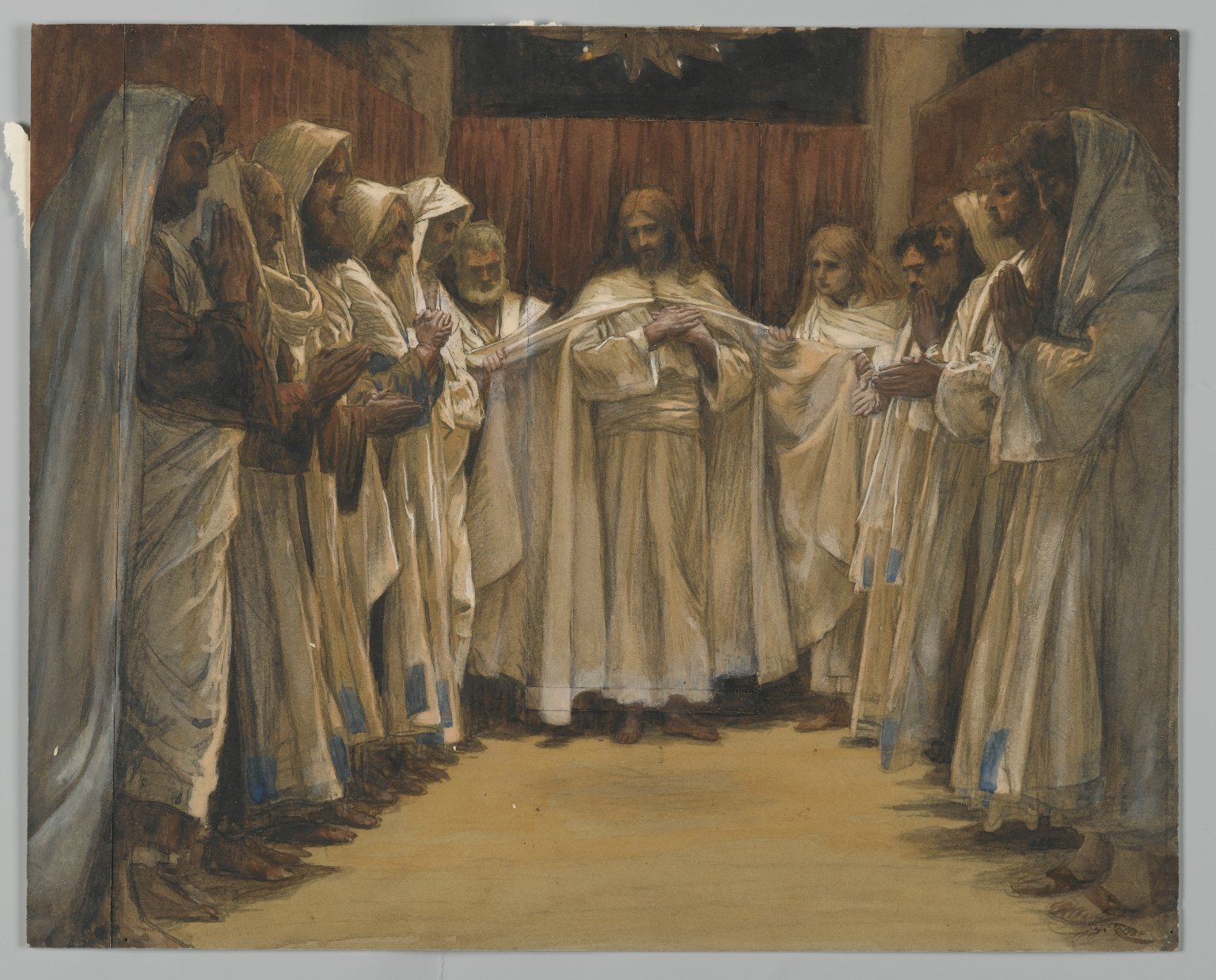
The Marriage at Cana (A. Mironov)

Christmas 2023

How do you remember the significant people and events in your lives? Since the nineteenth century, with the invention of photography, we have tended to use photographs, and stored the pictures in albums. Nowadays, however they are more likely to be online or on a mobile phone or tablet. From the first ultrasound scans of a baby in the womb, and throughout life, we have visual reminders. But photography has only been widespread for about 150 years. Before then only the rich could afford to have pictures painted to record something for posterity. If we wished to recreate an event from the past, then a dramatic retelling was the only option available. This is exactly what St Francis of Assisi did to remember the events and people of the first nativity and to inspire the devotion of all those who saw it. 

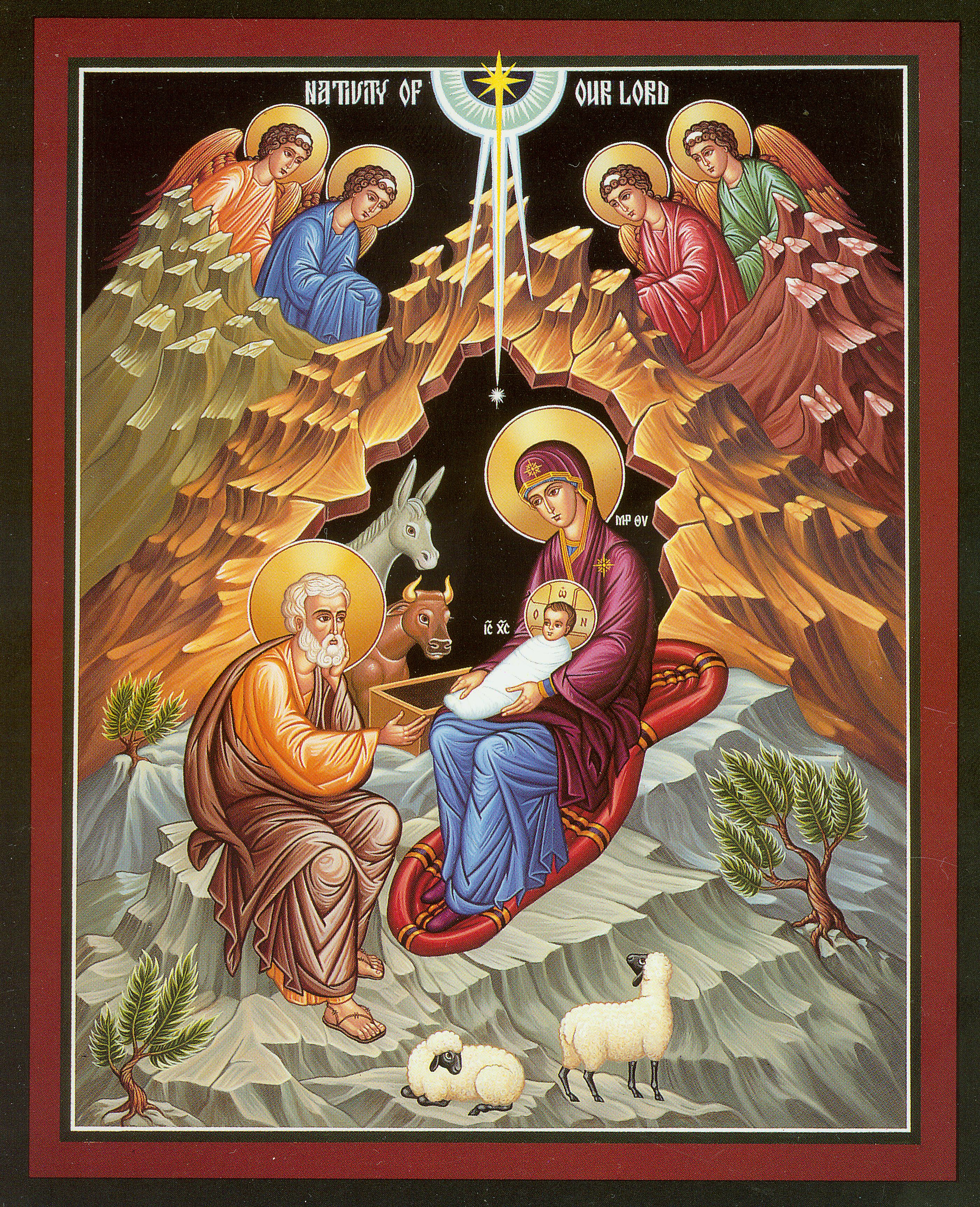
The first nativity took place exactly 800 years ago this month. The year was 1223, and the location was a cave at Greccio in Italy, around 100km north of Rome. St Francis of Assisi was inspired to recreate the first nativity in Bethlehem in an Italian village with real animals and humans playing various parts — exactly like we did in Maenclochog last night. There are good reasons why such recreations are appealing. They remind us of the reality of the Incarnation, that God took flesh in the womb of the Virgin Mary and was born in Bethlehem. The new-born baby Jesus was surrounded by an ox and an ass, and sheep, and was laid in an animals’ feeding trough. As the prophet Isaiah says:

‘The ox knows its owner, and the donkey its master’s crib’ 

‘Yr ych a edwyn ei feddiannydd, a’r asyn breseb ei berchennog’(Isa 1:3)

By this humble beginning God embarked on the journey of sharing our life, so that we might come to share His. Christ begins His life being laid on stone feeding trough. He will end it, taken down from the Cross and laid in a stone tomb. Such parallels are not mere coincidence. Instead, they point us towards a God who has made himself manifest, discoverable through signs, fulfilling prophecies, and declaring love for humanity. 

Jesus is the Prince of Peace, and the embodiment of the Gospel of Salvation. He comes to bring comfort and redemption to the whole world.

‘for the Lord has comforted his people; he has redeemed Jerusalem.’

‘canys yr Arglwydd a gysurodd ei bobl, efe a waredodd Jerwsalem.’ (Isa 52:9)

Today our salvation has dawned, prophecy is fulfilled, and the Saviour of the world is born. The message of Isaiah is one of joy. The birth of the Messiah, Jesus Christ, is Good News. This is because He comes to bring true peace to humanity. That such peace currently eludes our world, is exactly why He came: to heal our wounds and to show us a new way to live. Throughout His life, all that Christ says and does shows us how much God loves us. The Word becomes flesh, ‘A’r Gair a wnaethpwyd yn gnawd’ and enters the world. He dwells among us ‘ac a drigodd yn ein plith ni’: a wondrous mystery which provokes us to worship, to kneel with the shepherds and to adore the God who comes among us. Jesus shares our human life so that we might share His divine life, not because we asked, and not because we are deserving, it is not something we have earned. Rather, it is the free gift of a loving and merciful God. This then is the glory of God — being born in simple poverty. Jesus, the Son of God comes to call humanity to a new way of being together, where the old order is cast aside, turning the world upside down .He offers us the possibility of living in a radically different way. Instead of war, misery and hatred, He shows us the way of peace, joy, and love.

Such is the reality St Francis sought to inspire in the hearts and lives of people eight hundred years ago. It is a message which can still inspire us, a mystery which can still transform us. So that through the grace of God we can come to share in the Divine life, born among us, in a stable not a palace. God surprises us with generosity which we cannot fathom. God subverts human expectations. Christ’s first breaths are taken surrounded by animals and shepherds. Not what one would expect of a royal birth! 

God is a God of mystery and paradox. We know that we can never fully understand Him, but we can experience His love. To quote from Sir John Betjeman’s poem ‘Christmas’:

No love that in a family dwells,

No carolling in frosty air,

Nor all the steeple-shaking bells

Can with this single Truth compare —

That God was man in Palestine

And lives today in Bread and Wine.

May we greet Our Lord, born among us, and may we feed on His Body and Blood at the Altar. Given to transform us, so that we may join with the choir of angels in singing the praises of God the Father, God the Son, and God the Holy Spirit. To whom be ascribed all glory, dominion, and power, now and forever. Amen.

Merry Christmas to you all!

Nadolig Llawen i chi gyd!

Twenty Third Sunday of Year A

The emergency services were not well-developed in the Ancient World. However, cities did have a night watch who functioned as a combination of a police force and fire brigade. It is to such an office that God appoints the prophet Ezekiel in this morning’s first reading. He is to be a night watchman, someone who is vigilant against fire and crime, someone concerned with safety and people’s well-being. Prophets exist to speak warnings to God’s people, to show them where they are going wrong and to show them how to get back on the right path. The role of a prophet is to call sinners to repent from their evil ways. Through the prophet God calls His people back to Him. Though people are, then as now, wayward they are given a chance to repent, to return to the ways of human flourishing. The choice is a stark one: life or death. It is important, and a lot depends upon the choices we make. This is why the central proclamation of the Church is to call God’s people to repentance: to turn away from sin, and to turn back to God. 

This week’s second reading from Paul’s Letter to the Romans continues the Apostle’s advice on how Christians should live out their faith in their lives. Living a Christian life  is a difficult thing to do, and for two thousand years Christians have struggled to do it well. As followers of Christ we are called to love God and to love one another. Paul quotes from the Ten Commandments to make the point that the basis for the moral code found in the Mosaic Law is Love. If you love someone then you will not do such things to them. To love is to will the good of another, to make the right choice, one which leads to human flourishing.

Having shown the Church how to live, Paul widens his focus, to reinforce something we heard last week: 

Do not be conformed to this world, but be transformed by the renewal of your mind, that by testing you may discern what is the will of God, what is good and acceptable and perfect. (Romans 12:2)

Paul can see the wider significance of what he is encouraging people to do. The Church knows that Jesus will come to judge the world, so Paul is encouraging Christians to live moral lives. The first Christians were surrounded by a decadent and morally corrupt society, justas we are today, and have been for two thousand years. Human nature is surprisingly consistent. We, however, are called to live differently. In our baptism, we put on Christ, and we were clothed with Him, sharing His Death, but we were also raised to new life in Him. We pray for the strength to live that new life, here and now! This is how we should prepare to meet our Redeemer, when He comes again.

How do we deal with problems as a church? This is an important and difficult question. This morning’s Gospel shows us how, in a number of clear simple steps. First we should approach the person in private. If they listen, and presumably admit their mistake and ask for forgiveness, or try to put things right, then that is an end to the matter. They are reconciled, and the matter is forgiven and forgotten. If this does not work, Paul instructs us to take one or two people, so that there are witnesses, and if this does not work, it becomes a matter for the church as a whole. If the person at fault still refuses to listen, they are excluded, not as a punishment, but so that they may have another opportunity to think things over, to admit that they are wrong, and to seek forgiveness and reconciliation. The point is not to cast people out, but to try and keep them in, and give them all possible opportunities to repent and be reconciled. In worldly terms this provision is generous. The church, which Christ founded, is meant to do things differently, as Jesus says:

The thief comes only to steal and kill and destroy. I came that they may have life and have it abundantly. (Jn 10:10)

God wants us all to have life in all its fulness, which includes healing and reconciliation. The world, however, often sees things in terms of punishment and retribution, whereas the church views things in terms of restoration. Our God is a God of justice and mercy. This is why Jesus goes to the Cross willingly, to bear our sins, and to heal our wounds. We cannot sort out the problem of our sin and woundedness on our own; if we could we would not need a Saviour. 

This is why Jesus reiterates His teaching about sin:

Truly, I say to you, whatever you bind on earth shall be bound in heaven, and whatever you loose on earth shall be loosed in heaven. (Mt 18: 18) 

This is a reality because of all that God has done for us in Christ. The Church exists to continue the redemptive work of God within the world. Through God’s forgiveness we can be truly reconciled and the healing, which can become a reality in our lives. Jesus says in the words which follow:

Again I say to you, if two of you agree on earth about anything they ask, it will be done for them by my Father in heaven. (Mt 18:19)

Through God’s reconciliation we can make requests in prayer, and those requests will be answered. In addition, as a Christian community we can be encouraged by Christ’s presence in our midst:

For where two or three are gathered in my name, there am I among them. (Mt 18:20)

Christ is among us, here and now! And we receive His Sacramental Presence in the Eucharist, His Very Flesh and Blood, so that He may transform us; so that we may have a foretaste of the Heavenly Banquet and be built up and strengthened in love, both here and now. We have the medicine for which our souls cry out. This is the healing which Christ accomplishes on the Cross, He longs to pour out His Love on us, so that we can know true freedom, true joy, and true love, in Him. So let us come to Him and let His Grace transform our lives, so that we, and all creation, may give glory to God the Father, God the Son, and God the Holy Spirit, to who whom be ascribed as is most right and just, all might, majesty, glory, dominion and power, now and forever. Amen.