ONE of the wonderful things about living in this part of the country is that we can celebrate the new year twice. Once on January 1st and then again on January 13th for Hen Galan. It is good to celebrate new starts, new beginnings, and important milestones. Two of today’s readings focus on this theme. The reading from Ezra describes a religious assembly which takes place on the first day of the seventh month. In the Hebrew Calendar this corresponds to early September. It is this time when Jews celebrate Rosh Hashanah, or the New Year.
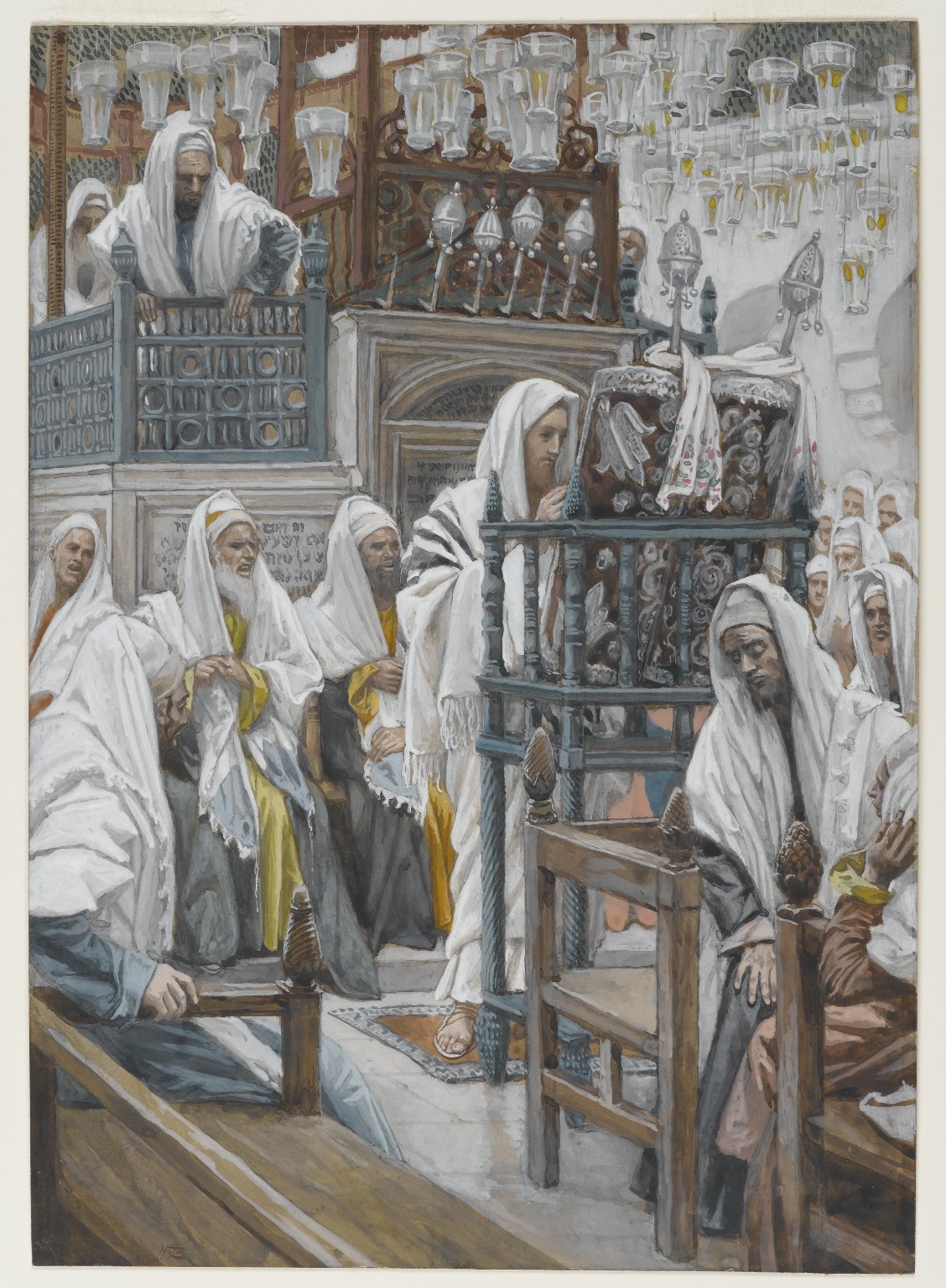
Two weeks ago we celebrated the Baptism of Christ in the River Jordan, and last week we celebrated His first miracle — changing water into wine at a wedding at Cana. Jesus begins His public ministry in Galilee. He starts on home turf, where He has grown up, among the people and places that He knows best. Our Lord is full of the Holy Spirit, and there is a great deal of excitement regarding His teaching. He goes to the synagogue on the Sabbath, where He is invited to read a passage from Scripture and to comment upon it, just as Ezra did in the first reading this morning. Jesus is given the scroll of the prophet Isaiah, and He recites:
“Y mae Ysbryd yr Arglwydd arnaf, oherwydd iddo f’eneinio i bregethu’r newydd da i dlodion. Y mae wedi f’anfon i gyhoeddi rhyddhad i garcharorion, ac adferiad golwg i ddeillion, i beri i’r gorthrymedig gerdded yn rhydd, i gyhoeddi blwyddyn ffafr yr Arglwydd.”
“The Spirit of the Lord is upon me, because he has anointed me to proclaim good news to the poor. He has sent me to proclaim liberty to the captives and recovering of sight to the blind, to set at liberty those who are oppressed, to proclaim the year of the Lord’s favour.” (Lk 4:18-19)
This prophecy is taken from the 61st Chapter of the prophet Isaiah. It expresses the people of Israel’s hope for a Messianic future: a hope of healing, freedom, and restoration. This is similar to the idea of the Jubilee, when every fifty years all debts were cancelled, all slaves were freed, and all land was returned to its original owners. However, jubilees were proclaimed by the King of Israel, so here Jesus is announcing the fact that He is a Prophet, a Priest and also a King. As declarations of intent go, this is certainly a strong one!
In today’s Gospel, we hear the announcement of the Kingdom of God, a new way of living, which can transform us, and our world, for the better. The Kingdom of God is to be a place where all are cared for, and where our needs are met. The good news of the Gospel is for those who know their need of God, those who are aware of their spiritual poverty. That means each and every one of us. Jesus will later go on to say, in the Sermon on the Mount: ‘Blessed are you who are poor, for yours is the Kingdom of God’ (Lk 6:20). We all need God’s love in our hearts, and our lives, so that we can be transformed. We cannot transform ourselves, this is something that only God can do. But only if we let Him, and co-operate with Him.
Christ offers the world both freedom and vision. The opportunity to see what others cannot, and the experience of true freedom. God gives us life in all its fulness, so that we can be transformed by this love, into people who are loving, and who will the good of others. By living lives characterised by love and sacrifice we can be truly alive. After having read from Isaiah, Our Lord says:
“Heddiw yn eich clyw chwi y mae’r Ysgrythur hon wedi ei chyflawni.”
“Today this Scripture has been fulfilled in your hearing.” (Lk 4:21)
This is a huge claim to make. If the Scripture has been fulfilled then this means that Jesus is the Messiah, plain and simple. What the prophets point to in the future has now become a reality in the person of Jesus Christ. The Word made flesh is the fulfilment of the Word of God: Jesus fulfils the Scriptures. This is what we believe as Christians, and it is the reason why we read the Old Testament. The New is prefigured in the Old. Just as the New Year has its roots in the Old Year The Scriptures point to Christ, and they find their fulfilment and true meaning in Him. What Israel has hoped and longed for has arrived in the figure of Jesus. This means that the Kingdom of God is not something abstract, but rather someone concrete. It is a person, Jesus of Nazareth. The reconciliation of God and humanity happens in and through Jesus Christ.
The mission of the Church is to proclaim the Good News of the Kingdom of God. The words spoken in a synagogue in Nazareth two thousand years ago are as relevant today as they were then. God continues to invite humanity to know Him, and to experience His love. This is a cause for celebration, one envisaged by Nehemiah in our first reading:
“Ewch, bwytewch ddanteithion ac yfwch win melys a rhannwch â’r sawl sydd heb ddim, oherwydd mae heddiw yn ddydd sanctaidd i’n Harglwydd; felly, peidiwch â galaru, oherwydd llawenhau yn yr Arglwydd yw eich nerth.”
‘Go on your way. Eat the fat and drink sweet wine and send portions to anyone who has nothing ready, for this day is holy to our Lord. And do not be grieved, for the joy of the Lord is your strength.’ (Nehemiah 8:10)
Christians celebrate the proclamation of the Good News within a Eucharist. This is the Thanksgiving which Our Lord entrusted to us, so that we can be nourished by Him, and with Him, with His Body and Blood. So that we might be transformed. And so that, nourished by Word and Sacrament, we may invite others to share the joy of the Lord and give glory i’r Duw Dad, Duw y Mab, a Duw yr Ysbryd Glân. I’r hwn y priodoler pob gogoniant, arglwyddiaeth, a gallu, yn awr, ac yn oes oesoedd. Amen.
 Novus Motus Oxoniensis