Saint Katharine, Virgin & Martyr

In the middle of the Sinai Peninsula in Egypt lies the famous monastery of St Katharine. It is the oldest monastery in continuous existence, and was founded by the emperor Justinian in the sixth century AD. It was built in the desert on the site of the Burning Bush, where God appeared to Moses. The monastery holds a collection of manuscripts in its library that is second only to the Vatican. And it is in this monastery that the bones of our patron, St Katharine of Alexandria, Virgin and Martyr, are enshrined.

Katharine is believed to have been the daughter of a fourth-century Roman Governor of Egypt, and became a Christian as a child. She was known for her intelligence and learning; she studied much and asked her tutors many questions. Around the year AD 305, when she was about 18 years old, she was arrested, and tortured, but her faith in God was strong and helped to convert people to Christianity. She engaged in dialogue and dispute with pagan intellectuals and refuted them, causing some of them to convert to Christianity. The Roman Emperor Maxentius offered her a proposal of marriage, which she refused, saying that she was a bride of Christ. The emperor, enraged, ordered her to be killed by being broken on a wheel. The wheel shattered when Katharine touched it, whereupon she was beheaded. Some scholars have disputed her existence. However, regardless of this question, (which cannot be proved), she has been an important focus for Christian devotion for nearly seventeen hundred years.

In the Roman Empire, until Constantine issued the Edict of Milan in AD 313, you could be condemned to death for simply being a Christian. It was expected that everyone would worship the Emperor as a living god, by offering prayer and worship, and burning incense before an image of him. Christians cannot do this, as we worship God alone. Faced with a choice, St Katharine was prepared to die, rather than worship a false god. Her fortitude inspires us to take our faith seriously and to prefer nothing to Christ.

It is common in Britain for public buildings to display a picture of the reigning monarch. For most of our lives this was the late Queen Elizabeth II, and now it is King Charles III. If, however, you were required by law under pain of death to worship the King as a god and burn a pinch of incense before his image, we would all, rightly, refuse. We are Christians and we worship God alone. Such was the reality in the world inhabited by Katharine, and countless other Christian martyrs. They were faced with a difficult choice: either to conform to the will of the state, or to die. They chose to bear witness to their faith. Followers of Christ would pray for the emperor, however, they could not pray to him. 

It is hardly surprising that the calm and dignified manner of many early Christians won admiration from the world around them. The Roman Empire valued philosophical detachment and public service, and Christians excelled at both of these things. However, it was the manner that Christians faced death, at the hands of the state, which inspired people.

In Medieval Europe, St Katharine was extremely popular, and devotion to her grew after the Crusades. She was made patron saint of students, teachers, librarians, and lawyers. St Katharine was one of the Fourteen Holy Helpers, along with St Agathius, St Barbara, St Blaise, St Christopher, St Cyriacus, St Denis, St Elmo, St Eustace, St George, St Giles, St Margaret of Antioch, St Pantaleon, and St Vitus. Some of these names are very familiar, and their popularity as Christian names, is testament to their continued importance as the basis of our culture. St Catharine bore witness to her faith in Jesus Christ. Her relationship with Him was the most important thing in her life. She is a model of faithful prayer and fortitude: trusting in God to bring good out of any situation.

The teaching of the Gospel passage set for today is clear. We are called to acknowledge Jesus Christ as Lord, regardless of the cost. Katharine could have saved her life by submitting and worshipping the Emperor, but she chose not to. Instead she proclaimed that Jesus is Lord, and not Caesar in Rome. And for this she paid with her life.

It is a fundamental truth of the Christian Religion that Love, Obedience, and Suffering go hand in hand — they are costly. Following Christ means embracing the suffering which comes from love and obedience, and bearing witness to the truth that God gave His life for us all, and may ask the same of us. The God whom we worship did not just die upon a Cross, but rather was raised to New Life. St Katharine knew Our Lord and trusted His promises. She now shares His Risen Life, and she calls us to follow Christ, to trust Him, and to love him. 

May we then, today and every day, be inspired by the example and witness of St Katharine, and may we follow her example and sing the praises of Our Divine Lord, God the Father, God the Son, and God the Holy Spirit, Duw Dad, Duw y Mab, a Duw yr Ysbryd Glân. To whom be ascribed all might, majesty, glory, dominion, and power, now and forever. Amen.

Raphael: St Catharine [The National Gallery, London]

Bible Sunday

Today is a very special day for me. It is my first Sunday as Priest-in-charge of S. Katharine & S. Peter’s, Milford Haven. As the eleventh incumbent of this wonderful Church I feel the weight of expectations, and the many questions you probably have: What kind of a priest is the new vicar? What is he like as a person? How will he lead our church through the years ahead? What is he going to change? What is his vision for S. Katharine & S. Peter’s? As you get to know me and I get to know you, the answers to these questions will become clear.

In first century Palestine, expectation was also running high. The Hebrew Scriptures were full of prophecies about the Messiah, a King of the House of David, who would rule over Israel and set His people free. Releasing them from the tyranny of foreign rule, and a corrupt religious establishment. Two thousand years ago, people were full of hope and expectation, that God would act, and fulfil His promises. This He does, in a surprising way…

When Jesus comes to the town of Nazareth, where He grew up, He goes to the synagogue to worship on the Sabbath. There Our Lord is given the scroll of the prophet Isaiah, and He reads:

“The Spirit of the Lord is upon me, because he has anointed me to proclaim good news to the poor. He has sent me to proclaim liberty to the captives and recovering of sight to the blind, to set at liberty those who are oppressed, to proclaim the year of the Lord’s favour.” 

“Y mae Ysbryd yr Arglwydd arnaf, oherwydd iddo f’eneinio i bregethu’r newydd da i dlodion. Y mae wedi f’anfon i gyhoeddi rhyddhad i garcharorion, ac adferiad golwg i ddeillion, i beri i’r gorthrymedig gerdded yn rhydd, i gyhoeddi blwyddyn ffafr yr Arglwydd.” (Lk 4:18-19)

This prophecy is taken from the 61st Chapter of Isaiah. It expresses Israel’s hope for a Messianic future: a hope of healing, freedom, and restoration. This is similar to the idea of the Jubilee, when every fifty years all debts were cancelled, all slaves freed, and all land returned to its original owners. Some of you may remember the Campaign Jubilee 2000, which sought to write off Third-world debt, as a modern reworking of this ancient biblical idea. Jesus is proclaiming the Kingdom of God as a reality, here and now. This is what fullness of life and salvation look like when we live them. Our Lord gives us an attractive goal, and it can be a reality, if we co-operate with God to live out the vision in our own lives.

In today’s Gospel, we hear the announcement of the Kingdom of God. A call to a new way of living, which can transform us, and our world, for the better. The Kingdom of God is to be a place where all are cared for, and where our needs are met. The Good News of the Gospel is for those who know their need of God, those who are aware of their spiritual poverty. That means each and every one of us. Jesus will later go on to say, in the Sermon on the Mount: ‘Blessed are you who are poor, for yours is the Kingdom of God’ ‘Gwyn eich byd chwi’r tlodion, oherwydd eiddoch chwi yw teyrnas Dduw’ (Lk 6:20). We all need God’s love in our hearts, and our lives, so that we can be transformed. We cannot reform ourselves, this is something that only Our Heavenly Father can do. But only if we let Him, and co-operate with Him, through prayer and action. 

Christ offers the world both freedom and vision. The opportunity to see what others cannot, and the ability to experience true freedom. God gives us life in all its fulness, so that by His love we can be made into people who are loving, and who will the good of others. By living lives characterised by love and sacrifice we can be truly alive, and experience the joy of God’s Kingdom. 

After having read from the Book of Isaiah, Our Lord says:

“Today this Scripture has been fulfilled in your hearing.”

“Heddiw yn eich clyw chwi y mae’r Ysgrythur hon wedi ei chyflawni.” (Lk 4:21)

This is a huge claim to make. If the Scripture has been fulfilled then this means that Jesus is the Messiah, plain and simple. That which the prophets pointed to in the future has now become a reality in the person of Christ. Jesus, the Word made flesh, is the fulfilment of the Holy Scriptures, the Word of God. This is what we believe as Christians, and it is the reason why we read the Old Testament. The New is prefigured in the Old. The Scriptures point to Christ, and they find their fulfilment and true meaning in Him. What Israel has hoped for and longed for has arrived in the figure of Jesus. This means that the Kingdom of God is not something abstract, but rather someone physical. It is a person: Jesus of Nazareth. The reconciliation of God and humanity happens in and through the life, death, and resurrection of Jesus Christ.

The mission of the Church is, and always has been, to proclaim the Good News of the Kingdom of God. The words spoken in a synagogue in Nazareth two thousand years ago are as relevant today as they were then. God continues to invite humanity to know Him, and to experience His divine love.

As Christians, we are recipients of the healing and wholeness which Jesus promises. We experience this healing here today, in this Mass. Soon we will be nourished by Christ’s Body and Blood, and be given a foretaste of Heavenly Glory. Let us , therefore, prepare to be fed, and to be transformed and become what we eat. Fortified by Christ, let us proclaim His Truth to the world, so that all may come to believe and give glory to God the Father, God the Son, and God the Holy Spirit, Duw Dad, Duw y Mab, a Duw yr Ysbryd Glân. To whom be ascribed all glory, dominion and power, now and forever. Amen

Pentecost 2025

Every Sunday, and also on solemn Feast days, Christians make a public declaration of their faith in God, Father, Son, and Holy Spirit, using the words of the Nicene Creed — which we will all say together in a few minutes time. This statement of belief was drawn up seventeen hundred years ago at the First Ecumenical Council, which was called by the Roman Emperor Constantine to sort out divisions within the Church concerning the Divinity of Jesus Christ. The council met at Nicaea in Asia Minor (modern day Turkey) and comprised of three hundred and eighteen bishops of the Church. One of these was Nicholas of Myra, St Nicholas, the patron saint of this church. 

Questions about belief matter. They have the potential to divide the Church. Taking it away from its core purpose of being united in a common faith, and making a consistent proclamation of that faith. This is the situation in today’s reading from the Acts of the Apostles. Having been promised the Holy Spirit by Our Lord at His Ascension, the disciples wait and pray. At Pentecost they are filled with the Spirit. Emboldened, they are able to tell Jews from all over the Mediterranean world, who have gathered in Jerusalem, who Jesus is, and what He has done. From this moment on the disciples are known as Apostles from the Greek ἀπόστολος (meaning one who is sent, a messenger). The message they deliver is that all people should repent and believe the Good News of Jesus Christ. 

The outpouring of the Holy Spirit is not a one-off event, but rather a permanent state of affairs. This is how God continues to be active in the world: inspiring and strengthening Christ’s followers in living and proclaiming their faith. In John’s Gospel, Jesus promises His disciples:

‘Os ydych yn fy ngharu i, fe gadwch fy ngorchmynion i. Ac fe ofynnaf finnau i’m Tad, ac fe rydd ef i chwi Eiriolwr arall i fod gyda chwi am byth,’

‘If you love me, you will keep my commandments. And I will ask the Father, and he will give you another Helper, to be with you for ever.’ (Jn 14:15-16)

The promise is that God’s Spirit will be present in perpetuity. God will continue to pour out His Spirit to strengthen the Church. This is what we are celebrating today at Pentecost. Indeed, during the Eucharistic Prayer I, as your priest,  will pray that God continues to do this and ‘trwy nerth dy Ysbryd, i’r rhoddion hyn o fara a gwin fod i ni ei gorff a’i waed ef’ ‘that, by the power of your [God’s] Spirit, these gifts of bread and wine may be for us his body and blood’. Our heavenly Father makes wonderful things happen. Disciples who have been scared and have been in hiding are transformed into fearless evangelists, going out to preach Christ’s message of love and forgiveness. They become enthusiastic fellow-workers in the vineyard. God is able to completely change people and situations, because His love for us knows no bounds.  

The 318 bishops, who met at Nicaea, in 325AD, were able to put into words what Christians believe because they began their deliberations by praying for the gift of the Holy Spirit to guide and direct their thoughts and actions. This is entirely in line with Our Lord’s teaching in the Gospel: 

‘Ond bydd yr Eiriolwr, yr Ysbryd Glân, a anfona’r Tad yn fy enw i, yn dysgu popeth ichwi, ac yn dwyn ar gof ichwi y cwbl a ddywedais i wrthych.’

‘But the Helper, the Holy Spirit, whom the Father will send in my name, he will teach you all things and bring to your remembrance all that I have said to you.’ (Jn 14:26)

The Bishops, including St Nicholas, were strengthened by God to proclaim the truth, and to bear witness to it, in the face of those who would deny it. They bore witness to the truth of Jesus Christ: true God and true man, who promised the gift of the Holy Spirit. God’s Spirit gives Christians strength and brings us together as brothers and sisters in a new family, which we call the Church. 

It is thanks to the preaching of the Gospel begun by the Apostles at Pentecost, and continued by their successors at Nicaea, that we are here today. It is how billions of people have come to know, love, and serve Our Lord Jesus Christ. As people who are in Christ, who have entered the Church through our Baptism, we are given a very important job to do. We need to tell people about Jesus!

The world-wide Christian Church is wonderful in its diversity. We are all different, we do not speak the same language, or have the same culture. However, we are all equally empowered through having received the Holy Spirit at our Baptism, in our Confirmation, and through all the sacramental actions of the church, which are the outward and visible signs of the inward and spiritual grace of God. This is how the Holy Spirit works. This is how God builds us up together in love. Through the Eucharist, through prayer and through Scripture, we are nourished spiritually to keep doing all that God desires of us.

So, my brothers and sisters in Christ, let us pray earnestly for the gift of the Spirit. Just as St Nicholas was inspired by the Spirit, may God also fill us with His love and equip us to proclaim the Good News of the Kingdom. May the fire of the Holy Spirit embolden us to encourage others to come to know, and love Duw Dad, Duw y Mab, a Duw yr Ysbryd Glân. God the Father, God the Son, and God the Holy Spirit. I’r hwn y priodoler pob gogoniant, arglwyddiaeth, a gallu, yn awr, ac yn oes oesoedd. To whom be ascribed all glory, dominion and power, now and forever. Amen.

Epiphany 2025

IN Britain there is a tradition that royal births are announced by a notice placed on an easel outside Buckingham Palace. When the present King was born in 1948 the notice read: ‘Buckingham Palace November 14th, The Princess Elizabeth, Duchess of Edinburgh was safely delivered of a prince at nine fourteen pm today. Her Royal Highness and her son are both doing well.’ Historically, royal births were witnessed by important people. They were public occasions rather than private ones. Everyone wants to know what is happening. 

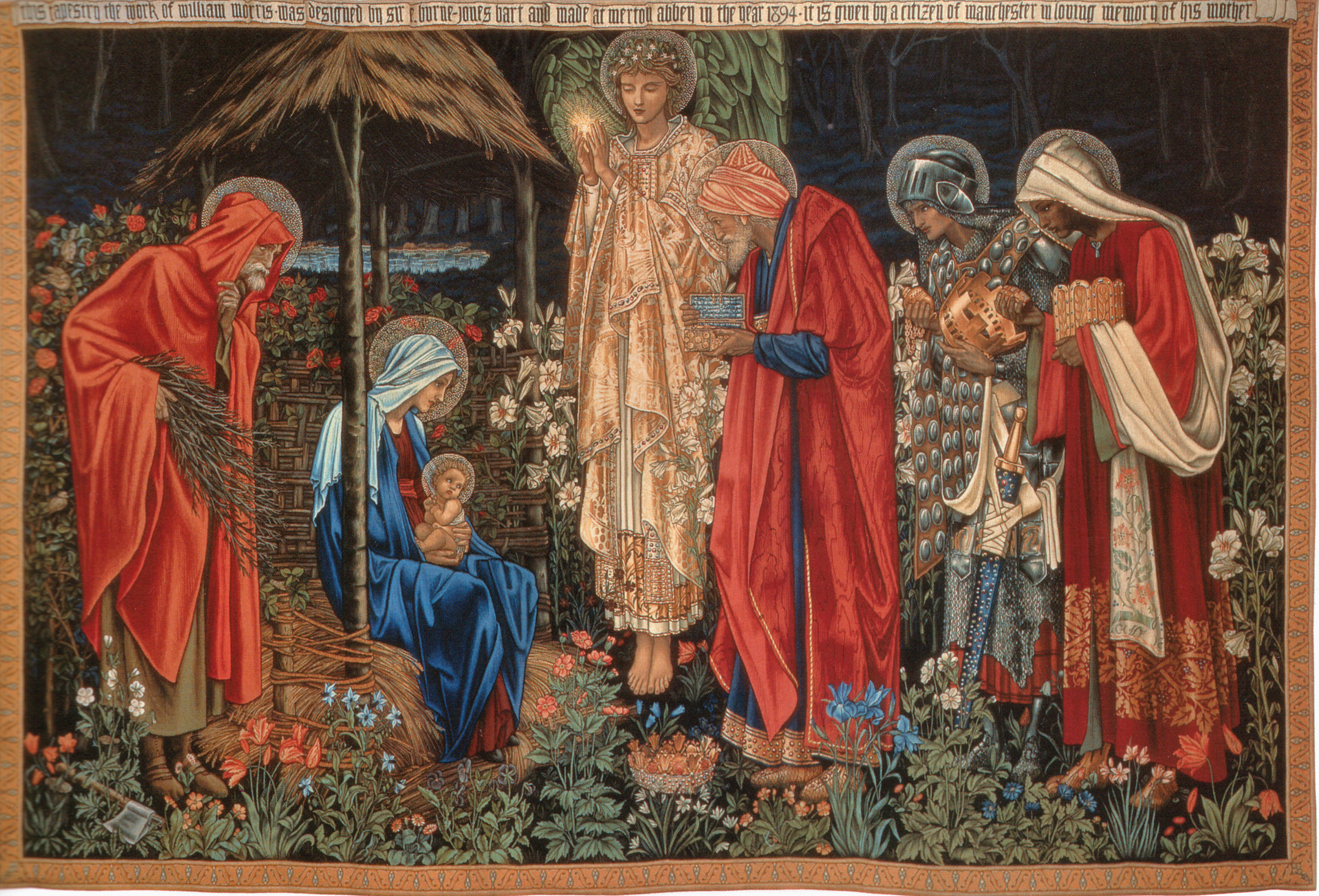
Meanwhile, out in the East, in what is now modern day Iraq and Iran, astrologers noticed something in the sky. This phenomenon possibly involved Jupiter and either Saturn, or the star Regulus in the constellation Leo. It was a significant astronomical event, which signified a royal birth. These Magi travelled to Judaea, as that was the direction that the celestial sign was pointing them towards. As they were looking for a royal birth, their first stop was, naturally, the palace. When they arrived at Herod’s palace they asked:

‘Ble mae’r hwn a anwyd yn frenin yr Iddewon? Oherwydd gwelsom ei seren ef ar ei chyfodiad, a daethom i’w addoli.’

‘Where is he who has been born king of the Jews? For we saw his star when it rose and have come to worship him.’ (Mt 2:2)

They make a reasonable statement, but their words have a strange effect:

‘A phan glywodd y Brenin Herod hyn, cythruddwyd ef, a Jerwsalem i gyd gydag ef. Galwodd ynghyd yr holl brif offeiriaid ac ysgrifenyddion y bobl, a holi ganddynt ble yr oedd y Meseia i gael ei eni’

‘When Herod the king heard this, he was troubled, and all Jerusalem with him; and assembling all the chief priests and scribes of the people, he enquired of them where the Christ was to be born’ (Mt 2:3-4)

News of a royal birth is troubling to Herod, an Aramean who bought the right to be king by paying the Romans. He was very concerned by questions of legitimacy because his own claim was based on shaky ground. Herod’s religious experts then explain where the child will be born, quoting a prophecy of Micah, which we heard on the Fourth Sunday of Advent:

“Ym Methlehem Jwdea, oherwydd felly yr ysgrifennwyd gan y proffwyd: ‘A thithau Bethlehem yng ngwlad Jwda, nid y lleiaf wyt ti o lawer ymysg tywysogion Jwda, canys ohonot ti y daw allan arweinydd a fydd yn fugail ar fy mhobl Israel.'”

‘In Bethlehem of Judea, for so it is written by the prophet: “And you, O Bethlehem, in the land of Judah, are by no means least among the rulers of Judah; for from you shall come a ruler who will shepherd my people Israel.”’ (Mt 2:5-6)

Bethlehem, the city of David, is where a King of the lineage of David will be born. A Davidic King poses a huge threat to Herod. There could be an uprising, and regime change. Herod needs to know what is going on. Since knowledge is power, he sends the Magi off to find the child and to report back.

What looks like a simple and straightforward enquiry is actually the first part of a plan to eliminate this potential threat to Herod’s rule. This will later be carried out in the Massacre of the Innocents — the wholesale slaughter of young male children in Bethlehem. Herod certainly has no intention of relinquishing his power, his behaviour is a sham. The Wise Men then leave the royal palace and head for Bethlehem.

‘a dyma’r seren a welsent ar ei chyfodiad yn mynd o’u blaen hyd nes iddi ddod ac aros uwchlaw’r man lle’r oedd y plentyn. A phan welsant y seren, yr oeddent yn llawen dros ben.’

‘And behold, the star that they had seen when it rose went before them until it came to rest over the place where the child was. When they saw the star, they rejoiced exceedingly with great joy.’ (Mt 2:9-10)

The Magi have journeyed hundreds of miles because they saw a celestial event. Now this heavenly light is above Bethlehem, and the travellers have reached the new-born King. 

‘Daethant i’r tŷ a gweld y plentyn gyda Mair ei fam; syrthiasant i lawr a’i addoli, ac wedi agor eu trysorau offrymasant iddo anrhegion, aur a thus a myrr.’

‘And going into the house they saw the child with Mary his mother, and they fell down and worshipped him. Then, opening their treasures, they offered him gifts, gold and frankincense and myrrh.’ (Mt 2:11) 

Gold, frankincense, and myrrh seem to us unusual presents. They are, however, all expensive, costly, and precious things, and therefore suitable royal gifts. These offerings were prophesied by Isaiah: 

‘byddant i gyd yn cludo aur a thus, ac yn mynegi moliant yr Arglwydd.’

‘They shall bring gold and frankincense, and shall bring good news, the praises of the Lord’ (Isa 60:6)

Gold, is a precious metal, which is pure and does not tarnish. It is a gift fit for a king. Gold’s purity points to a life of perfect obedience, the pattern of how life should be lived. Incense, from Arabia, was offered to God in the Temple in Jerusalem. As the sweet-smelling smoke rose, it looked like prayers rising to God. Frankincense is a sign of worship, and honour, representing how humanity should respond to God. Myrrh was often a component of the ointment used for embalming bodies. These three gifts given at Jesus’ birth point to Christ’s kingly power, and His role in worship as our great High Priest, which leads to His to Death and Burial.

The Wise Men are warned by a dream not to go back to Herod, and not to tell him who Jesus is. This is because the Judean king does not want to worship Jesus, he wants to kill Him, and safeguard his own position. And so the unexpected visitors leave as mysteriously as they arrived. These pilgrims from afar gave Our Lord gifts which celebrate His Humanity and Divinity, and which look forward to His Death and Resurrection. The beginning of Jesus’ earthly life looks to its end, because it is all part of the outworking of salvation history.

The events that we are celebrating today were prophesied by Isaiah in the first reading this morning:

‘Cod, llewyrcha, oherwydd daeth dy oleuni; llewyrchodd gogoniant yr Arglwydd arnat.’

‘Arise, shine, for your light has come, and the glory of the Lord has risen upon you’ (Isa 60:1)

The birth of the Messiah is a sign of God’s glory, and the salvation He will bring for all people: 

‘Fe ddaw’r cenhedloedd at dy oleuni, a brenhinoedd at ddisgleirdeb dy wawr.’

‘And nations shall come to your light, and kings to the brightness of your rising’ (Isa 60:3)

These pilgrims are the Magi, the Wise Men, the Kings who represent the entire Gentile (non-Jewish) World. They have come to worship God born among us. The travellers recognise who it is they have come to see, and their gifts fulfil Isaiah’s prophecy. What might appear strange at first sight is, in fact, both apt and right: to worship God and honour a King, and to recognise the Saviour in their midst. Today, the World recognises the Birth of Jesus Christ, and the mystery of salvation is proclaimed to all.

Likewise, as we celebrate the Feast of the Epiphany, we also look forward.Both to Our Lord’s Baptism in the River Jordan and to His first miracle at the Wedding at Cana. Christ, He who is without sin shows humanity how to be freed from sin and to have new life in Him.

So, today, as we continue to celebrate Jesus’ birth, let us raise our voices to join with the wise men in giving praise and honour to God the Father, God the Son, and God the Holy Spirit. To whom be ascribed all glory, dominion and power, now and forever. Amen.

Christmas 2024

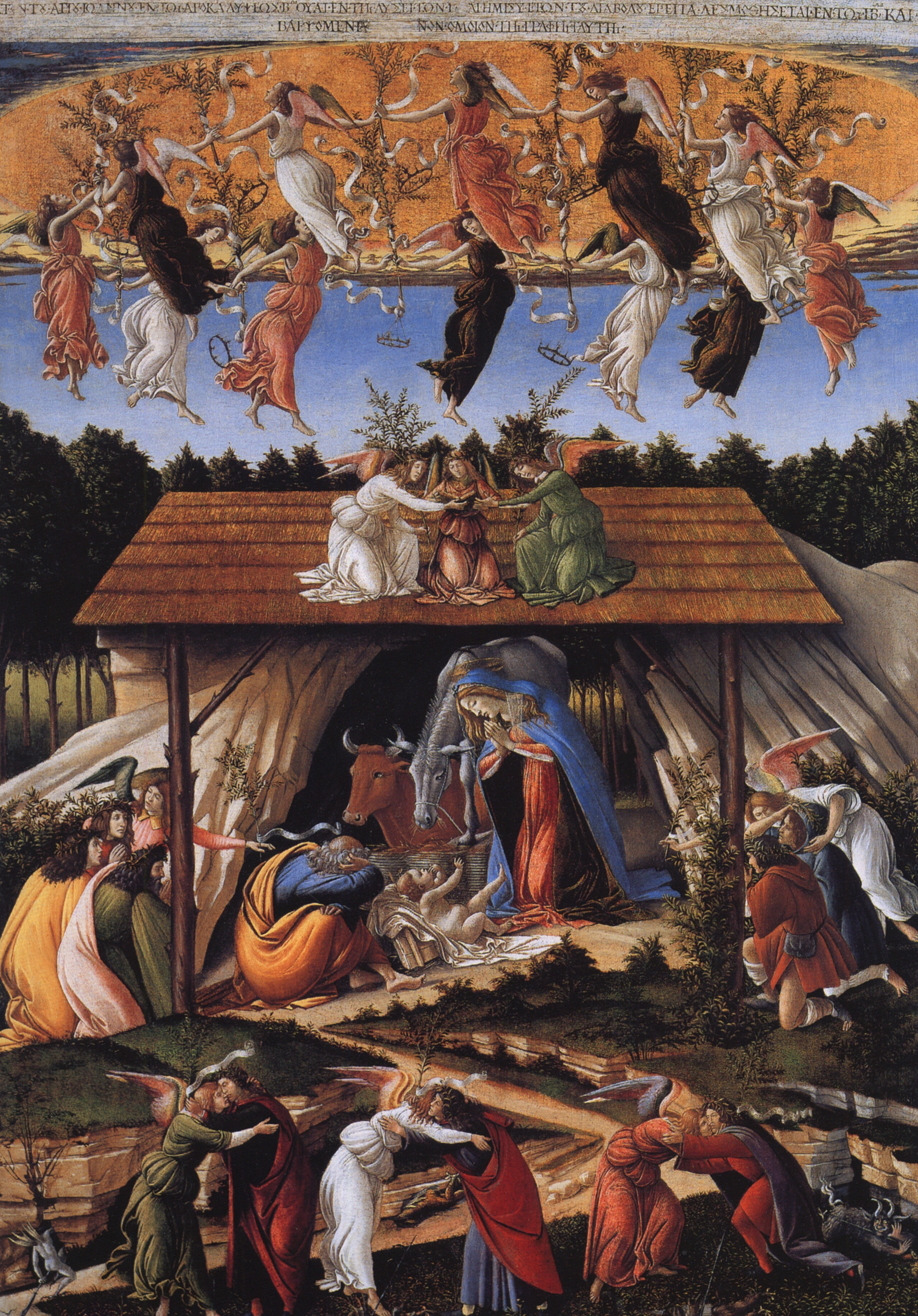
Christmas is a time for many seasonal activities, including spending time with family and friends, eating special foods and enjoying Christmas Carols. Also, most of us will spend some time over the festive period watching films on the television, or in the cinema. Movies can, surprisingly, be particularly useful when we try and get our heads around the wonderful events of Christmas. I would like to begin by focussing on a film from my childhood — the 1981 adventure Raiders of the Lost Ark. In this film, the intrepid archaeologist Indiana Jones is competing with Nazi forces to discover the Ark of the Covenant, which, it is believed, has the power to make an army invincible. At the climax of the film, the villains open the Ark on an island in the Aegean Sea. Immediately, spirits and bolts of lightning are released, which kill the Nazis and free Indiana and his companion Marion. Other than being the sort of film one might watch at Christmas, what is the relevance of the scene?

The film’s denouement relies upon the heroes averting their gaze, while the villains do not, and are therefore destroyed. The plot draws upon the biblical idea that the glory of God, which the Ark is said to contain, is not something which humanity should gaze upon. In the Book of Exodus, when Moses asks to see God, he is told that if he does so he will die. The glory of God is not something humans are able to behold. 

Yet, the first reading this morning reaches its climax with the statement that:

‘fe wêl holl gyrrau’r ddaear iachawduriaeth ein Duw ni’

‘all the ends of the earth shall see the salvation of our God.’ (Isa 52:10)

There appears to be something strange going on here. Likewise, the one who begins His life wrapped in cloth and placed in a stone feeding trough, will end it taken down from a Cross, wrapped in cloth and placed in a stone tomb. ‘In my beginning is my end …. In my end is my beginning’ wrote T.S. Elliot in his poem ‘East Coker’, the second of his Four Quartets. And yet this end is but a prelude to Christ’s Resurrection, Ascension, and the Second Coming. 

In the great turnaround of salvation history, humanity goes from being unable to look upon the divine, to being able to behold Him in a manger, surrounded by farm animals. To put the mystery of our salvation into context, this morning’s Gospel goes back to the beginning, which is a very good place to start. Not to the Annunciation, where in the power of the Holy Spirit Christ takes flesh in the womb of His Mother, but to the beginning of time and the Creation of the Universe:

‘Yn y dechreuad yr oedd y Gair, a’r Gair oedd gyda Duw, a Duw oedd y Gair. Hwn oedd yn y dechreuad gyda Duw.’

‘In the beginning was the Word, and the Word was with God, and the Word was God. He was in the beginning with God.’ (Jn 1:1)

The Word which spoke the Universe into being exists in eternity with God, and is God. This is whom we worship: the one who will save humanity, and who offers us eternal life with God. 

Today we celebrate Divine generosity and humility. God is among us. Mae Duw yn eich plith ni. Born as a weak and vulnerable baby, he is utterly dependent upon Mary and Joseph. In time this divine generosity will be refused:

‘At ei eiddo ei hun y daeth, a’r eiddo ei hun nis derbyniasant ef.’

‘He came to his own, and his own people did not receive him.’ (Jn 1:11)

Ours is a God who does not force Himself upon us. Instead, He comes to us in love, to draw us out in love, that we might share in that love, and share it with others: 

‘A’r Gair a wnaethpwyd yn gnawd, ac a drigodd yn ein plith ni, (ac ni a welsom ei ogoniant ef, gogoniant megis yr Unig‐anedig oddi wrth y Tad,) yn llawn gras a gwirionedd.’

‘And the Word became flesh and dwelt among us, and we have seen his glory, glory as of the only Son from the Father, full of grace and truth.’ (Jn 1:14)

God pitches His tent, and tabernacles among us. The invisible becomes visible. The God who is beyond human understanding becomes human, and shares our human life from its beginning to its end. This is no unapproachable divinity, remote and uncaring, but one who experiences our existence, who understands us from the inside out. Humanity beholds the glory of God, in a baby who will die on a Cross to redeem us. 

Not only that, but Christ continues to give Himself to us, every time the Eucharist is celebrated, so that the Word can continue to become flesh, so that we can be transformed by Him, and share in God’s life. 

As we celebrate the birth of Our Saviour we need to ask ourselves: have we made room for Jesus in our lives? Have we really? If we haven’t, we need to let our hearts and our lives become the stable in which the Christ-child can be born. We need to see Him in the outcast, in the stranger, in the people which the world shuns. As Christians, we have to welcome such people, for in welcoming them we welcome Our Lord and Saviour. This is how we live out His love in our lives.

This is the true meaning of Christmas — this is the love which can transform the world. It is radical and costly. This love terrified the might of the Roman Empire, and showed human power that it was as nothing compared to Divine Love. Soul by individual soul, for the past two thousand years, the world has been changed by ordinary people living out the love shown to the world by, and through, this little vulnerable child.

So, today as we celebrate Jesus’ birth, let us raise our voices to join with the angels and give praise and honour to God the Father, God the Son, and God the Holy Spirit. To whom be ascribed all glory, dominion and power, now and forever. Amen.

Merry Christmas to you all!

Nadolig Llawen i chi gyd! 

Advent IV: The Visitation

OVER the Christmas and New Year period many of us will be travelling to visit friends and relatives, or will have visitors to stay. Our normal routines may have to be changed, but any disruption is outweighed by the joy that company brings. This Sunday is all about journeys to visit family. It takes the best part of a week to walk the ninety miles from Nazareth to Bethlehem. This is a difficult journey, which is uphill all the way. The Gospel this morning tells the story of the Visitation, when Mary went to visit her cousin Elizabeth, to help her during her pregnancy. Two expectant mothers together and two journeys to be with family. These journeys form an important part of the Christmas story, and change the world.

What was about to happen in Bethlehem had been announced. The prophet Micah contains one of the great Messianic prophecies:

‘ohonot ti y daw allan i mi un i fod yn llywodraethwr yn Israel, a’i darddiad yn y gorffennol, mewn dyddiau gynt.’

‘from you shall come forth for me one who is to be ruler in Israel, whose coming forth is from of old, from ancient days.’ (Micah 5:2)

Christ’s coming is ordained: He will be Israel’s true king. God’s plan of salvation has always been that Jesus should be born, and all of human history from the Creation onwards has been leading up to this point. Jesus will:

‘Fe arwain y praidd yn nerth yr Arglwydd, ac ym mawredd enw’r Arglwydd ei Dduw. A byddant yn ddiogel, oherwydd bydd ef yn fawr hyd derfynau’r ddaear; ac yna bydd heddwch.’

‘shepherd his flock in the strength of the Lord, in the majesty of the name of the Lord his God. And they shall dwell secure, for now he shall be great to the ends of the earth. And he shall be their peace.’ (Micah 5:4-5a)

Our Lord is the Good Shepherd who cares for His flock and lays down His life for us. We can dwell secure because Christ is our peace, and in Him we have the hope of Heaven and the promise of eternal life. These are huge claims to make, and yet Jesus will fulfil them. 

This is why the author of the Letter to the Hebrews can be confident that:

‘â’r ewyllys honno yr ydym wedi ein sancteiddio, trwy gorff Iesu Grist sydd wedi ei offrymu un waith am byth.’

‘by that will we have been sanctified through the offering of the body of Jesus Christ once for all’ (Hebrews 10:10)

The eternal offering of a sinless victim, both frees humanity of its sins, and also restores our relationship with God and with one another. It is an act of perfect obedience: prepared by God for Christ to do His will and sanctify humanity, to heal us and restore us. The Incarnation IS God’s plan for the salvation of humanity, it is not Plan B!

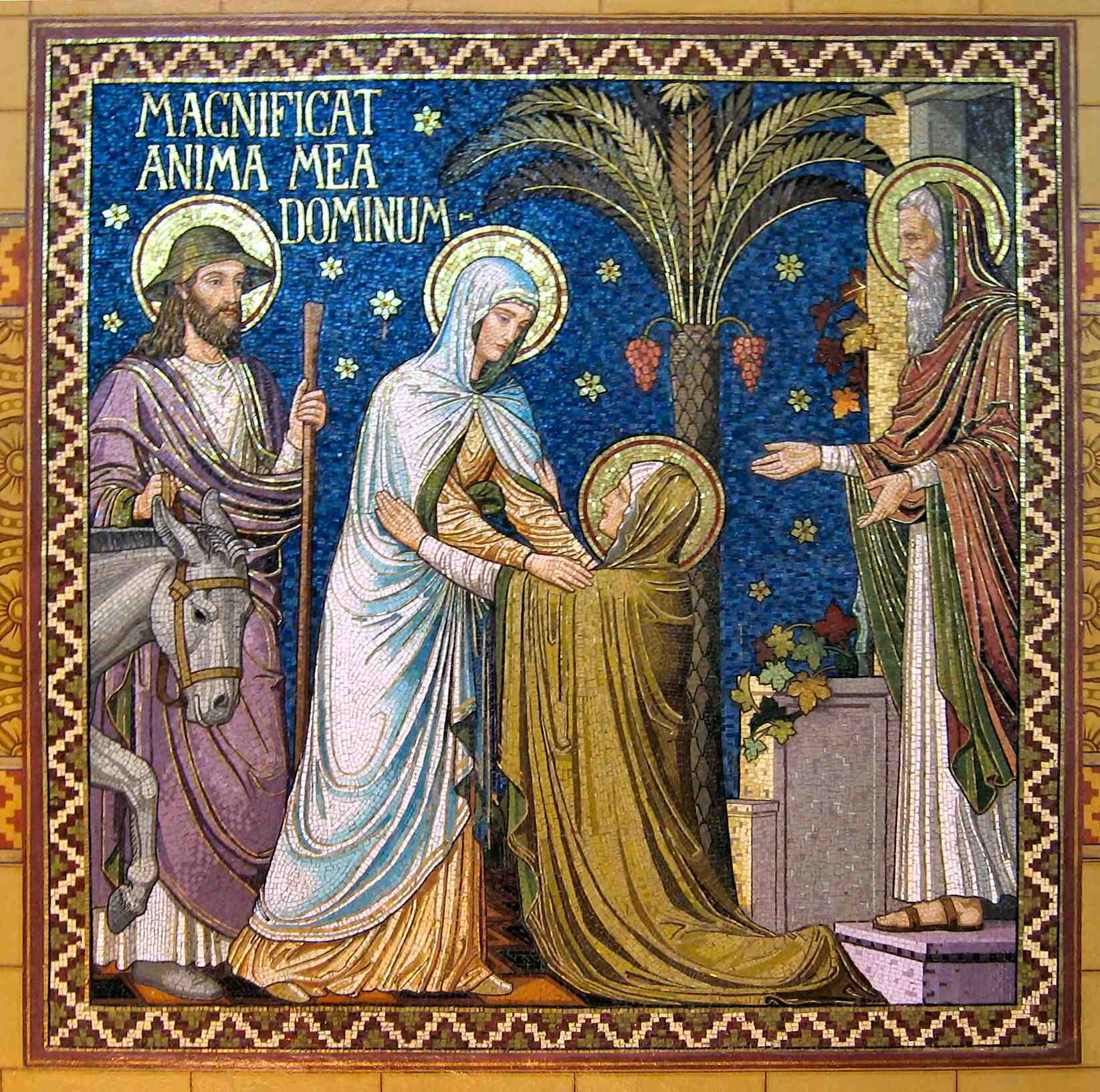
So while Mary, Joseph, and the donkey are making their way to Bethlehem, we turn our eyes elsewhere. The Gospel this morning is St Luke’s account of the Visitation, when Mary goes to see her older cousin Elizabeth, who is pregnant with her son, John the Baptist.

Pan glywodd hi gyfarchiad Mair, llamodd y plentyn yn ei chroth

And when Elizabeth heard the greeting of Mary, the baby leaped in her womb.’ (Lk 1:41)

Even before he was born, John recognises Jesus, and leaps for joy, announcing Christ’s presence and preparing His way. This leads Elizabeth to say to Mary:

‘Bendigedig wyt ti ymhlith gwragedd, a bendigedig yw ffrwyth dy groth.’

Blessed are you among women, and blessed is the fruit of your womb!’ (Lk 1:42)

Mary is blessed, because she says, ‘Yes’ to God, and she will soon give birth to a baby boy. This is no ordinary child, but God with us, Emmanuel. Elizabeth recognises that Mary’s obedience and humility undoes the sinfulness of Eve. That she who knew no sin might give birth to Him who would save us and all humanity from our sin. It is through the love and obedience of Mary that God’s love and obedience in Christ can be shown to the world. This is demonstrated in absolute perfection when, for love of us, Jesus opens His arms to embrace the world with the healing love of God on the Cross. Mary’s child will grow to be the good Shepherd, laying down his life for His flock, so that we may have life in all its fullness. As Christians, we prepare to celebrate Christmas because it points us to the Cross and beyond, and shows us once and for all, God’s great love for us.

We celebrate Mary because in all things she points to her Son. It is not about her, it is all about Jesus. We honour the Mother of God; and we worship the Son of God. We worship Him who died for love of us and all humankind. Jesus, who gave himself, to die so that we might live. The process of salvation starts with a young woman being greeted by an angel, and saying, ‘Yes’ to God.

Our salvation is very close indeed. We can feel it. We know that God keeps His promises. We can prepare to celebrate this Christmas festival with joy, because we know what is about to happen: a baby will be born who will save humanity from their sins. He is the one whom John the Baptist recognises as the Lamb of God, the one who takes away the sins of the world. This is the Good news we share with the world around us: that God loves us, was born for us, and dies and rises again, for us. Everything: all that Jesus is and says and does — from His taking flesh in the womb of His mother, His Birth, His Life, Death and Resurrection — proclaim God’s love to us. This is what we are preparing to celebrate: God’s love of humanity. Our Heavenly Father has always loved us, and always will. God is love. 

Let us therefore prepare to celebrate that love, so that it can fill our hearts and minds, making us into living proclamations of God’s love. God loves us so that we might become lovely, and gave His life for us, so that we may come to share  in His life. This is the hope proclaimed by the prophets. This is the hope of Advent. This is our hope! And, as we await Christ’s Coming, let us give praise and honour to God the Father, God the Son, and God the Holy Spirit. To whom be ascribed all glory, dominion and power, now and forever. Amen.

Trinity XV: Ephphatha – Be Opened!

I can still remember vividly the experience of my first Sunday off after being ordained. I had everything planned out. A friend of mine from theological college was a curate about 45 minutes away, so I could both see a friend and enjoy some quiet anonymous worship at the back of the pews. I dressed casually, but within seconds of entering the church I was handed books with a cheerful ‘Good Morning Father!’. I was rumbled! I suspect that without thinking about it I had performed several ritual gestures on entering, which rather gave the game away. Our actions are louder than our words, louder than the clothes we wear. Christianity is a faith which we live, which affects who we are, and what we do. 

The reading from the Letter of James makes this very point: God doesn’t treat people differently, so neither should we in the church. If anything the church should go out of its way to look after the poor, because in their poverty they know their need for God. 

‘Listen, my beloved brothers, has not God chosen those who are poor in the world to be rich in faith and heirs of the kingdom, which he has promised to those who love him?

‘Clywch, fy mrodyr annwyl. Oni ddewisodd Duw y rhai sy’n dlawd yng ngolwg y byd i fod yn gyfoethog mewn ffydd ac yn etifeddion y deyrnas a addawodd ef i’r rhai sydd yn ei garu?’ (James 2:5)

In this morning’s Gospel Jesus has been in Gentile territory to the north of Galilee. He has healed the Syro-Phonecian woman’s daughter, and is now heading back towards the Sea of Galilee. Having heard of His reputation for performing miraculous healings people bring a man to Our Lord who cannot hear or speak clearly, in the hope that he can be healed:

‘and they begged him to lay his hand on him.’

‘a cheisio ganddo roi ei law arno.’ (Mk 7:32)

The people are desperate: there is nothing they can do. This charismatic healer and teacher is their only hope. So Our Lord takes the man to one side, away from the crowd, and performs the healing. 

‘he put his fingers into his ears, and after spitting touched his tongue. And looking up to heaven, he sighed and said to him, “Ephphatha”, that is, “Be opened.”’

‘rhoes ei fysedd yn ei glustiau, poerodd, a chyffyrddodd â’i dafod; a chan edrych i fyny i’r nef ochneidiodd a dweud wrtho, “Ephphatha”, hynny yw, “Agorer di”.’ (Mk 7:33-4)

The scene may seem a little strange to us nowadays, but it has a refreshing physicality to it. Jesus isn’t simply preoccupied with spiritual matters. The healing is physical: involving touch and saliva. Our Lord does raise His eyes to Heaven and pray, but He also says, ‘Ephphatha — Be opened’ and the man is healed. Jesus is both conforming to people’s expectations, what they would like to be done, and also bringing about a miraculous healing by the power of God. 

‘And his ears were opened, his tongue was released, and he spoke plainly.’

‘Agorwyd ei glustiau ar unwaith, a datodwyd rhwym ei dafod a dechreuodd lefaru’n eglur.’ (Mk 7:35)

This is marvellous on several levels. It is the fulfilment of Isaiah’s prophecy which is the first reading today:

‘Then the eyes of the blind shall be opened, and the ears of the deaf unstopped; then shall the lame man leap like a deer, and the tongue of the mute sing for joy.’

‘Yna fe agorir llygaid y deillion a chlustiau’r byddariaidd; fe lama’r cloff fel hydd, fe gân tafod y mudan;’ (Isa 35:5-6)

Isaiah is looking forward to the coming of the Messiah, so Our Lord is fulfilling the prophecy and demonstrating his Messianic credentials — announcing to the world both who and what He is. The Kingdom of God is a place of healing and wholeness. It is also no longer to be understood in an exclusive sense. In Chapter 7 of Mark’s Gospel Jesus is outside Israel and now extends His healing to people who are not Jews. This is an important step which will have a profound effect upon the Church and its spreading across the world.

Our Lord tells the people who have witnessed the miracle not to tell anyone about it. However, his words have the opposite effect:

‘But the more he charged them, the more zealously they proclaimed it. And they were astonished beyond measure, saying, “He has done all things well. He even makes the deaf hear and the mute speak.”’

‘ond po fwyaf yr oedd ef yn gorchymyn iddynt, mwyaf yn y byd yr oeddent hwy’n cyhoeddi’r peth. Yr oeddent yn synnu’n fawr dros ben, gan ddweud, “Da y gwnaeth ef bob peth; y mae’n gwneud hyd yn oed i fyddariaid glywed ac i fudion lefaru.”’ (Mk 7:36-37)

They are amazed that prophecy is being fulfilled. But more than that, we see Gentiles sharing the Good News of the Kingdom of God. This is how the Church grows, and we see its beginnings here. The people of the Decapolis, the ten towns, are proclaiming the truth of the Gospel. They point forward to the spread of the Church.aWe are here in Church today because people have told others about it. The people’s profound experience of God’s healing love compels them to share it with others. Just as the deaf mute has been opened by the prayer of Jesus, so have the people around him. Their ears are opened and their tongues are loosed to proclaim the might works of God. 

The Kingdom of God is a place of healing and restoration for all, a fact which the Church continues to proclaim. Rather than being an exclusive event for the Chosen People, healing and salvation are for all who turn to God. All are invited, all are welcome. We are here today because people have shared the Good News with us. All of us come in need of God’s grace, His unmerited kindness. Not only this, but God gives us His very self, to heal us, and transform us.

My brothers and sisters in Christ, may we come to the Lord, so that we may be healed and restored. May we proclaim the Good News of the Kingdom of God, so that others may come to know and love God the Father, God the Son, and God the Holy Spirit. To whom be ascribed all glory, dominion and power, now and forever. Amen.

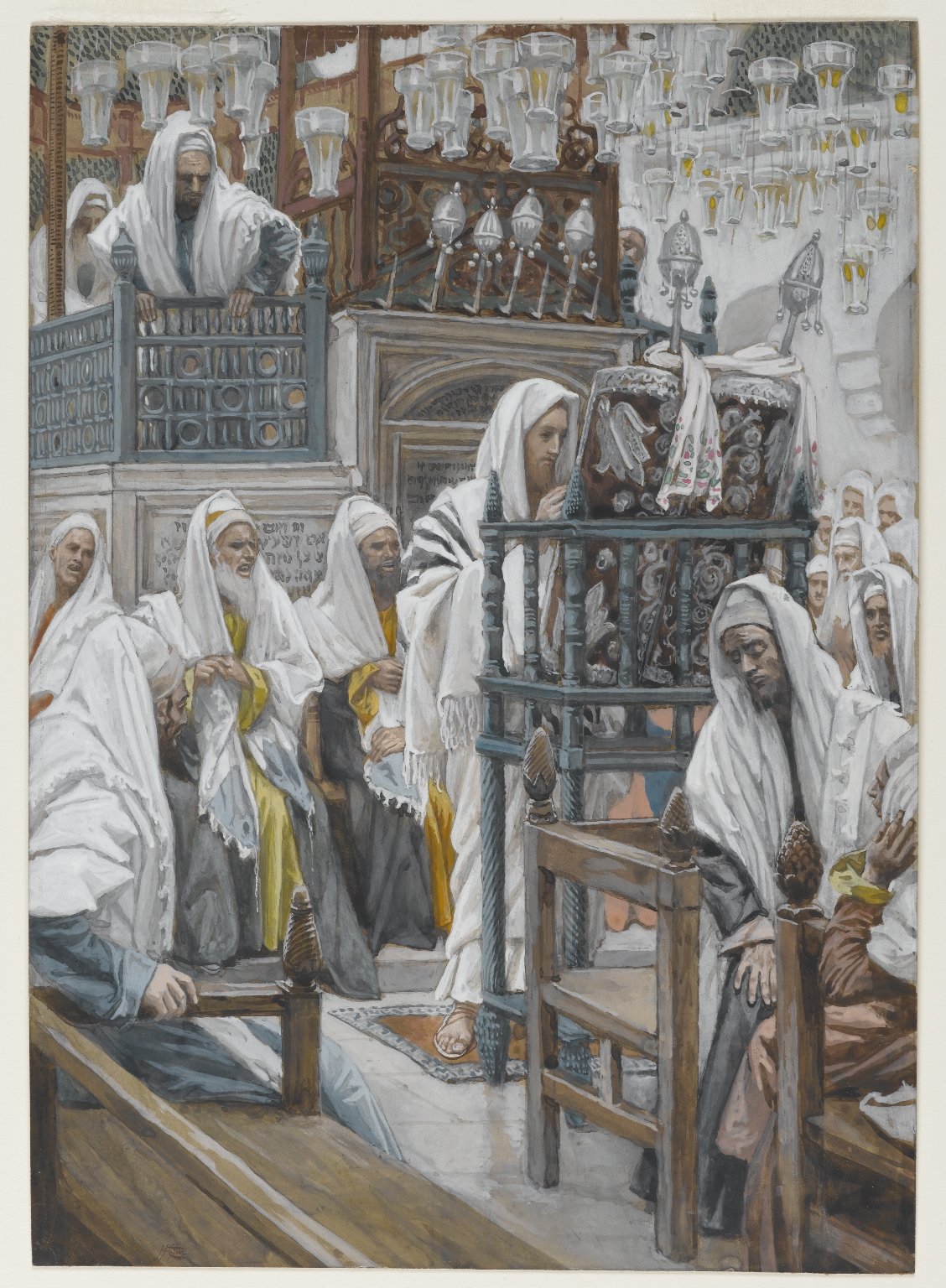
James Tissot: Jesus Heals a Mute Possessed Man (Brooklyn Museum)

Pentecost 2024

FIRE is an amazing entity. It is something that can be both a benefit, but also a danger. The heat produced by an open fire, or a log-burning stove, provides warmth and comfort. The candles in church give light and form a focus for our prayers. However, we must always take care with fire, as it is a powerful force. The disciples are described as receiving the power of the Holy Spirit through what looked like ‘divided tongues of fire’ ‘tafodau fel o dân’ (Acts 2:3).

Before his Ascension, Christ tells His disciples to wait in Jerusalem so that they may be baptized in the Holy Spirit. The twelve have again gathered in the Upper Room, along with the Blessed Virgin Mary. This is the same place where Christ instituted the Eucharist, and washed His disciples’ feet. They have gathered here because Jesus told them to be together, and to pray, saying:

 ‘you shall receive power when the Holy Spirit has come upon you; and you shall be my witnesses … to the end of the earth’ 

‘Ond fe dderbyniwch nerth wedi’r Ysbryd Glân ddod arnoch, a byddwch yn dystion i mi … a hyd eithaf y ddaear’ (Acts 1:8)

Our Lord promises to pour out the Holy Spirit to strengthen and inspire the Church. God is generous, and wants to see humanity flourish. An amazing event then takes place. Everyone present is filled with the Holy Spirit. Tongues of fire rest upon them, and they speak in a variety of languages. Strengthened by God’s Spirit the disciples go out to preach. In Jerusalem there are people from all over the Mediterranean World, gathered for the Jewish festival of Shavuot, the celebration of the wheat harvest. These people are amazed to hear the mighty works of God spoken in their own languages. Not only that, those speaking are not the educated elite but a rag-tag assortment of Galilean fishermen and other ordinary men. They hear and understand the proclamation of who Jesus is, and what He has done. 

Through the power of God, the Good News is pronounced. Men who were afraid, hiding behind locked doors, have become confident, and will go out to share the Gospel around the world. Their miraculous transformation has, in turn, transformed the world, resulting in billions of Christians. We are here in church today because of the power of the Holy Spirit.

This is why St Paul can write to the Church in Galatia as a community that has experienced the indwelling of the Holy Spirit. The apostle describes what it means to be filled with the Holy Spirit:

But the fruit of the Spirit is love, joy, peace, patience, kindness, goodness, faithfulness, gentleness, self-control’ 

Ond ffrwyth yr Ysbryd yw cariad, llawenydd, tangnefedd, goddefgarwch, caredigrwydd, daioni, ffyddlondeb, addfwynder, hunanddisgyblaeth.’ (Gal 5:22-23)

Paul is describing how we are all supposed to be as Christians. Living by the Spirit is an ideal, which we often fail to live up to, but, nonetheless, it shows us how God wants us to live. Here is a glimpse of life in all its fulness: life in union with God, and with each other. This is perfect communion, something to strive for, even if we may struggle to attain it. This is how we can live when we allow God to be in control, and when our human will is perfectly aligned with the Father’s will for us. Living by the Spirit is what human flourishing looks like in practice.

At a number of points in John’s Gospel, Jesus speaks about the Holy Spirit to His disciples. Our Lord tells His followers that the Spirit will bear witness, confirming the truth of their faith, and will strengthen them for service: living and sharing the Good News. Jesus promises: 

When the Spirit of truth comes, he will give you into all truth

Ond pan ddaw ef, Ysbryd y Gwirionedd, fe’ch arwain chwi yn yr holl wirionedd’ (Jn 16:13)

We have come together today to celebrate God’s love and generosity in continuing to send His Holy Spirit. 

God is glorified in worship, which is why we sing His praises. Worship does not change God, it changes us: making us more loving, uniting us with our creator who sustains us with His love. Christians all around the world are united with the worship of Heaven, where the saints and angels sing the praises of God, Father, Son, and Holy Spirit. Through the power of the Holy Spirit, and nourished by Word and Sacrament, we are given a foretaste of the joy which awaits us.

So, my brothers and sisters in Christ, let us pray earnestly for the gift of the Spirit. May God fill us with His love and equip us to proclaim the Good News of the Kingdom. May the fire of the Holy Spirit embolden us to encourage others to come to know, and love, God the Father, God the Son, and God the Holy Spirit. To whom be ascribed all, glory, dominion, and power, now and forever. Amen.
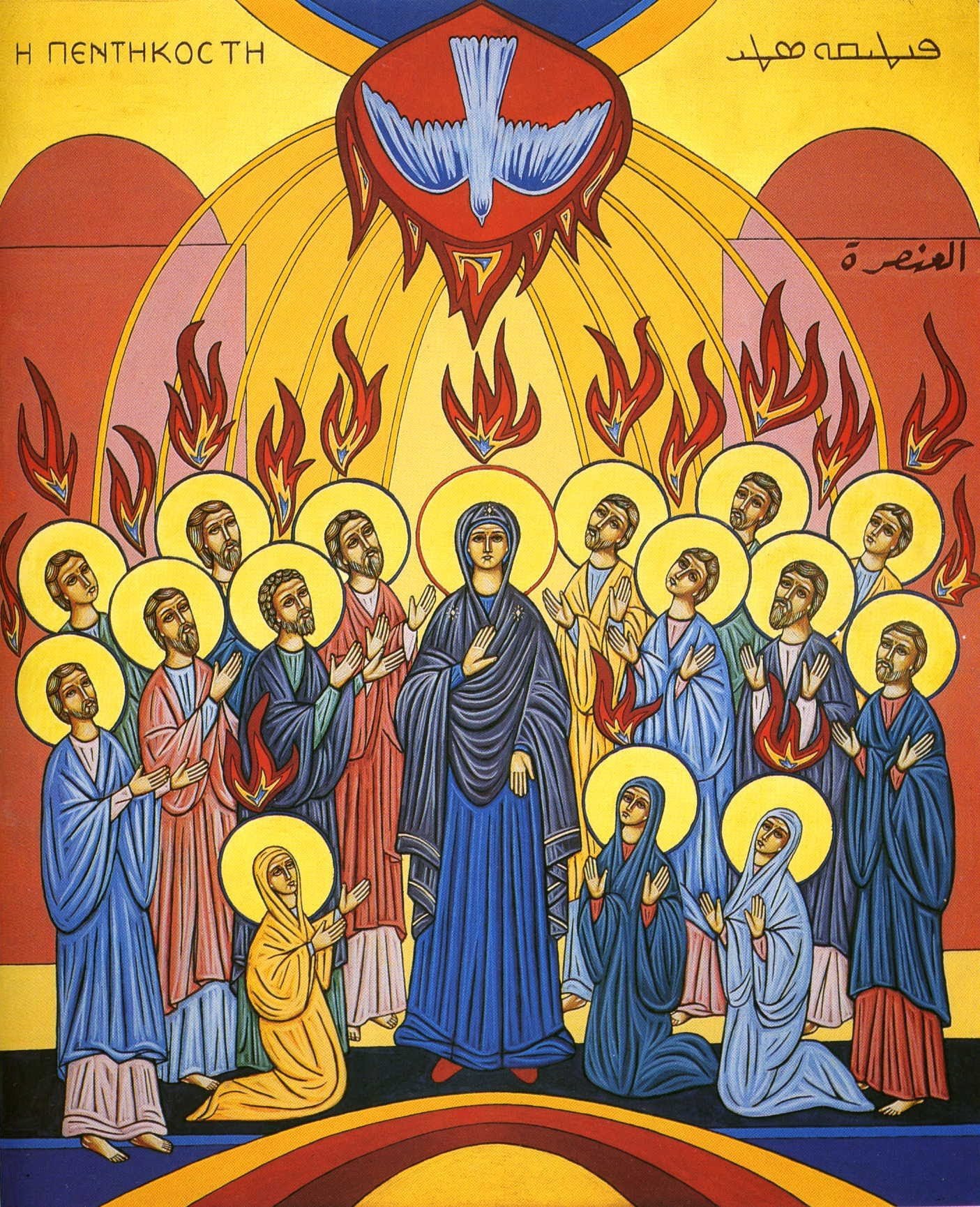
Maronite Icon of Pentecost

Easter 2024

It is early in the morning and a woman sits in the darkness. Her beloved teacher, whom she has followed and supported for years was placed in a tomb a few days before, after having being executed for political and religious reasons. The sun has not yet risen, and as she sits, she cries. A week ago He was being hailed as the Messiah, God’s anointed, the Davidic king come to set His people free. Yet within a few days, the same people who cried ‘Hosanna’ were shouting ‘Crucify him!’ ‘Crucify him!’. So she goes, to be near her Lord, to be close to him. And as she goes, she notices something: the stone has been rolled away. It took several people to roll it there on Friday afternoon. What is going on? Mary Magdalen runs to tell Peter and John:

“They have taken the Lord out of the tomb, and we do not know where they have laid him.” 

‘Y maent wedi cymryd yr Arglwydd allan o’r bedd, ac ni wyddom lle y maent wedi ei roi i orwedd’ (John 20: 2)

Mary assumes, understandably, that grave-robbers have been at work. Or that the Jewish or Roman authorities, worried that this troublemaker might be a focus for dissent, have got rid of Him. To do so makes sense in political terms, but something greater has happened. Peter and John come running towards the tomb. John arrives first, peers inside the tomb, but stays outside. 

‘Then Simon Peter came, following him, and went into the tomb. He saw the linen cloths lying there, and the face cloth, which had been on Jesus’ head, not lying with the linen cloths but folded up in a place by itself.’

‘Yna daeth Simon Pedr ar ei ôl, a mynd i mewn i’r bedd. Gwelodd y llieiniau yn gorwedd yno, a hefyd y cadach oedd wedi bod am ei ben ef; nid oedd hwn yn gorwedd gyda’r llieiniau, ond ar wahân, wedi ei blygu ynghyd’ (John 20: 6-7)

What happens is a gradual process. Bit by bit, the followers of Jesus come to experience and understand this incredible and amazing event. 

Then the other disciple, who had reached the tomb first, also went in, and he saw and believed; for as yet they did not understand the Scripture, that he must rise from the dead. Then the disciples went back to their homes.’

‘Yna aeth y disgybl arall, y cyntaf i ddod at y bedd, yntau i mewn. Gwelodd ac fe gredodd. Oherwydd nid oeddent eto wedi deall yr hyn a ddwed yr Ysgrythur, fod yn rhaid iddo atgyfodi oddi wyth y meirw. Yna aeth y disgyblion adref yn eu holau.’ (John 20: 8-10)

A few days ago the disciples saw their Lord and Teacher killed and buried, but now the tomb is empty. The cloths that were wrapped around Jesus are there, but there is no body. John, the disciple Jesus loved, understands and believes. Peter does not yet understand or believe. Clearly it is all too much for Mary Magdalen who stays by the tomb, weeping. When the angels ask her why she is crying she replies:

“They have taken away my Lord, and I do not know where they have laid him.”

“Y maent wedi cymryd fy Arglwydd i ffwrdd, ac ni wn i lle y maent wedi ei roi i orwedd.” (John 20: 13)

Mary’s words are understandable, she is filled with grief and sadness. She is bereft and confused. At this point, Mary Magdalen encounters the Risen Christ:

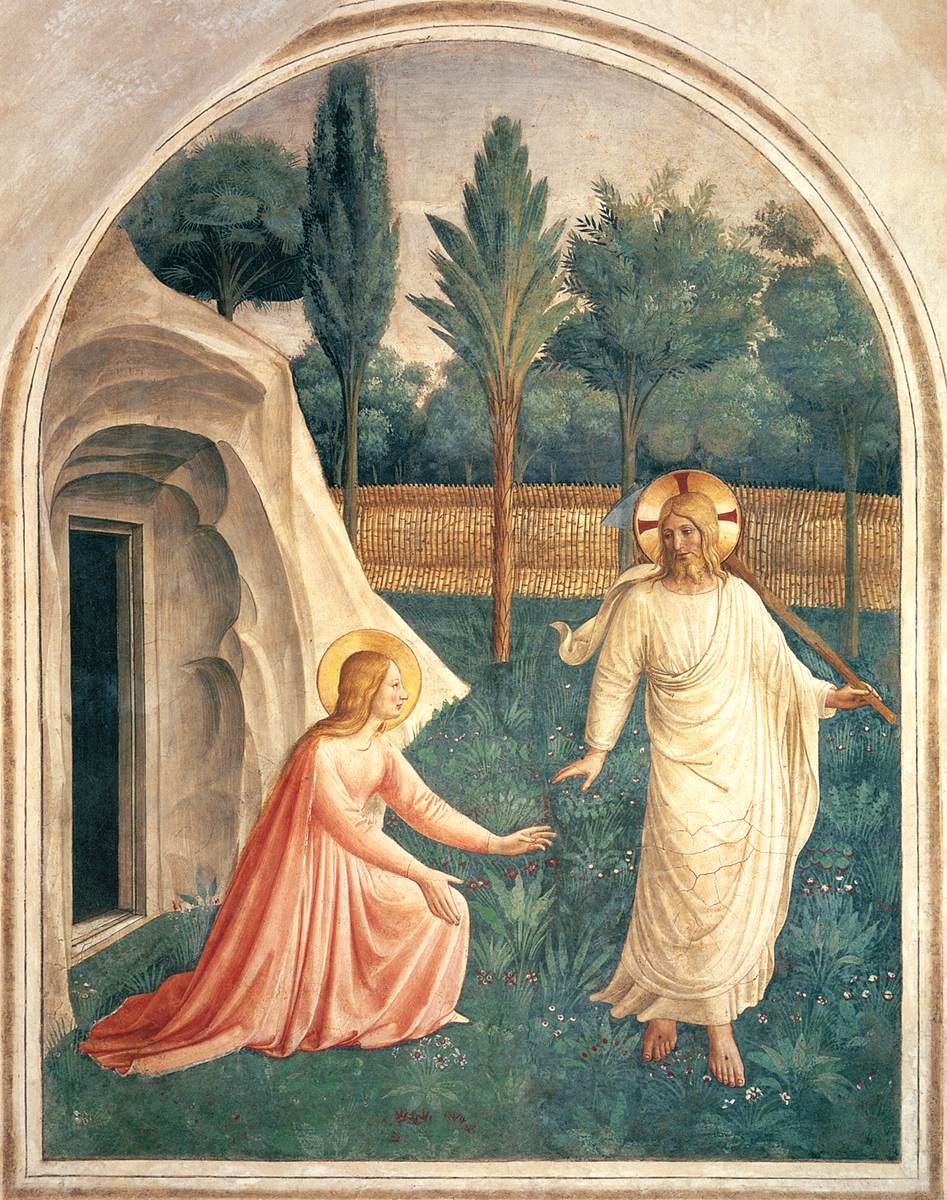
Jesus said to her, “Woman, why are you weeping? Whom are you seeking?” Supposing him to be the gardener, she said to him, “Sir, if you have carried him away, tell me where you have laid him, and I will take him away.”

‘“Wraig,” meddai Iesu wrhti, “pam yr wyt ti’n wylo? Pwy yr wyt yn ei geisio?” Gan feddwl mai’r garddwr ydoedd, dywedodd hithau wrtho, “Os mai ti, Syr, a’i cymerodd ef, dywed wrthyf lle y rhoddaist ef i orwedd, ac fe’i cymeraf fi ef i’m gofal.”’ (John 20: 15)

Mary supposes that Jesus is the gardener, the person employed to look after the cemetery. She does not yet understand who He is, or what is going on. However, the mention of the gardener is significant. In Genesis, humanity was created by God in a garden, Eden, and given the task of tending it (Gen 2:15). The Resurrection also takes place in a garden, showing us that Christ is the second Adam. Whilst the first Adam brought death to humanity by a tree, Jesus, the Second Adam, has brought life to the world by the tree of the Cross. Humanity falls because of a tree, and because of a tree we are offered eternal life in Christ. 

It was on the first day of the week, that Creation began, and now on the first day of the week we see a New Creation. Christ has risen from the dead, and conquered Death and Hell. Our Lord is a gardener, and the plants he tends are human beings. We believe in a God who loves us, who cares for us, and who longs to see us grow and flourish.

Jesus greets Mary Magdalen by name, and suddenly she recognises Him. She understands. She believes. Then Christ talks of His Ascension, as though forty days of Easter have condensed into a single moment. Mary now knows what she must do:

‘Mary Magdalene went and announced to the disciples, “I have seen the Lord”—and that he had said these things to her.’

‘Mair Magdalen i gyhoeddi’r newydd i’r disgyblion. “Yr wyf wedi gweld yr Arglwydd.” meddai, ac eglurodd ei fod wedi dweud y geiriau hyn wrthi’ (Jn 20:18)

Mary shares the Good News, just as Peter and Paul do in the first and second readings this morning. As Christians we are called to do likewise: to tell others that God loves us, all of us, that He died for us, and that He rose again to offer us eternal life with Him. This is the message of Easter. Good News! Christ has triumphed over Death and Hell, and humanity is healed and restored through Him.

So, my brothers and sisters in Christ, ‘Pasg hapus i chi gyd!’ ‘A Happy Easter to you all!’ May you, and those you love, be filled with Resurrection joy and strength, on this Easter Day and always. Amen.

Fra Angelico (Italian, ca. 1395–1455), “Noli me tangere,” 1440–42. Fresco from the convent of San Marco, Florence, Italy. http://www.wga.hu/frames-e.html?/html/a/angelico/index.html

Septuagesima (Year B)

The narration of stories is a skilled activity, whether they are told orally, or in writing. Setting the scene and introducing the characters are an important part of the process. Sometimes people begin with a long introduction, whereas others take you straight to the action. Mark’s Gospel definitely takes the latter approach. He does not set the scene by giving details of Jesus’ birth or childhood. Instead, he plunges straight into chronicling Our Lord’s public ministry in Galilee.

Mark’s Gospel begins with a description of Jesus’ ministry that proceeds at a frenetic pace. Jesus is baptised by John, goes into the desert for forty days, and calls two sets of brothers to follow Him: Simon and Andrew, James and John. In today’s passage Jesus teaches in a synagogue and heals a man possessed by an unclean spirit. Everything happens in quick succession, there is no time to waste. Part of this is a desire on the Gospel writer’s part to embody the vibrancy of Jesus’ proclamation of the Kingdom:

“The time is fulfilled, and the kingdom of God is at hand; repent and believe in the gospel.”

‘Yr amser a gyflawnwyd, a theyrnas Dduw a nesaodd: edifarhewch, a chredwch yr efengyl.’ (Mk 1:15)

Jesus is a man on a mission. He calls people to turn away from their sins, and to believe in the Good News: to love God and also to love your neighbour. As it is the Sabbath, people gather in the local synagogue. Worship in a synagogue involved singing Psalms, reading from Scripture, and teaching, rather like a sermon. This is familiar to us, as our Morning and Evening Prayer proceeds along similar lines. In this instance, instead of a Scribe or Teacher of Law explaining the biblical reading, Jesus Himself is teaching the people.

‘And they were astonished at his teaching, for he taught them as one who had authority not as the scribes’

‘A synasant wrth ei athrawiaeth ef: canys yr oedd efe yn eu dysgu hwy megis un ag awdurdod ganddo, ac nid fel yr ysgrifenyddion.’ (Mk 1:22)

Scribes relied on the authority of Moses, and would refer to other passages in the first five books of the Old Testament, and to previous interpretations, to make their point. Jesus does something different, and while Mark doesn’t tell us exactly what He said, it is clear that Our Lord’s interpretation of the Scriptures was both refreshing and authoritative. Jesus teaches like someone with authority. He isn’t a scribe or a Pharisee, He hasn’t spent years in theological training. Jesus stands outside traditional religious power structures. Our Lord’s teaching has authority not just because it is spoken with conviction, but because it is real and embodied in Him. Christ’s words are lived out in His life, because he is God: the Son of God, beloved of the Father (cf. Mk 1:11). He is filled with the Holy Spirit, and proclaims the Good News of the Kingdom. 

After Jesus has unpacked the Scriptures, He is addressed by a man who is clearly unwell:

“And immediately there was in their synagogue a man with an unclean spirit. And he cried out, ‘What have you to do with us, Jesus of Nazareth? Have you come to destroy us? I know who you are—the Holy One of God.’” 

‘Ac yr oedd yn eu synagog hwy ddyn ag ynddo ysbryd aflan: ac efe a lefodd, Gan ddywedyd, Och, beth sydd i ni a wnelom â thi, Iesu o Nasareth? a ddaethost ti i’n difetha ni? mi a’th adwaen pwy ydwyt, Sanct Duw.’ (Mk 1:23-24)

This is a man in need of healing, who is described as being possessed by an evil spirit, though nowadays we would probably prefer to describe him as suffering from mental illness. He is suffering, and longs to be healed. This weak, broken man recognises who and what Jesus is: He is the Holy One of God, the Messiah, Y Meseia. Our Lord speaks with authority telling the evil spirit to be silent and come out of the man. He can do this because He is God.

The Kingdom which Jesus proclaims in His teaching is a place of healing. Ours is a God who can heal our wounds, who can take broken humanity and restore it in love. This is why Christ’s teaching and the healing have to go together; they are both part of a larger whole, the coming Kingdom of God. Jesus proclaims our need to love God and each other, and puts this into practice, making the healing power of God’s love a reality in the world. Therefore, at the beginning of Jesus’ public ministry in Mark’s Gospel we see the proclamation of the Good News, and its application in a healing miracle. Jesus is the fulfilment of Moses’ prophecy, in today’s first reading, where he says:

“The Lord your God will raise up for you a prophet like me from among you, from your brothers—it is to him you shall listen” 

‘Yr Arglwydd dy Dduw a gyfyd i ti, o’th blith dy hun, o’th frodyr dy hun, Broffwyd megis finnau; arno ef y gwrandewch’ (Deut 18:15)

“And I will put my words in his mouth, and he shall speak to them all that I command him.”

‘a rhoddaf fy ngeiriau yn ei enau ef; ac efe a lefara wrthynt yr hyn oll a orchmynnwyf iddo.’ (Deut 18:18)

These verses are quoted, by both St Peter in Acts 3:22 and St Stephen in Acts 7:37, to refer to Jesus. For nearly two thousand years the Church has had a consistent interpretation of this passage as pointing to, and finding its fulfilment in, Jesus Christ. We can listen to Him with confidence because Jesus is God. He has authority, and He longs to heal us.

The message that Our Lord proclaims in His teaching is reinforced by His actions. Jesus shows that the Kingdom of God is a place where humanity can be healed and freed from sin. Christ demonstrates this most fully when He suffers and dies for us on the Cross. From the very beginning, Jesus looks to the Cross —not as a place of torture, humiliation, or defeat — but as the place of victory and healing. The Crucifixion is the supreme demonstration of God’s love for humanity. Through the Cross we learn how much God loves us. This is why God sends His Son to heal our wounds, to restore us, and to give us the hope of Heaven. Confident in His promises we can turn to God and pray for the healing that we all so desperately long for, and which the world needs. We can pray that His Divine nature might transform our human nature, and give us a foretaste of Heaven. We pray that our own wounds: physical and mental, will be healed, so that we might have life in Him, in this world and the next.

The possessed man asks Jesus, ‘Have you come to destroy us?’ ‘a ddaethost ti i’n difetha ni?’ The only thing that Christ has come to eradicate is the power of evil which separates man from God. We know that the Son of God has come not to destroy but to restore humanity, so that we may have life and have it to the full. This is the Good News of the Kingdom, which is still a reality here and now. We, in our brokenness, can approach the source of all healing, the God who loves us and gives himself for us, so that we can be restored by Him. God can take our lives and heal us in His love. Let us then come to Him, so that our lives may also be transformed. Let us proclaim to a world, which longs for healing and wholeness, the love of God the Father, God the Son, and God the Holy Spirit. To whom be ascribed all glory, dominion, and power, now and forever. Amen.

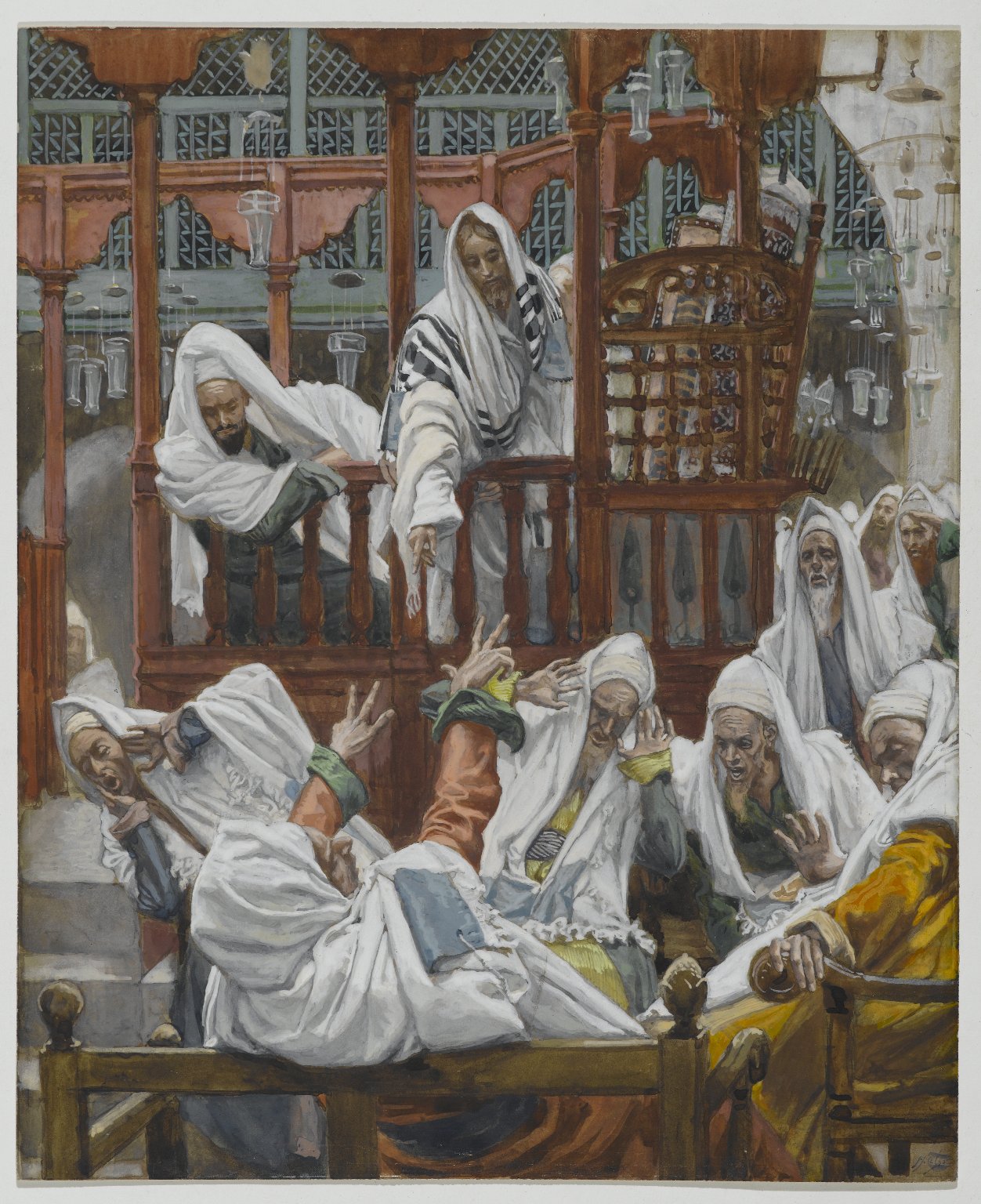
James Tissot The Possessed Man in the Synagogue (Brooklyn Museum)

Homily for the Week of Prayer for Christian Unity: 1 Peter 2:9-10

Hold me worthy , O Lord, to behold your mercy in my soul before I depart from this world; may I be aware in myself at that hour of your comfort, along with those who have gone forth from this world in good hope. Open my heart, O my God, by your grace and purify me from any association with sin. Tread out in my heart the path of repentance, my God and my Lord, my hope and my boast, my strong refuge, by whom may my eyes be illumined, and may I have understanding of your truth, Lord. Hold me worthy, Lord, to taste the joy of the gift of repentance, by which the soul is separated from co-operating with sin and the will of flesh and blood. Hold me worthy, O Lord, to taste this state, wherein lies the gift of pure prayer. O my Saviour, may I attain to this wondrous transition at which the soul abandons this visible world, and at which new stirrings arise on our entering into the spiritual world and the experience of new perceptions.

St Isaac of Nineveh

The Apostle Peter is writing to a church which is undergoing persecution on account of their faith in Our Lord and Saviour, Jesus Christ. While you could argue that this is not happening to us here, now, openly, it does nonetheless happen to our brothers and sisters in Christ around the world who are called to bear witness to Christ regardless of the cost. If anything the persecution in this country is more to do with apathy, ignorance, and our dismissal from public discourse unless we are in agreement with popular whim or sentiment: such is the tyranny of secularism, which we must, as Christians resist, as we are called to conform the world to the will of God.

We are called to be a holy nation and a chosen race, not in exclusive ethnic terms, like the people of Israel, but rather because we are one in Christ, through our common baptism, having passed through that water greater than the Red Sea, which gives freedom to all the world: we can look beyond the simplistic divisions of the world to something greater, and far more wonderful, and while we are certainly not there yet, we are all nonetheless travelling on a journey towards unity, because it is the will of Our Lord and Saviour Jesus Christ, and his prayer to the Father in the garden of Gethsemane before his arrest in John 17.

Our highest allegiance then is not to the powers of this world, for we recognise a higher power, the King of Heaven and Earth, which is Christ. He makes us royal, he gives us entry into that greatest of palaces, that is heaven, through His Precious Blood which was shed to heal us and restore us, there is as the hymn puts it power, power, wonder-working power in the precious blood of the Lamb. It is through Christ’s priesthood, a priesthood of the new covenant in His Blood, after the order of Melchisedech, that the church continues a cultic priesthood to offer continually that one perfect and sufficient sacrifice for the sins of the whole world, so that the people of God may be made holy, by being fed with His Body and Blood so that our human nature may be transformed into his divine nature: Αὐτὸς γὰρ ἐνηνθρώπησεν, ἵνα ἡμεῖς θεοποιηθῶμεν· ‘He became human so that we might become divine’ Athanasius De Incarnatione Dei Verbi 54.3.

We are holy, set apart for God’s service and the proclamation of His Kingdom , proclaiming the saving acts of God in Christ, and calling the world to repent, to turn away from the ways of sin and self, and to believe and trust in a God who loves us and saves us. Christ calls us out of the darkness of sin, of the world into the glorious light of His Kingdom. This is the fulfilment of the prophesy of Hosea 1:6 and 1:9 Once we were no people, now we are God’s people (cf. Hosea 1:9 Call his name lo-ammi [not my people] 1:6 Call her name lo-ruhamah [who has not received mercy]) We are God’s people, God claims us for His own, through His Son, who shows us in His life, Death, and Resurrection exactly what mercy is: A God who suffers and dies for love of us, poor sinful humanity, that we might become something better, something greater. God sees that human sinfulness is such a problem that only an outpouring of Divine Love in the sacrifice of His Son can save us.

And having received mercy, love and forgiveness in Christ, we show it in our lives so that ours is a proclamation not only of words but of deeds, so that we play an active part in the reconciliation of the world to God in Christ. Mercy, with joy and peace are the fruit of charity: our love of God and our neighbour, we love because God loved us first, and as we show mercy, we shall receive mercy, we harvest what we sow.

As St Isaac says ‘Do not hate the sinner. Become a proclaimer of God’s grace, seeing that God provides for you even though you are unworthy. Although your debt to him is very great, there is no evidence of him exacting any payment from you, whereas in return for the small ways you do manifest good intention he rewards you abundantly. Do not speak of God as ‘just’, for his justice is not in evidence in his actions towards you. How can you call God just when you read the gospel lesson concerning the hiring of the workmen in the vineyard? How can someone call God just when he comes across the story of the prodigal son who frittered away all his belongings in riotous living — yet merely in response to his contrition his father ran and fell upon his neck, and gave authority over all his possession? In these passages it is not someone else speaking about God; had this been the case, we might have had doubts about God’s goodness. No it is God’s own Son who testifies about him in this way. Where then is this ‘justice’ in God, seeing that, although we were sinners, Christ died for us? If he is so compassionate in this, we have faith that he will not change.’

We show this love first in obedience, like Our Lord’s Mother, the Blessed Virgin Mary, as we heard in this morning’s Gospel in her words to the servants ‘Do whatever he tells you’ If we are obedient, like Mary, then model disciple and mother of the Church, the first and greatest Christian, then we can truly be salt and light to the world, proclaiming the Good News of the Kingdom.

The Good News is the announcement of God’s mercy, shown to us in Christ, in Him we see what God is really like, in Him we experience love, healing, forgiveness, reconciliation. Through Him we are healed and restored, we become God’s people, and proclaim God’s Kingdom, so that humanity may come to experience God’s love and mercy, and believe and give Glory to God the Father, God the Son, and God the Holy Spirit, to whom be ascribed as is most right and just, all might, majesty, glory, dominion, and power, now and unto the ages of ages.