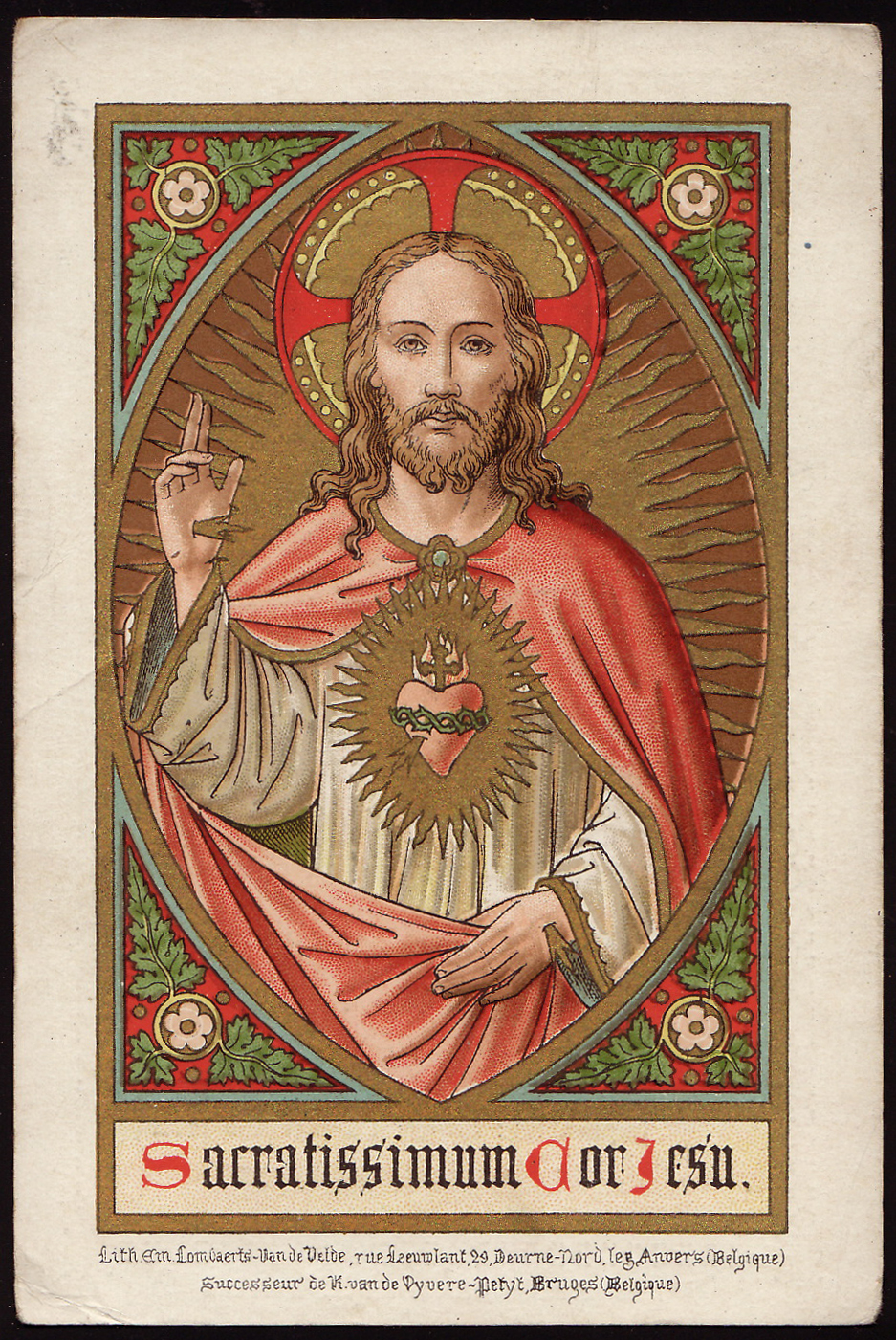
Christ the King 2025

‘God’s weakness is stronger than human strength.’

‘gwendid Duw yn gryfach na chryfder dynol.’ (1Cor 1:25)

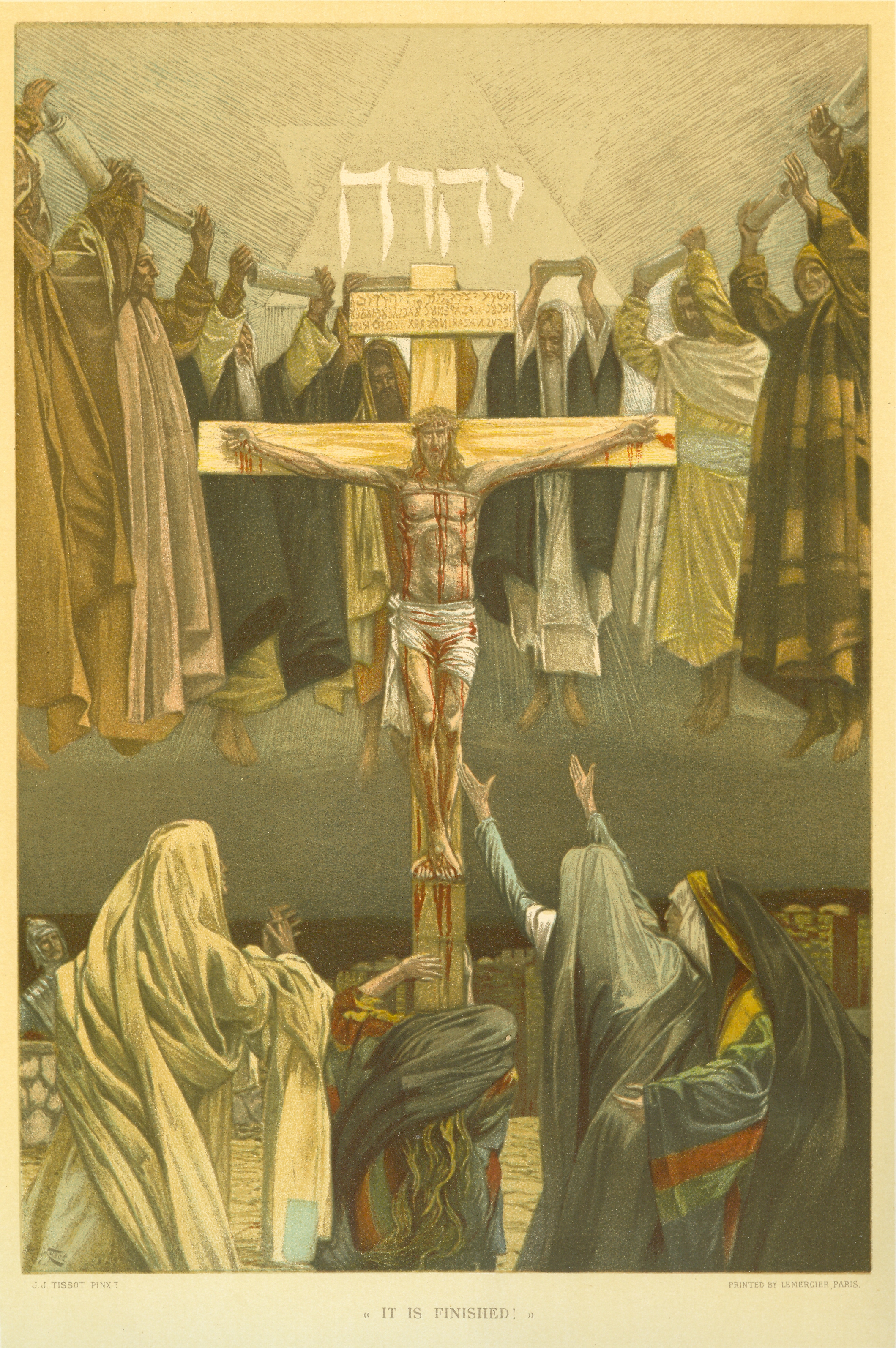
On November 23rd 1927 the Mexican Jesuit priest Fr Miguel Pro SJ was arrested on false charges and placed in front of a firing squad. He refused a blindfold and spread his arms out into the shape of a cross. His last words were: ‘¡Viva Christo Rey!’ ‘Long live Christ the King!’. The Mexican regime of that time was cruel and went out of its way to persecute Christians, including thirty-six year old Miguel Pro, a twentieth century Christian martyr who died confessing Christ’s sovereignty over all things. His words are both powerful and inspiring. When we acknowledge Christ as King we are saying that He is above all human power and authority. We are affirming that God is supreme. As Christians, our primary allegiance is to God alone, and not to the things of this world. To proclaim Our Lord as King of Heaven and Earth will always challenge and trouble those who lay claim to an authority and a power which is not their own. There are plenty of examples in the world around us of those who are unwilling to recognize a power greater than themselves. 

Christians profess the sovereignty of God primarily on the basis of the Crucifixion of Our Lord and Saviour Jesus Christ. We worship a Crucified God. This should strike us as something strange and disconcerting. At one level it doesn’t quite make sense, and yet it does. St Paul expresses the paradox at the heart of the Christian Faith in his First Letter to the Corinthians:

‘For God’s foolishness is wiser than human wisdom, and God’s weakness is stronger than human strength.’ (1Cor 1:25)

God is doing something amazing, which we cannot fully comprehend, or understand. This is because it is the mystery of God’s love. This is a love which we can never fully understand but it is something that we can experience in our lives.

Today’s Gospel is from St Luke’s account of the Crucifixion. It begins with Jesus being mocked by religious leaders: 

“He saved others; let him save himself, if he is the Christ of God, his Chosen One!” (Lk 23:35)

They demand action — that Jesus saves Himself — because they have completely misunderstand Our Lord’s mission, which is not to save Himself, but to save others. The Roman soldiers then join in and mock Christ saying:

“If you are the King of the Jews, save yourself!” (Lk 23:37)

In these words, power has been conflated with self-interest. Jesus, however, is not interested in saving Himself, but rather in saving us. He is the King of the Jews, born in Bethlehem of the line and lineage of David. And here Christ, in saving humanity, is doing what a proper King does: caring for His people, even at the cost of His own life. While the soldiers are mocking Jesus, they are actually proclaiming Him as a King. 

One of the men crucified with Jesus asks:

“Are you not the Christ? Save yourself and us!” (Lk 23:39)

This man has been condemned to death for acts of robbery and rebellion, and he is only able to understand the Messiah in political terms. He is looking for a revolutionary leader, who can save him. This causes the other man being crucified to rebuke the first one, saying:

“Do you not fear God, since you are under the same sentence of condemnation? And we indeed justly, for we are receiving the due reward of our deeds; but this man has done nothing wrong.” (Lk 23:40-41)

This second man understands that Jesus is innocent. This leads to one of the most memorable interactions in Luke’s Gospel, a demonstration of faith followed by its reward:

And he said, “Jesus, remember me when you come into your kingdom.” And he said to him, “Truly, I say to you, today you will be with me in Paradise.” (Lk 23:42-43)

This man does not ask to be saved. He simply requests that Jesus keep him in mind, when He comes into His Kingdom. Christ immediately grants his request. The condemned man’s recognition of Jesus’ Kingship is rewarded with the promise of eternal life with God in Heaven. Here, in two sentences, we see salvation and redemption at work. Jesus’ death saves people — starting with the condemned man. That is what Christ’s kingship is all about: bringing healing and the forgiveness of sins to all who turn to Him in faith. 

We worship a Crucified God. One who suffers and dies for us, to offer us eternal life in Him. This is true kingship, shown in self-sacrificial love. Christ is the Good Shepherd, who lays down His life for His sheep. He wants to save others, because He is the Messiah, and He is God saving his people. The Hebrew for Jesus is Yeshua and means ‘God saves’. Here on the Cross Jesus fulfils His destiny: this is who and what He is. God saves His people by dying for them. This is real kingship — not robes, or power, but love — dying the death of a common criminal. It doesn’t make sense, and it isn’t supposed to. God’s ways are not our ways, nor His thoughts our thoughts. We cannot save ourselves. Only God can do that, in an act of generous love; an extravagant and exuberant gift that we can neither earn nor repay.

In the reading from St Paul’s Letter to the Colossians, we hear both what God has done for us, and who Christ is. God has qualified us to share in the inheritance of the saints in light. We are able to go to Heaven because we have been delivered from darkness, into the kingdom of God’s beloved Son. In Christ we have redemption and forgiveness. Jesus has paid the debt we owe; our sins are forgiven. We do not need to slaughter lambs and be sprinkled with their blood, because we have been sprinkled with the Blood of the Lamb of God in our Baptism. We are redeemed, and our transgressions are forgiven, because of what Christ does for us on the Cross. This is the heart of our faith: Jesus died for us, because He loves us. 

In Christ we see that God loves us. He created all that is, therefore things are subject to Him. He is the head of His Body, the Church, of which we are a part through our baptism, and our participation in the Eucharist. As the firstborn from the dead, Christ, in His Resurrection, shows us that death is not the end.

This is the God we worship, and whom we hail as our true King: the God of love and healing. Christ has conquered on the Cross; Christ reigns as King of the Universe; Christ reigns in our hearts, and in our lives. May we then lift our hearts and voices to sing the praises of our Divine King: God the Father, God the Son, and God the Holy Spirit, Duw Dad, Duw y Mab, a Duw yr Ysbryd Glân. To whom be ascribed all might, majesty, glory, dominion, and power, now and forever. Amen.

Trinity XXII

‘As for you, brothers and sisters, do not grow weary in doing good’ 

‘A pheidiwch chwithau, frodyr a chwiorydd, â blino ar wneud daioni’ (2Thess 3:13)

Have you ever visited Greece or one of the Greek Islands? I have been lucky to have had the opportunity to do so. Saint Paul visited Northern Greece, founded Churches, and  wrote his earliest letters to a Christian community there. Thessalonica is now the second largest city in Greece. It was always important as a trading port, and also lay on the Via Egnatia, the route which connected the Adriatic Sea in the West with the Black Sea in the East. In Thessalonica the Christian community grew out of the synagogue. Because Paul, trained as a Pharisee, he began his evangelism within the community and traditions in which he had been raised. However, relations deteriorated and the new Christians found themselves facing persecution from the synagogue and its members. This, understandably, led the Christian community to focus, even to fixate, upon the Second Coming of Jesus Christ. They imagined that Our Lord’s Return was immanent, and that He would come back, and sort everything out.

Some people, however, took advantage of the situation as an excuse for laziness, and relying upon the generosity of others. Such behaviour was bound to attract the attention of St Paul. As well as being a religious and legal expert, Paul was a tent-maker. While he was in Corinth he lodged with Priscilla and Aquila, who also made their living through this trade, and perhaps he aided them in their work during his stay. The Apostle did not wish to be a burden for the communities he visited as he travelled around the Mediterranean proclaiming the Good News of Jesus Christ. 

In our epistle this morning, Paul begins by issuing a stern warning:

‘Now we command you, brothers, in the name of our Lord Jesus Christ, that you keep away from any brother who is walking in idleness and not in accord with the tradition that you received from us.’ (2Thess 3:6)

The Christian Community was not supposed to a place for idle freeloaders. It was a place where people lived out generous love, but of course this could be taken advantage of. Paul offers the Thessalonians an example of how to live, and goes on to say:

‘For you yourselves know how you ought to imitate us, because we were not idle when we were with you, nor did we eat anyone’s bread without paying for it, but with toil and labour we worked night and day, that we might not be a burden to any of you.’ (2Thess 3:7-8)

Paul’s vision of a Christian community is one that is well-ordered, with everyone contributing. Each member has their part to play. Living a Christian life is something which we do both as individuals and as a community. Hence St Paul’s advice to the Thessalonians: ‘As for you, brothers, do not grow weary in doing good’ (2Thess 3:13). We are called to be active and make a difference, here and now, in our community. As a Church we have been striving to do this for nearly two thousand years. It remains a work in progress. 

We may encounter problems in our life of faith, and all of St Paul’s Letters to Churches address these. Christians learn to overcome difficulties together, growing in grace, in love, and in forgiveness, as a family, brothers and sisters in Christ. And this is what the Kingdom of God looks like: people such as you and me, deepening our faith, growing in the love of God and the love of each other. Living the life of Heaven here on earth, today. 

This loving fellowship is what makes the Church attractive. The world around us finds it all to easy to get wrapped up in selfishness, concerned with wealth, power, and status. Whereas Christians value love and service — of God and each other — to help build a new society where all are loved, all are valued, and all are cared for. 

On the night before He died, Our Lord and Saviour washed His disciples feet, before celebrating the Eucharist with them. He commanded us to ‘do this in remembrance of him’, so that service and self-giving love should remain at the heart of who and what we are. This is the source and summit of the Christian life. Participating in the Eucharist helps us to grow together in love, and to proclaim God’s saving truth in who and what we are, and what we do. Christ offers the world the alternative which it longs for deeply.

Let us then come to Him, to be healed by Him. Let us be nourished with His Body and Blood and strengthened to proclaim Him in word and deed, so that the world may come to believe and sing the praises of God the Father, God the Son, and God the Holy Spirit, Duw Dad, Duw y Mab, a Duw yr Ysbryd Glân. To whom be ascribed all glory, dominion and power, now and forever. Amen

All Saints: Living the Beatitudes

I have an important message for you all this morning: God has a plan for your life! Now, you may well have heard these words before, possibly from someone preaching a sermon, but they contain a profound truth. They are found in the Bible, in words that God speaks through the prophet Jeremiah:

For I know the plans I have for you, declares the Lord, plans for welfare and not for evil, to give you a future and a hope.

Oherwydd myfi sy’n gwybod fy mwriadau a drefnaf ar eich cyfer, medd yr Arglwydd, bwriadau o heddwch nid niwed, i roi ichwi ddyfodol gobeithiol. (Jer 29:11)

It can be hard to hold onto such a promise, especially when times are difficult and the outlook is bleak. We need to ask ourselves the question, ‘Do we trust God?’ If the answer is ‘Yes’ then, whatever difficulties or hardships may come our way, we know that our future is in safe hands.

Fundamentally, the point of being a Christian is to reside in Heaven. Such a destination is possible because of what Jesus Christ has done for us, out of love. This is the plan God has for our life, and this is why Jesus became man, lived, died, and rose from the dead. God shows us both how to live, and what He desires for us. We can have faith, and put our trust in the God who loves us, in the clear hope that, after our earthly life is over, we may enjoy eternity with God and the Saints in Heaven. Most of all, in this hope, we can live earthly lives of love, loving both God and each other, foreshadowing the eternal joys of Heaven. 

In our current culture we are not used to hearing such a message. There is a tendency to think that holiness is for other people, certainly not for us. But God wants each and every one of us to become a saint. He wants us to live in a world full of people trying to be saints. The Church is ‘a school for saints’ (which is peopled by sinners), in which Christians try to live out their faith, cooperating with the grace of God. We do this when we let Christ live in us, so that we can say with the Apostle Paul:

‘It is no longer I who live, but Christ who lives in me.’

‘a mwyach, nid myfi sy’n byw, ond Crist sy’n byw ynof fi.’ (Gal 2:20)

There is a paradox at work here. For when we truly let Christ live in us, we do not lose ourselves, but instead we discover who we really are. This enables us to become the people God wants us to be; the people we were created to be. As Jesus says in Matthew’s Gospel:

For whoever would save his life will lose it, but whoever loses his life for my sake will find it.

Oherwydd pwy bynnag a fyn gadw ei fywyd, fe’i cyll, ond pwy bynnag a gyll ei fywyd er fy mwyn i, fe’i caiff. (Mt 16:25)

Today the Church celebrates the Feast of All Saints. On this day, in the eighth century ad, Pope Gregory III dedicated a chapel to All Saints in St Peter’s Basilica in Rome, and now there are many Churches with this dedication. It is a good thing to celebrate the fact that Heaven is full of saints. They are the Church Triumphant, who spend eternity praising God and praying for us. Just as we pray for our friends here on earth, it stands to reason that our friends in Heaven pray for us as well. It is reassuring to understand that we are not alone in our quest to reach Heaven, and to know that those who are already there long for us to join them. 

If Heaven is our goal, how then should we live our lives on earth? Thankfully today’s Gospel gives us a template to follow, an example of what a Christian life looks like. 

We constantly hear how the world around us values success and confidence, and looks up to the rich, and the powerful. In contrast to this, Jesus says to the gathered crowd:

“Blessed are the poor in spirit, for theirs is the kingdom of heaven.”

“Gwyn eu byd y rhai sy’n dlodion yn yr ysbryd, oherwydd eiddynt hwy yw teyrnas nefoedd.” (Mt 5:3)

‘Poor in spirit’ is not a term we are used to using today, but it means the exact opposite of pride. Jesus places humility as key to living a Christian life: knowing who we are, and our need for God. Only if we rely upon God, and not ourselves, and ask Him to work through us, can we truly live out the Christian life. 

“Blessed are those who mourn, for they shall be comforted.”

“Gwyn eu byd y rhai sy’n galaru, oherwydd cânt hwy eu cysuro.” (Mt 5:4)

We mourn those we love, those whom we see no longer in this life. We do so because we love them, we miss them, we want to see them, and hold them, and talk to them. Our parting, while temporary, is still very painful. Thankfully the Kingdom of God, which Christ comes to bring, is a place of healing and comfort with the promise of eternal life. 

“Blessed are the meek, for they shall inherit the earth.”

“Gwyn eu byd y rhai addfwyn, oherwydd cânt hwy etifeddu’r ddaear.” (Mt 5:5)

Gentle people are not weak: they know how to use their strength, and how not to use it. As Jesus will later say in Matthew’s Gospel: ‘Take my yoke upon you, and learn from me, for I am gentle and lowly in heart, and you will find rest for your souls.’ ‘Cymerwch fy iau arnoch a dysgwch gennyf, oherwydd addfwyn ydwyf a gostyngedig o galon, ac fe gewch orffwystra i’ch eneidiau.’ (Mt 11:29). This is how God wants us to live as human beings. Christ is the example of gentleness we must follow. Once again, God’s vision of the future turns human expectations upside down. 

“Blessed are those who hunger and thirst for righteousness, for they shall be satisfied.”

“Gwyn eu byd y rhai sy’n newynu a sychedu am gyfiawnder, oherwydd cânt hwy eu digon.” (Mt 5:6)

Should we be devoted to God? Absolutely! Should we pray that His will is done on earth as it is in Heaven? Definitely! Jesus taught us to pray this way. Clearly God wants to see our world transformed and has invited us to help in the process; and doing so gives us fulfilment.

“Blessed are the merciful, for they shall receive mercy.”

“Gwyn eu byd y rhai trugarog, oherwydd cânt hwy dderbyn trugaredd.” (Mt 5:7)

We see what God’s mercy looks like in Christ’s death for us on the Cross. In following Christ’s example, we both ask for forgiveness for our own sins, and forgive those who sin against us. This forgiveness can transform us and the world around us, and it is how the healing and reconciliation of God’s Kingdom functions. 

“Blessed are the pure in heart, for they shall see God.”

“Gwyn eu byd y rhai pur eu calon, oherwydd cânt hwy weld Duw.” (Mt 5:8)

To be pure in heart is to want what God wants: to align our will with the will of God. It is to be saintly, and thus have the promise of Heaven, which is less of a place or a time, and much more a relationship. To see God is know Him, and to know His love for us. This is the very thing that Christ comes to restore to humanity, and it is our hope. 

“Blessed are the peacemakers, for they shall be called sons of God.” 

“Gwyn eu byd y tangnefeddwyr, oherwydd cânt hwy eu galw’n feibion i Dduw.”(Mt 5:9)

First and foremost, we know that Christ is the Son of God because He made ‘peace by the blood of his cross’ ‘ar ôl gwneud heddwch trwy ei waed ar y groes’ (Col 1:20). We too are called to follow Christ’s example to take up our Cross, and work for peace. We are called to strive for peace in our own hearts and lives, in our families and communities, and in our world.

“Blessed are those who are persecuted for righteousness’ sake, for theirs is the kingdom of heaven. Blessed are you when others revile you and persecute you and utter all kinds of evil against you falsely on my account.”

“Gwyn eu byd y rhai a erlidiwyd yn achos cyfiawnder, oherwydd eiddynt hwy yw teyrnas nefoedd. Gwyn eich byd pan fydd pobl yn eich gwaradwyddo a’ch erlid, ac yn dweud pob math o ddrygair celwyddog yn eich erbyn, o’m hachos i.” (Mt 5:10-11)

Following Jesus will not, by default, make us popular. Often people’s response is quite the opposite. If, however, we want to see God’s Kingdom as a reality in this life and the next, then we must be prepared to be shunned, or even ridiculed by others. To follow Christ is to take up the Cross, and to expect persecution. But we are not alone in this. Christ has gone before us, showing us that the story does not end with Death on a Cross, but with the glory of the Resurrection and Eternal life. 

If we want to become saints, then we have to be like Christ. We have to share in His suffering and death, and we have to be prepared to be rejected by the world. We may not face imprisonment, torture and death in this country, but many Christians around the world do. However, we may be scorned, ignored, or criticised. What do we do in such circumstances? We are called to be loving, generous, and forgiving, because that is what Jesus has shown us. We can be different to the world around us because we belong to a new community — the Kingdom — a community of faith, built on our relationship with Jesus Christ, who came to save humanity from itself. Our Lord came so that we might have life in all its fullness.This is what the Beatitudes mean. By living the life of God’s Kingdom in this place and at this time, we can live the life of Heaven (here and now) on earth. This is what God wants us to do. It is the way Jesus has showed us how to live. It is what the Saints have done before us.

So, on this feast of All Saints, let us be filled with faith and joy, and let us be ready to conform our lives to God’s will. May we live the life of the Kingdom together, and encourage others, so that all may join the choirs of Heaven to sing the praise of God the Father, God the Son, and God the Holy Spirit, Duw Dad, Duw y Mab, a Duw yr Ysbryd Glân. To whom be ascribed all glory, dominion and power, now and forever. Amen

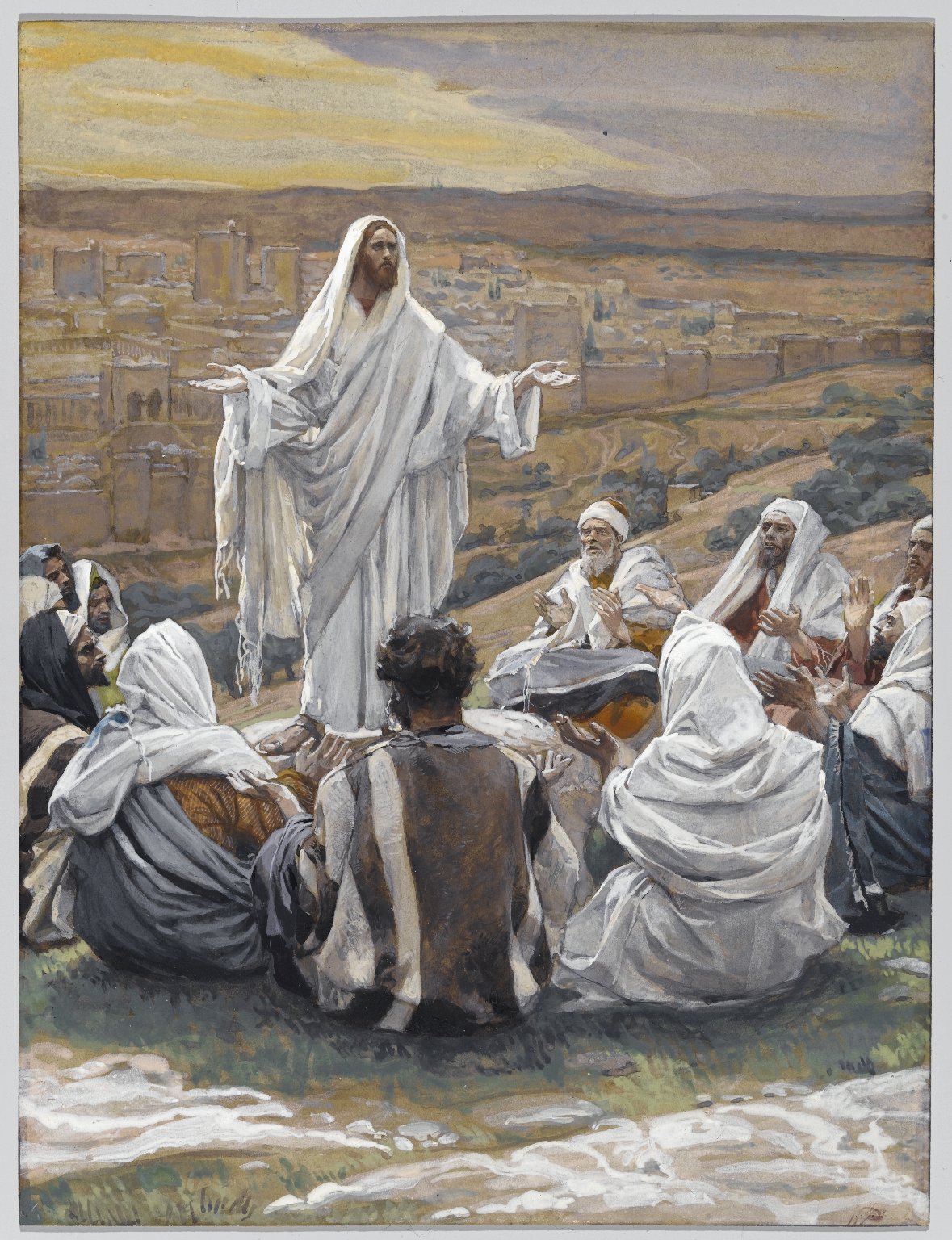
James Tissot, The Sermon on the Mount, Brooklyn Museum

Trinity VII: Generosity

Advertising media are constantly telling us that we need a new car, a larger house, the latest gadgets, expensive clothes, and exotic holidays. If we have all these things, we are told, then we will be truly happy. Covetousness is portrayed as a virtue. However, the more we have, the more we want. People are never satisfied. Even billionaires are happy to squeeze the poor if it will make them more money. St Paul, however, tells us that, as Christians, we should not focus our energies on the things of this world, and the author of Ecclesiastes reminds us that: ‘gwagedd llwyr yw’r cyfan’ ‘All is vanity’ (Eccles 1:2).

This morning’s Gospel begins with a striking scene. Jesus is teaching as He travels to Jerusalem, and a crowd gathers around Him. Then someone asks a question:

“Athro, dywed wrth fy mrawd am roi i mi fy nghyfran o’n hetifeddiaeth.”

“Teacher, tell my brother to divide the inheritance with me.” (Lk 12:13) 

As a religious teacher, Jesus could be called upon to make rulings on religious or legal matters. However he has no desire to do so:

Ond meddai ef wrtho, “Ddyn, pwy a’m penododd i yn farnwr neu yn gymrodeddwr rhyngoch?” A dywedodd wrthynt, “Gofalwch ymgadw rhag trachwant o bob math, oherwydd, er cymaint ei gyfoeth, nid yw bywyd neb yn dibynnu ar ei feddiannau.”

But he said to him, “Man, who made me a judge or arbitrator over you?” And he said to them, “Take care, and be on your guard against all covetousness, for one’s life does not consist in the abundance of one’s possessions.” (Lk 12:14-15)

Our Lord takes a family dispute over property and turns it into a teaching opportunity. The world around us tends to equate riches with success, but it is easy to forget that wealth is a means to an end, and not an end in itself. The unnamed man wants to get hold of his inheritance. He wants money so that he can spend it. He is obsessed with worldly things. Jesus is trying to encourage people to live in a different way: God’s way. 

To illustrate His point, Our Lord uses a parable:

“Yr oedd tir rhyw ŵr cyfoethog wedi dwyn cnwd da. A dechreuodd feddwl a dweud wrtho’i hun, ‘Beth a wnaf fi, oherwydd nid oes gennyf unman i gasglu fy nghnydau iddo?’ Ac meddai, ‘Dyma beth a wnaf fi: tynnaf f’ysguboriau i lawr ac adeiladu rhai mwy, a chasglaf yno fy holl ŷd a’m heiddo. Yna dywedaf wrthyf fy hun, “Ddyn, y mae gennyt stôr o lawer o bethau ar gyfer blynyddoedd lawer; gorffwys, bwyta, yf, bydd lawen.”’

“The land of a rich man produced plentifully, and he thought to himself, ‘What shall I do, for I have nowhere to store my crops?’ And he said, ‘I will do this: I will tear down my barns and build larger ones, and there I will store all my grain and my goods. And I will say to my soul, Soul, you have ample goods laid up for many years; relax, eat, drink, be merry.’” (Lk 12: 16-19)

In worldly terms, the man in the parable can be understood as behaving sensibly. But his concern with material success leads the man to think that he is in a safer position than he actually is. This is made clear at the end of the parable:

“Ond meddai Duw wrtho, ‘Yr ynfytyn, heno y mynnir dy einioes yn ôl gennyt, a phwy gaiff y pethau a baratoaist?’ Felly y bydd hi ar y rhai sy’n casglu trysor iddynt eu hunain a heb fod yn gyfoethog gerbron Duw.”

“But God said to him, ‘Fool! This night your soul is required of you, and the things you have prepared, whose will they be?’ So is the one who lays up treasure for himself and is not rich towards God.” (Lk 12:20-21)

Jesus is showing us that you cannot put pockets in your shroud. You cannot take wealth with you when you die. In the afterlife you do not need ‘stuff’. If the man had thought, How can I share what I have? How can I use my riches to alleviate poverty and make people’s lives better? Then he could have done some good. Instead, he has put all his efforts solely into increasing his own wealth. God does not want us to live selfish materialistic lives. But rather to help bring about a world where goods are shared, and where the hungry are fed. Yet we still see images of starving people, and many do not have a roof over their head. Whilst we cannot individually solve all the problems of the world, we can make an impact in our communities and beyond.

The Book Ecclesiastes, known also as Qoheleth, the Preacher, begins by stressing the fact that everything is vanity. All things are empty and worthless, in themselves, especially when compared to God. Our Heavenly Father longs for humanity to respond to His love and generosity, by living lives characterised by compassion and unselfishness. This is why Jesus preaches the Good News of the Kingdom of God: to wake humanity up to eternal realities and encourage us to live thoughtfully and generously here and now. 

This is the life which stores up treasure in Heaven, which we live when we have, ‘Rhowch eich bryd ar y pethau sydd uchod, nid ar y pethau sydd ar y ddaear’ ‘Set our minds on things that are above, not on things that are on earth’ (Col 3:2). This is what a Christian life really looks like, when lived out in the world. This is the sort of radically different life which can and does both change and transform the world: offering people a way that is different to an existence obsessed with possessions. This is the way of love and forgiveness, of knowing that we are loved and forgiven, no matter who we are or what we have done. With God’s help we can live as a community which embodies radical love and forgiveness in the world and offers others a new way of being, which turns the obsessions and values of the world on its head. The Christian way of life is that radical, that revolutionary, and can be lived out right here, today. Our Lord is speaking to us through His Scriptures. He calls us to live this life for the good of others, for our own good, and for the glory of the God who made us. God our Father loves us. He saves us from the tyranny of worldly possessions and sin, so that we can be free. Allowing us to focus on worshipping Him, and helping to make the Kingdom of God a reality.

This then is what the Church is called to be. As Christians, we need to be like a lamp set upon a lamp stand or a city upon a hill: shining, attractive, a light amidst the darkness of this world. We are called to represent a radical alternative: embodying life in all its fullness. So let us choose to live this way, together. Let us set our hearts on heavenly things. Let us build on Christ, our sure foundation. God is our treasure, and His wealth is self-giving love.

By gathering together this morning we are living out God’s kingdom here and now. Through our prayer, worship, and generosity, we can change the world; so that all people may be transformed and sing the praise to God, i Duw Dad, Duw y Mab, a Duw yr Ysbryd Glân. God the Father, God the Son, and God the Holy Spirit. I’r hwn y priodoler pob gogoniant, arglwyddiaeth, a gallu, yn awr, ac yn oes oesoedd. To whom be ascribed all glory, dominion and power, now and forever. Amen.

Rembrant The Parable of the Rich Fool, Gemäldegalerie, Berlin.

Trinity VI – Lord teach us how to pray

If I were to ask you if you could recite a text off by heart you might regale me with a poem, a passage from a book, or a speech from Shakespeare learned at school. If I then asked whether you knew any prayers off by heart you would probably say ‘The Lord’s Prayer’, ‘Y Gweddi’r Arglwydd’. Even if they do not know all the words, most people have heard the Lord’s Prayer. It is an important part of our Christian heritage.

Our readings this week focus on prayer. Christians know that God answers prayer. However, God may say, ‘Yes’ or ‘No’ or even ‘Not yet’. We may not like the answer, but one will be forthcoming. Prayer is both simple and mysterious. Simple, insofar as it is our conversation with the divine. Mysterious, in the fact that prayer changes us, and not the Almighty. So prayer is something of a paradox, being at the same time quite straightforward and also an enigma. We pray to God, but prayer doesn’t change God, it changes us. Pagans in Greece and Rome would bargain with their gods: if you do this for me, I will give you that. Jews and Christians, however, are profoundly different. We do not bargain with God, and we do not need to, because we are in a covenant relationship with our Heavenly Father who loves us.

It would be all too easy to see this morning’s first reading, where Abraham tries to save Sodom and Gomorrah, as being concerned with bargaining with God. However, prayer does not work in that way. What the reading from Genesis shows us is that we are in a covenant, a relationship with God, and that God is generous and loving. He wants the best for us.

The American Bishop Fulton J. Sheen summed it up as follows:

‘Prayer is helplessness casting itself on Power, infirmity leaning on Strength, misery reaching to Mercy, and a prisoner clamouring for Relief.’ Life Is Worth Living, Second Series (New York, 1954), p. 213.

In today’s Gospel the disciples ask Jesus:

“Arglwydd, dysg i ni weddïo, fel y dysgodd Ioan yntau i’w ddisgyblion ef.”

‘Lord teach us to pray, just as John taught his disciples’ (Lk 11:1).

Jesus and John the Baptist were cousins. They both preached about the need for both repentance and belief in the Good News. Also, they both taught their disciples how to pray. Virtually all Christian prayer can be described by one or more of four phrases: ‘please’, ‘thank you’, ‘I’m sorry’, and ‘I love you’. God does not need our prayers, we do. This is because praying allows us to open our hearts and lives to God, allowing Him to change us. Jesus answers His disciple’s request to teach them how to pray as follows:

Ac meddai wrthynt, “Pan weddïwch, dywedwch: ‘Dad, sancteiddier dy enw; deled dy deyrnas; dyro inni o ddydd i ddydd ein bara beunyddiol; a maddau inni ein pechodau, oherwydd yr ydym ninnau yn maddau i bob un sy’n troseddu yn ein herbyn; a phaid â’n dwyn i brawf.’” 

He said to them, ‘Say this when you pray: ‘“Father, may your name be held holy, your kingdom come; give us each day our daily bread, and forgive us our sins, for we ourselves forgive each one who is in debt to us. And do not put us to the test.”’  (Lk 11:2-4)

The version of Jesus’ words we are most familiar with is that found in Matthew’s Gospel, which is slightly longer than Luke’s prayer. But both contain the same elements. The prayer begins by calling God, ‘Abba’ ‘Father’ ‘Tâd’. Such a term expresses our close relationship with our Creator. The idea that God’s name should be kept holy goes hand in hand with the desire that God’s Kingdom may come. Christianity is all about the establishment of the Kingdom of God: that God may rule over our hearts and our lives.

Next, we ask God to feed us, to forgive us our sins, as we forgive those who sin against us, and to free us from temptation. It is important to note that every celebration of the Eucharist begins with us all acknowledging our own shortcomings and asking God’s forgiveness. Saying sorry to God is important, because it keeps us humble, and helps to maintain our relationship with God, and with each other. We all make mistakes, you do, I certainly do. Recognizing this is the start of a process which allows us to grow in virtue and holiness, through God’s love. The high point of the Eucharist is when God feeds us with His Body and Blood, providing us with spiritual food to nourish our souls. All our food is a gift from God, and being thankful for it, just like being humble, helps to keep us close to God. If you don’t already do so, try to get into the habit of saying a few words of thanks to God before you eat a meal.

There are good reasons why Christians regularly pray this prayer, which we call The Lord’s Prayer, Y Gweddi’r Arglwydd. Jesus has told us how to pray and gave us these words. Similarly, we celebrate the Eucharist because Jesus told us to ‘do this in memory of Him’ and so we do. We use the Lord’s Prayer when we pray, because it honours God, and it forms us as Christians. We will soon pray it together before Communion, asking that God will continue the process of transforming us day by day into His image and likeness. 

In the Gospel reading Jesus continues to teach His disciples using parables. In this narrative, there is a late-night hospitality emergency. A friend is on a journey (just like Jesus and His disciples), and arrives at your home (just like Jesus visited Mary and Martha last week). Naturally you want to be hospitable as a sign of your friendship. So, you pop round to a next door and ask to borrow some food. However, the initial response you receive from your neighbour is not very positive:

‘Paid â’m blino; y mae’r drws erbyn hyn wedi ei folltio, a’m plant gyda mi yn y gwely; ni allaf godi i roi dim iti’, rwy’n dweud wrthych, hyd yn oed os gwrthyd ef godi a rhoi rhywbeth iddo o achos eu cyfeillgarwch, eto oherwydd ei daerni digywilydd fe fydd yn codi ac yn rhoi iddo gymaint ag sydd arno ei eisiau.’

“Do not bother me. The door is bolted now, and my children and I are in bed; I cannot get up to give it you.” I tell you, if the man does not get up and give it him for friendship’s sake, persistence will be enough to make him get up and give his friend all he wants. (Lk 11:7-8)

Jesus shows that, despite the neighbour not wanting to get up and be bothered with the request for food, because the person is persistent and stays there, disregarding the initial reluctance, his request is granted. Perseverance is rewarded. The point Our Lord is making is that God hears our prayers and answers our requests. We might need to ask more than once, and commit time to prayer, but we will not be ignored.

‘Ac yr wyf fi’n dweud wrthych: gofynnwch, ac fe roddir i chwi; ceisiwch, ac fe gewch; curwch, ac fe agorir i chwi. Oherwydd y mae pawb sy’n gofyn yn derbyn, a’r sawl sy’n ceisio yn cael, ac i’r un sy’n curo agorir y drws.’

‘So I say to you: Ask, and it will be given to you; search, and you will find; knock, and the door will be opened to you. For the one who asks always receives; the one who searches always finds; the one who knocks will always have the door opened to him.’ (Lk 11:9-10)

The phrase ‘knock, and the door will be opened to you’ ‘curwch, ac fe agorir i chwi’ reinforces the teaching in the parable. The neighbour opens the door and gives the requested provisions. Jesus then develops His teaching, by drawing a comparison between the lesser and the greater. This is a common rabbinic practice:

‘Os bydd mab un ohonoch yn gofyn i’w dad am bysgodyn, a rydd ef iddo sarff yn lle pysgodyn? Neu os bydd yn gofyn am wy, a rydd ef iddo ysgorpion? Am hynny, os ydych chwi, sy’n ddrwg, yn medru rhoi rhoddion da i’ch plant, gymaint mwy y rhydd y Tad nefol yr Ysbryd Glân i’r rhai sy’n gofyn ganddo.’

‘What father among you would hand his son a stone when he asked for bread? Or hand him a snake instead of a fish? Or hand him a scorpion if he asked for an egg? If you then, who are evil, know how to give your children what is good, how much more will the heavenly Father give the Holy Spirit to those who ask him!’ (Lk 11:11-13)

The Good News of the Kingdom is that God answers prayer. Not only that, but He gives us more than we ask Him for. God also grants us the Holy Spirit. This is an important concept in the wider narrative of Luke’s Gospel and the Acts of the Apostles, where the Church is filled with God’s Spirit. God answers prayer because He is our Creator, and we are in a special relationship with Him. In today’s Old Testament reading God listens to Abraham’s pleas for mercy and then grants them. 

Turning to St Paul’s Letter to the Colossians, the apostle can proclaim baptism as the way to salvation, because this enables us to share in Christ’s Death and Resurrection, and the forgiveness of our sins:

‘Y mae wedi ei bwrw hi o’r neilltu; fe’i hoeliodd ar y groes.’ 

‘he has done away with it by nailing it to the cross’ (Col 2:14)

God cancels our debt by paying it Himself, overcoming evil and sin through an outpouring of healing love. This is the demonstration that God loves us and hears our prayers, and so we continue to remember the Passion through our celebration of the Eucharist. God forgives our sins, and gave His life for us, nailing our sins to the Cross. He suffered in His flesh so that we who have died with Christ in our baptism may also share His risen life. That is why Jesus can assure us that God listens to our prayers and answers them, giving us the good things we need.

My brothers and sisters in Christ, through practising both prayer and action, may we be agents of God’s love and grace in the world. May we transform our homes, our communities, and the whole world. Filled with God’s generous love, compassion and forgiveness, let us give glory to God, Duw Dad, Duw y Mab, a Duw yr Ysbryd Glân. God the Father, God the Son, and God the Holy Spirit. I’r hwn y priodoler pob gogoniant, arglwyddiaeth, a gallu, yn awr, ac yn oes oesoedd. To whom be ascribed all glory, dominion and power, now and forever. Amen.

James Tissot – The Lord’s Prayer [Brooklyn Museum]

Trinity IV – The Good Samaritan

This year I have re-kindled my love of reading fiction. I have been introduced to some new authors by books lent to me by friends and neighbours or recommended by my wife. Taking time to lose yourself in a good book is one of life’s greatest (and cheapest) pleasures. Everybody loves a good yarn. Stories are also a useful way to make a point and to convey a deeper truth about human nature. They help us to understand who we are and how we should live. As Jesus travels from Galilee to Jerusalem He teaches, using parables, vivid stories we know and love. As I said, everyone likes to hear a good yarn, but the parables are much more than that. Jesus uses parables to explain the Kingdom and His Mission — who He is, and what He is doing — so that His followers can understand and share that knowledge with others.

In today’s Gospel, Our Lord encounters a legal expert. This lawyer wants to put Jesus to the test, to check whether what He says is acceptable under Jewish religious law. This man of the law asks Him: 

“Athro, beth a wnaf i etifeddu bywyd tragwyddol?”

“Teacher, what shall I do to inherit eternal life?” (Lk 10:26)

Jesus replies by asking the lawyer to tell Him what is written in the Law, and questions how, as a legal expert, he interprets it. The man replies, by reciting scripture:

‘Câr yr Arglwydd dy Dduw â’th holl galon ac â’th holl enaid ac â’th holl nerth ac â’th holl feddwl, a châr dy gymydog fel ti dy hun.’

“You shall love the Lord your God with all your heart and with all your soul and with all your strength and with all your mind, and your neighbour as yourself.” (Lk 10:27)

The first part of the lawyer’s answer is a quotation from the book of Deuteronomy (6:5), part of the Shema, a Jewish declaration of faith in God, which begins ‘Hear, O Israel: the Lord our God is one’. The second part is a quotation from Leviticus (19:18). This summary of the Law outlines humanity’s duty both towards God and also towards our neighbours. This legal expert understands how he should behave, and how he should live his life. He has basically repeated Jesus’ teaching word-for-word. So far, so good. The lawyer then asks Our Lord another question:

‘Ond yr oedd ef am ei gyfiawnhau ei hun, ac meddai wrth Iesu, “A phwy yw fy nghymydog?”’

‘But he, desiring to justify himself, said to Jesus, “And who is my neighbour?”’ (Lk 10:29)

The lawyer wants to legitimise himself, and so he asks Jesus to define his terms. In a legal argument, this is a typical response. However, the lawyer’s motives are questionable. He is interested in self-justification, in making himself look good. Our Lord is happy to answer, and does so with a parable: The Parable of the Good Samaritan. This well-known story is set on road from Jerusalem to Jericho. Despite being a major route, it is steep and windy (a bit like some of the roads around here!), dropping over three thousand feet in seventeen miles. The road takes a traveller through lots of empty desert land, where bandits made a living robbing travellers. The sight of someone who has been attacked and robbed was probably not an unusual one along this route. 

In the parable, a priest and a Levite pass by one such victim, crossing to the other side as they do not wish to become ritually impure. Under Jewish law, if they touched a dead body, they would become unclean, and unable to offer sacrifice and worship in the Temple until they had been ritually cleansed. Rather than risk this, these Temple officials assume that the man is dead and simply pass on by. Soon afterwards another traveller sees the man who has been attacked:

‘Ond daeth teithiwr o Samariad ato; pan welodd hwn ef, tosturiodd wrtho. Aeth ato a rhwymo ei glwyfau, gan arllwys olew a gwin arnynt; gosododd ef ar ei anifail ei hun, a’i arwain i lety, a gofalu amdano.’

‘But a Samaritan traveller who came upon him was moved with compassion when he saw him. He went up and bandaged his wounds, pouring oil and wine on them. He then lifted him on to his own mount, carried him to the inn and looked after him.’ (Lk 10:33-34)

Samaritans and Jews generally kept separate from each other. They had profound theological differences, and the Jews worshipped on Mt Zion, while the Samaritans worshipped on Mt Gerizim. When the Jews went into exile in Babylon, the Samaritans remained behind. Despite the fact that they all worshipped the same God, they were completely estranged from each other. However, the Samaritan has compassion. He is deeply moved to help someone in need, and so he crosses the cultural boundaries and takes care of the man. We are told that he pours oil and wine on the injured man. This was current medical practice. It was also what one would do at a sacrifice at the Temple. Therefore, it is possible that Jesus’ image relates to some words of the prophet Hosea:

‘Oherwydd ffyddlondeb a geisiaf, ac nid aberth, gwybodaeth o Dduw yn hytrach na phoethoffrymau.’

‘For I desire mercy and not sacrifice, the knowledge of God rather than burnt offerings.’ (Hosea 6:6)

The priest and the Levite are concerned with sacrifice and purity, but the Samaritan shows the mercy that God desires. He binds up the injured man’s wounds, treats them, brings him to an inn, and takes care of his needs. The parable shows true love and mercy in action.

Traditionally the Church has also seen deeper meanings at work in this story. It has understood the Parable of the Good Samaritan in a symbolic way, which explains both the human condition, and Christ’s saving work. In one reading, the traveller represents Adam, and stands for all humanity. His wounds are those of sin and disobedience. The Samaritan is Jesus, the one who has compassion on us. The inn stands for the Church, the place where sinners are healed, and the oil and wine are the sacraments of the Church, which heal us. However, Christ is also the man wounded for our transgressions, who suffers for humanity, to heal our wounds.

Such an interpretation shows us how rich this parable is. Jesus tells it to His followersas He is travelling up to Jerusalem — the place where He will suffer and die. Our Lord is teaching His disciples what they need to understand in order to put mercy and love into action. Love and mercy are signs of the Kingdom of God. God’s Kingdom is where Jesus reigns from the Cross. It is where Christ overcomes sin and Death, to offer eternal life to all humanity. This is why St Paul can write:

‘Oherwydd gwelodd Duw yn dda i’w holl gyflawnder breswylio ynddo ef, a thrwyddo ef, ar ôl gwneud heddwch trwy ei waed ar y groes, i gymodi pob peth ag ef ei hun, y pethau sydd ar y ddaear a’r pethau sydd yn y nefoedd.’

‘Because God wanted all perfection to be found in him and all things to be reconciled through him and for him, everything in heaven and everything on earth, when he made peace by his death on the cross.’ (Col 1:19-20)

Our Lord’s Passion is a work of reconciliation. It is the job of every Christian to carry on that work. The Parable of the Good Samaritan is also about the reconciliation of people from different cultures — through Christ. Today Christians from so many different backgrounds gather together to read and study scripture. To pray together. To be healed and nourished by God, through the Sacraments. Both Baptism and the Eucharist are outward signs of spiritual grace, the power of God to heal, reconcile, and transform us all. We are gathered today in the ‘inn’ of the Church, so that God can heal us, and strengthen us to go out and share God’s saving love with others.

Following the example of the Good Samaritan, may we also be agents of God’s love and grace in the world. May we transform our homes, our communities, and the whole world. Filled with God’s love, compassion, and healing, let us give glory to God, Duw Dad, Duw y Mab, a Duw yr Ysbryd Glân. God the Father, God the Son, and God the Holy Spirit. I’r hwn y priodoler pob gogoniant, arglwyddiaeth, a gallu, yn awr, ac yn oes oesoedd. To whom be ascribed all glory, dominion and power, now and forever. Amen.

James Tissot – The Good Samaritan (Brooklyn Museum)

Trinity I

Children love to ask questions: who? what? where? when? and, especially, why? The Questions we ask and the Answers we give can say an awful lot about who we are. One of the most fundamental question is one concerning identity: ‘Pwy wyt ti?’ ‘Who are you?’ My response would be: ‘I am Adrian, and I am a priest’. The name I was given in baptism, and the fact that God has called me to share in the priesthood of His Son Jesus Christ, define who I am, and what I do. They are why I am standing here, saying this to you, today.

From the time of their exile in Babylon, and before, the people of Israel had looked for a Messiah, a leader of the House of David. They sought someone who would bring them the peace and security that they longed for. The first reading this morning comes from the prophecy of Zechariah, and was written perhaps as late as two hundred years before the birth of Jesus Christ. At this time the Jewish people were struggling under Greek rulers who tried to abolish their identity, and all that they held sacred. The prophet Zechariah looks forward to a messianic future, when the people of the House of David :

‘edrychant ar yr un a drywanwyd ganddynt, a galaru amdano fel am uniganedig, ac wylo amdano fel am gyntafanedig.’

‘They will look on the one whom they have pierced; they will mourn for him as for an only son, and weep for him as people weep for a first-born child’ (Zech 12:10)

The mention of looking upon one whom they have pierced anticipates Christ and His Crucifixion, as noted by John’s Gospel: ‘They will look on him whom they have pierced’ (19:37). Zechariah also writes of the outpouring of a ‘spirit of kindness and prayer’, just as we have seen at Pentecost. Here Jesus’ Death, Resurrection and gift of the Holy Spirit are clearly prefigured: God’s saving plan is announced in the words of the prophet. A few verses later, Zechariah prophesies:

‘Yn y dydd hwnnw bydd ffynnon wedi ei hagor i linach Dafydd ac i drigolion Jerwsalem, ar gyfer pechod ac aflendid.’

‘On that day there shall be a fountain opened for the house of David and the inhabitants of Jerusalem to cleanse themselves from sin and uncleanness.’ (Zech 13:1)

This is what the Cross achieves for those who are washed in the Blood of Lamb, as we are at our Baptism. Christ’s death takes away our sins. Through Baptism and the Eucharist we share in Jesus’ Death and are raised to new life with Him. When St Paul writes to the Galatian Church, he stresses their common baptism:

‘Oblegid yr ydych bawb, trwy ffydd, yn blant Duw yng Nghrist Iesu. Oherwydd y mae pob un ohonoch sydd wedi ei fedyddio i Grist wedi gwisgo Crist amdano. Nid oes rhagor rhwng Iddewon a Groegiaid, rhwng caeth a rhydd, rhwng gwryw a benyw, oherwydd un person ydych chwi oll yng Nghrist Iesu.’

‘You are, all of you, sons of God through faith in Christ Jesus. All baptised in Christ, you have all clothed yourselves in Christ, and there are no more distinctions between Jew and Greek, slave and free, male and female, but all of you are one in Christ Jesus.’ (Gal 3:26-28)

St Paul is preaching a profound message. He explains that none of the distinctions which the world makes matter in God’s eyes. There is no difference. All people are one in Christ. There is a radical equality in the Church: all are welcome to come and experience God’s saving love. When Paul preached, nearly two thousand years ago, this was a revolutionary idea, and it still is today. We are all one in Christ: young and old, rich and poor. It doesn’t matter who we are, where we are from, or anything else. All that matters is that we find our true identity in Christ. This makes us heirs of God’s promise: that we would enjoy eternity in Heaven with our Creator and Sustainer.

In today’s Gospel Jesus begins by asking His disciples this question:

“Pwy y mae’r tyrfaoedd yn dweud ydwyf fi?”

“Who do the crowds say that I am?” (Lk 9:18)

His followers reply that the people think a variety of things: John the Baptist, Elijah, or another of the prophets. They recognise Jesus’ proclamation of the Good News of the Kingdom and understand Him in terms that are familiar to them. Christ, however, presses the issue by asking His disciples another question:

“pwy meddwch chwi ydwyf fi?”

“But who you say that I am?” (Lk 9:20)

Peter answers, ‘Meseia Duw, the Christ of God’ (Lk 9:20). By this answer Peter confesses that Jesus is the Messiah, God’s Anointed, the fulfilment of Zechariah’s prophecy. The disciple’s confession of belief is also our confession of belief as Christians: Jesus is the Christ, the Saviour, the Son of God. As we will soon declare in the words of the Nicene Creed.

Jesus instructs the disciples that they should not communicate this knowledge to anyone, at this time. He then explains what is about to happen:

“”Y mae’n rhaid i Fab y Dyn,” meddai, “ddioddef llawer a chael ei wrthod gan yr henuriaid a’r prif offeiriaid a’r ysgrifenyddion, a’i ladd, a’r trydydd dydd ei gyfodi.”

“The Son of Man is destined to suffer grievously, to be rejected by the elders and chief priests and scribes and to be put to death, and to be raised up on the third day” (Lk 9:22)

Jesus tells the disciples about His Passion, Death and Resurrection, because it is His mission. He has come to reconcile God and humanity, and to restore and heal our broken relationship. Christ then invites His followers to follow His example:

“Os myn neb ddod ar fy ôl i, rhaid iddo ymwadu ag ef ei hun a chodi ei groes bob dydd a’m canlyn i. Oherwydd pwy bynnag a fyn gadw ei fywyd, fe’i cyll, ond pwy bynnag a gyll ei fywyd er fy mwyn i, fe’i ceidw. Pa elw a gaiff rhywun o ennill yr holl fyd a’i ddifetha neu ei fforffedu ei hun?

‘If anyone wants to be a follower of mine, let him renounce himself and take up his cross every day and follow me. For anyone who wants to save his life will lose it; but anyone who loses his life for my sake, that man will save it.’ (Lk 9:23-24)

At the beginning of His public ministry, Jesus invites people to repent and believe. Now He calls us to self-denial, and to embrace the Cross. Christ asks us to accept the most shameful way to die, a form of torture, used by the Romans to execute slaves. As those saved and made free by the Cross of Christ, we take up our own cross and follow Jesus. We imitate Him, in selfless love and devotion, and we bear the weight of the cross in life’s difficulties and disappointments. Following Christ is hard. It is a struggle, and we cannot just rely solely upon our own willpower to succeed. Instead, the Christian life needs to be a corporate effort, something we do together, trusting in God’s Grace to be at work in us, both individually and as a community.

Christ wants us to lose our lives for His sake, and find freedom in His service. There is something paradoxical in Jesus’ teaching. We are to find perfect freedom in obedience, in service of God and each other. Each of us needs to be humble enough to accept what God offers us, and be prepared to try to live it out together. It isn’t about us, but rather letting God be at work in us. When we co-operate with God, and live in love, and joy, and peace, we flourish as human beings. This is liberating, and it is what Our Heavenly Father wants for us. This is what true freedom looks like, and we are called to live it together, today and every day.

So, as we celebrate the joy of our Salvation, let us pray that we may be changed by God’s love, and share this love with others. Let us give thanks for the mystery and wonder that is God, Duw Dad, Duw y Mab, a Duw yr Ysbryd Glân. God the Father, God the Son, and God the Holy Spirit. I’r hwn y priodoler pob gogoniant, arglwyddiaeth, a gallu, yn awr, ac yn oes oesoedd. To whom be ascribed all glory, dominion and power, now and forever. Amen.

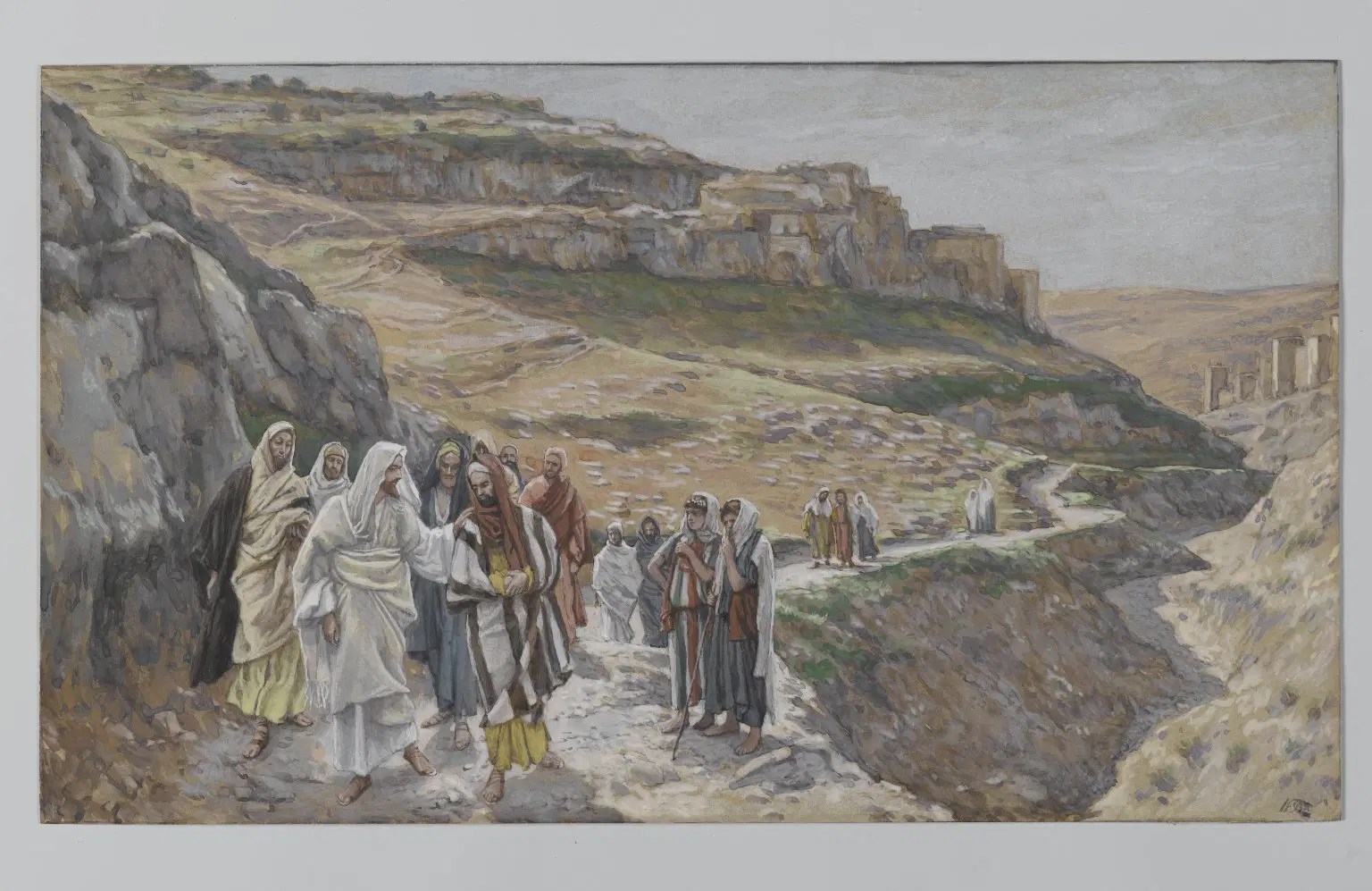
Jesus discourses with his disciples – James Tissot (Brooklyn Museum)

Lent III

SOME of you may have visited the Egypt Centre on the campus of Swansea University. This small museum contains a fascinating collection of artefacts from a civilisation which is both strange and intriguing. In Ancient Egypt, gods were everywhere. Almost everything was worshipped as a god. This included the River Nile, which brought life, crops and fertility. Also there was the bull Apis in whose likeness the Israelites fashioned a Golden Calf. Another was Anubis with his black dog’s head, who was responsible for funerary rites. But in order to worship a divinity you first needed to know their name, and know who they were. 

In this morning’s first reading we hear that Moses is shepherding his father-in-law’s flock in the wilderness of Sinai. It is a difficult place: arid, rocky and mountainous. In the Ancient World, mountains were places for encounter with the divine. So when Moses sees a bush that is burning, but is not consumed by the fire, he wants to investigate what is going on. This leads to a meeting with God which will result in the Exodus, the journey from slavery to freedom; from Egypt to the Promised Land. 

God begins by saying who he is:

“Duw dy dadau wyf fi, Duw Abraham, Duw Isaac a Duw Jacob.”

‘I am the God of your father, the God of Abraham, the God of Isaac, and the God of Jacob.’ (Exod 3:6)

God has heard the cry of His people and is preparing to do something about their situation. He will lead them from Egypt to a land flowing with milk and honey. Moses then tells God that if he explains to the people that the God of their Ancestors has sent him, they will ask, ‘What is his name?’ The point of addressing a divinity by name was that then they would then listen to your prayers. This leads God to reply:

“Ydwyf yr hyn ydwyf. Dywed hyn wrth bobl Israel, ‘Ydwyf sydd wedi fy anfon atoch.’”

‘I Am Who I Am.’ And he said, ‘Say this to the people of Israel: “I Am has sent me to you.”’ (Exod 3:14)

God refuses to be named. God is who God is: the Creator of all, God of all. Almighty God is not to be reduced to a name or a category. However, He loves His People and intends, through Moses, to lead them from slavery in Egypt to freedom in the Promised Land. This journey is the event that will establish the people of Israel, and it also will provide the template for Jesus’ Passion, Death and Resurrection. 

Lent, at its heart, is a penitential season for Christians to prepare to celebrate the Passover which offers salvation to the whole world. This is why St Paul uses the story of the Exodus to remind the faithful of the importance of humility, and of knowing and acknowledging our need of God. As the Israelites were fed with spiritual food — manna — so Christians are fed with the Living Bread — Jesus Christ. As the Israelites were refreshed with spiritual drink, Christians drink the Blood of Christ, and are washed in the waters of Baptism. As Moses strikes the rock at Massah and Meribah, the Rock is Christ, upon whom we can build with sure foundations, against the storms of this world. Nourished by the Eucharist, we are fed by God, with God, so that He may transform us, so that we can share His Eternal Life. The Corinthians are taking this for granted, hence Paul’s warnings in the Epistle. Like the people of Corinth, we need to avoid sin, and turn back to God, and be sustained and upheld by Him, so that we can grow in faith.

Turning to this morning’s Gospel, we do not know who the Galileans that Pilate killed were. Galilee was renowned as a hotbed of political revolutionaries, full of people who wanted to free the Jewish people from Roman Rule. Forty years after Christ’s Passion, Rome will crush a revolution in Judea, and slaughter many people. Our Lord’s message to His followers is simple: repent. Repentance means changing your mind. Repentance means loving your enemies, and Repentance means living your life in a radically different way.

Once again, Jesus tells people a parable. A fig tree has not borne fruit in three years A man makes three visits to the fig tree. These visits represent the Patriarchs, the Prophets and the Gospel — the warnings given in Scripture to repent — and also the three years of Jesus’ earthly ministry. Despite the guidance, the fig does not bear fruit, therefore it should be cut down

However, the unproductive tree is not cut down, but instead it is given a reprieve. The gardener allows the fig tree another chance. This is grace: the free gift of God, granted and not earned. Only through God’s grace can we hope to bear fruit. God, the gardener who created humanity in Paradise, will offer himself as both Priest and Victim upon the Tree of Life, to bleed and die for love of us. This gardener will meet Mary Magdalene by the empty tomb on Easter Day so that we, and all humanity, may share Christ’s risen life. The fact that we are here today is proof that for two thousand years this tree has borne fruit in the Church.

God loves humanity, which is why — like the fig tree — we are given another chance. We are granted the opportunity to repent, to turn back to the God who loves us, and who longs to see us flourish. Our lives as Christians are a continual cycle of falling short, and turning back in repentance to the source of grace, love, and mercy: God. We receive God’s gifts, even though we are not worthy of His generosity, but that’s the point. Our Heavenly Father satisfies our deepest needs and desires out of love for us, so that, enfolded in His love, we might become more lovely, and be filled with God’s infinite love and grace. Only when we are watered by God’s love can we truly bear fruit. We are all forgiven, and we are all loved. That is what the Cross demonstrates: God’s unconditional love and forgiveness. Jesus’ willing sacrifice stands for all time, and fundamentally changes our relationship with our Creator and each other. Ours is a faith rooted in love, freely given for the life of the world and for every individual human being.

So, my brothers and sisters, let us prepare ourselves to celebrate the Paschal mystery so that we, and all the world, may give glory i Duw Dad, Duw y Mab, a Duw yr Ysbryd Glân. I’r hwn y priodoler pob gogoniant, arglwyddiaeth, a gallu, yn awr, ac yn oes oesoedd. Amen.

Advent Sunday 2024: Be Alert: Preparing for Christ’s Return

WHEN I was a young boy I was given a bookmark, on which was printed, ‘BE ALERT: The world needs all the lerts it can get!’ This pun amused me greatly, and it still does. However, it contains a serious message. As Christians we are called to be watchful and aware: both of the world around us, and of the signs of God’s Kingdom. We must also be watchful for Our Lord’s Return. There are two things of which we can be sure. Firstly, that our earthly lives are finite, and secondly, that Christ will come to judge the World. People often find both of these concepts somewhat off-putting, which is understandable. However, they are a reality which we need to face, and understand. Christians believe in God. We trust that we are loved by Our Heavenly Father, who is a God of love and mercy. He sent His Son, Jesus Christ, to reconcile us to Himself and with each other. This is why we can have hope, and prepare to meet Christ with joyful hearts.

The prophet Jeremiah, in our first reading this morning, speaks of prophecy being fulfilled:

‘“Y mae’r dyddiau’n dod,” medd yr Arglwydd, “y cyflawnaf y gair daionus a addewais i dŷ Israel ac i dŷ Jwda.”’

‘Behold, the days are coming, declares the Lord, when I will fulfil the promise I made to the house of Israel and the house of Judah.’ (Jer 33:14)

God promises to fulfil prophecy and to send His people a Saviour. This promise, made to the House of David, is fulfilled both by Jesus’ birth and His return in judgement. God promises to save His people and to rule in a way that is far beyond any human idea of justice. Earthly rulers and politicians will, and do, disappoint us: they always fall short of our expectations. They are human beings, and are therefore fallible. Instead, we call upon God to intervene, and make things right. Only our Heavenly Father can save us, we cannot save ourselves.

However, waiting for Jesus’ Return is not without its problems. St Paul writes to Christians in northern Greece who are expecting Christ’s Second Coming to be imminent. Their expectations need to be managed, and they need help to live out their faith, so that they grow in love together. Our time on earth is limited, so we need to take every opportunity to live in a way that is pleasing to God.

Jesus’ description of the end times is in agreement with the apocalyptic passages found in the prophets. In other words, when that day comes it will be clear. If we are alert, then we will know what is going on. We should look forward to this day, and not be afraid: 

“A’r pryd hwnnw gwelant Fab y Dyn yn dyfod mewn cwmwl gyda nerth a gogoniant mawr. Pan ddechreua’r pethau hyn ddigwydd, ymunionwch a chodwch eich pennau, oherwydd y mae eich rhyddhad yn agosáu.”

‘And then they will see the Son of Man coming in a cloud with power and great glory. Now when these things begin to take place, straighten up and raise your heads, because your redemption is drawing near.’ (Lk 21:27-28)

Christ’s return is a sign of the Kingdom of God. He will welcome us to our eternal Heavenly home. Mindful of our destiny, we should use this season of Advent as a time for preparation. We should make these four weeks leading to Christmas a time when we turn away from everything which separates us from God and each other. As Our Lord says in the Gospel:

“Cymerwch ofal, rhag i’ch meddyliau gael eu pylu gan ddiota a meddwi a gofalon bydol, ac i’r dydd hwnnw ddod arnoch yn ddisymwth fel magl; oherwydd fe ddaw ar bawb sy’n trigo ar wyneb y ddaear gyfan.”

‘But watch yourselves lest your hearts be weighed down with dissipation and drunkenness and cares of this life, and that day come upon you suddenly like a trap. For it will come upon all who dwell on the face of the whole earth’ (Lk 21:34-35)

These words are as relevant today as they were two thousand years ago. Human nature has not changed, nor has our propensity for doing the wrong things — squandering our time, energy, and resources. Instead, we should listen to Jesus and obey His commands:

“Byddwch effro bob amser, gan ddeisyf am nerth i ddianc rhag yr holl bethau hyn sydd ar ddigwydd, ac i sefyll yng ngŵydd Mab y Dyn.”

‘But stay awake at all times, praying that you may have strength to escape all these things that are going to take place, and to stand before the Son of Man.’ (Lk 21:36)

Vigilance, prayer, and complete reliance upon God are the weapons of our spiritual armoury with which to combat the darkness of this world. 

So, my brothers and sisters in Christ, let us be alert and watchful. Let us serve Christ our King who will return, filled with His love for us, and for all people. Let this love form a Kingdom with God as its head. And as we await the Christ’s Second Coming, let us give praise and honour to God the Father, God the Son, and God the Holy Spirit. To whom be ascribed all glory, dominion and power, now and forever. Amen.
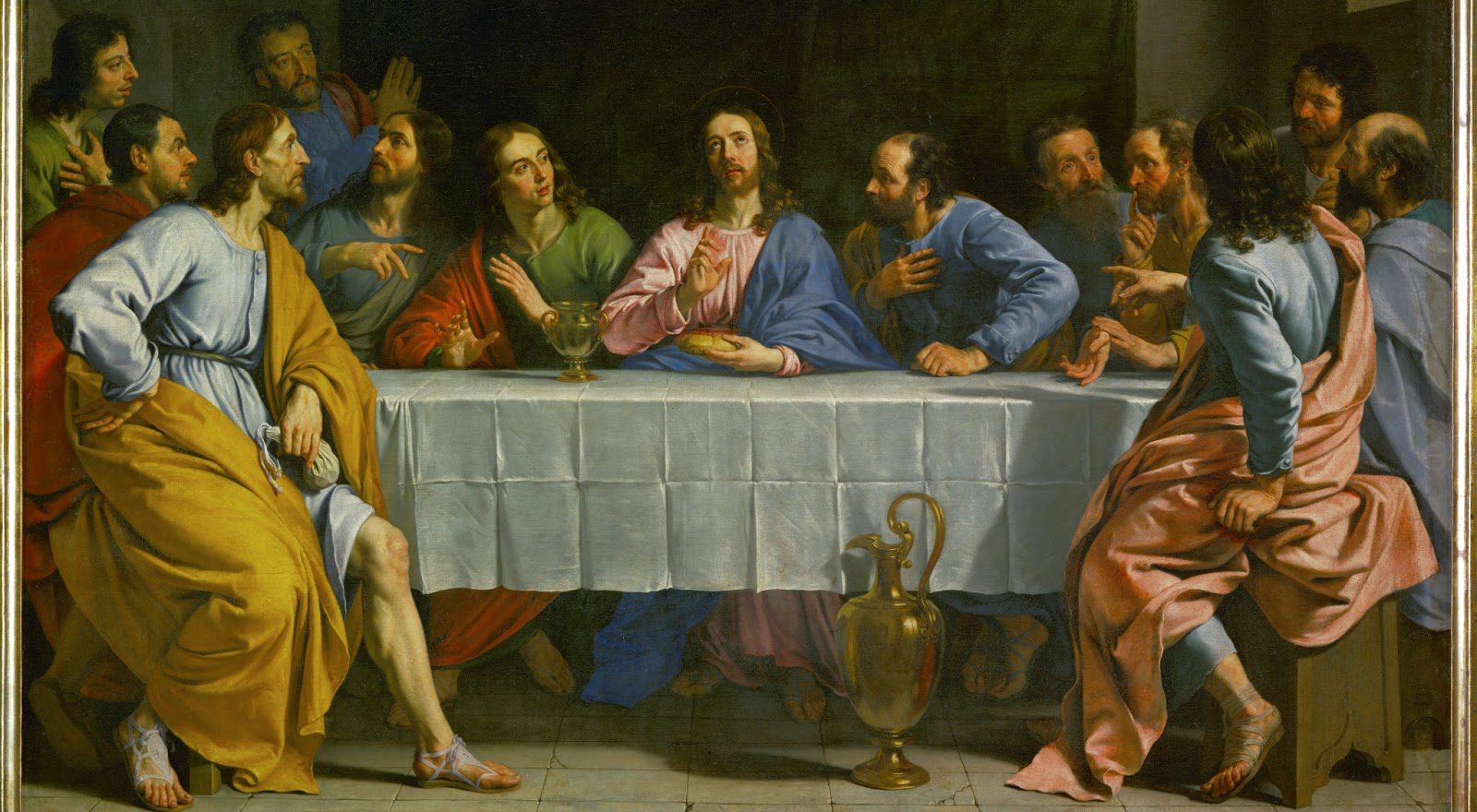
Christos Pantokrator, St Catherine’s Monastery, Sinai

Trinity XIII: Lord, to whom shall we go? You have the words of eternal life!

LIFE in the twenty-first century seems to involve an ever-increasing amount of decisions. If we want to buy a cup of coffee we have to make many quick decisions about size, strength, type of coffee, milk, sugar, etc. It can be quite exhausting. Our readings this week focus on the choices and decisions people make. To follow the Christian faith is something we choose to do. We choose to trust God, we are not forced to. The decision to follow Christ is the most important choice we ever make. It affects both our life on earth and in the hereafter.

This morning’s first reading is an account of the renewal of the covenant between God and Israel brought about by Joshua at Shechem. The people of Israel are asked if they want to worship God and follow his laws. Joshua makes his position clear:

“But as for me and my house, we will serve the Lord.”

“Ond byddaf fi a’m teulu yn gwasanaethu’r Arglwydd.” (Josh 24:15)

The people of Israel follow his example and renew their covenant with God:

“Therefore we also will serve the Lord, for he is our God.”

“Yr ydym ninnau hefyd am wasanaethu’r Arglwydd, oherwydd ef yw ein Duw.” (Josh 24:18)

Their religious faith is a conscious act of the will. They choose to serve the God who has saved them. God has shown that He is their God.

In a similar way, the events of Chapter 6 of St John’s Gospel happen around the time of Passover, the festival which marks Israel’s deliverance from slavery in Egypt and the start of their journey to the Promised Land. This is a key moment in Salvation history. Our Lord has been teaching about the Bread of Life, and stressing the importance of eating His flesh and drinking His blood. Such teaching was difficult for a Jewish audience to hear, as it violated fundamental principles of their dietary laws. 

When many of his disciples heard it, they said, “This is a hard saying; who can listen to it?”

Wedi iddynt ei glywed, meddai llawer o’i ddisgyblion, “Geiriau caled yw’r rhain. Pwy all wrando arnynt?” (Jn 6:60)

Jesus is teaching in a synagogue in Capernaum, and those present are not used to this kind of instruction. It turns everything they know on its head. In Hebrew the word for flesh (baśar) and the word for good news, glad tidings, or the Gospel(besorah), sound similar. Such word-play is intentional, and may be linked to the Hebrew Wisdom tradition, such as we heard last week in the Book of Proverbs. Our Lord does not, however, back down, or change His teaching, but instead develops it further:

“Do you take offence at this? Then what if you were to see the Son of Man ascending to where he was before? It is the Spirit who gives life; the flesh is no help at all. The words that I have spoken to you are spirit and life. But there are some of you who do not believe.”

“A yw hyn yn peri tramgwydd i chwi? Beth ynteu os gwelwch Fab y Dyn yn esgyn i’r lle’r oedd o’r blaen? Yr Ysbryd sy’n rhoi bywyd; nid yw’r cnawd yn tycio dim. Y mae’r geiriau yr wyf fi wedi eu llefaru wrthych yn ysbryd ac yn fywyd. Ac eto y mae rhai ohonoch sydd heb gredu.” (Jn 6:61-64)

Having described the Institution of the Eucharist as a way of understanding His Passion and Death, Jesus goes on to talk about events after His Resurrection, namely His Ascension, and the Sending of the Holy Spirit at Pentecost. These are all linked, because they form the culmination of Salvation History. This is the Good News of Jesus Christ. This is God saving His people, the outworking of the covenant at Shechem into the New Covenant of Our Lord and Saviour. However its proclamation does not draw people to Jesus, instead it has the opposite effect:

After this many of his disciples turned back and no longer walked with him. So Jesus said to the Twelve, “Do you want to go away as well?”

O’r amser hwn trodd llawer o’i ddisgyblion yn eu holau a pheidio mwyach â mynd o gwmpas gydag ef. Yna gofynnodd Iesu i’r Deuddeg, “A ydych chwithau hefyd, efallai, am fy ngadael?” (Jn 6:66-67)

Jesus does not force people to follow Him. Then, as now, the choice to follow (or not follow) Christ is a personal decision made freely by each individual. Our Lord asks the Twelve if they want to leave as well, which leads to the following declaration of faith by St Peter:

Simon Peter answered him, “Lord, to whom shall we go? You have the words of eternal life, and we have believed, and have come to know, that you are the Holy One of God.”

Atebodd Simon Pedr ef, “Arglwydd, at bwy yr awn ni? Y mae geiriau bywyd tragwyddol gennyt ti, ac yr ydym ni wedi dod i gredu a gwybod mai ti yw Sanct Duw.” (Jn 6:68-69)

Simon Peter trusts Our Lord. He expresses that faith and trust. No-one else can offer what Jesus does, because He is God. Only God can make such incredible claims. To be a Christian is to make the same confession as Peter, and to have the same hope of eternal life in and through Jesus Christ. 

Jesus’ teaching is hard to accept, and difficult to understand, but we can experience it, when we receive Holy Communion. For Peter, and for us, belief precedes knowledge. We believe and then we come to understand.

Faith revolves around the question of commitment. It involves love and sacrifice — the two go hand in hand. This is what marriage is all about, and commitment also describes God’s relationship with us, and ours with God. It will see Jesus die on the Cross for us, to show us just how much God loves us, and wants to restore our relationship with Him, and with each other. To be close to God is wonderful, but it isn’t something God forces us into: we may choose to accept God’s love, or to refuse it. This love is freely given.

St Paul’s advice to the Christians in Ephesus is another difficult text, which revolves around making a choice. For St Paul, Christian marriage is all about loving service of one another, as demonstrated by Christ. Jesus lays down His life for us, so we should do the same for each other. Thus, in marriage in particular, and in society in general, loving service and self-sacrifice are the ways by which we should live. It is a generous form of life, because its model is Jesus, the most unselfish person ever, who created all that there is, and who redeemed it by offering His life as a ransom for many. We see this on the Cross and we commemorate it in the Eucharist, where Christ continues to feed us —His people— with Himself, so that we might have life in Him.

So, my brothers and sister in Christ, let us follow the example of St Peter and St Paul in trusting Jesus and being fed with Him, to prepare us for Heaven. Let us demonstrate our commitment by singing the praises of God the Father, God the Son, and God the Holy Spirit. To whom be ascribed all glory, dominion and power, now and forever. Amen.
Jesus Teaches in the Synagogues – James Tissot (Brooklyn Museum)

Pentecost 2024

FIRE is an amazing entity. It is something that can be both a benefit, but also a danger. The heat produced by an open fire, or a log-burning stove, provides warmth and comfort. The candles in church give light and form a focus for our prayers. However, we must always take care with fire, as it is a powerful force. The disciples are described as receiving the power of the Holy Spirit through what looked like ‘divided tongues of fire’ ‘tafodau fel o dân’ (Acts 2:3).

Before his Ascension, Christ tells His disciples to wait in Jerusalem so that they may be baptized in the Holy Spirit. The twelve have again gathered in the Upper Room, along with the Blessed Virgin Mary. This is the same place where Christ instituted the Eucharist, and washed His disciples’ feet. They have gathered here because Jesus told them to be together, and to pray, saying:

 ‘you shall receive power when the Holy Spirit has come upon you; and you shall be my witnesses … to the end of the earth’ 

‘Ond fe dderbyniwch nerth wedi’r Ysbryd Glân ddod arnoch, a byddwch yn dystion i mi … a hyd eithaf y ddaear’ (Acts 1:8)

Our Lord promises to pour out the Holy Spirit to strengthen and inspire the Church. God is generous, and wants to see humanity flourish. An amazing event then takes place. Everyone present is filled with the Holy Spirit. Tongues of fire rest upon them, and they speak in a variety of languages. Strengthened by God’s Spirit the disciples go out to preach. In Jerusalem there are people from all over the Mediterranean World, gathered for the Jewish festival of Shavuot, the celebration of the wheat harvest. These people are amazed to hear the mighty works of God spoken in their own languages. Not only that, those speaking are not the educated elite but a rag-tag assortment of Galilean fishermen and other ordinary men. They hear and understand the proclamation of who Jesus is, and what He has done. 

Through the power of God, the Good News is pronounced. Men who were afraid, hiding behind locked doors, have become confident, and will go out to share the Gospel around the world. Their miraculous transformation has, in turn, transformed the world, resulting in billions of Christians. We are here in church today because of the power of the Holy Spirit.

This is why St Paul can write to the Church in Galatia as a community that has experienced the indwelling of the Holy Spirit. The apostle describes what it means to be filled with the Holy Spirit:

But the fruit of the Spirit is love, joy, peace, patience, kindness, goodness, faithfulness, gentleness, self-control’ 

Ond ffrwyth yr Ysbryd yw cariad, llawenydd, tangnefedd, goddefgarwch, caredigrwydd, daioni, ffyddlondeb, addfwynder, hunanddisgyblaeth.’ (Gal 5:22-23)

Paul is describing how we are all supposed to be as Christians. Living by the Spirit is an ideal, which we often fail to live up to, but, nonetheless, it shows us how God wants us to live. Here is a glimpse of life in all its fulness: life in union with God, and with each other. This is perfect communion, something to strive for, even if we may struggle to attain it. This is how we can live when we allow God to be in control, and when our human will is perfectly aligned with the Father’s will for us. Living by the Spirit is what human flourishing looks like in practice.

At a number of points in John’s Gospel, Jesus speaks about the Holy Spirit to His disciples. Our Lord tells His followers that the Spirit will bear witness, confirming the truth of their faith, and will strengthen them for service: living and sharing the Good News. Jesus promises: 

When the Spirit of truth comes, he will give you into all truth

Ond pan ddaw ef, Ysbryd y Gwirionedd, fe’ch arwain chwi yn yr holl wirionedd’ (Jn 16:13)

We have come together today to celebrate God’s love and generosity in continuing to send His Holy Spirit. 

God is glorified in worship, which is why we sing His praises. Worship does not change God, it changes us: making us more loving, uniting us with our creator who sustains us with His love. Christians all around the world are united with the worship of Heaven, where the saints and angels sing the praises of God, Father, Son, and Holy Spirit. Through the power of the Holy Spirit, and nourished by Word and Sacrament, we are given a foretaste of the joy which awaits us.

So, my brothers and sisters in Christ, let us pray earnestly for the gift of the Spirit. May God fill us with His love and equip us to proclaim the Good News of the Kingdom. May the fire of the Holy Spirit embolden us to encourage others to come to know, and love, God the Father, God the Son, and God the Holy Spirit. To whom be ascribed all, glory, dominion, and power, now and forever. Amen.

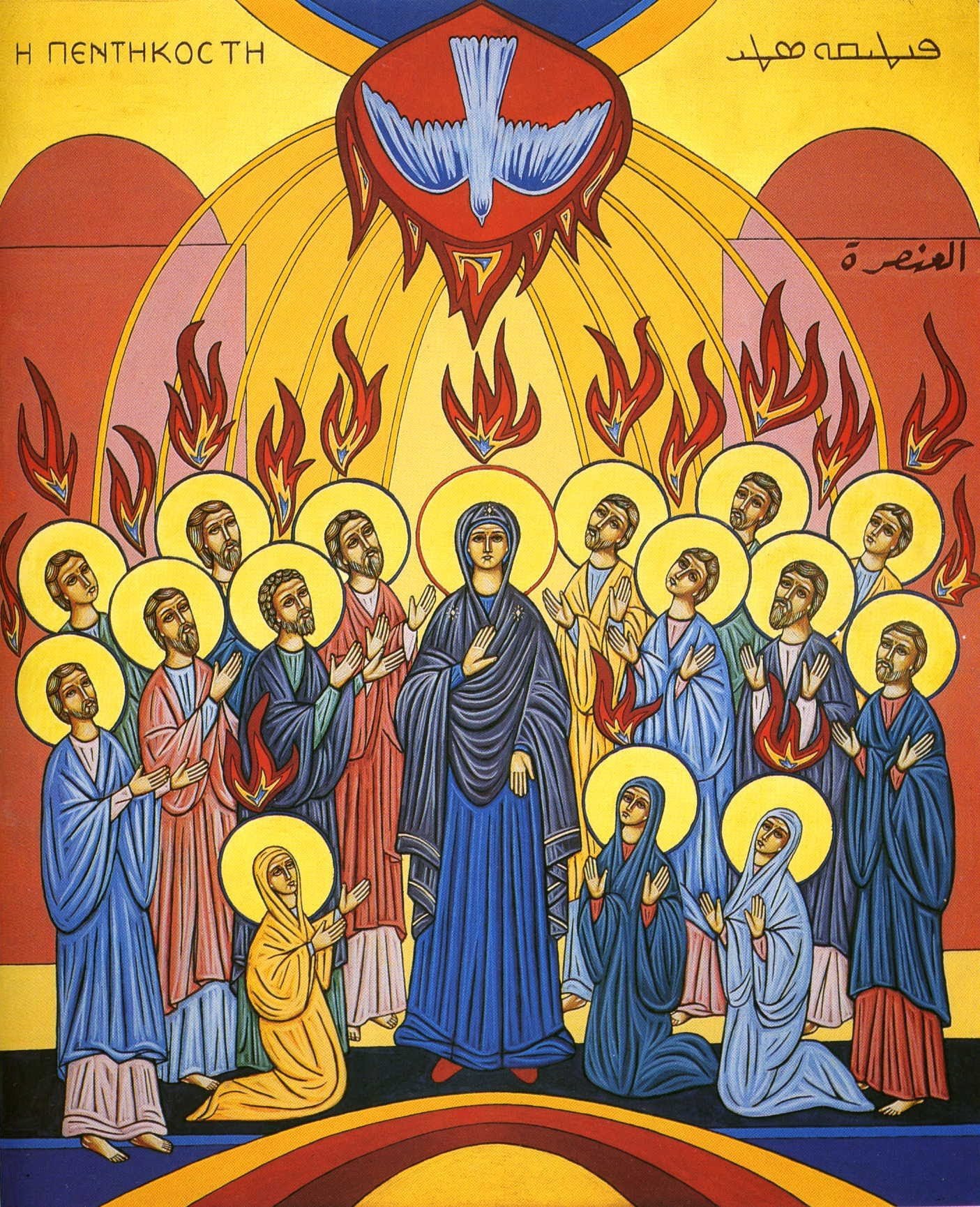
Maronite Icon of Pentecost

Easter V – The True Vine

I know that many of you gathered here this morning are keen gardeners. One of the main gardening tasks in winter is to prune those plants which need to be pruned. At one level it is easy to think that having planted and watered a plant, it can be left to do its own thing, However, in order to both maximise the number and quality of blooms of, for example your roses, as well as encouraging strong healthy growth, then pruning is a must. Cutting off part of a living plant sounds brutal, but in fact it helps that plant to grow and produce fruit and flowers. I shall return to the theme of pruning in a short while.

In today’s first reading from the Acts of the Apostles we begin with a very human picture. The disciples of Jesus are afraid. They have good reason to be so. Saul was a sworn enemy of the Church, and he played a part in the martyrdom of the deacon Stephen. Could it be that Saul’s new-formed desire to join the disciples was just a trap? Then we see something wonderful: the power of a personal relationship. Barnabas vouches for Saul. The disciple explains both the former persecutor’s conversion on the road to Damascus, and his powerful preaching about how the risen Jesus had turned his life around. Later, when Saul tries to share his faith with fellow Jews they threaten to kill him. The disciples protect him and get him to the coast on a on a ship bound for his home town of Tarsus.  Having been afraid, the apostles have come to trust Saul as a fellow Christian. Their former enemy has become someone they now love, trust, accept, and care for. The situation can be summed up in the following verse:

‘So the church throughout all Judea and Galilee and Samaria had peace and was being built up. And walking in the fear of the Lord and in the comfort of the Holy Spirit, it multiplied.’

‘Yr oedd yr eglwys yn awr, drwy holl Jwdea a Galilea a Samaria, yn cael heddwch. Yr oedd yn cryfhau, a thrwy rodio yn ofn yr Arglwydd ac yn niddanwch yr Ysbryd Glân yn mynd ar gynnydd.’ (Acts 9:31)

Barnabas’ name means ‘Son of Consolation’, someone who acts like the Holy Spirit. Living up to his name, this disciple comforts the other disciples, strengthening their belief, and helping the Church to grow.

Barnabas puts his faith into action, and this is the advice given in our second reading from the First Letter of John:

‘let us not love in word or talk but in deed and in truth.’

‘gadewch inni garu, nid ar air nac ar dafod ond mewn gweithred a gwirionedd’ (1Jn 3:18)

The Christian Faith is not something we just talk about, it is something which affects our lives and our actions. We are called to live out our beliefs, and thus become an example that people want to emulate. Our deeds as Christians are arguably the most effective witness we have.

In the Gospel, Jesus once again illustrates his teaching by using an image which would have been very familiar to His audience. Vines were common throughout the entire Mediterranean World, producing grapes which could be eaten or made into wine. Jesus uses the concept of Himself as the Vine, with the disciples as the branches. It is a powerful vision of what the Church is: people who are grafted onto and into Christ, connected to Him, and in a relationship with Him. We entered into that relationship in our baptism, and it is a relationship which will continue throughout, and after, our life on earth. 

When we were baptised, we were grafted onto the vine, which is Christ. It is His will that we, as Christians, bear much fruit. This means that we must live out our faith in our lives, so that it affects who and what we are, and all that we say and do. We do this because it is what God expects of us, as we read in the First Letter of John: 

The love of God was made manifest among us, that God sent his only Son into the world, so that we might live through him’ (1Jn 4:9).

Because we are grafted into Christ we are in communion with Him. Jesus gives Himself to us in the Eucharist, His Body and Blood, so that we can have life in Him. He gives Himself to us out of love, so that we might have life in Him, and have it forever. The Eucharist is a pledge of eternal life with Christ, united in this world and the next. It is given to strengthen us on the journey of faith. Partaking in the Eucharist, physically or spiritually, helps us to live out our faith in our lives. Fed by and with Christ, we live in Him and for Him. 

Our Lord says:

‘Whoever abides in me and I in him, he it is that bears much fruit, for apart from me you can do nothing.’

‘Y mae’r sawl sydd yn aros ynof fi, a minnau ynddo yntau, yn dwyn llawer o ffrwyth, oherwydd ar wahân i mi ni allwch wneud dim.’ (Jn 15:5)

Apart from Jesus we can do nothing. When we rely solely on our own strength, our own talents, we inevitably fail. We must not forget that everything is God-given in the first place. To thrive we need to abide in Him. Without this connection to Our Heavenly Father we wither and die, cut off from the source of life and hope. 

So, my brothers and sisters in Christ, as we continue to rejoice in Our Lord’s Resurrection, may we take to heart the words of Our Lord:

‘By this my Father is glorified, that you bear much fruit and so prove to be my disciples.’

‘Dyma sut y gogoneddir fy Nhad: trwy i chwi ddwyn llawer o ffrwyth a bod yn ddisgyblion i mi.’ (Jn 15:8)

May we bear fruit in our lives, and, like Barnabas and Paul, become worthy witnesses to God the Father, God the Son, and God the Holy Spirit. To whom be ascribed all, glory, dominion, and power, now and forever. Amen.

Twenty Third Sunday of Year A

The emergency services were not well-developed in the Ancient World. However, cities did have a night watch who functioned as a combination of a police force and fire brigade. It is to such an office that God appoints the prophet Ezekiel in this morning’s first reading. He is to be a night watchman, someone who is vigilant against fire and crime, someone concerned with safety and people’s well-being. Prophets exist to speak warnings to God’s people, to show them where they are going wrong and to show them how to get back on the right path. The role of a prophet is to call sinners to repent from their evil ways. Through the prophet God calls His people back to Him. Though people are, then as now, wayward they are given a chance to repent, to return to the ways of human flourishing. The choice is a stark one: life or death. It is important, and a lot depends upon the choices we make. This is why the central proclamation of the Church is to call God’s people to repentance: to turn away from sin, and to turn back to God. 

This week’s second reading from Paul’s Letter to the Romans continues the Apostle’s advice on how Christians should live out their faith in their lives. Living a Christian life  is a difficult thing to do, and for two thousand years Christians have struggled to do it well. As followers of Christ we are called to love God and to love one another. Paul quotes from the Ten Commandments to make the point that the basis for the moral code found in the Mosaic Law is Love. If you love someone then you will not do such things to them. To love is to will the good of another, to make the right choice, one which leads to human flourishing.

Having shown the Church how to live, Paul widens his focus, to reinforce something we heard last week: 

Do not be conformed to this world, but be transformed by the renewal of your mind, that by testing you may discern what is the will of God, what is good and acceptable and perfect. (Romans 12:2)

Paul can see the wider significance of what he is encouraging people to do. The Church knows that Jesus will come to judge the world, so Paul is encouraging Christians to live moral lives. The first Christians were surrounded by a decadent and morally corrupt society, justas we are today, and have been for two thousand years. Human nature is surprisingly consistent. We, however, are called to live differently. In our baptism, we put on Christ, and we were clothed with Him, sharing His Death, but we were also raised to new life in Him. We pray for the strength to live that new life, here and now! This is how we should prepare to meet our Redeemer, when He comes again.

How do we deal with problems as a church? This is an important and difficult question. This morning’s Gospel shows us how, in a number of clear simple steps. First we should approach the person in private. If they listen, and presumably admit their mistake and ask for forgiveness, or try to put things right, then that is an end to the matter. They are reconciled, and the matter is forgiven and forgotten. If this does not work, Paul instructs us to take one or two people, so that there are witnesses, and if this does not work, it becomes a matter for the church as a whole. If the person at fault still refuses to listen, they are excluded, not as a punishment, but so that they may have another opportunity to think things over, to admit that they are wrong, and to seek forgiveness and reconciliation. The point is not to cast people out, but to try and keep them in, and give them all possible opportunities to repent and be reconciled. In worldly terms this provision is generous. The church, which Christ founded, is meant to do things differently, as Jesus says:

The thief comes only to steal and kill and destroy. I came that they may have life and have it abundantly. (Jn 10:10)

God wants us all to have life in all its fulness, which includes healing and reconciliation. The world, however, often sees things in terms of punishment and retribution, whereas the church views things in terms of restoration. Our God is a God of justice and mercy. This is why Jesus goes to the Cross willingly, to bear our sins, and to heal our wounds. We cannot sort out the problem of our sin and woundedness on our own; if we could we would not need a Saviour. 

This is why Jesus reiterates His teaching about sin:

Truly, I say to you, whatever you bind on earth shall be bound in heaven, and whatever you loose on earth shall be loosed in heaven. (Mt 18: 18) 

This is a reality because of all that God has done for us in Christ. The Church exists to continue the redemptive work of God within the world. Through God’s forgiveness we can be truly reconciled and the healing, which can become a reality in our lives. Jesus says in the words which follow:

Again I say to you, if two of you agree on earth about anything they ask, it will be done for them by my Father in heaven. (Mt 18:19)

Through God’s reconciliation we can make requests in prayer, and those requests will be answered. In addition, as a Christian community we can be encouraged by Christ’s presence in our midst:

For where two or three are gathered in my name, there am I among them. (Mt 18:20)

Christ is among us, here and now! And we receive His Sacramental Presence in the Eucharist, His Very Flesh and Blood, so that He may transform us; so that we may have a foretaste of the Heavenly Banquet and be built up and strengthened in love, both here and now. We have the medicine for which our souls cry out. This is the healing which Christ accomplishes on the Cross, He longs to pour out His Love on us, so that we can know true freedom, true joy, and true love, in Him. So let us come to Him and let His Grace transform our lives, so that we, and all creation, may give glory to God the Father, God the Son, and God the Holy Spirit, to who whom be ascribed as is most right and just, all might, majesty, glory, dominion and power, now and forever. Amen.