The Baptism of Christ 2026

‘This is my beloved Son, with whom I am well pleased.’

‘Hwn yw fy Mab, yr Anwylyd; ynddo ef yr wyf yn ymhyfrydu’ (Mt 3:17)

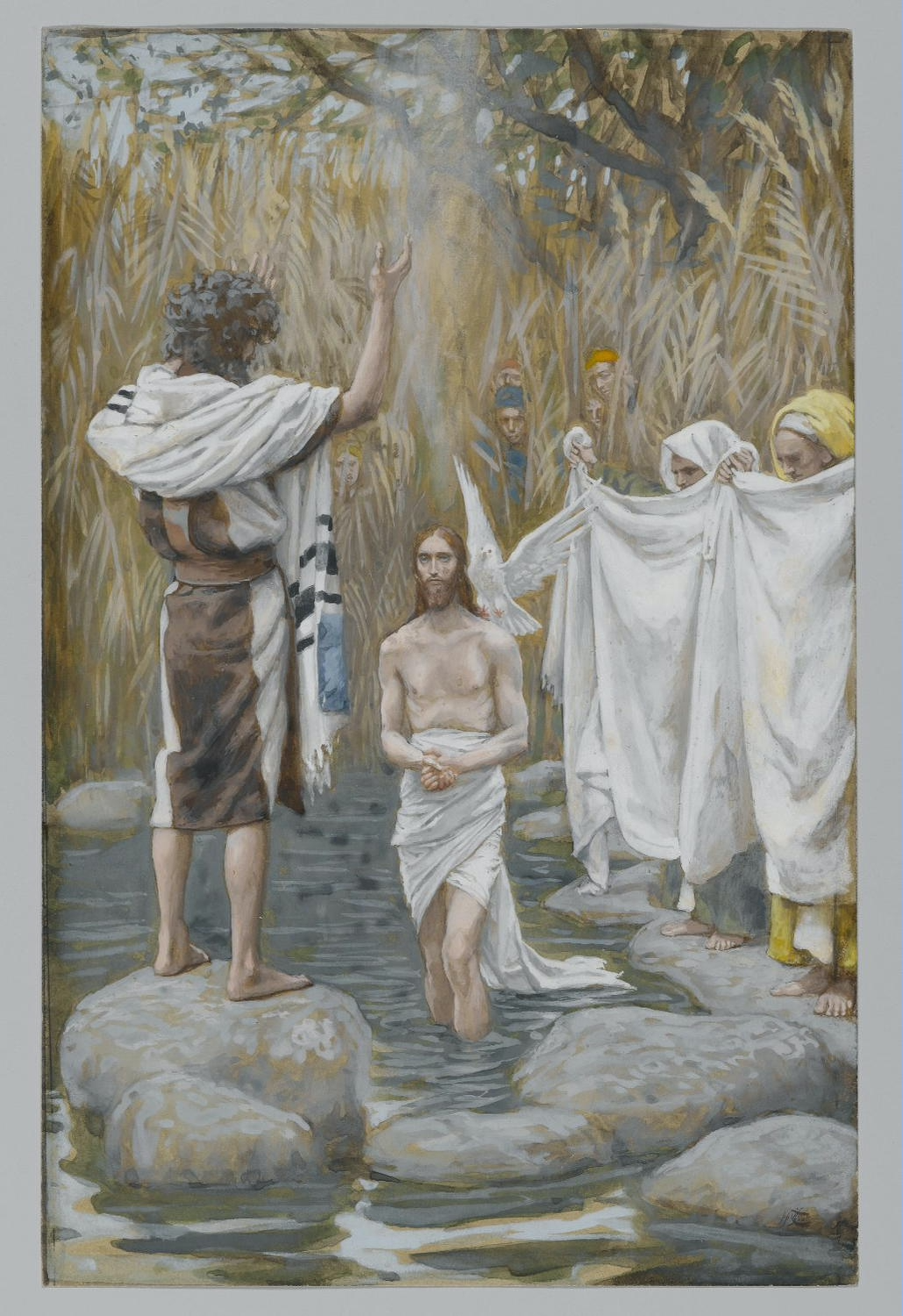
Our Baptism is one of the most important events in our lives. However, for the vast majority of Christians who were baptised as infants, it isn’t something we necessarily remember. We are too young to recall the experience. But whether we can remember it or not, we know that our baptism marked our entry into the Church. During the sacrament we were clothed with Christ and we were born again, by water and the Holy Spirit. Our Lord Jesus Christ was also baptised, but as a man, rather than a baby. This is what the Church celebrates today. 

Baptism washes us from our sins, yet Jesus is not a sinner. So why does He need to get baptized? John the Baptist says to Christ, “I need to be baptized by you, and do you come to me?” (Mt 3:14). Our Lord replies by saying, “Let it be so now, for thus it is fitting for us to fulfil all righteousness.” (Mt 3:15). Jesus’ baptism is one of obedience to the will of God the Father. That is why our first reading is the first of the Servant Songs in the prophecy of Isaiah. The prophecy is fulfilled when the Father speaks the words from the first verse, at the moment of Jesus’ baptism. God gives His Son as a covenant to the nations. This covenant will be made on the Cross, to save humanity. Christ is a light for the nations, as Simeon states at the Presentation in the Temple. Jesus will open the eyes of the blind, and set prisoners free. This is the reality of the Kingdom of God, which we are members of, through our baptism.

Today, God does a new thing. This lies at the heart of the proclamation of the Good News of the Kingdom by St Peter in this morning’s second reading from the Acts of the Apostles. It is the same pronouncement that we find in Isaiah. There is a consistency in proclamation down through the centuries, a guarantee of its truth. God the Father expresses His love for His Son, whose obedience to His Father’s will shows humanity that by saying ‘Yes’ to God, the ‘No’ of Adam and Eve can be undone. Christ, the new Adam, fulfils all righteousness, and in so doing begins His public ministry which takes this ultimately to the Cross. This is where righteousness and obedience lead: to death and suffering, to the demonstration of God’s love and finally, to the restoration of humanity once and for all.

What is foolish in the eyes of the world, is in fact the greatest possible demonstration of love. We will see that love made visible here this morning, where Christ offers Himself for us, through His Body and Blood in the Eucharist. We feed on Him, so that He can transform us; so that we may come to share in the very life and nature of God. Through our Baptism, and through the Eucharist, God’s Kingdom becomes a living reality in us. We are transformed to live its life, and transform the world around us.

A few days ago we celebrated Epiphany, Our Lord’s manifestation to the Gentiles. Now this Sunday, at the start of Christ’s public ministry, He is again made manifest. God the Father acknowledges the Son in the flesh, and sends the Holy Spirit, the bond of their love. The fullness of the Divine Trinity is united and revealed on earth to proclaim that Christ is Lord. The Kingdom has become a reality. Christ does not need to be baptised, as we do. However, He does so in order to fulfil all righteousness and to sanctify the waters of baptism for those whom He would redeem, to show us the way to new life in Him. At the beginning of his public ministry, Jesus shows humanity the way to the Father, through himself. The world sees the generous love of God, which heals and restores us, from the darkness of the dungeon of sin and evil, to the light and life of the Kingdom of God. As our baptism is a sharing in the death and resurrection of Jesus, so His baptism points to the Cross, where streams of blood and water flow to cleanse and heal the world. We see the love of the Father, the power of the Spirit, and the obedience of Son, and all for us, who deeply need God’s love and healing, and forgiveness.

We long to experience this deep, divine love. The whole world needs it, but we are often too proud or too fearful to turn to the God of love. And yet it is exactly such people, the lost sheep, that Our Lord comes to seek. He desires to enfold them, and us, in His loving arms on the Cross. He washes us in the waters of baptism, so that we all may be a part of Him, regardless of whom we are, and what we have done. Salvation is the free gift of God and is open to all who turn to him.

Ours is a faith which can transform the world, so that all humanity can share in God’s life and love. Each and every one of us can become part of something radical and revolutionary, which can, and will, transform the world one soul at a time. Rather than human violence, cruelty, and mis-use of power, the only way to transform the world is through the love of God. This is what the Church is for. This is what Christianity is all about. This is why we are gathered here today, to be strengthened and nourished.

Through prayer, through the Word of God, and through the Sacraments of the Church, we are strengthened and nourished to live out our faith and transform the world. Nothing more, nothing less, just a revolution of love, of forgiveness, and of healing. This is what the world both wants and needs. So, let us draw on the strength of our baptism to live out our faith in order that the whole world may be transformed and believe. United with all our Christian brothers and sisters let us give glory to God the Father, God the Son, and God the Holy Spirit, Duw Dad, Duw Y Mab, a Duw yr Ysbryd Glân. To whom be ascribed all glory, dominion and power, now and forever. Amen.

James Tissot: The Baptism of Christ (Brooklyn Museum)

Harvest 2024

Many of you may have seen ‘Clarkson’s Farm’ on the television, where Jeremy Clarkson attempts to run a mixed farm in West Oxfordshire. This popular TV programme has been running for a few years now, and is a window into the lives of farmers. It highlights the pressures they are under, the long hours, the problems of the weather, and the ever-increasing paperwork and bureaucracy. The programme also explains the modern farming methods used to produce the food we eat. As we give thanks for the harvest, we also give thanks to those who work the land, those who care for livestock, and those who transport, distribute, and sell our food. 

This morning’s Gospel is taken from the middle of the Sermon on the Mount, an extended series of teaching by Jesus about how to live a Christian life. It begins with an encouragement not to be anxious or afraid, ‘Paid ag ofni’, those oft-repeated words which stress the importance of combatting fear and anxiety. Many people worry about food and clothing, as well as heating and maintaining where they live. These things constitute our basic needs as human beings: what we need in order to be healthy and happy. Yet Our Lord tells us not to become over-concerned about such things. 

Jesus uses an example to make His point:

‘Look at the birds of the air: they neither sow nor reap nor gather into barns, and yet your heavenly Father feeds them. Are you not of more value than they?’

‘Edrychwch ar adar yr awyr: nid ydynt yn hau nac yn medi nac yn casglu i ysguboriau, ac eto y mae eich Tad nefol yn eu bwydo. Onid ydych chwi yn llawer mwy gwerthfawr na hwy?’ (Mt 6:26)

God feeds the birds. If we are worth more than birds, whom God looks after, will He not care for us even more? Our Lord reinforces this point by stressing how worry about such things is self-defeating:

‘And which of you by being anxious can add a single hour to his span of life?’

‘Prun ohonoch a all ychwanegu un funud at ei oes trwy bryderu?’ (Mt 6:27)

We know this to be true, and yet we still worry. It is human nature. Often we have everything we need, but the pressures of the world make us think we need more. Adverts, social influencers, and the fashion industry all tell us that we need the latest thing in order to be happy. However, as Jesus reminds us: 

‘But if God so clothes the grass of the field, which today is alive and tomorrow is thrown into the oven, will he not much more clothe you, O you of little faith?’

‘Os yw Duw yn dilladu felly laswellt y maes, sydd yno heddiw ac yfory yn cael ei daflu i’r ffwrn, onid llawer mwy y dillada chwi, chwi o ychydig ffydd?’ (Mt 6:30)

We often fall down by becoming too involved in the things of this world, rather than trusting in God. We want to be in charge of our lives, when instead we should listen to the words of Jesus:

‘But seek first the kingdom of God and his righteousness, and all these things will be added to you.’

‘Ond ceisiwch yn gyntaf deyrnas Dduw a’i gyfiawnder ef, a rhoir y pethau hyn i gyd yn ychwaneg i chwi.’ (Mt 6:33)

Rather than worrying about the practicalities of daily life, our focus needs to be the Kingdom of God — in other words how we live our lives. Are we grateful, generous people, caring for those in need, showing love and forgiveness? If we live this way, then we create a society where the values of God’s Kingdom shape our every action: who are, what we do. We become people characterised by joy, and not fear. Joy is infectious, it simply has to be shared, which leads to thankfulness and gratitude.

The prophet Joel, in this morning’s first reading, presents us with a vision of plenty:

‘Fear not, O land; be glad and rejoice, for the Lord has done great things!’

‘Paid ag ofni, ddaear; bydd lawen a gorfoledda, oherwydd fe wnaeth yr Arglwydd bethau mawrion.’ (Joel 2:21)

The benefits for God’s people are clear, as is what they must do:

‘You shall eat in plenty and be satisfied, and praise the name of the Lord your God, who has dealt wondrously with you.’

‘Fe fwytewch yn helaeth, nes eich digoni, a moliannu enw’r Arglwydd eich Duw, a wnaeth ryfeddod â chwi.’ (Joel 2:26)

Thanksgiving for the harvest is important, because, first and foremost, by giving thanks we are recognising that we are not in control, God is. Christians are called to work, to enjoy the fruits of God’s creation, and to share the bounty of the earth so that none are hungry, and that all people may live in peace and plenty. 

It is good to gather together to give thanks to God. To celebrate the Eucharist together, the great prayer of thanksgiving which Jesus taught His disciples to offer. The more we come together to do this, the more we are formed into people who are thankful and generous. We are nourished not only by the fruits of the earth, but by God, and with God, so that we may be transformed into His likeness. This is the Kingdom of God, here and now, among us. This is the reality which Christ came to bring though His Life, His Death, and His Resurrection. 

By giving thanks for our daily bread, we are following God’s commands, and helping to make His Kingdom a reality. Filled with joy and gratitude for what God has done for us, we give thanks to God, and follow His instructions to feed the hungry, and clothe the naked. By doing so, we embody the love, forgiveness, and generosity which are the hallmarks of a loving, forgiving, generous God.

And so, my brothers and sisters in Christ, as we give thanks to God for the Harvest and His abundant loving kindness towards us, may we continue the work of His Kingdom. Let us trust in our Heavenly Father and help others to come to know and love God the Father, God the Son, and God the Holy Spirit. To whom be ascribed all glory, dominion and power, now and forever. Amen.

Trinity XV: Ephphatha – Be Opened!

I can still remember vividly the experience of my first Sunday off after being ordained. I had everything planned out. A friend of mine from theological college was a curate about 45 minutes away, so I could both see a friend and enjoy some quiet anonymous worship at the back of the pews. I dressed casually, but within seconds of entering the church I was handed books with a cheerful ‘Good Morning Father!’. I was rumbled! I suspect that without thinking about it I had performed several ritual gestures on entering, which rather gave the game away. Our actions are louder than our words, louder than the clothes we wear. Christianity is a faith which we live, which affects who we are, and what we do. 

The reading from the Letter of James makes this very point: God doesn’t treat people differently, so neither should we in the church. If anything the church should go out of its way to look after the poor, because in their poverty they know their need for God. 

‘Listen, my beloved brothers, has not God chosen those who are poor in the world to be rich in faith and heirs of the kingdom, which he has promised to those who love him?

‘Clywch, fy mrodyr annwyl. Oni ddewisodd Duw y rhai sy’n dlawd yng ngolwg y byd i fod yn gyfoethog mewn ffydd ac yn etifeddion y deyrnas a addawodd ef i’r rhai sydd yn ei garu?’ (James 2:5)

In this morning’s Gospel Jesus has been in Gentile territory to the north of Galilee. He has healed the Syro-Phonecian woman’s daughter, and is now heading back towards the Sea of Galilee. Having heard of His reputation for performing miraculous healings people bring a man to Our Lord who cannot hear or speak clearly, in the hope that he can be healed:

‘and they begged him to lay his hand on him.’

‘a cheisio ganddo roi ei law arno.’ (Mk 7:32)

The people are desperate: there is nothing they can do. This charismatic healer and teacher is their only hope. So Our Lord takes the man to one side, away from the crowd, and performs the healing. 

‘he put his fingers into his ears, and after spitting touched his tongue. And looking up to heaven, he sighed and said to him, “Ephphatha”, that is, “Be opened.”’

‘rhoes ei fysedd yn ei glustiau, poerodd, a chyffyrddodd â’i dafod; a chan edrych i fyny i’r nef ochneidiodd a dweud wrtho, “Ephphatha”, hynny yw, “Agorer di”.’ (Mk 7:33-4)

The scene may seem a little strange to us nowadays, but it has a refreshing physicality to it. Jesus isn’t simply preoccupied with spiritual matters. The healing is physical: involving touch and saliva. Our Lord does raise His eyes to Heaven and pray, but He also says, ‘Ephphatha — Be opened’ and the man is healed. Jesus is both conforming to people’s expectations, what they would like to be done, and also bringing about a miraculous healing by the power of God. 

‘And his ears were opened, his tongue was released, and he spoke plainly.’

‘Agorwyd ei glustiau ar unwaith, a datodwyd rhwym ei dafod a dechreuodd lefaru’n eglur.’ (Mk 7:35)

This is marvellous on several levels. It is the fulfilment of Isaiah’s prophecy which is the first reading today:

‘Then the eyes of the blind shall be opened, and the ears of the deaf unstopped; then shall the lame man leap like a deer, and the tongue of the mute sing for joy.’

‘Yna fe agorir llygaid y deillion a chlustiau’r byddariaidd; fe lama’r cloff fel hydd, fe gân tafod y mudan;’ (Isa 35:5-6)

Isaiah is looking forward to the coming of the Messiah, so Our Lord is fulfilling the prophecy and demonstrating his Messianic credentials — announcing to the world both who and what He is. The Kingdom of God is a place of healing and wholeness. It is also no longer to be understood in an exclusive sense. In Chapter 7 of Mark’s Gospel Jesus is outside Israel and now extends His healing to people who are not Jews. This is an important step which will have a profound effect upon the Church and its spreading across the world.

Our Lord tells the people who have witnessed the miracle not to tell anyone about it. However, his words have the opposite effect:

‘But the more he charged them, the more zealously they proclaimed it. And they were astonished beyond measure, saying, “He has done all things well. He even makes the deaf hear and the mute speak.”’

‘ond po fwyaf yr oedd ef yn gorchymyn iddynt, mwyaf yn y byd yr oeddent hwy’n cyhoeddi’r peth. Yr oeddent yn synnu’n fawr dros ben, gan ddweud, “Da y gwnaeth ef bob peth; y mae’n gwneud hyd yn oed i fyddariaid glywed ac i fudion lefaru.”’ (Mk 7:36-37)

They are amazed that prophecy is being fulfilled. But more than that, we see Gentiles sharing the Good News of the Kingdom of God. This is how the Church grows, and we see its beginnings here. The people of the Decapolis, the ten towns, are proclaiming the truth of the Gospel. They point forward to the spread of the Church.aWe are here in Church today because people have told others about it. The people’s profound experience of God’s healing love compels them to share it with others. Just as the deaf mute has been opened by the prayer of Jesus, so have the people around him. Their ears are opened and their tongues are loosed to proclaim the might works of God. 

The Kingdom of God is a place of healing and restoration for all, a fact which the Church continues to proclaim. Rather than being an exclusive event for the Chosen People, healing and salvation are for all who turn to God. All are invited, all are welcome. We are here today because people have shared the Good News with us. All of us come in need of God’s grace, His unmerited kindness. Not only this, but God gives us His very self, to heal us, and transform us.

My brothers and sisters in Christ, may we come to the Lord, so that we may be healed and restored. May we proclaim the Good News of the Kingdom of God, so that others may come to know and love God the Father, God the Son, and God the Holy Spirit. To whom be ascribed all glory, dominion and power, now and forever. Amen.

James Tissot: Jesus Heals a Mute Possessed Man (Brooklyn Museum)

Good Friday 2024

The Practice of Crucifixion as a punishment was designed to be both as painful and as shameful as possible. Public torture was dressed up as execution, with the condemned having to struggle for each breath, before finally succumbing to asphyxiation. People could potentially hang there for days until exhaustion took its toll. It is possibly the most horrific and gruesome means to end a human life devised by humanity. A public crucifixion is also one of the central moments of the Christian Faith. This is how much God loves us. Jesus willingly undergoes a shameful death, and acts of brutal torture, for our sake. 

There are two Old Testament texts which are key to understanding this Good Friday Service. The first is Psalm 22, whose opening words are spoken by Jesus before He dies: ‘Fy Nuw, fy Nuw pam yr wyt wedi fy ngadael’ ‘My God, My God, why hast thou forsaken me’ (in Hebrew Eli, Eli, lama sabachthani). The second is the passage from Isaiah Chapters 52 and 53 which was today’s first reading. In Isaiah we see all of Christ’s suffering and death both foretold, and interpreted:

‘he bore the sin of many’ ‘with his stripes we are healed’ ‘He was oppressed, and he was afflicted, yet he opened not his mouth; like a lamb that is lead to the slaughter, and like a sheep that before its shearers is dumb, so he opened not his mouth.’ ‘he makes himself an offering for sin’. (Isa 53:12, 5, 7, 10)

The meaning is clear. The wounds of human sin, which cry out for healing, are healed in Christ. Such is God’s love for us. What disobedience has destroyed, love restores. Here we see the glory of God. In willingly accepting His death on the Cross, Our Lord fulfils Isaiah’s prophecy — the suffering servant is the Messiah, the Christ, God’s anointed. At the time when the Passover lambs are slaughtered in the Temple, Christ, as both priest and victim, offers himself upon the Altar of the Cross as the true lamb to take away the sins of the whole world. When Jesus dies the veil of the Temple is torn in two — the barrier between heaven and earth is taken away, and God is reconciled to humanity. This sacred drama takes place on a hill outside Jerusalem, close to where Abraham attempted to sacrifice Isaac.  Then a ram was sacrificed in the boy’s place, but now God sends His Son to die for us.

Two people are present at Calvary as witnesses. These are Mary, Jesus’ Mother, and John, the Beloved disciple. Thirty-three years before this day, the Archangel Gabriel announced to Mary that she would bear the Son of God. Now she stands at the foot of the Cross to see her beloved Son suffer and die. Simeon had once told her that a sword would pierce her soul, and now that prophecy comes true. But before He dies, Jesus does something wonderful:

‘When Jesus saw his mother and the disciple whom he loved standing nearby, he said to his mother, “Woman, behold, your son!” Then he said to the disciple, “Behold, your mother!” And from that hour the disciple took her to his own home.’ 

‘Pan welodd Iesu ei fam, felly, a’r disgybl yr oedd yn ei garu yn sefyll yn ei hymyl, meddai wrth ei fam, “Wraig, dyma dy fab di.” Yna dywedodd wrth y disgybl, “Dyma dy fam di.” Ac o’r awr honno, cymerodd y disgybl hi i mewn i’w gartref.’ (Jn 19:26-27)

Here we see a new family being formed. One not based on ties of blood, but of love. This is what the Church is, a family of love, and it starts here, at the foot of the Cross, where Christ, our great High Priest, offers Himself as both priest and victim. The Christian Church begins with three people on a hill outside Jerusalem. One of these three is about to die, condemned as a blasphemer and trouble-maker. Despite this less-than auspicious beginning we are gathered here today, nearly twenty centuries later. Christ’s Church starts as a failure in worldly terms. However it is a divine institution: it isn’t supposed to make sense in human terms. The Church’s mission is to draw us into the mystery of God’s love. Today we see that love made real in Jesus. This is love we can touch and taste, on the Cross, and in the Sacrament of the Altar. 

Let every one of us, today and every day, cling to the Cross, and find there all the grace we need. Let us rejoice that we have been redeemed at so great a cost. Let us glory in the Cross of our Lord Jesus Christ. He is our salvation, our life, and our resurrection, through whom each and every one of us is saved and set free. Amen

Diego Velazquez – Christ Crucified (Museo del Prado, Madrid)

Lent III – Cleansing the Temple

One of the truths about humanity is that we are amazingly good at doing the wrong thing. Corruption and greed beset us, and religious organisations are no exception. We need to be vigilant, constantly on our guard, lest we fall into the scandalous behaviour typified by the traders and money-changers in this morning’s Gospel. 

The Temple in Jerusalem remains to this day the most important place in the world for Jews. At its centre was the Holy of Holies which contained the Ark of the Covenant. Inside the Ark were the two tablets containing the Ten Commandments, some of the manna from the desert, and Aaron’s staff. That is why, to this day, Jews continue to pray at the Western Wall in Jerusalem. This is all that remains of the Temple after its destruction by the Romans in ad 70. At the time of Jesus, Passover was the busiest time of year in Jerusalem. As the central festival of Judaism, Passover marks the journey from slavery in Egypt to the freedom of the Promised Land, Israel. 

In our first reading this morning from the Book of Exodus, God gives the law to Moses on Mount Sinai in the desert. It describes both how to honour God, and how humanity should live. Our duty towards God and our neighbour is clearly shown. When Moses receives the Ten Commandments from God, the first is:

I am the Lord your God, who brought you out of the land of Egypt, out of the house of slavery; you shall have no other gods before me.

‘Myfi yw yr Arglwydd dy Dduw, yr hwn a’th ddug di allan o wlad yr Aifft, o dŷ y caethiwed. Na fydded i ti dduwiau eraill ger fy mron i’ (Exod 20:2-3)

The temple traders, in their desire to profit from people’s religious observance, have broken this first and most important commandment. Their desire for making money and profit has got in the way of what the Temple is supposed to be about: namely, worshipping God. It has become a racket, a money-making scheme to fleece pilgrims who have come from far away and who do not have the right money or the correct sacrificial animals with them. This is no way to worship God, a God who loves us, and who showed that love by delivering Israel from slavery in Egypt, and who will deliver humanity by His Son.

Our Lord is doing the right thing, cleansing the Temple from those who use religion as an opportunity to grow rich through the piety of others. What started as something good has become corrupt, and needs to be reformed. God is not honoured when He is used as an opportunity for people to get rich. The Temple is supposed to be a house of prayer for all the nations (Isaiah 56:7 & Mark 11:7), but the Court of the Gentiles has been filled with stalls for money-changers and animal-sellers. By clearing them out Jesus has made room for the pilgrims, and upset the religious establishment, something which will eventually lead to His Death, at Passover, which we celebrate on Good Friday. He will be crucified and die at the time when the Passover lambs are being slaughtered in the Temple. This is a sacrifice which will not need to be repeated, as Jesus will die once, for the sins of the whole world.

The Jews ask Jesus, 

What sign do you show us for doing these things?

‘Pa arwydd yr wyt ti yn ei ddangos i ni, gan dy fod yn gwneuthur y pethau hyn?’ (Jn 2:18)

Our Lord makes a cryptic reply:

Destroy this temple, and in three days I will raise it up.” 

‘Dinistriwch y deml hon, ac mewn tridiau y cyfodaf hi.’ (Jn 2:19)

His audience cannot understand what Jesus means. It took almost fifty years to build the Temple after the return from Babylon. The idea of destroying it and rebuilding it in three days is crazy. However, Christ is talking about His own Death and Resurrection. Once this has happened, the disciples can understand what Our Lord meant, but currently they do not. They are confused by this inspiring, miracle-working rabbi, who keeps talking about His own Death and Resurrection. 

For those of us who have the benefit of two thousand years of tradition behind us, Jesus makes perfect sense. Christ mentions His Death and Resurrection so often because it is the most important moment in human history. Nothing else really matters compared to these few days around Passover. They are the core of our faith, the reason for our hope, and the greatest demonstration of love the world has ever seen.

Our Lord is the True Temple, the place where God dwells, His presence among the people of Israel. He is the Lamb of God, who takes away the sins of the world (Jn 1:28). As both Priest and Victim He will offer the sacrifice which restores humanity’s relationship with God and each other. The Jews demand a sign, and Christ prophesies that if they destroy this temple then he will raise it up in three days. He looks to His death and resurrection to show them where true worship lies — in the person of Jesus Christ. Jesus said, ‘I have come not to abolish the law and the prophets but to fulfil them’ ‘Peidiwch â thybio i mi ddod i ddileu’r Gyfraith na’r proffwydi; ni ddeuthum i ddileu ond i gyflawni’ (Matthew 5:17). The Ten Commandments are not abolished by Christ, or set aside, but rather His proclamation of the Kingdom and Repentance show us that we still need to live the Law of Moses out in our lives: to show that we honour God and live our lives accordingly. In His cleansing of the Temple, Christ looks to the Cross and to the Resurrection, as the way that God will restore our relationship with Him. The Cross is a stumbling-block to Jews, who are obsessed with the worship of the Temple, and it is foolishness to Gentiles who cannot believe that God could display such weakness, such powerlessness. Instead the Cross, the supreme demonstration of God’s love for us, shocking and scandalous though it is, is a demonstration of the utter, complete, self-giving love of God. Here, love and mercy are offered to heal each and every one of us. Here we are restored. 

It is a shock to learn that God loves us enough to do this, to suffer dreadfully and die for us, to save us from our sins. We do not deserve this generosity, and that is the point. Through Christ we are offered the opportunity to become something other and greater than we are. By putting away the ways of the world, of power and money, selfishness and sin, we can have new life in and through Him.

As we continue our Lenten pilgrimage, may we cleanse the temples of our hearts, and ask God for forgiveness. Let us prepare to celebrate with joy the Paschal feast, freed from sin. Let us rejoice in Our Lord’s victory on the Cross and in His Resurrection, which has opened to us the gates of everlasting life. Where we hope to sing the praises of God the Father, God the Son, and God the Holy Spirit. To whom be ascribed all glory, dominion, and power, now and forever. Amen.

El Greco – Christ driving the traders from the Temple [National Gallery, London]

Twenty Third Sunday of Year A

The emergency services were not well-developed in the Ancient World. However, cities did have a night watch who functioned as a combination of a police force and fire brigade. It is to such an office that God appoints the prophet Ezekiel in this morning’s first reading. He is to be a night watchman, someone who is vigilant against fire and crime, someone concerned with safety and people’s well-being. Prophets exist to speak warnings to God’s people, to show them where they are going wrong and to show them how to get back on the right path. The role of a prophet is to call sinners to repent from their evil ways. Through the prophet God calls His people back to Him. Though people are, then as now, wayward they are given a chance to repent, to return to the ways of human flourishing. The choice is a stark one: life or death. It is important, and a lot depends upon the choices we make. This is why the central proclamation of the Church is to call God’s people to repentance: to turn away from sin, and to turn back to God. 

This week’s second reading from Paul’s Letter to the Romans continues the Apostle’s advice on how Christians should live out their faith in their lives. Living a Christian life  is a difficult thing to do, and for two thousand years Christians have struggled to do it well. As followers of Christ we are called to love God and to love one another. Paul quotes from the Ten Commandments to make the point that the basis for the moral code found in the Mosaic Law is Love. If you love someone then you will not do such things to them. To love is to will the good of another, to make the right choice, one which leads to human flourishing.

Having shown the Church how to live, Paul widens his focus, to reinforce something we heard last week: 

Do not be conformed to this world, but be transformed by the renewal of your mind, that by testing you may discern what is the will of God, what is good and acceptable and perfect. (Romans 12:2)

Paul can see the wider significance of what he is encouraging people to do. The Church knows that Jesus will come to judge the world, so Paul is encouraging Christians to live moral lives. The first Christians were surrounded by a decadent and morally corrupt society, justas we are today, and have been for two thousand years. Human nature is surprisingly consistent. We, however, are called to live differently. In our baptism, we put on Christ, and we were clothed with Him, sharing His Death, but we were also raised to new life in Him. We pray for the strength to live that new life, here and now! This is how we should prepare to meet our Redeemer, when He comes again.

How do we deal with problems as a church? This is an important and difficult question. This morning’s Gospel shows us how, in a number of clear simple steps. First we should approach the person in private. If they listen, and presumably admit their mistake and ask for forgiveness, or try to put things right, then that is an end to the matter. They are reconciled, and the matter is forgiven and forgotten. If this does not work, Paul instructs us to take one or two people, so that there are witnesses, and if this does not work, it becomes a matter for the church as a whole. If the person at fault still refuses to listen, they are excluded, not as a punishment, but so that they may have another opportunity to think things over, to admit that they are wrong, and to seek forgiveness and reconciliation. The point is not to cast people out, but to try and keep them in, and give them all possible opportunities to repent and be reconciled. In worldly terms this provision is generous. The church, which Christ founded, is meant to do things differently, as Jesus says:

The thief comes only to steal and kill and destroy. I came that they may have life and have it abundantly. (Jn 10:10)

God wants us all to have life in all its fulness, which includes healing and reconciliation. The world, however, often sees things in terms of punishment and retribution, whereas the church views things in terms of restoration. Our God is a God of justice and mercy. This is why Jesus goes to the Cross willingly, to bear our sins, and to heal our wounds. We cannot sort out the problem of our sin and woundedness on our own; if we could we would not need a Saviour. 

This is why Jesus reiterates His teaching about sin:

Truly, I say to you, whatever you bind on earth shall be bound in heaven, and whatever you loose on earth shall be loosed in heaven. (Mt 18: 18) 

This is a reality because of all that God has done for us in Christ. The Church exists to continue the redemptive work of God within the world. Through God’s forgiveness we can be truly reconciled and the healing, which can become a reality in our lives. Jesus says in the words which follow:

Again I say to you, if two of you agree on earth about anything they ask, it will be done for them by my Father in heaven. (Mt 18:19)

Through God’s reconciliation we can make requests in prayer, and those requests will be answered. In addition, as a Christian community we can be encouraged by Christ’s presence in our midst:

For where two or three are gathered in my name, there am I among them. (Mt 18:20)

Christ is among us, here and now! And we receive His Sacramental Presence in the Eucharist, His Very Flesh and Blood, so that He may transform us; so that we may have a foretaste of the Heavenly Banquet and be built up and strengthened in love, both here and now. We have the medicine for which our souls cry out. This is the healing which Christ accomplishes on the Cross, He longs to pour out His Love on us, so that we can know true freedom, true joy, and true love, in Him. So let us come to Him and let His Grace transform our lives, so that we, and all creation, may give glory to God the Father, God the Son, and God the Holy Spirit, to who whom be ascribed as is most right and just, all might, majesty, glory, dominion and power, now and forever. Amen. 

The Twenty-second Sunday of Year A

The vocation to be a prophet is not an easy one. Prophets are tasked with telling people the plain, unvarnished truth about God. Their words can be quite unpalatable. Most, if not all, of us would much rather not hear hard truths. Therefore it comes as no surprise that in our first reading this morning, the prophet Jeremiah is feeling rejected and miserable. He has been prophesying the destruction of Jerusalem by the Babylonians, but, because this has not yet happened, he is seen as a fraud. Jeremiah starts to doubt God, and yet there is a burning fire within himself to call God’s people to repentance. However, when he announces this he is mocked. Jeremiah feels let down. 

Last week we read Peter’s declaration that Jesus is the Messiah, the Son of God. Following on from this, Jesus tells His disciples what must happen to Him:

He must go to Jerusalem and suffer many things from the elders and chief priests and scribes, and be killed, and on the third day be raised. (Mt 16:21)

Jesus’ words must have come as something of a shock to the disciples. This isn’t what is supposed to happen to the Messiah, so Peter takes Jesus to one side and tells Him off! Peter cannot understand what needs to happen. He has forgotten prophecies like Isaiah 53 which tell of the Suffering Servant. Peter cannot take it in — he does not want Jesus’ prophetic words to take place. This is a very human response. We also don’t want such appalling things to happen. Then it is Peter’s turn to be told off. Jesus says to him:

“Get behind me, Satan! You are a hindrance to me. For you are not setting your mind on the things of God, but on the things of man.” (Mt 16:23)

In just a couple of verses Peter has gone from being the rock upon which the church will be built, to being Satan, the deceiver, the devil, and a stumbling block. Peter has run the whole length of the spectrum, from getting things right to getting them totally wrong. There are no half-measures with Simon Peter. He jumps in with both feet. He may be right or wrong, but he is certainly committed, and through this commitment Jesus sees Peter as a leader. But the disciples’ inability to understand what Jesus is saying has led him to try and oppose the will of God. Peter, the Rock, has become a stumbling-block, an obstacle, something to trip over. Peter can only see things in human terms, but God has something else in store. The Cross is inevitable for the simple reason that God loves us that much. However, the Cross is not just for Christ. It is for each and every one of as Christians: we are called to bear it ourselves.

As believers, we are to take up our Cross and follow Jesus. We should be under no illusion; it isn’t easy to take up the Cross. We cannot do it on our own, we have to do it together, as a community, relying upon God, and loving and forgiving each other. All the power, all the wealth in the world, is worth nothing compared to finding true life in Christ. Worldly things cannot save us, they cannot give us eternal life, they cannot wipe clean our sins. Only Jesus can do this, on the Cross. Only in Christ can we have life — life in its fullness. Only if we lose our old life by following Him, can we find what our human life can truly be.

Thus the Church, in following Jesus, offers a radical alternative to the ways of selfishness and sin, an alternative which has the power to change the world through being conformed to Christ. We can do this together, by living out our faith and encouraging others to do so; by living lives of profound love, something that is difficult, and costly, and wonderful. 

Today, through prayer, through our conversation with God, throughlistening to God, we are nourished by the Word of God, the Bible, to know that God loves us, and will help us to live out that love and forgiveness in our lives. We are also nourished by the sacraments of the Church, by Holy Communion, so that the love which God shows to the world on the Cross continues to be poured out upon us, so that we can be strengthened to live out the life of faith. It is food for our souls, so that we may be built up in love. Let us turn to the Living God, to be fed by Him, fed with Him, to have new life in Him, so that He can continue to transform our human nature and follow His example. Let us take up our Cross, as people ransomed, healed, restored and forgiven by the love of God on the Cross.

In the Letter to the Romans, St Paul describes what love in action looks like. We are guided as to how to put our faith, into practice in our lives: by living out the love and forgiveness which we have received, turning from the ways of the world and following the way of God. The Christian life is sacrificial in that it involves personal sacrifice, and also by uniting ourselves to the sacrifice of Christ. This world cannot save us, only Christ can do that. The ways of the world cannot give us true happiness, or eternal life. Their promises are false. Only Christ, who is the Way, the Truth, and the Life (Jn 14:6) can save us. Only Christ can transform us, and this transformation lies at the heart of the proclamation of the Kingdom. Only by losing our life can we find it.

As Christians we embrace paradox, because God loves us enough to be born as one of us, to proclaim and live out the truth, healing and reconciliation, which He longs to lavish upon us. In Christ, God dies so that we might live. Words cannot express just how earth-shattering and transformative Divine Love is. It is a mystery, in the fullest sense of the word. God’s love and mercy are greater than anything we can know or imagine. We keep making mistakes, but God’s love is unconditional, we cannot earn it, it is freely offered to transform us. Thus, our faith is the work of a lifetime. Day by day God’s grace can perfect our nature, if we are humble enough to let God be at work in us. We pray that God’s grace may transform us so that, in this life and the next, we and all creation may give glory to God the Father, God the Son, and God the Holy Spirit, to who whom be ascribed as is most right and just, all might, majesty, glory, dominion and power, now and forever. Amen.

A 4158