Christmas 2025

‘all the ends of the earth shall see the salvation of our God.’

‘fe wêl holl gyrrau’r ddaear iachawduriaeth ein Duw ni’ (Isa 52:10)

Christmas is a time for many seasonal activities, including spending time with family and friends, eating special foods and enjoying Christmas Carols. Also, most of us will spend some time over the festive period watching films on the television, or in the cinema. Movies can, surprisingly, be particularly useful when we try to comprehend the wonderful events of Christmas. I would like to begin by focussing on a favourite film from my childhood — the 1981 adventure Raiders of the Lost Ark. In this film, the intrepid hat-wearing archaeologist, Indiana Jones, is competing with evil Nazi forces to discover the Ark of the Covenant, which, it is said, has the power to make an army invincible. At the climax of the film, the villains open the Ark on an island in the Aegean Sea. Immediately, spirits and bolts of lightning are released, which kill the Nazis and free Indiana and his companion Marion. Other than being the sort of film one might watch at Christmas, what is the relevance of the scene?

The film’s denouement relies upon the heroes averting their gaze, while the villains do not, and are therefore destroyed. The plot draws upon the biblical idea that the glory of God, which the Ark is said to contain, is not something which humanity should gaze upon. In the Book of Exodus, when Moses asks to see God, he is told that if he does so he will die. The glory of God is not something humans are able to behold. 

Yet, the first reading this morning reaches its climax with the statement that:

‘all the ends of the earth shall see the salvation of our God.’ (Isa 52:10)

There appears to be something strange going on here. Likewise, the one who begins His life wrapped in cloth and placed in a stone feeding trough, will end it by being taken down from a Cross, wrapped in cloth and placed in a stone tomb. ‘In my beginning is my end …. In my end is my beginning’ wrote T.S. Elliot in his poem ‘East Coker’, the second of his Four Quartets. And yet this end is but a prelude to Christ’s Resurrection, Ascension, and the Second Coming. 

In the great turnaround of salvation history, humanity goes from being unable to look upon the divine, to being able to behold Him in a manger, surrounded by farm animals. As the prophet Isaiah says:

‘The ox knows its owner, and the donkey its master’s crib,’ (Isa 1:3)

To put the mystery of our salvation into context, this morning’s Gospel goes back to the beginning, which is a very good place to start. Not to the Annunciation, where in the power of the Holy Spirit Christ takes flesh in the womb of His Mother, but to the beginning of time itself and the Creation of the Universe:

‘In the beginning was the Word, and the Word was with God, and the Word was God. He was in the beginning with God.’ (Jn 1:1)

The Word which spoke the Universe into being exists in eternity with God, and is God. This is whom we worship: the one who will save humanity, and who offers us eternal life with God. 

Today we celebrate Divine generosity and humility. God is among us. Mae Duw yn eich plith ni. Born as a weak and vulnerable baby, he is utterly dependent upon Mary and Joseph. In time, this divine generosity will be refused:

‘He came to his own, and his own people did not receive him.’ (Jn 1:11)

Ours is a God who does not force Himself upon us. Instead, He comes to us in love, that we might receive His divine love, and share it with others: 

‘And the Word became flesh and dwelt among us, and we have seen his glory, glory as of the only Son from the Father, full of grace and truth.’ (Jn 1:14)

God pitches His tent, and tabernacles among us. The invisible becomes visible. The God who is beyond human understanding becomes human, and shares our human life from its beginning to its end. This is no unapproachable divinity, remote and uncaring, but one who experiences our existence, who understands us from the inside out. Humanity beholds the glory of God, in a tiny baby who will grow into a man, who will die on a Cross to redeem us. 

Not only that, but Christ continues to give Himself to us, every time the Eucharist is celebrated. So that the Word can continue to become flesh. So that we can be transformed by Him, and share in God’s life. 

As we celebrate the birth of Our Saviour we should ask ourselves: have we made room for Jesus in our lives? Have we really? If we haven’t, we need to allow our hearts and our lives to become the stable in which the Christ-child can be born. We should see Him in the outcast, in the stranger, in all the people which the world shuns. As Christians, we are instructed to welcome such people, for in welcoming them we also welcome Our Lord and Saviour. This is how we live out His love in our lives.

This is the true meaning of Christmas — this is the love which can transform the world. It is radical and costly. This love terrified the might of the Roman Empire, by showing human power that it was as nothing compared to Divine Love. Soul by individual soul, for the past two thousand years, the world has been changed by ordinary people living out the love shown to the world by, and through, this little child.

So, today as we celebrate Jesus’ birth, let us raise our voices to join with the shepherds and angels and give praise and honour to God the Father, God the Son, and God the Holy Spirit, Duw Dad, Duw y Mab, a Duw yr Ysbryd Glân. To whom be ascribed all might, majesty, glory, dominion, and power, now and forever. Amen.

May I take this opportunity to wish you all a joyful, peaceful, and love-filled Christmas!

Gallaf gymryd y cyfle hwn i dymuno Nadolig llawen, heddychlon, ac llawn cariad i bawb!

Christmas Midnight Mass

‘He become human so that we might become divine.’

‘Fanodd ef ein natur ddynol ni, er mwyn i ni rannu ei natur ddwyfol ef’ (Athanasius de Inc. 54.3)

We have all come here tonight to celebrate something unique, something which defies both our understanding and our expectations. The fact that God, the Creator of all things, took flesh in the womb of the Virgin Mary and was born for us in Bethlehem is the Messiah, the Anointed of God, who would save us from our sins, should feel strange. In human terms this simply does not make sense, nor indeed should it.

And yet, here we are, some two thousand years later, celebrating the birth of this child who changed both human history and human nature. We do this because, as Christians, we do not judge things solely by human standards. We gather together in order to ponder the mystery of God’s love for us. Through love, God heals our wounds. Through love, God restores broken humanity. Through love, God offers us a fresh start. Our Heavenly Father can see beyond our failures and shortcomings, and He took on human form so that humanity might become divine; so that we may share in His life of love, both here on earth and in Heaven.

If that isn’t a cause for celebration, I honestly don’t know what is. However, we are so familiar with the story of Christmas that I wonder whether we, myself included, really take the time to ponder, and to marvel at the mystery which unfolded two thousand years ago in Bethlehem. Almighty God, who made all that is, comes to dwell among us. He took flesh in the womb of a teenage girl through the power of His Holy Spirit, so that in His Son we might see and experience God and His divine love for us. 

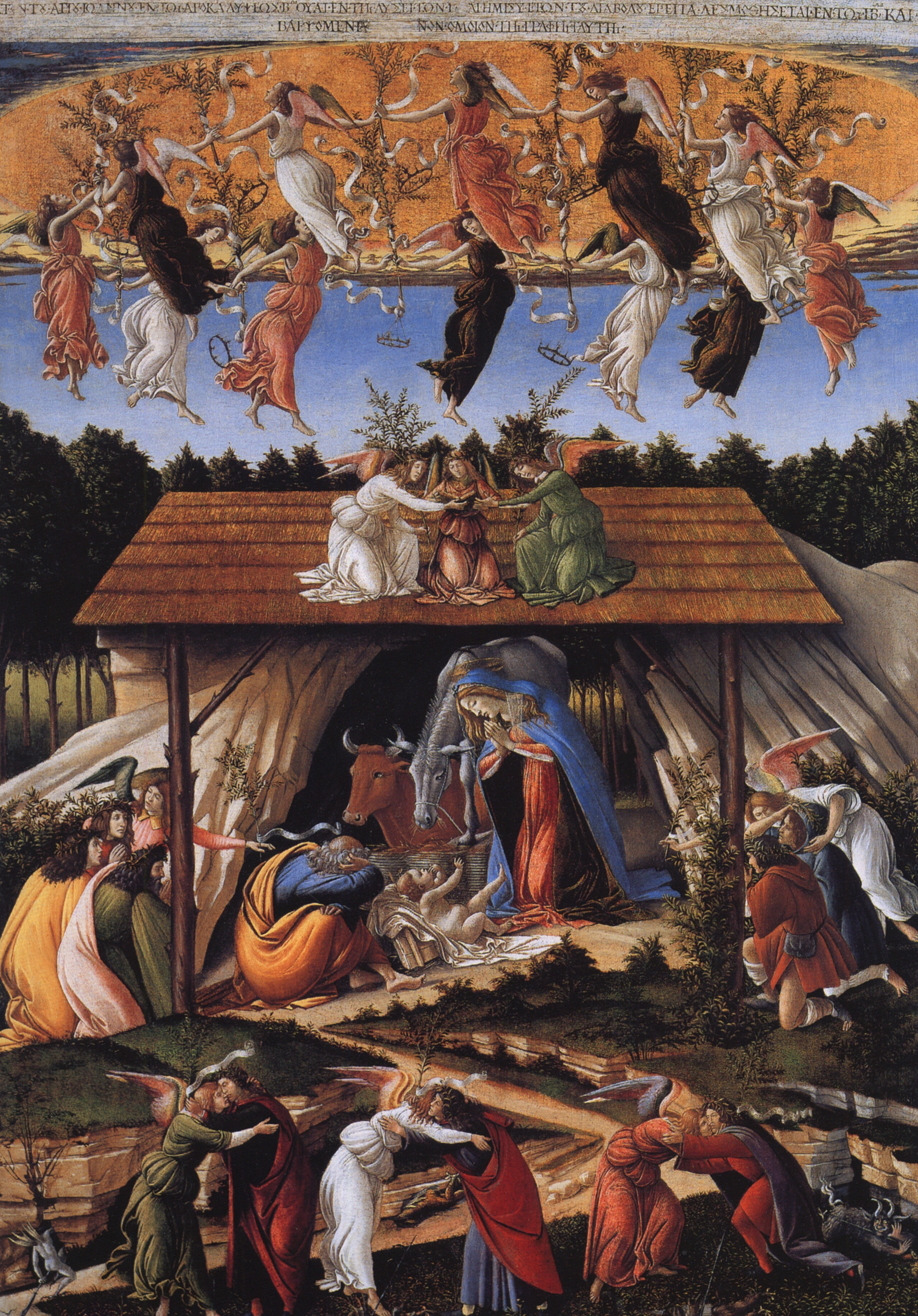
God comes among us not in power or splendour, but as a weak, vulnerable child, depending on others for love, food, and warmth. He is laid in an animal’s feeding trough, insulated from the cold hard stone by straw — beginning his days as he will end them placed in a stranger’s tomb. 

Throughout His life, all that Jesus says and does shows us how much God loves us. The Word becomes flesh, and enters the world. He dwells among us. This is a wondrous mystery which inspires us to worship. We stand and kneel with the shepherds and adore the God who comes among us. He shares our human life so that we might share His divine life. This is not because we have done something to deserve it: we haven’t worked for it, or earned it. Rather, it is the free gift of a loving and merciful God. This, then, is the glory of God — being born in simple poverty, surrounded by those on the margins of society. Our Heavenly Father calls humanity to a new way of being a community. The old order is cast aside, turning the world upside down and offering us the possibility of living in a radically different way. One founded on peace, love, and joy, rather than wealth and power. Heaven comes to earth, carried in the womb of a Virgin, so that we might behold the glory of God in a new-born child. So that we might experience the deep love and eternal truth of God.

The word is made flesh so that prophesy might be fulfilled. So that the hope of salvation might unfold. So that a people who have languished long in darkness might behold the glory of God in the place where Heaven and Earth meet: in a lowly stable in Bethlehem. Where men and angels may sing together: ‘Alleluia, Glory be to God on high, and on earth peace to people of goodwill’. The worship of Heaven is joined with Earth on this most holy night. In the quiet and stillness humans and animals join together to praise Almighty God, who stoops to save humanity in the birth of His Son. 

Despite the worrying state of the world around us, we can be filled with joy and hope: because Christ is born! No matter what difficulties we have to face, what fears and hardships may assail us and those we love, the birth of Our Saviour in Bethlehem is a cause for hope and joy, both in this world, and the next. God comes among us, as a baby, into a world of pain, fear, and misery; just as He did two thousand years ago. The God who made all that exists enters our world weak and helpless. Just as we were when we were born. He is totally dependent on others for food, warmth, shelter, and security. In doing so, God takes a huge risk to save humanity and to give us hope for the future.

Tonight we see God’s healing and reconciling love made manifest: to save us from ourselves, from sin, selfishness, and greed. At first this act of generosity and weakness does not appear to change things, and yet it does. God transforms our world; sometimes quickly, and sometimes slowly. Humanity is not always good at listening or waiting. It is easy to become so wrapped up in our own anxieties and yearnings that we close ourselves off from God’s transformative power. This Christmastime is an opportunity to open ourselves to God, to His transforming love.

There is also fear in the Christmas story. This is an understandable human reaction. When the shepherds saw the Heavenly Host, the angel said to them: ‘Paid ag ofni’ ‘Fear not, for behold I bring you good news of great joy that will be for all people’ (Lk 2:10). God comes among us to dispel our fears and to invite us to trust in Him. This Good News is as true today as it was two thousand years ago. The love and peace which Christ comes to bring can be made real and visible in our hearts and lives. It still has the power to change the world. God’s kingdom can be a reality, here and now. Jesus taught us to pray for God’s glorious kingdom to come on earth in the same way that it is in Heaven: ‘Thy Kingdom come, Thy will be done, on earth as it is in heaven’.  

The true gift of Christmas is the Good News that Christ is born; that God becomes one of us. Our humanity is reconciled to God in, and through, Jesus. God saves us, and sets us free to worship Him, to love Him, and to serve Him. In the fourth century, a bishop in Asia Minor, Theodotus of Ancyra, said in a Christmas homily: ‘He whose godhead made him rich became poor for our sake, so as to put salvation within the reach of everyone’ [Theodotus of Ancyra (Homily 1 on Christmas: PG 77: 1360-1361)]. Such is the wonder and mystery of God’s love for us. It is a love made perfect in weakness, yet with the strength to transform the lives of everyone including each and every one of us gathered here on this most holy night. 

God is with us. For two thousand years Christians have proclaimed this truth. Jesus is born for us, to set us free from sin. Jesus is born for us to give us eternal life. Jesus is born for us to pour out God’s love and reconciliation upon a world longing for healing and wholeness. Tonight, as the mystery of God’s love is made manifest, may we be filled with that love. May our voices echo the song of the angels to the shepherds in giving praise to God the Father, God the Son, and God the Holy Spirit, Duw Dad, Duw y Mab, a Duw yr Ysbryd Glân. To whom be ascribed all might, majesty, glory, dominion, and power, now and forever. Amen.

May I take this opportunity to wish you all a joyful, peaceful, and love-filled Christmas!

Gallaf gymryd y cyfle hwn i dymuno Nadolig llawen, heddychlon, ac llawn cariad i bawb!Incarnation