The Second Sunday of Advent

‘May the God of hope fill you with all joy and peace in believing’ (Rom 15:13)

A bydded i Dduw, ffynhonnell gobaith, eich llenwi â phob llawenydd a thangnefedd wrth ichwi arfer eich ffydd

The book of the prophet Isaiah has sometimes been called the ‘Fifth Gospel’. This is because so many of Isaiah’s prophecies look forward to the Messiah, and find their fulfilment in Jesus. We, too, are currently in a time of anticipation. Advent is when we prepare for Christ to come, both as a baby in Bethlehem, and as our Saviour and our Judge. As the son of Jesse, and the son of David, Jesus is Israel’s true king, who rules over all:

‘There shall come forth a shoot from the stump of Jesse, and a branch from his roots shall bear fruit. And the Spirit of the Lord shall rest upon him, the Spirit of wisdom and understanding, the Spirit of counsel and might, the Spirit of knowledge and the fear of the Lord. And his delight shall be in the fear of the Lord.’ (Isa 11:1-3)

Isaiah has hope in the peace the Messiah will bring. Injustice and affliction, the fruit of sin, is dealt with on the Cross, where Jesus ‘shall stand as a signal for the peoples’ (Isa 11:10). This is the great demonstration of God’s love to the world. A love which heals and reconciles humanity. 

To prepare the way for the Messiah, Israel needed prophets like Isaiah and John the Baptist both to announce His coming and to prepare people for His arrival. A prophet’s role is a difficult one because they are often required to tell people home truths. Those chosen by God to act as prophets point out the sorts of things which, if left to our own devices, we would rather ignore. John’s message is simple, plain, and direct:

‘Repent, for the kingdom of heaven is at hand’ (Mt 3:2)

To repent is to express sincere regret about one’s wrongdoing. The Greek word used —metanoia— literally means to ‘change your mind’. It is a proclamation, rather like a road sign which reads: ‘You are going the wrong way!’ Repentance is recognising this and turning around. 

For two thousand years the Church has worked to continue John’s proclamation, and to say to the world: turn around, and follow Jesus! The season of Advent is penitential because it highlights this call to conversion and says to everyone, both inside and outside the Church, that our lives are supposed to be a perpetual turning back to Our Lord. We all need to be reminded of our shortcomings, and to be encouraged to let God be at work in and through us.

John the Baptist’s blunt message struck a chord and sparked something of a revival in Israel. People took him seriously:

‘Then Jerusalem and all Judea and all the region about the Jordan were going out to him, and they were baptized by him in the River Jordan, confessing their sins.’ (Mt 3:5-6)

It is not surprising that in those times people travelled out into the desert to hear John. He was charismatic, and his message was a refreshing antidote to the Religious Establishment of his day. People came, confessed their sins, and were baptised. They were washed clean, to love and serve God. The crowds also came because, in John, the people of Israel saw prophecy fulfilled, and a new Elijah in their midst. One who points to the Messiah, and has done so ever since he leapt in his mother Elizabeth’s womb at the Visitation. Before John was even born he proclaimed that Jesus was the Christ, the Messiah, the One who would save us from our sins.

We see this Messianic kingdom, hoped for in the vision of Isaiah, in this morning’s first reading. The branch which comes forth from the stem of Jesse is the Blessed Virgin Mary. Filled with God’s Holy Spirit, she conceived and bore Our Saviour; the true King of all that is, or has been, or will be. Christ is on the side of the poor and the meek, people who are left behind, and ignored because they are not rich or powerful. This is a radical concept, one which still has some way to go before it is fully put into practice in the world around us. Isaiah’s vision of Messianic peace may appear impossible, but it signifies a world-changing harmony, which alters how things are, and how people behave. For, with and through God, another way is possible. This path is not simple, nor is it easy, but it is possible if we rely upon God to help us. As St Paul says to the Christians in Rome:

‘May the God of endurance and encouragement grant you to live in such harmony with one another, in accord with Christ Jesus, that together you may with one voice glorify the God and Father of our Lord Jesus Christ. Therefore welcome one another as Christ has welcomed you, for the glory of God.’ (Romans 15:5-7),

and a little later in the same passage:

‘May the God of hope fill you with all joy and peace in believing, so that by the power of the Holy Spirit you may abound in hope’ (Romans 15:13).

Hope can feel in pretty short supply when we look at the world around us, and if we just look to humanity then we will be disappointed. Our hope comes from God. Our hope is God. God is with us. It is His Birth that we are preparing to celebrate at Christmas. In Advent we prepare for Christ to come as our Saviour and our Judge: 

‘His winnowing fork is in his hand, and he will clear his threshing floor and gather his wheat into the barn, but the chaff he will burn with unquenchable fire.’ (Mt 3:12) 

Judgement is real, and it should make us stop and think for a moment. Are we living the way God wants us to? If we are not then we need to repent, we need to say sorry, and we need to live the way that God wants us to live. This is how we flourish as Christians. John the Baptist calls us to make a spiritual u-turn, to turn our life around, and to turn away from our sins, which separate us from God. John calls us to the waters of baptism, so that we can be healed and restored by God, filled with his grace, and prepared to receive the Holy Spirit:

“I baptize you with water for repentance, but he who is coming after me is mightier than I, whose sandals I am not worthy to carry. He will baptize you with the Holy Spirit and fire” (Mt 3:11).

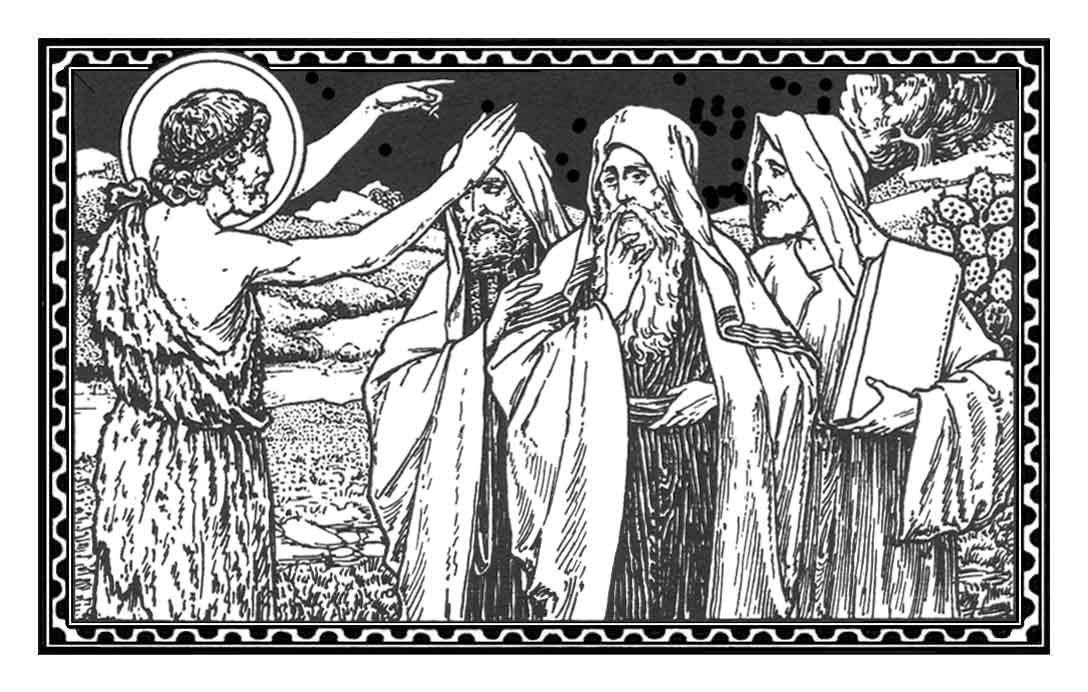
The problem with the Pharisees and Sadducees who come to John is that they do not show any repentance. They haven’t made the necessary u-turn, and they do not have the humility to recognise their own sinfulness, and their need to be washed in the waters of baptism. They, therefore, do not possess the right attitude to allow God to be at work in their lives.

As well as recognising Jesus as our Saviour, John the Baptist sees Him as Our Judge. John points to the second coming of the Lord when, as St John of the Cross puts it, ‘we will be judged by love alone’. It is love that matters. In Christ we see what love means. True, deep, love is costly, self-giving and profound. As we are filled with God’s Spirit, nourished by Word and Sacrament, we need to live out this love in our lives. This is how we prepare to meet Jesus as we prepare to celebrate His Birth and look forward to His Second Coming.

So, my brothers and sisters in Christ, let us re-commit ourselves to live out God’s love in our lives. Let us turn away from everything which separates us from God, and from each other. Let us live out deep, costly, and self-giving love in our lives. This is both what Christ and John the Baptist call us to do. By acting in this way we demonstrate to the world around us what our faith means in practice. How our beliefs affect our lives, and why others should follow Jesus, and sing the praises of God the Father, God the Son, and God the Holy Spirit, Duw Dad, Duw y Mab, a Duw yr Ysbryd Glân. To whom be ascribed all might, majesty, glory, dominion, and power, now and forever. Amen.
Bible Sunday

Today is a very special day for me. It is my first Sunday as Priest-in-charge of S. Katharine & S. Peter’s, Milford Haven. As the eleventh incumbent of this wonderful Church I feel the weight of expectations, and the many questions you probably have: What kind of a priest is the new vicar? What is he like as a person? How will he lead our church through the years ahead? What is he going to change? What is his vision for S. Katharine & S. Peter’s? As you get to know me and I get to know you, the answers to these questions will become clear.

In first century Palestine, expectation was also running high. The Hebrew Scriptures were full of prophecies about the Messiah, a King of the House of David, who would rule over Israel and set His people free. Releasing them from the tyranny of foreign rule, and a corrupt religious establishment. Two thousand years ago, people were full of hope and expectation, that God would act, and fulfil His promises. This He does, in a surprising way…

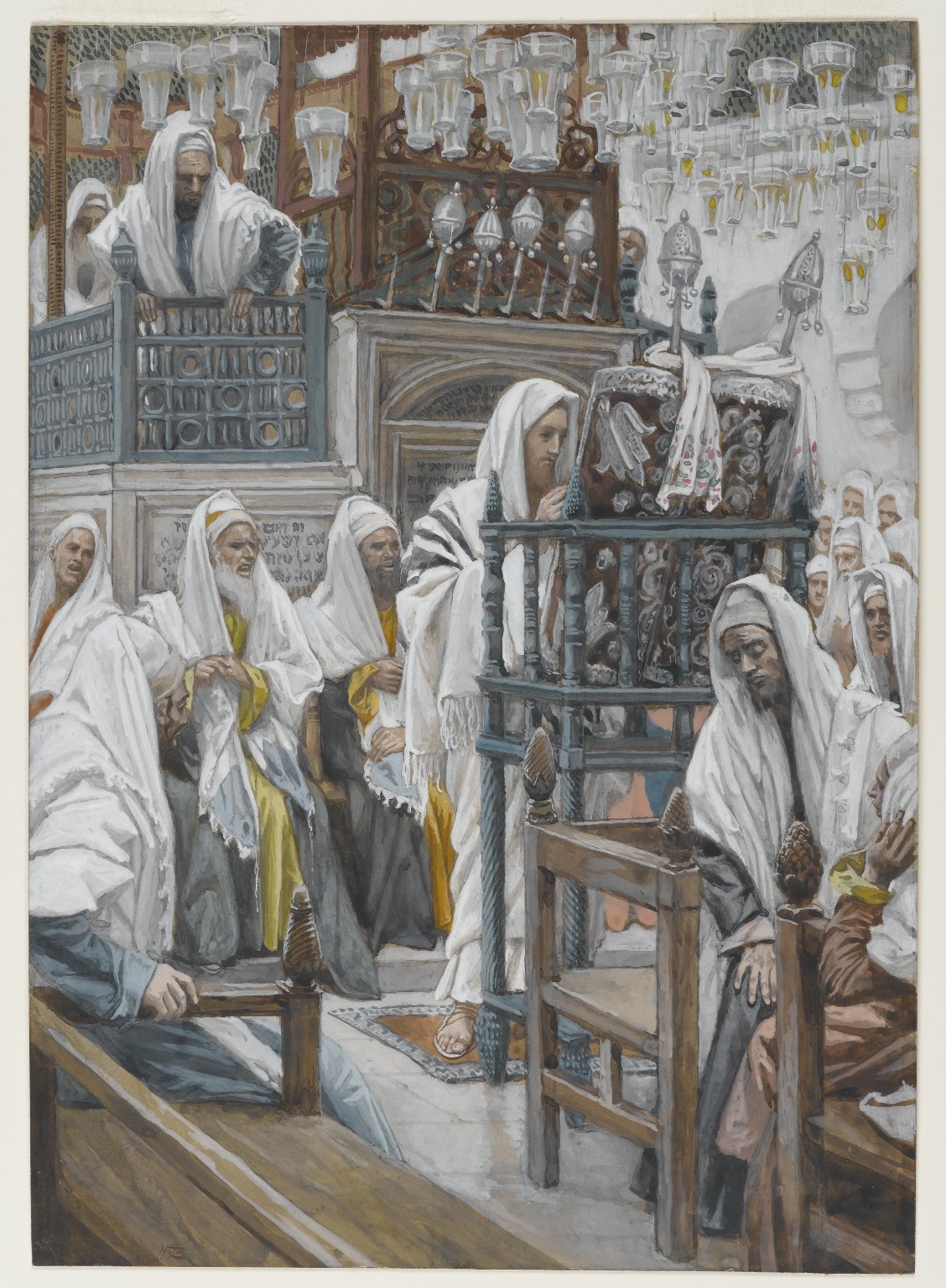
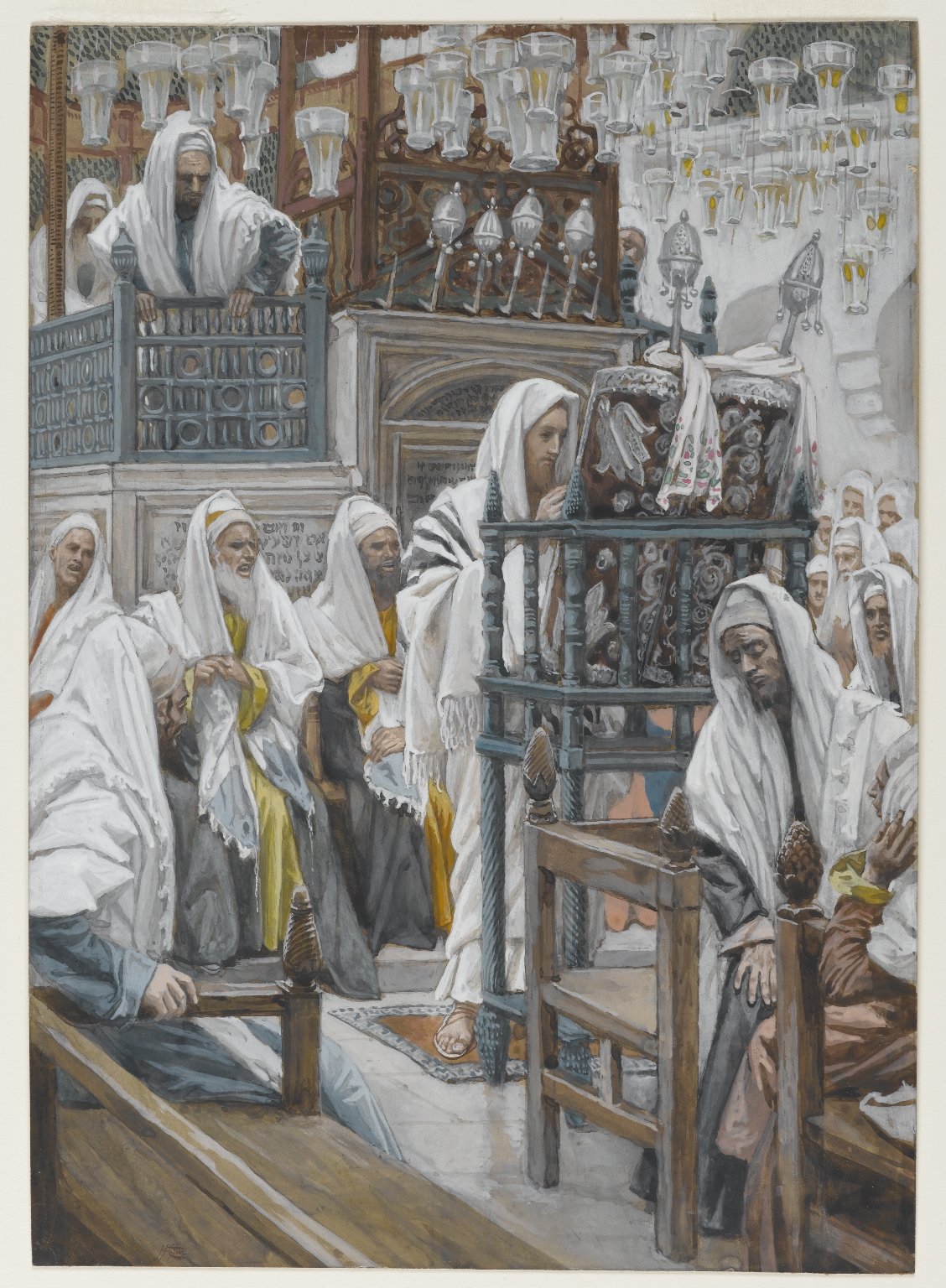
When Jesus comes to the town of Nazareth, where He grew up, He goes to the synagogue to worship on the Sabbath. There Our Lord is given the scroll of the prophet Isaiah, and He reads:

“The Spirit of the Lord is upon me, because he has anointed me to proclaim good news to the poor. He has sent me to proclaim liberty to the captives and recovering of sight to the blind, to set at liberty those who are oppressed, to proclaim the year of the Lord’s favour.” 

“Y mae Ysbryd yr Arglwydd arnaf, oherwydd iddo f’eneinio i bregethu’r newydd da i dlodion. Y mae wedi f’anfon i gyhoeddi rhyddhad i garcharorion, ac adferiad golwg i ddeillion, i beri i’r gorthrymedig gerdded yn rhydd, i gyhoeddi blwyddyn ffafr yr Arglwydd.” (Lk 4:18-19)

This prophecy is taken from the 61st Chapter of Isaiah. It expresses Israel’s hope for a Messianic future: a hope of healing, freedom, and restoration. This is similar to the idea of the Jubilee, when every fifty years all debts were cancelled, all slaves freed, and all land returned to its original owners. Some of you may remember the Campaign Jubilee 2000, which sought to write off Third-world debt, as a modern reworking of this ancient biblical idea. Jesus is proclaiming the Kingdom of God as a reality, here and now. This is what fullness of life and salvation look like when we live them. Our Lord gives us an attractive goal, and it can be a reality, if we co-operate with God to live out the vision in our own lives.

In today’s Gospel, we hear the announcement of the Kingdom of God. A call to a new way of living, which can transform us, and our world, for the better. The Kingdom of God is to be a place where all are cared for, and where our needs are met. The Good News of the Gospel is for those who know their need of God, those who are aware of their spiritual poverty. That means each and every one of us. Jesus will later go on to say, in the Sermon on the Mount: ‘Blessed are you who are poor, for yours is the Kingdom of God’ ‘Gwyn eich byd chwi’r tlodion, oherwydd eiddoch chwi yw teyrnas Dduw’ (Lk 6:20). We all need God’s love in our hearts, and our lives, so that we can be transformed. We cannot reform ourselves, this is something that only Our Heavenly Father can do. But only if we let Him, and co-operate with Him, through prayer and action. 

Christ offers the world both freedom and vision. The opportunity to see what others cannot, and the ability to experience true freedom. God gives us life in all its fulness, so that by His love we can be made into people who are loving, and who will the good of others. By living lives characterised by love and sacrifice we can be truly alive, and experience the joy of God’s Kingdom. 

After having read from the Book of Isaiah, Our Lord says:

“Today this Scripture has been fulfilled in your hearing.”

“Heddiw yn eich clyw chwi y mae’r Ysgrythur hon wedi ei chyflawni.” (Lk 4:21)

This is a huge claim to make. If the Scripture has been fulfilled then this means that Jesus is the Messiah, plain and simple. That which the prophets pointed to in the future has now become a reality in the person of Christ. Jesus, the Word made flesh, is the fulfilment of the Holy Scriptures, the Word of God. This is what we believe as Christians, and it is the reason why we read the Old Testament. The New is prefigured in the Old. The Scriptures point to Christ, and they find their fulfilment and true meaning in Him. What Israel has hoped for and longed for has arrived in the figure of Jesus. This means that the Kingdom of God is not something abstract, but rather someone physical. It is a person: Jesus of Nazareth. The reconciliation of God and humanity happens in and through the life, death, and resurrection of Jesus Christ.

The mission of the Church is, and always has been, to proclaim the Good News of the Kingdom of God. The words spoken in a synagogue in Nazareth two thousand years ago are as relevant today as they were then. God continues to invite humanity to know Him, and to experience His divine love.

As Christians, we are recipients of the healing and wholeness which Jesus promises. We experience this healing here today, in this Mass. Soon we will be nourished by Christ’s Body and Blood, and be given a foretaste of Heavenly Glory. Let us , therefore, prepare to be fed, and to be transformed and become what we eat. Fortified by Christ, let us proclaim His Truth to the world, so that all may come to believe and give glory to God the Father, God the Son, and God the Holy Spirit, Duw Dad, Duw y Mab, a Duw yr Ysbryd Glân. To whom be ascribed all glory, dominion and power, now and forever. Amen

Trinity I

Children love to ask questions: who? what? where? when? and, especially, why? The Questions we ask and the Answers we give can say an awful lot about who we are. One of the most fundamental question is one concerning identity: ‘Pwy wyt ti?’ ‘Who are you?’ My response would be: ‘I am Adrian, and I am a priest’. The name I was given in baptism, and the fact that God has called me to share in the priesthood of His Son Jesus Christ, define who I am, and what I do. They are why I am standing here, saying this to you, today.

From the time of their exile in Babylon, and before, the people of Israel had looked for a Messiah, a leader of the House of David. They sought someone who would bring them the peace and security that they longed for. The first reading this morning comes from the prophecy of Zechariah, and was written perhaps as late as two hundred years before the birth of Jesus Christ. At this time the Jewish people were struggling under Greek rulers who tried to abolish their identity, and all that they held sacred. The prophet Zechariah looks forward to a messianic future, when the people of the House of David :

‘edrychant ar yr un a drywanwyd ganddynt, a galaru amdano fel am uniganedig, ac wylo amdano fel am gyntafanedig.’

‘They will look on the one whom they have pierced; they will mourn for him as for an only son, and weep for him as people weep for a first-born child’ (Zech 12:10)

The mention of looking upon one whom they have pierced anticipates Christ and His Crucifixion, as noted by John’s Gospel: ‘They will look on him whom they have pierced’ (19:37). Zechariah also writes of the outpouring of a ‘spirit of kindness and prayer’, just as we have seen at Pentecost. Here Jesus’ Death, Resurrection and gift of the Holy Spirit are clearly prefigured: God’s saving plan is announced in the words of the prophet. A few verses later, Zechariah prophesies:

‘Yn y dydd hwnnw bydd ffynnon wedi ei hagor i linach Dafydd ac i drigolion Jerwsalem, ar gyfer pechod ac aflendid.’

‘On that day there shall be a fountain opened for the house of David and the inhabitants of Jerusalem to cleanse themselves from sin and uncleanness.’ (Zech 13:1)

This is what the Cross achieves for those who are washed in the Blood of Lamb, as we are at our Baptism. Christ’s death takes away our sins. Through Baptism and the Eucharist we share in Jesus’ Death and are raised to new life with Him. When St Paul writes to the Galatian Church, he stresses their common baptism:

‘Oblegid yr ydych bawb, trwy ffydd, yn blant Duw yng Nghrist Iesu. Oherwydd y mae pob un ohonoch sydd wedi ei fedyddio i Grist wedi gwisgo Crist amdano. Nid oes rhagor rhwng Iddewon a Groegiaid, rhwng caeth a rhydd, rhwng gwryw a benyw, oherwydd un person ydych chwi oll yng Nghrist Iesu.’

‘You are, all of you, sons of God through faith in Christ Jesus. All baptised in Christ, you have all clothed yourselves in Christ, and there are no more distinctions between Jew and Greek, slave and free, male and female, but all of you are one in Christ Jesus.’ (Gal 3:26-28)

St Paul is preaching a profound message. He explains that none of the distinctions which the world makes matter in God’s eyes. There is no difference. All people are one in Christ. There is a radical equality in the Church: all are welcome to come and experience God’s saving love. When Paul preached, nearly two thousand years ago, this was a revolutionary idea, and it still is today. We are all one in Christ: young and old, rich and poor. It doesn’t matter who we are, where we are from, or anything else. All that matters is that we find our true identity in Christ. This makes us heirs of God’s promise: that we would enjoy eternity in Heaven with our Creator and Sustainer.

In today’s Gospel Jesus begins by asking His disciples this question:

“Pwy y mae’r tyrfaoedd yn dweud ydwyf fi?”

“Who do the crowds say that I am?” (Lk 9:18)

His followers reply that the people think a variety of things: John the Baptist, Elijah, or another of the prophets. They recognise Jesus’ proclamation of the Good News of the Kingdom and understand Him in terms that are familiar to them. Christ, however, presses the issue by asking His disciples another question:

“pwy meddwch chwi ydwyf fi?”

“But who you say that I am?” (Lk 9:20)

Peter answers, ‘Meseia Duw, the Christ of God’ (Lk 9:20). By this answer Peter confesses that Jesus is the Messiah, God’s Anointed, the fulfilment of Zechariah’s prophecy. The disciple’s confession of belief is also our confession of belief as Christians: Jesus is the Christ, the Saviour, the Son of God. As we will soon declare in the words of the Nicene Creed.

Jesus instructs the disciples that they should not communicate this knowledge to anyone, at this time. He then explains what is about to happen:

“”Y mae’n rhaid i Fab y Dyn,” meddai, “ddioddef llawer a chael ei wrthod gan yr henuriaid a’r prif offeiriaid a’r ysgrifenyddion, a’i ladd, a’r trydydd dydd ei gyfodi.”

“The Son of Man is destined to suffer grievously, to be rejected by the elders and chief priests and scribes and to be put to death, and to be raised up on the third day” (Lk 9:22)

Jesus tells the disciples about His Passion, Death and Resurrection, because it is His mission. He has come to reconcile God and humanity, and to restore and heal our broken relationship. Christ then invites His followers to follow His example:

“Os myn neb ddod ar fy ôl i, rhaid iddo ymwadu ag ef ei hun a chodi ei groes bob dydd a’m canlyn i. Oherwydd pwy bynnag a fyn gadw ei fywyd, fe’i cyll, ond pwy bynnag a gyll ei fywyd er fy mwyn i, fe’i ceidw. Pa elw a gaiff rhywun o ennill yr holl fyd a’i ddifetha neu ei fforffedu ei hun?

‘If anyone wants to be a follower of mine, let him renounce himself and take up his cross every day and follow me. For anyone who wants to save his life will lose it; but anyone who loses his life for my sake, that man will save it.’ (Lk 9:23-24)

At the beginning of His public ministry, Jesus invites people to repent and believe. Now He calls us to self-denial, and to embrace the Cross. Christ asks us to accept the most shameful way to die, a form of torture, used by the Romans to execute slaves. As those saved and made free by the Cross of Christ, we take up our own cross and follow Jesus. We imitate Him, in selfless love and devotion, and we bear the weight of the cross in life’s difficulties and disappointments. Following Christ is hard. It is a struggle, and we cannot just rely solely upon our own willpower to succeed. Instead, the Christian life needs to be a corporate effort, something we do together, trusting in God’s Grace to be at work in us, both individually and as a community.

Christ wants us to lose our lives for His sake, and find freedom in His service. There is something paradoxical in Jesus’ teaching. We are to find perfect freedom in obedience, in service of God and each other. Each of us needs to be humble enough to accept what God offers us, and be prepared to try to live it out together. It isn’t about us, but rather letting God be at work in us. When we co-operate with God, and live in love, and joy, and peace, we flourish as human beings. This is liberating, and it is what Our Heavenly Father wants for us. This is what true freedom looks like, and we are called to live it together, today and every day.

So, as we celebrate the joy of our Salvation, let us pray that we may be changed by God’s love, and share this love with others. Let us give thanks for the mystery and wonder that is God, Duw Dad, Duw y Mab, a Duw yr Ysbryd Glân. God the Father, God the Son, and God the Holy Spirit. I’r hwn y priodoler pob gogoniant, arglwyddiaeth, a gallu, yn awr, ac yn oes oesoedd. To whom be ascribed all glory, dominion and power, now and forever. Amen.

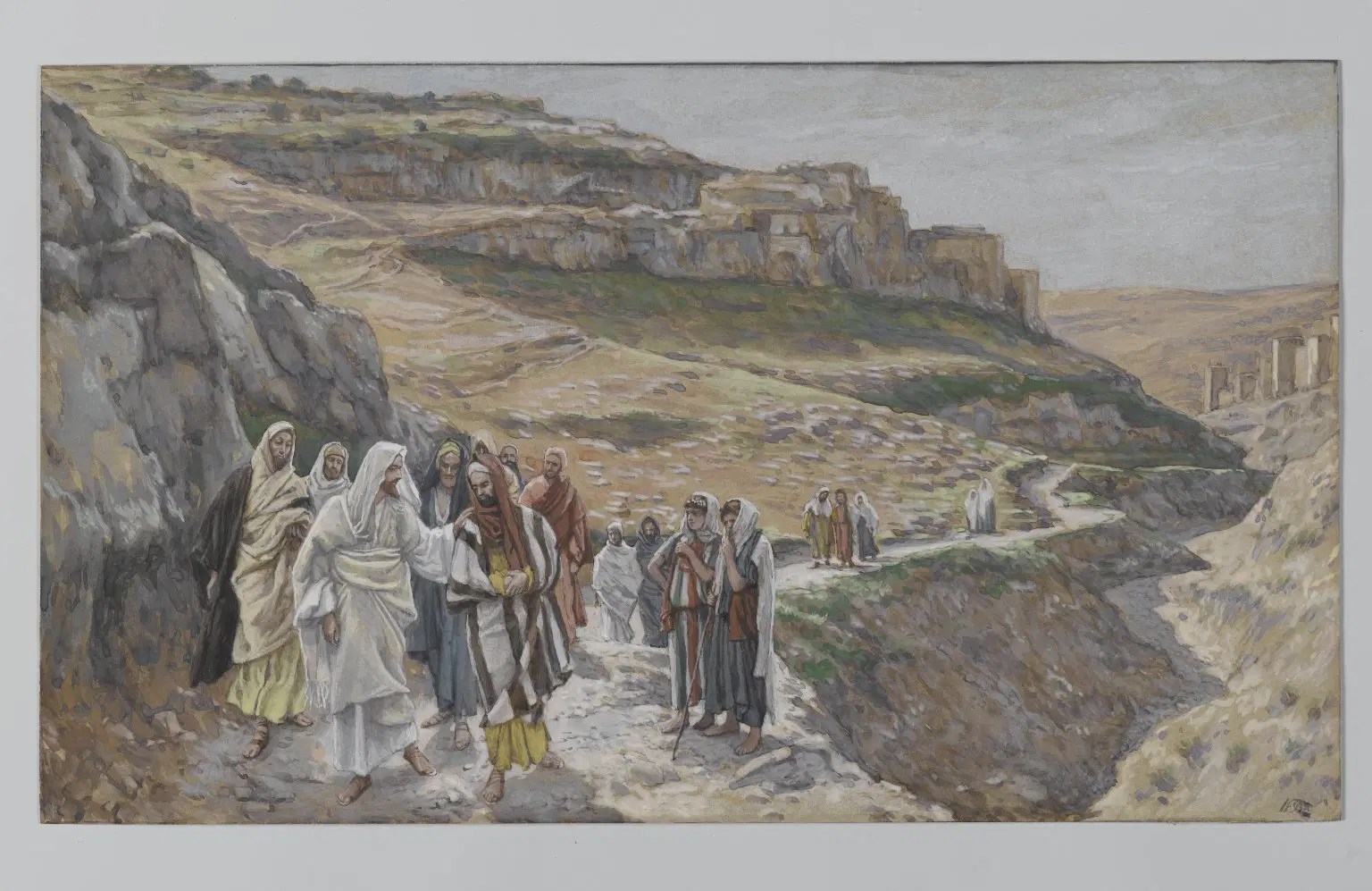
Jesus discourses with his disciples – James Tissot (Brooklyn Museum)

Palm Sunday 2025

J.R.R. Tolkien’s famous novel, The Lord of the Rings is a long and complicated book. The main story is the journey of an unlikely group of heroes across Middle Earth to destroy a powerful Ring at Mount Doom, where it was forged. But it is also the tale of how Aragorn becomes the King of Middle Earth. He does this by reuniting the lands of Arnor and Gondor, and defeating the evil Sauron with a coalition of men, elves, dwarves, and hobbits. In constructing his narrative Tolkien drew on his encyclopaedic knowledge of medieval European literature and his deep Christian faith. The desire to see a monarchy re-established lies at the Jewish and Christian faiths. Jews await the coming of the Messiah, the anointed Davidic King, which Christians believe is Jesus. We believe that the Messiah has already come, to set His people free, and to inaugurate a kingdom of love, forgiveness, and reconciliation. 

The service this morning begins with Luke’s account of the first Palm Sunday, when Jesus enters Jerusalem on a donkey, an animal of peace and not war. The prophet Zechariah, writing 500 years before Jesus, looks forward to a messianic future:

‘Bydd lawen iawn, ti ferch Seion; a chrechwena, ha ferch Jerwsalem: wele dy frenin yn dyfod atat: cyfiawn ac achubydd yw efe; y mae efe yn llariaidd, ac yn marchogaeth ar asyn, ac ar ebol llwdn asen.’

Rejoice greatly, O daughter of Zion! Shout aloud, O daughter of Jerusalem! Behold, your king is coming to you; righteous and having salvation is he, humble and mounted on a donkey, on a colt, the foal of a donkey.’ (Zech 9:9)

The donkey ridden by Jesus reminds us of the humble beast of burden, which carried his Mother to Bethlehem for His birth, and then carried the Holy Family into exile in Egypt. This is an act of humble leadership which realizes what the prophets foresaw. It shows us that Jesus Christ is truly the one who fulfils the hopes of the people of Israel. The Hebrew Scriptures look forward to His deliverance of Israel. This is what is made real in front of the eyes of those watching the Carpenter’s son enter the Holy City of Jerusalem.

Scripture is fulfilled and there is a burst of popular enthusiasm — people wave palm branches and cry out. However, having someone claim to be a relative of King David is a direct challenge to Herod, the puppet ruler installed to comply with the Romans. The events we heard described, before our procession this morning, sound something like a political coup — a bid to replace a leader lacking legitimacy. Such an attempt is bound to have wide repercussions. It represents a direct challenge to the ruling house and to Rome, and therefore it has to be countered. The masses in Jerusalem are expecting a king of the Davidic line. One who would be seen as a threat to the ruling élite, a challenge to the status quo. But in Christ, God gives Israel something else. Yes, he is a King of the line of David, but Jesus is the one who rules with love. He has no desire for power, or honour. Naturally, the leaders and those in authority are threatened by Him: Christ turns their world on its head. He is an awkward inconvenience. Jesus, however, does not want their power. He has come to accomplish something completely different. What is seen as a potential political coup is in fact a renewal of religion, the fulfilment of prophecy, and a new hope for Israel. Political and religious leaders can only see the threat to their hold on power, rather than the opportunity which Christ offers.

At its heart Christianity is the offer of new life in Jesus Christ. This starts with repentance, and acceptance of our need for God. As we grow in faith, we come to believe and trust in a God who loves us, and gives Himself for us. Then we can experience healing, wholeness, and fullness of life in and through Him. Such gifts come at great cost to the giver, which the week ahead will make clear to us in the most stark and direct way. 

One way of reading St Luke’s account of Christ’s Passion and Death is through the lens of conversion and reconciliation. After Jesus celebrates the Eucharist a dispute arises amongst His disciples as to which of them is the greatest. There is something of a contrast here between the institution of the most solemn and sacred act of Christian worship, and the actions of the disciples who seem to be arguing like children in a playground: ‘I’m greater than you!’ ‘No, I’m greater than you!’. This is not how they should behave, so Our Lord explains:

‘Y mae brenhinoedd y Cenhedloedd yn arglwyddiaethu arnynt, a’r rhai sydd ag awdurdod drostynt yn cael eu galw yn gymwynaswyr. Ond peidiwch chwi â gwneud felly. Yn hytrach, bydded y mwyaf yn eich plith fel yr ieuengaf, a’r arweinydd fel un sy’n gweini.’

‘The kings of the Gentiles exercise lordship over them, and those in authority over them are called benefactors. But not so with you. Rather, let the greatest among you become as the youngest, and the leader as one who serves.’ (Lk 22:25-26)

Service of others lies at the heart of Christianity, not exercising power or influence. Christ is offering the world a new way to be, and the church needs to take this seriously, and follow His teachings.

As Jesus goes to Calvary, He tells the women of Jerusalem not to mourn for Him, but instead to mourn for themselves and their children. He says this because He understands that in a few years time the Romans will sack Jerusalem, and the people will be scattered in exile. Christ is more concerned with the needs of others than Himself, and as He goes to His execution, Our Lord is still a servant, caring for others.

As the Roman soldiers crucify Jesus He says:

“O Dad, maddau iddynt, oherwydd ni wyddant beth y maent yn ei wneud.”

‘Father, forgive them, for they know not what they do.’ (Lk 23:34)

Christ’s concern is for forgiveness and reconciliation — just as it has been throughout His earthly ministry. His life’s work is to restore each and every one of us to God and to pour out the Creator’s love on us. This is also evident from Jesus interaction with the penitent thief a few verses later:

Yna dywedodd, “Iesu, cofia fi pan ddoi i’th deyrnas.” Atebodd yntau, “Yn wir, rwy’n dweud wrthyt, heddiw byddi gyda mi ym Mharadwys.”

“And he said, ‘Jesus, remember me when you come into your kingdom.’ And Jesus said to him, ‘Truly, I say to you, today you will be with me in paradise.’” (Lk 23:42-43)

The criminal being executed for seditious acts against Rome expresses faith in Christ, and is rewarded with the grace earned for humanity on the Cross. Our Lord’s dying words are taken from Psalm 31:6, a confident prayer:

“O Dad, i’th ddwylo di yr wyf yn cyflwyno fy ysbryd.”

‘Father, into your hands I commit my spirit!’ (Lk 23:46)

Immediately afterwards the centurion in charge of the Crucifixion acts in a surprising manner, praising God and declaring Jesus to be innocent:

‘Pan welodd y canwriad yr hyn oedd wedi digwydd, dechreuodd ogoneddu Duw gan ddweud, “Yn wir, dyn cyfiawn oedd hwn.”’

‘Now when the centurion saw what had taken place, he praised God, saying, “Certainly this man was innocent!”’ (Lk 23:47)

The gathered crowds also do something unusual:

‘Ac wedi gweld yr hyn a ddigwyddodd, troes yr holl dyrfaoedd, a oedd wedi ymgynnull i wylio’r olygfa, tuag adref gan guro eu bronnau.’

‘And all the crowds that had assembled for this spectacle, when they saw what had taken place, returned home beating their breasts.’ (Lk 23:48)

In acting in this way they are expressing contrition and repentance, the necessary prerequisite to the acceptance of God’s grace. Salvation has become a reality and it is changing people’s lives. Just as it did two thousand years ago, it is still doing so today, and will continue to do so until the end of time itself.

Let us then, as followers of Jesus, hold up our palms as we rejoice in the generous love of God and prepare ourselves to celebrate Christ’s Passion. Let us give thanks for the fact that we are loved by God. And let us give glory i Duw Dad, Duw y Mab, a Duw yr Ysbryd Glân. To God the Father, God the Son, and God the Holy Spirit. I’r hwn y priodoler pob gogoniant, arglwyddiaeth, a gallu, yn awr, ac yn oes oesoedd. Amen. To whom be ascribed all glory, dominion and power, now and forever. Amen.

Epiphany III 2025

ONE of the wonderful things about living in this part of the country is that we can celebrate the new year twice. Once on January 1st and then again on January 13th for Hen Galan. It is good to celebrate new starts, new beginnings, and important milestones. Two of today’s readings focus on this theme. The reading from Ezra describes a religious assembly which takes place on the first day of the seventh month. In the Hebrew Calendar this corresponds to early September. It is this time when Jews celebrate Rosh Hashanah, or the New Year. 

Two weeks ago we celebrated the Baptism of Christ in the River Jordan, and last week we celebrated His first miracle — changing water into wine at a wedding at Cana. Jesus begins His public ministry in Galilee. He starts on home turf, where He has grown up, among the people and places that He knows best. Our Lord is full of the Holy Spirit, and there is a great deal of excitement regarding His teaching. He goes to the synagogue on the Sabbath, where He is invited to read a passage from Scripture and to comment upon it, just as Ezra did in the first reading this morning. Jesus is given the scroll of the prophet Isaiah, and He recites:

“Y mae Ysbryd yr Arglwydd arnaf, oherwydd iddo f’eneinio i bregethu’r newydd da i dlodion. Y mae wedi f’anfon i gyhoeddi rhyddhad i garcharorion, ac adferiad golwg i ddeillion, i beri i’r gorthrymedig gerdded yn rhydd, i gyhoeddi blwyddyn ffafr yr Arglwydd.”

“The Spirit of the Lord is upon me, because he has anointed me to proclaim good news to the poor. He has sent me to proclaim liberty to the captives and recovering of sight to the blind, to set at liberty those who are oppressed, to proclaim the year of the Lord’s favour.” (Lk 4:18-19)

This prophecy is taken from the 61st Chapter of the prophet Isaiah. It expresses the people of Israel’s hope for a Messianic future: a hope of healing, freedom, and restoration. This is similar to the idea of the Jubilee, when every fifty years all debts were cancelled, all slaves were freed, and all land was returned to its original owners. However, jubilees were proclaimed by the King of Israel, so here Jesus is announcing the fact that He is a Prophet, a Priest and also a King. As declarations of intent go, this is certainly a strong one! 

In today’s Gospel, we hear the announcement of the Kingdom of God, a new way of living, which can transform us, and our world, for the better. The Kingdom of God is to be a place where all are cared for, and where our needs are met. The good news of the Gospel is for those who know their need of God, those who are aware of their spiritual poverty. That means each and every one of us. Jesus will later go on to say, in the Sermon on the Mount: ‘Blessed are you who are poor, for yours is the Kingdom of God’ (Lk 6:20). We all need God’s love in our hearts, and our lives, so that we can be transformed. We cannot transform ourselves, this is something that only God can do. But only if we let Him, and co-operate with Him. 

Christ offers the world both freedom and vision. The opportunity to see what others cannot, and the experience of true freedom. God gives us life in all its fulness, so that we can be transformed by this love, into people who are loving, and who will the good of others. By living lives characterised by love and sacrifice we can be truly alive. After having read from Isaiah, Our Lord says:

“Heddiw yn eich clyw chwi y mae’r Ysgrythur hon wedi ei chyflawni.”

“Today this Scripture has been fulfilled in your hearing.” (Lk 4:21)

This is a huge claim to make. If the Scripture has been fulfilled then this means that Jesus is the Messiah, plain and simple. What the prophets point to in the future has now become a reality in the person of Jesus Christ. The Word made flesh is the fulfilment of the Word of God: Jesus fulfils the Scriptures. This is what we believe as Christians, and it is the reason why we read the Old Testament. The New is prefigured in the Old. Just as the New Year has its roots in the Old Year The Scriptures point to Christ, and they find their fulfilment and true meaning in Him. What Israel has hoped and longed for has arrived in the figure of Jesus. This means that the Kingdom of God is not something abstract, but rather someone concrete. It is a person, Jesus of Nazareth. The reconciliation of God and humanity happens in and through Jesus Christ.

The mission of the Church is to proclaim the Good News of the Kingdom of God. The words spoken in a synagogue in Nazareth two thousand years ago are as relevant today as they were then. God continues to invite humanity to know Him, and to experience His love. This is a cause for celebration, one envisaged by Nehemiah in our first reading:

“Ewch, bwytewch ddanteithion ac yfwch win melys a rhannwch â’r sawl sydd heb ddim, oherwydd mae heddiw yn ddydd sanctaidd i’n Harglwydd; felly, peidiwch â galaru, oherwydd llawenhau yn yr Arglwydd yw eich nerth.”

‘Go on your way. Eat the fat and drink sweet wine and send portions to anyone who has nothing ready, for this day is holy to our Lord. And do not be grieved, for the joy of the Lord is your strength.’ (Nehemiah 8:10) 

Christians celebrate the proclamation of the Good News within a Eucharist. This is the Thanksgiving which Our Lord entrusted to us, so that we can be nourished by Him, and with Him, with His Body and Blood. So that we might be transformed. And so that, nourished by Word and Sacrament, we may invite others to share the joy of the Lord and give glory i’r Duw Dad, Duw y Mab, a Duw yr Ysbryd Glân. I’r hwn y priodoler pob gogoniant, arglwyddiaeth, a gallu, yn awr, ac yn oes oesoedd. Amen.

James Tissot: Jesus Unrolls the Book in the Synagogue (Jésus dans la synagogue déroule le livre) Brooklyn Museum

Trinity XV: Ephphatha – Be Opened!

I can still remember vividly the experience of my first Sunday off after being ordained. I had everything planned out. A friend of mine from theological college was a curate about 45 minutes away, so I could both see a friend and enjoy some quiet anonymous worship at the back of the pews. I dressed casually, but within seconds of entering the church I was handed books with a cheerful ‘Good Morning Father!’. I was rumbled! I suspect that without thinking about it I had performed several ritual gestures on entering, which rather gave the game away. Our actions are louder than our words, louder than the clothes we wear. Christianity is a faith which we live, which affects who we are, and what we do. 

The reading from the Letter of James makes this very point: God doesn’t treat people differently, so neither should we in the church. If anything the church should go out of its way to look after the poor, because in their poverty they know their need for God. 

‘Listen, my beloved brothers, has not God chosen those who are poor in the world to be rich in faith and heirs of the kingdom, which he has promised to those who love him?

‘Clywch, fy mrodyr annwyl. Oni ddewisodd Duw y rhai sy’n dlawd yng ngolwg y byd i fod yn gyfoethog mewn ffydd ac yn etifeddion y deyrnas a addawodd ef i’r rhai sydd yn ei garu?’ (James 2:5)

In this morning’s Gospel Jesus has been in Gentile territory to the north of Galilee. He has healed the Syro-Phonecian woman’s daughter, and is now heading back towards the Sea of Galilee. Having heard of His reputation for performing miraculous healings people bring a man to Our Lord who cannot hear or speak clearly, in the hope that he can be healed:

‘and they begged him to lay his hand on him.’

‘a cheisio ganddo roi ei law arno.’ (Mk 7:32)

The people are desperate: there is nothing they can do. This charismatic healer and teacher is their only hope. So Our Lord takes the man to one side, away from the crowd, and performs the healing. 

‘he put his fingers into his ears, and after spitting touched his tongue. And looking up to heaven, he sighed and said to him, “Ephphatha”, that is, “Be opened.”’

‘rhoes ei fysedd yn ei glustiau, poerodd, a chyffyrddodd â’i dafod; a chan edrych i fyny i’r nef ochneidiodd a dweud wrtho, “Ephphatha”, hynny yw, “Agorer di”.’ (Mk 7:33-4)

The scene may seem a little strange to us nowadays, but it has a refreshing physicality to it. Jesus isn’t simply preoccupied with spiritual matters. The healing is physical: involving touch and saliva. Our Lord does raise His eyes to Heaven and pray, but He also says, ‘Ephphatha — Be opened’ and the man is healed. Jesus is both conforming to people’s expectations, what they would like to be done, and also bringing about a miraculous healing by the power of God. 

‘And his ears were opened, his tongue was released, and he spoke plainly.’

‘Agorwyd ei glustiau ar unwaith, a datodwyd rhwym ei dafod a dechreuodd lefaru’n eglur.’ (Mk 7:35)

This is marvellous on several levels. It is the fulfilment of Isaiah’s prophecy which is the first reading today:

‘Then the eyes of the blind shall be opened, and the ears of the deaf unstopped; then shall the lame man leap like a deer, and the tongue of the mute sing for joy.’

‘Yna fe agorir llygaid y deillion a chlustiau’r byddariaidd; fe lama’r cloff fel hydd, fe gân tafod y mudan;’ (Isa 35:5-6)

Isaiah is looking forward to the coming of the Messiah, so Our Lord is fulfilling the prophecy and demonstrating his Messianic credentials — announcing to the world both who and what He is. The Kingdom of God is a place of healing and wholeness. It is also no longer to be understood in an exclusive sense. In Chapter 7 of Mark’s Gospel Jesus is outside Israel and now extends His healing to people who are not Jews. This is an important step which will have a profound effect upon the Church and its spreading across the world.

Our Lord tells the people who have witnessed the miracle not to tell anyone about it. However, his words have the opposite effect:

‘But the more he charged them, the more zealously they proclaimed it. And they were astonished beyond measure, saying, “He has done all things well. He even makes the deaf hear and the mute speak.”’

‘ond po fwyaf yr oedd ef yn gorchymyn iddynt, mwyaf yn y byd yr oeddent hwy’n cyhoeddi’r peth. Yr oeddent yn synnu’n fawr dros ben, gan ddweud, “Da y gwnaeth ef bob peth; y mae’n gwneud hyd yn oed i fyddariaid glywed ac i fudion lefaru.”’ (Mk 7:36-37)

They are amazed that prophecy is being fulfilled. But more than that, we see Gentiles sharing the Good News of the Kingdom of God. This is how the Church grows, and we see its beginnings here. The people of the Decapolis, the ten towns, are proclaiming the truth of the Gospel. They point forward to the spread of the Church.aWe are here in Church today because people have told others about it. The people’s profound experience of God’s healing love compels them to share it with others. Just as the deaf mute has been opened by the prayer of Jesus, so have the people around him. Their ears are opened and their tongues are loosed to proclaim the might works of God. 

The Kingdom of God is a place of healing and restoration for all, a fact which the Church continues to proclaim. Rather than being an exclusive event for the Chosen People, healing and salvation are for all who turn to God. All are invited, all are welcome. We are here today because people have shared the Good News with us. All of us come in need of God’s grace, His unmerited kindness. Not only this, but God gives us His very self, to heal us, and transform us.

My brothers and sisters in Christ, may we come to the Lord, so that we may be healed and restored. May we proclaim the Good News of the Kingdom of God, so that others may come to know and love God the Father, God the Son, and God the Holy Spirit. To whom be ascribed all glory, dominion and power, now and forever. Amen.

James Tissot: Jesus Heals a Mute Possessed Man (Brooklyn Museum)