Saint Katharine, Virgin & Martyr

In the middle of the Sinai Peninsula in Egypt lies the famous monastery of St Katharine. It is the oldest monastery in continuous existence, and was founded by the emperor Justinian in the sixth century AD. It was built in the desert on the site of the Burning Bush, where God appeared to Moses. The monastery holds a collection of manuscripts in its library that is second only to the Vatican. And it is in this monastery that the bones of our patron, St Katharine of Alexandria, Virgin and Martyr, are enshrined.

Katharine is believed to have been the daughter of a fourth-century Roman Governor of Egypt, and became a Christian as a child. She was known for her intelligence and learning; she studied much and asked her tutors many questions. Around the year AD 305, when she was about 18 years old, she was arrested, and tortured, but her faith in God was strong and helped to convert people to Christianity. She engaged in dialogue and dispute with pagan intellectuals and refuted them, causing some of them to convert to Christianity. The Roman Emperor Maxentius offered her a proposal of marriage, which she refused, saying that she was a bride of Christ. The emperor, enraged, ordered her to be killed by being broken on a wheel. The wheel shattered when Katharine touched it, whereupon she was beheaded. Some scholars have disputed her existence. However, regardless of this question, (which cannot be proved), she has been an important focus for Christian devotion for nearly seventeen hundred years.

In the Roman Empire, until Constantine issued the Edict of Milan in AD 313, you could be condemned to death for simply being a Christian. It was expected that everyone would worship the Emperor as a living god, by offering prayer and worship, and burning incense before an image of him. Christians cannot do this, as we worship God alone. Faced with a choice, St Katharine was prepared to die, rather than worship a false god. Her fortitude inspires us to take our faith seriously and to prefer nothing to Christ.

It is common in Britain for public buildings to display a picture of the reigning monarch. For most of our lives this was the late Queen Elizabeth II, and now it is King Charles III. If, however, you were required by law under pain of death to worship the King as a god and burn a pinch of incense before his image, we would all, rightly, refuse. We are Christians and we worship God alone. Such was the reality in the world inhabited by Katharine, and countless other Christian martyrs. They were faced with a difficult choice: either to conform to the will of the state, or to die. They chose to bear witness to their faith. Followers of Christ would pray for the emperor, however, they could not pray to him. 

It is hardly surprising that the calm and dignified manner of many early Christians won admiration from the world around them. The Roman Empire valued philosophical detachment and public service, and Christians excelled at both of these things. However, it was the manner that Christians faced death, at the hands of the state, which inspired people.

In Medieval Europe, St Katharine was extremely popular, and devotion to her grew after the Crusades. She was made patron saint of students, teachers, librarians, and lawyers. St Katharine was one of the Fourteen Holy Helpers, along with St Agathius, St Barbara, St Blaise, St Christopher, St Cyriacus, St Denis, St Elmo, St Eustace, St George, St Giles, St Margaret of Antioch, St Pantaleon, and St Vitus. Some of these names are very familiar, and their popularity as Christian names, is testament to their continued importance as the basis of our culture. St Catharine bore witness to her faith in Jesus Christ. Her relationship with Him was the most important thing in her life. She is a model of faithful prayer and fortitude: trusting in God to bring good out of any situation.

The teaching of the Gospel passage set for today is clear. We are called to acknowledge Jesus Christ as Lord, regardless of the cost. Katharine could have saved her life by submitting and worshipping the Emperor, but she chose not to. Instead she proclaimed that Jesus is Lord, and not Caesar in Rome. And for this she paid with her life.

It is a fundamental truth of the Christian Religion that Love, Obedience, and Suffering go hand in hand — they are costly. Following Christ means embracing the suffering which comes from love and obedience, and bearing witness to the truth that God gave His life for us all, and may ask the same of us. The God whom we worship did not just die upon a Cross, but rather was raised to New Life. St Katharine knew Our Lord and trusted His promises. She now shares His Risen Life, and she calls us to follow Christ, to trust Him, and to love him. 

May we then, today and every day, be inspired by the example and witness of St Katharine, and may we follow her example and sing the praises of Our Divine Lord, God the Father, God the Son, and God the Holy Spirit, Duw Dad, Duw y Mab, a Duw yr Ysbryd Glân. To whom be ascribed all might, majesty, glory, dominion, and power, now and forever. Amen.

Raphael: St Catharine [The National Gallery, London]

Christ the King 2025

‘God’s weakness is stronger than human strength.’

‘gwendid Duw yn gryfach na chryfder dynol.’ (1Cor 1:25)

On November 23rd 1927 the Mexican Jesuit priest Fr Miguel Pro SJ was arrested on false charges and placed in front of a firing squad. He refused a blindfold and spread his arms out into the shape of a cross. His last words were: ‘¡Viva Christo Rey!’ ‘Long live Christ the King!’. The Mexican regime of that time was cruel and went out of its way to persecute Christians, including thirty-six year old Miguel Pro, a twentieth century Christian martyr who died confessing Christ’s sovereignty over all things. His words are both powerful and inspiring. When we acknowledge Christ as King we are saying that He is above all human power and authority. We are affirming that God is supreme. As Christians, our primary allegiance is to God alone, and not to the things of this world. To proclaim Our Lord as King of Heaven and Earth will always challenge and trouble those who lay claim to an authority and a power which is not their own. There are plenty of examples in the world around us of those who are unwilling to recognize a power greater than themselves. 

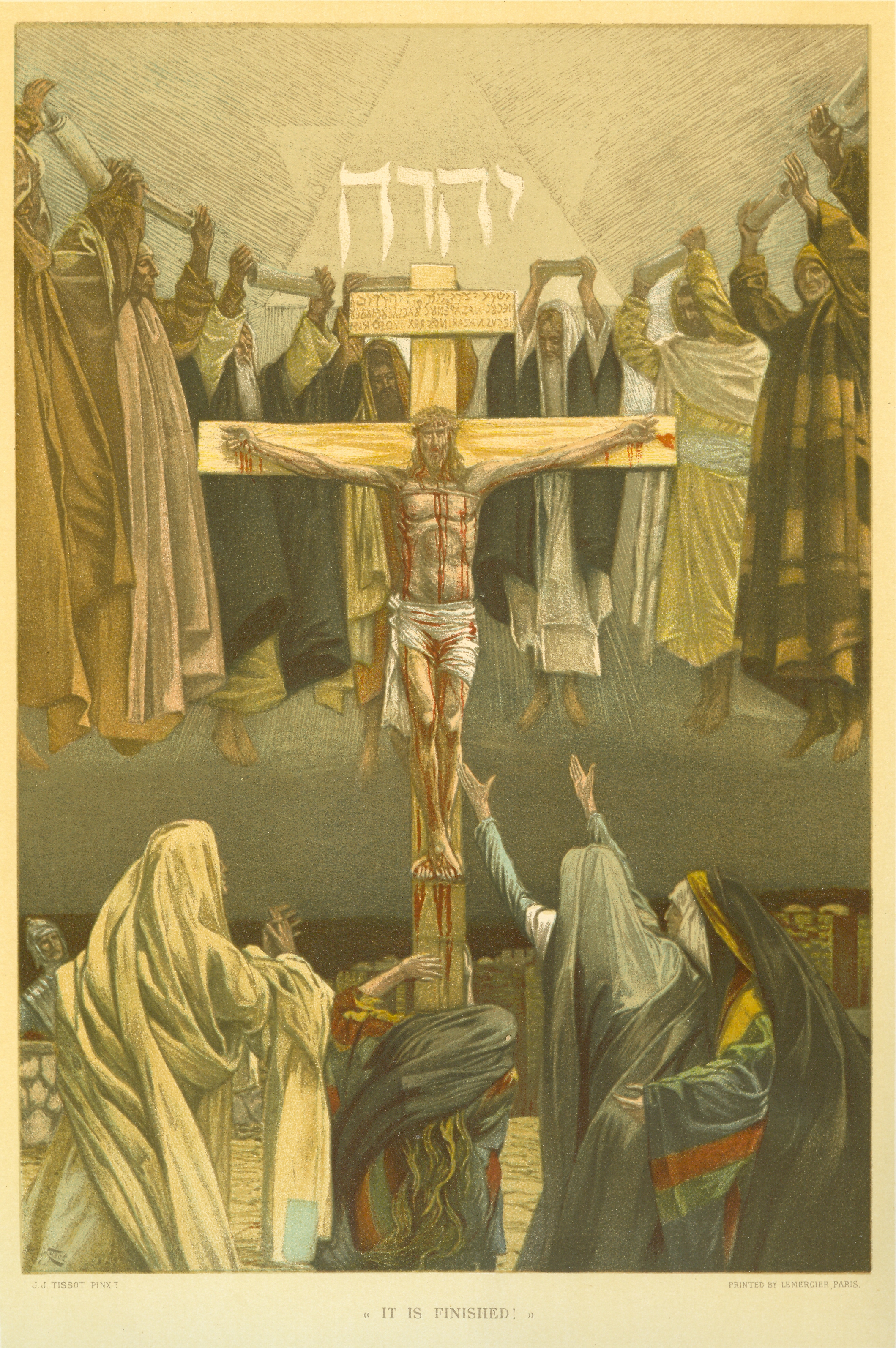
Christians profess the sovereignty of God primarily on the basis of the Crucifixion of Our Lord and Saviour Jesus Christ. We worship a Crucified God. This should strike us as something strange and disconcerting. At one level it doesn’t quite make sense, and yet it does. St Paul expresses the paradox at the heart of the Christian Faith in his First Letter to the Corinthians:

‘For God’s foolishness is wiser than human wisdom, and God’s weakness is stronger than human strength.’ (1Cor 1:25)

God is doing something amazing, which we cannot fully comprehend, or understand. This is because it is the mystery of God’s love. This is a love which we can never fully understand but it is something that we can experience in our lives.

Today’s Gospel is from St Luke’s account of the Crucifixion. It begins with Jesus being mocked by religious leaders: 

“He saved others; let him save himself, if he is the Christ of God, his Chosen One!” (Lk 23:35)

They demand action — that Jesus saves Himself — because they have completely misunderstand Our Lord’s mission, which is not to save Himself, but to save others. The Roman soldiers then join in and mock Christ saying:

“If you are the King of the Jews, save yourself!” (Lk 23:37)

In these words, power has been conflated with self-interest. Jesus, however, is not interested in saving Himself, but rather in saving us. He is the King of the Jews, born in Bethlehem of the line and lineage of David. And here Christ, in saving humanity, is doing what a proper King does: caring for His people, even at the cost of His own life. While the soldiers are mocking Jesus, they are actually proclaiming Him as a King. 

One of the men crucified with Jesus asks:

“Are you not the Christ? Save yourself and us!” (Lk 23:39)

This man has been condemned to death for acts of robbery and rebellion, and he is only able to understand the Messiah in political terms. He is looking for a revolutionary leader, who can save him. This causes the other man being crucified to rebuke the first one, saying:

“Do you not fear God, since you are under the same sentence of condemnation? And we indeed justly, for we are receiving the due reward of our deeds; but this man has done nothing wrong.” (Lk 23:40-41)

This second man understands that Jesus is innocent. This leads to one of the most memorable interactions in Luke’s Gospel, a demonstration of faith followed by its reward:

And he said, “Jesus, remember me when you come into your kingdom.” And he said to him, “Truly, I say to you, today you will be with me in Paradise.” (Lk 23:42-43)

This man does not ask to be saved. He simply requests that Jesus keep him in mind, when He comes into His Kingdom. Christ immediately grants his request. The condemned man’s recognition of Jesus’ Kingship is rewarded with the promise of eternal life with God in Heaven. Here, in two sentences, we see salvation and redemption at work. Jesus’ death saves people — starting with the condemned man. That is what Christ’s kingship is all about: bringing healing and the forgiveness of sins to all who turn to Him in faith. 

We worship a Crucified God. One who suffers and dies for us, to offer us eternal life in Him. This is true kingship, shown in self-sacrificial love. Christ is the Good Shepherd, who lays down His life for His sheep. He wants to save others, because He is the Messiah, and He is God saving his people. The Hebrew for Jesus is Yeshua and means ‘God saves’. Here on the Cross Jesus fulfils His destiny: this is who and what He is. God saves His people by dying for them. This is real kingship — not robes, or power, but love — dying the death of a common criminal. It doesn’t make sense, and it isn’t supposed to. God’s ways are not our ways, nor His thoughts our thoughts. We cannot save ourselves. Only God can do that, in an act of generous love; an extravagant and exuberant gift that we can neither earn nor repay.

In the reading from St Paul’s Letter to the Colossians, we hear both what God has done for us, and who Christ is. God has qualified us to share in the inheritance of the saints in light. We are able to go to Heaven because we have been delivered from darkness, into the kingdom of God’s beloved Son. In Christ we have redemption and forgiveness. Jesus has paid the debt we owe; our sins are forgiven. We do not need to slaughter lambs and be sprinkled with their blood, because we have been sprinkled with the Blood of the Lamb of God in our Baptism. We are redeemed, and our transgressions are forgiven, because of what Christ does for us on the Cross. This is the heart of our faith: Jesus died for us, because He loves us. 

In Christ we see that God loves us. He created all that is, therefore things are subject to Him. He is the head of His Body, the Church, of which we are a part through our baptism, and our participation in the Eucharist. As the firstborn from the dead, Christ, in His Resurrection, shows us that death is not the end.

This is the God we worship, and whom we hail as our true King: the God of love and healing. Christ has conquered on the Cross; Christ reigns as King of the Universe; Christ reigns in our hearts, and in our lives. May we then lift our hearts and voices to sing the praises of our Divine King: God the Father, God the Son, and God the Holy Spirit, Duw Dad, Duw y Mab, a Duw yr Ysbryd Glân. To whom be ascribed all might, majesty, glory, dominion, and power, now and forever. Amen.