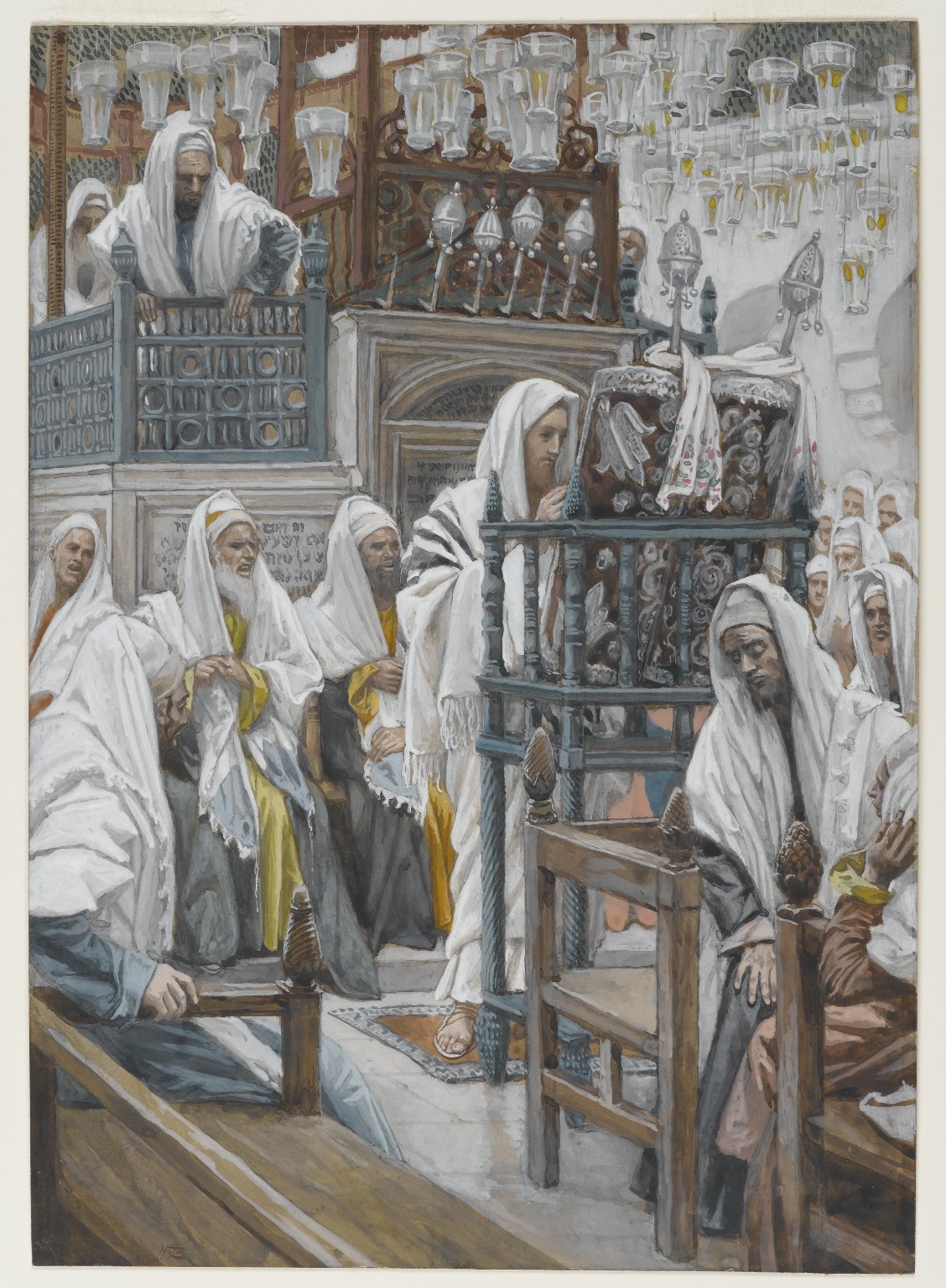
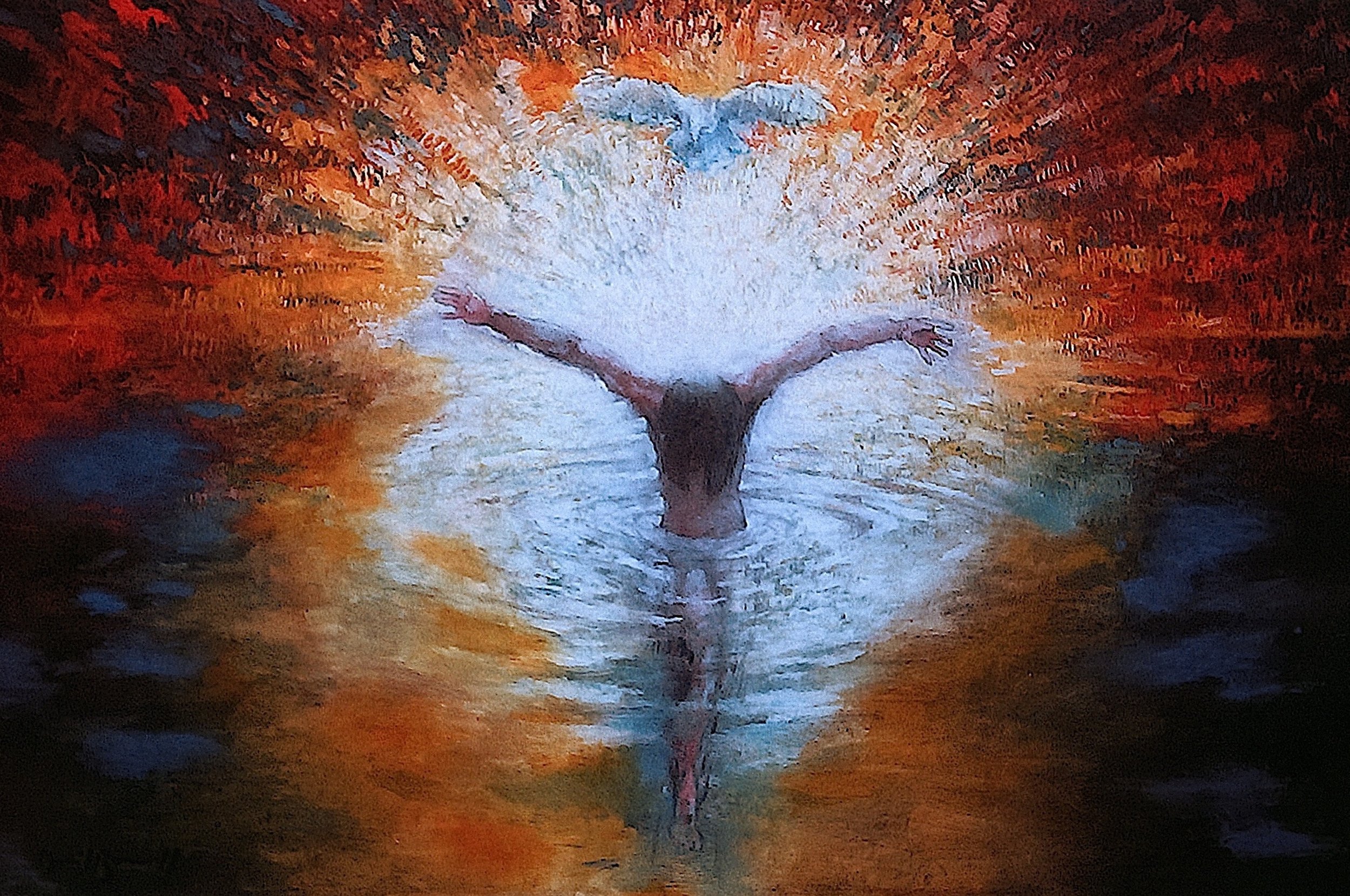
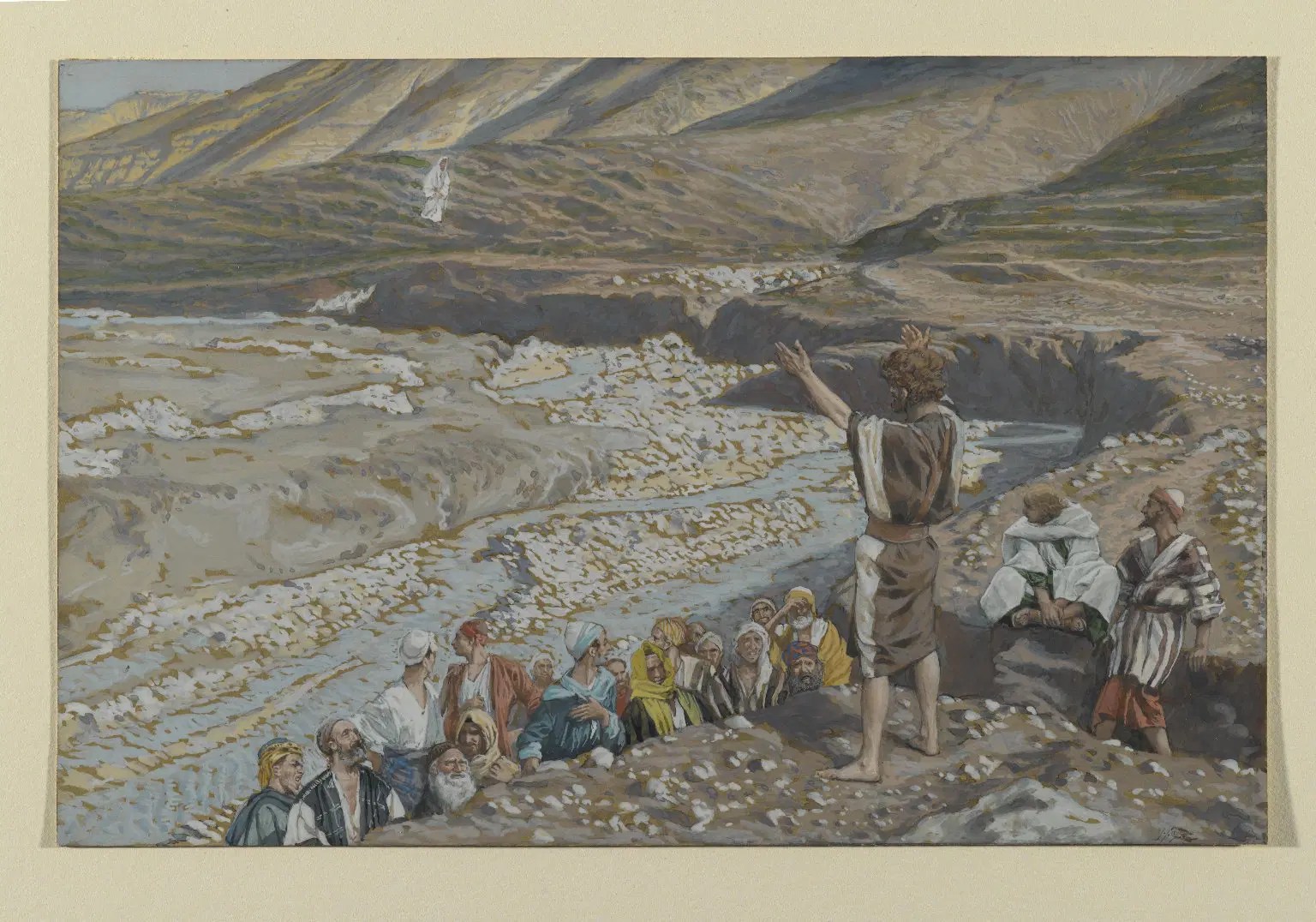
Epiphany II: Behold the Lamb of God!

One of the loveliest aspects of Christian Worship is how many of the words we use in worship are taken from the Bible. Whenever the Eucharist is celebrated, we pray to God using the words of John the Baptist which are heard in the Gospel today: 

‘Look, there is the Lamb of God that takes away the sin of the world!’ 

‘Dyma Oen Duw sy’n cymryd ymaith bechod y byd.’ (Jn 1:29) 

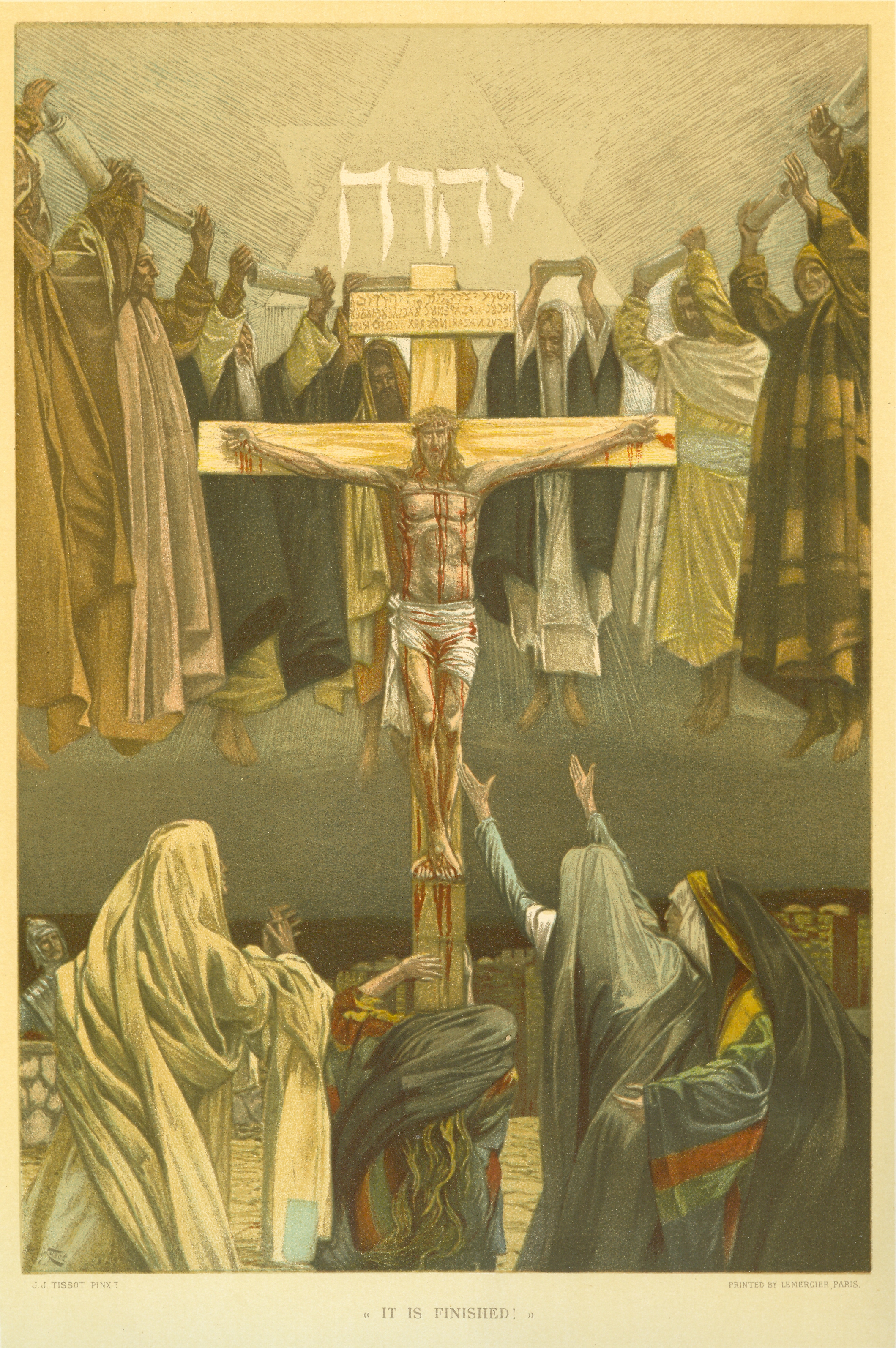
John speaks these words at the beginning of Jesus’ public ministry, after Our Lord’s Baptism and before the calling of the first disciples. John the Baptist has invited people to repent, to turn away from what separates them from God and each other. John’s mission finds its fulfilment in Christ, whom he has just baptized. Jesus is the person who reconciles God and humanity, through His death on the Cross. This is the Good News of the Kingdom. We are loved by God, who flings His arms wide on the Cross to embrace the world with love. Our Divine Creator embraces shame and torture, to show the world love. It isn’t what you would expect, and that is the point. God experiences human pain and suffering and in doing so makes a relationship possible, so that we might come to know Him, and to love Him.

John then explains Jesus’ importance:

“This is the one I spoke of when I said: A man is coming after me who ranks before me because he existed before me.” (Jn 1:30)

We know from Luke’s Gospel that John is six months older than Jesus, so what does the Baptist mean by this? How can Jesus have had life before John? The reason is that Christ is God Incarnate, He has always existed, and the Eternal has taken flesh in the womb of His mother, Mary. John then bears witness to the numinous events that occur when he baptizes Jesus:

“I saw the Spirit coming down on him from heaven like a dove and resting on him. I did not know him myself, but he who sent me to baptise with water had said to me, “The man on whom you see the Spirit come down and rest is the one who is going to baptise with the Holy Spirit.” Yes, I have seen and I am the witness that he is the Chosen One of God.” (Jn 1:32-34)

At Jesus’ Baptism we see and hear the Three Persons of the Holy Trinity. God the Father speaks, the Son is obedient, and the Spirit encourages. Jesus will pour out the Holy Spirit, the bond of love between the Father and the Son, the agent of healing and reconciliation. John recognises that Christ is the Son of God, and proclaims this truth: that God dwells with His people, and has come to save them. 

The fact that John describes Jesus as ‘The Lamb of God’ is consequential. Lambs were a central part of the Jewish festival of Passover. In order to avert the tenth plague in Egypt, the people of Israel were told to take a young lamb without any blemish and slaughter it. They were then instructed to anoint the doorposts of their houses with the lamb’s blood, so that their firstborn would be saved, and would not be killed by the Angel of Death. The lamb was to be roasted over the fire and eaten standing up whilst dressed ready for a journey. This festival of Passover is the high point of the Jewish religious calendar, and commemorates the start of their journey from slavery in Egypt to the Promised Land of Israel. It is also the time of Jesus’ Passion, Death, and Resurrection.

In order to meet the requirements of the large number of people celebrating the passover festival in the early 1st century, there needed to be a lot of shepherds raising flocks of animals for slaughter. In the Christmas story we see that the first visitors to the Holy Family in Bethlehem were local shepherds. As Bethlehem is only six miles from Jerusalem, these shepherds were raising the thousands of lambs that would be consumed at Passover in nearby Jerusalem. Jesus, like these lambs, was also without blemish, and would be killed at Passover. So from the very moment of Christ’s birth, His Sacrificial Death is foreshadowed. 

Traditionally Jesus’ death is understood to have taken place at the ninth hour, that is 3pm. Significantly, this is the same time that the passover lambs began to be slaughtered in the Temple in Jerusalem for the Passover feast. This is not mere coincidence, but rather signal proof that Christ’s death is sacrificial, and also represents the new Passover, bringing freedom to the people of God. By describing Jesus as: ‘the Lamb of God, who takes away the sins of the world’. John understands that Jesus is the Passover Lamb, whose death will save us all.

The image of a lamb also brings to mind a passage in the prophet Isaiah, where the Suffering Servant is compared to ‘a lamb that is led to the slaughter, and like a sheep that before its shearers is dumb’ (Isa 53:7). This prophecy will be fulfilled in Holy Week on Good Friday, and also every time the Eucharist is celebrated. This is the beginning of the community of believers to which we belong through our faith and through our baptism. We, like the Christians in Corinth to whom St Paul wrote, are:

‘those sanctified in Christ Jesus, called to be saints together with all those who in every place call upon the name of our Lord Jesus Christ, both their Lord and ours.’ (1Cor 1:2)

We can call upon Christ’s name in prayer because He loves us, and saves us from our sins. From the beginning of Jesus’ ministry, even from the gifts offered by the Three Wise Men, Our Lord’s life and mission is to be understood in terms of the death He will suffer. It is this sacrificial, self-giving love which God pours out on His World, which streams from our Saviour’s pierced side, and which makes our peace with God, and with one another. It is this recognition of who and what Jesus really is that enables us to recognize who and what we really are. By following Christ’s teachings and example we can live our lives truly, wholly, and fully. Loved by God and loving one another. 

Together, we can express this love most profoundly when we celebrate the Mass together, because the Eucharist is the sacrament of unity. This Sacrament unites heaven and earth through the sacrifice of Calvary, and allows all humanity to share the Body and Blood of Our Saviour Jesus Christ. We feed on Him so that we may become what He is. This enables us to share eternity with Our Lord, and to live lives full of faith, and hope, and love. So then, let us lift up our hearts and give thanks for Jesus, the Lamb of God. Let us enter into the mystery of God’s self-giving love. And let us join together to give glory to God the Father, God the Son, and God the Holy Spirit, Duw Dad, Duw y Mab a Duw yr Ysbryd Glân. To whom be ascribed all might, majesty, glory, dominion and power, now, and forever.
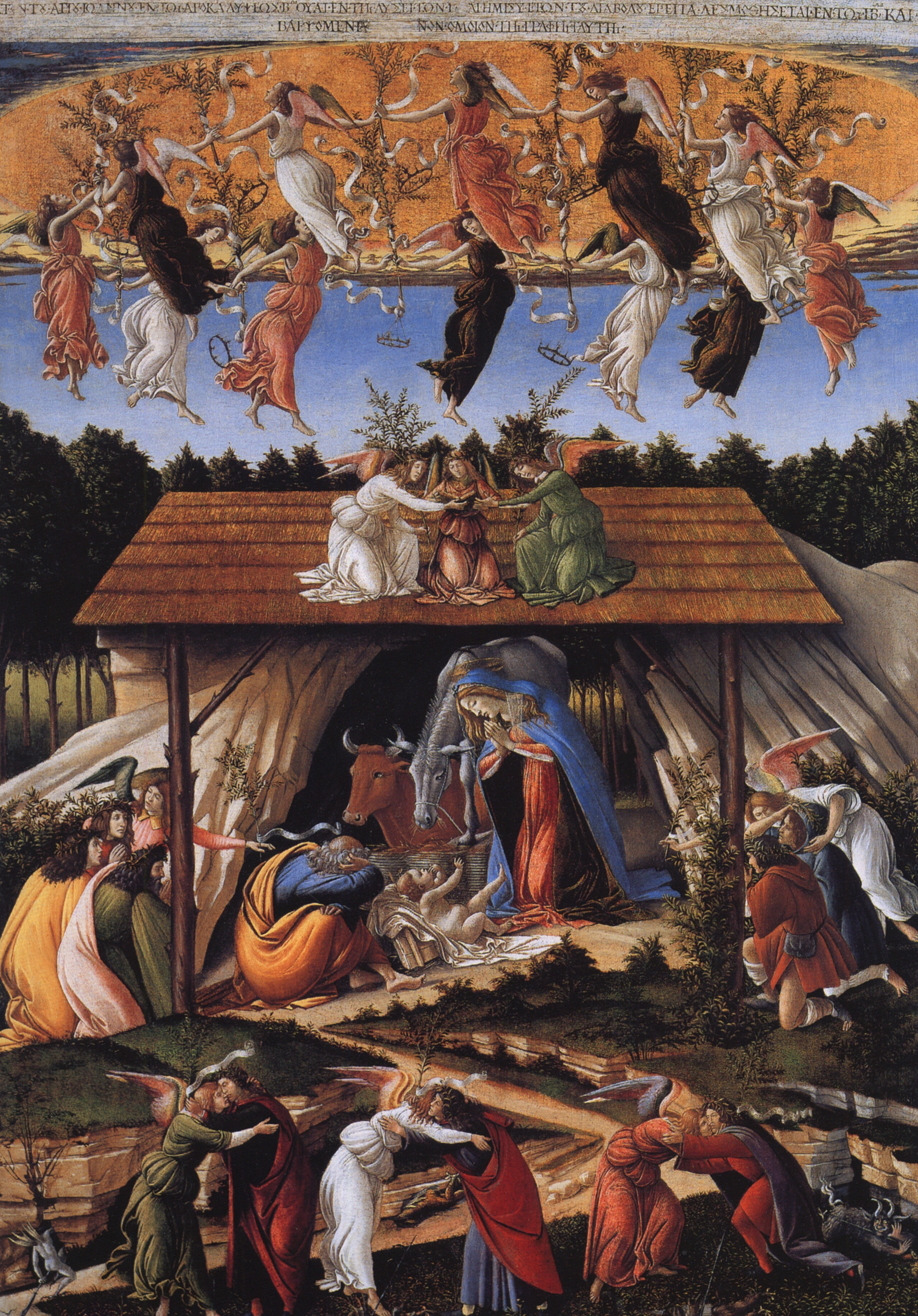
Christmas Midnight Mass

‘He become human so that we might become divine.’

‘Fanodd ef ein natur ddynol ni, er mwyn i ni rannu ei natur ddwyfol ef’ (Athanasius de Inc. 54.3)

We have all come here tonight to celebrate something unique, something which defies both our understanding and our expectations. The fact that God, the Creator of all things, took flesh in the womb of the Virgin Mary and was born for us in Bethlehem is the Messiah, the Anointed of God, who would save us from our sins, should feel strange. In human terms this simply does not make sense, nor indeed should it.

And yet, here we are, some two thousand years later, celebrating the birth of this child who changed both human history and human nature. We do this because, as Christians, we do not judge things solely by human standards. We gather together in order to ponder the mystery of God’s love for us. Through love, God heals our wounds. Through love, God restores broken humanity. Through love, God offers us a fresh start. Our Heavenly Father can see beyond our failures and shortcomings, and He took on human form so that humanity might become divine; so that we may share in His life of love, both here on earth and in Heaven.

If that isn’t a cause for celebration, I honestly don’t know what is. However, we are so familiar with the story of Christmas that I wonder whether we, myself included, really take the time to ponder, and to marvel at the mystery which unfolded two thousand years ago in Bethlehem. Almighty God, who made all that is, comes to dwell among us. He took flesh in the womb of a teenage girl through the power of His Holy Spirit, so that in His Son we might see and experience God and His divine love for us. 

God comes among us not in power or splendour, but as a weak, vulnerable child, depending on others for love, food, and warmth. He is laid in an animal’s feeding trough, insulated from the cold hard stone by straw — beginning his days as he will end them placed in a stranger’s tomb. 

Throughout His life, all that Jesus says and does shows us how much God loves us. The Word becomes flesh, and enters the world. He dwells among us. This is a wondrous mystery which inspires us to worship. We stand and kneel with the shepherds and adore the God who comes among us. He shares our human life so that we might share His divine life. This is not because we have done something to deserve it: we haven’t worked for it, or earned it. Rather, it is the free gift of a loving and merciful God. This, then, is the glory of God — being born in simple poverty, surrounded by those on the margins of society. Our Heavenly Father calls humanity to a new way of being a community. The old order is cast aside, turning the world upside down and offering us the possibility of living in a radically different way. One founded on peace, love, and joy, rather than wealth and power. Heaven comes to earth, carried in the womb of a Virgin, so that we might behold the glory of God in a new-born child. So that we might experience the deep love and eternal truth of God.

The word is made flesh so that prophesy might be fulfilled. So that the hope of salvation might unfold. So that a people who have languished long in darkness might behold the glory of God in the place where Heaven and Earth meet: in a lowly stable in Bethlehem. Where men and angels may sing together: ‘Alleluia, Glory be to God on high, and on earth peace to people of goodwill’. The worship of Heaven is joined with Earth on this most holy night. In the quiet and stillness humans and animals join together to praise Almighty God, who stoops to save humanity in the birth of His Son. 

Despite the worrying state of the world around us, we can be filled with joy and hope: because Christ is born! No matter what difficulties we have to face, what fears and hardships may assail us and those we love, the birth of Our Saviour in Bethlehem is a cause for hope and joy, both in this world, and the next. God comes among us, as a baby, into a world of pain, fear, and misery; just as He did two thousand years ago. The God who made all that exists enters our world weak and helpless. Just as we were when we were born. He is totally dependent on others for food, warmth, shelter, and security. In doing so, God takes a huge risk to save humanity and to give us hope for the future.

Tonight we see God’s healing and reconciling love made manifest: to save us from ourselves, from sin, selfishness, and greed. At first this act of generosity and weakness does not appear to change things, and yet it does. God transforms our world; sometimes quickly, and sometimes slowly. Humanity is not always good at listening or waiting. It is easy to become so wrapped up in our own anxieties and yearnings that we close ourselves off from God’s transformative power. This Christmastime is an opportunity to open ourselves to God, to His transforming love.

There is also fear in the Christmas story. This is an understandable human reaction. When the shepherds saw the Heavenly Host, the angel said to them: ‘Paid ag ofni’ ‘Fear not, for behold I bring you good news of great joy that will be for all people’ (Lk 2:10). God comes among us to dispel our fears and to invite us to trust in Him. This Good News is as true today as it was two thousand years ago. The love and peace which Christ comes to bring can be made real and visible in our hearts and lives. It still has the power to change the world. God’s kingdom can be a reality, here and now. Jesus taught us to pray for God’s glorious kingdom to come on earth in the same way that it is in Heaven: ‘Thy Kingdom come, Thy will be done, on earth as it is in heaven’.  

The true gift of Christmas is the Good News that Christ is born; that God becomes one of us. Our humanity is reconciled to God in, and through, Jesus. God saves us, and sets us free to worship Him, to love Him, and to serve Him. In the fourth century, a bishop in Asia Minor, Theodotus of Ancyra, said in a Christmas homily: ‘He whose godhead made him rich became poor for our sake, so as to put salvation within the reach of everyone’ [Theodotus of Ancyra (Homily 1 on Christmas: PG 77: 1360-1361)]. Such is the wonder and mystery of God’s love for us. It is a love made perfect in weakness, yet with the strength to transform the lives of everyone including each and every one of us gathered here on this most holy night. 

God is with us. For two thousand years Christians have proclaimed this truth. Jesus is born for us, to set us free from sin. Jesus is born for us to give us eternal life. Jesus is born for us to pour out God’s love and reconciliation upon a world longing for healing and wholeness. Tonight, as the mystery of God’s love is made manifest, may we be filled with that love. May our voices echo the song of the angels to the shepherds in giving praise to God the Father, God the Son, and God the Holy Spirit, Duw Dad, Duw y Mab, a Duw yr Ysbryd Glân. To whom be ascribed all might, majesty, glory, dominion, and power, now and forever. Amen.

May I take this opportunity to wish you all a joyful, peaceful, and love-filled Christmas!

Gallaf gymryd y cyfle hwn i dymuno Nadolig llawen, heddychlon, ac llawn cariad i bawb!Incarnation

Christ the King 2025

‘God’s weakness is stronger than human strength.’

‘gwendid Duw yn gryfach na chryfder dynol.’ (1Cor 1:25)

On November 23rd 1927 the Mexican Jesuit priest Fr Miguel Pro SJ was arrested on false charges and placed in front of a firing squad. He refused a blindfold and spread his arms out into the shape of a cross. His last words were: ‘¡Viva Christo Rey!’ ‘Long live Christ the King!’. The Mexican regime of that time was cruel and went out of its way to persecute Christians, including thirty-six year old Miguel Pro, a twentieth century Christian martyr who died confessing Christ’s sovereignty over all things. His words are both powerful and inspiring. When we acknowledge Christ as King we are saying that He is above all human power and authority. We are affirming that God is supreme. As Christians, our primary allegiance is to God alone, and not to the things of this world. To proclaim Our Lord as King of Heaven and Earth will always challenge and trouble those who lay claim to an authority and a power which is not their own. There are plenty of examples in the world around us of those who are unwilling to recognize a power greater than themselves. 

Christians profess the sovereignty of God primarily on the basis of the Crucifixion of Our Lord and Saviour Jesus Christ. We worship a Crucified God. This should strike us as something strange and disconcerting. At one level it doesn’t quite make sense, and yet it does. St Paul expresses the paradox at the heart of the Christian Faith in his First Letter to the Corinthians:

‘For God’s foolishness is wiser than human wisdom, and God’s weakness is stronger than human strength.’ (1Cor 1:25)

God is doing something amazing, which we cannot fully comprehend, or understand. This is because it is the mystery of God’s love. This is a love which we can never fully understand but it is something that we can experience in our lives.

Today’s Gospel is from St Luke’s account of the Crucifixion. It begins with Jesus being mocked by religious leaders: 

“He saved others; let him save himself, if he is the Christ of God, his Chosen One!” (Lk 23:35)

They demand action — that Jesus saves Himself — because they have completely misunderstand Our Lord’s mission, which is not to save Himself, but to save others. The Roman soldiers then join in and mock Christ saying:

“If you are the King of the Jews, save yourself!” (Lk 23:37)

In these words, power has been conflated with self-interest. Jesus, however, is not interested in saving Himself, but rather in saving us. He is the King of the Jews, born in Bethlehem of the line and lineage of David. And here Christ, in saving humanity, is doing what a proper King does: caring for His people, even at the cost of His own life. While the soldiers are mocking Jesus, they are actually proclaiming Him as a King. 

One of the men crucified with Jesus asks:

“Are you not the Christ? Save yourself and us!” (Lk 23:39)

This man has been condemned to death for acts of robbery and rebellion, and he is only able to understand the Messiah in political terms. He is looking for a revolutionary leader, who can save him. This causes the other man being crucified to rebuke the first one, saying:

“Do you not fear God, since you are under the same sentence of condemnation? And we indeed justly, for we are receiving the due reward of our deeds; but this man has done nothing wrong.” (Lk 23:40-41)

This second man understands that Jesus is innocent. This leads to one of the most memorable interactions in Luke’s Gospel, a demonstration of faith followed by its reward:

And he said, “Jesus, remember me when you come into your kingdom.” And he said to him, “Truly, I say to you, today you will be with me in Paradise.” (Lk 23:42-43)

This man does not ask to be saved. He simply requests that Jesus keep him in mind, when He comes into His Kingdom. Christ immediately grants his request. The condemned man’s recognition of Jesus’ Kingship is rewarded with the promise of eternal life with God in Heaven. Here, in two sentences, we see salvation and redemption at work. Jesus’ death saves people — starting with the condemned man. That is what Christ’s kingship is all about: bringing healing and the forgiveness of sins to all who turn to Him in faith. 

We worship a Crucified God. One who suffers and dies for us, to offer us eternal life in Him. This is true kingship, shown in self-sacrificial love. Christ is the Good Shepherd, who lays down His life for His sheep. He wants to save others, because He is the Messiah, and He is God saving his people. The Hebrew for Jesus is Yeshua and means ‘God saves’. Here on the Cross Jesus fulfils His destiny: this is who and what He is. God saves His people by dying for them. This is real kingship — not robes, or power, but love — dying the death of a common criminal. It doesn’t make sense, and it isn’t supposed to. God’s ways are not our ways, nor His thoughts our thoughts. We cannot save ourselves. Only God can do that, in an act of generous love; an extravagant and exuberant gift that we can neither earn nor repay.

In the reading from St Paul’s Letter to the Colossians, we hear both what God has done for us, and who Christ is. God has qualified us to share in the inheritance of the saints in light. We are able to go to Heaven because we have been delivered from darkness, into the kingdom of God’s beloved Son. In Christ we have redemption and forgiveness. Jesus has paid the debt we owe; our sins are forgiven. We do not need to slaughter lambs and be sprinkled with their blood, because we have been sprinkled with the Blood of the Lamb of God in our Baptism. We are redeemed, and our transgressions are forgiven, because of what Christ does for us on the Cross. This is the heart of our faith: Jesus died for us, because He loves us. 

In Christ we see that God loves us. He created all that is, therefore things are subject to Him. He is the head of His Body, the Church, of which we are a part through our baptism, and our participation in the Eucharist. As the firstborn from the dead, Christ, in His Resurrection, shows us that death is not the end.

This is the God we worship, and whom we hail as our true King: the God of love and healing. Christ has conquered on the Cross; Christ reigns as King of the Universe; Christ reigns in our hearts, and in our lives. May we then lift our hearts and voices to sing the praises of our Divine King: God the Father, God the Son, and God the Holy Spirit, Duw Dad, Duw y Mab, a Duw yr Ysbryd Glân. To whom be ascribed all might, majesty, glory, dominion, and power, now and forever. Amen.

Bible Sunday

Today is a very special day for me. It is my first Sunday as Priest-in-charge of S. Katharine & S. Peter’s, Milford Haven. As the eleventh incumbent of this wonderful Church I feel the weight of expectations, and the many questions you probably have: What kind of a priest is the new vicar? What is he like as a person? How will he lead our church through the years ahead? What is he going to change? What is his vision for S. Katharine & S. Peter’s? As you get to know me and I get to know you, the answers to these questions will become clear.

In first century Palestine, expectation was also running high. The Hebrew Scriptures were full of prophecies about the Messiah, a King of the House of David, who would rule over Israel and set His people free. Releasing them from the tyranny of foreign rule, and a corrupt religious establishment. Two thousand years ago, people were full of hope and expectation, that God would act, and fulfil His promises. This He does, in a surprising way…

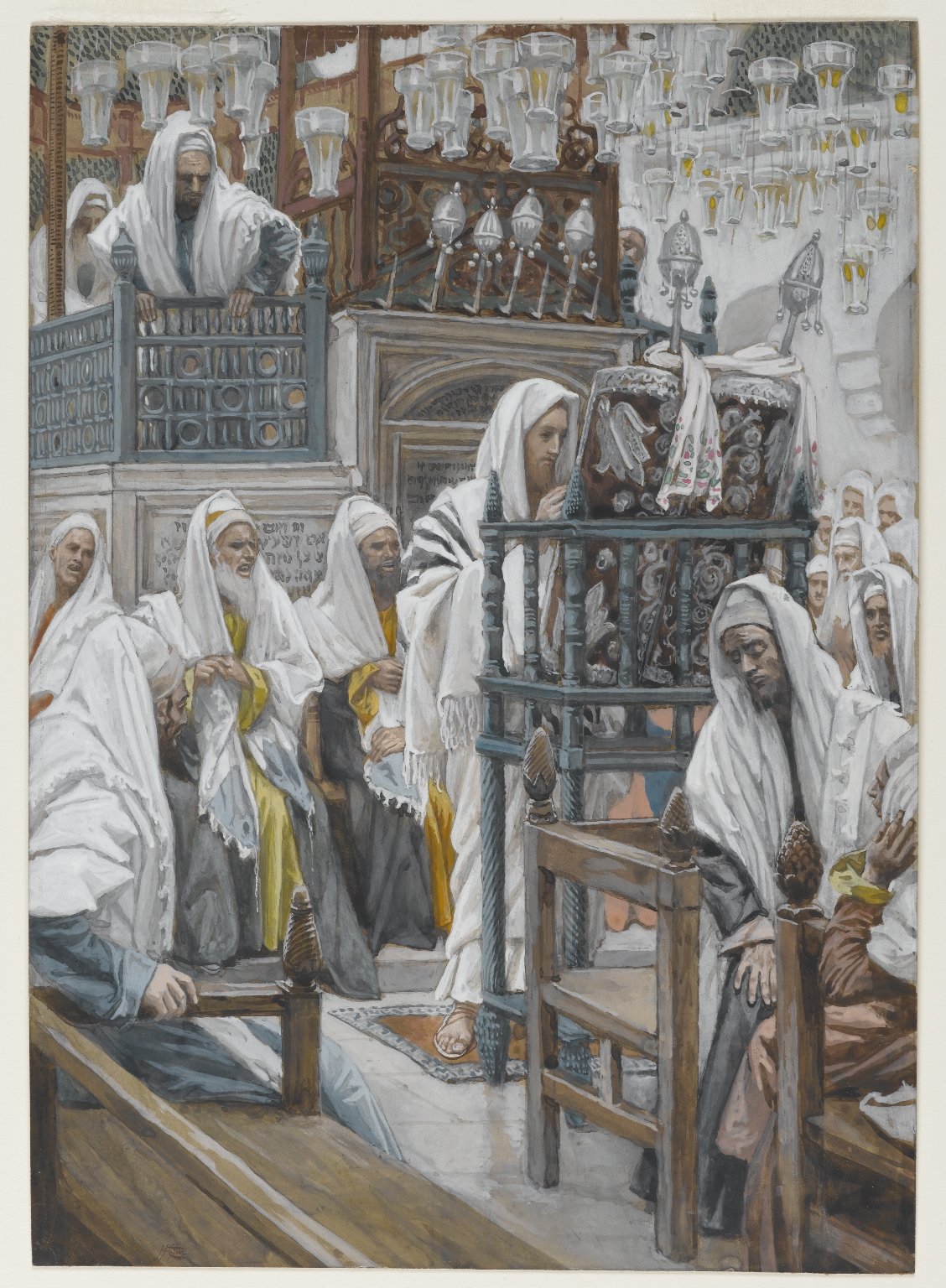
When Jesus comes to the town of Nazareth, where He grew up, He goes to the synagogue to worship on the Sabbath. There Our Lord is given the scroll of the prophet Isaiah, and He reads:

“The Spirit of the Lord is upon me, because he has anointed me to proclaim good news to the poor. He has sent me to proclaim liberty to the captives and recovering of sight to the blind, to set at liberty those who are oppressed, to proclaim the year of the Lord’s favour.” 

“Y mae Ysbryd yr Arglwydd arnaf, oherwydd iddo f’eneinio i bregethu’r newydd da i dlodion. Y mae wedi f’anfon i gyhoeddi rhyddhad i garcharorion, ac adferiad golwg i ddeillion, i beri i’r gorthrymedig gerdded yn rhydd, i gyhoeddi blwyddyn ffafr yr Arglwydd.” (Lk 4:18-19)

This prophecy is taken from the 61st Chapter of Isaiah. It expresses Israel’s hope for a Messianic future: a hope of healing, freedom, and restoration. This is similar to the idea of the Jubilee, when every fifty years all debts were cancelled, all slaves freed, and all land returned to its original owners. Some of you may remember the Campaign Jubilee 2000, which sought to write off Third-world debt, as a modern reworking of this ancient biblical idea. Jesus is proclaiming the Kingdom of God as a reality, here and now. This is what fullness of life and salvation look like when we live them. Our Lord gives us an attractive goal, and it can be a reality, if we co-operate with God to live out the vision in our own lives.

In today’s Gospel, we hear the announcement of the Kingdom of God. A call to a new way of living, which can transform us, and our world, for the better. The Kingdom of God is to be a place where all are cared for, and where our needs are met. The Good News of the Gospel is for those who know their need of God, those who are aware of their spiritual poverty. That means each and every one of us. Jesus will later go on to say, in the Sermon on the Mount: ‘Blessed are you who are poor, for yours is the Kingdom of God’ ‘Gwyn eich byd chwi’r tlodion, oherwydd eiddoch chwi yw teyrnas Dduw’ (Lk 6:20). We all need God’s love in our hearts, and our lives, so that we can be transformed. We cannot reform ourselves, this is something that only Our Heavenly Father can do. But only if we let Him, and co-operate with Him, through prayer and action. 

Christ offers the world both freedom and vision. The opportunity to see what others cannot, and the ability to experience true freedom. God gives us life in all its fulness, so that by His love we can be made into people who are loving, and who will the good of others. By living lives characterised by love and sacrifice we can be truly alive, and experience the joy of God’s Kingdom. 

After having read from the Book of Isaiah, Our Lord says:

“Today this Scripture has been fulfilled in your hearing.”

“Heddiw yn eich clyw chwi y mae’r Ysgrythur hon wedi ei chyflawni.” (Lk 4:21)

This is a huge claim to make. If the Scripture has been fulfilled then this means that Jesus is the Messiah, plain and simple. That which the prophets pointed to in the future has now become a reality in the person of Christ. Jesus, the Word made flesh, is the fulfilment of the Holy Scriptures, the Word of God. This is what we believe as Christians, and it is the reason why we read the Old Testament. The New is prefigured in the Old. The Scriptures point to Christ, and they find their fulfilment and true meaning in Him. What Israel has hoped for and longed for has arrived in the figure of Jesus. This means that the Kingdom of God is not something abstract, but rather someone physical. It is a person: Jesus of Nazareth. The reconciliation of God and humanity happens in and through the life, death, and resurrection of Jesus Christ.

The mission of the Church is, and always has been, to proclaim the Good News of the Kingdom of God. The words spoken in a synagogue in Nazareth two thousand years ago are as relevant today as they were then. God continues to invite humanity to know Him, and to experience His divine love.

As Christians, we are recipients of the healing and wholeness which Jesus promises. We experience this healing here today, in this Mass. Soon we will be nourished by Christ’s Body and Blood, and be given a foretaste of Heavenly Glory. Let us , therefore, prepare to be fed, and to be transformed and become what we eat. Fortified by Christ, let us proclaim His Truth to the world, so that all may come to believe and give glory to God the Father, God the Son, and God the Holy Spirit, Duw Dad, Duw y Mab, a Duw yr Ysbryd Glân. To whom be ascribed all glory, dominion and power, now and forever. Amen

Trinity 17 [28th of Year C]

One of the arms of the River Cleddau which flows into the sea at Aberdaugleddau (Milford Haven) has its source near here in the Preseli Hills. The other flows from Llygad Cleddau, a few miles from here. These two rivers join together and flow through the County of Pembrokeshire and form one of the deepest natural harbours in the world. It is therefore fitting that I am travelling from the sources of the rivers to their estuary. Rivers flow from their springs to the sea. They provide us with water, and a means of transport. Historically, both were important, they transported Bluestones towards Stonehenge in Wiltshire, and brought Vikings, Normans and Flemings who have all left their mark on this county.

Sources of water have been important in our religious history. Ffynnon Fair, St Teilo’s Well, and Bernard’s Well would all have provided water for baptism, just as the stream is still used at Rhydwilym. Baptism is how we enter the Church, it is how we become members of the Church. Not through paying fees, but by sharing in Christ’s Baptism, His Death and Resurrection, and looking forward to eternal life with Him in Heaven. Water is poured in the name of the Father, the Son, and the Holy Spirit, and we are washed clean, and grafted into the Body of Christ. An act so simple, and yet so profound, which lies at the heart of who and what we are as Christians. Baptism is a Sacrament, an outward and visible sign of an inward and spiritual grace, by which we become united with Christ in this world and the next.

In our first reading this morning from the Second Book of Kings we meet Naaman, the commander of the Syrian army. He has been afflicted with leprosy, and he hears that there is a prophet in Samaria who can cure him. He writes to the King of Israel, to ask for the prophet to heal him. The King of Israel thinks that it is a trick, an excuse for the Syrians to start a war against Israel. The prophet Elisha reassures the king, and asks for Naaman to be sent to him. Elisha tells Naaman to wash seven times in the River Jordan. Naaman can’t quite believe his ears. He’s angry. This isn’t what healing is all about, it is far too simple, too easy. The point isn’t about having to do something difficult, but rather in letting God do something wonderful.


Eventually Naaman listens, and is obedient, and is healed. He goes back to Elisha to say that, ‘Dyma fi’n gwybod yn awr nad oes Duw mewn un wlad ond yn Israel’ ‘Behold, I know that there is no God in all the earth but in Israel’(v.15) Naaman is grateful, and comes to believe in God. The mention of washing in the Jordan reminds us of Baptism, how we were washed clean from sin, and given new life in Christ Jesus, sharing His Death and Resurrection, a sign of God’s generous love towards us. 


In this morning’s Gospel Jesus is in border country. He is in an uncomfortable place, heading towards Jerusalem, towards His Passion and Death. Ten people suffering from leprosy see Him, and cry, ‘Iesu, feistr, trugarha wrthym’ ‘Jesus, Master, have mercy on us’. Jesus tells them to go and show themselves to a priest, to prove that they are now clean and are no longer outcasts. Jesus complies with the law of Moses in Leviticus. The law commands them to sacrifice in order to be healed. Christ heals them, so that God might be glorified.


One of them returns to say, ‘Thank you’. The leper thanks God, and falls at Jesus’ feet. He shows gratitude. We wouldn’t want to live in a world where no-one said, ‘Thank you’. Thanksgiving is the heart of prayer, it’s why we celebrate Harvest in Autumn. We thank each other, but most importantly we thank God for what He has done for us. Thanksgiving goes hand in hand with faith, what we believe, and where we put our trust. As I prepare to bid you farewell, I give thanks to Almighty God for you, His people, and all that the last seven years have been. It has been a pleasure and a privilege to know you, to love you, to pray for and with you, and to serve you.


As Christians we thank God for many things, but first and foremost for what He has done in His Son, Jesus Christ, who died for us. This is why we celebrate the Eucharist, because Jesus told us to, and so that we might be fed with His Body and Blood. Not because we have earned it, certainly not because we deserve it, but so that we, like the lepers in Gospel, might be healed by Jesus. It is medicine for our sick souls, not a gold star or a prize for the righteous. Christ gives himself for us not because we are worthy, but so that we might BECOME worthy through Him. God loves us. He longs to heal us, and to reconcile us, to Himself, and each other. This is what the Church is for: to extend the saving work of God through both space and time.

Salvation is God’s work not ours, as Naaman and the lepers show us. God in Christ saves us and heals us. He dies for us, and rises again so that we might share His Risen life. This is true generosity. And we can receive God’s healing love here and now. We can prepare to be transformed into His likeness, by His Body and Blood, which cures not only lepers, but our sin-sick souls. So let us be thankful to God, for all that he has done for us. For giving us His Son, to bring about healing, to show mercy, to strengthen our faith. And may we follow Christ, and walk His Way of the Cross, enduring whatever sufferings come our way, with the assurance of God’s love and help.

Remember that Christ will never abandon us. His words are true. His promise is faithful:

‘os dyfalbarhawn, cawn deyrnasu hefyd gydag ef; …os ydym yn anffyddlon, y mae ef yn aros yn ffyddlon, oherwydd ni all ef ei wadu ei hun.’ ‘if we endure, we will also reign with Him …. if we are faithless, He remains faithful — for he cannot deny himself’ (2Tim 2: 12-13) 

As Christians, let us follow where Christ has gone before. Let us be confident in His promises, nourished with His Body and Blood. Let us turn from the shadows and images of this world, into the light of His Truth, who is the Truth, the Way, and the Life. And let us proclaim that truth to the world so that it may come to believe and give glory to Duw Dad, Duw y Mab, a Duw yr Ysbryd Glân. God the Father, God the Son, and God the Holy Spirit. I’r hwn y priodoler pob gogoniant, arglwyddiaeth, a gallu, yn awr, ac yn oes oesoedd. To whom be ascribed all glory, dominion and power, now and forever. Amen

Diolch yn fawr!

James Tissot The Healing of Ten Lepers (Guérison de dix lépreux) Brooklyn Museum

Trinity XII: Take up your Cross

One of the curious aspects of life as a clergyman is the number of times that people ask you to pray for specific weather: be it rain, or sunshine. The 1662 Book of Common Prayer actually contains prayers for rain and fair weather, just after the Litany, after Morning and Evening Prayer. Therefore, I can only assume that weather-related prayers have always been high on the list of people’s priorities. Generally speaking, however, my response has been to say, “Sorry I’m in Sales, not Management”. I have always been concerned that people seem to think that I am somehow able to influence the Almighty when it comes to matters meteorological. Fundamentally, prayer doesn’t change God, it changes us. Now, on reflection, I’m more inclined to listen to their prayer request and honour it, as I do every other. 

All Christians are called to evangelise, to share the Good News of the Kingdom of God. However, doing so can feel a bit like being a salesperson. To some people you are just annoying. Most people show varying degrees of disinterest, but a few people are genuinely interested in what you have to say. However, if you were to use this morning’s Gospel as a sales-pitch, I doubt that you would meet with much success. Jesus’ stark presentation of the cost of discipleship is not necessarily an easy way to win people round. 

Christ has attracted a large group of people eager to hear what He has to say, so Our Lord explains what discipleship is all about:

“Os daw rhywun ataf fi heb gasáu ei dad ei hun, a’i fam a’i wraig a’i blant a’i frodyr a’i chwiorydd, a hyd yn oed ei fywyd ei hun, ni all fod yn ddisgybl imi.”

“If anyone comes to me and does not hate his own father and mother and wife and children and brothers and sisters, yes, and even his own life, he cannot be my disciple. Whoever does not bear his own cross and come after me cannot be my disciple.” (Lk 14:26-27)

Families do not always get on well, but Christians are called to ‘love their enemies’ (Lk 6:27) and to despise our own families, and even our own lives. This seems strange, and paradoxical. Aren’t Christians called to be people of love? Indeed we are, and the primary focus of our love as Christians should be God. Jesus is saying that God must be the most important thing in our life. Nothing should get in the way of the fact that our primary relationship is not with our parents, siblings, spouse, or offspring, but with the God in whose image we were created.

To make this a reality each and every one of us is called to bear a cross, to risk torture and death, and offer the whole of our lives to God. We are told we must follow Jesus, wherever that may lead. Our commitment has to be total, there is no room here for half-measures. Hence the stark imagery employed by Our Lord. Jesus uses strong and disturbing language to shock us. He reminds us that in Him we are called to a new relationship which takes us away from traditional social structures. That means that everyone in the Church becomes our brother and sister, and that our primary responsibility is to love Christ, and follow Him. To imitate Him, and take up our own Cross.

Our Lord then uses the images of a construction project and of warfare to reinforce the point that we need to see the matter through to its conclusion. Jerusalem was no stranger to either. King Herod’s rebuilding of the Temple took 46 years to complete, and war (or the threat of it) was a constant factor of everyday life. The point is being made that there is nothing worse than a half-finished building. It says, ‘The constructors didn’t plan properly, or get the finances in place first’. Likewise, in war you fight believing that you can win, otherwise you sue for peace. At this point, we remember and pray for our brothers and sisters in Ukraine and the Holy Land and throughout all the world where there is violence and war.

At the end of the Gospel passage Jesus reiterates His main point:

“Yr un modd, gan hynny, ni all neb ohonoch nad yw’n ymwrthod â’i holl feddiannau fod yn ddisgybl i mi.”

“So therefore, any one of you who does not renounce all that he has cannot be my disciple.” (Lk 14:33)

Over-attachment to material things is a problem: our stuff cannot save us, only God can. Are possessions useful or pleasant? Certainly. Can we enjoy them? Yes. But the problem occurs when their importance becomes misplaced. All that really matters is eternal life with God, sharing the Divine life of Love. Nothing we ‘have’ is really ours. We can enjoy material things and share them with others, but in a few years time our earthly life will have ended. There are no pockets in shrouds! As the old saying goes: ‘you can’t take it with you when you go’. 

As Christians, we gather, to hear God’s word read and explained; to pray together; to be nourished together. We do these things so that we may grow together in love, and to embrace the Cross. Having died with Christ in our baptism, and being raised to new life with Him, we live out our faith in our lives. Our discipleship can be costly and difficult. It calls us to renounce the world and rely upon God, together, as a community of faith. To form a new community where old ties and distinctions are done away with, where we have a new identity, and where we are called to a higher purpose. 

These are not easy things to achieve, and the Christian community has, for two thousand years, struggled to live up to these goals. But we put our trust in a God who forgives our sins and failings, who understands our humanity from the inside. We are not written off, or cast aside. We are not abandoned or discarded. This is because we are all made in God’s image, people of infinite intrinsic value. Christ died for us, to give us eternal life, to heal our wounds. He calls us to follow Him, so that we may find His freedom, and share in His triumph over death and sin. 

As Christians, we are called to something great and wonderful: to stand, like Christ as a contradiction, offering the world a new way to live; a way of life not of death; a way of generosity rather than selfishness. We are called to renounce the world and instead to embrace the freedom, and joy, that is the life of the Kingdom of God. 

It is truly liberating to look at the world as Jesus wants us to, knowing that all that really matters is loving God, and loving our neighbour. Doing this can be difficult, especially when times are uncertain as they are today, but we know that we can trust the God who loves us, who gives His life for us. The God who comes to us to feed us with Himself. So let us together follow him and invite others to do so. Let us give thanks for all our blessings and sing the praises of God, Duw Dad, Duw y Mab, a Duw yr Ysbryd Glân. God the Father, God the Son, and God the Holy Spirit. I’r hwn y priodoler pob gogoniant, arglwyddiaeth, a gallu, yn awr, ac yn oes oesoedd. To whom be ascribed all glory, dominion and power, now and forever. Amen

Trinity XI: Come to the Banquet

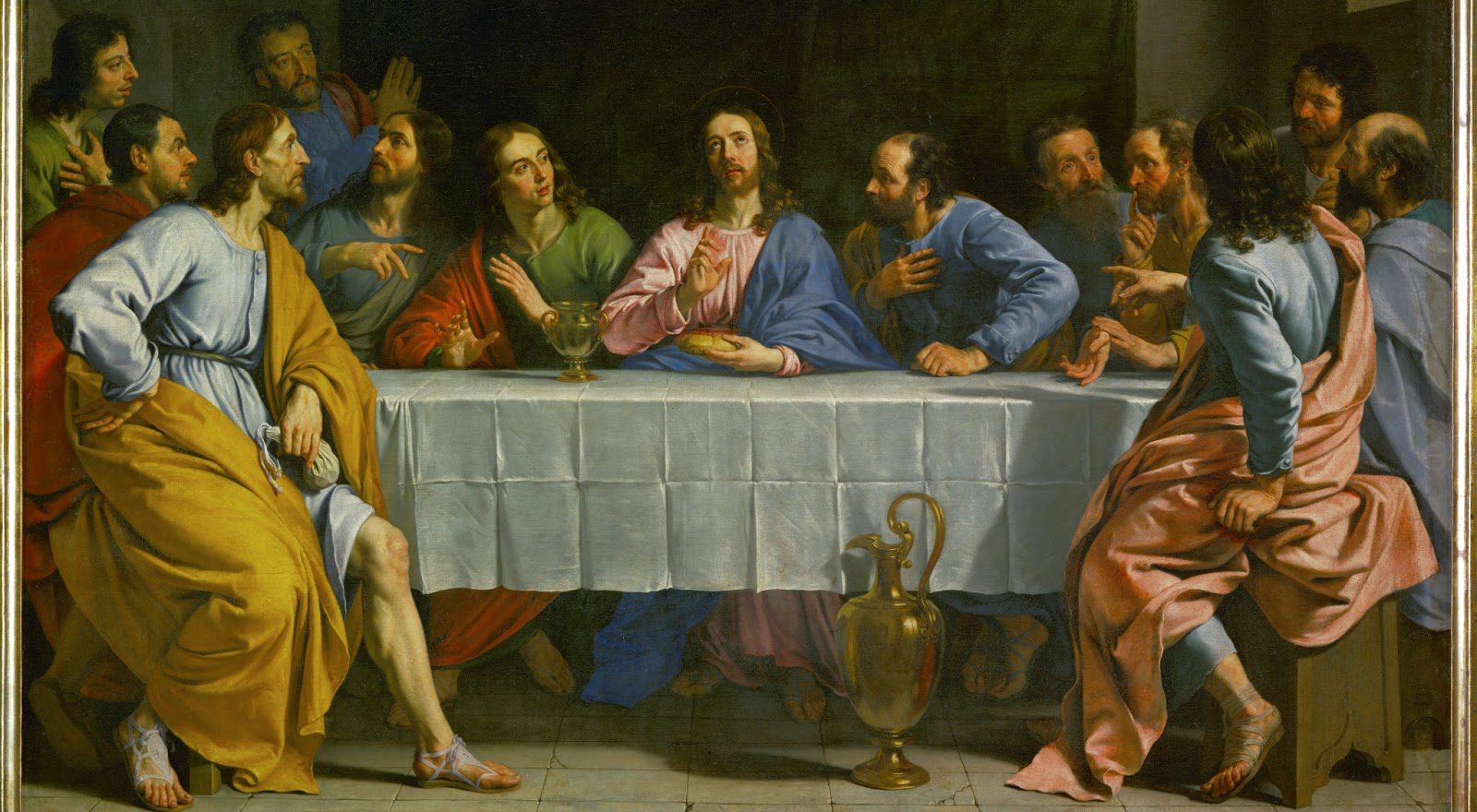
Organising seating plans for a banquet is not something most of us have a great deal of experience doing. Most of our dining nowadays is not that formal. The closest we might come is organising the seating at a Wedding Breakfast. So it is difficult for us to understand quite how important seating arrangements at dinner were in the Ancient World. Where you sat mattered. Where you were seated was signified by your rank in society, with the most important placed next to the host. This morning’s Gospel begins with Jesus having been invited to a Friday night dinner, the most important meal in the Jewish week, by a senior Pharisee. Luke’s comment is instructive:

‘ac yr oeddent hwy â’u llygaid arno’

‘they were watching him closely’ (Lk 14:1)

Jesus is on display. He is being studied by all those present at the dinner — presumably other leading Pharisees. They want to see if Our Lord will do, or say, something that they can find fault with. They are keen to catch Him out, in order to criticise Him. Jesus uses this experience as a teaching opportunity:

‘Yna adroddodd ddameg wrth y gwesteion, wrth iddo sylwi sut yr oeddent yn dewis y seddau anrhydedd’

‘Now he told a parable to those who were invited, when he noticed how they chose the places of honour’ (Lk 14:7)

The self-important dinner guests are all trying to get as close to the host as possible. They want the best places, the best food, and to be seen as being superior. So Jesus tells the following parable:

“Pan wahoddir di gan rywun i wledd briodas, paid â chymryd y lle anrhydedd, rhag ofn ei fod wedi gwahodd rhywun amlycach na thi; oherwydd os felly, daw’r sawl a’ch gwahoddodd chwi’ch dau a dweud wrthyt, ‘Rho dy le i hwn’, ac yna byddi dithau mewn cywilydd yn cymryd y lle isaf. Yn hytrach, pan wahoddir di, dos a chymer y lle isaf, fel pan ddaw’r gwahoddwr y dywed wrthyt, ‘Gyfaill, tyrd yn uwch’; yna dangosir parch iti yng ngŵydd dy holl gyd-westeion.

“When you are invited by someone to a wedding feast, do not sit down in a place of honour, lest someone more distinguished than you be invited by him, and he who invited you both will come and say to you, ‘Give your place to this person’, and then you will begin with shame to take the lowest place. But when you are invited, go and sit in the lowest place, so that when your host comes he may say to you, ‘Friend, move up higher.’ Then you will be honoured in the presence of all who sit at table with you.” (Lk 14:8-1o)

In practical terms, what Jesus is advising is sensible, and wise, because it removes the possibility of losing face. To this day in the Middle East, and elsewhere, the situation envisaged in the parable would be seen as a source of shame, or honour, depending on whether you were promoted to a place near the host, or demoted to a more distant seat. We tend not to be so aware of such considerations, and many people instinctively gravitate towards the back. Christ’s parable makes the point that humility is better than pride: 

“Oherwydd darostyngir pob un sy’n ei ddyrchafu ei hun, a dyrchefir pob un sy’n ei ddarostwng ei hun.”

“For everyone who exalts himself will be humbled, and he who humbles himself will be exalted.” (Lk 14:11)

To have an attitude which does not seek out the place of honour contrasts strongly with the guests who have done exactly that. Our Lord is pointing out that humility is the better way.

Christianity is a religion of humility. It starts from the premise that we have to rely upon God’s grace to save us, through faith. God takes the initiative, and we respond. We do not save ourselves. The point of salvation is that God is the host who says: ‘Friend come up higher’. We do not deserve a seat of honour, nor have we thought ourselves worthy of it. Yet a loving and generous God says to all who turn to Him: ‘Friend come up higher’. This is the Good News of the Kingdom, and it turns our human expectations on their head. Jesus then develops His teaching: 

Meddai hefyd wrth ei wahoddwr, “Pan fyddi’n trefnu cinio neu swper, paid â gwahodd dy gyfeillion na’th frodyr na’th berthnasau na’th gymdogion cyfoethog, rhag ofn iddynt hwythau yn eu tro dy wahodd di, ac iti gael dy ad-dalu. Pan fyddi’n trefnu gwledd, gwahodd yn hytrach y tlodion, yr anafusion, y cloffion, a’r deillion; a gwyn fydd dy fyd, am nad oes ganddynt fodd i dalu’n ôl iti; cei dy dalu’n ôl yn atgyfodiad y cyfiawn.”

He said also to the man who had invited him, “When you give a dinner or a banquet, do not invite your friends or your brothers or your relatives or rich neighbours, lest they also invite you in return and you be repaid. But when you give a feast, invite the poor, the crippled, the lame, the blind, and you will be blessed, because they cannot repay you. For you will be repaid at the resurrection of the just.” (Lk 14: 12-14)

People were having parties to display their wealth, social status, and connections. This still happens today. But God has a different understanding of hospitality. In His vision it is not about what you get, but what you can give to others. Generosity is what really matters. By inviting those who cannot invite you back in return, you are being generous to those who are in no position to repay you. Jesus’ teaching here is also about the banquet of the Kingdom of God, the Eucharist. Jesus, as God, invites the poor, those in need of healing — in other words all of humanity, you and me — to the feast of the Kingdom. The purpose of the Eucharist is so that God can feed us, with His Body and Blood, to heal us. In this divine banquet God does for us what we cannot do for ourselves, and gives us a foretaste of Heaven. We cannot repay God, but we can be thankful, and accept what is offered, allowing it to transform us. 

Christ has an important and strong message for His host and his fellow diners. We see Our Lord advising them to be generous and not to seek any reward. Human Society is complex. The giving and receiving of gifts has always been a crucial part of how society works. It creates networks of obligation: if you give someone something, they may feel obliged to return the favour. That is fine in human terms, but when we transfer it to the divine realm we are faced with a problem. What can we give God? Does Our Heavenly Father need or want anything? No! Because God is by nature, perfect, complete, and self-sufficient. Almighty God cannot want or need anything. As a result of this God is able to give the purest form of gift, which does not require anything in return. There can be no obligation, because humanity cannot give Our Creator anything. God is able give without expecting anything in return. This is what happens in the Incarnation when Our Lord is given to and for us. Throughout His life and ministry, to His Passion, Death, and Resurrection all He is and does is for our benefit. God is generous to us, not so that we can be generous in return, but simply for our own good. Likewise our sacrifice of praise is not for God’s benefit, but ours, demonstrating that we are living the way we should: flourishing by being loving, generous, and thankful. 

Instead of the norms of human interaction and obligation, Christ presents us with a completely different paradigm. The dinner invitations in the Kingdom are for the ‘poor, the crippled, the lame, and the blind’ (Lk 14:13). That means us! God longs to lavish His riches upon us; to heal our wounds, and to restore our sight. In turn, by our care for those who are weak, outcast, or deemed socially undesirable, we proclaim the Kingdom of God in our actions. Each one of us is called to the banquet here and now, in order that our souls may be nourished with Word and Sacrament. The Eucharist is the banquet of the Kingdom, which heals us, and transforms us more and more into God’s likeness.

God gives Himself, so the we might live in Him. This is true generosity — a generosity which expects nothing in return. Christ is the model of humility and loving service that we should imitate. Jesus takes the lowest place, bearing the weight of our sin, on the Cross. There He dies that we might live. There He dies to make us free.

Therefore, may we, in humility, recognise our need of God, and respond to His invitation to the Divine banquet. We pray that God will heal us, restore us and strengthen us to live lives of humility and love. In response we give thanks and sing the praises of God, Duw Dad, Duw y Mab, a Duw yr Ysbryd Glân. God the Father, God the Son, and God the Holy Spirit. I’r hwn y priodoler pob gogoniant, arglwyddiaeth, a gallu, yn awr, ac yn oes oesoedd. To whom be ascribed all glory, dominion and power, now and forever. Amen

Trinity X: Enter by the Narrow Gate

Every four years we have the opportunity to watch the pinnacle of human sporting achievement in the Olympic Games. The last games took place in Paris last year, where the finest athletes from around the world gathered to compete. It takes a great deal of talent in order to take part in the Olympics, and also a huge amount of effort and training. To be the best requires a significant effort. Living out our Christian Faith is, likewise, something we have to work at. Following Christ should both challenge us, and bring out the best in us. It is hard work, often requiring great effort on our part. And yet, the effort we put in is as nothing compared to that of God, who sent His Son to be born for us, and to show us how to live. Jesus demonstrates the Love of God in action, to show us how to live lives of radical generosity. Our endeavours are part of a co-operation with God, so that we can grow and develop in our faith together. 

In today’s Gospel, Jesus and His disciples are making their way towards Jerusalem, teaching in the towns and villages, en route. As they travel, Jesus is asked a question:

‘Meddai rhywun wrtho, “Arglwydd, ai ychydig yw’r rhai sy’n cael eu hachub?”’

‘And someone said to him, “Lord, will those who are saved be few?”’ (Lk 13:23)

Christ does not answer the question directly. Instead He offers some advice:

‘Ac meddai ef wrthynt, “Ymegnïwch i fynd i mewn trwy’r drws cul, oherwydd rwy’n dweud wrthych y bydd llawer yn ceisio mynd i mewn ac yn methu. Unwaith y bydd meistr y tŷ wedi codi a chau’r drws, gallwch chwithau sefyll y tu allan a churo ar y drws, gan ddweud, ‘Arglwydd, agor inni’; ond bydd ef yn eich ateb, ‘Ni wn o ble’r ydych.’’

‘And he said to them, “Strive to enter through the narrow door. For many, I tell you, will seek to enter and will not be able. When once the master of the house has risen and shut the door, and you begin to stand outside and to knock at the door, saying, ‘Lord, open to us’, then he will answer you, ‘I do not know where you come from.’” (Lk 13:23-25)

First and foremost, the narrow way is the way of the Cross. Our Lord is going to Jerusalem to be rejected, and to be put to death, so that He may rise again, and show the world the way back to the God who loves us. We who follow Him are to expect nothing less. We show ourselves to be Christ’s disciples not just by what we SAY but also by what we DO. Our actions often speak louder than our words.

In the Gospel, people presume that because they heard Jesus teach and have eaten and drunk with Him and that all is well. While they have enjoyed Our Lord’s hospitality, they have not actually responded to His message. They have not believed in who He is, and what He does. Rather than salvation being offered solely to the people of Israel, instead the whole world is included. Everyone, everywhere, all at once, is invited. This is something radical, something new, which is first prophesied in the words of Isaiah in our first reading this morning. 

The prophet Isaiah has a vision of a future with a God who knows us and loves us. He gathers the people of the world together, so that they may see God’s divine glory. As Christians, we believe that this teaching points forward to Jesus Christ, who is the Word made flesh, the true demonstration of God’s majesty in the world. He will demonstrate that glory most fully on the Cross, when He suffers and dies for humanity, to take away our sin. This is the sign God sets among us, so that we may declare God’s greatness among the nations. The Cross is the sign of God’s love for all people.

Declaring God’s glory is the prophetic aspect of the Church — the sharing of the Good News. With it comes a commitment to holiness of life, so that our words and actions are in tune with each other. We cannot succeed in this by our own strength or efforts. Instead we must rely upon God’s grace. Every day we should humbly acknowledge our need for God. Only Our Heavenly Father can transform us. Only God can forgive our sins, our failures and our shortcomings. Through grace Christ can transform us, more and more into His likeness. 

This recognition of our limitations and failings opens up a space where God can be at work in our lives, transforming us to live the Divine life of Love. This is the narrow door of this morning’s Gospel. The opening is narrow because if we have a sense of our own self-importance or of our worth which is too large then we cannot enter — our image of who and what we are gets in the way.

Following Christ is often hard. It is far easier to coast along and take the easy options. That is why Christians meet together to encourage and support each other. This is what the Church is for. We are a collection of sinners trying to live in response to the love of God which has been poured out on each of us. This is something which we need to do together: loving each other; loving our enemies; living out forgiveness as we have been forgiven and loved by God. This is a radically different way of life to that which the world encourages us to practise. Naturally we will sometimes fall short, but the point is not that we fail and give up, but that we keep trying. We must keep on loving and forgiving. Plugging away together, in order to be built up as the body of Christ. Humbly letting God be at work in us. He, by His Grace will transform our nature and make us the people of God, able to live out His love in our community.

As I have already said, living out our faith is hard. In addition, others may mock us as we attempt to follow the Gospel. Yet, we believe in a God who loves us, and who would never belittle our efforts to follow Him. As Christians we pray for the fire of God’s love to be kindled in our hearts and lives, so that we may be ablaze for Him, aflame with love for God and for our neighbour. Loving our enemies and our friends, enables us to change the world, not just this village, or this county, but all of God’s creation; all of humanity. In doing so we help others to know God’s love so that it may rule in their hearts and lives.

And so, my brothers and sisters in Christ, let us then hasten to enter through the narrow gate, so that God may continue to transform us. Let us give thanks that His saving love and power is at work in our hearts and our lives, remodelling us. Let us sing praise to God, i Duw Dad, Duw y Mab, a Duw yr Ysbryd Glân. To God the Father, God the Son, and God the Holy Spirit. I’r hwn y priodoler pob gogoniant, arglwyddiaeth, a gallu, yn awr, ac yn oes oesoedd. To whom be ascribed all glory, dominion and power, now and forever. Amen

Trinity VIII: Trust

These are certainly interesting times in which to live. But as Our Lord says in this morning’s Gospel, ‘Paid ag ofni’ ‘Do not be afraid’ (Lk 12:32) We can put our trust in one who will not abandon us, the God who loves us.

In this morning’s second reading from the Letter to the Hebrews, we hear words addressed to a community of believers facing persecution. They are tempted not to believe in Jesus, and instead to revert to their former Jewish faith. The author has explained that Christ is our great High Priest, and that His Sacrifice has atoned for our sins. In the passage we hear an overview of salvation history from the creation of the universe to the time of the patriarchs. Just as the people of Israel sought to return from their exile in Egypt, we too seek our eternal homeland: Heaven. We ‘desire a better country, that is a heavenly one’, and we trust that our real homeland is in Heaven with God. This is the end of our journey of faith; a better place, where the worries of this world are cast aside.

In today’s Gospel Jesus comforts his followers.We are reminded that the Church began small with only a few people. Two thousand years later it is a huge community. We may feel that we are only a tiny part of the whole, that we are not big enough, and that is ok. When the Church began it was fragile and faithful, a flock uncertain of what the future would hold. But God loved the early Christians, just as He loves us, and longs to see us flourish. God gives us the Kingdom, a realm where He is in charge, and we can live lives of freedom, love, and fulfilment. God’s kingdom is a place of generosity, where gifts are shared. It looks radically different to the world around us, where wealth, status, power, and possessions matter, and are seen to give people value. But these are, in Luke’s words, ‘purses that wear out.’ In the kingdom of God, on the other hand, all of humanity has infinite value and dignity. This is because we are all made in the image and likeness of God. This is what gives us value, and not any other reason. God pours out His Grace upon the church freely, out of love, so that humanity might flourish, and have life in all its fulness.

Christians have the sure hope of Heaven, of sharing in the divine nature, together, with the saints. To be united with love itself. The love that created all that is. The love which redeemed us through the Suffering, Death, and Resurrection of Our Lord and Saviour, Jesus Christ. That is why the second part of our Gospel reading this morning tells us to be prepared and ready for Our Lord’s Return.

Jesus, having ascended to the right hand of God the Father in Heaven, will return, as our Saviour and as Judge of all. Should we be afraid? Jesus tells us constantly not to be afraid. There is a choice for the hereafter: Heaven or Hell. It is up to us: what we believe and how we live our lives. The central message in the proclamation of the Kingdom is ‘Repent and Believe’. We can choose to turn away from sin, to turn to God, believe in Him, and live our lives accordingly. Or we can choose not to. We have a greater choice to make, which lasts for ever. Do we trust in a God who loves us so much that His Only Son died for us. Do we gather at this altar and receive the Eucharist so that we may be transformed by Him?

If we do these things, we open ourselves to living the Christian Life. The faith of our hearts affects who we are and what we do. We can be filled with joy as we await a judge who comes in mercy and love. The one who heals our wounds, and restores in us the image of the God who not only created us but all that exists. Our Christian faith leads us to action, which can transform the world around us, so that God’s kingdom becomes a reality, here and now. For where our treasure is, there our heart will be also. What greater treasure is there than eternal life in Heaven with God? This is offered to us freely. Nothing this world proffers comes close. It is all fleeting: wealth, power, privilege, do not last. But we can trust in the eternal promise of a God who loves us, and we can be ready to greet Him, when he comes again. Through the power of Christ’s sacrificial Death we have the hope of Heaven and the assurance of sins forgiven. This is GOOD NEWS. It helps us see the vanity of the world for what it is.

We all need to be ready for Jesus, when He comes. We do not know when this will be, but we are told that it will be at a time when we do not expect. Also Jesus will not come as we might expect. Instead of appearing as a judge, as someone powerful, Jesus reconfigures our understanding of power and authority. Rather than being someone who expects to be served, Jesus will come again to continue to serve. God, the Creator, Redeemer, and Sustainer of all creation, will come and put on an apron and care for us. This image defies our expectation and understanding. It gives us a foretaste of the glory that is to come, where we will be transfigured like Our Lord, and experience the fulness of God’s kingdom.

However, for this to take place we need to be careful, and we need to be vigilant. Just because we do not know when Jesus will return does not mean that we can take things easy. Nor can we afford to be lax or lazy, and negligent in the way we treat others. That would be to go against the message of the Gospel. We need to both think and act as though Jesus will return NO —, during this very Eucharist — to judge and serve us. As we will welcome His Eucharistic presence with open hands and open hearts, so all of our lives should be open and welcoming to Him. We need to prefer Jesus and His Kingdom to anything else. For where our treasure is, there will our heart be also. We can have no excuse for not choosing Jesus and His message of the Kingdom over the cares and concerns of this world.

What we believe and how we act together are a sign and symbol of our relationship with God and one another. So then, let us continue to live lives together which proclaim the Gospel in word and deed, so that when Our Lord comes He may find us ready and doing his will, and singing the praise of God the Father, God the Son, and God the Holy Spirit, to whom be ascribed as is most right and just all might, majesty, glory, dominion, and power, now and forever.

Trinity VII: Generosity

Advertising media are constantly telling us that we need a new car, a larger house, the latest gadgets, expensive clothes, and exotic holidays. If we have all these things, we are told, then we will be truly happy. Covetousness is portrayed as a virtue. However, the more we have, the more we want. People are never satisfied. Even billionaires are happy to squeeze the poor if it will make them more money. St Paul, however, tells us that, as Christians, we should not focus our energies on the things of this world, and the author of Ecclesiastes reminds us that: ‘gwagedd llwyr yw’r cyfan’ ‘All is vanity’ (Eccles 1:2).

This morning’s Gospel begins with a striking scene. Jesus is teaching as He travels to Jerusalem, and a crowd gathers around Him. Then someone asks a question:

“Athro, dywed wrth fy mrawd am roi i mi fy nghyfran o’n hetifeddiaeth.”

“Teacher, tell my brother to divide the inheritance with me.” (Lk 12:13) 

As a religious teacher, Jesus could be called upon to make rulings on religious or legal matters. However he has no desire to do so:

Ond meddai ef wrtho, “Ddyn, pwy a’m penododd i yn farnwr neu yn gymrodeddwr rhyngoch?” A dywedodd wrthynt, “Gofalwch ymgadw rhag trachwant o bob math, oherwydd, er cymaint ei gyfoeth, nid yw bywyd neb yn dibynnu ar ei feddiannau.”

But he said to him, “Man, who made me a judge or arbitrator over you?” And he said to them, “Take care, and be on your guard against all covetousness, for one’s life does not consist in the abundance of one’s possessions.” (Lk 12:14-15)

Our Lord takes a family dispute over property and turns it into a teaching opportunity. The world around us tends to equate riches with success, but it is easy to forget that wealth is a means to an end, and not an end in itself. The unnamed man wants to get hold of his inheritance. He wants money so that he can spend it. He is obsessed with worldly things. Jesus is trying to encourage people to live in a different way: God’s way. 

To illustrate His point, Our Lord uses a parable:

“Yr oedd tir rhyw ŵr cyfoethog wedi dwyn cnwd da. A dechreuodd feddwl a dweud wrtho’i hun, ‘Beth a wnaf fi, oherwydd nid oes gennyf unman i gasglu fy nghnydau iddo?’ Ac meddai, ‘Dyma beth a wnaf fi: tynnaf f’ysguboriau i lawr ac adeiladu rhai mwy, a chasglaf yno fy holl ŷd a’m heiddo. Yna dywedaf wrthyf fy hun, “Ddyn, y mae gennyt stôr o lawer o bethau ar gyfer blynyddoedd lawer; gorffwys, bwyta, yf, bydd lawen.”’

“The land of a rich man produced plentifully, and he thought to himself, ‘What shall I do, for I have nowhere to store my crops?’ And he said, ‘I will do this: I will tear down my barns and build larger ones, and there I will store all my grain and my goods. And I will say to my soul, Soul, you have ample goods laid up for many years; relax, eat, drink, be merry.’” (Lk 12: 16-19)

In worldly terms, the man in the parable can be understood as behaving sensibly. But his concern with material success leads the man to think that he is in a safer position than he actually is. This is made clear at the end of the parable:

“Ond meddai Duw wrtho, ‘Yr ynfytyn, heno y mynnir dy einioes yn ôl gennyt, a phwy gaiff y pethau a baratoaist?’ Felly y bydd hi ar y rhai sy’n casglu trysor iddynt eu hunain a heb fod yn gyfoethog gerbron Duw.”

“But God said to him, ‘Fool! This night your soul is required of you, and the things you have prepared, whose will they be?’ So is the one who lays up treasure for himself and is not rich towards God.” (Lk 12:20-21)

Jesus is showing us that you cannot put pockets in your shroud. You cannot take wealth with you when you die. In the afterlife you do not need ‘stuff’. If the man had thought, How can I share what I have? How can I use my riches to alleviate poverty and make people’s lives better? Then he could have done some good. Instead, he has put all his efforts solely into increasing his own wealth. God does not want us to live selfish materialistic lives. But rather to help bring about a world where goods are shared, and where the hungry are fed. Yet we still see images of starving people, and many do not have a roof over their head. Whilst we cannot individually solve all the problems of the world, we can make an impact in our communities and beyond.

The Book Ecclesiastes, known also as Qoheleth, the Preacher, begins by stressing the fact that everything is vanity. All things are empty and worthless, in themselves, especially when compared to God. Our Heavenly Father longs for humanity to respond to His love and generosity, by living lives characterised by compassion and unselfishness. This is why Jesus preaches the Good News of the Kingdom of God: to wake humanity up to eternal realities and encourage us to live thoughtfully and generously here and now. 

This is the life which stores up treasure in Heaven, which we live when we have, ‘Rhowch eich bryd ar y pethau sydd uchod, nid ar y pethau sydd ar y ddaear’ ‘Set our minds on things that are above, not on things that are on earth’ (Col 3:2). This is what a Christian life really looks like, when lived out in the world. This is the sort of radically different life which can and does both change and transform the world: offering people a way that is different to an existence obsessed with possessions. This is the way of love and forgiveness, of knowing that we are loved and forgiven, no matter who we are or what we have done. With God’s help we can live as a community which embodies radical love and forgiveness in the world and offers others a new way of being, which turns the obsessions and values of the world on its head. The Christian way of life is that radical, that revolutionary, and can be lived out right here, today. Our Lord is speaking to us through His Scriptures. He calls us to live this life for the good of others, for our own good, and for the glory of the God who made us. God our Father loves us. He saves us from the tyranny of worldly possessions and sin, so that we can be free. Allowing us to focus on worshipping Him, and helping to make the Kingdom of God a reality.

This then is what the Church is called to be. As Christians, we need to be like a lamp set upon a lamp stand or a city upon a hill: shining, attractive, a light amidst the darkness of this world. We are called to represent a radical alternative: embodying life in all its fullness. So let us choose to live this way, together. Let us set our hearts on heavenly things. Let us build on Christ, our sure foundation. God is our treasure, and His wealth is self-giving love.

By gathering together this morning we are living out God’s kingdom here and now. Through our prayer, worship, and generosity, we can change the world; so that all people may be transformed and sing the praise to God, i Duw Dad, Duw y Mab, a Duw yr Ysbryd Glân. God the Father, God the Son, and God the Holy Spirit. I’r hwn y priodoler pob gogoniant, arglwyddiaeth, a gallu, yn awr, ac yn oes oesoedd. To whom be ascribed all glory, dominion and power, now and forever. Amen.

Rembrant The Parable of the Rich Fool, Gemäldegalerie, Berlin.

Trinity VI – Lord teach us how to pray

If I were to ask you if you could recite a text off by heart you might regale me with a poem, a passage from a book, or a speech from Shakespeare learned at school. If I then asked whether you knew any prayers off by heart you would probably say ‘The Lord’s Prayer’, ‘Y Gweddi’r Arglwydd’. Even if they do not know all the words, most people have heard the Lord’s Prayer. It is an important part of our Christian heritage.

Our readings this week focus on prayer. Christians know that God answers prayer. However, God may say, ‘Yes’ or ‘No’ or even ‘Not yet’. We may not like the answer, but one will be forthcoming. Prayer is both simple and mysterious. Simple, insofar as it is our conversation with the divine. Mysterious, in the fact that prayer changes us, and not the Almighty. So prayer is something of a paradox, being at the same time quite straightforward and also an enigma. We pray to God, but prayer doesn’t change God, it changes us. Pagans in Greece and Rome would bargain with their gods: if you do this for me, I will give you that. Jews and Christians, however, are profoundly different. We do not bargain with God, and we do not need to, because we are in a covenant relationship with our Heavenly Father who loves us.

It would be all too easy to see this morning’s first reading, where Abraham tries to save Sodom and Gomorrah, as being concerned with bargaining with God. However, prayer does not work in that way. What the reading from Genesis shows us is that we are in a covenant, a relationship with God, and that God is generous and loving. He wants the best for us.

The American Bishop Fulton J. Sheen summed it up as follows:

‘Prayer is helplessness casting itself on Power, infirmity leaning on Strength, misery reaching to Mercy, and a prisoner clamouring for Relief.’ Life Is Worth Living, Second Series (New York, 1954), p. 213.

In today’s Gospel the disciples ask Jesus:

“Arglwydd, dysg i ni weddïo, fel y dysgodd Ioan yntau i’w ddisgyblion ef.”

‘Lord teach us to pray, just as John taught his disciples’ (Lk 11:1).

Jesus and John the Baptist were cousins. They both preached about the need for both repentance and belief in the Good News. Also, they both taught their disciples how to pray. Virtually all Christian prayer can be described by one or more of four phrases: ‘please’, ‘thank you’, ‘I’m sorry’, and ‘I love you’. God does not need our prayers, we do. This is because praying allows us to open our hearts and lives to God, allowing Him to change us. Jesus answers His disciple’s request to teach them how to pray as follows:

Ac meddai wrthynt, “Pan weddïwch, dywedwch: ‘Dad, sancteiddier dy enw; deled dy deyrnas; dyro inni o ddydd i ddydd ein bara beunyddiol; a maddau inni ein pechodau, oherwydd yr ydym ninnau yn maddau i bob un sy’n troseddu yn ein herbyn; a phaid â’n dwyn i brawf.’” 

He said to them, ‘Say this when you pray: ‘“Father, may your name be held holy, your kingdom come; give us each day our daily bread, and forgive us our sins, for we ourselves forgive each one who is in debt to us. And do not put us to the test.”’  (Lk 11:2-4)

The version of Jesus’ words we are most familiar with is that found in Matthew’s Gospel, which is slightly longer than Luke’s prayer. But both contain the same elements. The prayer begins by calling God, ‘Abba’ ‘Father’ ‘Tâd’. Such a term expresses our close relationship with our Creator. The idea that God’s name should be kept holy goes hand in hand with the desire that God’s Kingdom may come. Christianity is all about the establishment of the Kingdom of God: that God may rule over our hearts and our lives.

Next, we ask God to feed us, to forgive us our sins, as we forgive those who sin against us, and to free us from temptation. It is important to note that every celebration of the Eucharist begins with us all acknowledging our own shortcomings and asking God’s forgiveness. Saying sorry to God is important, because it keeps us humble, and helps to maintain our relationship with God, and with each other. We all make mistakes, you do, I certainly do. Recognizing this is the start of a process which allows us to grow in virtue and holiness, through God’s love. The high point of the Eucharist is when God feeds us with His Body and Blood, providing us with spiritual food to nourish our souls. All our food is a gift from God, and being thankful for it, just like being humble, helps to keep us close to God. If you don’t already do so, try to get into the habit of saying a few words of thanks to God before you eat a meal.

There are good reasons why Christians regularly pray this prayer, which we call The Lord’s Prayer, Y Gweddi’r Arglwydd. Jesus has told us how to pray and gave us these words. Similarly, we celebrate the Eucharist because Jesus told us to ‘do this in memory of Him’ and so we do. We use the Lord’s Prayer when we pray, because it honours God, and it forms us as Christians. We will soon pray it together before Communion, asking that God will continue the process of transforming us day by day into His image and likeness. 

In the Gospel reading Jesus continues to teach His disciples using parables. In this narrative, there is a late-night hospitality emergency. A friend is on a journey (just like Jesus and His disciples), and arrives at your home (just like Jesus visited Mary and Martha last week). Naturally you want to be hospitable as a sign of your friendship. So, you pop round to a next door and ask to borrow some food. However, the initial response you receive from your neighbour is not very positive:

‘Paid â’m blino; y mae’r drws erbyn hyn wedi ei folltio, a’m plant gyda mi yn y gwely; ni allaf godi i roi dim iti’, rwy’n dweud wrthych, hyd yn oed os gwrthyd ef godi a rhoi rhywbeth iddo o achos eu cyfeillgarwch, eto oherwydd ei daerni digywilydd fe fydd yn codi ac yn rhoi iddo gymaint ag sydd arno ei eisiau.’

“Do not bother me. The door is bolted now, and my children and I are in bed; I cannot get up to give it you.” I tell you, if the man does not get up and give it him for friendship’s sake, persistence will be enough to make him get up and give his friend all he wants. (Lk 11:7-8)

Jesus shows that, despite the neighbour not wanting to get up and be bothered with the request for food, because the person is persistent and stays there, disregarding the initial reluctance, his request is granted. Perseverance is rewarded. The point Our Lord is making is that God hears our prayers and answers our requests. We might need to ask more than once, and commit time to prayer, but we will not be ignored.

‘Ac yr wyf fi’n dweud wrthych: gofynnwch, ac fe roddir i chwi; ceisiwch, ac fe gewch; curwch, ac fe agorir i chwi. Oherwydd y mae pawb sy’n gofyn yn derbyn, a’r sawl sy’n ceisio yn cael, ac i’r un sy’n curo agorir y drws.’

‘So I say to you: Ask, and it will be given to you; search, and you will find; knock, and the door will be opened to you. For the one who asks always receives; the one who searches always finds; the one who knocks will always have the door opened to him.’ (Lk 11:9-10)

The phrase ‘knock, and the door will be opened to you’ ‘curwch, ac fe agorir i chwi’ reinforces the teaching in the parable. The neighbour opens the door and gives the requested provisions. Jesus then develops His teaching, by drawing a comparison between the lesser and the greater. This is a common rabbinic practice:

‘Os bydd mab un ohonoch yn gofyn i’w dad am bysgodyn, a rydd ef iddo sarff yn lle pysgodyn? Neu os bydd yn gofyn am wy, a rydd ef iddo ysgorpion? Am hynny, os ydych chwi, sy’n ddrwg, yn medru rhoi rhoddion da i’ch plant, gymaint mwy y rhydd y Tad nefol yr Ysbryd Glân i’r rhai sy’n gofyn ganddo.’

‘What father among you would hand his son a stone when he asked for bread? Or hand him a snake instead of a fish? Or hand him a scorpion if he asked for an egg? If you then, who are evil, know how to give your children what is good, how much more will the heavenly Father give the Holy Spirit to those who ask him!’ (Lk 11:11-13)

The Good News of the Kingdom is that God answers prayer. Not only that, but He gives us more than we ask Him for. God also grants us the Holy Spirit. This is an important concept in the wider narrative of Luke’s Gospel and the Acts of the Apostles, where the Church is filled with God’s Spirit. God answers prayer because He is our Creator, and we are in a special relationship with Him. In today’s Old Testament reading God listens to Abraham’s pleas for mercy and then grants them. 

Turning to St Paul’s Letter to the Colossians, the apostle can proclaim baptism as the way to salvation, because this enables us to share in Christ’s Death and Resurrection, and the forgiveness of our sins:

‘Y mae wedi ei bwrw hi o’r neilltu; fe’i hoeliodd ar y groes.’ 

‘he has done away with it by nailing it to the cross’ (Col 2:14)

God cancels our debt by paying it Himself, overcoming evil and sin through an outpouring of healing love. This is the demonstration that God loves us and hears our prayers, and so we continue to remember the Passion through our celebration of the Eucharist. God forgives our sins, and gave His life for us, nailing our sins to the Cross. He suffered in His flesh so that we who have died with Christ in our baptism may also share His risen life. That is why Jesus can assure us that God listens to our prayers and answers them, giving us the good things we need.

My brothers and sisters in Christ, through practising both prayer and action, may we be agents of God’s love and grace in the world. May we transform our homes, our communities, and the whole world. Filled with God’s generous love, compassion and forgiveness, let us give glory to God, Duw Dad, Duw y Mab, a Duw yr Ysbryd Glân. God the Father, God the Son, and God the Holy Spirit. I’r hwn y priodoler pob gogoniant, arglwyddiaeth, a gallu, yn awr, ac yn oes oesoedd. To whom be ascribed all glory, dominion and power, now and forever. Amen.

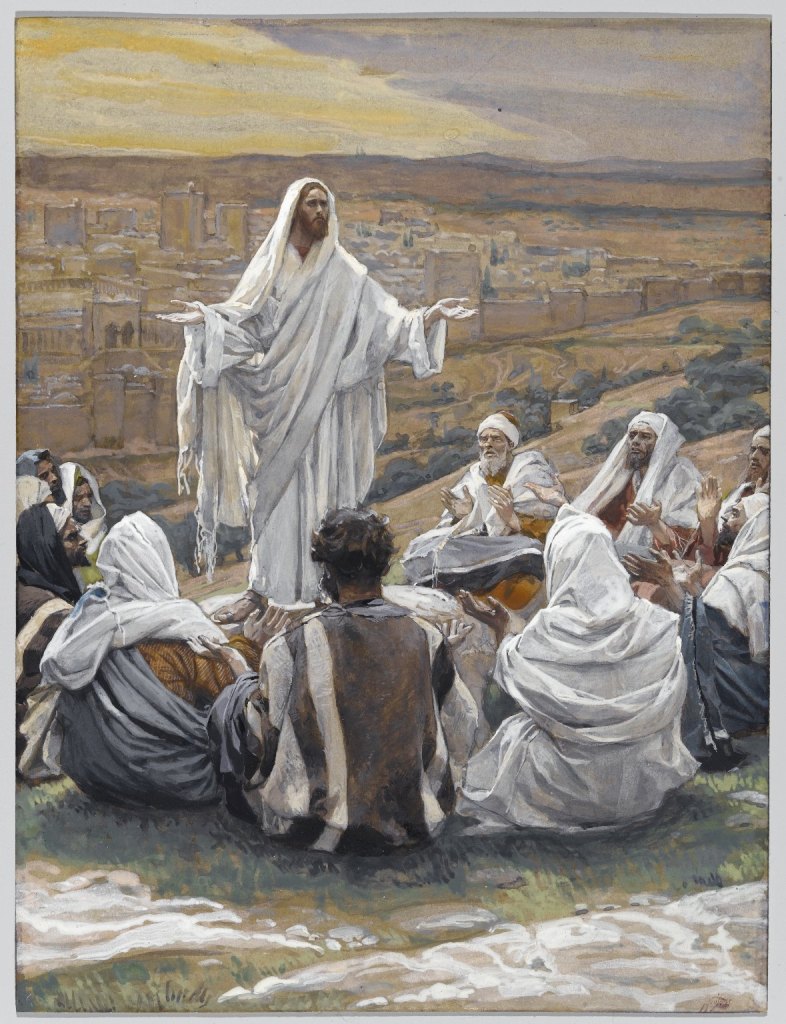
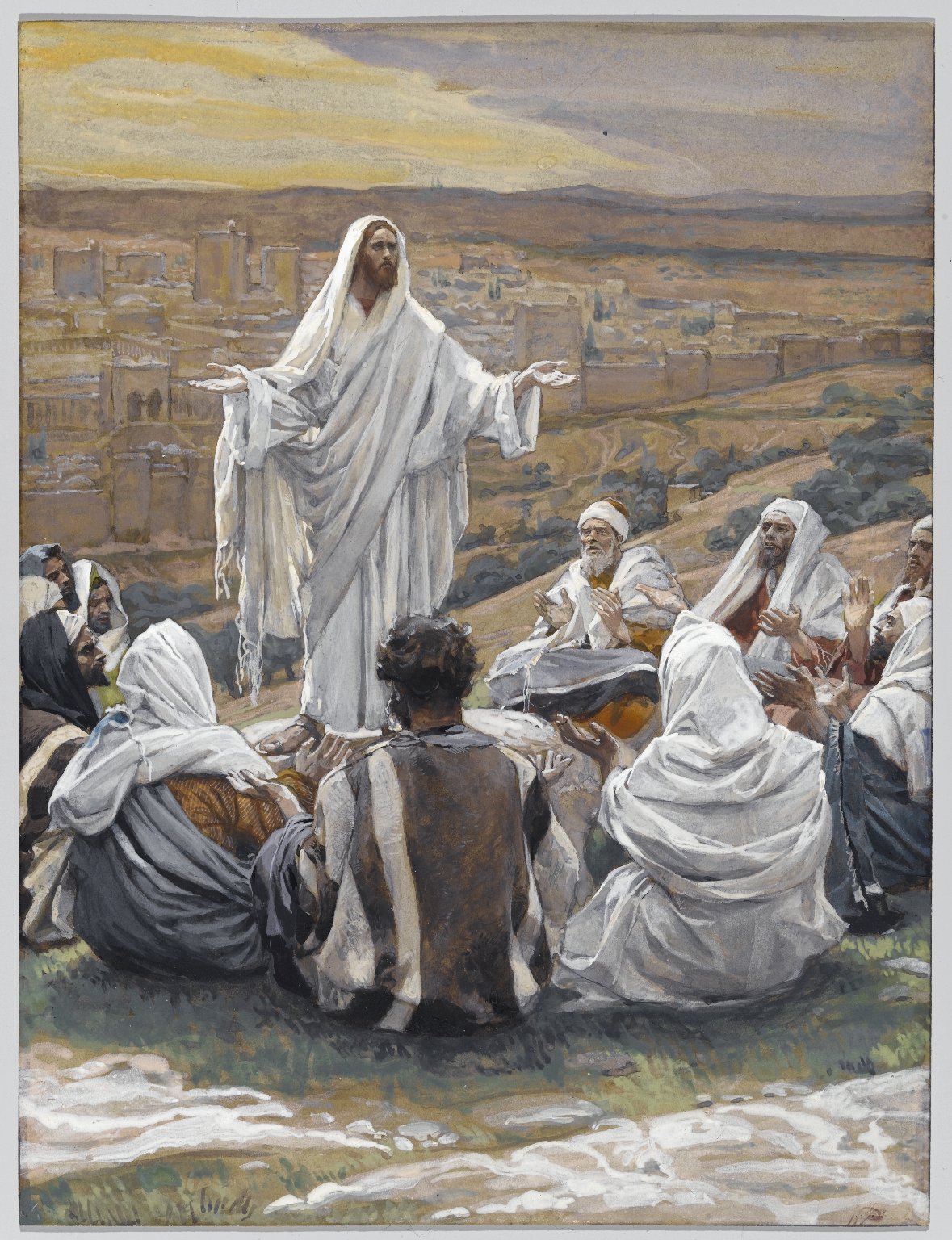
James Tissot – The Lord’s Prayer [Brooklyn Museum]

Trinity V – Mary & Martha

Life is all about decisions. The choices that we make can have a massive effect upon our lives. We often think of decisions as ‘either/or’ alternatives. However, we may be making a false distinction. Living the Christian life is often much more a case of ‘both/and’ rather than ‘either/or’. Nowhere is this shown with greater clarity than through the question of faith and action. These two concepts are not in opposition: they are two sides of the same coin. To make the Kingdom of God a reality we need both contemplation and practical application. If work and prayer are kept in balance, then our duties towards God and our neighbour can be fulfilled, and we can grow in faith and love. As Christians we need to demonstrate our faith by being hospitable and welcoming, as well as prayerful. 

Hospitality is the focus of this morning’s first reading from the Book of Genesis. God appears to Abraham at the Oak of Mamre near the town of Hebron, nineteen miles south of Jerusalem. Abraham is visited by three angels and looks after them, offering them hospitality, and taking care of them. In return the Patriarch is blessed with the promise of a son. From early times, biblical interpreters understand these three angels as symbolising the Trinitarian nature of God as Father, Son, and Holy Spirit, revealing their nature to Abraham, our father in faith. This view became particularly relevant during the fourth-century debate on the nature of God, which led to the formation of the Creed we will soon recite together. In this passage from Genesis, we see both what God is like and how we should respond to God: with generous hospitality, care and attention.

In today’s Gospel, Jesus is still travelling. As there were no hotels or service stations, the only way to eat, drink, and rest was through hospitality. Our Lord is welcomed into her home by a woman named Martha: 

‘Yr oedd ganddi hi chwaer a elwid Mair; eisteddodd hi wrth draed yr Arglwydd a gwrando ar ei air.’

‘And she had a sister named Mary, who sat at the Lord’s feet and listened to his teaching’ (Lk 10:39)

These sisters, Mary and Mary, may well be the same women who appear in John’s Gospel as the sisters of Lazarus, and who live in Bethany. There they are described as friends of Jesus who regularly provide hospitality for Him and His followers. We are told that Mary is giving Jesus her undivided attention, she sits at His feet, as a student would sit at the feet of their teacher. Her sister does not join her as she is so busy looking after the guests:

‘Ond yr oedd Martha mewn dryswch oherwydd yr holl waith gweini, a daeth ato a dweud, “Arglwydd, a wyt ti heb hidio dim fod fy chwaer wedi fy ngadael i weini ar fy mhen fy hun? Dywed wrthi, felly, am fy nghynorthwyo.”’

‘But Martha was distracted with much serving. And she went up to him and said, “Lord, do you not care that my sister has left me to serve alone? Tell her then to help me” (Lk 10:40)

Like the lawyer in the Parable of the Good Samaritan, Martha is attempting to justify herself. In order to do this, she blames others — in fact her own sister — to cover up the fact that she is anxious and troubled with the cares of the world. She allows these worries to take precedence over the Gospel. Martha has shown Jesus a hospitable welcome, but then she tries to involve Him in a domestic squabble, which is centred on justifying her own busyness. Jesus is a teacher, proclaiming the Good News of the Kingdom. While it is important that He and his disciples are fed and cared for, the immediate concern is to give Our Lord their undivided attention, and listen to what He has to say:

‘Atebodd yr Arglwydd hi, “Martha, Martha, yr wyt yn pryderu ac yn trafferthu am lawer o bethau, ond un peth sy’n angenrheidiol. Y mae Mair wedi dewis y rhan orau, ac nis dygir oddi arni.”’

‘But the Lord answered her, “Martha, Martha, you are anxious and troubled about many things, but one thing is necessary. Mary has chosen the good portion, which will not be taken away from her.”’ (Lk 10:41-42)

Jesus does not tell Martha off, rather He is encouraging, calming her down, and showing her a better way of living. Only one thing is necessary: for a host to pay attention to a guest, as Abraham did at the Oak of Mamre in the first reading this morning .

The point is not simply to prefer the contemplative to the practical, or the spiritual to the physical. Instead we need to balance our physical needs with our spiritual ones. Martha is too wrapped up in her own affairs and has forgotten what is really important. Jesus does not want special treatment, or a lavish banquet with lots of dishes. What He wants are people who pay attention to what He has to say. Martha has not chosen a bad portion, service and hospitality are important. However, attention — staying close to Jesus, listening to what He says, and not being distracted — is how we grow as Christians. This is the good portion that Christ speaks of. 

Jesus of Nazareth frequently breaks down cultural barriers. Last week we saw a Samaritan, a complete outcast held up as a model of neighbourly love and compassion. This week Mary sits at Christ’s feet, breaking a cultural taboo regarding women. She wants to be taught, and therefore displays both love and attention. Jesus tells us that, like Mary, we too should be attentive to God and His message for us in the Gospel. In doing this we emulate Mary, and choose the better part. This is a choice which has a moral dimension. When we truly listen attentively to what God says to us, our actions and our character are formed, helping our growth in holiness. Nourished by Word and Sacrament, we can progress in living out the graces which we received in our baptism, and prepare for our inheritance with the Saints in glory. We do not achieve this through prayer and contemplation alone, but by making our prayer and our work, all that we do, and all that we are, a response to God and to our neighbour. By responding in this way we are truly living out lives of Christian love. Such love is the nature of God and binds together the persons of the Trinity. This is a powerful catalyst which transforms both us and our world.

My brothers and sisters in Christ, through practising both prayer and action, may we be agents of God’s love and grace in the world. May we transform our homes, our communities, and the whole world. Filled with God’s love, and compassion, let us give glory to God, Duw Dad, Duw y Mab, a Duw yr Ysbryd Glân. God the Father, God the Son, and God the Holy Spirit. I’r hwn y priodoler pob gogoniant, arglwyddiaeth, a gallu, yn awr, ac yn oes oesoedd. To whom be ascribed all glory, dominion and power, now and forever. Amen.

Trinity IV – The Good Samaritan

This year I have re-kindled my love of reading fiction. I have been introduced to some new authors by books lent to me by friends and neighbours or recommended by my wife. Taking time to lose yourself in a good book is one of life’s greatest (and cheapest) pleasures. Everybody loves a good yarn. Stories are also a useful way to make a point and to convey a deeper truth about human nature. They help us to understand who we are and how we should live. As Jesus travels from Galilee to Jerusalem He teaches, using parables, vivid stories we know and love. As I said, everyone likes to hear a good yarn, but the parables are much more than that. Jesus uses parables to explain the Kingdom and His Mission — who He is, and what He is doing — so that His followers can understand and share that knowledge with others.

In today’s Gospel, Our Lord encounters a legal expert. This lawyer wants to put Jesus to the test, to check whether what He says is acceptable under Jewish religious law. This man of the law asks Him: 

“Athro, beth a wnaf i etifeddu bywyd tragwyddol?”

“Teacher, what shall I do to inherit eternal life?” (Lk 10:26)

Jesus replies by asking the lawyer to tell Him what is written in the Law, and questions how, as a legal expert, he interprets it. The man replies, by reciting scripture:

‘Câr yr Arglwydd dy Dduw â’th holl galon ac â’th holl enaid ac â’th holl nerth ac â’th holl feddwl, a châr dy gymydog fel ti dy hun.’

“You shall love the Lord your God with all your heart and with all your soul and with all your strength and with all your mind, and your neighbour as yourself.” (Lk 10:27)

The first part of the lawyer’s answer is a quotation from the book of Deuteronomy (6:5), part of the Shema, a Jewish declaration of faith in God, which begins ‘Hear, O Israel: the Lord our God is one’. The second part is a quotation from Leviticus (19:18). This summary of the Law outlines humanity’s duty both towards God and also towards our neighbours. This legal expert understands how he should behave, and how he should live his life. He has basically repeated Jesus’ teaching word-for-word. So far, so good. The lawyer then asks Our Lord another question:

‘Ond yr oedd ef am ei gyfiawnhau ei hun, ac meddai wrth Iesu, “A phwy yw fy nghymydog?”’

‘But he, desiring to justify himself, said to Jesus, “And who is my neighbour?”’ (Lk 10:29)

The lawyer wants to legitimise himself, and so he asks Jesus to define his terms. In a legal argument, this is a typical response. However, the lawyer’s motives are questionable. He is interested in self-justification, in making himself look good. Our Lord is happy to answer, and does so with a parable: The Parable of the Good Samaritan. This well-known story is set on road from Jerusalem to Jericho. Despite being a major route, it is steep and windy (a bit like some of the roads around here!), dropping over three thousand feet in seventeen miles. The road takes a traveller through lots of empty desert land, where bandits made a living robbing travellers. The sight of someone who has been attacked and robbed was probably not an unusual one along this route. 

In the parable, a priest and a Levite pass by one such victim, crossing to the other side as they do not wish to become ritually impure. Under Jewish law, if they touched a dead body, they would become unclean, and unable to offer sacrifice and worship in the Temple until they had been ritually cleansed. Rather than risk this, these Temple officials assume that the man is dead and simply pass on by. Soon afterwards another traveller sees the man who has been attacked:

‘Ond daeth teithiwr o Samariad ato; pan welodd hwn ef, tosturiodd wrtho. Aeth ato a rhwymo ei glwyfau, gan arllwys olew a gwin arnynt; gosododd ef ar ei anifail ei hun, a’i arwain i lety, a gofalu amdano.’

‘But a Samaritan traveller who came upon him was moved with compassion when he saw him. He went up and bandaged his wounds, pouring oil and wine on them. He then lifted him on to his own mount, carried him to the inn and looked after him.’ (Lk 10:33-34)

Samaritans and Jews generally kept separate from each other. They had profound theological differences, and the Jews worshipped on Mt Zion, while the Samaritans worshipped on Mt Gerizim. When the Jews went into exile in Babylon, the Samaritans remained behind. Despite the fact that they all worshipped the same God, they were completely estranged from each other. However, the Samaritan has compassion. He is deeply moved to help someone in need, and so he crosses the cultural boundaries and takes care of the man. We are told that he pours oil and wine on the injured man. This was current medical practice. It was also what one would do at a sacrifice at the Temple. Therefore, it is possible that Jesus’ image relates to some words of the prophet Hosea:

‘Oherwydd ffyddlondeb a geisiaf, ac nid aberth, gwybodaeth o Dduw yn hytrach na phoethoffrymau.’

‘For I desire mercy and not sacrifice, the knowledge of God rather than burnt offerings.’ (Hosea 6:6)

The priest and the Levite are concerned with sacrifice and purity, but the Samaritan shows the mercy that God desires. He binds up the injured man’s wounds, treats them, brings him to an inn, and takes care of his needs. The parable shows true love and mercy in action.

Traditionally the Church has also seen deeper meanings at work in this story. It has understood the Parable of the Good Samaritan in a symbolic way, which explains both the human condition, and Christ’s saving work. In one reading, the traveller represents Adam, and stands for all humanity. His wounds are those of sin and disobedience. The Samaritan is Jesus, the one who has compassion on us. The inn stands for the Church, the place where sinners are healed, and the oil and wine are the sacraments of the Church, which heal us. However, Christ is also the man wounded for our transgressions, who suffers for humanity, to heal our wounds.

Such an interpretation shows us how rich this parable is. Jesus tells it to His followersas He is travelling up to Jerusalem — the place where He will suffer and die. Our Lord is teaching His disciples what they need to understand in order to put mercy and love into action. Love and mercy are signs of the Kingdom of God. God’s Kingdom is where Jesus reigns from the Cross. It is where Christ overcomes sin and Death, to offer eternal life to all humanity. This is why St Paul can write:

‘Oherwydd gwelodd Duw yn dda i’w holl gyflawnder breswylio ynddo ef, a thrwyddo ef, ar ôl gwneud heddwch trwy ei waed ar y groes, i gymodi pob peth ag ef ei hun, y pethau sydd ar y ddaear a’r pethau sydd yn y nefoedd.’

‘Because God wanted all perfection to be found in him and all things to be reconciled through him and for him, everything in heaven and everything on earth, when he made peace by his death on the cross.’ (Col 1:19-20)

Our Lord’s Passion is a work of reconciliation. It is the job of every Christian to carry on that work. The Parable of the Good Samaritan is also about the reconciliation of people from different cultures — through Christ. Today Christians from so many different backgrounds gather together to read and study scripture. To pray together. To be healed and nourished by God, through the Sacraments. Both Baptism and the Eucharist are outward signs of spiritual grace, the power of God to heal, reconcile, and transform us all. We are gathered today in the ‘inn’ of the Church, so that God can heal us, and strengthen us to go out and share God’s saving love with others.

Following the example of the Good Samaritan, may we also be agents of God’s love and grace in the world. May we transform our homes, our communities, and the whole world. Filled with God’s love, compassion, and healing, let us give glory to God, Duw Dad, Duw y Mab, a Duw yr Ysbryd Glân. God the Father, God the Son, and God the Holy Spirit. I’r hwn y priodoler pob gogoniant, arglwyddiaeth, a gallu, yn awr, ac yn oes oesoedd. To whom be ascribed all glory, dominion and power, now and forever. Amen.

James Tissot – The Good Samaritan (Brooklyn Museum)

Trinity I

Children love to ask questions: who? what? where? when? and, especially, why? The Questions we ask and the Answers we give can say an awful lot about who we are. One of the most fundamental question is one concerning identity: ‘Pwy wyt ti?’ ‘Who are you?’ My response would be: ‘I am Adrian, and I am a priest’. The name I was given in baptism, and the fact that God has called me to share in the priesthood of His Son Jesus Christ, define who I am, and what I do. They are why I am standing here, saying this to you, today.

From the time of their exile in Babylon, and before, the people of Israel had looked for a Messiah, a leader of the House of David. They sought someone who would bring them the peace and security that they longed for. The first reading this morning comes from the prophecy of Zechariah, and was written perhaps as late as two hundred years before the birth of Jesus Christ. At this time the Jewish people were struggling under Greek rulers who tried to abolish their identity, and all that they held sacred. The prophet Zechariah looks forward to a messianic future, when the people of the House of David :

‘edrychant ar yr un a drywanwyd ganddynt, a galaru amdano fel am uniganedig, ac wylo amdano fel am gyntafanedig.’

‘They will look on the one whom they have pierced; they will mourn for him as for an only son, and weep for him as people weep for a first-born child’ (Zech 12:10)

The mention of looking upon one whom they have pierced anticipates Christ and His Crucifixion, as noted by John’s Gospel: ‘They will look on him whom they have pierced’ (19:37). Zechariah also writes of the outpouring of a ‘spirit of kindness and prayer’, just as we have seen at Pentecost. Here Jesus’ Death, Resurrection and gift of the Holy Spirit are clearly prefigured: God’s saving plan is announced in the words of the prophet. A few verses later, Zechariah prophesies:

‘Yn y dydd hwnnw bydd ffynnon wedi ei hagor i linach Dafydd ac i drigolion Jerwsalem, ar gyfer pechod ac aflendid.’

‘On that day there shall be a fountain opened for the house of David and the inhabitants of Jerusalem to cleanse themselves from sin and uncleanness.’ (Zech 13:1)

This is what the Cross achieves for those who are washed in the Blood of Lamb, as we are at our Baptism. Christ’s death takes away our sins. Through Baptism and the Eucharist we share in Jesus’ Death and are raised to new life with Him. When St Paul writes to the Galatian Church, he stresses their common baptism:

‘Oblegid yr ydych bawb, trwy ffydd, yn blant Duw yng Nghrist Iesu. Oherwydd y mae pob un ohonoch sydd wedi ei fedyddio i Grist wedi gwisgo Crist amdano. Nid oes rhagor rhwng Iddewon a Groegiaid, rhwng caeth a rhydd, rhwng gwryw a benyw, oherwydd un person ydych chwi oll yng Nghrist Iesu.’

‘You are, all of you, sons of God through faith in Christ Jesus. All baptised in Christ, you have all clothed yourselves in Christ, and there are no more distinctions between Jew and Greek, slave and free, male and female, but all of you are one in Christ Jesus.’ (Gal 3:26-28)

St Paul is preaching a profound message. He explains that none of the distinctions which the world makes matter in God’s eyes. There is no difference. All people are one in Christ. There is a radical equality in the Church: all are welcome to come and experience God’s saving love. When Paul preached, nearly two thousand years ago, this was a revolutionary idea, and it still is today. We are all one in Christ: young and old, rich and poor. It doesn’t matter who we are, where we are from, or anything else. All that matters is that we find our true identity in Christ. This makes us heirs of God’s promise: that we would enjoy eternity in Heaven with our Creator and Sustainer.

In today’s Gospel Jesus begins by asking His disciples this question:

“Pwy y mae’r tyrfaoedd yn dweud ydwyf fi?”

“Who do the crowds say that I am?” (Lk 9:18)

His followers reply that the people think a variety of things: John the Baptist, Elijah, or another of the prophets. They recognise Jesus’ proclamation of the Good News of the Kingdom and understand Him in terms that are familiar to them. Christ, however, presses the issue by asking His disciples another question:

“pwy meddwch chwi ydwyf fi?”

“But who you say that I am?” (Lk 9:20)

Peter answers, ‘Meseia Duw, the Christ of God’ (Lk 9:20). By this answer Peter confesses that Jesus is the Messiah, God’s Anointed, the fulfilment of Zechariah’s prophecy. The disciple’s confession of belief is also our confession of belief as Christians: Jesus is the Christ, the Saviour, the Son of God. As we will soon declare in the words of the Nicene Creed.

Jesus instructs the disciples that they should not communicate this knowledge to anyone, at this time. He then explains what is about to happen:

“”Y mae’n rhaid i Fab y Dyn,” meddai, “ddioddef llawer a chael ei wrthod gan yr henuriaid a’r prif offeiriaid a’r ysgrifenyddion, a’i ladd, a’r trydydd dydd ei gyfodi.”

“The Son of Man is destined to suffer grievously, to be rejected by the elders and chief priests and scribes and to be put to death, and to be raised up on the third day” (Lk 9:22)

Jesus tells the disciples about His Passion, Death and Resurrection, because it is His mission. He has come to reconcile God and humanity, and to restore and heal our broken relationship. Christ then invites His followers to follow His example:

“Os myn neb ddod ar fy ôl i, rhaid iddo ymwadu ag ef ei hun a chodi ei groes bob dydd a’m canlyn i. Oherwydd pwy bynnag a fyn gadw ei fywyd, fe’i cyll, ond pwy bynnag a gyll ei fywyd er fy mwyn i, fe’i ceidw. Pa elw a gaiff rhywun o ennill yr holl fyd a’i ddifetha neu ei fforffedu ei hun?

‘If anyone wants to be a follower of mine, let him renounce himself and take up his cross every day and follow me. For anyone who wants to save his life will lose it; but anyone who loses his life for my sake, that man will save it.’ (Lk 9:23-24)

At the beginning of His public ministry, Jesus invites people to repent and believe. Now He calls us to self-denial, and to embrace the Cross. Christ asks us to accept the most shameful way to die, a form of torture, used by the Romans to execute slaves. As those saved and made free by the Cross of Christ, we take up our own cross and follow Jesus. We imitate Him, in selfless love and devotion, and we bear the weight of the cross in life’s difficulties and disappointments. Following Christ is hard. It is a struggle, and we cannot just rely solely upon our own willpower to succeed. Instead, the Christian life needs to be a corporate effort, something we do together, trusting in God’s Grace to be at work in us, both individually and as a community.

Christ wants us to lose our lives for His sake, and find freedom in His service. There is something paradoxical in Jesus’ teaching. We are to find perfect freedom in obedience, in service of God and each other. Each of us needs to be humble enough to accept what God offers us, and be prepared to try to live it out together. It isn’t about us, but rather letting God be at work in us. When we co-operate with God, and live in love, and joy, and peace, we flourish as human beings. This is liberating, and it is what Our Heavenly Father wants for us. This is what true freedom looks like, and we are called to live it together, today and every day.

So, as we celebrate the joy of our Salvation, let us pray that we may be changed by God’s love, and share this love with others. Let us give thanks for the mystery and wonder that is God, Duw Dad, Duw y Mab, a Duw yr Ysbryd Glân. God the Father, God the Son, and God the Holy Spirit. I’r hwn y priodoler pob gogoniant, arglwyddiaeth, a gallu, yn awr, ac yn oes oesoedd. To whom be ascribed all glory, dominion and power, now and forever. Amen.

Jesus discourses with his disciples – James Tissot (Brooklyn Museum)

Palm Sunday 2025

J.R.R. Tolkien’s famous novel, The Lord of the Rings is a long and complicated book. The main story is the journey of an unlikely group of heroes across Middle Earth to destroy a powerful Ring at Mount Doom, where it was forged. But it is also the tale of how Aragorn becomes the King of Middle Earth. He does this by reuniting the lands of Arnor and Gondor, and defeating the evil Sauron with a coalition of men, elves, dwarves, and hobbits. In constructing his narrative Tolkien drew on his encyclopaedic knowledge of medieval European literature and his deep Christian faith. The desire to see a monarchy re-established lies at the Jewish and Christian faiths. Jews await the coming of the Messiah, the anointed Davidic King, which Christians believe is Jesus. We believe that the Messiah has already come, to set His people free, and to inaugurate a kingdom of love, forgiveness, and reconciliation. 

The service this morning begins with Luke’s account of the first Palm Sunday, when Jesus enters Jerusalem on a donkey, an animal of peace and not war. The prophet Zechariah, writing 500 years before Jesus, looks forward to a messianic future:

‘Bydd lawen iawn, ti ferch Seion; a chrechwena, ha ferch Jerwsalem: wele dy frenin yn dyfod atat: cyfiawn ac achubydd yw efe; y mae efe yn llariaidd, ac yn marchogaeth ar asyn, ac ar ebol llwdn asen.’

Rejoice greatly, O daughter of Zion! Shout aloud, O daughter of Jerusalem! Behold, your king is coming to you; righteous and having salvation is he, humble and mounted on a donkey, on a colt, the foal of a donkey.’ (Zech 9:9)

The donkey ridden by Jesus reminds us of the humble beast of burden, which carried his Mother to Bethlehem for His birth, and then carried the Holy Family into exile in Egypt. This is an act of humble leadership which realizes what the prophets foresaw. It shows us that Jesus Christ is truly the one who fulfils the hopes of the people of Israel. The Hebrew Scriptures look forward to His deliverance of Israel. This is what is made real in front of the eyes of those watching the Carpenter’s son enter the Holy City of Jerusalem.

Scripture is fulfilled and there is a burst of popular enthusiasm — people wave palm branches and cry out. However, having someone claim to be a relative of King David is a direct challenge to Herod, the puppet ruler installed to comply with the Romans. The events we heard described, before our procession this morning, sound something like a political coup — a bid to replace a leader lacking legitimacy. Such an attempt is bound to have wide repercussions. It represents a direct challenge to the ruling house and to Rome, and therefore it has to be countered. The masses in Jerusalem are expecting a king of the Davidic line. One who would be seen as a threat to the ruling élite, a challenge to the status quo. But in Christ, God gives Israel something else. Yes, he is a King of the line of David, but Jesus is the one who rules with love. He has no desire for power, or honour. Naturally, the leaders and those in authority are threatened by Him: Christ turns their world on its head. He is an awkward inconvenience. Jesus, however, does not want their power. He has come to accomplish something completely different. What is seen as a potential political coup is in fact a renewal of religion, the fulfilment of prophecy, and a new hope for Israel. Political and religious leaders can only see the threat to their hold on power, rather than the opportunity which Christ offers.

At its heart Christianity is the offer of new life in Jesus Christ. This starts with repentance, and acceptance of our need for God. As we grow in faith, we come to believe and trust in a God who loves us, and gives Himself for us. Then we can experience healing, wholeness, and fullness of life in and through Him. Such gifts come at great cost to the giver, which the week ahead will make clear to us in the most stark and direct way. 

One way of reading St Luke’s account of Christ’s Passion and Death is through the lens of conversion and reconciliation. After Jesus celebrates the Eucharist a dispute arises amongst His disciples as to which of them is the greatest. There is something of a contrast here between the institution of the most solemn and sacred act of Christian worship, and the actions of the disciples who seem to be arguing like children in a playground: ‘I’m greater than you!’ ‘No, I’m greater than you!’. This is not how they should behave, so Our Lord explains:

‘Y mae brenhinoedd y Cenhedloedd yn arglwyddiaethu arnynt, a’r rhai sydd ag awdurdod drostynt yn cael eu galw yn gymwynaswyr. Ond peidiwch chwi â gwneud felly. Yn hytrach, bydded y mwyaf yn eich plith fel yr ieuengaf, a’r arweinydd fel un sy’n gweini.’

‘The kings of the Gentiles exercise lordship over them, and those in authority over them are called benefactors. But not so with you. Rather, let the greatest among you become as the youngest, and the leader as one who serves.’ (Lk 22:25-26)

Service of others lies at the heart of Christianity, not exercising power or influence. Christ is offering the world a new way to be, and the church needs to take this seriously, and follow His teachings.

As Jesus goes to Calvary, He tells the women of Jerusalem not to mourn for Him, but instead to mourn for themselves and their children. He says this because He understands that in a few years time the Romans will sack Jerusalem, and the people will be scattered in exile. Christ is more concerned with the needs of others than Himself, and as He goes to His execution, Our Lord is still a servant, caring for others.

As the Roman soldiers crucify Jesus He says:

“O Dad, maddau iddynt, oherwydd ni wyddant beth y maent yn ei wneud.”

‘Father, forgive them, for they know not what they do.’ (Lk 23:34)

Christ’s concern is for forgiveness and reconciliation — just as it has been throughout His earthly ministry. His life’s work is to restore each and every one of us to God and to pour out the Creator’s love on us. This is also evident from Jesus interaction with the penitent thief a few verses later:

Yna dywedodd, “Iesu, cofia fi pan ddoi i’th deyrnas.” Atebodd yntau, “Yn wir, rwy’n dweud wrthyt, heddiw byddi gyda mi ym Mharadwys.”

“And he said, ‘Jesus, remember me when you come into your kingdom.’ And Jesus said to him, ‘Truly, I say to you, today you will be with me in paradise.’” (Lk 23:42-43)

The criminal being executed for seditious acts against Rome expresses faith in Christ, and is rewarded with the grace earned for humanity on the Cross. Our Lord’s dying words are taken from Psalm 31:6, a confident prayer:

“O Dad, i’th ddwylo di yr wyf yn cyflwyno fy ysbryd.”

‘Father, into your hands I commit my spirit!’ (Lk 23:46)

Immediately afterwards the centurion in charge of the Crucifixion acts in a surprising manner, praising God and declaring Jesus to be innocent:

‘Pan welodd y canwriad yr hyn oedd wedi digwydd, dechreuodd ogoneddu Duw gan ddweud, “Yn wir, dyn cyfiawn oedd hwn.”’

‘Now when the centurion saw what had taken place, he praised God, saying, “Certainly this man was innocent!”’ (Lk 23:47)

The gathered crowds also do something unusual:

‘Ac wedi gweld yr hyn a ddigwyddodd, troes yr holl dyrfaoedd, a oedd wedi ymgynnull i wylio’r olygfa, tuag adref gan guro eu bronnau.’

‘And all the crowds that had assembled for this spectacle, when they saw what had taken place, returned home beating their breasts.’ (Lk 23:48)

In acting in this way they are expressing contrition and repentance, the necessary prerequisite to the acceptance of God’s grace. Salvation has become a reality and it is changing people’s lives. Just as it did two thousand years ago, it is still doing so today, and will continue to do so until the end of time itself.

Let us then, as followers of Jesus, hold up our palms as we rejoice in the generous love of God and prepare ourselves to celebrate Christ’s Passion. Let us give thanks for the fact that we are loved by God. And let us give glory i Duw Dad, Duw y Mab, a Duw yr Ysbryd Glân. To God the Father, God the Son, and God the Holy Spirit. I’r hwn y priodoler pob gogoniant, arglwyddiaeth, a gallu, yn awr, ac yn oes oesoedd. Amen. To whom be ascribed all glory, dominion and power, now and forever. Amen.

Lent IV

IT may seem strange that on the day in the year when we particularly remember mothers, the Gospel reading focuses on a father. However, given that the theme is love and generosity, the two are not as far apart as they may seem at first glance.

In the Gospels Jesus is often criticised for the company He keeps. Our Lord is shown associating with the ‘wrong sort of people’: sinners and tax collectors, those shunned by ‘polite society’. So, to make a point, Jesus tells a parable. 

A man has two sons, and the younger of the two asks his father for his inheritance:

‘Fy nhad, dyro imi’r gyfran o’th ystad sydd i ddod imi.’

‘Father, give me the share of property that is coming to me.’ (Lk 15:12)

At one level it is clear what is going on. The young man is asking for his inheritance, which he would normally receive after his father’s death. When he is given the money he goes off into the big, bad world. He is young, inexperienced, and not terribly wise. Like most young people he makes mistakes, and does foolish things. I know that I did, and I suspect that I’m not alone in that.

‘ymfudodd y mab ieuengaf i wlad bell, ac yno gwastraffodd ei eiddo ar fyw’n afradlon.’

‘the younger son gathered all he had and took a journey into a far country, and there he squandered his property in reckless living.’ (Lk 15:13)

The impetuous nature of youth has not changed much in two thousand years. We can see that things are going to go wrong, and they do.When the money runs out, the young man does try to get himself out of his mess by gaining employment, looking after someone’s pigs. For those of us living in the countryside this seems like a very sensible idea. However, under Jewish ritual law, animal husbandry was suspect, and those who did this work were deemed to be ritually impure. Also, swine were considered unclean animals. What the son has done is beyond the pale, and completely unacceptable to Jesus’ Jewish audience. 

Despite getting a job, the young man’s situation is not good:

‘Buasai’n falch o wneud pryd o’r plisg yr oedd y moch yn eu bwyta; ond nid oedd neb yn cynnig dim iddo.’

‘And he was longing to be fed with the pods that the pigs ate, and no one gave him anything.’ (Lk 15:16)

What is noticeable is that nobody is doing anything to help him: there is a distinct lack of charity and compassion amongst the people. The son, therefore,  decides to return home, and ask his father for forgiveness:

“Fe godaf, ac fe af at fy nhad a dweud wrtho, ‘Fy nhad, pechais yn erbyn y nef ac yn dy erbyn di. Nid wyf mwyach yn haeddu fy ngalw’n fab iti; cymer fi fel un o’th weision cyflog.’”

“I will arise and go to my father, and I will say to him, ‘Father, I have sinned against heaven and before you. I am no longer worthy to be called your son. Treat me as one of your hired servants.’” (Lk 15:18-19)

The son makes the journey back to his home. However, his father sees him a long way off, and runs to meet him. This behaviour, while normal and understandable to us, would have appeared strange to Jesus’ audience. Running wasn’t something that adults did. The father is breaking the rules, and acting in a way which defied the conventions of society. He has given away his property to his two sons, and now risks destroying his social capital. But he doesn’t care; it doesn’t matter. What is important is that his son has returned. The father embraces his lost son, kisses him, and then tells his servants:

‘Brysiwch! Dewch â gwisg allan, yr orau, a’i gosod amdano. Rhowch fodrwy ar ei fys a sandalau am ei draed. Dewch â’r llo sydd wedi ei besgi, a lladdwch ef. Gadewch inni wledda a llawenhau, oherwydd yr oedd hwn, fy mab, wedi marw, a daeth yn fyw eto; yr oedd ar goll, a chafwyd hyd iddo.’

“Bring quickly the best robe, and put it on him, and put a ring on his hand, and shoes on his feet. And bring the fattened calf and kill it, and let us eat and celebrate. For this my son was dead, and is alive again; he was lost, and is found.” (Lk 15:22-24)

The younger son is returned to his former state. He is accepted back into the family he left, he is treated with honour, and he is given respect. The calf that is slaughtered could potentially feed an entire community. The father is throwing a party for everyone to celebrate. However, the elder brother is (understandably) unhappy at his father’s reckless generosity. However, the purpose of Jesus’ parable is to teach people about the generous love of God, who longs to see prodigal humanity reconciled. God loves us enough to send His Son to die for us, to reconcile us to God, and to each other. 

In some ways, we are all like the prodigal son, and God is like the father in the parable. God loves us, and will do anything to see us return to where we belong: back home, embraced, restored, and made whole again. This is the central message of the Christian Faith: GOD LOVES US! We don’t deserve to be loved, we often turn away from God’s love, but God doesn’t abandon us, or reject us. Instead, our Heavenly Father welcomes us back, so that we may be transformed by His love. Love and forgiveness have the power to change us like nothing else. This love transforms the world. Like the prodigal son’s father, God is generous, extravagant, and loves us more than we can know or fully understand. As Christians, we experience that love, through the Church, when we read the Bible, in our Baptism, in the forgiveness of sin, and in the Eucharist, where we taste God’s real love and generosity. We receive it and are transformed by it. These things change and make us more generous and loving. They build up a community of faith, transformed by love, which can change the world.

So, my brothers and sisters, let us rejoice in the generous love of God and prepare ourselves to celebrate the Paschal mystery. Let us give thanks for our families and give glory i Duw Dad, Duw y Mab, a Duw yr Ysbryd Glân. I’r hwn y priodoler pob gogoniant, arglwyddiaeth, a gallu, yn awr, ac yn oes oesoedd. Amen.

James Tissot: The Return of the Prodigal Son (Brooklyn Museum)

Lent III

SOME of you may have visited the Egypt Centre on the campus of Swansea University. This small museum contains a fascinating collection of artefacts from a civilisation which is both strange and intriguing. In Ancient Egypt, gods were everywhere. Almost everything was worshipped as a god. This included the River Nile, which brought life, crops and fertility. Also there was the bull Apis in whose likeness the Israelites fashioned a Golden Calf. Another was Anubis with his black dog’s head, who was responsible for funerary rites. But in order to worship a divinity you first needed to know their name, and know who they were. 

In this morning’s first reading we hear that Moses is shepherding his father-in-law’s flock in the wilderness of Sinai. It is a difficult place: arid, rocky and mountainous. In the Ancient World, mountains were places for encounter with the divine. So when Moses sees a bush that is burning, but is not consumed by the fire, he wants to investigate what is going on. This leads to a meeting with God which will result in the Exodus, the journey from slavery to freedom; from Egypt to the Promised Land. 

God begins by saying who he is:

“Duw dy dadau wyf fi, Duw Abraham, Duw Isaac a Duw Jacob.”

‘I am the God of your father, the God of Abraham, the God of Isaac, and the God of Jacob.’ (Exod 3:6)

God has heard the cry of His people and is preparing to do something about their situation. He will lead them from Egypt to a land flowing with milk and honey. Moses then tells God that if he explains to the people that the God of their Ancestors has sent him, they will ask, ‘What is his name?’ The point of addressing a divinity by name was that then they would then listen to your prayers. This leads God to reply:

“Ydwyf yr hyn ydwyf. Dywed hyn wrth bobl Israel, ‘Ydwyf sydd wedi fy anfon atoch.’”

‘I Am Who I Am.’ And he said, ‘Say this to the people of Israel: “I Am has sent me to you.”’ (Exod 3:14)

God refuses to be named. God is who God is: the Creator of all, God of all. Almighty God is not to be reduced to a name or a category. However, He loves His People and intends, through Moses, to lead them from slavery in Egypt to freedom in the Promised Land. This journey is the event that will establish the people of Israel, and it also will provide the template for Jesus’ Passion, Death and Resurrection. 

Lent, at its heart, is a penitential season for Christians to prepare to celebrate the Passover which offers salvation to the whole world. This is why St Paul uses the story of the Exodus to remind the faithful of the importance of humility, and of knowing and acknowledging our need of God. As the Israelites were fed with spiritual food — manna — so Christians are fed with the Living Bread — Jesus Christ. As the Israelites were refreshed with spiritual drink, Christians drink the Blood of Christ, and are washed in the waters of Baptism. As Moses strikes the rock at Massah and Meribah, the Rock is Christ, upon whom we can build with sure foundations, against the storms of this world. Nourished by the Eucharist, we are fed by God, with God, so that He may transform us, so that we can share His Eternal Life. The Corinthians are taking this for granted, hence Paul’s warnings in the Epistle. Like the people of Corinth, we need to avoid sin, and turn back to God, and be sustained and upheld by Him, so that we can grow in faith.

Turning to this morning’s Gospel, we do not know who the Galileans that Pilate killed were. Galilee was renowned as a hotbed of political revolutionaries, full of people who wanted to free the Jewish people from Roman Rule. Forty years after Christ’s Passion, Rome will crush a revolution in Judea, and slaughter many people. Our Lord’s message to His followers is simple: repent. Repentance means changing your mind. Repentance means loving your enemies, and Repentance means living your life in a radically different way.

Once again, Jesus tells people a parable. A fig tree has not borne fruit in three years A man makes three visits to the fig tree. These visits represent the Patriarchs, the Prophets and the Gospel — the warnings given in Scripture to repent — and also the three years of Jesus’ earthly ministry. Despite the guidance, the fig does not bear fruit, therefore it should be cut down

However, the unproductive tree is not cut down, but instead it is given a reprieve. The gardener allows the fig tree another chance. This is grace: the free gift of God, granted and not earned. Only through God’s grace can we hope to bear fruit. God, the gardener who created humanity in Paradise, will offer himself as both Priest and Victim upon the Tree of Life, to bleed and die for love of us. This gardener will meet Mary Magdalene by the empty tomb on Easter Day so that we, and all humanity, may share Christ’s risen life. The fact that we are here today is proof that for two thousand years this tree has borne fruit in the Church.

God loves humanity, which is why — like the fig tree — we are given another chance. We are granted the opportunity to repent, to turn back to the God who loves us, and who longs to see us flourish. Our lives as Christians are a continual cycle of falling short, and turning back in repentance to the source of grace, love, and mercy: God. We receive God’s gifts, even though we are not worthy of His generosity, but that’s the point. Our Heavenly Father satisfies our deepest needs and desires out of love for us, so that, enfolded in His love, we might become more lovely, and be filled with God’s infinite love and grace. Only when we are watered by God’s love can we truly bear fruit. We are all forgiven, and we are all loved. That is what the Cross demonstrates: God’s unconditional love and forgiveness. Jesus’ willing sacrifice stands for all time, and fundamentally changes our relationship with our Creator and each other. Ours is a faith rooted in love, freely given for the life of the world and for every individual human being.

So, my brothers and sisters, let us prepare ourselves to celebrate the Paschal mystery so that we, and all the world, may give glory i Duw Dad, Duw y Mab, a Duw yr Ysbryd Glân. I’r hwn y priodoler pob gogoniant, arglwyddiaeth, a gallu, yn awr, ac yn oes oesoedd. Amen.

Lent I

The first reading this morning taken from the book of Deuteronomy, is part of the account of the Feast of First-fruits, called Shavuot. This feast celebrates the grain harvest in Israel, seven weeks after Passover. ‘What?’ you say, “Harvest Festivals?’ This seems a strange topic when we have just begun a six-week penitential season which is characterised by, amongst other things, fasting, abstaining from food. Yes, at first glance it does appear somewhat strange, but there is a reason. 

The reading from Deuteronomy is mostly an account of the words and actions made by the person offering the fruits of the earth to God. This includes a narration of preceding events: Israel’s journey from slavery in Egypt to Freedom in the Promised Land. It is a prayerful retelling of the Passover story, which gives thanks to God for His mighty acts. At the same time that the Jews re-live salvation history, we as Christians are preparing to do the same. Lent precedes Our Lord’s Passion, Death, and Resurrection (around the time of Passover), and also commemorates Jesus’ fasting in the desert at the beginning of His public ministry. 

The Christian journey through Lent is something of a trek through the desert. It is characterised by fasting, penitence and charity. These are the ways by which we prepare our souls and bodies to celebrate Our Lord’s Passion, Death, and Resurrection. We take time to solemnly ask forgiveness for all our wrongdoings, but we are also joyful knowing that Christ has overcome sin and death. There is a joy in what we do, and who we are, because of all that Christ has taught us and done for us. Lent is a hopeful and a healing time. And the world certainly needs hope and healing at the moment! These six weeks are both an opportunity to give ourselves a bit of encouragement in our spiritual lives, and they are also a time to prepare. As Christians, we travel with Christ from the wilderness of sin to the promised land of reunion with God the Father, and with each other.

The reading from Paul’s Letter to the Romans also begins by quoting from Deuteronomy (30:14), just before Moses offers Israel the choice between life and death, good and evil. But for Paul:

‘Os cyffesi Iesu yn Arglwydd â’th enau, a chredu yn dy galon fod Duw wedi ei gyfodi ef oddi wrth y meirw, cei dy achub.” Oherwydd credu â’r galon sy’n esgor ar gyfiawnder, a chyffesu â’r genau sy’n esgor ar iachawdwriaeth.’

‘if you confess with your mouth that Jesus is Lord and believe in your heart that God raised him from the dead, you will be saved. For with the heart one believes and is justified, and with the mouth one confesses and is saved.’ (Rom 10:9)

This is the heart of our faith as Christians: Jesus is Lord, not Caesar, nor any power of this world. Christ alone saves us, by His Death and Resurrection. We believe this and bear witness to our belief. 

Today’s Gospel takes us back to the time immediately after Jesus’ Baptism, when He begins His public ministry. Christ goes out into the desert to be alone, to be quiet, to fast and to pray, and to be close to God the Father. While He is in the desert, Jesus is tempted by the Devil. Satan uses three different approaches, beginning by saying: 

‘Os Mab Duw wyt ti, dywed wrth y garreg hon am droi’n fara.’

‘If you are the Son of God, command this stone to become bread.’ (Lk 4:3)

This is a temptation to be relevant, Jesus is hungry. The Devil is saying, ‘If you are the Son of God then do this’. This is the same thing that the crowd will say to Our Lord as He goes to be crucified. The Devil and the crowd both demand that God prove Himself, rather than accepting the presence of the Holy Spirit and the voice of God the Father at Christ’s Baptism: ‘Ti yw fy Mab, yr Anwylyd; ynot ti yr wyf yn ymhyfrydu.’ ‘You are my beloved Son; with you I am well pleased.’ (Lk 3:22) Jesus is pleasing to God because He is obedient, but Satan is all about disobedience; not listening to God, not obeying Him. Whereas Adam, the first man, causes sin to enter into the world by eating forbidden fruit. Christ, who is the second Adam, conquers by abstaining. The desert is the exact opposite of the garden of Eden. While Eden was full of plants, trees and animals, the desert is an empty, lifeless place.However, it becomes the setting for obedience, reconciliation and healing.

The second temptation put to Jesus is the allure of earthly power. The Devil says to Our Lord: 

‘I ti y rhof yr holl awdurdod ar y rhain a’u gogoniant hwy; oherwydd i mi y mae wedi ei draddodi, ac yr wyf yn ei roi i bwy bynnag a fynnaf. Felly, os addoli di fi, dy eiddo di fydd y cyfan.’

‘To you I will give all this authority and their glory, for it has been delivered to me, and I give it to whom I will. If you, then, will worship me, it will all be yours.’ (Lk 4:6-7)

Jesus chooses heavenly glory and the salvation of humanity rather than worldly power. The Devil can only offer a false god and fleeting influence, whereas Christ stands for what is true and eternal. The temptation to seek influence, and prestige, symbolised here by worshipping the Devil, leads to the misuse of power. It’s a very human failing. One that we see all too clearly in our world today.

The third temptation for Jesus, is to put God to the test. Here Christ is encouraged to be spectacular and self-seeking. Whenever we say, ‘look at me’ we are not saying, ‘look at God’. Jesus quotes Deuteronomy 6:16: ‘Peidiwch â gosod yr Arglwydd eich Duw ar ei brawf’ ‘You shall not put the Lord your God to the test’. God does not need to prove anything. He loves us, and sent His Son for us. If Jesus threw himself from the Temple it would be a great spectacle, but it wouldn’t achieve anything. The high place which Jesus will go up to is the Cross on the hill of Calvary. Here He will suffer and die to save humanity. This is where God shows His love for the world, through humiliation rather than by a glory-seeking stunt. 

Eventually the Devil gives up and departs. Christ’s faith and trust in God is stronger than temptation. We face the same temptations in our lives, but Jesus shows us that we can resist them. This isn’t easy — quite the opposite — but it is possible. This should encourage us as we try to follow Christ’s example, and grow in holiness this Lent. God does not ask the impossible of us, instead we try, and, when we fail, we ask for forgiveness. We grow in holiness in Lent through prayer, almsgiving, and fasting. Prayer offers us the opportunity to deepen our relationship with God. It is more about quality than quantity: expressing true repentance, for what we have done and failed to do, and resolving to do better in the future. Almsgiving helps us to be charitable and generous, to care for those in need, just as God is generous towards us.

Fasting is key, because it helps us to master our bodily cravings, to control what we eat and what we do, rather than being controlled by our appetites. This doesn’t mean that we should starve ourselves, but that we should be mindful of our actions and not give in to all our desires. Just as prayer is not about getting God’s attention or changing His mind, but rather changing who and what we are, making us more loving, humble and dependant on God. In the same way fasting stops us being slaves to our desires. It sets us free, and helps us to listen to God, and draw closer to Him. Through abstinence we enter into Christ’s suffering, so that we can follow the way of the Cross. We do this joyfully, because we are following Christ. We are learning to resist temptation, aided by prayer and a generous heart. Our aspiration is that this Lenten season will help us to grow in faith, hope, and love, and enable us to celebrate Our Lord’s Passion, Death and Resurrection with greater joy. 

So, my brothers and sisters, let us prepare ourselves to celebrate the Paschal mystery so that we, and all the world, may give glory i Duw Dad, Duw y Mab, a Duw yr Ysbryd Glân. I’r hwn y priodoler pob gogoniant, arglwyddiaeth, a gallu, yn awr, ac yn oes oesoedd. Amen.

Quinquagesima 2025

LIVING in the Welsh countryside we are surrounded by trees (coed). At this time of year we notice changes in them as catkins and buds appear. Spring is arriving, a new season, and the trees prepare for the transformations they will undergo during the months ahead. Likewise, we too need to prepare to enter a new season: Lent. The time of preparation for the transformation of Easter, when death turns to life through the Resurrection of Our Lord Jesus Christ.

In our first reading this morning we are given a criterion for judgement:

‘Fel y mae ffrwyth pren yn dangos y driniaeth a gafodd, felly y mae mynegiant rhywun o’i feddyliau yn dangos ei ddiwylliant’

‘The fruit discloses the cultivation of a tree; so the expression of a thought discloses the cultivation of a person’s mind.’ (Eccles. 27:6)

However, mention of trees and fruit makes us look both backwards and forwards. Back to Genesis, where humanity falls through eating forbidden fruit, and forward to Calvary, where the Cross becomes the tree of salvation. Christ is the fruit that hangs upon this tree, who heals our wounds, and who offers us eternal life.

In today’s Gospel, Jesus begins by telling a parable which seeks to criticise the Pharisees, and Religious Authorities of His day. 

“Adroddodd Iesu ddameg wrth ei ddisgyblion: “A fedr y dall arwain y dall? Onid syrthio i bydew a wna’r ddau? Nid yw disgybl yn well na’i athro; ond wedi ei lwyr gymhwyso bydd pob un fel ei athro.”

“Jesus told his disciples a parable: ‘Can a blind man lead a blind man? Will they not both fall into a pit? A disciple is not above his teacher, but everyone when he is fully trained will be like his teacher. ”(Lk 6:39-40)

The Pharisees are described as the blind leading the blind; teachers leading people the wrong way, oblivious to their own faults and shortcomings, yet judging others. They appear as hypocrites, as the teaching goes on to explain:

“Pam yr wyt yn edrych ar y brycheuyn sydd yn llygad dy gyfaill, a thithau heb sylwi ar y trawst sydd yn dy lygad dy hun? Sut y gelli ddweud wrth dy gyfaill, ‘Gyfaill, gad imi dynnu allan y brycheuyn sydd yn dy lygad di’, a thi dy hun heb weld y trawst sydd yn dy lygad di? Ragrithiwr, yn gyntaf tyn y trawst allan o’th lygad dy hun, ac yna fe weli yn ddigon eglur i dynnu’r brycheuyn sydd yn llygad dy gyfaill.”

“Why do you see the speck that is in your brother’s eye, but do not notice the log that is in your own eye? How can you say to your brother, ‘Brother, let me take out the speck that is in your eye’, when you yourself do not see the log that is in your own eye? You hypocrite, first take the log out of your own eye, and then you will see clearly to take out the speck that is in your brother’s eye.” (Lk 6:41-42)

To recognise that you have ‘a log in your own eye’ requires both self-examination and the humility to recognise your own failures and shortcomings before making any criticism of others. Here Jesus is clearly telling His followers not to be judgemental. Logs and splinters are made of wood, which comes from trees. With a beam in our own eyes we cannot see anything, let alone assist someone with a splinter in their eye. Making the world a better place starts with each of us as individuals, and not with someone else.

Our Lord then goes on to point out the need to bear good fruit, using an analogy from the natural world:

“Oherwydd nid yw coeden dda yn dwyn ffrwyth gwael, ac nid yw coeden wael chwaith yn dwyn ffrwyth da. Wrth ei ffrwyth ei hun y mae pob coeden yn cael ei hadnabod; nid oddi ar ddrain y mae casglu ffigys, ac nid oddi ar lwyni mieri y mae tynnu grawnwin.”

“For no good tree bears bad fruit, nor again does a bad tree bear good fruit, for each tree is known by its own fruit. For figs are not gathered from thorn bushes, nor are grapes picked from a bramble bush.” (Lk 6:43-44)

This vivid imagery is simple and straightforward. If we as Christians are to bear good fruit, then we need to live good lives. The Pharisees are trees bearing bad fruit, whereas Our Lord has come to offer humanity life in all its fulness. But for this, He will be rejected and hung on a tree. However, this fruit is the greatest that there is. God gives himself for us and to us, so that we may have life in Him. So that we may grow and flourish.

Our taking part in and receiving of the Eucharist is the way in which we are strengthened as Christians. It is the medicine for our souls. If we are nourished by Jesus then we can be built up in love and faith, and strengthened to bear witness to Christ. We need God’s grace to be at work in us, to fortify, and sustain us. 

At its heart Christianity is a religion of transformation. In the Incarnation Christ became what we are, so that we might share His Divine Life. God does not want us to stay as we are. When we encounter Him in prayer, in reading Holy Scripture, and in the Sacraments, we are changed by that experience. We become something which we were not before. Our faith is deepened, we grow in holiness, and we reflect more fully the light of Him in whose image we were created.

So, let us prepare to deepen our encounter with God as we approach the season of Lent. Let us use self-examination, and prayer, so that we may grow in holiness. Let us become firmly rooted in Christ, living out our faith to proclaim the Good News of the Kingdom, so that the world may believe and give glory i Duw Dad, Duw y Mab, a Duw yr Ysbryd Glân. I’r hwn y priodoler pob gogoniant, arglwyddiaeth, a gallu, yn awr, ac yn oes oesoedd. Amen.

Sexagesima 2025

The majority of human civilisations, religions, and philosophies champion some version of the phrase ‘Do unto others as you would have them do unto you’. This doctrine is known as The Golden Rule, and it is good advice. If we want other people to be nice to us, then being nice to them is a good place to start. However, is it enough? No, not as far as Our Lord is concerned. He calls us to something deeper, something more radical, and more world-changing.

‘Meddai’r Iesu wrth ei ddisgyblion, “Ond wrthych chwi sy’n gwrando rwy’n dweud: carwch eich gelynion, gwnewch ddaioni i’r rhai sy’n eich casáu, bendithiwch y rhai sy’n eich melltithio, gweddïwch dros y rhai sy’n eich cam-drin.”’

‘Jesus said to his disciples, “But I say to you who hear, Love your enemies, do good to those who hate you, bless those who curse you, pray for those who abuse you.”’ (Lk 6:27-28)

At the heart of Christianity is an idea: love your enemies. To love one’s enemies seems completely counter-intuitive. Our enemies often want to harm us. Naturally, we want to resist them, even crush them. But instead we are told to love them! We do this because love is at the heart of the Gospel. God loves us and God is born as one of us in order to transform each and every one of us, by His Grace. Jesus dies on the Cross for love of us, that we might be healed and reconciled with God. Love wills the good of another, and has the power to end conflict. This is what Jesus shows us. He bridges the gulf between God and humanity by dying for us. As Christians we are called to follow Christ’s example and put His love into practice in our lives. Jesus asks us to follow His example, living lives which are radically distinct from the ways of the world.

Just as Jesus calls us to live differently and provides us with an example of how to put the theory into practice, He also teaches us what God expects of us in terms of generous love:

‘Pan fydd rhywun yn dy daro di ar dy foch, cynigia’r llall iddo hefyd; pan fydd un yn cymryd dy fantell, paid â’i rwystro rhag cymryd dy grys hefyd. Rho i bawb sy’n gofyn gennyt, ac os bydd rhywun yn cymryd dy eiddo, paid â gofyn amdano’n ôl. Fel y dymunwch i eraill wneud i chwi, gwnewch chwithau yr un fath iddynt hwy’

‘To one who strikes you on the cheek, offer the other also, and from one who takes away your cloak do not withhold your tunic either. Give to everyone who begs from you, and from one who takes away your goods do not demand them back. And as you wish that others would do to you, do so to them.’ (Lk 6:29-31)

The generosity Jesus expects of His followers is exacting. We are told not to react to violence with violence, to give away what we have, and also to follow the Golden Rule, treating others as we would wish to be treated. 

The world around us is not very good at forgiveness, or turning the other cheek. It prefers to write people off than to admit the possibility of change: that’s how someone is, and that’s how they are going to stay. In showing forgiveness and generosity we recognise the fact that we too are human, that we too are flawed, and that we too make mistakes. Change is possible; things do not have to stay the same. People tend to love those who love them back, and hate those who hate them. The point is to also show love to those who do not love us, so that they become lovely to us, and loveable in themselves. Only love can transform something filled with hate and anger. Love and generosity are how God in Christ shows humanity how to live. Jesus’ life and death demonstrate what love in action means.

Jesus then reiterates His teaching to His disciples:

‘Nage, carwch eich gelynion a gwnewch ddaioni a rhowch fenthyg heb ddisgwyl dim yn ôl. Bydd eich gwobr yn fawr a byddwch yn blant y Goruchaf, oherwydd y mae ef yn garedig wrth yr anniolchgar a’r drygionus. Byddwch yn drugarog fel y mae eich Tad yn drugarog.’

“But love your enemies, and do good, and lend, expecting nothing in return, and your reward will be great, and you will be sons of the Most High, for he is kind to the ungrateful and the evil. Be merciful, even as your Father is merciful.” (Lk 6:35-36)

There is a paradoxical quality to what Jesus demands of us. We are to expect nothing, and yet we are told that we will receive everything. God’s love and mercy are to be experienced rather than understood. We can be merciful because God has shown us mercy, and continues so to do. The transforming power of God’s love and mercy is shown fully in the Mystery of the Eucharist, where we are fed by God and fed with God, so that His Love might transform us. This is God’s generosity, shown to us so that we might be generous in return. Through this generosity we have the opportunity to live in a different way, and encourage others to do the same. Jesus offers the world a way out of selfishness and sin, a chance to be God’s people living life in all its fulness.

As well as being non-violent and generous, Christ calls us to be non-judgemental:

“Peidiwch â barnu, ac ni chewch eich barnu. Peidiwch â chondemnio, ac ni chewch eich condemnio. Maddeuwch, ac fe faddeuir i chwi. Rhowch, ac fe roir i chwi; rhoir yn eich côl fesur da, wedi ei wasgu i lawr a’i ysgwyd ynghyd nes gorlifo; oherwydd â’r mesur y rhowch y rhoir i chwi yn ôl.”

“Judge not, and you will not be judged; condemn not, and you will not be condemned; forgive, and you will be forgiven; give, and it will be given to you. Good measure, pressed down, shaken together, running over, will be put into your lap. For with the measure you use it will be measured back to you.” (Lk 6:37-38)

If we want God to be loving and merciful towards us, then we need to demonstrate in our lives that we are living the way God wants us to live. What Jesus proposes is something costly and difficult, which requires us to go against the human instincts which lead us to be selfish, judgmental and unkind. But if we all try to follow this teaching together we will be built up as a community of loving generosity,making the Kingdom a reality here and now.

Each of us, on our own, is not able to do this. Even as a Christian community we will struggle. But if we trust God to be at work in us, with His Grace perfecting our nature, then it becomes a possibility. God asks the impossible of us, not so that we will fail, but so that we rely entirely upon our Creator and Sustainer to bring this miracle to pass. 

When we rely upon God together then we can be built up in love, as living stones, a temple to God’s glory. We proclaim God’s love and truth to the world, through forgiveness and sacrificial love. Clothed in the humility of our knowledge of our need of God’s love and mercy, let us come to Him. Let us be fed by Him, be fed with Him. Let us be healed and restored by Him, so that we can live lives which speak of the power of His kingdom. So that the world may believe and give glory i Duw Dad, Duw y Mab, a Duw yr Ysbryd Glân. I’r hwn y priodoler pob gogoniant, arglwyddiaeth, a gallu, yn awr, ac yn oes oesoedd. Amen.

Septuagesima 2025

When we think back over our lives some of the people we remember the most vividly are our teachers. Teachers are important. They form us, they instruct us, they inspire us, and they shape our lives in countless ways. We would not be the people we are without their hard work and inspiration.

At one level Jesus, Christ is the greatest teacher humanity has ever had. This is because His mission was to proclaim the Kingdom of God and to educate humanity about it, so that we might flourish. Christ’s mission is rooted in the simple fact that God loves us. We may make plenty of mistakes, but nonetheless God comes to us, lives as one of us, and shows us how to live life in all its fulness.

The readings this morning outline two possibilities: living in accordance with God’s will, or living by our own desires. It is clear which is preferable, and which way leads to human flourishing. So we have the challenge set before us to live as children of God. It is not necessarily an easy path, and it may involve hardship and suffering. However, nothing worth achieving comes without effort, struggle, and even suffering. 

The prophet Jeremiah offers us a vision of what happens when we put our trust in God:

‘Bendigedig yw’r gŵr sy’n hyderu yn yr Arglwydd, a’r Arglwydd yn hyder iddo. Y mae fel pren a blannwyd ar lan dyfroedd, yn gwthio’i wreiddiau i’r afon, heb ofni gwres pan ddaw, a’i ddail yn ir; ar dymor sych ni prydera, ac ni phaid â ffrwytho’’

“Blessed is the man who trusts in the Lord, whose trust is the Lord. He is like a tree planted by water, that sends out its roots by the stream, and does not fear when heat comes, for its leaves remain green, and is not anxious in the year of drought, for it does not cease to bear fruit.” (Jer 17:7-8)

Here we see an image of human flourishing. This is how things should be. Also, references to trees in the Bible tend to look backwards to the Garden of Eden, and forwards to the tree of Calvary. Salvation history starts with humanity taking the wrong path after an interaction with a tree, and reaches a climax with God using a tree to make things right again. When my best friend got someone he’d worked with in Syria over here, he took them out into the British countryside, and they wept, because they had never seen so much green: grass and trees, and water. Coming from the Middle East, they were used to dryness and desert. The prophet Jeremiah is showing how good things can be, and paving the way for the proclamation which lies at the heart of today’s readings.

In Luke’s Gospel we see the continuation of Christ’s ministry of teaching and healing. People come to Jesus because they want to know God. They have travelled from a wide area, and are a diverse group of people, all united by a common desire: to be closer to God. Unlike in Matthew’s account, here Jesus does not go up a mountain to teach, but comes down to where people are. There He proclaims the values of the Kingdom:

‘Gwyn eich byd chwi’r tlodion, oherwydd eiddoch chwi yw teyrnas Dduw’

“Blessed are you who are poor, for yours is the kingdom of God.” (Lk 6:20)

To be poor in the world’s eyes is to lack money, possessions, power, and influence. All these worldly things do not matter in the Kingdom of God. There those who are poor, those who recognise their complete dependance upon God, are truly rich. This is because they have the humility to let God be at work in them, and they rely upon God, rather than their own strength, which enables them to be transformed. Two thousand years ago the poor were looked down upon, and their poverty was blamed on sin or fecklessness. They were at the bottom of the pile. To say that the Kingdom of God belongs to such people is to make a truly radical statement, turning societal norms and expectations on their head. What Our Lord is proposing is literally world-changing. This is the Good News of Jesus Christ. 

However, Our Lord recognises that His radical vision will meet with opposition:

‘Gwyn eich byd pan fydd dynion yn eich casáu a’ch ysgymuno a’ch gwaradwyddo, a dirmygi eich enw fel peth drwg, o achos Mab y Dyn. Byddwch lawen y dydd hwnnw a llamwch o orfoledd, oherwydd, ystyriwch, y mae eich gwobr yn fawr yn y nef.’

Blessed are you when people hate you and when they exclude you and revile you and spurn your name as evil, on account of the Son of Man! Rejoice in that day, and leap for joy, for behold, your reward is great in heaven.” (Lk 6:22-23)

To live the Christian life is to be different, to offer the world something new, something challenging, and something disturbing. It will be resisted, and it will lead to difficult times. Our reaction towards any persecution, however, is to be joy. At first sight this seems a little strange and it is definitely a challenge

Jesus then makes a series of four statements beginning with ‘Gwai chwi …Woe to you’. These parallel the earlier positive statements about the Kingdom and turn human values upside down. These speak to those people who trust in themselves, their riches and abilities, saying that all will not go well for them in the future. Those who will not listen to Jesus’ words, because they think they do not need to, will find out that they are wrong. 

In some important ways, Christianity looks dangerous and suspect to the world around us, and so it should. As Christians, we are not conformed to the ways of the world, but rather to the will of God. We do not simply go along with things, because that is what everyone does. Instead, we follow a higher authority. We cannot be bought off with baubles and trinkets, with wealth or power — the things of this world. This is because we acknowledge someone greater, namely God. We try to live as God wants us to live, acknowledging Him before all things. As Christians, there should be something different about us, something that others can see, something that reflects Christ.

Jesus died to reconcile us to God and each other, and He was raised from the dead to give humanity hope in the God who loves us. This hope inspired St Paul to preach the Good News, and it should inspire us as well. We are called to live out our faith in our lives. Our beliefs need to make a difference to who and what we are, so that others might see the truth of the Gospel. What we do here, today, in church helps us to follow in Jesus’ footsteps. We hear God’s word, and we are nourished by it. We pray together for the Church and the World, and those in need. In the Eucharist, Christ fill us with His grace to strengthen and transform us, and then sends us out into the world to love our neighbour.

May we, today and every day, live out and proclaim the coming of God’s Kingdom, so that the world may believe and give glory i Duw Dad, Duw y Mab, a Duw yr Ysbryd Glân. I’r hwn y priodoler pob gogoniant, arglwyddiaeth, a gallu, yn awr, ac yn oes oesoedd. Amen.

Candelmas 2025

As a child growing up in Wales in the 1980s, I was brought up with tales of rugby glory, which then (as now) seemed sadly lacking. We had won the Five Nations Championship eight times between 1969-1980, but it wasn’t until 2005 that I saw Wales win a Grand Slam. It was a long time to wait. As someone who has spend a large part of their life living in England, rugby mattered. It was part of my identity, I was proud to be Welsh, and I wanted them to win. I wanted more glory days.

Seeing glory return is at the heart of today’s celebration. Forty days after the birth of a first-born son, the Law of Moses required the sacrifice of two doves be made at the Temple. At the same time the mother was purified in a mikvah, a ritual bath. Today the Church celebrates the Presentation of Christ in the Temple, also known as the Purification of the Blessed Virgin Mary, and commonly called Candlemas. The name Candlemas comes from the fact that this is the day when the candles to be used in church over the coming year are traditionally blessed. This is so that they may burn as lights which proclaim Christ, the true Light, the light to lighten the world. Today, therefore has three different titles, but it is one feast. On February 2nd, Christians celebrate who and what Jesus Christ is, and what He does. We give thanks that in Him we see the glory of God. 

The account of presentation of Christ in the Temple begins with the obedience of Mary and Joseph, the Holy Family, as they follow the law of Moses. The focus then moves to Simeon:

‘dyn cyfiawn a duwiol oedd hwn, yn disgwyl am ddiddanwch Israel; ac yr oedd yr Ysbryd Glân arno. Yr oedd wedi cael datguddiad gan yr Ysbryd Glân na welai farwolaeth cyn gweld Meseia’r Arglwydd’

this man was righteous and devout, waiting for the consolation of Israel, and the Holy Spirit was upon him. And it had been revealed to him by the Holy Spirit that he would not see death before he had seen the Lord’s Christ.’(Lk 2:25-26)

God has spoken to Simeon, telling him that during his lifetime he will see the Messiah, the consolation of Israel. This elderly holy man longs to see God put things right once again. And today the promise made to him by God, revealed through the Holy Spirit, has been fulfilled in the six-week-old infant he holds in his arms. Simeon can prepare to meet his maker happy in the knowledge that Salvation has dawned in this little child.

At Epiphany Christ was made manifest to the whole world. Now His saving message is proclaimed, so that all people may know that salvation has come in the person of Jesus Christ. The Glory of God has returned to the Temple. However, along with the joy there is sadness. Simeon speaks to the Blessed Virgin Mary of her Son’s future, and of the pain she will endure at the foot of the Cross. Before he dies Simeon is looking to the Cross, the vehicle of our salvation. It is at the Cross that Mary will stand to see humanity freed from its sin through God’s love and mercy. Through grace, the free gift of God in Christ.

Candlemas marks the conclusion of our celebration of Christmas. We now move on from the mystery of the Incarnation, to that which gives it its true meaning: the Death and Resurrection of Jesus Christ. Candlemas is a preparation for the coming season of Lent. It changes our focus and attention from Jesus’ birth to His death, on the Cross.

The significance of what is happening is not only recognised by Simeon, but also by Anna. Anna is a woman who is close to God, a woman of prayer, a holy woman. She recognises what God is doing in Christ, and she proclaims it, so that God’s redemption of His people may be known. As Christians we are called to be like her. Our lives, everything that we say, or think, or do, should proclaim the saving truth of God’s love to the world. 

After leaving the Temple the Holy Family finally return to Nazareth. There Jesus begins to grow up, obedient to God and to His parents. In today’s Gospel we see all of human life — birth, death, work, and normality — all hallowed by the God who loves us, and who gives His Son for us. God shares our human life, as He will share our death, to restore us, to heal us.

For almost two thousand years Christians have celebrated the proclamation of the Glory of God through the Eucharist. This is the Thanksgiving which Our Lord entrusted to us, so that we can be nourished and healed by Him by partaking in His Body and Blood. We do this so that we might be transformed. Nourished by Word and Sacrament, we are sent out into the world to invite others to share the joy and love of the Lord. United with our brothers and sisters in every land we give glory i’r Duw Dad, Duw y Mab, a Duw yr Ysbryd Glân. I’r hwn y priodoler pob gogoniant, arglwyddiaeth, a gallu, yn awr, ac yn oes oesoedd. Amen.

Epiphany III 2025

ONE of the wonderful things about living in this part of the country is that we can celebrate the new year twice. Once on January 1st and then again on January 13th for Hen Galan. It is good to celebrate new starts, new beginnings, and important milestones. Two of today’s readings focus on this theme. The reading from Ezra describes a religious assembly which takes place on the first day of the seventh month. In the Hebrew Calendar this corresponds to early September. It is this time when Jews celebrate Rosh Hashanah, or the New Year. 

Two weeks ago we celebrated the Baptism of Christ in the River Jordan, and last week we celebrated His first miracle — changing water into wine at a wedding at Cana. Jesus begins His public ministry in Galilee. He starts on home turf, where He has grown up, among the people and places that He knows best. Our Lord is full of the Holy Spirit, and there is a great deal of excitement regarding His teaching. He goes to the synagogue on the Sabbath, where He is invited to read a passage from Scripture and to comment upon it, just as Ezra did in the first reading this morning. Jesus is given the scroll of the prophet Isaiah, and He recites:

“Y mae Ysbryd yr Arglwydd arnaf, oherwydd iddo f’eneinio i bregethu’r newydd da i dlodion. Y mae wedi f’anfon i gyhoeddi rhyddhad i garcharorion, ac adferiad golwg i ddeillion, i beri i’r gorthrymedig gerdded yn rhydd, i gyhoeddi blwyddyn ffafr yr Arglwydd.”

“The Spirit of the Lord is upon me, because he has anointed me to proclaim good news to the poor. He has sent me to proclaim liberty to the captives and recovering of sight to the blind, to set at liberty those who are oppressed, to proclaim the year of the Lord’s favour.” (Lk 4:18-19)

This prophecy is taken from the 61st Chapter of the prophet Isaiah. It expresses the people of Israel’s hope for a Messianic future: a hope of healing, freedom, and restoration. This is similar to the idea of the Jubilee, when every fifty years all debts were cancelled, all slaves were freed, and all land was returned to its original owners. However, jubilees were proclaimed by the King of Israel, so here Jesus is announcing the fact that He is a Prophet, a Priest and also a King. As declarations of intent go, this is certainly a strong one! 

In today’s Gospel, we hear the announcement of the Kingdom of God, a new way of living, which can transform us, and our world, for the better. The Kingdom of God is to be a place where all are cared for, and where our needs are met. The good news of the Gospel is for those who know their need of God, those who are aware of their spiritual poverty. That means each and every one of us. Jesus will later go on to say, in the Sermon on the Mount: ‘Blessed are you who are poor, for yours is the Kingdom of God’ (Lk 6:20). We all need God’s love in our hearts, and our lives, so that we can be transformed. We cannot transform ourselves, this is something that only God can do. But only if we let Him, and co-operate with Him. 

Christ offers the world both freedom and vision. The opportunity to see what others cannot, and the experience of true freedom. God gives us life in all its fulness, so that we can be transformed by this love, into people who are loving, and who will the good of others. By living lives characterised by love and sacrifice we can be truly alive. After having read from Isaiah, Our Lord says:

“Heddiw yn eich clyw chwi y mae’r Ysgrythur hon wedi ei chyflawni.”

“Today this Scripture has been fulfilled in your hearing.” (Lk 4:21)

This is a huge claim to make. If the Scripture has been fulfilled then this means that Jesus is the Messiah, plain and simple. What the prophets point to in the future has now become a reality in the person of Jesus Christ. The Word made flesh is the fulfilment of the Word of God: Jesus fulfils the Scriptures. This is what we believe as Christians, and it is the reason why we read the Old Testament. The New is prefigured in the Old. Just as the New Year has its roots in the Old Year The Scriptures point to Christ, and they find their fulfilment and true meaning in Him. What Israel has hoped and longed for has arrived in the figure of Jesus. This means that the Kingdom of God is not something abstract, but rather someone concrete. It is a person, Jesus of Nazareth. The reconciliation of God and humanity happens in and through Jesus Christ.

The mission of the Church is to proclaim the Good News of the Kingdom of God. The words spoken in a synagogue in Nazareth two thousand years ago are as relevant today as they were then. God continues to invite humanity to know Him, and to experience His love. This is a cause for celebration, one envisaged by Nehemiah in our first reading:

“Ewch, bwytewch ddanteithion ac yfwch win melys a rhannwch â’r sawl sydd heb ddim, oherwydd mae heddiw yn ddydd sanctaidd i’n Harglwydd; felly, peidiwch â galaru, oherwydd llawenhau yn yr Arglwydd yw eich nerth.”

‘Go on your way. Eat the fat and drink sweet wine and send portions to anyone who has nothing ready, for this day is holy to our Lord. And do not be grieved, for the joy of the Lord is your strength.’ (Nehemiah 8:10) 

Christians celebrate the proclamation of the Good News within a Eucharist. This is the Thanksgiving which Our Lord entrusted to us, so that we can be nourished by Him, and with Him, with His Body and Blood. So that we might be transformed. And so that, nourished by Word and Sacrament, we may invite others to share the joy of the Lord and give glory i’r Duw Dad, Duw y Mab, a Duw yr Ysbryd Glân. I’r hwn y priodoler pob gogoniant, arglwyddiaeth, a gallu, yn awr, ac yn oes oesoedd. Amen.

James Tissot: Jesus Unrolls the Book in the Synagogue (Jésus dans la synagogue déroule le livre) Brooklyn Museum

The Baptism of the Lord 2025

TWO of the most important days of our lives are ones that many of us cannot remember. The first is the day of our birth, and the second is the day of our baptism. While people are often baptised when they are children or adults, many people in this country are baptised as infants. We may have photos of our baptism, and we may remember it or have been told about it by our families. People usually know where and when their baptism took place. Also, having been to other baptisms we know what will have happened on this significant day of our life, when we were welcomed as a member of the Christian community. Jesus’ baptism was in many ways similar to our own, and in some ways it was significantly different.

Early in Luke’s Gospel we hear about John the Baptist, a holy man who has been proclaiming a baptism of repentance for the forgiveness of sins (Lk 2:3). John has been calling people to turn away from their sins, and to turn back to God, and live holy lives. This has a significant effect on the people of Judea. There is an increase in religious observance; something like a religious revival. This, in turn, leads to speculation:

‘Gan fod y bobl yn disgwyl, a phawb yn ystyried yn ei galon tybed ai Ioan oedd y Meseia,’

‘As the people were filled with expectation, and all were questioning in their hearts concerning John, whether he might be the Christ,’ (Lk 3:15)

The people of Israel were longing for the Messiah, the Christ, the Anointed One. The prophesied Messiah is a charismatic King figure, anointed by God, and descended from David, who will make Israel flourish and re-establish the Kingdom of God. 

John the Baptist goes to great lengths to argue that he is not the Messiah. John is the messenger, preparing the way:

‘Yr wyf fi yn eich bedyddio â dŵr; ond y mae un cryfach na mi yn dod. Nid wyf fi’n deilwng i ddatod carrai ei sandalau ef. Bydd ef yn eich bedyddio â’r Ysbryd Glân ac â thân.’

‘I baptize you with water, but he who is mightier than I is coming, the strap of whose sandals I am not worthy to untie. He will baptize you with the Holy Spirit and with fire.’ (Lk 3:16)

The Baptist sees himself as not even worthy to untie the sandals of the Messiah, something a servant would do for their master. John demonstrates great humility, and his actions point forward to the baptism of the Church, instituted by Jesus in the River Jordan. Whereas John baptizes with water, Jesus will baptize with the Holy Spirit and fire. This looks forward to both Our Lord’s death on the Cross, and to Pentecost, when the Apostles are filled with the Holy Spirit.

‘Pan oedd yr holl bobl yn cael eu bedyddio, yr oedd Iesu, ar ôl ei fedydd ef, yn gweddïo. Agorwyd y nef, a disgynnodd yr Ysbryd Glân arno mewn ffurf gorfforol fel colomen; a daeth llais o’r nef: “Ti yw fy Mab, yr Anwylyd; ynot ti yr wyf yn ymhyfrydu.”’

‘Now when all the people were baptized, and when Jesus also had been baptized and was praying, the heavens were opened, and the Holy Spirit descended on him in bodily form, like a dove; and a voice came from heaven, “You are my beloved Son; with you I am well pleased.”’ (Lk 3:21-22)

We then have to ask ourselves why is Jesus being baptized? Jesus is not a sinner. He has no sins from which to repent, and yet He is in the River Jordan, being baptized by John. An explanation is that in His Baptism Jesus is in solidarity with sinful humanity: He does not wish us, His followers, to undergo anything that He would not undergo Himself. Christ is an example of how to come to God and have new life: He shows us the Way. As a sign of divine approval after the Baptism, as Jesus is praying, the heavens open, and the Holy Spirit descends upon Him in the form of a dove. God then says: ‘Ti yw fy Mab, yr Anwylyd; ynot ti yr wyf yn ymhyfrydu. You are my beloved Son; with you I am well pleased.’ (Lk 3:22)

At the beginning of his public ministry, Jesus shows humanity the way to the Father, through Himself. The world sees the generous love of God, which heals and restores us to the light and life of the Kingdom of God. As our baptism is a sharing in the death and resurrection of Jesus, so His Baptism points to the Cross, where streams of blood and water flow to cleanse and heal the world. We see the love of the Father, the power of the Spirit, and the obedience of Son, all for us — people who need God’s love, forgiveness, and healing.

At the moment of Jesus’ Baptism, the fullness of the Godhead is manifested in glory and the divine presence. In the account of Noah’s Ark God makes his love manifest in the form of a dove. At the end of the Flood a dove brings an olive branch back to the Ark, a sign of peace and new life. So now, the Holy Spirit appears in the form of a dove to show us the fullness of God, a relationship of love, which is opened up to us in our baptism. Through our baptism we are invited into the embrace of God’s eternal love. 

The Divine Trinity makes itself manifest in recognition of the Son’s obedience to the Father, and looks forward to the Cross, where God’s love is poured out upon the world, and through which we are saved. In our own baptism, we share in Christ’s Death and Resurrection. In His Baptism, as in His Death, Christ shows us the way to the Father in the power of the Holy Spirit. We are baptised in the name of the Holy and life-giving Trinity. Similarly, our worship this morning began by invoking the name of the Trinity: the Father, the Son, and the Holy Spirit (Yn enw’r Tad, a’r Mab, a’r Ysbryd Glân). And so all of our life as Christians is Trinitarian.

As we celebrate Our Lord’s Baptism in the River Jordan, and as we remember our own baptism, we also look forward to His first miracle at the Wedding at Cana. Christ, He who is without sin, shows humanity how to be freed from transgression and to have new life in Him.

So, today and every day, let us all draw strength from our Baptism and grow in faith, hope, and love, nourished by Christ, and with Christ. Let us share that love with others and give praise and honour i’r Duw Dad, Duw y Mab, a Duw yr Ysbryd Glân. I’r hwn y priodoler pob gogoniant, arglwyddiaeth a gallu, yn awr ac yn oes oesoedd. Amen.

The Baptism of Christ – Daniel Bonnell

Advent Sunday 2024: Be Alert: Preparing for Christ’s Return

WHEN I was a young boy I was given a bookmark, on which was printed, ‘BE ALERT: The world needs all the lerts it can get!’ This pun amused me greatly, and it still does. However, it contains a serious message. As Christians we are called to be watchful and aware: both of the world around us, and of the signs of God’s Kingdom. We must also be watchful for Our Lord’s Return. There are two things of which we can be sure. Firstly, that our earthly lives are finite, and secondly, that Christ will come to judge the World. People often find both of these concepts somewhat off-putting, which is understandable. However, they are a reality which we need to face, and understand. Christians believe in God. We trust that we are loved by Our Heavenly Father, who is a God of love and mercy. He sent His Son, Jesus Christ, to reconcile us to Himself and with each other. This is why we can have hope, and prepare to meet Christ with joyful hearts.

The prophet Jeremiah, in our first reading this morning, speaks of prophecy being fulfilled:

‘“Y mae’r dyddiau’n dod,” medd yr Arglwydd, “y cyflawnaf y gair daionus a addewais i dŷ Israel ac i dŷ Jwda.”’

‘Behold, the days are coming, declares the Lord, when I will fulfil the promise I made to the house of Israel and the house of Judah.’ (Jer 33:14)

God promises to fulfil prophecy and to send His people a Saviour. This promise, made to the House of David, is fulfilled both by Jesus’ birth and His return in judgement. God promises to save His people and to rule in a way that is far beyond any human idea of justice. Earthly rulers and politicians will, and do, disappoint us: they always fall short of our expectations. They are human beings, and are therefore fallible. Instead, we call upon God to intervene, and make things right. Only our Heavenly Father can save us, we cannot save ourselves.

However, waiting for Jesus’ Return is not without its problems. St Paul writes to Christians in northern Greece who are expecting Christ’s Second Coming to be imminent. Their expectations need to be managed, and they need help to live out their faith, so that they grow in love together. Our time on earth is limited, so we need to take every opportunity to live in a way that is pleasing to God.

Jesus’ description of the end times is in agreement with the apocalyptic passages found in the prophets. In other words, when that day comes it will be clear. If we are alert, then we will know what is going on. We should look forward to this day, and not be afraid: 

“A’r pryd hwnnw gwelant Fab y Dyn yn dyfod mewn cwmwl gyda nerth a gogoniant mawr. Pan ddechreua’r pethau hyn ddigwydd, ymunionwch a chodwch eich pennau, oherwydd y mae eich rhyddhad yn agosáu.”

‘And then they will see the Son of Man coming in a cloud with power and great glory. Now when these things begin to take place, straighten up and raise your heads, because your redemption is drawing near.’ (Lk 21:27-28)

Christ’s return is a sign of the Kingdom of God. He will welcome us to our eternal Heavenly home. Mindful of our destiny, we should use this season of Advent as a time for preparation. We should make these four weeks leading to Christmas a time when we turn away from everything which separates us from God and each other. As Our Lord says in the Gospel:

“Cymerwch ofal, rhag i’ch meddyliau gael eu pylu gan ddiota a meddwi a gofalon bydol, ac i’r dydd hwnnw ddod arnoch yn ddisymwth fel magl; oherwydd fe ddaw ar bawb sy’n trigo ar wyneb y ddaear gyfan.”

‘But watch yourselves lest your hearts be weighed down with dissipation and drunkenness and cares of this life, and that day come upon you suddenly like a trap. For it will come upon all who dwell on the face of the whole earth’ (Lk 21:34-35)

These words are as relevant today as they were two thousand years ago. Human nature has not changed, nor has our propensity for doing the wrong things — squandering our time, energy, and resources. Instead, we should listen to Jesus and obey His commands:

“Byddwch effro bob amser, gan ddeisyf am nerth i ddianc rhag yr holl bethau hyn sydd ar ddigwydd, ac i sefyll yng ngŵydd Mab y Dyn.”

‘But stay awake at all times, praying that you may have strength to escape all these things that are going to take place, and to stand before the Son of Man.’ (Lk 21:36)

Vigilance, prayer, and complete reliance upon God are the weapons of our spiritual armoury with which to combat the darkness of this world. 

So, my brothers and sisters in Christ, let us be alert and watchful. Let us serve Christ our King who will return, filled with His love for us, and for all people. Let this love form a Kingdom with God as its head. And as we await the Christ’s Second Coming, let us give praise and honour to God the Father, God the Son, and God the Holy Spirit. To whom be ascribed all glory, dominion and power, now and forever. Amen.

Christos Pantokrator, St Catherine’s Monastery, Sinai