The Baptism of Christ 2026

‘This is my beloved Son, with whom I am well pleased.’

‘Hwn yw fy Mab, yr Anwylyd; ynddo ef yr wyf yn ymhyfrydu’ (Mt 3:17)

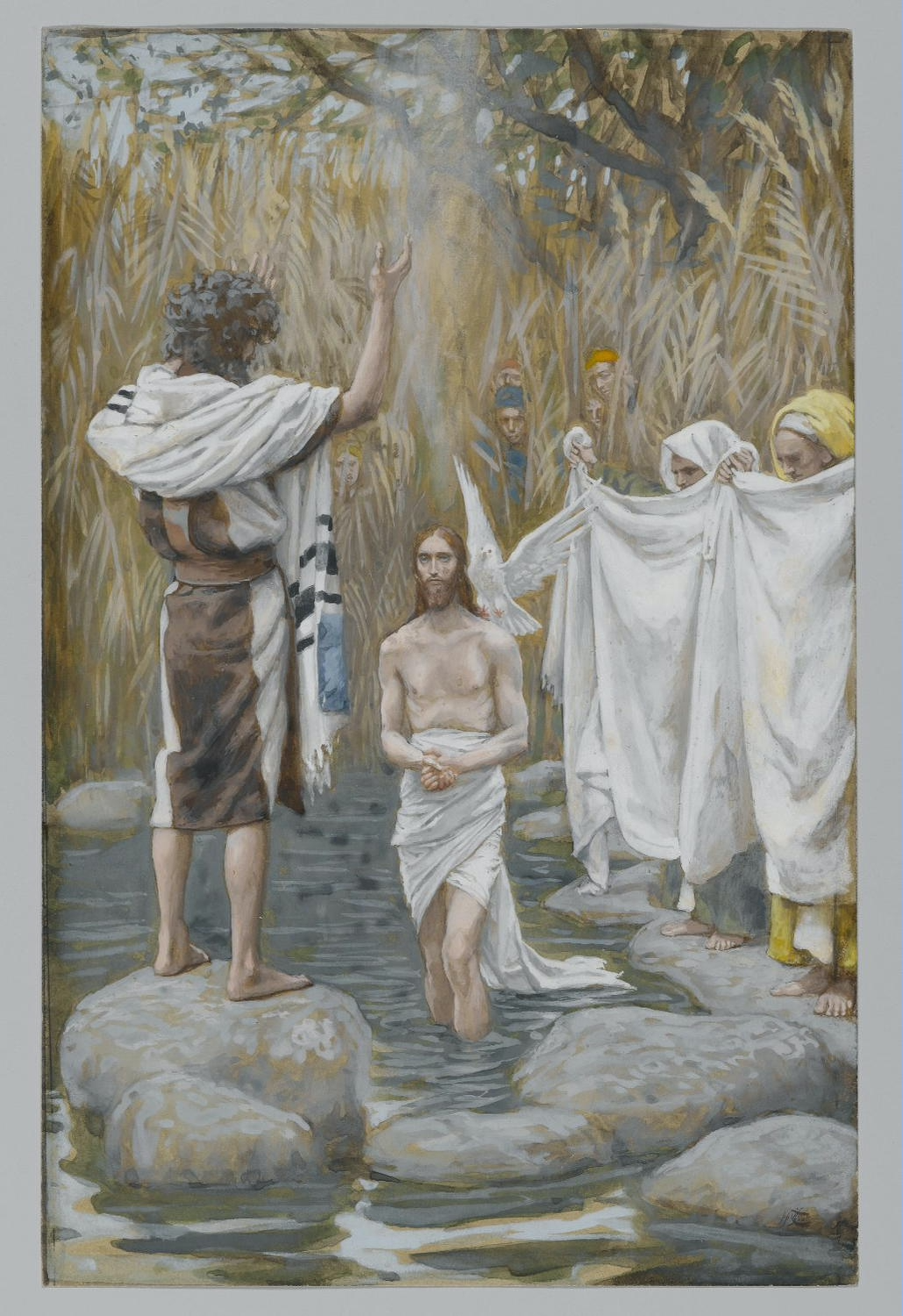
Our Baptism is one of the most important events in our lives. However, for the vast majority of Christians who were baptised as infants, it isn’t something we necessarily remember. We are too young to recall the experience. But whether we can remember it or not, we know that our baptism marked our entry into the Church. During the sacrament we were clothed with Christ and we were born again, by water and the Holy Spirit. Our Lord Jesus Christ was also baptised, but as a man, rather than a baby. This is what the Church celebrates today. 

Baptism washes us from our sins, yet Jesus is not a sinner. So why does He need to get baptized? John the Baptist says to Christ, “I need to be baptized by you, and do you come to me?” (Mt 3:14). Our Lord replies by saying, “Let it be so now, for thus it is fitting for us to fulfil all righteousness.” (Mt 3:15). Jesus’ baptism is one of obedience to the will of God the Father. That is why our first reading is the first of the Servant Songs in the prophecy of Isaiah. The prophecy is fulfilled when the Father speaks the words from the first verse, at the moment of Jesus’ baptism. God gives His Son as a covenant to the nations. This covenant will be made on the Cross, to save humanity. Christ is a light for the nations, as Simeon states at the Presentation in the Temple. Jesus will open the eyes of the blind, and set prisoners free. This is the reality of the Kingdom of God, which we are members of, through our baptism.

Today, God does a new thing. This lies at the heart of the proclamation of the Good News of the Kingdom by St Peter in this morning’s second reading from the Acts of the Apostles. It is the same pronouncement that we find in Isaiah. There is a consistency in proclamation down through the centuries, a guarantee of its truth. God the Father expresses His love for His Son, whose obedience to His Father’s will shows humanity that by saying ‘Yes’ to God, the ‘No’ of Adam and Eve can be undone. Christ, the new Adam, fulfils all righteousness, and in so doing begins His public ministry which takes this ultimately to the Cross. This is where righteousness and obedience lead: to death and suffering, to the demonstration of God’s love and finally, to the restoration of humanity once and for all.

What is foolish in the eyes of the world, is in fact the greatest possible demonstration of love. We will see that love made visible here this morning, where Christ offers Himself for us, through His Body and Blood in the Eucharist. We feed on Him, so that He can transform us; so that we may come to share in the very life and nature of God. Through our Baptism, and through the Eucharist, God’s Kingdom becomes a living reality in us. We are transformed to live its life, and transform the world around us.

A few days ago we celebrated Epiphany, Our Lord’s manifestation to the Gentiles. Now this Sunday, at the start of Christ’s public ministry, He is again made manifest. God the Father acknowledges the Son in the flesh, and sends the Holy Spirit, the bond of their love. The fullness of the Divine Trinity is united and revealed on earth to proclaim that Christ is Lord. The Kingdom has become a reality. Christ does not need to be baptised, as we do. However, He does so in order to fulfil all righteousness and to sanctify the waters of baptism for those whom He would redeem, to show us the way to new life in Him. At the beginning of his public ministry, Jesus shows humanity the way to the Father, through himself. The world sees the generous love of God, which heals and restores us, from the darkness of the dungeon of sin and evil, to the light and life of the Kingdom of God. As our baptism is a sharing in the death and resurrection of Jesus, so His baptism points to the Cross, where streams of blood and water flow to cleanse and heal the world. We see the love of the Father, the power of the Spirit, and the obedience of Son, and all for us, who deeply need God’s love and healing, and forgiveness.

We long to experience this deep, divine love. The whole world needs it, but we are often too proud or too fearful to turn to the God of love. And yet it is exactly such people, the lost sheep, that Our Lord comes to seek. He desires to enfold them, and us, in His loving arms on the Cross. He washes us in the waters of baptism, so that we all may be a part of Him, regardless of whom we are, and what we have done. Salvation is the free gift of God and is open to all who turn to him.

Ours is a faith which can transform the world, so that all humanity can share in God’s life and love. Each and every one of us can become part of something radical and revolutionary, which can, and will, transform the world one soul at a time. Rather than human violence, cruelty, and mis-use of power, the only way to transform the world is through the love of God. This is what the Church is for. This is what Christianity is all about. This is why we are gathered here today, to be strengthened and nourished.

Through prayer, through the Word of God, and through the Sacraments of the Church, we are strengthened and nourished to live out our faith and transform the world. Nothing more, nothing less, just a revolution of love, of forgiveness, and of healing. This is what the world both wants and needs. So, let us draw on the strength of our baptism to live out our faith in order that the whole world may be transformed and believe. United with all our Christian brothers and sisters let us give glory to God the Father, God the Son, and God the Holy Spirit, Duw Dad, Duw Y Mab, a Duw yr Ysbryd Glân. To whom be ascribed all glory, dominion and power, now and forever. Amen.

James Tissot: The Baptism of Christ (Brooklyn Museum)

Trinity XII: Take up your Cross

One of the curious aspects of life as a clergyman is the number of times that people ask you to pray for specific weather: be it rain, or sunshine. The 1662 Book of Common Prayer actually contains prayers for rain and fair weather, just after the Litany, after Morning and Evening Prayer. Therefore, I can only assume that weather-related prayers have always been high on the list of people’s priorities. Generally speaking, however, my response has been to say, “Sorry I’m in Sales, not Management”. I have always been concerned that people seem to think that I am somehow able to influence the Almighty when it comes to matters meteorological. Fundamentally, prayer doesn’t change God, it changes us. Now, on reflection, I’m more inclined to listen to their prayer request and honour it, as I do every other. 

All Christians are called to evangelise, to share the Good News of the Kingdom of God. However, doing so can feel a bit like being a salesperson. To some people you are just annoying. Most people show varying degrees of disinterest, but a few people are genuinely interested in what you have to say. However, if you were to use this morning’s Gospel as a sales-pitch, I doubt that you would meet with much success. Jesus’ stark presentation of the cost of discipleship is not necessarily an easy way to win people round. 

Christ has attracted a large group of people eager to hear what He has to say, so Our Lord explains what discipleship is all about:

“Os daw rhywun ataf fi heb gasáu ei dad ei hun, a’i fam a’i wraig a’i blant a’i frodyr a’i chwiorydd, a hyd yn oed ei fywyd ei hun, ni all fod yn ddisgybl imi.”

“If anyone comes to me and does not hate his own father and mother and wife and children and brothers and sisters, yes, and even his own life, he cannot be my disciple. Whoever does not bear his own cross and come after me cannot be my disciple.” (Lk 14:26-27)

Families do not always get on well, but Christians are called to ‘love their enemies’ (Lk 6:27) and to despise our own families, and even our own lives. This seems strange, and paradoxical. Aren’t Christians called to be people of love? Indeed we are, and the primary focus of our love as Christians should be God. Jesus is saying that God must be the most important thing in our life. Nothing should get in the way of the fact that our primary relationship is not with our parents, siblings, spouse, or offspring, but with the God in whose image we were created.

To make this a reality each and every one of us is called to bear a cross, to risk torture and death, and offer the whole of our lives to God. We are told we must follow Jesus, wherever that may lead. Our commitment has to be total, there is no room here for half-measures. Hence the stark imagery employed by Our Lord. Jesus uses strong and disturbing language to shock us. He reminds us that in Him we are called to a new relationship which takes us away from traditional social structures. That means that everyone in the Church becomes our brother and sister, and that our primary responsibility is to love Christ, and follow Him. To imitate Him, and take up our own Cross.

Our Lord then uses the images of a construction project and of warfare to reinforce the point that we need to see the matter through to its conclusion. Jerusalem was no stranger to either. King Herod’s rebuilding of the Temple took 46 years to complete, and war (or the threat of it) was a constant factor of everyday life. The point is being made that there is nothing worse than a half-finished building. It says, ‘The constructors didn’t plan properly, or get the finances in place first’. Likewise, in war you fight believing that you can win, otherwise you sue for peace. At this point, we remember and pray for our brothers and sisters in Ukraine and the Holy Land and throughout all the world where there is violence and war.

At the end of the Gospel passage Jesus reiterates His main point:

“Yr un modd, gan hynny, ni all neb ohonoch nad yw’n ymwrthod â’i holl feddiannau fod yn ddisgybl i mi.”

“So therefore, any one of you who does not renounce all that he has cannot be my disciple.” (Lk 14:33)

Over-attachment to material things is a problem: our stuff cannot save us, only God can. Are possessions useful or pleasant? Certainly. Can we enjoy them? Yes. But the problem occurs when their importance becomes misplaced. All that really matters is eternal life with God, sharing the Divine life of Love. Nothing we ‘have’ is really ours. We can enjoy material things and share them with others, but in a few years time our earthly life will have ended. There are no pockets in shrouds! As the old saying goes: ‘you can’t take it with you when you go’. 

As Christians, we gather, to hear God’s word read and explained; to pray together; to be nourished together. We do these things so that we may grow together in love, and to embrace the Cross. Having died with Christ in our baptism, and being raised to new life with Him, we live out our faith in our lives. Our discipleship can be costly and difficult. It calls us to renounce the world and rely upon God, together, as a community of faith. To form a new community where old ties and distinctions are done away with, where we have a new identity, and where we are called to a higher purpose. 

These are not easy things to achieve, and the Christian community has, for two thousand years, struggled to live up to these goals. But we put our trust in a God who forgives our sins and failings, who understands our humanity from the inside. We are not written off, or cast aside. We are not abandoned or discarded. This is because we are all made in God’s image, people of infinite intrinsic value. Christ died for us, to give us eternal life, to heal our wounds. He calls us to follow Him, so that we may find His freedom, and share in His triumph over death and sin. 

As Christians, we are called to something great and wonderful: to stand, like Christ as a contradiction, offering the world a new way to live; a way of life not of death; a way of generosity rather than selfishness. We are called to renounce the world and instead to embrace the freedom, and joy, that is the life of the Kingdom of God. 

It is truly liberating to look at the world as Jesus wants us to, knowing that all that really matters is loving God, and loving our neighbour. Doing this can be difficult, especially when times are uncertain as they are today, but we know that we can trust the God who loves us, who gives His life for us. The God who comes to us to feed us with Himself. So let us together follow him and invite others to do so. Let us give thanks for all our blessings and sing the praises of God, Duw Dad, Duw y Mab, a Duw yr Ysbryd Glân. God the Father, God the Son, and God the Holy Spirit. I’r hwn y priodoler pob gogoniant, arglwyddiaeth, a gallu, yn awr, ac yn oes oesoedd. To whom be ascribed all glory, dominion and power, now and forever. Amen

Trinity XI: Come to the Banquet

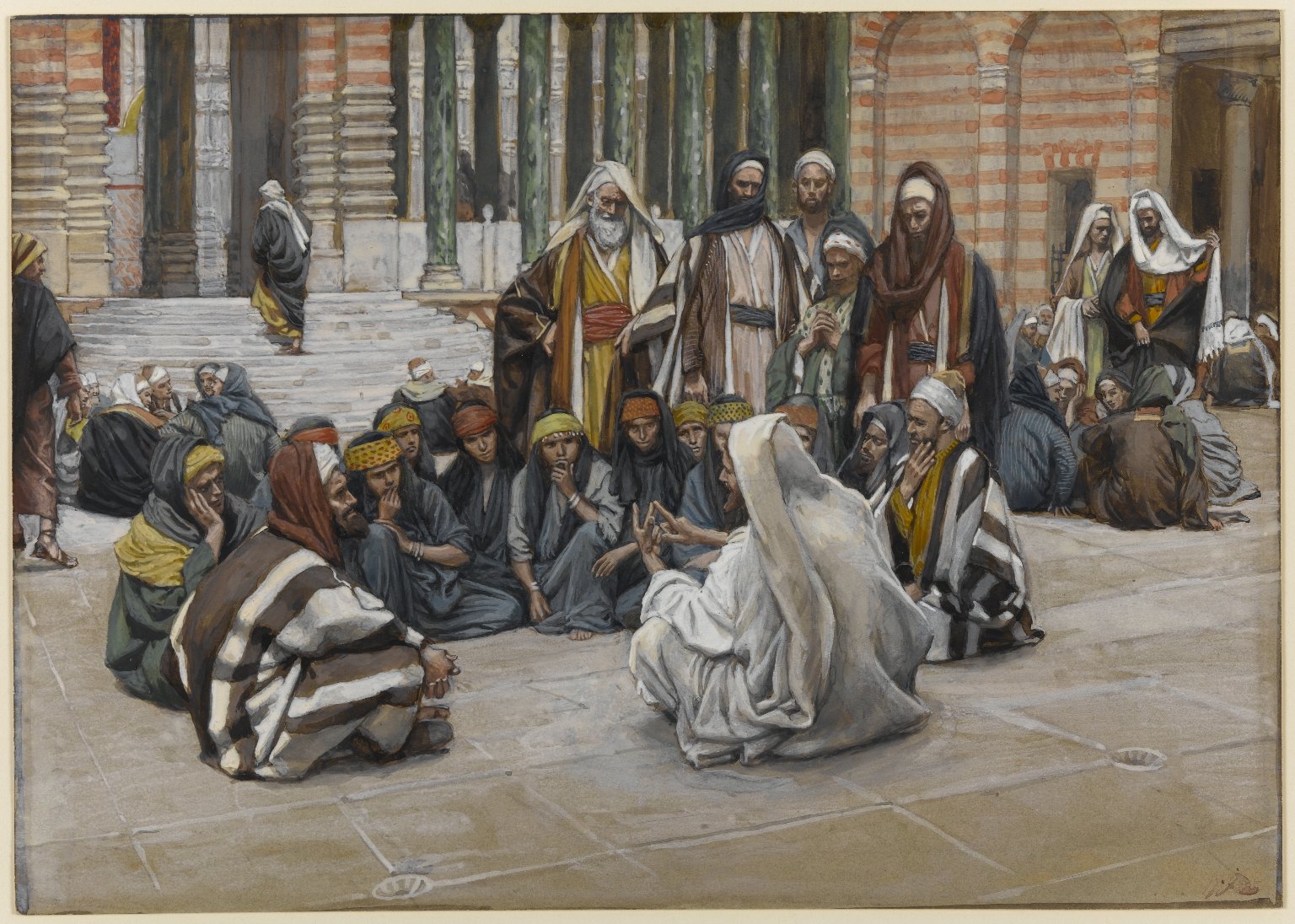
Organising seating plans for a banquet is not something most of us have a great deal of experience doing. Most of our dining nowadays is not that formal. The closest we might come is organising the seating at a Wedding Breakfast. So it is difficult for us to understand quite how important seating arrangements at dinner were in the Ancient World. Where you sat mattered. Where you were seated was signified by your rank in society, with the most important placed next to the host. This morning’s Gospel begins with Jesus having been invited to a Friday night dinner, the most important meal in the Jewish week, by a senior Pharisee. Luke’s comment is instructive:

‘ac yr oeddent hwy â’u llygaid arno’

‘they were watching him closely’ (Lk 14:1)

Jesus is on display. He is being studied by all those present at the dinner — presumably other leading Pharisees. They want to see if Our Lord will do, or say, something that they can find fault with. They are keen to catch Him out, in order to criticise Him. Jesus uses this experience as a teaching opportunity:

‘Yna adroddodd ddameg wrth y gwesteion, wrth iddo sylwi sut yr oeddent yn dewis y seddau anrhydedd’

‘Now he told a parable to those who were invited, when he noticed how they chose the places of honour’ (Lk 14:7)

The self-important dinner guests are all trying to get as close to the host as possible. They want the best places, the best food, and to be seen as being superior. So Jesus tells the following parable:

“Pan wahoddir di gan rywun i wledd briodas, paid â chymryd y lle anrhydedd, rhag ofn ei fod wedi gwahodd rhywun amlycach na thi; oherwydd os felly, daw’r sawl a’ch gwahoddodd chwi’ch dau a dweud wrthyt, ‘Rho dy le i hwn’, ac yna byddi dithau mewn cywilydd yn cymryd y lle isaf. Yn hytrach, pan wahoddir di, dos a chymer y lle isaf, fel pan ddaw’r gwahoddwr y dywed wrthyt, ‘Gyfaill, tyrd yn uwch’; yna dangosir parch iti yng ngŵydd dy holl gyd-westeion.

“When you are invited by someone to a wedding feast, do not sit down in a place of honour, lest someone more distinguished than you be invited by him, and he who invited you both will come and say to you, ‘Give your place to this person’, and then you will begin with shame to take the lowest place. But when you are invited, go and sit in the lowest place, so that when your host comes he may say to you, ‘Friend, move up higher.’ Then you will be honoured in the presence of all who sit at table with you.” (Lk 14:8-1o)

In practical terms, what Jesus is advising is sensible, and wise, because it removes the possibility of losing face. To this day in the Middle East, and elsewhere, the situation envisaged in the parable would be seen as a source of shame, or honour, depending on whether you were promoted to a place near the host, or demoted to a more distant seat. We tend not to be so aware of such considerations, and many people instinctively gravitate towards the back. Christ’s parable makes the point that humility is better than pride: 

“Oherwydd darostyngir pob un sy’n ei ddyrchafu ei hun, a dyrchefir pob un sy’n ei ddarostwng ei hun.”

“For everyone who exalts himself will be humbled, and he who humbles himself will be exalted.” (Lk 14:11)

To have an attitude which does not seek out the place of honour contrasts strongly with the guests who have done exactly that. Our Lord is pointing out that humility is the better way.

Christianity is a religion of humility. It starts from the premise that we have to rely upon God’s grace to save us, through faith. God takes the initiative, and we respond. We do not save ourselves. The point of salvation is that God is the host who says: ‘Friend come up higher’. We do not deserve a seat of honour, nor have we thought ourselves worthy of it. Yet a loving and generous God says to all who turn to Him: ‘Friend come up higher’. This is the Good News of the Kingdom, and it turns our human expectations on their head. Jesus then develops His teaching: 

Meddai hefyd wrth ei wahoddwr, “Pan fyddi’n trefnu cinio neu swper, paid â gwahodd dy gyfeillion na’th frodyr na’th berthnasau na’th gymdogion cyfoethog, rhag ofn iddynt hwythau yn eu tro dy wahodd di, ac iti gael dy ad-dalu. Pan fyddi’n trefnu gwledd, gwahodd yn hytrach y tlodion, yr anafusion, y cloffion, a’r deillion; a gwyn fydd dy fyd, am nad oes ganddynt fodd i dalu’n ôl iti; cei dy dalu’n ôl yn atgyfodiad y cyfiawn.”

He said also to the man who had invited him, “When you give a dinner or a banquet, do not invite your friends or your brothers or your relatives or rich neighbours, lest they also invite you in return and you be repaid. But when you give a feast, invite the poor, the crippled, the lame, the blind, and you will be blessed, because they cannot repay you. For you will be repaid at the resurrection of the just.” (Lk 14: 12-14)

People were having parties to display their wealth, social status, and connections. This still happens today. But God has a different understanding of hospitality. In His vision it is not about what you get, but what you can give to others. Generosity is what really matters. By inviting those who cannot invite you back in return, you are being generous to those who are in no position to repay you. Jesus’ teaching here is also about the banquet of the Kingdom of God, the Eucharist. Jesus, as God, invites the poor, those in need of healing — in other words all of humanity, you and me — to the feast of the Kingdom. The purpose of the Eucharist is so that God can feed us, with His Body and Blood, to heal us. In this divine banquet God does for us what we cannot do for ourselves, and gives us a foretaste of Heaven. We cannot repay God, but we can be thankful, and accept what is offered, allowing it to transform us. 

Christ has an important and strong message for His host and his fellow diners. We see Our Lord advising them to be generous and not to seek any reward. Human Society is complex. The giving and receiving of gifts has always been a crucial part of how society works. It creates networks of obligation: if you give someone something, they may feel obliged to return the favour. That is fine in human terms, but when we transfer it to the divine realm we are faced with a problem. What can we give God? Does Our Heavenly Father need or want anything? No! Because God is by nature, perfect, complete, and self-sufficient. Almighty God cannot want or need anything. As a result of this God is able to give the purest form of gift, which does not require anything in return. There can be no obligation, because humanity cannot give Our Creator anything. God is able give without expecting anything in return. This is what happens in the Incarnation when Our Lord is given to and for us. Throughout His life and ministry, to His Passion, Death, and Resurrection all He is and does is for our benefit. God is generous to us, not so that we can be generous in return, but simply for our own good. Likewise our sacrifice of praise is not for God’s benefit, but ours, demonstrating that we are living the way we should: flourishing by being loving, generous, and thankful. 

Instead of the norms of human interaction and obligation, Christ presents us with a completely different paradigm. The dinner invitations in the Kingdom are for the ‘poor, the crippled, the lame, and the blind’ (Lk 14:13). That means us! God longs to lavish His riches upon us; to heal our wounds, and to restore our sight. In turn, by our care for those who are weak, outcast, or deemed socially undesirable, we proclaim the Kingdom of God in our actions. Each one of us is called to the banquet here and now, in order that our souls may be nourished with Word and Sacrament. The Eucharist is the banquet of the Kingdom, which heals us, and transforms us more and more into God’s likeness.

God gives Himself, so the we might live in Him. This is true generosity — a generosity which expects nothing in return. Christ is the model of humility and loving service that we should imitate. Jesus takes the lowest place, bearing the weight of our sin, on the Cross. There He dies that we might live. There He dies to make us free.

Therefore, may we, in humility, recognise our need of God, and respond to His invitation to the Divine banquet. We pray that God will heal us, restore us and strengthen us to live lives of humility and love. In response we give thanks and sing the praises of God, Duw Dad, Duw y Mab, a Duw yr Ysbryd Glân. God the Father, God the Son, and God the Holy Spirit. I’r hwn y priodoler pob gogoniant, arglwyddiaeth, a gallu, yn awr, ac yn oes oesoedd. To whom be ascribed all glory, dominion and power, now and forever. Amen

Trinity VII: Generosity

Advertising media are constantly telling us that we need a new car, a larger house, the latest gadgets, expensive clothes, and exotic holidays. If we have all these things, we are told, then we will be truly happy. Covetousness is portrayed as a virtue. However, the more we have, the more we want. People are never satisfied. Even billionaires are happy to squeeze the poor if it will make them more money. St Paul, however, tells us that, as Christians, we should not focus our energies on the things of this world, and the author of Ecclesiastes reminds us that: ‘gwagedd llwyr yw’r cyfan’ ‘All is vanity’ (Eccles 1:2).

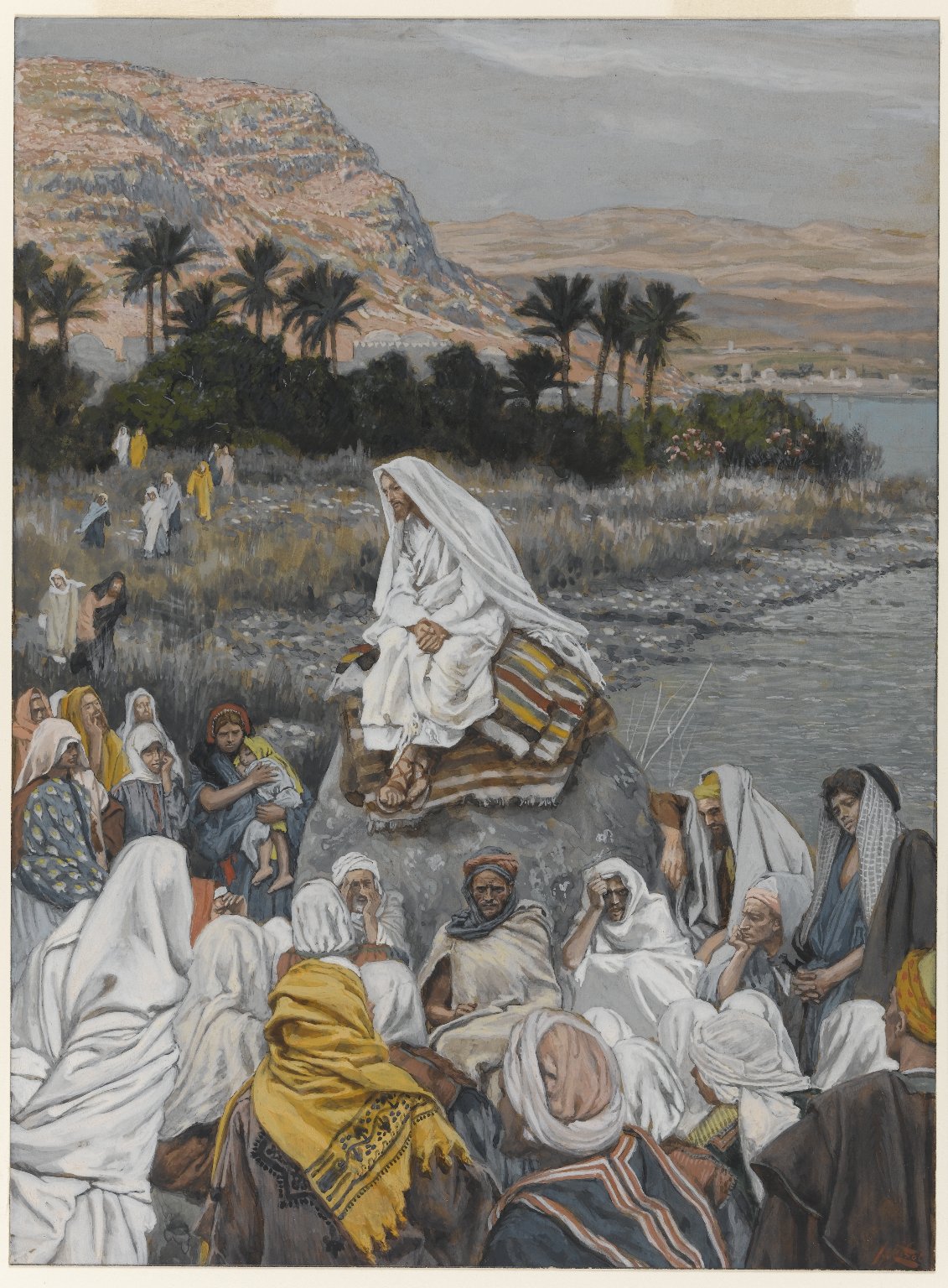
This morning’s Gospel begins with a striking scene. Jesus is teaching as He travels to Jerusalem, and a crowd gathers around Him. Then someone asks a question:

“Athro, dywed wrth fy mrawd am roi i mi fy nghyfran o’n hetifeddiaeth.”

“Teacher, tell my brother to divide the inheritance with me.” (Lk 12:13) 

As a religious teacher, Jesus could be called upon to make rulings on religious or legal matters. However he has no desire to do so:

Ond meddai ef wrtho, “Ddyn, pwy a’m penododd i yn farnwr neu yn gymrodeddwr rhyngoch?” A dywedodd wrthynt, “Gofalwch ymgadw rhag trachwant o bob math, oherwydd, er cymaint ei gyfoeth, nid yw bywyd neb yn dibynnu ar ei feddiannau.”

But he said to him, “Man, who made me a judge or arbitrator over you?” And he said to them, “Take care, and be on your guard against all covetousness, for one’s life does not consist in the abundance of one’s possessions.” (Lk 12:14-15)

Our Lord takes a family dispute over property and turns it into a teaching opportunity. The world around us tends to equate riches with success, but it is easy to forget that wealth is a means to an end, and not an end in itself. The unnamed man wants to get hold of his inheritance. He wants money so that he can spend it. He is obsessed with worldly things. Jesus is trying to encourage people to live in a different way: God’s way. 

To illustrate His point, Our Lord uses a parable:

“Yr oedd tir rhyw ŵr cyfoethog wedi dwyn cnwd da. A dechreuodd feddwl a dweud wrtho’i hun, ‘Beth a wnaf fi, oherwydd nid oes gennyf unman i gasglu fy nghnydau iddo?’ Ac meddai, ‘Dyma beth a wnaf fi: tynnaf f’ysguboriau i lawr ac adeiladu rhai mwy, a chasglaf yno fy holl ŷd a’m heiddo. Yna dywedaf wrthyf fy hun, “Ddyn, y mae gennyt stôr o lawer o bethau ar gyfer blynyddoedd lawer; gorffwys, bwyta, yf, bydd lawen.”’

“The land of a rich man produced plentifully, and he thought to himself, ‘What shall I do, for I have nowhere to store my crops?’ And he said, ‘I will do this: I will tear down my barns and build larger ones, and there I will store all my grain and my goods. And I will say to my soul, Soul, you have ample goods laid up for many years; relax, eat, drink, be merry.’” (Lk 12: 16-19)

In worldly terms, the man in the parable can be understood as behaving sensibly. But his concern with material success leads the man to think that he is in a safer position than he actually is. This is made clear at the end of the parable:

“Ond meddai Duw wrtho, ‘Yr ynfytyn, heno y mynnir dy einioes yn ôl gennyt, a phwy gaiff y pethau a baratoaist?’ Felly y bydd hi ar y rhai sy’n casglu trysor iddynt eu hunain a heb fod yn gyfoethog gerbron Duw.”

“But God said to him, ‘Fool! This night your soul is required of you, and the things you have prepared, whose will they be?’ So is the one who lays up treasure for himself and is not rich towards God.” (Lk 12:20-21)

Jesus is showing us that you cannot put pockets in your shroud. You cannot take wealth with you when you die. In the afterlife you do not need ‘stuff’. If the man had thought, How can I share what I have? How can I use my riches to alleviate poverty and make people’s lives better? Then he could have done some good. Instead, he has put all his efforts solely into increasing his own wealth. God does not want us to live selfish materialistic lives. But rather to help bring about a world where goods are shared, and where the hungry are fed. Yet we still see images of starving people, and many do not have a roof over their head. Whilst we cannot individually solve all the problems of the world, we can make an impact in our communities and beyond.

The Book Ecclesiastes, known also as Qoheleth, the Preacher, begins by stressing the fact that everything is vanity. All things are empty and worthless, in themselves, especially when compared to God. Our Heavenly Father longs for humanity to respond to His love and generosity, by living lives characterised by compassion and unselfishness. This is why Jesus preaches the Good News of the Kingdom of God: to wake humanity up to eternal realities and encourage us to live thoughtfully and generously here and now. 

This is the life which stores up treasure in Heaven, which we live when we have, ‘Rhowch eich bryd ar y pethau sydd uchod, nid ar y pethau sydd ar y ddaear’ ‘Set our minds on things that are above, not on things that are on earth’ (Col 3:2). This is what a Christian life really looks like, when lived out in the world. This is the sort of radically different life which can and does both change and transform the world: offering people a way that is different to an existence obsessed with possessions. This is the way of love and forgiveness, of knowing that we are loved and forgiven, no matter who we are or what we have done. With God’s help we can live as a community which embodies radical love and forgiveness in the world and offers others a new way of being, which turns the obsessions and values of the world on its head. The Christian way of life is that radical, that revolutionary, and can be lived out right here, today. Our Lord is speaking to us through His Scriptures. He calls us to live this life for the good of others, for our own good, and for the glory of the God who made us. God our Father loves us. He saves us from the tyranny of worldly possessions and sin, so that we can be free. Allowing us to focus on worshipping Him, and helping to make the Kingdom of God a reality.

This then is what the Church is called to be. As Christians, we need to be like a lamp set upon a lamp stand or a city upon a hill: shining, attractive, a light amidst the darkness of this world. We are called to represent a radical alternative: embodying life in all its fullness. So let us choose to live this way, together. Let us set our hearts on heavenly things. Let us build on Christ, our sure foundation. God is our treasure, and His wealth is self-giving love.

By gathering together this morning we are living out God’s kingdom here and now. Through our prayer, worship, and generosity, we can change the world; so that all people may be transformed and sing the praise to God, i Duw Dad, Duw y Mab, a Duw yr Ysbryd Glân. God the Father, God the Son, and God the Holy Spirit. I’r hwn y priodoler pob gogoniant, arglwyddiaeth, a gallu, yn awr, ac yn oes oesoedd. To whom be ascribed all glory, dominion and power, now and forever. Amen.

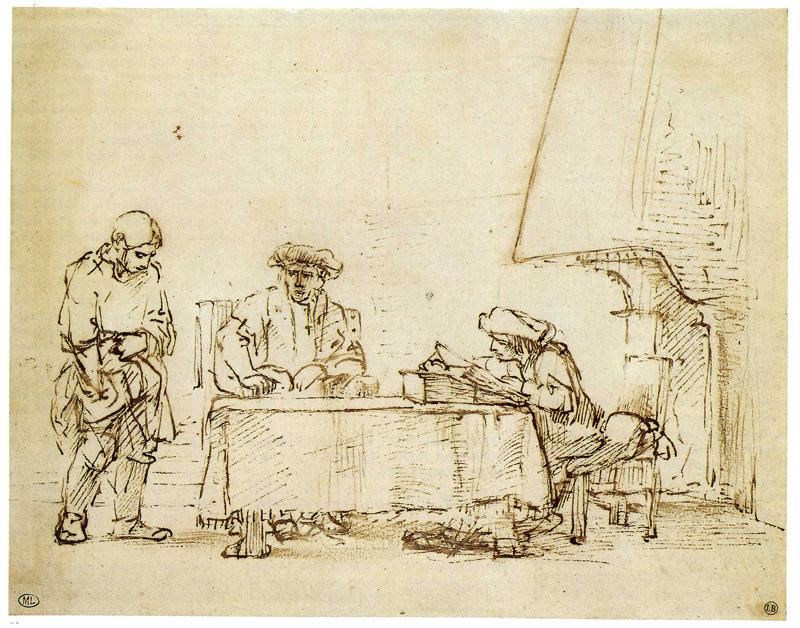
Rembrant The Parable of the Rich Fool, Gemäldegalerie, Berlin.

Trinity V – Mary & Martha

Life is all about decisions. The choices that we make can have a massive effect upon our lives. We often think of decisions as ‘either/or’ alternatives. However, we may be making a false distinction. Living the Christian life is often much more a case of ‘both/and’ rather than ‘either/or’. Nowhere is this shown with greater clarity than through the question of faith and action. These two concepts are not in opposition: they are two sides of the same coin. To make the Kingdom of God a reality we need both contemplation and practical application. If work and prayer are kept in balance, then our duties towards God and our neighbour can be fulfilled, and we can grow in faith and love. As Christians we need to demonstrate our faith by being hospitable and welcoming, as well as prayerful. 

Hospitality is the focus of this morning’s first reading from the Book of Genesis. God appears to Abraham at the Oak of Mamre near the town of Hebron, nineteen miles south of Jerusalem. Abraham is visited by three angels and looks after them, offering them hospitality, and taking care of them. In return the Patriarch is blessed with the promise of a son. From early times, biblical interpreters understand these three angels as symbolising the Trinitarian nature of God as Father, Son, and Holy Spirit, revealing their nature to Abraham, our father in faith. This view became particularly relevant during the fourth-century debate on the nature of God, which led to the formation of the Creed we will soon recite together. In this passage from Genesis, we see both what God is like and how we should respond to God: with generous hospitality, care and attention.

In today’s Gospel, Jesus is still travelling. As there were no hotels or service stations, the only way to eat, drink, and rest was through hospitality. Our Lord is welcomed into her home by a woman named Martha: 

‘Yr oedd ganddi hi chwaer a elwid Mair; eisteddodd hi wrth draed yr Arglwydd a gwrando ar ei air.’

‘And she had a sister named Mary, who sat at the Lord’s feet and listened to his teaching’ (Lk 10:39)

These sisters, Mary and Mary, may well be the same women who appear in John’s Gospel as the sisters of Lazarus, and who live in Bethany. There they are described as friends of Jesus who regularly provide hospitality for Him and His followers. We are told that Mary is giving Jesus her undivided attention, she sits at His feet, as a student would sit at the feet of their teacher. Her sister does not join her as she is so busy looking after the guests:

‘Ond yr oedd Martha mewn dryswch oherwydd yr holl waith gweini, a daeth ato a dweud, “Arglwydd, a wyt ti heb hidio dim fod fy chwaer wedi fy ngadael i weini ar fy mhen fy hun? Dywed wrthi, felly, am fy nghynorthwyo.”’

‘But Martha was distracted with much serving. And she went up to him and said, “Lord, do you not care that my sister has left me to serve alone? Tell her then to help me” (Lk 10:40)

Like the lawyer in the Parable of the Good Samaritan, Martha is attempting to justify herself. In order to do this, she blames others — in fact her own sister — to cover up the fact that she is anxious and troubled with the cares of the world. She allows these worries to take precedence over the Gospel. Martha has shown Jesus a hospitable welcome, but then she tries to involve Him in a domestic squabble, which is centred on justifying her own busyness. Jesus is a teacher, proclaiming the Good News of the Kingdom. While it is important that He and his disciples are fed and cared for, the immediate concern is to give Our Lord their undivided attention, and listen to what He has to say:

‘Atebodd yr Arglwydd hi, “Martha, Martha, yr wyt yn pryderu ac yn trafferthu am lawer o bethau, ond un peth sy’n angenrheidiol. Y mae Mair wedi dewis y rhan orau, ac nis dygir oddi arni.”’

‘But the Lord answered her, “Martha, Martha, you are anxious and troubled about many things, but one thing is necessary. Mary has chosen the good portion, which will not be taken away from her.”’ (Lk 10:41-42)

Jesus does not tell Martha off, rather He is encouraging, calming her down, and showing her a better way of living. Only one thing is necessary: for a host to pay attention to a guest, as Abraham did at the Oak of Mamre in the first reading this morning .

The point is not simply to prefer the contemplative to the practical, or the spiritual to the physical. Instead we need to balance our physical needs with our spiritual ones. Martha is too wrapped up in her own affairs and has forgotten what is really important. Jesus does not want special treatment, or a lavish banquet with lots of dishes. What He wants are people who pay attention to what He has to say. Martha has not chosen a bad portion, service and hospitality are important. However, attention — staying close to Jesus, listening to what He says, and not being distracted — is how we grow as Christians. This is the good portion that Christ speaks of. 

Jesus of Nazareth frequently breaks down cultural barriers. Last week we saw a Samaritan, a complete outcast held up as a model of neighbourly love and compassion. This week Mary sits at Christ’s feet, breaking a cultural taboo regarding women. She wants to be taught, and therefore displays both love and attention. Jesus tells us that, like Mary, we too should be attentive to God and His message for us in the Gospel. In doing this we emulate Mary, and choose the better part. This is a choice which has a moral dimension. When we truly listen attentively to what God says to us, our actions and our character are formed, helping our growth in holiness. Nourished by Word and Sacrament, we can progress in living out the graces which we received in our baptism, and prepare for our inheritance with the Saints in glory. We do not achieve this through prayer and contemplation alone, but by making our prayer and our work, all that we do, and all that we are, a response to God and to our neighbour. By responding in this way we are truly living out lives of Christian love. Such love is the nature of God and binds together the persons of the Trinity. This is a powerful catalyst which transforms both us and our world.

My brothers and sisters in Christ, through practising both prayer and action, may we be agents of God’s love and grace in the world. May we transform our homes, our communities, and the whole world. Filled with God’s love, and compassion, let us give glory to God, Duw Dad, Duw y Mab, a Duw yr Ysbryd Glân. God the Father, God the Son, and God the Holy Spirit. I’r hwn y priodoler pob gogoniant, arglwyddiaeth, a gallu, yn awr, ac yn oes oesoedd. To whom be ascribed all glory, dominion and power, now and forever. Amen.

Trinity IV – The Good Samaritan

This year I have re-kindled my love of reading fiction. I have been introduced to some new authors by books lent to me by friends and neighbours or recommended by my wife. Taking time to lose yourself in a good book is one of life’s greatest (and cheapest) pleasures. Everybody loves a good yarn. Stories are also a useful way to make a point and to convey a deeper truth about human nature. They help us to understand who we are and how we should live. As Jesus travels from Galilee to Jerusalem He teaches, using parables, vivid stories we know and love. As I said, everyone likes to hear a good yarn, but the parables are much more than that. Jesus uses parables to explain the Kingdom and His Mission — who He is, and what He is doing — so that His followers can understand and share that knowledge with others.

In today’s Gospel, Our Lord encounters a legal expert. This lawyer wants to put Jesus to the test, to check whether what He says is acceptable under Jewish religious law. This man of the law asks Him: 

“Athro, beth a wnaf i etifeddu bywyd tragwyddol?”

“Teacher, what shall I do to inherit eternal life?” (Lk 10:26)

Jesus replies by asking the lawyer to tell Him what is written in the Law, and questions how, as a legal expert, he interprets it. The man replies, by reciting scripture:

‘Câr yr Arglwydd dy Dduw â’th holl galon ac â’th holl enaid ac â’th holl nerth ac â’th holl feddwl, a châr dy gymydog fel ti dy hun.’

“You shall love the Lord your God with all your heart and with all your soul and with all your strength and with all your mind, and your neighbour as yourself.” (Lk 10:27)

The first part of the lawyer’s answer is a quotation from the book of Deuteronomy (6:5), part of the Shema, a Jewish declaration of faith in God, which begins ‘Hear, O Israel: the Lord our God is one’. The second part is a quotation from Leviticus (19:18). This summary of the Law outlines humanity’s duty both towards God and also towards our neighbours. This legal expert understands how he should behave, and how he should live his life. He has basically repeated Jesus’ teaching word-for-word. So far, so good. The lawyer then asks Our Lord another question:

‘Ond yr oedd ef am ei gyfiawnhau ei hun, ac meddai wrth Iesu, “A phwy yw fy nghymydog?”’

‘But he, desiring to justify himself, said to Jesus, “And who is my neighbour?”’ (Lk 10:29)

The lawyer wants to legitimise himself, and so he asks Jesus to define his terms. In a legal argument, this is a typical response. However, the lawyer’s motives are questionable. He is interested in self-justification, in making himself look good. Our Lord is happy to answer, and does so with a parable: The Parable of the Good Samaritan. This well-known story is set on road from Jerusalem to Jericho. Despite being a major route, it is steep and windy (a bit like some of the roads around here!), dropping over three thousand feet in seventeen miles. The road takes a traveller through lots of empty desert land, where bandits made a living robbing travellers. The sight of someone who has been attacked and robbed was probably not an unusual one along this route. 

In the parable, a priest and a Levite pass by one such victim, crossing to the other side as they do not wish to become ritually impure. Under Jewish law, if they touched a dead body, they would become unclean, and unable to offer sacrifice and worship in the Temple until they had been ritually cleansed. Rather than risk this, these Temple officials assume that the man is dead and simply pass on by. Soon afterwards another traveller sees the man who has been attacked:

‘Ond daeth teithiwr o Samariad ato; pan welodd hwn ef, tosturiodd wrtho. Aeth ato a rhwymo ei glwyfau, gan arllwys olew a gwin arnynt; gosododd ef ar ei anifail ei hun, a’i arwain i lety, a gofalu amdano.’

‘But a Samaritan traveller who came upon him was moved with compassion when he saw him. He went up and bandaged his wounds, pouring oil and wine on them. He then lifted him on to his own mount, carried him to the inn and looked after him.’ (Lk 10:33-34)

Samaritans and Jews generally kept separate from each other. They had profound theological differences, and the Jews worshipped on Mt Zion, while the Samaritans worshipped on Mt Gerizim. When the Jews went into exile in Babylon, the Samaritans remained behind. Despite the fact that they all worshipped the same God, they were completely estranged from each other. However, the Samaritan has compassion. He is deeply moved to help someone in need, and so he crosses the cultural boundaries and takes care of the man. We are told that he pours oil and wine on the injured man. This was current medical practice. It was also what one would do at a sacrifice at the Temple. Therefore, it is possible that Jesus’ image relates to some words of the prophet Hosea:

‘Oherwydd ffyddlondeb a geisiaf, ac nid aberth, gwybodaeth o Dduw yn hytrach na phoethoffrymau.’

‘For I desire mercy and not sacrifice, the knowledge of God rather than burnt offerings.’ (Hosea 6:6)

The priest and the Levite are concerned with sacrifice and purity, but the Samaritan shows the mercy that God desires. He binds up the injured man’s wounds, treats them, brings him to an inn, and takes care of his needs. The parable shows true love and mercy in action.

Traditionally the Church has also seen deeper meanings at work in this story. It has understood the Parable of the Good Samaritan in a symbolic way, which explains both the human condition, and Christ’s saving work. In one reading, the traveller represents Adam, and stands for all humanity. His wounds are those of sin and disobedience. The Samaritan is Jesus, the one who has compassion on us. The inn stands for the Church, the place where sinners are healed, and the oil and wine are the sacraments of the Church, which heal us. However, Christ is also the man wounded for our transgressions, who suffers for humanity, to heal our wounds.

Such an interpretation shows us how rich this parable is. Jesus tells it to His followersas He is travelling up to Jerusalem — the place where He will suffer and die. Our Lord is teaching His disciples what they need to understand in order to put mercy and love into action. Love and mercy are signs of the Kingdom of God. God’s Kingdom is where Jesus reigns from the Cross. It is where Christ overcomes sin and Death, to offer eternal life to all humanity. This is why St Paul can write:

‘Oherwydd gwelodd Duw yn dda i’w holl gyflawnder breswylio ynddo ef, a thrwyddo ef, ar ôl gwneud heddwch trwy ei waed ar y groes, i gymodi pob peth ag ef ei hun, y pethau sydd ar y ddaear a’r pethau sydd yn y nefoedd.’

‘Because God wanted all perfection to be found in him and all things to be reconciled through him and for him, everything in heaven and everything on earth, when he made peace by his death on the cross.’ (Col 1:19-20)

Our Lord’s Passion is a work of reconciliation. It is the job of every Christian to carry on that work. The Parable of the Good Samaritan is also about the reconciliation of people from different cultures — through Christ. Today Christians from so many different backgrounds gather together to read and study scripture. To pray together. To be healed and nourished by God, through the Sacraments. Both Baptism and the Eucharist are outward signs of spiritual grace, the power of God to heal, reconcile, and transform us all. We are gathered today in the ‘inn’ of the Church, so that God can heal us, and strengthen us to go out and share God’s saving love with others.

Following the example of the Good Samaritan, may we also be agents of God’s love and grace in the world. May we transform our homes, our communities, and the whole world. Filled with God’s love, compassion, and healing, let us give glory to God, Duw Dad, Duw y Mab, a Duw yr Ysbryd Glân. God the Father, God the Son, and God the Holy Spirit. I’r hwn y priodoler pob gogoniant, arglwyddiaeth, a gallu, yn awr, ac yn oes oesoedd. To whom be ascribed all glory, dominion and power, now and forever. Amen.

James Tissot – The Good Samaritan (Brooklyn Museum)

Pentecost 2025

Every Sunday, and also on solemn Feast days, Christians make a public declaration of their faith in God, Father, Son, and Holy Spirit, using the words of the Nicene Creed — which we will all say together in a few minutes time. This statement of belief was drawn up seventeen hundred years ago at the First Ecumenical Council, which was called by the Roman Emperor Constantine to sort out divisions within the Church concerning the Divinity of Jesus Christ. The council met at Nicaea in Asia Minor (modern day Turkey) and comprised of three hundred and eighteen bishops of the Church. One of these was Nicholas of Myra, St Nicholas, the patron saint of this church. 

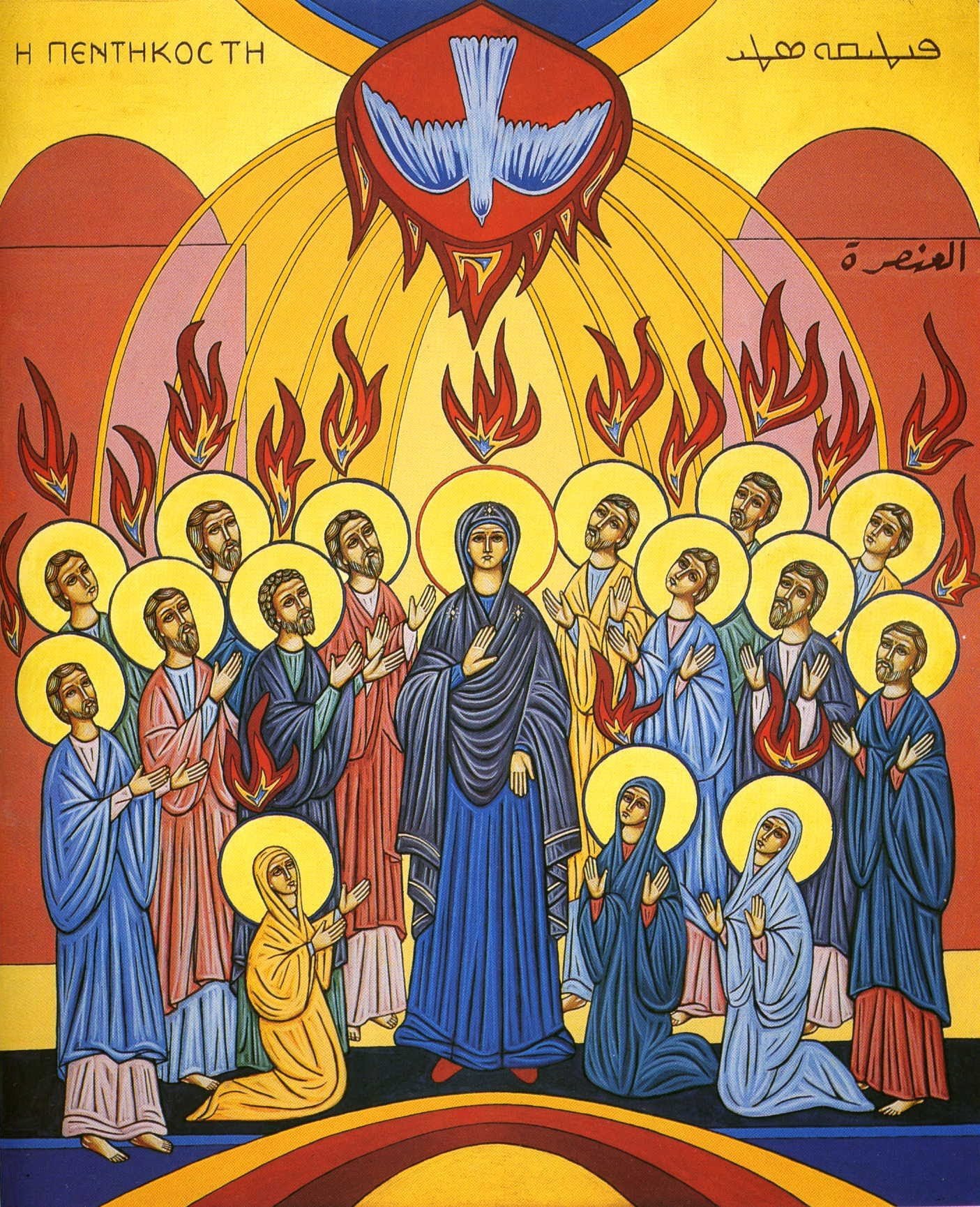
Questions about belief matter. They have the potential to divide the Church. Taking it away from its core purpose of being united in a common faith, and making a consistent proclamation of that faith. This is the situation in today’s reading from the Acts of the Apostles. Having been promised the Holy Spirit by Our Lord at His Ascension, the disciples wait and pray. At Pentecost they are filled with the Spirit. Emboldened, they are able to tell Jews from all over the Mediterranean world, who have gathered in Jerusalem, who Jesus is, and what He has done. From this moment on the disciples are known as Apostles from the Greek ἀπόστολος (meaning one who is sent, a messenger). The message they deliver is that all people should repent and believe the Good News of Jesus Christ. 

The outpouring of the Holy Spirit is not a one-off event, but rather a permanent state of affairs. This is how God continues to be active in the world: inspiring and strengthening Christ’s followers in living and proclaiming their faith. In John’s Gospel, Jesus promises His disciples:

‘Os ydych yn fy ngharu i, fe gadwch fy ngorchmynion i. Ac fe ofynnaf finnau i’m Tad, ac fe rydd ef i chwi Eiriolwr arall i fod gyda chwi am byth,’

‘If you love me, you will keep my commandments. And I will ask the Father, and he will give you another Helper, to be with you for ever.’ (Jn 14:15-16)

The promise is that God’s Spirit will be present in perpetuity. God will continue to pour out His Spirit to strengthen the Church. This is what we are celebrating today at Pentecost. Indeed, during the Eucharistic Prayer I, as your priest,  will pray that God continues to do this and ‘trwy nerth dy Ysbryd, i’r rhoddion hyn o fara a gwin fod i ni ei gorff a’i waed ef’ ‘that, by the power of your [God’s] Spirit, these gifts of bread and wine may be for us his body and blood’. Our heavenly Father makes wonderful things happen. Disciples who have been scared and have been in hiding are transformed into fearless evangelists, going out to preach Christ’s message of love and forgiveness. They become enthusiastic fellow-workers in the vineyard. God is able to completely change people and situations, because His love for us knows no bounds.  

The 318 bishops, who met at Nicaea, in 325AD, were able to put into words what Christians believe because they began their deliberations by praying for the gift of the Holy Spirit to guide and direct their thoughts and actions. This is entirely in line with Our Lord’s teaching in the Gospel: 

‘Ond bydd yr Eiriolwr, yr Ysbryd Glân, a anfona’r Tad yn fy enw i, yn dysgu popeth ichwi, ac yn dwyn ar gof ichwi y cwbl a ddywedais i wrthych.’

‘But the Helper, the Holy Spirit, whom the Father will send in my name, he will teach you all things and bring to your remembrance all that I have said to you.’ (Jn 14:26)

The Bishops, including St Nicholas, were strengthened by God to proclaim the truth, and to bear witness to it, in the face of those who would deny it. They bore witness to the truth of Jesus Christ: true God and true man, who promised the gift of the Holy Spirit. God’s Spirit gives Christians strength and brings us together as brothers and sisters in a new family, which we call the Church. 

It is thanks to the preaching of the Gospel begun by the Apostles at Pentecost, and continued by their successors at Nicaea, that we are here today. It is how billions of people have come to know, love, and serve Our Lord Jesus Christ. As people who are in Christ, who have entered the Church through our Baptism, we are given a very important job to do. We need to tell people about Jesus!

The world-wide Christian Church is wonderful in its diversity. We are all different, we do not speak the same language, or have the same culture. However, we are all equally empowered through having received the Holy Spirit at our Baptism, in our Confirmation, and through all the sacramental actions of the church, which are the outward and visible signs of the inward and spiritual grace of God. This is how the Holy Spirit works. This is how God builds us up together in love. Through the Eucharist, through prayer and through Scripture, we are nourished spiritually to keep doing all that God desires of us.

So, my brothers and sisters in Christ, let us pray earnestly for the gift of the Spirit. Just as St Nicholas was inspired by the Spirit, may God also fill us with His love and equip us to proclaim the Good News of the Kingdom. May the fire of the Holy Spirit embolden us to encourage others to come to know, and love Duw Dad, Duw y Mab, a Duw yr Ysbryd Glân. God the Father, God the Son, and God the Holy Spirit. I’r hwn y priodoler pob gogoniant, arglwyddiaeth, a gallu, yn awr, ac yn oes oesoedd. To whom be ascribed all glory, dominion and power, now and forever. Amen.

Palm Sunday Evensong

THIS evening I would like to talk about the Apostle John. The name ‘John’ means ‘The Lord has worked grace’. John the Apostle is the son of Zebedee and Salome (the sister of the Blessed Virgin Mary). He is also the brother of James, and the cousin of Jesus. In the Bible, John is called ‘the beloved disciple’, the disciple whom Jesus loved. He is also believed to be the author of the Gospel which now bears his name, as well as three canonical letters and the Book of Revelation. While scholars tend to ascribe some or all of these works to others, I do not wish to. Time tonight does not allow me to examine all of John’s writings in detail, so I must be selective. However, I strongly urge you to read John’s works and immerse yourself in the richness of his vision.

In the Synoptic Gospels (Matthew, Mark, & Luke) we first meet our soon-to-be disciple by the shore of the Sea of Galilee with his father, Zebedee and his brother, James. In John’s Gospel, however, there is no mention of him until the Last Supper. The apostle is then also present at the Crucifixion, standing at the foot of the Cross with Mary, the mother of Jesus. Along with Simon Peter, he is the first witness of the Resurrection. John is also one of the seven disciples who have breakfast with the Risen Christ by the Sea of Galilee, when Jesus asks Simon Peter three times if he loves him. At the end of his Gospel John writes the following authorial comment:

This is the disciple who is bearing witness about these things, and who has written these things, and we know that his testimony is true. Now there are also many other things that Jesus did. Were every one of them to be written, I suppose that the world itself could not contain the books that would be written. (Jn 21:24-25)

John is someone we can trust, whose writings help us to ponder the mysteries of God’s love. Elsewhere, in the Synoptic Gospels, John appears as part of an inner circle of disciples. He is with Peter and James at the Transfiguration, and at several miracles where not all the Twelve are present. What then are we to make of this apostle? The various mentions of him in Scripture show that he is a beloved disciple, one loved by God, who loves God deeply. Love is something of a defining characteristic in John’s writing, especially in his Gospel and Letters. But even love must be set in a wider context, namely God.

John’s Gospel begins at the beginning, a very good place to start.‘In the beginning was the Word, and the Word was with God, and the Word was God.’ (Jn 1:1) God is trinitarian: Father, Son, and Holy Spirit (Duw Dad, Mab ac Ysbryd Glân). He always has been, and always will be. ‘The Word became flesh and dwelt among us’ (Jn 1:14). The word translated as ‘dwelt’ actually means ‘pitched his tent’, tabernacled among us, like a nomad, or a shepherd, or an exile wandering like Israel after the Exodus from Egypt.

John then introduces his namesake, the Baptist, who on seeing his cousin Jesus, exclaims ‘Behold, the Lamb of God, who takes away the sin of the world!’ (Jn 1:29). Jesus calls disciples, and suddenly they are at a wedding in Cana, where the wine runs out. To prevent shame and ‘social death’ for the hosts, Our Lord turns a large amount of water into wine. God is generous, and the messianic banquet is a reality! There are other signs of Jesus’ divinity and God’s love for humanity. In John’s Gospel, Our Lord is keen to say, ‘I am’: ‘I am the Good Shepherd’ ‘I am the Bread of Life’ ‘I am the Way, the Truth, and the Life’. Just as God reveals himself to Moses at the Burning Bush, saying: ‘I am who I am’. This is the same God who took flesh in the womb of the Virgin Mary.

It is when John is with Mary at the foot of the Cross that the Beloved Disciple is singled out for the second time. Just before Christ dies He looks down, and says:

‘Woman behold your Son.’ Then he said to the disciple, ‘Behold your mother!’ And from that hour the disciple took her to his own home (Jn 19:26-27)

Something wonderful is happening here. On the hill of Calvary, on Good Friday, Jesus is starting the Church, with His Mother (the laity), John the Beloved Disciple (the Clergy), and Himself (Our Great High Priest). Jesus offers himself as both priest and sacrifice upon the altar of the Cross to take away our sins, and to restore our relationship with God and with each other. John and Mary become a new family, not because of ties of blood and kinship (though they are related), but through Jesus. Likewise, every Christian is a brother or sister in Christ. We are all children of God.

From this verse the tradition arises that Mary and John lived together in Ephesus, south of Smyrna, (modern İzmir). This tradition maintains that the Apostle was exiled to the island of Patmos for his preaching of the Good News. There John lived in a cave where he had the visions which have come down to us as the Apocalypse, the Revelation of St John the Divine. Before his exile, during the reign of the emperor Domitian, it is recorded that John survived being immersed in a vat of boiling oil near the Porta Latina, the Latin Gate on the south of the Aurelian Wall of the City of Rome. This miraculous event was remembered in a feast celebrated (until 1960) on 6th May, and is found in the Calendar of the 1662 Book of Common Prayer. John’s main feast day, however, is the 27th December. Significantly, he is the only apostle not to have suffered a martyr’s death, and so the liturgical colour of his feast days is white and not red — the usual colour for a martyr. 

In 2007, Pope Benedict XVI wrote that the example of St John teaches us that:

‘The Lord wishes to make each of us a disciple who lives in personal friendship with him. To achieve this, it is not enough to follow him and listen to him outwardly: it is also necessary to live with him and like him. This is only possible in the context of a relationship of deep familiarity, imbued with the warmth of total trust. This is what happens between friends: for this reason Jesus said one day: “Greater love has no man than this, that a man lay down his life for his friends … No longer do I call you servants, for the servant does not know what his master is doing; but I have called you friends, for all that I have heard from my Father I have made known to you” (Jn 15:13, 15)’  [ Pope Benedict XVI, Christ and his Church: Seeing the face of Jesus in the Church of the Apostles, CTS 2007: 72-73.]

The way to understand John and his theology is through the prism of love. As the apostle writes:

“For God so loved the world, that he gave his only Son, that whoever believes in him should not perish but have eternal life. For God did not send his Son into the world to condemn the world, but in order that the world might be saved through him.” (Jn 3:16-17)

These words are echoed in John’s First Letter:

‘By this we know love, that he laid down his life for us, and we ought to lay down our lives for the brothers.’ (1Jn 3:16)

God loves us, and becomes one of us, so that we may have life in all its fulness. Love means willing the good of another. God’s love for us shows that our flourishing is His will. This is the reason for the Incarnation, our Salvation, and Redemption. Love is also the source for both the words of teaching and the signs which pervade John’s Gospel. This is Good News, given to us by the Church — a community of love, which feeds us with Christ’s teaching and the bread of life — so that we can grow more and more into the likeness of the one who loves us: Jesus Christ, who is Our Lord and God.

John is the disciple who has a vision of Heaven, of heavenly liturgy which looks Eucharistic. As one of the first disciples to experience the reality of the Resurrection, and as one who sees and believes, John understands that Eternal Life Heaven is our objective. He says:

‘I write these things to you who believe in the name of the Son of God that you may know that you have eternal life.’ (1Jn 5:13)

As Christians, we need to follow the example set by the Beloved Disciple. We need to love Our Lord and Saviour above all else. Like John, we need to see and to believe, and to let God work in our lives. We are called to let God act in us, and through us, to bring His message of love and forgiveness to our needy world.

The depth of John’s relationship with Jesus illustrates how such a theology might come about. John’s life and teachings should continue to inspire us as Christians today. Reminding us to love, to believe, and to persevere in faith, even in the face of hardship. May all of us gathered here today be strengthened by the example of John, to grow closer to God and to give glory i Duw Dad, Duw y Mab, a Duw yr Ysbryd Glân. To God the Father, God the Son, and God the Holy Spirit. I’r hwn y priodoler pob gogoniant, arglwyddiaeth, a gallu, yn awr, ac yn oes oesoedd. To whom be ascribed all glory, dominion and power, now and forever. Amen.

Correggio: St John,San Giovanni Evangelista, Parma

Lent V

THE past sixty years in Britain and the West have seen societal change on a scale arguably never witnessed before in the history of humanity. The world in which we live has changed, and people have become used to the changes. On the whole, despite becoming more permissive, society is still judgemental. We put people on pedestals, and then we are surprised when they fall off. More than that, the media constantly encourages us to be critical of others. This is deeply corrosive, because it sets us up to think that we are somehow better than others. However, we too make mistakes. We all, each and every one of us, myself included, say and do things which we should not, which hurt others, and for which we need forgiveness.

Thankfully, we can ask God and each other for this forgiveness. Because of what Christ did for us, taking our sins upon himself, on the Cross, we are forgiven. God loves us. In turning to God for forgiveness, we are turning away from sin and trying to live our lives in a new way. The Christian life is, like the season of Lent, a constant repetition of this process: failing and trying again, and keeping going. So that bit by bit, gradually, we let God be at work in us, to transform us. This helps us to be less judgemental, more loving, and more forgiving. Drawing on God’s love, we can build up a community that is filled with this radical transforming love. We can become a force for good, a beacon of hope, sharing Christian love with the world around us.

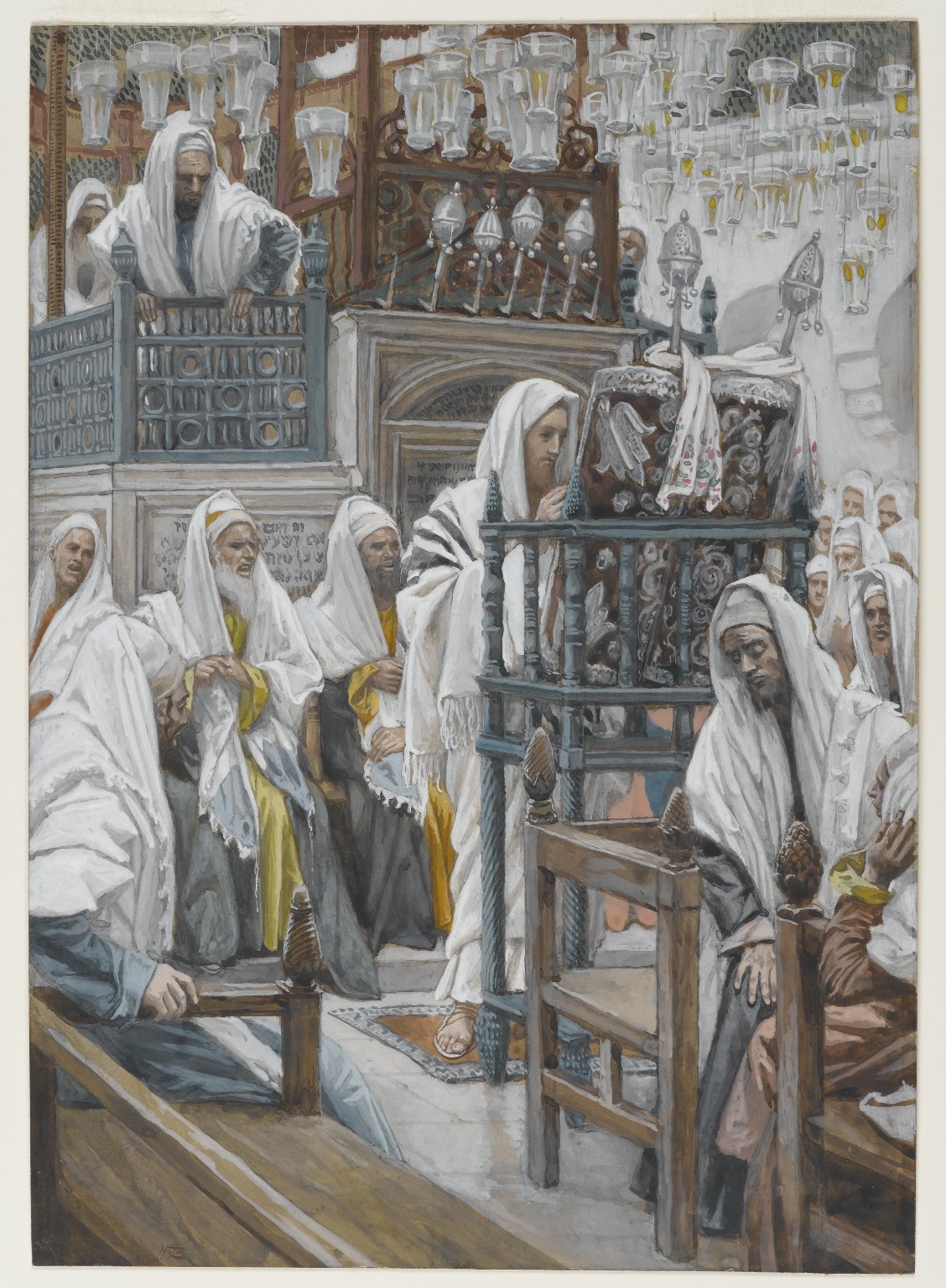
Today’s Gospel finds Jesus is in the Temple in Jerusalem for the Feast of Tabernacles. According to the law of Moses the woman caught in adultery should be punished by being stoned to death. However, the Roman occupiers had taken from the Jews the power to put anyone to death. Jesus’ response shows the world that there is another way: a way of love and not of judgement. Interestingly, this passage is the only time when the Gospel writers record Jesus writing. After the Scribes and Pharisees have brought the unnamed woman to Him:

‘Plygodd Iesu i lawr ac ysgrifennu ar y llawr â’i fys.’

‘Jesus bent down and wrote with his finger on the ground.’ (Jn 8:6) 

This verse has puzzled people for centuries. What exactly did Jesus write? We cannot know for certain. An answer to this intriguing question may come from Scripture. A few verses earlier in John’s Gospel, Jesus talks of rivers of living water. In the prophet Jeremiah we find the following words:

‘O Arglwydd, gobaith Israel, gwaradwyddir pawb a’th adawa; torrir ymaith oddi ar y ddaear y rhai sy’n troi oddi wrthyt, am iddynt adael yr Arglwydd, ffynnon y dyfroedd byw.’

‘O Lord, the hope of Israel, all who forsake you shall be put to shame; those who turn away from you shall be written in the earth, for they have forsaken the Lord, the fountain of living water.’ (Jer 17:13)

We can speculate that at least part of this verse from Jeremiah is what Jesus wrote in the earth. Writing these words would both fulfil the prophecy of Jeremiah, and shame the woman’s accusers. Jesus is showing that the Scribes and Pharisees have turned away from God, towards legalism and judgmental behaviour. Those gathered would know the prophecy of Jeremiah, and also that Jesus has recently mentioned streams of living water. This verse is the key to understanding what is going on. Jesus is fulfilling Scripture, and demonstrating that God should be characterised by love, mercy, and forgiveness. 

The Religious Authorities have not quite understood the situation. They continue to press Jesus for an answer, which He does not give. Instead Jesus challenges them:

‘ymsythodd ac meddai wrthynt, “Pwy bynnag ohonoch sy’n ddibechod, gadewch i hwnnw fod yn gyntaf i daflu carreg ati.”’

‘he stood up and said to them, “Let him who is without sin among you be the first to throw a stone at her.”’ (Jn 8:7)

Jesus’ position is non-judgemental, and highlights the hypocrisy of the accusers. Christ then returns to His writing:

‘Yna plygodd eto ac ysgrifennu ar y llawr.’

‘And once more he bent down and wrote on the ground.’ (Jn 8:8)

It is possible that Jesus was finishing the verse from Jeremiah. We cannot be sure, but what we do know is that the combination of His words, both written and spoken have a profound effect:

‘A dechreuodd y rhai oedd wedi clywed fynd allan, un ar ôl y llall, y rhai hynaf yn gyntaf, nes i Iesu gael ei adael ar ei ben ei hun, a’r wraig yno yn y canol. Ymsythodd Iesu a gofyn iddi, “Wraig, ble maent? Onid oes neb wedi dy gondemnio?” Meddai hithau, “Neb, syr.” Ac meddai Iesu, “Nid wyf finnau’n dy gondemnio chwaith. Dos, ac o hyn allan paid â phechu mwyach.”’

‘But when they heard it, they went away one by one, beginning with the older ones, and Jesus was left alone with the woman standing before him. Jesus stood up and said to her, “Woman, where are they? Has no one condemned you?” She said, “No one, Lord.” And Jesus said, “Neither do I condemn you; go, and from now on sin no more.”’ (Jn 8:9-11)

It is interesting that the older (and wiser) ones are the first to grasp the full implications of what Jesus is saying. Christ does not condemn the woman: God is a God of mercy. However, Our Lord does say, ‘Dos, ac o hyn allan paid â phechu mwyach’ ‘go, and from now on sin no more’ (Jn 8:11). Forgiveness goes hand-in-hand with contrition and repentance. We are loved, healed and restored by God, but with forgiveness comes a challenge. As Christians we are to turn away from wrongdoing, from the ways of the world, and instead find life in Christ.

Lent gives us the opportunity to take a long, hard look at ourselves and at our lives. It is a time to recognise that we need to become more like Jesus — to live, and think, and speak like Him. We need to be nourished, healed and restored by Christ, so that we can live lives which proclaim His love and His truth to the world. Lent is also a time for us to realise that we are loved by God, and that God is merciful, forgives our sins, and longs for us to experience life in all its fulness.

It is interesting that today is Passion Sunday when we begin in earnest our commemoration of Jesus’ death and Resurrection. This morning’s Gospel speaks of a different type of passion (sexual desire) which when uncontrolled could lead to death — either of a person condemned for committing adultery or a relationship between a husband and wife.

As we pray today for couples preparing for marriage we also pray for those whose relationships are under strain and for all who have experienced marital breakdown. Let us be slow to judge, and quick to show compassion and mercy to those whose lives are not perfect.

Let us, as followers of Jesus, rejoice in the generous love of God and prepare ourselves to celebrate Christ’s Passion. Let us give thanks for our families and relationships and give glory i Duw Dad, Duw y Mab, a Duw yr Ysbryd Glân. I’r hwn y priodoler pob gogoniant, arglwyddiaeth, a gallu, yn awr, ac yn oes oesoedd. Amen.

Christ and the sinner, A Mironov 2011

Lent IV

IT may seem strange that on the day in the year when we particularly remember mothers, the Gospel reading focuses on a father. However, given that the theme is love and generosity, the two are not as far apart as they may seem at first glance.

In the Gospels Jesus is often criticised for the company He keeps. Our Lord is shown associating with the ‘wrong sort of people’: sinners and tax collectors, those shunned by ‘polite society’. So, to make a point, Jesus tells a parable. 

A man has two sons, and the younger of the two asks his father for his inheritance:

‘Fy nhad, dyro imi’r gyfran o’th ystad sydd i ddod imi.’

‘Father, give me the share of property that is coming to me.’ (Lk 15:12)

At one level it is clear what is going on. The young man is asking for his inheritance, which he would normally receive after his father’s death. When he is given the money he goes off into the big, bad world. He is young, inexperienced, and not terribly wise. Like most young people he makes mistakes, and does foolish things. I know that I did, and I suspect that I’m not alone in that.

‘ymfudodd y mab ieuengaf i wlad bell, ac yno gwastraffodd ei eiddo ar fyw’n afradlon.’

‘the younger son gathered all he had and took a journey into a far country, and there he squandered his property in reckless living.’ (Lk 15:13)

The impetuous nature of youth has not changed much in two thousand years. We can see that things are going to go wrong, and they do.When the money runs out, the young man does try to get himself out of his mess by gaining employment, looking after someone’s pigs. For those of us living in the countryside this seems like a very sensible idea. However, under Jewish ritual law, animal husbandry was suspect, and those who did this work were deemed to be ritually impure. Also, swine were considered unclean animals. What the son has done is beyond the pale, and completely unacceptable to Jesus’ Jewish audience. 

Despite getting a job, the young man’s situation is not good:

‘Buasai’n falch o wneud pryd o’r plisg yr oedd y moch yn eu bwyta; ond nid oedd neb yn cynnig dim iddo.’

‘And he was longing to be fed with the pods that the pigs ate, and no one gave him anything.’ (Lk 15:16)

What is noticeable is that nobody is doing anything to help him: there is a distinct lack of charity and compassion amongst the people. The son, therefore,  decides to return home, and ask his father for forgiveness:

“Fe godaf, ac fe af at fy nhad a dweud wrtho, ‘Fy nhad, pechais yn erbyn y nef ac yn dy erbyn di. Nid wyf mwyach yn haeddu fy ngalw’n fab iti; cymer fi fel un o’th weision cyflog.’”

“I will arise and go to my father, and I will say to him, ‘Father, I have sinned against heaven and before you. I am no longer worthy to be called your son. Treat me as one of your hired servants.’” (Lk 15:18-19)

The son makes the journey back to his home. However, his father sees him a long way off, and runs to meet him. This behaviour, while normal and understandable to us, would have appeared strange to Jesus’ audience. Running wasn’t something that adults did. The father is breaking the rules, and acting in a way which defied the conventions of society. He has given away his property to his two sons, and now risks destroying his social capital. But he doesn’t care; it doesn’t matter. What is important is that his son has returned. The father embraces his lost son, kisses him, and then tells his servants:

‘Brysiwch! Dewch â gwisg allan, yr orau, a’i gosod amdano. Rhowch fodrwy ar ei fys a sandalau am ei draed. Dewch â’r llo sydd wedi ei besgi, a lladdwch ef. Gadewch inni wledda a llawenhau, oherwydd yr oedd hwn, fy mab, wedi marw, a daeth yn fyw eto; yr oedd ar goll, a chafwyd hyd iddo.’

“Bring quickly the best robe, and put it on him, and put a ring on his hand, and shoes on his feet. And bring the fattened calf and kill it, and let us eat and celebrate. For this my son was dead, and is alive again; he was lost, and is found.” (Lk 15:22-24)

The younger son is returned to his former state. He is accepted back into the family he left, he is treated with honour, and he is given respect. The calf that is slaughtered could potentially feed an entire community. The father is throwing a party for everyone to celebrate. However, the elder brother is (understandably) unhappy at his father’s reckless generosity. However, the purpose of Jesus’ parable is to teach people about the generous love of God, who longs to see prodigal humanity reconciled. God loves us enough to send His Son to die for us, to reconcile us to God, and to each other. 

In some ways, we are all like the prodigal son, and God is like the father in the parable. God loves us, and will do anything to see us return to where we belong: back home, embraced, restored, and made whole again. This is the central message of the Christian Faith: GOD LOVES US! We don’t deserve to be loved, we often turn away from God’s love, but God doesn’t abandon us, or reject us. Instead, our Heavenly Father welcomes us back, so that we may be transformed by His love. Love and forgiveness have the power to change us like nothing else. This love transforms the world. Like the prodigal son’s father, God is generous, extravagant, and loves us more than we can know or fully understand. As Christians, we experience that love, through the Church, when we read the Bible, in our Baptism, in the forgiveness of sin, and in the Eucharist, where we taste God’s real love and generosity. We receive it and are transformed by it. These things change and make us more generous and loving. They build up a community of faith, transformed by love, which can change the world.

So, my brothers and sisters, let us rejoice in the generous love of God and prepare ourselves to celebrate the Paschal mystery. Let us give thanks for our families and give glory i Duw Dad, Duw y Mab, a Duw yr Ysbryd Glân. I’r hwn y priodoler pob gogoniant, arglwyddiaeth, a gallu, yn awr, ac yn oes oesoedd. Amen.

James Tissot: The Return of the Prodigal Son (Brooklyn Museum)

Sexagesima 2025

The majority of human civilisations, religions, and philosophies champion some version of the phrase ‘Do unto others as you would have them do unto you’. This doctrine is known as The Golden Rule, and it is good advice. If we want other people to be nice to us, then being nice to them is a good place to start. However, is it enough? No, not as far as Our Lord is concerned. He calls us to something deeper, something more radical, and more world-changing.

‘Meddai’r Iesu wrth ei ddisgyblion, “Ond wrthych chwi sy’n gwrando rwy’n dweud: carwch eich gelynion, gwnewch ddaioni i’r rhai sy’n eich casáu, bendithiwch y rhai sy’n eich melltithio, gweddïwch dros y rhai sy’n eich cam-drin.”’

‘Jesus said to his disciples, “But I say to you who hear, Love your enemies, do good to those who hate you, bless those who curse you, pray for those who abuse you.”’ (Lk 6:27-28)

At the heart of Christianity is an idea: love your enemies. To love one’s enemies seems completely counter-intuitive. Our enemies often want to harm us. Naturally, we want to resist them, even crush them. But instead we are told to love them! We do this because love is at the heart of the Gospel. God loves us and God is born as one of us in order to transform each and every one of us, by His Grace. Jesus dies on the Cross for love of us, that we might be healed and reconciled with God. Love wills the good of another, and has the power to end conflict. This is what Jesus shows us. He bridges the gulf between God and humanity by dying for us. As Christians we are called to follow Christ’s example and put His love into practice in our lives. Jesus asks us to follow His example, living lives which are radically distinct from the ways of the world.

Just as Jesus calls us to live differently and provides us with an example of how to put the theory into practice, He also teaches us what God expects of us in terms of generous love:

‘Pan fydd rhywun yn dy daro di ar dy foch, cynigia’r llall iddo hefyd; pan fydd un yn cymryd dy fantell, paid â’i rwystro rhag cymryd dy grys hefyd. Rho i bawb sy’n gofyn gennyt, ac os bydd rhywun yn cymryd dy eiddo, paid â gofyn amdano’n ôl. Fel y dymunwch i eraill wneud i chwi, gwnewch chwithau yr un fath iddynt hwy’

‘To one who strikes you on the cheek, offer the other also, and from one who takes away your cloak do not withhold your tunic either. Give to everyone who begs from you, and from one who takes away your goods do not demand them back. And as you wish that others would do to you, do so to them.’ (Lk 6:29-31)

The generosity Jesus expects of His followers is exacting. We are told not to react to violence with violence, to give away what we have, and also to follow the Golden Rule, treating others as we would wish to be treated. 

The world around us is not very good at forgiveness, or turning the other cheek. It prefers to write people off than to admit the possibility of change: that’s how someone is, and that’s how they are going to stay. In showing forgiveness and generosity we recognise the fact that we too are human, that we too are flawed, and that we too make mistakes. Change is possible; things do not have to stay the same. People tend to love those who love them back, and hate those who hate them. The point is to also show love to those who do not love us, so that they become lovely to us, and loveable in themselves. Only love can transform something filled with hate and anger. Love and generosity are how God in Christ shows humanity how to live. Jesus’ life and death demonstrate what love in action means.

Jesus then reiterates His teaching to His disciples:

‘Nage, carwch eich gelynion a gwnewch ddaioni a rhowch fenthyg heb ddisgwyl dim yn ôl. Bydd eich gwobr yn fawr a byddwch yn blant y Goruchaf, oherwydd y mae ef yn garedig wrth yr anniolchgar a’r drygionus. Byddwch yn drugarog fel y mae eich Tad yn drugarog.’

“But love your enemies, and do good, and lend, expecting nothing in return, and your reward will be great, and you will be sons of the Most High, for he is kind to the ungrateful and the evil. Be merciful, even as your Father is merciful.” (Lk 6:35-36)

There is a paradoxical quality to what Jesus demands of us. We are to expect nothing, and yet we are told that we will receive everything. God’s love and mercy are to be experienced rather than understood. We can be merciful because God has shown us mercy, and continues so to do. The transforming power of God’s love and mercy is shown fully in the Mystery of the Eucharist, where we are fed by God and fed with God, so that His Love might transform us. This is God’s generosity, shown to us so that we might be generous in return. Through this generosity we have the opportunity to live in a different way, and encourage others to do the same. Jesus offers the world a way out of selfishness and sin, a chance to be God’s people living life in all its fulness.

As well as being non-violent and generous, Christ calls us to be non-judgemental:

“Peidiwch â barnu, ac ni chewch eich barnu. Peidiwch â chondemnio, ac ni chewch eich condemnio. Maddeuwch, ac fe faddeuir i chwi. Rhowch, ac fe roir i chwi; rhoir yn eich côl fesur da, wedi ei wasgu i lawr a’i ysgwyd ynghyd nes gorlifo; oherwydd â’r mesur y rhowch y rhoir i chwi yn ôl.”

“Judge not, and you will not be judged; condemn not, and you will not be condemned; forgive, and you will be forgiven; give, and it will be given to you. Good measure, pressed down, shaken together, running over, will be put into your lap. For with the measure you use it will be measured back to you.” (Lk 6:37-38)

If we want God to be loving and merciful towards us, then we need to demonstrate in our lives that we are living the way God wants us to live. What Jesus proposes is something costly and difficult, which requires us to go against the human instincts which lead us to be selfish, judgmental and unkind. But if we all try to follow this teaching together we will be built up as a community of loving generosity,making the Kingdom a reality here and now.

Each of us, on our own, is not able to do this. Even as a Christian community we will struggle. But if we trust God to be at work in us, with His Grace perfecting our nature, then it becomes a possibility. God asks the impossible of us, not so that we will fail, but so that we rely entirely upon our Creator and Sustainer to bring this miracle to pass. 

When we rely upon God together then we can be built up in love, as living stones, a temple to God’s glory. We proclaim God’s love and truth to the world, through forgiveness and sacrificial love. Clothed in the humility of our knowledge of our need of God’s love and mercy, let us come to Him. Let us be fed by Him, be fed with Him. Let us be healed and restored by Him, so that we can live lives which speak of the power of His kingdom. So that the world may believe and give glory i Duw Dad, Duw y Mab, a Duw yr Ysbryd Glân. I’r hwn y priodoler pob gogoniant, arglwyddiaeth, a gallu, yn awr, ac yn oes oesoedd. Amen.

Epiphany III 2025

ONE of the wonderful things about living in this part of the country is that we can celebrate the new year twice. Once on January 1st and then again on January 13th for Hen Galan. It is good to celebrate new starts, new beginnings, and important milestones. Two of today’s readings focus on this theme. The reading from Ezra describes a religious assembly which takes place on the first day of the seventh month. In the Hebrew Calendar this corresponds to early September. It is this time when Jews celebrate Rosh Hashanah, or the New Year. 

Two weeks ago we celebrated the Baptism of Christ in the River Jordan, and last week we celebrated His first miracle — changing water into wine at a wedding at Cana. Jesus begins His public ministry in Galilee. He starts on home turf, where He has grown up, among the people and places that He knows best. Our Lord is full of the Holy Spirit, and there is a great deal of excitement regarding His teaching. He goes to the synagogue on the Sabbath, where He is invited to read a passage from Scripture and to comment upon it, just as Ezra did in the first reading this morning. Jesus is given the scroll of the prophet Isaiah, and He recites:

“Y mae Ysbryd yr Arglwydd arnaf, oherwydd iddo f’eneinio i bregethu’r newydd da i dlodion. Y mae wedi f’anfon i gyhoeddi rhyddhad i garcharorion, ac adferiad golwg i ddeillion, i beri i’r gorthrymedig gerdded yn rhydd, i gyhoeddi blwyddyn ffafr yr Arglwydd.”

“The Spirit of the Lord is upon me, because he has anointed me to proclaim good news to the poor. He has sent me to proclaim liberty to the captives and recovering of sight to the blind, to set at liberty those who are oppressed, to proclaim the year of the Lord’s favour.” (Lk 4:18-19)

This prophecy is taken from the 61st Chapter of the prophet Isaiah. It expresses the people of Israel’s hope for a Messianic future: a hope of healing, freedom, and restoration. This is similar to the idea of the Jubilee, when every fifty years all debts were cancelled, all slaves were freed, and all land was returned to its original owners. However, jubilees were proclaimed by the King of Israel, so here Jesus is announcing the fact that He is a Prophet, a Priest and also a King. As declarations of intent go, this is certainly a strong one! 

In today’s Gospel, we hear the announcement of the Kingdom of God, a new way of living, which can transform us, and our world, for the better. The Kingdom of God is to be a place where all are cared for, and where our needs are met. The good news of the Gospel is for those who know their need of God, those who are aware of their spiritual poverty. That means each and every one of us. Jesus will later go on to say, in the Sermon on the Mount: ‘Blessed are you who are poor, for yours is the Kingdom of God’ (Lk 6:20). We all need God’s love in our hearts, and our lives, so that we can be transformed. We cannot transform ourselves, this is something that only God can do. But only if we let Him, and co-operate with Him. 

Christ offers the world both freedom and vision. The opportunity to see what others cannot, and the experience of true freedom. God gives us life in all its fulness, so that we can be transformed by this love, into people who are loving, and who will the good of others. By living lives characterised by love and sacrifice we can be truly alive. After having read from Isaiah, Our Lord says:

“Heddiw yn eich clyw chwi y mae’r Ysgrythur hon wedi ei chyflawni.”

“Today this Scripture has been fulfilled in your hearing.” (Lk 4:21)

This is a huge claim to make. If the Scripture has been fulfilled then this means that Jesus is the Messiah, plain and simple. What the prophets point to in the future has now become a reality in the person of Jesus Christ. The Word made flesh is the fulfilment of the Word of God: Jesus fulfils the Scriptures. This is what we believe as Christians, and it is the reason why we read the Old Testament. The New is prefigured in the Old. Just as the New Year has its roots in the Old Year The Scriptures point to Christ, and they find their fulfilment and true meaning in Him. What Israel has hoped and longed for has arrived in the figure of Jesus. This means that the Kingdom of God is not something abstract, but rather someone concrete. It is a person, Jesus of Nazareth. The reconciliation of God and humanity happens in and through Jesus Christ.

The mission of the Church is to proclaim the Good News of the Kingdom of God. The words spoken in a synagogue in Nazareth two thousand years ago are as relevant today as they were then. God continues to invite humanity to know Him, and to experience His love. This is a cause for celebration, one envisaged by Nehemiah in our first reading:

“Ewch, bwytewch ddanteithion ac yfwch win melys a rhannwch â’r sawl sydd heb ddim, oherwydd mae heddiw yn ddydd sanctaidd i’n Harglwydd; felly, peidiwch â galaru, oherwydd llawenhau yn yr Arglwydd yw eich nerth.”

‘Go on your way. Eat the fat and drink sweet wine and send portions to anyone who has nothing ready, for this day is holy to our Lord. And do not be grieved, for the joy of the Lord is your strength.’ (Nehemiah 8:10) 

Christians celebrate the proclamation of the Good News within a Eucharist. This is the Thanksgiving which Our Lord entrusted to us, so that we can be nourished by Him, and with Him, with His Body and Blood. So that we might be transformed. And so that, nourished by Word and Sacrament, we may invite others to share the joy of the Lord and give glory i’r Duw Dad, Duw y Mab, a Duw yr Ysbryd Glân. I’r hwn y priodoler pob gogoniant, arglwyddiaeth, a gallu, yn awr, ac yn oes oesoedd. Amen.

James Tissot: Jesus Unrolls the Book in the Synagogue (Jésus dans la synagogue déroule le livre) Brooklyn Museum

Advent Sunday 2024: Be Alert: Preparing for Christ’s Return

WHEN I was a young boy I was given a bookmark, on which was printed, ‘BE ALERT: The world needs all the lerts it can get!’ This pun amused me greatly, and it still does. However, it contains a serious message. As Christians we are called to be watchful and aware: both of the world around us, and of the signs of God’s Kingdom. We must also be watchful for Our Lord’s Return. There are two things of which we can be sure. Firstly, that our earthly lives are finite, and secondly, that Christ will come to judge the World. People often find both of these concepts somewhat off-putting, which is understandable. However, they are a reality which we need to face, and understand. Christians believe in God. We trust that we are loved by Our Heavenly Father, who is a God of love and mercy. He sent His Son, Jesus Christ, to reconcile us to Himself and with each other. This is why we can have hope, and prepare to meet Christ with joyful hearts.

The prophet Jeremiah, in our first reading this morning, speaks of prophecy being fulfilled:

‘“Y mae’r dyddiau’n dod,” medd yr Arglwydd, “y cyflawnaf y gair daionus a addewais i dŷ Israel ac i dŷ Jwda.”’

‘Behold, the days are coming, declares the Lord, when I will fulfil the promise I made to the house of Israel and the house of Judah.’ (Jer 33:14)

God promises to fulfil prophecy and to send His people a Saviour. This promise, made to the House of David, is fulfilled both by Jesus’ birth and His return in judgement. God promises to save His people and to rule in a way that is far beyond any human idea of justice. Earthly rulers and politicians will, and do, disappoint us: they always fall short of our expectations. They are human beings, and are therefore fallible. Instead, we call upon God to intervene, and make things right. Only our Heavenly Father can save us, we cannot save ourselves.

However, waiting for Jesus’ Return is not without its problems. St Paul writes to Christians in northern Greece who are expecting Christ’s Second Coming to be imminent. Their expectations need to be managed, and they need help to live out their faith, so that they grow in love together. Our time on earth is limited, so we need to take every opportunity to live in a way that is pleasing to God.

Jesus’ description of the end times is in agreement with the apocalyptic passages found in the prophets. In other words, when that day comes it will be clear. If we are alert, then we will know what is going on. We should look forward to this day, and not be afraid: 

“A’r pryd hwnnw gwelant Fab y Dyn yn dyfod mewn cwmwl gyda nerth a gogoniant mawr. Pan ddechreua’r pethau hyn ddigwydd, ymunionwch a chodwch eich pennau, oherwydd y mae eich rhyddhad yn agosáu.”

‘And then they will see the Son of Man coming in a cloud with power and great glory. Now when these things begin to take place, straighten up and raise your heads, because your redemption is drawing near.’ (Lk 21:27-28)

Christ’s return is a sign of the Kingdom of God. He will welcome us to our eternal Heavenly home. Mindful of our destiny, we should use this season of Advent as a time for preparation. We should make these four weeks leading to Christmas a time when we turn away from everything which separates us from God and each other. As Our Lord says in the Gospel:

“Cymerwch ofal, rhag i’ch meddyliau gael eu pylu gan ddiota a meddwi a gofalon bydol, ac i’r dydd hwnnw ddod arnoch yn ddisymwth fel magl; oherwydd fe ddaw ar bawb sy’n trigo ar wyneb y ddaear gyfan.”

‘But watch yourselves lest your hearts be weighed down with dissipation and drunkenness and cares of this life, and that day come upon you suddenly like a trap. For it will come upon all who dwell on the face of the whole earth’ (Lk 21:34-35)

These words are as relevant today as they were two thousand years ago. Human nature has not changed, nor has our propensity for doing the wrong things — squandering our time, energy, and resources. Instead, we should listen to Jesus and obey His commands:

“Byddwch effro bob amser, gan ddeisyf am nerth i ddianc rhag yr holl bethau hyn sydd ar ddigwydd, ac i sefyll yng ngŵydd Mab y Dyn.”

‘But stay awake at all times, praying that you may have strength to escape all these things that are going to take place, and to stand before the Son of Man.’ (Lk 21:36)

Vigilance, prayer, and complete reliance upon God are the weapons of our spiritual armoury with which to combat the darkness of this world. 

So, my brothers and sisters in Christ, let us be alert and watchful. Let us serve Christ our King who will return, filled with His love for us, and for all people. Let this love form a Kingdom with God as its head. And as we await the Christ’s Second Coming, let us give praise and honour to God the Father, God the Son, and God the Holy Spirit. To whom be ascribed all glory, dominion and power, now and forever. Amen.

Christos Pantokrator, St Catherine’s Monastery, Sinai

Remembrance Sunday 2024

When I was at school we had an educational trip to Normandy and stayed at Arramanches. The hotel was near the beach which formed a section of ‘Gold Beach’, part of the Normandy Landings. One of the temporary Mulberry Harbours, built by the Allies could still be seen in the sea. A highlight of the trip was a visit to Bayeux, both to see the tapestry and also to visit the British Military Cemetery. Bayeux War Cemetery contains the graves of nearly five thousand British and Commonwealth soldiers who died on the beaches of Normandy, some eighty years ago. There is something deeply profound and moving about being confronted with the scale of death and sacrifice made during the Normandy Campaign and in other theatres of war. It makes us realise that the freedom, peace, and security we now enjoy comes at a huge cost.

Today we give our thanks to Almighty God for all who have served and died for our country, and also for the peace in which we currently live. We give thanks for those who continue to serve and protect us, putting their lives on the line to keep us safe. We also give thanks for the work of the Royal British Legion, who, for over a hundred years, have raised money to support veterans, and to keep alive the memory of those who died. We wish them continued success in their important work.

As we recall the sacrifice made by people from the villages in which we live, from this country, and from all over the world, our remembrance must be an active one which has an effect on our lives. We remember the generosity of those who gave their lives to ensure that we can live free from warfare and suffering. Such generosity must leave a mark on our lives, and help us to learn from the mistakes of the past, and do all that we can to prevent them from being repeated in the future.

The concept of peace is not simply the absence of war, but rather the right ordering of the world around us. It means living the way God wants us to live. That stands for living in harmony, and love, one with another, and forgiving each other. In this morning’s reading from Matthew’s Gospel, Our Lord says:

‘Gwyn eu byd y tangnefeddwyr: oherwydd cânt hwy eu galw’n feibion Duw’

‘Blessed are the peacemakers, for they will be called sons of God’ (Mt 5:9)

Peacemaking is costly and difficult. That is because it is rooted in sacrifice and forgiveness. However, there is no other way to bring about the peace for which we long. The greatest example we have of such forgiveness and sacrifice is the Cross. Here Jesus demonstrates to humanity how much we are loved by God, and the lengths to which the Son of God is prepared to go to show the world love, and to reconcile people both to God and to each other. 

The story does not end there. Jesus’ Death is followed by His Resurrection, on Easter Day, Sul y Pasg. Christ offers humanity the gift of eternal life, so that in Him our lives are changed and not ended. Christians believe that our earthly life is a prelude to our hope of eternity in Heaven, in the close presence of God.

This is how we should understand our life on earth: as a preparation for the life to come. When we listen to Christ’s teaching in the Sermon on the Mount, we find in Our Lord’s words a template for how we should live, as people of love and generosity. Such a lifestyle is consistent with the vision of the prophet Isaiah. He looks forward to a time when the wolf will lay with the lamb, and when swords will be beaten into ploughshares. God is ultimately responsible for such things, but we have our part to play as well — helping to make the Kingdom of God a reality. God’s Kingdom is a place of love, forgiveness, and reconciliation. A place where wounds are healed, and humanity is restored by Our Lord and Saviour Jesus Christ. Who offered Himself so that we might live, and enjoy life in all its fulness.

My brothers and sisters, we are all called to cooperate with God and with each other, so that our lives are characterised by the love and service we see in Christ. This same love and service is shown by those who gave their lives so that we might enjoy the peace and freedom for which they longed. We are grateful, and we gather to remember them, and the peace which they won at so great a cost. We take time to reflect upon their example and dedicate ourselves to continuing what they started — bringing comfort to those who mourn, and striving for a world characterised by justice and peace. We do so together, knowing that our efforts honour the injured and the fallen. 

Therefore, let all of us gathered here today follow Jesus to the Cross and beyond. Let us live out God’s love, mercy, and service in our own lives. Let us take care of each other, and honour the memory of those who have gone before us.

We will remember them.

Ni â’u cofiwn hwy. 

Trinity xxiii – Love Actually

IN the 2003 film Bruce Almighty, Jim Carey’s character, Bruce, feels like his life is falling apart. As he drives in the dark, he begs God to tell him what to do, to give him a sign, or a signal. Immediately, a truck appears in front of him loaded with road signs saying, ‘Wrong way’, ‘Do not enter’, and ‘Stop!’. Bruce ignores the signs, overtakes the truck and then crashes his car into a lamppost. He is not hurt, but he is angry with God for not listening to his peas for guidance. This comedic scene brings home the message that sometimes we ask for God’s help in our lives and then fail to listen to what God is telling us to do.

In this morning’s Gospel, Jesus is in Jerusalem, engaging in some theological discussions in the Temple. He has just been talking to a group of Sadducees about the Resurrection. Their conversation gains to the attention of a Scribe, a legal expert, who asks Our Lord:

“Prun yw’r gorchymyn cyntaf o’r cwbl?”

“Which commandment is the most important of all?” (Mk 12:28)

Jesus answers, as we would expect, with words which also form part of this morning’s first reading from Deuteronomy:

“Y cyntaf yw, ‘Gwrando, O Israel, yr Arglwydd ein Duw yw’r unig Arglwydd, a châr yr Arglwydd dy Dduw â’th holl galon ac â’th holl enaid ac â’th holl feddwl ac â’th holl nerth.’” 

“The most important is, ‘Hear, O Israel: The Lord our God, the Lord is one. And you shall love the Lord your God with all your heart and with all your soul and with all your mind and with all your strength.’” (Mk 12:29-30)

These words form the Shema, are a prayer recited three times a day by Jews. They are a declaration of faith in God, and represent how each person is called to love God with all of our being. To this Our Lord adds: 

“Yr ail yw hwn, ‘Câr dy gymydog fel ti dy hun.’ Nid oes gorchymyn arall mwy na’r rhain.”

“The second is this: ‘You shall love your neighbour as yourself.’ There is no other commandment greater than these.” (Mk 12:31)

Christ quotes from Leviticus (19:18) to show our duty towards our neighbour. Christians are commanded both to love, and to will the good of others, as St Thomas Aquinas said in the Summa Theologiae:Love is to will the good of another, Mae cariad ewyllysio y Dda o’r eraill’. To love, then, is not simply an act of passion or emotion — something which we feel — but it is also something which we choose to do. As followers of Christ, we desire to see others flourish, and we work towards that end. Love takes effort. To choose someone else’s good reminds us that we do not exist for our own sake, and that our lives are lived in community and relationship with others. We are called to be loving and generous, just as God has been loving and generous towards us in Christ. We seek to cooperate with God in promoting human flourishing. 

Our Lord’s teaching meets with the Scribe’s approval

“Da y dywedaist, Athro; gwir mai un ydyw ac nad oes Duw arall ond ef. Ac y mae ei garu ef â’r holl galon ac â’r holl ddeall ac â’r holl nerth, a charu dy gymydog fel ti dy hun, yn rhagorach na’r holl boethoffrymau a’r aberthau.”

“You are right, Teacher. You have truly said that he is one, and there is no other besides him. And to love him with all the heart and with all the understanding and with all the strength, and to love one’s neighbour as oneself, is much more than all whole burnt offerings and sacrifices.” (Mk 12:32-33)

Our duty towards God and our neighbour — namely to love them — is foundational to how we practise our religion and how we live our lives. This responsibility informs all that we are, and all that we do, and also promotes human flourishing. The scribe recognises this, and rather than tying to catch Jesus out, he is genuinely interested in seeing the world become a better place.

Such a positive response elicits a similar one from Jesus:

A phan welodd Iesu ei fod wedi ateb yn feddylgar, dywedodd wrtho, “Nid wyt ymhell oddi wrth deyrnas Dduw.”

And when Jesus saw that he answered wisely, he said to him, “You are not far from the kingdom of God.” (Mk 12: 34)

The scribe is not far from following the signs and becoming a follower of ‘The Way’. However, while he agrees with Jesus’ teaching, the scribe still does not recognise Jesus as the Messiah, which Bartimaeus, in last Sunday’s Gospel, was able to do despite being blind.

As Christians we believe that Jesus is our great high priest, who gives Himself, on our behalf, as an offering to God the Father, out of love. This is what takes place on the Cross at Calvary. God, in Christ, gives everything. The life of the Son of God is offered freely, to reconcile what sin has thrust apart. Jesus is the greatest example of generosity that exists. This is the heart of the Christian Faith: Christ dies for us and rises again to heal the wounds of sin and division and to open up the way to Heaven for those who believe in Him. At its heart the message of the Gospel is love: love of God and neighbour. This is what Our Lord demonstrates on the Cross. The greatest expression of God’s love for humanity, which is made present in the Eucharist. Each and every time the Eucharist is celebrated, we, the people of God, are fed with Christ’s Body and Blood, to be built up in love. The love of God becomes something which we can touch and taste. Jesus gives Himself to us, so that we can grow in the love of God and of each other.

So my brothers and sisters in Christ, let us be nourished by Him in Word and Sacrament. Let us be filled with the love of God and love of our neighbours, so that this love forms who we are and what we do. Let us also give praise and honour to God the Father, God the Son, and God the Holy Spirit. To whom be ascribed all glory, dominion and power, now and forever. Amen.

Trinity VIII – ‘Like Sheep without a Shepherd’

Most of us who drive around these parts are used to slowing down or swerving to avoid a sheep on the road. Whether it is the warm tarmac, or a tasty morsel nearby, sheep are happy to lie down or move without any thought of the cars around them. These animals are often characterised as being foolish, stubborn, and easily led. Sheep need shepherds, to keep them safe and healthy, to watch over them, and to protect them from danger. Sheep, therefore, may not, at first glance, be the most flattering metaphor to use for God’s people (both as the people of Israel and the Church) but they represent an ancient image, with deep resonance in Scripture. David, Israel’s second king, was taken from the sheep-folds, and God is described as a shepherd in Psalm 23: ‘The Lord is my shepherd’. This image speaks of a relationship of love and care, and of someone who protects us from harm, and who is willing to defend us at all costs. This points to Jesus: the Good Shepherd, who lays down his life for us on Calvary.

The first reading this morning is taken from the prophet Jeremiah, who is castigating the leaders of Israel. According to the prophet, they have failed to look after God’s people: 

“Woe to the shepherds who destroy and scatter the sheep of my pasture!” declares the Lord. 

“Gwae chwi fugeiliaid, sydd yn gwasgaru defaid fy mhorfa ac yn eu harwain ar grwydr,” medd yr Arglwydd (Jer 23:1)

The Kings and Priests of Israel are supposed to act as shepherds, and protect and care for their flock. But they are not true shepherds because they exercise power selfishly, driving away and destroying the sheep. Such leaders seek power for its own sake, to make themselves feel grand and important. They become cruel and selfish. These types of rulers do not care for the well-being of their people. Jeremiah then contrasts the leaders who fail to look after the people, with God who loves and cares for them.

“Then I will gather the remnant of my flock out of all the countries where I have driven them, and I will bring them back to their fold, and they shall be fruitful and multiply. I will set shepherds over them who will care for them, and they shall fear no more, nor be dismayed, neither shall any be missing,” declares the Lord.

“Yr wyf fi am gasglu ynghyd weddill fy mhraidd o’r holl wledydd lle y gyrrais hwy, a’u dwyn drachefn i’w corlan; ac fe amlhânt yn ffrwythlon. Gosodaf arnynt fugeiliaid a’u bugeilia, ac nid ofnant mwyach, na chael braw; ac ni chosbir hwy,” medd yr Arglwydd. (Jer 23:3-4)

The prophet then speaks of a future when God will ‘raise up for David a righteous branch’ ‘y cyfodaf i Ddafydd Flaguryn cyfiawn’ (Jer 23:5). This is understood as pointing to Jesus, the righteous King, sent by God to care for His people.

Meanwhile, in this morning’s Gospel, the disciples return to Jesus, after having been sent out  in pairs to preach, teach, and heal. Once they have told the Lord what they have done, He replies:

“Come away by yourselves to a desolate place and rest a while.”

“Dewch chwi eich hunain o’r neilltu i le unig a gorffwyswch am dipyn.” (Mk 6:31)

Jesus understands that for ministry to be effective there needs to be a balance between action, rest, and reflection. Otherwise, the disciples will end up exhausted, as their pastoral ministry is demanding:

‘For many were coming and going, and they had no leisure even to eat.’

‘Oherwydd yr oedd llawer yn mynd a dod, ac nid oedd cyfle iddynt hyd yn oed i fwyta.’ (Mk 6:32)

Clearly the apostles need time to rest and to have some food. They also need time to learn from Jesus, and to take care of the people. Our Lord takes them by boat to a secluded spot, but they are recognised, and crowds run to greet them. It looks like the situation is about to be repeated, when Jesus intervenes:

‘When he went ashore he saw a great crowd, and he had compassion on them, because they were like sheep without a shepherd. And he began to teach them many things.’

‘Pan laniodd Iesu gwelodd dyrfa fawr, a thosturiodd wrthynt am eu bod fel defaid heb fugail; a dechreuodd ddysgu llawer iddynt.’ (Mk 6:34)

Like sheep without a shepherd’ ‘fel defaid heb fugail’ these are people in great need. They have heard the proclamation of the Kingdom of God, and they come to learn more, to be healed, and to be fed and nourished. Christ recognizes their longings and ministers to them, giving His disciples an opportunity to eat and rest. Jeremiah’s prophecy is fulfilled by Our Lord, and the people of Israel are cared for. They are loved, and they are nourished. When their needs were not met by their political and religious leaders, they turn to Christ, the Good Shepherd, who looks after God’s people. 

On the Cross, the Good Shepherd lays down His life for His sheep. This sacrifice lies at the heart of St Paul’s message to the Ephesians in this morning’s second reading. Jesus gives humanity life through His suffering and death. On the night before He died He told us, His flock, what to do, so that God’s people might continue to be fed and nourished by Him, and with Him. Our Lord continues to care for us, because He loves us. God gives Himself to us, so that we might share in His life, and be transformed by His Grace, more and more into His likeness. 

So, my brothers and sisters in Christ, let us rejoice that we are nourished and cared for by the true Shepherd of our souls. Let us prepare for the banquet of the Kingdom, by allowing God’s grace to transform us. And let us sing the praises of God the Father, God the Son, and God the Holy Spirit. To whom be ascribed all glory, dominion, and power, now and forever. Amen.

James Tissot – He sent them out two by two (Brooklyn Museum)

Easter VI

CHRISTIANITY is a religion which has at its heart a number of paradoxes. The Good News of the Kingdom of God is both simple and straightforward. But it is also difficult and complex. The basic theory is simple: ‘Love God, and love your neighbour’ ‘Câr Duw a Châr dy gymydog’. However, when we try to do this, we find that the practice is a little more complicated than the theory.

The Gospel passage for today is all about love. According to St Thomas Aquinas, ‘Love is… willing the good of the other.’ ‘Mae cariad ewyllysio y Dda o’r eraill’ [(STh I-II, q.26 a.4, CCC 1766) Respondeo dicendum quod, sicut Philosophus dicit in II Rhetoric, amare est velle alicui bonum]. To love, then, is not simply an act of passion or emotion — something which we feel — but it is also something which we choose to do. As Christians, we want to see others flourish, and we work towards that end. Love takes effort.

Jesus’ teaching is clear:

“This is my commandment, that you love one another as I have loved you. Greater love has no one than this, that someone lay down his life for his friends.”

“Dyma fy ngorchymyn i: carwch eich gilydd fel y cerais i chwi. Nid oes gan neb gariad mwy na hyn, sef bod rhywun yn rhoi ei einioes dros ei gyfeillion.” (Jn 15:12-13)

Christians are called to love one another as Christ loves us. In other words we are to love, even to the point of laying down our lives for each other. This is pertinent  as we remember those who gave their lives during the Second World War, eighty years ago. At the heart of our faith is the Cross. This is the ultimate demonstration of God’s love for us: God loves us so much that He dies for us, so that we might live in Him. The Cross is not the end, it leads to the Empty Tomb, and to the Triumph of Easter. Jesus dies to break the power of death, and to offer humanity eternal life with Him in Heaven. This is why we spend time in our celebration of Easter pondering the mystery of our redemption, entering ever deeper into the experience of God’s love for us.

When Our Lord speaks to His disciples, He speaks to us as well. He does not call us servants (weision), but friends (gyfeillion). To be a Christian is to be a friend of God and to enter into an intimate and loving relationship with the Creator and Redeemer of the Universe. God wants to be our friend. He wants to be united with us in a relationship characterised by love and generosity. 

We experience God’s love most fully in the Eucharist, where Christ continues to give Himself to, and for, us. Out of love, He continues to heal our wounds, to restore our relationship with God and each other, and gives us a foretaste of Heaven in the here and now. There is no other thing on earth as precious as this love. Nothing is more wondrous than this sign and token of God’s love for us. To dwell in Christ’s love is to be united with Him in physical and spiritual communion, so that God’s grace can transform us more and more into His likeness.

At this point in John’s Gospel Our Lord is in the Upper Room with His disciples. He has washed their feet and celebrated the Eucharist. Jesus has also talked about His Passion and Death in order to explain to His followers, including us, what He is about to do and why it matters. Christ is putting everything in place for there to be a Church to continue His work on Earth. This is why he addresses His disciples as follows:

“You did not choose me, but I chose you and appointed you that you should go and bear fruit and that your fruit should abide, so that whatever you ask the Father in my name, he may give it to you.”

“Nid chwi a’m dewisodd i, ond myfi a’ch dewisodd chwi, a’ch penodi i fynd allan a dwyn ffrwyth, ffrwyth sy’n aros. Ac yna, fe rydd y Tad i chwi beth bynnag a ofynnwch ganddo yn fy enw i.” (Jn 15:16)

We did not choose Jesus. He chose us. The Church is a vine which bears fruit. This is how it has continued for two thousand years. The Good News of the Kingdom has been proclaimed, and, throughout the world, people have grown and been nurtured in their faith. We have had a relationship with Jesus, which unites us with all Christians through both space and time, making us brothers and sisters in Christ, part of a family. Because of this relationship, with our Creator and each other, we are able to ask things of God in prayer. God listens to our prayer, and is generous in granting our requests. He gives his only Son to die for us and to rise again so that we might be certain of eternal life in Him. 

Finally, Jesus reminds His disciples of the need to love one another:

“These things I command you, so that you will love one another.”

“Dyma’r gorchymyn yr wyf yn ei roi i chwi: carwch eich gilydd.” (Jn 15:17)

Our Lord tells us what to do, so that we may bring about the will of God: that we love each other and flourish. God loves us, and wishes us to remain in a relationship with Him, and each other, that is characterised by generosity, and which takes as its model the Son of God, Our Risen Saviour. This conviction inspires the argument of the First Letter of John:

“In this is love, not that we have loved God but that he loved us and sent his Son to be the propitiation for our sins.”

“Yn hyn y mae cariad: nid ein bod ni’n caru Duw, ond ei fod ef wedi ein caru ni, ac wedi anfon ei Fab i fod yn aberth cymod dros ein pechodau.” (1Jn 4:10)

Jesus, through His self-sacrifice, makes up for all that we have done wrong. He offers Himself — the Righteous for the unrighteous — to restore our relationship with God and with each other. Jesus reconciles God and humanity, bringing back together what sin has thrust apart. This is the heart of the Good News. As well as dying for us, Christ also rose again. Our Lord reunites God and humanity, by laying down His life for His friends, and also gives us the hope of Heaven. We cannot earn our way there, but the generous love of our Creator offers us the opportunity to be united with Him forever.

My brothers and sisters in Christ, as we continue to celebrate Our Lord’s resurrection, may we rejoice in the abundance of divine generosity. May God’s grace transform us more and more into His likeness. Let us join with all our Christian brethren in rejoicing and singing the praises of God the Father, God the Son, and God the Holy Spirit. To whom be ascribed all glory, dominion, and power, now and forever. Amen.

James Tissot: The Last Sermon of Our Lord  (Brooklyn Museum)

Lent IV

IF you have ever been unwell while on holiday you probably sought out a Pharmacy. They are quite straightforward to locate as they tend to either have a cross on their sign, or a snake or two around a pole. This was the symbol of the Greek God of healing Aesculapius whose major shrine was at Epidaurus. Christians tend to associate the snake with the tempting of Adam and Eve in the Garden of Eden, but it is not this creature’s only occurrence in the Bible. 

This morning’s Gospel begins with Jesus explaining His forthcoming Crucifixion with a reference to Israel’s wanderings after the Exodus:

And the Lord said to Moses, “Make a fiery serpent and set it on a pole, and everyone who is bitten, when he sees it, shall live.” So Moses made a bronze serpent and set it on a pole. And if a serpent bit anyone, he would look at the bronze serpent and live.’ 

‘A dywedodd yr Arglwydd wrth Moses, Gwna i ti sarff danllyd, a gosod ar drostan: a phawb a frather, ac a edrycho ar honno, fydd byw. A gwnaeth Moses sarff bres, ac a’i gosododd ar drostan: yna os brathai sarff ŵr, ac edrych ohono ef ar y sarff bres, byw fyddai.’ (Numbers 21:8-9)

The people of Israel had been complaining about the journey, the lack of food and water, and that God has led them out into the desert to die, so God sent fiery serpents which killed them. The people then relented, and asked Moses to pray to God to take the serpents away. God listened to Moses, and provided a means for Israel to be saved. Jesus uses this example to explain why the Son of Man must be lifted up. Just as the bronze serpent saved people long ago, Jesus’ being lifted up on the Cross will save those who believe in Him. Our Lord’s death will occur at Passover, the festival which celebrates the people of Israel’s journey from slavery in Egypt, to the Promised Land. So Christ will deliver humanity from the slavery of sin and offer us eternal life in Him. He bears our burden, and reconciles us to the Father, and each other.

There then follows one of the most well-known verses in the Bible:

For God so loved the world, that he gave his only Son, that whoever believes in him should not perish but have eternal life. For God did not send his Son into the world to condemn the world, but in order that the world might be saved through him.

‘Canys felly y carodd Duw y byd fel y rhoddodd efe ei unig‐anedig Fab, fel na choller pwy bynnag a gredo ynddo ef, ond caffael ohono fywyd tragwyddol. Oblegid ni ddanfonodd Duw ei Fab i’r byd i ddamnio’r byd, ond fel yr achubid y byd trwyddo ef.’ (Jn 3:16-17) 

This is the heart of our faith as Christians. Christ was born for us, lived and died for us, and was raised to new life, so that we might have the promise of eternal life in Him. This is why we follow Christ into the desert of Lent for forty days, so that through prayer, fasting and charity we may be prepared in body and soul to celebrate the mystery of Christ’s Passion, Death, and Resurrection. Maundy Thursday, Good Friday and Easter are the ultimate embodiment of God’s generous Love towards humanity. God loves us, you and me, each one of us, so much that He gave His only Son to die for us, on the Cross.

God does not condemn humanity for falling short, instead He saves us. God is a God of love and generosity, who offers Himself to reconcile us to Him, and to each other. This generosity is at the heart of our faith as Christians. We worship a generous, loving God, and invite others to receive the free gift of God’s grace, and enter a relationship with the God who made us and who loves us. 

This relationship explains the joyful hope which St Paul has when he writes to the Church in Ephesus in our second reading this morning. Paul’s central message is that:

For by grace you have been saved through faith. And this is not your own doing; it is the gift of God,’ 

‘Canys trwy ras yr ydych yn gadwedig, trwy ffydd; a hynny nid ohonoch eich hunain: rhodd Duw ydyw’ (Eph 2:8)

Grace is unmerited kindness, something which we do not deserve, or earn. It is by the grace of God that we are saved, through faith, believing and trusting in Jesus Christ, who was born for us, died and rose again for us. We can put our trust in the God who loves us, and who shows us that love in His Son. It is not about what we can do, but about what God can do for us. Our relationship with God is the result of a gift, which we can accept and which can change our lives, if we only let go, and let God transform us, more and more into the likeness of His Son. 

Through prayer, the reading and study of scripture, living out our faith, and the sacraments of the Church, God brings about the work of transformation in us. As He gave Himself on the Cross for us, He gives us Himself in the Eucharist. During Communion we are fed with the Body and Blood of Christ, God’s very self, so that we can become what He is. Prepared by Lenten penitence we may look forward to sharing the new life of Easter, and singing the praises of God the Father, God the Son, and God the Holy Spirit. To whom be ascribed all glory, dominion, and power, now and forever. Amen.

Diego Velázquez – Christ Crucified (Museo del Prado, Madrid)

The 33rd Sunday of Year A (Prov 31:10-13, 19-20, 30-31, 1 Thess 5:1-11, Mt 25:14-30)

In the ancient world, as in today’s world, the domestic life of women was difficult. Without modern labour-saving devices, household chores were even more laborious and time-consuming. A wife would be expected to run a household, and it was hard and difficult work. Such a demanding role means that paragons in the domestic sphere were to be praised and prized. And, in the Book of Proverbs, we see such an example of industry, of hard work. Throughout Ancient Wisdom Literature, wisdom and industry go hand in hand, they are beautiful and good, as they come from the source of all beauty and goodness, namely God. An excellent wife is more valuable than jewels, because while precious stones possess beauty and value, they are not capable of doing good. 

The heart of her husband trusts in her, and he will have no lack of gain. (Proverbs 31:11)

As a result of the relationship between a loving husband and wife, their mutual prosperity is assured. This then leads to generosity:

She opens her hand to the poor and reaches out her hands to the needy. (Proverbs 31:20)

The point of wealth is not for it to be acquired for its own sake, but so that it may be a blessing to others. God wants humanity to flourish by being loving and generous. This theme runs through all our readings this morning.

St Paul’s First Letter to the Thessalonians is written to a community that is afraid of two things: death and the return of Jesus in Judgement. These are understandable emotions. However, while death and judgement are inescapable, they do not need to be feared. They are compared with the labour pains of a pregnant woman, which are often sudden and sharp. But if we live lives characterised by love, and we have faith in Jesus Christ who died and rose again for us, we have the hope of salvation. This is good news, and leads St Paul to write:

For God has not destined us for wrath, but to obtain salvation through our Lord Jesus Christ (1Thess 5:9)

Paul’s letter is written to encourage his fellow Christians, to allay their fears and to build up their faith, hope, and love, as a community:

Therefore encourage one another and build one another up, just as you are doing (1Thess 5:11)

We all of us need encouragement, especially when times are difficult, and when we are as afraid or unsure, as we are at the moment. It is good to be reminded that, in trying to lift each others spirits, we are behaving as a Christian community should.

In today’s Gospel, Jesus continues to talk about the future using parables. Just as with the Parable of the Wise and Foolish Virgins, Jesus begins by showing that he is talking about a future reality: how things WILL BE, not how they are now. This future reality is Christ’s return. Christians believe that Jesus will come again to judge the world. The theme of today’s parable, the Parable of the Talents is judgement. These days, we are not comfortable with ideas of judgement. Many of us remember preachers using ideas of hell-fire and damnation to fill people with fear. But the heart of the Gospel is love not fear, and perfect love casts out fear. 

In the parable the master goes on a journey and entrusts his property to his servants. He puts his possessions into their care because he trusts them to look after it. The servants who are assigned five and two talents are both praised for being ‘good and faithful’. They have acted morally and demonstrated their faith, and they will be rewarded. The problem is with the servant who was given just one talent and hid it in the ground. He explains his actions, saying:

‘Master, I knew you to be a hard man, reaping where you did not sow, and gathering where you scattered no seed, so I was afraid, and I went and hid your talent in the ground. Here you have what is yours.’ (Mt 25:24-25)

This servant does not love his master, he fears him. He does not take care of what has been entrusted to him, because he simply sees it as a possession, a thing. The servant loves neither his master nor what was entrusted to him. By hiding the talent in the ground, he squanders the opportunity his master has given him, because he is jealous and resentful. As all gardeners know, seeds produce different results, just as in the Parable of the Sower, but they all need to be sown in the first place. What we learn here is that bitterness and resentment have no place in the Kingdom, they are not compatible with a Gospel of Love. The tragedy is that the fearful servant condemns himself to being outside the Kingdom, by failing to recognise both generosity, and the value of a relationship. 

The Parable of the Talents, just like the Parable of the Wise and Foolish Virgins, is a commentary on the life of the Kingdom. These are stories of servants who are prepared and continue to work, until their master returns. They are parables which teach us how to be a Church of loving generous service, not one of fear.

It may sound pedestrian, or even humdrum, but living the Christian life, living the life of the Kingdom, is, at a day to day level, boring, difficult and repetitive. It is about ‘keeping on keeping on’ — loving, forgiving, praying –- nourished by the Body and Blood of Christ, fed by Him, and with Him, freed from the fear which is the antithesis of the Kingdom, rejoicing in the gifts which God gives us, being thankful for them, and using them for God’s glory. None of us fully deserve the gift of God’s love and forgiveness in Jesus Christ: we have not earned it. It is not a reward, but rather the gift of a loving God. It is a gift which we are called to receive, and it transforms our lives. The God who will come to judge us, and all humanity, is a God of love and mercy, whose hands bear the mark of nails, wounded for love of us. Judgement and mercy go hand in hand, and if we love God and love our neighbour, we are living the life of the Kingdom, here and now, free from fear. 

So let us live out that life together, encouraging one another, so that we may all be built up in faith, hope, and love, and together share in the joy of the Kingdom, so that all may know and love God the Father, God the Son, and God the Holy Spirit, to whom be ascribed, as is most right and just, all might, majesty, glory, dominion, and power, now and forever. Amen. 

Rembrandt The Parable of the Talents

The Feast of All Saints (Mt 5:1-12)

“God has a plan for your life!” You may well have heard these words before, possibly from someone preaching a sermon, but they contain a truth, and are found in the Bible, in words that God speaks through the prophet Jeremiah:

For I know the plans I have for you, declares the Lord, plans for welfare and not for evil, to give you a future and a hope. (Jer 29:11)

It can be hard to hold onto promises such as these, especially when times are difficult and the outlook is bleak. We need to ask ourselves the question, ‘Can we trust God?’ If the answer is ‘Yes’ then, whatever difficulties or hardships may come our way, we know that our future is in safe hands.

Our Christian life begins with Baptism, where we are washed with water in the Name of the Father, the Son, and the Holy Spirit. Through Baptism we share in Christ’s Death and Resurrection, and are raised to new life in Him. We receive the Holy Spirit, Faith, Hope, and Love, and we are marked with the sign of the Cross to show that we belong to Christ. These are all manifestations of God’s Grace, unmerited kindness and generosity, but they are given for a reason. They are given to us so that we may love God and serve Him in this life, and be with Him in the next. Fundamentally, the point of being a Christian is to reside in Heaven. This is possible because of what Jesus Christ has done for us, out of love. This is the plan God has for our life, and this is why Jesus became man, lived, and died, and rose from the dead. God shows us both how to live, and what He has in store for us. We can have faith, and put our trust in a God who loves us. In the clear hope that, after our earthly life is over, we may enjoy eternity with God in Heaven. Most of all, in this hope, we can live lives of love, love of God and of each other, foreshadowing eternal heavenly joys. 

In our current culture we are not used to hearing this message. It sounds strange. We tend to think that holiness is for other people, certainly not us. But God wants each and every one of us to become a saint. He wants us to live in a world full of people trying to be saints. The Church is ‘a school for saints’, in which Christians try to live out their faith, cooperating with the grace of God. We do this when we let Christ live in us, so that we can say with the Apostle Paul:

‘It is no longer I who live, but Christ who lives in me.’ (Gal 2:20)

There is a paradox at work here, for when we truly let Christ live in us, we do not lose ourselves, but instead we find who we really are. We can then be the people God wants us to be, the people we were created to be. As Jesus says in Matthew’s Gospel:

For whoever would save his life will lose it, but whoever loses his life for my sake will find it. (Mt 16:25)

Today the Church celebrates the Feast of All Saints. On this day, in the eighth century AD, Pope Gregory III dedicated a chapel to All Saints in St Peter’s Basilica in Rome. It is a good thing to celebrate the fact that Heaven is full of saints, the Church Triumphant, who spend eternity praising God and praying for us. Just as we pray for our friends here on earth, it stands to reason that our friends in Heaven pray for us as well. It is reassuring to know that we are not alone in our quest to reach Heaven, and to know that those who are already there long for us to join them. 

If Heaven is our goal, how thenshould we live our lives on earth? Thankfully today’s Gospel gives us a template to follow, an example of what a Christian life looks like. 

The Sermon on the Mount (The Beatitudes) begins with the words which we have just read. It is important to notice that Jesus goes up a mountain to teach people. This brings to mind Moses ascending Mt Sinai and receiving the Ten Commandments of the Law. At one level what we have here is a New Law, a new way to understand how we should relate to God and to each other. It is a radical vision, which turns human expectations on their head. 

We constantly hear how the world around us values success and confidence, and looks up to the rich, and the powerful. In contrast to this, Jesus says to the gathered crowd:

“Blessed are the poor in spirit, for theirs is the kingdom of heaven.” (Mt 5:3)

‘Poor in spirit’ is not a term we are used to using, but it means the exact opposite of pride. It places humility as key to living a Christian life: knowing who we are, and our need for God. Only if we rely upon God, and not ourselves, and ask Him to work through us can we truly live out the Christian life. 

“Blessed are those who mourn, for they shall be comforted.” (Mt 5:4)

We mourn those we love, those whom we see no longer in this life, because we love them, we miss them, we want to see them, and hold them, and talk to them. Our parting, while temporary, is still very painful. Thankfully the Kingdom of God, which Christ comes to bring, is a place of healing and comfort with the promise of eternal life. 

“Blessed are the meek, for they shall inherit the earth.” (Mt 5:5)

Gentle people are not weak: they know how to use their strength, and how not to use it. As Jesus will later say in Matthew’s Gospel: ‘Take my yoke upon you, and learn from me, for I am gentle and lowly in heart, and you will find rest for your souls.’ (Mt 11:29). This is how God wants us to live as human beings. Christ is the example of gentleness we must follow. Once again, God’s vision of the future turns human expectations upside down. 

“Blessed are those who hunger and thirst for righteousness, for they shall be satisfied.” (Mt 5:6)

Should we be devoted to God? Absolutely! Should we pray that His will is done on earth as it is in Heaven? Of course! Jesus taught us to pray this way. Our faith should influence how we live our lives, so that we work for the coming of God’s Kingdom here on earth. Clearly God wants to see our world transformed and has invited us to help in the process; and doing so gives us fulfilment.

“Blessed are the merciful, for they shall receive mercy.” (Mt 5:7)

We see what God’s mercy looks like in Christ’s death for us on the Cross. In following Christ’s example, we ask for forgiveness for our own sins, and forgive those who sin against us. This forgiveness can transform us and the world around us, and it is how the healing and reconciliation of God’s Kingdom functions. 

“Blessed are the pure in heart, for they shall see God.” (Mt 5:8)

To be pure in heart is to want what God wants: to align our will with the will of God. It is to be saintly, and thus have the promise of Heaven, which is less of a place or a time, and much more a relationship. To see God is know Him, and to know His love for us. This is what Christ comes to restore to humanity, and it is our hope. 

“Blessed are the peacemakers, for they shall be called sons of God.” (Mt 5:9)

First and foremost, we know that Christ is the Son of God because He made ‘peace by the blood of his cross’ (Colossians 1:20). We too are called to follow Christ’s example and take up our Cross, and work for peace. Peace in our own hearts and lives, in our families and communities and in our world.

“Blessed are those who are persecuted for righteousness’ sake, for theirs is the kingdom of heaven. Blessed are you when others revile you and persecute you and utter all kinds of evil against you falsely on my account.” (Mt 5:10-11)

Following Jesus will not make us popular, often quite the opposite. If, however, we want to see God’s Kingdom as a reality in this life and the next, then we must be prepared to be shunned, or even ridiculed by others. To follow Christ is to take up the Cross, and to expect persecution, and false accusation. But we are not alone in this, Christ has gone before us, showing us that the story does not end with death on a Cross, but the glory of the Resurrection and Eternal life. 

If we want to become saints, then we have to be like Christ, share in His suffering and death, be prepared to be rejected by the world, and dismissed as irrelevant. We may not face imprisonment, torture and death in this country, but many Christians around the world do. However, we may be scorned and ignored, or patronised. What do we do in such circumstances? We are called to be loving, generous, and forgiving, because that is what Jesus has shown us. We can be different to the world around us because we belong to a new community, the community of faith, built on our relationship with Jesus Christ, who came to save humanity from itself. He came that we might have life and have it to the full, and that is what the Beatitudes mean. By living the life of God’s Kingdom here and now, we can live the life of Heaven here on earth. It may sound foolish, but it is what God wants us to do, what Jesus showed us to do. We are called to be fools for God.

So let us, on this feast of All Saints, be filled with courage, and be ready to conform our lives to God’s will and live out our baptism and our faith in the world. May we  live the life of the Kingdom together, and encourage others in order that all may join the choirs of Heaven to sing the praise of God the Father, God the Son, and God the Holy Spirit, to whom be ascribed, as is most right and just, all might, majesty, glory, dominion, and power, now and forever. Amen.