Easter V: Christ the Way, the Truth & the Life

‘I am the way, the truth, and the life’

‘Myfi yw’r ffordd a’r gwirionedd a’r bywyd’ (Io 14:6)

Today’s Gospel reading is taken from an important moment in Christ’s life and ministry. After the Last Supper, Jesus gives a number of farewell discourses to His disciples. Before Our Lord’s Passion and Death, He spends time talking to His followers, to set their hearts at ease and to prepare them for what is about to happen. Jesus begins by saying:

“Let not your hearts be troubled. Believe in God; believe also in me.” (Jn 14:1)

Our Lord is telling the disciples not to be afraid, and to put their trust in God, and also in Him. Fear and trust motivate people at the deepest level. However, trust casts out fear. Because God is trustworthy, we can rest secure in Him. We know that we are safe, that we are loved, and that we are cared for. This is the foundation upon which our spiritual life is built.

Jesus then develops His teaching:

“In my Father’s house are many rooms. If it were not so, would I have told you that I go to prepare a place for you?” (Jn 14:2)

The Father’s house is the Temple in Jerusalem, but the Temple is also Christ’s Body. Jesus goes to prepare a place for His disciples by going to the Cross on Good Friday. The word translated as ‘rooms’ is μοναὶ in the original Greek, and means ‘somewhere to abide’. Christians are called to abide in Christ, in His Death and Resurrection. Our Lord prepares a place for us by dying and rising from the dead. We abide in Him by living the way of Jesus; following His example and His teaching, and putting these into practice in our lives.

Jesus’ teaching, however, leaves His disciples somewhat confused:

‘Thomas said to him, “Lord, we do not know where you are going. How can we know the way?” Jesus said to him, “I am the way, and the truth, and the life. No one comes to the Father except through me. If you had known me, you would have known my Father also. From now on you do know him and have seen him.”’ (Jn 14:5-7)

His followers do not yet understand where Christ is going. This is because the reality of His Death and Resurrection is something they must experience before they can begin to comprehend it. We, by contrast, are in a better position than the disciples. We know where Jesus is going, and how He will get there. Our Lord refers to Himself as the Way, the Truth, and the Life. Firstly, Jesus is the Way, leading through death on the Cross to the new life of Easter. He is the way to life in all its fullness. Those who follow Him are said to be ‘on the Way’. Those persecuted by Saul in Acts 9:2 are described as such by St Luke. Christians are people ‘on the way’, a pilgrim people, with Heaven as our true home. Secondly, Jesus is the Truth. He is God, the source of all truth. We can have faith and put our trust in Him. Thirdly, Jesus is the Life. He is the Creator and source of all life. He offers us Eternal Life in Him, the new life of Easter, which we continue to celebrate.

Despite Our Lord’s statement that to know Him is to know the Father, His disciples are unable to understand what He means. So Philip asks: 

“Lord, show us the Father, and it is enough for us.” (Jn 14:8)

This leads Jesus to say:

“Have I been with you so long, and you still do not know me, Philip? Whoever has seen me has seen the Father. How can you say, ‘Show us the Father’? Do you not believe that I am in the Father and the Father is in me? The words that I say to you I do not speak on my own authority, but the Father who dwells in me does his works. Believe me that I am in the Father and the Father is in me, or else believe on account of the works themselves.” (Jn 14:9-11)

When we see Jesus, we see God. When we hear Him speak, we hear the voice of God. When we see His works, we see the works of God. To know Jesus is to know God, and be in a relationship with Him. This relationship finds its culmination with Him, forever in Heaven. 

Thus we can share the confidence of Peter, who writes to Christians who: 

‘like living stones are being built up as a spiritual house, to be a holy priesthood, to offer spiritual sacrifices acceptable to God through Jesus Christ.’ (1Peter 2:5)

The apostle Peter is the rock and he calls all the faithful, that is you and me, to be ‘living stones’. We are all called to be living temples of the Body of Christ.

‘But you are a chosen race, a royal priesthood, a holy nation, a people for his own possession, that you may proclaim the excellencies of him who called you out of darkness into his marvellous light.’ (1Peter 2:9)

Peter calls Jesus’ followers, the Church, to be holy, and set apart for service to God and to others. This is symbolised by the anointing with holy oil which forms a part of our baptism, the ordination of clergy, and the coronation of a Monarch. We are united in Christ; we become His Body, and are nourished by Him so that we may be strengthened for service. Our royal identity comes from the King of Kings, the source of all earthly power. We plead the sacrifice which has reconciled God and humanity on the Cross. He who is the Word of God, who is the Living Bread, has come so that we may have life and have it to the full. We are nourished so that we may live lives characterised by proclamation of the Gospel, and the service of others. This is shown by the calling of seven deacons in this morning’s first reading.

So then, my brother and sister in Christ, let us then be living temples which proclaim Christ’s victory. Let us share the Good News of His Kingdom with others, so that all peoples may come to know and love God the Father, God the Son, and God the Holy Spirit, Duw Dad, Duw y Mab, a Duw yr Ysbryd Glân. To whom be ascribed all glory, dominion, and power, now and forever. Amen.
Easter VI

CHRISTIANITY is a religion which has at its heart a number of paradoxes. The Good News of the Kingdom of God is both simple and straightforward. But it is also difficult and complex. The basic theory is simple: ‘Love God, and love your neighbour’ ‘Câr Duw a Châr dy gymydog’. However, when we try to do this, we find that the practice is a little more complicated than the theory.

The Gospel passage for today is all about love. According to St Thomas Aquinas, ‘Love is… willing the good of the other.’ ‘Mae cariad ewyllysio y Dda o’r eraill’ [(STh I-II, q.26 a.4, CCC 1766) Respondeo dicendum quod, sicut Philosophus dicit in II Rhetoric, amare est velle alicui bonum]. To love, then, is not simply an act of passion or emotion — something which we feel — but it is also something which we choose to do. As Christians, we want to see others flourish, and we work towards that end. Love takes effort.

Jesus’ teaching is clear:

“This is my commandment, that you love one another as I have loved you. Greater love has no one than this, that someone lay down his life for his friends.”

“Dyma fy ngorchymyn i: carwch eich gilydd fel y cerais i chwi. Nid oes gan neb gariad mwy na hyn, sef bod rhywun yn rhoi ei einioes dros ei gyfeillion.” (Jn 15:12-13)

Christians are called to love one another as Christ loves us. In other words we are to love, even to the point of laying down our lives for each other. This is pertinent  as we remember those who gave their lives during the Second World War, eighty years ago. At the heart of our faith is the Cross. This is the ultimate demonstration of God’s love for us: God loves us so much that He dies for us, so that we might live in Him. The Cross is not the end, it leads to the Empty Tomb, and to the Triumph of Easter. Jesus dies to break the power of death, and to offer humanity eternal life with Him in Heaven. This is why we spend time in our celebration of Easter pondering the mystery of our redemption, entering ever deeper into the experience of God’s love for us.

When Our Lord speaks to His disciples, He speaks to us as well. He does not call us servants (weision), but friends (gyfeillion). To be a Christian is to be a friend of God and to enter into an intimate and loving relationship with the Creator and Redeemer of the Universe. God wants to be our friend. He wants to be united with us in a relationship characterised by love and generosity. 

We experience God’s love most fully in the Eucharist, where Christ continues to give Himself to, and for, us. Out of love, He continues to heal our wounds, to restore our relationship with God and each other, and gives us a foretaste of Heaven in the here and now. There is no other thing on earth as precious as this love. Nothing is more wondrous than this sign and token of God’s love for us. To dwell in Christ’s love is to be united with Him in physical and spiritual communion, so that God’s grace can transform us more and more into His likeness.

At this point in John’s Gospel Our Lord is in the Upper Room with His disciples. He has washed their feet and celebrated the Eucharist. Jesus has also talked about His Passion and Death in order to explain to His followers, including us, what He is about to do and why it matters. Christ is putting everything in place for there to be a Church to continue His work on Earth. This is why he addresses His disciples as follows:

“You did not choose me, but I chose you and appointed you that you should go and bear fruit and that your fruit should abide, so that whatever you ask the Father in my name, he may give it to you.”

“Nid chwi a’m dewisodd i, ond myfi a’ch dewisodd chwi, a’ch penodi i fynd allan a dwyn ffrwyth, ffrwyth sy’n aros. Ac yna, fe rydd y Tad i chwi beth bynnag a ofynnwch ganddo yn fy enw i.” (Jn 15:16)

We did not choose Jesus. He chose us. The Church is a vine which bears fruit. This is how it has continued for two thousand years. The Good News of the Kingdom has been proclaimed, and, throughout the world, people have grown and been nurtured in their faith. We have had a relationship with Jesus, which unites us with all Christians through both space and time, making us brothers and sisters in Christ, part of a family. Because of this relationship, with our Creator and each other, we are able to ask things of God in prayer. God listens to our prayer, and is generous in granting our requests. He gives his only Son to die for us and to rise again so that we might be certain of eternal life in Him. 

Finally, Jesus reminds His disciples of the need to love one another:

“These things I command you, so that you will love one another.”

“Dyma’r gorchymyn yr wyf yn ei roi i chwi: carwch eich gilydd.” (Jn 15:17)

Our Lord tells us what to do, so that we may bring about the will of God: that we love each other and flourish. God loves us, and wishes us to remain in a relationship with Him, and each other, that is characterised by generosity, and which takes as its model the Son of God, Our Risen Saviour. This conviction inspires the argument of the First Letter of John:

“In this is love, not that we have loved God but that he loved us and sent his Son to be the propitiation for our sins.”

“Yn hyn y mae cariad: nid ein bod ni’n caru Duw, ond ei fod ef wedi ein caru ni, ac wedi anfon ei Fab i fod yn aberth cymod dros ein pechodau.” (1Jn 4:10)

Jesus, through His self-sacrifice, makes up for all that we have done wrong. He offers Himself — the Righteous for the unrighteous — to restore our relationship with God and with each other. Jesus reconciles God and humanity, bringing back together what sin has thrust apart. This is the heart of the Good News. As well as dying for us, Christ also rose again. Our Lord reunites God and humanity, by laying down His life for His friends, and also gives us the hope of Heaven. We cannot earn our way there, but the generous love of our Creator offers us the opportunity to be united with Him forever.

My brothers and sisters in Christ, as we continue to celebrate Our Lord’s resurrection, may we rejoice in the abundance of divine generosity. May God’s grace transform us more and more into His likeness. Let us join with all our Christian brethren in rejoicing and singing the praises of God the Father, God the Son, and God the Holy Spirit. To whom be ascribed all glory, dominion, and power, now and forever. Amen.

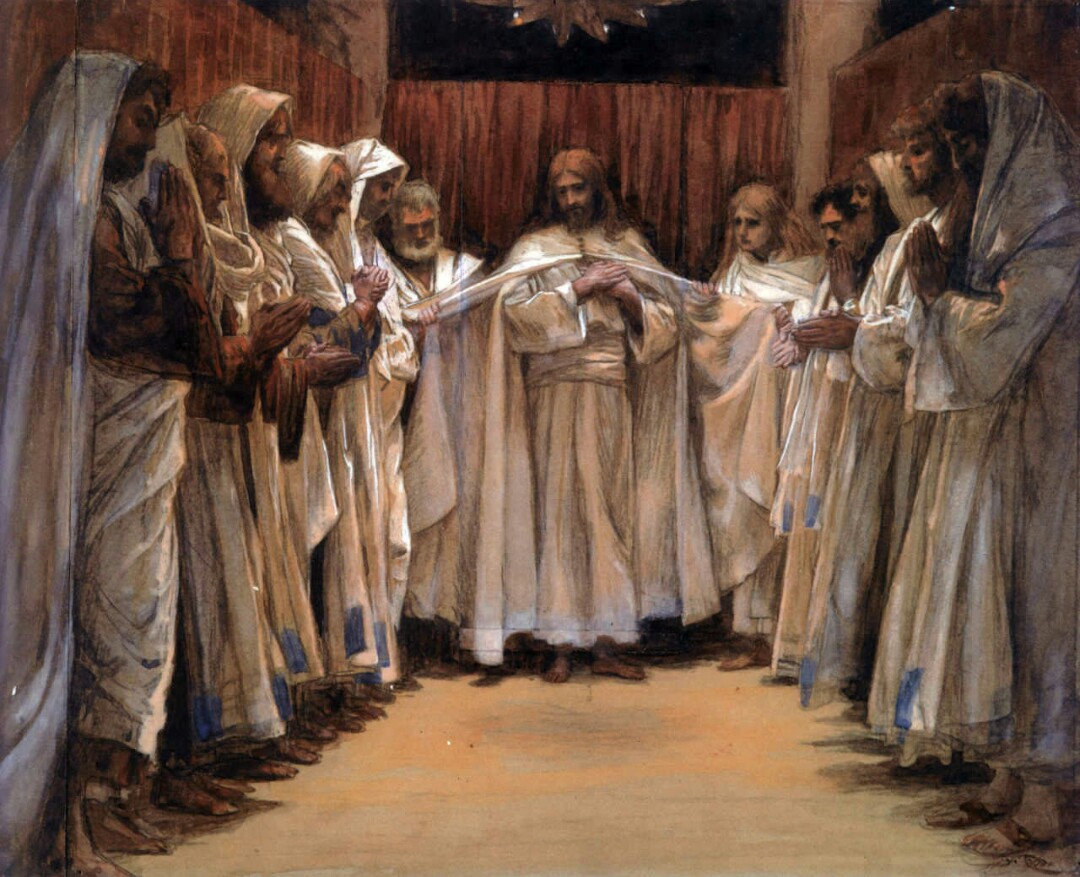
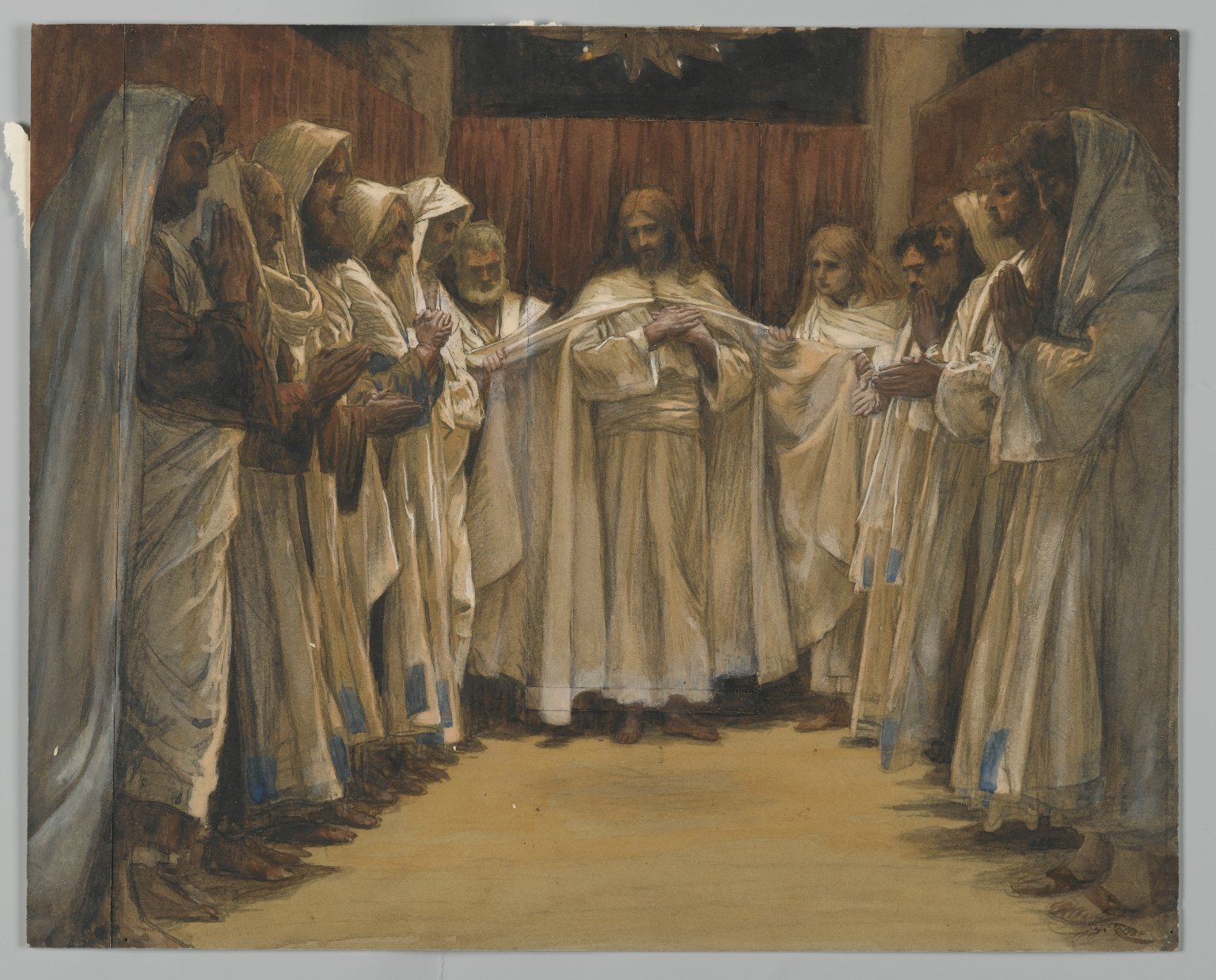
James Tissot: The Last Sermon of Our Lord  (Brooklyn Museum)