There is one thing that all people in Britain like to discuss: the weather. Once we have greeted someone and asked how they are, the next thing we often say concerns the weather. This is understandable. The weather has a big impact on how we feel, what we wear, and what we do. It is particularly important, especially in the countryside. Rural life is dependant on the sun and the rain, so it is natural that they are the subject of our conversations.
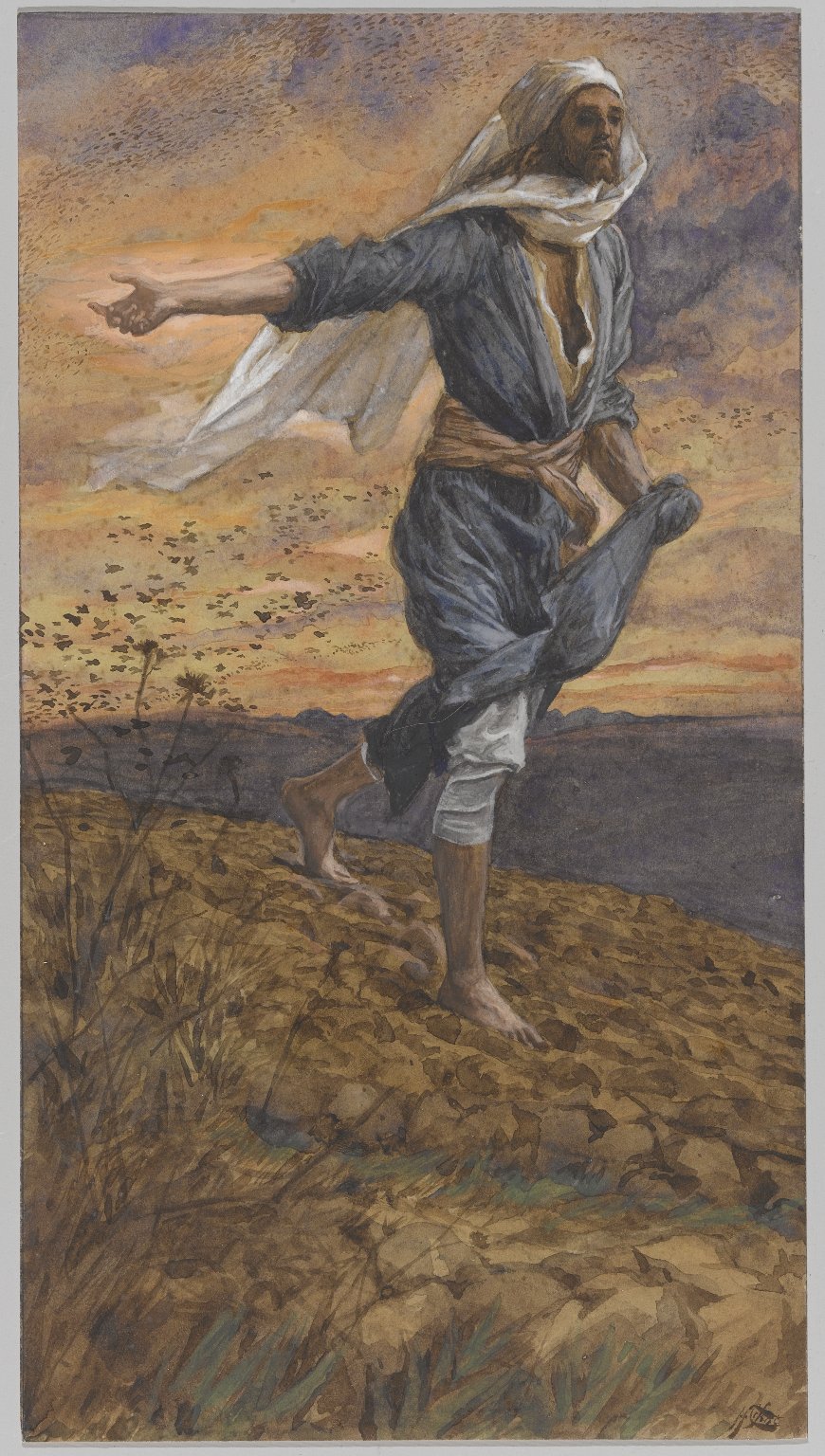
Jesus taught using parables. He told stories which used people’s lives to explain about who God is, and what a relationship with Him looks and feels like. In today’s Gospel Our Lord uses two images to explain the growth of the Kingdom of God. The first is agricultural. Jesus has just described people’s journey of faith in the Parable of the Sower. Now He again uses the image of crop-growing. After the farmer scatters the seed something amazing happens:
‘He sleeps and rises night and day, and the seed sprouts and grows; he knows not how.’
‘ac yna’n cysgu’r nos a chodi’r dydd, a’r had yn egino ac yn tyfu mewn modd nas gŵyr ef.’ (Mk 4:27)
The growth of seeds is a miracle of nature. I still remember as a child sprinkling cress seeds on damp paper. After a few weeks, something grew which was good to eat. As a parable for the Kingdom, and therefore the growth of the Church, the Parable of the Seed reminds us that while we are called to action, there are other forces at work. God has a key part to play in the growth of His kingdom. Even though we may not necessarily understand what is happening, the point is that God takes what we do, and uses it to make His Kingdom grow. Our efforts are not all that matters. Christ then develops His teaching:
‘The earth produces by itself, first the blade, then the ear, then the full grain in the ear. But when the grain is ripe, at once he puts in the sickle, because the harvest has come.’
‘Ohoni ei hun y mae’r ddaear yn dwyn ffrwyth, eginyn yn gyntaf, yna tywysen, yna ŷd llawn yn y dywysen. A phan fydd y cnwd wedi aeddfedu, y mae’n bwrw iddi ar unwaith â’r cryman, gan fod y cynhaeaf wedi dod.’ (Mk 4:28-29)
These two sentences cover the entirety of human history from Jesus to the end of time. The harvest coincides with God’s judgement at the Second Coming of Our Lord. This is also the subject of the second reading this morning. St Paul writes:
‘For we must all appear before the judgement seat of Christ, so that each one may receive what is due for what he has done in the body, whether good or evil.’
‘Oherwydd rhaid i bawb ohonom ymddangos gerbron brawdle Crist, er mwyn i bob un dderbyn ei dâl yn ôl ei weithredoedd yn y corff, ai da ai drwg.’ (2Cor 5:10)
How we live our lives matters. What we say and do not only forms our own character but it also affects the world around us. Christians are called to be people of love, and to share that love with others so that the Kingdom of God continues to grow.
Jesus then explains what the Kingdom is like, using the image of the mustard seed:
‘which, when sown on the ground, is the smallest of all the seeds on earth, yet when it is sown it grows up and becomes larger than all the garden plants and puts out large branches, so that the birds of the air can make nests in its shade.’
‘pan heuir ef ar y ddaear, hwn yw’r lleiaf o’r holl hadau sydd ar y ddaear, ond wedi ei hau, y mae’n tyfu ac yn mynd yn fwy na’r holl lysiau, ac yn dwyn canghennau mor fawr nes bod adar yr awyr yn gallu nythu dan ei gysgod.’ (Mk 4:31-32)
The Kingdom of God starts small with a few disciples, but grows into something that encompasses the whole world. It is like a mustard seed which starts off being only a couple of millimetres wide, but then increases in size reaching up to twelve feet in height. This plant may have a small beginning, but it contains within itself the possibility of remarkable growth. The image of birds nesting in its shade signals divine blessings, as today’s passage from Ezekiel makes clear:
‘And under it will dwell every kind of bird; in the shade of its branches birds of every sort will nest.’
‘Bydd adar o bob math yn nythu ynddo, ac yn clwydo yng nghysgod ei gangau.’ (Ezek 17:23)
Jesus takes the imagery of Ezekiel’s prophecy and shows how it will be brought to fulfilment in and through the Church. Such is the generous nature of God, that He gives us a place where we can be safe, and where we can grow in faith. By hearing God’s word, and by praying together, and by sharing in the Eucharist, we are nourished and strengthened to live as a Christian community.
So, my brothers and sisters in Christ, let us rejoice that God has made His Kingdom a reality. Let us work together with each other and with Our Heavenly Father to make His Kingdom come. Let us join with our Christian brothers and sisters and the heavenly host in singing the praises of God the Father, God the Son, and God the Holy Spirit. To whom be ascribed all glory, dominion, and power, now and forever. Amen.
 Novus Motus Oxoniensis