Bible Sunday

Today is a very special day for me. It is my first Sunday as Priest-in-charge of S. Katharine & S. Peter’s, Milford Haven. As the eleventh incumbent of this wonderful Church I feel the weight of expectations, and the many questions you probably have: What kind of a priest is the new vicar? What is he like as a person? How will he lead our church through the years ahead? What is he going to change? What is his vision for S. Katharine & S. Peter’s? As you get to know me and I get to know you, the answers to these questions will become clear.

In first century Palestine, expectation was also running high. The Hebrew Scriptures were full of prophecies about the Messiah, a King of the House of David, who would rule over Israel and set His people free. Releasing them from the tyranny of foreign rule, and a corrupt religious establishment. Two thousand years ago, people were full of hope and expectation, that God would act, and fulfil His promises. This He does, in a surprising way…

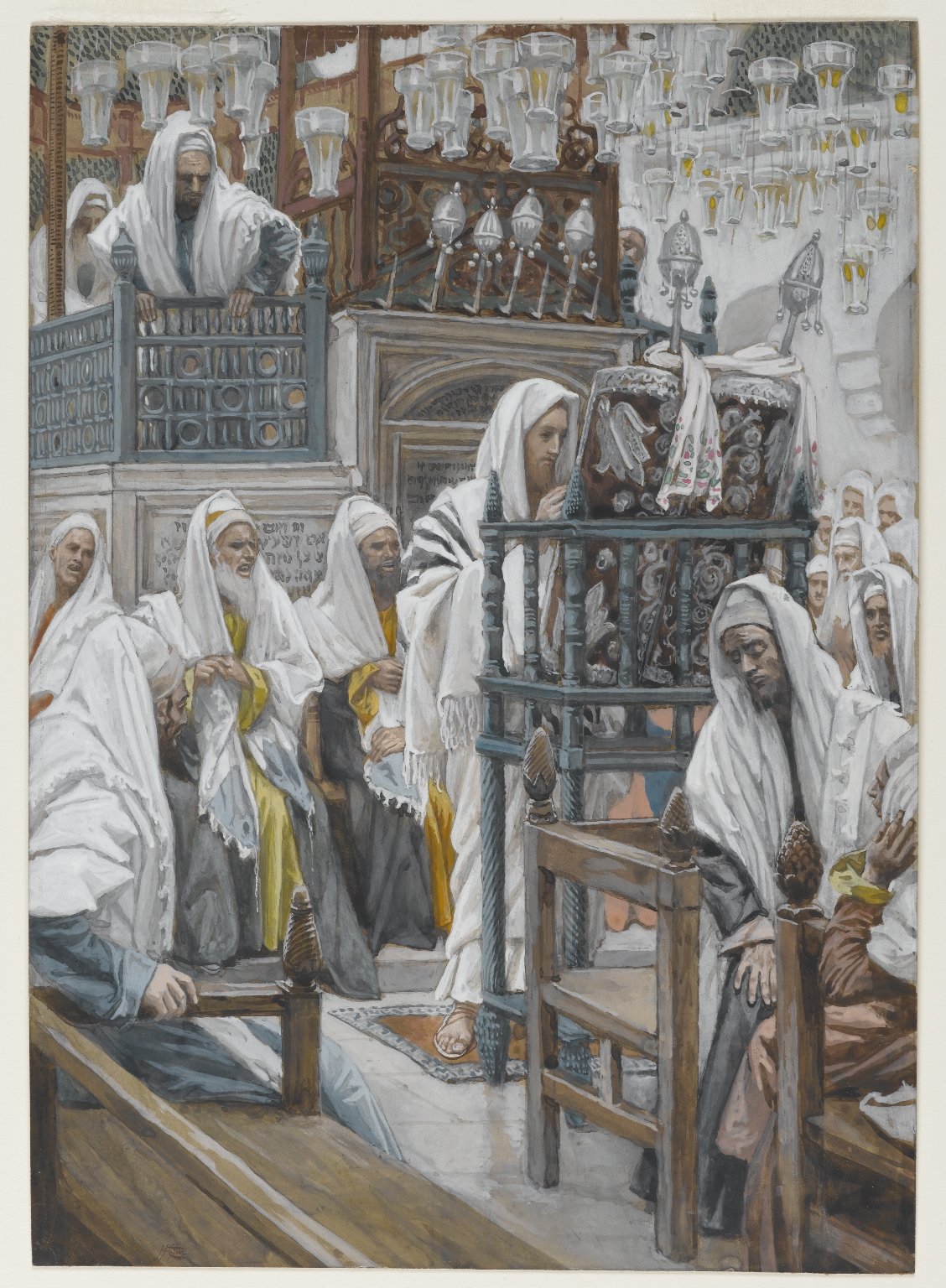
When Jesus comes to the town of Nazareth, where He grew up, He goes to the synagogue to worship on the Sabbath. There Our Lord is given the scroll of the prophet Isaiah, and He reads:

“The Spirit of the Lord is upon me, because he has anointed me to proclaim good news to the poor. He has sent me to proclaim liberty to the captives and recovering of sight to the blind, to set at liberty those who are oppressed, to proclaim the year of the Lord’s favour.” 

“Y mae Ysbryd yr Arglwydd arnaf, oherwydd iddo f’eneinio i bregethu’r newydd da i dlodion. Y mae wedi f’anfon i gyhoeddi rhyddhad i garcharorion, ac adferiad golwg i ddeillion, i beri i’r gorthrymedig gerdded yn rhydd, i gyhoeddi blwyddyn ffafr yr Arglwydd.” (Lk 4:18-19)

This prophecy is taken from the 61st Chapter of Isaiah. It expresses Israel’s hope for a Messianic future: a hope of healing, freedom, and restoration. This is similar to the idea of the Jubilee, when every fifty years all debts were cancelled, all slaves freed, and all land returned to its original owners. Some of you may remember the Campaign Jubilee 2000, which sought to write off Third-world debt, as a modern reworking of this ancient biblical idea. Jesus is proclaiming the Kingdom of God as a reality, here and now. This is what fullness of life and salvation look like when we live them. Our Lord gives us an attractive goal, and it can be a reality, if we co-operate with God to live out the vision in our own lives.

In today’s Gospel, we hear the announcement of the Kingdom of God. A call to a new way of living, which can transform us, and our world, for the better. The Kingdom of God is to be a place where all are cared for, and where our needs are met. The Good News of the Gospel is for those who know their need of God, those who are aware of their spiritual poverty. That means each and every one of us. Jesus will later go on to say, in the Sermon on the Mount: ‘Blessed are you who are poor, for yours is the Kingdom of God’ ‘Gwyn eich byd chwi’r tlodion, oherwydd eiddoch chwi yw teyrnas Dduw’ (Lk 6:20). We all need God’s love in our hearts, and our lives, so that we can be transformed. We cannot reform ourselves, this is something that only Our Heavenly Father can do. But only if we let Him, and co-operate with Him, through prayer and action. 

Christ offers the world both freedom and vision. The opportunity to see what others cannot, and the ability to experience true freedom. God gives us life in all its fulness, so that by His love we can be made into people who are loving, and who will the good of others. By living lives characterised by love and sacrifice we can be truly alive, and experience the joy of God’s Kingdom. 

After having read from the Book of Isaiah, Our Lord says:

“Today this Scripture has been fulfilled in your hearing.”

“Heddiw yn eich clyw chwi y mae’r Ysgrythur hon wedi ei chyflawni.” (Lk 4:21)

This is a huge claim to make. If the Scripture has been fulfilled then this means that Jesus is the Messiah, plain and simple. That which the prophets pointed to in the future has now become a reality in the person of Christ. Jesus, the Word made flesh, is the fulfilment of the Holy Scriptures, the Word of God. This is what we believe as Christians, and it is the reason why we read the Old Testament. The New is prefigured in the Old. The Scriptures point to Christ, and they find their fulfilment and true meaning in Him. What Israel has hoped for and longed for has arrived in the figure of Jesus. This means that the Kingdom of God is not something abstract, but rather someone physical. It is a person: Jesus of Nazareth. The reconciliation of God and humanity happens in and through the life, death, and resurrection of Jesus Christ.

The mission of the Church is, and always has been, to proclaim the Good News of the Kingdom of God. The words spoken in a synagogue in Nazareth two thousand years ago are as relevant today as they were then. God continues to invite humanity to know Him, and to experience His divine love.

As Christians, we are recipients of the healing and wholeness which Jesus promises. We experience this healing here today, in this Mass. Soon we will be nourished by Christ’s Body and Blood, and be given a foretaste of Heavenly Glory. Let us , therefore, prepare to be fed, and to be transformed and become what we eat. Fortified by Christ, let us proclaim His Truth to the world, so that all may come to believe and give glory to God the Father, God the Son, and God the Holy Spirit, Duw Dad, Duw y Mab, a Duw yr Ysbryd Glân. To whom be ascribed all glory, dominion and power, now and forever. Amen
Epiphany V 2025

THIS week’s readings focus on God’s call to humanity, so I would like to begin by sharing with you something of my own call. The first time I realised that I wanted to be a priest, I was about 10 years of age. It was in church at Margam, during a Sunday Morning Eucharist. The priest standing at the altar praying the Eucharistic Prayer, lived next door but one to us. He was a retired priest, called Fr Glyn — a great and holy man. I would go on to study at the same theological college as him (although this was something I only found out once I’d got there). As he stood at the altar and prayed the words that Jesus recited on the night before He died, I can remember a strong, overwhelming feeling: ‘I really want to do THAT!’ Even now, nearly forty years later, and after serving God as a priest for nearly fourteen years, that feeling still feels real. I still do not feel worthy of the call. But I’m not supposed to. That is the point: only God is worthy. However, God calls us not because we are worthy, but so that we might co-operate with Him in the outworking of His goodness, healing and love.

In our first reading this morning, the prophet Isaiah has a vision of heavenly glory. In his vision, Isaiah sees the throne room of the Heavenly Temple, with God surrounded by angels The prophet does not describe his emotional state, but he speaks of his human unworthiness in the divine presence. When Isaiah is confronted by the majesty of God, the singing of angels, the smoke of incense, all he can say is:

‘Gwae fi! Y mae wedi darfod amdanaf! Dyn a’i wefusau’n aflan ydwyf’

‘Woe is me. For I am lost; for I am a man of unclean lips’ (Isa 6:5)

Isaiah is aware of his human sinfulness and the gulf between himself and God. Yet his guilt is taken away, and his sin is atoned for. The prophet, who will foretell the coming of the Messiah who will save humanity, is prepared by God. He is set apart. When God asks, ‘Pwy a anfonaf? Pwy a â drosom ni?’’Whom shall I send, who will go for us?’ Isaiah can respond, ‘Dyma fi, anfon fi.‘Here I am! Send me’. This is quite a journey in a few verses, and that is the point. God doesn’t call those who are equipped. Rather, He equips those whom He calls.

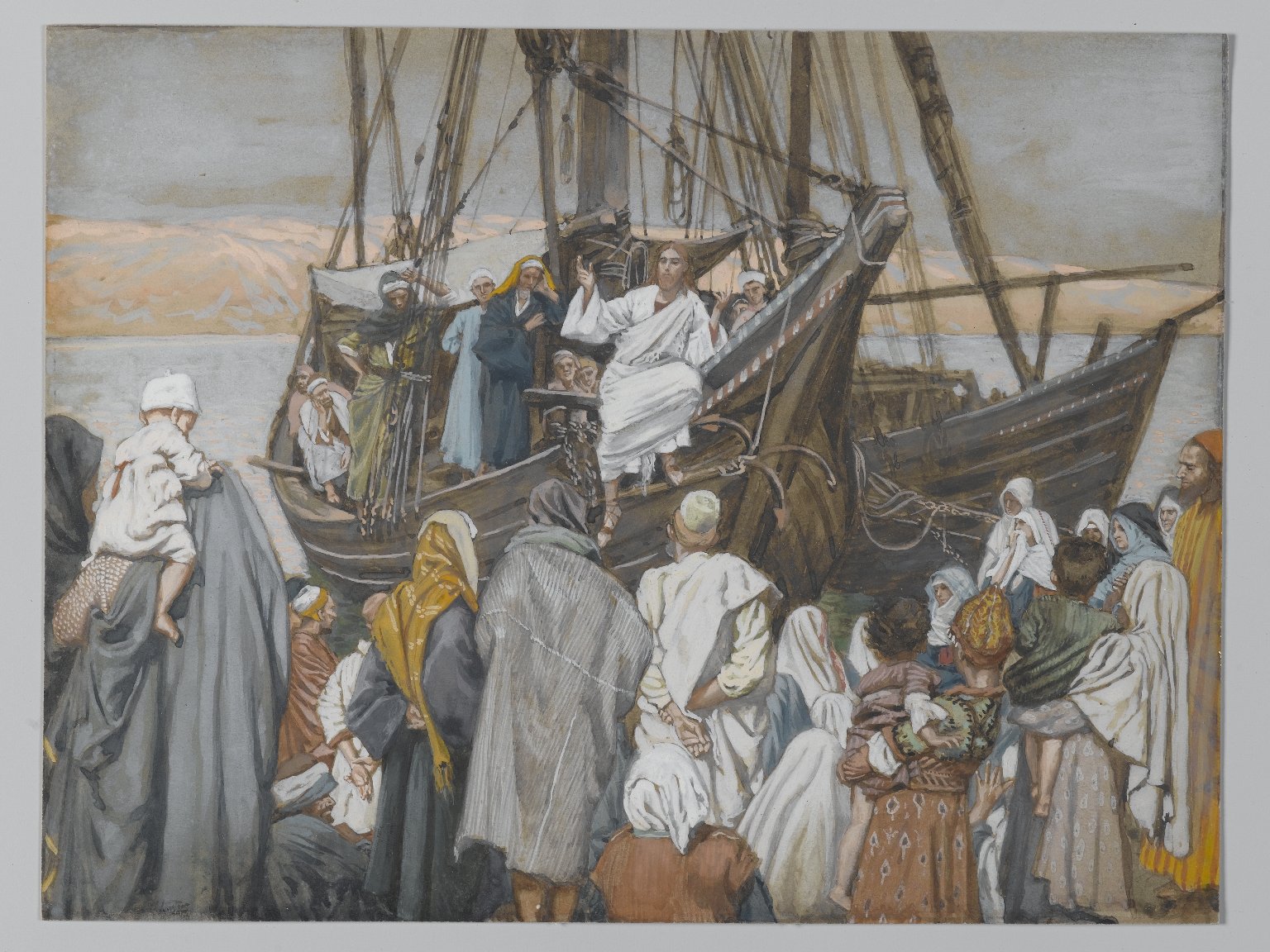
In the Gospel, the teaching ministry of Jesus, which we saw begin in the synagogue in Nazareth, continues. His fame is spreading and the crowd that has come to listen to Our Lord’s teaching is so large that He uses a boat to address them, so that the hills behind the crowd will help make Him more easily heard, acting like a natural theatre 

After speaking to the crowd, Jesus continues to draw disciples to Himself. On the Sea of Galilee the best time to catch fish is at night, but unfortunately Simon, James, John, and others have been out all night and caught nothing. It is the morning, now, and they are exhausted. Worst of all their effort has brought no reward. They have no fish to sell. 

Jesus says to Simon, 

‘Dos allan i’r dŵr dwfn, a gollyngwch eich rwydau am ddalfa.’

‘Put out into the deep and let down your nets for a catch.’ (Lk 5:4)

These words seem to be crazy. The time to catch fish on the lake is at night not during the daytime. Simon knows this, but he agrees to let down his nets. Suddenly the fishing nets are full to breaking point, and Simon calls his colleagues to help him pull in the catch. Both boats are so full of fish that they can barely float. 

Simon’s response is telling, he falls down at Jesus’ knees and says:

‘Dos ymaith oddi wrthyf, oherwydd dyn pechadurus wyf fi, Arglwydd.’

‘Depart from me, for I am a sinful man, O Lord.’ (Lk 5:8)

Simon appreciates that what has happened is a miracle, something that God has done. His response to the presence of God is contrition — awareness of his own unworthiness. Simon knows that he doesn’t deserve this outpouring of grace. The unmerited kindness of God, is too much for him. This humble fisherman recognises his own unworthiness to be in the presence of the Divine. It is understandable, and human, and we would likely feel exactly the same way.

Then Our Lord addresses Simon:

‘Paid ag ofni; o hyn allan dal dynion y byddi di’

’Do not be afraid; from now on you will be catching men.’ (Lk 5:10)

Paid ag ofni’ ‘Do not be afraid’ God begins by addressing our fear, our reluctance to commit. The point is that we are not alone in this, but rather that God wants to work with us, and through us, to proclaim and extend His Kingdom. God welcomes humanity into His embrace, to know the love for which we long. True, unconditional love, offered to each and every one of us to transform us.

The final words of the passage are instructive: 

‘Yna daethant a1’r cychod yn ôl i’r lan, a gadael popeth, a’i ganlyn ef.’

‘And when they had brought their boats to land, they left everything and followed him.’ (Lk 5:11)

The fishermen are literally leaving everything. They have just landed the biggest catch of fish in their entire lives. They were about to be rich in worldly terms, and they have to leave it all behind. Their sacrifice is a real one. Following Jesus comes at a cost. However, it is not without its rewards. The first disciples turn their backs on worldly riches and possessions in order to be free to do God’s work.

The calling of the disciples is also the calling of the entire baptised people of God. This is a calling not to be afraid, but to respond to the God who loves us and saves us. This is a calling to live out in our lives, by word and deed, the saving truths of God. So God can use us for His glory and to spread His Kingdom. So that others may come to know God’s Love, Mercy, and Forgiveness. This is what we have signed up for: to be disciples of Jesus; to profess the faith of Christ Crucified; to share this faith with others.

This treasure has been entrusted to each and every one of us. We are all called to share our faith with others, so that the world may believe. Like the first disciples we acknowledge the glory o Duw Dad, Duw y Mab, a Duw yr Ysbryd Glân. I’r hwn y priodoler pob gogoniant, arglwyddiaeth, a gallu, yn awr, ac yn oes oesoedd. Amen.

Jesus preaches from a boat – James Tissot (Brooklyn Museum)