Trinity Sunday 2024: Transformed by God’s Love: Exploring the Trinitarian Faith and Sacramental Life

WE are all extremely fortunate to live in North Pembrokeshire for many reasons, and especially because we are close to so many hills. Mountains and hills take a lot of effort to climb, but once you have ascended, you can see for miles around. Hilltops are special places, and today’s Gospel takes place on one. Also, many other important and significant moments in Matthew’s Gospel take place on mountains including the Temptation, the Sermon on the Mount, the Transfiguration, and the Crucifixion. Our Lord also speaks His final words before his Ascension on a hilltop. 

Last Sunday we celebrated Pentecost, the outpouring of the Holy Spirit upon the Church: a revelation of who God is, and how much God loves us, His people. This week we continue to meditate upon God’s love. This love forms a relationship so intimate that God is closer to us than we are to ourselves — that is something quite hard to get our heads around! Above all, God’s love is something to be experienced, rather than understood. Through this experience God transforms us, so that we can experience that love more fully, and finally enjoy it for eternity, in Heaven.

In today’s Gospel Jesus’ disciples have been told to go to Galilee, to a particular mountain, to meet the Risen Lord. They are obedient, and head north from Jerusalem. When the disciples arrive at the mountain, they see Our Lord and bow down and worship Him — just like the Wise Men did at His birth. Some of the apostles, however, doubt. They have not yet fully grasped the reality of the situation: the fact that Jesus has risen from the dead, is preparing to ascend to His Father, and send the Holy Spirit. Before His Ascension, Jesus comes to them, and speaks to them saying:

‘All authority in heaven and on earth has been given to me.’

‘Rhoddwyd i mi, bob awdurdod yn y nef ac ar y ddaear’ (Mt 28:18)

This, at one level, is a grand claim to make. But, it is the fulfilment of a prophecy about the Son of Man made by the prophet Daniel:

‘And to him was given dominion and glory and a kingdom, that all peoples, nations, and languages should serve him; his dominion is an everlasting dominion, which shall not pass away, and his kingdom one that shall not be destroyed.’

‘Rhoddwyd iddo arglwyddiaeth a gogoniant a brenhiniaeth, i’r holl bobloedd o bob cenedl ac iaith ei wasanaethu. Yr oedd ei arglwyddiaeth yn dragwyddol a digyfnewid, ac ni ddinistrir ei frenhiniaeth.’ (Dan 7:14)

Jesus is true God and true man. He fulfils the prophecies of scripture. He also has authority, which He shares with His Church, empowering it to act in His name.

Our Risen Lord tells the disciples to ‘Go therefore’ ‘Ewch, gan hynny’ (Mt 28:19). They are not to stay put, but are called to be active in the world. The Church is given a mission to: ‘make disciples of all nations’ ‘gwnewch ddisgyblion o’r holl genhedloedd’ (Mt 28:19). The disciples, having been taught by Jesus, are empowered to teach the faith to others. The Church has a universal mission. No-one is to be excluded or left out. As well as being proclaimers of the faith, the apostles are also instructed to baptize new converts:

‘baptizing them in the name of the Father and of the Son and of the Holy Spirit’

‘gan eu bedyddio hwy yn enw’r Tad a’r Mab a’r Ysbryd Glân’ (Mt 28:19)

This small detail is important. It matters. From the very beginning, the Christian Faith is a Trinitarian Faith. We believe in One God, who is Father, Son, and Holy Spirit. Three persons, bound together in love, who invite the world to be in a relationship with Them.

Our Eucharist this morning began, ‘Yn enw’r Tad, a’r Mab, a’r Ysbryd Glân, In the name of the Father, and of the Son, and of the Holy Spirit’, because this is the God whom we worship. We express our belief in the words that we use, and also in our actions. Our deeds show in a physical way what we believe. As Christians, we are called to live out the faith of our baptism in our lives. God, who is love, has shown that love to the world through His Son, Jesus Christ, and in the sending of the Holy Spirit. To be a Christian is to have encountered that love, and been changed by it. We are changed in our baptism, when we are born again to new life in Christ. Also, we are changed each and every time we receive Holy Communion. By God’s grace, Communion, whether physical or spiritual, transforms us. Through this Sacrament we are united with Christ, so that we may become what He is, and share in the love which is the life of God.

Before Our Lord leaves His disciples He makes them a promise:

‘And behold, I am with you always, to the end of the age.’

‘Ac yn awr, yr wyf fi gyda chwi bob amser hyd ddiwedd amser.’ (Mt 28:20)

We are not alone. Christ is with us. He hears our prayers, and speaks to us in Scripture. This is very comforting to know. Jesus is with us in three ways. Firstly, through the sending of the Holy Spirit. Secondly, by being in the Church, which is His Body, and of which He is the Head. And thirdly, in the Sacraments which are outward signs of inward spiritual Grace. All these things are freely given to transform us into children of God. These blessings allow us, and all Christians, to share in the very life of God the Father, God the Son, and God the Holy Spirit. To whom be ascribed all, glory, dominion, and power, now and forever. Amen.

Easter V – The True Vine

I know that many of you gathered here this morning are keen gardeners. One of the main gardening tasks in winter is to prune those plants which need to be pruned. At one level it is easy to think that having planted and watered a plant, it can be left to do its own thing, However, in order to both maximise the number and quality of blooms of, for example your roses, as well as encouraging strong healthy growth, then pruning is a must. Cutting off part of a living plant sounds brutal, but in fact it helps that plant to grow and produce fruit and flowers. I shall return to the theme of pruning in a short while.

In today’s first reading from the Acts of the Apostles we begin with a very human picture. The disciples of Jesus are afraid. They have good reason to be so. Saul was a sworn enemy of the Church, and he played a part in the martyrdom of the deacon Stephen. Could it be that Saul’s new-formed desire to join the disciples was just a trap? Then we see something wonderful: the power of a personal relationship. Barnabas vouches for Saul. The disciple explains both the former persecutor’s conversion on the road to Damascus, and his powerful preaching about how the risen Jesus had turned his life around. Later, when Saul tries to share his faith with fellow Jews they threaten to kill him. The disciples protect him and get him to the coast on a on a ship bound for his home town of Tarsus.  Having been afraid, the apostles have come to trust Saul as a fellow Christian. Their former enemy has become someone they now love, trust, accept, and care for. The situation can be summed up in the following verse:

‘So the church throughout all Judea and Galilee and Samaria had peace and was being built up. And walking in the fear of the Lord and in the comfort of the Holy Spirit, it multiplied.’

‘Yr oedd yr eglwys yn awr, drwy holl Jwdea a Galilea a Samaria, yn cael heddwch. Yr oedd yn cryfhau, a thrwy rodio yn ofn yr Arglwydd ac yn niddanwch yr Ysbryd Glân yn mynd ar gynnydd.’ (Acts 9:31)

Barnabas’ name means ‘Son of Consolation’, someone who acts like the Holy Spirit. Living up to his name, this disciple comforts the other disciples, strengthening their belief, and helping the Church to grow.

Barnabas puts his faith into action, and this is the advice given in our second reading from the First Letter of John:

‘let us not love in word or talk but in deed and in truth.’

‘gadewch inni garu, nid ar air nac ar dafod ond mewn gweithred a gwirionedd’ (1Jn 3:18)

The Christian Faith is not something we just talk about, it is something which affects our lives and our actions. We are called to live out our beliefs, and thus become an example that people want to emulate. Our deeds as Christians are arguably the most effective witness we have.

In the Gospel, Jesus once again illustrates his teaching by using an image which would have been very familiar to His audience. Vines were common throughout the entire Mediterranean World, producing grapes which could be eaten or made into wine. Jesus uses the concept of Himself as the Vine, with the disciples as the branches. It is a powerful vision of what the Church is: people who are grafted onto and into Christ, connected to Him, and in a relationship with Him. We entered into that relationship in our baptism, and it is a relationship which will continue throughout, and after, our life on earth. 

When we were baptised, we were grafted onto the vine, which is Christ. It is His will that we, as Christians, bear much fruit. This means that we must live out our faith in our lives, so that it affects who and what we are, and all that we say and do. We do this because it is what God expects of us, as we read in the First Letter of John: 

The love of God was made manifest among us, that God sent his only Son into the world, so that we might live through him’ (1Jn 4:9).

Because we are grafted into Christ we are in communion with Him. Jesus gives Himself to us in the Eucharist, His Body and Blood, so that we can have life in Him. He gives Himself to us out of love, so that we might have life in Him, and have it forever. The Eucharist is a pledge of eternal life with Christ, united in this world and the next. It is given to strengthen us on the journey of faith. Partaking in the Eucharist, physically or spiritually, helps us to live out our faith in our lives. Fed by and with Christ, we live in Him and for Him. 

Our Lord says:

‘Whoever abides in me and I in him, he it is that bears much fruit, for apart from me you can do nothing.’

‘Y mae’r sawl sydd yn aros ynof fi, a minnau ynddo yntau, yn dwyn llawer o ffrwyth, oherwydd ar wahân i mi ni allwch wneud dim.’ (Jn 15:5)

Apart from Jesus we can do nothing. When we rely solely on our own strength, our own talents, we inevitably fail. We must not forget that everything is God-given in the first place. To thrive we need to abide in Him. Without this connection to Our Heavenly Father we wither and die, cut off from the source of life and hope. 

So, my brothers and sisters in Christ, as we continue to rejoice in Our Lord’s Resurrection, may we take to heart the words of Our Lord:

‘By this my Father is glorified, that you bear much fruit and so prove to be my disciples.’

‘Dyma sut y gogoneddir fy Nhad: trwy i chwi ddwyn llawer o ffrwyth a bod yn ddisgyblion i mi.’ (Jn 15:8)

May we bear fruit in our lives, and, like Barnabas and Paul, become worthy witnesses to God the Father, God the Son, and God the Holy Spirit. To whom be ascribed all, glory, dominion, and power, now and forever. Amen.

Easter IV – The Good Shepherd

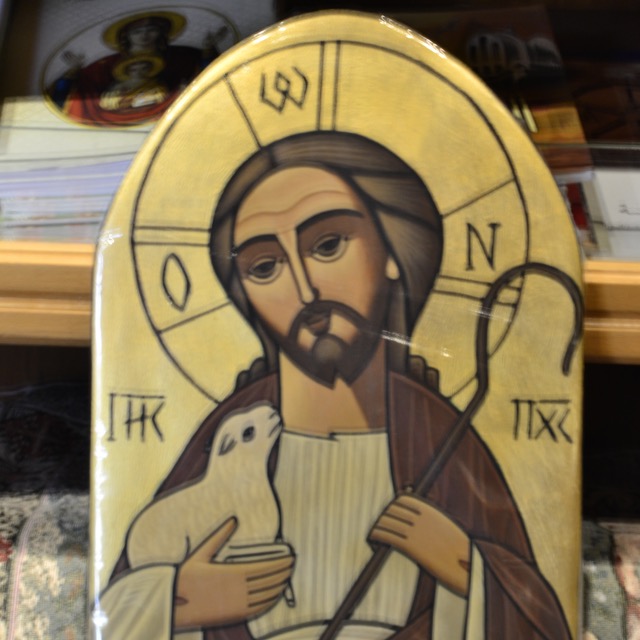
Living in Pembrokeshire, many of us know people who keep sheep. We are also aware of how difficult it has been for them, and all farmers, in the recent months with fields waterlogged due to unprecedented levels of rainfall. Sheep farming is a vital part of our rural life and so the image of Jesus as the Good Shepherd is something we find easy to identify with, unlike those who live in large cities.

Shepherds played an important part in Jesus’ life. Angels told them about the birth and they came down from the hills to worship Him in  the stable in Bethlehem. Not wishing to leave their animals behind, Nativity scenes depict the shepherds bringing sheep to the manger. This may be why Our Lord has an affinity with those who look after sheep and care for them. Jesus describes himself as the Good Shepherd, the one who lays down His life for His sheep. Christ dies so that we may have eternal life in Him. This model of self-sacrificial love lies at the heart of the Christian faith, and because of it, we are able to live the new life of Easter.

Jesus says, ‘I am the Good Shepherd’ ‘Myfi yw’r bugail da’ (Jn 10:11). This is straightforward: He cares for His flock. But then He says, ‘The good shepherd lays down his life for the sheep.’ ‘Y mae’r bugail da yn rhoi ei einioes dros y defaid’ (Jn 10:11). This goes above and beyond what we would expect of a shepherd, even a very good one! Jesus is using the image of the Good Shepherd to explain what will happen on Good Friday. He will suffer and die to protect us, His flock. 

Protect us from what? From Sin and Death. By dying for us, and rising from the dead, Jesus offers humanity freedom in Him. The Christian faith offers salvation, through faith. As St Peter puts it in this morning’s reading from the Acts of the Apostles: 

‘And there is salvation in no one else, for there is no other name under heaven given among men by which we must be saved.’

‘Ac nid oes iachawdwriaeth yn neb arall, oblegid nid oes enw arall dan y nef, wedi ei roi i’r ddynolryw, y mae’n rhaid i ni gael ein hachub drwyddo.’ (Acts 4:12)

Jesus offers what no-one else can: salvation and eternal life to those who believe in Him, and follow Him. Eccentric American millionaires employ bizarre methods in an attempt to defy the ageing process, but they are still going to die. Each and every human being is. That is the fate of all living things. But, because of who Christ is — namely true God and true man — and what He has done on the Cross and at the empty tomb, death is no longer something to be feared. Instead, it can be embraced, as the entry to eternal life, with God, forever. 

This way of looking at life and death is profoundly different from the world around us, because Christians are not bound by the primal human fear that our life is finite. Our Lord has opened to us the gates of Heaven, and shown us once and for all that God loves us.

At the heart of our faith as Christians is the profound conviction that we are people who are loved by God. As Archbishop Michael Ramsay said, ‘God is Christlike, and in him is no un-Christlikeness at all’ [God, Christ & the World: A Study in Contemporary Theology, London 1969, p.98]. When we see Jesus, we see God; when we hear Him speak, we hear the voice of God. We can know who God is, the Creator and Redeemer of the universe, through His Son, Jesus Christ. God is not a distant bearded man on a cloud. He is a loving Father, as illustrated in the Parable of the Prodigal Son. He loves us so much that He suffers and dies for us, to give us life in Him. This is the God who searches for lost sheep; who longs to love, restore, and reconcile; who can heal our wounds if we let Him. This is abundant life, offered to us by Our Lord, the Good Shepherd.

This life, this love is offered to us in the Eucharist, where we can touch and taste God’s profound love for us. In the bread and the wine we are given a foretaste of the heavenly banquet and a pledge of eternal life in Christ. Here today, as on a hundred thousand successive Sundays, we meet to be fed by Christ, and fed with Christ. To be healed, and to know His love. We are the sheep cared for by the Good Shepherd, who provides for all our needs. Who gives Himself so that we might have life.

So my brothers and sisters in Christ, as we continue to rejoice In Our Lord’s triumph over death, may we emulate His example and live the new life of Easter. Following Our Good Shepherd, who longs for us to be safe with Him forever in Heaven, let us share the Good News of His Kingdom with others. Let us pray that that all may come to know and love God the Father, God the Son, and God the Holy Spirit. To whom be ascribed all, glory, dominion, and power, now and forever. Amen.

Easter 2024

It is early in the morning and a woman sits in the darkness. Her beloved teacher, whom she has followed and supported for years was placed in a tomb a few days before, after having being executed for political and religious reasons. The sun has not yet risen, and as she sits, she cries. A week ago He was being hailed as the Messiah, God’s anointed, the Davidic king come to set His people free. Yet within a few days, the same people who cried ‘Hosanna’ were shouting ‘Crucify him!’ ‘Crucify him!’. So she goes, to be near her Lord, to be close to him. And as she goes, she notices something: the stone has been rolled away. It took several people to roll it there on Friday afternoon. What is going on? Mary Magdalen runs to tell Peter and John:

“They have taken the Lord out of the tomb, and we do not know where they have laid him.” 

‘Y maent wedi cymryd yr Arglwydd allan o’r bedd, ac ni wyddom lle y maent wedi ei roi i orwedd’ (John 20: 2)

Mary assumes, understandably, that grave-robbers have been at work. Or that the Jewish or Roman authorities, worried that this troublemaker might be a focus for dissent, have got rid of Him. To do so makes sense in political terms, but something greater has happened. Peter and John come running towards the tomb. John arrives first, peers inside the tomb, but stays outside. 

‘Then Simon Peter came, following him, and went into the tomb. He saw the linen cloths lying there, and the face cloth, which had been on Jesus’ head, not lying with the linen cloths but folded up in a place by itself.’

‘Yna daeth Simon Pedr ar ei ôl, a mynd i mewn i’r bedd. Gwelodd y llieiniau yn gorwedd yno, a hefyd y cadach oedd wedi bod am ei ben ef; nid oedd hwn yn gorwedd gyda’r llieiniau, ond ar wahân, wedi ei blygu ynghyd’ (John 20: 6-7)

What happens is a gradual process. Bit by bit, the followers of Jesus come to experience and understand this incredible and amazing event. 

Then the other disciple, who had reached the tomb first, also went in, and he saw and believed; for as yet they did not understand the Scripture, that he must rise from the dead. Then the disciples went back to their homes.’

‘Yna aeth y disgybl arall, y cyntaf i ddod at y bedd, yntau i mewn. Gwelodd ac fe gredodd. Oherwydd nid oeddent eto wedi deall yr hyn a ddwed yr Ysgrythur, fod yn rhaid iddo atgyfodi oddi wyth y meirw. Yna aeth y disgyblion adref yn eu holau.’ (John 20: 8-10)

A few days ago the disciples saw their Lord and Teacher killed and buried, but now the tomb is empty. The cloths that were wrapped around Jesus are there, but there is no body. John, the disciple Jesus loved, understands and believes. Peter does not yet understand or believe. Clearly it is all too much for Mary Magdalen who stays by the tomb, weeping. When the angels ask her why she is crying she replies:

“They have taken away my Lord, and I do not know where they have laid him.”

“Y maent wedi cymryd fy Arglwydd i ffwrdd, ac ni wn i lle y maent wedi ei roi i orwedd.” (John 20: 13)

Mary’s words are understandable, she is filled with grief and sadness. She is bereft and confused. At this point, Mary Magdalen encounters the Risen Christ:

Jesus said to her, “Woman, why are you weeping? Whom are you seeking?” Supposing him to be the gardener, she said to him, “Sir, if you have carried him away, tell me where you have laid him, and I will take him away.”

‘“Wraig,” meddai Iesu wrhti, “pam yr wyt ti’n wylo? Pwy yr wyt yn ei geisio?” Gan feddwl mai’r garddwr ydoedd, dywedodd hithau wrtho, “Os mai ti, Syr, a’i cymerodd ef, dywed wrthyf lle y rhoddaist ef i orwedd, ac fe’i cymeraf fi ef i’m gofal.”’ (John 20: 15)

Mary supposes that Jesus is the gardener, the person employed to look after the cemetery. She does not yet understand who He is, or what is going on. However, the mention of the gardener is significant. In Genesis, humanity was created by God in a garden, Eden, and given the task of tending it (Gen 2:15). The Resurrection also takes place in a garden, showing us that Christ is the second Adam. Whilst the first Adam brought death to humanity by a tree, Jesus, the Second Adam, has brought life to the world by the tree of the Cross. Humanity falls because of a tree, and because of a tree we are offered eternal life in Christ. 

It was on the first day of the week, that Creation began, and now on the first day of the week we see a New Creation. Christ has risen from the dead, and conquered Death and Hell. Our Lord is a gardener, and the plants he tends are human beings. We believe in a God who loves us, who cares for us, and who longs to see us grow and flourish.

Jesus greets Mary Magdalen by name, and suddenly she recognises Him. She understands. She believes. Then Christ talks of His Ascension, as though forty days of Easter have condensed into a single moment. Mary now knows what she must do:

‘Mary Magdalene went and announced to the disciples, “I have seen the Lord”—and that he had said these things to her.’

‘Mair Magdalen i gyhoeddi’r newydd i’r disgyblion. “Yr wyf wedi gweld yr Arglwydd.” meddai, ac eglurodd ei fod wedi dweud y geiriau hyn wrthi’ (Jn 20:18)

Mary shares the Good News, just as Peter and Paul do in the first and second readings this morning. As Christians we are called to do likewise: to tell others that God loves us, all of us, that He died for us, and that He rose again to offer us eternal life with Him. This is the message of Easter. Good News! Christ has triumphed over Death and Hell, and humanity is healed and restored through Him.

So, my brothers and sisters in Christ, ‘Pasg hapus i chi gyd!’ ‘A Happy Easter to you all!’ May you, and those you love, be filled with Resurrection joy and strength, on this Easter Day and always. Amen.

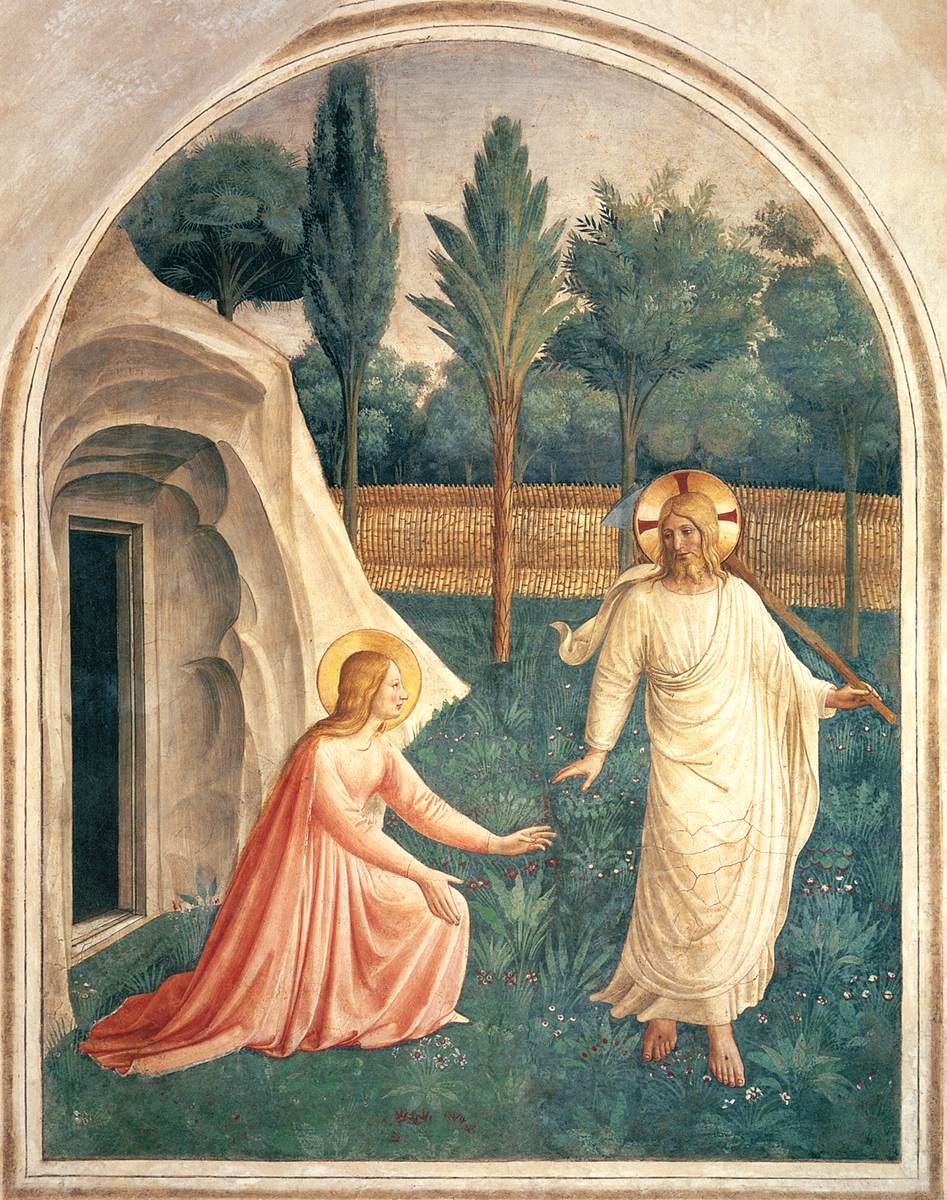
Fra Angelico (Italian, ca. 1395–1455), “Noli me tangere,” 1440–42. Fresco from the convent of San Marco, Florence, Italy. http://www.wga.hu/frames-e.html?/html/a/angelico/index.html

Good Friday 2024

The Practice of Crucifixion as a punishment was designed to be both as painful and as shameful as possible. Public torture was dressed up as execution, with the condemned having to struggle for each breath, before finally succumbing to asphyxiation. People could potentially hang there for days until exhaustion took its toll. It is possibly the most horrific and gruesome means to end a human life devised by humanity. A public crucifixion is also one of the central moments of the Christian Faith. This is how much God loves us. Jesus willingly undergoes a shameful death, and acts of brutal torture, for our sake. 

There are two Old Testament texts which are key to understanding this Good Friday Service. The first is Psalm 22, whose opening words are spoken by Jesus before He dies: ‘Fy Nuw, fy Nuw pam yr wyt wedi fy ngadael’ ‘My God, My God, why hast thou forsaken me’ (in Hebrew Eli, Eli, lama sabachthani). The second is the passage from Isaiah Chapters 52 and 53 which was today’s first reading. In Isaiah we see all of Christ’s suffering and death both foretold, and interpreted:

‘he bore the sin of many’ ‘with his stripes we are healed’ ‘He was oppressed, and he was afflicted, yet he opened not his mouth; like a lamb that is lead to the slaughter, and like a sheep that before its shearers is dumb, so he opened not his mouth.’ ‘he makes himself an offering for sin’. (Isa 53:12, 5, 7, 10)

The meaning is clear. The wounds of human sin, which cry out for healing, are healed in Christ. Such is God’s love for us. What disobedience has destroyed, love restores. Here we see the glory of God. In willingly accepting His death on the Cross, Our Lord fulfils Isaiah’s prophecy — the suffering servant is the Messiah, the Christ, God’s anointed. At the time when the Passover lambs are slaughtered in the Temple, Christ, as both priest and victim, offers himself upon the Altar of the Cross as the true lamb to take away the sins of the whole world. When Jesus dies the veil of the Temple is torn in two — the barrier between heaven and earth is taken away, and God is reconciled to humanity. This sacred drama takes place on a hill outside Jerusalem, close to where Abraham attempted to sacrifice Isaac.  Then a ram was sacrificed in the boy’s place, but now God sends His Son to die for us.

Two people are present at Calvary as witnesses. These are Mary, Jesus’ Mother, and John, the Beloved disciple. Thirty-three years before this day, the Archangel Gabriel announced to Mary that she would bear the Son of God. Now she stands at the foot of the Cross to see her beloved Son suffer and die. Simeon had once told her that a sword would pierce her soul, and now that prophecy comes true. But before He dies, Jesus does something wonderful:

‘When Jesus saw his mother and the disciple whom he loved standing nearby, he said to his mother, “Woman, behold, your son!” Then he said to the disciple, “Behold, your mother!” And from that hour the disciple took her to his own home.’ 

‘Pan welodd Iesu ei fam, felly, a’r disgybl yr oedd yn ei garu yn sefyll yn ei hymyl, meddai wrth ei fam, “Wraig, dyma dy fab di.” Yna dywedodd wrth y disgybl, “Dyma dy fam di.” Ac o’r awr honno, cymerodd y disgybl hi i mewn i’w gartref.’ (Jn 19:26-27)

Here we see a new family being formed. One not based on ties of blood, but of love. This is what the Church is, a family of love, and it starts here, at the foot of the Cross, where Christ, our great High Priest, offers Himself as both priest and victim. The Christian Church begins with three people on a hill outside Jerusalem. One of these three is about to die, condemned as a blasphemer and trouble-maker. Despite this less-than auspicious beginning we are gathered here today, nearly twenty centuries later. Christ’s Church starts as a failure in worldly terms. However it is a divine institution: it isn’t supposed to make sense in human terms. The Church’s mission is to draw us into the mystery of God’s love. Today we see that love made real in Jesus. This is love we can touch and taste, on the Cross, and in the Sacrament of the Altar. 

Let every one of us, today and every day, cling to the Cross, and find there all the grace we need. Let us rejoice that we have been redeemed at so great a cost. Let us glory in the Cross of our Lord Jesus Christ. He is our salvation, our life, and our resurrection, through whom each and every one of us is saved and set free. Amen

Diego Velazquez – Christ Crucified (Museo del Prado, Madrid)

Lent III – Cleansing the Temple

One of the truths about humanity is that we are amazingly good at doing the wrong thing. Corruption and greed beset us, and religious organisations are no exception. We need to be vigilant, constantly on our guard, lest we fall into the scandalous behaviour typified by the traders and money-changers in this morning’s Gospel. 

The Temple in Jerusalem remains to this day the most important place in the world for Jews. At its centre was the Holy of Holies which contained the Ark of the Covenant. Inside the Ark were the two tablets containing the Ten Commandments, some of the manna from the desert, and Aaron’s staff. That is why, to this day, Jews continue to pray at the Western Wall in Jerusalem. This is all that remains of the Temple after its destruction by the Romans in ad 70. At the time of Jesus, Passover was the busiest time of year in Jerusalem. As the central festival of Judaism, Passover marks the journey from slavery in Egypt to the freedom of the Promised Land, Israel. 

In our first reading this morning from the Book of Exodus, God gives the law to Moses on Mount Sinai in the desert. It describes both how to honour God, and how humanity should live. Our duty towards God and our neighbour is clearly shown. When Moses receives the Ten Commandments from God, the first is:

I am the Lord your God, who brought you out of the land of Egypt, out of the house of slavery; you shall have no other gods before me.

‘Myfi yw yr Arglwydd dy Dduw, yr hwn a’th ddug di allan o wlad yr Aifft, o dŷ y caethiwed. Na fydded i ti dduwiau eraill ger fy mron i’ (Exod 20:2-3)

The temple traders, in their desire to profit from people’s religious observance, have broken this first and most important commandment. Their desire for making money and profit has got in the way of what the Temple is supposed to be about: namely, worshipping God. It has become a racket, a money-making scheme to fleece pilgrims who have come from far away and who do not have the right money or the correct sacrificial animals with them. This is no way to worship God, a God who loves us, and who showed that love by delivering Israel from slavery in Egypt, and who will deliver humanity by His Son.

Our Lord is doing the right thing, cleansing the Temple from those who use religion as an opportunity to grow rich through the piety of others. What started as something good has become corrupt, and needs to be reformed. God is not honoured when He is used as an opportunity for people to get rich. The Temple is supposed to be a house of prayer for all the nations (Isaiah 56:7 & Mark 11:7), but the Court of the Gentiles has been filled with stalls for money-changers and animal-sellers. By clearing them out Jesus has made room for the pilgrims, and upset the religious establishment, something which will eventually lead to His Death, at Passover, which we celebrate on Good Friday. He will be crucified and die at the time when the Passover lambs are being slaughtered in the Temple. This is a sacrifice which will not need to be repeated, as Jesus will die once, for the sins of the whole world.

The Jews ask Jesus, 

What sign do you show us for doing these things?

‘Pa arwydd yr wyt ti yn ei ddangos i ni, gan dy fod yn gwneuthur y pethau hyn?’ (Jn 2:18)

Our Lord makes a cryptic reply:

Destroy this temple, and in three days I will raise it up.” 

‘Dinistriwch y deml hon, ac mewn tridiau y cyfodaf hi.’ (Jn 2:19)

His audience cannot understand what Jesus means. It took almost fifty years to build the Temple after the return from Babylon. The idea of destroying it and rebuilding it in three days is crazy. However, Christ is talking about His own Death and Resurrection. Once this has happened, the disciples can understand what Our Lord meant, but currently they do not. They are confused by this inspiring, miracle-working rabbi, who keeps talking about His own Death and Resurrection. 

For those of us who have the benefit of two thousand years of tradition behind us, Jesus makes perfect sense. Christ mentions His Death and Resurrection so often because it is the most important moment in human history. Nothing else really matters compared to these few days around Passover. They are the core of our faith, the reason for our hope, and the greatest demonstration of love the world has ever seen.

Our Lord is the True Temple, the place where God dwells, His presence among the people of Israel. He is the Lamb of God, who takes away the sins of the world (Jn 1:28). As both Priest and Victim He will offer the sacrifice which restores humanity’s relationship with God and each other. The Jews demand a sign, and Christ prophesies that if they destroy this temple then he will raise it up in three days. He looks to His death and resurrection to show them where true worship lies — in the person of Jesus Christ. Jesus said, ‘I have come not to abolish the law and the prophets but to fulfil them’ ‘Peidiwch â thybio i mi ddod i ddileu’r Gyfraith na’r proffwydi; ni ddeuthum i ddileu ond i gyflawni’ (Matthew 5:17). The Ten Commandments are not abolished by Christ, or set aside, but rather His proclamation of the Kingdom and Repentance show us that we still need to live the Law of Moses out in our lives: to show that we honour God and live our lives accordingly. In His cleansing of the Temple, Christ looks to the Cross and to the Resurrection, as the way that God will restore our relationship with Him. The Cross is a stumbling-block to Jews, who are obsessed with the worship of the Temple, and it is foolishness to Gentiles who cannot believe that God could display such weakness, such powerlessness. Instead the Cross, the supreme demonstration of God’s love for us, shocking and scandalous though it is, is a demonstration of the utter, complete, self-giving love of God. Here, love and mercy are offered to heal each and every one of us. Here we are restored. 

It is a shock to learn that God loves us enough to do this, to suffer dreadfully and die for us, to save us from our sins. We do not deserve this generosity, and that is the point. Through Christ we are offered the opportunity to become something other and greater than we are. By putting away the ways of the world, of power and money, selfishness and sin, we can have new life in and through Him.

As we continue our Lenten pilgrimage, may we cleanse the temples of our hearts, and ask God for forgiveness. Let us prepare to celebrate with joy the Paschal feast, freed from sin. Let us rejoice in Our Lord’s victory on the Cross and in His Resurrection, which has opened to us the gates of everlasting life. Where we hope to sing the praises of God the Father, God the Son, and God the Holy Spirit. To whom be ascribed all glory, dominion, and power, now and forever. Amen.

El Greco – Christ driving the traders from the Temple [National Gallery, London]

Lent II – The Transfiguration

One of the perils of driving in autumn or winter is the low Sun. Because of its angle and closeness to the Earth, we find ourselves dazzled by its brilliance. You have to avert your gaze or use a sun visor or sunglasses in order to drive. This can be inconvenient, but the brightness of our closet star is as nothing compared with the presence of God. Last week we heard the voice of God the Father at Jesus’ Baptism and we will hear Him again this week. 

Our first reading from Genesis, the story of Abraham and the Sacrifice of Isaac, is both well-known, and deeply shocking. The concept of human sacrifice was widespread in the Ancient World. It was not a common occurrence, but it did take place. It seems abhorrent to us, and so it should. In the passage God speaks to Abraham and says,

Take your son, your only son Isaac, whom you love, and go to the land of Moriah, and offer him there as a burnt offering on one of the mountains of which I shall tell you.”

‘Cymer yr awr hon dy fab, sef dy unig fab Isaac, yr hwn a hoffaist, a dos rhagot i dir Moreia, ac offryma ef yno yn boethoffrwm ar un o’r mynyddoedd yr hwn a ddywedwyf wrthyt.’ (Genesis 22:2)

Thankfully, just as Abraham is about to offer Isaac, God tells him to stop, as Abraham has demonstrated his complete devotion to God:

Do not lay your hand on the boy or do anything to him, for now I know that you fear God, seeing you have not withheld your son, your only son, from me.” 

‘Na ddod dy law ar y llanc, ac na wna ddim iddo: oherwydd gwn weithian i ti ofni Duw, gan nad ateliaist dy fab, dy unig fab, oddi wrthyf fi.’ (Genesis 22: 12)

Abraham sees a ram with its horns caught in a thicket, and offers it to God instead. The ram symbolises Christ. It looks forward to Jesus, recognised by John the Baptist as the Lamb of God, who takes away the sins of the world. The ram also points to the Passover Lamb in Exodus, which again prefigures Jesus, the fulfilment of the Paschal Sacrifice. Because Abraham has not withheld his son, he is blessed by God, and through his offspring, all people will be blessed. For Christians the Easter story is important because in it God, like Abraham, does not withhold His Only Son, but gives Him, to die for us. This narrative demands contemplation because it is the demonstration of the mystery of God’s love for humanity. The fact that God loves us that much is totally awesome, especially when we do not deserve it. The mystery of God’s love is that we are not loved because we are loveable. We are often quite the opposite! But God loves us anyway and His steadfast love transforms us. 

St Paul pondered such questions as he wrote to the Church in Rome:

‘He who did not spare his own Son but gave him up for us all’

‘Yr hwn nid arbedodd ei briod Fab, ond a’i traddododd ef trosom ni ol’ (Rom 8:32)

Christ’s death on the Cross is a demonstration of divine generosity, and the reason for our hope as Christians. God’s love for humanity is truly amazing. We should pause for a moment as we read or hear this. God loves me enough to die for me. If God can do this for us, what can we, in return, do for Him? During the Lenten Season we focus on the Cross and the Empty Tomb as the centre of our faith, three days which explain who we are, what we are, and why we are Christians. 

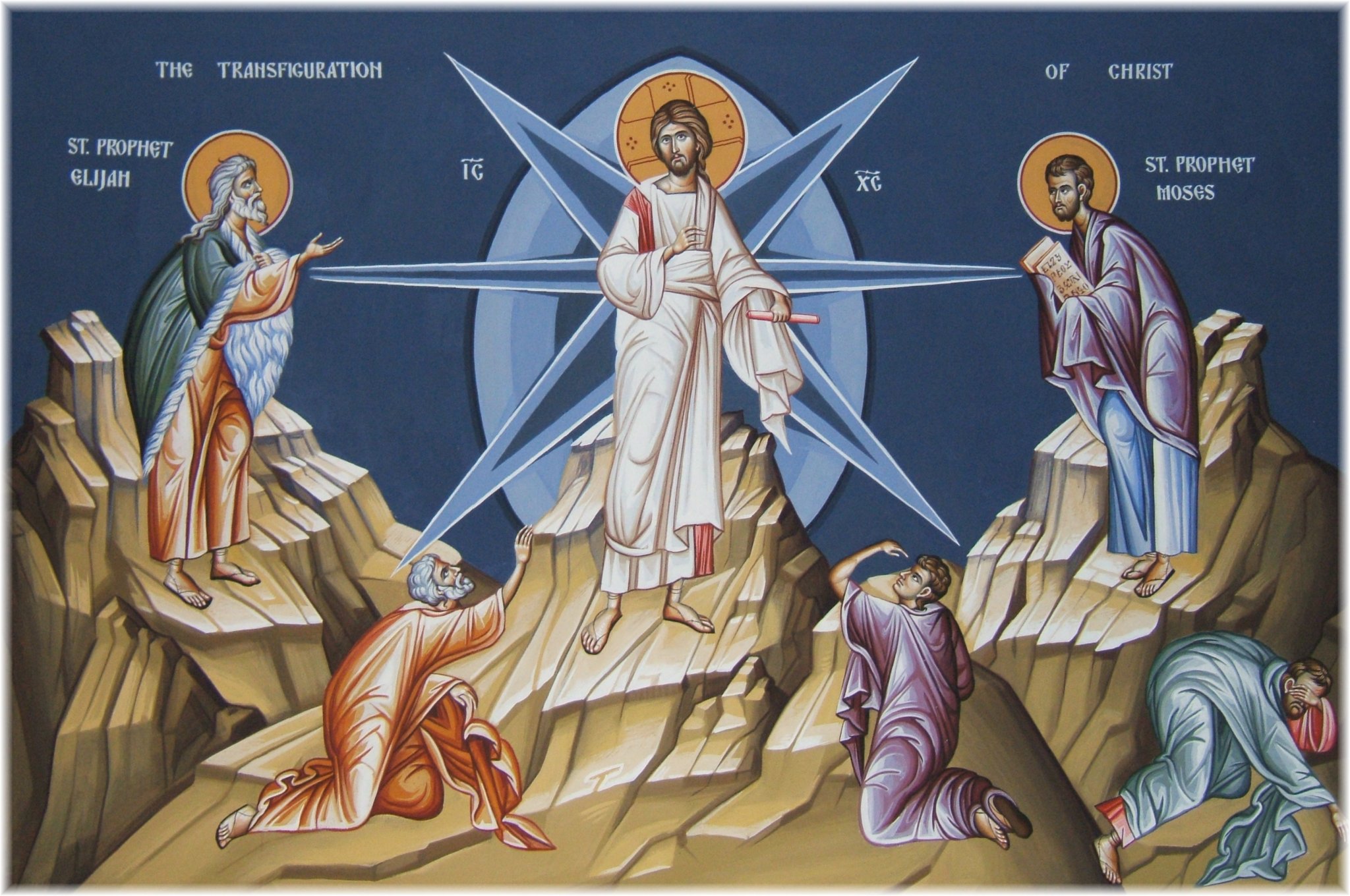
The Transfiguration, described in today’s Gospel, is strange because in it we see something of who Jesus really is: God. We have a brief glimpse of Divine glory as a prelude to Our Lord’s Passion and Death. The two are linked, as they both allow us to understand both who God is, and what He is doing. When God speaks from the cloud He tells us three things about Jesus. Firstly that Jesus is the Son of God, secondly that He is loved, and thirdly that we should listen to Him. What Jesus says and does should affect us and our lives. Like the disciples, we have to be open to the possibility of being radically changed by God. The opportunity of divine transformation is offered to us, so that we might come and share the Divine life of love.

Jesus tells the disciples not to tell anyone about their experience on the mountain until after He has risen from the dead. Jesus has another mountain He must climb: the hill of Calvary, where He will suffer and die upon the Cross. There He takes our sins upon Himself, restoring our relationship with God and each other. This then is real glory, not worldly glory, but the glory of God’s sacrificial love poured out on the world to heal and restore all humanity. The theologian Fulton Sheen spoke about the importance of mountains in Jesus’ life. He said:

Three important scenes of Our Lord’s life took place on mountains. On one, He preached the Beatitudes, the practice of which would bring a Cross from the world; on the second, He showed the glory that lay beyond the Cross; and on the third, He offered Himself in death as a prelude to His glory and that of all who would believe in His name

(Fulton Sheen, The Life of Christ, 1970 p.158)

The Transfiguration shows us the glory of heaven, the glory of the Resurrection at Easter, the glory that lies beyond the Cross. God’s love and God’s glory are intertwined, and cannot be separated because they given freely. God’s very nature is generous, beyond our understanding, and characterised by total self-gift. Our Heavenly Father does not hold anything back, and whereas Isaac is replaced at the last minute by a ram, there is no substitution for Jesus. God gives His Son, Jesus Christ, to die for us, and to rise again, so that we might enjoy eternity with Him in Heaven. The Transfiguration is a promise of our future heavenly glory. Through signs and glimpses, God shows us what future awaits us. He longs to heal and restore us, so that we might enjoy eternity with Him. 

The Transfiguration, therefore, looks to the Cross to help us to prepare ourselves to live the life of faith. It helps us to comprehend true majesty, true love and true glory. The wonderful glory that can change the world and which lasts forever, for eternity, unlike the fading glory of the world, which is here today but gone tomorrow.

So my brothers and sisters, as we celebrate God’s love and glory, let us prepare to  ascend the mountain ourselves and have an encounter with the living God in Holy Communion. Let us come to the source of healing and fount of love which is God’s very self. Let us touch and taste Our Lord and Saviour, given for us, so that we might live in Him. Let us be transformed by Him and enjoy the glories of Heaven singing the praises of God the Father, God the Son, and God the Holy Spirit. To whom be ascribed all glory, dominion, and power, now and forever. Amen.

The Third Sunday after Epiphany (Year B)

Organising a wedding is not an easy task. They can be complex and expensive undertakings, even when they are relatively modest affairs, with only family and a few friends. In some cultures, however, weddings can be more like celebrations for an entire community. Indeed, even today in the Middle East and Asia when a couple marry the celebrations can involve large numbers of guests, and last for several days. Clearly, the logistics of such festivities are complicated, and the financial outlay considerable. It is good to take a moment to consider how much the events in Cana, described in today’s Gospel reading, differ from most of the weddings that we have attended.

That Our Lord, His Mother, and His disciples are invited to the wedding should not be a surprise. This is a community celebration, with everyone present. The idea of running out of wine is not simply a failure of logistics and hospitality, but could represent a situation that would bring shame and disgrace on the hosts. It is a crisis which could stigmatise the family for years to come, with the couple thinking that their union had been cursed with bad luck. Suffice it to say, it would be a complete disaster for all concerned. Mary, wanting to prevent this, lets Jesus know that there is a serious problem. The situation is critical, and something needs to be done quickly. Our Lord, however, seems a little dismissive:

“Woman, what does this have to do with me? My hour has not yet come.”

‘Beth sydd i mi a wnelwyf â thi, wraig? ni ddaeth fy awr i eto.’ (Jn 2:4)

Jesus is looking ahead to when His hour will come, anticipating His Passion and Death on the Cross. That is also the next time that Mary will feature in John’s Gospel, when she stands with John at the foot of the Cross. The Wedding at Cana and the Crucifixion are two events that are clearly linked, both by what Our Lord says, and by who is present. What is about to happen at a Galilean wedding is a significant moment, which is underlined by Mary’s instruction to the servants:

‘His mother said to the servants, “Do whatever he tells you.”’

‘Ei fam ef a ddywedodd wrth y gwasanaethwyr, Beth bynnag a ddywedo efe wrthych, gwnewch’ (Jn 2:5)

Once again Mary demonstrates perfect obedience, and she encourages the servants to do the same. When we listen to what Jesus says and act on it we are following their example. Living the Christian life is essentially trying to do this. We listen to Jesus and do as He tells us. 

At the feast are six stone jars each holding thirty gallons which adds up to over eight hundred litres of water. This is a huge quantity of liquid, even for a large wedding. The servants fill the jars to the brim, making them fuller than they would usually be. This speaks of the abundance and generosity of God’s love. It defies our expectations, just as water being turned into wine defies expectation. The extravagant Wedding party points to something greater than itself. It is a foreshadowing of the joy of the Kingdom. The celebration at Cana is a taste of the lavish excess that our God wishes to bestow on us. His generosity, which is beyond our understanding, is a sign of His deep love for us.

The master of the feast does not seem to be bothered by the quantity of wine, but rather its quality. Moments ago the refreshments were running out, now they are plentiful. He addresses the bridegroom saying:

“Everyone serves the good wine first, and when people have drunk freely, then the poor wine. But you have kept the good wine until now.”

‘Pob dyn a esyd y gwin da yn gyntaf; ac wedi iddynt yfed yn dda, yna un a fo gwaeth: tithau a gedwaist y gwin da hyd yr awr hon.’ (Jn 2:10)

The steward has a point. It makes sense to serve the best wine first, and then serve inferior wine when people’s palettes are dulled. But this wedding feast represents a dramatic reversal of usual practice. It illustrates how God’s generosity stretches far beyond what we can expect or understand as humans. The Kingdom of God turns our values on their head, and its joyous new wine is finer than any earthly fruit of the vine. This is lavished upon humanity, so that it might transform us, so that we might come to share in the glory of God, and in His very nature. Our Lord therefore becomes the true master of the feast, just as He will feed humanity from the abundance of the Heavenly Banquet. The Wedding at Cana points to both Heaven, and to the Eucharist, where Christ nourishes us with the new wine of the Kingdom: His Blood, poured out to save and restore us. God loves us this much. How should we respond?

As Christians we are constantly called to live lives of joy and love in Christ. Through Him, rejoicing in our new life in baptism, and filled with the sober intoxication of the Spirit, we are nourished by Word and Sacrament. In this way we are restored to communion with God, and with each other, to live the life of the Kingdom, here and now. At the Wedding in Cana Jesus gives the world a sign, which shows both who and what He is, and which also points to heavenly and eternal realities. God manifests His glory, showing us who He really is: the personification of love and generosity.

This passage ends by explaining that, in response to this sign, Christs’s disciples  totally believe in Him. They put their trust in Him, as the one who fulfils prophecy, the Messiah, the Saviour of the world. Let us also put our trust in the God who loves us, and who feeds us with Himself, so that we might have life in and through Him. Let us share His joy both here on earth and in Heaven. And let us give praise to God the Father, God the Son, and God the Holy Spirit. To whom be ascribed all glory, dominion, and power, now and forever. Amen.

The Marriage at Cana (A. Mironov)

Christmas 2023

How do you remember the significant people and events in your lives? Since the nineteenth century, with the invention of photography, we have tended to use photographs, and stored the pictures in albums. Nowadays, however they are more likely to be online or on a mobile phone or tablet. From the first ultrasound scans of a baby in the womb, and throughout life, we have visual reminders. But photography has only been widespread for about 150 years. Before then only the rich could afford to have pictures painted to record something for posterity. If we wished to recreate an event from the past, then a dramatic retelling was the only option available. This is exactly what St Francis of Assisi did to remember the events and people of the first nativity and to inspire the devotion of all those who saw it. 

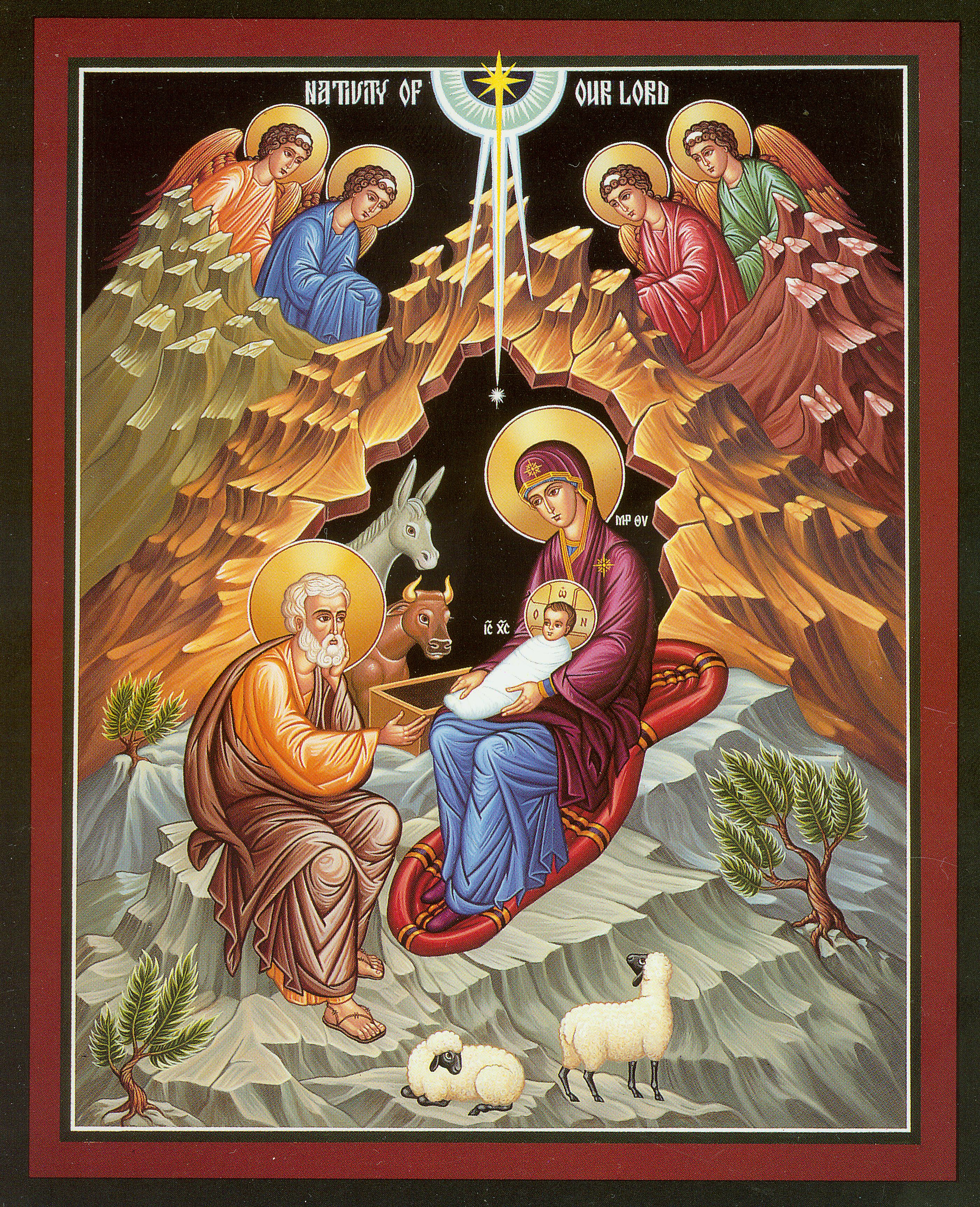
The first nativity took place exactly 800 years ago this month. The year was 1223, and the location was a cave at Greccio in Italy, around 100km north of Rome. St Francis of Assisi was inspired to recreate the first nativity in Bethlehem in an Italian village with real animals and humans playing various parts — exactly like we did in Maenclochog last night. There are good reasons why such recreations are appealing. They remind us of the reality of the Incarnation, that God took flesh in the womb of the Virgin Mary and was born in Bethlehem. The new-born baby Jesus was surrounded by an ox and an ass, and sheep, and was laid in an animals’ feeding trough. As the prophet Isaiah says:

‘The ox knows its owner, and the donkey its master’s crib’ 

‘Yr ych a edwyn ei feddiannydd, a’r asyn breseb ei berchennog’(Isa 1:3)

By this humble beginning God embarked on the journey of sharing our life, so that we might come to share His. Christ begins His life being laid on stone feeding trough. He will end it, taken down from the Cross and laid in a stone tomb. Such parallels are not mere coincidence. Instead, they point us towards a God who has made himself manifest, discoverable through signs, fulfilling prophecies, and declaring love for humanity. 

Jesus is the Prince of Peace, and the embodiment of the Gospel of Salvation. He comes to bring comfort and redemption to the whole world.

‘for the Lord has comforted his people; he has redeemed Jerusalem.’

‘canys yr Arglwydd a gysurodd ei bobl, efe a waredodd Jerwsalem.’ (Isa 52:9)

Today our salvation has dawned, prophecy is fulfilled, and the Saviour of the world is born. The message of Isaiah is one of joy. The birth of the Messiah, Jesus Christ, is Good News. This is because He comes to bring true peace to humanity. That such peace currently eludes our world, is exactly why He came: to heal our wounds and to show us a new way to live. Throughout His life, all that Christ says and does shows us how much God loves us. The Word becomes flesh, ‘A’r Gair a wnaethpwyd yn gnawd’ and enters the world. He dwells among us ‘ac a drigodd yn ein plith ni’: a wondrous mystery which provokes us to worship, to kneel with the shepherds and to adore the God who comes among us. Jesus shares our human life so that we might share His divine life, not because we asked, and not because we are deserving, it is not something we have earned. Rather, it is the free gift of a loving and merciful God. This then is the glory of God — being born in simple poverty. Jesus, the Son of God comes to call humanity to a new way of being together, where the old order is cast aside, turning the world upside down .He offers us the possibility of living in a radically different way. Instead of war, misery and hatred, He shows us the way of peace, joy, and love.

Such is the reality St Francis sought to inspire in the hearts and lives of people eight hundred years ago. It is a message which can still inspire us, a mystery which can still transform us. So that through the grace of God we can come to share in the Divine life, born among us, in a stable not a palace. God surprises us with generosity which we cannot fathom. God subverts human expectations. Christ’s first breaths are taken surrounded by animals and shepherds. Not what one would expect of a royal birth! 

God is a God of mystery and paradox. We know that we can never fully understand Him, but we can experience His love. To quote from Sir John Betjeman’s poem ‘Christmas’:

No love that in a family dwells,

No carolling in frosty air,

Nor all the steeple-shaking bells

Can with this single Truth compare —

That God was man in Palestine

And lives today in Bread and Wine.

May we greet Our Lord, born among us, and may we feed on His Body and Blood at the Altar. Given to transform us, so that we may join with the choir of angels in singing the praises of God the Father, God the Son, and God the Holy Spirit. To whom be ascribed all glory, dominion, and power, now and forever. Amen.

Merry Christmas to you all!

Nadolig Llawen i chi gyd!

Twenty Third Sunday of Year A

The emergency services were not well-developed in the Ancient World. However, cities did have a night watch who functioned as a combination of a police force and fire brigade. It is to such an office that God appoints the prophet Ezekiel in this morning’s first reading. He is to be a night watchman, someone who is vigilant against fire and crime, someone concerned with safety and people’s well-being. Prophets exist to speak warnings to God’s people, to show them where they are going wrong and to show them how to get back on the right path. The role of a prophet is to call sinners to repent from their evil ways. Through the prophet God calls His people back to Him. Though people are, then as now, wayward they are given a chance to repent, to return to the ways of human flourishing. The choice is a stark one: life or death. It is important, and a lot depends upon the choices we make. This is why the central proclamation of the Church is to call God’s people to repentance: to turn away from sin, and to turn back to God. 

This week’s second reading from Paul’s Letter to the Romans continues the Apostle’s advice on how Christians should live out their faith in their lives. Living a Christian life  is a difficult thing to do, and for two thousand years Christians have struggled to do it well. As followers of Christ we are called to love God and to love one another. Paul quotes from the Ten Commandments to make the point that the basis for the moral code found in the Mosaic Law is Love. If you love someone then you will not do such things to them. To love is to will the good of another, to make the right choice, one which leads to human flourishing.

Having shown the Church how to live, Paul widens his focus, to reinforce something we heard last week: 

Do not be conformed to this world, but be transformed by the renewal of your mind, that by testing you may discern what is the will of God, what is good and acceptable and perfect. (Romans 12:2)

Paul can see the wider significance of what he is encouraging people to do. The Church knows that Jesus will come to judge the world, so Paul is encouraging Christians to live moral lives. The first Christians were surrounded by a decadent and morally corrupt society, justas we are today, and have been for two thousand years. Human nature is surprisingly consistent. We, however, are called to live differently. In our baptism, we put on Christ, and we were clothed with Him, sharing His Death, but we were also raised to new life in Him. We pray for the strength to live that new life, here and now! This is how we should prepare to meet our Redeemer, when He comes again.

How do we deal with problems as a church? This is an important and difficult question. This morning’s Gospel shows us how, in a number of clear simple steps. First we should approach the person in private. If they listen, and presumably admit their mistake and ask for forgiveness, or try to put things right, then that is an end to the matter. They are reconciled, and the matter is forgiven and forgotten. If this does not work, Paul instructs us to take one or two people, so that there are witnesses, and if this does not work, it becomes a matter for the church as a whole. If the person at fault still refuses to listen, they are excluded, not as a punishment, but so that they may have another opportunity to think things over, to admit that they are wrong, and to seek forgiveness and reconciliation. The point is not to cast people out, but to try and keep them in, and give them all possible opportunities to repent and be reconciled. In worldly terms this provision is generous. The church, which Christ founded, is meant to do things differently, as Jesus says:

The thief comes only to steal and kill and destroy. I came that they may have life and have it abundantly. (Jn 10:10)

God wants us all to have life in all its fulness, which includes healing and reconciliation. The world, however, often sees things in terms of punishment and retribution, whereas the church views things in terms of restoration. Our God is a God of justice and mercy. This is why Jesus goes to the Cross willingly, to bear our sins, and to heal our wounds. We cannot sort out the problem of our sin and woundedness on our own; if we could we would not need a Saviour. 

This is why Jesus reiterates His teaching about sin:

Truly, I say to you, whatever you bind on earth shall be bound in heaven, and whatever you loose on earth shall be loosed in heaven. (Mt 18: 18) 

This is a reality because of all that God has done for us in Christ. The Church exists to continue the redemptive work of God within the world. Through God’s forgiveness we can be truly reconciled and the healing, which can become a reality in our lives. Jesus says in the words which follow:

Again I say to you, if two of you agree on earth about anything they ask, it will be done for them by my Father in heaven. (Mt 18:19)

Through God’s reconciliation we can make requests in prayer, and those requests will be answered. In addition, as a Christian community we can be encouraged by Christ’s presence in our midst:

For where two or three are gathered in my name, there am I among them. (Mt 18:20)

Christ is among us, here and now! And we receive His Sacramental Presence in the Eucharist, His Very Flesh and Blood, so that He may transform us; so that we may have a foretaste of the Heavenly Banquet and be built up and strengthened in love, both here and now. We have the medicine for which our souls cry out. This is the healing which Christ accomplishes on the Cross, He longs to pour out His Love on us, so that we can know true freedom, true joy, and true love, in Him. So let us come to Him and let His Grace transform our lives, so that we, and all creation, may give glory to God the Father, God the Son, and God the Holy Spirit, to who whom be ascribed as is most right and just, all might, majesty, glory, dominion and power, now and forever. Amen. 

The Second Sunday before Advent: Mk 13:1-8

There was a time when you would see men walking around with sandwich boards, which declared, ‘The End is Nigh!’ It would be all too easy to mock them, or write them off as crackpots. They do, however, make a serious point. For all Christians, after Jesus’ Ascension, we are waiting for Jesus to come again, as our Saviour and our Judge. It might be today, or in a thousand years from now, but He is coming, and we need to be ready. We need to be prepared to meet Him. It is why, in the Season of Advent, which will soon be upon us, we consider the two comings of Jesus. The first is as a baby born in Bethlehem, the second will be as Our King, Our Saviour and Our Judge. The two comings are linked, and we need to be ready for both. 

People nowadays are worried by many things: Britain’s departure from the EU, the President of the United States of America, the threat of nuclear war, global climate change, the end of the world. The latter part of the twentieth century and the start of the twenty-first are full of dire warnings of impending doom. It’s scary stuff, it really is. But as Christians we know that whatever happens, we are loved by and saved by God, that we, and all things are in His hands. It can be hard to hold onto hope like this, but we can. 

The buildings of the Temple complex were soon to be destroyed by the Romans. The single most holy place in the world for Jews was about to be destroyed. It’s a frightening prospect, but it teaches an important lesson: not to be overly concerned with the stuff of this world, as it isn’t as important as we tend to make it. The disciples can’t quite understand that yet, but they will, in time.

What’s more important for Jesus is that the disciples aren’t led astray into strange beliefs, or following false Christs. The last two thousand years have seen some very strange versions, some might say perversions, of Christianity. What we believe matters, because it affects how we live our lives, it helps us give right praise to God, rather than something distorted, ugly and man-made. When Mark wrote his Gospel there were lots of strange ideas floating around about Jesus, and there still are today. It was a time of great uncertainty then, as now. There were wars and natural disasters which portend the end times. Christians were facing persecution then, and they are now too, all over the world. We are more likely to face indifference than persecution, but it knocks your confidence somewhat. You want hope and comfort, and the promise of something better. 

And we have that in Jesus Christ, who died for our sins, and who rose again to show us that we have the promise of eternal life with God, ‘For by a single offering he has perfected for all time those who are sanctified’ (Heb 10:14). This is truly good news to a troubled world. It is the heart of our faith, and the source of our joy. Peter and Andrew, James and John want to know when it will take place. Jesus doesn’t tell them, but he gives them signs to be alert for, so that they can be ready.

I wasn’t a boy scout, but their motto ‘Be Prepared’ is a good one, especially for Christians, because Jesus is coming, and we need to be ready to meet Him. It is good to think about this as we prepare to enter Advent, the penitential season which looks towards Christmas, and our yearly celebration of Jesus’ birth. It is truly amazing thing, that God should be born as one of us, to save us from our sins, to give us the hope of Heaven. We need to prepare for it, because it is important: not the turkey and tinsel and the rampant consumerism, but the Incarnation of the Word of God. It changes the world, and has been doing so for the last two thousand years. We also know that Jesus will come to judge the world. It’s tricky that one, knowing that we will be called to account for what we have been, said, thought, and done.None of us deserve to go to Heaven, but God is loving and merciful, and forgives our sins when we are penitent, He gives us another chance when we make a mess of it. We keep doing it, and God keeps forgiving us, so that we can try to do what God wants us to do. I find such generosity staggering. The world around us can be judgmental, it likes to write people off as no good, as failures. Thankfully God isn’t like that, and the church shouldn’t be either. We have to be a community of healing and reconciliation, so that we can offer the world an alternative. It is both liberating and exciting to that you and I are part of it, and hopefully we want others to be as well. 

This is the covenant that I will make with them after those days, says the Lord: I will put my laws on their hearts, and write them on their minds,’ (Heb 10:16). The author of the Letter to the Hebrews quotes Jeremiah (31:33) to show us how Scripture is fulfilled in the Person of Jesus, who makes a new covenant with His Precious Blood on Calvary. God makes it possible for us to live this new life, triumphing over sin and death. Christ does this for us, what can we do for Him?

We can be ready to meet Him, and we can live the life He wants us to live, not worry whether Christ will come tomorrow or in a thousand years.