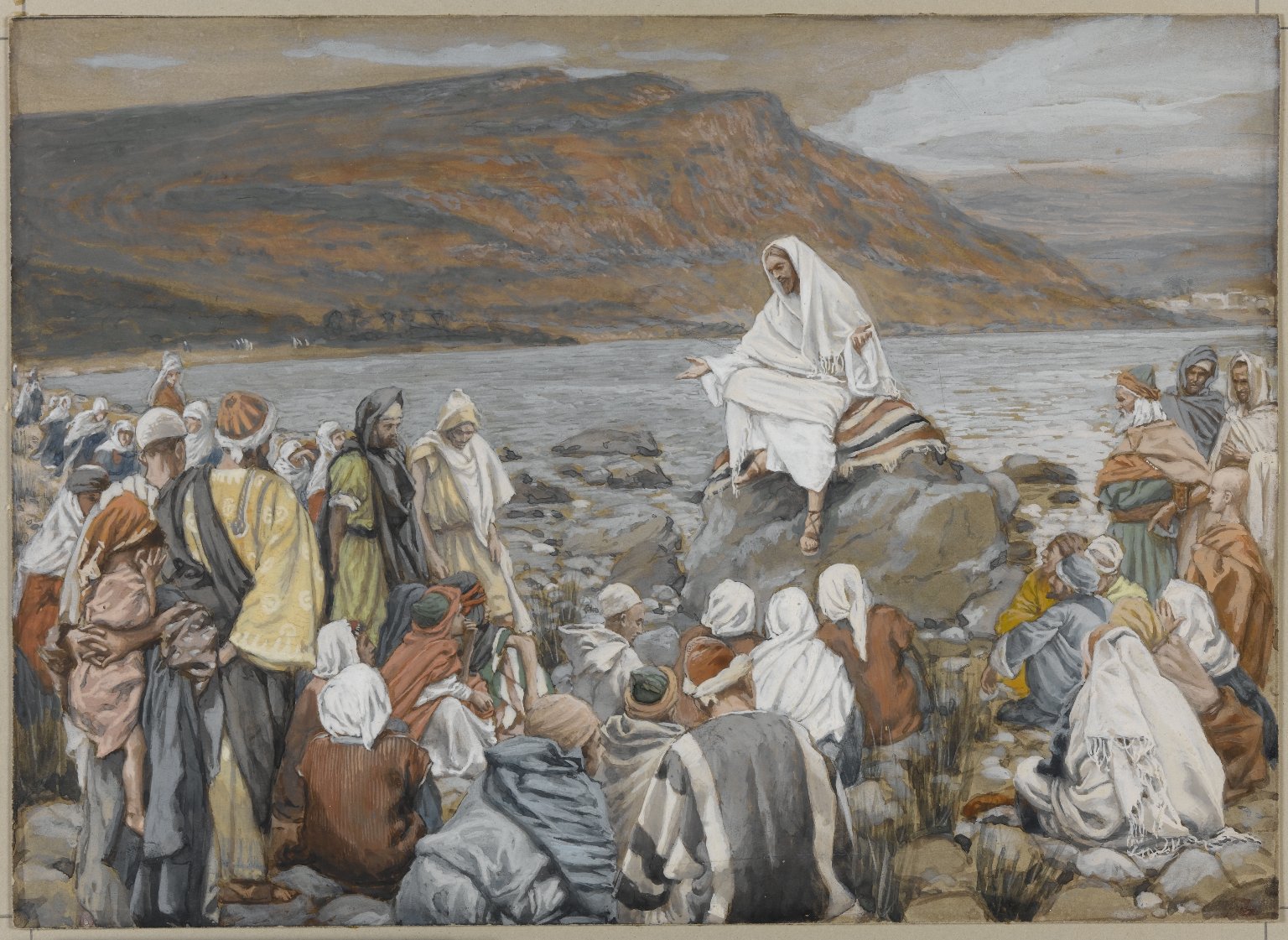
All Saints: Living the Beatitudes

I have an important message for you all this morning: God has a plan for your life! Now, you may well have heard these words before, possibly from someone preaching a sermon, but they contain a profound truth. They are found in the Bible, in words that God speaks through the prophet Jeremiah:

For I know the plans I have for you, declares the Lord, plans for welfare and not for evil, to give you a future and a hope.

Oherwydd myfi sy’n gwybod fy mwriadau a drefnaf ar eich cyfer, medd yr Arglwydd, bwriadau o heddwch nid niwed, i roi ichwi ddyfodol gobeithiol. (Jer 29:11)

It can be hard to hold onto such a promise, especially when times are difficult and the outlook is bleak. We need to ask ourselves the question, ‘Do we trust God?’ If the answer is ‘Yes’ then, whatever difficulties or hardships may come our way, we know that our future is in safe hands.

Fundamentally, the point of being a Christian is to reside in Heaven. Such a destination is possible because of what Jesus Christ has done for us, out of love. This is the plan God has for our life, and this is why Jesus became man, lived, died, and rose from the dead. God shows us both how to live, and what He desires for us. We can have faith, and put our trust in the God who loves us, in the clear hope that, after our earthly life is over, we may enjoy eternity with God and the Saints in Heaven. Most of all, in this hope, we can live earthly lives of love, loving both God and each other, foreshadowing the eternal joys of Heaven. 

In our current culture we are not used to hearing such a message. There is a tendency to think that holiness is for other people, certainly not for us. But God wants each and every one of us to become a saint. He wants us to live in a world full of people trying to be saints. The Church is ‘a school for saints’ (which is peopled by sinners), in which Christians try to live out their faith, cooperating with the grace of God. We do this when we let Christ live in us, so that we can say with the Apostle Paul:

‘It is no longer I who live, but Christ who lives in me.’

‘a mwyach, nid myfi sy’n byw, ond Crist sy’n byw ynof fi.’ (Gal 2:20)

There is a paradox at work here. For when we truly let Christ live in us, we do not lose ourselves, but instead we discover who we really are. This enables us to become the people God wants us to be; the people we were created to be. As Jesus says in Matthew’s Gospel:

For whoever would save his life will lose it, but whoever loses his life for my sake will find it.

Oherwydd pwy bynnag a fyn gadw ei fywyd, fe’i cyll, ond pwy bynnag a gyll ei fywyd er fy mwyn i, fe’i caiff. (Mt 16:25)

Today the Church celebrates the Feast of All Saints. On this day, in the eighth century ad, Pope Gregory III dedicated a chapel to All Saints in St Peter’s Basilica in Rome, and now there are many Churches with this dedication. It is a good thing to celebrate the fact that Heaven is full of saints. They are the Church Triumphant, who spend eternity praising God and praying for us. Just as we pray for our friends here on earth, it stands to reason that our friends in Heaven pray for us as well. It is reassuring to understand that we are not alone in our quest to reach Heaven, and to know that those who are already there long for us to join them. 

If Heaven is our goal, how then should we live our lives on earth? Thankfully today’s Gospel gives us a template to follow, an example of what a Christian life looks like. 

We constantly hear how the world around us values success and confidence, and looks up to the rich, and the powerful. In contrast to this, Jesus says to the gathered crowd:

“Blessed are the poor in spirit, for theirs is the kingdom of heaven.”

“Gwyn eu byd y rhai sy’n dlodion yn yr ysbryd, oherwydd eiddynt hwy yw teyrnas nefoedd.” (Mt 5:3)

‘Poor in spirit’ is not a term we are used to using today, but it means the exact opposite of pride. Jesus places humility as key to living a Christian life: knowing who we are, and our need for God. Only if we rely upon God, and not ourselves, and ask Him to work through us, can we truly live out the Christian life. 

“Blessed are those who mourn, for they shall be comforted.”

“Gwyn eu byd y rhai sy’n galaru, oherwydd cânt hwy eu cysuro.” (Mt 5:4)

We mourn those we love, those whom we see no longer in this life. We do so because we love them, we miss them, we want to see them, and hold them, and talk to them. Our parting, while temporary, is still very painful. Thankfully the Kingdom of God, which Christ comes to bring, is a place of healing and comfort with the promise of eternal life. 

“Blessed are the meek, for they shall inherit the earth.”

“Gwyn eu byd y rhai addfwyn, oherwydd cânt hwy etifeddu’r ddaear.” (Mt 5:5)

Gentle people are not weak: they know how to use their strength, and how not to use it. As Jesus will later say in Matthew’s Gospel: ‘Take my yoke upon you, and learn from me, for I am gentle and lowly in heart, and you will find rest for your souls.’ ‘Cymerwch fy iau arnoch a dysgwch gennyf, oherwydd addfwyn ydwyf a gostyngedig o galon, ac fe gewch orffwystra i’ch eneidiau.’ (Mt 11:29). This is how God wants us to live as human beings. Christ is the example of gentleness we must follow. Once again, God’s vision of the future turns human expectations upside down. 

“Blessed are those who hunger and thirst for righteousness, for they shall be satisfied.”

“Gwyn eu byd y rhai sy’n newynu a sychedu am gyfiawnder, oherwydd cânt hwy eu digon.” (Mt 5:6)

Should we be devoted to God? Absolutely! Should we pray that His will is done on earth as it is in Heaven? Definitely! Jesus taught us to pray this way. Clearly God wants to see our world transformed and has invited us to help in the process; and doing so gives us fulfilment.

“Blessed are the merciful, for they shall receive mercy.”

“Gwyn eu byd y rhai trugarog, oherwydd cânt hwy dderbyn trugaredd.” (Mt 5:7)

We see what God’s mercy looks like in Christ’s death for us on the Cross. In following Christ’s example, we both ask for forgiveness for our own sins, and forgive those who sin against us. This forgiveness can transform us and the world around us, and it is how the healing and reconciliation of God’s Kingdom functions. 

“Blessed are the pure in heart, for they shall see God.”

“Gwyn eu byd y rhai pur eu calon, oherwydd cânt hwy weld Duw.” (Mt 5:8)

To be pure in heart is to want what God wants: to align our will with the will of God. It is to be saintly, and thus have the promise of Heaven, which is less of a place or a time, and much more a relationship. To see God is know Him, and to know His love for us. This is the very thing that Christ comes to restore to humanity, and it is our hope. 

“Blessed are the peacemakers, for they shall be called sons of God.” 

“Gwyn eu byd y tangnefeddwyr, oherwydd cânt hwy eu galw’n feibion i Dduw.”(Mt 5:9)

First and foremost, we know that Christ is the Son of God because He made ‘peace by the blood of his cross’ ‘ar ôl gwneud heddwch trwy ei waed ar y groes’ (Col 1:20). We too are called to follow Christ’s example to take up our Cross, and work for peace. We are called to strive for peace in our own hearts and lives, in our families and communities, and in our world.

“Blessed are those who are persecuted for righteousness’ sake, for theirs is the kingdom of heaven. Blessed are you when others revile you and persecute you and utter all kinds of evil against you falsely on my account.”

“Gwyn eu byd y rhai a erlidiwyd yn achos cyfiawnder, oherwydd eiddynt hwy yw teyrnas nefoedd. Gwyn eich byd pan fydd pobl yn eich gwaradwyddo a’ch erlid, ac yn dweud pob math o ddrygair celwyddog yn eich erbyn, o’m hachos i.” (Mt 5:10-11)

Following Jesus will not, by default, make us popular. Often people’s response is quite the opposite. If, however, we want to see God’s Kingdom as a reality in this life and the next, then we must be prepared to be shunned, or even ridiculed by others. To follow Christ is to take up the Cross, and to expect persecution. But we are not alone in this. Christ has gone before us, showing us that the story does not end with Death on a Cross, but with the glory of the Resurrection and Eternal life. 

If we want to become saints, then we have to be like Christ. We have to share in His suffering and death, and we have to be prepared to be rejected by the world. We may not face imprisonment, torture and death in this country, but many Christians around the world do. However, we may be scorned, ignored, or criticised. What do we do in such circumstances? We are called to be loving, generous, and forgiving, because that is what Jesus has shown us. We can be different to the world around us because we belong to a new community — the Kingdom — a community of faith, built on our relationship with Jesus Christ, who came to save humanity from itself. Our Lord came so that we might have life in all its fullness.This is what the Beatitudes mean. By living the life of God’s Kingdom in this place and at this time, we can live the life of Heaven (here and now) on earth. This is what God wants us to do. It is the way Jesus has showed us how to live. It is what the Saints have done before us.

So, on this feast of All Saints, let us be filled with faith and joy, and let us be ready to conform our lives to God’s will. May we live the life of the Kingdom together, and encourage others, so that all may join the choirs of Heaven to sing the praise of God the Father, God the Son, and God the Holy Spirit, Duw Dad, Duw y Mab, a Duw yr Ysbryd Glân. To whom be ascribed all glory, dominion and power, now and forever. Amen


James Tissot, The Sermon on the Mount, Brooklyn Museum

Lent V

THE past sixty years in Britain and the West have seen societal change on a scale arguably never witnessed before in the history of humanity. The world in which we live has changed, and people have become used to the changes. On the whole, despite becoming more permissive, society is still judgemental. We put people on pedestals, and then we are surprised when they fall off. More than that, the media constantly encourages us to be critical of others. This is deeply corrosive, because it sets us up to think that we are somehow better than others. However, we too make mistakes. We all, each and every one of us, myself included, say and do things which we should not, which hurt others, and for which we need forgiveness.

Thankfully, we can ask God and each other for this forgiveness. Because of what Christ did for us, taking our sins upon himself, on the Cross, we are forgiven. God loves us. In turning to God for forgiveness, we are turning away from sin and trying to live our lives in a new way. The Christian life is, like the season of Lent, a constant repetition of this process: failing and trying again, and keeping going. So that bit by bit, gradually, we let God be at work in us, to transform us. This helps us to be less judgemental, more loving, and more forgiving. Drawing on God’s love, we can build up a community that is filled with this radical transforming love. We can become a force for good, a beacon of hope, sharing Christian love with the world around us.

Today’s Gospel finds Jesus is in the Temple in Jerusalem for the Feast of Tabernacles. According to the law of Moses the woman caught in adultery should be punished by being stoned to death. However, the Roman occupiers had taken from the Jews the power to put anyone to death. Jesus’ response shows the world that there is another way: a way of love and not of judgement. Interestingly, this passage is the only time when the Gospel writers record Jesus writing. After the Scribes and Pharisees have brought the unnamed woman to Him:

‘Plygodd Iesu i lawr ac ysgrifennu ar y llawr â’i fys.’

‘Jesus bent down and wrote with his finger on the ground.’ (Jn 8:6) 

This verse has puzzled people for centuries. What exactly did Jesus write? We cannot know for certain. An answer to this intriguing question may come from Scripture. A few verses earlier in John’s Gospel, Jesus talks of rivers of living water. In the prophet Jeremiah we find the following words:

‘O Arglwydd, gobaith Israel, gwaradwyddir pawb a’th adawa; torrir ymaith oddi ar y ddaear y rhai sy’n troi oddi wrthyt, am iddynt adael yr Arglwydd, ffynnon y dyfroedd byw.’

‘O Lord, the hope of Israel, all who forsake you shall be put to shame; those who turn away from you shall be written in the earth, for they have forsaken the Lord, the fountain of living water.’ (Jer 17:13)

We can speculate that at least part of this verse from Jeremiah is what Jesus wrote in the earth. Writing these words would both fulfil the prophecy of Jeremiah, and shame the woman’s accusers. Jesus is showing that the Scribes and Pharisees have turned away from God, towards legalism and judgmental behaviour. Those gathered would know the prophecy of Jeremiah, and also that Jesus has recently mentioned streams of living water. This verse is the key to understanding what is going on. Jesus is fulfilling Scripture, and demonstrating that God should be characterised by love, mercy, and forgiveness. 

The Religious Authorities have not quite understood the situation. They continue to press Jesus for an answer, which He does not give. Instead Jesus challenges them:

‘ymsythodd ac meddai wrthynt, “Pwy bynnag ohonoch sy’n ddibechod, gadewch i hwnnw fod yn gyntaf i daflu carreg ati.”’

‘he stood up and said to them, “Let him who is without sin among you be the first to throw a stone at her.”’ (Jn 8:7)

Jesus’ position is non-judgemental, and highlights the hypocrisy of the accusers. Christ then returns to His writing:

‘Yna plygodd eto ac ysgrifennu ar y llawr.’

‘And once more he bent down and wrote on the ground.’ (Jn 8:8)

It is possible that Jesus was finishing the verse from Jeremiah. We cannot be sure, but what we do know is that the combination of His words, both written and spoken have a profound effect:

‘A dechreuodd y rhai oedd wedi clywed fynd allan, un ar ôl y llall, y rhai hynaf yn gyntaf, nes i Iesu gael ei adael ar ei ben ei hun, a’r wraig yno yn y canol. Ymsythodd Iesu a gofyn iddi, “Wraig, ble maent? Onid oes neb wedi dy gondemnio?” Meddai hithau, “Neb, syr.” Ac meddai Iesu, “Nid wyf finnau’n dy gondemnio chwaith. Dos, ac o hyn allan paid â phechu mwyach.”’

‘But when they heard it, they went away one by one, beginning with the older ones, and Jesus was left alone with the woman standing before him. Jesus stood up and said to her, “Woman, where are they? Has no one condemned you?” She said, “No one, Lord.” And Jesus said, “Neither do I condemn you; go, and from now on sin no more.”’ (Jn 8:9-11)

It is interesting that the older (and wiser) ones are the first to grasp the full implications of what Jesus is saying. Christ does not condemn the woman: God is a God of mercy. However, Our Lord does say, ‘Dos, ac o hyn allan paid â phechu mwyach’ ‘go, and from now on sin no more’ (Jn 8:11). Forgiveness goes hand-in-hand with contrition and repentance. We are loved, healed and restored by God, but with forgiveness comes a challenge. As Christians we are to turn away from wrongdoing, from the ways of the world, and instead find life in Christ.

Lent gives us the opportunity to take a long, hard look at ourselves and at our lives. It is a time to recognise that we need to become more like Jesus — to live, and think, and speak like Him. We need to be nourished, healed and restored by Christ, so that we can live lives which proclaim His love and His truth to the world. Lent is also a time for us to realise that we are loved by God, and that God is merciful, forgives our sins, and longs for us to experience life in all its fulness.

It is interesting that today is Passion Sunday when we begin in earnest our commemoration of Jesus’ death and Resurrection. This morning’s Gospel speaks of a different type of passion (sexual desire) which when uncontrolled could lead to death — either of a person condemned for committing adultery or a relationship between a husband and wife.

As we pray today for couples preparing for marriage we also pray for those whose relationships are under strain and for all who have experienced marital breakdown. Let us be slow to judge, and quick to show compassion and mercy to those whose lives are not perfect.

Let us, as followers of Jesus, rejoice in the generous love of God and prepare ourselves to celebrate Christ’s Passion. Let us give thanks for our families and relationships and give glory i Duw Dad, Duw y Mab, a Duw yr Ysbryd Glân. I’r hwn y priodoler pob gogoniant, arglwyddiaeth, a gallu, yn awr, ac yn oes oesoedd. Amen.

Christ and the sinner, A Mironov 2011

Septuagesima 2025

When we think back over our lives some of the people we remember the most vividly are our teachers. Teachers are important. They form us, they instruct us, they inspire us, and they shape our lives in countless ways. We would not be the people we are without their hard work and inspiration.

At one level Jesus, Christ is the greatest teacher humanity has ever had. This is because His mission was to proclaim the Kingdom of God and to educate humanity about it, so that we might flourish. Christ’s mission is rooted in the simple fact that God loves us. We may make plenty of mistakes, but nonetheless God comes to us, lives as one of us, and shows us how to live life in all its fulness.

The readings this morning outline two possibilities: living in accordance with God’s will, or living by our own desires. It is clear which is preferable, and which way leads to human flourishing. So we have the challenge set before us to live as children of God. It is not necessarily an easy path, and it may involve hardship and suffering. However, nothing worth achieving comes without effort, struggle, and even suffering. 

The prophet Jeremiah offers us a vision of what happens when we put our trust in God:

‘Bendigedig yw’r gŵr sy’n hyderu yn yr Arglwydd, a’r Arglwydd yn hyder iddo. Y mae fel pren a blannwyd ar lan dyfroedd, yn gwthio’i wreiddiau i’r afon, heb ofni gwres pan ddaw, a’i ddail yn ir; ar dymor sych ni prydera, ac ni phaid â ffrwytho’’

“Blessed is the man who trusts in the Lord, whose trust is the Lord. He is like a tree planted by water, that sends out its roots by the stream, and does not fear when heat comes, for its leaves remain green, and is not anxious in the year of drought, for it does not cease to bear fruit.” (Jer 17:7-8)

Here we see an image of human flourishing. This is how things should be. Also, references to trees in the Bible tend to look backwards to the Garden of Eden, and forwards to the tree of Calvary. Salvation history starts with humanity taking the wrong path after an interaction with a tree, and reaches a climax with God using a tree to make things right again. When my best friend got someone he’d worked with in Syria over here, he took them out into the British countryside, and they wept, because they had never seen so much green: grass and trees, and water. Coming from the Middle East, they were used to dryness and desert. The prophet Jeremiah is showing how good things can be, and paving the way for the proclamation which lies at the heart of today’s readings.

In Luke’s Gospel we see the continuation of Christ’s ministry of teaching and healing. People come to Jesus because they want to know God. They have travelled from a wide area, and are a diverse group of people, all united by a common desire: to be closer to God. Unlike in Matthew’s account, here Jesus does not go up a mountain to teach, but comes down to where people are. There He proclaims the values of the Kingdom:

‘Gwyn eich byd chwi’r tlodion, oherwydd eiddoch chwi yw teyrnas Dduw’

“Blessed are you who are poor, for yours is the kingdom of God.” (Lk 6:20)

To be poor in the world’s eyes is to lack money, possessions, power, and influence. All these worldly things do not matter in the Kingdom of God. There those who are poor, those who recognise their complete dependance upon God, are truly rich. This is because they have the humility to let God be at work in them, and they rely upon God, rather than their own strength, which enables them to be transformed. Two thousand years ago the poor were looked down upon, and their poverty was blamed on sin or fecklessness. They were at the bottom of the pile. To say that the Kingdom of God belongs to such people is to make a truly radical statement, turning societal norms and expectations on their head. What Our Lord is proposing is literally world-changing. This is the Good News of Jesus Christ. 

However, Our Lord recognises that His radical vision will meet with opposition:

‘Gwyn eich byd pan fydd dynion yn eich casáu a’ch ysgymuno a’ch gwaradwyddo, a dirmygi eich enw fel peth drwg, o achos Mab y Dyn. Byddwch lawen y dydd hwnnw a llamwch o orfoledd, oherwydd, ystyriwch, y mae eich gwobr yn fawr yn y nef.’

Blessed are you when people hate you and when they exclude you and revile you and spurn your name as evil, on account of the Son of Man! Rejoice in that day, and leap for joy, for behold, your reward is great in heaven.” (Lk 6:22-23)

To live the Christian life is to be different, to offer the world something new, something challenging, and something disturbing. It will be resisted, and it will lead to difficult times. Our reaction towards any persecution, however, is to be joy. At first sight this seems a little strange and it is definitely a challenge

Jesus then makes a series of four statements beginning with ‘Gwai chwi …Woe to you’. These parallel the earlier positive statements about the Kingdom and turn human values upside down. These speak to those people who trust in themselves, their riches and abilities, saying that all will not go well for them in the future. Those who will not listen to Jesus’ words, because they think they do not need to, will find out that they are wrong. 

In some important ways, Christianity looks dangerous and suspect to the world around us, and so it should. As Christians, we are not conformed to the ways of the world, but rather to the will of God. We do not simply go along with things, because that is what everyone does. Instead, we follow a higher authority. We cannot be bought off with baubles and trinkets, with wealth or power — the things of this world. This is because we acknowledge someone greater, namely God. We try to live as God wants us to live, acknowledging Him before all things. As Christians, there should be something different about us, something that others can see, something that reflects Christ.

Jesus died to reconcile us to God and each other, and He was raised from the dead to give humanity hope in the God who loves us. This hope inspired St Paul to preach the Good News, and it should inspire us as well. We are called to live out our faith in our lives. Our beliefs need to make a difference to who and what we are, so that others might see the truth of the Gospel. What we do here, today, in church helps us to follow in Jesus’ footsteps. We hear God’s word, and we are nourished by it. We pray together for the Church and the World, and those in need. In the Eucharist, Christ fill us with His grace to strengthen and transform us, and then sends us out into the world to love our neighbour.

May we, today and every day, live out and proclaim the coming of God’s Kingdom, so that the world may believe and give glory i Duw Dad, Duw y Mab, a Duw yr Ysbryd Glân. I’r hwn y priodoler pob gogoniant, arglwyddiaeth, a gallu, yn awr, ac yn oes oesoedd. Amen.

Advent Sunday 2024: Be Alert: Preparing for Christ’s Return

WHEN I was a young boy I was given a bookmark, on which was printed, ‘BE ALERT: The world needs all the lerts it can get!’ This pun amused me greatly, and it still does. However, it contains a serious message. As Christians we are called to be watchful and aware: both of the world around us, and of the signs of God’s Kingdom. We must also be watchful for Our Lord’s Return. There are two things of which we can be sure. Firstly, that our earthly lives are finite, and secondly, that Christ will come to judge the World. People often find both of these concepts somewhat off-putting, which is understandable. However, they are a reality which we need to face, and understand. Christians believe in God. We trust that we are loved by Our Heavenly Father, who is a God of love and mercy. He sent His Son, Jesus Christ, to reconcile us to Himself and with each other. This is why we can have hope, and prepare to meet Christ with joyful hearts.

The prophet Jeremiah, in our first reading this morning, speaks of prophecy being fulfilled:

‘“Y mae’r dyddiau’n dod,” medd yr Arglwydd, “y cyflawnaf y gair daionus a addewais i dŷ Israel ac i dŷ Jwda.”’

‘Behold, the days are coming, declares the Lord, when I will fulfil the promise I made to the house of Israel and the house of Judah.’ (Jer 33:14)

God promises to fulfil prophecy and to send His people a Saviour. This promise, made to the House of David, is fulfilled both by Jesus’ birth and His return in judgement. God promises to save His people and to rule in a way that is far beyond any human idea of justice. Earthly rulers and politicians will, and do, disappoint us: they always fall short of our expectations. They are human beings, and are therefore fallible. Instead, we call upon God to intervene, and make things right. Only our Heavenly Father can save us, we cannot save ourselves.

However, waiting for Jesus’ Return is not without its problems. St Paul writes to Christians in northern Greece who are expecting Christ’s Second Coming to be imminent. Their expectations need to be managed, and they need help to live out their faith, so that they grow in love together. Our time on earth is limited, so we need to take every opportunity to live in a way that is pleasing to God.

Jesus’ description of the end times is in agreement with the apocalyptic passages found in the prophets. In other words, when that day comes it will be clear. If we are alert, then we will know what is going on. We should look forward to this day, and not be afraid: 

“A’r pryd hwnnw gwelant Fab y Dyn yn dyfod mewn cwmwl gyda nerth a gogoniant mawr. Pan ddechreua’r pethau hyn ddigwydd, ymunionwch a chodwch eich pennau, oherwydd y mae eich rhyddhad yn agosáu.”

‘And then they will see the Son of Man coming in a cloud with power and great glory. Now when these things begin to take place, straighten up and raise your heads, because your redemption is drawing near.’ (Lk 21:27-28)

Christ’s return is a sign of the Kingdom of God. He will welcome us to our eternal Heavenly home. Mindful of our destiny, we should use this season of Advent as a time for preparation. We should make these four weeks leading to Christmas a time when we turn away from everything which separates us from God and each other. As Our Lord says in the Gospel:

“Cymerwch ofal, rhag i’ch meddyliau gael eu pylu gan ddiota a meddwi a gofalon bydol, ac i’r dydd hwnnw ddod arnoch yn ddisymwth fel magl; oherwydd fe ddaw ar bawb sy’n trigo ar wyneb y ddaear gyfan.”

‘But watch yourselves lest your hearts be weighed down with dissipation and drunkenness and cares of this life, and that day come upon you suddenly like a trap. For it will come upon all who dwell on the face of the whole earth’ (Lk 21:34-35)

These words are as relevant today as they were two thousand years ago. Human nature has not changed, nor has our propensity for doing the wrong things — squandering our time, energy, and resources. Instead, we should listen to Jesus and obey His commands:

“Byddwch effro bob amser, gan ddeisyf am nerth i ddianc rhag yr holl bethau hyn sydd ar ddigwydd, ac i sefyll yng ngŵydd Mab y Dyn.”

‘But stay awake at all times, praying that you may have strength to escape all these things that are going to take place, and to stand before the Son of Man.’ (Lk 21:36)

Vigilance, prayer, and complete reliance upon God are the weapons of our spiritual armoury with which to combat the darkness of this world. 

So, my brothers and sisters in Christ, let us be alert and watchful. Let us serve Christ our King who will return, filled with His love for us, and for all people. Let this love form a Kingdom with God as its head. And as we await the Christ’s Second Coming, let us give praise and honour to God the Father, God the Son, and God the Holy Spirit. To whom be ascribed all glory, dominion and power, now and forever. Amen.

Christos Pantokrator, St Catherine’s Monastery, Sinai

The Twenty-second Sunday of Year A

The vocation to be a prophet is not an easy one. Prophets are tasked with telling people the plain, unvarnished truth about God. Their words can be quite unpalatable. Most, if not all, of us would much rather not hear hard truths. Therefore it comes as no surprise that in our first reading this morning, the prophet Jeremiah is feeling rejected and miserable. He has been prophesying the destruction of Jerusalem by the Babylonians, but, because this has not yet happened, he is seen as a fraud. Jeremiah starts to doubt God, and yet there is a burning fire within himself to call God’s people to repentance. However, when he announces this he is mocked. Jeremiah feels let down. 

Last week we read Peter’s declaration that Jesus is the Messiah, the Son of God. Following on from this, Jesus tells His disciples what must happen to Him:

He must go to Jerusalem and suffer many things from the elders and chief priests and scribes, and be killed, and on the third day be raised. (Mt 16:21)

Jesus’ words must have come as something of a shock to the disciples. This isn’t what is supposed to happen to the Messiah, so Peter takes Jesus to one side and tells Him off! Peter cannot understand what needs to happen. He has forgotten prophecies like Isaiah 53 which tell of the Suffering Servant. Peter cannot take it in — he does not want Jesus’ prophetic words to take place. This is a very human response. We also don’t want such appalling things to happen. Then it is Peter’s turn to be told off. Jesus says to him:

“Get behind me, Satan! You are a hindrance to me. For you are not setting your mind on the things of God, but on the things of man.” (Mt 16:23)

In just a couple of verses Peter has gone from being the rock upon which the church will be built, to being Satan, the deceiver, the devil, and a stumbling block. Peter has run the whole length of the spectrum, from getting things right to getting them totally wrong. There are no half-measures with Simon Peter. He jumps in with both feet. He may be right or wrong, but he is certainly committed, and through this commitment Jesus sees Peter as a leader. But the disciples’ inability to understand what Jesus is saying has led him to try and oppose the will of God. Peter, the Rock, has become a stumbling-block, an obstacle, something to trip over. Peter can only see things in human terms, but God has something else in store. The Cross is inevitable for the simple reason that God loves us that much. However, the Cross is not just for Christ. It is for each and every one of as Christians: we are called to bear it ourselves.

As believers, we are to take up our Cross and follow Jesus. We should be under no illusion; it isn’t easy to take up the Cross. We cannot do it on our own, we have to do it together, as a community, relying upon God, and loving and forgiving each other. All the power, all the wealth in the world, is worth nothing compared to finding true life in Christ. Worldly things cannot save us, they cannot give us eternal life, they cannot wipe clean our sins. Only Jesus can do this, on the Cross. Only in Christ can we have life — life in its fullness. Only if we lose our old life by following Him, can we find what our human life can truly be.

Thus the Church, in following Jesus, offers a radical alternative to the ways of selfishness and sin, an alternative which has the power to change the world through being conformed to Christ. We can do this together, by living out our faith and encouraging others to do so; by living lives of profound love, something that is difficult, and costly, and wonderful. 

Today, through prayer, through our conversation with God, throughlistening to God, we are nourished by the Word of God, the Bible, to know that God loves us, and will help us to live out that love and forgiveness in our lives. We are also nourished by the sacraments of the Church, by Holy Communion, so that the love which God shows to the world on the Cross continues to be poured out upon us, so that we can be strengthened to live out the life of faith. It is food for our souls, so that we may be built up in love. Let us turn to the Living God, to be fed by Him, fed with Him, to have new life in Him, so that He can continue to transform our human nature and follow His example. Let us take up our Cross, as people ransomed, healed, restored and forgiven by the love of God on the Cross.

In the Letter to the Romans, St Paul describes what love in action looks like. We are guided as to how to put our faith, into practice in our lives: by living out the love and forgiveness which we have received, turning from the ways of the world and following the way of God. The Christian life is sacrificial in that it involves personal sacrifice, and also by uniting ourselves to the sacrifice of Christ. This world cannot save us, only Christ can do that. The ways of the world cannot give us true happiness, or eternal life. Their promises are false. Only Christ, who is the Way, the Truth, and the Life (Jn 14:6) can save us. Only Christ can transform us, and this transformation lies at the heart of the proclamation of the Kingdom. Only by losing our life can we find it.

As Christians we embrace paradox, because God loves us enough to be born as one of us, to proclaim and live out the truth, healing and reconciliation, which He longs to lavish upon us. In Christ, God dies so that we might live. Words cannot express just how earth-shattering and transformative Divine Love is. It is a mystery, in the fullest sense of the word. God’s love and mercy are greater than anything we can know or imagine. We keep making mistakes, but God’s love is unconditional, we cannot earn it, it is freely offered to transform us. Thus, our faith is the work of a lifetime. Day by day God’s grace can perfect our nature, if we are humble enough to let God be at work in us. We pray that God’s grace may transform us so that, in this life and the next, we and all creation may give glory to God the Father, God the Son, and God the Holy Spirit, to who whom be ascribed as is most right and just, all might, majesty, glory, dominion and power, now and forever. Amen.

A 4158