Trinity 18: Jesus teaching on the Kingdom

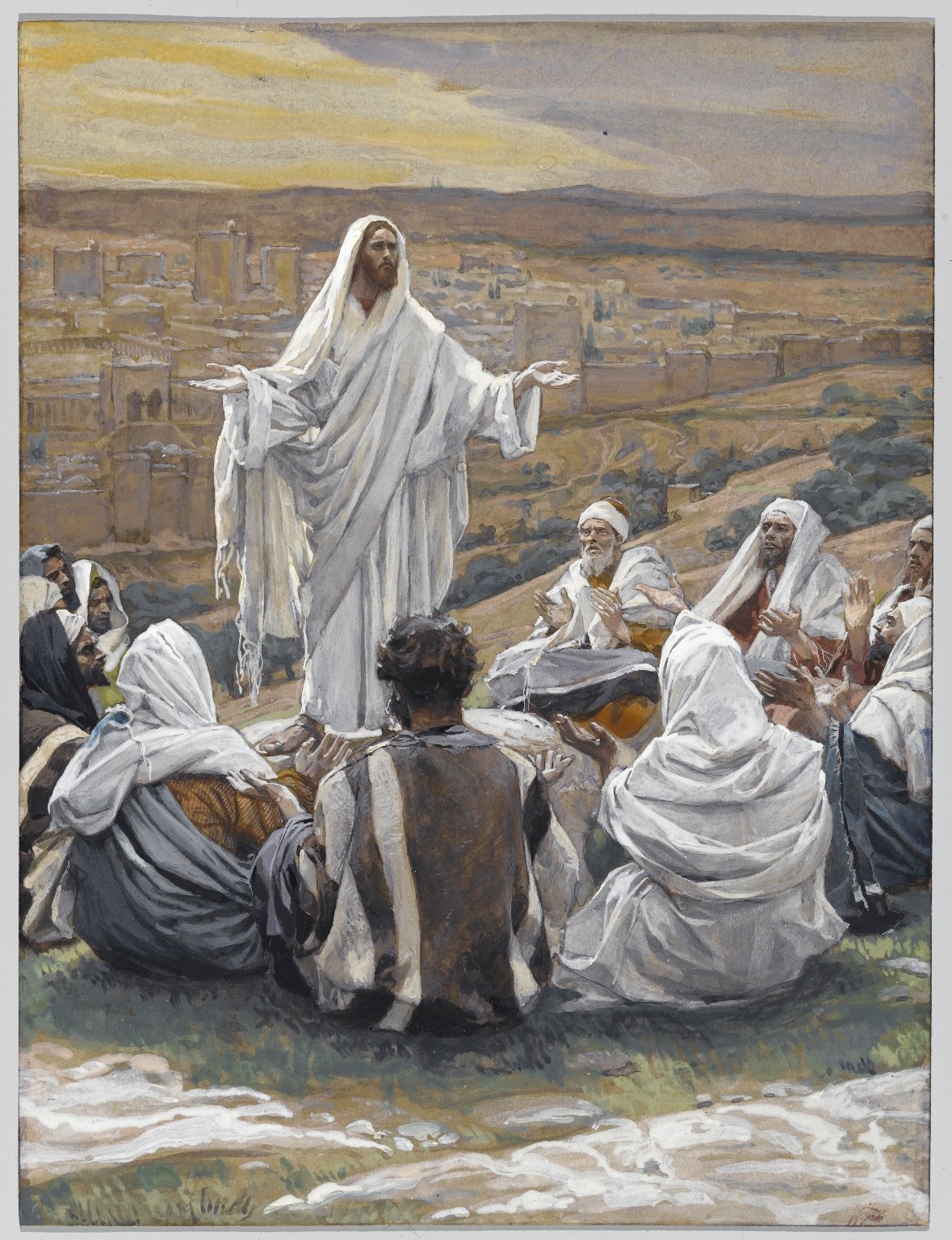
“Jesus said to them, ‘Truly, I say to you, the tax collectors and the prostitutes go into the kingdom of God before you.”

“Dywedodd Iesu wrthynt, ‘Yn wir, ‘rwy’n dweud wrthych fod y casglwyr trethi a’r puteiniaid yn mynd i mewn i Deyrnas Dduw o’ch blaen chwi” (Mt 21:31)

WHICH IS WORSE? Is it to refuse to do something you are asked to do? Or is it to say that you will do something and then not do it? That is the question posed in today’s Gospel. 

Our Lord is talking to the chief priests and elders. These are the religious leaders of His day, the people tasked with guiding the people of Israel in their relationship with God. Jesus has entered Jerusalem in triumph, and cast out the money-changers from the Temple, and cursed a fig tree for not bearing fruit. What we are witnessing in the Gospel is religious reform. Those who are supposed to have brought people closer to God are shown to be resistant and rebellious; they are the problem rather than the solution. 

The proclamation of both John the Baptist and Jesus is the same: ‘Repent and believe the Good News’. The message is a consistent one. We need to stop going the wrong way, and change direction. We need to go the way God wants us to, so that we can flourish as human beings, loved by Our Heavenly Father. This means that we will need to ask for, give, and receive forgiveness. We cannot keep score or remember past wrongs. To live Christian lives of repentance and forgiveness is difficult, and we need God’s help, because we cannot do it on our own.

In the Gospel, the chief priests and elders are concerned with authority, with power and influence. They want to know what gives Jesus the right to say and do what He does? Clearly Christ does not want to answer their question, for if He told the truth He would be accused of blasphemy, so Our Lord answers their question with another question:

“I also will ask you one question, and if you tell me the answer, then I also will tell you by what authority I do these things. The baptism of John, from where did it come? From heaven or from man?” (Mt 21:24-25)

The religious authorities are unable and unwilling to answer the question, so Jesus teaches them using a parable:

“What do you think? A man had two sons. And he went to the first and said, ‘Son, go and work in the vineyard today.’ And he answered, ‘I will not’, but afterwards he changed his mind and went. And he went to the other son and said the same. And he answered, ‘I go, sir’, but did not go. Which of the two did the will of his father?” (Mt 21:28-31)

Jesus begins by asking the chief priests and elders a question: ‘What do you think?’ These simple words (What do you think?) speak profoundly of the freedom given to humanity by Our Creator. We are not forced, but rather invited, to engage in a conversation. God does not compel us.

In the parable of the two sons, clearly the one who overcame his initial reluctance and actually did the will of his father, by working in the vineyard, is the example for us to follow. This son experiences repentance, and changes his behaviour to do what is best for him. He starts out as being stubborn, rebellious, and disobedient — but the important thing is that he repents, and does what his father asks of him. The other son begins with an outward show of respect. He appears to be a dutiful son, addressing his father as Sir. However, he is basically a hypocrite, because his actions do not match his words. True obedience is not in outward displays of respect, but in actually doing the will of God.

The point Our Lord is making is that the chief priests and elders appear to be doing the will of God, and keeping the Law. However, they are in fact very far from the ideal, because they are puffed up with pride and self-righteous indignation. This is why in Jesus’ reply to them He refers to tax collectors and prostitutes.

Two thousand years ago, tax-collectors and prostitutes were seen as the lowest of the low in society. The first were viewed as swindlers, the second as sexually immoral. Both, however, were on good terms with the Roman occupiers. Such people were certainly not the kind of company a religiously observant Jew would keep. And yet, despite their sins, these are the people who are willing to repent. They are aware of their need for God, and they understand that God loves them. They believe that God will be merciful, and that He will heal their wounds, and will welcome them into His kingdom. By recognising that it is more important to do the will of God rather than simply to say that you will, the religious authorities highlight their own hypocrisy and are condemned by their own lips. They have been told by John the Baptist what God wants, but they have ignored him, and now when Jesus tells them the same message they will also ignore the Lord their God.

Very soon the same chief priests and elders will soon call for Jesus’ death by crucifixion. Christ’s death on the Cross is a demonstration of humility and obedience by Our Lord. Jesus dies for us, offering His Body and His Blood to heal us, and give us eternal life in Him. 

As we prepare to receive Our Lord and Saviour in the Eucharist, may we have the humility to let Him transform us into His likeness. May we be conscious of our need of God, and our need to turn back and follow Him, so that we may have life in all its fullness. May we prepare to enjoy God’s closer presence and sing the praises of God the Father, God the Son, and God the Holy Spirit, Duw Dad, Duw y Mab, a Duw yr Ysbryd Glân. To whom be ascribed all glory, dominion, and power, now and forever. Amen.
Quinquagesima 2025

LIVING in the Welsh countryside we are surrounded by trees (coed). At this time of year we notice changes in them as catkins and buds appear. Spring is arriving, a new season, and the trees prepare for the transformations they will undergo during the months ahead. Likewise, we too need to prepare to enter a new season: Lent. The time of preparation for the transformation of Easter, when death turns to life through the Resurrection of Our Lord Jesus Christ.

In our first reading this morning we are given a criterion for judgement:

‘Fel y mae ffrwyth pren yn dangos y driniaeth a gafodd, felly y mae mynegiant rhywun o’i feddyliau yn dangos ei ddiwylliant’

‘The fruit discloses the cultivation of a tree; so the expression of a thought discloses the cultivation of a person’s mind.’ (Eccles. 27:6)

However, mention of trees and fruit makes us look both backwards and forwards. Back to Genesis, where humanity falls through eating forbidden fruit, and forward to Calvary, where the Cross becomes the tree of salvation. Christ is the fruit that hangs upon this tree, who heals our wounds, and who offers us eternal life.

In today’s Gospel, Jesus begins by telling a parable which seeks to criticise the Pharisees, and Religious Authorities of His day. 

“Adroddodd Iesu ddameg wrth ei ddisgyblion: “A fedr y dall arwain y dall? Onid syrthio i bydew a wna’r ddau? Nid yw disgybl yn well na’i athro; ond wedi ei lwyr gymhwyso bydd pob un fel ei athro.”

“Jesus told his disciples a parable: ‘Can a blind man lead a blind man? Will they not both fall into a pit? A disciple is not above his teacher, but everyone when he is fully trained will be like his teacher. ”(Lk 6:39-40)

The Pharisees are described as the blind leading the blind; teachers leading people the wrong way, oblivious to their own faults and shortcomings, yet judging others. They appear as hypocrites, as the teaching goes on to explain:

“Pam yr wyt yn edrych ar y brycheuyn sydd yn llygad dy gyfaill, a thithau heb sylwi ar y trawst sydd yn dy lygad dy hun? Sut y gelli ddweud wrth dy gyfaill, ‘Gyfaill, gad imi dynnu allan y brycheuyn sydd yn dy lygad di’, a thi dy hun heb weld y trawst sydd yn dy lygad di? Ragrithiwr, yn gyntaf tyn y trawst allan o’th lygad dy hun, ac yna fe weli yn ddigon eglur i dynnu’r brycheuyn sydd yn llygad dy gyfaill.”

“Why do you see the speck that is in your brother’s eye, but do not notice the log that is in your own eye? How can you say to your brother, ‘Brother, let me take out the speck that is in your eye’, when you yourself do not see the log that is in your own eye? You hypocrite, first take the log out of your own eye, and then you will see clearly to take out the speck that is in your brother’s eye.” (Lk 6:41-42)

To recognise that you have ‘a log in your own eye’ requires both self-examination and the humility to recognise your own failures and shortcomings before making any criticism of others. Here Jesus is clearly telling His followers not to be judgemental. Logs and splinters are made of wood, which comes from trees. With a beam in our own eyes we cannot see anything, let alone assist someone with a splinter in their eye. Making the world a better place starts with each of us as individuals, and not with someone else.

Our Lord then goes on to point out the need to bear good fruit, using an analogy from the natural world:

“Oherwydd nid yw coeden dda yn dwyn ffrwyth gwael, ac nid yw coeden wael chwaith yn dwyn ffrwyth da. Wrth ei ffrwyth ei hun y mae pob coeden yn cael ei hadnabod; nid oddi ar ddrain y mae casglu ffigys, ac nid oddi ar lwyni mieri y mae tynnu grawnwin.”

“For no good tree bears bad fruit, nor again does a bad tree bear good fruit, for each tree is known by its own fruit. For figs are not gathered from thorn bushes, nor are grapes picked from a bramble bush.” (Lk 6:43-44)

This vivid imagery is simple and straightforward. If we as Christians are to bear good fruit, then we need to live good lives. The Pharisees are trees bearing bad fruit, whereas Our Lord has come to offer humanity life in all its fulness. But for this, He will be rejected and hung on a tree. However, this fruit is the greatest that there is. God gives himself for us and to us, so that we may have life in Him. So that we may grow and flourish.

Our taking part in and receiving of the Eucharist is the way in which we are strengthened as Christians. It is the medicine for our souls. If we are nourished by Jesus then we can be built up in love and faith, and strengthened to bear witness to Christ. We need God’s grace to be at work in us, to fortify, and sustain us. 

At its heart Christianity is a religion of transformation. In the Incarnation Christ became what we are, so that we might share His Divine Life. God does not want us to stay as we are. When we encounter Him in prayer, in reading Holy Scripture, and in the Sacraments, we are changed by that experience. We become something which we were not before. Our faith is deepened, we grow in holiness, and we reflect more fully the light of Him in whose image we were created.

So, let us prepare to deepen our encounter with God as we approach the season of Lent. Let us use self-examination, and prayer, so that we may grow in holiness. Let us become firmly rooted in Christ, living out our faith to proclaim the Good News of the Kingdom, so that the world may believe and give glory i Duw Dad, Duw y Mab, a Duw yr Ysbryd Glân. I’r hwn y priodoler pob gogoniant, arglwyddiaeth, a gallu, yn awr, ac yn oes oesoedd. Amen.