‘But all this has taken place so that the Scriptures of the prophets might be fulfilled’
‘Ond digwyddodd hyn oll fel y cyflawnid yr hyn a ysgrifennodd y proffwydi’’(Mt 26:56)
Today marks the beginning of the holiest week of the Church’s year. It starts with Our Lord’s Triumphal entry into Jerusalem. This was much more than a royal visit. It was the proclamation of the Messiah, and a fulfilment of prophecy. The prophet Zechariah, writing 500 years before Jesus, looks forward to a messianic future:
‘Rejoice greatly, O daughter of Zion! Shout aloud, O daughter of Jerusalem! Behold, your king is coming to you; righteous and having salvation is he, humble and mounted on a donkey, on a colt, the foal of a donkey.’ (Zech 9:9)
Likewise, the prophet Isaiah anticipates the arrival of the Messiah in the following words:
‘Behold, the Lord has proclaimed to the end of the earth: Say to the daughter of Zion, “Behold, your salvation comes; behold, his reward is with him, and his recompense before him.”’ (Isa 62:11)
Both prophets deliver a message of salvation, with God saving His people. The name ‘Jesus’ means ‘God saves’, and in Him we see salvation incarnate.
In Twelfth-century Jerusalem a procession took place on Palm Sunday which recreated Jesus’ journey from Bethany to Jerusalem. The city’s famous Golden Gate [Porta Aurea], was only opened on this day of the year. Through this gate, the King, representing Christ, rode in on a donkey, whilst the people waved palm branches and cried “Hosanna to the Son of David”. In our own way, we too are re-creating Jesus’ triumphal entry into Jerusalem here today.
The donkey ridden by Jesus reminds us of the humble beast of burden, which carried his Mother Mary to Bethlehem for His birth, and then carried the Holy Family into exile in Egypt. This is an act of humble leadership which fulfils what was foreseen by the prophets. It shows us that Jesus Christ is truly the one who fulfils the hopes of Israel. The Hebrew Scriptures look forward to the deliverance of the Israelites, and this is enacted in front of the eyes of those watching the Carpenter’s son enter the holy City.
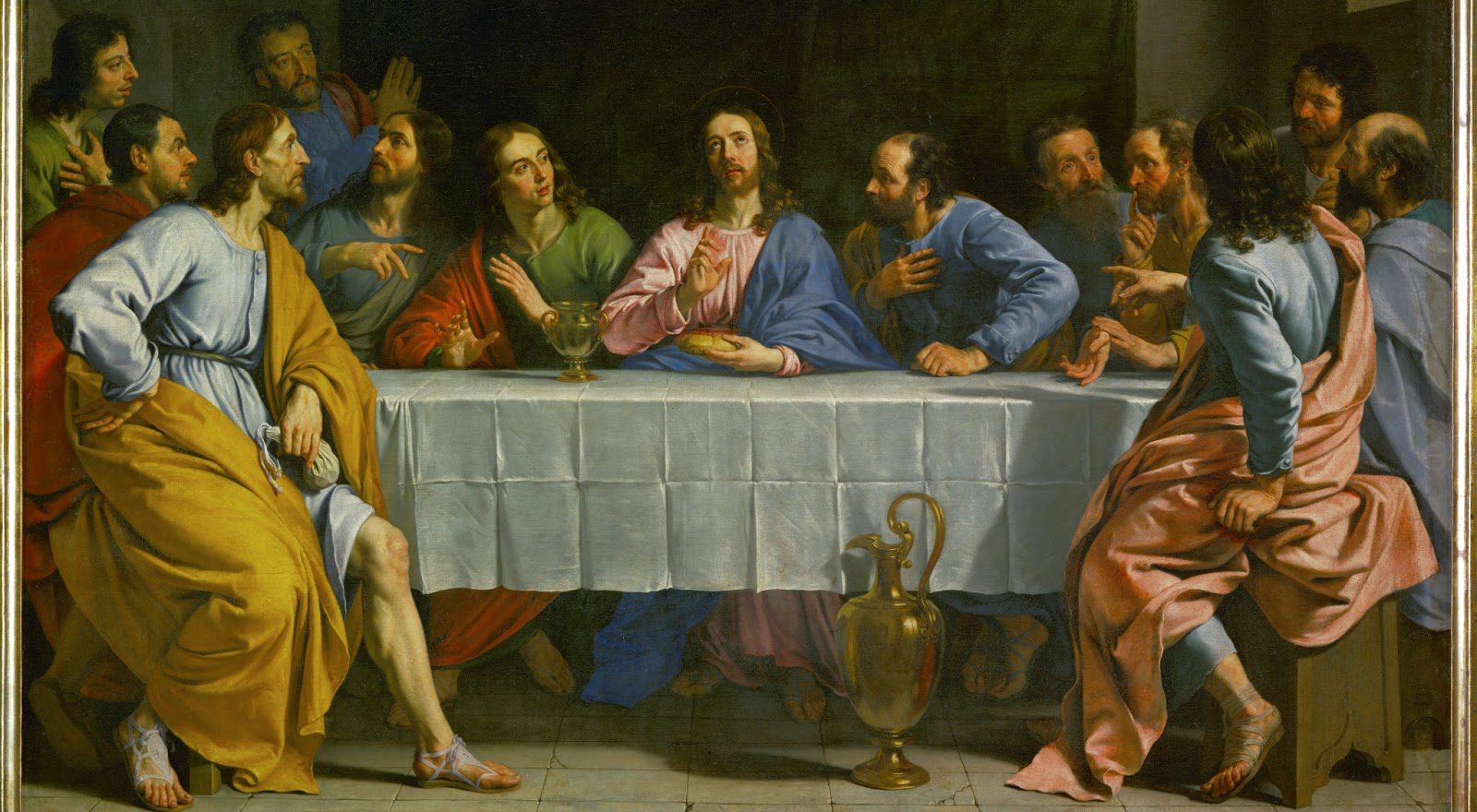
Today’s service begins with joy and triumph. However, with the reading of the Passion Gospel, we move to the events of Thursday and Friday of Holy Week. Suddenly, the mood is more mysterious. Our Lord celebrates the Passover with His disciples. This is the celebration of the people of Israel’s journey from slavery in Egypt to freedom in the Promised Land, passing through the Red Sea, and wandering for forty years in the desert. Jesus also blesses bread and wine and says, ‘This is My Body’ and ‘This is My Blood’, something which the Church continues to celebrate every day in the Eucharist.
After spending time in prayer with His disciples, Our Lord is arrested. He is charged with blasphemy, and brought for trial before the Roman Governor, Pontius Pilate. A few days earlier Jesus was hailed as the Messiah, the Saviour of the people, and now all the crowd can do is shout ‘Let him be crucified!’. A joyous public have turned into a baying mob. Popular opinion can be very fickle. What is striking is that Christ remains silent:
‘But when he was accused by the chief priests and elders, he gave no answer. Then Pilate said to him, “Do you not hear how many things they testify against you?” But he gave him no answer, not even to a single charge, so that the governor was greatly amazed.’ (Mt 27:12-14)
Here Jesus is fulfilling the prophecy of Isaiah, regarding the Suffering Servant, where he declares:
‘He was oppressed, and he was afflicted, yet he opened not his mouth; like a lamb that is led to the slaughter, and like a sheep that before its shearers is silent, so he opened not his mouth.’ (Isaiah 53:7)
Our Lord’s silence speaks powerfully to the injustice of the situation. Pilate wants to release Jesus but is afraid that a riot might break out, so washes his hands of the situation, thereby condemning an innocent man. The Roman governor takes the easy way out, bowing to popular pressure. At a human level this is understandable, if rather weak. In contrast, Christ stands in silence, a model of humility and strength, submitting to death for love of us, and all humanity.
Humility is not a popular virtue these days, The world around us would have us be the exact opposite: full of ourselves, with a high opinion of our abilities. Ours is a society which is more and more characterised by the sin of selfishness. The individual is all that matters: me and what I want, is all that counts. At the root of all this is pride, thinking that we are more important than we are, making ourselves the focal point. In contrast, as Christians we need to put God at the centre of things, and learn to be thankful. To quote from Fulton Sheen:
Gratitude is characteristic only of the humble. The egotistic are so impressed by their own importance that they take everything given them as if it were their due. They have no room in their hearts for recollection of the undeserved favours they have received. [On Being Human, 1982: 325]
As people of faith, we need to adopt the mind of Christ. That means embracing a way of thinking that is devoted to love and the service of God. Christ doesn’t just do what He wants to. Instead everything that He says and that He does is in service to the will of God the Father. Jesus prays in the Garden of Gethsemane for the strength to do God’s will. He demonstrates humility and obedience in action: embracing the most degrading death possible, for love of us. Thus, we should love Jesus. We should worship Him, because He is God, and He loves us. The Saviour of the World scorns majesty. Instead, He embraces shame and sin, total utter humiliation, to save us. Jesus does this to heal the wounds of disobedience and division, so that we might have life with Him for ever. This is why Jesus is willing to take on our human frailty and to redeem us through His suffering. Through His vulnerability, He shows the World that God’s ways are different from ours. His is the example we are called to follow — the way of suffering love and humility.
And so, my brothers and sisters in Christ, today, and in the coming week, we see what God’s Love and Glory are really like. It is not what people expect. This is power shown in humility, strength in weakness. As we continue our Lenten journey in the triumph of this day, and look towards the Holy and Life-giving Cross and beyond to the new life of Easter, let us trust in the Lord. Let us be like Him, so that He may transform our hearts, our minds, and our lives, allowing us to experience life in all its fullness. Through God the Father, God the Son, and God the Holy Spirit, Duw Dad, Duw Y Mab, a Duw yr Ysbryd Glân. To whom be ascribed all glory, dominion, and power, now and forever. Amen.


 Novus Motus Oxoniensis