Christ the King 2025

‘God’s weakness is stronger than human strength.’

‘gwendid Duw yn gryfach na chryfder dynol.’ (1Cor 1:25)

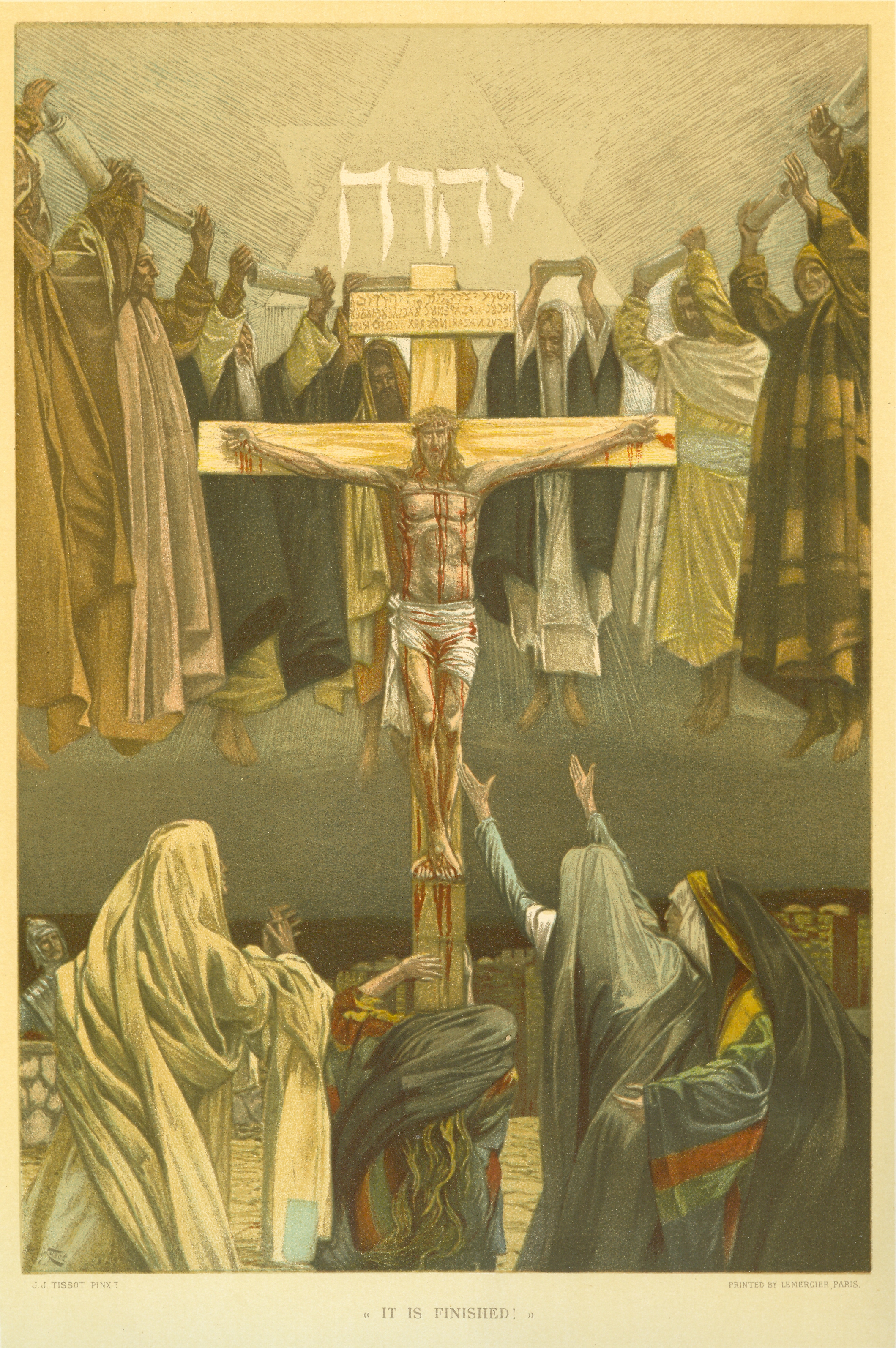
On November 23rd 1927 the Mexican Jesuit priest Fr Miguel Pro SJ was arrested on false charges and placed in front of a firing squad. He refused a blindfold and spread his arms out into the shape of a cross. His last words were: ‘¡Viva Christo Rey!’ ‘Long live Christ the King!’. The Mexican regime of that time was cruel and went out of its way to persecute Christians, including thirty-six year old Miguel Pro, a twentieth century Christian martyr who died confessing Christ’s sovereignty over all things. His words are both powerful and inspiring. When we acknowledge Christ as King we are saying that He is above all human power and authority. We are affirming that God is supreme. As Christians, our primary allegiance is to God alone, and not to the things of this world. To proclaim Our Lord as King of Heaven and Earth will always challenge and trouble those who lay claim to an authority and a power which is not their own. There are plenty of examples in the world around us of those who are unwilling to recognize a power greater than themselves. 

Christians profess the sovereignty of God primarily on the basis of the Crucifixion of Our Lord and Saviour Jesus Christ. We worship a Crucified God. This should strike us as something strange and disconcerting. At one level it doesn’t quite make sense, and yet it does. St Paul expresses the paradox at the heart of the Christian Faith in his First Letter to the Corinthians:

‘For God’s foolishness is wiser than human wisdom, and God’s weakness is stronger than human strength.’ (1Cor 1:25)

God is doing something amazing, which we cannot fully comprehend, or understand. This is because it is the mystery of God’s love. This is a love which we can never fully understand but it is something that we can experience in our lives.

Today’s Gospel is from St Luke’s account of the Crucifixion. It begins with Jesus being mocked by religious leaders: 

“He saved others; let him save himself, if he is the Christ of God, his Chosen One!” (Lk 23:35)

They demand action — that Jesus saves Himself — because they have completely misunderstand Our Lord’s mission, which is not to save Himself, but to save others. The Roman soldiers then join in and mock Christ saying:

“If you are the King of the Jews, save yourself!” (Lk 23:37)

In these words, power has been conflated with self-interest. Jesus, however, is not interested in saving Himself, but rather in saving us. He is the King of the Jews, born in Bethlehem of the line and lineage of David. And here Christ, in saving humanity, is doing what a proper King does: caring for His people, even at the cost of His own life. While the soldiers are mocking Jesus, they are actually proclaiming Him as a King. 

One of the men crucified with Jesus asks:

“Are you not the Christ? Save yourself and us!” (Lk 23:39)

This man has been condemned to death for acts of robbery and rebellion, and he is only able to understand the Messiah in political terms. He is looking for a revolutionary leader, who can save him. This causes the other man being crucified to rebuke the first one, saying:

“Do you not fear God, since you are under the same sentence of condemnation? And we indeed justly, for we are receiving the due reward of our deeds; but this man has done nothing wrong.” (Lk 23:40-41)

This second man understands that Jesus is innocent. This leads to one of the most memorable interactions in Luke’s Gospel, a demonstration of faith followed by its reward:

And he said, “Jesus, remember me when you come into your kingdom.” And he said to him, “Truly, I say to you, today you will be with me in Paradise.” (Lk 23:42-43)

This man does not ask to be saved. He simply requests that Jesus keep him in mind, when He comes into His Kingdom. Christ immediately grants his request. The condemned man’s recognition of Jesus’ Kingship is rewarded with the promise of eternal life with God in Heaven. Here, in two sentences, we see salvation and redemption at work. Jesus’ death saves people — starting with the condemned man. That is what Christ’s kingship is all about: bringing healing and the forgiveness of sins to all who turn to Him in faith. 

We worship a Crucified God. One who suffers and dies for us, to offer us eternal life in Him. This is true kingship, shown in self-sacrificial love. Christ is the Good Shepherd, who lays down His life for His sheep. He wants to save others, because He is the Messiah, and He is God saving his people. The Hebrew for Jesus is Yeshua and means ‘God saves’. Here on the Cross Jesus fulfils His destiny: this is who and what He is. God saves His people by dying for them. This is real kingship — not robes, or power, but love — dying the death of a common criminal. It doesn’t make sense, and it isn’t supposed to. God’s ways are not our ways, nor His thoughts our thoughts. We cannot save ourselves. Only God can do that, in an act of generous love; an extravagant and exuberant gift that we can neither earn nor repay.

In the reading from St Paul’s Letter to the Colossians, we hear both what God has done for us, and who Christ is. God has qualified us to share in the inheritance of the saints in light. We are able to go to Heaven because we have been delivered from darkness, into the kingdom of God’s beloved Son. In Christ we have redemption and forgiveness. Jesus has paid the debt we owe; our sins are forgiven. We do not need to slaughter lambs and be sprinkled with their blood, because we have been sprinkled with the Blood of the Lamb of God in our Baptism. We are redeemed, and our transgressions are forgiven, because of what Christ does for us on the Cross. This is the heart of our faith: Jesus died for us, because He loves us. 

In Christ we see that God loves us. He created all that is, therefore things are subject to Him. He is the head of His Body, the Church, of which we are a part through our baptism, and our participation in the Eucharist. As the firstborn from the dead, Christ, in His Resurrection, shows us that death is not the end.

This is the God we worship, and whom we hail as our true King: the God of love and healing. Christ has conquered on the Cross; Christ reigns as King of the Universe; Christ reigns in our hearts, and in our lives. May we then lift our hearts and voices to sing the praises of our Divine King: God the Father, God the Son, and God the Holy Spirit, Duw Dad, Duw y Mab, a Duw yr Ysbryd Glân. To whom be ascribed all might, majesty, glory, dominion, and power, now and forever. Amen.

Trinity 17 [28th of Year C]

One of the arms of the River Cleddau which flows into the sea at Aberdaugleddau (Milford Haven) has its source near here in the Preseli Hills. The other flows from Llygad Cleddau, a few miles from here. These two rivers join together and flow through the County of Pembrokeshire and form one of the deepest natural harbours in the world. It is therefore fitting that I am travelling from the sources of the rivers to their estuary. Rivers flow from their springs to the sea. They provide us with water, and a means of transport. Historically, both were important, they transported Bluestones towards Stonehenge in Wiltshire, and brought Vikings, Normans and Flemings who have all left their mark on this county.

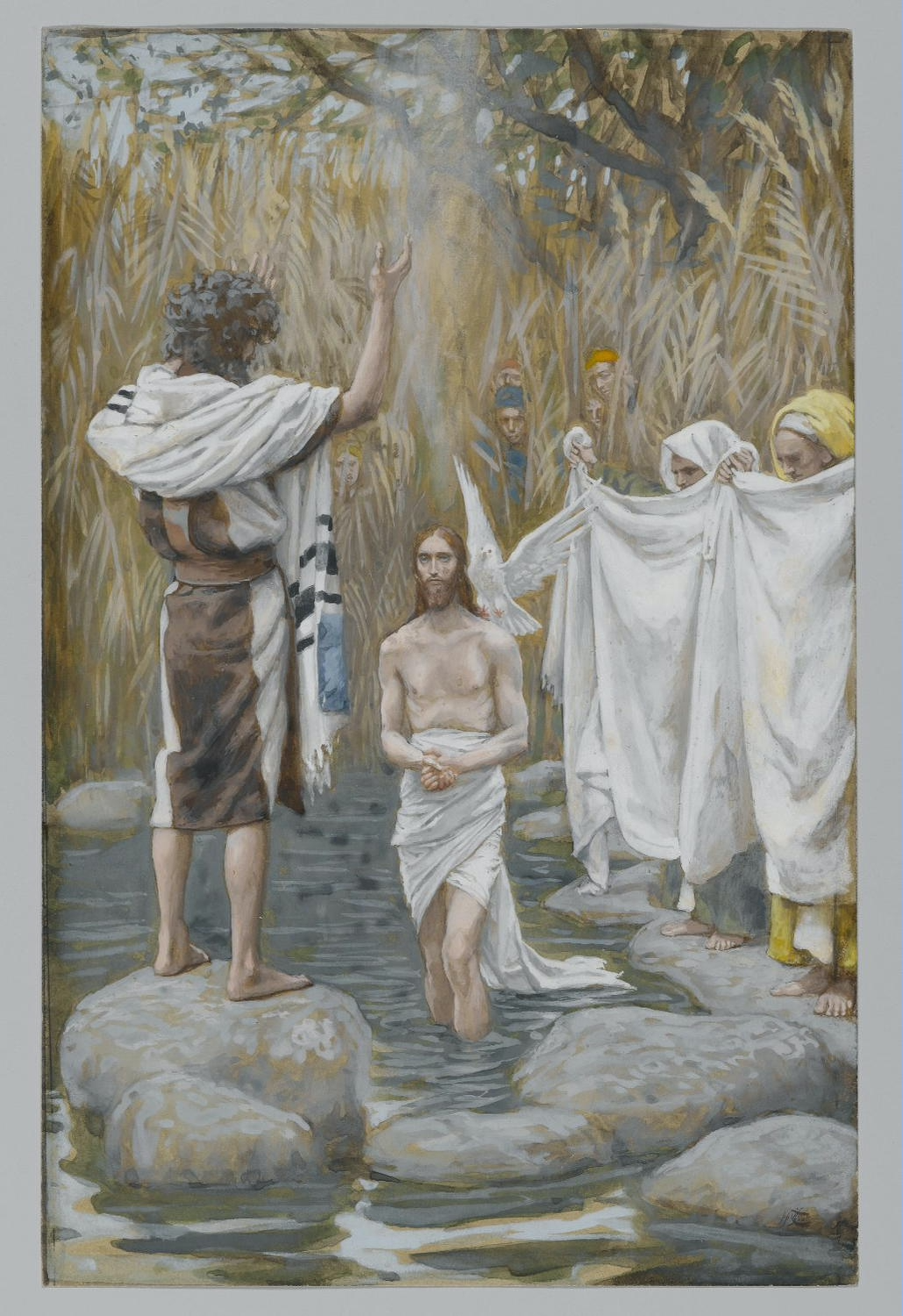
Sources of water have been important in our religious history. Ffynnon Fair, St Teilo’s Well, and Bernard’s Well would all have provided water for baptism, just as the stream is still used at Rhydwilym. Baptism is how we enter the Church, it is how we become members of the Church. Not through paying fees, but by sharing in Christ’s Baptism, His Death and Resurrection, and looking forward to eternal life with Him in Heaven. Water is poured in the name of the Father, the Son, and the Holy Spirit, and we are washed clean, and grafted into the Body of Christ. An act so simple, and yet so profound, which lies at the heart of who and what we are as Christians. Baptism is a Sacrament, an outward and visible sign of an inward and spiritual grace, by which we become united with Christ in this world and the next.

In our first reading this morning from the Second Book of Kings we meet Naaman, the commander of the Syrian army. He has been afflicted with leprosy, and he hears that there is a prophet in Samaria who can cure him. He writes to the King of Israel, to ask for the prophet to heal him. The King of Israel thinks that it is a trick, an excuse for the Syrians to start a war against Israel. The prophet Elisha reassures the king, and asks for Naaman to be sent to him. Elisha tells Naaman to wash seven times in the River Jordan. Naaman can’t quite believe his ears. He’s angry. This isn’t what healing is all about, it is far too simple, too easy. The point isn’t about having to do something difficult, but rather in letting God do something wonderful.


Eventually Naaman listens, and is obedient, and is healed. He goes back to Elisha to say that, ‘Dyma fi’n gwybod yn awr nad oes Duw mewn un wlad ond yn Israel’ ‘Behold, I know that there is no God in all the earth but in Israel’(v.15) Naaman is grateful, and comes to believe in God. The mention of washing in the Jordan reminds us of Baptism, how we were washed clean from sin, and given new life in Christ Jesus, sharing His Death and Resurrection, a sign of God’s generous love towards us. 


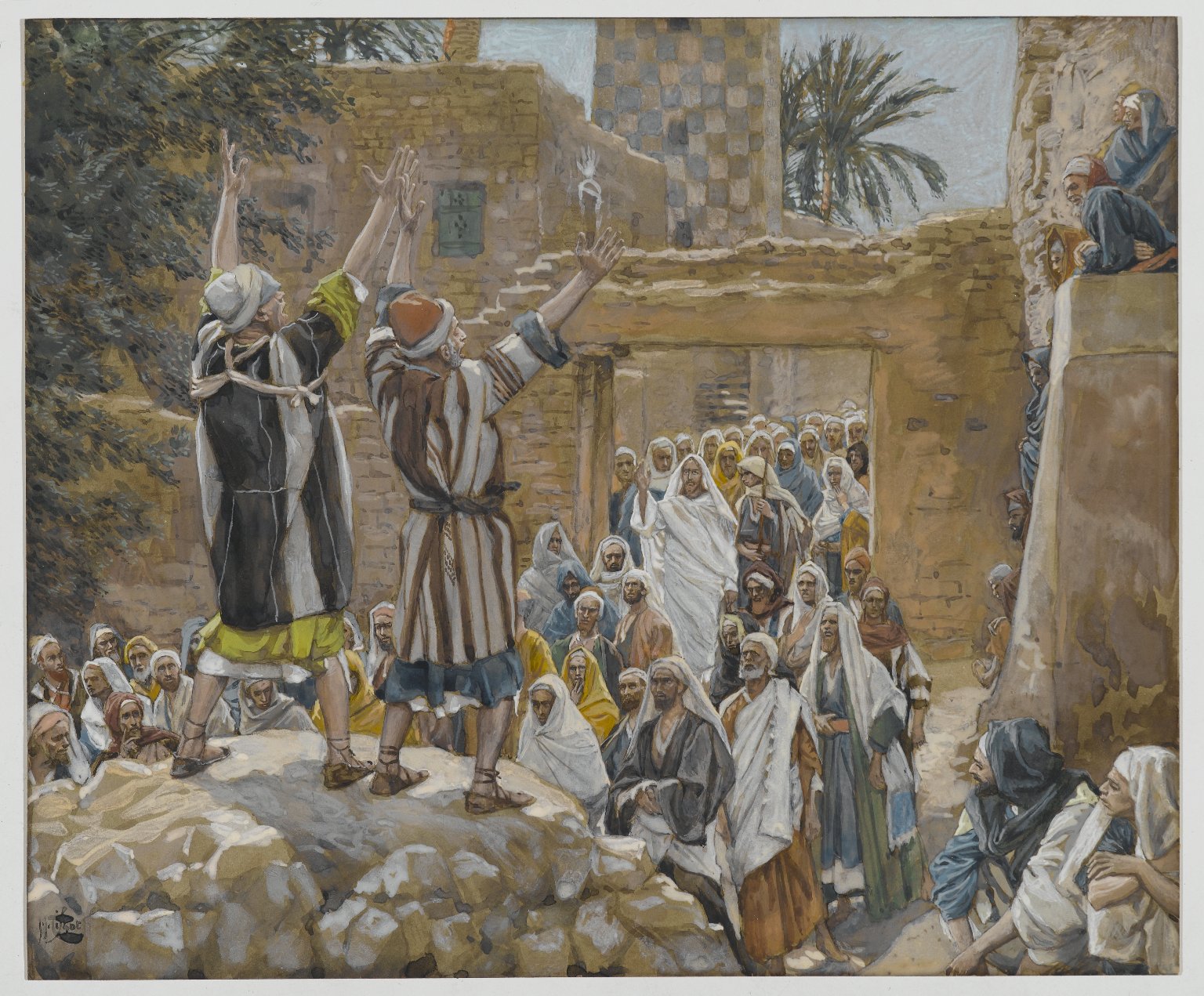
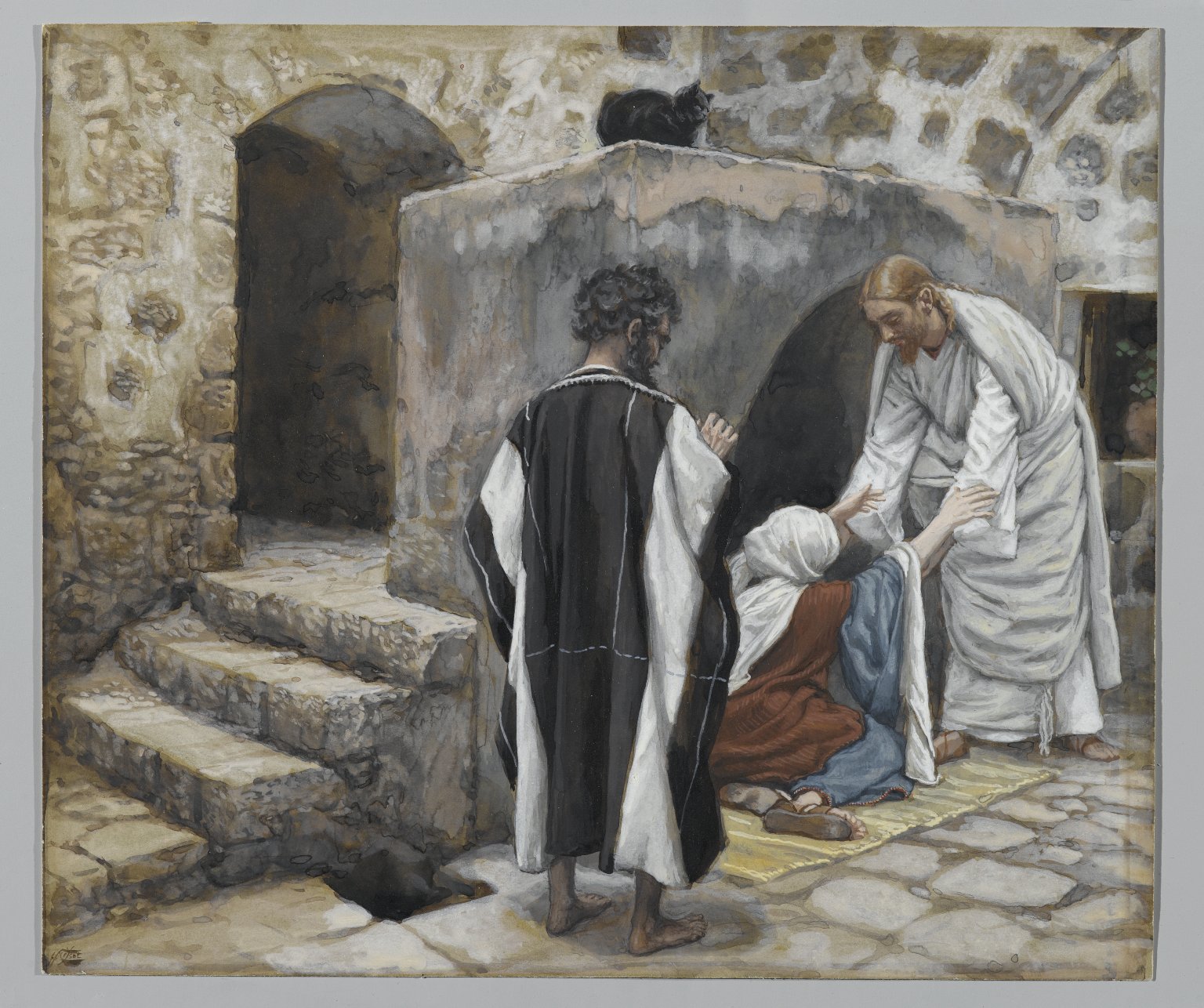
In this morning’s Gospel Jesus is in border country. He is in an uncomfortable place, heading towards Jerusalem, towards His Passion and Death. Ten people suffering from leprosy see Him, and cry, ‘Iesu, feistr, trugarha wrthym’ ‘Jesus, Master, have mercy on us’. Jesus tells them to go and show themselves to a priest, to prove that they are now clean and are no longer outcasts. Jesus complies with the law of Moses in Leviticus. The law commands them to sacrifice in order to be healed. Christ heals them, so that God might be glorified.


One of them returns to say, ‘Thank you’. The leper thanks God, and falls at Jesus’ feet. He shows gratitude. We wouldn’t want to live in a world where no-one said, ‘Thank you’. Thanksgiving is the heart of prayer, it’s why we celebrate Harvest in Autumn. We thank each other, but most importantly we thank God for what He has done for us. Thanksgiving goes hand in hand with faith, what we believe, and where we put our trust. As I prepare to bid you farewell, I give thanks to Almighty God for you, His people, and all that the last seven years have been. It has been a pleasure and a privilege to know you, to love you, to pray for and with you, and to serve you.


As Christians we thank God for many things, but first and foremost for what He has done in His Son, Jesus Christ, who died for us. This is why we celebrate the Eucharist, because Jesus told us to, and so that we might be fed with His Body and Blood. Not because we have earned it, certainly not because we deserve it, but so that we, like the lepers in Gospel, might be healed by Jesus. It is medicine for our sick souls, not a gold star or a prize for the righteous. Christ gives himself for us not because we are worthy, but so that we might BECOME worthy through Him. God loves us. He longs to heal us, and to reconcile us, to Himself, and each other. This is what the Church is for: to extend the saving work of God through both space and time.

Salvation is God’s work not ours, as Naaman and the lepers show us. God in Christ saves us and heals us. He dies for us, and rises again so that we might share His Risen life. This is true generosity. And we can receive God’s healing love here and now. We can prepare to be transformed into His likeness, by His Body and Blood, which cures not only lepers, but our sin-sick souls. So let us be thankful to God, for all that he has done for us. For giving us His Son, to bring about healing, to show mercy, to strengthen our faith. And may we follow Christ, and walk His Way of the Cross, enduring whatever sufferings come our way, with the assurance of God’s love and help.

Remember that Christ will never abandon us. His words are true. His promise is faithful:

‘os dyfalbarhawn, cawn deyrnasu hefyd gydag ef; …os ydym yn anffyddlon, y mae ef yn aros yn ffyddlon, oherwydd ni all ef ei wadu ei hun.’ ‘if we endure, we will also reign with Him …. if we are faithless, He remains faithful — for he cannot deny himself’ (2Tim 2: 12-13) 

As Christians, let us follow where Christ has gone before. Let us be confident in His promises, nourished with His Body and Blood. Let us turn from the shadows and images of this world, into the light of His Truth, who is the Truth, the Way, and the Life. And let us proclaim that truth to the world so that it may come to believe and give glory to Duw Dad, Duw y Mab, a Duw yr Ysbryd Glân. God the Father, God the Son, and God the Holy Spirit. I’r hwn y priodoler pob gogoniant, arglwyddiaeth, a gallu, yn awr, ac yn oes oesoedd. To whom be ascribed all glory, dominion and power, now and forever. Amen

Diolch yn fawr!

James Tissot The Healing of Ten Lepers (Guérison de dix lépreux) Brooklyn Museum

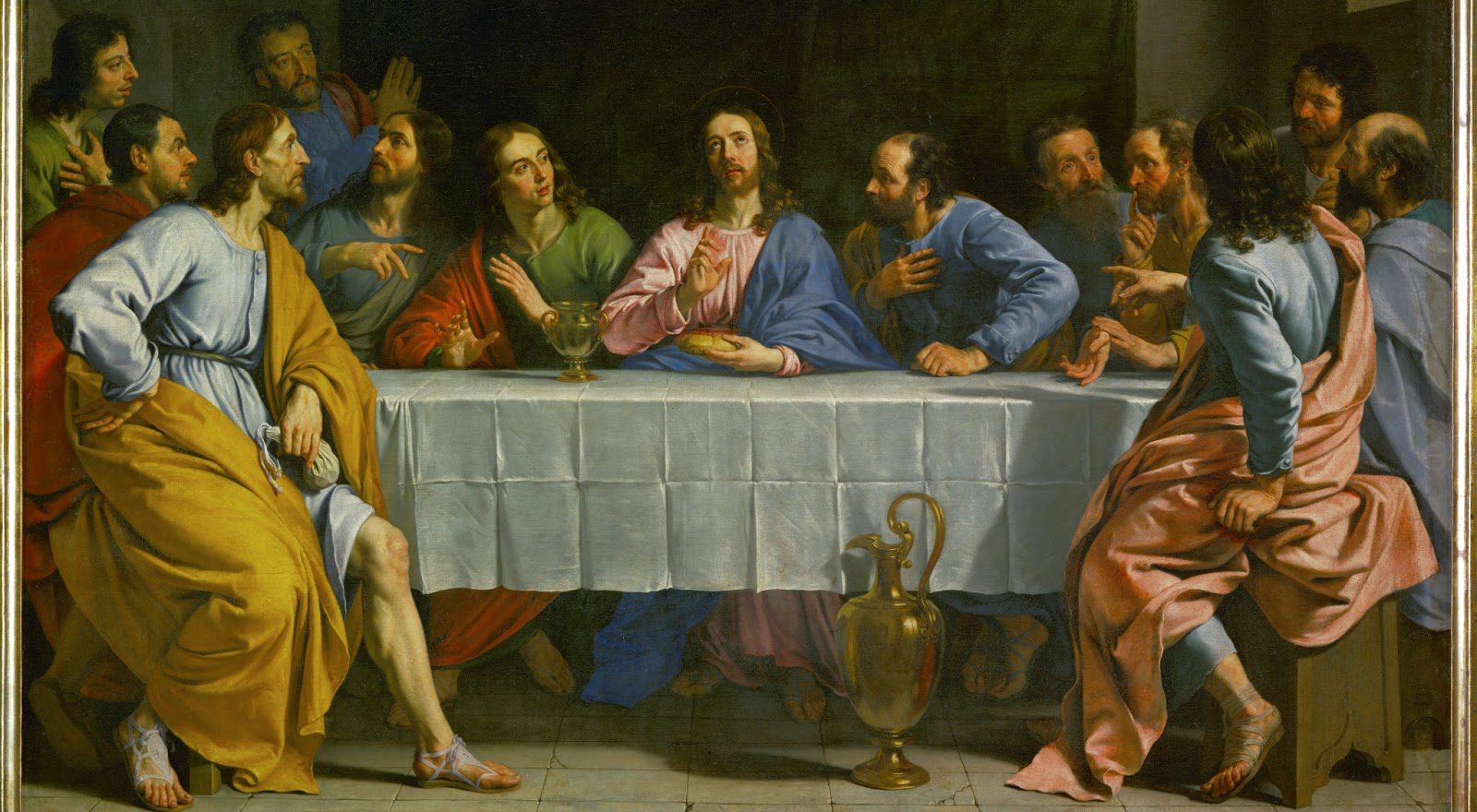
Trinity XI: Come to the Banquet

Organising seating plans for a banquet is not something most of us have a great deal of experience doing. Most of our dining nowadays is not that formal. The closest we might come is organising the seating at a Wedding Breakfast. So it is difficult for us to understand quite how important seating arrangements at dinner were in the Ancient World. Where you sat mattered. Where you were seated was signified by your rank in society, with the most important placed next to the host. This morning’s Gospel begins with Jesus having been invited to a Friday night dinner, the most important meal in the Jewish week, by a senior Pharisee. Luke’s comment is instructive:

‘ac yr oeddent hwy â’u llygaid arno’

‘they were watching him closely’ (Lk 14:1)

Jesus is on display. He is being studied by all those present at the dinner — presumably other leading Pharisees. They want to see if Our Lord will do, or say, something that they can find fault with. They are keen to catch Him out, in order to criticise Him. Jesus uses this experience as a teaching opportunity:

‘Yna adroddodd ddameg wrth y gwesteion, wrth iddo sylwi sut yr oeddent yn dewis y seddau anrhydedd’

‘Now he told a parable to those who were invited, when he noticed how they chose the places of honour’ (Lk 14:7)

The self-important dinner guests are all trying to get as close to the host as possible. They want the best places, the best food, and to be seen as being superior. So Jesus tells the following parable:

“Pan wahoddir di gan rywun i wledd briodas, paid â chymryd y lle anrhydedd, rhag ofn ei fod wedi gwahodd rhywun amlycach na thi; oherwydd os felly, daw’r sawl a’ch gwahoddodd chwi’ch dau a dweud wrthyt, ‘Rho dy le i hwn’, ac yna byddi dithau mewn cywilydd yn cymryd y lle isaf. Yn hytrach, pan wahoddir di, dos a chymer y lle isaf, fel pan ddaw’r gwahoddwr y dywed wrthyt, ‘Gyfaill, tyrd yn uwch’; yna dangosir parch iti yng ngŵydd dy holl gyd-westeion.

“When you are invited by someone to a wedding feast, do not sit down in a place of honour, lest someone more distinguished than you be invited by him, and he who invited you both will come and say to you, ‘Give your place to this person’, and then you will begin with shame to take the lowest place. But when you are invited, go and sit in the lowest place, so that when your host comes he may say to you, ‘Friend, move up higher.’ Then you will be honoured in the presence of all who sit at table with you.” (Lk 14:8-1o)

In practical terms, what Jesus is advising is sensible, and wise, because it removes the possibility of losing face. To this day in the Middle East, and elsewhere, the situation envisaged in the parable would be seen as a source of shame, or honour, depending on whether you were promoted to a place near the host, or demoted to a more distant seat. We tend not to be so aware of such considerations, and many people instinctively gravitate towards the back. Christ’s parable makes the point that humility is better than pride: 

“Oherwydd darostyngir pob un sy’n ei ddyrchafu ei hun, a dyrchefir pob un sy’n ei ddarostwng ei hun.”

“For everyone who exalts himself will be humbled, and he who humbles himself will be exalted.” (Lk 14:11)

To have an attitude which does not seek out the place of honour contrasts strongly with the guests who have done exactly that. Our Lord is pointing out that humility is the better way.

Christianity is a religion of humility. It starts from the premise that we have to rely upon God’s grace to save us, through faith. God takes the initiative, and we respond. We do not save ourselves. The point of salvation is that God is the host who says: ‘Friend come up higher’. We do not deserve a seat of honour, nor have we thought ourselves worthy of it. Yet a loving and generous God says to all who turn to Him: ‘Friend come up higher’. This is the Good News of the Kingdom, and it turns our human expectations on their head. Jesus then develops His teaching: 

Meddai hefyd wrth ei wahoddwr, “Pan fyddi’n trefnu cinio neu swper, paid â gwahodd dy gyfeillion na’th frodyr na’th berthnasau na’th gymdogion cyfoethog, rhag ofn iddynt hwythau yn eu tro dy wahodd di, ac iti gael dy ad-dalu. Pan fyddi’n trefnu gwledd, gwahodd yn hytrach y tlodion, yr anafusion, y cloffion, a’r deillion; a gwyn fydd dy fyd, am nad oes ganddynt fodd i dalu’n ôl iti; cei dy dalu’n ôl yn atgyfodiad y cyfiawn.”

He said also to the man who had invited him, “When you give a dinner or a banquet, do not invite your friends or your brothers or your relatives or rich neighbours, lest they also invite you in return and you be repaid. But when you give a feast, invite the poor, the crippled, the lame, the blind, and you will be blessed, because they cannot repay you. For you will be repaid at the resurrection of the just.” (Lk 14: 12-14)

People were having parties to display their wealth, social status, and connections. This still happens today. But God has a different understanding of hospitality. In His vision it is not about what you get, but what you can give to others. Generosity is what really matters. By inviting those who cannot invite you back in return, you are being generous to those who are in no position to repay you. Jesus’ teaching here is also about the banquet of the Kingdom of God, the Eucharist. Jesus, as God, invites the poor, those in need of healing — in other words all of humanity, you and me — to the feast of the Kingdom. The purpose of the Eucharist is so that God can feed us, with His Body and Blood, to heal us. In this divine banquet God does for us what we cannot do for ourselves, and gives us a foretaste of Heaven. We cannot repay God, but we can be thankful, and accept what is offered, allowing it to transform us. 

Christ has an important and strong message for His host and his fellow diners. We see Our Lord advising them to be generous and not to seek any reward. Human Society is complex. The giving and receiving of gifts has always been a crucial part of how society works. It creates networks of obligation: if you give someone something, they may feel obliged to return the favour. That is fine in human terms, but when we transfer it to the divine realm we are faced with a problem. What can we give God? Does Our Heavenly Father need or want anything? No! Because God is by nature, perfect, complete, and self-sufficient. Almighty God cannot want or need anything. As a result of this God is able to give the purest form of gift, which does not require anything in return. There can be no obligation, because humanity cannot give Our Creator anything. God is able give without expecting anything in return. This is what happens in the Incarnation when Our Lord is given to and for us. Throughout His life and ministry, to His Passion, Death, and Resurrection all He is and does is for our benefit. God is generous to us, not so that we can be generous in return, but simply for our own good. Likewise our sacrifice of praise is not for God’s benefit, but ours, demonstrating that we are living the way we should: flourishing by being loving, generous, and thankful. 

Instead of the norms of human interaction and obligation, Christ presents us with a completely different paradigm. The dinner invitations in the Kingdom are for the ‘poor, the crippled, the lame, and the blind’ (Lk 14:13). That means us! God longs to lavish His riches upon us; to heal our wounds, and to restore our sight. In turn, by our care for those who are weak, outcast, or deemed socially undesirable, we proclaim the Kingdom of God in our actions. Each one of us is called to the banquet here and now, in order that our souls may be nourished with Word and Sacrament. The Eucharist is the banquet of the Kingdom, which heals us, and transforms us more and more into God’s likeness.

God gives Himself, so the we might live in Him. This is true generosity — a generosity which expects nothing in return. Christ is the model of humility and loving service that we should imitate. Jesus takes the lowest place, bearing the weight of our sin, on the Cross. There He dies that we might live. There He dies to make us free.

Therefore, may we, in humility, recognise our need of God, and respond to His invitation to the Divine banquet. We pray that God will heal us, restore us and strengthen us to live lives of humility and love. In response we give thanks and sing the praises of God, Duw Dad, Duw y Mab, a Duw yr Ysbryd Glân. God the Father, God the Son, and God the Holy Spirit. I’r hwn y priodoler pob gogoniant, arglwyddiaeth, a gallu, yn awr, ac yn oes oesoedd. To whom be ascribed all glory, dominion and power, now and forever. Amen

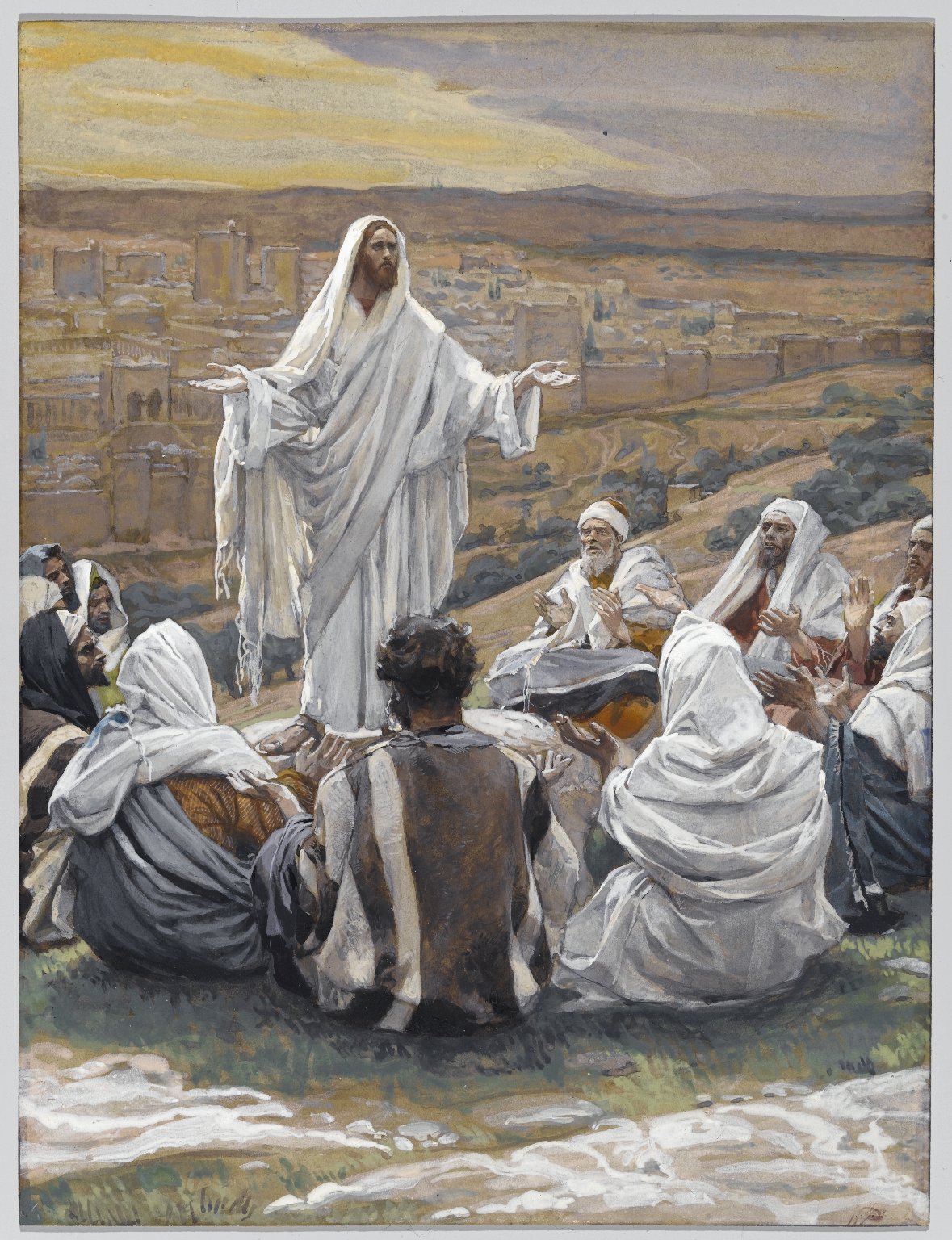
Trinity VI – Lord teach us how to pray

If I were to ask you if you could recite a text off by heart you might regale me with a poem, a passage from a book, or a speech from Shakespeare learned at school. If I then asked whether you knew any prayers off by heart you would probably say ‘The Lord’s Prayer’, ‘Y Gweddi’r Arglwydd’. Even if they do not know all the words, most people have heard the Lord’s Prayer. It is an important part of our Christian heritage.

Our readings this week focus on prayer. Christians know that God answers prayer. However, God may say, ‘Yes’ or ‘No’ or even ‘Not yet’. We may not like the answer, but one will be forthcoming. Prayer is both simple and mysterious. Simple, insofar as it is our conversation with the divine. Mysterious, in the fact that prayer changes us, and not the Almighty. So prayer is something of a paradox, being at the same time quite straightforward and also an enigma. We pray to God, but prayer doesn’t change God, it changes us. Pagans in Greece and Rome would bargain with their gods: if you do this for me, I will give you that. Jews and Christians, however, are profoundly different. We do not bargain with God, and we do not need to, because we are in a covenant relationship with our Heavenly Father who loves us.

It would be all too easy to see this morning’s first reading, where Abraham tries to save Sodom and Gomorrah, as being concerned with bargaining with God. However, prayer does not work in that way. What the reading from Genesis shows us is that we are in a covenant, a relationship with God, and that God is generous and loving. He wants the best for us.

The American Bishop Fulton J. Sheen summed it up as follows:

‘Prayer is helplessness casting itself on Power, infirmity leaning on Strength, misery reaching to Mercy, and a prisoner clamouring for Relief.’ Life Is Worth Living, Second Series (New York, 1954), p. 213.

In today’s Gospel the disciples ask Jesus:

“Arglwydd, dysg i ni weddïo, fel y dysgodd Ioan yntau i’w ddisgyblion ef.”

‘Lord teach us to pray, just as John taught his disciples’ (Lk 11:1).

Jesus and John the Baptist were cousins. They both preached about the need for both repentance and belief in the Good News. Also, they both taught their disciples how to pray. Virtually all Christian prayer can be described by one or more of four phrases: ‘please’, ‘thank you’, ‘I’m sorry’, and ‘I love you’. God does not need our prayers, we do. This is because praying allows us to open our hearts and lives to God, allowing Him to change us. Jesus answers His disciple’s request to teach them how to pray as follows:

Ac meddai wrthynt, “Pan weddïwch, dywedwch: ‘Dad, sancteiddier dy enw; deled dy deyrnas; dyro inni o ddydd i ddydd ein bara beunyddiol; a maddau inni ein pechodau, oherwydd yr ydym ninnau yn maddau i bob un sy’n troseddu yn ein herbyn; a phaid â’n dwyn i brawf.’” 

He said to them, ‘Say this when you pray: ‘“Father, may your name be held holy, your kingdom come; give us each day our daily bread, and forgive us our sins, for we ourselves forgive each one who is in debt to us. And do not put us to the test.”’  (Lk 11:2-4)

The version of Jesus’ words we are most familiar with is that found in Matthew’s Gospel, which is slightly longer than Luke’s prayer. But both contain the same elements. The prayer begins by calling God, ‘Abba’ ‘Father’ ‘Tâd’. Such a term expresses our close relationship with our Creator. The idea that God’s name should be kept holy goes hand in hand with the desire that God’s Kingdom may come. Christianity is all about the establishment of the Kingdom of God: that God may rule over our hearts and our lives.

Next, we ask God to feed us, to forgive us our sins, as we forgive those who sin against us, and to free us from temptation. It is important to note that every celebration of the Eucharist begins with us all acknowledging our own shortcomings and asking God’s forgiveness. Saying sorry to God is important, because it keeps us humble, and helps to maintain our relationship with God, and with each other. We all make mistakes, you do, I certainly do. Recognizing this is the start of a process which allows us to grow in virtue and holiness, through God’s love. The high point of the Eucharist is when God feeds us with His Body and Blood, providing us with spiritual food to nourish our souls. All our food is a gift from God, and being thankful for it, just like being humble, helps to keep us close to God. If you don’t already do so, try to get into the habit of saying a few words of thanks to God before you eat a meal.

There are good reasons why Christians regularly pray this prayer, which we call The Lord’s Prayer, Y Gweddi’r Arglwydd. Jesus has told us how to pray and gave us these words. Similarly, we celebrate the Eucharist because Jesus told us to ‘do this in memory of Him’ and so we do. We use the Lord’s Prayer when we pray, because it honours God, and it forms us as Christians. We will soon pray it together before Communion, asking that God will continue the process of transforming us day by day into His image and likeness. 

In the Gospel reading Jesus continues to teach His disciples using parables. In this narrative, there is a late-night hospitality emergency. A friend is on a journey (just like Jesus and His disciples), and arrives at your home (just like Jesus visited Mary and Martha last week). Naturally you want to be hospitable as a sign of your friendship. So, you pop round to a next door and ask to borrow some food. However, the initial response you receive from your neighbour is not very positive:

‘Paid â’m blino; y mae’r drws erbyn hyn wedi ei folltio, a’m plant gyda mi yn y gwely; ni allaf godi i roi dim iti’, rwy’n dweud wrthych, hyd yn oed os gwrthyd ef godi a rhoi rhywbeth iddo o achos eu cyfeillgarwch, eto oherwydd ei daerni digywilydd fe fydd yn codi ac yn rhoi iddo gymaint ag sydd arno ei eisiau.’

“Do not bother me. The door is bolted now, and my children and I are in bed; I cannot get up to give it you.” I tell you, if the man does not get up and give it him for friendship’s sake, persistence will be enough to make him get up and give his friend all he wants. (Lk 11:7-8)

Jesus shows that, despite the neighbour not wanting to get up and be bothered with the request for food, because the person is persistent and stays there, disregarding the initial reluctance, his request is granted. Perseverance is rewarded. The point Our Lord is making is that God hears our prayers and answers our requests. We might need to ask more than once, and commit time to prayer, but we will not be ignored.

‘Ac yr wyf fi’n dweud wrthych: gofynnwch, ac fe roddir i chwi; ceisiwch, ac fe gewch; curwch, ac fe agorir i chwi. Oherwydd y mae pawb sy’n gofyn yn derbyn, a’r sawl sy’n ceisio yn cael, ac i’r un sy’n curo agorir y drws.’

‘So I say to you: Ask, and it will be given to you; search, and you will find; knock, and the door will be opened to you. For the one who asks always receives; the one who searches always finds; the one who knocks will always have the door opened to him.’ (Lk 11:9-10)

The phrase ‘knock, and the door will be opened to you’ ‘curwch, ac fe agorir i chwi’ reinforces the teaching in the parable. The neighbour opens the door and gives the requested provisions. Jesus then develops His teaching, by drawing a comparison between the lesser and the greater. This is a common rabbinic practice:

‘Os bydd mab un ohonoch yn gofyn i’w dad am bysgodyn, a rydd ef iddo sarff yn lle pysgodyn? Neu os bydd yn gofyn am wy, a rydd ef iddo ysgorpion? Am hynny, os ydych chwi, sy’n ddrwg, yn medru rhoi rhoddion da i’ch plant, gymaint mwy y rhydd y Tad nefol yr Ysbryd Glân i’r rhai sy’n gofyn ganddo.’

‘What father among you would hand his son a stone when he asked for bread? Or hand him a snake instead of a fish? Or hand him a scorpion if he asked for an egg? If you then, who are evil, know how to give your children what is good, how much more will the heavenly Father give the Holy Spirit to those who ask him!’ (Lk 11:11-13)

The Good News of the Kingdom is that God answers prayer. Not only that, but He gives us more than we ask Him for. God also grants us the Holy Spirit. This is an important concept in the wider narrative of Luke’s Gospel and the Acts of the Apostles, where the Church is filled with God’s Spirit. God answers prayer because He is our Creator, and we are in a special relationship with Him. In today’s Old Testament reading God listens to Abraham’s pleas for mercy and then grants them. 

Turning to St Paul’s Letter to the Colossians, the apostle can proclaim baptism as the way to salvation, because this enables us to share in Christ’s Death and Resurrection, and the forgiveness of our sins:

‘Y mae wedi ei bwrw hi o’r neilltu; fe’i hoeliodd ar y groes.’ 

‘he has done away with it by nailing it to the cross’ (Col 2:14)

God cancels our debt by paying it Himself, overcoming evil and sin through an outpouring of healing love. This is the demonstration that God loves us and hears our prayers, and so we continue to remember the Passion through our celebration of the Eucharist. God forgives our sins, and gave His life for us, nailing our sins to the Cross. He suffered in His flesh so that we who have died with Christ in our baptism may also share His risen life. That is why Jesus can assure us that God listens to our prayers and answers them, giving us the good things we need.

My brothers and sisters in Christ, through practising both prayer and action, may we be agents of God’s love and grace in the world. May we transform our homes, our communities, and the whole world. Filled with God’s generous love, compassion and forgiveness, let us give glory to God, Duw Dad, Duw y Mab, a Duw yr Ysbryd Glân. God the Father, God the Son, and God the Holy Spirit. I’r hwn y priodoler pob gogoniant, arglwyddiaeth, a gallu, yn awr, ac yn oes oesoedd. To whom be ascribed all glory, dominion and power, now and forever. Amen.

James Tissot – The Lord’s Prayer [Brooklyn Museum]

Trinity IV – The Good Samaritan

This year I have re-kindled my love of reading fiction. I have been introduced to some new authors by books lent to me by friends and neighbours or recommended by my wife. Taking time to lose yourself in a good book is one of life’s greatest (and cheapest) pleasures. Everybody loves a good yarn. Stories are also a useful way to make a point and to convey a deeper truth about human nature. They help us to understand who we are and how we should live. As Jesus travels from Galilee to Jerusalem He teaches, using parables, vivid stories we know and love. As I said, everyone likes to hear a good yarn, but the parables are much more than that. Jesus uses parables to explain the Kingdom and His Mission — who He is, and what He is doing — so that His followers can understand and share that knowledge with others.

In today’s Gospel, Our Lord encounters a legal expert. This lawyer wants to put Jesus to the test, to check whether what He says is acceptable under Jewish religious law. This man of the law asks Him: 

“Athro, beth a wnaf i etifeddu bywyd tragwyddol?”

“Teacher, what shall I do to inherit eternal life?” (Lk 10:26)

Jesus replies by asking the lawyer to tell Him what is written in the Law, and questions how, as a legal expert, he interprets it. The man replies, by reciting scripture:

‘Câr yr Arglwydd dy Dduw â’th holl galon ac â’th holl enaid ac â’th holl nerth ac â’th holl feddwl, a châr dy gymydog fel ti dy hun.’

“You shall love the Lord your God with all your heart and with all your soul and with all your strength and with all your mind, and your neighbour as yourself.” (Lk 10:27)

The first part of the lawyer’s answer is a quotation from the book of Deuteronomy (6:5), part of the Shema, a Jewish declaration of faith in God, which begins ‘Hear, O Israel: the Lord our God is one’. The second part is a quotation from Leviticus (19:18). This summary of the Law outlines humanity’s duty both towards God and also towards our neighbours. This legal expert understands how he should behave, and how he should live his life. He has basically repeated Jesus’ teaching word-for-word. So far, so good. The lawyer then asks Our Lord another question:

‘Ond yr oedd ef am ei gyfiawnhau ei hun, ac meddai wrth Iesu, “A phwy yw fy nghymydog?”’

‘But he, desiring to justify himself, said to Jesus, “And who is my neighbour?”’ (Lk 10:29)

The lawyer wants to legitimise himself, and so he asks Jesus to define his terms. In a legal argument, this is a typical response. However, the lawyer’s motives are questionable. He is interested in self-justification, in making himself look good. Our Lord is happy to answer, and does so with a parable: The Parable of the Good Samaritan. This well-known story is set on road from Jerusalem to Jericho. Despite being a major route, it is steep and windy (a bit like some of the roads around here!), dropping over three thousand feet in seventeen miles. The road takes a traveller through lots of empty desert land, where bandits made a living robbing travellers. The sight of someone who has been attacked and robbed was probably not an unusual one along this route. 

In the parable, a priest and a Levite pass by one such victim, crossing to the other side as they do not wish to become ritually impure. Under Jewish law, if they touched a dead body, they would become unclean, and unable to offer sacrifice and worship in the Temple until they had been ritually cleansed. Rather than risk this, these Temple officials assume that the man is dead and simply pass on by. Soon afterwards another traveller sees the man who has been attacked:

‘Ond daeth teithiwr o Samariad ato; pan welodd hwn ef, tosturiodd wrtho. Aeth ato a rhwymo ei glwyfau, gan arllwys olew a gwin arnynt; gosododd ef ar ei anifail ei hun, a’i arwain i lety, a gofalu amdano.’

‘But a Samaritan traveller who came upon him was moved with compassion when he saw him. He went up and bandaged his wounds, pouring oil and wine on them. He then lifted him on to his own mount, carried him to the inn and looked after him.’ (Lk 10:33-34)

Samaritans and Jews generally kept separate from each other. They had profound theological differences, and the Jews worshipped on Mt Zion, while the Samaritans worshipped on Mt Gerizim. When the Jews went into exile in Babylon, the Samaritans remained behind. Despite the fact that they all worshipped the same God, they were completely estranged from each other. However, the Samaritan has compassion. He is deeply moved to help someone in need, and so he crosses the cultural boundaries and takes care of the man. We are told that he pours oil and wine on the injured man. This was current medical practice. It was also what one would do at a sacrifice at the Temple. Therefore, it is possible that Jesus’ image relates to some words of the prophet Hosea:

‘Oherwydd ffyddlondeb a geisiaf, ac nid aberth, gwybodaeth o Dduw yn hytrach na phoethoffrymau.’

‘For I desire mercy and not sacrifice, the knowledge of God rather than burnt offerings.’ (Hosea 6:6)

The priest and the Levite are concerned with sacrifice and purity, but the Samaritan shows the mercy that God desires. He binds up the injured man’s wounds, treats them, brings him to an inn, and takes care of his needs. The parable shows true love and mercy in action.

Traditionally the Church has also seen deeper meanings at work in this story. It has understood the Parable of the Good Samaritan in a symbolic way, which explains both the human condition, and Christ’s saving work. In one reading, the traveller represents Adam, and stands for all humanity. His wounds are those of sin and disobedience. The Samaritan is Jesus, the one who has compassion on us. The inn stands for the Church, the place where sinners are healed, and the oil and wine are the sacraments of the Church, which heal us. However, Christ is also the man wounded for our transgressions, who suffers for humanity, to heal our wounds.

Such an interpretation shows us how rich this parable is. Jesus tells it to His followersas He is travelling up to Jerusalem — the place where He will suffer and die. Our Lord is teaching His disciples what they need to understand in order to put mercy and love into action. Love and mercy are signs of the Kingdom of God. God’s Kingdom is where Jesus reigns from the Cross. It is where Christ overcomes sin and Death, to offer eternal life to all humanity. This is why St Paul can write:

‘Oherwydd gwelodd Duw yn dda i’w holl gyflawnder breswylio ynddo ef, a thrwyddo ef, ar ôl gwneud heddwch trwy ei waed ar y groes, i gymodi pob peth ag ef ei hun, y pethau sydd ar y ddaear a’r pethau sydd yn y nefoedd.’

‘Because God wanted all perfection to be found in him and all things to be reconciled through him and for him, everything in heaven and everything on earth, when he made peace by his death on the cross.’ (Col 1:19-20)

Our Lord’s Passion is a work of reconciliation. It is the job of every Christian to carry on that work. The Parable of the Good Samaritan is also about the reconciliation of people from different cultures — through Christ. Today Christians from so many different backgrounds gather together to read and study scripture. To pray together. To be healed and nourished by God, through the Sacraments. Both Baptism and the Eucharist are outward signs of spiritual grace, the power of God to heal, reconcile, and transform us all. We are gathered today in the ‘inn’ of the Church, so that God can heal us, and strengthen us to go out and share God’s saving love with others.

Following the example of the Good Samaritan, may we also be agents of God’s love and grace in the world. May we transform our homes, our communities, and the whole world. Filled with God’s love, compassion, and healing, let us give glory to God, Duw Dad, Duw y Mab, a Duw yr Ysbryd Glân. God the Father, God the Son, and God the Holy Spirit. I’r hwn y priodoler pob gogoniant, arglwyddiaeth, a gallu, yn awr, ac yn oes oesoedd. To whom be ascribed all glory, dominion and power, now and forever. Amen.

James Tissot – The Good Samaritan (Brooklyn Museum)

Lent V

THE past sixty years in Britain and the West have seen societal change on a scale arguably never witnessed before in the history of humanity. The world in which we live has changed, and people have become used to the changes. On the whole, despite becoming more permissive, society is still judgemental. We put people on pedestals, and then we are surprised when they fall off. More than that, the media constantly encourages us to be critical of others. This is deeply corrosive, because it sets us up to think that we are somehow better than others. However, we too make mistakes. We all, each and every one of us, myself included, say and do things which we should not, which hurt others, and for which we need forgiveness.

Thankfully, we can ask God and each other for this forgiveness. Because of what Christ did for us, taking our sins upon himself, on the Cross, we are forgiven. God loves us. In turning to God for forgiveness, we are turning away from sin and trying to live our lives in a new way. The Christian life is, like the season of Lent, a constant repetition of this process: failing and trying again, and keeping going. So that bit by bit, gradually, we let God be at work in us, to transform us. This helps us to be less judgemental, more loving, and more forgiving. Drawing on God’s love, we can build up a community that is filled with this radical transforming love. We can become a force for good, a beacon of hope, sharing Christian love with the world around us.

Today’s Gospel finds Jesus is in the Temple in Jerusalem for the Feast of Tabernacles. According to the law of Moses the woman caught in adultery should be punished by being stoned to death. However, the Roman occupiers had taken from the Jews the power to put anyone to death. Jesus’ response shows the world that there is another way: a way of love and not of judgement. Interestingly, this passage is the only time when the Gospel writers record Jesus writing. After the Scribes and Pharisees have brought the unnamed woman to Him:

‘Plygodd Iesu i lawr ac ysgrifennu ar y llawr â’i fys.’

‘Jesus bent down and wrote with his finger on the ground.’ (Jn 8:6) 

This verse has puzzled people for centuries. What exactly did Jesus write? We cannot know for certain. An answer to this intriguing question may come from Scripture. A few verses earlier in John’s Gospel, Jesus talks of rivers of living water. In the prophet Jeremiah we find the following words:

‘O Arglwydd, gobaith Israel, gwaradwyddir pawb a’th adawa; torrir ymaith oddi ar y ddaear y rhai sy’n troi oddi wrthyt, am iddynt adael yr Arglwydd, ffynnon y dyfroedd byw.’

‘O Lord, the hope of Israel, all who forsake you shall be put to shame; those who turn away from you shall be written in the earth, for they have forsaken the Lord, the fountain of living water.’ (Jer 17:13)

We can speculate that at least part of this verse from Jeremiah is what Jesus wrote in the earth. Writing these words would both fulfil the prophecy of Jeremiah, and shame the woman’s accusers. Jesus is showing that the Scribes and Pharisees have turned away from God, towards legalism and judgmental behaviour. Those gathered would know the prophecy of Jeremiah, and also that Jesus has recently mentioned streams of living water. This verse is the key to understanding what is going on. Jesus is fulfilling Scripture, and demonstrating that God should be characterised by love, mercy, and forgiveness. 

The Religious Authorities have not quite understood the situation. They continue to press Jesus for an answer, which He does not give. Instead Jesus challenges them:

‘ymsythodd ac meddai wrthynt, “Pwy bynnag ohonoch sy’n ddibechod, gadewch i hwnnw fod yn gyntaf i daflu carreg ati.”’

‘he stood up and said to them, “Let him who is without sin among you be the first to throw a stone at her.”’ (Jn 8:7)

Jesus’ position is non-judgemental, and highlights the hypocrisy of the accusers. Christ then returns to His writing:

‘Yna plygodd eto ac ysgrifennu ar y llawr.’

‘And once more he bent down and wrote on the ground.’ (Jn 8:8)

It is possible that Jesus was finishing the verse from Jeremiah. We cannot be sure, but what we do know is that the combination of His words, both written and spoken have a profound effect:

‘A dechreuodd y rhai oedd wedi clywed fynd allan, un ar ôl y llall, y rhai hynaf yn gyntaf, nes i Iesu gael ei adael ar ei ben ei hun, a’r wraig yno yn y canol. Ymsythodd Iesu a gofyn iddi, “Wraig, ble maent? Onid oes neb wedi dy gondemnio?” Meddai hithau, “Neb, syr.” Ac meddai Iesu, “Nid wyf finnau’n dy gondemnio chwaith. Dos, ac o hyn allan paid â phechu mwyach.”’

‘But when they heard it, they went away one by one, beginning with the older ones, and Jesus was left alone with the woman standing before him. Jesus stood up and said to her, “Woman, where are they? Has no one condemned you?” She said, “No one, Lord.” And Jesus said, “Neither do I condemn you; go, and from now on sin no more.”’ (Jn 8:9-11)

It is interesting that the older (and wiser) ones are the first to grasp the full implications of what Jesus is saying. Christ does not condemn the woman: God is a God of mercy. However, Our Lord does say, ‘Dos, ac o hyn allan paid â phechu mwyach’ ‘go, and from now on sin no more’ (Jn 8:11). Forgiveness goes hand-in-hand with contrition and repentance. We are loved, healed and restored by God, but with forgiveness comes a challenge. As Christians we are to turn away from wrongdoing, from the ways of the world, and instead find life in Christ.

Lent gives us the opportunity to take a long, hard look at ourselves and at our lives. It is a time to recognise that we need to become more like Jesus — to live, and think, and speak like Him. We need to be nourished, healed and restored by Christ, so that we can live lives which proclaim His love and His truth to the world. Lent is also a time for us to realise that we are loved by God, and that God is merciful, forgives our sins, and longs for us to experience life in all its fulness.

It is interesting that today is Passion Sunday when we begin in earnest our commemoration of Jesus’ death and Resurrection. This morning’s Gospel speaks of a different type of passion (sexual desire) which when uncontrolled could lead to death — either of a person condemned for committing adultery or a relationship between a husband and wife.

As we pray today for couples preparing for marriage we also pray for those whose relationships are under strain and for all who have experienced marital breakdown. Let us be slow to judge, and quick to show compassion and mercy to those whose lives are not perfect.

Let us, as followers of Jesus, rejoice in the generous love of God and prepare ourselves to celebrate Christ’s Passion. Let us give thanks for our families and relationships and give glory i Duw Dad, Duw y Mab, a Duw yr Ysbryd Glân. I’r hwn y priodoler pob gogoniant, arglwyddiaeth, a gallu, yn awr, ac yn oes oesoedd. Amen.

Christ and the sinner, A Mironov 2011

Sexagesima 2025

The majority of human civilisations, religions, and philosophies champion some version of the phrase ‘Do unto others as you would have them do unto you’. This doctrine is known as The Golden Rule, and it is good advice. If we want other people to be nice to us, then being nice to them is a good place to start. However, is it enough? No, not as far as Our Lord is concerned. He calls us to something deeper, something more radical, and more world-changing.

‘Meddai’r Iesu wrth ei ddisgyblion, “Ond wrthych chwi sy’n gwrando rwy’n dweud: carwch eich gelynion, gwnewch ddaioni i’r rhai sy’n eich casáu, bendithiwch y rhai sy’n eich melltithio, gweddïwch dros y rhai sy’n eich cam-drin.”’

‘Jesus said to his disciples, “But I say to you who hear, Love your enemies, do good to those who hate you, bless those who curse you, pray for those who abuse you.”’ (Lk 6:27-28)

At the heart of Christianity is an idea: love your enemies. To love one’s enemies seems completely counter-intuitive. Our enemies often want to harm us. Naturally, we want to resist them, even crush them. But instead we are told to love them! We do this because love is at the heart of the Gospel. God loves us and God is born as one of us in order to transform each and every one of us, by His Grace. Jesus dies on the Cross for love of us, that we might be healed and reconciled with God. Love wills the good of another, and has the power to end conflict. This is what Jesus shows us. He bridges the gulf between God and humanity by dying for us. As Christians we are called to follow Christ’s example and put His love into practice in our lives. Jesus asks us to follow His example, living lives which are radically distinct from the ways of the world.

Just as Jesus calls us to live differently and provides us with an example of how to put the theory into practice, He also teaches us what God expects of us in terms of generous love:

‘Pan fydd rhywun yn dy daro di ar dy foch, cynigia’r llall iddo hefyd; pan fydd un yn cymryd dy fantell, paid â’i rwystro rhag cymryd dy grys hefyd. Rho i bawb sy’n gofyn gennyt, ac os bydd rhywun yn cymryd dy eiddo, paid â gofyn amdano’n ôl. Fel y dymunwch i eraill wneud i chwi, gwnewch chwithau yr un fath iddynt hwy’

‘To one who strikes you on the cheek, offer the other also, and from one who takes away your cloak do not withhold your tunic either. Give to everyone who begs from you, and from one who takes away your goods do not demand them back. And as you wish that others would do to you, do so to them.’ (Lk 6:29-31)

The generosity Jesus expects of His followers is exacting. We are told not to react to violence with violence, to give away what we have, and also to follow the Golden Rule, treating others as we would wish to be treated. 

The world around us is not very good at forgiveness, or turning the other cheek. It prefers to write people off than to admit the possibility of change: that’s how someone is, and that’s how they are going to stay. In showing forgiveness and generosity we recognise the fact that we too are human, that we too are flawed, and that we too make mistakes. Change is possible; things do not have to stay the same. People tend to love those who love them back, and hate those who hate them. The point is to also show love to those who do not love us, so that they become lovely to us, and loveable in themselves. Only love can transform something filled with hate and anger. Love and generosity are how God in Christ shows humanity how to live. Jesus’ life and death demonstrate what love in action means.

Jesus then reiterates His teaching to His disciples:

‘Nage, carwch eich gelynion a gwnewch ddaioni a rhowch fenthyg heb ddisgwyl dim yn ôl. Bydd eich gwobr yn fawr a byddwch yn blant y Goruchaf, oherwydd y mae ef yn garedig wrth yr anniolchgar a’r drygionus. Byddwch yn drugarog fel y mae eich Tad yn drugarog.’

“But love your enemies, and do good, and lend, expecting nothing in return, and your reward will be great, and you will be sons of the Most High, for he is kind to the ungrateful and the evil. Be merciful, even as your Father is merciful.” (Lk 6:35-36)

There is a paradoxical quality to what Jesus demands of us. We are to expect nothing, and yet we are told that we will receive everything. God’s love and mercy are to be experienced rather than understood. We can be merciful because God has shown us mercy, and continues so to do. The transforming power of God’s love and mercy is shown fully in the Mystery of the Eucharist, where we are fed by God and fed with God, so that His Love might transform us. This is God’s generosity, shown to us so that we might be generous in return. Through this generosity we have the opportunity to live in a different way, and encourage others to do the same. Jesus offers the world a way out of selfishness and sin, a chance to be God’s people living life in all its fulness.

As well as being non-violent and generous, Christ calls us to be non-judgemental:

“Peidiwch â barnu, ac ni chewch eich barnu. Peidiwch â chondemnio, ac ni chewch eich condemnio. Maddeuwch, ac fe faddeuir i chwi. Rhowch, ac fe roir i chwi; rhoir yn eich côl fesur da, wedi ei wasgu i lawr a’i ysgwyd ynghyd nes gorlifo; oherwydd â’r mesur y rhowch y rhoir i chwi yn ôl.”

“Judge not, and you will not be judged; condemn not, and you will not be condemned; forgive, and you will be forgiven; give, and it will be given to you. Good measure, pressed down, shaken together, running over, will be put into your lap. For with the measure you use it will be measured back to you.” (Lk 6:37-38)

If we want God to be loving and merciful towards us, then we need to demonstrate in our lives that we are living the way God wants us to live. What Jesus proposes is something costly and difficult, which requires us to go against the human instincts which lead us to be selfish, judgmental and unkind. But if we all try to follow this teaching together we will be built up as a community of loving generosity,making the Kingdom a reality here and now.

Each of us, on our own, is not able to do this. Even as a Christian community we will struggle. But if we trust God to be at work in us, with His Grace perfecting our nature, then it becomes a possibility. God asks the impossible of us, not so that we will fail, but so that we rely entirely upon our Creator and Sustainer to bring this miracle to pass. 

When we rely upon God together then we can be built up in love, as living stones, a temple to God’s glory. We proclaim God’s love and truth to the world, through forgiveness and sacrificial love. Clothed in the humility of our knowledge of our need of God’s love and mercy, let us come to Him. Let us be fed by Him, be fed with Him. Let us be healed and restored by Him, so that we can live lives which speak of the power of His kingdom. So that the world may believe and give glory i Duw Dad, Duw y Mab, a Duw yr Ysbryd Glân. I’r hwn y priodoler pob gogoniant, arglwyddiaeth, a gallu, yn awr, ac yn oes oesoedd. Amen.

Trinity XXII – Living the life of Faith

To the sighted, the experience of being blind is difficult to imagine. We hear that the other senses are often stronger in those with minimal or no sight. The former Home Secretary, David Blunkett, blind from birth, was once heard to comment on the quality of a pass made during a football game. When he was asked how he knew, he replied that the sound of the kick and the reaction of the crowd meant that it must have been a good ball from a player to a teammate.

In this morning’s Gospel, Jesus and His disciples arrive at Jericho. They have walked about seventy miles from the Sea of Galilee, presumably down the Jordan River Valley, and are fast approaching Jerusalem. As the group leaves the town of Jericho they meet some beggars by the roadside. One of them is a blind man named Bartimaeus. On learning that Jesus is passing by, he cries out:

“Iesu, Fab Dafydd, trugarha wyrthyf.”

“Jesus, Son of David, have mercy on me!” (Mk 10:47)

Bartimaeus somehow recognises Jesus as the Messiah and asks Him for mercy. We do the same at the beginning of every Eucharist when we say, ‘Christe eleison, Crist trugarha, Christ have mercy’. The cries of Bartimaeus annoy the people around him, who tell him to be quiet and to stop causing a commotion. However, Bartimaeus does not listen to them. Instead he cries out all the more:

“Fab Dafydd, trugarha wrthyf.”

“Son of David, have mercy on me!” (Mk 10:48)

Bartimaeus is desperate. He longs for God’s mercy, and he longs for healing. Though he may be blind, Bartimaeus can see what many others cannot: that Jesus is the Messiah, the one who will heal and restore Israel. His faith in Jesus and his insistence pay off, as Jesus stops and asks to see him. 

Taflodd yntau ei fantell oddi arno, llamu ar ei draed a dod at Iesu. Cyfarchodd Iesu ef a dweud, “Beth yr wyt ti am i mi ei wneud iti?” Ac meddai’r dyn dall wrtho, “Rabbwni, y mae arnaf eisiau cael fy ngolwg yn ôl.”

And throwing off his cloak, he sprang up and came to Jesus. And Jesus said to him, “What do you want me to do for you?” And the blind man said to him, “Rabbi, let me recover my sight.” (Mk 10:50-51)

Bartimaeus does not want to beg for alms, he wants to see again, and he trusts Jesus to be able to help him. As he moves towards the Messiah, the blind man drops his cloak. This is his most valuable possession: the one thing that kept him warm and dry. He gives up everything for Jesus.

Dywedodd Iesu wrtho, “Dos, y mae dy ffydd wedi dy iacháu di.” A chafodd ei olwg yn ôl yn y fan, a dechreuodd ei ganlyn ef ar hyd y ffordd.

And Jesus said to him, “Go your way; your faith has made you well.” And immediately he recovered his sight and followed him on the way. (Mk 10:52)

Without even touching Bartimaeus, Jesus heals him. It is because of his trust and faith in Christ, that Bartimaeus is healed. Note that instead of rushing off, Bartimaeus follows the Saviour, and starts living the life of faith there and then. He is healed and immediately becomes a follower of Jesus. When he was blind Bartimaeus longed for the light and now he follows Jesus, the Light of the world. This healing miracle becomes a story of faith, and in that faith we too can follow Bartimaeus’ example.

The first believers in Jesus were known as followers of The Way, (Acts 9:2) and this is what Bartimaeus becomes. He follows Jesus on the way, both literally and metaphorically. He trusts Jesus, he has faith in Him, and he follows Him. In Mark’s Gospel the story of Bartimaeus acts as a bridge between the teaching and miracles of Jesus’ ministry in Galilee and His time in Jerusalem leading up to His death. Christ will enter Jerusalem on a donkey, as the Messiah, and will teach the people of Jerusalem how to follow God, fulfilling the hope and expectation of the prophets. Bartimaeus’ faith allows him to recognize the Messiah. The people of Jerusalem, on the other hand, cannot see that Jesus is the Christ, the Anointed One. They are blind to the Truth.

We too are ‘on The Way’, followers of Jesus who long for the same healing and restoration that takes Bartimaeus from being a beggar to becoming a disciple. We are called to be like Bartimaeus and to trust in Christ to be at work in our lives: transforming us, helping us to see the true way, and helping us to follow Him. Jesus, whose name means ‘God saves’ ‘Yeshua’, is in Jericho. In the Old Testament Joshua conquers Jericho. While in the New Testament, Jesus brings healing to this city. Through His Son, God is saving His people, who respond like Bartimaeus by following Him.

Today, in Mark’s Gospel, we see prophecy fulfilled. The Messiah has come to restore the faithful and to bring the healing for which each individual deeply longs. Christ offers the world healing and restoration. All we have to do is to accept His offer and follow Him, casting off the things that hold us back. We are called to follow both the lead and the example of Jesus as we make our journey through life.

So my brothers and sisters in Christ, let us follow Jesus on The Way, and live out God’s love, and mercy in our own lives. As we do so, let us give praise and honour to God the Father, God the Son, and God the Holy Spirit. To whom be ascribed all glory, dominion and power, now and forever. Amen.

Trinity XV: Ephphatha – Be Opened!

I can still remember vividly the experience of my first Sunday off after being ordained. I had everything planned out. A friend of mine from theological college was a curate about 45 minutes away, so I could both see a friend and enjoy some quiet anonymous worship at the back of the pews. I dressed casually, but within seconds of entering the church I was handed books with a cheerful ‘Good Morning Father!’. I was rumbled! I suspect that without thinking about it I had performed several ritual gestures on entering, which rather gave the game away. Our actions are louder than our words, louder than the clothes we wear. Christianity is a faith which we live, which affects who we are, and what we do. 

The reading from the Letter of James makes this very point: God doesn’t treat people differently, so neither should we in the church. If anything the church should go out of its way to look after the poor, because in their poverty they know their need for God. 

‘Listen, my beloved brothers, has not God chosen those who are poor in the world to be rich in faith and heirs of the kingdom, which he has promised to those who love him?

‘Clywch, fy mrodyr annwyl. Oni ddewisodd Duw y rhai sy’n dlawd yng ngolwg y byd i fod yn gyfoethog mewn ffydd ac yn etifeddion y deyrnas a addawodd ef i’r rhai sydd yn ei garu?’ (James 2:5)

In this morning’s Gospel Jesus has been in Gentile territory to the north of Galilee. He has healed the Syro-Phonecian woman’s daughter, and is now heading back towards the Sea of Galilee. Having heard of His reputation for performing miraculous healings people bring a man to Our Lord who cannot hear or speak clearly, in the hope that he can be healed:

‘and they begged him to lay his hand on him.’

‘a cheisio ganddo roi ei law arno.’ (Mk 7:32)

The people are desperate: there is nothing they can do. This charismatic healer and teacher is their only hope. So Our Lord takes the man to one side, away from the crowd, and performs the healing. 

‘he put his fingers into his ears, and after spitting touched his tongue. And looking up to heaven, he sighed and said to him, “Ephphatha”, that is, “Be opened.”’

‘rhoes ei fysedd yn ei glustiau, poerodd, a chyffyrddodd â’i dafod; a chan edrych i fyny i’r nef ochneidiodd a dweud wrtho, “Ephphatha”, hynny yw, “Agorer di”.’ (Mk 7:33-4)

The scene may seem a little strange to us nowadays, but it has a refreshing physicality to it. Jesus isn’t simply preoccupied with spiritual matters. The healing is physical: involving touch and saliva. Our Lord does raise His eyes to Heaven and pray, but He also says, ‘Ephphatha — Be opened’ and the man is healed. Jesus is both conforming to people’s expectations, what they would like to be done, and also bringing about a miraculous healing by the power of God. 

‘And his ears were opened, his tongue was released, and he spoke plainly.’

‘Agorwyd ei glustiau ar unwaith, a datodwyd rhwym ei dafod a dechreuodd lefaru’n eglur.’ (Mk 7:35)

This is marvellous on several levels. It is the fulfilment of Isaiah’s prophecy which is the first reading today:

‘Then the eyes of the blind shall be opened, and the ears of the deaf unstopped; then shall the lame man leap like a deer, and the tongue of the mute sing for joy.’

‘Yna fe agorir llygaid y deillion a chlustiau’r byddariaidd; fe lama’r cloff fel hydd, fe gân tafod y mudan;’ (Isa 35:5-6)

Isaiah is looking forward to the coming of the Messiah, so Our Lord is fulfilling the prophecy and demonstrating his Messianic credentials — announcing to the world both who and what He is. The Kingdom of God is a place of healing and wholeness. It is also no longer to be understood in an exclusive sense. In Chapter 7 of Mark’s Gospel Jesus is outside Israel and now extends His healing to people who are not Jews. This is an important step which will have a profound effect upon the Church and its spreading across the world.

Our Lord tells the people who have witnessed the miracle not to tell anyone about it. However, his words have the opposite effect:

‘But the more he charged them, the more zealously they proclaimed it. And they were astonished beyond measure, saying, “He has done all things well. He even makes the deaf hear and the mute speak.”’

‘ond po fwyaf yr oedd ef yn gorchymyn iddynt, mwyaf yn y byd yr oeddent hwy’n cyhoeddi’r peth. Yr oeddent yn synnu’n fawr dros ben, gan ddweud, “Da y gwnaeth ef bob peth; y mae’n gwneud hyd yn oed i fyddariaid glywed ac i fudion lefaru.”’ (Mk 7:36-37)

They are amazed that prophecy is being fulfilled. But more than that, we see Gentiles sharing the Good News of the Kingdom of God. This is how the Church grows, and we see its beginnings here. The people of the Decapolis, the ten towns, are proclaiming the truth of the Gospel. They point forward to the spread of the Church.aWe are here in Church today because people have told others about it. The people’s profound experience of God’s healing love compels them to share it with others. Just as the deaf mute has been opened by the prayer of Jesus, so have the people around him. Their ears are opened and their tongues are loosed to proclaim the might works of God. 

The Kingdom of God is a place of healing and restoration for all, a fact which the Church continues to proclaim. Rather than being an exclusive event for the Chosen People, healing and salvation are for all who turn to God. All are invited, all are welcome. We are here today because people have shared the Good News with us. All of us come in need of God’s grace, His unmerited kindness. Not only this, but God gives us His very self, to heal us, and transform us.

My brothers and sisters in Christ, may we come to the Lord, so that we may be healed and restored. May we proclaim the Good News of the Kingdom of God, so that others may come to know and love God the Father, God the Son, and God the Holy Spirit. To whom be ascribed all glory, dominion and power, now and forever. Amen.

James Tissot: Jesus Heals a Mute Possessed Man (Brooklyn Museum)

Trinity XIV: Authentic Faith

‘For the Lord sees not as man sees: man looks on the outward appearance, but the Lord looks on the heart.’

oblegid nid yr hyn a wêl meidrolyn y mae Duw’n ei weld. Yr hyn sydd yn y golwg a wêl meidrolyn, ond y mae’r Arglwydd yn gweld beth sydd yn y galon.’ (1Sam 16:7)

People in general want to be taken seriously, and to be trusted. For a society to function and flourish, people need to be able to trust each other. One of the main ways in which we earn people’s trust is by honesty and authenticity. When our words and actions align, we are people of integrity. If what we do and what we say do not match up, we leave ourselves open to an accusation of hypocrisy: of playing a role rather than being genuine.

This morning’s Gospel begins with a striking scene. Jesus’ disciples are observed by the Scribes and Pharisees to be eating food without having washed their hands beforehand. The Pharisees are unhappy that the disciples are failing to comply with the outward practice of their religion. What the Religious Authorities are advocating is not just good hygiene but ritual cleanliness. After washing one’s hands, and before drying them, the tradition was to recite the following prayer:

Blessed are You, Lord our God, King of the universe, who has sanctified us with Your commandments, and commanded us concerning the washing of the hands.

The Gospel writer, Mark has to explain the practice to his non-Jewish audience, who are not necessarily familiar with such things. He shows how concerned the religious leaders are with what is going on, reporting their question to Jesus:

“Why do your disciples not walk according to the tradition of the elders, but eat with defiled hands?”

“Pam nad yw dy ddisgyblion di’n dilyn traddodiad yr hynafiaid, ond yn bwyta’u bwyd â dwylo halogedig?” (Mk 7:5)

This leads Our Lord to reply:

“Well did Isaiah prophesy of you hypocrites, as it is written, “‘This people honours me with their lips, but their heart is far from me; in vain do they worship me, teaching as doctrines the commandments of men.’ You leave the commandment of God and hold to the tradition of men.”

“Da y proffwydodd Eseia amdanoch chwi ragrithwyr, fel y mae’n ysgrifenedig: ‘Y mae’r bobl hyn yn fy anrhydeddu â’u gwefusau, ond y mae eu calon ymhell oddi wrthyf; yn ofer y maent yn fy addoli, gan ddysgu gorchmynion dynol fel athrawiaethau.’ Yr ydych yn anwybyddu gorchymyn Duw ac yn glynu wrth draddodiad dynol.” (Mk 7:6-8)

Jesus is questioning why the religious authorities are making up rules and stressing the importance of outward compliance with God’s commandments. He quotes from the prophet Isaiah to show that while the Scribes and Pharisees pay lip-service to God, they are not close to Him in their hearts. The Commandments are not an end in themselves, but a means to an end: namely, closeness with God. The Pharisees’ desire for outward conformity and rule-following has led them to drive people away from God, rather than bringing them closer.

The point Jesus is making is also made clear in this morning’s reading from the book of Deuteronomy, where Moses says to the people of Israel:

‘You shall not add to the word that I command you, nor take from it, that you may keep the commandments of the Lord your God that I command you.’

‘Peidiwch ag ychwanegu dim at yr hyn yr wyf yn ei orchymyn ichwi, nac ychwaith dynnu oddi wrtho, ond cadw at orchmynion yr Arglwydd eich Duw yr wyf fi yn eu gorchymyn ichwi.’ (Deut 4:2)

God has made His commands clear. The people should neither add to them, nor ignore them. However, in their desire to be seen to be keeping God’s commands the religious leaders are making up their own laws, and forcing them upon God’s people. They are reducing religion into something done for show, for outward appearance, rather than to help people to grow in holiness.

Christ then develops His teaching, stating:

“There is nothing outside a person that by going into him can defile him, but the things that come out of a person are what defile him.”

“Nid oes dim sy’n mynd i mewn i rywun o’r tu allan iddo yn gallu ei halogi; ond y pethau sy’n dod allan o rywun, dyna sy’n ei halogi.” (Mk 7:15)

Food does not defile us. Defilement is something that we do to ourselves. What we think and feel affects our relationship with God much more than our outward conformity with a religious ritual. This is made clear in God’s words to Samuel before anointing David King of Israel:

‘For the Lord sees not as man sees: man looks on the outward appearance, but the Lord looks on the heart.’

‘oblegid nid yr hyn a wêl meidrolyn y mae Duw’n ei weld. Yr hyn sydd yn y golwg a wêl meidrolyn, ond y mae’r Arglwydd yn gweld beth sydd yn y galon.’ (1Sam 16:7)

Jesus then proceeds to give examples of the human sins which come ‘out of the heart of man’ ‘o galon dynion’ and cause defilement. These include what became known as the seven deadly sins: pride, greed, wrath, envy, lust, gluttony and sloth. 

Christ is uncompromising in diagnosing the problem — these are all things which separate God and humanity. Our Lord is concerned with the cleanliness of people’s souls. It is from within, from the human heart, that sinfulness springs. Jesus’ point is a simple one: we become what we do. Thus, the formation of a moral character is important, and can only be brought about by doing the right things for the right reasons.

However, despite our best efforts, we will never fully succeed. Sin is a problem which only God can sort out. This is why Christ died for us: taking the burden of our wrongdoings upon Himself. He defeats Sin and Death, to reconcile us, and heal us. The Cross is the most important demonstration of Divine Love and Forgiveness. The right action can help form our moral character, but it is God’s Grace which brings about the reconciliation which our efforts cannot.

My brothers and sisters in Christ, let us live out our faith in our lives. Let us proclaim the kingdom in an authentic way, so that others will be drawn to the words and example of Jesus. Clothed in the humility of our need of God, His love and mercy, let us come to Him. To be fed by Him, to be fed with Him, to be healed and restored by Him. With pure hearts, let us give praise to God the Father, God the Son, and God the Holy Spirit. To whom be ascribed all glory, dominion and power, now and forever. Amen.

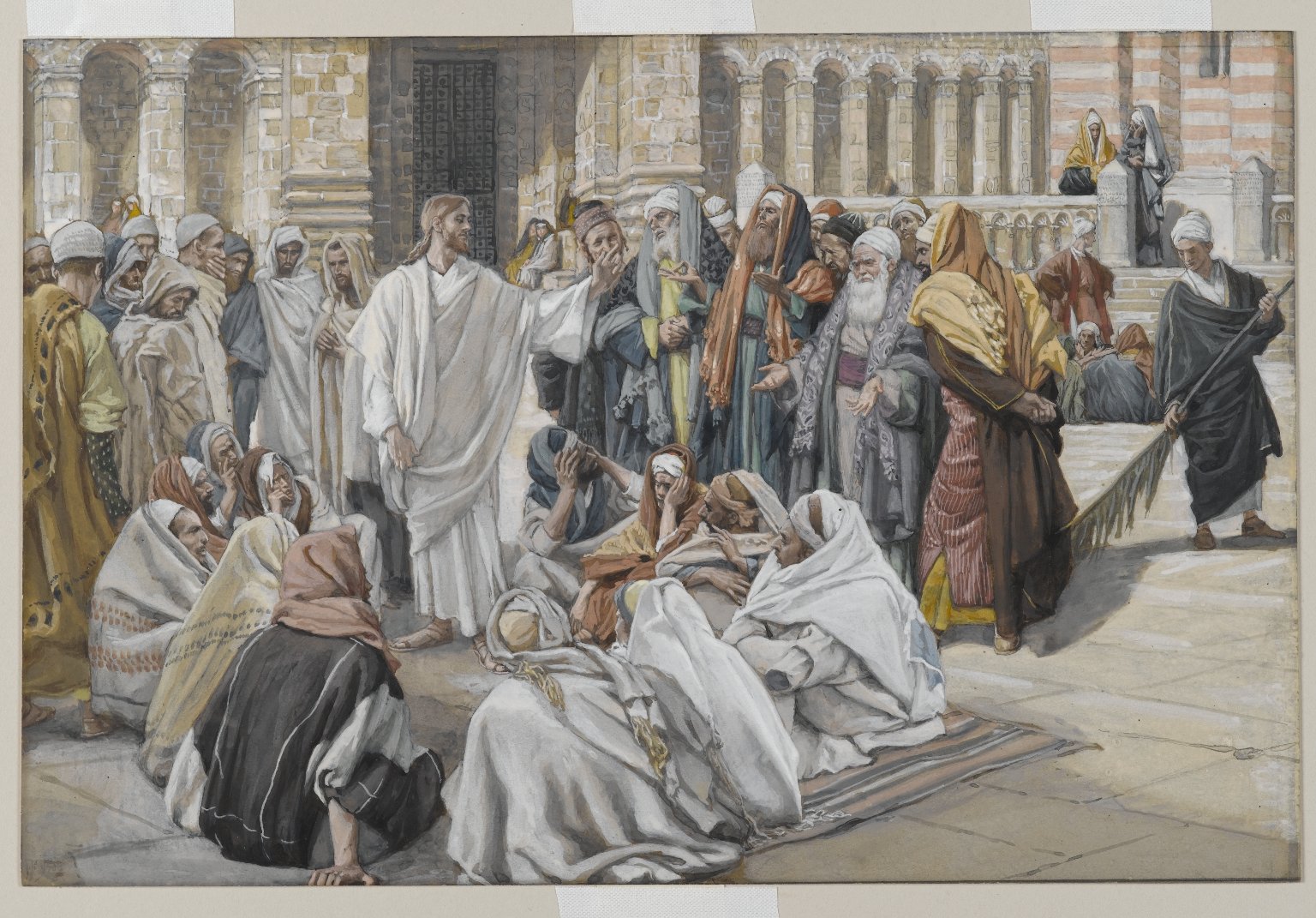
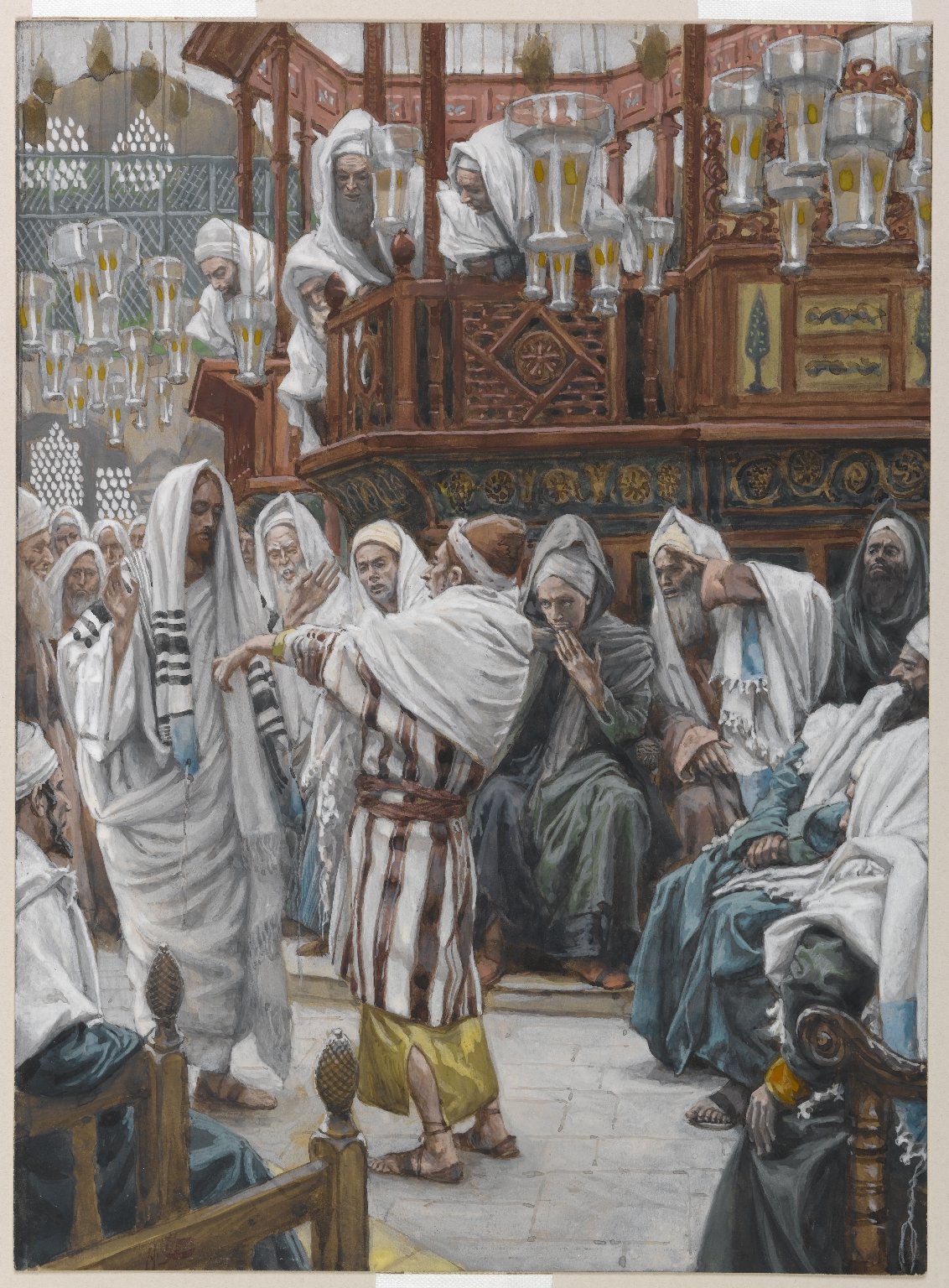
James Tissot – The Pharisees question Jesus (Brooklyn Museum)

Trinity X: Sir, give us this bread always

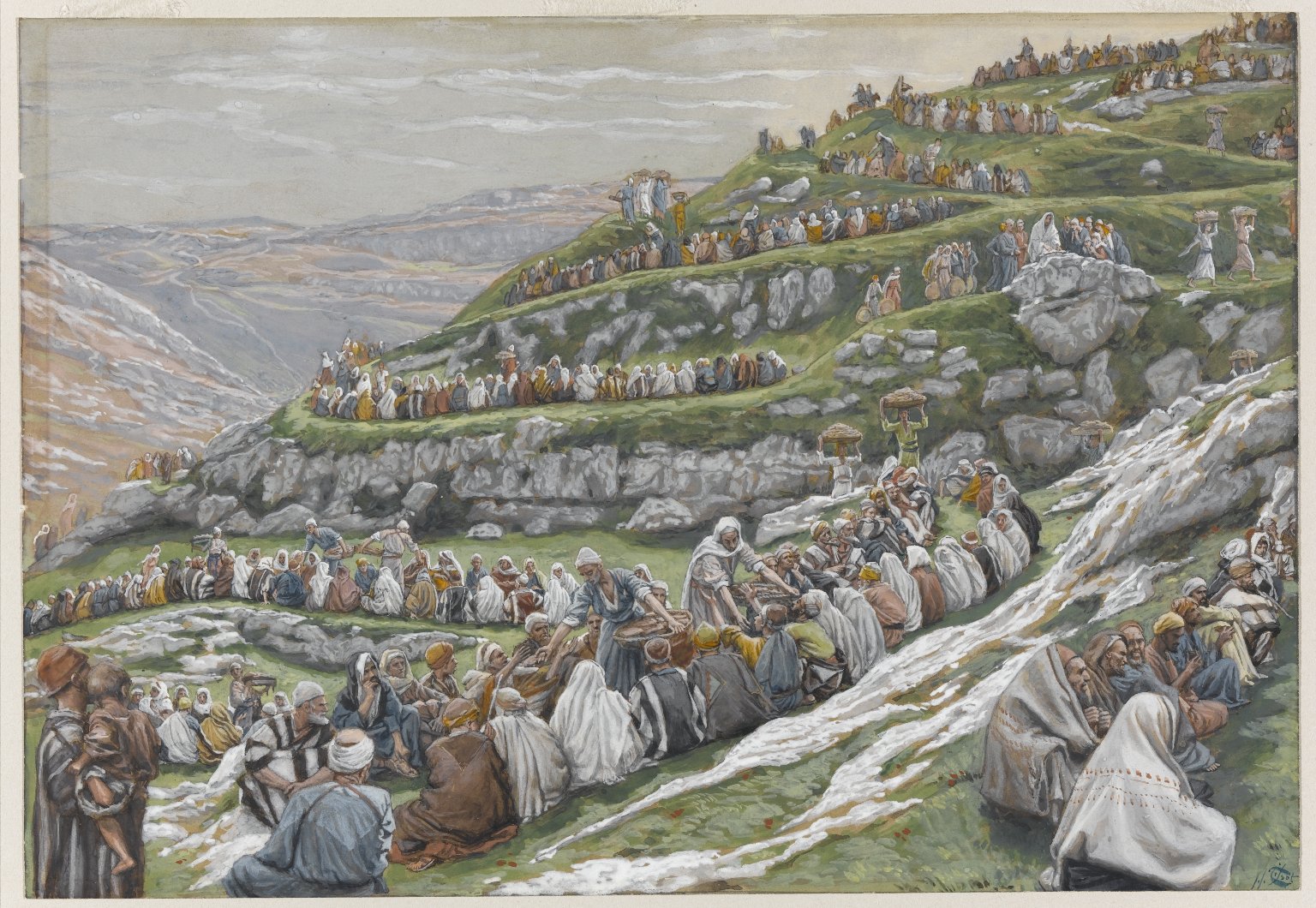
Food plays a huge part in the formation of human memory. Our memories of childhood are filled with the cooking of significant people or significant occasions. Our sense of taste can evoke these memories, allowing us to relive moments from the past. As the people of Israel are journeying through the wilderness towards the Promised Land, they are not happy. They would prefer to have died in Egypt with plenty to eat, rather than the hunger they are experiencing in the wilderness. So God promises to feed His people with quail and bread. Israel is fed by a miracle. God feeds us, as was shown by last week’s Multiplication of the Loaves and Fishes. Our Heavenly Father hears our prayers, and answers them. He takes care of His people.

In the Gospel, the miraculous feeding by the Sea of Galilee has caused something of a commotion. The people have continued to follow Jesus, who had gone off to pray and be alone. When they catch up with Him, He replies:

“Truly, truly, I say to you, you are seeking me, not because you saw signs, but because you ate your fill of the loaves. Do not labour for the food that perishes, but for the food that endures to eternal life, which the Son of Man will give to you.”

“Yn wir, yn wir, rwy’n dweud wrthych, yr ydych yn fy ngheisio i, nid am ichwi weld arwyddion, ond am ichwi fwyta’r bara a chael digon. Gweithiwch, nid am y bwyd sy’n darfod, ond am y bwyd sy’n para i fywyd tragwyddol. Mab y Dyn a rydd hwn ichwi,” (Jn 6:26-27)

The people can understand what is going on at a superficial level, but have failed to understand that Israel’s Messiah is leading them to a new Exodus, feeding them with new manna, to lead them to Heaven. He doesn’t want to be an earthly ruler, His Kingdom is not of this world. Instead, Our Lord wants to transform their souls, and their lives, by His gift of Himself: ‘food that endures to eternal life’, ‘y bwyd sy’n para i fywyd tragwyddol’. Jesus gives Himself to us, so that we might have eternal life in Him.

The Eucharist is not simply a memorial of Our Lord’s death, but a real sharing in His Body and Blood. God loves us, you and me — all of us — so much, that He longs to feed us with Himself. He loves us so much that He gives Himself to be tortured and to die on the Cross for us. This is the central message of Christianity: God loves us, and wants us to share Eternal Life with Him.

Those following Our Lord still do not seem to have grasped what is going on, so the people interrogate Jesus further:

Then what sign do you do, that we may see and believe you? What work do you perform? Our fathers ate the manna in the wilderness; as it is written, ‘He gave them bread from heaven to eat.’”

“Os felly,” meddent wrtho, “pa arwydd a wnei di, i ni gael gweld a chredu ynot? Beth fedri di ei wneud? Cafodd ein hynafiaid fanna i’w fwyta yn yr anialwch, fel y mae’n ysgrifenedig, ‘Rhoddodd iddynt fara o’r nef i’w fwyta.’” (Jn 6:30-31)

The people want to see more signs. The Feeding of the Five Thousand was not enough for them. Jesus asks them to believe in Him, and to put their trust in God. He then explains what is happening in the Exodus story:

Jesus then said to them, “Truly, truly, I say to you, it was not Moses who gave you the bread from heaven, but my Father gives you the true bread from heaven. For the bread of God is he who comes down from heaven and gives life to the world.” They said to him, “Sir, give us this bread always.”

Yna dywedodd Iesu wrthynt, “Yn wir, yn wir, rwy’n dweud wrthych, nid Moses sydd wedi rhoi’r bara o’r nef ichwi, ond fy Nhad sydd yn rhoi ichwi y gwir fara o’r nef. Oherwydd bara Duw yw’r hwn sy’n disgyn o’r nef ac yn rhoi bywyd i’r byd.” (Jn 6:32-4)

The people’s request is to continue to be fed: they are still hungry, hungry for the teaching which Jesus is providing. Christ is the one who can satisfy the deepest longing of the human heart, for intimacy with God. This is what Our Heavenly Father longs to provide for us.

Finally, Jesus says to them:

“I am the bread of life; whoever comes to me shall not hunger, and whoever believes in me shall never thirst.”

“Myfi yw bara’r bywyd. Ni bydd eisiau bwyd byth ar y sawl sy’n dod ataf fi, ac ni bydd syched byth ar y sawl sy’n credu ynof fi.” (Jn 6:35)

These are words we can trust: Christ yw bara bywyd, Christ is the Bread of Life. This is the first of seven sayings in John’s Gospel where Jesus describes who He is, and what He does by saying ‘I am …’ This is a direct echo of when God speaks to Moses at the Burning Bush in Exodus 3:14 and says:

I am who I am

So here Jesus is telling us who He is, who God is, so that we can believe in Him, and be nourished by Him. Our Lord is teaching us about the Eucharist. In it we truly receive the Body and Blood of Christ. Not as ordinary food, but as spiritual nourishment so that we may become what He is. So that God’s love may transform us, making us more Christlike.

Our response should be, in the words of the Gospel:

“Sir, give us this bread always.”

“Syr, rho’r bara hwn inni bob amser.” (Jn 6:34)

This sentiment is echoed in the words of the Lord’s Prayer: ‘Dyro i ni heddiw ein bara beunyddiol, Give us this day our daily bread’. This prayer is fulfilled in the Eucharist. Here Jesus gives us the Bread of Heaven, so that we might be fed by Him, and with His Body and Blood, so that we might have a foretaste of Heaven and a pledge of Eternal Life in Christ.

A miraculous feeding will happen here today, when we, the people of God, united in love and faith, offer ourselves and the bread that we have, so that it may be taken, blessed, broken, and shared. It is given so that we may be partakers in the mystical supper of the Kingdom of God, and a sign of the Heavenly Banquet. Where we hope to sing the praises of God the Father, God the Son, and God the Holy Spirit. To whom be ascribed all glory, dominion, and power, now and forever. Amen.

Leonardo da Vinci, The Last Supper, Santa Maria delle Grazie, Milan

Trinity IX – The God of Surprises

A surprise present or a visit from a loved one often brings great joy. One of the loveliest and yet most challenging aspects of Christianity is the fact that we worship a surprising God. Our Heavenly Father uses all sorts of people, and situations, in ways which we do not expect. The Christian journey is not always straightforward. The key is faith: trusting God to be at work, and knowing that everything will be good in the end.

In the Gospel, the people of Israel are like sheep without a shepherd. They feel let down and abandoned by their political and religious leaders. Such sentiments are widespread and understandable. However, there has been something of a religious revival in Galilee, and Our Lord has attracted quite a considerable following, numbering over five thousand people. After the proclamation of the Kingdom of God, the call to repentance and baptism, and some inspiring healing and teaching, people are excited. Prophecies are being fulfilled. The question on everyone’s lips is: Could this man really be the Messiah? 

Once again Jesus has taken His disciples across the See of Galilee for some rest and recuperation. However, the people’s need is great. They understand Christ’s healing miracles as a sign of the Kingdom, and they are keen to learn, and to be fed and nourished, both physically, and spiritually. Our Lord goes up onto higher ground and sits down. This makes perfect sense, especially as He is about to address the large number of people following Him. We should note the context. It is almost the Feast of Passover, the holiest day of the Jewish year, which marked their journey from slavery in Egypt to freedom in the Promised Land. The Passover was the time when people expected the Messiah to return, to lead the people to freedom. 

Then Jesus asks the disciple named Philip a question:

“Where are we to buy bread, so that these people may eat?”

“Ble y gallwn brynu bara i’r rhain gael bwyta?” (Jn 6:5)

Our Lord already knows the answer, but He wants to see what Philip thinks. The disciple replies:

“Two hundred denarii would not buy enough bread for each of them to get a little.”

“Ni byddai bara gwerth dau gant o ddarnau arian yn ddigon i roi tamaid bach i bob un ohonynt.” (Jn 6:7)

Two hundred denarii was over six months wages for a labourer. It is a large sum of money, which would buy a lot of food. Also feeding such a large crowd would be a logistical nightmare. Apart from the cost, there is the question of how you would get the food in the first place. Then Peter’s brother Andrew makes an intervention:

“There is a boy here who has five barley loaves and two fish, but what are they for so many?”

“Y mae bachgen yma a phum torth haidd a dau bysgodyn ganddo, ond beth yw hynny rhwng cynifer?” (Jn 6:9)

Andrew has a point: if £10,000 worth of food would only give people a mouthful, then a small bag full of food is a drop in an ocean of need. The situation appears to be an impossible one. Then Jesus acts.

Our Lord asks the people to sit down. There are five thousand men, and possibly another fifteen thousand women and children. Jesus takes the loaves and fishes, and blesses them. After thanking God for the food, He gives it to be distributed among the people. Not only does everyone eat as much as they want, but at the end there are twelve baskets of leftovers. It is through prayer and blessing that bread can be broken, distributed, and provide sustenance on a scale, and in a way, that defies human expectation and understanding. Not only are a huge number of people fed, but, as a sign of the super-abundance of God’s love and mercy, there is more left over at the end than there was to begin with! In the same way, the kingdom of God, of which the bread is a sign, grows when God’s love is shared. This love satisfies people’s deepest needs. The more we share it, the more there is. The Kingdom of God is a place of generosity and love, a place where our needs are answered and we are transformed.

John’s Gospel describes how Jesus takes, blesses, breaks and distributes bread, demonstrating how the Kingdom of God works. This looks forward to the Institution of the Eucharist by Jesus at the Last Supper.

The same miraculous feeding that took place by the shore of the Sea of Galilee will also happen here today. We gather as the people of God, united in love and faith, and offer ourselves. Like the small boy, we give the bread that we have, so that it may be taken, blessed, broken and given out. In this way we become partakers in the mystical supper of the Kingdom of God. We eat the Body of Christ not as ordinary food, but as bread for the journey of faith. The Eucharist is the sign and token of God’s love. This is the means by which we enjoy the close presence of God.

The crowd recognises the miraculous feeding as a sign, signifying God’s love, and the presence of the Messiah in their midst. In response they want to enact a political coup, and make Jesus a king. This is not what Our Lord wants, so He withdraws, to be alone, to be with God. The multiplication of the loaves and fishes shows us that God is active in the world, pouring out His generous love, meeting our needs, and healing our wounds. This is not the start of a political campaign. Christ does not want earthly power. Instead, He wants to reign in our hearts, and in our lives.

God uses barley bread — the bread of the poor — to feed His people. This points to the Eucharist and to the Cross as the place where humanity is nourished and healed. We follow Christ’s example week by week, because without Him, our hunger remains unsatisfied. 

Today and every day we give thanks that God loves us. He reveals His love in ways which often surprise us, and which defy our expectations. When we trust in Christ we are transformed in this life, and the next. We become prepared for Heaven, where we, and all the faithful, will sing the praises of God the Father, God the Son, and God the Holy Spirit. To whom be ascribed all glory, dominion, and power, now and forever. Amen.

James Tissot – The Multiplication of the Loaves and Fishes (Brooklyn Museum)

Trinity VI – The Importance of Prophetic Truth in Changing Times

One of the trickiest things to do is to tell someone something they don’t want to hear. Some things can be difficult to hear, and difficult to say. Honesty and truth are essential if we want to change and grow. In Ancient Israel, prophets were sent by God to speak the truth: to call people back and to tell them where they were going wrong. When the people of Israel rebelled against God, which is the definition of sin, prophets called God’s people to repentance. They urged them to turn back to the God who loves them, and longs for them to flourish. Sadly, such messages were not always heeded:

‘The descendants also are impudent and stubborn: I send you to them, and you shall say to them, ‘Thus says the Lord God.’ And whether they hear or refuse to hear (for they are a rebellious house) they will know that a prophet has been among them.’

‘At blant wynebgaled ac ystyfnig yr wyf yn dy anfon, ac fe ddywedi wrthynt, ‘Fel hyn y dywed yr Arglwydd DDUW.’ Prun bynnag a wrandawant ai peidio — oherwydd tylwyth gwrthryfelgar ydynt — fe fyddant yn gwybod fod proffwyd yn eu mysg.’ (Ezek 2:4-5)

This is the situation which we encounter in today’s Gospel. As part of His Galilean ministry Our Lord goes to Nazareth, and teaches in the synagogue. In Luke’s account we hear Jesus reading from Isaiah:

“The Spirit of the Lord is upon me, because he has anointed me to proclaim good news to the poor. He has sent me to proclaim liberty to the captives and recovering of sight to the blind, to set at liberty those who are oppressed, to proclaim the year of the Lord’s favour.”

“Y mae Ysbryd yr Arglwydd arnaf, oherwydd iddo f’eneinio i bregethu’r newydd da i dlodion. Y mae wedi f’anfon i gyhoeddi rhyddhad i garcharorion, ac adferiad golwg i ddeillion, i beri i’r gorthrymedig gerdded yn rhydd, i gyhoeddi blwyddyn ffafr yr Arglwydd.” (Lk 4:18-19)

Clearly hearing such a prophecy and then being told that it was being fulfilled among them would be quite shocking. The people had spent five hundred years waiting for a Messiah, and now, suddenly, here he was. The worshippers in the synagogue are unwilling, or unable, to understand what is going on, so they say:

“Where did this man get these things? What is the wisdom given to him? How are such mighty works done by his hands? Is not this the carpenter, the son of Mary and brother of James and Joses and Judas and Simon? And are not his sisters here with us?” And they took offence at him.

“O ble y cafodd hwn y pethau hyn? A beth yw’r ddoethineb a roed i hwn, a’r fath weithredoedd nerthol sy’n cael eu gwneud trwyddo ef? Onid hwn yw’r saer, mab Mair a brawd Iago a Joses a Jwdas a Simon? Ac onid yw ei chwiorydd yma gyda ni?” Yr oedd ef yn peri tramgwydd iddynt. (Mk 6:2-3)

The inhabitants of Nazareth cannot reconcile the healer and teacher with the person they have seen growing up among them. Hence they stress Our Lord’s trade and family relationships. They cannot recognise the Messiah in their midst. The Nazarenes understand Christ’s human nature, but cannot see that He is divine. 

Jesus understands that a prophet is without honour among his own people. Those who think they know Him well, fail to discern what God is doing through Him. They may reject Christ, but He does not reject them. 

‘And he could do no mighty work there, except that he laid his hands on a few sick people and healed them.’

‘Ac ni allai wneud unrhyw wyrth yno, ond rhoi ei ddwylo ar ychydig gleifion a’u hiacháu.’ (Mk 6:5)

The Good News of the Kingdom is proclaimed, and healings take place. God’s love is poured out even where He is not welcomed, because God loves us, and has come to heal our wounds. Even when we turn our back on Him, Our Heavenly Father does not spurn us. The work of the Kingdom must continue:

‘And he marvelled because of their unbelief. And he went about among the villages teaching.’

‘Rhyfeddodd at eu hanghrediniaeth. Yr oedd yn mynd o amgylch y pentrefi dan ddysgu.’ (Mk 6:6)

Those who in theory should know Him best, who have known Jesus all His life, are the ones who turn their back on Him. Our Lord is amazed at their hardness of heart. He faces exactly what Ezekiel faced before Him. So Jesus continues to heal and teach, even though some do not hear, and do not believe. To those who do, Christ offers love, healing and New Life. He offers Himself in the Eucharist, so that we may have life in all its fulness.

We know who and what Jesus is. Many in the world around us reject Christ, rather like the people of Nazareth, or fail to accept Him as true God and true man. They doubt who He was, what He did, and what He said. Our duty, as Christians, is to tell people about Jesus, praying that they will want to believe. We need to model the Christian life, remembering that all things are possible — God can will do amazing things, especially when we cooperate with Him. 

Our country is currently experiencing a new start, a re-boot after the election. We pray for those who have been elected to office that they will govern with wisdom and compassion. May we too take this opportunity to re-boot and re-energise our life of faith, and shine as beacons of hope in our community and world. May we join with all creation and give glory to God the Father, God the Son, and God the Holy Spirit. To whom be ascribed all glory, dominion, and power, now and forever. Amen.

James Tissot: Jésus dans la synagogue déroule le livre [Brooklyn Museum]

Trinity V: Jesus our healer

There are, as we all know, few things in life worse than when someone we love is seriously ill. We do everything we possibly can to help, but often there is not much that we can do. However, when we feel powerless and desperate, and need help, we can turn to God in prayer. The Kingdom of God, proclaimed and inaugurated by Jesus Christ is a place of true healing, and through our relationship with Jesus we can seek wholeness for ourselves and for those close to us. This is why the Gospels contain healing miracles. These miraculous accounts are signs of God’s restoration of creation through His Son, something which will culminate with Christ’s Passion, Death, and Resurrection, and through which our human nature is healed.

In today’s Gospel Jesus and the disciples have sailed back across the Sea of Galilee to the Jewish side. On their arrival they are greeted by the leader of a local synagogue whose daughter is close to death. Jairus longs for his child to be healed, and asked Jesus to place His hands on her, so that she might be saved and live.

While Jesus is walking to Jairus’ house to heal his daughter, another miracle takes place. Lots of people are following, which is understandable since Jesus is a charismatic preacher and teacher, who heals people. In the crowd is a woman with a serious gynaecological complaint. Two people need healing, and while Our Lord is on His way to heal one female in need, another seizes the opportunity to be cured.

This woman is desperate, because she has suffered bleeding for twelve years. In Jewish ritual terms she would be classed as unclean. She would have been unable to join in worship, and would be seen as someone to avoid. Also, she would not have been able to bear children. Despite all her efforts and attempts to find a cure she had only got worse, even though she had spent all the money she possessed. The presence of this miraculous healer was the answer to her prayers. She had heard about the Saviour, and said to herself:

“If I touch even his garments, I will be made well.”

“Os cyffyrddaf hyd yn oed â’i ddillad ef, fe gaf fy iacháu.” (Mk 5:28)

This woman has faith. She believes that Jesus can heal her, and she puts her trust in Him to do what the physicians could not achieve. Our Lord notices that someone has touched His garments. He realizes that this was not simply someone brushing past, but something important. His disciples, not aware of what has happened, try to put this down to the press of the crowd. Then the woman, who has been healed, comes forward:

‘But the woman, knowing what had happened to her, came in fear and trembling and fell down before him and told him the whole truth. And he said to her, “Daughter, your faith has made you well; go in peace, and be healed of your disease.”’ 

‘Daeth y wraig, dan grynu yn ei braw, yn gwybod beth oedd wedi digwydd iddi, a syrthiodd o’i flaen ef a dweud wrtho’r holl wir. Dywedodd yntau wrthi hi, “Ferch, y mae dy ffydd wedi dy iacháu di. Dos mewn tangnefedd, a bydd iach o’th glwyf.”’ (Mk 5:33-34)

The woman comes ‘in fear and trembling’ not because she is afraid of Jesus, but because it is the proper way for humans to act in the presence of God. She is filled with awe at her experience of divine healing. Jesus’ reply is astounding for several reasons. The fact that He responds at all is noteworthy. Talking to a woman who was not a member of your family was frowned upon, let alone a woman who is viewed as being ritually unclean and an outcast. Jesus is breaking a social taboo. He also addresses her as ‘daughter’, a reminder that Jesus’ family are not just those related to Him in earthly terms, but all those who do God’s will. This unnamed woman is a daughter of God and her faith has healed her. She trusted God to do what the physicians could not. Faith is the route to salvation and healing, by trusting God to be at work. Now the woman can go in peace, because she has been restored to health. Peace is God’s gift to us, that we may experience wholeness. Jesus underlines that what has happened is not a temporary healing, but a permanent state of affairs.

While Jesus is still speaking to the woman, messengers come to give Jairus some bad news:

“Your daughter is dead. Why trouble the Teacher any further?”

“Y mae dy ferch wedi marw; pam yr wyt yn poeni’r Athro bellach?” (Mk 5:35)

The situation is hopeless, and in their eyes there is nothing that Jesus can do. Thankfully, Our Lord has other ideas:

‘But overhearing what they said, Jesus said to the ruler of the synagogue, “Do not fear, only believe.”’

‘Ond anwybyddodd Iesu y neges, a dywedodd wrth arweinydd y synagog, “Paid ag ofni, dim ond credu.”’ (Mk 5:36)

Instead of being afraid Jairus needs to believe that God will save his daughter. The synagogue leader has already demonstrated his faith by prostrating himself before Jesus and asking for healing. Now, in the face of his daughter’s apparent demise, Jairus must trust God to be at work. When Jesus arrives at the house a second miracle takes place: 

‘Taking her by the hand he said to her, “Talitha cumi”, which means, “Little girl, I say to you, arise.”’

‘Ac wedi gafael yn llaw’r plentyn dyma fe’n dweud wrthi, “Talitha cŵm,” sy’n golygu, “Fy ngeneth, rwy’n dweud wrthyt, cod.”’ (Mk 5:41)

Note the fact that Jesus takes the girl by the hand. AT the time of Jesus, touching a dead body would make a person ritually impure. This is why the priest and Levite in the Parable of the good Samaritan pass by on the other side, for fear of being made unclean by being in contact with a dead person. Jesus disregards the taboo of uncleanness, and speaks to the girl. He addresses her in Aramaic, her mother tongue, and says “Talitha cumi” literally: ‘little lamb, get up’ ‘oen bach codwch’. This is a term of endearment which also reminds us that Christ is the Good Shepherd who cares for His lambs, keeping them safe, and saving them from death. 

The people who are present — Jairus and his wife, Peter, James and John — are all amazed. They are filled with awe, with holy fear at witnessing the mighty works of God. Finally, Jesus tells her parents to give the girl something to eat, which shows us the reality of her resuscitation. This also points towards the feast of the Kingdom, which we hope to enjoy in Heaven, and which is prefigured in the Eucharist. In physical and spiritual communion, Christ gives Himself to feed us. Through His Body and Blood He heals our bodies and our souls, and assures us of eternal life.

As we care for and pray for those close to us who are ill we give thanks that God loves us, and heals us. Through faith, wonderful things can, and do, happen. May our worship today be a foretaste of Heaven, where all are healed. Let us join with Saints and Angels to sing the praises of God the Father, God the Son, and God the Holy Spirit. To whom be ascribed all glory, dominion, and power, now and forever. Amen.

James Tissot Jairus’ Daughter (Brooklyn Museum)

Trinity II: ‘Who are my mother and my brothers?’

I grew up listening to the music of the 1960s and 1970s. The large size of an LP record sleeve is a great vehicle for artwork, and photography in particular. The shots are often in soft focus, giving the subjects a gentle dreamlike quality. It can be easy to think that the whole of Our Lord’s ministry was gentle and easy, especially because of how it is shown in Victorian religious art. However, today’s Gospel shows us that this was not always the case. As the passage begins there are so many people gathered around Jesus that He and His disciples are not even able to eat. People are desperate to hear what He has to say, they are desperate for healing. While their need is great, without rest and refreshment, there is no way that Christ can minister to them effectively in the long term without taking care of himself. 

We can have a lot of sympathy for Our Lord’s family, who are genuinely concerned for His wellbeing and that of His friends. They want to take care of His physical needs, as Jesus seems to be prioritising God’s people over Himself.

The religious authorities, however, have a completely different understanding of what is going on:

‘And the scribes who came down from Jerusalem were saying, “He is possessed by Beelzebul,” and “by the prince of demons he casts out the demons.”’

‘A’r ysgrifenyddion hefyd, a oedd wedi dod i lawr o Jerwsalem, yr oeddent hwythau’n dweud, “Y mae Beelsebwl ynddo”, a, “Trwy bennaeth y cythreuliaid y mae’n bwrw allan gythreuliaid.”’ (Mk 3:22)

The scribes understand the actions of this charismatic healer and teacher from Galilee as being the result of demonic possession. This is another way of saying, ‘Jesus is a fraud’ and ‘This isn’t the work of God’. Their attempt to write Christ off not only flies in the face of the evidence, but also does not follow through logically. Jesus challenges them saying: 

“How can Satan cast out Satan? If a kingdom is divided against itself, that kingdom cannot stand. And if a house is divided against itself, that house will not be able to stand. And if Satan has risen up against himself and is divided, he cannot stand, but is coming to an end.” 

“Pa fodd y gall Satan fwrw allan Satan? Os bydd teyrnas yn ymrannu yn ei herbyn ei hun, ni all y deyrnas honno sefyll. Ac os bydd tŷ yn ymrannu yn ei erbyn ei hun, ni all y tŷ hwnnw sefyll. Ac os yw Satan wedi codi yn ei erbyn ei hun ac ymrannu, ni all yntau sefyll; y mae ar ben arno.”(Mk 3:23-26)

If Jesus is possessed by the Devil, how can He cast the Devil out? His accusers have failed to see the spirit of God, the Holy Spirit, at work in Christ. The scribes refusal to see God at work is a sign of their pride and hardness of heart. They cannot discern the works of God, and write off as evil a wondrous demonstration of God’s love for humanity. The religious authorities have failed to discern what is actually going on, and have taken the easy step of finding someone to blame, someone to write off. God’s healing love is being dismissed as the work of the Devil. This is a serious matter, as Jesus explains:

“Truly, I say to you, all sins will be forgiven the children of man, and whatever blasphemies they utter, but whoever blasphemes against the Holy Spirit never has forgiveness, but is guilty of an eternal sin”— for they were saying, “He has an unclean spirit.”

“Yn wir, rwy’n dweud wrthych, maddeuir popeth i blant y ddaear, eu pechodau a’u cableddau, beth bynnag fyddant; ond pwy bynnag a gabla yn erbyn yr Ysbryd Glân, ni chaiff faddeuant byth; y mae’n euog o bechod tragwyddol.” Dywedodd hyn oherwydd iddynt ddweud, “Y mae ysbryd aflan ynddo.” (Mk 3:28-30)

The scribes have condemned themselves. Whereas they have accused Jesus of blasphemy, they are in fact the blasphemers. Jesus does not condemn them, but rather offers humanity the forgiveness of sins. This is another demonstration of God’s love being poured out on the world. The Kingdom of God is a place of healing and restoration.

Our Lord then has a confrontation with His relatives, which leads to a profound moment of teaching. When the crowd tell him that His family are outside, He answers, “Who are my mother and my brothers?””Pwy yw fy mam i a’m brodyr?” (Mk 3:33). Then, looking round, He says: ‘Here are my mother and my brothers!’ ‘Dyma fy mam a’m brodyr i’ (Mk 3:34). 

Family was, and continues to be, important, for Jews juke like it is for people in general. The family unit is the basic building block of society. But Our Lord points out that ties of kinship are less important than humanity’s relationship with God. In our baptism, we all became brothers and sisters in Christ. The Church is our family, which calls us to live in a new way with each other, a way defined by love, and not the exercise of power or control. God offers us healing and wholeness, the forgiveness of our sins, so that we can be in a new relationship both with God and with each other.

The Church comes together as a family to experience forgiveness and to be nourished by Word and Sacrament in the Eucharist. This is the most profound and meaningful thing we, as human beings, can do together. It gives us a foretaste of the joy of Heaven. In it we are fed by God, and with God. God gives himself for us, so that we might have life in Him. 

Let us therefore come and be nourished. Let us invite others to become part of God’s family. Joining with Christians throughout the world, may we sing the praises of God the Father, God the Son, and God the Holy Spirit. To whom be ascribed all glory, dominion, and power, now and forever. Amen.

James Tissot Jesus Commands the Apostles to Rest (Brooklyn Museum)

Trinity I

THE novel by Robert Llewellyn —‘How green was my valley’ — reached millions through its 1941 film adaptation by John Ford. Telling the story of a family in a South Wales mining community, it criticises the unjust labour practises of the early twentieth century. Earlier in 1887 the historian Lord Acton wrote to the Professor of Ecclesiastical History at the University of Cambridge, saying that, ‘Power tends to corrupt, and absolute power corrupts absolutely.’ While this maxim now tends to be applied generally, it was originally a comment on religious institutions in general, and the medieval Papacy in particular. The truth of this statement is a reflection on our fallen human nature.

In the Gospels we often see Our Lord come into conflict with the Scribes, Priests, and Pharisees. These religious leaders are depicted as being more concerned with power and prestige than with the worship of Almighty God. If Religion is important then there will be a status attached to its ministers. They, therefore, have a responsibility to use this status for good, and to bring people closer to God.

In today’s Gospel it is the Sabbath, a day of rest. Jesus and His disciples are travelling, and the Pharisees notice that some of them have plucked ears of corn to eat. The Pharisees ask Our Lord:

‘Look, why are they doing what is not lawful on the Sabbath?’

‘Edrych, pam y maent yn gwneud peth sy’n groes i’r Gyfraith ar y Saboth?’  (Mk 2:24)

Jews are forbidden from doing any work on Sabbath, and the harvesting of grain, no matter how little, counts as work. This appears to be a clear-cut case, but Jesus replies as follows:

‘Have you never read what David did, when he was in need and was hungry, he and those who were with him: how he entered the house of God, in the time of Abiathar the high priest, and ate the bread of the Presence, which it is not lawful for any but the priests to eat, and also gave it to those who were with him?’

‘Onid ydych chwi erioed wedi darllen beth a wnaeth Dafydd, pan oedd mewn angen, ac eisiau bwyd arno ef a’r rhai oedd gydag ef? Sut yr aeth i mewn i dŷ Dduw, yn amser Abiathar yr archoffeiriad, a bwyta’r torthau cysegredig nad yw’n gyfreithlon i neb eu bwyta ond yr offeiriaid; ac fe’u rhoddodd hefyd i’r rhai oedd gydag ef?’ (Mk 2:25-26)

This story is recounted in 1Samuel 21:1-7. By referring to it Our Lord is making the point that if David’s actions were acceptable, then why is such a fuss being made about the disciples plucking a few ears of corn. Jesus underlines this by pointing out that:

‘The Sabbath was made for man, not man for the Sabbath’

‘Y Saboth a wnaethpwyd er mwyn dyn, ac nid dyn er mwyn y Saboth’ (Mk 2:27)

The legalism of the Pharisees has led them to forget what the Sabbath is really about: rest. The point of having a Sabbath is to ensure that people have a day of rest. Instead this day has become bound up with rules and observances which neither honour God, nor encourage humanity to rest. 

Jesus and His disciples arrive at a synagogue where there is a man with a withered hand. Clearly this is another opportunity for the legalism of the Pharisees to come to the fore.

‘And they watched Jesus, to see whether he would heal him on the Sabbath, so that they might accuse him.’

‘Ac yr oeddent â’u llygaid arno i weld a fyddai’n iacháu’r dyn ar y Saboth, er mwyn cael cyhuddiad i’w ddwyn yn ei erbyn.’ (Mk 3:2)

Rather than rejoicing that God has performed a miracle, and that a man with a disability has been healed, all the Pharisees can see is an opportunity to complain about rule-breaking, and to bring an accusation against Jesus. Our Lord calls the man to Him, and says to the Pharisees:

‘Is it lawful on the Sabbath to do good or to do harm, to save life or to kill?’

‘A yw’n gyfreithlon gwneud da ar y Saboth, ynteu gwneud drwg, achub bywyd, ynteu lladd?’ (Mk3:4)

They give no reply because they know that in order to save a life one may break every rule regarding the observance of the Sabbath. Jesus’ knowledge and interpretation of Jewish Scripture and Law is superior to theirs. Our Lord then asks the man to stretch out his hand, and he is miraculously healed. No law has been broken. Instead someone who was suffering, and who was probably shunned and made an outcast in society, has been cured and brought back into the fold of the community. God’s power to heal and restore humanity has been displayed. The Kingdom of God has been announced in deed.  

The response of the religious authorities is telling. Do they rejoice at this miracle? The answer is definitely no.

‘The Pharisees went out and immediately held counsel with the Herodians against him, how to destroy him.’

‘Ac fe aeth y Phariseaid allan ar eu hunion a chynllwyn â’r Herodianiaid yn ei erbyn, sut i’w ladd.’ (Mk 3:6)

The Pharisees have formed an alliance with a priestly party, keen on political independence. Both sides share a common aim — to get rid of Jesus. This is because He represents a threat to their power. Our Lord’s words and actions are understood by the Pharisees as an assault on their privileged position, with their innate goodness being ignored. From the start of His public ministry, Christ faces opposition from people who want Him dead. They think that they can destroy Jesus, and that will be the end of the matter, whereas it will only be the beginning. Our Lord will die on a Cross, but will be raised to new life at Easter. Calvary and the Empty Tomb are the salvation of humanity, part of God’s plan.

As Christians we gather on the Lord’s Day, the first day of the week, to celebrate Christ’s Death and Resurrection. By means of the Eucharist, we do that which Jesus commanded us to do until He comes again. For one hundred thousand successive Sundays the faithful have gathered to share in Holy Communion, because it matters, it is important. We are fed with the Bread of Angels, with the Body and Blood of Christ, so that we may be healed and given a foretaste of Heaven.

So, my brothers and sisters, let us rejoice in the healing salvation of Christ. Let us proclaim the Good News, so that all people may come to know, and love, God the Father, God the Son, and God the Holy Spirit. To whom be ascribed all glory, dominion, and power, now and forever. Amen.

James Tissot – The Man with a withered hand (Brooklyn Museum)
Tissot: The Disciples Eat Wheat on the Sabbath (Brooklyn Museum)

Easter IV – The Good Shepherd

Living in Pembrokeshire, many of us know people who keep sheep. We are also aware of how difficult it has been for them, and all farmers, in the recent months with fields waterlogged due to unprecedented levels of rainfall. Sheep farming is a vital part of our rural life and so the image of Jesus as the Good Shepherd is something we find easy to identify with, unlike those who live in large cities.

Shepherds played an important part in Jesus’ life. Angels told them about the birth and they came down from the hills to worship Him in  the stable in Bethlehem. Not wishing to leave their animals behind, Nativity scenes depict the shepherds bringing sheep to the manger. This may be why Our Lord has an affinity with those who look after sheep and care for them. Jesus describes himself as the Good Shepherd, the one who lays down His life for His sheep. Christ dies so that we may have eternal life in Him. This model of self-sacrificial love lies at the heart of the Christian faith, and because of it, we are able to live the new life of Easter.

Jesus says, ‘I am the Good Shepherd’ ‘Myfi yw’r bugail da’ (Jn 10:11). This is straightforward: He cares for His flock. But then He says, ‘The good shepherd lays down his life for the sheep.’ ‘Y mae’r bugail da yn rhoi ei einioes dros y defaid’ (Jn 10:11). This goes above and beyond what we would expect of a shepherd, even a very good one! Jesus is using the image of the Good Shepherd to explain what will happen on Good Friday. He will suffer and die to protect us, His flock. 

Protect us from what? From Sin and Death. By dying for us, and rising from the dead, Jesus offers humanity freedom in Him. The Christian faith offers salvation, through faith. As St Peter puts it in this morning’s reading from the Acts of the Apostles: 

‘And there is salvation in no one else, for there is no other name under heaven given among men by which we must be saved.’

‘Ac nid oes iachawdwriaeth yn neb arall, oblegid nid oes enw arall dan y nef, wedi ei roi i’r ddynolryw, y mae’n rhaid i ni gael ein hachub drwyddo.’ (Acts 4:12)

Jesus offers what no-one else can: salvation and eternal life to those who believe in Him, and follow Him. Eccentric American millionaires employ bizarre methods in an attempt to defy the ageing process, but they are still going to die. Each and every human being is. That is the fate of all living things. But, because of who Christ is — namely true God and true man — and what He has done on the Cross and at the empty tomb, death is no longer something to be feared. Instead, it can be embraced, as the entry to eternal life, with God, forever. 

This way of looking at life and death is profoundly different from the world around us, because Christians are not bound by the primal human fear that our life is finite. Our Lord has opened to us the gates of Heaven, and shown us once and for all that God loves us.

At the heart of our faith as Christians is the profound conviction that we are people who are loved by God. As Archbishop Michael Ramsay said, ‘God is Christlike, and in him is no un-Christlikeness at all’ [God, Christ & the World: A Study in Contemporary Theology, London 1969, p.98]. When we see Jesus, we see God; when we hear Him speak, we hear the voice of God. We can know who God is, the Creator and Redeemer of the universe, through His Son, Jesus Christ. God is not a distant bearded man on a cloud. He is a loving Father, as illustrated in the Parable of the Prodigal Son. He loves us so much that He suffers and dies for us, to give us life in Him. This is the God who searches for lost sheep; who longs to love, restore, and reconcile; who can heal our wounds if we let Him. This is abundant life, offered to us by Our Lord, the Good Shepherd.

This life, this love is offered to us in the Eucharist, where we can touch and taste God’s profound love for us. In the bread and the wine we are given a foretaste of the heavenly banquet and a pledge of eternal life in Christ. Here today, as on a hundred thousand successive Sundays, we meet to be fed by Christ, and fed with Christ. To be healed, and to know His love. We are the sheep cared for by the Good Shepherd, who provides for all our needs. Who gives Himself so that we might have life.

So my brothers and sisters in Christ, as we continue to rejoice In Our Lord’s triumph over death, may we emulate His example and live the new life of Easter. Following Our Good Shepherd, who longs for us to be safe with Him forever in Heaven, let us share the Good News of His Kingdom with others. Let us pray that that all may come to know and love God the Father, God the Son, and God the Holy Spirit. To whom be ascribed all, glory, dominion, and power, now and forever. Amen.

Lent IV

IF you have ever been unwell while on holiday you probably sought out a Pharmacy. They are quite straightforward to locate as they tend to either have a cross on their sign, or a snake or two around a pole. This was the symbol of the Greek God of healing Aesculapius whose major shrine was at Epidaurus. Christians tend to associate the snake with the tempting of Adam and Eve in the Garden of Eden, but it is not this creature’s only occurrence in the Bible. 

This morning’s Gospel begins with Jesus explaining His forthcoming Crucifixion with a reference to Israel’s wanderings after the Exodus:

And the Lord said to Moses, “Make a fiery serpent and set it on a pole, and everyone who is bitten, when he sees it, shall live.” So Moses made a bronze serpent and set it on a pole. And if a serpent bit anyone, he would look at the bronze serpent and live.’ 

‘A dywedodd yr Arglwydd wrth Moses, Gwna i ti sarff danllyd, a gosod ar drostan: a phawb a frather, ac a edrycho ar honno, fydd byw. A gwnaeth Moses sarff bres, ac a’i gosododd ar drostan: yna os brathai sarff ŵr, ac edrych ohono ef ar y sarff bres, byw fyddai.’ (Numbers 21:8-9)

The people of Israel had been complaining about the journey, the lack of food and water, and that God has led them out into the desert to die, so God sent fiery serpents which killed them. The people then relented, and asked Moses to pray to God to take the serpents away. God listened to Moses, and provided a means for Israel to be saved. Jesus uses this example to explain why the Son of Man must be lifted up. Just as the bronze serpent saved people long ago, Jesus’ being lifted up on the Cross will save those who believe in Him. Our Lord’s death will occur at Passover, the festival which celebrates the people of Israel’s journey from slavery in Egypt, to the Promised Land. So Christ will deliver humanity from the slavery of sin and offer us eternal life in Him. He bears our burden, and reconciles us to the Father, and each other.

There then follows one of the most well-known verses in the Bible:

For God so loved the world, that he gave his only Son, that whoever believes in him should not perish but have eternal life. For God did not send his Son into the world to condemn the world, but in order that the world might be saved through him.

‘Canys felly y carodd Duw y byd fel y rhoddodd efe ei unig‐anedig Fab, fel na choller pwy bynnag a gredo ynddo ef, ond caffael ohono fywyd tragwyddol. Oblegid ni ddanfonodd Duw ei Fab i’r byd i ddamnio’r byd, ond fel yr achubid y byd trwyddo ef.’ (Jn 3:16-17) 

This is the heart of our faith as Christians. Christ was born for us, lived and died for us, and was raised to new life, so that we might have the promise of eternal life in Him. This is why we follow Christ into the desert of Lent for forty days, so that through prayer, fasting and charity we may be prepared in body and soul to celebrate the mystery of Christ’s Passion, Death, and Resurrection. Maundy Thursday, Good Friday and Easter are the ultimate embodiment of God’s generous Love towards humanity. God loves us, you and me, each one of us, so much that He gave His only Son to die for us, on the Cross.

God does not condemn humanity for falling short, instead He saves us. God is a God of love and generosity, who offers Himself to reconcile us to Him, and to each other. This generosity is at the heart of our faith as Christians. We worship a generous, loving God, and invite others to receive the free gift of God’s grace, and enter a relationship with the God who made us and who loves us. 

This relationship explains the joyful hope which St Paul has when he writes to the Church in Ephesus in our second reading this morning. Paul’s central message is that:

For by grace you have been saved through faith. And this is not your own doing; it is the gift of God,’ 

‘Canys trwy ras yr ydych yn gadwedig, trwy ffydd; a hynny nid ohonoch eich hunain: rhodd Duw ydyw’ (Eph 2:8)

Grace is unmerited kindness, something which we do not deserve, or earn. It is by the grace of God that we are saved, through faith, believing and trusting in Jesus Christ, who was born for us, died and rose again for us. We can put our trust in the God who loves us, and who shows us that love in His Son. It is not about what we can do, but about what God can do for us. Our relationship with God is the result of a gift, which we can accept and which can change our lives, if we only let go, and let God transform us, more and more into the likeness of His Son. 

Through prayer, the reading and study of scripture, living out our faith, and the sacraments of the Church, God brings about the work of transformation in us. As He gave Himself on the Cross for us, He gives us Himself in the Eucharist. During Communion we are fed with the Body and Blood of Christ, God’s very self, so that we can become what He is. Prepared by Lenten penitence we may look forward to sharing the new life of Easter, and singing the praises of God the Father, God the Son, and God the Holy Spirit. To whom be ascribed all glory, dominion, and power, now and forever. Amen.

Diego Velázquez – Christ Crucified (Museo del Prado, Madrid)

Quinquagesima – Imitate Jesus!

When we all were children, we learned through imitation, through copying others. Human beings learn to speak, and walk, and everything else, by seeing and hearing others. To imitate the actions of others is an important mechanism for social learning — that is, for acquiring new knowledge. So St Paul writes at the end of this morning’s second reading:

Be imitators of me, as I am of Christ’ 

‘Byddwch ddilynwyr i mi, megis yr wyf finnau i Grist.’ (1Cor 11:1)

Paul encourages the Corinthian church to imitate him, as he imitates Christ. He wants them to do so in order that they all might live out the love of God in their lives, for the glory of God, and to proclaim the truth of the Gospel to the world. This too is our calling as Christians. We are charged to follow the same example , live out the same faith, and proclaim the same truth in our daily lives. 

Today’s readings focus on leprosy, an infection of the skin which usually placed the sufferer on the margins of society. The position adopted in Leviticus is clear:

‘He is unclean. He shall live alone. His dwelling shall be outside the camp.

‘aflan yw efe: triged ei hunan; bydded ei drigfa allan o’r gwersyll.’ (Lev 13:46)

This verse is used by the author of the Letter to the Hebrews to describe Christ’s Crucifixion and death:

‘So Jesus also suffered outside the gate in order to sanctify the people through his own blood. Therefore let us go to him outside the camp and bear the reproach he endured. For here we have no lasting city, but we seek the city that is to come.’

‘Oherwydd paham Iesu hefyd, fel y sancteiddiai’r bobl trwy ei waed ei hun, a ddioddefodd y tu allan i’r porth. Am hynny awn ato ef o’r tu allan i’r gwersyll, gan ddwyn ei waradwydd ef. Canys nid oes i ni yma ddinas barhaus, eithr un i ddyfod yr ŷm ni yn ei disgwyl.’ (Heb 13:12-14)

The writer of the Letter to the Hebrews encourages us to follow Christ’s example and to become outcasts — unclean in terms of Jewish ritual purity — to share in Christ’s suffering and to be united with Him. Something previously seen as being shameful has now become glorious. This is a demonstration of God’s love and healing, where once there was condemnation there is now reconciliation.

Our gospel reading this morning continues the accounts of miraculous healings by Jesus, which we have encountered over the past few weeks. This morning Our Lord is met by a man who is suffering from leprosy, and who begs to be healed. Given the purity code in Leviticus, we can understand why the leper longs to be healed, and restored to his place in the community. The man suffering with leprosy kneels before Jesus, performing an act of submission, putting himself entirely at Christ’s mercy, and says:

“If you will, you can make me clean.”

‘Os mynni, ti a elli fy nglanhau’ (Mk 1:40)

Jesus is filled with emotion and touches him. Rather than simply saying, ‘Be healed’, or ‘Be clean’, Our Lord stretches out His hand and touches the man with leprosy. In Jewish ritual terms, by doing this Christ makes Himself unclean. He breaks the rules. and does what no-one would do. Instead of casting the man out, or ignoring him, Jesus touches the man and heals him. Here we see God’s healing love in action. The proclamation of the Kingdom of God is the proclamation of love and healing, to restore humanity. Having broken the rules, Jesus says to the healed leper:

“See that you say nothing to anyone, but go, show yourself to the priest and offer for your cleansing what Moses commanded, for a proof to them.” 

‘Gwêl na ddywedych ddim wrth neb: eithr dos ymaith, dangos dy hun i’r offeiriad, ac offryma dros dy lanhad y pethau a orchmynnodd Moses, er tystiolaeth iddynt hwy.’ (Mk 1:44)

Jesus tells the man to comply with the Law, to show himself to a priest. This is so that the former leper can undergo a ritual bath, and be restored to his rightful place in society. This also acts as proof to the religious authorities that a miraculous healing has taken place. God is announcing His Kingdom and the fulfilment of messianic prophecy. God is healing His people. 

Jesus wants the man not only to be restored, but also to enjoy life in all its fullness. This is why the religious authorities need to be aware of the fact that a man who was deemed unclean can now be pronounced clean. However, the man does not listen, and instead proclaims his miraculous healing to all and sundry. His actions, while understandable, are problematic. The man does not listen to what Jesus says, he does not obey Our Lord’s instructions. Jesus is not simply a charismatic healer seeking to garner popular support through miracles. The miracles are a sign of the Kingdom of God becoming a reality. The man’s exuberance does, however, cause problems:

‘so that Jesus could no longer openly enter a town, but was out in desolate places, and people were coming to him from every quarter’

‘fel na allai’r Iesu fyned mwy yn amlwg i’r ddinas; eithr yr oedd efe allan mewn lleoedd anghyfannedd: ac o bob parth y daethant ato ef.’ (Mk 1:45)

Jesus has become a celebrity, and people longing for healing flock to Him. This speaks of the deep and widespread need for healing in Galilee. As it was there then, so it is here, now. We long for God to heal us, to take away our fears, and fill us with His love. At a practical level this is bound to be exhausting for Our Saviour, so He goes out to desolate deserted places, in other words, the desert. Jesus retreats to the wilderness to be alone with God, to rest and to pray. This reminds us that in the Church’s calendar we are about to enter the season of Lent. The season of prayer and penitence which leads to Our Lord’s Passion. By going to the Cross Jesus makes His dwelling ‘outside the camp’. He becomes unclean to make humanity clean through the shedding of His Blood. During Lent we imitate Christ’s example, and go with Him to the desert and the Cross.

Christians prepare for Easter by going out into the desert with Jesus to be close to God, through prayer, fasting, and deeds of charity. We follow Jesus’ example, we imitate Him, so that we may draw closer to Him and experience His healing love. By journeying with Christ, we prepare to enter into the mystery of His Passion, Death, and Resurrection, so that we may rise with Him to new life. Let us then imitate Our Lord, by proclaiming to a world, longing for healing and wholeness, the love of God the Father, God the Son, and God the Holy Spirit. To whom be ascribed all glory, dominion, and power, now and forever. Amen.

James Tissot – Healing of the lepers at Capernaum (Brooklyn Museum)

Sexagesima

Recently we have begun to talk about the idea of work-life balance, due to an awareness that people in the modern world are spending more time at work, and need to make sure that their patterns of life and work are healthy. Clearly spending too much time at work and not enough at rest will be detrimental to our physical, mental and spiritual health. 

Our Gospel this morning follows on directly from last week. After teaching in the synagogue in Capernaum and healing the possessed man, Jesus and His disciples go back to the family home of Simon and Andrew. After what had been a draining experience, they were no doubt in need of both rest and nourishment. But before this can happen, there is a situation which requires Our Lord’s immediate attention:

‘Now Simon’s mother-in-law lay ill with a fever, and immediately they told him about her. And he came and took her by the hand and lifted her up, and the fever left her, and she began to serve them.’ (Mk 1:30-31)

It’s serious, and it’s life-threatening. He takes her by the hand, lifts her up, and she is immediately restored to full health: she gets up and looks after them. Mark’s account is simple and straightforward, and goes along at a tremendous breathless pace. The healing is miraculous and instantaneous. It takes your breath away. It is a powerful demonstration of the reality of God’s love for us: if we let God be at work in our lives then wonderful things are possible, but we have to trust Him. I know that I really struggle with that, and I suspect that I’m not alone in feeling that way. 

Once the Sabbath was over at sundown, the people of Capernaum bring people to Him who are sick, and in need of healing, and he heals them. The Kingdom of God has become a reality in the person and actions of Jesus. And then early the next morning, before dawn Jesus goes away to pray. He finds a deserted place, a place where He can be alone with God to pray. It reminds us of the need for prayer and quiet in our own lives — we need time to be with God, to talk to Him, and to listen to what He has to say to us. We live in a world filled with noise and distraction, where social media and mobile phones vibrate and flash to get our attention to draw us in. Instead, if we want to be close to God and let His power be at work in us, we need to be silent and find a deserted place, if only for a few minutes, to let a healing encounter take place. God meets us when we are alone, when we are silent, when we are vulnerable, when we no longer rely on our own strength but hand ourselves over completely to Him. This is not an easy thing to do, but it is the only way for God to be at work in us: we need to make space for Him. 

And then it is over, Simon and the other disciples find Jesus and call Him back to the people who need Him. But rather than simply staying where He is, He moves them on to the next towns, so that He may preach there, for that is why He came out. As well as healing the sick Jesus has a message to proclaim: repent and believe the Good News (Mk 1:15). He calls people to turn away from sin, to turn back to God, and to know that the Kingdom is near. The disciples can only see people’s needs, they need to understand that there is a wider context too. So Jesus preaches, He explains the Scriptures so that people can understand that prophecies are being fulfilled in Him, and He casts out demons so that people can see the Healing which the kingdom promises is a reality there and then. 

Which of us can say that we don’t need Christ’s healing in our lives? I know that I do, the truth is that we all do. If we are close to Him in prayer, if we listen to Him, if we have the humility which says, ‘I need God’s help’ then we can be open to the transforming power of His Love. Here this morning, in the Eucharist, at the Altar, Christ will give Himself for us, His Body and His Blood, so that we can feed on Him, be fed by Him, and be fed with Him, so that our souls can be healed. What greater medicine could there be for us, than God’s very self? What gift more precious or more wonderful? Our soul’s true food. We eat Christ’s Body and drink His Blood so that we might share His Divine life, that we might be given a foretaste of Heaven here on earth. For two thousand years, on a hundred thousand successive Sundays, the Church has done THIS, to obey Christ’s command, and so that the healing work begun in Galilee might be continued here, now, among us. 

Let us listen to His words. Let us be close to Him in prayer. Let us come to Him, to the One who loves us, who heals us, who gives Himself upon the Cross to die for us. To the One who rises again to give us the promise of eternal life in Him. Let us come to be healed, to the table of the Lord to be fed with Him, so that He might heal us, and restore us, so that we might have life, and life to the full in and through Him.

Let us proclaim to a world, which longs for healing and wholeness, the love of God the Father, God the Son, and God the Holy Spirit. To whom be ascribed all glory, dominion, and power, now and forever. Amen.

James Tissot – The Healing of Peter’s Mother-in-law (Brooklyn Museum)

Septuagesima (Year B)

The narration of stories is a skilled activity, whether they are told orally, or in writing. Setting the scene and introducing the characters are an important part of the process. Sometimes people begin with a long introduction, whereas others take you straight to the action. Mark’s Gospel definitely takes the latter approach. He does not set the scene by giving details of Jesus’ birth or childhood. Instead, he plunges straight into chronicling Our Lord’s public ministry in Galilee.

Mark’s Gospel begins with a description of Jesus’ ministry that proceeds at a frenetic pace. Jesus is baptised by John, goes into the desert for forty days, and calls two sets of brothers to follow Him: Simon and Andrew, James and John. In today’s passage Jesus teaches in a synagogue and heals a man possessed by an unclean spirit. Everything happens in quick succession, there is no time to waste. Part of this is a desire on the Gospel writer’s part to embody the vibrancy of Jesus’ proclamation of the Kingdom:

“The time is fulfilled, and the kingdom of God is at hand; repent and believe in the gospel.”

‘Yr amser a gyflawnwyd, a theyrnas Dduw a nesaodd: edifarhewch, a chredwch yr efengyl.’ (Mk 1:15)

Jesus is a man on a mission. He calls people to turn away from their sins, and to believe in the Good News: to love God and also to love your neighbour. As it is the Sabbath, people gather in the local synagogue. Worship in a synagogue involved singing Psalms, reading from Scripture, and teaching, rather like a sermon. This is familiar to us, as our Morning and Evening Prayer proceeds along similar lines. In this instance, instead of a Scribe or Teacher of Law explaining the biblical reading, Jesus Himself is teaching the people.

‘And they were astonished at his teaching, for he taught them as one who had authority not as the scribes’

‘A synasant wrth ei athrawiaeth ef: canys yr oedd efe yn eu dysgu hwy megis un ag awdurdod ganddo, ac nid fel yr ysgrifenyddion.’ (Mk 1:22)

Scribes relied on the authority of Moses, and would refer to other passages in the first five books of the Old Testament, and to previous interpretations, to make their point. Jesus does something different, and while Mark doesn’t tell us exactly what He said, it is clear that Our Lord’s interpretation of the Scriptures was both refreshing and authoritative. Jesus teaches like someone with authority. He isn’t a scribe or a Pharisee, He hasn’t spent years in theological training. Jesus stands outside traditional religious power structures. Our Lord’s teaching has authority not just because it is spoken with conviction, but because it is real and embodied in Him. Christ’s words are lived out in His life, because he is God: the Son of God, beloved of the Father (cf. Mk 1:11). He is filled with the Holy Spirit, and proclaims the Good News of the Kingdom. 

After Jesus has unpacked the Scriptures, He is addressed by a man who is clearly unwell:

“And immediately there was in their synagogue a man with an unclean spirit. And he cried out, ‘What have you to do with us, Jesus of Nazareth? Have you come to destroy us? I know who you are—the Holy One of God.’” 

‘Ac yr oedd yn eu synagog hwy ddyn ag ynddo ysbryd aflan: ac efe a lefodd, Gan ddywedyd, Och, beth sydd i ni a wnelom â thi, Iesu o Nasareth? a ddaethost ti i’n difetha ni? mi a’th adwaen pwy ydwyt, Sanct Duw.’ (Mk 1:23-24)

This is a man in need of healing, who is described as being possessed by an evil spirit, though nowadays we would probably prefer to describe him as suffering from mental illness. He is suffering, and longs to be healed. This weak, broken man recognises who and what Jesus is: He is the Holy One of God, the Messiah, Y Meseia. Our Lord speaks with authority telling the evil spirit to be silent and come out of the man. He can do this because He is God.

The Kingdom which Jesus proclaims in His teaching is a place of healing. Ours is a God who can heal our wounds, who can take broken humanity and restore it in love. This is why Christ’s teaching and the healing have to go together; they are both part of a larger whole, the coming Kingdom of God. Jesus proclaims our need to love God and each other, and puts this into practice, making the healing power of God’s love a reality in the world. Therefore, at the beginning of Jesus’ public ministry in Mark’s Gospel we see the proclamation of the Good News, and its application in a healing miracle. Jesus is the fulfilment of Moses’ prophecy, in today’s first reading, where he says:

“The Lord your God will raise up for you a prophet like me from among you, from your brothers—it is to him you shall listen” 

‘Yr Arglwydd dy Dduw a gyfyd i ti, o’th blith dy hun, o’th frodyr dy hun, Broffwyd megis finnau; arno ef y gwrandewch’ (Deut 18:15)

“And I will put my words in his mouth, and he shall speak to them all that I command him.”

‘a rhoddaf fy ngeiriau yn ei enau ef; ac efe a lefara wrthynt yr hyn oll a orchmynnwyf iddo.’ (Deut 18:18)

These verses are quoted, by both St Peter in Acts 3:22 and St Stephen in Acts 7:37, to refer to Jesus. For nearly two thousand years the Church has had a consistent interpretation of this passage as pointing to, and finding its fulfilment in, Jesus Christ. We can listen to Him with confidence because Jesus is God. He has authority, and He longs to heal us.

The message that Our Lord proclaims in His teaching is reinforced by His actions. Jesus shows that the Kingdom of God is a place where humanity can be healed and freed from sin. Christ demonstrates this most fully when He suffers and dies for us on the Cross. From the very beginning, Jesus looks to the Cross —not as a place of torture, humiliation, or defeat — but as the place of victory and healing. The Crucifixion is the supreme demonstration of God’s love for humanity. Through the Cross we learn how much God loves us. This is why God sends His Son to heal our wounds, to restore us, and to give us the hope of Heaven. Confident in His promises we can turn to God and pray for the healing that we all so desperately long for, and which the world needs. We can pray that His Divine nature might transform our human nature, and give us a foretaste of Heaven. We pray that our own wounds: physical and mental, will be healed, so that we might have life in Him, in this world and the next.

The possessed man asks Jesus, ‘Have you come to destroy us?’ ‘a ddaethost ti i’n difetha ni?’ The only thing that Christ has come to eradicate is the power of evil which separates man from God. We know that the Son of God has come not to destroy but to restore humanity, so that we may have life and have it to the full. This is the Good News of the Kingdom, which is still a reality here and now. We, in our brokenness, can approach the source of all healing, the God who loves us and gives himself for us, so that we can be restored by Him. God can take our lives and heal us in His love. Let us then come to Him, so that our lives may also be transformed. Let us proclaim to a world, which longs for healing and wholeness, the love of God the Father, God the Son, and God the Holy Spirit. To whom be ascribed all glory, dominion, and power, now and forever. Amen.

James Tissot The Possessed Man in the Synagogue (Brooklyn Museum)