In 1963 the Beatles released a version of the song ‘Money’ which was first recorded by Barret Strong in 1959 as a single on the Tamla label. This same song later became a hit for by the Flying Lizards in 1979. The lyrics begin:
‘The best things in life are free / But you can keep ‘em for the birds and bees / Now gimme money, (that’s what I want)’
These words capture the mindset of modern humanity perfectly. We live in a world which values wealth above all things. Such a worldview is completely opposed to Christianity. We have to take a stand against it, because it is wrong. It is deeply damaging to humanity in particular and society in general.
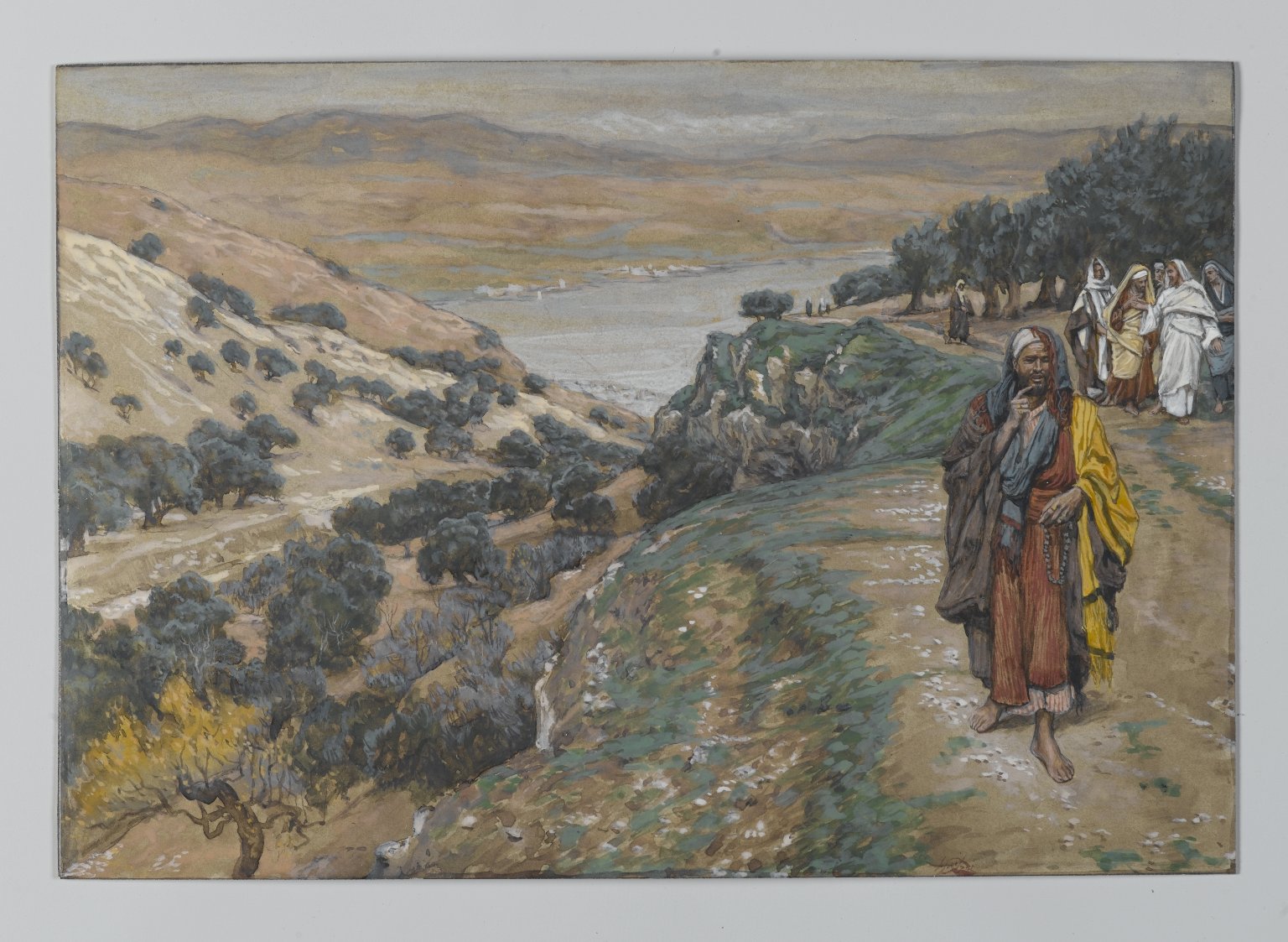
Today’s Gospel is a vivid picture of the problem of human nature. As Our Lord is about to set out on a journey a man stops Him and asks:
‘Good Teacher, what must I do to inherit eternal life?’
‘Athro da, beth a wnaf i etifeddu bywyd tragwyddol?’ (Mk 10:17)
Jesus replies:
“Why do you call me good? No one is good except God alone. You know the commandments: ‘Do not murder, Do not commit adultery, Do not steal, Do not bear false witness, Do not defraud, Honour your father and mother.’”
“Pam yr wyt yn fy ngalw i yn dda? Nid oes neb da ond un, sef Duw. Gwyddost y gorchmynion: ‘Na ladd, na odineba, na ladrata, na chamdystiolaetha, na chamgolleda, anrhydedda dy dad a’th fam.’” (Mk 10:18-19)
Our Lord’s reply is both self-deprecating and stresses duty towards one’s neighbour. Our faith is something which we live out in our lives. The man has done this. At which point the conversation develops.
‘And Jesus, looking at him, loved him, and said to him, “You lack one thing: go, sell all that you have and give to the poor, and you will have treasure in heaven; and come, follow me.” Disheartened by the saying, he went away sorrowful, for he had great possessions.’
‘Edrychodd Iesu arno ac fe’i hoffodd, a dywedodd wrtho, “Un peth sy’n eisiau ynot; dos, gwerth y cwbl sydd gennyt a dyro i’r tlodion, a chei drysor yn y nef; a thyrd, canlyn fi.” Cymylodd ei wedd ar y gair, ac aeth ymaith yn drist, oherwydd yr oedd yn berchen meddiannau lawer’ (Mk 10:21-22)
Before everything else, Jesus looks at the man and loves him. This is an encounter with a God who is love itself. God loves us, that is why He sent Jesus to be born among us, to live among us, to die for us, and rise again. It is the heart of our faith: God loves us. If I said nothing else this morning or ever after, know that you are loved by God, and let this love transform your life. Christ does, however, require much of the young man He is talking to. If we want to be truly rich in God’s eyes, then we need to give away our riches, and follow Jesus. However, like so much of Christ’s teaching this is something that is easy to say, but somewhat more difficult to do. The theory is definitely simpler than the practice.
Now is a time when we give thanks for the Harvest, we pause to thank God for His generosity towards us, in giving us food. We also thank our creator and sustainer for the wonders of His Creation — even the wind and the rain. Most of all for giving us His Son, Jesus Christ, the Word made flesh, whom we receive in the Eucharist.
God is generous towards us, providing us with the things we need to live. He expects us to be generous in return. It isn’t that much to ask, is it? We are called to live generously, to be a generous Church, full of generous Christians. We are, but it is good to be reminded of the fact, even if it makes us a bit uncomfortable on times. That is ok. Following the Christian faith can, and should, challenge us. The comforting tradition of Harvest time should not prevent us from taking a hard look at the world. How we treat God’s world, whether we share our bread with the hungry, how we put our faith into action in society, and how we daily follow God’s will. These are all challenging things to do, and are areas in our lives where we can always improve.
The world around will tell us that we need to care about wealth, power, and stuff. That these are the way to be happy, to be powerful, and successful, and the way to gain respect, and value in the eyes of others and ourselves. That these are the means to happiness and respect is certainly a seductive proposition, and many are seduced by it, both within the church and outside. The temptation to be relevant, to give people what they want rather than what they need, to go along with the ways of the world. To be seduced by selfishness, self-interest, and sin. But we need to get some perspective: these things do not matter in the grand scheme of things. Wealth, power, and influence, are of no use to us when we are dead. They won’t help us when we stand before our maker. We cannot take possessions with us when we depart from this world, for there are no pockets in shrouds. Our worldly goods may benefit our immediate family and friends, but even that is no guarantee of anything in the long term. Would we not rather, when all is said and done, be remembered as kind, generous, loving people, quick to forgive, and seek forgiveness. Isn’t this a better way to be?
Let us then give thanks to God for all that He has done for us. Let us be generous, and loving, seeking to acquire the only thing worth having: not treasure on Earth, but treasure in Heaven. Meanwhile, let us sing the praises of God the Father, God the Son, and God the Holy Spirit. To whom be ascribed all glory, dominion and power, now and forever. Amen.
 Novus Motus Oxoniensis