Remembrance Sunday 2024

When I was at school we had an educational trip to Normandy and stayed at Arramanches. The hotel was near the beach which formed a section of ‘Gold Beach’, part of the Normandy Landings. One of the temporary Mulberry Harbours, built by the Allies could still be seen in the sea. A highlight of the trip was a visit to Bayeux, both to see the tapestry and also to visit the British Military Cemetery. Bayeux War Cemetery contains the graves of nearly five thousand British and Commonwealth soldiers who died on the beaches of Normandy, some eighty years ago. There is something deeply profound and moving about being confronted with the scale of death and sacrifice made during the Normandy Campaign and in other theatres of war. It makes us realise that the freedom, peace, and security we now enjoy comes at a huge cost.

Today we give our thanks to Almighty God for all who have served and died for our country, and also for the peace in which we currently live. We give thanks for those who continue to serve and protect us, putting their lives on the line to keep us safe. We also give thanks for the work of the Royal British Legion, who, for over a hundred years, have raised money to support veterans, and to keep alive the memory of those who died. We wish them continued success in their important work.

As we recall the sacrifice made by people from the villages in which we live, from this country, and from all over the world, our remembrance must be an active one which has an effect on our lives. We remember the generosity of those who gave their lives to ensure that we can live free from warfare and suffering. Such generosity must leave a mark on our lives, and help us to learn from the mistakes of the past, and do all that we can to prevent them from being repeated in the future.

The concept of peace is not simply the absence of war, but rather the right ordering of the world around us. It means living the way God wants us to live. That stands for living in harmony, and love, one with another, and forgiving each other. In this morning’s reading from Matthew’s Gospel, Our Lord says:

‘Gwyn eu byd y tangnefeddwyr: oherwydd cânt hwy eu galw’n feibion Duw’

‘Blessed are the peacemakers, for they will be called sons of God’ (Mt 5:9)

Peacemaking is costly and difficult. That is because it is rooted in sacrifice and forgiveness. However, there is no other way to bring about the peace for which we long. The greatest example we have of such forgiveness and sacrifice is the Cross. Here Jesus demonstrates to humanity how much we are loved by God, and the lengths to which the Son of God is prepared to go to show the world love, and to reconcile people both to God and to each other. 

The story does not end there. Jesus’ Death is followed by His Resurrection, on Easter Day, Sul y Pasg. Christ offers humanity the gift of eternal life, so that in Him our lives are changed and not ended. Christians believe that our earthly life is a prelude to our hope of eternity in Heaven, in the close presence of God.

This is how we should understand our life on earth: as a preparation for the life to come. When we listen to Christ’s teaching in the Sermon on the Mount, we find in Our Lord’s words a template for how we should live, as people of love and generosity. Such a lifestyle is consistent with the vision of the prophet Isaiah. He looks forward to a time when the wolf will lay with the lamb, and when swords will be beaten into ploughshares. God is ultimately responsible for such things, but we have our part to play as well — helping to make the Kingdom of God a reality. God’s Kingdom is a place of love, forgiveness, and reconciliation. A place where wounds are healed, and humanity is restored by Our Lord and Saviour Jesus Christ. Who offered Himself so that we might live, and enjoy life in all its fulness.

My brothers and sisters, we are all called to cooperate with God and with each other, so that our lives are characterised by the love and service we see in Christ. This same love and service is shown by those who gave their lives so that we might enjoy the peace and freedom for which they longed. We are grateful, and we gather to remember them, and the peace which they won at so great a cost. We take time to reflect upon their example and dedicate ourselves to continuing what they started — bringing comfort to those who mourn, and striving for a world characterised by justice and peace. We do so together, knowing that our efforts honour the injured and the fallen. 

Therefore, let all of us gathered here today follow Jesus to the Cross and beyond. Let us live out God’s love, mercy, and service in our own lives. Let us take care of each other, and honour the memory of those who have gone before us.

We will remember them.

Ni â’u cofiwn hwy. 

Trinity xxiii – Love Actually

IN the 2003 film Bruce Almighty, Jim Carey’s character, Bruce, feels like his life is falling apart. As he drives in the dark, he begs God to tell him what to do, to give him a sign, or a signal. Immediately, a truck appears in front of him loaded with road signs saying, ‘Wrong way’, ‘Do not enter’, and ‘Stop!’. Bruce ignores the signs, overtakes the truck and then crashes his car into a lamppost. He is not hurt, but he is angry with God for not listening to his peas for guidance. This comedic scene brings home the message that sometimes we ask for God’s help in our lives and then fail to listen to what God is telling us to do.

In this morning’s Gospel, Jesus is in Jerusalem, engaging in some theological discussions in the Temple. He has just been talking to a group of Sadducees about the Resurrection. Their conversation gains to the attention of a Scribe, a legal expert, who asks Our Lord:

“Prun yw’r gorchymyn cyntaf o’r cwbl?”

“Which commandment is the most important of all?” (Mk 12:28)

Jesus answers, as we would expect, with words which also form part of this morning’s first reading from Deuteronomy:

“Y cyntaf yw, ‘Gwrando, O Israel, yr Arglwydd ein Duw yw’r unig Arglwydd, a châr yr Arglwydd dy Dduw â’th holl galon ac â’th holl enaid ac â’th holl feddwl ac â’th holl nerth.’” 

“The most important is, ‘Hear, O Israel: The Lord our God, the Lord is one. And you shall love the Lord your God with all your heart and with all your soul and with all your mind and with all your strength.’” (Mk 12:29-30)

These words form the Shema, are a prayer recited three times a day by Jews. They are a declaration of faith in God, and represent how each person is called to love God with all of our being. To this Our Lord adds: 

“Yr ail yw hwn, ‘Câr dy gymydog fel ti dy hun.’ Nid oes gorchymyn arall mwy na’r rhain.”

“The second is this: ‘You shall love your neighbour as yourself.’ There is no other commandment greater than these.” (Mk 12:31)

Christ quotes from Leviticus (19:18) to show our duty towards our neighbour. Christians are commanded both to love, and to will the good of others, as St Thomas Aquinas said in the Summa Theologiae:Love is to will the good of another, Mae cariad ewyllysio y Dda o’r eraill’. To love, then, is not simply an act of passion or emotion — something which we feel — but it is also something which we choose to do. As followers of Christ, we desire to see others flourish, and we work towards that end. Love takes effort. To choose someone else’s good reminds us that we do not exist for our own sake, and that our lives are lived in community and relationship with others. We are called to be loving and generous, just as God has been loving and generous towards us in Christ. We seek to cooperate with God in promoting human flourishing. 

Our Lord’s teaching meets with the Scribe’s approval

“Da y dywedaist, Athro; gwir mai un ydyw ac nad oes Duw arall ond ef. Ac y mae ei garu ef â’r holl galon ac â’r holl ddeall ac â’r holl nerth, a charu dy gymydog fel ti dy hun, yn rhagorach na’r holl boethoffrymau a’r aberthau.”

“You are right, Teacher. You have truly said that he is one, and there is no other besides him. And to love him with all the heart and with all the understanding and with all the strength, and to love one’s neighbour as oneself, is much more than all whole burnt offerings and sacrifices.” (Mk 12:32-33)

Our duty towards God and our neighbour — namely to love them — is foundational to how we practise our religion and how we live our lives. This responsibility informs all that we are, and all that we do, and also promotes human flourishing. The scribe recognises this, and rather than tying to catch Jesus out, he is genuinely interested in seeing the world become a better place.

Such a positive response elicits a similar one from Jesus:

A phan welodd Iesu ei fod wedi ateb yn feddylgar, dywedodd wrtho, “Nid wyt ymhell oddi wrth deyrnas Dduw.”

And when Jesus saw that he answered wisely, he said to him, “You are not far from the kingdom of God.” (Mk 12: 34)

The scribe is not far from following the signs and becoming a follower of ‘The Way’. However, while he agrees with Jesus’ teaching, the scribe still does not recognise Jesus as the Messiah, which Bartimaeus, in last Sunday’s Gospel, was able to do despite being blind.

As Christians we believe that Jesus is our great high priest, who gives Himself, on our behalf, as an offering to God the Father, out of love. This is what takes place on the Cross at Calvary. God, in Christ, gives everything. The life of the Son of God is offered freely, to reconcile what sin has thrust apart. Jesus is the greatest example of generosity that exists. This is the heart of the Christian Faith: Christ dies for us and rises again to heal the wounds of sin and division and to open up the way to Heaven for those who believe in Him. At its heart the message of the Gospel is love: love of God and neighbour. This is what Our Lord demonstrates on the Cross. The greatest expression of God’s love for humanity, which is made present in the Eucharist. Each and every time the Eucharist is celebrated, we, the people of God, are fed with Christ’s Body and Blood, to be built up in love. The love of God becomes something which we can touch and taste. Jesus gives Himself to us, so that we can grow in the love of God and of each other.

So my brothers and sisters in Christ, let us be nourished by Him in Word and Sacrament. Let us be filled with the love of God and love of our neighbours, so that this love forms who we are and what we do. Let us also give praise and honour to God the Father, God the Son, and God the Holy Spirit. To whom be ascribed all glory, dominion and power, now and forever. Amen.

Trinity XXII – Living the life of Faith

To the sighted, the experience of being blind is difficult to imagine. We hear that the other senses are often stronger in those with minimal or no sight. The former Home Secretary, David Blunkett, blind from birth, was once heard to comment on the quality of a pass made during a football game. When he was asked how he knew, he replied that the sound of the kick and the reaction of the crowd meant that it must have been a good ball from a player to a teammate.

In this morning’s Gospel, Jesus and His disciples arrive at Jericho. They have walked about seventy miles from the Sea of Galilee, presumably down the Jordan River Valley, and are fast approaching Jerusalem. As the group leaves the town of Jericho they meet some beggars by the roadside. One of them is a blind man named Bartimaeus. On learning that Jesus is passing by, he cries out:

“Iesu, Fab Dafydd, trugarha wyrthyf.”

“Jesus, Son of David, have mercy on me!” (Mk 10:47)

Bartimaeus somehow recognises Jesus as the Messiah and asks Him for mercy. We do the same at the beginning of every Eucharist when we say, ‘Christe eleison, Crist trugarha, Christ have mercy’. The cries of Bartimaeus annoy the people around him, who tell him to be quiet and to stop causing a commotion. However, Bartimaeus does not listen to them. Instead he cries out all the more:

“Fab Dafydd, trugarha wrthyf.”

“Son of David, have mercy on me!” (Mk 10:48)

Bartimaeus is desperate. He longs for God’s mercy, and he longs for healing. Though he may be blind, Bartimaeus can see what many others cannot: that Jesus is the Messiah, the one who will heal and restore Israel. His faith in Jesus and his insistence pay off, as Jesus stops and asks to see him. 

Taflodd yntau ei fantell oddi arno, llamu ar ei draed a dod at Iesu. Cyfarchodd Iesu ef a dweud, “Beth yr wyt ti am i mi ei wneud iti?” Ac meddai’r dyn dall wrtho, “Rabbwni, y mae arnaf eisiau cael fy ngolwg yn ôl.”

And throwing off his cloak, he sprang up and came to Jesus. And Jesus said to him, “What do you want me to do for you?” And the blind man said to him, “Rabbi, let me recover my sight.” (Mk 10:50-51)

Bartimaeus does not want to beg for alms, he wants to see again, and he trusts Jesus to be able to help him. As he moves towards the Messiah, the blind man drops his cloak. This is his most valuable possession: the one thing that kept him warm and dry. He gives up everything for Jesus.

Dywedodd Iesu wrtho, “Dos, y mae dy ffydd wedi dy iacháu di.” A chafodd ei olwg yn ôl yn y fan, a dechreuodd ei ganlyn ef ar hyd y ffordd.

And Jesus said to him, “Go your way; your faith has made you well.” And immediately he recovered his sight and followed him on the way. (Mk 10:52)

Without even touching Bartimaeus, Jesus heals him. It is because of his trust and faith in Christ, that Bartimaeus is healed. Note that instead of rushing off, Bartimaeus follows the Saviour, and starts living the life of faith there and then. He is healed and immediately becomes a follower of Jesus. When he was blind Bartimaeus longed for the light and now he follows Jesus, the Light of the world. This healing miracle becomes a story of faith, and in that faith we too can follow Bartimaeus’ example.

The first believers in Jesus were known as followers of The Way, (Acts 9:2) and this is what Bartimaeus becomes. He follows Jesus on the way, both literally and metaphorically. He trusts Jesus, he has faith in Him, and he follows Him. In Mark’s Gospel the story of Bartimaeus acts as a bridge between the teaching and miracles of Jesus’ ministry in Galilee and His time in Jerusalem leading up to His death. Christ will enter Jerusalem on a donkey, as the Messiah, and will teach the people of Jerusalem how to follow God, fulfilling the hope and expectation of the prophets. Bartimaeus’ faith allows him to recognize the Messiah. The people of Jerusalem, on the other hand, cannot see that Jesus is the Christ, the Anointed One. They are blind to the Truth.

We too are ‘on The Way’, followers of Jesus who long for the same healing and restoration that takes Bartimaeus from being a beggar to becoming a disciple. We are called to be like Bartimaeus and to trust in Christ to be at work in our lives: transforming us, helping us to see the true way, and helping us to follow Him. Jesus, whose name means ‘God saves’ ‘Yeshua’, is in Jericho. In the Old Testament Joshua conquers Jericho. While in the New Testament, Jesus brings healing to this city. Through His Son, God is saving His people, who respond like Bartimaeus by following Him.

Today, in Mark’s Gospel, we see prophecy fulfilled. The Messiah has come to restore the faithful and to bring the healing for which each individual deeply longs. Christ offers the world healing and restoration. All we have to do is to accept His offer and follow Him, casting off the things that hold us back. We are called to follow both the lead and the example of Jesus as we make our journey through life.

So my brothers and sisters in Christ, let us follow Jesus on The Way, and live out God’s love, and mercy in our own lives. As we do so, let us give praise and honour to God the Father, God the Son, and God the Holy Spirit. To whom be ascribed all glory, dominion and power, now and forever. Amen.

Homily for Trinity XXI: True Leadership

When I was still quite a young child, I developed a love of poetry. This has grown and deepened throughout my adult life. One of my favourite poets is Roger McGough, a Liverpudlian whose verses are comic, pithy, and profound. One of his poems is called ‘The Leader’. It goes:

‘I wanna be the leader
I wanna be the leader
Can I be the leader?
Can I? I can?
Promise? Promise?
Yippee I’m the leader
I’m the leader

OK what shall we do? ’ 

This poem captures perfectly the human desire for power and control, and ends with a question. Once you become a leader you have to lead. So what do you do? In the poem the speaker does at least ask the question, ‘What shall we do?’, which begins a conversation about what the future will hold. Sadly, too often those in power do not consult in this way, and end up imposing their will on others. The temptation to acquire power and misuse it is part of our fallen human nature. History is littered with examples of people who are both attracted to and corrupted by power. The Church is no exception, because , like all organisations it is made up of human beings who are vulnerable to the seductiveness of power and its trappings.

In this morning’s Gospel, Our Lord is approached by James and John, the sons of Zebedee, who ask Him:

“Teacher, we want you to do for us whatever we ask of you.” 

“Athro, yr ydym am iti wneud i ni y peth a ofynnwn gennyt.” (Mk 10 35)

That is a very bold request to make of anyone, let alone Jesus. They are basically asking Jesus to grant them whatever they ask for. But Our Lord does not seem shocked, surprised, or upset. Instead, He replies quite calmly: 

“What do you want me to do for you?” And they said to him, “Grant us to sit, one at your right hand and one at your left, in your glory.” 

“Beth yr ydych am imi ei wneud i chwi?” A dywedasant wrtho, “Dyro i ni gael eistedd, un ar dy law dde ac un ar dy law chwith yn dy ogoniant.” (Mk 10:36-37)

This is no small thing to ask for. It comes across as shocking and presumptuous. James and John are asking for special treatment, and for the ultimate place of honour – sitting either side of Christ in Heaven. The surprising thing is that Jesus does not tell them off, or question their motives. Instead He continues to have a reasoned conversation with them. 

And Jesus said to them, “The cup that I drink you will drink, and with the baptism with which I am baptized, you will be baptized, but to sit at my right hand or at my left is not mine to grant, but it is for those for whom it has been prepared.” 

Ac meddai Iesu wrthynt, “Cewch yfed y cwpan yr wyf fi yn ei yfed, a bedyddir chwi â’r bedydd y bedyddir fi ag ef, ond eistedd ar fy llaw dde neu ar fy llaw chwith, nid gennyf fi y mae’r hawl i’w roi; y mae’n perthyn i’r rhai y mae wedi ei ddarparu ar eu cyfer.” (Mk 10:39-40)

In the verses which come before today’s reading, Jesus has been teaching the Twelve disciples for the third time that He must go to Jerusalem and suffer and die. At this point in the Gospel narrative, Christ is making His final journey from Galilee up to Jerusalem, prior to His Passion and Death. So Our Lord is telling James and John that they will have to suffer and die like Him. Suffering lies at the heart of who Jesus is. Hence our first reading from the prophet Isaiah, which stresses the importance of suffering for God’s servant — something that Jesus will shortly experience. 

This whole discussion has upset the other disciples, who are angry that the sons of Zebedee have tried to gain power and prestige. James and John are thinking and acting in worldly ways. They have not yet fully understand and begun to live out the ways of the Kingdom of God. Power is not something to be sought, because it can be seductive and corrupting and can turn us away from how God wants us to live. Instead Our Lord offers His disciples a different way to live:

“But it shall not be so among you. But whoever would be great among you must be your servant, and whoever would be first among you must be slave of all. For even the Son of Man came not to be served but to serve, and to give his life as a ransom for many.”

“Ond nid felly y mae yn eich plith chwi; yn hytrach, pwy bynnag sydd am fod yn fawr yn eich plith, rhaid iddo fod yn was i chwi, a phwy bynnag sydd am fod yn flaenaf yn eich plith, rhaid iddo fod yn gaethwas i bawb. Oherwydd Mab y Dyn, yntau, ni ddaeth i gael ei wasanaethu ond i wasanaethu, ac i roi ei einioes yn bridwerth dros lawer.” (Mk 10:43-45)

Jesus calls His followers to operate according to a different paradigm, one based on service of God and each other rather than the exercise of power. The life of Jesus Christ, who gives his life ‘as a ransom for many’ (Mk 10:45) is our example. Christ willingly lays down His life to liberate people for God, to free them from death and sin, and to offer them, and us, eternal life in Heaven with God. This is why we celebrate Jesus’ Passion, Death, and Resurrection. The Cross and the Empty Tomb are the heart of our faith because they demonstrate God’s love for us. God loves each of us enough to die for us. Christ rises on the third day to show us that our eternal destiny is to enjoy God’s love forever in Heaven. The Christian Church proclaims this Gospel truth, and encourages all people to share in the gift God offers to us.

The gentle and kind way that Jesus treats His disciples shows us that we are dealing with a God of mercy, whose primary motivations are compassion and love. Service and Sacrifice lie at the heart of our faith, and not power or privilege.

So my brothers and sisters and Christ, may we follow Jesus to the Cross and beyond, and live out God’s love, mercy, and service in our own lives. Instead of seeking prestige and power for ourselves, let us take care of each other and the world around us, and give praise and honour to God the Father, God the Son, and God the Holy Spirit. To whom be ascribed all glory, dominion and power, now and forever. Amen.

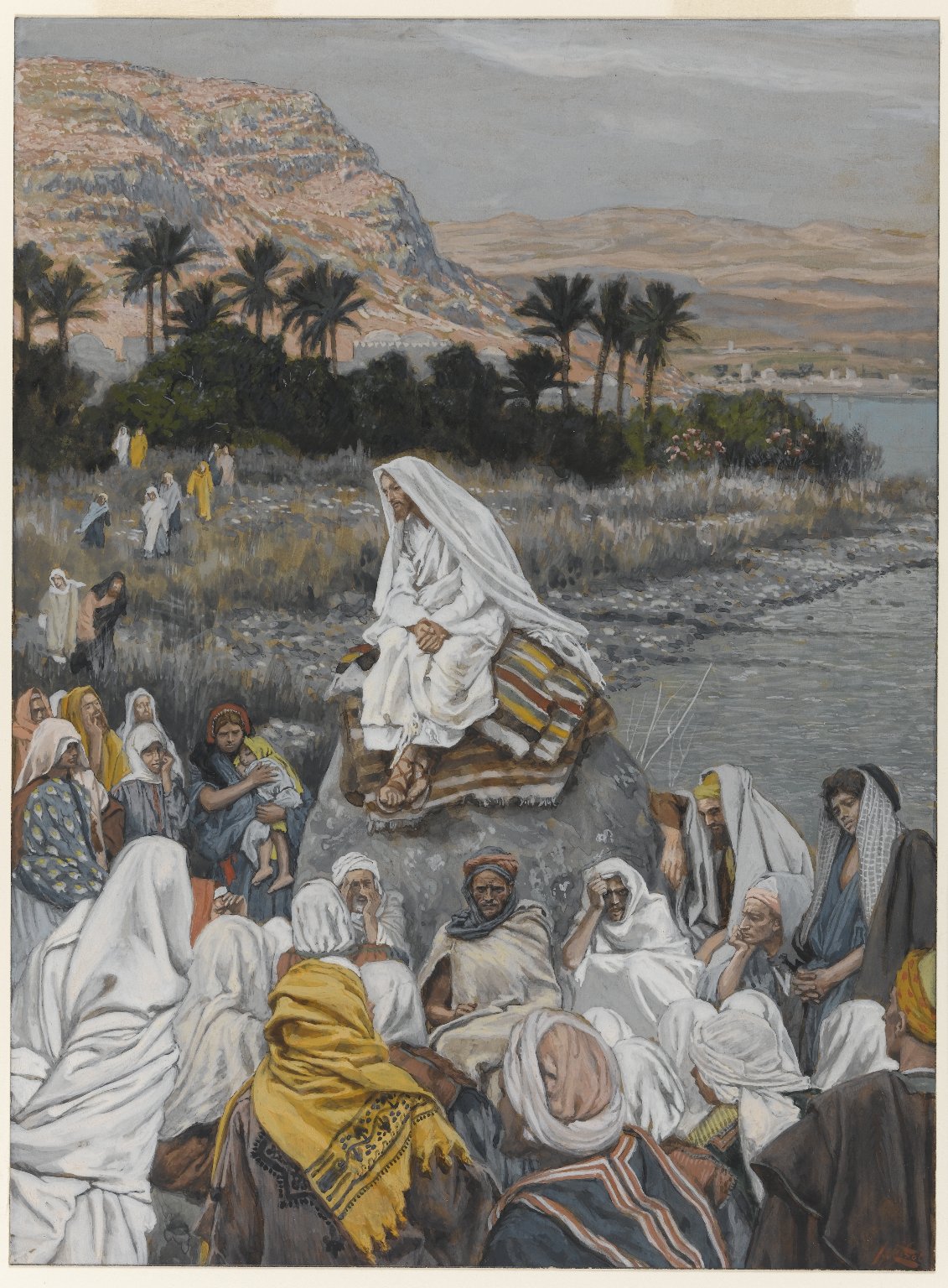
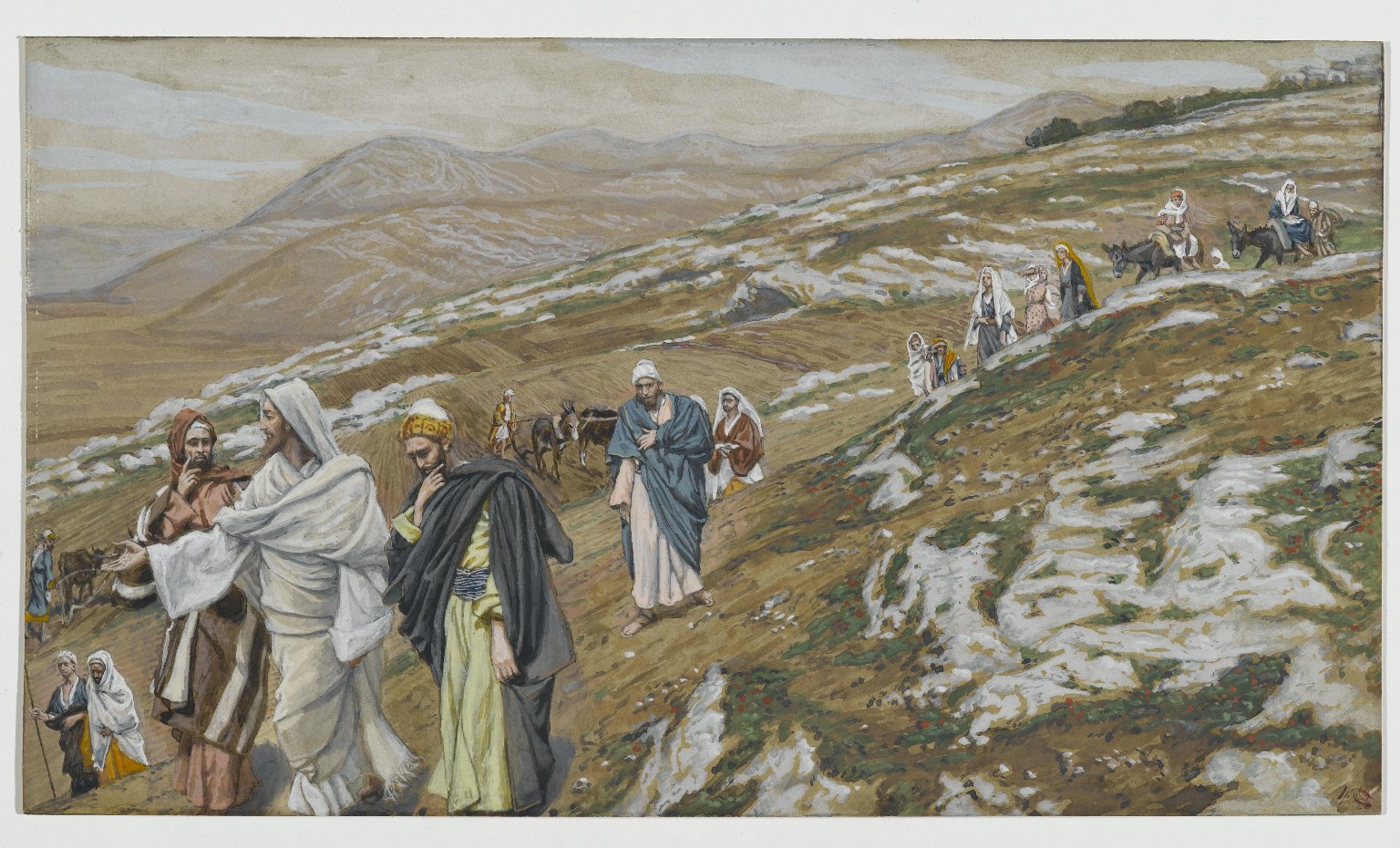
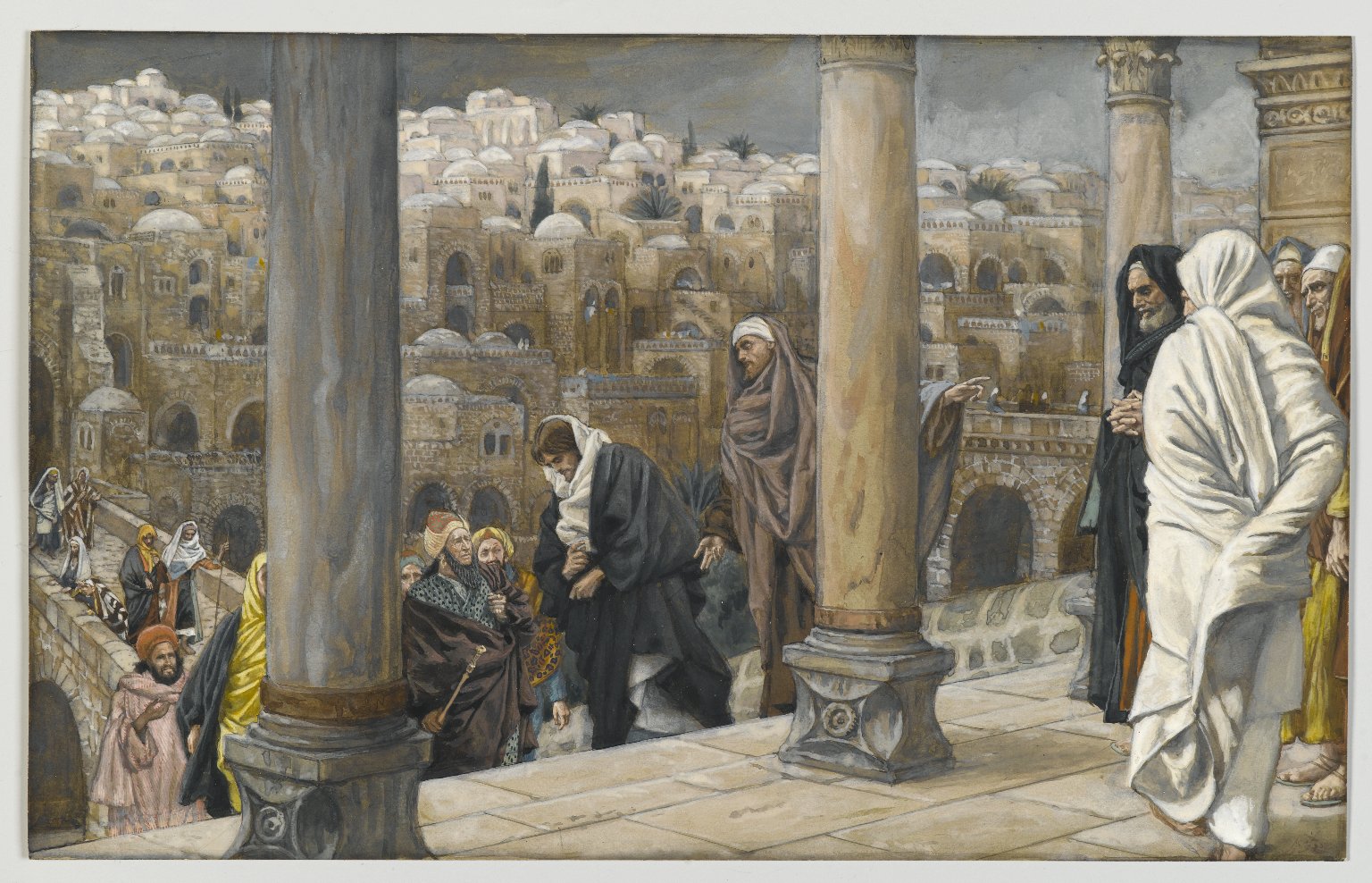
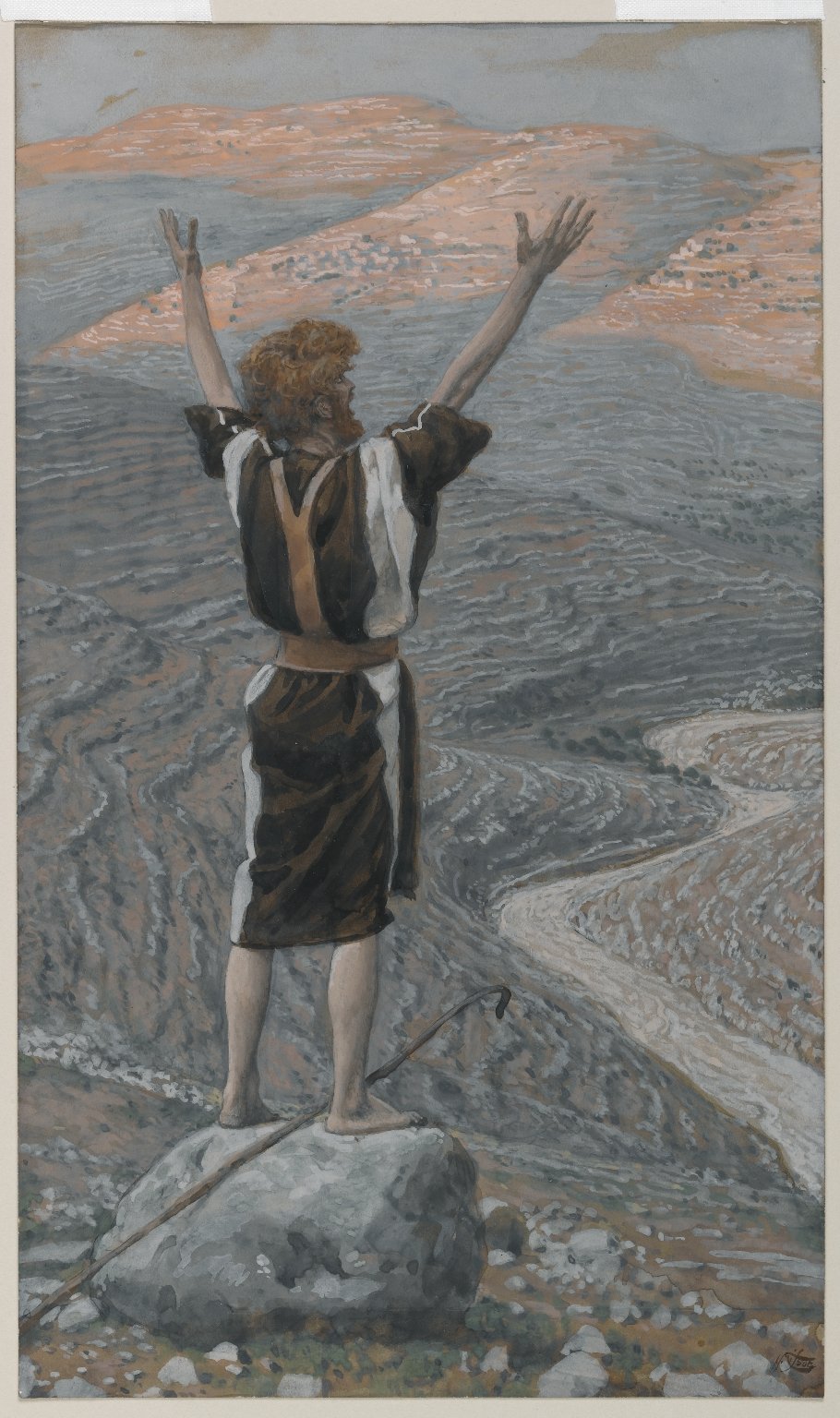
James Tissot: Jesus Travelling [Brooklyn Museum]

Homily for Trinity XX: Seeking Treasure in Heaven

In 1963 the Beatles released a version of the song ‘Money’ which was first recorded by Barret Strong in 1959 as a single on the Tamla label. This same song later became a hit for by the Flying Lizards in 1979. The lyrics begin:

‘The best things in life are free / But you can keep ‘em for the birds and bees / Now gimme money, (that’s what I want)’ 

These words capture the mindset of modern humanity perfectly. We live in a world which values wealth above all things. Such a worldview is completely opposed to Christianity. We have to take a stand against it, because it is wrong. It is deeply damaging to humanity in particular and society in general.

Today’s Gospel is a vivid picture of the problem of human nature. As Our Lord is about to set out on a journey a man stops Him and asks: 

‘Good Teacher, what must I do to inherit eternal life?’

‘Athro da, beth a wnaf i etifeddu bywyd tragwyddol?’ (Mk 10:17)

Jesus replies:

“Why do you call me good? No one is good except God alone. You know the commandments: ‘Do not murder, Do not commit adultery, Do not steal, Do not bear false witness, Do not defraud, Honour your father and mother.’” 

“Pam yr wyt yn fy ngalw i yn dda? Nid oes neb da ond un, sef Duw. Gwyddost y gorchmynion: ‘Na ladd, na odineba, na ladrata, na chamdystiolaetha, na chamgolleda, anrhydedda dy dad a’th fam.’” (Mk 10:18-19)

Our Lord’s reply is both self-deprecating and stresses duty towards one’s neighbour. Our faith is something which we live out in our lives. The man has done this. At which point the conversation develops.

‘And Jesus, looking at him, loved him, and said to him, “You lack one thing: go, sell all that you have and give to the poor, and you will have treasure in heaven; and come, follow me.” Disheartened by the saying, he went away sorrowful, for he had great possessions.’

‘Edrychodd Iesu arno ac fe’i hoffodd, a dywedodd wrtho, “Un peth sy’n eisiau ynot; dos, gwerth y cwbl sydd gennyt a dyro i’r tlodion, a chei drysor yn y nef; a thyrd, canlyn fi.” Cymylodd ei wedd ar y gair, ac aeth ymaith yn drist, oherwydd yr oedd yn berchen meddiannau lawer’ (Mk 10:21-22)

Before everything else, Jesus looks at the man and loves him. This is an encounter with a God who is love itself. God loves us, that is why He sent Jesus to be born among us, to live among us, to die for us, and rise again. It is the heart of our faith: God loves us. If I said nothing else this morning or ever after, know that you are loved by God, and let this love transform your life. Christ does, however, require much of the young man He is talking to. If we want to be truly rich in God’s eyes, then we need to give away our riches, and follow Jesus. However, like so much of Christ’s teaching this is something that is easy to say, but somewhat more difficult to do. The theory is definitely simpler than the practice.

Now is a time when we give thanks for the Harvest, we pause to thank God for His generosity towards us, in giving us food. We also thank our creator and sustainer for the wonders of His Creation — even the wind and the rain. Most of all for giving us His Son, Jesus Christ, the Word made flesh, whom we receive in the Eucharist.

God is generous towards us, providing us with the things we need to live. He expects us to be generous in return. It isn’t that much to ask, is it? We are called to live generously, to be a generous Church, full of generous Christians. We are, but it is good to be reminded of the fact, even if it makes us a bit uncomfortable on times. That is ok. Following the Christian faith can, and should, challenge us. The comforting tradition of Harvest time should not prevent us from taking a hard look at the world. How we treat God’s world, whether we share our bread with the hungry, how we put our faith into action in society, and how we daily follow God’s will. These are all challenging things to do, and are areas in our lives where we can always improve.

The world around will tell us that we need to care about wealth, power, and stuff. That these are the way to be happy, to be powerful, and successful, and the way to gain respect, and value in the eyes of others and ourselves. That these are the means to happiness and respect is certainly a seductive proposition, and many are seduced by it, both within the church and outside. The temptation to be relevant, to give people what they want rather than what they need, to go along with the ways of the world. To be seduced by selfishness, self-interest, and sin. But we need to get some perspective: these things do not matter in the grand scheme of things. Wealth, power, and influence, are of no use to us when we are dead. They won’t help us when we stand before our maker. We cannot take possessions with us when we depart from this world, for there are no pockets in shrouds. Our worldly goods may benefit our immediate family and friends, but even that is no guarantee of anything in the long term. Would we not rather, when all is said and done, be remembered as kind, generous, loving people, quick to forgive, and seek forgiveness. Isn’t this a better way to be?

Let us then give thanks to God for all that He has done for us. Let us be generous, and loving, seeking to acquire the only thing worth having: not treasure on Earth, but treasure in Heaven. Meanwhile, let us sing the praises of God the Father, God the Son, and God the Holy Spirit. To whom be ascribed all glory, dominion and power, now and forever. Amen.

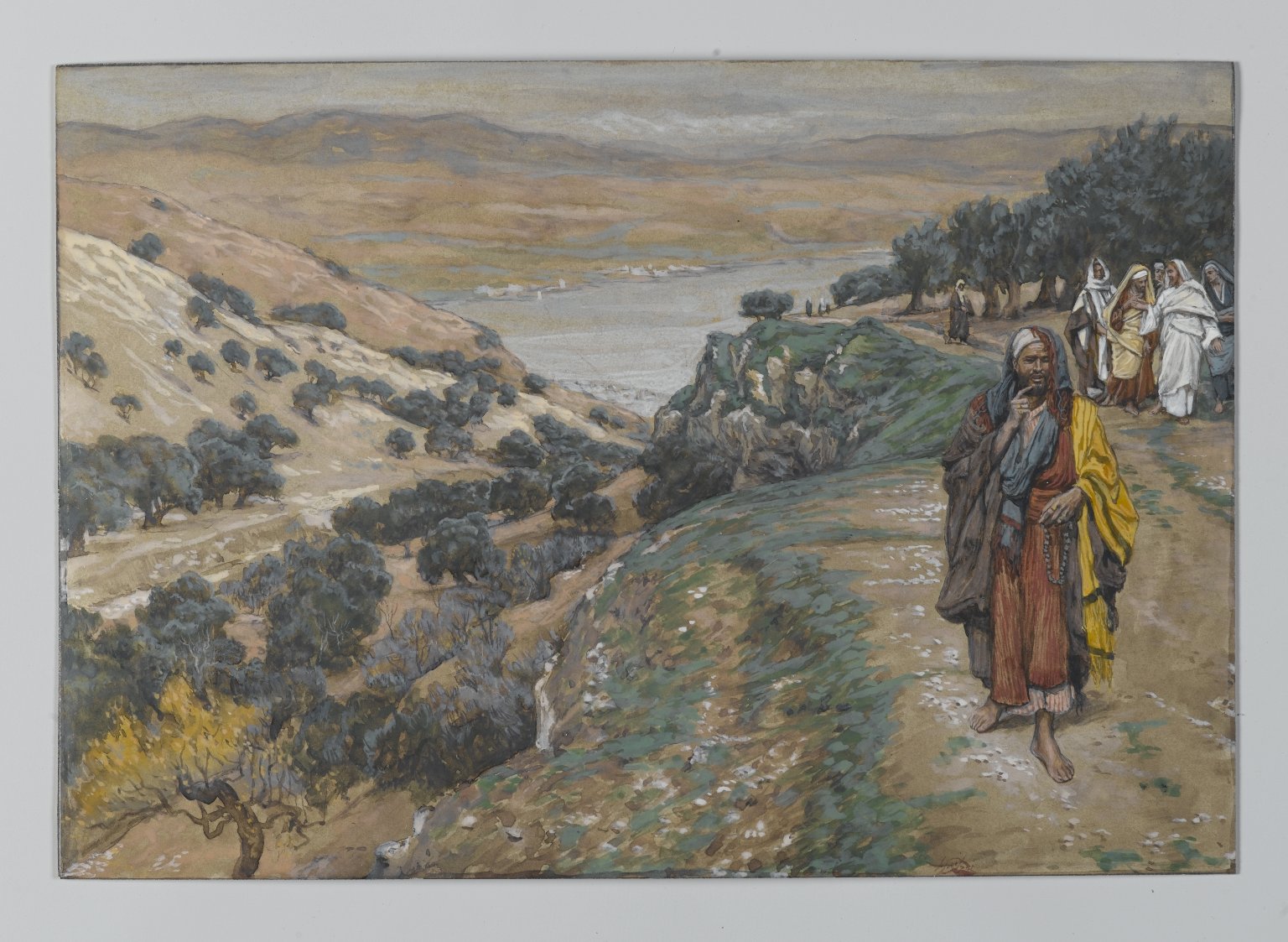
James Tissot: The Rich Young Man Went Away Sorrowful (Le jeune homme riche s’en alla triste) [Brooklyn Museum]

Harvest 2024

Many of you may have seen ‘Clarkson’s Farm’ on the television, where Jeremy Clarkson attempts to run a mixed farm in West Oxfordshire. This popular TV programme has been running for a few years now, and is a window into the lives of farmers. It highlights the pressures they are under, the long hours, the problems of the weather, and the ever-increasing paperwork and bureaucracy. The programme also explains the modern farming methods used to produce the food we eat. As we give thanks for the harvest, we also give thanks to those who work the land, those who care for livestock, and those who transport, distribute, and sell our food. 

This morning’s Gospel is taken from the middle of the Sermon on the Mount, an extended series of teaching by Jesus about how to live a Christian life. It begins with an encouragement not to be anxious or afraid, ‘Paid ag ofni’, those oft-repeated words which stress the importance of combatting fear and anxiety. Many people worry about food and clothing, as well as heating and maintaining where they live. These things constitute our basic needs as human beings: what we need in order to be healthy and happy. Yet Our Lord tells us not to become over-concerned about such things. 

Jesus uses an example to make His point:

‘Look at the birds of the air: they neither sow nor reap nor gather into barns, and yet your heavenly Father feeds them. Are you not of more value than they?’

‘Edrychwch ar adar yr awyr: nid ydynt yn hau nac yn medi nac yn casglu i ysguboriau, ac eto y mae eich Tad nefol yn eu bwydo. Onid ydych chwi yn llawer mwy gwerthfawr na hwy?’ (Mt 6:26)

God feeds the birds. If we are worth more than birds, whom God looks after, will He not care for us even more? Our Lord reinforces this point by stressing how worry about such things is self-defeating:

‘And which of you by being anxious can add a single hour to his span of life?’

‘Prun ohonoch a all ychwanegu un funud at ei oes trwy bryderu?’ (Mt 6:27)

We know this to be true, and yet we still worry. It is human nature. Often we have everything we need, but the pressures of the world make us think we need more. Adverts, social influencers, and the fashion industry all tell us that we need the latest thing in order to be happy. However, as Jesus reminds us: 

‘But if God so clothes the grass of the field, which today is alive and tomorrow is thrown into the oven, will he not much more clothe you, O you of little faith?’

‘Os yw Duw yn dilladu felly laswellt y maes, sydd yno heddiw ac yfory yn cael ei daflu i’r ffwrn, onid llawer mwy y dillada chwi, chwi o ychydig ffydd?’ (Mt 6:30)

We often fall down by becoming too involved in the things of this world, rather than trusting in God. We want to be in charge of our lives, when instead we should listen to the words of Jesus:

‘But seek first the kingdom of God and his righteousness, and all these things will be added to you.’

‘Ond ceisiwch yn gyntaf deyrnas Dduw a’i gyfiawnder ef, a rhoir y pethau hyn i gyd yn ychwaneg i chwi.’ (Mt 6:33)

Rather than worrying about the practicalities of daily life, our focus needs to be the Kingdom of God — in other words how we live our lives. Are we grateful, generous people, caring for those in need, showing love and forgiveness? If we live this way, then we create a society where the values of God’s Kingdom shape our every action: who are, what we do. We become people characterised by joy, and not fear. Joy is infectious, it simply has to be shared, which leads to thankfulness and gratitude.

The prophet Joel, in this morning’s first reading, presents us with a vision of plenty:

‘Fear not, O land; be glad and rejoice, for the Lord has done great things!’

‘Paid ag ofni, ddaear; bydd lawen a gorfoledda, oherwydd fe wnaeth yr Arglwydd bethau mawrion.’ (Joel 2:21)

The benefits for God’s people are clear, as is what they must do:

‘You shall eat in plenty and be satisfied, and praise the name of the Lord your God, who has dealt wondrously with you.’

‘Fe fwytewch yn helaeth, nes eich digoni, a moliannu enw’r Arglwydd eich Duw, a wnaeth ryfeddod â chwi.’ (Joel 2:26)

Thanksgiving for the harvest is important, because, first and foremost, by giving thanks we are recognising that we are not in control, God is. Christians are called to work, to enjoy the fruits of God’s creation, and to share the bounty of the earth so that none are hungry, and that all people may live in peace and plenty. 

It is good to gather together to give thanks to God. To celebrate the Eucharist together, the great prayer of thanksgiving which Jesus taught His disciples to offer. The more we come together to do this, the more we are formed into people who are thankful and generous. We are nourished not only by the fruits of the earth, but by God, and with God, so that we may be transformed into His likeness. This is the Kingdom of God, here and now, among us. This is the reality which Christ came to bring though His Life, His Death, and His Resurrection. 

By giving thanks for our daily bread, we are following God’s commands, and helping to make His Kingdom a reality. Filled with joy and gratitude for what God has done for us, we give thanks to God, and follow His instructions to feed the hungry, and clothe the naked. By doing so, we embody the love, forgiveness, and generosity which are the hallmarks of a loving, forgiving, generous God.

And so, my brothers and sisters in Christ, as we give thanks to God for the Harvest and His abundant loving kindness towards us, may we continue the work of His Kingdom. Let us trust in our Heavenly Father and help others to come to know and love God the Father, God the Son, and God the Holy Spirit. To whom be ascribed all glory, dominion and power, now and forever. Amen.

Trinity IX – The God of Surprises

A surprise present or a visit from a loved one often brings great joy. One of the loveliest and yet most challenging aspects of Christianity is the fact that we worship a surprising God. Our Heavenly Father uses all sorts of people, and situations, in ways which we do not expect. The Christian journey is not always straightforward. The key is faith: trusting God to be at work, and knowing that everything will be good in the end.

In the Gospel, the people of Israel are like sheep without a shepherd. They feel let down and abandoned by their political and religious leaders. Such sentiments are widespread and understandable. However, there has been something of a religious revival in Galilee, and Our Lord has attracted quite a considerable following, numbering over five thousand people. After the proclamation of the Kingdom of God, the call to repentance and baptism, and some inspiring healing and teaching, people are excited. Prophecies are being fulfilled. The question on everyone’s lips is: Could this man really be the Messiah? 

Once again Jesus has taken His disciples across the See of Galilee for some rest and recuperation. However, the people’s need is great. They understand Christ’s healing miracles as a sign of the Kingdom, and they are keen to learn, and to be fed and nourished, both physically, and spiritually. Our Lord goes up onto higher ground and sits down. This makes perfect sense, especially as He is about to address the large number of people following Him. We should note the context. It is almost the Feast of Passover, the holiest day of the Jewish year, which marked their journey from slavery in Egypt to freedom in the Promised Land. The Passover was the time when people expected the Messiah to return, to lead the people to freedom. 

Then Jesus asks the disciple named Philip a question:

“Where are we to buy bread, so that these people may eat?”

“Ble y gallwn brynu bara i’r rhain gael bwyta?” (Jn 6:5)

Our Lord already knows the answer, but He wants to see what Philip thinks. The disciple replies:

“Two hundred denarii would not buy enough bread for each of them to get a little.”

“Ni byddai bara gwerth dau gant o ddarnau arian yn ddigon i roi tamaid bach i bob un ohonynt.” (Jn 6:7)

Two hundred denarii was over six months wages for a labourer. It is a large sum of money, which would buy a lot of food. Also feeding such a large crowd would be a logistical nightmare. Apart from the cost, there is the question of how you would get the food in the first place. Then Peter’s brother Andrew makes an intervention:

“There is a boy here who has five barley loaves and two fish, but what are they for so many?”

“Y mae bachgen yma a phum torth haidd a dau bysgodyn ganddo, ond beth yw hynny rhwng cynifer?” (Jn 6:9)

Andrew has a point: if £10,000 worth of food would only give people a mouthful, then a small bag full of food is a drop in an ocean of need. The situation appears to be an impossible one. Then Jesus acts.

Our Lord asks the people to sit down. There are five thousand men, and possibly another fifteen thousand women and children. Jesus takes the loaves and fishes, and blesses them. After thanking God for the food, He gives it to be distributed among the people. Not only does everyone eat as much as they want, but at the end there are twelve baskets of leftovers. It is through prayer and blessing that bread can be broken, distributed, and provide sustenance on a scale, and in a way, that defies human expectation and understanding. Not only are a huge number of people fed, but, as a sign of the super-abundance of God’s love and mercy, there is more left over at the end than there was to begin with! In the same way, the kingdom of God, of which the bread is a sign, grows when God’s love is shared. This love satisfies people’s deepest needs. The more we share it, the more there is. The Kingdom of God is a place of generosity and love, a place where our needs are answered and we are transformed.

John’s Gospel describes how Jesus takes, blesses, breaks and distributes bread, demonstrating how the Kingdom of God works. This looks forward to the Institution of the Eucharist by Jesus at the Last Supper.

The same miraculous feeding that took place by the shore of the Sea of Galilee will also happen here today. We gather as the people of God, united in love and faith, and offer ourselves. Like the small boy, we give the bread that we have, so that it may be taken, blessed, broken and given out. In this way we become partakers in the mystical supper of the Kingdom of God. We eat the Body of Christ not as ordinary food, but as bread for the journey of faith. The Eucharist is the sign and token of God’s love. This is the means by which we enjoy the close presence of God.

The crowd recognises the miraculous feeding as a sign, signifying God’s love, and the presence of the Messiah in their midst. In response they want to enact a political coup, and make Jesus a king. This is not what Our Lord wants, so He withdraws, to be alone, to be with God. The multiplication of the loaves and fishes shows us that God is active in the world, pouring out His generous love, meeting our needs, and healing our wounds. This is not the start of a political campaign. Christ does not want earthly power. Instead, He wants to reign in our hearts, and in our lives.

God uses barley bread — the bread of the poor — to feed His people. This points to the Eucharist and to the Cross as the place where humanity is nourished and healed. We follow Christ’s example week by week, because without Him, our hunger remains unsatisfied. 

Today and every day we give thanks that God loves us. He reveals His love in ways which often surprise us, and which defy our expectations. When we trust in Christ we are transformed in this life, and the next. We become prepared for Heaven, where we, and all the faithful, will sing the praises of God the Father, God the Son, and God the Holy Spirit. To whom be ascribed all glory, dominion, and power, now and forever. Amen.

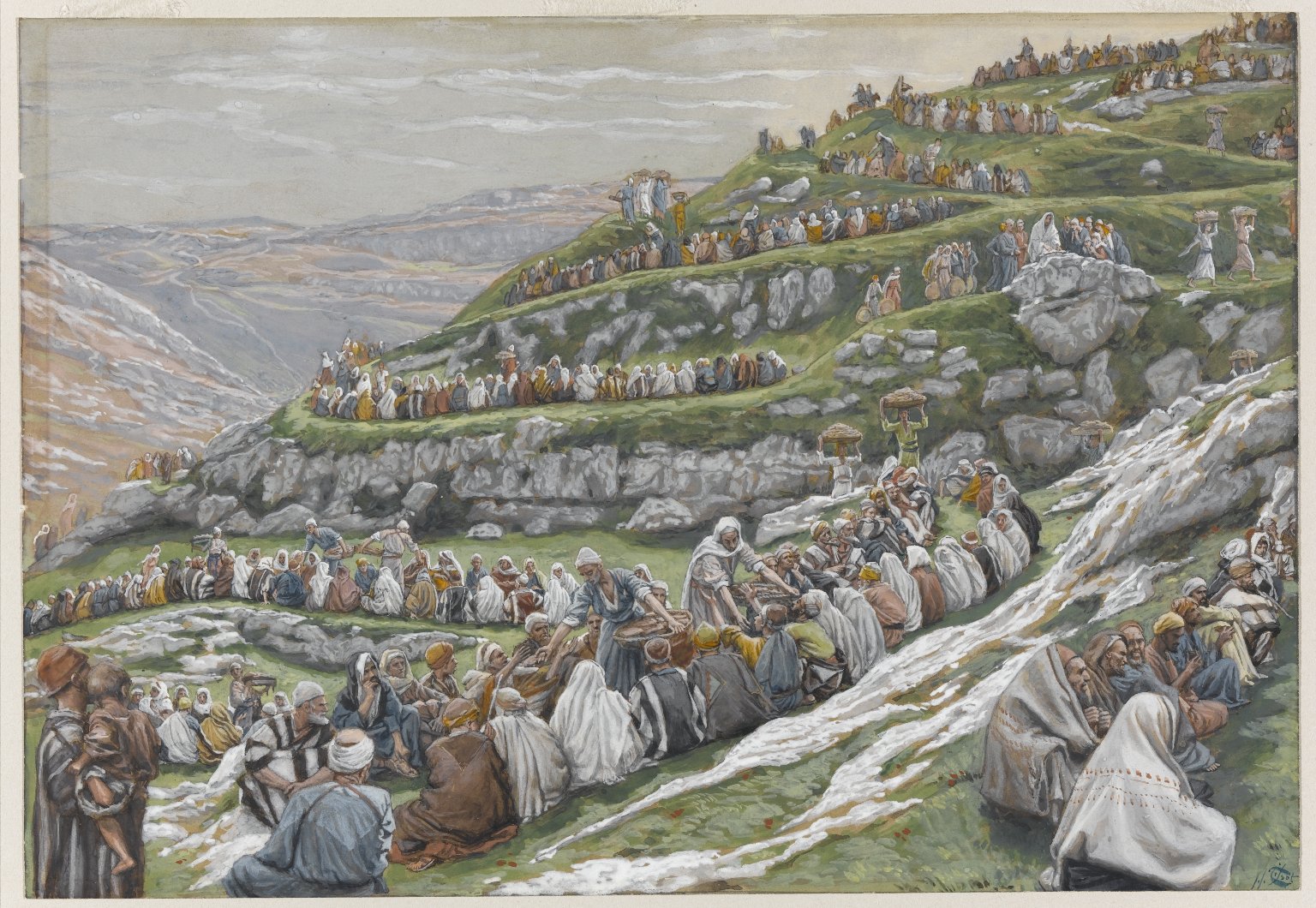
James Tissot – The Multiplication of the Loaves and Fishes (Brooklyn Museum)

Trinity VI – The Importance of Prophetic Truth in Changing Times

One of the trickiest things to do is to tell someone something they don’t want to hear. Some things can be difficult to hear, and difficult to say. Honesty and truth are essential if we want to change and grow. In Ancient Israel, prophets were sent by God to speak the truth: to call people back and to tell them where they were going wrong. When the people of Israel rebelled against God, which is the definition of sin, prophets called God’s people to repentance. They urged them to turn back to the God who loves them, and longs for them to flourish. Sadly, such messages were not always heeded:

‘The descendants also are impudent and stubborn: I send you to them, and you shall say to them, ‘Thus says the Lord God.’ And whether they hear or refuse to hear (for they are a rebellious house) they will know that a prophet has been among them.’

‘At blant wynebgaled ac ystyfnig yr wyf yn dy anfon, ac fe ddywedi wrthynt, ‘Fel hyn y dywed yr Arglwydd DDUW.’ Prun bynnag a wrandawant ai peidio — oherwydd tylwyth gwrthryfelgar ydynt — fe fyddant yn gwybod fod proffwyd yn eu mysg.’ (Ezek 2:4-5)

This is the situation which we encounter in today’s Gospel. As part of His Galilean ministry Our Lord goes to Nazareth, and teaches in the synagogue. In Luke’s account we hear Jesus reading from Isaiah:

“The Spirit of the Lord is upon me, because he has anointed me to proclaim good news to the poor. He has sent me to proclaim liberty to the captives and recovering of sight to the blind, to set at liberty those who are oppressed, to proclaim the year of the Lord’s favour.”

“Y mae Ysbryd yr Arglwydd arnaf, oherwydd iddo f’eneinio i bregethu’r newydd da i dlodion. Y mae wedi f’anfon i gyhoeddi rhyddhad i garcharorion, ac adferiad golwg i ddeillion, i beri i’r gorthrymedig gerdded yn rhydd, i gyhoeddi blwyddyn ffafr yr Arglwydd.” (Lk 4:18-19)

Clearly hearing such a prophecy and then being told that it was being fulfilled among them would be quite shocking. The people had spent five hundred years waiting for a Messiah, and now, suddenly, here he was. The worshippers in the synagogue are unwilling, or unable, to understand what is going on, so they say:

“Where did this man get these things? What is the wisdom given to him? How are such mighty works done by his hands? Is not this the carpenter, the son of Mary and brother of James and Joses and Judas and Simon? And are not his sisters here with us?” And they took offence at him.

“O ble y cafodd hwn y pethau hyn? A beth yw’r ddoethineb a roed i hwn, a’r fath weithredoedd nerthol sy’n cael eu gwneud trwyddo ef? Onid hwn yw’r saer, mab Mair a brawd Iago a Joses a Jwdas a Simon? Ac onid yw ei chwiorydd yma gyda ni?” Yr oedd ef yn peri tramgwydd iddynt. (Mk 6:2-3)

The inhabitants of Nazareth cannot reconcile the healer and teacher with the person they have seen growing up among them. Hence they stress Our Lord’s trade and family relationships. They cannot recognise the Messiah in their midst. The Nazarenes understand Christ’s human nature, but cannot see that He is divine. 

Jesus understands that a prophet is without honour among his own people. Those who think they know Him well, fail to discern what God is doing through Him. They may reject Christ, but He does not reject them. 

‘And he could do no mighty work there, except that he laid his hands on a few sick people and healed them.’

‘Ac ni allai wneud unrhyw wyrth yno, ond rhoi ei ddwylo ar ychydig gleifion a’u hiacháu.’ (Mk 6:5)

The Good News of the Kingdom is proclaimed, and healings take place. God’s love is poured out even where He is not welcomed, because God loves us, and has come to heal our wounds. Even when we turn our back on Him, Our Heavenly Father does not spurn us. The work of the Kingdom must continue:

‘And he marvelled because of their unbelief. And he went about among the villages teaching.’

‘Rhyfeddodd at eu hanghrediniaeth. Yr oedd yn mynd o amgylch y pentrefi dan ddysgu.’ (Mk 6:6)

Those who in theory should know Him best, who have known Jesus all His life, are the ones who turn their back on Him. Our Lord is amazed at their hardness of heart. He faces exactly what Ezekiel faced before Him. So Jesus continues to heal and teach, even though some do not hear, and do not believe. To those who do, Christ offers love, healing and New Life. He offers Himself in the Eucharist, so that we may have life in all its fulness.

We know who and what Jesus is. Many in the world around us reject Christ, rather like the people of Nazareth, or fail to accept Him as true God and true man. They doubt who He was, what He did, and what He said. Our duty, as Christians, is to tell people about Jesus, praying that they will want to believe. We need to model the Christian life, remembering that all things are possible — God can will do amazing things, especially when we cooperate with Him. 

Our country is currently experiencing a new start, a re-boot after the election. We pray for those who have been elected to office that they will govern with wisdom and compassion. May we too take this opportunity to re-boot and re-energise our life of faith, and shine as beacons of hope in our community and world. May we join with all creation and give glory to God the Father, God the Son, and God the Holy Spirit. To whom be ascribed all glory, dominion, and power, now and forever. Amen.

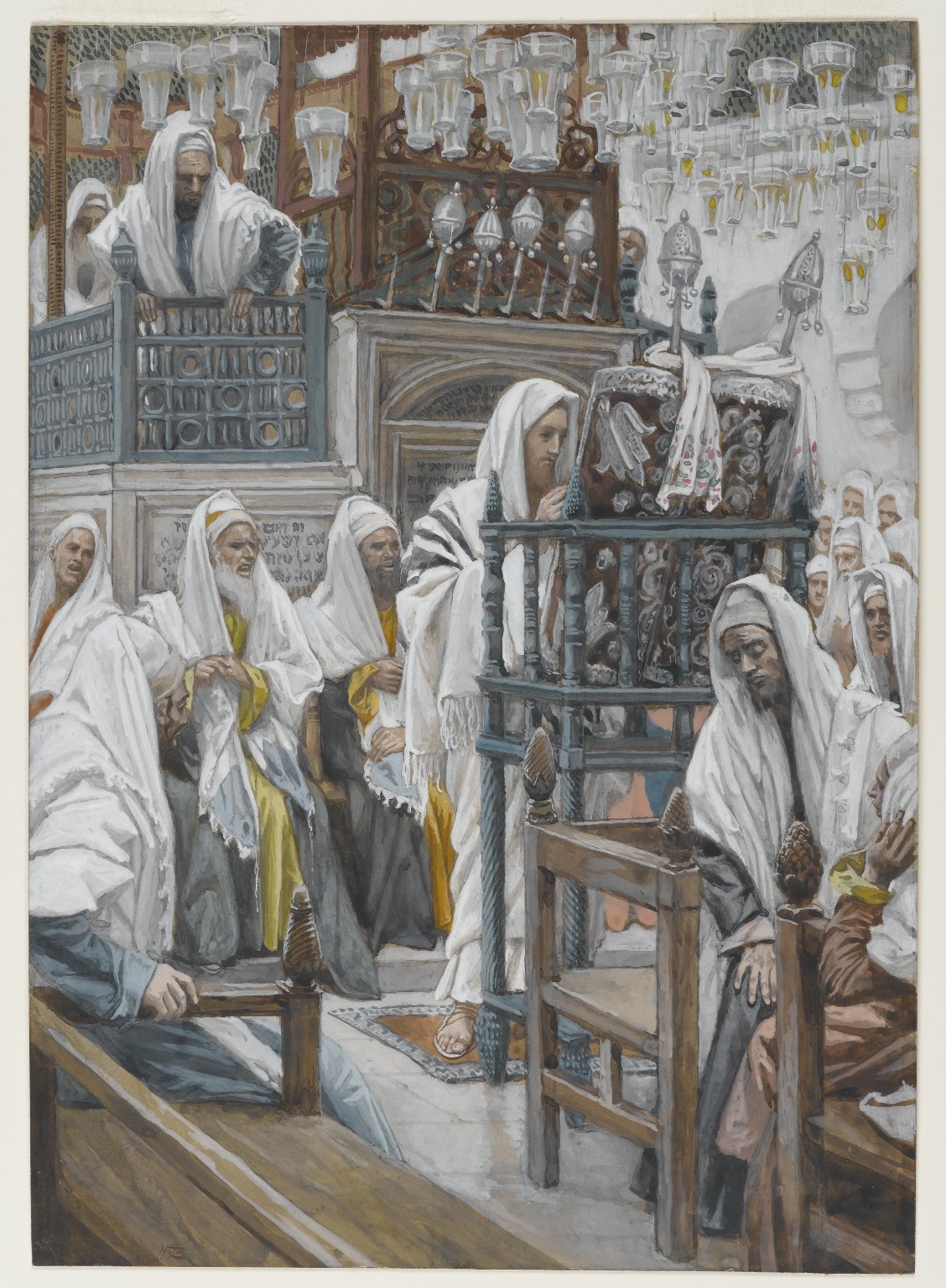
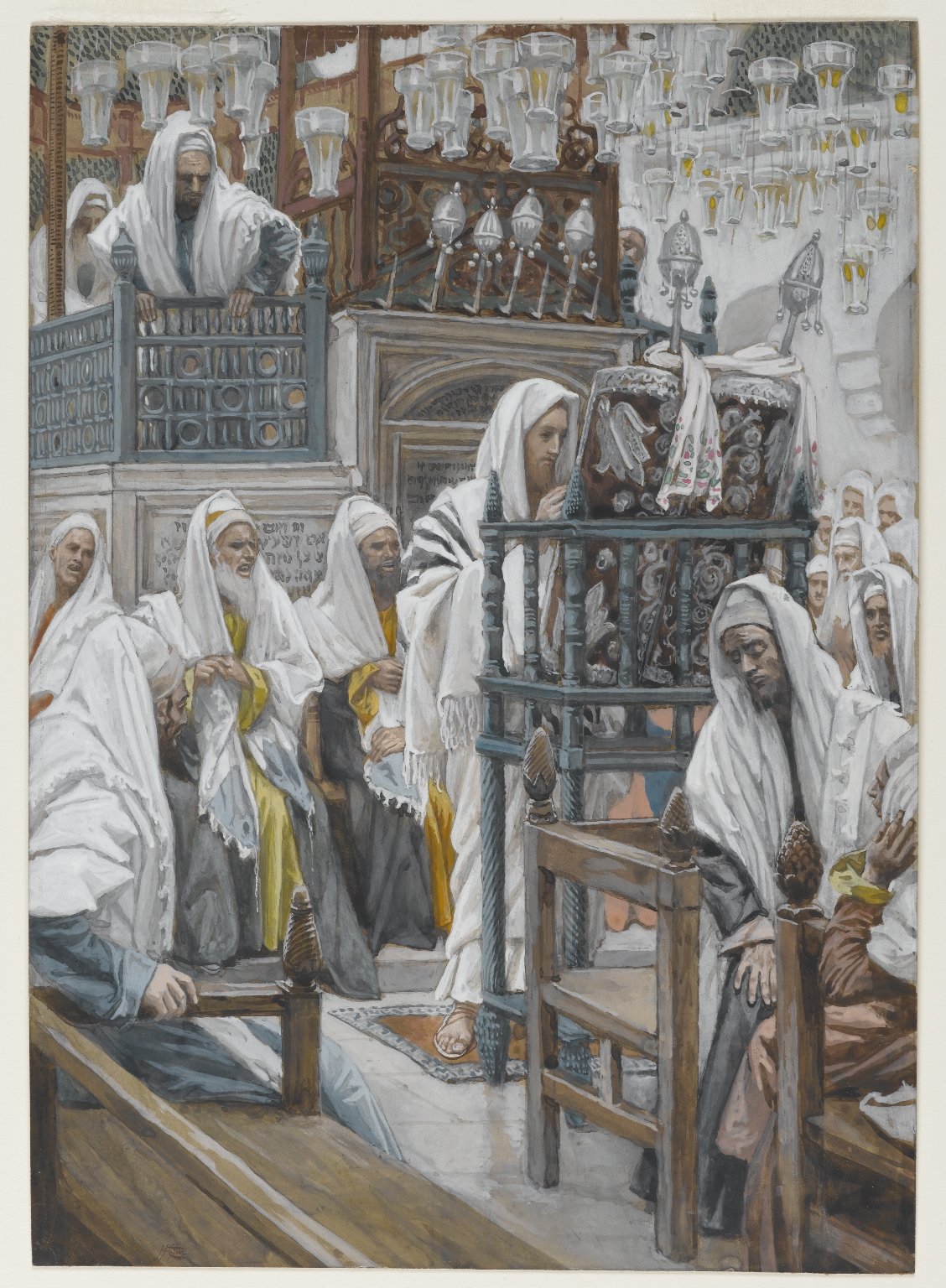
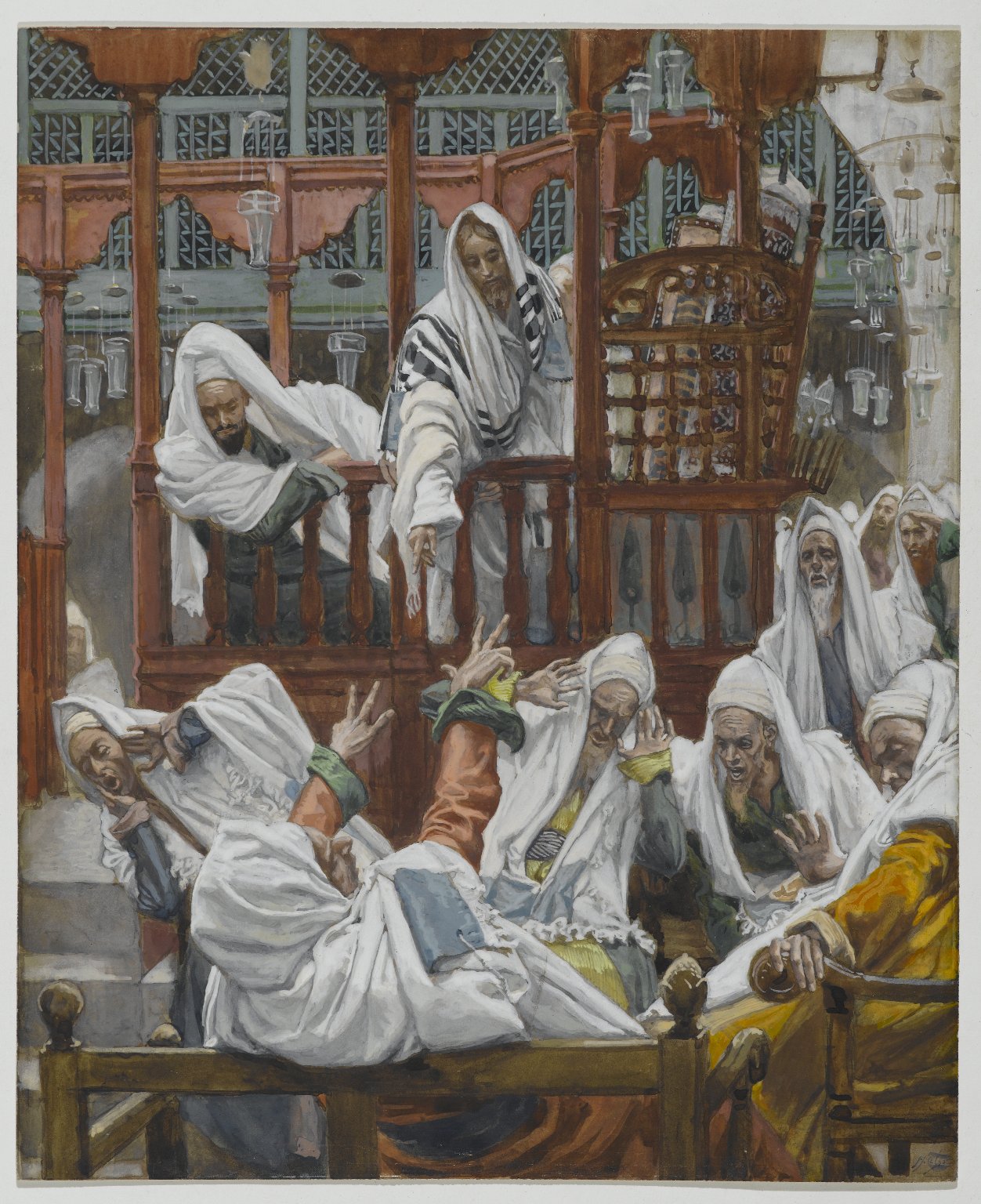
James Tissot: Jésus dans la synagogue déroule le livre [Brooklyn Museum]

Trinity IV: Transformed by Faith -Embracing God’s Love in the Midst of Life’s Storms

There are few things that can compare with a storm for making human beings feel small and helpless. When we are faced with strong winds, lashing rain and lightning, we can feel insignificant, powerless, and aware of our own mortality. I was caught in a storm, fairly recently, and it was absolutely terrifying. Such feelings are uncomfortable, and we would prefer not to experience them. They are, however, an important part of the human condition. Fear is one of the most powerful emotions we have, and it drives us to seek safety and security. Thankfully, as Christians, we know that we can find safety and security in God, our loving Creator and Sustainer. 

This loving nature of God is highlighted in the passage from the Book of Job, which is the first reading this morning. God is truly powerful, but cares for humanity:

Who shut in the sea with doors when it burst out from the womb,Thus far shall you come, and no farther, and here shall your proud waves be stayed’ 

‘Pan gaewyd ar y môr â dorau, pan lamai allan o’r groth…Hyd yma yr ei, a dim pellach, ac yma y gosodais derfyn i ymchwydd dy donnau’ (Job 38:8, 11)

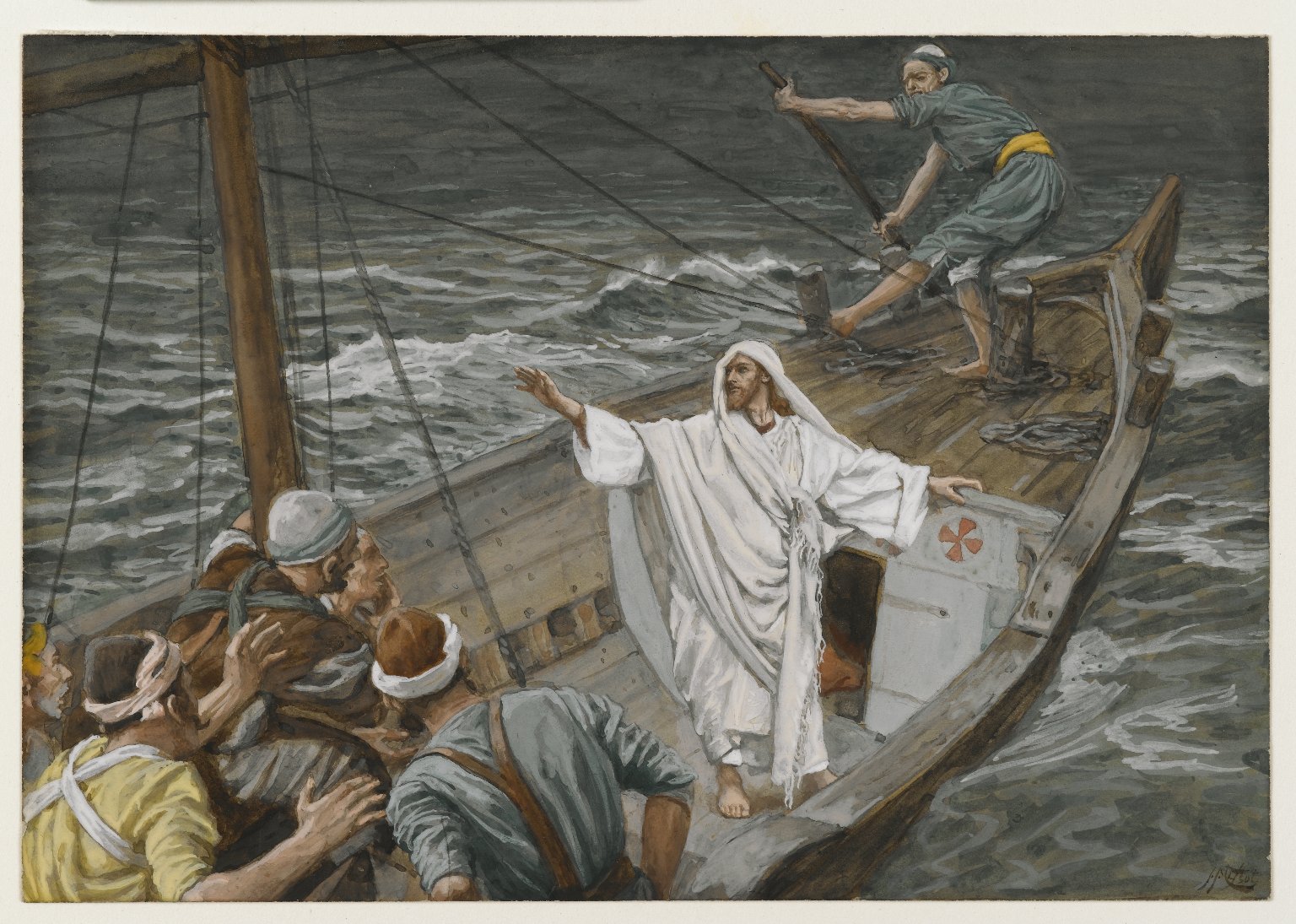
God’s power over nature is also central to this morning’s Gospel. Jesus and His disciples are crossing the Sea of Galilee when a violent storm blows up. The disciples are terrified. Despite many of them being fishermen, they are afraid that they are about to drown. This passage throws up a number of questions. Why are Jesus and His disciples crossing from the Jewish side of the Sea of Galilee to the non-Jewish side? Why are they sailing at night, rather than waiting until the next morning? We are not told the answers to these questions. However, this incident acts as a bridge between the section in Mark’s Gospel where Jesus has been teaching, to one where He will perform miracles, and put that teaching into practice. 

As the boat begins to fill with water, the disciples are becoming desperate:

And they woke him and said to him, “Teacher, do you not care that we are perishing?” And he awoke and rebuked the wind and said to the sea, “Peace! Be still!” And the wind ceased, and there was a great calm.

‘Deffroesant ef a dweud wrtho, “Athro, a wyt ti’n hidio dim ei bod ar ben arnom?” Ac fe ddeffrôdd a cheryddu’r gwynt a dweud wrth y môr, “Bydd ddistaw! Bydd dawel!” Gostegodd y gwynt, a bu tawelwch mawr.’ (Mk 4:38-39)

Jesus’ followers are afraid. There are thirteen of them packed into a boat twenty-six feet long, eight feet wide, and four feet deep.The boat is tossing, yet Jesus calmly sleeps. Once He is awoken He quickly takes control of the situation. Jesus can command the storm to cease because He is God. The ability to control the sea and its storms is a sign of divine power: God is the one who brings peace. Jesus has come to bring peace to troubled hearts. Having performed a miracle, He questions His disciples:

He said to them, “Why are you so afraid? Have you still no faith?” And they were filled with great fear and said to one another, “Who then is this, that even the wind and the sea obey him?”’ 

‘A dywedodd wrthynt, “Pam y mae arnoch ofn? Sut yr ydych heb ffydd o hyd?” Daeth ofn dirfawr arnynt, ac meddent wrth ei gilydd, “Pwy ynteu yw hwn? Y mae hyd yn oed y gwynt a’r môr yn ufuddhau iddo.”’ (Mk 4:39-41)

The answer to the disciples’ question is that Jesus is God. No-one else could do what He does. Jesus then questions why His followers feel fear and why they lack faith. To put it simply, the Disciples have not yet fully understood either who Jesus is, or what He is doing. Once they have experienced Christ’s Passion and Resurrection and seen His triumph over death, they will come to understand what is happening here. 

Jesus calms storms both real and metaphorical: on the Sea of Galilee, and in our own lives. By dealing with sin once and for all on the Cross, He has brought us a peace which passes all understanding. In every Eucharist service there is a point after the prayers when we greet each other with ‘Peace’ ‘Tangnefedd’. Being at peace allows the Christian community to:

no longer live for themselves but for him who for their sake died and was raised.

‘er mwyn i’r byw beidio â byw iddynt eu hunain mwyach, ond i’r un a fu farw drostynt, ac a gyfodwyd’ (2Cor 5:15)

Our life is not our own, because the love of Christ controls us, as St Paul writes in his Second Letter to the Corinthians (2Cor 5:14). Jesus’ Death and Resurrection provide an answer to the questions about suffering asked by Job, and by all humanity. By entering into the mystery of apparently meaningless pain and suffering, we can discover the source of all meaning, namely God. 

To be in Christ is to be a new Creation. Through our Baptism we share in Our Lord’s Death and Resurrection. In the Eucharist we are given the pledge of Eternal Life: Christ’s Body and Blood, so that we might continue to be transformed more and more into His likeness. This is the journey of Faith — trusting God, so that He may make us into what He is. We put our trust in Him, safe in the knowledge that God alone can still the storms of our life, and that His perfect love can drive out our fear. We cling to the Cross as our source of Hope, knowing that whatever happens we are loved, and that this love has the power to save us. God’s love can free us from fear.

Released from anxiety, we, like the disciples, can be truly alive and share God’s love with others. We pray that all humanity may experience the peace of the Lord and give glory to God the Father, God the Son, and God the Holy Spirit. To whom be ascribed all glory, dominion, and power, now and forever. Amen.

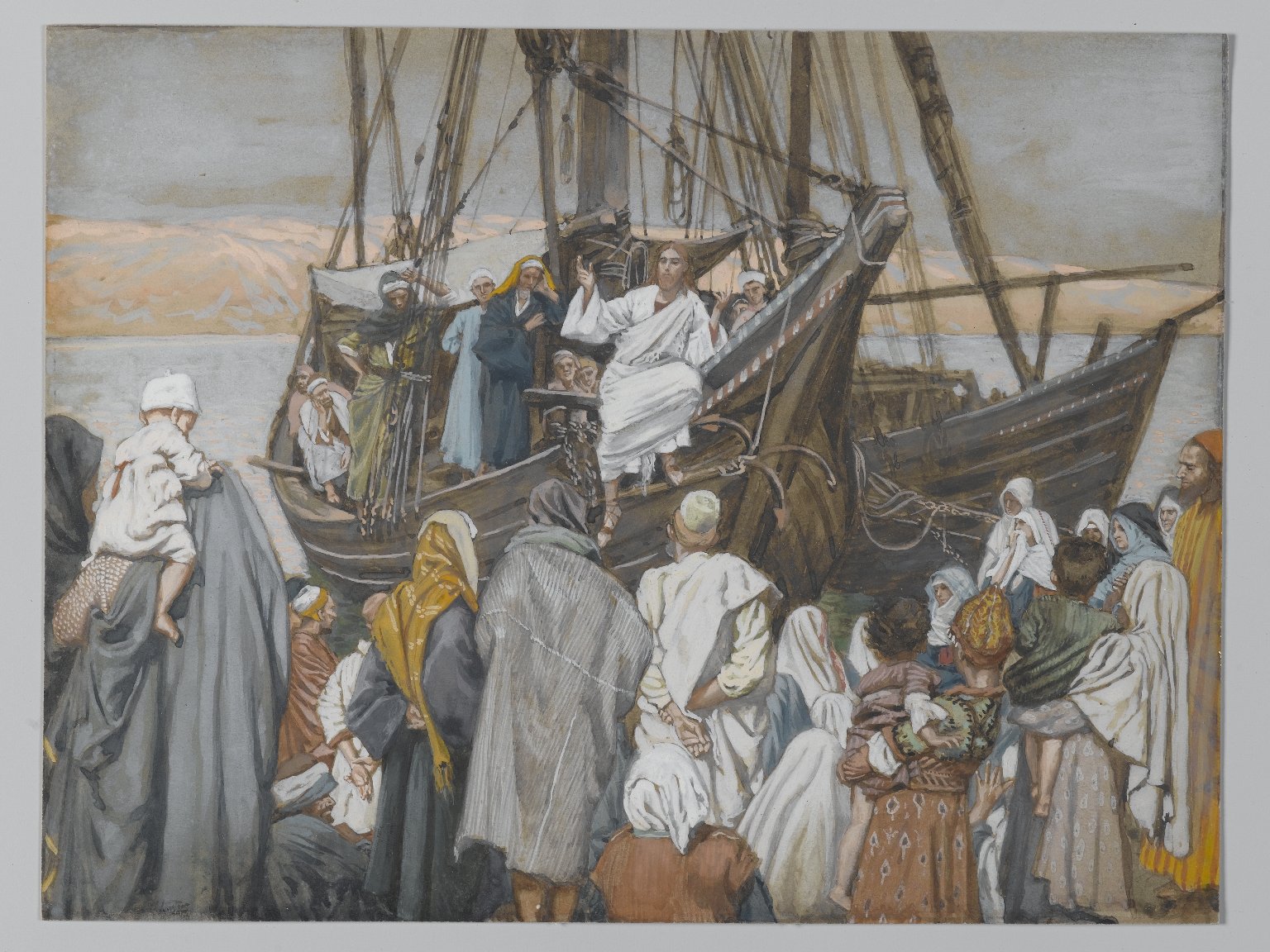
James Tissot – Jesus stilling the storm (Brooklyn Museum)

Trinity II: ‘Who are my mother and my brothers?’

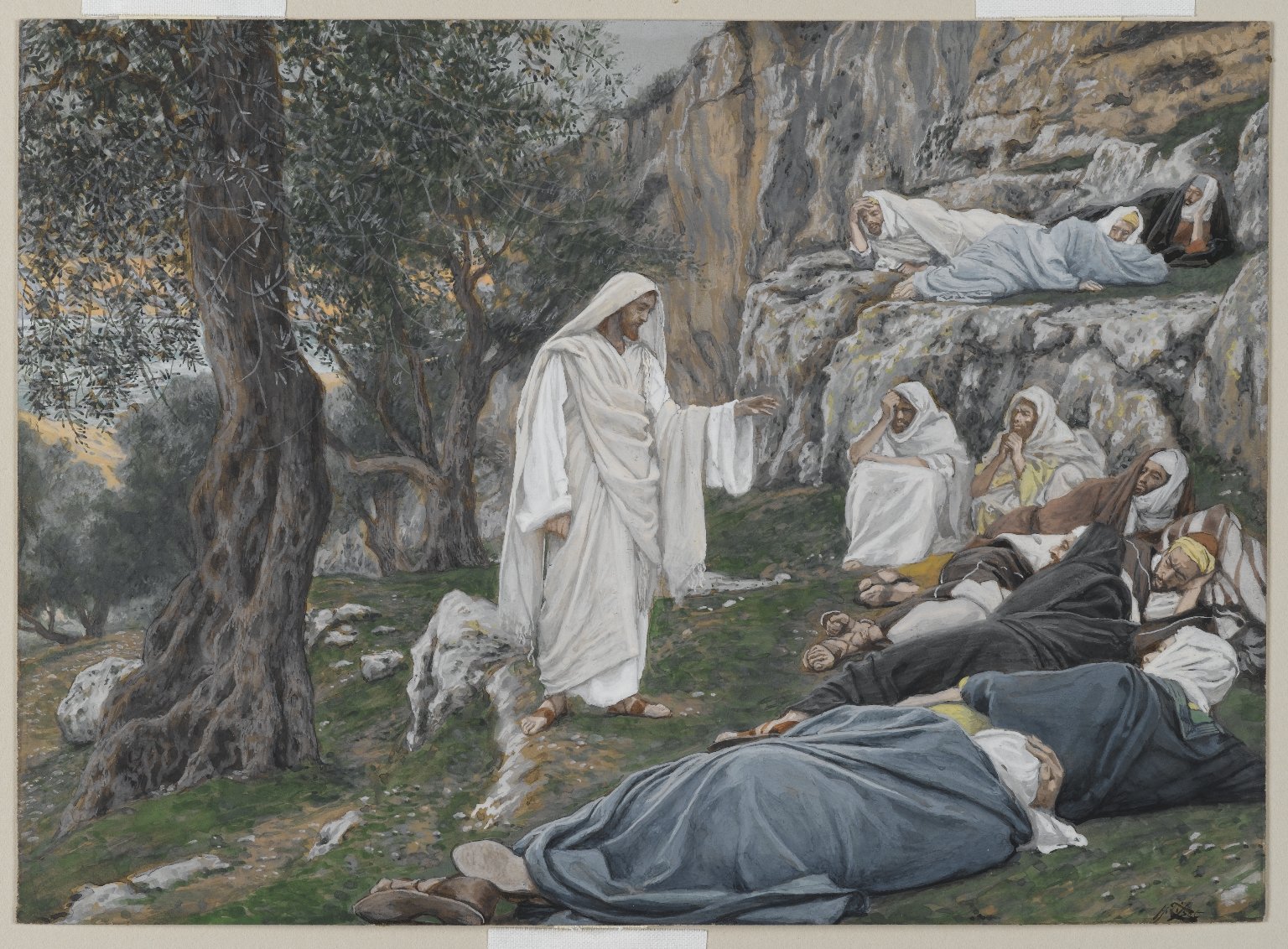
I grew up listening to the music of the 1960s and 1970s. The large size of an LP record sleeve is a great vehicle for artwork, and photography in particular. The shots are often in soft focus, giving the subjects a gentle dreamlike quality. It can be easy to think that the whole of Our Lord’s ministry was gentle and easy, especially because of how it is shown in Victorian religious art. However, today’s Gospel shows us that this was not always the case. As the passage begins there are so many people gathered around Jesus that He and His disciples are not even able to eat. People are desperate to hear what He has to say, they are desperate for healing. While their need is great, without rest and refreshment, there is no way that Christ can minister to them effectively in the long term without taking care of himself. 

We can have a lot of sympathy for Our Lord’s family, who are genuinely concerned for His wellbeing and that of His friends. They want to take care of His physical needs, as Jesus seems to be prioritising God’s people over Himself.

The religious authorities, however, have a completely different understanding of what is going on:

‘And the scribes who came down from Jerusalem were saying, “He is possessed by Beelzebul,” and “by the prince of demons he casts out the demons.”’

‘A’r ysgrifenyddion hefyd, a oedd wedi dod i lawr o Jerwsalem, yr oeddent hwythau’n dweud, “Y mae Beelsebwl ynddo”, a, “Trwy bennaeth y cythreuliaid y mae’n bwrw allan gythreuliaid.”’ (Mk 3:22)

The scribes understand the actions of this charismatic healer and teacher from Galilee as being the result of demonic possession. This is another way of saying, ‘Jesus is a fraud’ and ‘This isn’t the work of God’. Their attempt to write Christ off not only flies in the face of the evidence, but also does not follow through logically. Jesus challenges them saying: 

“How can Satan cast out Satan? If a kingdom is divided against itself, that kingdom cannot stand. And if a house is divided against itself, that house will not be able to stand. And if Satan has risen up against himself and is divided, he cannot stand, but is coming to an end.” 

“Pa fodd y gall Satan fwrw allan Satan? Os bydd teyrnas yn ymrannu yn ei herbyn ei hun, ni all y deyrnas honno sefyll. Ac os bydd tŷ yn ymrannu yn ei erbyn ei hun, ni all y tŷ hwnnw sefyll. Ac os yw Satan wedi codi yn ei erbyn ei hun ac ymrannu, ni all yntau sefyll; y mae ar ben arno.”(Mk 3:23-26)

If Jesus is possessed by the Devil, how can He cast the Devil out? His accusers have failed to see the spirit of God, the Holy Spirit, at work in Christ. The scribes refusal to see God at work is a sign of their pride and hardness of heart. They cannot discern the works of God, and write off as evil a wondrous demonstration of God’s love for humanity. The religious authorities have failed to discern what is actually going on, and have taken the easy step of finding someone to blame, someone to write off. God’s healing love is being dismissed as the work of the Devil. This is a serious matter, as Jesus explains:

“Truly, I say to you, all sins will be forgiven the children of man, and whatever blasphemies they utter, but whoever blasphemes against the Holy Spirit never has forgiveness, but is guilty of an eternal sin”— for they were saying, “He has an unclean spirit.”

“Yn wir, rwy’n dweud wrthych, maddeuir popeth i blant y ddaear, eu pechodau a’u cableddau, beth bynnag fyddant; ond pwy bynnag a gabla yn erbyn yr Ysbryd Glân, ni chaiff faddeuant byth; y mae’n euog o bechod tragwyddol.” Dywedodd hyn oherwydd iddynt ddweud, “Y mae ysbryd aflan ynddo.” (Mk 3:28-30)

The scribes have condemned themselves. Whereas they have accused Jesus of blasphemy, they are in fact the blasphemers. Jesus does not condemn them, but rather offers humanity the forgiveness of sins. This is another demonstration of God’s love being poured out on the world. The Kingdom of God is a place of healing and restoration.

Our Lord then has a confrontation with His relatives, which leads to a profound moment of teaching. When the crowd tell him that His family are outside, He answers, “Who are my mother and my brothers?””Pwy yw fy mam i a’m brodyr?” (Mk 3:33). Then, looking round, He says: ‘Here are my mother and my brothers!’ ‘Dyma fy mam a’m brodyr i’ (Mk 3:34). 

Family was, and continues to be, important, for Jews juke like it is for people in general. The family unit is the basic building block of society. But Our Lord points out that ties of kinship are less important than humanity’s relationship with God. In our baptism, we all became brothers and sisters in Christ. The Church is our family, which calls us to live in a new way with each other, a way defined by love, and not the exercise of power or control. God offers us healing and wholeness, the forgiveness of our sins, so that we can be in a new relationship both with God and with each other.

The Church comes together as a family to experience forgiveness and to be nourished by Word and Sacrament in the Eucharist. This is the most profound and meaningful thing we, as human beings, can do together. It gives us a foretaste of the joy of Heaven. In it we are fed by God, and with God. God gives himself for us, so that we might have life in Him. 

Let us therefore come and be nourished. Let us invite others to become part of God’s family. Joining with Christians throughout the world, may we sing the praises of God the Father, God the Son, and God the Holy Spirit. To whom be ascribed all glory, dominion, and power, now and forever. Amen.

James Tissot Jesus Commands the Apostles to Rest (Brooklyn Museum)

Pentecost 2024

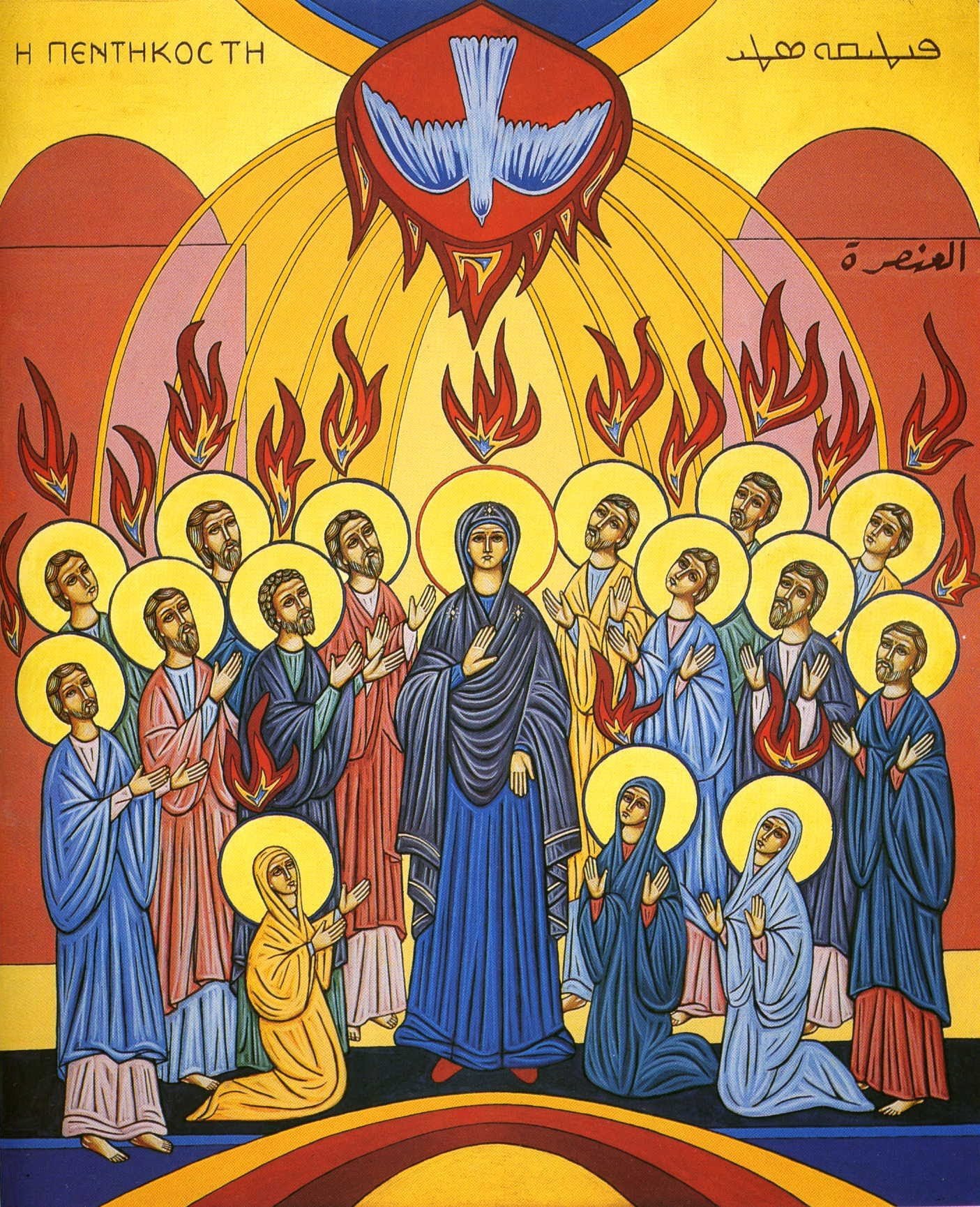
FIRE is an amazing entity. It is something that can be both a benefit, but also a danger. The heat produced by an open fire, or a log-burning stove, provides warmth and comfort. The candles in church give light and form a focus for our prayers. However, we must always take care with fire, as it is a powerful force. The disciples are described as receiving the power of the Holy Spirit through what looked like ‘divided tongues of fire’ ‘tafodau fel o dân’ (Acts 2:3).

Before his Ascension, Christ tells His disciples to wait in Jerusalem so that they may be baptized in the Holy Spirit. The twelve have again gathered in the Upper Room, along with the Blessed Virgin Mary. This is the same place where Christ instituted the Eucharist, and washed His disciples’ feet. They have gathered here because Jesus told them to be together, and to pray, saying:

 ‘you shall receive power when the Holy Spirit has come upon you; and you shall be my witnesses … to the end of the earth’ 

‘Ond fe dderbyniwch nerth wedi’r Ysbryd Glân ddod arnoch, a byddwch yn dystion i mi … a hyd eithaf y ddaear’ (Acts 1:8)

Our Lord promises to pour out the Holy Spirit to strengthen and inspire the Church. God is generous, and wants to see humanity flourish. An amazing event then takes place. Everyone present is filled with the Holy Spirit. Tongues of fire rest upon them, and they speak in a variety of languages. Strengthened by God’s Spirit the disciples go out to preach. In Jerusalem there are people from all over the Mediterranean World, gathered for the Jewish festival of Shavuot, the celebration of the wheat harvest. These people are amazed to hear the mighty works of God spoken in their own languages. Not only that, those speaking are not the educated elite but a rag-tag assortment of Galilean fishermen and other ordinary men. They hear and understand the proclamation of who Jesus is, and what He has done. 

Through the power of God, the Good News is pronounced. Men who were afraid, hiding behind locked doors, have become confident, and will go out to share the Gospel around the world. Their miraculous transformation has, in turn, transformed the world, resulting in billions of Christians. We are here in church today because of the power of the Holy Spirit.

This is why St Paul can write to the Church in Galatia as a community that has experienced the indwelling of the Holy Spirit. The apostle describes what it means to be filled with the Holy Spirit:

But the fruit of the Spirit is love, joy, peace, patience, kindness, goodness, faithfulness, gentleness, self-control’ 

Ond ffrwyth yr Ysbryd yw cariad, llawenydd, tangnefedd, goddefgarwch, caredigrwydd, daioni, ffyddlondeb, addfwynder, hunanddisgyblaeth.’ (Gal 5:22-23)

Paul is describing how we are all supposed to be as Christians. Living by the Spirit is an ideal, which we often fail to live up to, but, nonetheless, it shows us how God wants us to live. Here is a glimpse of life in all its fulness: life in union with God, and with each other. This is perfect communion, something to strive for, even if we may struggle to attain it. This is how we can live when we allow God to be in control, and when our human will is perfectly aligned with the Father’s will for us. Living by the Spirit is what human flourishing looks like in practice.

At a number of points in John’s Gospel, Jesus speaks about the Holy Spirit to His disciples. Our Lord tells His followers that the Spirit will bear witness, confirming the truth of their faith, and will strengthen them for service: living and sharing the Good News. Jesus promises: 

When the Spirit of truth comes, he will give you into all truth

Ond pan ddaw ef, Ysbryd y Gwirionedd, fe’ch arwain chwi yn yr holl wirionedd’ (Jn 16:13)

We have come together today to celebrate God’s love and generosity in continuing to send His Holy Spirit. 

God is glorified in worship, which is why we sing His praises. Worship does not change God, it changes us: making us more loving, uniting us with our creator who sustains us with His love. Christians all around the world are united with the worship of Heaven, where the saints and angels sing the praises of God, Father, Son, and Holy Spirit. Through the power of the Holy Spirit, and nourished by Word and Sacrament, we are given a foretaste of the joy which awaits us.

So, my brothers and sisters in Christ, let us pray earnestly for the gift of the Spirit. May God fill us with His love and equip us to proclaim the Good News of the Kingdom. May the fire of the Holy Spirit embolden us to encourage others to come to know, and love, God the Father, God the Son, and God the Holy Spirit. To whom be ascribed all, glory, dominion, and power, now and forever. Amen.

Maronite Icon of Pentecost

Ascension 2024

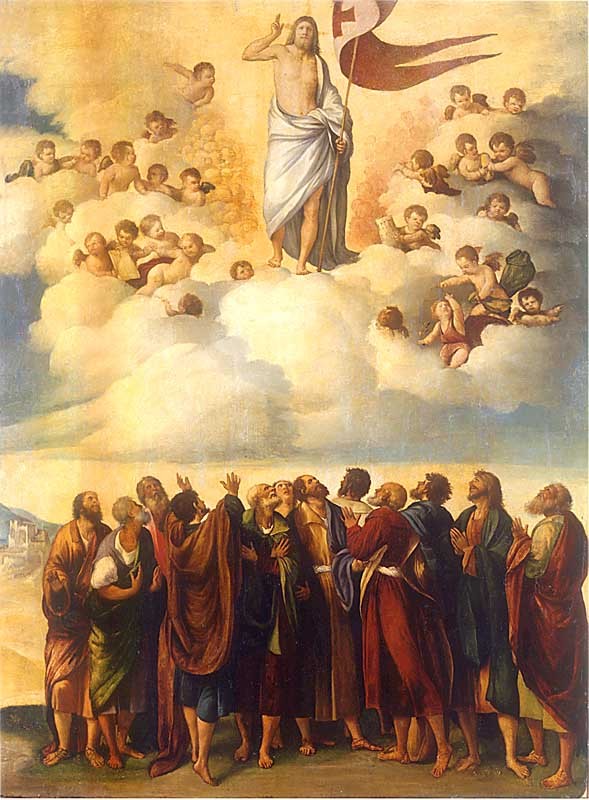
Ascension Day is a time for celebration. However, we are not commemorating Jesus’ departure from the earth, but instead His return to God the Father. We celebrate Christ’s abiding presence with us, and also those things that He asks of us, and promises to us. It is a day of festivity and expectation, looking forward to the future in love and hope. 

Before Jesus returns to the Father, He makes the apostles a three-part promise: Firstly that they will be baptized with the Holy Spirit (Acts 1:4), secondly that they will receive power, and thirdly they will be Christ’s witnesses to the ends of the earth (Acts 1:8). Through this promise Christ is looking forward to Pentecost, and to the church’s future. To the time in which we live now.

One of the most important questions in the entire Bible is found in today’s Gospel: who do you say that Jesus is? How we answer this question can tell us a lot about our own faith. Who we say Jesus is matters. In fact it is central to who and what we are as Christians.

In the Gospel, Jesus and his disciples had ventured into the District of Caesarea Philippi, an area about 25 miles northeast of the Sea of Galilee. This region had tremendous religious implications. The place was littered with the temples of Syrian gods. Caesarea Philippi was where Herod the Great, father of the then-ruling Herod Antipas, had erected an elaborate marble temple. Here you could even worship the Roman Emperor as a God himself. You might say that the religions of the known world were on display in this town. It was with this multi-religious background that Jesus chose to ask the most crucial question of his ministry.

Jesus asks his disciples, ‘But who do YOU say that I am?‘A chwithau pwy meddwch chwi ydwyf fi?’ (Mt 16:15) Peter answers: ‘You are the Messiah, the Son of the Living God‘Ti yw’r Meseia, Mab y Duw byw’ (Mt 16:16). This is a big claim to make. Saying that Jesus is divine was problematic, as these words undermined both what Jews thought about religion, and also the claims made by Romans about the Emperor. To say that Jesus is the Anointed One, the Hope of Israel, who fulfils the promises in the Prophets is a very radical statement indeed.

Peter’s answer demonstrates his faith. He believes in Jesus, and trusts Him. Because of this, Our Lord makes him the principal disciple and gives him a primary role in leading and building the Church. Christ is looking towards the future where the disciples will carry on what He has started. They are charged with sharing the Good News, and offering forgiveness in Jesus’ name.

Our Lord ascends to Heaven forty days after the Resurrection, but Christ does not leave us. Instead He takes our humanity to be with God. This process began with the breaking open of the gates of Hell at Easter. Having conquered death itself, Jesus returns to the Father, taking us with Him. This is also a prelude to the outpouring of the Holy Spirit at Pentecost. God is generous. He saves humanity. He opens Heaven to us. He promises us the Holy Spirit, to strengthen us as we live our lives of faith. 

If we truly believe that Jesus Christ is the Son of the Living God, the Messiah — the anointed one who delivers us from our sins, who died, rose again, and who sends us His Holy Spirit — then this faith should have a profound effect on who we are and how we live our lives. This is why we have gathered here this evening to be nourished by Word and Sacrament. We have come together to pray for the world and for each other, and to be built up in love, as we await Our Lord’s Second Coming as Judge and Ruler of all.

Jesus makes promises which are true. We can trust Him, and like the apostles we can prepare for the Coming of the Holy Spirit at Pentecost in prayer, and joyful expectation. We know that we will never be abandoned, because we are always united with, and loved by the Triune God. United with our Christian brothers and sisters around the world we give praise to God the Father, God the Son, and God the Holy Spirit, to whom be ascribed all glory, dominion, and power, now and forever.

Dosso Dossi – The Ascension (Private Collection)

Easter VI

CHRISTIANITY is a religion which has at its heart a number of paradoxes. The Good News of the Kingdom of God is both simple and straightforward. But it is also difficult and complex. The basic theory is simple: ‘Love God, and love your neighbour’ ‘Câr Duw a Châr dy gymydog’. However, when we try to do this, we find that the practice is a little more complicated than the theory.

The Gospel passage for today is all about love. According to St Thomas Aquinas, ‘Love is… willing the good of the other.’ ‘Mae cariad ewyllysio y Dda o’r eraill’ [(STh I-II, q.26 a.4, CCC 1766) Respondeo dicendum quod, sicut Philosophus dicit in II Rhetoric, amare est velle alicui bonum]. To love, then, is not simply an act of passion or emotion — something which we feel — but it is also something which we choose to do. As Christians, we want to see others flourish, and we work towards that end. Love takes effort.

Jesus’ teaching is clear:

“This is my commandment, that you love one another as I have loved you. Greater love has no one than this, that someone lay down his life for his friends.”

“Dyma fy ngorchymyn i: carwch eich gilydd fel y cerais i chwi. Nid oes gan neb gariad mwy na hyn, sef bod rhywun yn rhoi ei einioes dros ei gyfeillion.” (Jn 15:12-13)

Christians are called to love one another as Christ loves us. In other words we are to love, even to the point of laying down our lives for each other. This is pertinent  as we remember those who gave their lives during the Second World War, eighty years ago. At the heart of our faith is the Cross. This is the ultimate demonstration of God’s love for us: God loves us so much that He dies for us, so that we might live in Him. The Cross is not the end, it leads to the Empty Tomb, and to the Triumph of Easter. Jesus dies to break the power of death, and to offer humanity eternal life with Him in Heaven. This is why we spend time in our celebration of Easter pondering the mystery of our redemption, entering ever deeper into the experience of God’s love for us.

When Our Lord speaks to His disciples, He speaks to us as well. He does not call us servants (weision), but friends (gyfeillion). To be a Christian is to be a friend of God and to enter into an intimate and loving relationship with the Creator and Redeemer of the Universe. God wants to be our friend. He wants to be united with us in a relationship characterised by love and generosity. 

We experience God’s love most fully in the Eucharist, where Christ continues to give Himself to, and for, us. Out of love, He continues to heal our wounds, to restore our relationship with God and each other, and gives us a foretaste of Heaven in the here and now. There is no other thing on earth as precious as this love. Nothing is more wondrous than this sign and token of God’s love for us. To dwell in Christ’s love is to be united with Him in physical and spiritual communion, so that God’s grace can transform us more and more into His likeness.

At this point in John’s Gospel Our Lord is in the Upper Room with His disciples. He has washed their feet and celebrated the Eucharist. Jesus has also talked about His Passion and Death in order to explain to His followers, including us, what He is about to do and why it matters. Christ is putting everything in place for there to be a Church to continue His work on Earth. This is why he addresses His disciples as follows:

“You did not choose me, but I chose you and appointed you that you should go and bear fruit and that your fruit should abide, so that whatever you ask the Father in my name, he may give it to you.”

“Nid chwi a’m dewisodd i, ond myfi a’ch dewisodd chwi, a’ch penodi i fynd allan a dwyn ffrwyth, ffrwyth sy’n aros. Ac yna, fe rydd y Tad i chwi beth bynnag a ofynnwch ganddo yn fy enw i.” (Jn 15:16)

We did not choose Jesus. He chose us. The Church is a vine which bears fruit. This is how it has continued for two thousand years. The Good News of the Kingdom has been proclaimed, and, throughout the world, people have grown and been nurtured in their faith. We have had a relationship with Jesus, which unites us with all Christians through both space and time, making us brothers and sisters in Christ, part of a family. Because of this relationship, with our Creator and each other, we are able to ask things of God in prayer. God listens to our prayer, and is generous in granting our requests. He gives his only Son to die for us and to rise again so that we might be certain of eternal life in Him. 

Finally, Jesus reminds His disciples of the need to love one another:

“These things I command you, so that you will love one another.”

“Dyma’r gorchymyn yr wyf yn ei roi i chwi: carwch eich gilydd.” (Jn 15:17)

Our Lord tells us what to do, so that we may bring about the will of God: that we love each other and flourish. God loves us, and wishes us to remain in a relationship with Him, and each other, that is characterised by generosity, and which takes as its model the Son of God, Our Risen Saviour. This conviction inspires the argument of the First Letter of John:

“In this is love, not that we have loved God but that he loved us and sent his Son to be the propitiation for our sins.”

“Yn hyn y mae cariad: nid ein bod ni’n caru Duw, ond ei fod ef wedi ein caru ni, ac wedi anfon ei Fab i fod yn aberth cymod dros ein pechodau.” (1Jn 4:10)

Jesus, through His self-sacrifice, makes up for all that we have done wrong. He offers Himself — the Righteous for the unrighteous — to restore our relationship with God and with each other. Jesus reconciles God and humanity, bringing back together what sin has thrust apart. This is the heart of the Good News. As well as dying for us, Christ also rose again. Our Lord reunites God and humanity, by laying down His life for His friends, and also gives us the hope of Heaven. We cannot earn our way there, but the generous love of our Creator offers us the opportunity to be united with Him forever.

My brothers and sisters in Christ, as we continue to celebrate Our Lord’s resurrection, may we rejoice in the abundance of divine generosity. May God’s grace transform us more and more into His likeness. Let us join with all our Christian brethren in rejoicing and singing the praises of God the Father, God the Son, and God the Holy Spirit. To whom be ascribed all glory, dominion, and power, now and forever. Amen.

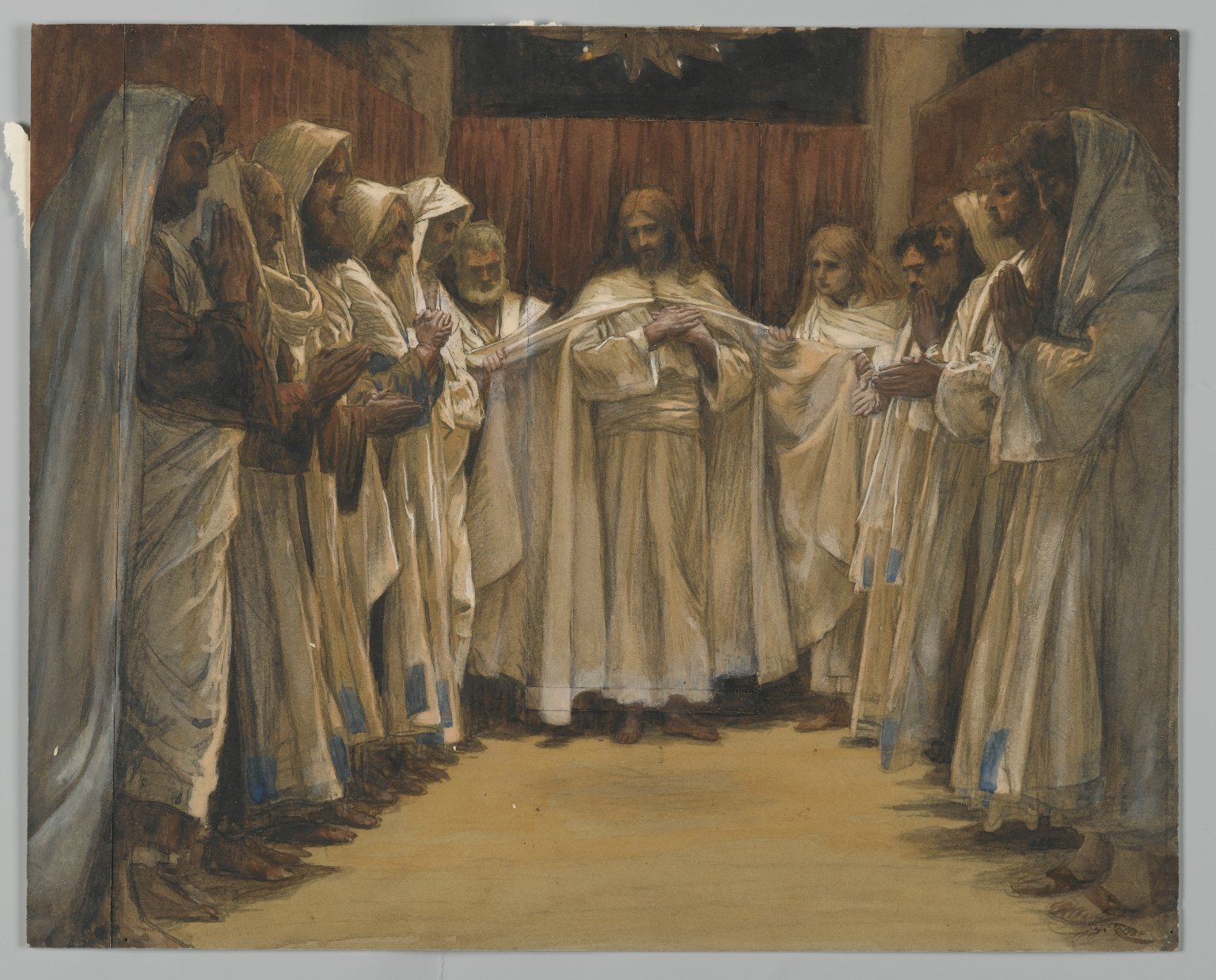
James Tissot: The Last Sermon of Our Lord  (Brooklyn Museum)

Easter V – The True Vine

I know that many of you gathered here this morning are keen gardeners. One of the main gardening tasks in winter is to prune those plants which need to be pruned. At one level it is easy to think that having planted and watered a plant, it can be left to do its own thing, However, in order to both maximise the number and quality of blooms of, for example your roses, as well as encouraging strong healthy growth, then pruning is a must. Cutting off part of a living plant sounds brutal, but in fact it helps that plant to grow and produce fruit and flowers. I shall return to the theme of pruning in a short while.

In today’s first reading from the Acts of the Apostles we begin with a very human picture. The disciples of Jesus are afraid. They have good reason to be so. Saul was a sworn enemy of the Church, and he played a part in the martyrdom of the deacon Stephen. Could it be that Saul’s new-formed desire to join the disciples was just a trap? Then we see something wonderful: the power of a personal relationship. Barnabas vouches for Saul. The disciple explains both the former persecutor’s conversion on the road to Damascus, and his powerful preaching about how the risen Jesus had turned his life around. Later, when Saul tries to share his faith with fellow Jews they threaten to kill him. The disciples protect him and get him to the coast on a on a ship bound for his home town of Tarsus.  Having been afraid, the apostles have come to trust Saul as a fellow Christian. Their former enemy has become someone they now love, trust, accept, and care for. The situation can be summed up in the following verse:

‘So the church throughout all Judea and Galilee and Samaria had peace and was being built up. And walking in the fear of the Lord and in the comfort of the Holy Spirit, it multiplied.’

‘Yr oedd yr eglwys yn awr, drwy holl Jwdea a Galilea a Samaria, yn cael heddwch. Yr oedd yn cryfhau, a thrwy rodio yn ofn yr Arglwydd ac yn niddanwch yr Ysbryd Glân yn mynd ar gynnydd.’ (Acts 9:31)

Barnabas’ name means ‘Son of Consolation’, someone who acts like the Holy Spirit. Living up to his name, this disciple comforts the other disciples, strengthening their belief, and helping the Church to grow.

Barnabas puts his faith into action, and this is the advice given in our second reading from the First Letter of John:

‘let us not love in word or talk but in deed and in truth.’

‘gadewch inni garu, nid ar air nac ar dafod ond mewn gweithred a gwirionedd’ (1Jn 3:18)

The Christian Faith is not something we just talk about, it is something which affects our lives and our actions. We are called to live out our beliefs, and thus become an example that people want to emulate. Our deeds as Christians are arguably the most effective witness we have.

In the Gospel, Jesus once again illustrates his teaching by using an image which would have been very familiar to His audience. Vines were common throughout the entire Mediterranean World, producing grapes which could be eaten or made into wine. Jesus uses the concept of Himself as the Vine, with the disciples as the branches. It is a powerful vision of what the Church is: people who are grafted onto and into Christ, connected to Him, and in a relationship with Him. We entered into that relationship in our baptism, and it is a relationship which will continue throughout, and after, our life on earth. 

When we were baptised, we were grafted onto the vine, which is Christ. It is His will that we, as Christians, bear much fruit. This means that we must live out our faith in our lives, so that it affects who and what we are, and all that we say and do. We do this because it is what God expects of us, as we read in the First Letter of John: 

The love of God was made manifest among us, that God sent his only Son into the world, so that we might live through him’ (1Jn 4:9).

Because we are grafted into Christ we are in communion with Him. Jesus gives Himself to us in the Eucharist, His Body and Blood, so that we can have life in Him. He gives Himself to us out of love, so that we might have life in Him, and have it forever. The Eucharist is a pledge of eternal life with Christ, united in this world and the next. It is given to strengthen us on the journey of faith. Partaking in the Eucharist, physically or spiritually, helps us to live out our faith in our lives. Fed by and with Christ, we live in Him and for Him. 

Our Lord says:

‘Whoever abides in me and I in him, he it is that bears much fruit, for apart from me you can do nothing.’

‘Y mae’r sawl sydd yn aros ynof fi, a minnau ynddo yntau, yn dwyn llawer o ffrwyth, oherwydd ar wahân i mi ni allwch wneud dim.’ (Jn 15:5)

Apart from Jesus we can do nothing. When we rely solely on our own strength, our own talents, we inevitably fail. We must not forget that everything is God-given in the first place. To thrive we need to abide in Him. Without this connection to Our Heavenly Father we wither and die, cut off from the source of life and hope. 

So, my brothers and sisters in Christ, as we continue to rejoice in Our Lord’s Resurrection, may we take to heart the words of Our Lord:

‘By this my Father is glorified, that you bear much fruit and so prove to be my disciples.’

‘Dyma sut y gogoneddir fy Nhad: trwy i chwi ddwyn llawer o ffrwyth a bod yn ddisgyblion i mi.’ (Jn 15:8)

May we bear fruit in our lives, and, like Barnabas and Paul, become worthy witnesses to God the Father, God the Son, and God the Holy Spirit. To whom be ascribed all, glory, dominion, and power, now and forever. Amen.

Easter 2024

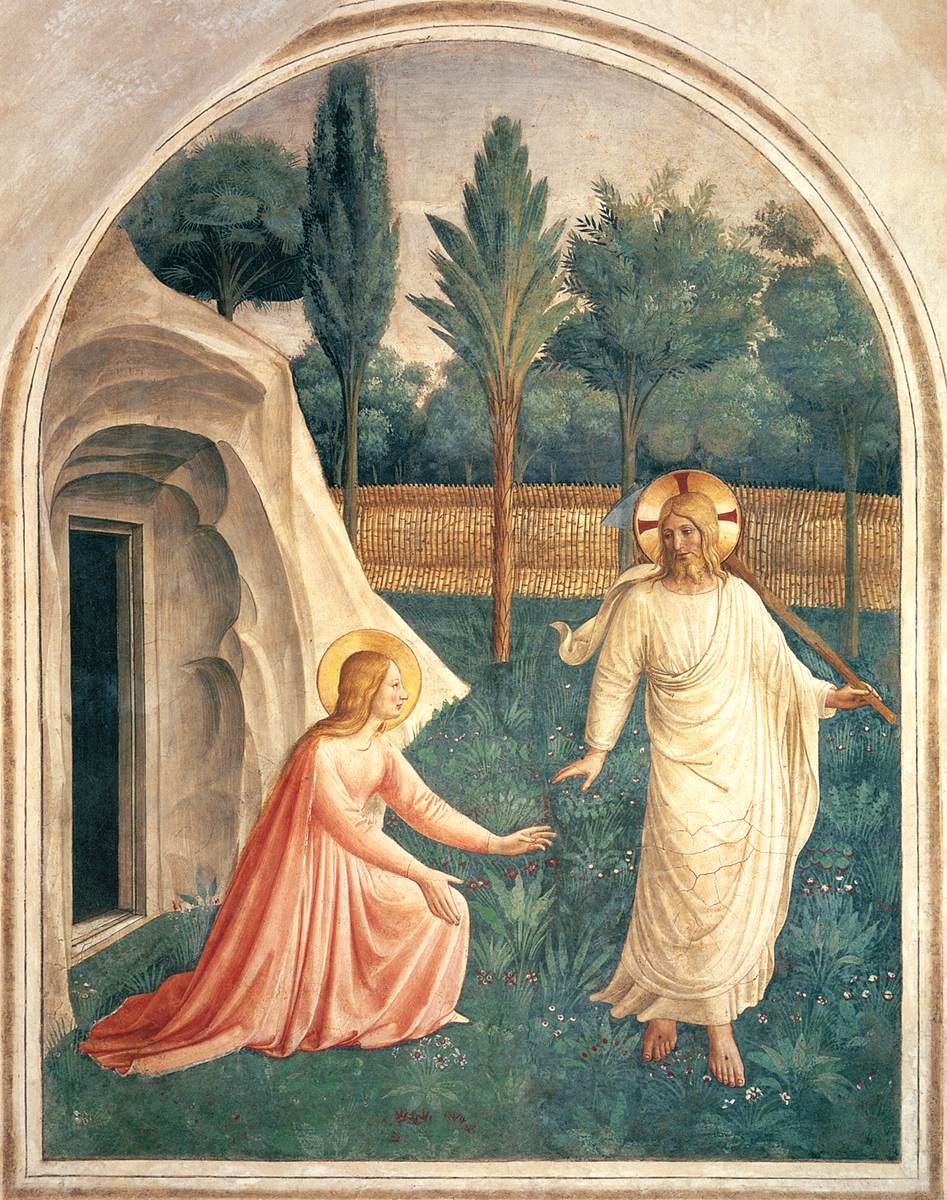
It is early in the morning and a woman sits in the darkness. Her beloved teacher, whom she has followed and supported for years was placed in a tomb a few days before, after having being executed for political and religious reasons. The sun has not yet risen, and as she sits, she cries. A week ago He was being hailed as the Messiah, God’s anointed, the Davidic king come to set His people free. Yet within a few days, the same people who cried ‘Hosanna’ were shouting ‘Crucify him!’ ‘Crucify him!’. So she goes, to be near her Lord, to be close to him. And as she goes, she notices something: the stone has been rolled away. It took several people to roll it there on Friday afternoon. What is going on? Mary Magdalen runs to tell Peter and John:

“They have taken the Lord out of the tomb, and we do not know where they have laid him.” 

‘Y maent wedi cymryd yr Arglwydd allan o’r bedd, ac ni wyddom lle y maent wedi ei roi i orwedd’ (John 20: 2)

Mary assumes, understandably, that grave-robbers have been at work. Or that the Jewish or Roman authorities, worried that this troublemaker might be a focus for dissent, have got rid of Him. To do so makes sense in political terms, but something greater has happened. Peter and John come running towards the tomb. John arrives first, peers inside the tomb, but stays outside. 

‘Then Simon Peter came, following him, and went into the tomb. He saw the linen cloths lying there, and the face cloth, which had been on Jesus’ head, not lying with the linen cloths but folded up in a place by itself.’

‘Yna daeth Simon Pedr ar ei ôl, a mynd i mewn i’r bedd. Gwelodd y llieiniau yn gorwedd yno, a hefyd y cadach oedd wedi bod am ei ben ef; nid oedd hwn yn gorwedd gyda’r llieiniau, ond ar wahân, wedi ei blygu ynghyd’ (John 20: 6-7)

What happens is a gradual process. Bit by bit, the followers of Jesus come to experience and understand this incredible and amazing event. 

Then the other disciple, who had reached the tomb first, also went in, and he saw and believed; for as yet they did not understand the Scripture, that he must rise from the dead. Then the disciples went back to their homes.’

‘Yna aeth y disgybl arall, y cyntaf i ddod at y bedd, yntau i mewn. Gwelodd ac fe gredodd. Oherwydd nid oeddent eto wedi deall yr hyn a ddwed yr Ysgrythur, fod yn rhaid iddo atgyfodi oddi wyth y meirw. Yna aeth y disgyblion adref yn eu holau.’ (John 20: 8-10)

A few days ago the disciples saw their Lord and Teacher killed and buried, but now the tomb is empty. The cloths that were wrapped around Jesus are there, but there is no body. John, the disciple Jesus loved, understands and believes. Peter does not yet understand or believe. Clearly it is all too much for Mary Magdalen who stays by the tomb, weeping. When the angels ask her why she is crying she replies:

“They have taken away my Lord, and I do not know where they have laid him.”

“Y maent wedi cymryd fy Arglwydd i ffwrdd, ac ni wn i lle y maent wedi ei roi i orwedd.” (John 20: 13)

Mary’s words are understandable, she is filled with grief and sadness. She is bereft and confused. At this point, Mary Magdalen encounters the Risen Christ:

Jesus said to her, “Woman, why are you weeping? Whom are you seeking?” Supposing him to be the gardener, she said to him, “Sir, if you have carried him away, tell me where you have laid him, and I will take him away.”

‘“Wraig,” meddai Iesu wrhti, “pam yr wyt ti’n wylo? Pwy yr wyt yn ei geisio?” Gan feddwl mai’r garddwr ydoedd, dywedodd hithau wrtho, “Os mai ti, Syr, a’i cymerodd ef, dywed wrthyf lle y rhoddaist ef i orwedd, ac fe’i cymeraf fi ef i’m gofal.”’ (John 20: 15)

Mary supposes that Jesus is the gardener, the person employed to look after the cemetery. She does not yet understand who He is, or what is going on. However, the mention of the gardener is significant. In Genesis, humanity was created by God in a garden, Eden, and given the task of tending it (Gen 2:15). The Resurrection also takes place in a garden, showing us that Christ is the second Adam. Whilst the first Adam brought death to humanity by a tree, Jesus, the Second Adam, has brought life to the world by the tree of the Cross. Humanity falls because of a tree, and because of a tree we are offered eternal life in Christ. 

It was on the first day of the week, that Creation began, and now on the first day of the week we see a New Creation. Christ has risen from the dead, and conquered Death and Hell. Our Lord is a gardener, and the plants he tends are human beings. We believe in a God who loves us, who cares for us, and who longs to see us grow and flourish.

Jesus greets Mary Magdalen by name, and suddenly she recognises Him. She understands. She believes. Then Christ talks of His Ascension, as though forty days of Easter have condensed into a single moment. Mary now knows what she must do:

‘Mary Magdalene went and announced to the disciples, “I have seen the Lord”—and that he had said these things to her.’

‘Mair Magdalen i gyhoeddi’r newydd i’r disgyblion. “Yr wyf wedi gweld yr Arglwydd.” meddai, ac eglurodd ei fod wedi dweud y geiriau hyn wrthi’ (Jn 20:18)

Mary shares the Good News, just as Peter and Paul do in the first and second readings this morning. As Christians we are called to do likewise: to tell others that God loves us, all of us, that He died for us, and that He rose again to offer us eternal life with Him. This is the message of Easter. Good News! Christ has triumphed over Death and Hell, and humanity is healed and restored through Him.

So, my brothers and sisters in Christ, ‘Pasg hapus i chi gyd!’ ‘A Happy Easter to you all!’ May you, and those you love, be filled with Resurrection joy and strength, on this Easter Day and always. Amen.

Fra Angelico (Italian, ca. 1395–1455), “Noli me tangere,” 1440–42. Fresco from the convent of San Marco, Florence, Italy. http://www.wga.hu/frames-e.html?/html/a/angelico/index.html

Good Friday 2024

The Practice of Crucifixion as a punishment was designed to be both as painful and as shameful as possible. Public torture was dressed up as execution, with the condemned having to struggle for each breath, before finally succumbing to asphyxiation. People could potentially hang there for days until exhaustion took its toll. It is possibly the most horrific and gruesome means to end a human life devised by humanity. A public crucifixion is also one of the central moments of the Christian Faith. This is how much God loves us. Jesus willingly undergoes a shameful death, and acts of brutal torture, for our sake. 

There are two Old Testament texts which are key to understanding this Good Friday Service. The first is Psalm 22, whose opening words are spoken by Jesus before He dies: ‘Fy Nuw, fy Nuw pam yr wyt wedi fy ngadael’ ‘My God, My God, why hast thou forsaken me’ (in Hebrew Eli, Eli, lama sabachthani). The second is the passage from Isaiah Chapters 52 and 53 which was today’s first reading. In Isaiah we see all of Christ’s suffering and death both foretold, and interpreted:

‘he bore the sin of many’ ‘with his stripes we are healed’ ‘He was oppressed, and he was afflicted, yet he opened not his mouth; like a lamb that is lead to the slaughter, and like a sheep that before its shearers is dumb, so he opened not his mouth.’ ‘he makes himself an offering for sin’. (Isa 53:12, 5, 7, 10)

The meaning is clear. The wounds of human sin, which cry out for healing, are healed in Christ. Such is God’s love for us. What disobedience has destroyed, love restores. Here we see the glory of God. In willingly accepting His death on the Cross, Our Lord fulfils Isaiah’s prophecy — the suffering servant is the Messiah, the Christ, God’s anointed. At the time when the Passover lambs are slaughtered in the Temple, Christ, as both priest and victim, offers himself upon the Altar of the Cross as the true lamb to take away the sins of the whole world. When Jesus dies the veil of the Temple is torn in two — the barrier between heaven and earth is taken away, and God is reconciled to humanity. This sacred drama takes place on a hill outside Jerusalem, close to where Abraham attempted to sacrifice Isaac.  Then a ram was sacrificed in the boy’s place, but now God sends His Son to die for us.

Two people are present at Calvary as witnesses. These are Mary, Jesus’ Mother, and John, the Beloved disciple. Thirty-three years before this day, the Archangel Gabriel announced to Mary that she would bear the Son of God. Now she stands at the foot of the Cross to see her beloved Son suffer and die. Simeon had once told her that a sword would pierce her soul, and now that prophecy comes true. But before He dies, Jesus does something wonderful:

‘When Jesus saw his mother and the disciple whom he loved standing nearby, he said to his mother, “Woman, behold, your son!” Then he said to the disciple, “Behold, your mother!” And from that hour the disciple took her to his own home.’ 

‘Pan welodd Iesu ei fam, felly, a’r disgybl yr oedd yn ei garu yn sefyll yn ei hymyl, meddai wrth ei fam, “Wraig, dyma dy fab di.” Yna dywedodd wrth y disgybl, “Dyma dy fam di.” Ac o’r awr honno, cymerodd y disgybl hi i mewn i’w gartref.’ (Jn 19:26-27)

Here we see a new family being formed. One not based on ties of blood, but of love. This is what the Church is, a family of love, and it starts here, at the foot of the Cross, where Christ, our great High Priest, offers Himself as both priest and victim. The Christian Church begins with three people on a hill outside Jerusalem. One of these three is about to die, condemned as a blasphemer and trouble-maker. Despite this less-than auspicious beginning we are gathered here today, nearly twenty centuries later. Christ’s Church starts as a failure in worldly terms. However it is a divine institution: it isn’t supposed to make sense in human terms. The Church’s mission is to draw us into the mystery of God’s love. Today we see that love made real in Jesus. This is love we can touch and taste, on the Cross, and in the Sacrament of the Altar. 

Let every one of us, today and every day, cling to the Cross, and find there all the grace we need. Let us rejoice that we have been redeemed at so great a cost. Let us glory in the Cross of our Lord Jesus Christ. He is our salvation, our life, and our resurrection, through whom each and every one of us is saved and set free. Amen

Diego Velazquez – Christ Crucified (Museo del Prado, Madrid)

Lent V: Sir, we want to see Jesus!

THERE are some texts in the Bible which just stick in your head. The Gospel today contains one of them: ‘Sir, we wish to see Jesus’ ‘Syr, fe hoffem weld Iesu’ (Jn 12:21). It is a text often placed on pulpits to remind preachers of their primary task. This sounds simple enough, but, at one level, when I hear these words they remind me of my own shortcomings. Have other people seen Jesus in what I say and do? We are our own harshest critics in this regard — it is far easier to see our own faults and failings, than what God might be doing through us. 

In today’s Gospel we are in Jerusalem. It is just before the Passover, the most important religious festival, commemorating the journey from slavery in Egypt to the Promised Land. There are some Greeks, who may or may not be Jewish converts, that approach Philip, who has a Greek name. He, along with Simon Peter and Andrew, was first a disciple of John the Baptist, before following Jesus. These Greeks ask Philip a simple question:

Sir, we wish to see Jesus.”

Syr, fe hoffem weld Iesu’ (Jn 12:21)

These Greeks are well-disposed and interested, and they desire an encounter with Our Lord. At a fundamental level human beings long for communion with the Divine. It is what we are made for. So the disciples tell Jesus, who makes the following reply:

The hour has come for the Son of Man to be glorified. Truly, truly, I say to you, unless a grain of wheat falls into the earth and dies, it remains alone; but if it dies, it bears much fruit. Whoever loves his life loses it, and whoever hates his life in this world will keep it for eternal life. If anyone serves me, he must follow me; and where I am, there will my servant be also. If anyone serves me, the Father will honour him.

‘Daeth yr awr y gogonedder Mab y dyn. Yn wir, yn wir, meddaf i chwi, Oni syrth y gronyn gwenith i’r ddaear, a marw, hwnnw a erys yn unig: eithr os bydd efe marw, efe a ddwg ffrwyth lawer. Yr hwn sydd yn caru ei einioes, a’i cyll hi; a’r hwn sydd yn casáu ei einioes yn y byd hwn, a’i ceidw hi i fywyd tragwyddol. Os gwasanaetha neb fi, dilyned fi: a lle yr wyf fi, yno y bydd fy ngweinidog hefyd: ac os gwasanaetha neb fi, y Tad a’i hanrhydedda ef’ (Jn 12:23-26)

This is a strange response: Our Lord doesn’t say, ‘Of course, bring them here’, or ‘I’d be delighted to meet them’. Instead He starts talking about His forthcoming Death. Jesus does so by using an image from the Parable of the Sower to make the point that life comes through death, freedom through service. These are paradoxes, the exact opposite of what one might expect Him to say, and yet they are true. Christ then experiences something of a moment of doubt, at which point God the Fathers speaks of future glory, and then Our Lord goes back to talking about His death:

“Now is the judgement of this world; now will the ruler of this world be cast out. And I, when I am lifted up from the earth, will draw all people to myself.”

‘Yn awr y mae barn y byd hwn: yn awr y bwrir allan dywysog y byd hwn. A minnau, os dyrchefir fi oddi ar y ddaear, a dynnaf bawb ataf fy hun.’ (Jn 12:31-32)

Because of Jesus’ Death and Resurrection, the Church, Christ’s Body exists to save people and to offer eternal life through Him. God shows the world the fullness of glory, the most profound expression of self-giving love in the events of His Passion. This is why we celebrate it: week by week and year by year. We prepare ourselves during Lent to walk with Christ to Calvary and beyond. We see how much God loves us, how much God gives himself for us. This message of salvation comes to us from the prophets. God makes His intentions clear:

“Behold, the days are coming, declares the Lord, when I will make a new covenant with the house of Israel and the house of Judah,”

‘Wele y dyddiau yn dyfod, medd yr Arglwydd, y gwnaf gyfamod newydd â thŷ Israel, ac â thŷ Jwda’ (Jer 31:31)

God renews the covenant with humanity, writing it on our hearts, forgiving us our iniquities. The Law of Love, which God makes real in Jesus Christ has genuine transformative power, because it is rooted in forgiveness and healing, something which only God can provide. Our loving Father does this on the Cross, where He gives His Son to die for us, to heal our wounds, and to offer eternal salvation to all who believe in Him. This is God’s glory, the glorification of His Son, dying the death of a slave, to save humanity and free us. If we want to share in Christ’s glory, then we need to follow the same path of suffering love which takes Him to His Cross, and will take us to ours.

To follow Christ means embracing the Cross as the mystery of God’s love. If we let God’s love transform us, then wonderful things can happen. There will be pain and suffering along the way, but this is far outweighed by the promise of future glory. So then, as we continue our journey through Lent our journey to the Cross and beyond to the empty tomb of Easter, let us lose our lives in love and service of him who died for us, who bore our sins, who shows us how to live most fully, to be close to God, and filled with his love. Let us encourage one another, strengthen one another, and help each other to live lives which proclaim the truth of God’s saving love. To offer the world the hope of Heaven, where we may sing the praises of God the Father, God the Son, and God the Holy Spirit. To whom be ascribed all glory, dominion, and power, now and forever. Amen.

James Tissot : The Gentiles Ask to See Jesus  (Brooklyn Museum)

Lent IV

IF you have ever been unwell while on holiday you probably sought out a Pharmacy. They are quite straightforward to locate as they tend to either have a cross on their sign, or a snake or two around a pole. This was the symbol of the Greek God of healing Aesculapius whose major shrine was at Epidaurus. Christians tend to associate the snake with the tempting of Adam and Eve in the Garden of Eden, but it is not this creature’s only occurrence in the Bible. 

This morning’s Gospel begins with Jesus explaining His forthcoming Crucifixion with a reference to Israel’s wanderings after the Exodus:

And the Lord said to Moses, “Make a fiery serpent and set it on a pole, and everyone who is bitten, when he sees it, shall live.” So Moses made a bronze serpent and set it on a pole. And if a serpent bit anyone, he would look at the bronze serpent and live.’ 

‘A dywedodd yr Arglwydd wrth Moses, Gwna i ti sarff danllyd, a gosod ar drostan: a phawb a frather, ac a edrycho ar honno, fydd byw. A gwnaeth Moses sarff bres, ac a’i gosododd ar drostan: yna os brathai sarff ŵr, ac edrych ohono ef ar y sarff bres, byw fyddai.’ (Numbers 21:8-9)

The people of Israel had been complaining about the journey, the lack of food and water, and that God has led them out into the desert to die, so God sent fiery serpents which killed them. The people then relented, and asked Moses to pray to God to take the serpents away. God listened to Moses, and provided a means for Israel to be saved. Jesus uses this example to explain why the Son of Man must be lifted up. Just as the bronze serpent saved people long ago, Jesus’ being lifted up on the Cross will save those who believe in Him. Our Lord’s death will occur at Passover, the festival which celebrates the people of Israel’s journey from slavery in Egypt, to the Promised Land. So Christ will deliver humanity from the slavery of sin and offer us eternal life in Him. He bears our burden, and reconciles us to the Father, and each other.

There then follows one of the most well-known verses in the Bible:

For God so loved the world, that he gave his only Son, that whoever believes in him should not perish but have eternal life. For God did not send his Son into the world to condemn the world, but in order that the world might be saved through him.

‘Canys felly y carodd Duw y byd fel y rhoddodd efe ei unig‐anedig Fab, fel na choller pwy bynnag a gredo ynddo ef, ond caffael ohono fywyd tragwyddol. Oblegid ni ddanfonodd Duw ei Fab i’r byd i ddamnio’r byd, ond fel yr achubid y byd trwyddo ef.’ (Jn 3:16-17) 

This is the heart of our faith as Christians. Christ was born for us, lived and died for us, and was raised to new life, so that we might have the promise of eternal life in Him. This is why we follow Christ into the desert of Lent for forty days, so that through prayer, fasting and charity we may be prepared in body and soul to celebrate the mystery of Christ’s Passion, Death, and Resurrection. Maundy Thursday, Good Friday and Easter are the ultimate embodiment of God’s generous Love towards humanity. God loves us, you and me, each one of us, so much that He gave His only Son to die for us, on the Cross.

God does not condemn humanity for falling short, instead He saves us. God is a God of love and generosity, who offers Himself to reconcile us to Him, and to each other. This generosity is at the heart of our faith as Christians. We worship a generous, loving God, and invite others to receive the free gift of God’s grace, and enter a relationship with the God who made us and who loves us. 

This relationship explains the joyful hope which St Paul has when he writes to the Church in Ephesus in our second reading this morning. Paul’s central message is that:

For by grace you have been saved through faith. And this is not your own doing; it is the gift of God,’ 

‘Canys trwy ras yr ydych yn gadwedig, trwy ffydd; a hynny nid ohonoch eich hunain: rhodd Duw ydyw’ (Eph 2:8)

Grace is unmerited kindness, something which we do not deserve, or earn. It is by the grace of God that we are saved, through faith, believing and trusting in Jesus Christ, who was born for us, died and rose again for us. We can put our trust in the God who loves us, and who shows us that love in His Son. It is not about what we can do, but about what God can do for us. Our relationship with God is the result of a gift, which we can accept and which can change our lives, if we only let go, and let God transform us, more and more into the likeness of His Son. 

Through prayer, the reading and study of scripture, living out our faith, and the sacraments of the Church, God brings about the work of transformation in us. As He gave Himself on the Cross for us, He gives us Himself in the Eucharist. During Communion we are fed with the Body and Blood of Christ, God’s very self, so that we can become what He is. Prepared by Lenten penitence we may look forward to sharing the new life of Easter, and singing the praises of God the Father, God the Son, and God the Holy Spirit. To whom be ascribed all glory, dominion, and power, now and forever. Amen.

Diego Velázquez – Christ Crucified (Museo del Prado, Madrid)

Septuagesima (Year B)

The narration of stories is a skilled activity, whether they are told orally, or in writing. Setting the scene and introducing the characters are an important part of the process. Sometimes people begin with a long introduction, whereas others take you straight to the action. Mark’s Gospel definitely takes the latter approach. He does not set the scene by giving details of Jesus’ birth or childhood. Instead, he plunges straight into chronicling Our Lord’s public ministry in Galilee.

Mark’s Gospel begins with a description of Jesus’ ministry that proceeds at a frenetic pace. Jesus is baptised by John, goes into the desert for forty days, and calls two sets of brothers to follow Him: Simon and Andrew, James and John. In today’s passage Jesus teaches in a synagogue and heals a man possessed by an unclean spirit. Everything happens in quick succession, there is no time to waste. Part of this is a desire on the Gospel writer’s part to embody the vibrancy of Jesus’ proclamation of the Kingdom:

“The time is fulfilled, and the kingdom of God is at hand; repent and believe in the gospel.”

‘Yr amser a gyflawnwyd, a theyrnas Dduw a nesaodd: edifarhewch, a chredwch yr efengyl.’ (Mk 1:15)

Jesus is a man on a mission. He calls people to turn away from their sins, and to believe in the Good News: to love God and also to love your neighbour. As it is the Sabbath, people gather in the local synagogue. Worship in a synagogue involved singing Psalms, reading from Scripture, and teaching, rather like a sermon. This is familiar to us, as our Morning and Evening Prayer proceeds along similar lines. In this instance, instead of a Scribe or Teacher of Law explaining the biblical reading, Jesus Himself is teaching the people.

‘And they were astonished at his teaching, for he taught them as one who had authority not as the scribes’

‘A synasant wrth ei athrawiaeth ef: canys yr oedd efe yn eu dysgu hwy megis un ag awdurdod ganddo, ac nid fel yr ysgrifenyddion.’ (Mk 1:22)

Scribes relied on the authority of Moses, and would refer to other passages in the first five books of the Old Testament, and to previous interpretations, to make their point. Jesus does something different, and while Mark doesn’t tell us exactly what He said, it is clear that Our Lord’s interpretation of the Scriptures was both refreshing and authoritative. Jesus teaches like someone with authority. He isn’t a scribe or a Pharisee, He hasn’t spent years in theological training. Jesus stands outside traditional religious power structures. Our Lord’s teaching has authority not just because it is spoken with conviction, but because it is real and embodied in Him. Christ’s words are lived out in His life, because he is God: the Son of God, beloved of the Father (cf. Mk 1:11). He is filled with the Holy Spirit, and proclaims the Good News of the Kingdom. 

After Jesus has unpacked the Scriptures, He is addressed by a man who is clearly unwell:

“And immediately there was in their synagogue a man with an unclean spirit. And he cried out, ‘What have you to do with us, Jesus of Nazareth? Have you come to destroy us? I know who you are—the Holy One of God.’” 

‘Ac yr oedd yn eu synagog hwy ddyn ag ynddo ysbryd aflan: ac efe a lefodd, Gan ddywedyd, Och, beth sydd i ni a wnelom â thi, Iesu o Nasareth? a ddaethost ti i’n difetha ni? mi a’th adwaen pwy ydwyt, Sanct Duw.’ (Mk 1:23-24)

This is a man in need of healing, who is described as being possessed by an evil spirit, though nowadays we would probably prefer to describe him as suffering from mental illness. He is suffering, and longs to be healed. This weak, broken man recognises who and what Jesus is: He is the Holy One of God, the Messiah, Y Meseia. Our Lord speaks with authority telling the evil spirit to be silent and come out of the man. He can do this because He is God.

The Kingdom which Jesus proclaims in His teaching is a place of healing. Ours is a God who can heal our wounds, who can take broken humanity and restore it in love. This is why Christ’s teaching and the healing have to go together; they are both part of a larger whole, the coming Kingdom of God. Jesus proclaims our need to love God and each other, and puts this into practice, making the healing power of God’s love a reality in the world. Therefore, at the beginning of Jesus’ public ministry in Mark’s Gospel we see the proclamation of the Good News, and its application in a healing miracle. Jesus is the fulfilment of Moses’ prophecy, in today’s first reading, where he says:

“The Lord your God will raise up for you a prophet like me from among you, from your brothers—it is to him you shall listen” 

‘Yr Arglwydd dy Dduw a gyfyd i ti, o’th blith dy hun, o’th frodyr dy hun, Broffwyd megis finnau; arno ef y gwrandewch’ (Deut 18:15)

“And I will put my words in his mouth, and he shall speak to them all that I command him.”

‘a rhoddaf fy ngeiriau yn ei enau ef; ac efe a lefara wrthynt yr hyn oll a orchmynnwyf iddo.’ (Deut 18:18)

These verses are quoted, by both St Peter in Acts 3:22 and St Stephen in Acts 7:37, to refer to Jesus. For nearly two thousand years the Church has had a consistent interpretation of this passage as pointing to, and finding its fulfilment in, Jesus Christ. We can listen to Him with confidence because Jesus is God. He has authority, and He longs to heal us.

The message that Our Lord proclaims in His teaching is reinforced by His actions. Jesus shows that the Kingdom of God is a place where humanity can be healed and freed from sin. Christ demonstrates this most fully when He suffers and dies for us on the Cross. From the very beginning, Jesus looks to the Cross —not as a place of torture, humiliation, or defeat — but as the place of victory and healing. The Crucifixion is the supreme demonstration of God’s love for humanity. Through the Cross we learn how much God loves us. This is why God sends His Son to heal our wounds, to restore us, and to give us the hope of Heaven. Confident in His promises we can turn to God and pray for the healing that we all so desperately long for, and which the world needs. We can pray that His Divine nature might transform our human nature, and give us a foretaste of Heaven. We pray that our own wounds: physical and mental, will be healed, so that we might have life in Him, in this world and the next.

The possessed man asks Jesus, ‘Have you come to destroy us?’ ‘a ddaethost ti i’n difetha ni?’ The only thing that Christ has come to eradicate is the power of evil which separates man from God. We know that the Son of God has come not to destroy but to restore humanity, so that we may have life and have it to the full. This is the Good News of the Kingdom, which is still a reality here and now. We, in our brokenness, can approach the source of all healing, the God who loves us and gives himself for us, so that we can be restored by Him. God can take our lives and heal us in His love. Let us then come to Him, so that our lives may also be transformed. Let us proclaim to a world, which longs for healing and wholeness, the love of God the Father, God the Son, and God the Holy Spirit. To whom be ascribed all glory, dominion, and power, now and forever. Amen.

James Tissot The Possessed Man in the Synagogue (Brooklyn Museum)

Advent II – Repent!

ONE of the most important tasks for anyone bringing up children involves teaching them right from wrong, encouraging good conduct while avoiding bad behaviour. Children and adults alike learn by example, and we need people to teach us. The prophets of Ancient Israel take on this role, showing the people of God where they have gone wrong, and what they should do. John the Baptist is the last of the prophets, and points people towards the Messiah, Jesus. John is the last person to call Israel to repentance, and the first to proclaim the Kingdom of God, which finds its fulfilment in Christ. The Baptist looks back to the prophetic tradition of the Old Covenant, and forward to the New Covenant. Like the prophets of earlier generations, he educates God’s people and announces the reality of God’s saving love. Prophets can be divisive and unsettling figures because they speak with clarity and urgency. They tell it like it is, and are convinced of the importance of their message, because it comes from God.

Our first reading this morning from the prophet Isaiah is joyful and optimistic. Through the prophet, God speaks words of comfort to His people. Today we go back to the beginning of the Gospel of Mark. Here we find the words of Isaiah are quoted because they look forward to the coming of the Messiah:

A voice cries: “In the wilderness prepare the way of the Lord; make straight in the desert a highway for our God.” (Isaiah 40:3)

Jesus Christ is the fulfilment of biblical prophecy. In Him the glory of the Lord is revealed. Mark also quotes from the prophet Malachi:

“Behold, I send my messenger, and he will prepare the way before me. And the Lord whom you seek will suddenly come to his temple; and the messenger of the covenant in whom you delight, behold, he is coming, says the Lord of hosts.” (Malachi 3:1)

Mark includes both of these prophetic texts in his Gospel to show us that, from the beginning, prophecy is being fulfilled in Jesus. John the Baptist is the messenger, preparing the community for the coming of the Messiah: Jesus, who is God.

From his first appearance in the wilderness, John proclaims a baptism of repentance for the forgiveness of sins. Such a rite of initiation was usual for people converting to Judaism, but not for those who were already Jewish. It looks something like a revival: people are encouraged to take their faith more seriously, and to live it out in their lives. John then positions himself at a point where the busy road from Jerusalem crosses the River Jordan. There he challenges all those he meets to change their ways. The Baptist calls people to repentance, to turn away from sin and to turn back to God. It is good to be reminded that God’s love and mercy are available to all of us, even when we fall short of what Our Heavenly Father wants us to be. This is why the story of Jesus’ public ministry begins with His Baptism in the Jordan, and at the same time points to Golgotha. The place where Christ will die taking our sins, and those of all humanity upon Himself. Christ’s Death demonstrates God’s love for us and His mercy towards us. It is hard to comprehend how God could love us that much. And yet Christ gives us Himself in the Eucharist, so that His Body and Blood can transform us, so that we can share in His life on Earth and in Heaven.

John the Baptist is the last of the prophets and the voice crying in the wilderness of which the prophet Isaiah spoke. He has a challenging and uncompromising message: repent for the Kingdom of God is close at hand. This may not be what many people today want to hear, but it is, however, what people need to hear. Those who flock to him are aware of their sin, and aware of their need of God’s love, mercy, and forgiveness. The Baptist’s message may not be an easy one, but it is actually Good News. Our prayers are answered: that for which we hope, for which our soul deeply longs can be ours. Through our own baptism, we share in Christ’s Death and Resurrection, and we are washed from sin and given the gift of the Holy Spirit. It is difficult to make a proclamation similar to John’s in today’s society, where the Church is increasingly marginalised. Yet our message must still be ‘Repent!’. This is because the world needs to repent, to turn away from sin and selfishness, and back to a God of love, who longs for us to have life in all its fullness.

Repentance is both an event and a process. It is something that we need to do continuously, and do together. This is the life of faith which Christ calls us to live. Repentance is the work of a lifetime, we need to keep turning away from sin and turning back to God. The season of Advent is a good time for repentance. As we prepare to meet Jesus, we need to return to the God who loves us. As the prophet Isaiah wrote:

He will tend his flock like a shepherd; he will gather the lambs in his arms; he will carry them in his bosom, and gently lead those that are with young. (Isa 40:11)

We have been given clear instruction in how to live. The prophets tell us to return to the Lord. They too look forward to the coming of the Messiah. As we prepare to meet Him, let us prepare our hearts, our souls, and our lives. Let us, along with John the Baptist and all the saints, sing the praises of God the Father, God the Son, and God the Holy Spirit. To whom be ascribed all glory, dominion, and power, now and forever. Amen.

James Tissot – The voice in the desert (Brooklyn Museum)