Advertising media are constantly telling us that we need a new car, a larger house, the latest gadgets, expensive clothes, and exotic holidays. If we have all these things, we are told, then we will be truly happy. Covetousness is portrayed as a virtue. However, the more we have, the more we want. People are never satisfied. Even billionaires are happy to squeeze the poor if it will make them more money. St Paul, however, tells us that, as Christians, we should not focus our energies on the things of this world, and the author of Ecclesiastes reminds us that: ‘gwagedd llwyr yw’r cyfan’ ‘All is vanity’ (Eccles 1:2).
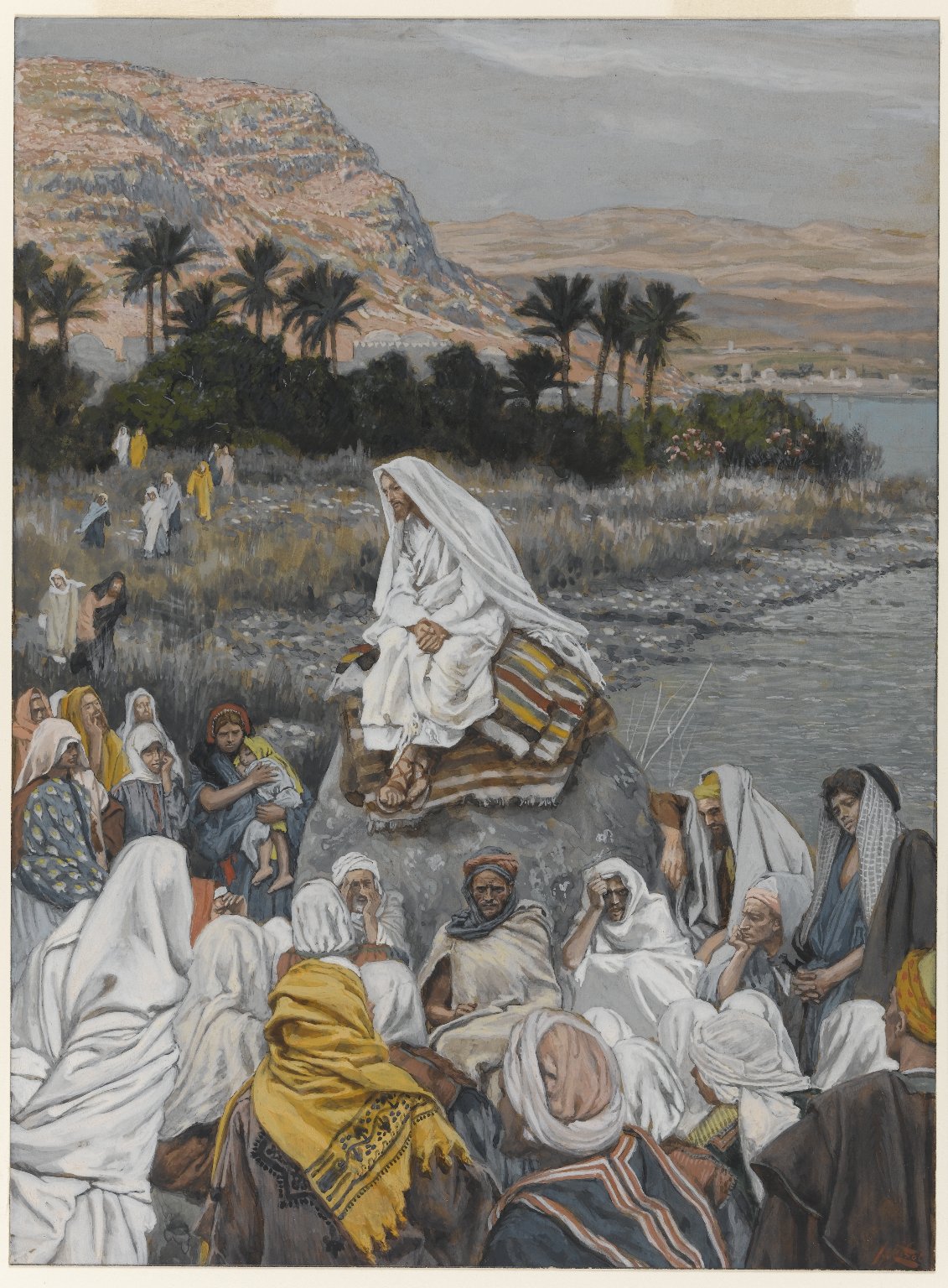
This morning’s Gospel begins with a striking scene. Jesus is teaching as He travels to Jerusalem, and a crowd gathers around Him. Then someone asks a question:
“Athro, dywed wrth fy mrawd am roi i mi fy nghyfran o’n hetifeddiaeth.”
“Teacher, tell my brother to divide the inheritance with me.” (Lk 12:13)
As a religious teacher, Jesus could be called upon to make rulings on religious or legal matters. However he has no desire to do so:
Ond meddai ef wrtho, “Ddyn, pwy a’m penododd i yn farnwr neu yn gymrodeddwr rhyngoch?” A dywedodd wrthynt, “Gofalwch ymgadw rhag trachwant o bob math, oherwydd, er cymaint ei gyfoeth, nid yw bywyd neb yn dibynnu ar ei feddiannau.”
But he said to him, “Man, who made me a judge or arbitrator over you?” And he said to them, “Take care, and be on your guard against all covetousness, for one’s life does not consist in the abundance of one’s possessions.” (Lk 12:14-15)
Our Lord takes a family dispute over property and turns it into a teaching opportunity. The world around us tends to equate riches with success, but it is easy to forget that wealth is a means to an end, and not an end in itself. The unnamed man wants to get hold of his inheritance. He wants money so that he can spend it. He is obsessed with worldly things. Jesus is trying to encourage people to live in a different way: God’s way.
To illustrate His point, Our Lord uses a parable:
“Yr oedd tir rhyw ŵr cyfoethog wedi dwyn cnwd da. A dechreuodd feddwl a dweud wrtho’i hun, ‘Beth a wnaf fi, oherwydd nid oes gennyf unman i gasglu fy nghnydau iddo?’ Ac meddai, ‘Dyma beth a wnaf fi: tynnaf f’ysguboriau i lawr ac adeiladu rhai mwy, a chasglaf yno fy holl ŷd a’m heiddo. Yna dywedaf wrthyf fy hun, “Ddyn, y mae gennyt stôr o lawer o bethau ar gyfer blynyddoedd lawer; gorffwys, bwyta, yf, bydd lawen.”’
“The land of a rich man produced plentifully, and he thought to himself, ‘What shall I do, for I have nowhere to store my crops?’ And he said, ‘I will do this: I will tear down my barns and build larger ones, and there I will store all my grain and my goods. And I will say to my soul, Soul, you have ample goods laid up for many years; relax, eat, drink, be merry.’” (Lk 12: 16-19)
In worldly terms, the man in the parable can be understood as behaving sensibly. But his concern with material success leads the man to think that he is in a safer position than he actually is. This is made clear at the end of the parable:
“Ond meddai Duw wrtho, ‘Yr ynfytyn, heno y mynnir dy einioes yn ôl gennyt, a phwy gaiff y pethau a baratoaist?’ Felly y bydd hi ar y rhai sy’n casglu trysor iddynt eu hunain a heb fod yn gyfoethog gerbron Duw.”
“But God said to him, ‘Fool! This night your soul is required of you, and the things you have prepared, whose will they be?’ So is the one who lays up treasure for himself and is not rich towards God.” (Lk 12:20-21)
Jesus is showing us that you cannot put pockets in your shroud. You cannot take wealth with you when you die. In the afterlife you do not need ‘stuff’. If the man had thought, How can I share what I have? How can I use my riches to alleviate poverty and make people’s lives better? Then he could have done some good. Instead, he has put all his efforts solely into increasing his own wealth. God does not want us to live selfish materialistic lives. But rather to help bring about a world where goods are shared, and where the hungry are fed. Yet we still see images of starving people, and many do not have a roof over their head. Whilst we cannot individually solve all the problems of the world, we can make an impact in our communities and beyond.
The Book Ecclesiastes, known also as Qoheleth, the Preacher, begins by stressing the fact that everything is vanity. All things are empty and worthless, in themselves, especially when compared to God. Our Heavenly Father longs for humanity to respond to His love and generosity, by living lives characterised by compassion and unselfishness. This is why Jesus preaches the Good News of the Kingdom of God: to wake humanity up to eternal realities and encourage us to live thoughtfully and generously here and now.
This is the life which stores up treasure in Heaven, which we live when we have, ‘Rhowch eich bryd ar y pethau sydd uchod, nid ar y pethau sydd ar y ddaear’ ‘Set our minds on things that are above, not on things that are on earth’ (Col 3:2). This is what a Christian life really looks like, when lived out in the world. This is the sort of radically different life which can and does both change and transform the world: offering people a way that is different to an existence obsessed with possessions. This is the way of love and forgiveness, of knowing that we are loved and forgiven, no matter who we are or what we have done. With God’s help we can live as a community which embodies radical love and forgiveness in the world and offers others a new way of being, which turns the obsessions and values of the world on its head. The Christian way of life is that radical, that revolutionary, and can be lived out right here, today. Our Lord is speaking to us through His Scriptures. He calls us to live this life for the good of others, for our own good, and for the glory of the God who made us. God our Father loves us. He saves us from the tyranny of worldly possessions and sin, so that we can be free. Allowing us to focus on worshipping Him, and helping to make the Kingdom of God a reality.
This then is what the Church is called to be. As Christians, we need to be like a lamp set upon a lamp stand or a city upon a hill: shining, attractive, a light amidst the darkness of this world. We are called to represent a radical alternative: embodying life in all its fullness. So let us choose to live this way, together. Let us set our hearts on heavenly things. Let us build on Christ, our sure foundation. God is our treasure, and His wealth is self-giving love.
By gathering together this morning we are living out God’s kingdom here and now. Through our prayer, worship, and generosity, we can change the world; so that all people may be transformed and sing the praise to God, i Duw Dad, Duw y Mab, a Duw yr Ysbryd Glân. God the Father, God the Son, and God the Holy Spirit. I’r hwn y priodoler pob gogoniant, arglwyddiaeth, a gallu, yn awr, ac yn oes oesoedd. To whom be ascribed all glory, dominion and power, now and forever. Amen.



 Novus Motus Oxoniensis