Trinity VI – Lord teach us how to pray

If I were to ask you if you could recite a text off by heart you might regale me with a poem, a passage from a book, or a speech from Shakespeare learned at school. If I then asked whether you knew any prayers off by heart you would probably say ‘The Lord’s Prayer’, ‘Y Gweddi’r Arglwydd’. Even if they do not know all the words, most people have heard the Lord’s Prayer. It is an important part of our Christian heritage.

Our readings this week focus on prayer. Christians know that God answers prayer. However, God may say, ‘Yes’ or ‘No’ or even ‘Not yet’. We may not like the answer, but one will be forthcoming. Prayer is both simple and mysterious. Simple, insofar as it is our conversation with the divine. Mysterious, in the fact that prayer changes us, and not the Almighty. So prayer is something of a paradox, being at the same time quite straightforward and also an enigma. We pray to God, but prayer doesn’t change God, it changes us. Pagans in Greece and Rome would bargain with their gods: if you do this for me, I will give you that. Jews and Christians, however, are profoundly different. We do not bargain with God, and we do not need to, because we are in a covenant relationship with our Heavenly Father who loves us.

It would be all too easy to see this morning’s first reading, where Abraham tries to save Sodom and Gomorrah, as being concerned with bargaining with God. However, prayer does not work in that way. What the reading from Genesis shows us is that we are in a covenant, a relationship with God, and that God is generous and loving. He wants the best for us.

The American Bishop Fulton J. Sheen summed it up as follows:

‘Prayer is helplessness casting itself on Power, infirmity leaning on Strength, misery reaching to Mercy, and a prisoner clamouring for Relief.’ Life Is Worth Living, Second Series (New York, 1954), p. 213.

In today’s Gospel the disciples ask Jesus:

“Arglwydd, dysg i ni weddïo, fel y dysgodd Ioan yntau i’w ddisgyblion ef.”

‘Lord teach us to pray, just as John taught his disciples’ (Lk 11:1).

Jesus and John the Baptist were cousins. They both preached about the need for both repentance and belief in the Good News. Also, they both taught their disciples how to pray. Virtually all Christian prayer can be described by one or more of four phrases: ‘please’, ‘thank you’, ‘I’m sorry’, and ‘I love you’. God does not need our prayers, we do. This is because praying allows us to open our hearts and lives to God, allowing Him to change us. Jesus answers His disciple’s request to teach them how to pray as follows:

Ac meddai wrthynt, “Pan weddïwch, dywedwch: ‘Dad, sancteiddier dy enw; deled dy deyrnas; dyro inni o ddydd i ddydd ein bara beunyddiol; a maddau inni ein pechodau, oherwydd yr ydym ninnau yn maddau i bob un sy’n troseddu yn ein herbyn; a phaid â’n dwyn i brawf.’” 

He said to them, ‘Say this when you pray: ‘“Father, may your name be held holy, your kingdom come; give us each day our daily bread, and forgive us our sins, for we ourselves forgive each one who is in debt to us. And do not put us to the test.”’  (Lk 11:2-4)

The version of Jesus’ words we are most familiar with is that found in Matthew’s Gospel, which is slightly longer than Luke’s prayer. But both contain the same elements. The prayer begins by calling God, ‘Abba’ ‘Father’ ‘Tâd’. Such a term expresses our close relationship with our Creator. The idea that God’s name should be kept holy goes hand in hand with the desire that God’s Kingdom may come. Christianity is all about the establishment of the Kingdom of God: that God may rule over our hearts and our lives.

Next, we ask God to feed us, to forgive us our sins, as we forgive those who sin against us, and to free us from temptation. It is important to note that every celebration of the Eucharist begins with us all acknowledging our own shortcomings and asking God’s forgiveness. Saying sorry to God is important, because it keeps us humble, and helps to maintain our relationship with God, and with each other. We all make mistakes, you do, I certainly do. Recognizing this is the start of a process which allows us to grow in virtue and holiness, through God’s love. The high point of the Eucharist is when God feeds us with His Body and Blood, providing us with spiritual food to nourish our souls. All our food is a gift from God, and being thankful for it, just like being humble, helps to keep us close to God. If you don’t already do so, try to get into the habit of saying a few words of thanks to God before you eat a meal.

There are good reasons why Christians regularly pray this prayer, which we call The Lord’s Prayer, Y Gweddi’r Arglwydd. Jesus has told us how to pray and gave us these words. Similarly, we celebrate the Eucharist because Jesus told us to ‘do this in memory of Him’ and so we do. We use the Lord’s Prayer when we pray, because it honours God, and it forms us as Christians. We will soon pray it together before Communion, asking that God will continue the process of transforming us day by day into His image and likeness. 

In the Gospel reading Jesus continues to teach His disciples using parables. In this narrative, there is a late-night hospitality emergency. A friend is on a journey (just like Jesus and His disciples), and arrives at your home (just like Jesus visited Mary and Martha last week). Naturally you want to be hospitable as a sign of your friendship. So, you pop round to a next door and ask to borrow some food. However, the initial response you receive from your neighbour is not very positive:

‘Paid â’m blino; y mae’r drws erbyn hyn wedi ei folltio, a’m plant gyda mi yn y gwely; ni allaf godi i roi dim iti’, rwy’n dweud wrthych, hyd yn oed os gwrthyd ef godi a rhoi rhywbeth iddo o achos eu cyfeillgarwch, eto oherwydd ei daerni digywilydd fe fydd yn codi ac yn rhoi iddo gymaint ag sydd arno ei eisiau.’

“Do not bother me. The door is bolted now, and my children and I are in bed; I cannot get up to give it you.” I tell you, if the man does not get up and give it him for friendship’s sake, persistence will be enough to make him get up and give his friend all he wants. (Lk 11:7-8)

Jesus shows that, despite the neighbour not wanting to get up and be bothered with the request for food, because the person is persistent and stays there, disregarding the initial reluctance, his request is granted. Perseverance is rewarded. The point Our Lord is making is that God hears our prayers and answers our requests. We might need to ask more than once, and commit time to prayer, but we will not be ignored.

‘Ac yr wyf fi’n dweud wrthych: gofynnwch, ac fe roddir i chwi; ceisiwch, ac fe gewch; curwch, ac fe agorir i chwi. Oherwydd y mae pawb sy’n gofyn yn derbyn, a’r sawl sy’n ceisio yn cael, ac i’r un sy’n curo agorir y drws.’

‘So I say to you: Ask, and it will be given to you; search, and you will find; knock, and the door will be opened to you. For the one who asks always receives; the one who searches always finds; the one who knocks will always have the door opened to him.’ (Lk 11:9-10)

The phrase ‘knock, and the door will be opened to you’ ‘curwch, ac fe agorir i chwi’ reinforces the teaching in the parable. The neighbour opens the door and gives the requested provisions. Jesus then develops His teaching, by drawing a comparison between the lesser and the greater. This is a common rabbinic practice:

‘Os bydd mab un ohonoch yn gofyn i’w dad am bysgodyn, a rydd ef iddo sarff yn lle pysgodyn? Neu os bydd yn gofyn am wy, a rydd ef iddo ysgorpion? Am hynny, os ydych chwi, sy’n ddrwg, yn medru rhoi rhoddion da i’ch plant, gymaint mwy y rhydd y Tad nefol yr Ysbryd Glân i’r rhai sy’n gofyn ganddo.’

‘What father among you would hand his son a stone when he asked for bread? Or hand him a snake instead of a fish? Or hand him a scorpion if he asked for an egg? If you then, who are evil, know how to give your children what is good, how much more will the heavenly Father give the Holy Spirit to those who ask him!’ (Lk 11:11-13)

The Good News of the Kingdom is that God answers prayer. Not only that, but He gives us more than we ask Him for. God also grants us the Holy Spirit. This is an important concept in the wider narrative of Luke’s Gospel and the Acts of the Apostles, where the Church is filled with God’s Spirit. God answers prayer because He is our Creator, and we are in a special relationship with Him. In today’s Old Testament reading God listens to Abraham’s pleas for mercy and then grants them. 

Turning to St Paul’s Letter to the Colossians, the apostle can proclaim baptism as the way to salvation, because this enables us to share in Christ’s Death and Resurrection, and the forgiveness of our sins:

‘Y mae wedi ei bwrw hi o’r neilltu; fe’i hoeliodd ar y groes.’ 

‘he has done away with it by nailing it to the cross’ (Col 2:14)

God cancels our debt by paying it Himself, overcoming evil and sin through an outpouring of healing love. This is the demonstration that God loves us and hears our prayers, and so we continue to remember the Passion through our celebration of the Eucharist. God forgives our sins, and gave His life for us, nailing our sins to the Cross. He suffered in His flesh so that we who have died with Christ in our baptism may also share His risen life. That is why Jesus can assure us that God listens to our prayers and answers them, giving us the good things we need.

My brothers and sisters in Christ, through practising both prayer and action, may we be agents of God’s love and grace in the world. May we transform our homes, our communities, and the whole world. Filled with God’s generous love, compassion and forgiveness, let us give glory to God, Duw Dad, Duw y Mab, a Duw yr Ysbryd Glân. God the Father, God the Son, and God the Holy Spirit. I’r hwn y priodoler pob gogoniant, arglwyddiaeth, a gallu, yn awr, ac yn oes oesoedd. To whom be ascribed all glory, dominion and power, now and forever. Amen.

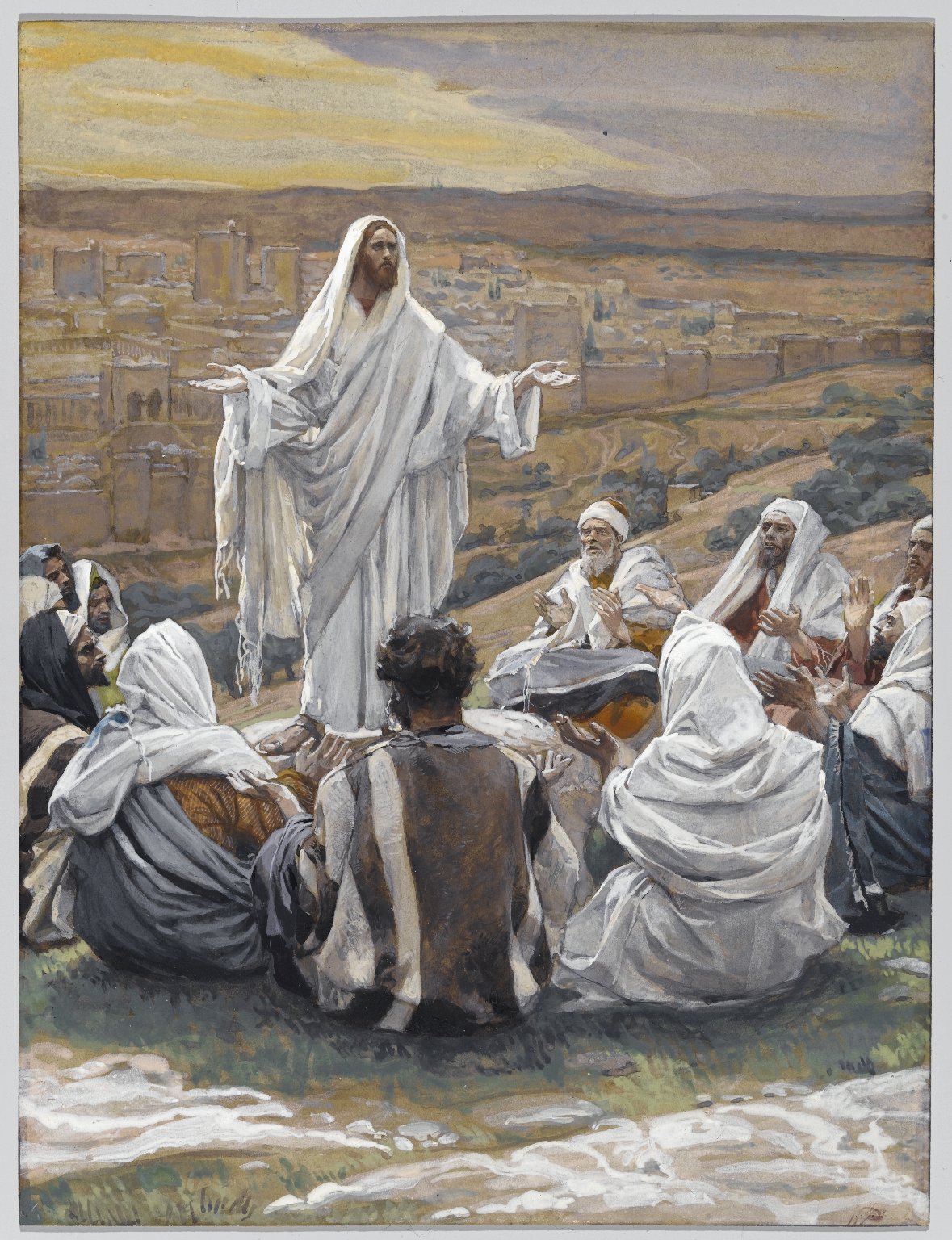
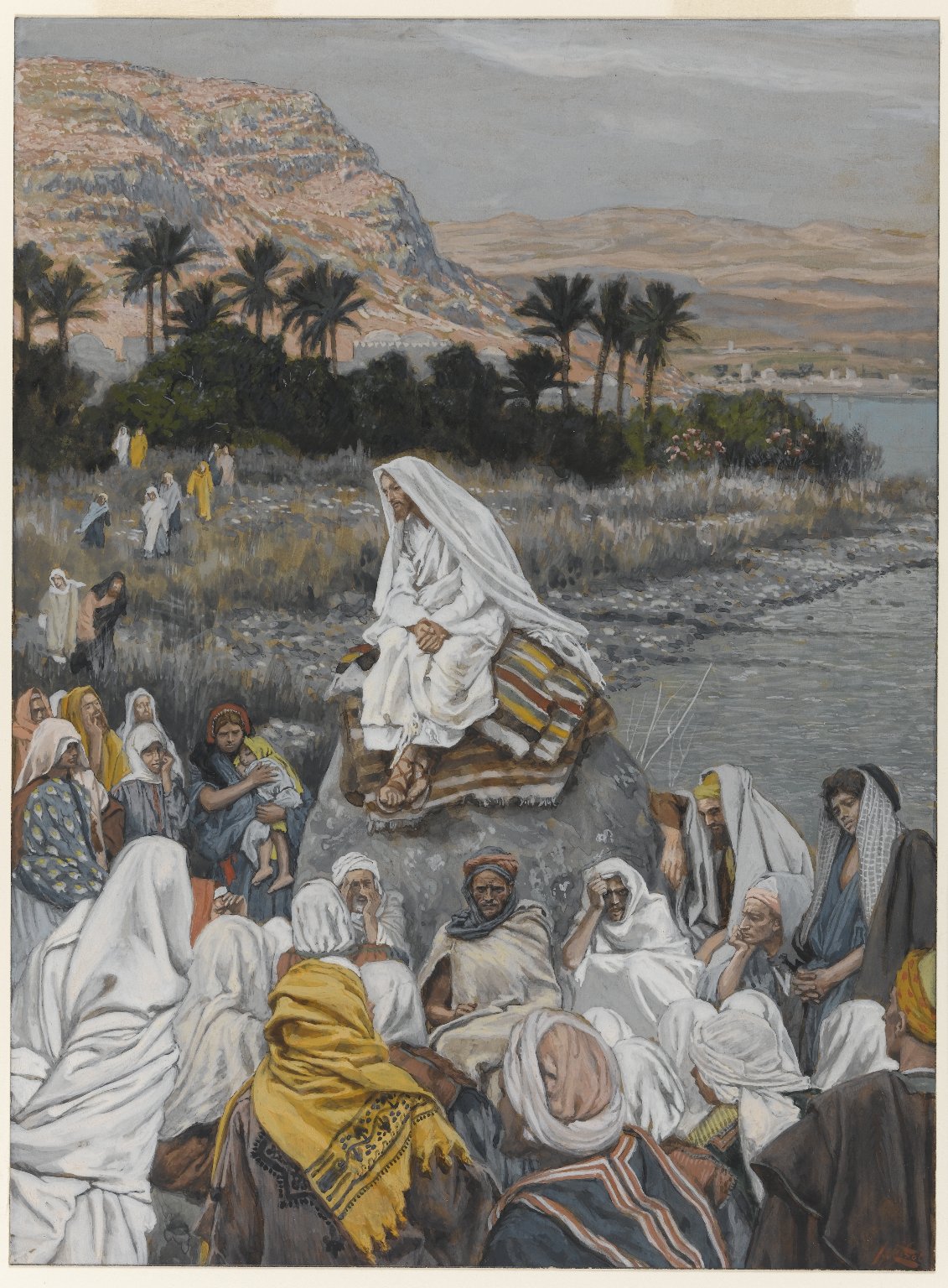
James Tissot – The Lord’s Prayer [Brooklyn Museum]

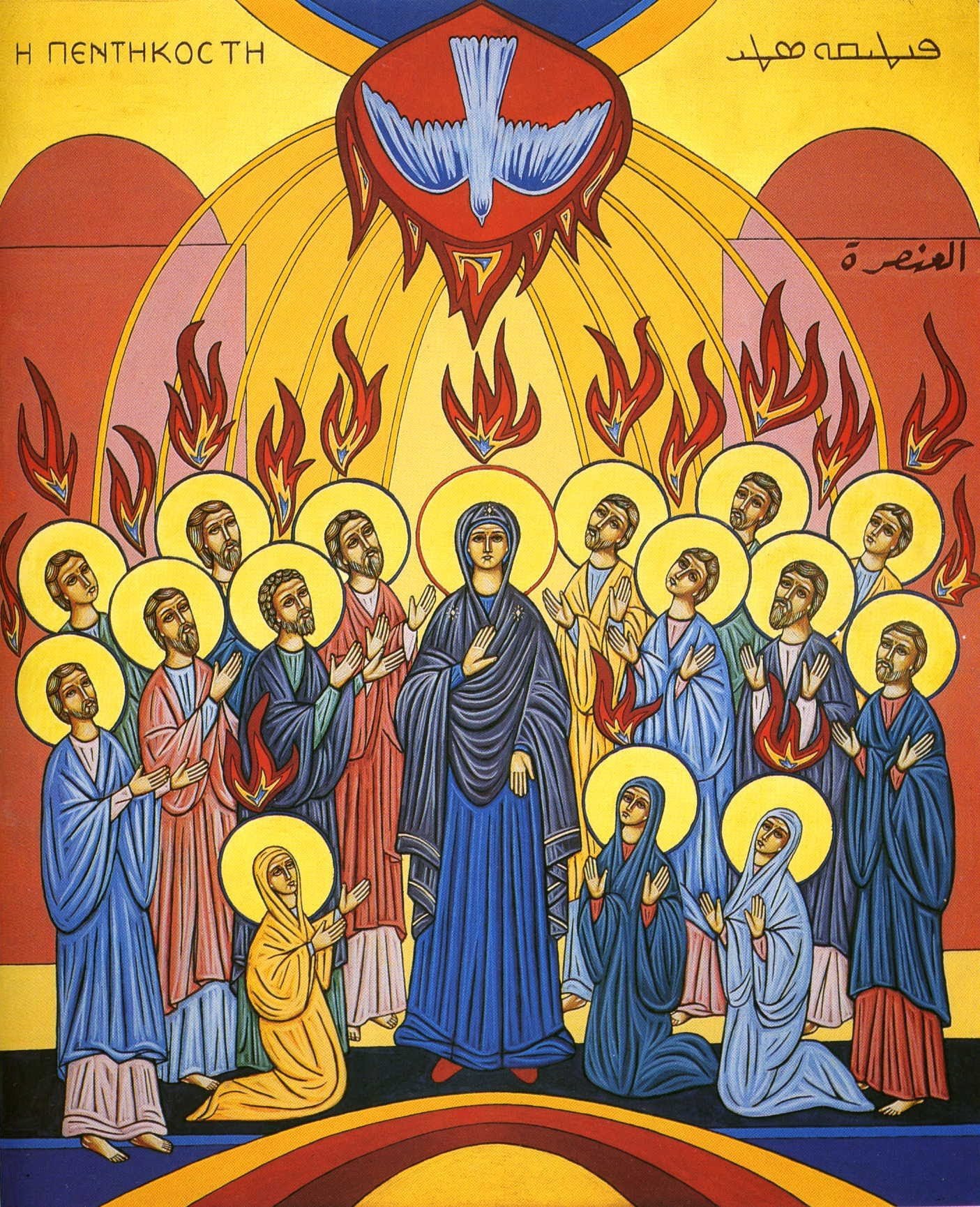
Pentecost 2025

Every Sunday, and also on solemn Feast days, Christians make a public declaration of their faith in God, Father, Son, and Holy Spirit, using the words of the Nicene Creed — which we will all say together in a few minutes time. This statement of belief was drawn up seventeen hundred years ago at the First Ecumenical Council, which was called by the Roman Emperor Constantine to sort out divisions within the Church concerning the Divinity of Jesus Christ. The council met at Nicaea in Asia Minor (modern day Turkey) and comprised of three hundred and eighteen bishops of the Church. One of these was Nicholas of Myra, St Nicholas, the patron saint of this church. 

Questions about belief matter. They have the potential to divide the Church. Taking it away from its core purpose of being united in a common faith, and making a consistent proclamation of that faith. This is the situation in today’s reading from the Acts of the Apostles. Having been promised the Holy Spirit by Our Lord at His Ascension, the disciples wait and pray. At Pentecost they are filled with the Spirit. Emboldened, they are able to tell Jews from all over the Mediterranean world, who have gathered in Jerusalem, who Jesus is, and what He has done. From this moment on the disciples are known as Apostles from the Greek ἀπόστολος (meaning one who is sent, a messenger). The message they deliver is that all people should repent and believe the Good News of Jesus Christ. 

The outpouring of the Holy Spirit is not a one-off event, but rather a permanent state of affairs. This is how God continues to be active in the world: inspiring and strengthening Christ’s followers in living and proclaiming their faith. In John’s Gospel, Jesus promises His disciples:

‘Os ydych yn fy ngharu i, fe gadwch fy ngorchmynion i. Ac fe ofynnaf finnau i’m Tad, ac fe rydd ef i chwi Eiriolwr arall i fod gyda chwi am byth,’

‘If you love me, you will keep my commandments. And I will ask the Father, and he will give you another Helper, to be with you for ever.’ (Jn 14:15-16)

The promise is that God’s Spirit will be present in perpetuity. God will continue to pour out His Spirit to strengthen the Church. This is what we are celebrating today at Pentecost. Indeed, during the Eucharistic Prayer I, as your priest,  will pray that God continues to do this and ‘trwy nerth dy Ysbryd, i’r rhoddion hyn o fara a gwin fod i ni ei gorff a’i waed ef’ ‘that, by the power of your [God’s] Spirit, these gifts of bread and wine may be for us his body and blood’. Our heavenly Father makes wonderful things happen. Disciples who have been scared and have been in hiding are transformed into fearless evangelists, going out to preach Christ’s message of love and forgiveness. They become enthusiastic fellow-workers in the vineyard. God is able to completely change people and situations, because His love for us knows no bounds.  

The 318 bishops, who met at Nicaea, in 325AD, were able to put into words what Christians believe because they began their deliberations by praying for the gift of the Holy Spirit to guide and direct their thoughts and actions. This is entirely in line with Our Lord’s teaching in the Gospel: 

‘Ond bydd yr Eiriolwr, yr Ysbryd Glân, a anfona’r Tad yn fy enw i, yn dysgu popeth ichwi, ac yn dwyn ar gof ichwi y cwbl a ddywedais i wrthych.’

‘But the Helper, the Holy Spirit, whom the Father will send in my name, he will teach you all things and bring to your remembrance all that I have said to you.’ (Jn 14:26)

The Bishops, including St Nicholas, were strengthened by God to proclaim the truth, and to bear witness to it, in the face of those who would deny it. They bore witness to the truth of Jesus Christ: true God and true man, who promised the gift of the Holy Spirit. God’s Spirit gives Christians strength and brings us together as brothers and sisters in a new family, which we call the Church. 

It is thanks to the preaching of the Gospel begun by the Apostles at Pentecost, and continued by their successors at Nicaea, that we are here today. It is how billions of people have come to know, love, and serve Our Lord Jesus Christ. As people who are in Christ, who have entered the Church through our Baptism, we are given a very important job to do. We need to tell people about Jesus!

The world-wide Christian Church is wonderful in its diversity. We are all different, we do not speak the same language, or have the same culture. However, we are all equally empowered through having received the Holy Spirit at our Baptism, in our Confirmation, and through all the sacramental actions of the church, which are the outward and visible signs of the inward and spiritual grace of God. This is how the Holy Spirit works. This is how God builds us up together in love. Through the Eucharist, through prayer and through Scripture, we are nourished spiritually to keep doing all that God desires of us.

So, my brothers and sisters in Christ, let us pray earnestly for the gift of the Spirit. Just as St Nicholas was inspired by the Spirit, may God also fill us with His love and equip us to proclaim the Good News of the Kingdom. May the fire of the Holy Spirit embolden us to encourage others to come to know, and love Duw Dad, Duw y Mab, a Duw yr Ysbryd Glân. God the Father, God the Son, and God the Holy Spirit. I’r hwn y priodoler pob gogoniant, arglwyddiaeth, a gallu, yn awr, ac yn oes oesoedd. To whom be ascribed all glory, dominion and power, now and forever. Amen.

Palm Sunday 2025

J.R.R. Tolkien’s famous novel, The Lord of the Rings is a long and complicated book. The main story is the journey of an unlikely group of heroes across Middle Earth to destroy a powerful Ring at Mount Doom, where it was forged. But it is also the tale of how Aragorn becomes the King of Middle Earth. He does this by reuniting the lands of Arnor and Gondor, and defeating the evil Sauron with a coalition of men, elves, dwarves, and hobbits. In constructing his narrative Tolkien drew on his encyclopaedic knowledge of medieval European literature and his deep Christian faith. The desire to see a monarchy re-established lies at the Jewish and Christian faiths. Jews await the coming of the Messiah, the anointed Davidic King, which Christians believe is Jesus. We believe that the Messiah has already come, to set His people free, and to inaugurate a kingdom of love, forgiveness, and reconciliation. 

The service this morning begins with Luke’s account of the first Palm Sunday, when Jesus enters Jerusalem on a donkey, an animal of peace and not war. The prophet Zechariah, writing 500 years before Jesus, looks forward to a messianic future:

‘Bydd lawen iawn, ti ferch Seion; a chrechwena, ha ferch Jerwsalem: wele dy frenin yn dyfod atat: cyfiawn ac achubydd yw efe; y mae efe yn llariaidd, ac yn marchogaeth ar asyn, ac ar ebol llwdn asen.’

Rejoice greatly, O daughter of Zion! Shout aloud, O daughter of Jerusalem! Behold, your king is coming to you; righteous and having salvation is he, humble and mounted on a donkey, on a colt, the foal of a donkey.’ (Zech 9:9)

The donkey ridden by Jesus reminds us of the humble beast of burden, which carried his Mother to Bethlehem for His birth, and then carried the Holy Family into exile in Egypt. This is an act of humble leadership which realizes what the prophets foresaw. It shows us that Jesus Christ is truly the one who fulfils the hopes of the people of Israel. The Hebrew Scriptures look forward to His deliverance of Israel. This is what is made real in front of the eyes of those watching the Carpenter’s son enter the Holy City of Jerusalem.

Scripture is fulfilled and there is a burst of popular enthusiasm — people wave palm branches and cry out. However, having someone claim to be a relative of King David is a direct challenge to Herod, the puppet ruler installed to comply with the Romans. The events we heard described, before our procession this morning, sound something like a political coup — a bid to replace a leader lacking legitimacy. Such an attempt is bound to have wide repercussions. It represents a direct challenge to the ruling house and to Rome, and therefore it has to be countered. The masses in Jerusalem are expecting a king of the Davidic line. One who would be seen as a threat to the ruling élite, a challenge to the status quo. But in Christ, God gives Israel something else. Yes, he is a King of the line of David, but Jesus is the one who rules with love. He has no desire for power, or honour. Naturally, the leaders and those in authority are threatened by Him: Christ turns their world on its head. He is an awkward inconvenience. Jesus, however, does not want their power. He has come to accomplish something completely different. What is seen as a potential political coup is in fact a renewal of religion, the fulfilment of prophecy, and a new hope for Israel. Political and religious leaders can only see the threat to their hold on power, rather than the opportunity which Christ offers.

At its heart Christianity is the offer of new life in Jesus Christ. This starts with repentance, and acceptance of our need for God. As we grow in faith, we come to believe and trust in a God who loves us, and gives Himself for us. Then we can experience healing, wholeness, and fullness of life in and through Him. Such gifts come at great cost to the giver, which the week ahead will make clear to us in the most stark and direct way. 

One way of reading St Luke’s account of Christ’s Passion and Death is through the lens of conversion and reconciliation. After Jesus celebrates the Eucharist a dispute arises amongst His disciples as to which of them is the greatest. There is something of a contrast here between the institution of the most solemn and sacred act of Christian worship, and the actions of the disciples who seem to be arguing like children in a playground: ‘I’m greater than you!’ ‘No, I’m greater than you!’. This is not how they should behave, so Our Lord explains:

‘Y mae brenhinoedd y Cenhedloedd yn arglwyddiaethu arnynt, a’r rhai sydd ag awdurdod drostynt yn cael eu galw yn gymwynaswyr. Ond peidiwch chwi â gwneud felly. Yn hytrach, bydded y mwyaf yn eich plith fel yr ieuengaf, a’r arweinydd fel un sy’n gweini.’

‘The kings of the Gentiles exercise lordship over them, and those in authority over them are called benefactors. But not so with you. Rather, let the greatest among you become as the youngest, and the leader as one who serves.’ (Lk 22:25-26)

Service of others lies at the heart of Christianity, not exercising power or influence. Christ is offering the world a new way to be, and the church needs to take this seriously, and follow His teachings.

As Jesus goes to Calvary, He tells the women of Jerusalem not to mourn for Him, but instead to mourn for themselves and their children. He says this because He understands that in a few years time the Romans will sack Jerusalem, and the people will be scattered in exile. Christ is more concerned with the needs of others than Himself, and as He goes to His execution, Our Lord is still a servant, caring for others.

As the Roman soldiers crucify Jesus He says:

“O Dad, maddau iddynt, oherwydd ni wyddant beth y maent yn ei wneud.”

‘Father, forgive them, for they know not what they do.’ (Lk 23:34)

Christ’s concern is for forgiveness and reconciliation — just as it has been throughout His earthly ministry. His life’s work is to restore each and every one of us to God and to pour out the Creator’s love on us. This is also evident from Jesus interaction with the penitent thief a few verses later:

Yna dywedodd, “Iesu, cofia fi pan ddoi i’th deyrnas.” Atebodd yntau, “Yn wir, rwy’n dweud wrthyt, heddiw byddi gyda mi ym Mharadwys.”

“And he said, ‘Jesus, remember me when you come into your kingdom.’ And Jesus said to him, ‘Truly, I say to you, today you will be with me in paradise.’” (Lk 23:42-43)

The criminal being executed for seditious acts against Rome expresses faith in Christ, and is rewarded with the grace earned for humanity on the Cross. Our Lord’s dying words are taken from Psalm 31:6, a confident prayer:

“O Dad, i’th ddwylo di yr wyf yn cyflwyno fy ysbryd.”

‘Father, into your hands I commit my spirit!’ (Lk 23:46)

Immediately afterwards the centurion in charge of the Crucifixion acts in a surprising manner, praising God and declaring Jesus to be innocent:

‘Pan welodd y canwriad yr hyn oedd wedi digwydd, dechreuodd ogoneddu Duw gan ddweud, “Yn wir, dyn cyfiawn oedd hwn.”’

‘Now when the centurion saw what had taken place, he praised God, saying, “Certainly this man was innocent!”’ (Lk 23:47)

The gathered crowds also do something unusual:

‘Ac wedi gweld yr hyn a ddigwyddodd, troes yr holl dyrfaoedd, a oedd wedi ymgynnull i wylio’r olygfa, tuag adref gan guro eu bronnau.’

‘And all the crowds that had assembled for this spectacle, when they saw what had taken place, returned home beating their breasts.’ (Lk 23:48)

In acting in this way they are expressing contrition and repentance, the necessary prerequisite to the acceptance of God’s grace. Salvation has become a reality and it is changing people’s lives. Just as it did two thousand years ago, it is still doing so today, and will continue to do so until the end of time itself.

Let us then, as followers of Jesus, hold up our palms as we rejoice in the generous love of God and prepare ourselves to celebrate Christ’s Passion. Let us give thanks for the fact that we are loved by God. And let us give glory i Duw Dad, Duw y Mab, a Duw yr Ysbryd Glân. To God the Father, God the Son, and God the Holy Spirit. I’r hwn y priodoler pob gogoniant, arglwyddiaeth, a gallu, yn awr, ac yn oes oesoedd. Amen. To whom be ascribed all glory, dominion and power, now and forever. Amen.

Lent V

THE past sixty years in Britain and the West have seen societal change on a scale arguably never witnessed before in the history of humanity. The world in which we live has changed, and people have become used to the changes. On the whole, despite becoming more permissive, society is still judgemental. We put people on pedestals, and then we are surprised when they fall off. More than that, the media constantly encourages us to be critical of others. This is deeply corrosive, because it sets us up to think that we are somehow better than others. However, we too make mistakes. We all, each and every one of us, myself included, say and do things which we should not, which hurt others, and for which we need forgiveness.

Thankfully, we can ask God and each other for this forgiveness. Because of what Christ did for us, taking our sins upon himself, on the Cross, we are forgiven. God loves us. In turning to God for forgiveness, we are turning away from sin and trying to live our lives in a new way. The Christian life is, like the season of Lent, a constant repetition of this process: failing and trying again, and keeping going. So that bit by bit, gradually, we let God be at work in us, to transform us. This helps us to be less judgemental, more loving, and more forgiving. Drawing on God’s love, we can build up a community that is filled with this radical transforming love. We can become a force for good, a beacon of hope, sharing Christian love with the world around us.

Today’s Gospel finds Jesus is in the Temple in Jerusalem for the Feast of Tabernacles. According to the law of Moses the woman caught in adultery should be punished by being stoned to death. However, the Roman occupiers had taken from the Jews the power to put anyone to death. Jesus’ response shows the world that there is another way: a way of love and not of judgement. Interestingly, this passage is the only time when the Gospel writers record Jesus writing. After the Scribes and Pharisees have brought the unnamed woman to Him:

‘Plygodd Iesu i lawr ac ysgrifennu ar y llawr â’i fys.’

‘Jesus bent down and wrote with his finger on the ground.’ (Jn 8:6) 

This verse has puzzled people for centuries. What exactly did Jesus write? We cannot know for certain. An answer to this intriguing question may come from Scripture. A few verses earlier in John’s Gospel, Jesus talks of rivers of living water. In the prophet Jeremiah we find the following words:

‘O Arglwydd, gobaith Israel, gwaradwyddir pawb a’th adawa; torrir ymaith oddi ar y ddaear y rhai sy’n troi oddi wrthyt, am iddynt adael yr Arglwydd, ffynnon y dyfroedd byw.’

‘O Lord, the hope of Israel, all who forsake you shall be put to shame; those who turn away from you shall be written in the earth, for they have forsaken the Lord, the fountain of living water.’ (Jer 17:13)

We can speculate that at least part of this verse from Jeremiah is what Jesus wrote in the earth. Writing these words would both fulfil the prophecy of Jeremiah, and shame the woman’s accusers. Jesus is showing that the Scribes and Pharisees have turned away from God, towards legalism and judgmental behaviour. Those gathered would know the prophecy of Jeremiah, and also that Jesus has recently mentioned streams of living water. This verse is the key to understanding what is going on. Jesus is fulfilling Scripture, and demonstrating that God should be characterised by love, mercy, and forgiveness. 

The Religious Authorities have not quite understood the situation. They continue to press Jesus for an answer, which He does not give. Instead Jesus challenges them:

‘ymsythodd ac meddai wrthynt, “Pwy bynnag ohonoch sy’n ddibechod, gadewch i hwnnw fod yn gyntaf i daflu carreg ati.”’

‘he stood up and said to them, “Let him who is without sin among you be the first to throw a stone at her.”’ (Jn 8:7)

Jesus’ position is non-judgemental, and highlights the hypocrisy of the accusers. Christ then returns to His writing:

‘Yna plygodd eto ac ysgrifennu ar y llawr.’

‘And once more he bent down and wrote on the ground.’ (Jn 8:8)

It is possible that Jesus was finishing the verse from Jeremiah. We cannot be sure, but what we do know is that the combination of His words, both written and spoken have a profound effect:

‘A dechreuodd y rhai oedd wedi clywed fynd allan, un ar ôl y llall, y rhai hynaf yn gyntaf, nes i Iesu gael ei adael ar ei ben ei hun, a’r wraig yno yn y canol. Ymsythodd Iesu a gofyn iddi, “Wraig, ble maent? Onid oes neb wedi dy gondemnio?” Meddai hithau, “Neb, syr.” Ac meddai Iesu, “Nid wyf finnau’n dy gondemnio chwaith. Dos, ac o hyn allan paid â phechu mwyach.”’

‘But when they heard it, they went away one by one, beginning with the older ones, and Jesus was left alone with the woman standing before him. Jesus stood up and said to her, “Woman, where are they? Has no one condemned you?” She said, “No one, Lord.” And Jesus said, “Neither do I condemn you; go, and from now on sin no more.”’ (Jn 8:9-11)

It is interesting that the older (and wiser) ones are the first to grasp the full implications of what Jesus is saying. Christ does not condemn the woman: God is a God of mercy. However, Our Lord does say, ‘Dos, ac o hyn allan paid â phechu mwyach’ ‘go, and from now on sin no more’ (Jn 8:11). Forgiveness goes hand-in-hand with contrition and repentance. We are loved, healed and restored by God, but with forgiveness comes a challenge. As Christians we are to turn away from wrongdoing, from the ways of the world, and instead find life in Christ.

Lent gives us the opportunity to take a long, hard look at ourselves and at our lives. It is a time to recognise that we need to become more like Jesus — to live, and think, and speak like Him. We need to be nourished, healed and restored by Christ, so that we can live lives which proclaim His love and His truth to the world. Lent is also a time for us to realise that we are loved by God, and that God is merciful, forgives our sins, and longs for us to experience life in all its fulness.

It is interesting that today is Passion Sunday when we begin in earnest our commemoration of Jesus’ death and Resurrection. This morning’s Gospel speaks of a different type of passion (sexual desire) which when uncontrolled could lead to death — either of a person condemned for committing adultery or a relationship between a husband and wife.

As we pray today for couples preparing for marriage we also pray for those whose relationships are under strain and for all who have experienced marital breakdown. Let us be slow to judge, and quick to show compassion and mercy to those whose lives are not perfect.

Let us, as followers of Jesus, rejoice in the generous love of God and prepare ourselves to celebrate Christ’s Passion. Let us give thanks for our families and relationships and give glory i Duw Dad, Duw y Mab, a Duw yr Ysbryd Glân. I’r hwn y priodoler pob gogoniant, arglwyddiaeth, a gallu, yn awr, ac yn oes oesoedd. Amen.

Christ and the sinner, A Mironov 2011

Lent IV

IT may seem strange that on the day in the year when we particularly remember mothers, the Gospel reading focuses on a father. However, given that the theme is love and generosity, the two are not as far apart as they may seem at first glance.

In the Gospels Jesus is often criticised for the company He keeps. Our Lord is shown associating with the ‘wrong sort of people’: sinners and tax collectors, those shunned by ‘polite society’. So, to make a point, Jesus tells a parable. 

A man has two sons, and the younger of the two asks his father for his inheritance:

‘Fy nhad, dyro imi’r gyfran o’th ystad sydd i ddod imi.’

‘Father, give me the share of property that is coming to me.’ (Lk 15:12)

At one level it is clear what is going on. The young man is asking for his inheritance, which he would normally receive after his father’s death. When he is given the money he goes off into the big, bad world. He is young, inexperienced, and not terribly wise. Like most young people he makes mistakes, and does foolish things. I know that I did, and I suspect that I’m not alone in that.

‘ymfudodd y mab ieuengaf i wlad bell, ac yno gwastraffodd ei eiddo ar fyw’n afradlon.’

‘the younger son gathered all he had and took a journey into a far country, and there he squandered his property in reckless living.’ (Lk 15:13)

The impetuous nature of youth has not changed much in two thousand years. We can see that things are going to go wrong, and they do.When the money runs out, the young man does try to get himself out of his mess by gaining employment, looking after someone’s pigs. For those of us living in the countryside this seems like a very sensible idea. However, under Jewish ritual law, animal husbandry was suspect, and those who did this work were deemed to be ritually impure. Also, swine were considered unclean animals. What the son has done is beyond the pale, and completely unacceptable to Jesus’ Jewish audience. 

Despite getting a job, the young man’s situation is not good:

‘Buasai’n falch o wneud pryd o’r plisg yr oedd y moch yn eu bwyta; ond nid oedd neb yn cynnig dim iddo.’

‘And he was longing to be fed with the pods that the pigs ate, and no one gave him anything.’ (Lk 15:16)

What is noticeable is that nobody is doing anything to help him: there is a distinct lack of charity and compassion amongst the people. The son, therefore,  decides to return home, and ask his father for forgiveness:

“Fe godaf, ac fe af at fy nhad a dweud wrtho, ‘Fy nhad, pechais yn erbyn y nef ac yn dy erbyn di. Nid wyf mwyach yn haeddu fy ngalw’n fab iti; cymer fi fel un o’th weision cyflog.’”

“I will arise and go to my father, and I will say to him, ‘Father, I have sinned against heaven and before you. I am no longer worthy to be called your son. Treat me as one of your hired servants.’” (Lk 15:18-19)

The son makes the journey back to his home. However, his father sees him a long way off, and runs to meet him. This behaviour, while normal and understandable to us, would have appeared strange to Jesus’ audience. Running wasn’t something that adults did. The father is breaking the rules, and acting in a way which defied the conventions of society. He has given away his property to his two sons, and now risks destroying his social capital. But he doesn’t care; it doesn’t matter. What is important is that his son has returned. The father embraces his lost son, kisses him, and then tells his servants:

‘Brysiwch! Dewch â gwisg allan, yr orau, a’i gosod amdano. Rhowch fodrwy ar ei fys a sandalau am ei draed. Dewch â’r llo sydd wedi ei besgi, a lladdwch ef. Gadewch inni wledda a llawenhau, oherwydd yr oedd hwn, fy mab, wedi marw, a daeth yn fyw eto; yr oedd ar goll, a chafwyd hyd iddo.’

“Bring quickly the best robe, and put it on him, and put a ring on his hand, and shoes on his feet. And bring the fattened calf and kill it, and let us eat and celebrate. For this my son was dead, and is alive again; he was lost, and is found.” (Lk 15:22-24)

The younger son is returned to his former state. He is accepted back into the family he left, he is treated with honour, and he is given respect. The calf that is slaughtered could potentially feed an entire community. The father is throwing a party for everyone to celebrate. However, the elder brother is (understandably) unhappy at his father’s reckless generosity. However, the purpose of Jesus’ parable is to teach people about the generous love of God, who longs to see prodigal humanity reconciled. God loves us enough to send His Son to die for us, to reconcile us to God, and to each other. 

In some ways, we are all like the prodigal son, and God is like the father in the parable. God loves us, and will do anything to see us return to where we belong: back home, embraced, restored, and made whole again. This is the central message of the Christian Faith: GOD LOVES US! We don’t deserve to be loved, we often turn away from God’s love, but God doesn’t abandon us, or reject us. Instead, our Heavenly Father welcomes us back, so that we may be transformed by His love. Love and forgiveness have the power to change us like nothing else. This love transforms the world. Like the prodigal son’s father, God is generous, extravagant, and loves us more than we can know or fully understand. As Christians, we experience that love, through the Church, when we read the Bible, in our Baptism, in the forgiveness of sin, and in the Eucharist, where we taste God’s real love and generosity. We receive it and are transformed by it. These things change and make us more generous and loving. They build up a community of faith, transformed by love, which can change the world.

So, my brothers and sisters, let us rejoice in the generous love of God and prepare ourselves to celebrate the Paschal mystery. Let us give thanks for our families and give glory i Duw Dad, Duw y Mab, a Duw yr Ysbryd Glân. I’r hwn y priodoler pob gogoniant, arglwyddiaeth, a gallu, yn awr, ac yn oes oesoedd. Amen.

James Tissot: The Return of the Prodigal Son (Brooklyn Museum)

Lent I

The first reading this morning taken from the book of Deuteronomy, is part of the account of the Feast of First-fruits, called Shavuot. This feast celebrates the grain harvest in Israel, seven weeks after Passover. ‘What?’ you say, “Harvest Festivals?’ This seems a strange topic when we have just begun a six-week penitential season which is characterised by, amongst other things, fasting, abstaining from food. Yes, at first glance it does appear somewhat strange, but there is a reason. 

The reading from Deuteronomy is mostly an account of the words and actions made by the person offering the fruits of the earth to God. This includes a narration of preceding events: Israel’s journey from slavery in Egypt to Freedom in the Promised Land. It is a prayerful retelling of the Passover story, which gives thanks to God for His mighty acts. At the same time that the Jews re-live salvation history, we as Christians are preparing to do the same. Lent precedes Our Lord’s Passion, Death, and Resurrection (around the time of Passover), and also commemorates Jesus’ fasting in the desert at the beginning of His public ministry. 

The Christian journey through Lent is something of a trek through the desert. It is characterised by fasting, penitence and charity. These are the ways by which we prepare our souls and bodies to celebrate Our Lord’s Passion, Death, and Resurrection. We take time to solemnly ask forgiveness for all our wrongdoings, but we are also joyful knowing that Christ has overcome sin and death. There is a joy in what we do, and who we are, because of all that Christ has taught us and done for us. Lent is a hopeful and a healing time. And the world certainly needs hope and healing at the moment! These six weeks are both an opportunity to give ourselves a bit of encouragement in our spiritual lives, and they are also a time to prepare. As Christians, we travel with Christ from the wilderness of sin to the promised land of reunion with God the Father, and with each other.

The reading from Paul’s Letter to the Romans also begins by quoting from Deuteronomy (30:14), just before Moses offers Israel the choice between life and death, good and evil. But for Paul:

‘Os cyffesi Iesu yn Arglwydd â’th enau, a chredu yn dy galon fod Duw wedi ei gyfodi ef oddi wrth y meirw, cei dy achub.” Oherwydd credu â’r galon sy’n esgor ar gyfiawnder, a chyffesu â’r genau sy’n esgor ar iachawdwriaeth.’

‘if you confess with your mouth that Jesus is Lord and believe in your heart that God raised him from the dead, you will be saved. For with the heart one believes and is justified, and with the mouth one confesses and is saved.’ (Rom 10:9)

This is the heart of our faith as Christians: Jesus is Lord, not Caesar, nor any power of this world. Christ alone saves us, by His Death and Resurrection. We believe this and bear witness to our belief. 

Today’s Gospel takes us back to the time immediately after Jesus’ Baptism, when He begins His public ministry. Christ goes out into the desert to be alone, to be quiet, to fast and to pray, and to be close to God the Father. While He is in the desert, Jesus is tempted by the Devil. Satan uses three different approaches, beginning by saying: 

‘Os Mab Duw wyt ti, dywed wrth y garreg hon am droi’n fara.’

‘If you are the Son of God, command this stone to become bread.’ (Lk 4:3)

This is a temptation to be relevant, Jesus is hungry. The Devil is saying, ‘If you are the Son of God then do this’. This is the same thing that the crowd will say to Our Lord as He goes to be crucified. The Devil and the crowd both demand that God prove Himself, rather than accepting the presence of the Holy Spirit and the voice of God the Father at Christ’s Baptism: ‘Ti yw fy Mab, yr Anwylyd; ynot ti yr wyf yn ymhyfrydu.’ ‘You are my beloved Son; with you I am well pleased.’ (Lk 3:22) Jesus is pleasing to God because He is obedient, but Satan is all about disobedience; not listening to God, not obeying Him. Whereas Adam, the first man, causes sin to enter into the world by eating forbidden fruit. Christ, who is the second Adam, conquers by abstaining. The desert is the exact opposite of the garden of Eden. While Eden was full of plants, trees and animals, the desert is an empty, lifeless place.However, it becomes the setting for obedience, reconciliation and healing.

The second temptation put to Jesus is the allure of earthly power. The Devil says to Our Lord: 

‘I ti y rhof yr holl awdurdod ar y rhain a’u gogoniant hwy; oherwydd i mi y mae wedi ei draddodi, ac yr wyf yn ei roi i bwy bynnag a fynnaf. Felly, os addoli di fi, dy eiddo di fydd y cyfan.’

‘To you I will give all this authority and their glory, for it has been delivered to me, and I give it to whom I will. If you, then, will worship me, it will all be yours.’ (Lk 4:6-7)

Jesus chooses heavenly glory and the salvation of humanity rather than worldly power. The Devil can only offer a false god and fleeting influence, whereas Christ stands for what is true and eternal. The temptation to seek influence, and prestige, symbolised here by worshipping the Devil, leads to the misuse of power. It’s a very human failing. One that we see all too clearly in our world today.

The third temptation for Jesus, is to put God to the test. Here Christ is encouraged to be spectacular and self-seeking. Whenever we say, ‘look at me’ we are not saying, ‘look at God’. Jesus quotes Deuteronomy 6:16: ‘Peidiwch â gosod yr Arglwydd eich Duw ar ei brawf’ ‘You shall not put the Lord your God to the test’. God does not need to prove anything. He loves us, and sent His Son for us. If Jesus threw himself from the Temple it would be a great spectacle, but it wouldn’t achieve anything. The high place which Jesus will go up to is the Cross on the hill of Calvary. Here He will suffer and die to save humanity. This is where God shows His love for the world, through humiliation rather than by a glory-seeking stunt. 

Eventually the Devil gives up and departs. Christ’s faith and trust in God is stronger than temptation. We face the same temptations in our lives, but Jesus shows us that we can resist them. This isn’t easy — quite the opposite — but it is possible. This should encourage us as we try to follow Christ’s example, and grow in holiness this Lent. God does not ask the impossible of us, instead we try, and, when we fail, we ask for forgiveness. We grow in holiness in Lent through prayer, almsgiving, and fasting. Prayer offers us the opportunity to deepen our relationship with God. It is more about quality than quantity: expressing true repentance, for what we have done and failed to do, and resolving to do better in the future. Almsgiving helps us to be charitable and generous, to care for those in need, just as God is generous towards us.

Fasting is key, because it helps us to master our bodily cravings, to control what we eat and what we do, rather than being controlled by our appetites. This doesn’t mean that we should starve ourselves, but that we should be mindful of our actions and not give in to all our desires. Just as prayer is not about getting God’s attention or changing His mind, but rather changing who and what we are, making us more loving, humble and dependant on God. In the same way fasting stops us being slaves to our desires. It sets us free, and helps us to listen to God, and draw closer to Him. Through abstinence we enter into Christ’s suffering, so that we can follow the way of the Cross. We do this joyfully, because we are following Christ. We are learning to resist temptation, aided by prayer and a generous heart. Our aspiration is that this Lenten season will help us to grow in faith, hope, and love, and enable us to celebrate Our Lord’s Passion, Death and Resurrection with greater joy. 

So, my brothers and sisters, let us prepare ourselves to celebrate the Paschal mystery so that we, and all the world, may give glory i Duw Dad, Duw y Mab, a Duw yr Ysbryd Glân. I’r hwn y priodoler pob gogoniant, arglwyddiaeth, a gallu, yn awr, ac yn oes oesoedd. Amen.

Sexagesima 2025

The majority of human civilisations, religions, and philosophies champion some version of the phrase ‘Do unto others as you would have them do unto you’. This doctrine is known as The Golden Rule, and it is good advice. If we want other people to be nice to us, then being nice to them is a good place to start. However, is it enough? No, not as far as Our Lord is concerned. He calls us to something deeper, something more radical, and more world-changing.

‘Meddai’r Iesu wrth ei ddisgyblion, “Ond wrthych chwi sy’n gwrando rwy’n dweud: carwch eich gelynion, gwnewch ddaioni i’r rhai sy’n eich casáu, bendithiwch y rhai sy’n eich melltithio, gweddïwch dros y rhai sy’n eich cam-drin.”’

‘Jesus said to his disciples, “But I say to you who hear, Love your enemies, do good to those who hate you, bless those who curse you, pray for those who abuse you.”’ (Lk 6:27-28)

At the heart of Christianity is an idea: love your enemies. To love one’s enemies seems completely counter-intuitive. Our enemies often want to harm us. Naturally, we want to resist them, even crush them. But instead we are told to love them! We do this because love is at the heart of the Gospel. God loves us and God is born as one of us in order to transform each and every one of us, by His Grace. Jesus dies on the Cross for love of us, that we might be healed and reconciled with God. Love wills the good of another, and has the power to end conflict. This is what Jesus shows us. He bridges the gulf between God and humanity by dying for us. As Christians we are called to follow Christ’s example and put His love into practice in our lives. Jesus asks us to follow His example, living lives which are radically distinct from the ways of the world.

Just as Jesus calls us to live differently and provides us with an example of how to put the theory into practice, He also teaches us what God expects of us in terms of generous love:

‘Pan fydd rhywun yn dy daro di ar dy foch, cynigia’r llall iddo hefyd; pan fydd un yn cymryd dy fantell, paid â’i rwystro rhag cymryd dy grys hefyd. Rho i bawb sy’n gofyn gennyt, ac os bydd rhywun yn cymryd dy eiddo, paid â gofyn amdano’n ôl. Fel y dymunwch i eraill wneud i chwi, gwnewch chwithau yr un fath iddynt hwy’

‘To one who strikes you on the cheek, offer the other also, and from one who takes away your cloak do not withhold your tunic either. Give to everyone who begs from you, and from one who takes away your goods do not demand them back. And as you wish that others would do to you, do so to them.’ (Lk 6:29-31)

The generosity Jesus expects of His followers is exacting. We are told not to react to violence with violence, to give away what we have, and also to follow the Golden Rule, treating others as we would wish to be treated. 

The world around us is not very good at forgiveness, or turning the other cheek. It prefers to write people off than to admit the possibility of change: that’s how someone is, and that’s how they are going to stay. In showing forgiveness and generosity we recognise the fact that we too are human, that we too are flawed, and that we too make mistakes. Change is possible; things do not have to stay the same. People tend to love those who love them back, and hate those who hate them. The point is to also show love to those who do not love us, so that they become lovely to us, and loveable in themselves. Only love can transform something filled with hate and anger. Love and generosity are how God in Christ shows humanity how to live. Jesus’ life and death demonstrate what love in action means.

Jesus then reiterates His teaching to His disciples:

‘Nage, carwch eich gelynion a gwnewch ddaioni a rhowch fenthyg heb ddisgwyl dim yn ôl. Bydd eich gwobr yn fawr a byddwch yn blant y Goruchaf, oherwydd y mae ef yn garedig wrth yr anniolchgar a’r drygionus. Byddwch yn drugarog fel y mae eich Tad yn drugarog.’

“But love your enemies, and do good, and lend, expecting nothing in return, and your reward will be great, and you will be sons of the Most High, for he is kind to the ungrateful and the evil. Be merciful, even as your Father is merciful.” (Lk 6:35-36)

There is a paradoxical quality to what Jesus demands of us. We are to expect nothing, and yet we are told that we will receive everything. God’s love and mercy are to be experienced rather than understood. We can be merciful because God has shown us mercy, and continues so to do. The transforming power of God’s love and mercy is shown fully in the Mystery of the Eucharist, where we are fed by God and fed with God, so that His Love might transform us. This is God’s generosity, shown to us so that we might be generous in return. Through this generosity we have the opportunity to live in a different way, and encourage others to do the same. Jesus offers the world a way out of selfishness and sin, a chance to be God’s people living life in all its fulness.

As well as being non-violent and generous, Christ calls us to be non-judgemental:

“Peidiwch â barnu, ac ni chewch eich barnu. Peidiwch â chondemnio, ac ni chewch eich condemnio. Maddeuwch, ac fe faddeuir i chwi. Rhowch, ac fe roir i chwi; rhoir yn eich côl fesur da, wedi ei wasgu i lawr a’i ysgwyd ynghyd nes gorlifo; oherwydd â’r mesur y rhowch y rhoir i chwi yn ôl.”

“Judge not, and you will not be judged; condemn not, and you will not be condemned; forgive, and you will be forgiven; give, and it will be given to you. Good measure, pressed down, shaken together, running over, will be put into your lap. For with the measure you use it will be measured back to you.” (Lk 6:37-38)

If we want God to be loving and merciful towards us, then we need to demonstrate in our lives that we are living the way God wants us to live. What Jesus proposes is something costly and difficult, which requires us to go against the human instincts which lead us to be selfish, judgmental and unkind. But if we all try to follow this teaching together we will be built up as a community of loving generosity,making the Kingdom a reality here and now.

Each of us, on our own, is not able to do this. Even as a Christian community we will struggle. But if we trust God to be at work in us, with His Grace perfecting our nature, then it becomes a possibility. God asks the impossible of us, not so that we will fail, but so that we rely entirely upon our Creator and Sustainer to bring this miracle to pass. 

When we rely upon God together then we can be built up in love, as living stones, a temple to God’s glory. We proclaim God’s love and truth to the world, through forgiveness and sacrificial love. Clothed in the humility of our knowledge of our need of God’s love and mercy, let us come to Him. Let us be fed by Him, be fed with Him. Let us be healed and restored by Him, so that we can live lives which speak of the power of His kingdom. So that the world may believe and give glory i Duw Dad, Duw y Mab, a Duw yr Ysbryd Glân. I’r hwn y priodoler pob gogoniant, arglwyddiaeth, a gallu, yn awr, ac yn oes oesoedd. Amen.

Trinity XV: Ephphatha – Be Opened!

I can still remember vividly the experience of my first Sunday off after being ordained. I had everything planned out. A friend of mine from theological college was a curate about 45 minutes away, so I could both see a friend and enjoy some quiet anonymous worship at the back of the pews. I dressed casually, but within seconds of entering the church I was handed books with a cheerful ‘Good Morning Father!’. I was rumbled! I suspect that without thinking about it I had performed several ritual gestures on entering, which rather gave the game away. Our actions are louder than our words, louder than the clothes we wear. Christianity is a faith which we live, which affects who we are, and what we do. 

The reading from the Letter of James makes this very point: God doesn’t treat people differently, so neither should we in the church. If anything the church should go out of its way to look after the poor, because in their poverty they know their need for God. 

‘Listen, my beloved brothers, has not God chosen those who are poor in the world to be rich in faith and heirs of the kingdom, which he has promised to those who love him?

‘Clywch, fy mrodyr annwyl. Oni ddewisodd Duw y rhai sy’n dlawd yng ngolwg y byd i fod yn gyfoethog mewn ffydd ac yn etifeddion y deyrnas a addawodd ef i’r rhai sydd yn ei garu?’ (James 2:5)

In this morning’s Gospel Jesus has been in Gentile territory to the north of Galilee. He has healed the Syro-Phonecian woman’s daughter, and is now heading back towards the Sea of Galilee. Having heard of His reputation for performing miraculous healings people bring a man to Our Lord who cannot hear or speak clearly, in the hope that he can be healed:

‘and they begged him to lay his hand on him.’

‘a cheisio ganddo roi ei law arno.’ (Mk 7:32)

The people are desperate: there is nothing they can do. This charismatic healer and teacher is their only hope. So Our Lord takes the man to one side, away from the crowd, and performs the healing. 

‘he put his fingers into his ears, and after spitting touched his tongue. And looking up to heaven, he sighed and said to him, “Ephphatha”, that is, “Be opened.”’

‘rhoes ei fysedd yn ei glustiau, poerodd, a chyffyrddodd â’i dafod; a chan edrych i fyny i’r nef ochneidiodd a dweud wrtho, “Ephphatha”, hynny yw, “Agorer di”.’ (Mk 7:33-4)

The scene may seem a little strange to us nowadays, but it has a refreshing physicality to it. Jesus isn’t simply preoccupied with spiritual matters. The healing is physical: involving touch and saliva. Our Lord does raise His eyes to Heaven and pray, but He also says, ‘Ephphatha — Be opened’ and the man is healed. Jesus is both conforming to people’s expectations, what they would like to be done, and also bringing about a miraculous healing by the power of God. 

‘And his ears were opened, his tongue was released, and he spoke plainly.’

‘Agorwyd ei glustiau ar unwaith, a datodwyd rhwym ei dafod a dechreuodd lefaru’n eglur.’ (Mk 7:35)

This is marvellous on several levels. It is the fulfilment of Isaiah’s prophecy which is the first reading today:

‘Then the eyes of the blind shall be opened, and the ears of the deaf unstopped; then shall the lame man leap like a deer, and the tongue of the mute sing for joy.’

‘Yna fe agorir llygaid y deillion a chlustiau’r byddariaidd; fe lama’r cloff fel hydd, fe gân tafod y mudan;’ (Isa 35:5-6)

Isaiah is looking forward to the coming of the Messiah, so Our Lord is fulfilling the prophecy and demonstrating his Messianic credentials — announcing to the world both who and what He is. The Kingdom of God is a place of healing and wholeness. It is also no longer to be understood in an exclusive sense. In Chapter 7 of Mark’s Gospel Jesus is outside Israel and now extends His healing to people who are not Jews. This is an important step which will have a profound effect upon the Church and its spreading across the world.

Our Lord tells the people who have witnessed the miracle not to tell anyone about it. However, his words have the opposite effect:

‘But the more he charged them, the more zealously they proclaimed it. And they were astonished beyond measure, saying, “He has done all things well. He even makes the deaf hear and the mute speak.”’

‘ond po fwyaf yr oedd ef yn gorchymyn iddynt, mwyaf yn y byd yr oeddent hwy’n cyhoeddi’r peth. Yr oeddent yn synnu’n fawr dros ben, gan ddweud, “Da y gwnaeth ef bob peth; y mae’n gwneud hyd yn oed i fyddariaid glywed ac i fudion lefaru.”’ (Mk 7:36-37)

They are amazed that prophecy is being fulfilled. But more than that, we see Gentiles sharing the Good News of the Kingdom of God. This is how the Church grows, and we see its beginnings here. The people of the Decapolis, the ten towns, are proclaiming the truth of the Gospel. They point forward to the spread of the Church.aWe are here in Church today because people have told others about it. The people’s profound experience of God’s healing love compels them to share it with others. Just as the deaf mute has been opened by the prayer of Jesus, so have the people around him. Their ears are opened and their tongues are loosed to proclaim the might works of God. 

The Kingdom of God is a place of healing and restoration for all, a fact which the Church continues to proclaim. Rather than being an exclusive event for the Chosen People, healing and salvation are for all who turn to God. All are invited, all are welcome. We are here today because people have shared the Good News with us. All of us come in need of God’s grace, His unmerited kindness. Not only this, but God gives us His very self, to heal us, and transform us.

My brothers and sisters in Christ, may we come to the Lord, so that we may be healed and restored. May we proclaim the Good News of the Kingdom of God, so that others may come to know and love God the Father, God the Son, and God the Holy Spirit. To whom be ascribed all glory, dominion and power, now and forever. Amen.

James Tissot: Jesus Heals a Mute Possessed Man (Brooklyn Museum)

Twenty Third Sunday of Year A

The emergency services were not well-developed in the Ancient World. However, cities did have a night watch who functioned as a combination of a police force and fire brigade. It is to such an office that God appoints the prophet Ezekiel in this morning’s first reading. He is to be a night watchman, someone who is vigilant against fire and crime, someone concerned with safety and people’s well-being. Prophets exist to speak warnings to God’s people, to show them where they are going wrong and to show them how to get back on the right path. The role of a prophet is to call sinners to repent from their evil ways. Through the prophet God calls His people back to Him. Though people are, then as now, wayward they are given a chance to repent, to return to the ways of human flourishing. The choice is a stark one: life or death. It is important, and a lot depends upon the choices we make. This is why the central proclamation of the Church is to call God’s people to repentance: to turn away from sin, and to turn back to God. 

This week’s second reading from Paul’s Letter to the Romans continues the Apostle’s advice on how Christians should live out their faith in their lives. Living a Christian life  is a difficult thing to do, and for two thousand years Christians have struggled to do it well. As followers of Christ we are called to love God and to love one another. Paul quotes from the Ten Commandments to make the point that the basis for the moral code found in the Mosaic Law is Love. If you love someone then you will not do such things to them. To love is to will the good of another, to make the right choice, one which leads to human flourishing.

Having shown the Church how to live, Paul widens his focus, to reinforce something we heard last week: 

Do not be conformed to this world, but be transformed by the renewal of your mind, that by testing you may discern what is the will of God, what is good and acceptable and perfect. (Romans 12:2)

Paul can see the wider significance of what he is encouraging people to do. The Church knows that Jesus will come to judge the world, so Paul is encouraging Christians to live moral lives. The first Christians were surrounded by a decadent and morally corrupt society, justas we are today, and have been for two thousand years. Human nature is surprisingly consistent. We, however, are called to live differently. In our baptism, we put on Christ, and we were clothed with Him, sharing His Death, but we were also raised to new life in Him. We pray for the strength to live that new life, here and now! This is how we should prepare to meet our Redeemer, when He comes again.

How do we deal with problems as a church? This is an important and difficult question. This morning’s Gospel shows us how, in a number of clear simple steps. First we should approach the person in private. If they listen, and presumably admit their mistake and ask for forgiveness, or try to put things right, then that is an end to the matter. They are reconciled, and the matter is forgiven and forgotten. If this does not work, Paul instructs us to take one or two people, so that there are witnesses, and if this does not work, it becomes a matter for the church as a whole. If the person at fault still refuses to listen, they are excluded, not as a punishment, but so that they may have another opportunity to think things over, to admit that they are wrong, and to seek forgiveness and reconciliation. The point is not to cast people out, but to try and keep them in, and give them all possible opportunities to repent and be reconciled. In worldly terms this provision is generous. The church, which Christ founded, is meant to do things differently, as Jesus says:

The thief comes only to steal and kill and destroy. I came that they may have life and have it abundantly. (Jn 10:10)

God wants us all to have life in all its fulness, which includes healing and reconciliation. The world, however, often sees things in terms of punishment and retribution, whereas the church views things in terms of restoration. Our God is a God of justice and mercy. This is why Jesus goes to the Cross willingly, to bear our sins, and to heal our wounds. We cannot sort out the problem of our sin and woundedness on our own; if we could we would not need a Saviour. 

This is why Jesus reiterates His teaching about sin:

Truly, I say to you, whatever you bind on earth shall be bound in heaven, and whatever you loose on earth shall be loosed in heaven. (Mt 18: 18) 

This is a reality because of all that God has done for us in Christ. The Church exists to continue the redemptive work of God within the world. Through God’s forgiveness we can be truly reconciled and the healing, which can become a reality in our lives. Jesus says in the words which follow:

Again I say to you, if two of you agree on earth about anything they ask, it will be done for them by my Father in heaven. (Mt 18:19)

Through God’s reconciliation we can make requests in prayer, and those requests will be answered. In addition, as a Christian community we can be encouraged by Christ’s presence in our midst:

For where two or three are gathered in my name, there am I among them. (Mt 18:20)

Christ is among us, here and now! And we receive His Sacramental Presence in the Eucharist, His Very Flesh and Blood, so that He may transform us; so that we may have a foretaste of the Heavenly Banquet and be built up and strengthened in love, both here and now. We have the medicine for which our souls cry out. This is the healing which Christ accomplishes on the Cross, He longs to pour out His Love on us, so that we can know true freedom, true joy, and true love, in Him. So let us come to Him and let His Grace transform our lives, so that we, and all creation, may give glory to God the Father, God the Son, and God the Holy Spirit, to who whom be ascribed as is most right and just, all might, majesty, glory, dominion and power, now and forever. Amen. 

The Second Sunday before Advent: Mk 13:1-8

There was a time when you would see men walking around with sandwich boards, which declared, ‘The End is Nigh!’ It would be all too easy to mock them, or write them off as crackpots. They do, however, make a serious point. For all Christians, after Jesus’ Ascension, we are waiting for Jesus to come again, as our Saviour and our Judge. It might be today, or in a thousand years from now, but He is coming, and we need to be ready. We need to be prepared to meet Him. It is why, in the Season of Advent, which will soon be upon us, we consider the two comings of Jesus. The first is as a baby born in Bethlehem, the second will be as Our King, Our Saviour and Our Judge. The two comings are linked, and we need to be ready for both. 

People nowadays are worried by many things: Britain’s departure from the EU, the President of the United States of America, the threat of nuclear war, global climate change, the end of the world. The latter part of the twentieth century and the start of the twenty-first are full of dire warnings of impending doom. It’s scary stuff, it really is. But as Christians we know that whatever happens, we are loved by and saved by God, that we, and all things are in His hands. It can be hard to hold onto hope like this, but we can. 

The buildings of the Temple complex were soon to be destroyed by the Romans. The single most holy place in the world for Jews was about to be destroyed. It’s a frightening prospect, but it teaches an important lesson: not to be overly concerned with the stuff of this world, as it isn’t as important as we tend to make it. The disciples can’t quite understand that yet, but they will, in time.

What’s more important for Jesus is that the disciples aren’t led astray into strange beliefs, or following false Christs. The last two thousand years have seen some very strange versions, some might say perversions, of Christianity. What we believe matters, because it affects how we live our lives, it helps us give right praise to God, rather than something distorted, ugly and man-made. When Mark wrote his Gospel there were lots of strange ideas floating around about Jesus, and there still are today. It was a time of great uncertainty then, as now. There were wars and natural disasters which portend the end times. Christians were facing persecution then, and they are now too, all over the world. We are more likely to face indifference than persecution, but it knocks your confidence somewhat. You want hope and comfort, and the promise of something better. 

And we have that in Jesus Christ, who died for our sins, and who rose again to show us that we have the promise of eternal life with God, ‘For by a single offering he has perfected for all time those who are sanctified’ (Heb 10:14). This is truly good news to a troubled world. It is the heart of our faith, and the source of our joy. Peter and Andrew, James and John want to know when it will take place. Jesus doesn’t tell them, but he gives them signs to be alert for, so that they can be ready.

I wasn’t a boy scout, but their motto ‘Be Prepared’ is a good one, especially for Christians, because Jesus is coming, and we need to be ready to meet Him. It is good to think about this as we prepare to enter Advent, the penitential season which looks towards Christmas, and our yearly celebration of Jesus’ birth. It is truly amazing thing, that God should be born as one of us, to save us from our sins, to give us the hope of Heaven. We need to prepare for it, because it is important: not the turkey and tinsel and the rampant consumerism, but the Incarnation of the Word of God. It changes the world, and has been doing so for the last two thousand years. We also know that Jesus will come to judge the world. It’s tricky that one, knowing that we will be called to account for what we have been, said, thought, and done.None of us deserve to go to Heaven, but God is loving and merciful, and forgives our sins when we are penitent, He gives us another chance when we make a mess of it. We keep doing it, and God keeps forgiving us, so that we can try to do what God wants us to do. I find such generosity staggering. The world around us can be judgmental, it likes to write people off as no good, as failures. Thankfully God isn’t like that, and the church shouldn’t be either. We have to be a community of healing and reconciliation, so that we can offer the world an alternative. It is both liberating and exciting to that you and I are part of it, and hopefully we want others to be as well. 

This is the covenant that I will make with them after those days, says the Lord: I will put my laws on their hearts, and write them on their minds,’ (Heb 10:16). The author of the Letter to the Hebrews quotes Jeremiah (31:33) to show us how Scripture is fulfilled in the Person of Jesus, who makes a new covenant with His Precious Blood on Calvary. God makes it possible for us to live this new life, triumphing over sin and death. Christ does this for us, what can we do for Him?

We can be ready to meet Him, and we can live the life He wants us to live, not worry whether Christ will come tomorrow or in a thousand years.