Trinity 15: Forgive one another, as God has forgiven you

Jesus said to him, ‘I do not say to you seven times, but seventy times seven

Meddai Iesu wrtho, ‘Nid hyd seithwaith a ddywedaf wrthyt, ond heb saith deg seithwaith.’ (Mt 18:22)

The act of forgiveness if often one of the hardest things that we are called to do as Christians. The word forgiveness includes the term ‘give’. To forgive is, therefore, to give something of ourselves. This is not an easy thing to do as it demands that we give up a part of our self. This may mean giving up our anger, bitterness, or resentment, in order to make room for forgiveness. Jesus was able to forgive those responsible for his death because he did not hold on to these negative emotions.

In our first reading this morning, Ben Sirach, the writer of Ecclesiasticus, focuses on the human condition and the book forms part of the Wisdom tradition of Scripture: offering wise advice for humanity. Nowadays, many people seem to think that sexual sin is all that matters to God. Nothing could be further from the truth. Sin gnaws away at us, in many ways. It can dim, and even extinguish, the spark of divine life which we receive in our baptism. Sin is a serious business and it affects us all, both as individuals and in our life together.

Anger, wrath, and the desire for vengeance are, by their very nature, corrosive things. They eat us up, growing like a bitter cancer inside us. We often try to repress these strong emotions, but they can erupt in outbursts, or as calculated passive aggression. Is there a way to stop this happening? Yes, there is, and we are told how in our first reading: 

Forgive your neighbour the wrong he has done,

    and then your sins will be pardoned when you pray (Sir 28:2)

If we want to be forgiven then we have to forgive. It is as simple as that. And as difficult as that. However, there is no room for any half-measures, we need to forgive fully. Can we do this on our own? No, we need to do it as a community, a community which relies upon God to assist us. Only with God’s help, and in His strength, can we find the strength needed to forgive those who have hurt us deeply. 

There is very similar advice in this morning’s second reading from the Letter to the Romans. Paul writes that we should not pass judgement — whether someone does something they should not or does not do something they should. The point is not what we do, but why we do what we do. Are we trying to honour God in our actions? That is what really matters. Are we learning to live as people of love, freed from all that hinders our common life together? 

Let us consider the fact that throughout history Christians have often been persecuted for their faith. Some people have even been sentenced to death for preferring Christ to the ways of the world. Despite what we would expect, these martyrs were not angry with their persecutors or even with God. Instead they chose to live out the love and the forgiveness that they had received. Through this powerful witness many others have come to believe in and follow Christ. Each of us are called to copy their example and to try live authentic lives together, by forgiving each other, and living in love.

Forgiveness is at the heart of all three readings today, including Matthew’s Gospel where Peter asks Our Lord how many times he should forgive someone who sins against him. He wonders if it might be seven times, but Jesus replies, ‘Not seven times, but, I tell you, seventy-seven times’. This answer looks back to the establishment of the jubilee year in Leviticus 25:8 – ‘You shall count seven weeks of years, seven times seven years, so that the time of the seven weeks of years shall give you forty-nine years.’ The jubilee of the Old Covenant was all about the forgiveness of debts. This is made real in Jesus. In Him is the forgiveness and the renewal which Israel has longed for. It is radical and powerful forgiveness which can transform us, and the whole world. 

Jesus explains his message of forgiveness by the use of a parable. A dishonest servant who owes a debt which he cannot pay, begs for more time. His master, instead, cancels the whole debt. However, when faced with a debtor of his own, this same man fails to exhibit the mercy, the kindness which has been shown to him. For this he is rightly and justly punished. The parable shows us that, as we beg God to forgive our sins, we need at the same time to forgive the sins of others. Just like the man in the parable, we too are dishonest servants, we all owe God a debt which we cannot pay, yet God releases us from our debt. However, despite having been forgiven so much by our Heavenly Father, we still fail to be loving and forgiving to each other. The point is not to make us feel bad about ourselves, but to remind us of how much God loves us, and to encourage us to be loving in return. This is how we should live as human beings, loving and forgiving each other. This is how we can flourish as individuals and as a Christian community. 

The world around us often tells us be angry and to feel aggrieved. When we access any news outlet, we usually find headlines reported in such a way as to provoke a variety of negative emotions. We are encouraged to feel angry, sad, or even afraid. Yes, there are many things out there right now to make us feel this way, But being surrounded by a judgemental news culture makes it harder for us to live as Christian people. Often, without thinking, we pick up a negative mindset. As if by osmosis, it just seeps in, and before we know it we are thinking and speaking in a harsh, judgemental, way. It is hard to resist, and that is why Jesus tells us to forgive seventy times seven times, i.e., an uncountable number of times. But, to do so is very difficult indeed. We have to be vigilant so that we do not fall into patterns of behaviour which may decrease the fullness and happiness of our lives. We have to try together, as a Christian community, to live out the faith which we profess. We will, naturally, often fail in this, but we can always seek forgiveness from each other, and from God, and we can keep trying. 

The world may tell us that our endeavour is impossible, yet we know that, ‘with God all things are possible’ (Mt 19:26). These are not idle words, but a promise of Jesus that we can trust, and live out together, as a community of love and reconciliation — real, costly, and wonderful. That is why we celebrate the Cross of Christ: the fact that, for love of us, Jesus bore the weight of our sins upon Himself. He suffered and died for us, to show that there was no length to which God would not go to demonstrate, once and for all, what love and forgiveness truly mean. The Cross is our only hope, the one thing that can save us from ourselves, from all that divides and wounds and which separates us from each other and from God. It is our healing, our salvation, and our sanctification. Through the Cross we are saved and made free, to sing the praise of God the Father, God the Son, and God the Holy Spirit, Duw Dad, Duw y Mab, a Duw yr Ysbryd Glân. To whom be ascribed all glory, dominion, and power, now and forever. Amen.
Trinity I

Children love to ask questions: who? what? where? when? and, especially, why? The Questions we ask and the Answers we give can say an awful lot about who we are. One of the most fundamental question is one concerning identity: ‘Pwy wyt ti?’ ‘Who are you?’ My response would be: ‘I am Adrian, and I am a priest’. The name I was given in baptism, and the fact that God has called me to share in the priesthood of His Son Jesus Christ, define who I am, and what I do. They are why I am standing here, saying this to you, today.

From the time of their exile in Babylon, and before, the people of Israel had looked for a Messiah, a leader of the House of David. They sought someone who would bring them the peace and security that they longed for. The first reading this morning comes from the prophecy of Zechariah, and was written perhaps as late as two hundred years before the birth of Jesus Christ. At this time the Jewish people were struggling under Greek rulers who tried to abolish their identity, and all that they held sacred. The prophet Zechariah looks forward to a messianic future, when the people of the House of David :

‘edrychant ar yr un a drywanwyd ganddynt, a galaru amdano fel am uniganedig, ac wylo amdano fel am gyntafanedig.’

‘They will look on the one whom they have pierced; they will mourn for him as for an only son, and weep for him as people weep for a first-born child’ (Zech 12:10)

The mention of looking upon one whom they have pierced anticipates Christ and His Crucifixion, as noted by John’s Gospel: ‘They will look on him whom they have pierced’ (19:37). Zechariah also writes of the outpouring of a ‘spirit of kindness and prayer’, just as we have seen at Pentecost. Here Jesus’ Death, Resurrection and gift of the Holy Spirit are clearly prefigured: God’s saving plan is announced in the words of the prophet. A few verses later, Zechariah prophesies:

‘Yn y dydd hwnnw bydd ffynnon wedi ei hagor i linach Dafydd ac i drigolion Jerwsalem, ar gyfer pechod ac aflendid.’

‘On that day there shall be a fountain opened for the house of David and the inhabitants of Jerusalem to cleanse themselves from sin and uncleanness.’ (Zech 13:1)

This is what the Cross achieves for those who are washed in the Blood of Lamb, as we are at our Baptism. Christ’s death takes away our sins. Through Baptism and the Eucharist we share in Jesus’ Death and are raised to new life with Him. When St Paul writes to the Galatian Church, he stresses their common baptism:

‘Oblegid yr ydych bawb, trwy ffydd, yn blant Duw yng Nghrist Iesu. Oherwydd y mae pob un ohonoch sydd wedi ei fedyddio i Grist wedi gwisgo Crist amdano. Nid oes rhagor rhwng Iddewon a Groegiaid, rhwng caeth a rhydd, rhwng gwryw a benyw, oherwydd un person ydych chwi oll yng Nghrist Iesu.’

‘You are, all of you, sons of God through faith in Christ Jesus. All baptised in Christ, you have all clothed yourselves in Christ, and there are no more distinctions between Jew and Greek, slave and free, male and female, but all of you are one in Christ Jesus.’ (Gal 3:26-28)

St Paul is preaching a profound message. He explains that none of the distinctions which the world makes matter in God’s eyes. There is no difference. All people are one in Christ. There is a radical equality in the Church: all are welcome to come and experience God’s saving love. When Paul preached, nearly two thousand years ago, this was a revolutionary idea, and it still is today. We are all one in Christ: young and old, rich and poor. It doesn’t matter who we are, where we are from, or anything else. All that matters is that we find our true identity in Christ. This makes us heirs of God’s promise: that we would enjoy eternity in Heaven with our Creator and Sustainer.

In today’s Gospel Jesus begins by asking His disciples this question:

“Pwy y mae’r tyrfaoedd yn dweud ydwyf fi?”

“Who do the crowds say that I am?” (Lk 9:18)

His followers reply that the people think a variety of things: John the Baptist, Elijah, or another of the prophets. They recognise Jesus’ proclamation of the Good News of the Kingdom and understand Him in terms that are familiar to them. Christ, however, presses the issue by asking His disciples another question:

“pwy meddwch chwi ydwyf fi?”

“But who you say that I am?” (Lk 9:20)

Peter answers, ‘Meseia Duw, the Christ of God’ (Lk 9:20). By this answer Peter confesses that Jesus is the Messiah, God’s Anointed, the fulfilment of Zechariah’s prophecy. The disciple’s confession of belief is also our confession of belief as Christians: Jesus is the Christ, the Saviour, the Son of God. As we will soon declare in the words of the Nicene Creed.

Jesus instructs the disciples that they should not communicate this knowledge to anyone, at this time. He then explains what is about to happen:

“”Y mae’n rhaid i Fab y Dyn,” meddai, “ddioddef llawer a chael ei wrthod gan yr henuriaid a’r prif offeiriaid a’r ysgrifenyddion, a’i ladd, a’r trydydd dydd ei gyfodi.”

“The Son of Man is destined to suffer grievously, to be rejected by the elders and chief priests and scribes and to be put to death, and to be raised up on the third day” (Lk 9:22)

Jesus tells the disciples about His Passion, Death and Resurrection, because it is His mission. He has come to reconcile God and humanity, and to restore and heal our broken relationship. Christ then invites His followers to follow His example:

“Os myn neb ddod ar fy ôl i, rhaid iddo ymwadu ag ef ei hun a chodi ei groes bob dydd a’m canlyn i. Oherwydd pwy bynnag a fyn gadw ei fywyd, fe’i cyll, ond pwy bynnag a gyll ei fywyd er fy mwyn i, fe’i ceidw. Pa elw a gaiff rhywun o ennill yr holl fyd a’i ddifetha neu ei fforffedu ei hun?

‘If anyone wants to be a follower of mine, let him renounce himself and take up his cross every day and follow me. For anyone who wants to save his life will lose it; but anyone who loses his life for my sake, that man will save it.’ (Lk 9:23-24)

At the beginning of His public ministry, Jesus invites people to repent and believe. Now He calls us to self-denial, and to embrace the Cross. Christ asks us to accept the most shameful way to die, a form of torture, used by the Romans to execute slaves. As those saved and made free by the Cross of Christ, we take up our own cross and follow Jesus. We imitate Him, in selfless love and devotion, and we bear the weight of the cross in life’s difficulties and disappointments. Following Christ is hard. It is a struggle, and we cannot just rely solely upon our own willpower to succeed. Instead, the Christian life needs to be a corporate effort, something we do together, trusting in God’s Grace to be at work in us, both individually and as a community.

Christ wants us to lose our lives for His sake, and find freedom in His service. There is something paradoxical in Jesus’ teaching. We are to find perfect freedom in obedience, in service of God and each other. Each of us needs to be humble enough to accept what God offers us, and be prepared to try to live it out together. It isn’t about us, but rather letting God be at work in us. When we co-operate with God, and live in love, and joy, and peace, we flourish as human beings. This is liberating, and it is what Our Heavenly Father wants for us. This is what true freedom looks like, and we are called to live it together, today and every day.

So, as we celebrate the joy of our Salvation, let us pray that we may be changed by God’s love, and share this love with others. Let us give thanks for the mystery and wonder that is God, Duw Dad, Duw y Mab, a Duw yr Ysbryd Glân. God the Father, God the Son, and God the Holy Spirit. I’r hwn y priodoler pob gogoniant, arglwyddiaeth, a gallu, yn awr, ac yn oes oesoedd. To whom be ascribed all glory, dominion and power, now and forever. Amen.

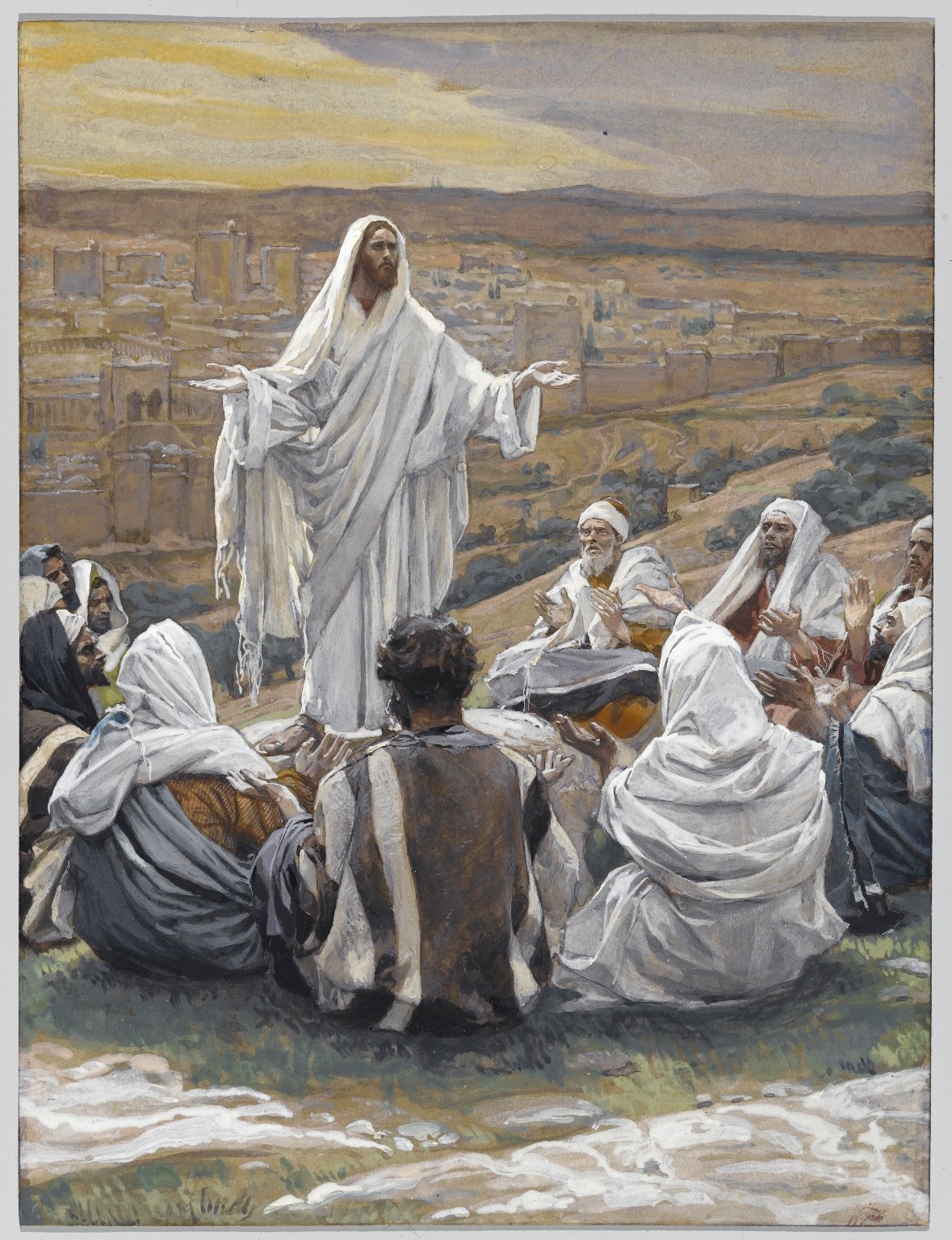
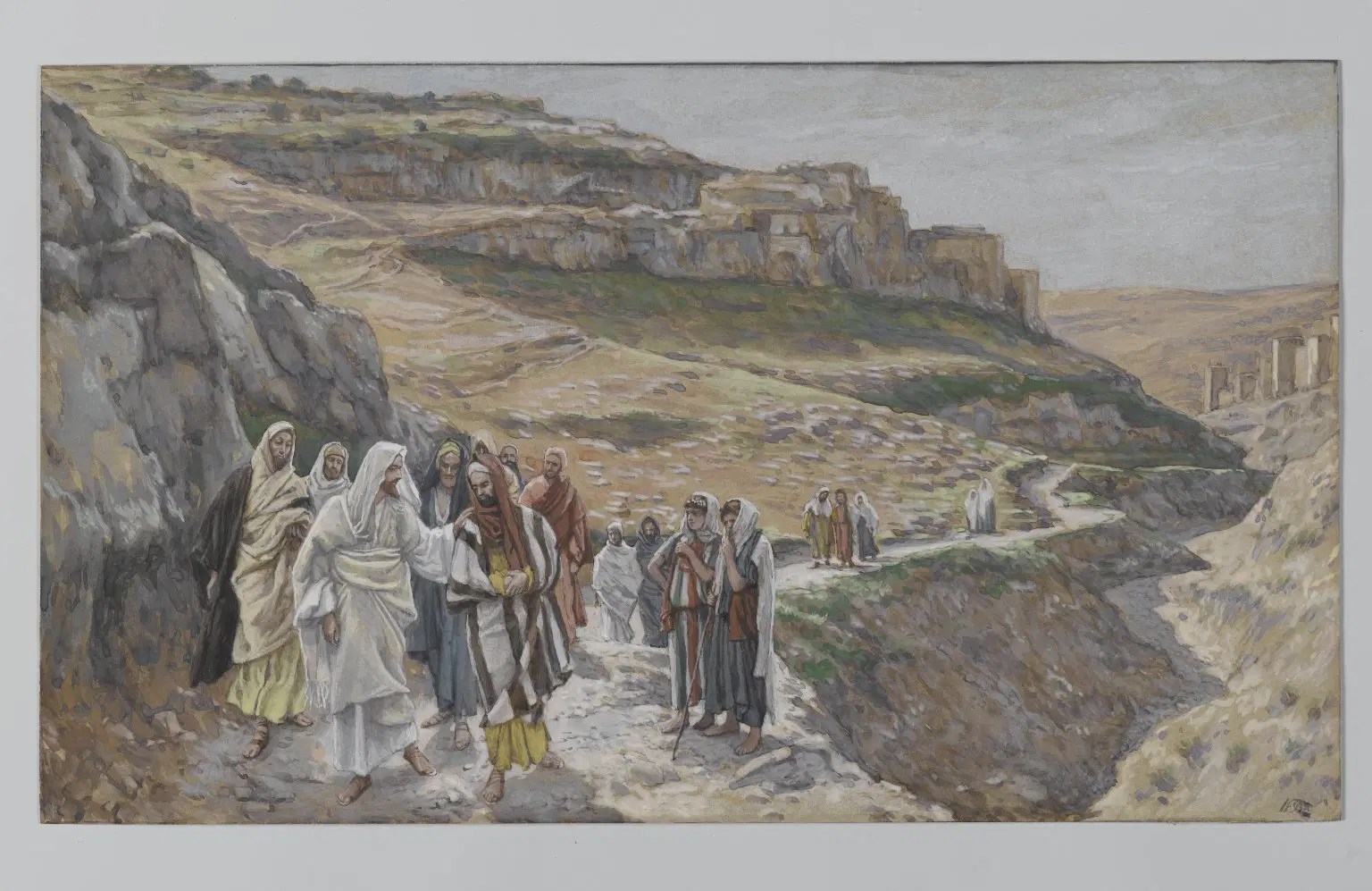
Jesus discourses with his disciples – James Tissot (Brooklyn Museum)

Septuagesima 2025

When we think back over our lives some of the people we remember the most vividly are our teachers. Teachers are important. They form us, they instruct us, they inspire us, and they shape our lives in countless ways. We would not be the people we are without their hard work and inspiration.

At one level Jesus, Christ is the greatest teacher humanity has ever had. This is because His mission was to proclaim the Kingdom of God and to educate humanity about it, so that we might flourish. Christ’s mission is rooted in the simple fact that God loves us. We may make plenty of mistakes, but nonetheless God comes to us, lives as one of us, and shows us how to live life in all its fulness.

The readings this morning outline two possibilities: living in accordance with God’s will, or living by our own desires. It is clear which is preferable, and which way leads to human flourishing. So we have the challenge set before us to live as children of God. It is not necessarily an easy path, and it may involve hardship and suffering. However, nothing worth achieving comes without effort, struggle, and even suffering. 

The prophet Jeremiah offers us a vision of what happens when we put our trust in God:

‘Bendigedig yw’r gŵr sy’n hyderu yn yr Arglwydd, a’r Arglwydd yn hyder iddo. Y mae fel pren a blannwyd ar lan dyfroedd, yn gwthio’i wreiddiau i’r afon, heb ofni gwres pan ddaw, a’i ddail yn ir; ar dymor sych ni prydera, ac ni phaid â ffrwytho’’

“Blessed is the man who trusts in the Lord, whose trust is the Lord. He is like a tree planted by water, that sends out its roots by the stream, and does not fear when heat comes, for its leaves remain green, and is not anxious in the year of drought, for it does not cease to bear fruit.” (Jer 17:7-8)

Here we see an image of human flourishing. This is how things should be. Also, references to trees in the Bible tend to look backwards to the Garden of Eden, and forwards to the tree of Calvary. Salvation history starts with humanity taking the wrong path after an interaction with a tree, and reaches a climax with God using a tree to make things right again. When my best friend got someone he’d worked with in Syria over here, he took them out into the British countryside, and they wept, because they had never seen so much green: grass and trees, and water. Coming from the Middle East, they were used to dryness and desert. The prophet Jeremiah is showing how good things can be, and paving the way for the proclamation which lies at the heart of today’s readings.

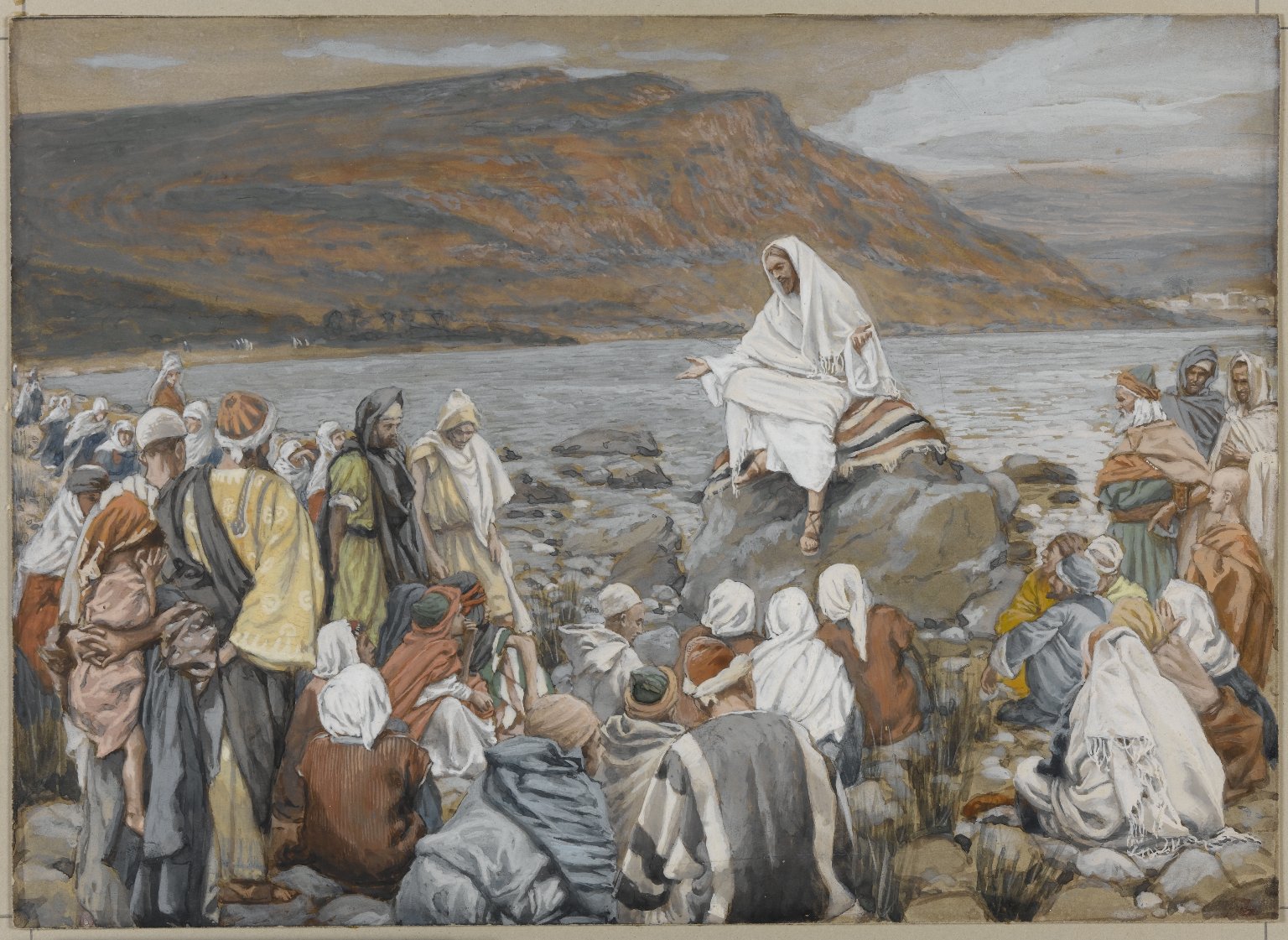
In Luke’s Gospel we see the continuation of Christ’s ministry of teaching and healing. People come to Jesus because they want to know God. They have travelled from a wide area, and are a diverse group of people, all united by a common desire: to be closer to God. Unlike in Matthew’s account, here Jesus does not go up a mountain to teach, but comes down to where people are. There He proclaims the values of the Kingdom:

‘Gwyn eich byd chwi’r tlodion, oherwydd eiddoch chwi yw teyrnas Dduw’

“Blessed are you who are poor, for yours is the kingdom of God.” (Lk 6:20)

To be poor in the world’s eyes is to lack money, possessions, power, and influence. All these worldly things do not matter in the Kingdom of God. There those who are poor, those who recognise their complete dependance upon God, are truly rich. This is because they have the humility to let God be at work in them, and they rely upon God, rather than their own strength, which enables them to be transformed. Two thousand years ago the poor were looked down upon, and their poverty was blamed on sin or fecklessness. They were at the bottom of the pile. To say that the Kingdom of God belongs to such people is to make a truly radical statement, turning societal norms and expectations on their head. What Our Lord is proposing is literally world-changing. This is the Good News of Jesus Christ. 

However, Our Lord recognises that His radical vision will meet with opposition:

‘Gwyn eich byd pan fydd dynion yn eich casáu a’ch ysgymuno a’ch gwaradwyddo, a dirmygi eich enw fel peth drwg, o achos Mab y Dyn. Byddwch lawen y dydd hwnnw a llamwch o orfoledd, oherwydd, ystyriwch, y mae eich gwobr yn fawr yn y nef.’

Blessed are you when people hate you and when they exclude you and revile you and spurn your name as evil, on account of the Son of Man! Rejoice in that day, and leap for joy, for behold, your reward is great in heaven.” (Lk 6:22-23)

To live the Christian life is to be different, to offer the world something new, something challenging, and something disturbing. It will be resisted, and it will lead to difficult times. Our reaction towards any persecution, however, is to be joy. At first sight this seems a little strange and it is definitely a challenge

Jesus then makes a series of four statements beginning with ‘Gwai chwi …Woe to you’. These parallel the earlier positive statements about the Kingdom and turn human values upside down. These speak to those people who trust in themselves, their riches and abilities, saying that all will not go well for them in the future. Those who will not listen to Jesus’ words, because they think they do not need to, will find out that they are wrong. 

In some important ways, Christianity looks dangerous and suspect to the world around us, and so it should. As Christians, we are not conformed to the ways of the world, but rather to the will of God. We do not simply go along with things, because that is what everyone does. Instead, we follow a higher authority. We cannot be bought off with baubles and trinkets, with wealth or power — the things of this world. This is because we acknowledge someone greater, namely God. We try to live as God wants us to live, acknowledging Him before all things. As Christians, there should be something different about us, something that others can see, something that reflects Christ.

Jesus died to reconcile us to God and each other, and He was raised from the dead to give humanity hope in the God who loves us. This hope inspired St Paul to preach the Good News, and it should inspire us as well. We are called to live out our faith in our lives. Our beliefs need to make a difference to who and what we are, so that others might see the truth of the Gospel. What we do here, today, in church helps us to follow in Jesus’ footsteps. We hear God’s word, and we are nourished by it. We pray together for the Church and the World, and those in need. In the Eucharist, Christ fill us with His grace to strengthen and transform us, and then sends us out into the world to love our neighbour.

May we, today and every day, live out and proclaim the coming of God’s Kingdom, so that the world may believe and give glory i Duw Dad, Duw y Mab, a Duw yr Ysbryd Glân. I’r hwn y priodoler pob gogoniant, arglwyddiaeth, a gallu, yn awr, ac yn oes oesoedd. Amen.