Children love to ask questions: who? what? where? when? and, especially, why? The Questions we ask and the Answers we give can say an awful lot about who we are. One of the most fundamental question is one concerning identity: ‘Pwy wyt ti?’ ‘Who are you?’ My response would be: ‘I am Adrian, and I am a priest’. The name I was given in baptism, and the fact that God has called me to share in the priesthood of His Son Jesus Christ, define who I am, and what I do. They are why I am standing here, saying this to you, today.
From the time of their exile in Babylon, and before, the people of Israel had looked for a Messiah, a leader of the House of David. They sought someone who would bring them the peace and security that they longed for. The first reading this morning comes from the prophecy of Zechariah, and was written perhaps as late as two hundred years before the birth of Jesus Christ. At this time the Jewish people were struggling under Greek rulers who tried to abolish their identity, and all that they held sacred. The prophet Zechariah looks forward to a messianic future, when the people of the House of David :
‘edrychant ar yr un a drywanwyd ganddynt, a galaru amdano fel am uniganedig, ac wylo amdano fel am gyntafanedig.’
‘They will look on the one whom they have pierced; they will mourn for him as for an only son, and weep for him as people weep for a first-born child’ (Zech 12:10)
The mention of looking upon one whom they have pierced anticipates Christ and His Crucifixion, as noted by John’s Gospel: ‘They will look on him whom they have pierced’ (19:37). Zechariah also writes of the outpouring of a ‘spirit of kindness and prayer’, just as we have seen at Pentecost. Here Jesus’ Death, Resurrection and gift of the Holy Spirit are clearly prefigured: God’s saving plan is announced in the words of the prophet. A few verses later, Zechariah prophesies:
‘Yn y dydd hwnnw bydd ffynnon wedi ei hagor i linach Dafydd ac i drigolion Jerwsalem, ar gyfer pechod ac aflendid.’
‘On that day there shall be a fountain opened for the house of David and the inhabitants of Jerusalem to cleanse themselves from sin and uncleanness.’ (Zech 13:1)
This is what the Cross achieves for those who are washed in the Blood of Lamb, as we are at our Baptism. Christ’s death takes away our sins. Through Baptism and the Eucharist we share in Jesus’ Death and are raised to new life with Him. When St Paul writes to the Galatian Church, he stresses their common baptism:
‘Oblegid yr ydych bawb, trwy ffydd, yn blant Duw yng Nghrist Iesu. Oherwydd y mae pob un ohonoch sydd wedi ei fedyddio i Grist wedi gwisgo Crist amdano. Nid oes rhagor rhwng Iddewon a Groegiaid, rhwng caeth a rhydd, rhwng gwryw a benyw, oherwydd un person ydych chwi oll yng Nghrist Iesu.’
‘You are, all of you, sons of God through faith in Christ Jesus. All baptised in Christ, you have all clothed yourselves in Christ, and there are no more distinctions between Jew and Greek, slave and free, male and female, but all of you are one in Christ Jesus.’ (Gal 3:26-28)
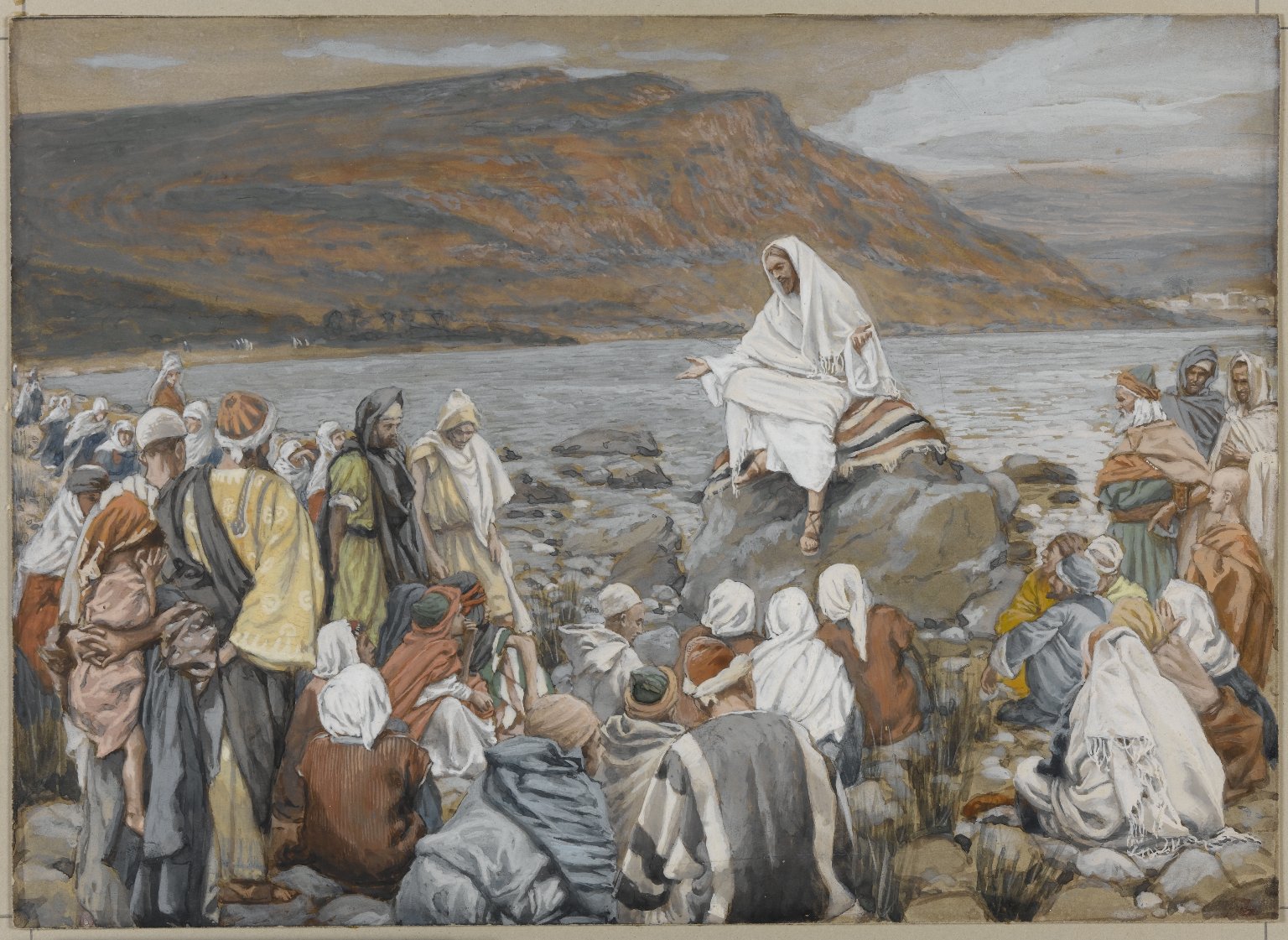
St Paul is preaching a profound message. He explains that none of the distinctions which the world makes matter in God’s eyes. There is no difference. All people are one in Christ. There is a radical equality in the Church: all are welcome to come and experience God’s saving love. When Paul preached, nearly two thousand years ago, this was a revolutionary idea, and it still is today. We are all one in Christ: young and old, rich and poor. It doesn’t matter who we are, where we are from, or anything else. All that matters is that we find our true identity in Christ. This makes us heirs of God’s promise: that we would enjoy eternity in Heaven with our Creator and Sustainer.
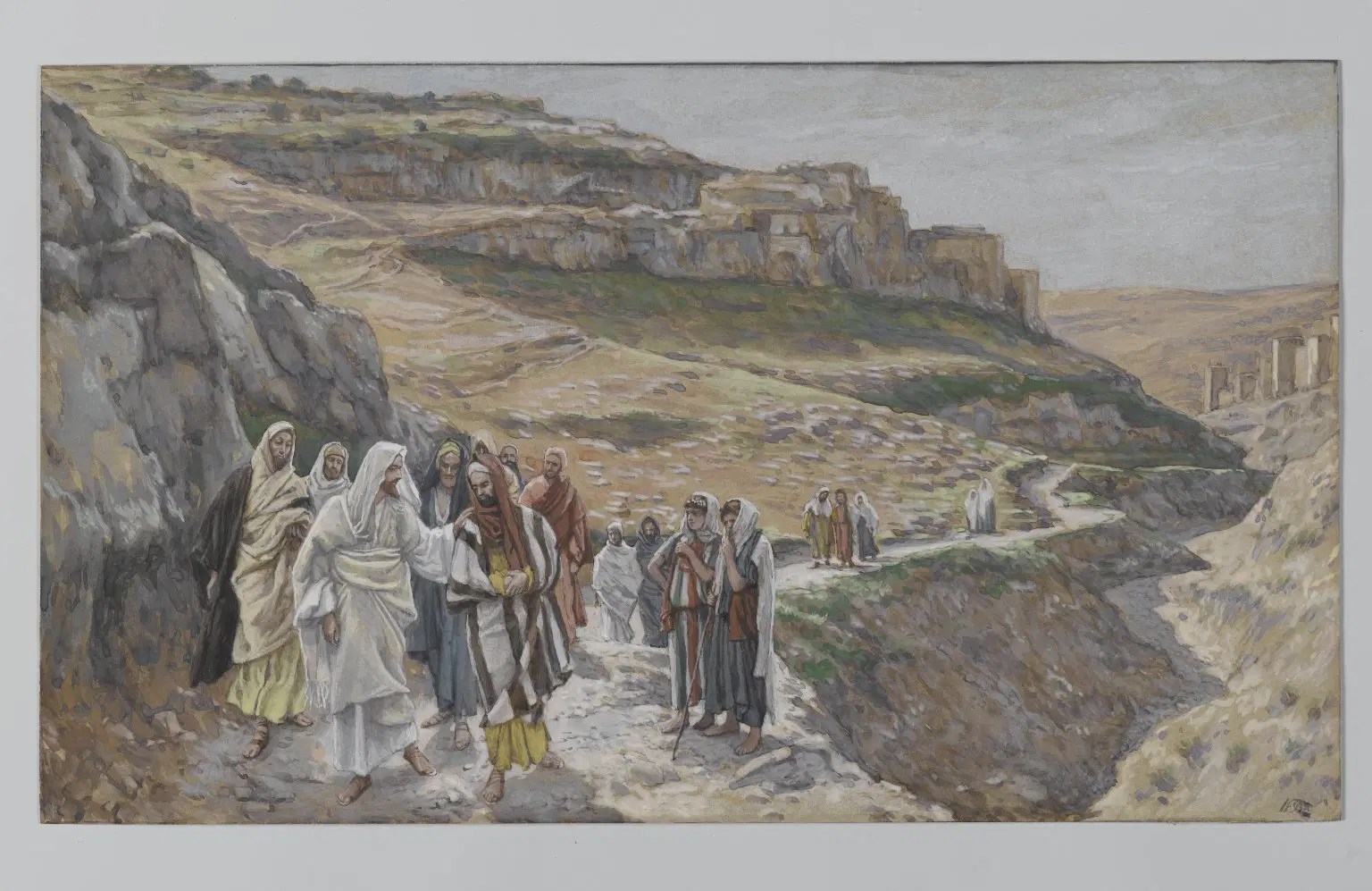
In today’s Gospel Jesus begins by asking His disciples this question:
“Pwy y mae’r tyrfaoedd yn dweud ydwyf fi?”
“Who do the crowds say that I am?” (Lk 9:18)
His followers reply that the people think a variety of things: John the Baptist, Elijah, or another of the prophets. They recognise Jesus’ proclamation of the Good News of the Kingdom and understand Him in terms that are familiar to them. Christ, however, presses the issue by asking His disciples another question:
“pwy meddwch chwi ydwyf fi?”
“But who you say that I am?” (Lk 9:20)
Peter answers, ‘Meseia Duw, the Christ of God’ (Lk 9:20). By this answer Peter confesses that Jesus is the Messiah, God’s Anointed, the fulfilment of Zechariah’s prophecy. The disciple’s confession of belief is also our confession of belief as Christians: Jesus is the Christ, the Saviour, the Son of God. As we will soon declare in the words of the Nicene Creed.
Jesus instructs the disciples that they should not communicate this knowledge to anyone, at this time. He then explains what is about to happen:
“”Y mae’n rhaid i Fab y Dyn,” meddai, “ddioddef llawer a chael ei wrthod gan yr henuriaid a’r prif offeiriaid a’r ysgrifenyddion, a’i ladd, a’r trydydd dydd ei gyfodi.”
“The Son of Man is destined to suffer grievously, to be rejected by the elders and chief priests and scribes and to be put to death, and to be raised up on the third day” (Lk 9:22)
Jesus tells the disciples about His Passion, Death and Resurrection, because it is His mission. He has come to reconcile God and humanity, and to restore and heal our broken relationship. Christ then invites His followers to follow His example:
“Os myn neb ddod ar fy ôl i, rhaid iddo ymwadu ag ef ei hun a chodi ei groes bob dydd a’m canlyn i. Oherwydd pwy bynnag a fyn gadw ei fywyd, fe’i cyll, ond pwy bynnag a gyll ei fywyd er fy mwyn i, fe’i ceidw. Pa elw a gaiff rhywun o ennill yr holl fyd a’i ddifetha neu ei fforffedu ei hun?
‘If anyone wants to be a follower of mine, let him renounce himself and take up his cross every day and follow me. For anyone who wants to save his life will lose it; but anyone who loses his life for my sake, that man will save it.’ (Lk 9:23-24)
At the beginning of His public ministry, Jesus invites people to repent and believe. Now He calls us to self-denial, and to embrace the Cross. Christ asks us to accept the most shameful way to die, a form of torture, used by the Romans to execute slaves. As those saved and made free by the Cross of Christ, we take up our own cross and follow Jesus. We imitate Him, in selfless love and devotion, and we bear the weight of the cross in life’s difficulties and disappointments. Following Christ is hard. It is a struggle, and we cannot just rely solely upon our own willpower to succeed. Instead, the Christian life needs to be a corporate effort, something we do together, trusting in God’s Grace to be at work in us, both individually and as a community.
Christ wants us to lose our lives for His sake, and find freedom in His service. There is something paradoxical in Jesus’ teaching. We are to find perfect freedom in obedience, in service of God and each other. Each of us needs to be humble enough to accept what God offers us, and be prepared to try to live it out together. It isn’t about us, but rather letting God be at work in us. When we co-operate with God, and live in love, and joy, and peace, we flourish as human beings. This is liberating, and it is what Our Heavenly Father wants for us. This is what true freedom looks like, and we are called to live it together, today and every day.
So, as we celebrate the joy of our Salvation, let us pray that we may be changed by God’s love, and share this love with others. Let us give thanks for the mystery and wonder that is God, Duw Dad, Duw y Mab, a Duw yr Ysbryd Glân. God the Father, God the Son, and God the Holy Spirit. I’r hwn y priodoler pob gogoniant, arglwyddiaeth, a gallu, yn awr, ac yn oes oesoedd. To whom be ascribed all glory, dominion and power, now and forever. Amen.
 Novus Motus Oxoniensis