Second Sunday of Yr B

Not so many years ago a person’s profession was often inherited from their parents, or decided for them by others. Certainly, until quite recently, many people could expect to hold the same profession for all their working life. The situation has now changed. Those in employment today can expect to have between three and seven different careers in their working life. The younger a person is, the higher that number is likely to be. Generally speaking great change is easier to handle when we are young, before we get too set in our ways. Such an upheaval faces a number of young men in this morning’s Gospel reading. 

Jesus and John the Baptist know each other. They are related, being cousins and part of the same extended family. In the Gospel, John has just baptised Jesus and seen the Holy Spirit descend upon Him in the form of a dove. John declares that Jesus is the Son of God. The next day he sees Our Lord again and exclaims:

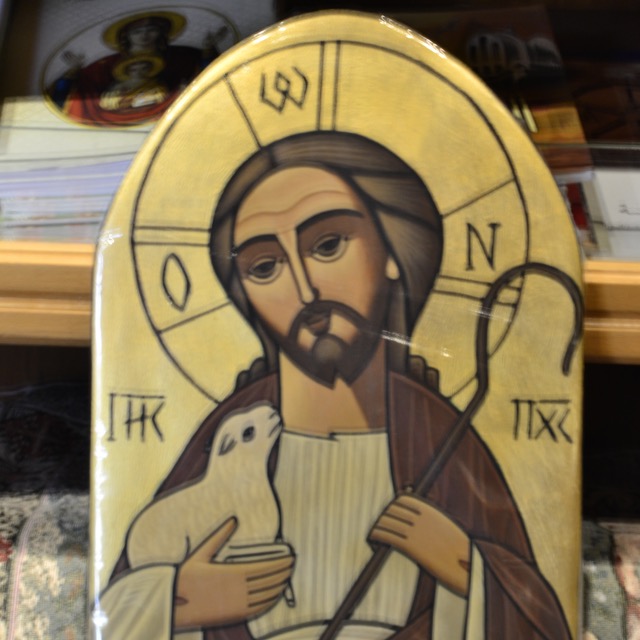
“Behold the Lamb of God!”

‘Wele Oen Duw’ (Jn 1:36)

The phrase is very familiar and used in the invitation to Communion. John the Baptist used the same phrase a few verses earlier, when he exclaimed:

“Behold, the Lamb of God, who takes away the sin of the world!”

‘Wele Oen Duw, yr hwn sydd yn tynnu ymaith bechodau’r byd’ (Jn 1:29)

Again, these words form part of our Eucharistic liturgy, the Agnus Dei. A Lamb who takes away sin means a sacrifice. So from the beginning, Jesus’ public ministry is understood to be sacrificial in character, laying down His life to  take away sin, and restore humanity and God. This is why on the night before He died Jesus took bread and wine, blessed them, and gave them to the disciples, saying ,’This is my Body, this is my Blood’, and told them to ‘do this’, which is why we are gathered here today.

Once John’s disciples hear what the Baptist about Jesus, they follow Him. Jesus asks them what they are seeking, and they reply:

“Rabbi” (which means Teacher), “where are you staying?”

‘Rabbi, (yr hyn o’i gyfieithu yw, Athro,) pa le yr wyt ti yn trigo?’ (Jn 1:38)

The disciples recognise Jesus as a teacher, and want to learn from Him. But rather than simply answering their question, Our Lord issues them an invitation:

“Come and you will see.”

‘Deuwch, a gwelwch’ (Jn 1:39)

Jesus invites them to follow Him, to see where He is staying and to spend time with Him. These two disciples of John become followers of Jesus, literally and metaphorically. The Church continues to make the same invitation to the world, to come, see, and follow Jesus. These two disciples begin by spending a day with Jesus. They listen to Him, they eat with Him, and begin to have a relationship with Him. We then discover that one of the men is Andrew, and that he has a brother, called Simon. Andrew is convinced that he has found the Messiah and so he brings his brother to Jesus. When Jesus meets Simon he says,

“So you are Simon the son of John? You shall be called Cephas” (which means Peter) 

‘Ti yw Simon mab Jona: ti a elwir Ceffas, yr hwn a gyfieithir, Carreg.’ (Jn 1:42)

Jesus gives Simon a new name. He calls him Cephas, which means ‘rock’ in Aramaic. In Greek this is ‘Petros’, which is how we get the name Peter. Peter will be the rock upon which Christ will build His Church (Mt 16:18). The name given by Jesus points to Peter’s future role as the leader of the Apostles. Jesus takes the initiative and begins to sketch out a future for the disciples who are following Him. It is quick, and matter of fact, and yet momentous. Jesus is gathering people to help Him with this ministry.

The Church therefore begins with a few Galilean fishermen following a rabbi whom they recognise as the Messiah. Thanks to them, and their faith in Jesus, we are here in the Church today. Faith, where we put our trust, is an important thing, affecting both who we are, and how we live our lives. Faith in Jesus turned Peter from a fisherman into a leader of the early Christians. The same faith has transformed lives over the past two thousand years, and continues to do so today. 

In our baptism, God in Christ invites each and every one of us to follow Him, to ‘come and see’, as the first disciples did, and to invite others, as Andrew invited Simon Peter. To come and see who Jesus is, to get to know Him, and start a relationship with Him. This begins with our sharing in His Death and Resurrection, and ends in the glory of Heaven. What starts as an encounter deepens into a life-long relationship. People’s lives, our lives are changed when we encounter Jesus, and this is as true for us today as it was two thousand years ago. Our lives are changed when we encounter Jesus in prayer, in scripture, and in His Body and Blood at the Eucharist. Each and every one of us is called to be a disciple of Jesus, to listen to what He says, and to let this call make an impact upon our lives. Jesus longs to transform humanity, to fill us with God’s love. He also wants us to share the invitation with others.

At the Epiphany the Wise Men recognised who and what Jesus was. Now fishermen recognise Him as the Messiah. They understood that He is the Anointed One, the Christ, the One to save Israel, and all the world from their sins. Ours is a faith which can transform the world, so that all humanity can share in God’s life and love. Each and every one of us can become part of something radical and revolutionary, which can and will transform the world one soul at a time. The only way to change the world is through the love of God. This is the mission of the church, and why we continue to offer the same invitation, ‘Come and see!’ ‘Deuwch, a gwelwch’’. The journey of faith begins with Our Lord’s invitation. This may lead to our lives being radically changed, just as the fishermen became leaders in Christ’s Church. Let us then, like these first disciples, commit our lives to following Jesus and encouraging others to do the same. May we have the strength to trust and follow Christ and put our talents into His service, wherever that may lead us. Amen.

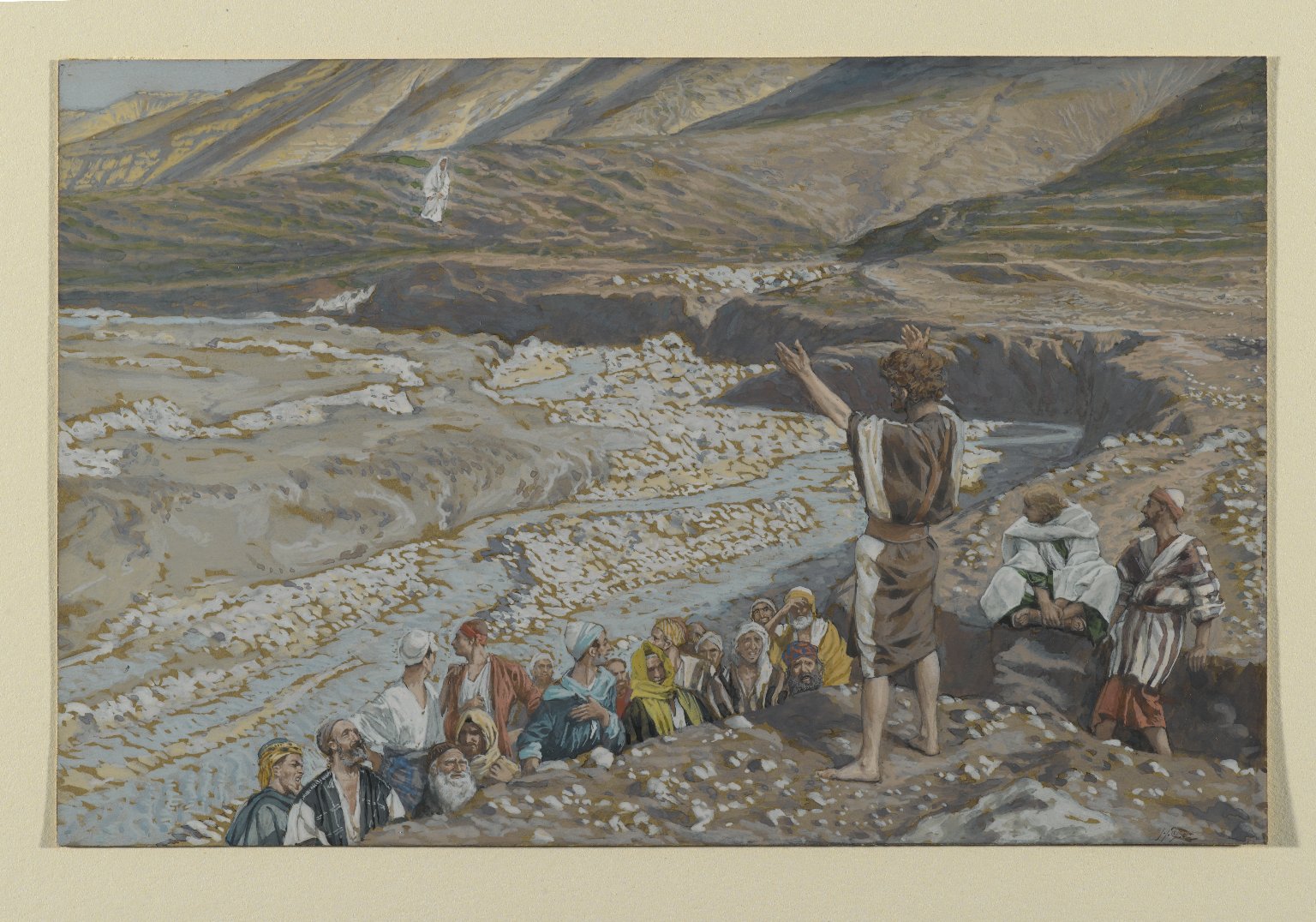
James Tissot: Saint John the Baptist Sees Jesus from Afar (Brooklyn Museum)

Advent IV – Trust!

Those of you who are fans of The Sound of Music will know that to begin at the beginning is a very good place to start. This morning’s Gospel does exactly that, by going back to the Annunciation of the Angel Gabriel to the Blessed Virgin Mary, the beginning of the story of Christmas. As we prepare to celebrate Christ’s birth this evening and tomorrow, it is only natural to return to the point of Our Lord’s Conception to help us to ponder the wonderful mystery which God accomplishes for our sake. 

At its heart, Christianity is a religion which declares that God becomes a human being, so that humanity can share in the life of God. This is what we believe as Christians, and why we proclaim this truth to the world. The greatest news in human history is a teenage pregnancy — something that is shocking and scandalous, is how God saves us. This is why St Paul can write to the Romans:

the revelation of the mystery that was kept secret for long ages but has now been disclosed and through the prophetic writings has been made known to all nations (Rom 16:25-26)

This is the proclamation of the Good News of Jesus Christ. It starts with an encounter in Nazareth. A young woman is engaged to be married and receives a visitor, who says:

“Greetings, O favoured one, the Lord is with you!” (Lk 1:28)

Mary is confused, she cannot understand what is going on. Biblical accounts of the interaction between God and humanity show us that ours is a God who takes risks. Mary could refuse, she could say no, and human history would be profoundly different. So the angel Gabriel says, ‘Paid ag ofni, Do not be afraid’. Mary does not need to be afraid because God is doing something wonderful. She will bear a son and call him Jesus, which means ‘God saves’. Jesus the Son of God will save God’s people from their sins, and will fulfil the promise made to David, which we heard in our first reading. 

Mary cannot understand how this will happen. The Holy Spirit, God active in the world, and the bond of love between God the Father and God the Son, will overshadow her. God will take flesh in her womb and be born as one of us. So Mary replies:

“Behold, I am the servant of the Lord; let it be to me according to your word.” (Lk 1:38)

Mary says ‘Yes’ to God. This is a ‘Yes’ which undoes the ‘No’ of Eve. It brings about the salvation of humanity, through the Life, Death, and Resurrection of her Son. Mary’s obedience to the will of God, ‘the obedience of faith’ (Rom 16:26), both trusts God to be at work, and makes it possible. We can be joyful because of Mary’s ‘yes’ to God. In her we have a pattern of obedience to the will of God which all Christians are to follow.

In the first reading this morning King David is worried. He says to Nathan the prophet:

“See now, I dwell in a house of cedar, but the ark of God dwells in a tent.” (2 Samuel 7:2)

Since the Exodus from Egypt, the Ark of the Covenant has resided in a  tabernacle, a tent, a temporary dwelling. This worries David, but God is not concerned whether he lives in a tent or a temple. It does not matter. God’s response is not to accept David’s offer, but instead to make David an amazing counter-offer:

Moreover, the Lord declares to you that the Lord will make you a house. When your days are fulfilled and you lie down with your fathers, I will raise up your offspring after you, who shall come from your body, and I will establish his kingdom…  I will be to him a father, and he shall be to me a son… And your house and your kingdom shall be made sure for ever before me. Your throne shall be established for ever.’” (2 Samuel 7:11-12, 14, 16)

God offers David a family, a Royal House. This is a promise which bears fruit with the coming of Jesus, born of the House of David, and the Son of God. Jesus’ mother Mary will be the living Ark of the New Covenant. This will be a covenant that is not made in stone, but rather in flesh; the flesh of the Son of God, who is born for us, and who dies for us. Mary’s womb will be the place where the Son of God will begin to dwell with us:

Therefore the Lord himself will give you a sign. Behold, the virgin shall conceive and bear a son, and shall call his name Immanuel. (Isa 7:14)

Immanuel in Hebrew means ‘God (is) with us’ and this is what we are preparing to celebrate at Christmas: God being among us. Let us then follow Mary’s example of obedience, listen to God, and trust Him to be at work in us. Let us welcome Jesus both in Bethlehem and here upon the altar, where God, who became flesh and blood in the womb of Mary, offers us His Body and Blood in the Eucharist, so that we might share His Life. Let us, like Mary, say, ‘Yes’ to God, welcome him into our hearts. Let us be beacons in the world, shining with God’s love. May all this Christmas come to believe and trust in God the Father, God the Son, and God the Holy Spirit. To whom be ascribed all glory, dominion, and power, now and forever. Amen.
Sr. Grace Remington OCSO, Mary and Eve, crayon and pencil, 2005

The 33rd Sunday of Year A (Prov 31:10-13, 19-20, 30-31, 1 Thess 5:1-11, Mt 25:14-30)

In the ancient world, as in today’s world, the domestic life of women was difficult. Without modern labour-saving devices, household chores were even more laborious and time-consuming. A wife would be expected to run a household, and it was hard and difficult work. Such a demanding role means that paragons in the domestic sphere were to be praised and prized. And, in the Book of Proverbs, we see such an example of industry, of hard work. Throughout Ancient Wisdom Literature, wisdom and industry go hand in hand, they are beautiful and good, as they come from the source of all beauty and goodness, namely God. An excellent wife is more valuable than jewels, because while precious stones possess beauty and value, they are not capable of doing good. 

The heart of her husband trusts in her, and he will have no lack of gain. (Proverbs 31:11)

As a result of the relationship between a loving husband and wife, their mutual prosperity is assured. This then leads to generosity:

She opens her hand to the poor and reaches out her hands to the needy. (Proverbs 31:20)

The point of wealth is not for it to be acquired for its own sake, but so that it may be a blessing to others. God wants humanity to flourish by being loving and generous. This theme runs through all our readings this morning.

St Paul’s First Letter to the Thessalonians is written to a community that is afraid of two things: death and the return of Jesus in Judgement. These are understandable emotions. However, while death and judgement are inescapable, they do not need to be feared. They are compared with the labour pains of a pregnant woman, which are often sudden and sharp. But if we live lives characterised by love, and we have faith in Jesus Christ who died and rose again for us, we have the hope of salvation. This is good news, and leads St Paul to write:

For God has not destined us for wrath, but to obtain salvation through our Lord Jesus Christ (1Thess 5:9)

Paul’s letter is written to encourage his fellow Christians, to allay their fears and to build up their faith, hope, and love, as a community:

Therefore encourage one another and build one another up, just as you are doing (1Thess 5:11)

We all of us need encouragement, especially when times are difficult, and when we are as afraid or unsure, as we are at the moment. It is good to be reminded that, in trying to lift each others spirits, we are behaving as a Christian community should.

In today’s Gospel, Jesus continues to talk about the future using parables. Just as with the Parable of the Wise and Foolish Virgins, Jesus begins by showing that he is talking about a future reality: how things WILL BE, not how they are now. This future reality is Christ’s return. Christians believe that Jesus will come again to judge the world. The theme of today’s parable, the Parable of the Talents is judgement. These days, we are not comfortable with ideas of judgement. Many of us remember preachers using ideas of hell-fire and damnation to fill people with fear. But the heart of the Gospel is love not fear, and perfect love casts out fear. 

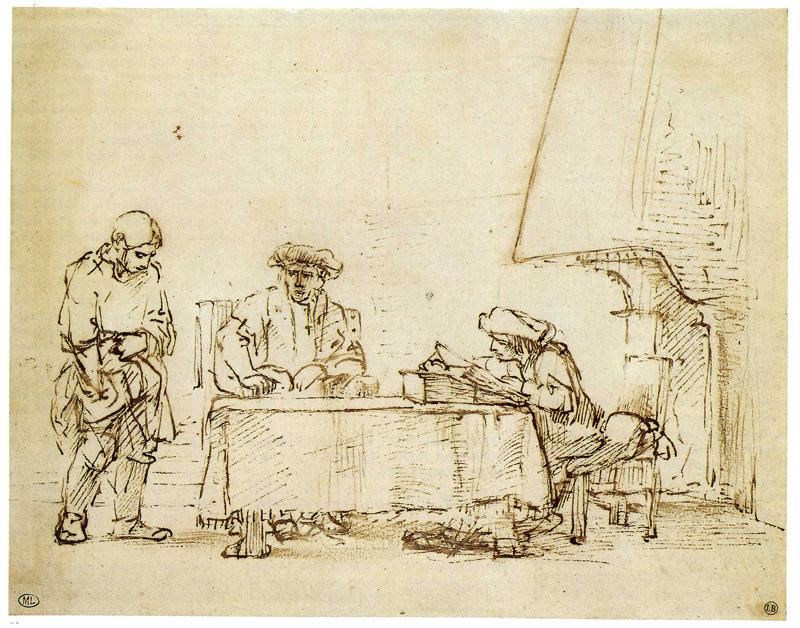
In the parable the master goes on a journey and entrusts his property to his servants. He puts his possessions into their care because he trusts them to look after it. The servants who are assigned five and two talents are both praised for being ‘good and faithful’. They have acted morally and demonstrated their faith, and they will be rewarded. The problem is with the servant who was given just one talent and hid it in the ground. He explains his actions, saying:

‘Master, I knew you to be a hard man, reaping where you did not sow, and gathering where you scattered no seed, so I was afraid, and I went and hid your talent in the ground. Here you have what is yours.’ (Mt 25:24-25)

This servant does not love his master, he fears him. He does not take care of what has been entrusted to him, because he simply sees it as a possession, a thing. The servant loves neither his master nor what was entrusted to him. By hiding the talent in the ground, he squanders the opportunity his master has given him, because he is jealous and resentful. As all gardeners know, seeds produce different results, just as in the Parable of the Sower, but they all need to be sown in the first place. What we learn here is that bitterness and resentment have no place in the Kingdom, they are not compatible with a Gospel of Love. The tragedy is that the fearful servant condemns himself to being outside the Kingdom, by failing to recognise both generosity, and the value of a relationship. 

The Parable of the Talents, just like the Parable of the Wise and Foolish Virgins, is a commentary on the life of the Kingdom. These are stories of servants who are prepared and continue to work, until their master returns. They are parables which teach us how to be a Church of loving generous service, not one of fear.

It may sound pedestrian, or even humdrum, but living the Christian life, living the life of the Kingdom, is, at a day to day level, boring, difficult and repetitive. It is about ‘keeping on keeping on’ — loving, forgiving, praying –- nourished by the Body and Blood of Christ, fed by Him, and with Him, freed from the fear which is the antithesis of the Kingdom, rejoicing in the gifts which God gives us, being thankful for them, and using them for God’s glory. None of us fully deserve the gift of God’s love and forgiveness in Jesus Christ: we have not earned it. It is not a reward, but rather the gift of a loving God. It is a gift which we are called to receive, and it transforms our lives. The God who will come to judge us, and all humanity, is a God of love and mercy, whose hands bear the mark of nails, wounded for love of us. Judgement and mercy go hand in hand, and if we love God and love our neighbour, we are living the life of the Kingdom, here and now, free from fear. 

So let us live out that life together, encouraging one another, so that we may all be built up in faith, hope, and love, and together share in the joy of the Kingdom, so that all may know and love God the Father, God the Son, and God the Holy Spirit, to whom be ascribed, as is most right and just, all might, majesty, glory, dominion, and power, now and forever. Amen. 

Rembrandt The Parable of the Talents

The Feast of All Saints (Mt 5:1-12)

“God has a plan for your life!” You may well have heard these words before, possibly from someone preaching a sermon, but they contain a truth, and are found in the Bible, in words that God speaks through the prophet Jeremiah:

For I know the plans I have for you, declares the Lord, plans for welfare and not for evil, to give you a future and a hope. (Jer 29:11)

It can be hard to hold onto promises such as these, especially when times are difficult and the outlook is bleak. We need to ask ourselves the question, ‘Can we trust God?’ If the answer is ‘Yes’ then, whatever difficulties or hardships may come our way, we know that our future is in safe hands.

Our Christian life begins with Baptism, where we are washed with water in the Name of the Father, the Son, and the Holy Spirit. Through Baptism we share in Christ’s Death and Resurrection, and are raised to new life in Him. We receive the Holy Spirit, Faith, Hope, and Love, and we are marked with the sign of the Cross to show that we belong to Christ. These are all manifestations of God’s Grace, unmerited kindness and generosity, but they are given for a reason. They are given to us so that we may love God and serve Him in this life, and be with Him in the next. Fundamentally, the point of being a Christian is to reside in Heaven. This is possible because of what Jesus Christ has done for us, out of love. This is the plan God has for our life, and this is why Jesus became man, lived, and died, and rose from the dead. God shows us both how to live, and what He has in store for us. We can have faith, and put our trust in a God who loves us. In the clear hope that, after our earthly life is over, we may enjoy eternity with God in Heaven. Most of all, in this hope, we can live lives of love, love of God and of each other, foreshadowing eternal heavenly joys. 

In our current culture we are not used to hearing this message. It sounds strange. We tend to think that holiness is for other people, certainly not us. But God wants each and every one of us to become a saint. He wants us to live in a world full of people trying to be saints. The Church is ‘a school for saints’, in which Christians try to live out their faith, cooperating with the grace of God. We do this when we let Christ live in us, so that we can say with the Apostle Paul:

‘It is no longer I who live, but Christ who lives in me.’ (Gal 2:20)

There is a paradox at work here, for when we truly let Christ live in us, we do not lose ourselves, but instead we find who we really are. We can then be the people God wants us to be, the people we were created to be. As Jesus says in Matthew’s Gospel:

For whoever would save his life will lose it, but whoever loses his life for my sake will find it. (Mt 16:25)

Today the Church celebrates the Feast of All Saints. On this day, in the eighth century AD, Pope Gregory III dedicated a chapel to All Saints in St Peter’s Basilica in Rome. It is a good thing to celebrate the fact that Heaven is full of saints, the Church Triumphant, who spend eternity praising God and praying for us. Just as we pray for our friends here on earth, it stands to reason that our friends in Heaven pray for us as well. It is reassuring to know that we are not alone in our quest to reach Heaven, and to know that those who are already there long for us to join them. 

If Heaven is our goal, how thenshould we live our lives on earth? Thankfully today’s Gospel gives us a template to follow, an example of what a Christian life looks like. 

The Sermon on the Mount (The Beatitudes) begins with the words which we have just read. It is important to notice that Jesus goes up a mountain to teach people. This brings to mind Moses ascending Mt Sinai and receiving the Ten Commandments of the Law. At one level what we have here is a New Law, a new way to understand how we should relate to God and to each other. It is a radical vision, which turns human expectations on their head. 

We constantly hear how the world around us values success and confidence, and looks up to the rich, and the powerful. In contrast to this, Jesus says to the gathered crowd:

“Blessed are the poor in spirit, for theirs is the kingdom of heaven.” (Mt 5:3)

‘Poor in spirit’ is not a term we are used to using, but it means the exact opposite of pride. It places humility as key to living a Christian life: knowing who we are, and our need for God. Only if we rely upon God, and not ourselves, and ask Him to work through us can we truly live out the Christian life. 

“Blessed are those who mourn, for they shall be comforted.” (Mt 5:4)

We mourn those we love, those whom we see no longer in this life, because we love them, we miss them, we want to see them, and hold them, and talk to them. Our parting, while temporary, is still very painful. Thankfully the Kingdom of God, which Christ comes to bring, is a place of healing and comfort with the promise of eternal life. 

“Blessed are the meek, for they shall inherit the earth.” (Mt 5:5)

Gentle people are not weak: they know how to use their strength, and how not to use it. As Jesus will later say in Matthew’s Gospel: ‘Take my yoke upon you, and learn from me, for I am gentle and lowly in heart, and you will find rest for your souls.’ (Mt 11:29). This is how God wants us to live as human beings. Christ is the example of gentleness we must follow. Once again, God’s vision of the future turns human expectations upside down. 

“Blessed are those who hunger and thirst for righteousness, for they shall be satisfied.” (Mt 5:6)

Should we be devoted to God? Absolutely! Should we pray that His will is done on earth as it is in Heaven? Of course! Jesus taught us to pray this way. Our faith should influence how we live our lives, so that we work for the coming of God’s Kingdom here on earth. Clearly God wants to see our world transformed and has invited us to help in the process; and doing so gives us fulfilment.

“Blessed are the merciful, for they shall receive mercy.” (Mt 5:7)

We see what God’s mercy looks like in Christ’s death for us on the Cross. In following Christ’s example, we ask for forgiveness for our own sins, and forgive those who sin against us. This forgiveness can transform us and the world around us, and it is how the healing and reconciliation of God’s Kingdom functions. 

“Blessed are the pure in heart, for they shall see God.” (Mt 5:8)

To be pure in heart is to want what God wants: to align our will with the will of God. It is to be saintly, and thus have the promise of Heaven, which is less of a place or a time, and much more a relationship. To see God is know Him, and to know His love for us. This is what Christ comes to restore to humanity, and it is our hope. 

“Blessed are the peacemakers, for they shall be called sons of God.” (Mt 5:9)

First and foremost, we know that Christ is the Son of God because He made ‘peace by the blood of his cross’ (Colossians 1:20). We too are called to follow Christ’s example and take up our Cross, and work for peace. Peace in our own hearts and lives, in our families and communities and in our world.

“Blessed are those who are persecuted for righteousness’ sake, for theirs is the kingdom of heaven. Blessed are you when others revile you and persecute you and utter all kinds of evil against you falsely on my account.” (Mt 5:10-11)

Following Jesus will not make us popular, often quite the opposite. If, however, we want to see God’s Kingdom as a reality in this life and the next, then we must be prepared to be shunned, or even ridiculed by others. To follow Christ is to take up the Cross, and to expect persecution, and false accusation. But we are not alone in this, Christ has gone before us, showing us that the story does not end with death on a Cross, but the glory of the Resurrection and Eternal life. 

If we want to become saints, then we have to be like Christ, share in His suffering and death, be prepared to be rejected by the world, and dismissed as irrelevant. We may not face imprisonment, torture and death in this country, but many Christians around the world do. However, we may be scorned and ignored, or patronised. What do we do in such circumstances? We are called to be loving, generous, and forgiving, because that is what Jesus has shown us. We can be different to the world around us because we belong to a new community, the community of faith, built on our relationship with Jesus Christ, who came to save humanity from itself. He came that we might have life and have it to the full, and that is what the Beatitudes mean. By living the life of God’s Kingdom here and now, we can live the life of Heaven here on earth. It may sound foolish, but it is what God wants us to do, what Jesus showed us to do. We are called to be fools for God.

So let us, on this feast of All Saints, be filled with courage, and be ready to conform our lives to God’s will and live out our baptism and our faith in the world. May we  live the life of the Kingdom together, and encourage others in order that all may join the choirs of Heaven to sing the praise of God the Father, God the Son, and God the Holy Spirit, to whom be ascribed, as is most right and just, all might, majesty, glory, dominion, and power, now and forever. Amen.