One of the trickiest things to do is to tell someone something they don’t want to hear. Some things can be difficult to hear, and difficult to say. Honesty and truth are essential if we want to change and grow. In Ancient Israel, prophets were sent by God to speak the truth: to call people back and to tell them where they were going wrong. When the people of Israel rebelled against God, which is the definition of sin, prophets called God’s people to repentance. They urged them to turn back to the God who loves them, and longs for them to flourish. Sadly, such messages were not always heeded:
‘The descendants also are impudent and stubborn: I send you to them, and you shall say to them, ‘Thus says the Lord God.’ And whether they hear or refuse to hear (for they are a rebellious house) they will know that a prophet has been among them.’
‘At blant wynebgaled ac ystyfnig yr wyf yn dy anfon, ac fe ddywedi wrthynt, ‘Fel hyn y dywed yr Arglwydd DDUW.’ Prun bynnag a wrandawant ai peidio — oherwydd tylwyth gwrthryfelgar ydynt — fe fyddant yn gwybod fod proffwyd yn eu mysg.’ (Ezek 2:4-5)
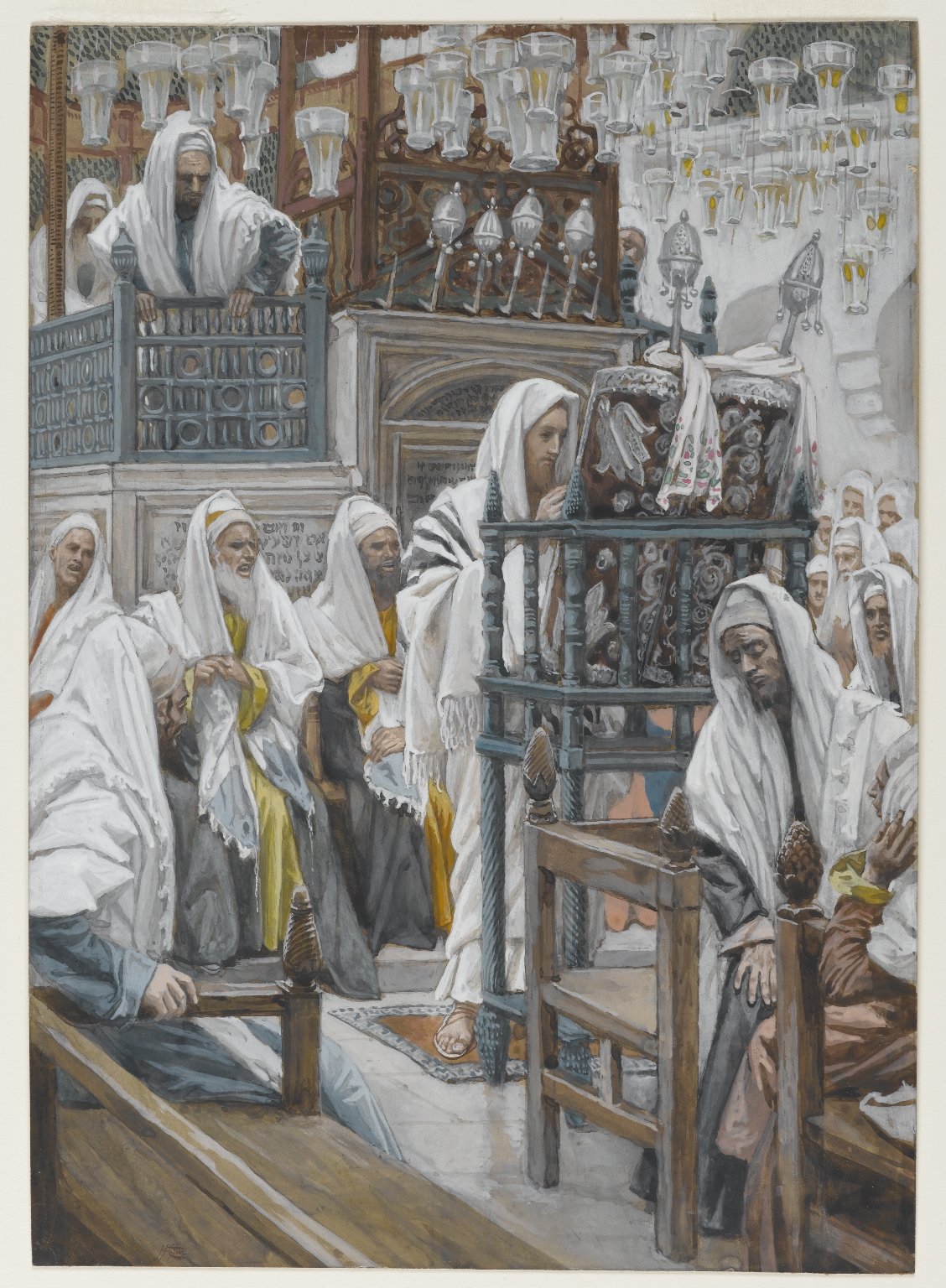
This is the situation which we encounter in today’s Gospel. As part of His Galilean ministry Our Lord goes to Nazareth, and teaches in the synagogue. In Luke’s account we hear Jesus reading from Isaiah:
“The Spirit of the Lord is upon me, because he has anointed me to proclaim good news to the poor. He has sent me to proclaim liberty to the captives and recovering of sight to the blind, to set at liberty those who are oppressed, to proclaim the year of the Lord’s favour.”
“Y mae Ysbryd yr Arglwydd arnaf, oherwydd iddo f’eneinio i bregethu’r newydd da i dlodion. Y mae wedi f’anfon i gyhoeddi rhyddhad i garcharorion, ac adferiad golwg i ddeillion, i beri i’r gorthrymedig gerdded yn rhydd, i gyhoeddi blwyddyn ffafr yr Arglwydd.” (Lk 4:18-19)
Clearly hearing such a prophecy and then being told that it was being fulfilled among them would be quite shocking. The people had spent five hundred years waiting for a Messiah, and now, suddenly, here he was. The worshippers in the synagogue are unwilling, or unable, to understand what is going on, so they say:
“Where did this man get these things? What is the wisdom given to him? How are such mighty works done by his hands? Is not this the carpenter, the son of Mary and brother of James and Joses and Judas and Simon? And are not his sisters here with us?” And they took offence at him.
“O ble y cafodd hwn y pethau hyn? A beth yw’r ddoethineb a roed i hwn, a’r fath weithredoedd nerthol sy’n cael eu gwneud trwyddo ef? Onid hwn yw’r saer, mab Mair a brawd Iago a Joses a Jwdas a Simon? Ac onid yw ei chwiorydd yma gyda ni?” Yr oedd ef yn peri tramgwydd iddynt. (Mk 6:2-3)
The inhabitants of Nazareth cannot reconcile the healer and teacher with the person they have seen growing up among them. Hence they stress Our Lord’s trade and family relationships. They cannot recognise the Messiah in their midst. The Nazarenes understand Christ’s human nature, but cannot see that He is divine.
Jesus understands that a prophet is without honour among his own people. Those who think they know Him well, fail to discern what God is doing through Him. They may reject Christ, but He does not reject them.
‘And he could do no mighty work there, except that he laid his hands on a few sick people and healed them.’
‘Ac ni allai wneud unrhyw wyrth yno, ond rhoi ei ddwylo ar ychydig gleifion a’u hiacháu.’ (Mk 6:5)
The Good News of the Kingdom is proclaimed, and healings take place. God’s love is poured out even where He is not welcomed, because God loves us, and has come to heal our wounds. Even when we turn our back on Him, Our Heavenly Father does not spurn us. The work of the Kingdom must continue:
‘And he marvelled because of their unbelief. And he went about among the villages teaching.’
‘Rhyfeddodd at eu hanghrediniaeth. Yr oedd yn mynd o amgylch y pentrefi dan ddysgu.’ (Mk 6:6)
Those who in theory should know Him best, who have known Jesus all His life, are the ones who turn their back on Him. Our Lord is amazed at their hardness of heart. He faces exactly what Ezekiel faced before Him. So Jesus continues to heal and teach, even though some do not hear, and do not believe. To those who do, Christ offers love, healing and New Life. He offers Himself in the Eucharist, so that we may have life in all its fulness.
We know who and what Jesus is. Many in the world around us reject Christ, rather like the people of Nazareth, or fail to accept Him as true God and true man. They doubt who He was, what He did, and what He said. Our duty, as Christians, is to tell people about Jesus, praying that they will want to believe. We need to model the Christian life, remembering that all things are possible — God can will do amazing things, especially when we cooperate with Him.
Our country is currently experiencing a new start, a re-boot after the election. We pray for those who have been elected to office that they will govern with wisdom and compassion. May we too take this opportunity to re-boot and re-energise our life of faith, and shine as beacons of hope in our community and world. May we join with all creation and give glory to God the Father, God the Son, and God the Holy Spirit. To whom be ascribed all glory, dominion, and power, now and forever. Amen.
 Novus Motus Oxoniensis