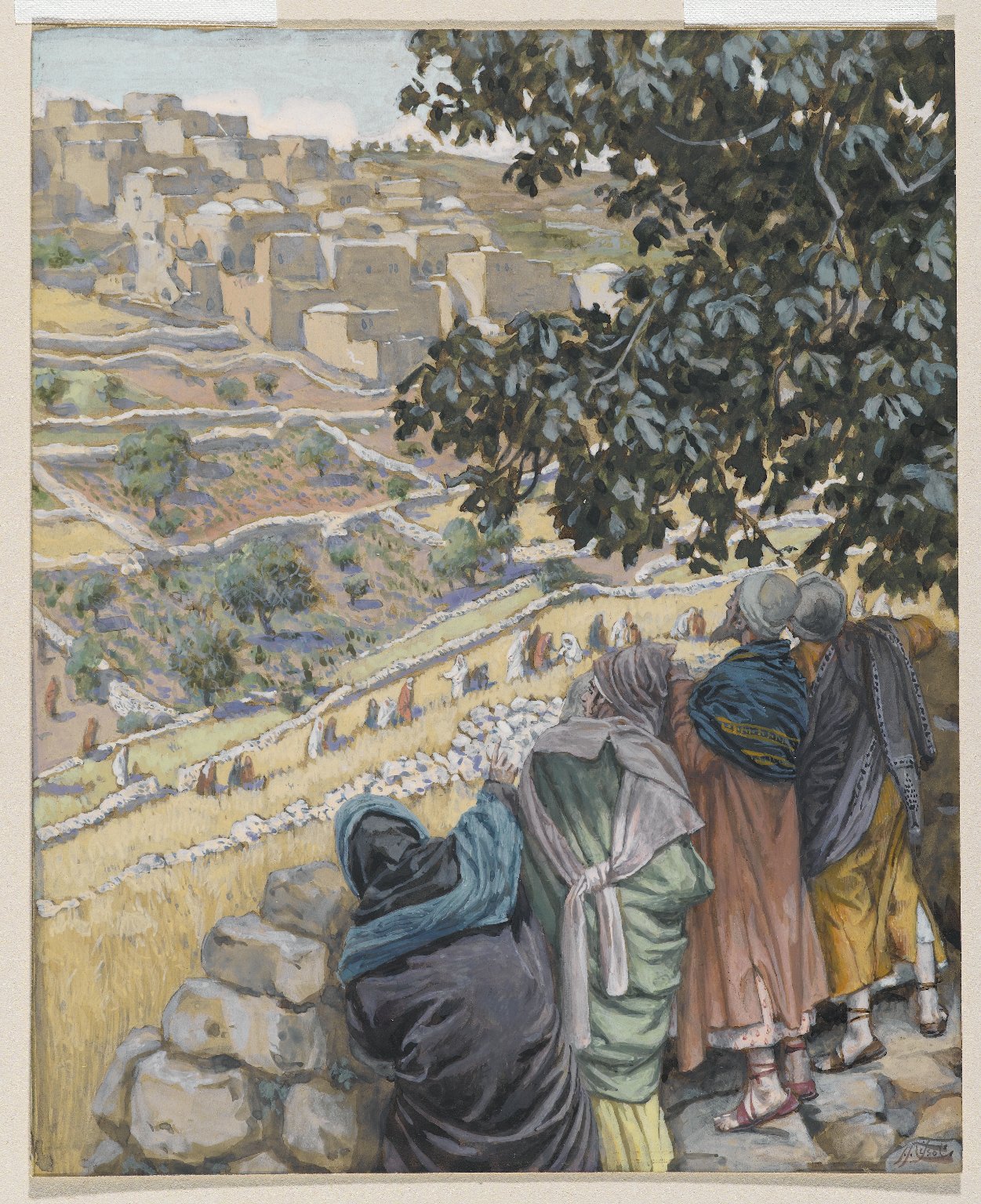
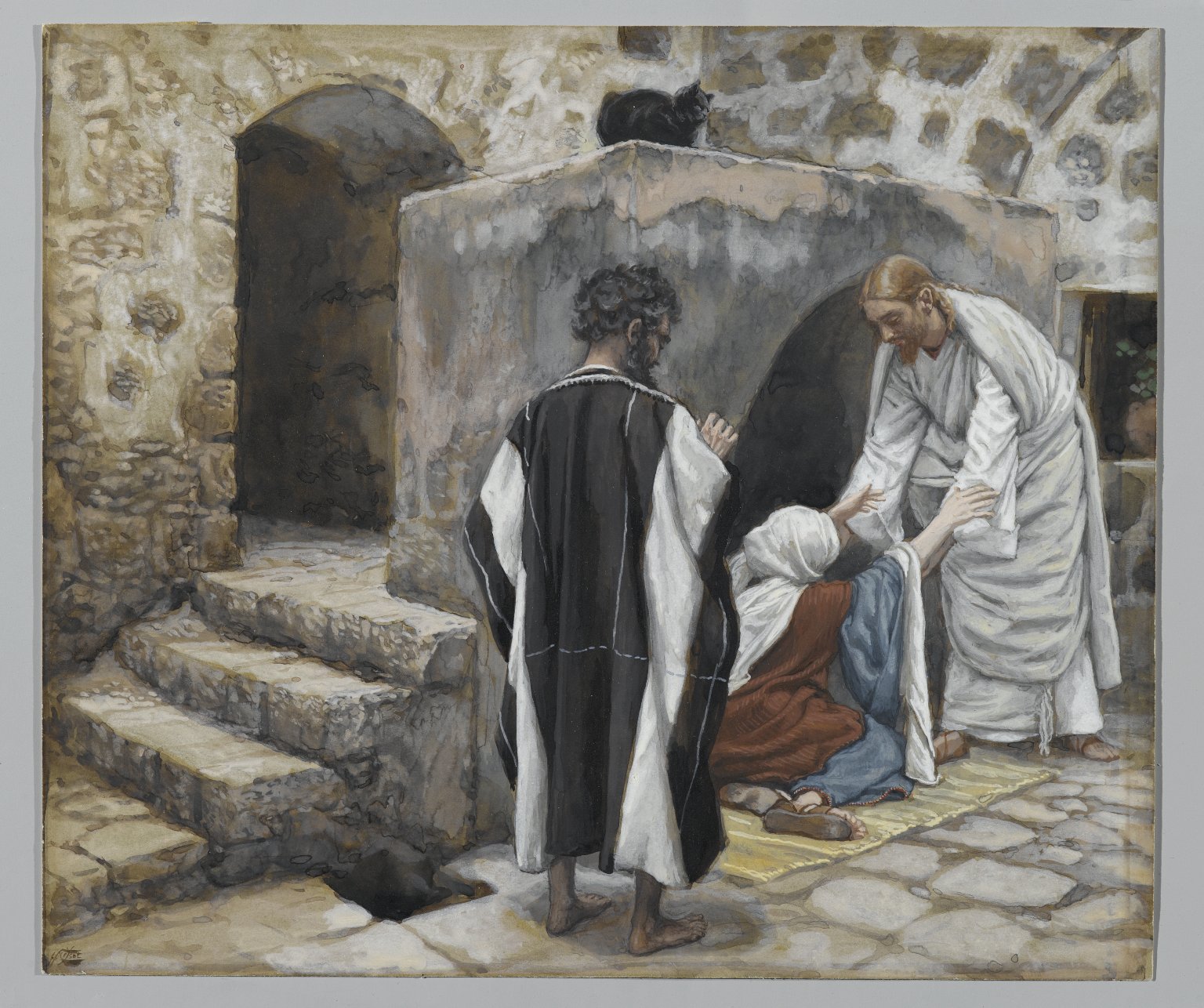
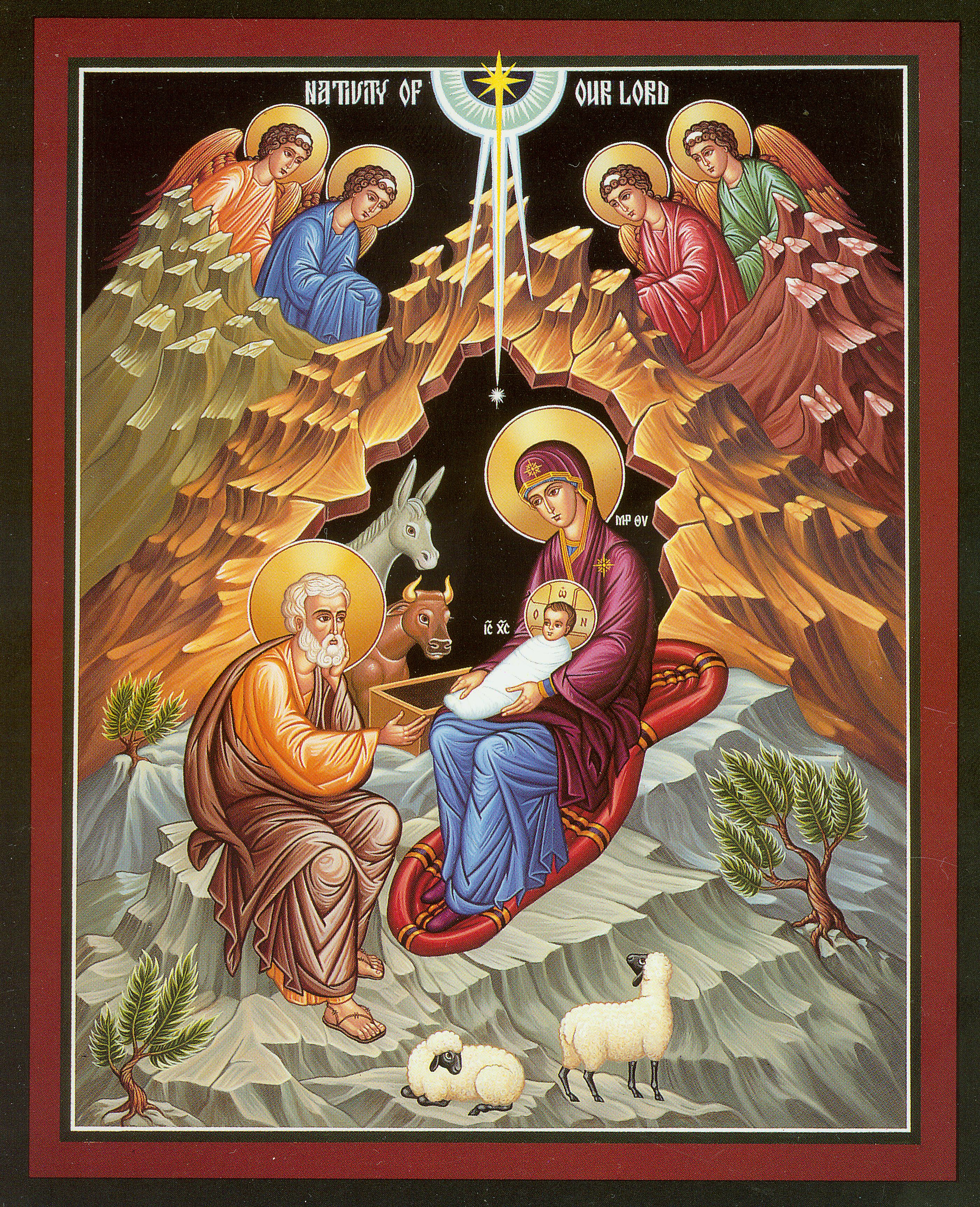
Advent IV: ‘He will save his people from their sins’

‘He will save his people from their sins.’

‘am mai ef a wareda ei bobl oddi wrth eu pechodau.’ (Mt 1:21)

Of all the figures in the story of Our Lord’s Nativity, the one most often overlooked is Joseph. It is fair to say that today’s Gospel finds Joseph in a particularly awkward situation. He is described in verse 19 as a ‘just man’. Just or righteous in this context means that he obeys Jewish Law. However, Deuteronomy 22:23-24 states that:

‘If there is a betrothed virgin, and a man meets her in the city and lies with her, then you shall bring them both out to the gate of that city, and you shall stone them to death with stones, the young woman because she did not cry for help though she was in the city, and the man because he violated his neighbour’s wife. So you shall purge the evil from your midst.’ (Deut 22:23-24)

Mary and Joseph are betrothed, and preparing to be married, but strictly speaking under Jewish Law because she is pregnant, Mary is guilty of a capital crime. It is perhaps for this reason that Luke’s account tells us that Mary spends time out in the country with her cousin Elizabeth, who is also pregnant. Joseph loves Mary, and rather than see her killed or publicly humiliated, he wants to put an end to the marriage quietly, without any fuss. It is at this moment that the Angel Gabriel appears to him in a dream saying:

“Joseph, son of David, do not fear to take Mary as your wife, for that which is conceived in her is from the Holy Spirit. She will bear a son, and you shall call his name Jesus, for he will save his people from their sins.” (Mt 1:20-21)

Joseph is a descendant of King David, a member of Israel’s Royal Family. This is an awkward fact when the current occupier of the throne is not part of that dynasty, but was put there by the Romans as a pliant puppet king. 

The angel says to Joseph: ‘Do not be afraid! Paid ag ofni!’ Again and again God speaks to His people to tell them not to fear and to be of good heart, to reassure and encourage them. God loves His people, there is nothing to be afraid about. The angel is clear: the child that will be born is of the Holy Spirit. He will be the Son of God, and His name will be Jesus, because He will save His people from their sins. ‘Yeshua’ means ‘God saves’ which is exactly what Jesus does. At a practical level the angel’s message to Joseph is designed to put him at ease, to stop him worrying. The message is Good News, through the angel the Gospel of Salvation is announced.

To reinforce this fact, St Matthew then quotes a prophecy of Isaiah, which is also found in the first reading today:

“Behold, the virgin shall conceive and bear a son, and they shall call his name Immanuel” (Mt 1:23)

The prophecy is being fulfilled; there will be a son born to the House of David, who will be God with us (Emmanuel), and He will save His people from their sins. This is why we celebrate Christmas, because it is the coming of our Saviour. What does is mean to say that God is with us? Is it an expression of solidarity? Or something more? In Jesus God is with us, and He shares our human life, from birth to death. Christ is not some remote divine figure, but one intimately acquainted with all of human existence. God is not distant, but instead is someone who understands us, and loves us. Christ’s entire existence is about communicating Divine Love and Reconciliation. The Church has also been proclaiming this same message of hope and salvation for the past two thousand years.

He will save his people from their sins’: the angel’s words to Joseph could not be clearer. Jesus is God’s rescue mission, sent to save humanity from their sins. This vocation ultimately leads to Calvary. Therefore, as we prepare to celebrate Christ’s Birth, we know that His life will end here, on the Cross. As we prepare for the most joyous of feasts, we are mindful of the cost and depth of God’s love.

It is important to notice what Joseph does when the dream is over:

‘When Joseph woke from sleep, he did as the angel of the Lord commanded him: he took his wife, but knew her not until she had given birth to a son. And he called his name Jesus.’ (Mt 1:24-25)

Joseph did what the angel commanded him to do. He was obedient. He listened and obeyed. Joseph is complete opposite of Ahaz, in today’s first reading, who neither listens to God nor obeys Him. Joseph is obedient in naming his son as he was instructed: ‘And he called his name Jesus’ (Mt 1:25). Jesus too will be obedient. His is an obedience to the Father’s will borne out through suffering, death and resurrection which characterises the mission of the Son. This is what brings about our salvation. We then, in obedience, look for His second coming as our Saviour and our Judge. As Christians, we are called to take time to ponder these mysteries — to stop for a while amid the business of our modern existence and reflect upon the wondrous nature of God’s love for us, and for all humanity. We need to take the opportunity to stop, and to ponder this wondrous fact; to reflect upon what ‘God-with-us’ means for each one of us, and for our lives.

As the people of God, members of the Christian Church, which we enter through our baptism, we have all been commissioned to proclaim the Good News of Jesus Christ, and to live out this example in our lives. Christians urge the world to pause and to consider exactly what is being celebrating at Christmas: the free gift, of hope and salvation for all people, through a baby, born in a stable, among the poor and the marginalised.

The act of Divine love, which we experience in Our Lord’s Nativity, should draw us, in turn, to love God and to love our neighbour; to live out the love which becomes flesh in the womb of the Virgin Mary. This same love will become the flesh and blood that we touch and taste, here, this morning, through the bread and wine. Feeding us, so that we might share His divine life. So, my brothers and sisters in Christ, let us be filled with, and transformed by, the divine gift of love. Let us, like Mary and Joseph, wait on the Lord and be reshaped by Him. Let us live out our faith in our lives so that others might believe and sing the praise of God the Father, God the Son, and God the Holy Spirit, Duw Dad, Duw y Mab, a Duw yr Ysbryd Glân. To whom be ascribed all might, majesty, glory, dominion, and power, now and forever. Amen.

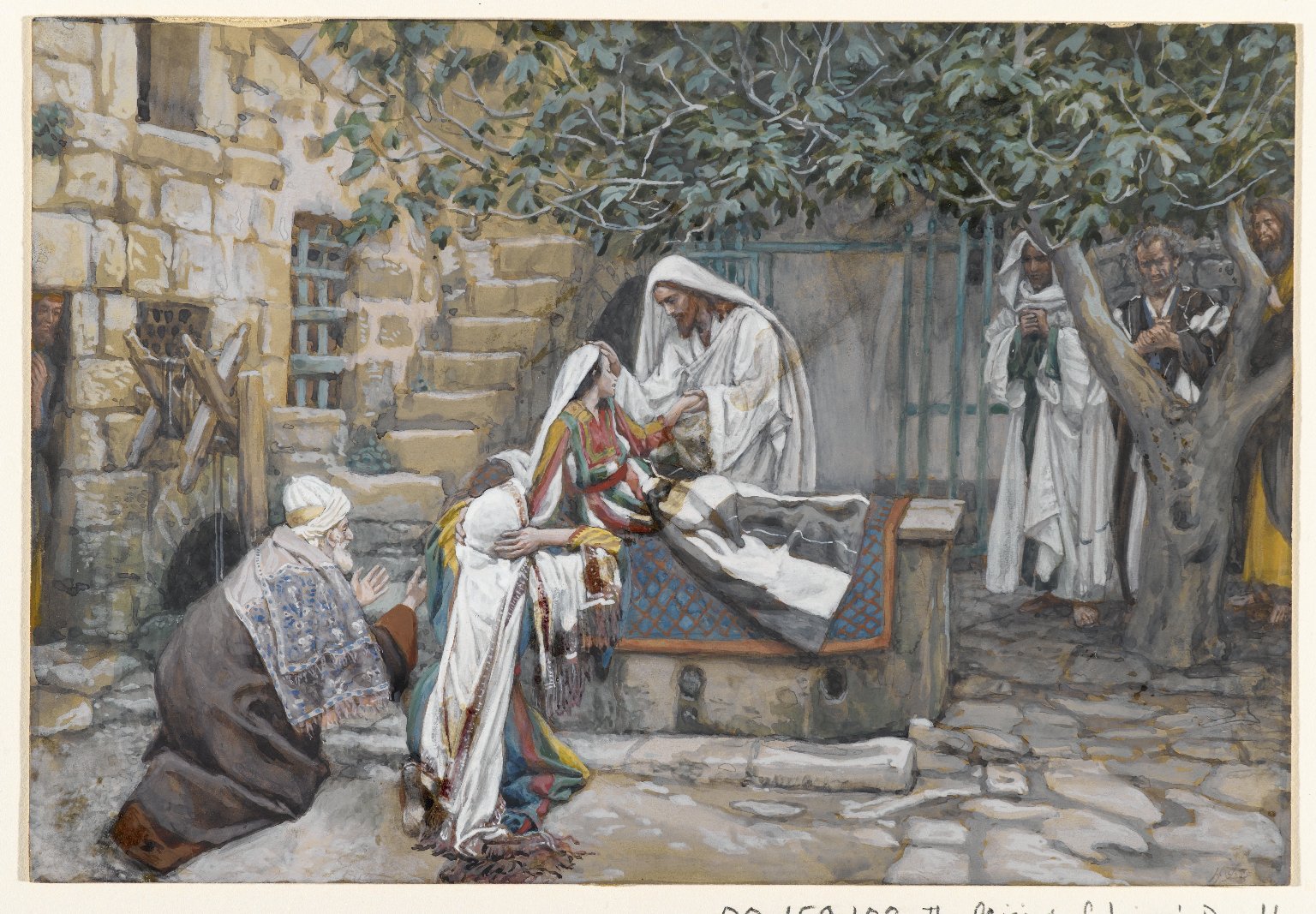
James Tissot The Vision of St Joseph: Brooklyn Museum

Trinity XXII

‘As for you, brothers and sisters, do not grow weary in doing good’ 

‘A pheidiwch chwithau, frodyr a chwiorydd, â blino ar wneud daioni’ (2Thess 3:13)

Have you ever visited Greece or one of the Greek Islands? I have been lucky to have had the opportunity to do so. Saint Paul visited Northern Greece, founded Churches, and  wrote his earliest letters to a Christian community there. Thessalonica is now the second largest city in Greece. It was always important as a trading port, and also lay on the Via Egnatia, the route which connected the Adriatic Sea in the West with the Black Sea in the East. In Thessalonica the Christian community grew out of the synagogue. Because Paul, trained as a Pharisee, he began his evangelism within the community and traditions in which he had been raised. However, relations deteriorated and the new Christians found themselves facing persecution from the synagogue and its members. This, understandably, led the Christian community to focus, even to fixate, upon the Second Coming of Jesus Christ. They imagined that Our Lord’s Return was immanent, and that He would come back, and sort everything out.

Some people, however, took advantage of the situation as an excuse for laziness, and relying upon the generosity of others. Such behaviour was bound to attract the attention of St Paul. As well as being a religious and legal expert, Paul was a tent-maker. While he was in Corinth he lodged with Priscilla and Aquila, who also made their living through this trade, and perhaps he aided them in their work during his stay. The Apostle did not wish to be a burden for the communities he visited as he travelled around the Mediterranean proclaiming the Good News of Jesus Christ. 

In our epistle this morning, Paul begins by issuing a stern warning:

‘Now we command you, brothers, in the name of our Lord Jesus Christ, that you keep away from any brother who is walking in idleness and not in accord with the tradition that you received from us.’ (2Thess 3:6)

The Christian Community was not supposed to a place for idle freeloaders. It was a place where people lived out generous love, but of course this could be taken advantage of. Paul offers the Thessalonians an example of how to live, and goes on to say:

‘For you yourselves know how you ought to imitate us, because we were not idle when we were with you, nor did we eat anyone’s bread without paying for it, but with toil and labour we worked night and day, that we might not be a burden to any of you.’ (2Thess 3:7-8)

Paul’s vision of a Christian community is one that is well-ordered, with everyone contributing. Each member has their part to play. Living a Christian life is something which we do both as individuals and as a community. Hence St Paul’s advice to the Thessalonians: ‘As for you, brothers, do not grow weary in doing good’ (2Thess 3:13). We are called to be active and make a difference, here and now, in our community. As a Church we have been striving to do this for nearly two thousand years. It remains a work in progress. 

We may encounter problems in our life of faith, and all of St Paul’s Letters to Churches address these. Christians learn to overcome difficulties together, growing in grace, in love, and in forgiveness, as a family, brothers and sisters in Christ. And this is what the Kingdom of God looks like: people such as you and me, deepening our faith, growing in the love of God and the love of each other. Living the life of Heaven here on earth, today. 

This loving fellowship is what makes the Church attractive. The world around us finds it all to easy to get wrapped up in selfishness, concerned with wealth, power, and status. Whereas Christians value love and service — of God and each other — to help build a new society where all are loved, all are valued, and all are cared for. 

On the night before He died, Our Lord and Saviour washed His disciples feet, before celebrating the Eucharist with them. He commanded us to ‘do this in remembrance of him’, so that service and self-giving love should remain at the heart of who and what we are. This is the source and summit of the Christian life. Participating in the Eucharist helps us to grow together in love, and to proclaim God’s saving truth in who and what we are, and what we do. Christ offers the world the alternative which it longs for deeply.

Let us then come to Him, to be healed by Him. Let us be nourished with His Body and Blood and strengthened to proclaim Him in word and deed, so that the world may come to believe and sing the praises of God the Father, God the Son, and God the Holy Spirit, Duw Dad, Duw y Mab, a Duw yr Ysbryd Glân. To whom be ascribed all glory, dominion and power, now and forever. Amen

Trinity X: Enter by the Narrow Gate

Every four years we have the opportunity to watch the pinnacle of human sporting achievement in the Olympic Games. The last games took place in Paris last year, where the finest athletes from around the world gathered to compete. It takes a great deal of talent in order to take part in the Olympics, and also a huge amount of effort and training. To be the best requires a significant effort. Living out our Christian Faith is, likewise, something we have to work at. Following Christ should both challenge us, and bring out the best in us. It is hard work, often requiring great effort on our part. And yet, the effort we put in is as nothing compared to that of God, who sent His Son to be born for us, and to show us how to live. Jesus demonstrates the Love of God in action, to show us how to live lives of radical generosity. Our endeavours are part of a co-operation with God, so that we can grow and develop in our faith together. 

In today’s Gospel, Jesus and His disciples are making their way towards Jerusalem, teaching in the towns and villages, en route. As they travel, Jesus is asked a question:

‘Meddai rhywun wrtho, “Arglwydd, ai ychydig yw’r rhai sy’n cael eu hachub?”’

‘And someone said to him, “Lord, will those who are saved be few?”’ (Lk 13:23)

Christ does not answer the question directly. Instead He offers some advice:

‘Ac meddai ef wrthynt, “Ymegnïwch i fynd i mewn trwy’r drws cul, oherwydd rwy’n dweud wrthych y bydd llawer yn ceisio mynd i mewn ac yn methu. Unwaith y bydd meistr y tŷ wedi codi a chau’r drws, gallwch chwithau sefyll y tu allan a churo ar y drws, gan ddweud, ‘Arglwydd, agor inni’; ond bydd ef yn eich ateb, ‘Ni wn o ble’r ydych.’’

‘And he said to them, “Strive to enter through the narrow door. For many, I tell you, will seek to enter and will not be able. When once the master of the house has risen and shut the door, and you begin to stand outside and to knock at the door, saying, ‘Lord, open to us’, then he will answer you, ‘I do not know where you come from.’” (Lk 13:23-25)

First and foremost, the narrow way is the way of the Cross. Our Lord is going to Jerusalem to be rejected, and to be put to death, so that He may rise again, and show the world the way back to the God who loves us. We who follow Him are to expect nothing less. We show ourselves to be Christ’s disciples not just by what we SAY but also by what we DO. Our actions often speak louder than our words.

In the Gospel, people presume that because they heard Jesus teach and have eaten and drunk with Him and that all is well. While they have enjoyed Our Lord’s hospitality, they have not actually responded to His message. They have not believed in who He is, and what He does. Rather than salvation being offered solely to the people of Israel, instead the whole world is included. Everyone, everywhere, all at once, is invited. This is something radical, something new, which is first prophesied in the words of Isaiah in our first reading this morning. 

The prophet Isaiah has a vision of a future with a God who knows us and loves us. He gathers the people of the world together, so that they may see God’s divine glory. As Christians, we believe that this teaching points forward to Jesus Christ, who is the Word made flesh, the true demonstration of God’s majesty in the world. He will demonstrate that glory most fully on the Cross, when He suffers and dies for humanity, to take away our sin. This is the sign God sets among us, so that we may declare God’s greatness among the nations. The Cross is the sign of God’s love for all people.

Declaring God’s glory is the prophetic aspect of the Church — the sharing of the Good News. With it comes a commitment to holiness of life, so that our words and actions are in tune with each other. We cannot succeed in this by our own strength or efforts. Instead we must rely upon God’s grace. Every day we should humbly acknowledge our need for God. Only Our Heavenly Father can transform us. Only God can forgive our sins, our failures and our shortcomings. Through grace Christ can transform us, more and more into His likeness. 

This recognition of our limitations and failings opens up a space where God can be at work in our lives, transforming us to live the Divine life of Love. This is the narrow door of this morning’s Gospel. The opening is narrow because if we have a sense of our own self-importance or of our worth which is too large then we cannot enter — our image of who and what we are gets in the way.

Following Christ is often hard. It is far easier to coast along and take the easy options. That is why Christians meet together to encourage and support each other. This is what the Church is for. We are a collection of sinners trying to live in response to the love of God which has been poured out on each of us. This is something which we need to do together: loving each other; loving our enemies; living out forgiveness as we have been forgiven and loved by God. This is a radically different way of life to that which the world encourages us to practise. Naturally we will sometimes fall short, but the point is not that we fail and give up, but that we keep trying. We must keep on loving and forgiving. Plugging away together, in order to be built up as the body of Christ. Humbly letting God be at work in us. He, by His Grace will transform our nature and make us the people of God, able to live out His love in our community.

As I have already said, living out our faith is hard. In addition, others may mock us as we attempt to follow the Gospel. Yet, we believe in a God who loves us, and who would never belittle our efforts to follow Him. As Christians we pray for the fire of God’s love to be kindled in our hearts and lives, so that we may be ablaze for Him, aflame with love for God and for our neighbour. Loving our enemies and our friends, enables us to change the world, not just this village, or this county, but all of God’s creation; all of humanity. In doing so we help others to know God’s love so that it may rule in their hearts and lives.

And so, my brothers and sisters in Christ, let us then hasten to enter through the narrow gate, so that God may continue to transform us. Let us give thanks that His saving love and power is at work in our hearts and our lives, remodelling us. Let us sing praise to God, i Duw Dad, Duw y Mab, a Duw yr Ysbryd Glân. To God the Father, God the Son, and God the Holy Spirit. I’r hwn y priodoler pob gogoniant, arglwyddiaeth, a gallu, yn awr, ac yn oes oesoedd. To whom be ascribed all glory, dominion and power, now and forever. Amen

Trinity VIII: Trust

These are certainly interesting times in which to live. But as Our Lord says in this morning’s Gospel, ‘Paid ag ofni’ ‘Do not be afraid’ (Lk 12:32) We can put our trust in one who will not abandon us, the God who loves us.

In this morning’s second reading from the Letter to the Hebrews, we hear words addressed to a community of believers facing persecution. They are tempted not to believe in Jesus, and instead to revert to their former Jewish faith. The author has explained that Christ is our great High Priest, and that His Sacrifice has atoned for our sins. In the passage we hear an overview of salvation history from the creation of the universe to the time of the patriarchs. Just as the people of Israel sought to return from their exile in Egypt, we too seek our eternal homeland: Heaven. We ‘desire a better country, that is a heavenly one’, and we trust that our real homeland is in Heaven with God. This is the end of our journey of faith; a better place, where the worries of this world are cast aside.

In today’s Gospel Jesus comforts his followers.We are reminded that the Church began small with only a few people. Two thousand years later it is a huge community. We may feel that we are only a tiny part of the whole, that we are not big enough, and that is ok. When the Church began it was fragile and faithful, a flock uncertain of what the future would hold. But God loved the early Christians, just as He loves us, and longs to see us flourish. God gives us the Kingdom, a realm where He is in charge, and we can live lives of freedom, love, and fulfilment. God’s kingdom is a place of generosity, where gifts are shared. It looks radically different to the world around us, where wealth, status, power, and possessions matter, and are seen to give people value. But these are, in Luke’s words, ‘purses that wear out.’ In the kingdom of God, on the other hand, all of humanity has infinite value and dignity. This is because we are all made in the image and likeness of God. This is what gives us value, and not any other reason. God pours out His Grace upon the church freely, out of love, so that humanity might flourish, and have life in all its fulness.

Christians have the sure hope of Heaven, of sharing in the divine nature, together, with the saints. To be united with love itself. The love that created all that is. The love which redeemed us through the Suffering, Death, and Resurrection of Our Lord and Saviour, Jesus Christ. That is why the second part of our Gospel reading this morning tells us to be prepared and ready for Our Lord’s Return.

Jesus, having ascended to the right hand of God the Father in Heaven, will return, as our Saviour and as Judge of all. Should we be afraid? Jesus tells us constantly not to be afraid. There is a choice for the hereafter: Heaven or Hell. It is up to us: what we believe and how we live our lives. The central message in the proclamation of the Kingdom is ‘Repent and Believe’. We can choose to turn away from sin, to turn to God, believe in Him, and live our lives accordingly. Or we can choose not to. We have a greater choice to make, which lasts for ever. Do we trust in a God who loves us so much that His Only Son died for us. Do we gather at this altar and receive the Eucharist so that we may be transformed by Him?

If we do these things, we open ourselves to living the Christian Life. The faith of our hearts affects who we are and what we do. We can be filled with joy as we await a judge who comes in mercy and love. The one who heals our wounds, and restores in us the image of the God who not only created us but all that exists. Our Christian faith leads us to action, which can transform the world around us, so that God’s kingdom becomes a reality, here and now. For where our treasure is, there our heart will be also. What greater treasure is there than eternal life in Heaven with God? This is offered to us freely. Nothing this world proffers comes close. It is all fleeting: wealth, power, privilege, do not last. But we can trust in the eternal promise of a God who loves us, and we can be ready to greet Him, when he comes again. Through the power of Christ’s sacrificial Death we have the hope of Heaven and the assurance of sins forgiven. This is GOOD NEWS. It helps us see the vanity of the world for what it is.

We all need to be ready for Jesus, when He comes. We do not know when this will be, but we are told that it will be at a time when we do not expect. Also Jesus will not come as we might expect. Instead of appearing as a judge, as someone powerful, Jesus reconfigures our understanding of power and authority. Rather than being someone who expects to be served, Jesus will come again to continue to serve. God, the Creator, Redeemer, and Sustainer of all creation, will come and put on an apron and care for us. This image defies our expectation and understanding. It gives us a foretaste of the glory that is to come, where we will be transfigured like Our Lord, and experience the fulness of God’s kingdom.

However, for this to take place we need to be careful, and we need to be vigilant. Just because we do not know when Jesus will return does not mean that we can take things easy. Nor can we afford to be lax or lazy, and negligent in the way we treat others. That would be to go against the message of the Gospel. We need to both think and act as though Jesus will return NO —, during this very Eucharist — to judge and serve us. As we will welcome His Eucharistic presence with open hands and open hearts, so all of our lives should be open and welcoming to Him. We need to prefer Jesus and His Kingdom to anything else. For where our treasure is, there will our heart be also. We can have no excuse for not choosing Jesus and His message of the Kingdom over the cares and concerns of this world.

What we believe and how we act together are a sign and symbol of our relationship with God and one another. So then, let us continue to live lives together which proclaim the Gospel in word and deed, so that when Our Lord comes He may find us ready and doing his will, and singing the praise of God the Father, God the Son, and God the Holy Spirit, to whom be ascribed as is most right and just all might, majesty, glory, dominion, and power, now and forever.

Trinity VI – Lord teach us how to pray

If I were to ask you if you could recite a text off by heart you might regale me with a poem, a passage from a book, or a speech from Shakespeare learned at school. If I then asked whether you knew any prayers off by heart you would probably say ‘The Lord’s Prayer’, ‘Y Gweddi’r Arglwydd’. Even if they do not know all the words, most people have heard the Lord’s Prayer. It is an important part of our Christian heritage.

Our readings this week focus on prayer. Christians know that God answers prayer. However, God may say, ‘Yes’ or ‘No’ or even ‘Not yet’. We may not like the answer, but one will be forthcoming. Prayer is both simple and mysterious. Simple, insofar as it is our conversation with the divine. Mysterious, in the fact that prayer changes us, and not the Almighty. So prayer is something of a paradox, being at the same time quite straightforward and also an enigma. We pray to God, but prayer doesn’t change God, it changes us. Pagans in Greece and Rome would bargain with their gods: if you do this for me, I will give you that. Jews and Christians, however, are profoundly different. We do not bargain with God, and we do not need to, because we are in a covenant relationship with our Heavenly Father who loves us.

It would be all too easy to see this morning’s first reading, where Abraham tries to save Sodom and Gomorrah, as being concerned with bargaining with God. However, prayer does not work in that way. What the reading from Genesis shows us is that we are in a covenant, a relationship with God, and that God is generous and loving. He wants the best for us.

The American Bishop Fulton J. Sheen summed it up as follows:

‘Prayer is helplessness casting itself on Power, infirmity leaning on Strength, misery reaching to Mercy, and a prisoner clamouring for Relief.’ Life Is Worth Living, Second Series (New York, 1954), p. 213.

In today’s Gospel the disciples ask Jesus:

“Arglwydd, dysg i ni weddïo, fel y dysgodd Ioan yntau i’w ddisgyblion ef.”

‘Lord teach us to pray, just as John taught his disciples’ (Lk 11:1).

Jesus and John the Baptist were cousins. They both preached about the need for both repentance and belief in the Good News. Also, they both taught their disciples how to pray. Virtually all Christian prayer can be described by one or more of four phrases: ‘please’, ‘thank you’, ‘I’m sorry’, and ‘I love you’. God does not need our prayers, we do. This is because praying allows us to open our hearts and lives to God, allowing Him to change us. Jesus answers His disciple’s request to teach them how to pray as follows:

Ac meddai wrthynt, “Pan weddïwch, dywedwch: ‘Dad, sancteiddier dy enw; deled dy deyrnas; dyro inni o ddydd i ddydd ein bara beunyddiol; a maddau inni ein pechodau, oherwydd yr ydym ninnau yn maddau i bob un sy’n troseddu yn ein herbyn; a phaid â’n dwyn i brawf.’” 

He said to them, ‘Say this when you pray: ‘“Father, may your name be held holy, your kingdom come; give us each day our daily bread, and forgive us our sins, for we ourselves forgive each one who is in debt to us. And do not put us to the test.”’  (Lk 11:2-4)

The version of Jesus’ words we are most familiar with is that found in Matthew’s Gospel, which is slightly longer than Luke’s prayer. But both contain the same elements. The prayer begins by calling God, ‘Abba’ ‘Father’ ‘Tâd’. Such a term expresses our close relationship with our Creator. The idea that God’s name should be kept holy goes hand in hand with the desire that God’s Kingdom may come. Christianity is all about the establishment of the Kingdom of God: that God may rule over our hearts and our lives.

Next, we ask God to feed us, to forgive us our sins, as we forgive those who sin against us, and to free us from temptation. It is important to note that every celebration of the Eucharist begins with us all acknowledging our own shortcomings and asking God’s forgiveness. Saying sorry to God is important, because it keeps us humble, and helps to maintain our relationship with God, and with each other. We all make mistakes, you do, I certainly do. Recognizing this is the start of a process which allows us to grow in virtue and holiness, through God’s love. The high point of the Eucharist is when God feeds us with His Body and Blood, providing us with spiritual food to nourish our souls. All our food is a gift from God, and being thankful for it, just like being humble, helps to keep us close to God. If you don’t already do so, try to get into the habit of saying a few words of thanks to God before you eat a meal.

There are good reasons why Christians regularly pray this prayer, which we call The Lord’s Prayer, Y Gweddi’r Arglwydd. Jesus has told us how to pray and gave us these words. Similarly, we celebrate the Eucharist because Jesus told us to ‘do this in memory of Him’ and so we do. We use the Lord’s Prayer when we pray, because it honours God, and it forms us as Christians. We will soon pray it together before Communion, asking that God will continue the process of transforming us day by day into His image and likeness. 

In the Gospel reading Jesus continues to teach His disciples using parables. In this narrative, there is a late-night hospitality emergency. A friend is on a journey (just like Jesus and His disciples), and arrives at your home (just like Jesus visited Mary and Martha last week). Naturally you want to be hospitable as a sign of your friendship. So, you pop round to a next door and ask to borrow some food. However, the initial response you receive from your neighbour is not very positive:

‘Paid â’m blino; y mae’r drws erbyn hyn wedi ei folltio, a’m plant gyda mi yn y gwely; ni allaf godi i roi dim iti’, rwy’n dweud wrthych, hyd yn oed os gwrthyd ef godi a rhoi rhywbeth iddo o achos eu cyfeillgarwch, eto oherwydd ei daerni digywilydd fe fydd yn codi ac yn rhoi iddo gymaint ag sydd arno ei eisiau.’

“Do not bother me. The door is bolted now, and my children and I are in bed; I cannot get up to give it you.” I tell you, if the man does not get up and give it him for friendship’s sake, persistence will be enough to make him get up and give his friend all he wants. (Lk 11:7-8)

Jesus shows that, despite the neighbour not wanting to get up and be bothered with the request for food, because the person is persistent and stays there, disregarding the initial reluctance, his request is granted. Perseverance is rewarded. The point Our Lord is making is that God hears our prayers and answers our requests. We might need to ask more than once, and commit time to prayer, but we will not be ignored.

‘Ac yr wyf fi’n dweud wrthych: gofynnwch, ac fe roddir i chwi; ceisiwch, ac fe gewch; curwch, ac fe agorir i chwi. Oherwydd y mae pawb sy’n gofyn yn derbyn, a’r sawl sy’n ceisio yn cael, ac i’r un sy’n curo agorir y drws.’

‘So I say to you: Ask, and it will be given to you; search, and you will find; knock, and the door will be opened to you. For the one who asks always receives; the one who searches always finds; the one who knocks will always have the door opened to him.’ (Lk 11:9-10)

The phrase ‘knock, and the door will be opened to you’ ‘curwch, ac fe agorir i chwi’ reinforces the teaching in the parable. The neighbour opens the door and gives the requested provisions. Jesus then develops His teaching, by drawing a comparison between the lesser and the greater. This is a common rabbinic practice:

‘Os bydd mab un ohonoch yn gofyn i’w dad am bysgodyn, a rydd ef iddo sarff yn lle pysgodyn? Neu os bydd yn gofyn am wy, a rydd ef iddo ysgorpion? Am hynny, os ydych chwi, sy’n ddrwg, yn medru rhoi rhoddion da i’ch plant, gymaint mwy y rhydd y Tad nefol yr Ysbryd Glân i’r rhai sy’n gofyn ganddo.’

‘What father among you would hand his son a stone when he asked for bread? Or hand him a snake instead of a fish? Or hand him a scorpion if he asked for an egg? If you then, who are evil, know how to give your children what is good, how much more will the heavenly Father give the Holy Spirit to those who ask him!’ (Lk 11:11-13)

The Good News of the Kingdom is that God answers prayer. Not only that, but He gives us more than we ask Him for. God also grants us the Holy Spirit. This is an important concept in the wider narrative of Luke’s Gospel and the Acts of the Apostles, where the Church is filled with God’s Spirit. God answers prayer because He is our Creator, and we are in a special relationship with Him. In today’s Old Testament reading God listens to Abraham’s pleas for mercy and then grants them. 

Turning to St Paul’s Letter to the Colossians, the apostle can proclaim baptism as the way to salvation, because this enables us to share in Christ’s Death and Resurrection, and the forgiveness of our sins:

‘Y mae wedi ei bwrw hi o’r neilltu; fe’i hoeliodd ar y groes.’ 

‘he has done away with it by nailing it to the cross’ (Col 2:14)

God cancels our debt by paying it Himself, overcoming evil and sin through an outpouring of healing love. This is the demonstration that God loves us and hears our prayers, and so we continue to remember the Passion through our celebration of the Eucharist. God forgives our sins, and gave His life for us, nailing our sins to the Cross. He suffered in His flesh so that we who have died with Christ in our baptism may also share His risen life. That is why Jesus can assure us that God listens to our prayers and answers them, giving us the good things we need.

My brothers and sisters in Christ, through practising both prayer and action, may we be agents of God’s love and grace in the world. May we transform our homes, our communities, and the whole world. Filled with God’s generous love, compassion and forgiveness, let us give glory to God, Duw Dad, Duw y Mab, a Duw yr Ysbryd Glân. God the Father, God the Son, and God the Holy Spirit. I’r hwn y priodoler pob gogoniant, arglwyddiaeth, a gallu, yn awr, ac yn oes oesoedd. To whom be ascribed all glory, dominion and power, now and forever. Amen.

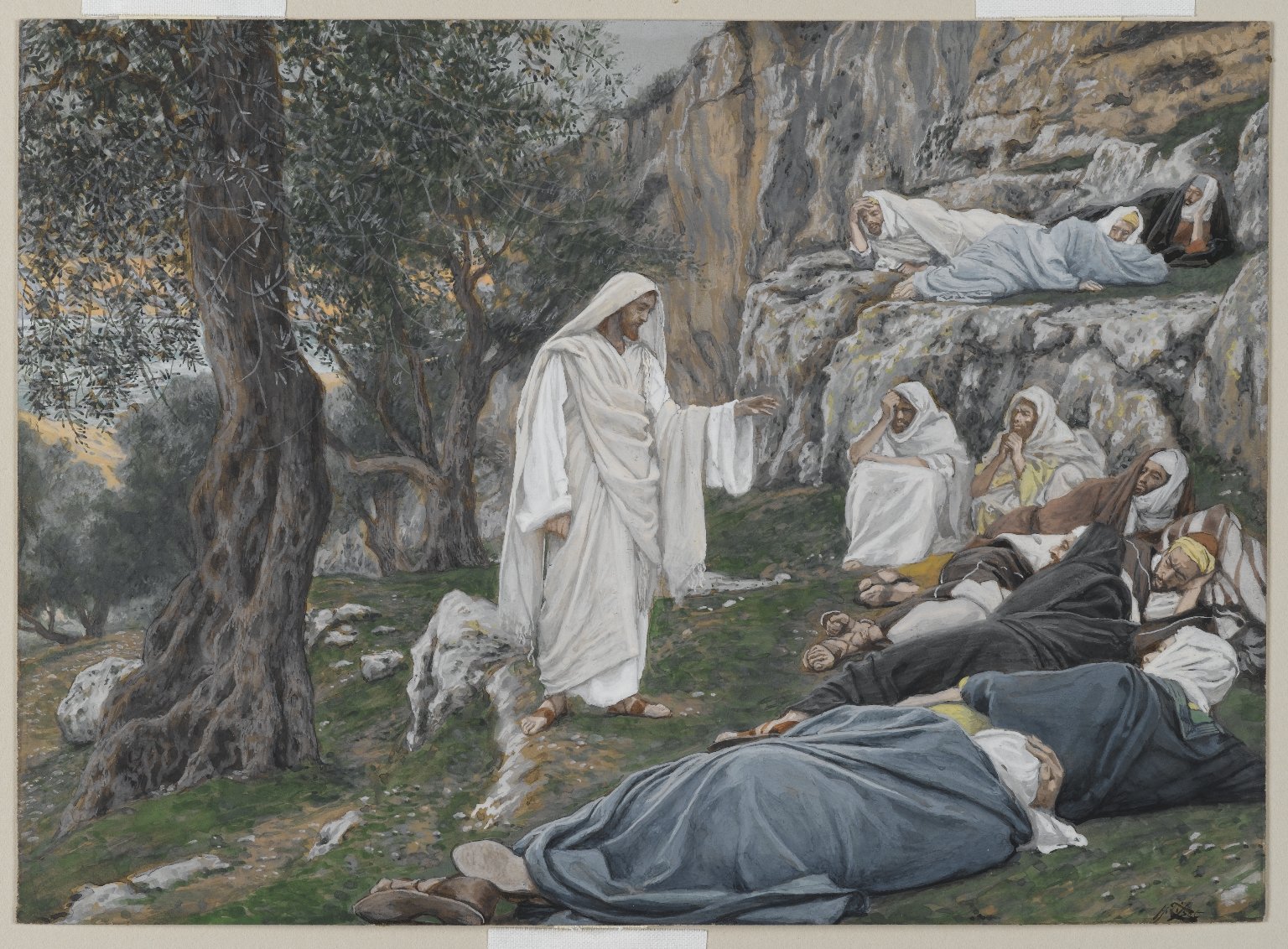
James Tissot – The Lord’s Prayer [Brooklyn Museum]

Trinity V – Mary & Martha

Life is all about decisions. The choices that we make can have a massive effect upon our lives. We often think of decisions as ‘either/or’ alternatives. However, we may be making a false distinction. Living the Christian life is often much more a case of ‘both/and’ rather than ‘either/or’. Nowhere is this shown with greater clarity than through the question of faith and action. These two concepts are not in opposition: they are two sides of the same coin. To make the Kingdom of God a reality we need both contemplation and practical application. If work and prayer are kept in balance, then our duties towards God and our neighbour can be fulfilled, and we can grow in faith and love. As Christians we need to demonstrate our faith by being hospitable and welcoming, as well as prayerful. 

Hospitality is the focus of this morning’s first reading from the Book of Genesis. God appears to Abraham at the Oak of Mamre near the town of Hebron, nineteen miles south of Jerusalem. Abraham is visited by three angels and looks after them, offering them hospitality, and taking care of them. In return the Patriarch is blessed with the promise of a son. From early times, biblical interpreters understand these three angels as symbolising the Trinitarian nature of God as Father, Son, and Holy Spirit, revealing their nature to Abraham, our father in faith. This view became particularly relevant during the fourth-century debate on the nature of God, which led to the formation of the Creed we will soon recite together. In this passage from Genesis, we see both what God is like and how we should respond to God: with generous hospitality, care and attention.

In today’s Gospel, Jesus is still travelling. As there were no hotels or service stations, the only way to eat, drink, and rest was through hospitality. Our Lord is welcomed into her home by a woman named Martha: 

‘Yr oedd ganddi hi chwaer a elwid Mair; eisteddodd hi wrth draed yr Arglwydd a gwrando ar ei air.’

‘And she had a sister named Mary, who sat at the Lord’s feet and listened to his teaching’ (Lk 10:39)

These sisters, Mary and Mary, may well be the same women who appear in John’s Gospel as the sisters of Lazarus, and who live in Bethany. There they are described as friends of Jesus who regularly provide hospitality for Him and His followers. We are told that Mary is giving Jesus her undivided attention, she sits at His feet, as a student would sit at the feet of their teacher. Her sister does not join her as she is so busy looking after the guests:

‘Ond yr oedd Martha mewn dryswch oherwydd yr holl waith gweini, a daeth ato a dweud, “Arglwydd, a wyt ti heb hidio dim fod fy chwaer wedi fy ngadael i weini ar fy mhen fy hun? Dywed wrthi, felly, am fy nghynorthwyo.”’

‘But Martha was distracted with much serving. And she went up to him and said, “Lord, do you not care that my sister has left me to serve alone? Tell her then to help me” (Lk 10:40)

Like the lawyer in the Parable of the Good Samaritan, Martha is attempting to justify herself. In order to do this, she blames others — in fact her own sister — to cover up the fact that she is anxious and troubled with the cares of the world. She allows these worries to take precedence over the Gospel. Martha has shown Jesus a hospitable welcome, but then she tries to involve Him in a domestic squabble, which is centred on justifying her own busyness. Jesus is a teacher, proclaiming the Good News of the Kingdom. While it is important that He and his disciples are fed and cared for, the immediate concern is to give Our Lord their undivided attention, and listen to what He has to say:

‘Atebodd yr Arglwydd hi, “Martha, Martha, yr wyt yn pryderu ac yn trafferthu am lawer o bethau, ond un peth sy’n angenrheidiol. Y mae Mair wedi dewis y rhan orau, ac nis dygir oddi arni.”’

‘But the Lord answered her, “Martha, Martha, you are anxious and troubled about many things, but one thing is necessary. Mary has chosen the good portion, which will not be taken away from her.”’ (Lk 10:41-42)

Jesus does not tell Martha off, rather He is encouraging, calming her down, and showing her a better way of living. Only one thing is necessary: for a host to pay attention to a guest, as Abraham did at the Oak of Mamre in the first reading this morning .

The point is not simply to prefer the contemplative to the practical, or the spiritual to the physical. Instead we need to balance our physical needs with our spiritual ones. Martha is too wrapped up in her own affairs and has forgotten what is really important. Jesus does not want special treatment, or a lavish banquet with lots of dishes. What He wants are people who pay attention to what He has to say. Martha has not chosen a bad portion, service and hospitality are important. However, attention — staying close to Jesus, listening to what He says, and not being distracted — is how we grow as Christians. This is the good portion that Christ speaks of. 

Jesus of Nazareth frequently breaks down cultural barriers. Last week we saw a Samaritan, a complete outcast held up as a model of neighbourly love and compassion. This week Mary sits at Christ’s feet, breaking a cultural taboo regarding women. She wants to be taught, and therefore displays both love and attention. Jesus tells us that, like Mary, we too should be attentive to God and His message for us in the Gospel. In doing this we emulate Mary, and choose the better part. This is a choice which has a moral dimension. When we truly listen attentively to what God says to us, our actions and our character are formed, helping our growth in holiness. Nourished by Word and Sacrament, we can progress in living out the graces which we received in our baptism, and prepare for our inheritance with the Saints in glory. We do not achieve this through prayer and contemplation alone, but by making our prayer and our work, all that we do, and all that we are, a response to God and to our neighbour. By responding in this way we are truly living out lives of Christian love. Such love is the nature of God and binds together the persons of the Trinity. This is a powerful catalyst which transforms both us and our world.

My brothers and sisters in Christ, through practising both prayer and action, may we be agents of God’s love and grace in the world. May we transform our homes, our communities, and the whole world. Filled with God’s love, and compassion, let us give glory to God, Duw Dad, Duw y Mab, a Duw yr Ysbryd Glân. God the Father, God the Son, and God the Holy Spirit. I’r hwn y priodoler pob gogoniant, arglwyddiaeth, a gallu, yn awr, ac yn oes oesoedd. To whom be ascribed all glory, dominion and power, now and forever. Amen.

Trinity IV – The Good Samaritan

This year I have re-kindled my love of reading fiction. I have been introduced to some new authors by books lent to me by friends and neighbours or recommended by my wife. Taking time to lose yourself in a good book is one of life’s greatest (and cheapest) pleasures. Everybody loves a good yarn. Stories are also a useful way to make a point and to convey a deeper truth about human nature. They help us to understand who we are and how we should live. As Jesus travels from Galilee to Jerusalem He teaches, using parables, vivid stories we know and love. As I said, everyone likes to hear a good yarn, but the parables are much more than that. Jesus uses parables to explain the Kingdom and His Mission — who He is, and what He is doing — so that His followers can understand and share that knowledge with others.

In today’s Gospel, Our Lord encounters a legal expert. This lawyer wants to put Jesus to the test, to check whether what He says is acceptable under Jewish religious law. This man of the law asks Him: 

“Athro, beth a wnaf i etifeddu bywyd tragwyddol?”

“Teacher, what shall I do to inherit eternal life?” (Lk 10:26)

Jesus replies by asking the lawyer to tell Him what is written in the Law, and questions how, as a legal expert, he interprets it. The man replies, by reciting scripture:

‘Câr yr Arglwydd dy Dduw â’th holl galon ac â’th holl enaid ac â’th holl nerth ac â’th holl feddwl, a châr dy gymydog fel ti dy hun.’

“You shall love the Lord your God with all your heart and with all your soul and with all your strength and with all your mind, and your neighbour as yourself.” (Lk 10:27)

The first part of the lawyer’s answer is a quotation from the book of Deuteronomy (6:5), part of the Shema, a Jewish declaration of faith in God, which begins ‘Hear, O Israel: the Lord our God is one’. The second part is a quotation from Leviticus (19:18). This summary of the Law outlines humanity’s duty both towards God and also towards our neighbours. This legal expert understands how he should behave, and how he should live his life. He has basically repeated Jesus’ teaching word-for-word. So far, so good. The lawyer then asks Our Lord another question:

‘Ond yr oedd ef am ei gyfiawnhau ei hun, ac meddai wrth Iesu, “A phwy yw fy nghymydog?”’

‘But he, desiring to justify himself, said to Jesus, “And who is my neighbour?”’ (Lk 10:29)

The lawyer wants to legitimise himself, and so he asks Jesus to define his terms. In a legal argument, this is a typical response. However, the lawyer’s motives are questionable. He is interested in self-justification, in making himself look good. Our Lord is happy to answer, and does so with a parable: The Parable of the Good Samaritan. This well-known story is set on road from Jerusalem to Jericho. Despite being a major route, it is steep and windy (a bit like some of the roads around here!), dropping over three thousand feet in seventeen miles. The road takes a traveller through lots of empty desert land, where bandits made a living robbing travellers. The sight of someone who has been attacked and robbed was probably not an unusual one along this route. 

In the parable, a priest and a Levite pass by one such victim, crossing to the other side as they do not wish to become ritually impure. Under Jewish law, if they touched a dead body, they would become unclean, and unable to offer sacrifice and worship in the Temple until they had been ritually cleansed. Rather than risk this, these Temple officials assume that the man is dead and simply pass on by. Soon afterwards another traveller sees the man who has been attacked:

‘Ond daeth teithiwr o Samariad ato; pan welodd hwn ef, tosturiodd wrtho. Aeth ato a rhwymo ei glwyfau, gan arllwys olew a gwin arnynt; gosododd ef ar ei anifail ei hun, a’i arwain i lety, a gofalu amdano.’

‘But a Samaritan traveller who came upon him was moved with compassion when he saw him. He went up and bandaged his wounds, pouring oil and wine on them. He then lifted him on to his own mount, carried him to the inn and looked after him.’ (Lk 10:33-34)

Samaritans and Jews generally kept separate from each other. They had profound theological differences, and the Jews worshipped on Mt Zion, while the Samaritans worshipped on Mt Gerizim. When the Jews went into exile in Babylon, the Samaritans remained behind. Despite the fact that they all worshipped the same God, they were completely estranged from each other. However, the Samaritan has compassion. He is deeply moved to help someone in need, and so he crosses the cultural boundaries and takes care of the man. We are told that he pours oil and wine on the injured man. This was current medical practice. It was also what one would do at a sacrifice at the Temple. Therefore, it is possible that Jesus’ image relates to some words of the prophet Hosea:

‘Oherwydd ffyddlondeb a geisiaf, ac nid aberth, gwybodaeth o Dduw yn hytrach na phoethoffrymau.’

‘For I desire mercy and not sacrifice, the knowledge of God rather than burnt offerings.’ (Hosea 6:6)

The priest and the Levite are concerned with sacrifice and purity, but the Samaritan shows the mercy that God desires. He binds up the injured man’s wounds, treats them, brings him to an inn, and takes care of his needs. The parable shows true love and mercy in action.

Traditionally the Church has also seen deeper meanings at work in this story. It has understood the Parable of the Good Samaritan in a symbolic way, which explains both the human condition, and Christ’s saving work. In one reading, the traveller represents Adam, and stands for all humanity. His wounds are those of sin and disobedience. The Samaritan is Jesus, the one who has compassion on us. The inn stands for the Church, the place where sinners are healed, and the oil and wine are the sacraments of the Church, which heal us. However, Christ is also the man wounded for our transgressions, who suffers for humanity, to heal our wounds.

Such an interpretation shows us how rich this parable is. Jesus tells it to His followersas He is travelling up to Jerusalem — the place where He will suffer and die. Our Lord is teaching His disciples what they need to understand in order to put mercy and love into action. Love and mercy are signs of the Kingdom of God. God’s Kingdom is where Jesus reigns from the Cross. It is where Christ overcomes sin and Death, to offer eternal life to all humanity. This is why St Paul can write:

‘Oherwydd gwelodd Duw yn dda i’w holl gyflawnder breswylio ynddo ef, a thrwyddo ef, ar ôl gwneud heddwch trwy ei waed ar y groes, i gymodi pob peth ag ef ei hun, y pethau sydd ar y ddaear a’r pethau sydd yn y nefoedd.’

‘Because God wanted all perfection to be found in him and all things to be reconciled through him and for him, everything in heaven and everything on earth, when he made peace by his death on the cross.’ (Col 1:19-20)

Our Lord’s Passion is a work of reconciliation. It is the job of every Christian to carry on that work. The Parable of the Good Samaritan is also about the reconciliation of people from different cultures — through Christ. Today Christians from so many different backgrounds gather together to read and study scripture. To pray together. To be healed and nourished by God, through the Sacraments. Both Baptism and the Eucharist are outward signs of spiritual grace, the power of God to heal, reconcile, and transform us all. We are gathered today in the ‘inn’ of the Church, so that God can heal us, and strengthen us to go out and share God’s saving love with others.

Following the example of the Good Samaritan, may we also be agents of God’s love and grace in the world. May we transform our homes, our communities, and the whole world. Filled with God’s love, compassion, and healing, let us give glory to God, Duw Dad, Duw y Mab, a Duw yr Ysbryd Glân. God the Father, God the Son, and God the Holy Spirit. I’r hwn y priodoler pob gogoniant, arglwyddiaeth, a gallu, yn awr, ac yn oes oesoedd. To whom be ascribed all glory, dominion and power, now and forever. Amen.

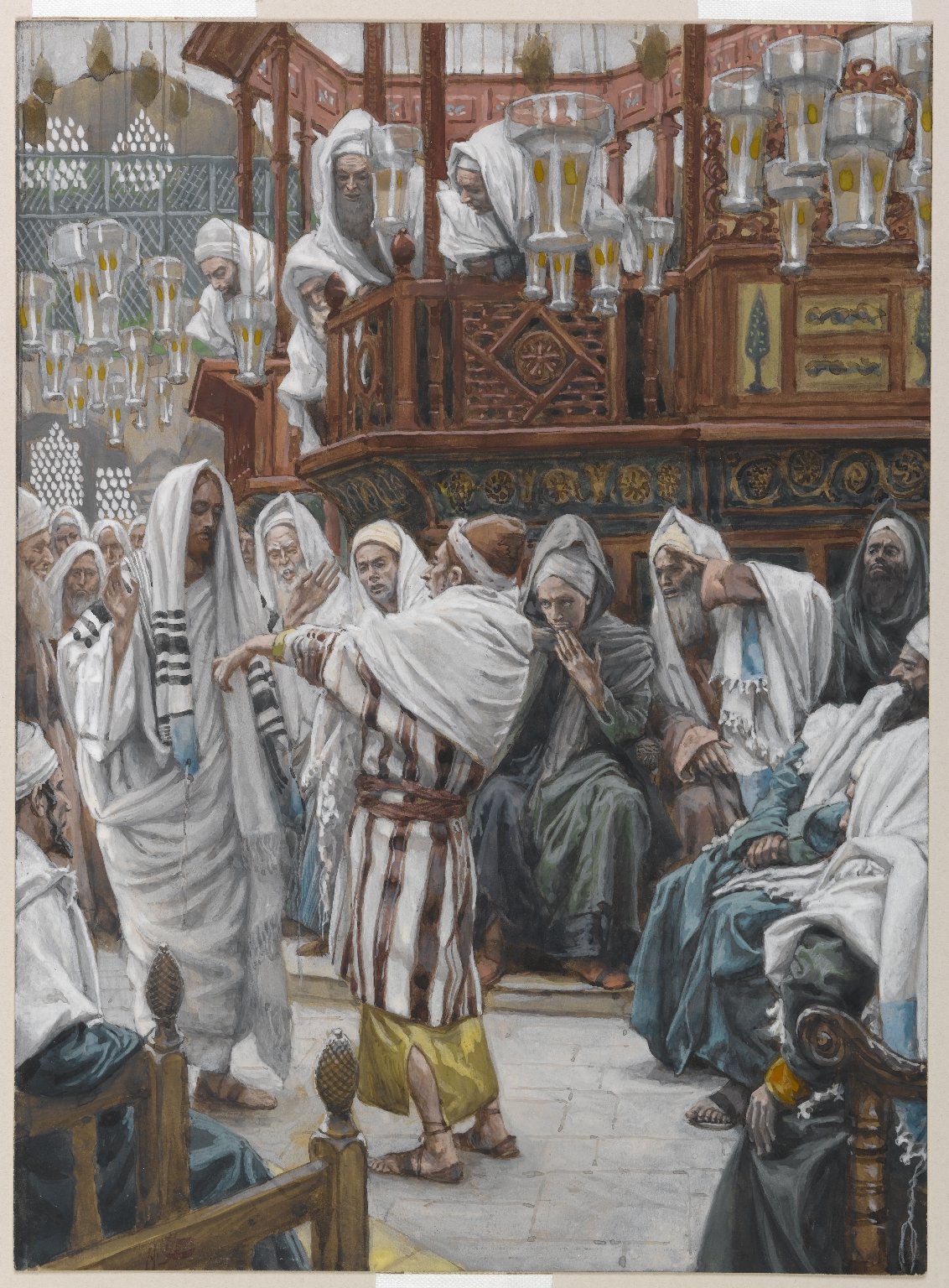
James Tissot – The Good Samaritan (Brooklyn Museum)

Trinity I

Children love to ask questions: who? what? where? when? and, especially, why? The Questions we ask and the Answers we give can say an awful lot about who we are. One of the most fundamental question is one concerning identity: ‘Pwy wyt ti?’ ‘Who are you?’ My response would be: ‘I am Adrian, and I am a priest’. The name I was given in baptism, and the fact that God has called me to share in the priesthood of His Son Jesus Christ, define who I am, and what I do. They are why I am standing here, saying this to you, today.

From the time of their exile in Babylon, and before, the people of Israel had looked for a Messiah, a leader of the House of David. They sought someone who would bring them the peace and security that they longed for. The first reading this morning comes from the prophecy of Zechariah, and was written perhaps as late as two hundred years before the birth of Jesus Christ. At this time the Jewish people were struggling under Greek rulers who tried to abolish their identity, and all that they held sacred. The prophet Zechariah looks forward to a messianic future, when the people of the House of David :

‘edrychant ar yr un a drywanwyd ganddynt, a galaru amdano fel am uniganedig, ac wylo amdano fel am gyntafanedig.’

‘They will look on the one whom they have pierced; they will mourn for him as for an only son, and weep for him as people weep for a first-born child’ (Zech 12:10)

The mention of looking upon one whom they have pierced anticipates Christ and His Crucifixion, as noted by John’s Gospel: ‘They will look on him whom they have pierced’ (19:37). Zechariah also writes of the outpouring of a ‘spirit of kindness and prayer’, just as we have seen at Pentecost. Here Jesus’ Death, Resurrection and gift of the Holy Spirit are clearly prefigured: God’s saving plan is announced in the words of the prophet. A few verses later, Zechariah prophesies:

‘Yn y dydd hwnnw bydd ffynnon wedi ei hagor i linach Dafydd ac i drigolion Jerwsalem, ar gyfer pechod ac aflendid.’

‘On that day there shall be a fountain opened for the house of David and the inhabitants of Jerusalem to cleanse themselves from sin and uncleanness.’ (Zech 13:1)

This is what the Cross achieves for those who are washed in the Blood of Lamb, as we are at our Baptism. Christ’s death takes away our sins. Through Baptism and the Eucharist we share in Jesus’ Death and are raised to new life with Him. When St Paul writes to the Galatian Church, he stresses their common baptism:

‘Oblegid yr ydych bawb, trwy ffydd, yn blant Duw yng Nghrist Iesu. Oherwydd y mae pob un ohonoch sydd wedi ei fedyddio i Grist wedi gwisgo Crist amdano. Nid oes rhagor rhwng Iddewon a Groegiaid, rhwng caeth a rhydd, rhwng gwryw a benyw, oherwydd un person ydych chwi oll yng Nghrist Iesu.’

‘You are, all of you, sons of God through faith in Christ Jesus. All baptised in Christ, you have all clothed yourselves in Christ, and there are no more distinctions between Jew and Greek, slave and free, male and female, but all of you are one in Christ Jesus.’ (Gal 3:26-28)

St Paul is preaching a profound message. He explains that none of the distinctions which the world makes matter in God’s eyes. There is no difference. All people are one in Christ. There is a radical equality in the Church: all are welcome to come and experience God’s saving love. When Paul preached, nearly two thousand years ago, this was a revolutionary idea, and it still is today. We are all one in Christ: young and old, rich and poor. It doesn’t matter who we are, where we are from, or anything else. All that matters is that we find our true identity in Christ. This makes us heirs of God’s promise: that we would enjoy eternity in Heaven with our Creator and Sustainer.

In today’s Gospel Jesus begins by asking His disciples this question:

“Pwy y mae’r tyrfaoedd yn dweud ydwyf fi?”

“Who do the crowds say that I am?” (Lk 9:18)

His followers reply that the people think a variety of things: John the Baptist, Elijah, or another of the prophets. They recognise Jesus’ proclamation of the Good News of the Kingdom and understand Him in terms that are familiar to them. Christ, however, presses the issue by asking His disciples another question:

“pwy meddwch chwi ydwyf fi?”

“But who you say that I am?” (Lk 9:20)

Peter answers, ‘Meseia Duw, the Christ of God’ (Lk 9:20). By this answer Peter confesses that Jesus is the Messiah, God’s Anointed, the fulfilment of Zechariah’s prophecy. The disciple’s confession of belief is also our confession of belief as Christians: Jesus is the Christ, the Saviour, the Son of God. As we will soon declare in the words of the Nicene Creed.

Jesus instructs the disciples that they should not communicate this knowledge to anyone, at this time. He then explains what is about to happen:

“”Y mae’n rhaid i Fab y Dyn,” meddai, “ddioddef llawer a chael ei wrthod gan yr henuriaid a’r prif offeiriaid a’r ysgrifenyddion, a’i ladd, a’r trydydd dydd ei gyfodi.”

“The Son of Man is destined to suffer grievously, to be rejected by the elders and chief priests and scribes and to be put to death, and to be raised up on the third day” (Lk 9:22)

Jesus tells the disciples about His Passion, Death and Resurrection, because it is His mission. He has come to reconcile God and humanity, and to restore and heal our broken relationship. Christ then invites His followers to follow His example:

“Os myn neb ddod ar fy ôl i, rhaid iddo ymwadu ag ef ei hun a chodi ei groes bob dydd a’m canlyn i. Oherwydd pwy bynnag a fyn gadw ei fywyd, fe’i cyll, ond pwy bynnag a gyll ei fywyd er fy mwyn i, fe’i ceidw. Pa elw a gaiff rhywun o ennill yr holl fyd a’i ddifetha neu ei fforffedu ei hun?

‘If anyone wants to be a follower of mine, let him renounce himself and take up his cross every day and follow me. For anyone who wants to save his life will lose it; but anyone who loses his life for my sake, that man will save it.’ (Lk 9:23-24)

At the beginning of His public ministry, Jesus invites people to repent and believe. Now He calls us to self-denial, and to embrace the Cross. Christ asks us to accept the most shameful way to die, a form of torture, used by the Romans to execute slaves. As those saved and made free by the Cross of Christ, we take up our own cross and follow Jesus. We imitate Him, in selfless love and devotion, and we bear the weight of the cross in life’s difficulties and disappointments. Following Christ is hard. It is a struggle, and we cannot just rely solely upon our own willpower to succeed. Instead, the Christian life needs to be a corporate effort, something we do together, trusting in God’s Grace to be at work in us, both individually and as a community.

Christ wants us to lose our lives for His sake, and find freedom in His service. There is something paradoxical in Jesus’ teaching. We are to find perfect freedom in obedience, in service of God and each other. Each of us needs to be humble enough to accept what God offers us, and be prepared to try to live it out together. It isn’t about us, but rather letting God be at work in us. When we co-operate with God, and live in love, and joy, and peace, we flourish as human beings. This is liberating, and it is what Our Heavenly Father wants for us. This is what true freedom looks like, and we are called to live it together, today and every day.

So, as we celebrate the joy of our Salvation, let us pray that we may be changed by God’s love, and share this love with others. Let us give thanks for the mystery and wonder that is God, Duw Dad, Duw y Mab, a Duw yr Ysbryd Glân. God the Father, God the Son, and God the Holy Spirit. I’r hwn y priodoler pob gogoniant, arglwyddiaeth, a gallu, yn awr, ac yn oes oesoedd. To whom be ascribed all glory, dominion and power, now and forever. Amen.

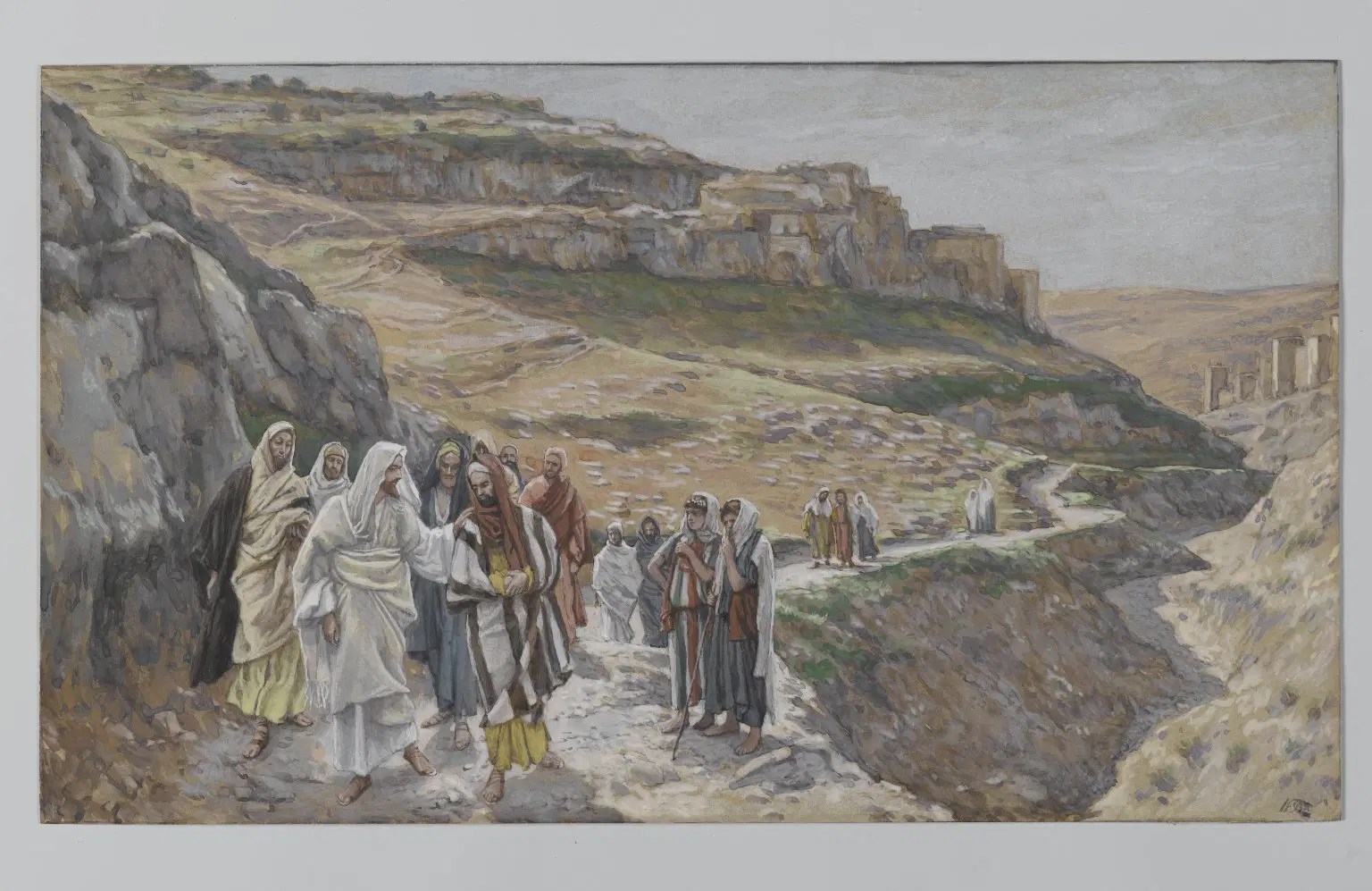
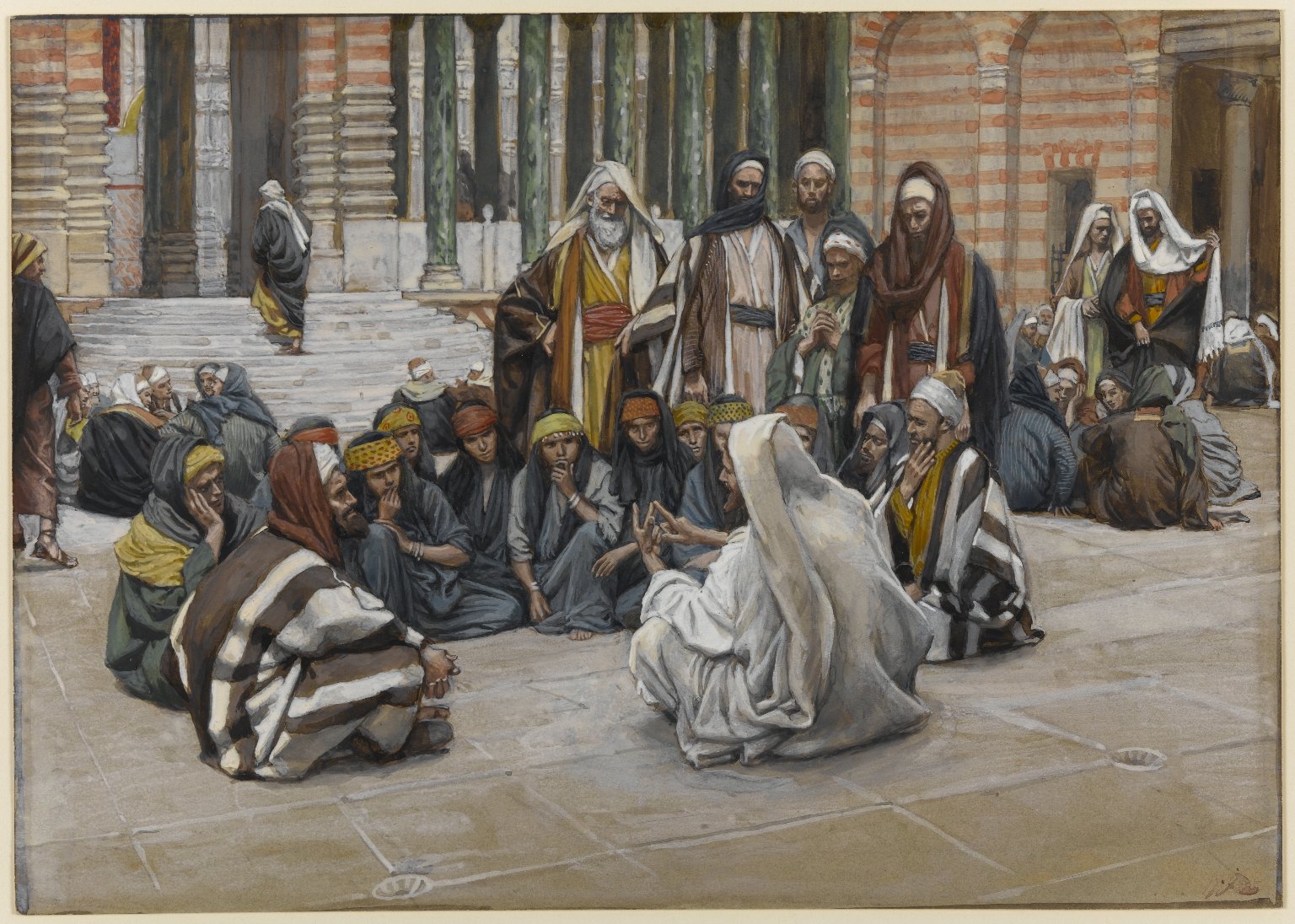
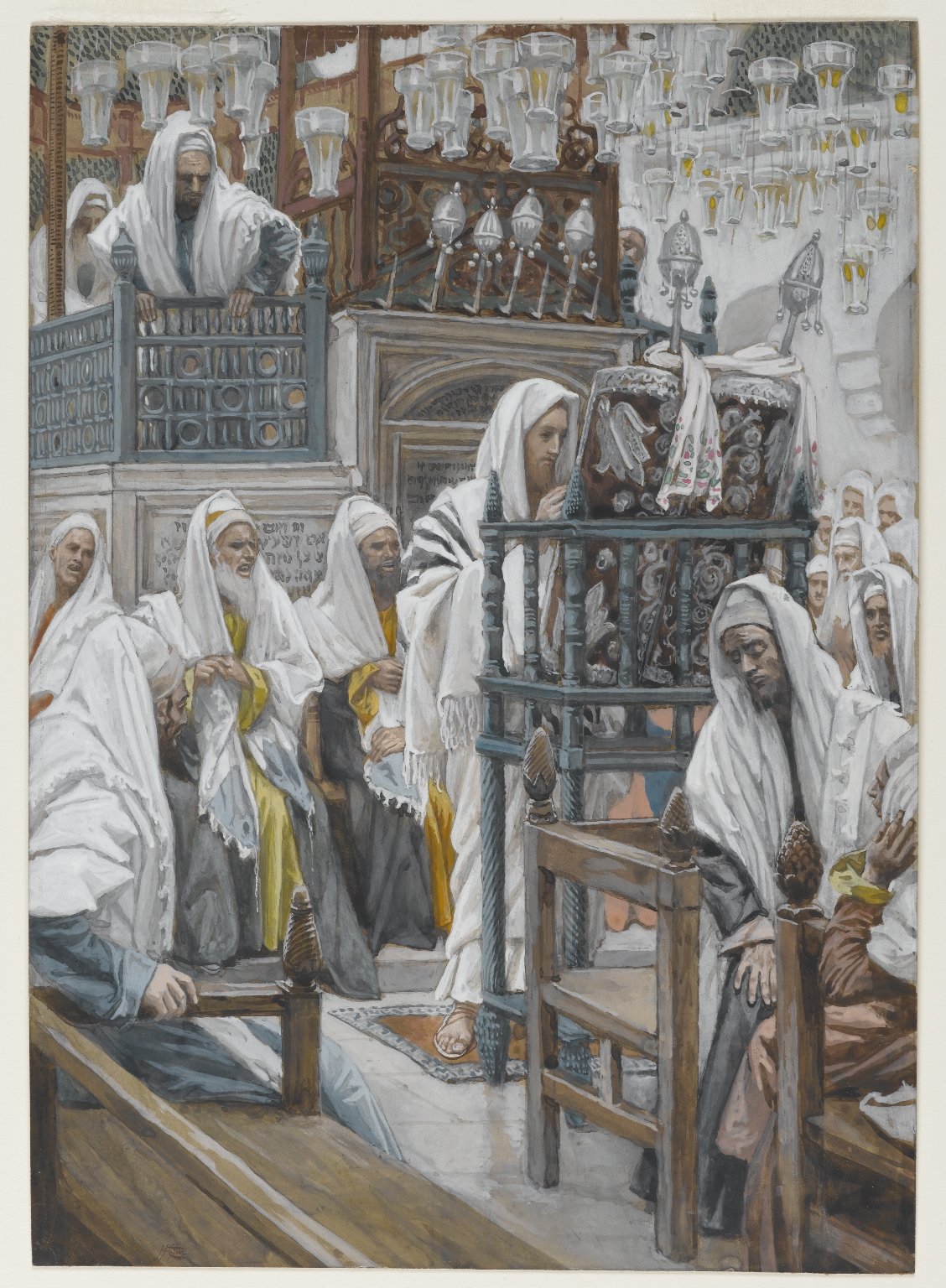
Jesus discourses with his disciples – James Tissot (Brooklyn Museum)

Trinity Sunday 2025

In the Science fiction film, ‘The Matrix’ and its sequels there is a character called ‘Trinity’, played by Carrie-Anne Moss. The name comes from her handle as a computer hacker. She, apparently, chose this moniker to give the impression that she is as mysterious and enigmatic as the concept of a Three-in-one being (God the Holy Trinity: Father, Son, and Holy Spirit). So what do Christians believe about the Trinity?

In today’s Gospel Jesus promises His disciples that,

“Ond pan ddaw ef, Ysbryd y Gwirionedd, fe’ch arwain chwi yn yr holl wirionedd. Oherwydd nid ohono’i hun y bydd yn llefaru; ond yr hyn a glyw y bydd yn ei lefaru, a’r hyn sy’n dod y bydd yn ei fynegi i chwi.”

“When the Spirit of truth comes, he will guide you into all the truth, for he will not speak on his own authority, but whatever he hears he will speak, and he will declare to you the things that are to come.” (Jn 16:13)

God gives us the Holy Spirit to guide us and lead us in our lives. We are invited into a relationship and journey of faith, which enables us to grow and develop. As Christians, we worship One God, Father, Son, and Holy Spirit. They are not three Gods, but one God. That the three persons of the Trinity are one God is itself a mystery. It is the enigma of God’s very self: a Trinity of Persons, consubstantial, co-equal, and co-eternal. ‘Consubstantial’ means ‘of one being’, i.e. they are One. ‘Co-equal’ means that the persons of the Trinity are equal to one another, none is greater or lesser than another. ‘Co-eternal’ means that they all have no beginning in time all three are eternal. We know God most fully in the person of Jesus Christ, the Incarnate Word of God, who was born of the Virgin Mary, died upon the Cross for our sins, was raised to New Life at Easter, and sent the Holy Spirit at Pentecost. In Christ, God discloses who and what He is. We know Him through His outpouring of love into our lives.

All Christians are baptised in the name of the Trinity. Our worship is Trinitarian. The service this morning began with the words ‘Yn enw’r Tad, a’r Mab, a’r Ysbryd Glân, In the name of the Father, and of the Son, and of the Holy Spirit, Amen.’ Eucharistic Services have begun by invoking the name of the Trinity, and making the sign of the Cross, for as long as we have descriptions of them, going back almost 1900 years. And 1700 years ago just before the Council of Nicaea, this morning’s first reading was one of the most controversial passages in Scripture: 

“Lluniodd yr Arglwydd fi ar ddechrau ei waith, yn gyntaf o’i weithredoedd gynt.”

“The Lord possessed me at the beginning of his work, the first of his acts of old.” (Proverbs 8:22)

In the Greek text of Proverbs, used widely around the Mediterranean at that time, the verb translated as ‘possessed’ was one that meant ‘created’. This lead some people — the followers of Arius — to argue that this passage means that Jesus Christ was created and not begotten. This would therefore mean that Jesus had a beginning in time, and was not eternal. He was therefore somewhat lesser than God the Father. To discuss this theological issue Church Councils were called at Nicaea in ad325, and Constantinople in ad381. These meetings of bishops rejected the Arian ideas and gave us the doctrinal statement known as the Nicene Creed, which we will say together in a few minutes time. Our faith, as Christians, is rooted in our belief in God: Father, Son, and Holy Spirit, consubstantial, co-equal, and co-eternal. This is why the Creed is made up of three sections. It begins by stating what we believe about God the Father. The text then moves on to what we believe about Jesus the Son. The statement of faith then finishes with the Christian beliefs concerning the Holy Spirit. What we believe and how we worship God matters.

Last Sunday we celebrated Whitsun, Y Sulgwyn, the Feast of Pentecost: the Descent of the Holy Spirit upon the disciples in the Upper Room, fifty days after Easter, and ten days after Jesus’ Ascension into Heaven. With the coming of the Holy Spirit, we see the fullness of who God is. As St Paul puts it in his Letter to the Romans:

“oherwydd y mae cariad Duw wedi ei dywallt yn ein calonnau trwy’r Ysbryd Glân y mae ef wedi ei roi i ni.”

“God’s love has been poured into our hearts through the Holy Spirit who has been given to us.” (Romans 5:5)

As Christians, we are given the gift of the Holy Spirit — a spirit of love and joy. This allows us to experience God as He is: the Father who created all that exists; the Son who redeemed humanity; and the Spirit who sanctifies and encourages God’s people. God calls us into a relationship and we respond with worship which honours our Creator and Sustainer. We do this not because God requires our worship, but because of our own need to acknowledge our dependance upon Him. God loves us, and because we know that we are loved, we respond with love and praise. 

The wonderful thing about the outpouring of the Holy Spirit at Pentecost is that it enables us to encounter and experience God in a deeper way. We can know Jesus Christ, the Word made flesh. He speaks to us in Scripture, and He comes to us in the Eucharist, so that we may be nourished by God. In our prayer and worship, we are filled with the Holy Spirit, who transforms us. The Trinity is not an abstract philosophical concept, but rather the manifestation of a generous and loving God. The Christian understanding of God is not of a remote being. God makes His home with us. He gives us His life, and He transforms and heals us in love. This is all possible through the relationship God has with us, through His Son and His Spirit, which is personal to each and every one of us. That is why we celebrate the Trinity today.

In Christ God becomes human, allowing Him to understand us from the inside, so to speak. This is not a distant, impersonal divinity, but one who lives a human life. One who understands our frailty, and who loves us. God sends His Spirit so that we may be encouraged and live out our true potential. We will face difficulties and hardships. Christ promises us no less, as does St Paul in our second reading. But the point is that these experiences, while difficult to endure, can also be positive: we grow and develop through them. It is often through the experience of suffering that we become more loving and forgiving.

God makes us new by his redeeming love and transforms us into what He wants us to be. God — Father, Son, and Holy Spirit — offers us all the opportunity to be something different, something more than we are. If we let Him change us. If we co-operate with His grace. When we are filled with the Holy Spirit, and nourished by Word and Sacrament, God is at work in us, transforming us into His likeness.

So, as we celebrate the mystery of the Holy and Life-giving Trinity, let us pray that we may be changed by God’s love, and share this love with others. Let us give thanks for the mystery and wonder that is God, Duw Dad, Duw y Mab, a Duw yr Ysbryd Glân. God the Father, God the Son, and God the Holy Spirit. I’r hwn y priodoler pob gogoniant, arglwyddiaeth, a gallu, yn awr, ac yn oes oesoedd. To whom be ascribed all glory, dominion and power, now and forever. Amen.

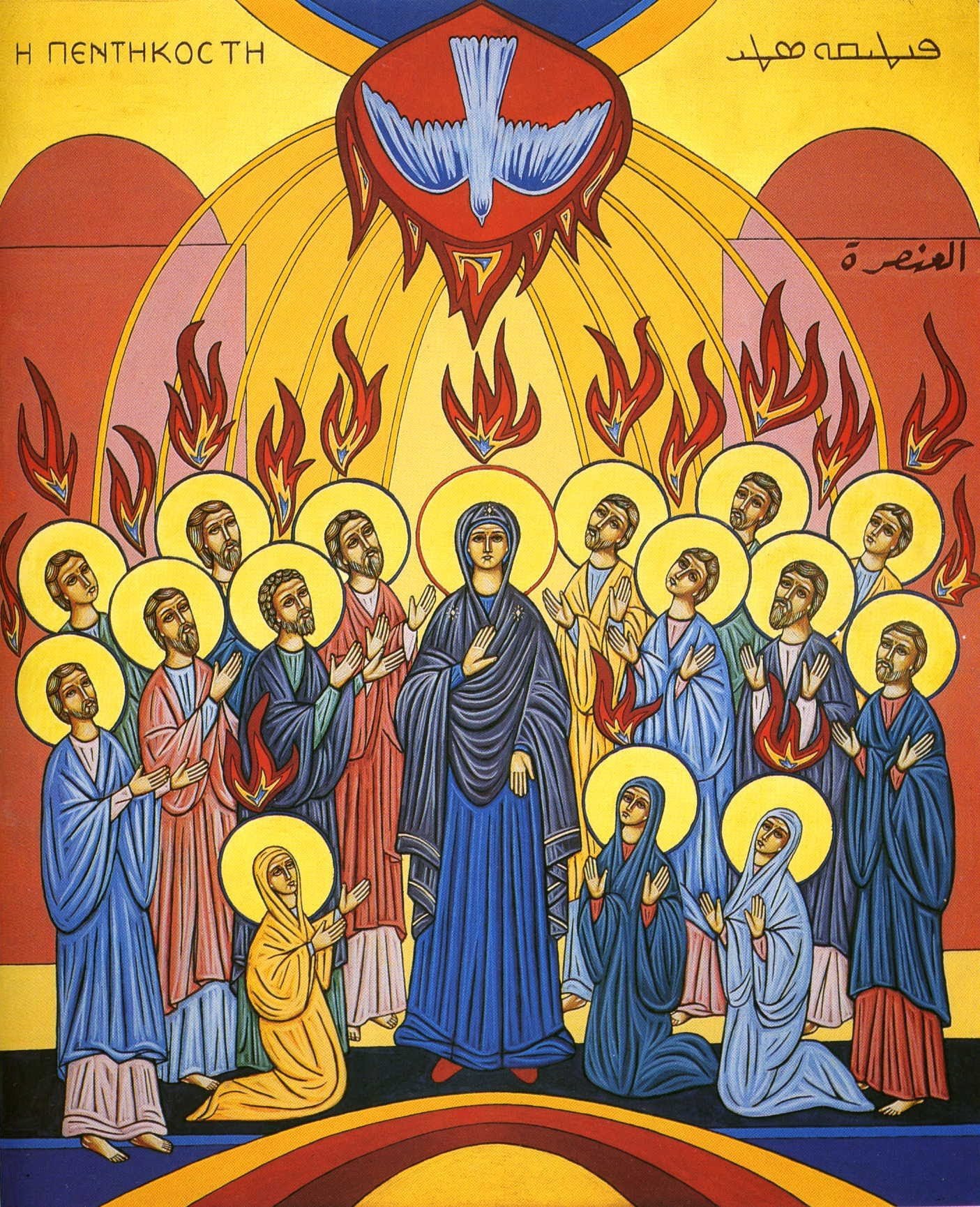
The Trinity Lance McNeel 2009

Pentecost 2025

Every Sunday, and also on solemn Feast days, Christians make a public declaration of their faith in God, Father, Son, and Holy Spirit, using the words of the Nicene Creed — which we will all say together in a few minutes time. This statement of belief was drawn up seventeen hundred years ago at the First Ecumenical Council, which was called by the Roman Emperor Constantine to sort out divisions within the Church concerning the Divinity of Jesus Christ. The council met at Nicaea in Asia Minor (modern day Turkey) and comprised of three hundred and eighteen bishops of the Church. One of these was Nicholas of Myra, St Nicholas, the patron saint of this church. 

Questions about belief matter. They have the potential to divide the Church. Taking it away from its core purpose of being united in a common faith, and making a consistent proclamation of that faith. This is the situation in today’s reading from the Acts of the Apostles. Having been promised the Holy Spirit by Our Lord at His Ascension, the disciples wait and pray. At Pentecost they are filled with the Spirit. Emboldened, they are able to tell Jews from all over the Mediterranean world, who have gathered in Jerusalem, who Jesus is, and what He has done. From this moment on the disciples are known as Apostles from the Greek ἀπόστολος (meaning one who is sent, a messenger). The message they deliver is that all people should repent and believe the Good News of Jesus Christ. 

The outpouring of the Holy Spirit is not a one-off event, but rather a permanent state of affairs. This is how God continues to be active in the world: inspiring and strengthening Christ’s followers in living and proclaiming their faith. In John’s Gospel, Jesus promises His disciples:

‘Os ydych yn fy ngharu i, fe gadwch fy ngorchmynion i. Ac fe ofynnaf finnau i’m Tad, ac fe rydd ef i chwi Eiriolwr arall i fod gyda chwi am byth,’

‘If you love me, you will keep my commandments. And I will ask the Father, and he will give you another Helper, to be with you for ever.’ (Jn 14:15-16)

The promise is that God’s Spirit will be present in perpetuity. God will continue to pour out His Spirit to strengthen the Church. This is what we are celebrating today at Pentecost. Indeed, during the Eucharistic Prayer I, as your priest,  will pray that God continues to do this and ‘trwy nerth dy Ysbryd, i’r rhoddion hyn o fara a gwin fod i ni ei gorff a’i waed ef’ ‘that, by the power of your [God’s] Spirit, these gifts of bread and wine may be for us his body and blood’. Our heavenly Father makes wonderful things happen. Disciples who have been scared and have been in hiding are transformed into fearless evangelists, going out to preach Christ’s message of love and forgiveness. They become enthusiastic fellow-workers in the vineyard. God is able to completely change people and situations, because His love for us knows no bounds.  

The 318 bishops, who met at Nicaea, in 325AD, were able to put into words what Christians believe because they began their deliberations by praying for the gift of the Holy Spirit to guide and direct their thoughts and actions. This is entirely in line with Our Lord’s teaching in the Gospel: 

‘Ond bydd yr Eiriolwr, yr Ysbryd Glân, a anfona’r Tad yn fy enw i, yn dysgu popeth ichwi, ac yn dwyn ar gof ichwi y cwbl a ddywedais i wrthych.’

‘But the Helper, the Holy Spirit, whom the Father will send in my name, he will teach you all things and bring to your remembrance all that I have said to you.’ (Jn 14:26)

The Bishops, including St Nicholas, were strengthened by God to proclaim the truth, and to bear witness to it, in the face of those who would deny it. They bore witness to the truth of Jesus Christ: true God and true man, who promised the gift of the Holy Spirit. God’s Spirit gives Christians strength and brings us together as brothers and sisters in a new family, which we call the Church. 

It is thanks to the preaching of the Gospel begun by the Apostles at Pentecost, and continued by their successors at Nicaea, that we are here today. It is how billions of people have come to know, love, and serve Our Lord Jesus Christ. As people who are in Christ, who have entered the Church through our Baptism, we are given a very important job to do. We need to tell people about Jesus!

The world-wide Christian Church is wonderful in its diversity. We are all different, we do not speak the same language, or have the same culture. However, we are all equally empowered through having received the Holy Spirit at our Baptism, in our Confirmation, and through all the sacramental actions of the church, which are the outward and visible signs of the inward and spiritual grace of God. This is how the Holy Spirit works. This is how God builds us up together in love. Through the Eucharist, through prayer and through Scripture, we are nourished spiritually to keep doing all that God desires of us.

So, my brothers and sisters in Christ, let us pray earnestly for the gift of the Spirit. Just as St Nicholas was inspired by the Spirit, may God also fill us with His love and equip us to proclaim the Good News of the Kingdom. May the fire of the Holy Spirit embolden us to encourage others to come to know, and love Duw Dad, Duw y Mab, a Duw yr Ysbryd Glân. God the Father, God the Son, and God the Holy Spirit. I’r hwn y priodoler pob gogoniant, arglwyddiaeth, a gallu, yn awr, ac yn oes oesoedd. To whom be ascribed all glory, dominion and power, now and forever. Amen.

Lent III

SOME of you may have visited the Egypt Centre on the campus of Swansea University. This small museum contains a fascinating collection of artefacts from a civilisation which is both strange and intriguing. In Ancient Egypt, gods were everywhere. Almost everything was worshipped as a god. This included the River Nile, which brought life, crops and fertility. Also there was the bull Apis in whose likeness the Israelites fashioned a Golden Calf. Another was Anubis with his black dog’s head, who was responsible for funerary rites. But in order to worship a divinity you first needed to know their name, and know who they were. 

In this morning’s first reading we hear that Moses is shepherding his father-in-law’s flock in the wilderness of Sinai. It is a difficult place: arid, rocky and mountainous. In the Ancient World, mountains were places for encounter with the divine. So when Moses sees a bush that is burning, but is not consumed by the fire, he wants to investigate what is going on. This leads to a meeting with God which will result in the Exodus, the journey from slavery to freedom; from Egypt to the Promised Land. 

God begins by saying who he is:

“Duw dy dadau wyf fi, Duw Abraham, Duw Isaac a Duw Jacob.”

‘I am the God of your father, the God of Abraham, the God of Isaac, and the God of Jacob.’ (Exod 3:6)

God has heard the cry of His people and is preparing to do something about their situation. He will lead them from Egypt to a land flowing with milk and honey. Moses then tells God that if he explains to the people that the God of their Ancestors has sent him, they will ask, ‘What is his name?’ The point of addressing a divinity by name was that then they would then listen to your prayers. This leads God to reply:

“Ydwyf yr hyn ydwyf. Dywed hyn wrth bobl Israel, ‘Ydwyf sydd wedi fy anfon atoch.’”

‘I Am Who I Am.’ And he said, ‘Say this to the people of Israel: “I Am has sent me to you.”’ (Exod 3:14)

God refuses to be named. God is who God is: the Creator of all, God of all. Almighty God is not to be reduced to a name or a category. However, He loves His People and intends, through Moses, to lead them from slavery in Egypt to freedom in the Promised Land. This journey is the event that will establish the people of Israel, and it also will provide the template for Jesus’ Passion, Death and Resurrection. 

Lent, at its heart, is a penitential season for Christians to prepare to celebrate the Passover which offers salvation to the whole world. This is why St Paul uses the story of the Exodus to remind the faithful of the importance of humility, and of knowing and acknowledging our need of God. As the Israelites were fed with spiritual food — manna — so Christians are fed with the Living Bread — Jesus Christ. As the Israelites were refreshed with spiritual drink, Christians drink the Blood of Christ, and are washed in the waters of Baptism. As Moses strikes the rock at Massah and Meribah, the Rock is Christ, upon whom we can build with sure foundations, against the storms of this world. Nourished by the Eucharist, we are fed by God, with God, so that He may transform us, so that we can share His Eternal Life. The Corinthians are taking this for granted, hence Paul’s warnings in the Epistle. Like the people of Corinth, we need to avoid sin, and turn back to God, and be sustained and upheld by Him, so that we can grow in faith.

Turning to this morning’s Gospel, we do not know who the Galileans that Pilate killed were. Galilee was renowned as a hotbed of political revolutionaries, full of people who wanted to free the Jewish people from Roman Rule. Forty years after Christ’s Passion, Rome will crush a revolution in Judea, and slaughter many people. Our Lord’s message to His followers is simple: repent. Repentance means changing your mind. Repentance means loving your enemies, and Repentance means living your life in a radically different way.

Once again, Jesus tells people a parable. A fig tree has not borne fruit in three years A man makes three visits to the fig tree. These visits represent the Patriarchs, the Prophets and the Gospel — the warnings given in Scripture to repent — and also the three years of Jesus’ earthly ministry. Despite the guidance, the fig does not bear fruit, therefore it should be cut down

However, the unproductive tree is not cut down, but instead it is given a reprieve. The gardener allows the fig tree another chance. This is grace: the free gift of God, granted and not earned. Only through God’s grace can we hope to bear fruit. God, the gardener who created humanity in Paradise, will offer himself as both Priest and Victim upon the Tree of Life, to bleed and die for love of us. This gardener will meet Mary Magdalene by the empty tomb on Easter Day so that we, and all humanity, may share Christ’s risen life. The fact that we are here today is proof that for two thousand years this tree has borne fruit in the Church.

God loves humanity, which is why — like the fig tree — we are given another chance. We are granted the opportunity to repent, to turn back to the God who loves us, and who longs to see us flourish. Our lives as Christians are a continual cycle of falling short, and turning back in repentance to the source of grace, love, and mercy: God. We receive God’s gifts, even though we are not worthy of His generosity, but that’s the point. Our Heavenly Father satisfies our deepest needs and desires out of love for us, so that, enfolded in His love, we might become more lovely, and be filled with God’s infinite love and grace. Only when we are watered by God’s love can we truly bear fruit. We are all forgiven, and we are all loved. That is what the Cross demonstrates: God’s unconditional love and forgiveness. Jesus’ willing sacrifice stands for all time, and fundamentally changes our relationship with our Creator and each other. Ours is a faith rooted in love, freely given for the life of the world and for every individual human being.

So, my brothers and sisters, let us prepare ourselves to celebrate the Paschal mystery so that we, and all the world, may give glory i Duw Dad, Duw y Mab, a Duw yr Ysbryd Glân. I’r hwn y priodoler pob gogoniant, arglwyddiaeth, a gallu, yn awr, ac yn oes oesoedd. Amen.

Septuagesima 2025

When we think back over our lives some of the people we remember the most vividly are our teachers. Teachers are important. They form us, they instruct us, they inspire us, and they shape our lives in countless ways. We would not be the people we are without their hard work and inspiration.

At one level Jesus, Christ is the greatest teacher humanity has ever had. This is because His mission was to proclaim the Kingdom of God and to educate humanity about it, so that we might flourish. Christ’s mission is rooted in the simple fact that God loves us. We may make plenty of mistakes, but nonetheless God comes to us, lives as one of us, and shows us how to live life in all its fulness.

The readings this morning outline two possibilities: living in accordance with God’s will, or living by our own desires. It is clear which is preferable, and which way leads to human flourishing. So we have the challenge set before us to live as children of God. It is not necessarily an easy path, and it may involve hardship and suffering. However, nothing worth achieving comes without effort, struggle, and even suffering. 

The prophet Jeremiah offers us a vision of what happens when we put our trust in God:

‘Bendigedig yw’r gŵr sy’n hyderu yn yr Arglwydd, a’r Arglwydd yn hyder iddo. Y mae fel pren a blannwyd ar lan dyfroedd, yn gwthio’i wreiddiau i’r afon, heb ofni gwres pan ddaw, a’i ddail yn ir; ar dymor sych ni prydera, ac ni phaid â ffrwytho’’

“Blessed is the man who trusts in the Lord, whose trust is the Lord. He is like a tree planted by water, that sends out its roots by the stream, and does not fear when heat comes, for its leaves remain green, and is not anxious in the year of drought, for it does not cease to bear fruit.” (Jer 17:7-8)

Here we see an image of human flourishing. This is how things should be. Also, references to trees in the Bible tend to look backwards to the Garden of Eden, and forwards to the tree of Calvary. Salvation history starts with humanity taking the wrong path after an interaction with a tree, and reaches a climax with God using a tree to make things right again. When my best friend got someone he’d worked with in Syria over here, he took them out into the British countryside, and they wept, because they had never seen so much green: grass and trees, and water. Coming from the Middle East, they were used to dryness and desert. The prophet Jeremiah is showing how good things can be, and paving the way for the proclamation which lies at the heart of today’s readings.

In Luke’s Gospel we see the continuation of Christ’s ministry of teaching and healing. People come to Jesus because they want to know God. They have travelled from a wide area, and are a diverse group of people, all united by a common desire: to be closer to God. Unlike in Matthew’s account, here Jesus does not go up a mountain to teach, but comes down to where people are. There He proclaims the values of the Kingdom:

‘Gwyn eich byd chwi’r tlodion, oherwydd eiddoch chwi yw teyrnas Dduw’

“Blessed are you who are poor, for yours is the kingdom of God.” (Lk 6:20)

To be poor in the world’s eyes is to lack money, possessions, power, and influence. All these worldly things do not matter in the Kingdom of God. There those who are poor, those who recognise their complete dependance upon God, are truly rich. This is because they have the humility to let God be at work in them, and they rely upon God, rather than their own strength, which enables them to be transformed. Two thousand years ago the poor were looked down upon, and their poverty was blamed on sin or fecklessness. They were at the bottom of the pile. To say that the Kingdom of God belongs to such people is to make a truly radical statement, turning societal norms and expectations on their head. What Our Lord is proposing is literally world-changing. This is the Good News of Jesus Christ. 

However, Our Lord recognises that His radical vision will meet with opposition:

‘Gwyn eich byd pan fydd dynion yn eich casáu a’ch ysgymuno a’ch gwaradwyddo, a dirmygi eich enw fel peth drwg, o achos Mab y Dyn. Byddwch lawen y dydd hwnnw a llamwch o orfoledd, oherwydd, ystyriwch, y mae eich gwobr yn fawr yn y nef.’

Blessed are you when people hate you and when they exclude you and revile you and spurn your name as evil, on account of the Son of Man! Rejoice in that day, and leap for joy, for behold, your reward is great in heaven.” (Lk 6:22-23)

To live the Christian life is to be different, to offer the world something new, something challenging, and something disturbing. It will be resisted, and it will lead to difficult times. Our reaction towards any persecution, however, is to be joy. At first sight this seems a little strange and it is definitely a challenge

Jesus then makes a series of four statements beginning with ‘Gwai chwi …Woe to you’. These parallel the earlier positive statements about the Kingdom and turn human values upside down. These speak to those people who trust in themselves, their riches and abilities, saying that all will not go well for them in the future. Those who will not listen to Jesus’ words, because they think they do not need to, will find out that they are wrong. 

In some important ways, Christianity looks dangerous and suspect to the world around us, and so it should. As Christians, we are not conformed to the ways of the world, but rather to the will of God. We do not simply go along with things, because that is what everyone does. Instead, we follow a higher authority. We cannot be bought off with baubles and trinkets, with wealth or power — the things of this world. This is because we acknowledge someone greater, namely God. We try to live as God wants us to live, acknowledging Him before all things. As Christians, there should be something different about us, something that others can see, something that reflects Christ.

Jesus died to reconcile us to God and each other, and He was raised from the dead to give humanity hope in the God who loves us. This hope inspired St Paul to preach the Good News, and it should inspire us as well. We are called to live out our faith in our lives. Our beliefs need to make a difference to who and what we are, so that others might see the truth of the Gospel. What we do here, today, in church helps us to follow in Jesus’ footsteps. We hear God’s word, and we are nourished by it. We pray together for the Church and the World, and those in need. In the Eucharist, Christ fill us with His grace to strengthen and transform us, and then sends us out into the world to love our neighbour.

May we, today and every day, live out and proclaim the coming of God’s Kingdom, so that the world may believe and give glory i Duw Dad, Duw y Mab, a Duw yr Ysbryd Glân. I’r hwn y priodoler pob gogoniant, arglwyddiaeth, a gallu, yn awr, ac yn oes oesoedd. Amen.

Epiphany V 2025

THIS week’s readings focus on God’s call to humanity, so I would like to begin by sharing with you something of my own call. The first time I realised that I wanted to be a priest, I was about 10 years of age. It was in church at Margam, during a Sunday Morning Eucharist. The priest standing at the altar praying the Eucharistic Prayer, lived next door but one to us. He was a retired priest, called Fr Glyn — a great and holy man. I would go on to study at the same theological college as him (although this was something I only found out once I’d got there). As he stood at the altar and prayed the words that Jesus recited on the night before He died, I can remember a strong, overwhelming feeling: ‘I really want to do THAT!’ Even now, nearly forty years later, and after serving God as a priest for nearly fourteen years, that feeling still feels real. I still do not feel worthy of the call. But I’m not supposed to. That is the point: only God is worthy. However, God calls us not because we are worthy, but so that we might co-operate with Him in the outworking of His goodness, healing and love.

In our first reading this morning, the prophet Isaiah has a vision of heavenly glory. In his vision, Isaiah sees the throne room of the Heavenly Temple, with God surrounded by angels The prophet does not describe his emotional state, but he speaks of his human unworthiness in the divine presence. When Isaiah is confronted by the majesty of God, the singing of angels, the smoke of incense, all he can say is:

‘Gwae fi! Y mae wedi darfod amdanaf! Dyn a’i wefusau’n aflan ydwyf’

‘Woe is me. For I am lost; for I am a man of unclean lips’ (Isa 6:5)

Isaiah is aware of his human sinfulness and the gulf between himself and God. Yet his guilt is taken away, and his sin is atoned for. The prophet, who will foretell the coming of the Messiah who will save humanity, is prepared by God. He is set apart. When God asks, ‘Pwy a anfonaf? Pwy a â drosom ni?’’Whom shall I send, who will go for us?’ Isaiah can respond, ‘Dyma fi, anfon fi.‘Here I am! Send me’. This is quite a journey in a few verses, and that is the point. God doesn’t call those who are equipped. Rather, He equips those whom He calls.

In the Gospel, the teaching ministry of Jesus, which we saw begin in the synagogue in Nazareth, continues. His fame is spreading and the crowd that has come to listen to Our Lord’s teaching is so large that He uses a boat to address them, so that the hills behind the crowd will help make Him more easily heard, acting like a natural theatre 

After speaking to the crowd, Jesus continues to draw disciples to Himself. On the Sea of Galilee the best time to catch fish is at night, but unfortunately Simon, James, John, and others have been out all night and caught nothing. It is the morning, now, and they are exhausted. Worst of all their effort has brought no reward. They have no fish to sell. 

Jesus says to Simon, 

‘Dos allan i’r dŵr dwfn, a gollyngwch eich rwydau am ddalfa.’

‘Put out into the deep and let down your nets for a catch.’ (Lk 5:4)

These words seem to be crazy. The time to catch fish on the lake is at night not during the daytime. Simon knows this, but he agrees to let down his nets. Suddenly the fishing nets are full to breaking point, and Simon calls his colleagues to help him pull in the catch. Both boats are so full of fish that they can barely float. 

Simon’s response is telling, he falls down at Jesus’ knees and says:

‘Dos ymaith oddi wrthyf, oherwydd dyn pechadurus wyf fi, Arglwydd.’

‘Depart from me, for I am a sinful man, O Lord.’ (Lk 5:8)

Simon appreciates that what has happened is a miracle, something that God has done. His response to the presence of God is contrition — awareness of his own unworthiness. Simon knows that he doesn’t deserve this outpouring of grace. The unmerited kindness of God, is too much for him. This humble fisherman recognises his own unworthiness to be in the presence of the Divine. It is understandable, and human, and we would likely feel exactly the same way.

Then Our Lord addresses Simon:

‘Paid ag ofni; o hyn allan dal dynion y byddi di’

’Do not be afraid; from now on you will be catching men.’ (Lk 5:10)

Paid ag ofni’ ‘Do not be afraid’ God begins by addressing our fear, our reluctance to commit. The point is that we are not alone in this, but rather that God wants to work with us, and through us, to proclaim and extend His Kingdom. God welcomes humanity into His embrace, to know the love for which we long. True, unconditional love, offered to each and every one of us to transform us.

The final words of the passage are instructive: 

‘Yna daethant a1’r cychod yn ôl i’r lan, a gadael popeth, a’i ganlyn ef.’

‘And when they had brought their boats to land, they left everything and followed him.’ (Lk 5:11)

The fishermen are literally leaving everything. They have just landed the biggest catch of fish in their entire lives. They were about to be rich in worldly terms, and they have to leave it all behind. Their sacrifice is a real one. Following Jesus comes at a cost. However, it is not without its rewards. The first disciples turn their backs on worldly riches and possessions in order to be free to do God’s work.

The calling of the disciples is also the calling of the entire baptised people of God. This is a calling not to be afraid, but to respond to the God who loves us and saves us. This is a calling to live out in our lives, by word and deed, the saving truths of God. So God can use us for His glory and to spread His Kingdom. So that others may come to know God’s Love, Mercy, and Forgiveness. This is what we have signed up for: to be disciples of Jesus; to profess the faith of Christ Crucified; to share this faith with others.

This treasure has been entrusted to each and every one of us. We are all called to share our faith with others, so that the world may believe. Like the first disciples we acknowledge the glory o Duw Dad, Duw y Mab, a Duw yr Ysbryd Glân. I’r hwn y priodoler pob gogoniant, arglwyddiaeth, a gallu, yn awr, ac yn oes oesoedd. Amen.

Jesus preaches from a boat – James Tissot (Brooklyn Museum)

Candelmas 2025

As a child growing up in Wales in the 1980s, I was brought up with tales of rugby glory, which then (as now) seemed sadly lacking. We had won the Five Nations Championship eight times between 1969-1980, but it wasn’t until 2005 that I saw Wales win a Grand Slam. It was a long time to wait. As someone who has spend a large part of their life living in England, rugby mattered. It was part of my identity, I was proud to be Welsh, and I wanted them to win. I wanted more glory days.

Seeing glory return is at the heart of today’s celebration. Forty days after the birth of a first-born son, the Law of Moses required the sacrifice of two doves be made at the Temple. At the same time the mother was purified in a mikvah, a ritual bath. Today the Church celebrates the Presentation of Christ in the Temple, also known as the Purification of the Blessed Virgin Mary, and commonly called Candlemas. The name Candlemas comes from the fact that this is the day when the candles to be used in church over the coming year are traditionally blessed. This is so that they may burn as lights which proclaim Christ, the true Light, the light to lighten the world. Today, therefore has three different titles, but it is one feast. On February 2nd, Christians celebrate who and what Jesus Christ is, and what He does. We give thanks that in Him we see the glory of God. 

The account of presentation of Christ in the Temple begins with the obedience of Mary and Joseph, the Holy Family, as they follow the law of Moses. The focus then moves to Simeon:

‘dyn cyfiawn a duwiol oedd hwn, yn disgwyl am ddiddanwch Israel; ac yr oedd yr Ysbryd Glân arno. Yr oedd wedi cael datguddiad gan yr Ysbryd Glân na welai farwolaeth cyn gweld Meseia’r Arglwydd’

this man was righteous and devout, waiting for the consolation of Israel, and the Holy Spirit was upon him. And it had been revealed to him by the Holy Spirit that he would not see death before he had seen the Lord’s Christ.’(Lk 2:25-26)

God has spoken to Simeon, telling him that during his lifetime he will see the Messiah, the consolation of Israel. This elderly holy man longs to see God put things right once again. And today the promise made to him by God, revealed through the Holy Spirit, has been fulfilled in the six-week-old infant he holds in his arms. Simeon can prepare to meet his maker happy in the knowledge that Salvation has dawned in this little child.

At Epiphany Christ was made manifest to the whole world. Now His saving message is proclaimed, so that all people may know that salvation has come in the person of Jesus Christ. The Glory of God has returned to the Temple. However, along with the joy there is sadness. Simeon speaks to the Blessed Virgin Mary of her Son’s future, and of the pain she will endure at the foot of the Cross. Before he dies Simeon is looking to the Cross, the vehicle of our salvation. It is at the Cross that Mary will stand to see humanity freed from its sin through God’s love and mercy. Through grace, the free gift of God in Christ.

Candlemas marks the conclusion of our celebration of Christmas. We now move on from the mystery of the Incarnation, to that which gives it its true meaning: the Death and Resurrection of Jesus Christ. Candlemas is a preparation for the coming season of Lent. It changes our focus and attention from Jesus’ birth to His death, on the Cross.

The significance of what is happening is not only recognised by Simeon, but also by Anna. Anna is a woman who is close to God, a woman of prayer, a holy woman. She recognises what God is doing in Christ, and she proclaims it, so that God’s redemption of His people may be known. As Christians we are called to be like her. Our lives, everything that we say, or think, or do, should proclaim the saving truth of God’s love to the world. 

After leaving the Temple the Holy Family finally return to Nazareth. There Jesus begins to grow up, obedient to God and to His parents. In today’s Gospel we see all of human life — birth, death, work, and normality — all hallowed by the God who loves us, and who gives His Son for us. God shares our human life, as He will share our death, to restore us, to heal us.

For almost two thousand years Christians have celebrated the proclamation of the Glory of God through the Eucharist. This is the Thanksgiving which Our Lord entrusted to us, so that we can be nourished and healed by Him by partaking in His Body and Blood. We do this so that we might be transformed. Nourished by Word and Sacrament, we are sent out into the world to invite others to share the joy and love of the Lord. United with our brothers and sisters in every land we give glory i’r Duw Dad, Duw y Mab, a Duw yr Ysbryd Glân. I’r hwn y priodoler pob gogoniant, arglwyddiaeth, a gallu, yn awr, ac yn oes oesoedd. Amen.

Christmas 2024

Christmas is a time for many seasonal activities, including spending time with family and friends, eating special foods and enjoying Christmas Carols. Also, most of us will spend some time over the festive period watching films on the television, or in the cinema. Movies can, surprisingly, be particularly useful when we try and get our heads around the wonderful events of Christmas. I would like to begin by focussing on a film from my childhood — the 1981 adventure Raiders of the Lost Ark. In this film, the intrepid archaeologist Indiana Jones is competing with Nazi forces to discover the Ark of the Covenant, which, it is believed, has the power to make an army invincible. At the climax of the film, the villains open the Ark on an island in the Aegean Sea. Immediately, spirits and bolts of lightning are released, which kill the Nazis and free Indiana and his companion Marion. Other than being the sort of film one might watch at Christmas, what is the relevance of the scene?

The film’s denouement relies upon the heroes averting their gaze, while the villains do not, and are therefore destroyed. The plot draws upon the biblical idea that the glory of God, which the Ark is said to contain, is not something which humanity should gaze upon. In the Book of Exodus, when Moses asks to see God, he is told that if he does so he will die. The glory of God is not something humans are able to behold. 

Yet, the first reading this morning reaches its climax with the statement that:

‘fe wêl holl gyrrau’r ddaear iachawduriaeth ein Duw ni’

‘all the ends of the earth shall see the salvation of our God.’ (Isa 52:10)

There appears to be something strange going on here. Likewise, the one who begins His life wrapped in cloth and placed in a stone feeding trough, will end it taken down from a Cross, wrapped in cloth and placed in a stone tomb. ‘In my beginning is my end …. In my end is my beginning’ wrote T.S. Elliot in his poem ‘East Coker’, the second of his Four Quartets. And yet this end is but a prelude to Christ’s Resurrection, Ascension, and the Second Coming. 

In the great turnaround of salvation history, humanity goes from being unable to look upon the divine, to being able to behold Him in a manger, surrounded by farm animals. To put the mystery of our salvation into context, this morning’s Gospel goes back to the beginning, which is a very good place to start. Not to the Annunciation, where in the power of the Holy Spirit Christ takes flesh in the womb of His Mother, but to the beginning of time and the Creation of the Universe:

‘Yn y dechreuad yr oedd y Gair, a’r Gair oedd gyda Duw, a Duw oedd y Gair. Hwn oedd yn y dechreuad gyda Duw.’

‘In the beginning was the Word, and the Word was with God, and the Word was God. He was in the beginning with God.’ (Jn 1:1)

The Word which spoke the Universe into being exists in eternity with God, and is God. This is whom we worship: the one who will save humanity, and who offers us eternal life with God. 

Today we celebrate Divine generosity and humility. God is among us. Mae Duw yn eich plith ni. Born as a weak and vulnerable baby, he is utterly dependent upon Mary and Joseph. In time this divine generosity will be refused:

‘At ei eiddo ei hun y daeth, a’r eiddo ei hun nis derbyniasant ef.’

‘He came to his own, and his own people did not receive him.’ (Jn 1:11)

Ours is a God who does not force Himself upon us. Instead, He comes to us in love, to draw us out in love, that we might share in that love, and share it with others: 

‘A’r Gair a wnaethpwyd yn gnawd, ac a drigodd yn ein plith ni, (ac ni a welsom ei ogoniant ef, gogoniant megis yr Unig‐anedig oddi wrth y Tad,) yn llawn gras a gwirionedd.’

‘And the Word became flesh and dwelt among us, and we have seen his glory, glory as of the only Son from the Father, full of grace and truth.’ (Jn 1:14)

God pitches His tent, and tabernacles among us. The invisible becomes visible. The God who is beyond human understanding becomes human, and shares our human life from its beginning to its end. This is no unapproachable divinity, remote and uncaring, but one who experiences our existence, who understands us from the inside out. Humanity beholds the glory of God, in a baby who will die on a Cross to redeem us. 

Not only that, but Christ continues to give Himself to us, every time the Eucharist is celebrated, so that the Word can continue to become flesh, so that we can be transformed by Him, and share in God’s life. 

As we celebrate the birth of Our Saviour we need to ask ourselves: have we made room for Jesus in our lives? Have we really? If we haven’t, we need to let our hearts and our lives become the stable in which the Christ-child can be born. We need to see Him in the outcast, in the stranger, in the people which the world shuns. As Christians, we have to welcome such people, for in welcoming them we welcome Our Lord and Saviour. This is how we live out His love in our lives.

This is the true meaning of Christmas — this is the love which can transform the world. It is radical and costly. This love terrified the might of the Roman Empire, and showed human power that it was as nothing compared to Divine Love. Soul by individual soul, for the past two thousand years, the world has been changed by ordinary people living out the love shown to the world by, and through, this little vulnerable child.

So, today as we celebrate Jesus’ birth, let us raise our voices to join with the angels and give praise and honour to God the Father, God the Son, and God the Holy Spirit. To whom be ascribed all glory, dominion and power, now and forever. Amen.

Merry Christmas to you all!

Nadolig Llawen i chi gyd! 

Trinity xxiii – Love Actually

IN the 2003 film Bruce Almighty, Jim Carey’s character, Bruce, feels like his life is falling apart. As he drives in the dark, he begs God to tell him what to do, to give him a sign, or a signal. Immediately, a truck appears in front of him loaded with road signs saying, ‘Wrong way’, ‘Do not enter’, and ‘Stop!’. Bruce ignores the signs, overtakes the truck and then crashes his car into a lamppost. He is not hurt, but he is angry with God for not listening to his peas for guidance. This comedic scene brings home the message that sometimes we ask for God’s help in our lives and then fail to listen to what God is telling us to do.

In this morning’s Gospel, Jesus is in Jerusalem, engaging in some theological discussions in the Temple. He has just been talking to a group of Sadducees about the Resurrection. Their conversation gains to the attention of a Scribe, a legal expert, who asks Our Lord:

“Prun yw’r gorchymyn cyntaf o’r cwbl?”

“Which commandment is the most important of all?” (Mk 12:28)

Jesus answers, as we would expect, with words which also form part of this morning’s first reading from Deuteronomy:

“Y cyntaf yw, ‘Gwrando, O Israel, yr Arglwydd ein Duw yw’r unig Arglwydd, a châr yr Arglwydd dy Dduw â’th holl galon ac â’th holl enaid ac â’th holl feddwl ac â’th holl nerth.’” 

“The most important is, ‘Hear, O Israel: The Lord our God, the Lord is one. And you shall love the Lord your God with all your heart and with all your soul and with all your mind and with all your strength.’” (Mk 12:29-30)

These words form the Shema, are a prayer recited three times a day by Jews. They are a declaration of faith in God, and represent how each person is called to love God with all of our being. To this Our Lord adds: 

“Yr ail yw hwn, ‘Câr dy gymydog fel ti dy hun.’ Nid oes gorchymyn arall mwy na’r rhain.”

“The second is this: ‘You shall love your neighbour as yourself.’ There is no other commandment greater than these.” (Mk 12:31)

Christ quotes from Leviticus (19:18) to show our duty towards our neighbour. Christians are commanded both to love, and to will the good of others, as St Thomas Aquinas said in the Summa Theologiae:Love is to will the good of another, Mae cariad ewyllysio y Dda o’r eraill’. To love, then, is not simply an act of passion or emotion — something which we feel — but it is also something which we choose to do. As followers of Christ, we desire to see others flourish, and we work towards that end. Love takes effort. To choose someone else’s good reminds us that we do not exist for our own sake, and that our lives are lived in community and relationship with others. We are called to be loving and generous, just as God has been loving and generous towards us in Christ. We seek to cooperate with God in promoting human flourishing. 

Our Lord’s teaching meets with the Scribe’s approval

“Da y dywedaist, Athro; gwir mai un ydyw ac nad oes Duw arall ond ef. Ac y mae ei garu ef â’r holl galon ac â’r holl ddeall ac â’r holl nerth, a charu dy gymydog fel ti dy hun, yn rhagorach na’r holl boethoffrymau a’r aberthau.”

“You are right, Teacher. You have truly said that he is one, and there is no other besides him. And to love him with all the heart and with all the understanding and with all the strength, and to love one’s neighbour as oneself, is much more than all whole burnt offerings and sacrifices.” (Mk 12:32-33)

Our duty towards God and our neighbour — namely to love them — is foundational to how we practise our religion and how we live our lives. This responsibility informs all that we are, and all that we do, and also promotes human flourishing. The scribe recognises this, and rather than tying to catch Jesus out, he is genuinely interested in seeing the world become a better place.

Such a positive response elicits a similar one from Jesus:

A phan welodd Iesu ei fod wedi ateb yn feddylgar, dywedodd wrtho, “Nid wyt ymhell oddi wrth deyrnas Dduw.”

And when Jesus saw that he answered wisely, he said to him, “You are not far from the kingdom of God.” (Mk 12: 34)

The scribe is not far from following the signs and becoming a follower of ‘The Way’. However, while he agrees with Jesus’ teaching, the scribe still does not recognise Jesus as the Messiah, which Bartimaeus, in last Sunday’s Gospel, was able to do despite being blind.

As Christians we believe that Jesus is our great high priest, who gives Himself, on our behalf, as an offering to God the Father, out of love. This is what takes place on the Cross at Calvary. God, in Christ, gives everything. The life of the Son of God is offered freely, to reconcile what sin has thrust apart. Jesus is the greatest example of generosity that exists. This is the heart of the Christian Faith: Christ dies for us and rises again to heal the wounds of sin and division and to open up the way to Heaven for those who believe in Him. At its heart the message of the Gospel is love: love of God and neighbour. This is what Our Lord demonstrates on the Cross. The greatest expression of God’s love for humanity, which is made present in the Eucharist. Each and every time the Eucharist is celebrated, we, the people of God, are fed with Christ’s Body and Blood, to be built up in love. The love of God becomes something which we can touch and taste. Jesus gives Himself to us, so that we can grow in the love of God and of each other.

So my brothers and sisters in Christ, let us be nourished by Him in Word and Sacrament. Let us be filled with the love of God and love of our neighbours, so that this love forms who we are and what we do. Let us also give praise and honour to God the Father, God the Son, and God the Holy Spirit. To whom be ascribed all glory, dominion and power, now and forever. Amen.

Homily for Trinity XX: Seeking Treasure in Heaven

In 1963 the Beatles released a version of the song ‘Money’ which was first recorded by Barret Strong in 1959 as a single on the Tamla label. This same song later became a hit for by the Flying Lizards in 1979. The lyrics begin:

‘The best things in life are free / But you can keep ‘em for the birds and bees / Now gimme money, (that’s what I want)’ 

These words capture the mindset of modern humanity perfectly. We live in a world which values wealth above all things. Such a worldview is completely opposed to Christianity. We have to take a stand against it, because it is wrong. It is deeply damaging to humanity in particular and society in general.

Today’s Gospel is a vivid picture of the problem of human nature. As Our Lord is about to set out on a journey a man stops Him and asks: 

‘Good Teacher, what must I do to inherit eternal life?’

‘Athro da, beth a wnaf i etifeddu bywyd tragwyddol?’ (Mk 10:17)

Jesus replies:

“Why do you call me good? No one is good except God alone. You know the commandments: ‘Do not murder, Do not commit adultery, Do not steal, Do not bear false witness, Do not defraud, Honour your father and mother.’” 

“Pam yr wyt yn fy ngalw i yn dda? Nid oes neb da ond un, sef Duw. Gwyddost y gorchmynion: ‘Na ladd, na odineba, na ladrata, na chamdystiolaetha, na chamgolleda, anrhydedda dy dad a’th fam.’” (Mk 10:18-19)

Our Lord’s reply is both self-deprecating and stresses duty towards one’s neighbour. Our faith is something which we live out in our lives. The man has done this. At which point the conversation develops.

‘And Jesus, looking at him, loved him, and said to him, “You lack one thing: go, sell all that you have and give to the poor, and you will have treasure in heaven; and come, follow me.” Disheartened by the saying, he went away sorrowful, for he had great possessions.’

‘Edrychodd Iesu arno ac fe’i hoffodd, a dywedodd wrtho, “Un peth sy’n eisiau ynot; dos, gwerth y cwbl sydd gennyt a dyro i’r tlodion, a chei drysor yn y nef; a thyrd, canlyn fi.” Cymylodd ei wedd ar y gair, ac aeth ymaith yn drist, oherwydd yr oedd yn berchen meddiannau lawer’ (Mk 10:21-22)

Before everything else, Jesus looks at the man and loves him. This is an encounter with a God who is love itself. God loves us, that is why He sent Jesus to be born among us, to live among us, to die for us, and rise again. It is the heart of our faith: God loves us. If I said nothing else this morning or ever after, know that you are loved by God, and let this love transform your life. Christ does, however, require much of the young man He is talking to. If we want to be truly rich in God’s eyes, then we need to give away our riches, and follow Jesus. However, like so much of Christ’s teaching this is something that is easy to say, but somewhat more difficult to do. The theory is definitely simpler than the practice.

Now is a time when we give thanks for the Harvest, we pause to thank God for His generosity towards us, in giving us food. We also thank our creator and sustainer for the wonders of His Creation — even the wind and the rain. Most of all for giving us His Son, Jesus Christ, the Word made flesh, whom we receive in the Eucharist.

God is generous towards us, providing us with the things we need to live. He expects us to be generous in return. It isn’t that much to ask, is it? We are called to live generously, to be a generous Church, full of generous Christians. We are, but it is good to be reminded of the fact, even if it makes us a bit uncomfortable on times. That is ok. Following the Christian faith can, and should, challenge us. The comforting tradition of Harvest time should not prevent us from taking a hard look at the world. How we treat God’s world, whether we share our bread with the hungry, how we put our faith into action in society, and how we daily follow God’s will. These are all challenging things to do, and are areas in our lives where we can always improve.

The world around will tell us that we need to care about wealth, power, and stuff. That these are the way to be happy, to be powerful, and successful, and the way to gain respect, and value in the eyes of others and ourselves. That these are the means to happiness and respect is certainly a seductive proposition, and many are seduced by it, both within the church and outside. The temptation to be relevant, to give people what they want rather than what they need, to go along with the ways of the world. To be seduced by selfishness, self-interest, and sin. But we need to get some perspective: these things do not matter in the grand scheme of things. Wealth, power, and influence, are of no use to us when we are dead. They won’t help us when we stand before our maker. We cannot take possessions with us when we depart from this world, for there are no pockets in shrouds. Our worldly goods may benefit our immediate family and friends, but even that is no guarantee of anything in the long term. Would we not rather, when all is said and done, be remembered as kind, generous, loving people, quick to forgive, and seek forgiveness. Isn’t this a better way to be?

Let us then give thanks to God for all that He has done for us. Let us be generous, and loving, seeking to acquire the only thing worth having: not treasure on Earth, but treasure in Heaven. Meanwhile, let us sing the praises of God the Father, God the Son, and God the Holy Spirit. To whom be ascribed all glory, dominion and power, now and forever. Amen.

James Tissot: The Rich Young Man Went Away Sorrowful (Le jeune homme riche s’en alla triste) [Brooklyn Museum]

Trinity XIII: Lord, to whom shall we go? You have the words of eternal life!

LIFE in the twenty-first century seems to involve an ever-increasing amount of decisions. If we want to buy a cup of coffee we have to make many quick decisions about size, strength, type of coffee, milk, sugar, etc. It can be quite exhausting. Our readings this week focus on the choices and decisions people make. To follow the Christian faith is something we choose to do. We choose to trust God, we are not forced to. The decision to follow Christ is the most important choice we ever make. It affects both our life on earth and in the hereafter.

This morning’s first reading is an account of the renewal of the covenant between God and Israel brought about by Joshua at Shechem. The people of Israel are asked if they want to worship God and follow his laws. Joshua makes his position clear:

“But as for me and my house, we will serve the Lord.”

“Ond byddaf fi a’m teulu yn gwasanaethu’r Arglwydd.” (Josh 24:15)

The people of Israel follow his example and renew their covenant with God:

“Therefore we also will serve the Lord, for he is our God.”

“Yr ydym ninnau hefyd am wasanaethu’r Arglwydd, oherwydd ef yw ein Duw.” (Josh 24:18)

Their religious faith is a conscious act of the will. They choose to serve the God who has saved them. God has shown that He is their God.

In a similar way, the events of Chapter 6 of St John’s Gospel happen around the time of Passover, the festival which marks Israel’s deliverance from slavery in Egypt and the start of their journey to the Promised Land. This is a key moment in Salvation history. Our Lord has been teaching about the Bread of Life, and stressing the importance of eating His flesh and drinking His blood. Such teaching was difficult for a Jewish audience to hear, as it violated fundamental principles of their dietary laws. 

When many of his disciples heard it, they said, “This is a hard saying; who can listen to it?”

Wedi iddynt ei glywed, meddai llawer o’i ddisgyblion, “Geiriau caled yw’r rhain. Pwy all wrando arnynt?” (Jn 6:60)

Jesus is teaching in a synagogue in Capernaum, and those present are not used to this kind of instruction. It turns everything they know on its head. In Hebrew the word for flesh (baśar) and the word for good news, glad tidings, or the Gospel(besorah), sound similar. Such word-play is intentional, and may be linked to the Hebrew Wisdom tradition, such as we heard last week in the Book of Proverbs. Our Lord does not, however, back down, or change His teaching, but instead develops it further:

“Do you take offence at this? Then what if you were to see the Son of Man ascending to where he was before? It is the Spirit who gives life; the flesh is no help at all. The words that I have spoken to you are spirit and life. But there are some of you who do not believe.”

“A yw hyn yn peri tramgwydd i chwi? Beth ynteu os gwelwch Fab y Dyn yn esgyn i’r lle’r oedd o’r blaen? Yr Ysbryd sy’n rhoi bywyd; nid yw’r cnawd yn tycio dim. Y mae’r geiriau yr wyf fi wedi eu llefaru wrthych yn ysbryd ac yn fywyd. Ac eto y mae rhai ohonoch sydd heb gredu.” (Jn 6:61-64)

Having described the Institution of the Eucharist as a way of understanding His Passion and Death, Jesus goes on to talk about events after His Resurrection, namely His Ascension, and the Sending of the Holy Spirit at Pentecost. These are all linked, because they form the culmination of Salvation History. This is the Good News of Jesus Christ. This is God saving His people, the outworking of the covenant at Shechem into the New Covenant of Our Lord and Saviour. However its proclamation does not draw people to Jesus, instead it has the opposite effect:

After this many of his disciples turned back and no longer walked with him. So Jesus said to the Twelve, “Do you want to go away as well?”

O’r amser hwn trodd llawer o’i ddisgyblion yn eu holau a pheidio mwyach â mynd o gwmpas gydag ef. Yna gofynnodd Iesu i’r Deuddeg, “A ydych chwithau hefyd, efallai, am fy ngadael?” (Jn 6:66-67)

Jesus does not force people to follow Him. Then, as now, the choice to follow (or not follow) Christ is a personal decision made freely by each individual. Our Lord asks the Twelve if they want to leave as well, which leads to the following declaration of faith by St Peter:

Simon Peter answered him, “Lord, to whom shall we go? You have the words of eternal life, and we have believed, and have come to know, that you are the Holy One of God.”

Atebodd Simon Pedr ef, “Arglwydd, at bwy yr awn ni? Y mae geiriau bywyd tragwyddol gennyt ti, ac yr ydym ni wedi dod i gredu a gwybod mai ti yw Sanct Duw.” (Jn 6:68-69)

Simon Peter trusts Our Lord. He expresses that faith and trust. No-one else can offer what Jesus does, because He is God. Only God can make such incredible claims. To be a Christian is to make the same confession as Peter, and to have the same hope of eternal life in and through Jesus Christ. 

Jesus’ teaching is hard to accept, and difficult to understand, but we can experience it, when we receive Holy Communion. For Peter, and for us, belief precedes knowledge. We believe and then we come to understand.

Faith revolves around the question of commitment. It involves love and sacrifice — the two go hand in hand. This is what marriage is all about, and commitment also describes God’s relationship with us, and ours with God. It will see Jesus die on the Cross for us, to show us just how much God loves us, and wants to restore our relationship with Him, and with each other. To be close to God is wonderful, but it isn’t something God forces us into: we may choose to accept God’s love, or to refuse it. This love is freely given.

St Paul’s advice to the Christians in Ephesus is another difficult text, which revolves around making a choice. For St Paul, Christian marriage is all about loving service of one another, as demonstrated by Christ. Jesus lays down His life for us, so we should do the same for each other. Thus, in marriage in particular, and in society in general, loving service and self-sacrifice are the ways by which we should live. It is a generous form of life, because its model is Jesus, the most unselfish person ever, who created all that there is, and who redeemed it by offering His life as a ransom for many. We see this on the Cross and we commemorate it in the Eucharist, where Christ continues to feed us —His people— with Himself, so that we might have life in Him.

So, my brothers and sister in Christ, let us follow the example of St Peter and St Paul in trusting Jesus and being fed with Him, to prepare us for Heaven. Let us demonstrate our commitment by singing the praises of God the Father, God the Son, and God the Holy Spirit. To whom be ascribed all glory, dominion and power, now and forever. Amen.

Jesus Teaches in the Synagogues – James Tissot (Brooklyn Museum)

Trinity XII: The Bread of Life

THE poet Robert Browning once wrote: ‘If thou tastest a crust of bread, thou tastest all the stars and all the heavens’. This connection between bread and Heaven is the subject of today’s Gospel.

Our Lord has been teaching His followers about the Bread of Life. This is a topic which He returns to at the Last Supper. Seated with His disciples, Jesus says, ‘This is My Body’ ‘hwn yw nghorff’ and ‘This is My Blood’ ‘hwn yw fy ngwaed i’. He means what He says. For a hundred thousand successive Sundays the Church has followed Christ’s instruction to ‘do this in memory of me’. Not simply as a memorial, but to feed God’s people with God Himself: Body, Blood, Soul, and Divinity. To transform us, and prepare us for Heaven.

During the Roman Empire, when the Church was persecuted, followers of Jesus were accused of three false things. Firstly, atheism, because of their refusal to believe in, or worship pagan gods. Secondly, incest, because Christians called each other brother and sister, and loved each other. Thirdly, cannibalism — Christians were accused of eating human flesh. These last two charges are rooted in a misunderstanding of Christian worship. They are also evidence that, from the beginning, Christians were gathering for worship and consuming the Body and Blood of Christ.

Christ is being controversial when He teaches the people,

“I am the living bread that came down from heaven. If anyone eats of this bread, he will live for ever. And the bread that I will give for the life of the world is my flesh.”

“Myfi yw’r bara bywiol hwn a ddisgynnodd o’r nef. Caiff pwy bynnag sy’n bwyta o’r bara hwn fyw am byth. A’r bara sydd gennyf fi i’w roi yw fy nghnawd; a’i roi a wnaf dros fywyd y byd.” (Jn 6:51)

Our Lord is greater than the manna which God sent down to the Israelites during their wanderings in the desert. He is living bread. He is the bread which gives eternal life. God shares Himself with us, so that we might live in Him. But Christ’s teaching is deeply problematic for His audience. Jewish law prohibited the consumption of blood and human flesh. So what Jesus is proposing is impossible for His followers to accept. It is something that they cannot do, and yet they are told that they must. 

Jesus then repeats His teaching. He explains that anyone who wants to have life, needs to eat His Flesh and drink His Blood. Christ invites believers to the Eucharist and, in doing so, pledges to them that they will share in His Resurrection:

‘Whoever feeds on my flesh and drinks my blood has eternal life, and I will raise him up on the last day.’

‘Y mae gan y sawl sy’n bwyta fy nghnawd i ac yn yfed fy ngwaed i fywyd tragwyddol, a byddaf fi’n ei atgyfodi yn y dydd olaf.’ (Jn 6:54)

The purpose of the Eucharist is to transform us, to give us Eternal Life in Christ, so that we are part of Him. United with God and incorporated with Him forever.  As the bread is broken, and the wine is poured, so Jesus suffers and dies on the Cross. Our Lord’s Passion, Death and Resurrection are the core of our faith as Christians. In them we see how much God loves us. God’s love is freely given. We do not earn it, we do not deserve it; yet it is given to us. It is through Divine love that we may grow into something better, something greater, something more Christ-like. Such is the power of God’s sacrificial love at work in our lives. This is the treasure which we have come here to receive today. If it were ordinary food then we would eat it, and remain unchanged. But, instead, we who eat the Bread of Heaven are united with Christ. This is strong food! 

The Book of Proverbs speaks of Wisdom, which in the Christian tradition is identified with Christ, the Word made Flesh. Wisdom issues an invitation. She has constructed a house — the Church — and she has built seven pillars — the sacraments of the Church — the means of God’s grace to be active in our lives. The people of God are called to eat and drink, to live, and to walk in the way of wisdom, by following Jesus Christ. The message of New Testament is prefigured in the Hebrew Scriptures, which point to — and find their fulfilment in — Jesus Christ. He is the Wisdom of God, and the Word made Flesh. Christ’s invitation is an echo of the words of the Book of Proverbs:

“Come, eat of my bread and drink of the wine I have mixed. Leave your simple ways, and live, and walk in the way of insight.”

“Dewch, bwytewch gyda mi, ac yfwch y gwin a gymysgais. Gadewch eich gwiriondeb, ichwi gael byw; rhodiwch yn ffordd deall.” (Prov 9:5-6)

Throughout the Scriptures God issues an invitation to His people to be nourished, and walk in the way of truth. So my brothers and sisters in Christ, let us come to the banquet of the Lord, the feast of the Kingdom. May God’s grace transform us more and more into His likeness, and give us eternal life in Him. In the name of God the Father, God the Son, and God the Holy Spirit. Amen.

Trinity X: Sir, give us this bread always

Food plays a huge part in the formation of human memory. Our memories of childhood are filled with the cooking of significant people or significant occasions. Our sense of taste can evoke these memories, allowing us to relive moments from the past. As the people of Israel are journeying through the wilderness towards the Promised Land, they are not happy. They would prefer to have died in Egypt with plenty to eat, rather than the hunger they are experiencing in the wilderness. So God promises to feed His people with quail and bread. Israel is fed by a miracle. God feeds us, as was shown by last week’s Multiplication of the Loaves and Fishes. Our Heavenly Father hears our prayers, and answers them. He takes care of His people.

In the Gospel, the miraculous feeding by the Sea of Galilee has caused something of a commotion. The people have continued to follow Jesus, who had gone off to pray and be alone. When they catch up with Him, He replies:

“Truly, truly, I say to you, you are seeking me, not because you saw signs, but because you ate your fill of the loaves. Do not labour for the food that perishes, but for the food that endures to eternal life, which the Son of Man will give to you.”

“Yn wir, yn wir, rwy’n dweud wrthych, yr ydych yn fy ngheisio i, nid am ichwi weld arwyddion, ond am ichwi fwyta’r bara a chael digon. Gweithiwch, nid am y bwyd sy’n darfod, ond am y bwyd sy’n para i fywyd tragwyddol. Mab y Dyn a rydd hwn ichwi,” (Jn 6:26-27)

The people can understand what is going on at a superficial level, but have failed to understand that Israel’s Messiah is leading them to a new Exodus, feeding them with new manna, to lead them to Heaven. He doesn’t want to be an earthly ruler, His Kingdom is not of this world. Instead, Our Lord wants to transform their souls, and their lives, by His gift of Himself: ‘food that endures to eternal life’, ‘y bwyd sy’n para i fywyd tragwyddol’. Jesus gives Himself to us, so that we might have eternal life in Him.

The Eucharist is not simply a memorial of Our Lord’s death, but a real sharing in His Body and Blood. God loves us, you and me — all of us — so much, that He longs to feed us with Himself. He loves us so much that He gives Himself to be tortured and to die on the Cross for us. This is the central message of Christianity: God loves us, and wants us to share Eternal Life with Him.

Those following Our Lord still do not seem to have grasped what is going on, so the people interrogate Jesus further:

Then what sign do you do, that we may see and believe you? What work do you perform? Our fathers ate the manna in the wilderness; as it is written, ‘He gave them bread from heaven to eat.’”

“Os felly,” meddent wrtho, “pa arwydd a wnei di, i ni gael gweld a chredu ynot? Beth fedri di ei wneud? Cafodd ein hynafiaid fanna i’w fwyta yn yr anialwch, fel y mae’n ysgrifenedig, ‘Rhoddodd iddynt fara o’r nef i’w fwyta.’” (Jn 6:30-31)

The people want to see more signs. The Feeding of the Five Thousand was not enough for them. Jesus asks them to believe in Him, and to put their trust in God. He then explains what is happening in the Exodus story:

Jesus then said to them, “Truly, truly, I say to you, it was not Moses who gave you the bread from heaven, but my Father gives you the true bread from heaven. For the bread of God is he who comes down from heaven and gives life to the world.” They said to him, “Sir, give us this bread always.”

Yna dywedodd Iesu wrthynt, “Yn wir, yn wir, rwy’n dweud wrthych, nid Moses sydd wedi rhoi’r bara o’r nef ichwi, ond fy Nhad sydd yn rhoi ichwi y gwir fara o’r nef. Oherwydd bara Duw yw’r hwn sy’n disgyn o’r nef ac yn rhoi bywyd i’r byd.” (Jn 6:32-4)

The people’s request is to continue to be fed: they are still hungry, hungry for the teaching which Jesus is providing. Christ is the one who can satisfy the deepest longing of the human heart, for intimacy with God. This is what Our Heavenly Father longs to provide for us.

Finally, Jesus says to them:

“I am the bread of life; whoever comes to me shall not hunger, and whoever believes in me shall never thirst.”

“Myfi yw bara’r bywyd. Ni bydd eisiau bwyd byth ar y sawl sy’n dod ataf fi, ac ni bydd syched byth ar y sawl sy’n credu ynof fi.” (Jn 6:35)

These are words we can trust: Christ yw bara bywyd, Christ is the Bread of Life. This is the first of seven sayings in John’s Gospel where Jesus describes who He is, and what He does by saying ‘I am …’ This is a direct echo of when God speaks to Moses at the Burning Bush in Exodus 3:14 and says:

I am who I am

So here Jesus is telling us who He is, who God is, so that we can believe in Him, and be nourished by Him. Our Lord is teaching us about the Eucharist. In it we truly receive the Body and Blood of Christ. Not as ordinary food, but as spiritual nourishment so that we may become what He is. So that God’s love may transform us, making us more Christlike.

Our response should be, in the words of the Gospel:

“Sir, give us this bread always.”

“Syr, rho’r bara hwn inni bob amser.” (Jn 6:34)

This sentiment is echoed in the words of the Lord’s Prayer: ‘Dyro i ni heddiw ein bara beunyddiol, Give us this day our daily bread’. This prayer is fulfilled in the Eucharist. Here Jesus gives us the Bread of Heaven, so that we might be fed by Him, and with His Body and Blood, so that we might have a foretaste of Heaven and a pledge of Eternal Life in Christ.

A miraculous feeding will happen here today, when we, the people of God, united in love and faith, offer ourselves and the bread that we have, so that it may be taken, blessed, broken, and shared. It is given so that we may be partakers in the mystical supper of the Kingdom of God, and a sign of the Heavenly Banquet. Where we hope to sing the praises of God the Father, God the Son, and God the Holy Spirit. To whom be ascribed all glory, dominion, and power, now and forever. Amen.
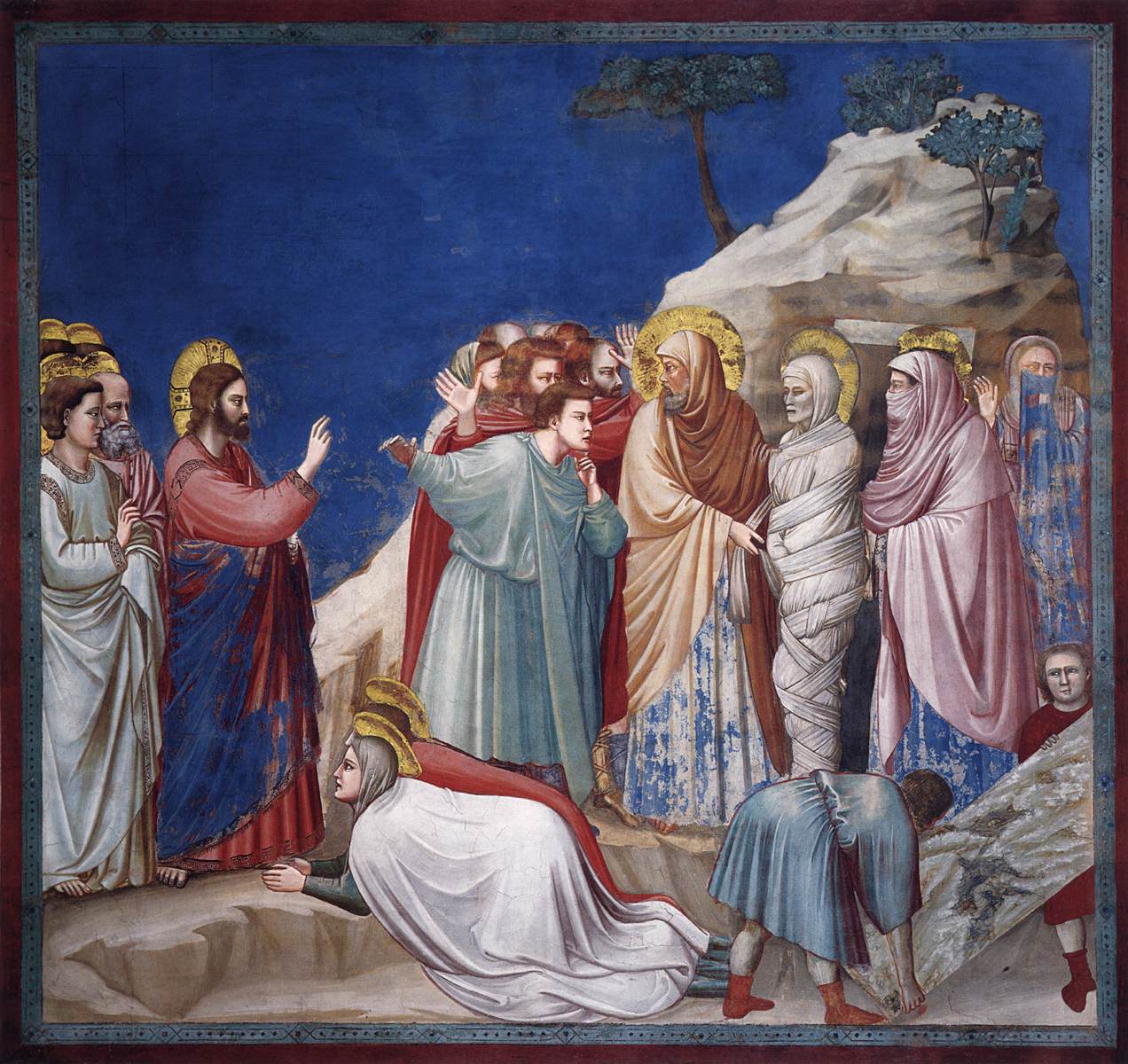
Leonardo da Vinci, The Last Supper, Santa Maria delle Grazie, Milan

Trinity IX – The God of Surprises

A surprise present or a visit from a loved one often brings great joy. One of the loveliest and yet most challenging aspects of Christianity is the fact that we worship a surprising God. Our Heavenly Father uses all sorts of people, and situations, in ways which we do not expect. The Christian journey is not always straightforward. The key is faith: trusting God to be at work, and knowing that everything will be good in the end.

In the Gospel, the people of Israel are like sheep without a shepherd. They feel let down and abandoned by their political and religious leaders. Such sentiments are widespread and understandable. However, there has been something of a religious revival in Galilee, and Our Lord has attracted quite a considerable following, numbering over five thousand people. After the proclamation of the Kingdom of God, the call to repentance and baptism, and some inspiring healing and teaching, people are excited. Prophecies are being fulfilled. The question on everyone’s lips is: Could this man really be the Messiah? 

Once again Jesus has taken His disciples across the See of Galilee for some rest and recuperation. However, the people’s need is great. They understand Christ’s healing miracles as a sign of the Kingdom, and they are keen to learn, and to be fed and nourished, both physically, and spiritually. Our Lord goes up onto higher ground and sits down. This makes perfect sense, especially as He is about to address the large number of people following Him. We should note the context. It is almost the Feast of Passover, the holiest day of the Jewish year, which marked their journey from slavery in Egypt to freedom in the Promised Land. The Passover was the time when people expected the Messiah to return, to lead the people to freedom. 

Then Jesus asks the disciple named Philip a question:

“Where are we to buy bread, so that these people may eat?”

“Ble y gallwn brynu bara i’r rhain gael bwyta?” (Jn 6:5)

Our Lord already knows the answer, but He wants to see what Philip thinks. The disciple replies:

“Two hundred denarii would not buy enough bread for each of them to get a little.”

“Ni byddai bara gwerth dau gant o ddarnau arian yn ddigon i roi tamaid bach i bob un ohonynt.” (Jn 6:7)

Two hundred denarii was over six months wages for a labourer. It is a large sum of money, which would buy a lot of food. Also feeding such a large crowd would be a logistical nightmare. Apart from the cost, there is the question of how you would get the food in the first place. Then Peter’s brother Andrew makes an intervention:

“There is a boy here who has five barley loaves and two fish, but what are they for so many?”

“Y mae bachgen yma a phum torth haidd a dau bysgodyn ganddo, ond beth yw hynny rhwng cynifer?” (Jn 6:9)

Andrew has a point: if £10,000 worth of food would only give people a mouthful, then a small bag full of food is a drop in an ocean of need. The situation appears to be an impossible one. Then Jesus acts.

Our Lord asks the people to sit down. There are five thousand men, and possibly another fifteen thousand women and children. Jesus takes the loaves and fishes, and blesses them. After thanking God for the food, He gives it to be distributed among the people. Not only does everyone eat as much as they want, but at the end there are twelve baskets of leftovers. It is through prayer and blessing that bread can be broken, distributed, and provide sustenance on a scale, and in a way, that defies human expectation and understanding. Not only are a huge number of people fed, but, as a sign of the super-abundance of God’s love and mercy, there is more left over at the end than there was to begin with! In the same way, the kingdom of God, of which the bread is a sign, grows when God’s love is shared. This love satisfies people’s deepest needs. The more we share it, the more there is. The Kingdom of God is a place of generosity and love, a place where our needs are answered and we are transformed.

John’s Gospel describes how Jesus takes, blesses, breaks and distributes bread, demonstrating how the Kingdom of God works. This looks forward to the Institution of the Eucharist by Jesus at the Last Supper.

The same miraculous feeding that took place by the shore of the Sea of Galilee will also happen here today. We gather as the people of God, united in love and faith, and offer ourselves. Like the small boy, we give the bread that we have, so that it may be taken, blessed, broken and given out. In this way we become partakers in the mystical supper of the Kingdom of God. We eat the Body of Christ not as ordinary food, but as bread for the journey of faith. The Eucharist is the sign and token of God’s love. This is the means by which we enjoy the close presence of God.

The crowd recognises the miraculous feeding as a sign, signifying God’s love, and the presence of the Messiah in their midst. In response they want to enact a political coup, and make Jesus a king. This is not what Our Lord wants, so He withdraws, to be alone, to be with God. The multiplication of the loaves and fishes shows us that God is active in the world, pouring out His generous love, meeting our needs, and healing our wounds. This is not the start of a political campaign. Christ does not want earthly power. Instead, He wants to reign in our hearts, and in our lives.

God uses barley bread — the bread of the poor — to feed His people. This points to the Eucharist and to the Cross as the place where humanity is nourished and healed. We follow Christ’s example week by week, because without Him, our hunger remains unsatisfied. 

Today and every day we give thanks that God loves us. He reveals His love in ways which often surprise us, and which defy our expectations. When we trust in Christ we are transformed in this life, and the next. We become prepared for Heaven, where we, and all the faithful, will sing the praises of God the Father, God the Son, and God the Holy Spirit. To whom be ascribed all glory, dominion, and power, now and forever. Amen.

James Tissot – The Multiplication of the Loaves and Fishes (Brooklyn Museum)

Trinity VIII – ‘Like Sheep without a Shepherd’

Most of us who drive around these parts are used to slowing down or swerving to avoid a sheep on the road. Whether it is the warm tarmac, or a tasty morsel nearby, sheep are happy to lie down or move without any thought of the cars around them. These animals are often characterised as being foolish, stubborn, and easily led. Sheep need shepherds, to keep them safe and healthy, to watch over them, and to protect them from danger. Sheep, therefore, may not, at first glance, be the most flattering metaphor to use for God’s people (both as the people of Israel and the Church) but they represent an ancient image, with deep resonance in Scripture. David, Israel’s second king, was taken from the sheep-folds, and God is described as a shepherd in Psalm 23: ‘The Lord is my shepherd’. This image speaks of a relationship of love and care, and of someone who protects us from harm, and who is willing to defend us at all costs. This points to Jesus: the Good Shepherd, who lays down his life for us on Calvary.

The first reading this morning is taken from the prophet Jeremiah, who is castigating the leaders of Israel. According to the prophet, they have failed to look after God’s people: 

“Woe to the shepherds who destroy and scatter the sheep of my pasture!” declares the Lord. 

“Gwae chwi fugeiliaid, sydd yn gwasgaru defaid fy mhorfa ac yn eu harwain ar grwydr,” medd yr Arglwydd (Jer 23:1)

The Kings and Priests of Israel are supposed to act as shepherds, and protect and care for their flock. But they are not true shepherds because they exercise power selfishly, driving away and destroying the sheep. Such leaders seek power for its own sake, to make themselves feel grand and important. They become cruel and selfish. These types of rulers do not care for the well-being of their people. Jeremiah then contrasts the leaders who fail to look after the people, with God who loves and cares for them.

“Then I will gather the remnant of my flock out of all the countries where I have driven them, and I will bring them back to their fold, and they shall be fruitful and multiply. I will set shepherds over them who will care for them, and they shall fear no more, nor be dismayed, neither shall any be missing,” declares the Lord.

“Yr wyf fi am gasglu ynghyd weddill fy mhraidd o’r holl wledydd lle y gyrrais hwy, a’u dwyn drachefn i’w corlan; ac fe amlhânt yn ffrwythlon. Gosodaf arnynt fugeiliaid a’u bugeilia, ac nid ofnant mwyach, na chael braw; ac ni chosbir hwy,” medd yr Arglwydd. (Jer 23:3-4)

The prophet then speaks of a future when God will ‘raise up for David a righteous branch’ ‘y cyfodaf i Ddafydd Flaguryn cyfiawn’ (Jer 23:5). This is understood as pointing to Jesus, the righteous King, sent by God to care for His people.

Meanwhile, in this morning’s Gospel, the disciples return to Jesus, after having been sent out  in pairs to preach, teach, and heal. Once they have told the Lord what they have done, He replies:

“Come away by yourselves to a desolate place and rest a while.”

“Dewch chwi eich hunain o’r neilltu i le unig a gorffwyswch am dipyn.” (Mk 6:31)

Jesus understands that for ministry to be effective there needs to be a balance between action, rest, and reflection. Otherwise, the disciples will end up exhausted, as their pastoral ministry is demanding:

‘For many were coming and going, and they had no leisure even to eat.’

‘Oherwydd yr oedd llawer yn mynd a dod, ac nid oedd cyfle iddynt hyd yn oed i fwyta.’ (Mk 6:32)

Clearly the apostles need time to rest and to have some food. They also need time to learn from Jesus, and to take care of the people. Our Lord takes them by boat to a secluded spot, but they are recognised, and crowds run to greet them. It looks like the situation is about to be repeated, when Jesus intervenes:

‘When he went ashore he saw a great crowd, and he had compassion on them, because they were like sheep without a shepherd. And he began to teach them many things.’

‘Pan laniodd Iesu gwelodd dyrfa fawr, a thosturiodd wrthynt am eu bod fel defaid heb fugail; a dechreuodd ddysgu llawer iddynt.’ (Mk 6:34)

Like sheep without a shepherd’ ‘fel defaid heb fugail’ these are people in great need. They have heard the proclamation of the Kingdom of God, and they come to learn more, to be healed, and to be fed and nourished. Christ recognizes their longings and ministers to them, giving His disciples an opportunity to eat and rest. Jeremiah’s prophecy is fulfilled by Our Lord, and the people of Israel are cared for. They are loved, and they are nourished. When their needs were not met by their political and religious leaders, they turn to Christ, the Good Shepherd, who looks after God’s people. 

On the Cross, the Good Shepherd lays down His life for His sheep. This sacrifice lies at the heart of St Paul’s message to the Ephesians in this morning’s second reading. Jesus gives humanity life through His suffering and death. On the night before He died He told us, His flock, what to do, so that God’s people might continue to be fed and nourished by Him, and with Him. Our Lord continues to care for us, because He loves us. God gives Himself to us, so that we might share in His life, and be transformed by His Grace, more and more into His likeness. 

So, my brothers and sisters in Christ, let us rejoice that we are nourished and cared for by the true Shepherd of our souls. Let us prepare for the banquet of the Kingdom, by allowing God’s grace to transform us. And let us sing the praises of God the Father, God the Son, and God the Holy Spirit. To whom be ascribed all glory, dominion, and power, now and forever. Amen.
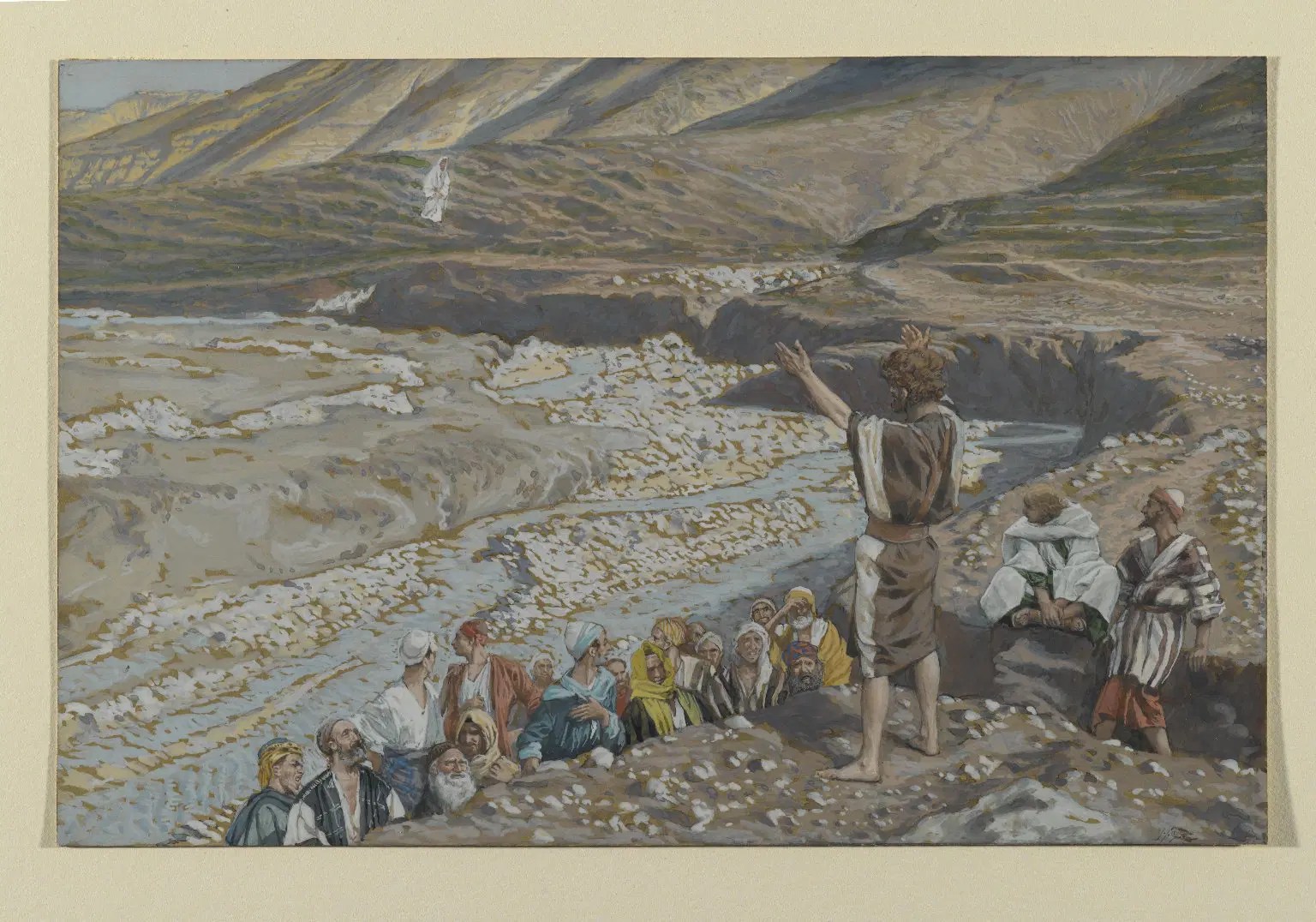
James Tissot – He sent them out two by two (Brooklyn Museum)

Trinity VI – The Importance of Prophetic Truth in Changing Times

One of the trickiest things to do is to tell someone something they don’t want to hear. Some things can be difficult to hear, and difficult to say. Honesty and truth are essential if we want to change and grow. In Ancient Israel, prophets were sent by God to speak the truth: to call people back and to tell them where they were going wrong. When the people of Israel rebelled against God, which is the definition of sin, prophets called God’s people to repentance. They urged them to turn back to the God who loves them, and longs for them to flourish. Sadly, such messages were not always heeded:

‘The descendants also are impudent and stubborn: I send you to them, and you shall say to them, ‘Thus says the Lord God.’ And whether they hear or refuse to hear (for they are a rebellious house) they will know that a prophet has been among them.’

‘At blant wynebgaled ac ystyfnig yr wyf yn dy anfon, ac fe ddywedi wrthynt, ‘Fel hyn y dywed yr Arglwydd DDUW.’ Prun bynnag a wrandawant ai peidio — oherwydd tylwyth gwrthryfelgar ydynt — fe fyddant yn gwybod fod proffwyd yn eu mysg.’ (Ezek 2:4-5)

This is the situation which we encounter in today’s Gospel. As part of His Galilean ministry Our Lord goes to Nazareth, and teaches in the synagogue. In Luke’s account we hear Jesus reading from Isaiah:

“The Spirit of the Lord is upon me, because he has anointed me to proclaim good news to the poor. He has sent me to proclaim liberty to the captives and recovering of sight to the blind, to set at liberty those who are oppressed, to proclaim the year of the Lord’s favour.”

“Y mae Ysbryd yr Arglwydd arnaf, oherwydd iddo f’eneinio i bregethu’r newydd da i dlodion. Y mae wedi f’anfon i gyhoeddi rhyddhad i garcharorion, ac adferiad golwg i ddeillion, i beri i’r gorthrymedig gerdded yn rhydd, i gyhoeddi blwyddyn ffafr yr Arglwydd.” (Lk 4:18-19)

Clearly hearing such a prophecy and then being told that it was being fulfilled among them would be quite shocking. The people had spent five hundred years waiting for a Messiah, and now, suddenly, here he was. The worshippers in the synagogue are unwilling, or unable, to understand what is going on, so they say:

“Where did this man get these things? What is the wisdom given to him? How are such mighty works done by his hands? Is not this the carpenter, the son of Mary and brother of James and Joses and Judas and Simon? And are not his sisters here with us?” And they took offence at him.

“O ble y cafodd hwn y pethau hyn? A beth yw’r ddoethineb a roed i hwn, a’r fath weithredoedd nerthol sy’n cael eu gwneud trwyddo ef? Onid hwn yw’r saer, mab Mair a brawd Iago a Joses a Jwdas a Simon? Ac onid yw ei chwiorydd yma gyda ni?” Yr oedd ef yn peri tramgwydd iddynt. (Mk 6:2-3)

The inhabitants of Nazareth cannot reconcile the healer and teacher with the person they have seen growing up among them. Hence they stress Our Lord’s trade and family relationships. They cannot recognise the Messiah in their midst. The Nazarenes understand Christ’s human nature, but cannot see that He is divine. 

Jesus understands that a prophet is without honour among his own people. Those who think they know Him well, fail to discern what God is doing through Him. They may reject Christ, but He does not reject them. 

‘And he could do no mighty work there, except that he laid his hands on a few sick people and healed them.’

‘Ac ni allai wneud unrhyw wyrth yno, ond rhoi ei ddwylo ar ychydig gleifion a’u hiacháu.’ (Mk 6:5)

The Good News of the Kingdom is proclaimed, and healings take place. God’s love is poured out even where He is not welcomed, because God loves us, and has come to heal our wounds. Even when we turn our back on Him, Our Heavenly Father does not spurn us. The work of the Kingdom must continue:

‘And he marvelled because of their unbelief. And he went about among the villages teaching.’

‘Rhyfeddodd at eu hanghrediniaeth. Yr oedd yn mynd o amgylch y pentrefi dan ddysgu.’ (Mk 6:6)

Those who in theory should know Him best, who have known Jesus all His life, are the ones who turn their back on Him. Our Lord is amazed at their hardness of heart. He faces exactly what Ezekiel faced before Him. So Jesus continues to heal and teach, even though some do not hear, and do not believe. To those who do, Christ offers love, healing and New Life. He offers Himself in the Eucharist, so that we may have life in all its fulness.

We know who and what Jesus is. Many in the world around us reject Christ, rather like the people of Nazareth, or fail to accept Him as true God and true man. They doubt who He was, what He did, and what He said. Our duty, as Christians, is to tell people about Jesus, praying that they will want to believe. We need to model the Christian life, remembering that all things are possible — God can will do amazing things, especially when we cooperate with Him. 

Our country is currently experiencing a new start, a re-boot after the election. We pray for those who have been elected to office that they will govern with wisdom and compassion. May we too take this opportunity to re-boot and re-energise our life of faith, and shine as beacons of hope in our community and world. May we join with all creation and give glory to God the Father, God the Son, and God the Holy Spirit. To whom be ascribed all glory, dominion, and power, now and forever. Amen.
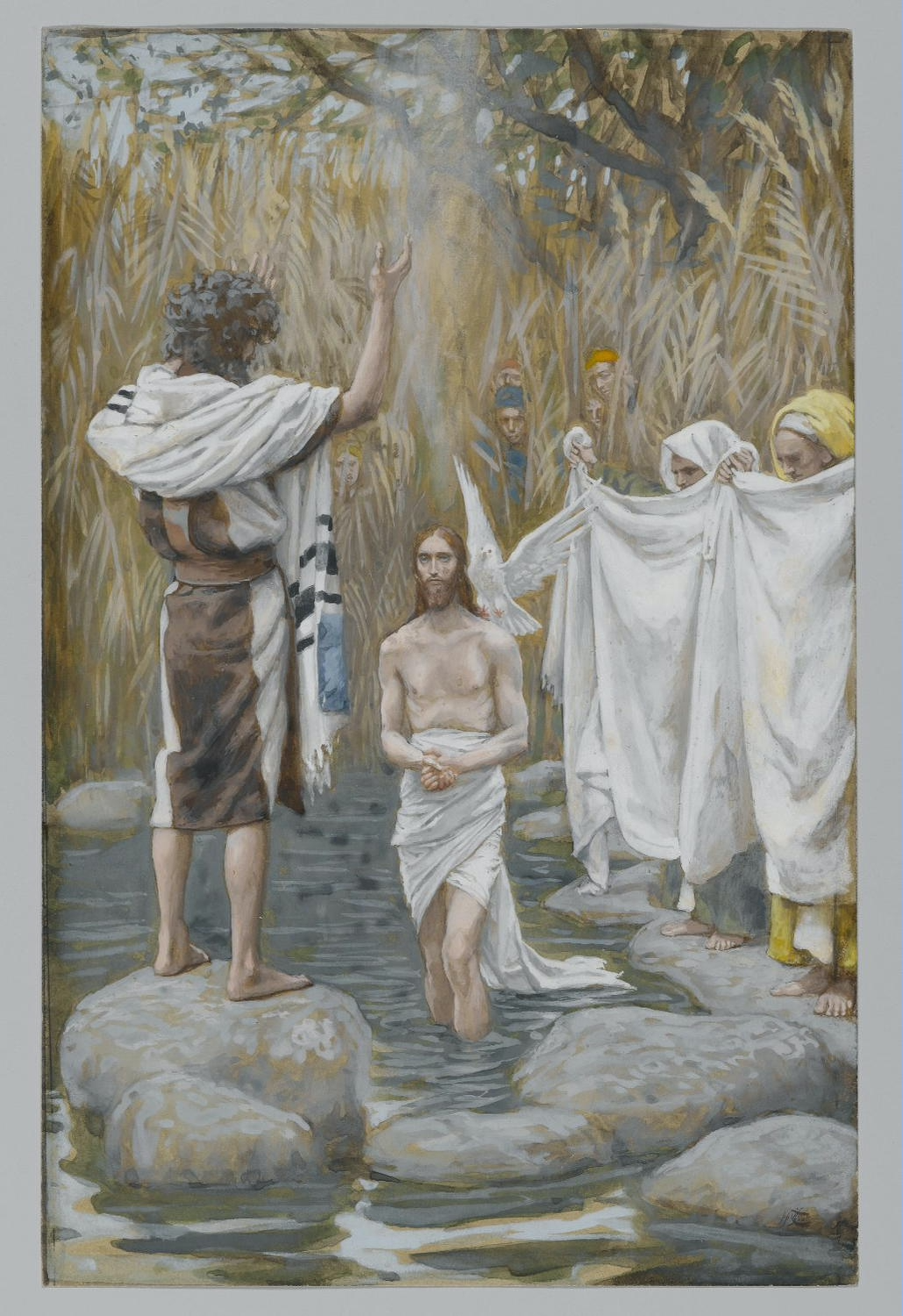
James Tissot: Jésus dans la synagogue déroule le livre [Brooklyn Museum]

Trinity V: Jesus our healer

There are, as we all know, few things in life worse than when someone we love is seriously ill. We do everything we possibly can to help, but often there is not much that we can do. However, when we feel powerless and desperate, and need help, we can turn to God in prayer. The Kingdom of God, proclaimed and inaugurated by Jesus Christ is a place of true healing, and through our relationship with Jesus we can seek wholeness for ourselves and for those close to us. This is why the Gospels contain healing miracles. These miraculous accounts are signs of God’s restoration of creation through His Son, something which will culminate with Christ’s Passion, Death, and Resurrection, and through which our human nature is healed.

In today’s Gospel Jesus and the disciples have sailed back across the Sea of Galilee to the Jewish side. On their arrival they are greeted by the leader of a local synagogue whose daughter is close to death. Jairus longs for his child to be healed, and asked Jesus to place His hands on her, so that she might be saved and live.

While Jesus is walking to Jairus’ house to heal his daughter, another miracle takes place. Lots of people are following, which is understandable since Jesus is a charismatic preacher and teacher, who heals people. In the crowd is a woman with a serious gynaecological complaint. Two people need healing, and while Our Lord is on His way to heal one female in need, another seizes the opportunity to be cured.

This woman is desperate, because she has suffered bleeding for twelve years. In Jewish ritual terms she would be classed as unclean. She would have been unable to join in worship, and would be seen as someone to avoid. Also, she would not have been able to bear children. Despite all her efforts and attempts to find a cure she had only got worse, even though she had spent all the money she possessed. The presence of this miraculous healer was the answer to her prayers. She had heard about the Saviour, and said to herself:

“If I touch even his garments, I will be made well.”

“Os cyffyrddaf hyd yn oed â’i ddillad ef, fe gaf fy iacháu.” (Mk 5:28)

This woman has faith. She believes that Jesus can heal her, and she puts her trust in Him to do what the physicians could not achieve. Our Lord notices that someone has touched His garments. He realizes that this was not simply someone brushing past, but something important. His disciples, not aware of what has happened, try to put this down to the press of the crowd. Then the woman, who has been healed, comes forward:

‘But the woman, knowing what had happened to her, came in fear and trembling and fell down before him and told him the whole truth. And he said to her, “Daughter, your faith has made you well; go in peace, and be healed of your disease.”’ 

‘Daeth y wraig, dan grynu yn ei braw, yn gwybod beth oedd wedi digwydd iddi, a syrthiodd o’i flaen ef a dweud wrtho’r holl wir. Dywedodd yntau wrthi hi, “Ferch, y mae dy ffydd wedi dy iacháu di. Dos mewn tangnefedd, a bydd iach o’th glwyf.”’ (Mk 5:33-34)

The woman comes ‘in fear and trembling’ not because she is afraid of Jesus, but because it is the proper way for humans to act in the presence of God. She is filled with awe at her experience of divine healing. Jesus’ reply is astounding for several reasons. The fact that He responds at all is noteworthy. Talking to a woman who was not a member of your family was frowned upon, let alone a woman who is viewed as being ritually unclean and an outcast. Jesus is breaking a social taboo. He also addresses her as ‘daughter’, a reminder that Jesus’ family are not just those related to Him in earthly terms, but all those who do God’s will. This unnamed woman is a daughter of God and her faith has healed her. She trusted God to do what the physicians could not. Faith is the route to salvation and healing, by trusting God to be at work. Now the woman can go in peace, because she has been restored to health. Peace is God’s gift to us, that we may experience wholeness. Jesus underlines that what has happened is not a temporary healing, but a permanent state of affairs.

While Jesus is still speaking to the woman, messengers come to give Jairus some bad news:

“Your daughter is dead. Why trouble the Teacher any further?”

“Y mae dy ferch wedi marw; pam yr wyt yn poeni’r Athro bellach?” (Mk 5:35)

The situation is hopeless, and in their eyes there is nothing that Jesus can do. Thankfully, Our Lord has other ideas:

‘But overhearing what they said, Jesus said to the ruler of the synagogue, “Do not fear, only believe.”’

‘Ond anwybyddodd Iesu y neges, a dywedodd wrth arweinydd y synagog, “Paid ag ofni, dim ond credu.”’ (Mk 5:36)

Instead of being afraid Jairus needs to believe that God will save his daughter. The synagogue leader has already demonstrated his faith by prostrating himself before Jesus and asking for healing. Now, in the face of his daughter’s apparent demise, Jairus must trust God to be at work. When Jesus arrives at the house a second miracle takes place: 

‘Taking her by the hand he said to her, “Talitha cumi”, which means, “Little girl, I say to you, arise.”’

‘Ac wedi gafael yn llaw’r plentyn dyma fe’n dweud wrthi, “Talitha cŵm,” sy’n golygu, “Fy ngeneth, rwy’n dweud wrthyt, cod.”’ (Mk 5:41)

Note the fact that Jesus takes the girl by the hand. AT the time of Jesus, touching a dead body would make a person ritually impure. This is why the priest and Levite in the Parable of the good Samaritan pass by on the other side, for fear of being made unclean by being in contact with a dead person. Jesus disregards the taboo of uncleanness, and speaks to the girl. He addresses her in Aramaic, her mother tongue, and says “Talitha cumi” literally: ‘little lamb, get up’ ‘oen bach codwch’. This is a term of endearment which also reminds us that Christ is the Good Shepherd who cares for His lambs, keeping them safe, and saving them from death. 

The people who are present — Jairus and his wife, Peter, James and John — are all amazed. They are filled with awe, with holy fear at witnessing the mighty works of God. Finally, Jesus tells her parents to give the girl something to eat, which shows us the reality of her resuscitation. This also points towards the feast of the Kingdom, which we hope to enjoy in Heaven, and which is prefigured in the Eucharist. In physical and spiritual communion, Christ gives Himself to feed us. Through His Body and Blood He heals our bodies and our souls, and assures us of eternal life.

As we care for and pray for those close to us who are ill we give thanks that God loves us, and heals us. Through faith, wonderful things can, and do, happen. May our worship today be a foretaste of Heaven, where all are healed. Let us join with Saints and Angels to sing the praises of God the Father, God the Son, and God the Holy Spirit. To whom be ascribed all glory, dominion, and power, now and forever. Amen.
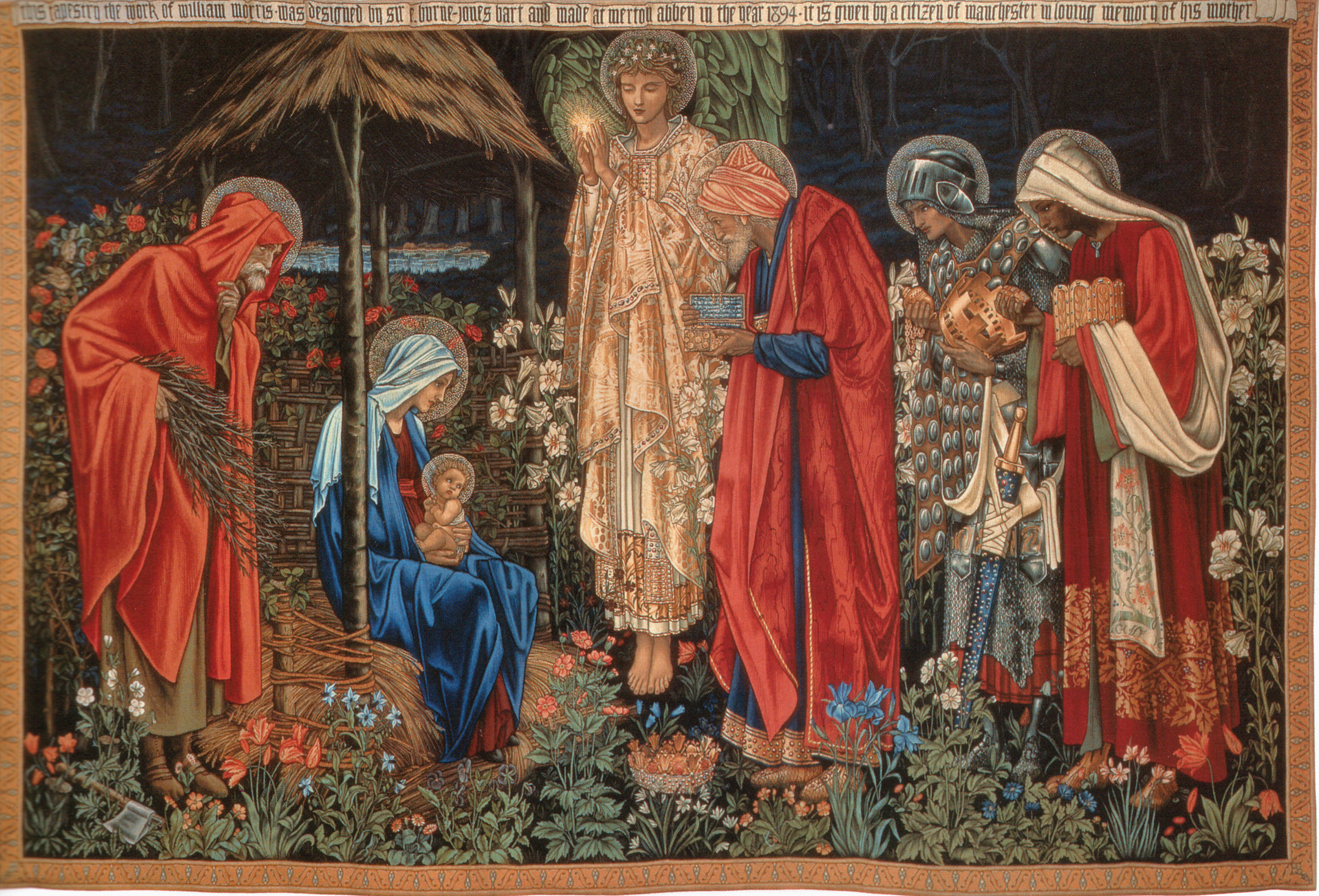
James Tissot Jairus’ Daughter (Brooklyn Museum)

Trinity II: ‘Who are my mother and my brothers?’

I grew up listening to the music of the 1960s and 1970s. The large size of an LP record sleeve is a great vehicle for artwork, and photography in particular. The shots are often in soft focus, giving the subjects a gentle dreamlike quality. It can be easy to think that the whole of Our Lord’s ministry was gentle and easy, especially because of how it is shown in Victorian religious art. However, today’s Gospel shows us that this was not always the case. As the passage begins there are so many people gathered around Jesus that He and His disciples are not even able to eat. People are desperate to hear what He has to say, they are desperate for healing. While their need is great, without rest and refreshment, there is no way that Christ can minister to them effectively in the long term without taking care of himself. 

We can have a lot of sympathy for Our Lord’s family, who are genuinely concerned for His wellbeing and that of His friends. They want to take care of His physical needs, as Jesus seems to be prioritising God’s people over Himself.

The religious authorities, however, have a completely different understanding of what is going on:

‘And the scribes who came down from Jerusalem were saying, “He is possessed by Beelzebul,” and “by the prince of demons he casts out the demons.”’

‘A’r ysgrifenyddion hefyd, a oedd wedi dod i lawr o Jerwsalem, yr oeddent hwythau’n dweud, “Y mae Beelsebwl ynddo”, a, “Trwy bennaeth y cythreuliaid y mae’n bwrw allan gythreuliaid.”’ (Mk 3:22)

The scribes understand the actions of this charismatic healer and teacher from Galilee as being the result of demonic possession. This is another way of saying, ‘Jesus is a fraud’ and ‘This isn’t the work of God’. Their attempt to write Christ off not only flies in the face of the evidence, but also does not follow through logically. Jesus challenges them saying: 

“How can Satan cast out Satan? If a kingdom is divided against itself, that kingdom cannot stand. And if a house is divided against itself, that house will not be able to stand. And if Satan has risen up against himself and is divided, he cannot stand, but is coming to an end.” 

“Pa fodd y gall Satan fwrw allan Satan? Os bydd teyrnas yn ymrannu yn ei herbyn ei hun, ni all y deyrnas honno sefyll. Ac os bydd tŷ yn ymrannu yn ei erbyn ei hun, ni all y tŷ hwnnw sefyll. Ac os yw Satan wedi codi yn ei erbyn ei hun ac ymrannu, ni all yntau sefyll; y mae ar ben arno.”(Mk 3:23-26)

If Jesus is possessed by the Devil, how can He cast the Devil out? His accusers have failed to see the spirit of God, the Holy Spirit, at work in Christ. The scribes refusal to see God at work is a sign of their pride and hardness of heart. They cannot discern the works of God, and write off as evil a wondrous demonstration of God’s love for humanity. The religious authorities have failed to discern what is actually going on, and have taken the easy step of finding someone to blame, someone to write off. God’s healing love is being dismissed as the work of the Devil. This is a serious matter, as Jesus explains:

“Truly, I say to you, all sins will be forgiven the children of man, and whatever blasphemies they utter, but whoever blasphemes against the Holy Spirit never has forgiveness, but is guilty of an eternal sin”— for they were saying, “He has an unclean spirit.”

“Yn wir, rwy’n dweud wrthych, maddeuir popeth i blant y ddaear, eu pechodau a’u cableddau, beth bynnag fyddant; ond pwy bynnag a gabla yn erbyn yr Ysbryd Glân, ni chaiff faddeuant byth; y mae’n euog o bechod tragwyddol.” Dywedodd hyn oherwydd iddynt ddweud, “Y mae ysbryd aflan ynddo.” (Mk 3:28-30)

The scribes have condemned themselves. Whereas they have accused Jesus of blasphemy, they are in fact the blasphemers. Jesus does not condemn them, but rather offers humanity the forgiveness of sins. This is another demonstration of God’s love being poured out on the world. The Kingdom of God is a place of healing and restoration.

Our Lord then has a confrontation with His relatives, which leads to a profound moment of teaching. When the crowd tell him that His family are outside, He answers, “Who are my mother and my brothers?””Pwy yw fy mam i a’m brodyr?” (Mk 3:33). Then, looking round, He says: ‘Here are my mother and my brothers!’ ‘Dyma fy mam a’m brodyr i’ (Mk 3:34). 

Family was, and continues to be, important, for Jews juke like it is for people in general. The family unit is the basic building block of society. But Our Lord points out that ties of kinship are less important than humanity’s relationship with God. In our baptism, we all became brothers and sisters in Christ. The Church is our family, which calls us to live in a new way with each other, a way defined by love, and not the exercise of power or control. God offers us healing and wholeness, the forgiveness of our sins, so that we can be in a new relationship both with God and with each other.

The Church comes together as a family to experience forgiveness and to be nourished by Word and Sacrament in the Eucharist. This is the most profound and meaningful thing we, as human beings, can do together. It gives us a foretaste of the joy of Heaven. In it we are fed by God, and with God. God gives himself for us, so that we might have life in Him. 

Let us therefore come and be nourished. Let us invite others to become part of God’s family. Joining with Christians throughout the world, may we sing the praises of God the Father, God the Son, and God the Holy Spirit. To whom be ascribed all glory, dominion, and power, now and forever. Amen.
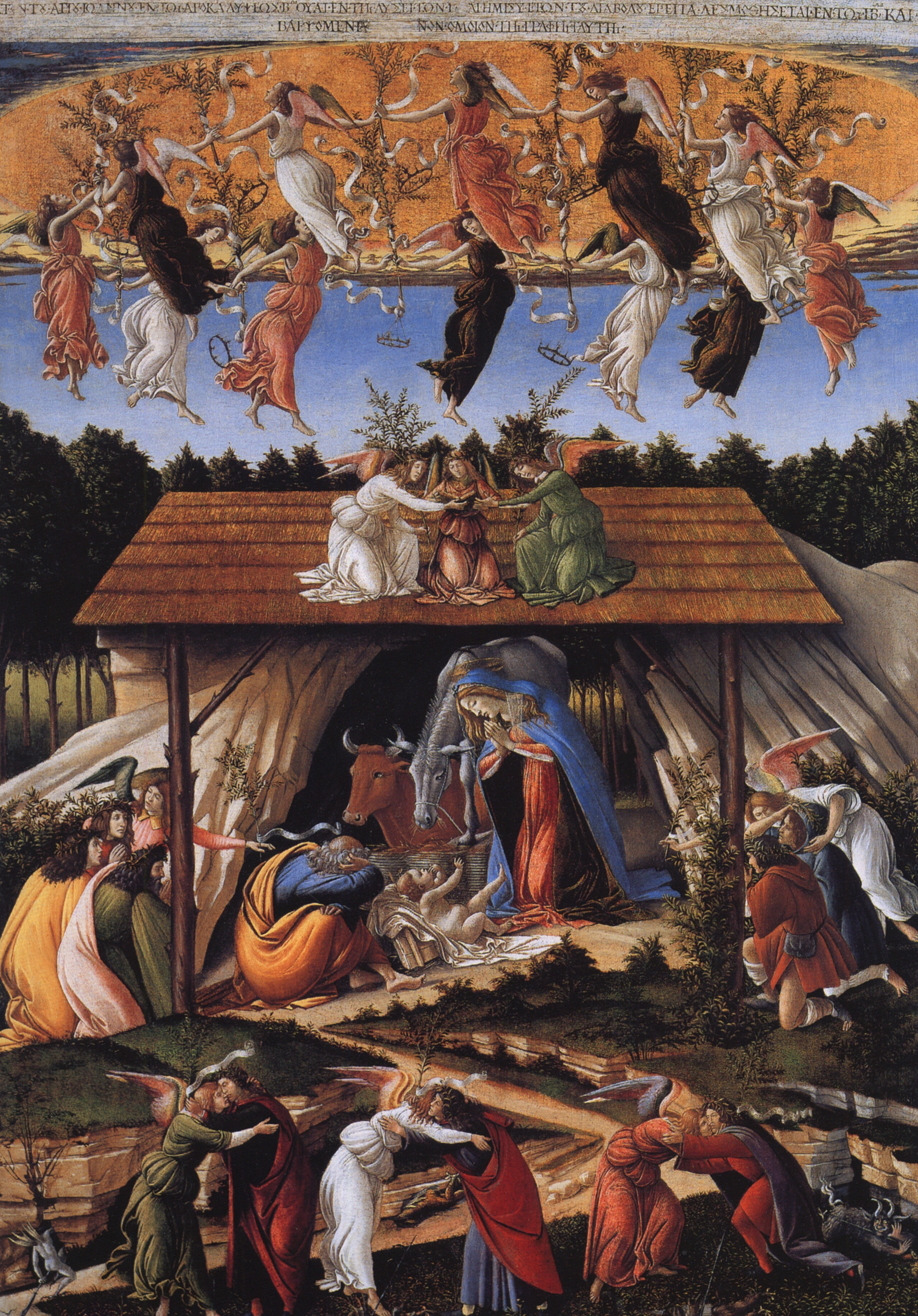
James Tissot Jesus Commands the Apostles to Rest (Brooklyn Museum)

Trinity I

THE novel by Robert Llewellyn —‘How green was my valley’ — reached millions through its 1941 film adaptation by John Ford. Telling the story of a family in a South Wales mining community, it criticises the unjust labour practises of the early twentieth century. Earlier in 1887 the historian Lord Acton wrote to the Professor of Ecclesiastical History at the University of Cambridge, saying that, ‘Power tends to corrupt, and absolute power corrupts absolutely.’ While this maxim now tends to be applied generally, it was originally a comment on religious institutions in general, and the medieval Papacy in particular. The truth of this statement is a reflection on our fallen human nature.

In the Gospels we often see Our Lord come into conflict with the Scribes, Priests, and Pharisees. These religious leaders are depicted as being more concerned with power and prestige than with the worship of Almighty God. If Religion is important then there will be a status attached to its ministers. They, therefore, have a responsibility to use this status for good, and to bring people closer to God.

In today’s Gospel it is the Sabbath, a day of rest. Jesus and His disciples are travelling, and the Pharisees notice that some of them have plucked ears of corn to eat. The Pharisees ask Our Lord:

‘Look, why are they doing what is not lawful on the Sabbath?’

‘Edrych, pam y maent yn gwneud peth sy’n groes i’r Gyfraith ar y Saboth?’  (Mk 2:24)

Jews are forbidden from doing any work on Sabbath, and the harvesting of grain, no matter how little, counts as work. This appears to be a clear-cut case, but Jesus replies as follows:

‘Have you never read what David did, when he was in need and was hungry, he and those who were with him: how he entered the house of God, in the time of Abiathar the high priest, and ate the bread of the Presence, which it is not lawful for any but the priests to eat, and also gave it to those who were with him?’

‘Onid ydych chwi erioed wedi darllen beth a wnaeth Dafydd, pan oedd mewn angen, ac eisiau bwyd arno ef a’r rhai oedd gydag ef? Sut yr aeth i mewn i dŷ Dduw, yn amser Abiathar yr archoffeiriad, a bwyta’r torthau cysegredig nad yw’n gyfreithlon i neb eu bwyta ond yr offeiriaid; ac fe’u rhoddodd hefyd i’r rhai oedd gydag ef?’ (Mk 2:25-26)

This story is recounted in 1Samuel 21:1-7. By referring to it Our Lord is making the point that if David’s actions were acceptable, then why is such a fuss being made about the disciples plucking a few ears of corn. Jesus underlines this by pointing out that:

‘The Sabbath was made for man, not man for the Sabbath’

‘Y Saboth a wnaethpwyd er mwyn dyn, ac nid dyn er mwyn y Saboth’ (Mk 2:27)

The legalism of the Pharisees has led them to forget what the Sabbath is really about: rest. The point of having a Sabbath is to ensure that people have a day of rest. Instead this day has become bound up with rules and observances which neither honour God, nor encourage humanity to rest. 

Jesus and His disciples arrive at a synagogue where there is a man with a withered hand. Clearly this is another opportunity for the legalism of the Pharisees to come to the fore.

‘And they watched Jesus, to see whether he would heal him on the Sabbath, so that they might accuse him.’

‘Ac yr oeddent â’u llygaid arno i weld a fyddai’n iacháu’r dyn ar y Saboth, er mwyn cael cyhuddiad i’w ddwyn yn ei erbyn.’ (Mk 3:2)

Rather than rejoicing that God has performed a miracle, and that a man with a disability has been healed, all the Pharisees can see is an opportunity to complain about rule-breaking, and to bring an accusation against Jesus. Our Lord calls the man to Him, and says to the Pharisees:

‘Is it lawful on the Sabbath to do good or to do harm, to save life or to kill?’

‘A yw’n gyfreithlon gwneud da ar y Saboth, ynteu gwneud drwg, achub bywyd, ynteu lladd?’ (Mk3:4)

They give no reply because they know that in order to save a life one may break every rule regarding the observance of the Sabbath. Jesus’ knowledge and interpretation of Jewish Scripture and Law is superior to theirs. Our Lord then asks the man to stretch out his hand, and he is miraculously healed. No law has been broken. Instead someone who was suffering, and who was probably shunned and made an outcast in society, has been cured and brought back into the fold of the community. God’s power to heal and restore humanity has been displayed. The Kingdom of God has been announced in deed.  

The response of the religious authorities is telling. Do they rejoice at this miracle? The answer is definitely no.

‘The Pharisees went out and immediately held counsel with the Herodians against him, how to destroy him.’

‘Ac fe aeth y Phariseaid allan ar eu hunion a chynllwyn â’r Herodianiaid yn ei erbyn, sut i’w ladd.’ (Mk 3:6)

The Pharisees have formed an alliance with a priestly party, keen on political independence. Both sides share a common aim — to get rid of Jesus. This is because He represents a threat to their power. Our Lord’s words and actions are understood by the Pharisees as an assault on their privileged position, with their innate goodness being ignored. From the start of His public ministry, Christ faces opposition from people who want Him dead. They think that they can destroy Jesus, and that will be the end of the matter, whereas it will only be the beginning. Our Lord will die on a Cross, but will be raised to new life at Easter. Calvary and the Empty Tomb are the salvation of humanity, part of God’s plan.

As Christians we gather on the Lord’s Day, the first day of the week, to celebrate Christ’s Death and Resurrection. By means of the Eucharist, we do that which Jesus commanded us to do until He comes again. For one hundred thousand successive Sundays the faithful have gathered to share in Holy Communion, because it matters, it is important. We are fed with the Bread of Angels, with the Body and Blood of Christ, so that we may be healed and given a foretaste of Heaven.

So, my brothers and sisters, let us rejoice in the healing salvation of Christ. Let us proclaim the Good News, so that all people may come to know, and love, God the Father, God the Son, and God the Holy Spirit. To whom be ascribed all glory, dominion, and power, now and forever. Amen.

James Tissot – The Man with a withered hand (Brooklyn Museum)
Tissot: The Disciples Eat Wheat on the Sabbath (Brooklyn Museum)

An Easter Homily ascribed to St John Chrysostom [PG 59: 721-4]

Εἴ τις εὐσεβὴς καὶ φιλόθεος, ἀπολαυέτω τῆς καλῆς ταύτης πανηγύρεως· εἴ τις δοῦλος εὐγνώμων, εἰσελθέτω χαίρων εἰς τὴν χαρὰν τοῦ Κυρίου αὐτοῦ· εἴ τις ἔκαμενηστεύων, ἀπολαβέτω νῦν τὸ δηνάριον· εἴ τις ἀπὸ πρώτης ὥρας εἰργάσατο, δεχέσθω σήμερον τὸ δίκαιον ὄφλημα· εἴ τις μετὰ τὴν τρίτην ἦλθεν, εὐχαριστῶν ἑορτάσῃ· εἴ τις μετὰ τὴν ἕκτην ἔφθασε, μηδὲν ἀμφιβαλλέτω· καὶ γὰρ οὐδὲν ζημιοῦται· εἴ τις ὑστέρησεν εἰς τὴν ἐννάτην, προσελθέτω μηδὲν ἐνδοιάζων· εἴ τις εἰς μόνην ἔφθασε τὴν ἑνδεκάτην, μὴ φοβηθῇ τὴν βραδυτῆτα. Φιλότιμος γὰρ ὢν ὁ Δεσπότης δέχεται τὸν ἔσχατον, καθάπερ καὶ τὸν πρῶτον· ἀναπαύει τὸν τῆς ἑνδεκάτης,ὡς τὸν ἐργασάμενον ἀπὸ τῆς πρώτης· καὶ τὸν ὕστερον ἐλεεῖ, καὶ τὸν πρῶτον θεραπεύει· κἀκείνῳ δίδωσι, καὶ τούτῳ χαρίζεται. Καὶ τὴν πρᾶξιν τιμᾷ, καὶ τὴν πρόθεσιν ἐπαινεῖ. Οὐκοῦν εἰσέλθητε πάντες εἰς τὴν χαρὰν τοῦ Κυρίου ἡμῶν, καὶ πρῶτοι καὶ δεύτεροι τὸν μισθὸν ἀπολάβετε, πλούσιοι καὶ πένητες μετὰ ἀλλήλων χορεύσατε, ἐγκρατεῖς καὶ ῥᾴθυμοι τὴν ἡμέραν τιμήσατε, νηστεύσαντες καὶ μὴ νηστεύσαντες εὐφράνθητε σήμερον. Ἡ τράπεζα γέμει, τρυφήσατε πάντες· ὁ μόσχος πολὺς, μηδεὶς ἐξέλθοι πεινῶν. Πάντες ἀπολαύσατε τοῦ πλούτου τῆς χρηστότητος. Μηδεὶς θρηνείτω πενίαν· ἐφάνη γὰρ ἡ κοινὴ βασιλεία· μηδεὶς ὀδυρέσθω τὰ πταίσματα· συγγνώμη γὰρ ἐκ τοῦ τάφου ἀνέτειλε· μηδεὶς φοβείσθω τὸν θάνατον· ἠλευθέρωσε γὰρ ἡμᾶς ὁ τοῦ Σωτῆρος θάνατος· ἔσβεσεν αὐτὸν ὑπ’ αὐτοῦ κατεχόμενος· ἐκόλασε τὸν ᾅδην κατελθὼν εἰς τὸν ᾅδην· ἐπίκρανεν αὐτὸν γευσάμενον τῆς σαρκὸς αὐτοῦ. Καὶ τοῦτο προλαβὼν Ἡσαΐας ἐβόησεν· Ὁ ᾅδης, φησὶν, ἐπικράνθη. Συναντήσας σοι κάτω ἐπικράνθη· καὶ γὰρ καθῃρέθη· ἐπικράνθη· καὶ γὰρ ἐνεπαίχθη. Ἔλαβε σῶμα, καὶ Θεῷ περιέτυχεν· ἔλαβε γῆν, καὶ συνήντησεν οὐρανῷ· ἔλαβεν ὅπερ ἔβλεπε, καὶ πέπτωκεν ὅθεν οὐκ ἔβλεπε. Ποῦ σου, θάνατε, τὸ κέντρον; ποῦ σου, ᾅδη, τὸ νῖκος; Ἀνέστη Χριστὸς, καὶ σὺ καταβέβλησαι· ἀνέστη Χριστὸς, καὶ πεπτώκασι δαίμονες· ἀνέστη Χριστὸς, καὶ χαίρουσιν ἄγγελοι· ἀνέστη Χριστὸς, καὶ νεκρὸς οὐδεὶς ἐπὶ μνήματος. Χριστὸς γὰρ ἐγερθεὶς ἐκ νεκρῶν, ἀπαρχὴ τῶν κεκοιμημένων ἐγένετο· αὐτῷ ἡ δόξα καὶ τὸ κράτος εἰς τοὺς αἰῶνας τῶν αἰώνων. Ἀμήν.

If anyone is a devout lover of God, let them rejoice in this beautiful radiant feast. If anyone is a faithful servant, let them gladly enter into the joy of their Lord. If any are wearied with fasting, let them now reap their reward. If any have laboured since the first hour, let them receive today their just reward. If any have come after the third hour, let them celebrate the feast with thankfulness. If any have arrived after the sixth hour, let them not doubt, for they will sustain no loss. If any have delayed until the ninth hour, let them not hesitate but draw near. If any have arrived at the eleventh hour, let them not fear their lateness. For the Master is gracious and welcomes the last no less than the first. He gives rest to those who come at the eleventh hour just as kindly as those who have laboured since the first hour. The first he fills to overflowing: on the last he has compassion. To the one he grants his favour, to the other pardon. He does not look only at the work: he looks into the intention of the heart. Enter then, all of you, into the joy of your Master. First and Last, receive alike your reward. Rich and poor dance together. You who have fasted and you who have not, rejoice today. The table is fully laden: let all enjoy it. The fatted calf is served: let no-one go away hungry. Come all of you, share in the banquet of faith: draw on the wealth of his mercy. Let no-one lament their poverty; for the universal kingdom has been revealed. Let no-one weep for their sins; for the light of the forgiveness has risen from the grave. Let no-one fear death; for the death of the Saviour has set us free. He has destroyed death by undergoing hell. He has despoiled hell by descending into hell. Hell was filled with bitterness when it tasted his flesh, as Isaiah foretold: ‘Hell was filled with bitterness when it met you face-to-face below’ – filled with bitterness, for it was brought to nothing; filled with bitterness, for it was mocked; filled with bitterness, for it was overthrown; filled with bitterness, for it was destroyed; filled with bitterness, for it was put in chains. It received a body, and encountered God. It received earth, and confronted heaven. It received what it saw, and was overpowered by what it did not see. O death, where is your sting? O hell, where is your victory? Christ is risen, and the demons are fallen. Christ is risen, and the angels rejoice. Christ is risen, and life reigns in freedom. Christ is risen, and the grave is emptied of the dead. For Christ being raised from the dead has become the first-fruits of those who sleep. To him be glory and dominion to the ages of ages. Amen.

Maundy Thursday 2024

To those of us living in cold northern climes, the idea of foot-washing is strange. However, if we lived in the Middle East it would not be. In hot and dusty parts of the world, if you wear sandals, your feet will get hot, tired, and dirty. In the time of Jesus, to wash a visitor’s feet was a sign of hospitality, and was usually something done by a servant. For a host or householder to do the foot-washing themselves was a sign both of humility and the importance of those being welcomed. Tonight Christ washes our feet. We are all guests at the Lord’s Supper, where Jesus institutes the Eucharist on the night before He suffers and dies.

St Paul’s First Letter to the Corinthians (our Second Reading tonight) was written about twenty years after Christ’s Death and Resurrection. This is the earliest account we possess of what happened on this night. Paul describes how Our Lord blesses bread and wine and feeds his followers. Jesus also explains what He is doing, saying, ‘This is my Body … This is my Blood’ ‘hwn yw fy nghorff … hwn yw fy ngwaed’. These words are repeated whenever the Eucharist is celebrated because Our Lord told us to ‘Do this’ ‘gwnewch hyn’, and so we do. We are fed by Christ, fed with Christ, both to proclaim His Death, but also to share His New Life. This is no ordinary meal, but rather a proclamation of God’s saving work.

At the Last Supper Jesus takes on the role of a servant, the Teacher washes His disciples’ feet, and feeds them with Himself. These acts of humility and generosity, help to bring the Christian Church into being. It starts here, tonight. This is why the Church commemorates it every year, both to remind us where we have come from, and where we are going. This is the Wedding Banquet of the Lamb, the Heavenly Feast of the Kingdom to which all people are invited. 

God (through me) washes our feet, kneeling on the floor, and wipes them with a towel. This is something that is both humble and utterly wonderful. Jesus gives us an example of loving service: this is what the Church is supposed to be. Those in positions of Christian leadership are called to be shepherds in the service of God’s people. Likewise, as Christ’s followers, we are all called to serve each other. As Jesus said:

‘If I then, your Lord and Teacher, have washed your feet, you also ought to wash one another’s feet. For I have given you an example, that you also should do just as I have done to you.’

‘Os wyf fi, felly, a minnau’n Arglwydd ac yn Athro, wedi golchi eich traed chwi, fe ddylech chwithau hefyd olchi traed eich gilydd. Yr wyf wedi rhoi esiampl i chwi; yr ydych chwithau i wneud fel yr wyf fi wedi ei wneud i chwi. ’ (Jn 13:14-15)

We follow Christ’s example. In the same way we celebrate the Eucharist because Christ told us to ‘do this’ ‘gwnewch hyn’ and so Christians have for nearly two thousand years, and we will continue to do so until Our Lord comes again. This is more than sacred drama. We are not simply spectators watching a reenactment, we are active participants in the mysteries themselves! The Eucharist, which Jesus instituted this evening, means a number of things. Firstly, the Eucharist is our thanksgiving to God for who Christ is, and what He does. Secondly, the Eucharist is an act of obedience: Our Lord told His disciples to ‘do this’, and so, for two thousand years the Church has obeyed His command. Thirdly, the Eucharist is a mystery that makes present the Body and Blood of Christ, which suffered and died for us on Calvary. As Christ fed His disciples, so He feeds us too. Tonight’s Eucharist is just as real as the first one, in the Upper Room, and each and every one ever since. That is why Christians celebrate this evening. On the night before He suffered and died for us, Jesus took bread and wine, gave thanks to God, and gave them to His disciples, telling them to do this in remembrance of Him.

God gives Himself to us as nourishment. God gives Himself to us, so that we might have life in Him. The role of the Church is to carry on the offering of the Son to the Father, to make it present across space and time. That is why we are here, tonight, gathered as disciples of Our Lord and Saviour Jesus Christ. As Christians we are to be people of love. It is love that makes us Christians. God’s love for us: a love which sees Our Lord offer Himself, to take away our sins, to heal our wounds, and restore us to God’s loving embrace. 

So my brothers and sisters in Christ, let us come to the Lord, and be washed. Let us feed on the heavenly banquet, which strengthens us. And let us to sing the praises of God the Father, God the Son, and God the Holy Spirit. To whom be ascribed, all majesty, glory, dominion, and power, now and forever. Amen.

Palm Sunday 2024

IN THIS COUNTRY when we want to celebrate something there is often some kind of procession. Sports teams who win trophies go on an open-topped bus. After King Charles’ Coronation, there was a great procession from Westminster Abbey back to Buckingham Palace. Today, we see the entry of the Messiah into Jerusalem. The Davidic King has made His triumphal entry, something which we have reenacted ourselves this morning, waving palms and singing, ‘Hosanna to the Son of David!’. The prophet Zechariah, writing 500 years before Jesus, looks forward to a messianic future:

Rejoice greatly, O daughter of Zion! Shout aloud, O daughter of Jerusalem! Behold, your king is coming to you; righteous and having salvation is he, humble and mounted on a donkey, on a colt, the foal of a donkey.

‘Bydd lawen iawn, ti ferch Seion; a chrechwena, ha ferch Jerwsalem: wele dy frenin yn dyfod atat: cyfiawn ac achubydd yw efe; y mae efe yn llariaidd, ac yn marchogaeth ar asyn, ac ar ebol llwdn asen.’ (Zech 9:9)

The donkey ridden by Jesus reminds us of the humble beast of burden, which carried his Mother to Bethlehem for His birth, and then carried the Holy Family into exile in Egypt. This is an act of humble leadership which realizes what the prophets foresaw. It shows us that Jesus Christ is truly the one who fulfils the hopes of Israel. The Hebrew Scriptures look forward to the deliverance of Israel. This deliverance is enacted in front of the eyes of those watching the Carpenter’s son enter the Holy City.

Scripture is fulfilled and there is a burst of popular enthusiasm, people wave palm branches and cry out. However, having someone claim to be a relative of King David is a direct challenge to Herod, the puppet ruler installed to comply with the Romans. The events we heard described, before our procession this morning, look something like a political coup — a bid to replace a leader lacking legitimacy. Such an attempt is bound to have political repercussions. It represents a direct challenge to the ruling house and to Rome, and therefore it has to be countered. The masses in Jerusalem are expecting a king of the Davidic line. One who would be seen as a challenge to the ruling élite, the status quo. But in Christ, God gives Israel something else. Yes, he is a King of the line of David. But Jesus is one who rules with love, and who has no desire for power, or honour. Naturally, the leaders and those in authority are threatened by Him: Jesus turns their world on its head. He is an awkward inconvenience. Jesus, however, does not want their power. He has come to be and accomplish something completely different. What is seen as a potential political coup is in fact a renewal of religion, the fulfilment of prophecy, and a new hope for Israel. Political and religious leaders can only see the threat, rather than the opportunity which Christ offers.

At its heart Christianity is an offer of new life in Jesus Christ. This starts with repentance, and acceptance of our need for God. As we grow in faith, we come to believe and trust in a God who loves us, and gives Himself for us. Then we can experience healing, wholeness, and fullness of life in and through Him. Such gifts come at a cost, which the week ahead will make clear to us in the most stark and direct way. 

Over the next few days we will see the joy and celebration of today turned into anger and resentment. Crowds which cried ‘Hosanna’ will soon shout ‘Crucify him!’. This should come as no surprise to us. We know how people can be fickle and manipulated. And yet, on the same night He will be betrayed, Jesus takes bread and wine, blesses them and says, ‘This is my Body … This is my Blood’. ‘hwn yw fy nghorff … hwn yw fy ngwaed’ These words are repeated when the Eucharist is celebrated because Our Lord told us to ‘Do this’ ‘gwnewch hyn’ and so we do. We come together so that God can feed us with His very self, so that we can have life in Him. This is not an optional extra, it is fundamental to who and what we are as Christians. In the Eucharist we experience God’s love, His body broken for us, His blood poured out, to heal us. This is the banquet of the Kingdom, the Wedding Feast of the Lamb, and we are all invited!

Today, and in the coming week, we see what God’s Love and God’s Glory are really like. They are not what people expect. God’s power is shown in humility, strength in weakness. As we continue our Lenten journey in the triumph of this day, we look towards the Holy and Life-giving Cross and beyond to the new life of Easter. Let us trust in the Lord, and go with Him to Calvary, and beyond. Let us raise our palms and sing the praises of God the Father, God the Son, and God the Holy Spirit. To whom be ascribed all glory, dominion, and power, now and forever. Amen.

Sexagesima

Recently we have begun to talk about the idea of work-life balance, due to an awareness that people in the modern world are spending more time at work, and need to make sure that their patterns of life and work are healthy. Clearly spending too much time at work and not enough at rest will be detrimental to our physical, mental and spiritual health. 

Our Gospel this morning follows on directly from last week. After teaching in the synagogue in Capernaum and healing the possessed man, Jesus and His disciples go back to the family home of Simon and Andrew. After what had been a draining experience, they were no doubt in need of both rest and nourishment. But before this can happen, there is a situation which requires Our Lord’s immediate attention:

‘Now Simon’s mother-in-law lay ill with a fever, and immediately they told him about her. And he came and took her by the hand and lifted her up, and the fever left her, and she began to serve them.’ (Mk 1:30-31)

It’s serious, and it’s life-threatening. He takes her by the hand, lifts her up, and she is immediately restored to full health: she gets up and looks after them. Mark’s account is simple and straightforward, and goes along at a tremendous breathless pace. The healing is miraculous and instantaneous. It takes your breath away. It is a powerful demonstration of the reality of God’s love for us: if we let God be at work in our lives then wonderful things are possible, but we have to trust Him. I know that I really struggle with that, and I suspect that I’m not alone in feeling that way. 

Once the Sabbath was over at sundown, the people of Capernaum bring people to Him who are sick, and in need of healing, and he heals them. The Kingdom of God has become a reality in the person and actions of Jesus. And then early the next morning, before dawn Jesus goes away to pray. He finds a deserted place, a place where He can be alone with God to pray. It reminds us of the need for prayer and quiet in our own lives — we need time to be with God, to talk to Him, and to listen to what He has to say to us. We live in a world filled with noise and distraction, where social media and mobile phones vibrate and flash to get our attention to draw us in. Instead, if we want to be close to God and let His power be at work in us, we need to be silent and find a deserted place, if only for a few minutes, to let a healing encounter take place. God meets us when we are alone, when we are silent, when we are vulnerable, when we no longer rely on our own strength but hand ourselves over completely to Him. This is not an easy thing to do, but it is the only way for God to be at work in us: we need to make space for Him. 

And then it is over, Simon and the other disciples find Jesus and call Him back to the people who need Him. But rather than simply staying where He is, He moves them on to the next towns, so that He may preach there, for that is why He came out. As well as healing the sick Jesus has a message to proclaim: repent and believe the Good News (Mk 1:15). He calls people to turn away from sin, to turn back to God, and to know that the Kingdom is near. The disciples can only see people’s needs, they need to understand that there is a wider context too. So Jesus preaches, He explains the Scriptures so that people can understand that prophecies are being fulfilled in Him, and He casts out demons so that people can see the Healing which the kingdom promises is a reality there and then. 

Which of us can say that we don’t need Christ’s healing in our lives? I know that I do, the truth is that we all do. If we are close to Him in prayer, if we listen to Him, if we have the humility which says, ‘I need God’s help’ then we can be open to the transforming power of His Love. Here this morning, in the Eucharist, at the Altar, Christ will give Himself for us, His Body and His Blood, so that we can feed on Him, be fed by Him, and be fed with Him, so that our souls can be healed. What greater medicine could there be for us, than God’s very self? What gift more precious or more wonderful? Our soul’s true food. We eat Christ’s Body and drink His Blood so that we might share His Divine life, that we might be given a foretaste of Heaven here on earth. For two thousand years, on a hundred thousand successive Sundays, the Church has done THIS, to obey Christ’s command, and so that the healing work begun in Galilee might be continued here, now, among us. 

Let us listen to His words. Let us be close to Him in prayer. Let us come to Him, to the One who loves us, who heals us, who gives Himself upon the Cross to die for us. To the One who rises again to give us the promise of eternal life in Him. Let us come to be healed, to the table of the Lord to be fed with Him, so that He might heal us, and restore us, so that we might have life, and life to the full in and through Him.

Let us proclaim to a world, which longs for healing and wholeness, the love of God the Father, God the Son, and God the Holy Spirit. To whom be ascribed all glory, dominion, and power, now and forever. Amen.
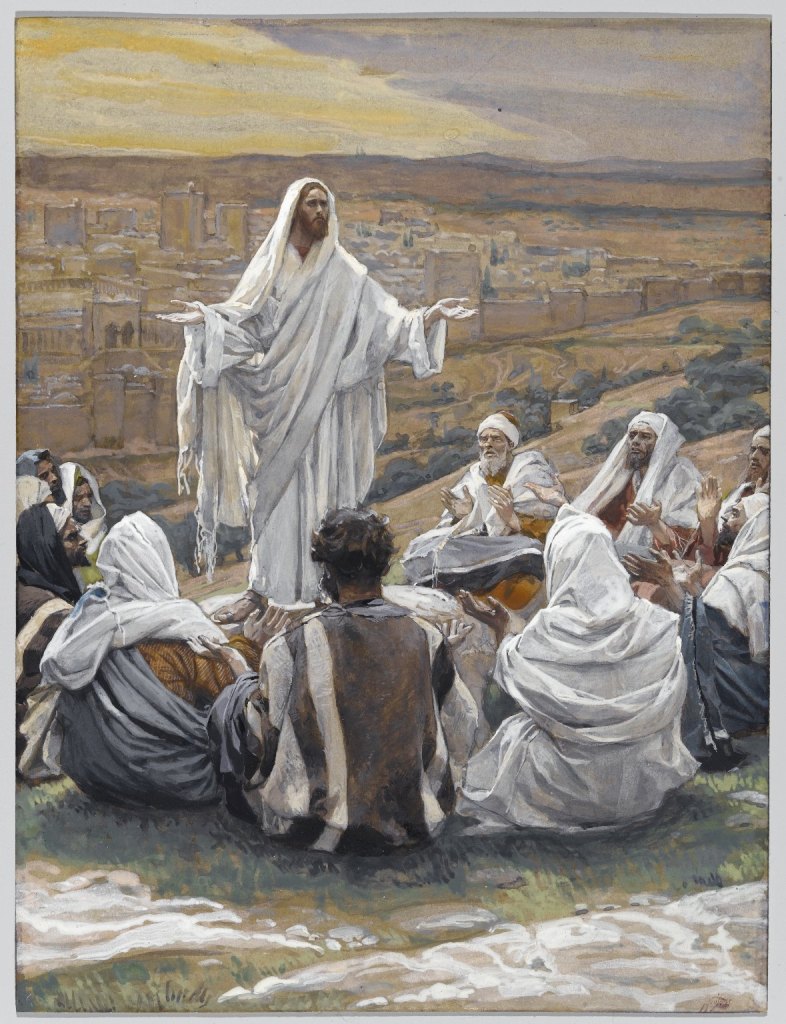
James Tissot – The Healing of Peter’s Mother-in-law (Brooklyn Museum)

The Third Sunday after Epiphany (Year B)

Organising a wedding is not an easy task. They can be complex and expensive undertakings, even when they are relatively modest affairs, with only family and a few friends. In some cultures, however, weddings can be more like celebrations for an entire community. Indeed, even today in the Middle East and Asia when a couple marry the celebrations can involve large numbers of guests, and last for several days. Clearly, the logistics of such festivities are complicated, and the financial outlay considerable. It is good to take a moment to consider how much the events in Cana, described in today’s Gospel reading, differ from most of the weddings that we have attended.

That Our Lord, His Mother, and His disciples are invited to the wedding should not be a surprise. This is a community celebration, with everyone present. The idea of running out of wine is not simply a failure of logistics and hospitality, but could represent a situation that would bring shame and disgrace on the hosts. It is a crisis which could stigmatise the family for years to come, with the couple thinking that their union had been cursed with bad luck. Suffice it to say, it would be a complete disaster for all concerned. Mary, wanting to prevent this, lets Jesus know that there is a serious problem. The situation is critical, and something needs to be done quickly. Our Lord, however, seems a little dismissive:

“Woman, what does this have to do with me? My hour has not yet come.”

‘Beth sydd i mi a wnelwyf â thi, wraig? ni ddaeth fy awr i eto.’ (Jn 2:4)

Jesus is looking ahead to when His hour will come, anticipating His Passion and Death on the Cross. That is also the next time that Mary will feature in John’s Gospel, when she stands with John at the foot of the Cross. The Wedding at Cana and the Crucifixion are two events that are clearly linked, both by what Our Lord says, and by who is present. What is about to happen at a Galilean wedding is a significant moment, which is underlined by Mary’s instruction to the servants:

‘His mother said to the servants, “Do whatever he tells you.”’

‘Ei fam ef a ddywedodd wrth y gwasanaethwyr, Beth bynnag a ddywedo efe wrthych, gwnewch’ (Jn 2:5)

Once again Mary demonstrates perfect obedience, and she encourages the servants to do the same. When we listen to what Jesus says and act on it we are following their example. Living the Christian life is essentially trying to do this. We listen to Jesus and do as He tells us. 

At the feast are six stone jars each holding thirty gallons which adds up to over eight hundred litres of water. This is a huge quantity of liquid, even for a large wedding. The servants fill the jars to the brim, making them fuller than they would usually be. This speaks of the abundance and generosity of God’s love. It defies our expectations, just as water being turned into wine defies expectation. The extravagant Wedding party points to something greater than itself. It is a foreshadowing of the joy of the Kingdom. The celebration at Cana is a taste of the lavish excess that our God wishes to bestow on us. His generosity, which is beyond our understanding, is a sign of His deep love for us.

The master of the feast does not seem to be bothered by the quantity of wine, but rather its quality. Moments ago the refreshments were running out, now they are plentiful. He addresses the bridegroom saying:

“Everyone serves the good wine first, and when people have drunk freely, then the poor wine. But you have kept the good wine until now.”

‘Pob dyn a esyd y gwin da yn gyntaf; ac wedi iddynt yfed yn dda, yna un a fo gwaeth: tithau a gedwaist y gwin da hyd yr awr hon.’ (Jn 2:10)

The steward has a point. It makes sense to serve the best wine first, and then serve inferior wine when people’s palettes are dulled. But this wedding feast represents a dramatic reversal of usual practice. It illustrates how God’s generosity stretches far beyond what we can expect or understand as humans. The Kingdom of God turns our values on their head, and its joyous new wine is finer than any earthly fruit of the vine. This is lavished upon humanity, so that it might transform us, so that we might come to share in the glory of God, and in His very nature. Our Lord therefore becomes the true master of the feast, just as He will feed humanity from the abundance of the Heavenly Banquet. The Wedding at Cana points to both Heaven, and to the Eucharist, where Christ nourishes us with the new wine of the Kingdom: His Blood, poured out to save and restore us. God loves us this much. How should we respond?

As Christians we are constantly called to live lives of joy and love in Christ. Through Him, rejoicing in our new life in baptism, and filled with the sober intoxication of the Spirit, we are nourished by Word and Sacrament. In this way we are restored to communion with God, and with each other, to live the life of the Kingdom, here and now. At the Wedding in Cana Jesus gives the world a sign, which shows both who and what He is, and which also points to heavenly and eternal realities. God manifests His glory, showing us who He really is: the personification of love and generosity.

This passage ends by explaining that, in response to this sign, Christs’s disciples  totally believe in Him. They put their trust in Him, as the one who fulfils prophecy, the Messiah, the Saviour of the world. Let us also put our trust in the God who loves us, and who feeds us with Himself, so that we might have life in and through Him. Let us share His joy both here on earth and in Heaven. And let us give praise to God the Father, God the Son, and God the Holy Spirit. To whom be ascribed all glory, dominion, and power, now and forever. Amen.
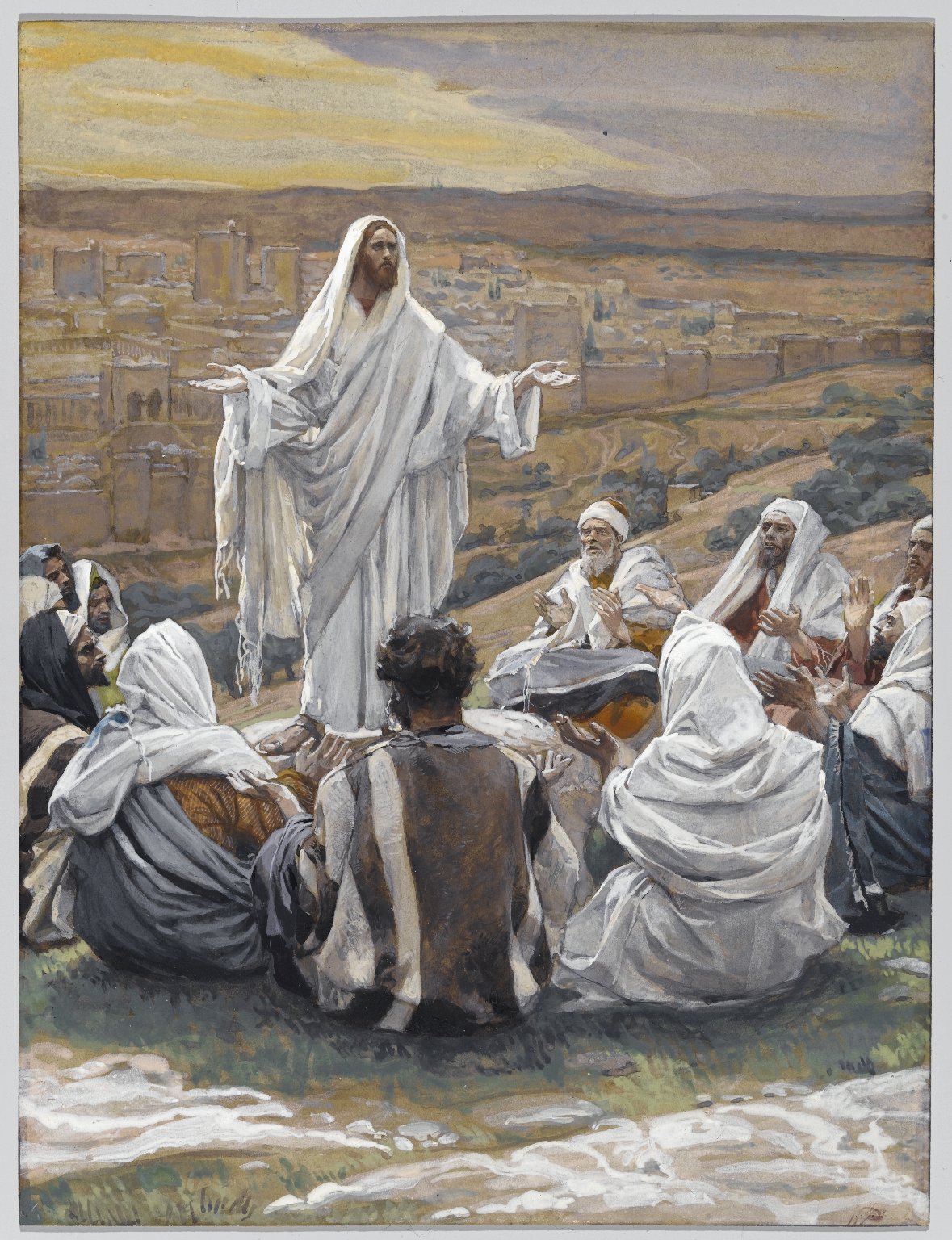
The Marriage at Cana (A. Mironov)

Christmas 2023

How do you remember the significant people and events in your lives? Since the nineteenth century, with the invention of photography, we have tended to use photographs, and stored the pictures in albums. Nowadays, however they are more likely to be online or on a mobile phone or tablet. From the first ultrasound scans of a baby in the womb, and throughout life, we have visual reminders. But photography has only been widespread for about 150 years. Before then only the rich could afford to have pictures painted to record something for posterity. If we wished to recreate an event from the past, then a dramatic retelling was the only option available. This is exactly what St Francis of Assisi did to remember the events and people of the first nativity and to inspire the devotion of all those who saw it. 

The first nativity took place exactly 800 years ago this month. The year was 1223, and the location was a cave at Greccio in Italy, around 100km north of Rome. St Francis of Assisi was inspired to recreate the first nativity in Bethlehem in an Italian village with real animals and humans playing various parts — exactly like we did in Maenclochog last night. There are good reasons why such recreations are appealing. They remind us of the reality of the Incarnation, that God took flesh in the womb of the Virgin Mary and was born in Bethlehem. The new-born baby Jesus was surrounded by an ox and an ass, and sheep, and was laid in an animals’ feeding trough. As the prophet Isaiah says:

‘The ox knows its owner, and the donkey its master’s crib’ 

‘Yr ych a edwyn ei feddiannydd, a’r asyn breseb ei berchennog’(Isa 1:3)

By this humble beginning God embarked on the journey of sharing our life, so that we might come to share His. Christ begins His life being laid on stone feeding trough. He will end it, taken down from the Cross and laid in a stone tomb. Such parallels are not mere coincidence. Instead, they point us towards a God who has made himself manifest, discoverable through signs, fulfilling prophecies, and declaring love for humanity. 

Jesus is the Prince of Peace, and the embodiment of the Gospel of Salvation. He comes to bring comfort and redemption to the whole world.

‘for the Lord has comforted his people; he has redeemed Jerusalem.’

‘canys yr Arglwydd a gysurodd ei bobl, efe a waredodd Jerwsalem.’ (Isa 52:9)

Today our salvation has dawned, prophecy is fulfilled, and the Saviour of the world is born. The message of Isaiah is one of joy. The birth of the Messiah, Jesus Christ, is Good News. This is because He comes to bring true peace to humanity. That such peace currently eludes our world, is exactly why He came: to heal our wounds and to show us a new way to live. Throughout His life, all that Christ says and does shows us how much God loves us. The Word becomes flesh, ‘A’r Gair a wnaethpwyd yn gnawd’ and enters the world. He dwells among us ‘ac a drigodd yn ein plith ni’: a wondrous mystery which provokes us to worship, to kneel with the shepherds and to adore the God who comes among us. Jesus shares our human life so that we might share His divine life, not because we asked, and not because we are deserving, it is not something we have earned. Rather, it is the free gift of a loving and merciful God. This then is the glory of God — being born in simple poverty. Jesus, the Son of God comes to call humanity to a new way of being together, where the old order is cast aside, turning the world upside down .He offers us the possibility of living in a radically different way. Instead of war, misery and hatred, He shows us the way of peace, joy, and love.

Such is the reality St Francis sought to inspire in the hearts and lives of people eight hundred years ago. It is a message which can still inspire us, a mystery which can still transform us. So that through the grace of God we can come to share in the Divine life, born among us, in a stable not a palace. God surprises us with generosity which we cannot fathom. God subverts human expectations. Christ’s first breaths are taken surrounded by animals and shepherds. Not what one would expect of a royal birth! 

God is a God of mystery and paradox. We know that we can never fully understand Him, but we can experience His love. To quote from Sir John Betjeman’s poem ‘Christmas’:

No love that in a family dwells,

No carolling in frosty air,

Nor all the steeple-shaking bells

Can with this single Truth compare —

That God was man in Palestine

And lives today in Bread and Wine.

May we greet Our Lord, born among us, and may we feed on His Body and Blood at the Altar. Given to transform us, so that we may join with the choir of angels in singing the praises of God the Father, God the Son, and God the Holy Spirit. To whom be ascribed all glory, dominion, and power, now and forever. Amen.

Merry Christmas to you all!

Nadolig Llawen i chi gyd!