Ascension 2024

Ascension Day is a time for celebration. However, we are not commemorating Jesus’ departure from the earth, but instead His return to God the Father. We celebrate Christ’s abiding presence with us, and also those things that He asks of us, and promises to us. It is a day of festivity and expectation, looking forward to the future in love and hope. 

Before Jesus returns to the Father, He makes the apostles a three-part promise: Firstly that they will be baptized with the Holy Spirit (Acts 1:4), secondly that they will receive power, and thirdly they will be Christ’s witnesses to the ends of the earth (Acts 1:8). Through this promise Christ is looking forward to Pentecost, and to the church’s future. To the time in which we live now.

One of the most important questions in the entire Bible is found in today’s Gospel: who do you say that Jesus is? How we answer this question can tell us a lot about our own faith. Who we say Jesus is matters. In fact it is central to who and what we are as Christians.

In the Gospel, Jesus and his disciples had ventured into the District of Caesarea Philippi, an area about 25 miles northeast of the Sea of Galilee. This region had tremendous religious implications. The place was littered with the temples of Syrian gods. Caesarea Philippi was where Herod the Great, father of the then-ruling Herod Antipas, had erected an elaborate marble temple. Here you could even worship the Roman Emperor as a God himself. You might say that the religions of the known world were on display in this town. It was with this multi-religious background that Jesus chose to ask the most crucial question of his ministry.

Jesus asks his disciples, ‘But who do YOU say that I am?‘A chwithau pwy meddwch chwi ydwyf fi?’ (Mt 16:15) Peter answers: ‘You are the Messiah, the Son of the Living God‘Ti yw’r Meseia, Mab y Duw byw’ (Mt 16:16). This is a big claim to make. Saying that Jesus is divine was problematic, as these words undermined both what Jews thought about religion, and also the claims made by Romans about the Emperor. To say that Jesus is the Anointed One, the Hope of Israel, who fulfils the promises in the Prophets is a very radical statement indeed.

Peter’s answer demonstrates his faith. He believes in Jesus, and trusts Him. Because of this, Our Lord makes him the principal disciple and gives him a primary role in leading and building the Church. Christ is looking towards the future where the disciples will carry on what He has started. They are charged with sharing the Good News, and offering forgiveness in Jesus’ name.

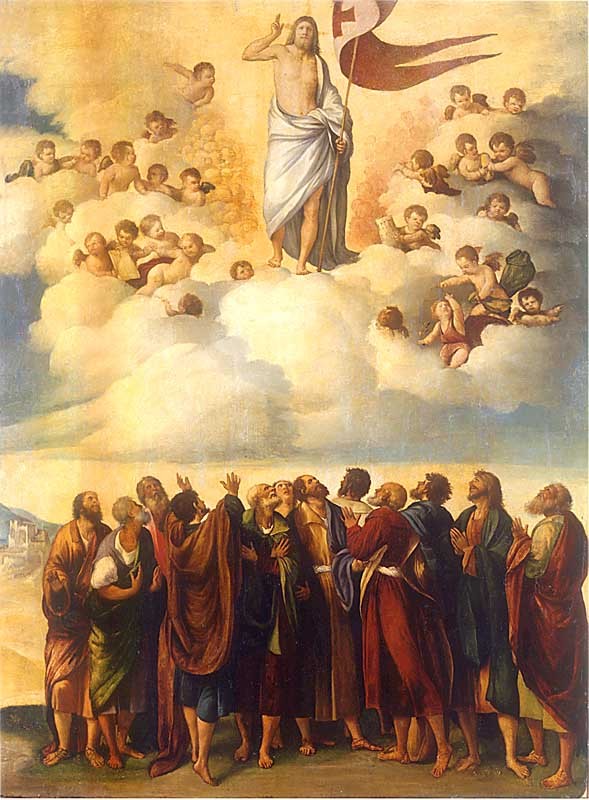
Our Lord ascends to Heaven forty days after the Resurrection, but Christ does not leave us. Instead He takes our humanity to be with God. This process began with the breaking open of the gates of Hell at Easter. Having conquered death itself, Jesus returns to the Father, taking us with Him. This is also a prelude to the outpouring of the Holy Spirit at Pentecost. God is generous. He saves humanity. He opens Heaven to us. He promises us the Holy Spirit, to strengthen us as we live our lives of faith. 

If we truly believe that Jesus Christ is the Son of the Living God, the Messiah — the anointed one who delivers us from our sins, who died, rose again, and who sends us His Holy Spirit — then this faith should have a profound effect on who we are and how we live our lives. This is why we have gathered here this evening to be nourished by Word and Sacrament. We have come together to pray for the world and for each other, and to be built up in love, as we await Our Lord’s Second Coming as Judge and Ruler of all.

Jesus makes promises which are true. We can trust Him, and like the apostles we can prepare for the Coming of the Holy Spirit at Pentecost in prayer, and joyful expectation. We know that we will never be abandoned, because we are always united with, and loved by the Triune God. United with our Christian brothers and sisters around the world we give praise to God the Father, God the Son, and God the Holy Spirit, to whom be ascribed all glory, dominion, and power, now and forever.

Dosso Dossi – The Ascension (Private Collection)

Easter VI

CHRISTIANITY is a religion which has at its heart a number of paradoxes. The Good News of the Kingdom of God is both simple and straightforward. But it is also difficult and complex. The basic theory is simple: ‘Love God, and love your neighbour’ ‘Câr Duw a Châr dy gymydog’. However, when we try to do this, we find that the practice is a little more complicated than the theory.

The Gospel passage for today is all about love. According to St Thomas Aquinas, ‘Love is… willing the good of the other.’ ‘Mae cariad ewyllysio y Dda o’r eraill’ [(STh I-II, q.26 a.4, CCC 1766) Respondeo dicendum quod, sicut Philosophus dicit in II Rhetoric, amare est velle alicui bonum]. To love, then, is not simply an act of passion or emotion — something which we feel — but it is also something which we choose to do. As Christians, we want to see others flourish, and we work towards that end. Love takes effort.

Jesus’ teaching is clear:

“This is my commandment, that you love one another as I have loved you. Greater love has no one than this, that someone lay down his life for his friends.”

“Dyma fy ngorchymyn i: carwch eich gilydd fel y cerais i chwi. Nid oes gan neb gariad mwy na hyn, sef bod rhywun yn rhoi ei einioes dros ei gyfeillion.” (Jn 15:12-13)

Christians are called to love one another as Christ loves us. In other words we are to love, even to the point of laying down our lives for each other. This is pertinent  as we remember those who gave their lives during the Second World War, eighty years ago. At the heart of our faith is the Cross. This is the ultimate demonstration of God’s love for us: God loves us so much that He dies for us, so that we might live in Him. The Cross is not the end, it leads to the Empty Tomb, and to the Triumph of Easter. Jesus dies to break the power of death, and to offer humanity eternal life with Him in Heaven. This is why we spend time in our celebration of Easter pondering the mystery of our redemption, entering ever deeper into the experience of God’s love for us.

When Our Lord speaks to His disciples, He speaks to us as well. He does not call us servants (weision), but friends (gyfeillion). To be a Christian is to be a friend of God and to enter into an intimate and loving relationship with the Creator and Redeemer of the Universe. God wants to be our friend. He wants to be united with us in a relationship characterised by love and generosity. 

We experience God’s love most fully in the Eucharist, where Christ continues to give Himself to, and for, us. Out of love, He continues to heal our wounds, to restore our relationship with God and each other, and gives us a foretaste of Heaven in the here and now. There is no other thing on earth as precious as this love. Nothing is more wondrous than this sign and token of God’s love for us. To dwell in Christ’s love is to be united with Him in physical and spiritual communion, so that God’s grace can transform us more and more into His likeness.

At this point in John’s Gospel Our Lord is in the Upper Room with His disciples. He has washed their feet and celebrated the Eucharist. Jesus has also talked about His Passion and Death in order to explain to His followers, including us, what He is about to do and why it matters. Christ is putting everything in place for there to be a Church to continue His work on Earth. This is why he addresses His disciples as follows:

“You did not choose me, but I chose you and appointed you that you should go and bear fruit and that your fruit should abide, so that whatever you ask the Father in my name, he may give it to you.”

“Nid chwi a’m dewisodd i, ond myfi a’ch dewisodd chwi, a’ch penodi i fynd allan a dwyn ffrwyth, ffrwyth sy’n aros. Ac yna, fe rydd y Tad i chwi beth bynnag a ofynnwch ganddo yn fy enw i.” (Jn 15:16)

We did not choose Jesus. He chose us. The Church is a vine which bears fruit. This is how it has continued for two thousand years. The Good News of the Kingdom has been proclaimed, and, throughout the world, people have grown and been nurtured in their faith. We have had a relationship with Jesus, which unites us with all Christians through both space and time, making us brothers and sisters in Christ, part of a family. Because of this relationship, with our Creator and each other, we are able to ask things of God in prayer. God listens to our prayer, and is generous in granting our requests. He gives his only Son to die for us and to rise again so that we might be certain of eternal life in Him. 

Finally, Jesus reminds His disciples of the need to love one another:

“These things I command you, so that you will love one another.”

“Dyma’r gorchymyn yr wyf yn ei roi i chwi: carwch eich gilydd.” (Jn 15:17)

Our Lord tells us what to do, so that we may bring about the will of God: that we love each other and flourish. God loves us, and wishes us to remain in a relationship with Him, and each other, that is characterised by generosity, and which takes as its model the Son of God, Our Risen Saviour. This conviction inspires the argument of the First Letter of John:

“In this is love, not that we have loved God but that he loved us and sent his Son to be the propitiation for our sins.”

“Yn hyn y mae cariad: nid ein bod ni’n caru Duw, ond ei fod ef wedi ein caru ni, ac wedi anfon ei Fab i fod yn aberth cymod dros ein pechodau.” (1Jn 4:10)

Jesus, through His self-sacrifice, makes up for all that we have done wrong. He offers Himself — the Righteous for the unrighteous — to restore our relationship with God and with each other. Jesus reconciles God and humanity, bringing back together what sin has thrust apart. This is the heart of the Good News. As well as dying for us, Christ also rose again. Our Lord reunites God and humanity, by laying down His life for His friends, and also gives us the hope of Heaven. We cannot earn our way there, but the generous love of our Creator offers us the opportunity to be united with Him forever.

My brothers and sisters in Christ, as we continue to celebrate Our Lord’s resurrection, may we rejoice in the abundance of divine generosity. May God’s grace transform us more and more into His likeness. Let us join with all our Christian brethren in rejoicing and singing the praises of God the Father, God the Son, and God the Holy Spirit. To whom be ascribed all glory, dominion, and power, now and forever. Amen.
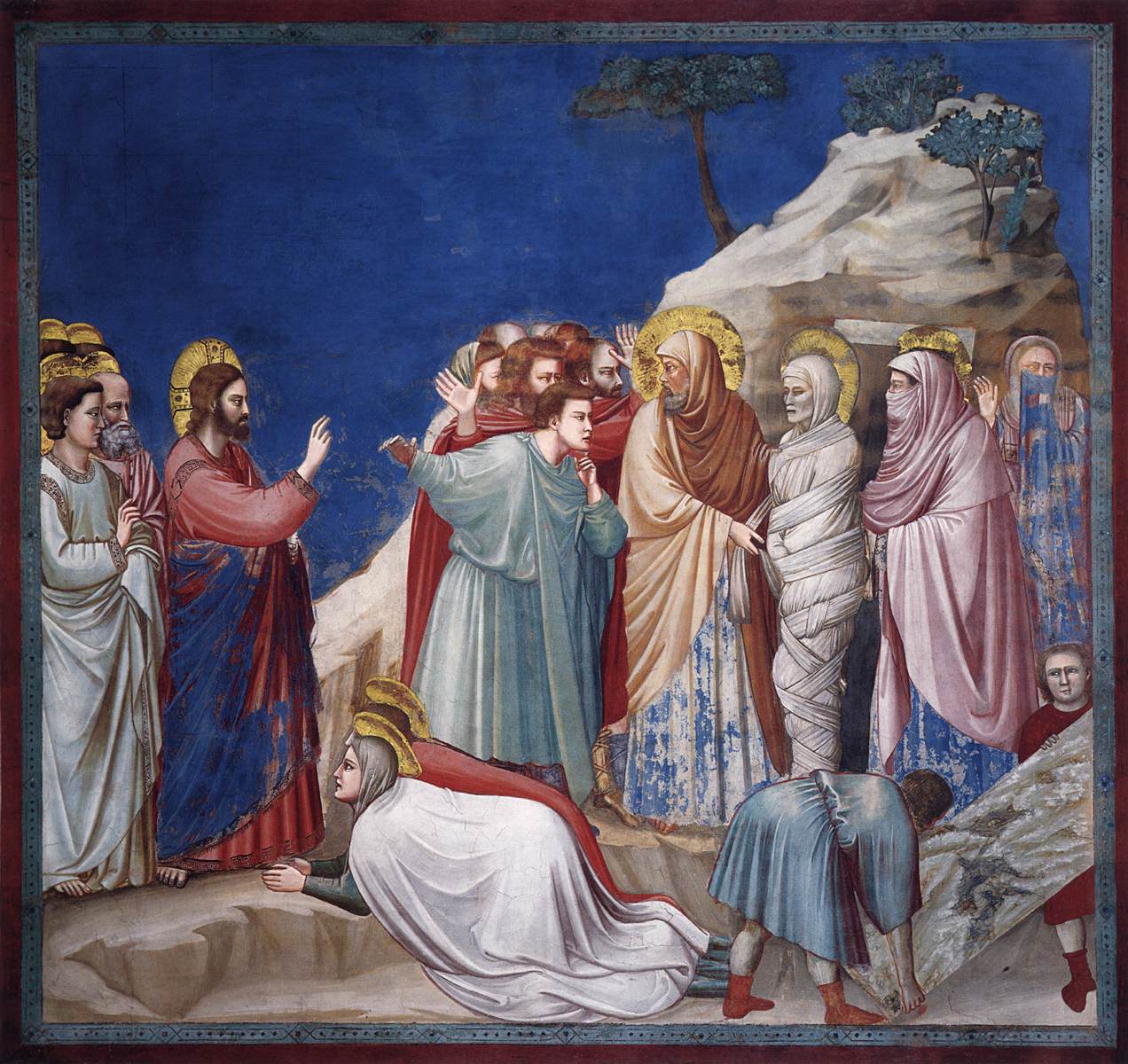
James Tissot: The Last Sermon of Our Lord  (Brooklyn Museum)

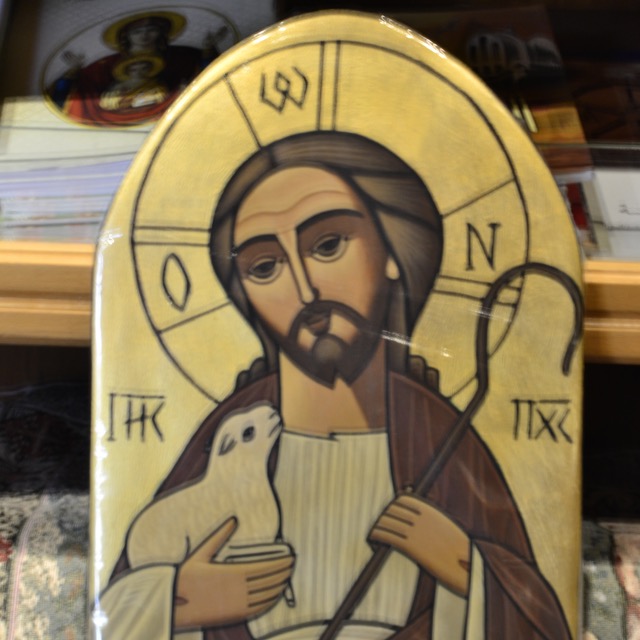
Easter IV – The Good Shepherd

Living in Pembrokeshire, many of us know people who keep sheep. We are also aware of how difficult it has been for them, and all farmers, in the recent months with fields waterlogged due to unprecedented levels of rainfall. Sheep farming is a vital part of our rural life and so the image of Jesus as the Good Shepherd is something we find easy to identify with, unlike those who live in large cities.

Shepherds played an important part in Jesus’ life. Angels told them about the birth and they came down from the hills to worship Him in  the stable in Bethlehem. Not wishing to leave their animals behind, Nativity scenes depict the shepherds bringing sheep to the manger. This may be why Our Lord has an affinity with those who look after sheep and care for them. Jesus describes himself as the Good Shepherd, the one who lays down His life for His sheep. Christ dies so that we may have eternal life in Him. This model of self-sacrificial love lies at the heart of the Christian faith, and because of it, we are able to live the new life of Easter.

Jesus says, ‘I am the Good Shepherd’ ‘Myfi yw’r bugail da’ (Jn 10:11). This is straightforward: He cares for His flock. But then He says, ‘The good shepherd lays down his life for the sheep.’ ‘Y mae’r bugail da yn rhoi ei einioes dros y defaid’ (Jn 10:11). This goes above and beyond what we would expect of a shepherd, even a very good one! Jesus is using the image of the Good Shepherd to explain what will happen on Good Friday. He will suffer and die to protect us, His flock. 

Protect us from what? From Sin and Death. By dying for us, and rising from the dead, Jesus offers humanity freedom in Him. The Christian faith offers salvation, through faith. As St Peter puts it in this morning’s reading from the Acts of the Apostles: 

‘And there is salvation in no one else, for there is no other name under heaven given among men by which we must be saved.’

‘Ac nid oes iachawdwriaeth yn neb arall, oblegid nid oes enw arall dan y nef, wedi ei roi i’r ddynolryw, y mae’n rhaid i ni gael ein hachub drwyddo.’ (Acts 4:12)

Jesus offers what no-one else can: salvation and eternal life to those who believe in Him, and follow Him. Eccentric American millionaires employ bizarre methods in an attempt to defy the ageing process, but they are still going to die. Each and every human being is. That is the fate of all living things. But, because of who Christ is — namely true God and true man — and what He has done on the Cross and at the empty tomb, death is no longer something to be feared. Instead, it can be embraced, as the entry to eternal life, with God, forever. 

This way of looking at life and death is profoundly different from the world around us, because Christians are not bound by the primal human fear that our life is finite. Our Lord has opened to us the gates of Heaven, and shown us once and for all that God loves us.

At the heart of our faith as Christians is the profound conviction that we are people who are loved by God. As Archbishop Michael Ramsay said, ‘God is Christlike, and in him is no un-Christlikeness at all’ [God, Christ & the World: A Study in Contemporary Theology, London 1969, p.98]. When we see Jesus, we see God; when we hear Him speak, we hear the voice of God. We can know who God is, the Creator and Redeemer of the universe, through His Son, Jesus Christ. God is not a distant bearded man on a cloud. He is a loving Father, as illustrated in the Parable of the Prodigal Son. He loves us so much that He suffers and dies for us, to give us life in Him. This is the God who searches for lost sheep; who longs to love, restore, and reconcile; who can heal our wounds if we let Him. This is abundant life, offered to us by Our Lord, the Good Shepherd.

This life, this love is offered to us in the Eucharist, where we can touch and taste God’s profound love for us. In the bread and the wine we are given a foretaste of the heavenly banquet and a pledge of eternal life in Christ. Here today, as on a hundred thousand successive Sundays, we meet to be fed by Christ, and fed with Christ. To be healed, and to know His love. We are the sheep cared for by the Good Shepherd, who provides for all our needs. Who gives Himself so that we might have life.

So my brothers and sisters in Christ, as we continue to rejoice In Our Lord’s triumph over death, may we emulate His example and live the new life of Easter. Following Our Good Shepherd, who longs for us to be safe with Him forever in Heaven, let us share the Good News of His Kingdom with others. Let us pray that that all may come to know and love God the Father, God the Son, and God the Holy Spirit. To whom be ascribed all, glory, dominion, and power, now and forever. Amen.
The Second Sunday of Easter

This morning we welcome baby Alice into the Christian community. This is an important day for her, as well as her family, and for all of us present here today.

At the beginning of His ministry, Jesus was baptised by John in the River Jordan. Today I will use the blessed water in the font and holy oil. The font is placed near the door of the church because baptism is the way that we enter the Church and become a member of the Christian community.

Today’s reading from the First Letter of John speaks of loving the children of God (plant Duw) and of keeping God’s commandments. M____ and C_____ are following God’s commandments by bringing their daughter Alice to be baptised, and we are all here to support them in their actions.

The Gospel for today records the risen Jesus appearing to the disciples. Peter and John have already witnessed the empty tomb, Mary Magdalen has even talked with the Risen Christ. However, the disciples are afraid. Their Teacher has gone from being hailed as the Messiah and King, to being crucified. Christ’s followers are all scared for their lives, lest a mob come and attack them. Some of their number are saying that the tomb is empty, and that Jesus has risen. Then, suddenly, the risen Lord is there among them saying: 

“Peace be with you!” 

‘Tangnefedd i chwi!’ (John 20: 19)

In a situation of heightened emotion, Our Lord’s gift is peace. God’s peace is not just the absence of noise or violence (heddwch) but something richer and deeper. This is the ‘Peace which passeth all understanding’ ‘Tangnefedd sydd uchlaw pob deall’, something given to us by God to transform our lives. Next, Jesus breathes on His disciples giving them the Holy Spirit and the power to forgive sins. Christ’s followers are equipped for the work of proclamation and reconciliation. This is what Jesus came to do, and He commits the Church to continue His mission and His saving work. To help His followers, Christ gives them (and us) the Holy Spirit, God’s free gift to His people, a sign of His generous love.

When Jesus appears to the disciples, one of them is absent. Thomas is not there — maybe he has been to get them all some food. When Thomas returns and hears what has happened, he feels somewhat left out. He is unsure and wants to have physical proof of Jesus’ Resurrection before he is able to fully believe:

“Unless I see in his hands the mark of the nails, and place my finger into the mark of the nails, and place my hand into his side, I will never believe.”

“Os na welaf ôl yr hoelion yn ei ddwylo, a rhoi fy mys yn ôl yr hoelion, a’m llaw yn ei ystlys, ni chredaf fi byth.” (John 20: 6-7)

These are the words of someone who longs to experience the reality of the Resurrection. Like the other disciples, Thomas has been on something of an emotional rollercoaster. It is understandable that he wants to be certain, to experience with his own eyes and hands that Jesus is alive.

A week later, Jesus comes to the disciples again, and says to them: 

“Peace be with you.” Then he said to Thomas, “Put your finger here, and see my hands; and put out your hand, and place it in my side. Do not disbelieve, but believe.”

“Tangnefedd i chwi!” Yna meddai wrth Thomas, “Estyn dy fys yma. Edrych ar fy nwylo. Estyn dy law a’i rhoi yn fy ystlys. A phaid â bod yn anghredadun, bydd yn gredadun.” (Jn 20:26-27)

Jesus gives Thomas what he wants: the opportunity to experience the reality of the Resurrection and to touch the wounds of love and mercy. This leads Thomas to reply to Jesus:

“My Lord and my God!”

“Fy Arglwydd a’m Duw!” (Jn 20:28)

Thomas no longer doubts. Instead he confesses that Jesus is God, and the Lord of his life. This is a profound and concise statement of faith, declaring both who Jesus is, and what He has done. Thomas has journeyed from doubt and despair to true faith. Doubt is the starting point, but it is not the end of the journey. St Thomas should not be known as ‘Doubting Thomas’, but rather as ‘Believing Thomas’, as this is what he becomes. Thomas’ belief changes his life, and leads him to take the Gospel to be proclaimed far and wide. He travels as far as India, founding Christian communities which have endured for two thousand years. Such faith is our inheritance, and in it we are blessed, as those who have not seen, but yet believe. We too are called to be like Thomas, and to share the Good News of Christ’s Resurrection with the world. 

At its heart today’s Gospel should be understood as something to encourage us in our life of faith:

‘but these [things] are written so that you may believe that Jesus is the Christ, the Son of God, and that by believing you may have life in his name.’

‘Ond y mae’r rhain wedi eu cofnodi er mwyn i chwi gredu mai Iesu yw’r Meseia, Mab Duw, ac er mwyn i chwi trwy gredu gael bywyd yn ei enw ef.’ (Jn 20:31)

Belief in Jesus leads to New Life. This underlines the Christian understanding of baptism. Through baptism we share in Jesus’ Death and Resurrection, and are given new life. This new life is eternal life with Christ, and in Christ.

At the Easter Vigil, last week, we renewed our baptismal promises to remind ourselves of what Our Lord has done for us. What Jesus has done for you, and for me, and for every Christian over the past two thousand years. In our Baptism we are united with Christ and made brothers and sisters. We become part of a new family which we call the Church. This new family is called to live in a new way. This is made clear in the first reading from the Acts of the Apostles. Here we see people of faith being loving and generous, caring for each other. We pray that we may be inspired by their example, and live out the faith of our baptism throughout our lives. 

Next to the font is our wonderful Easter Garden, which includes the Empty Tomb, the site of Jesus Resurrection.It is important to take our time over our celebration of Easter. We need time to allow the reality of what we commemorate to sink in. Something this wonderful, this world-changing, needs to be pondered, and shared. We gather today to do what the disciples did, and are filled with joy at Our Lord’s Resurrection from the dead. Through Christ’s Resurrection we are changed, transformed, and filled with God’s love. In the same way Alice will shortly be changed, transformed and filled with God’s love. Easter is a traditional time for baptism, and as a Christian community we welcome Alice and pray for her, and for her family. Today, and every day, we give thanks and praise to God the Father, God the Son, and God the Holy Spirit. To whom be ascribed all, glory, dominion, and power, now and forever. Amen.
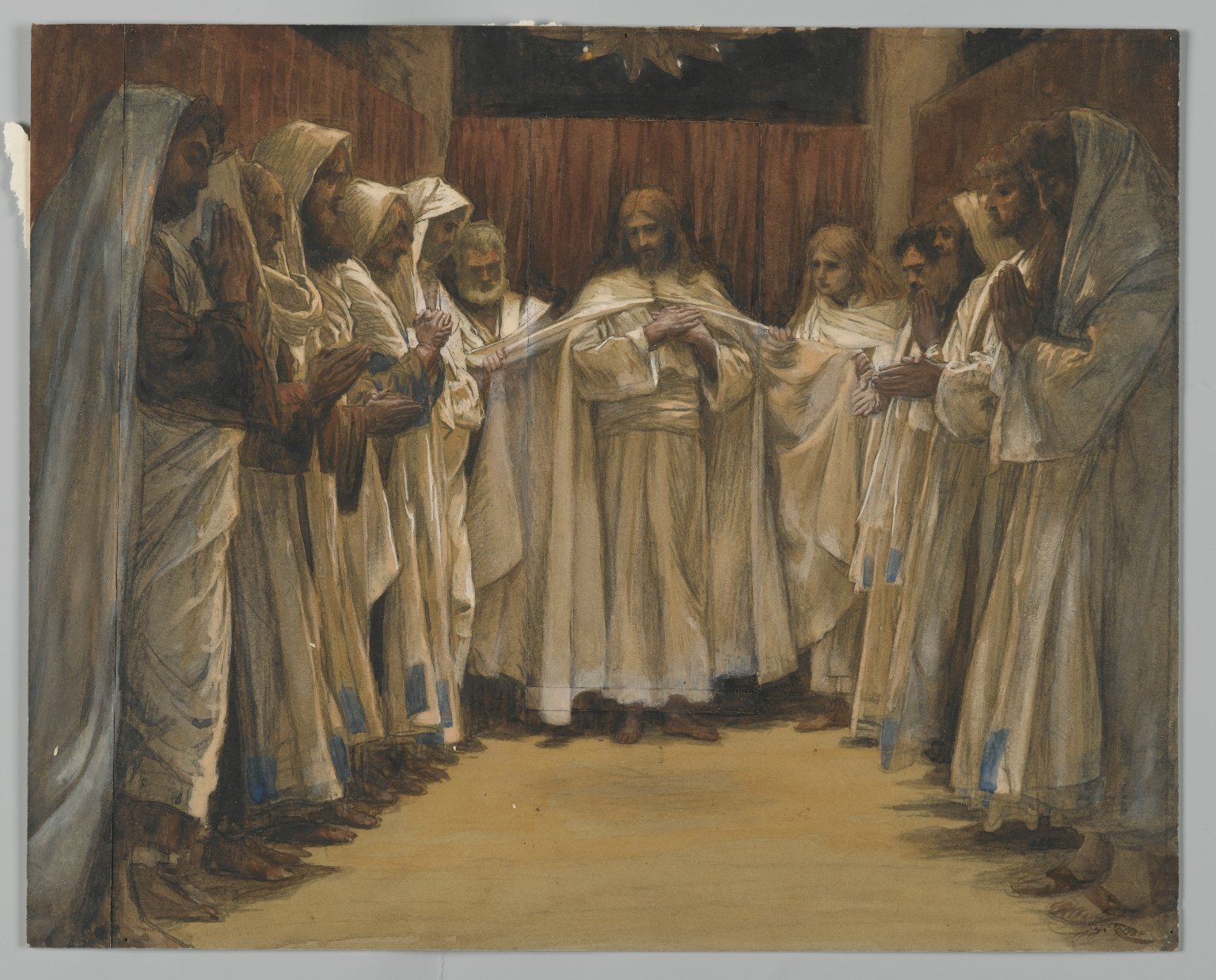
Tissot: L’Incredulité de Saint Thomas, (Brooklyn Museum)

Easter 2024

It is early in the morning and a woman sits in the darkness. Her beloved teacher, whom she has followed and supported for years was placed in a tomb a few days before, after having being executed for political and religious reasons. The sun has not yet risen, and as she sits, she cries. A week ago He was being hailed as the Messiah, God’s anointed, the Davidic king come to set His people free. Yet within a few days, the same people who cried ‘Hosanna’ were shouting ‘Crucify him!’ ‘Crucify him!’. So she goes, to be near her Lord, to be close to him. And as she goes, she notices something: the stone has been rolled away. It took several people to roll it there on Friday afternoon. What is going on? Mary Magdalen runs to tell Peter and John:

“They have taken the Lord out of the tomb, and we do not know where they have laid him.” 

‘Y maent wedi cymryd yr Arglwydd allan o’r bedd, ac ni wyddom lle y maent wedi ei roi i orwedd’ (John 20: 2)

Mary assumes, understandably, that grave-robbers have been at work. Or that the Jewish or Roman authorities, worried that this troublemaker might be a focus for dissent, have got rid of Him. To do so makes sense in political terms, but something greater has happened. Peter and John come running towards the tomb. John arrives first, peers inside the tomb, but stays outside. 

‘Then Simon Peter came, following him, and went into the tomb. He saw the linen cloths lying there, and the face cloth, which had been on Jesus’ head, not lying with the linen cloths but folded up in a place by itself.’

‘Yna daeth Simon Pedr ar ei ôl, a mynd i mewn i’r bedd. Gwelodd y llieiniau yn gorwedd yno, a hefyd y cadach oedd wedi bod am ei ben ef; nid oedd hwn yn gorwedd gyda’r llieiniau, ond ar wahân, wedi ei blygu ynghyd’ (John 20: 6-7)

What happens is a gradual process. Bit by bit, the followers of Jesus come to experience and understand this incredible and amazing event. 

Then the other disciple, who had reached the tomb first, also went in, and he saw and believed; for as yet they did not understand the Scripture, that he must rise from the dead. Then the disciples went back to their homes.’

‘Yna aeth y disgybl arall, y cyntaf i ddod at y bedd, yntau i mewn. Gwelodd ac fe gredodd. Oherwydd nid oeddent eto wedi deall yr hyn a ddwed yr Ysgrythur, fod yn rhaid iddo atgyfodi oddi wyth y meirw. Yna aeth y disgyblion adref yn eu holau.’ (John 20: 8-10)

A few days ago the disciples saw their Lord and Teacher killed and buried, but now the tomb is empty. The cloths that were wrapped around Jesus are there, but there is no body. John, the disciple Jesus loved, understands and believes. Peter does not yet understand or believe. Clearly it is all too much for Mary Magdalen who stays by the tomb, weeping. When the angels ask her why she is crying she replies:

“They have taken away my Lord, and I do not know where they have laid him.”

“Y maent wedi cymryd fy Arglwydd i ffwrdd, ac ni wn i lle y maent wedi ei roi i orwedd.” (John 20: 13)

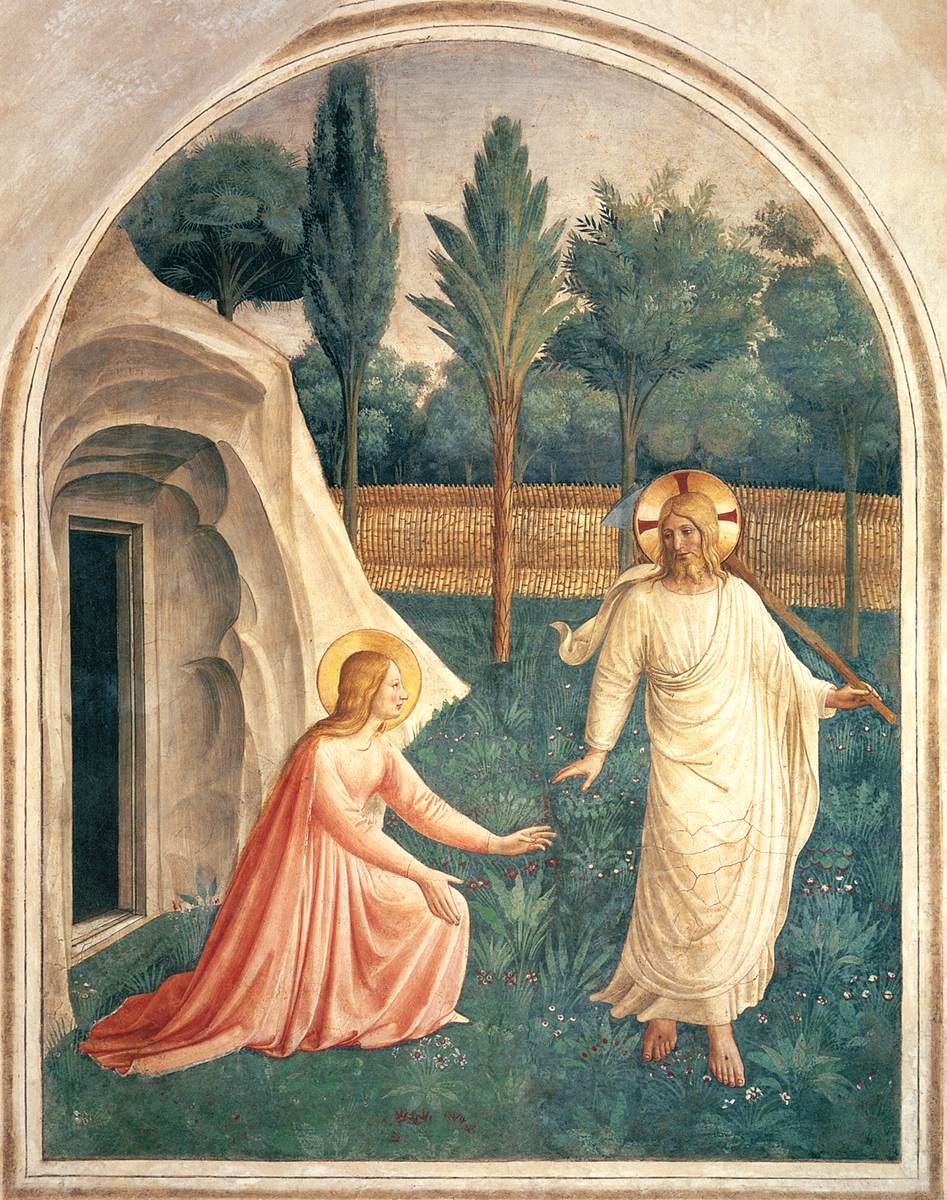
Mary’s words are understandable, she is filled with grief and sadness. She is bereft and confused. At this point, Mary Magdalen encounters the Risen Christ:

Jesus said to her, “Woman, why are you weeping? Whom are you seeking?” Supposing him to be the gardener, she said to him, “Sir, if you have carried him away, tell me where you have laid him, and I will take him away.”

‘“Wraig,” meddai Iesu wrhti, “pam yr wyt ti’n wylo? Pwy yr wyt yn ei geisio?” Gan feddwl mai’r garddwr ydoedd, dywedodd hithau wrtho, “Os mai ti, Syr, a’i cymerodd ef, dywed wrthyf lle y rhoddaist ef i orwedd, ac fe’i cymeraf fi ef i’m gofal.”’ (John 20: 15)

Mary supposes that Jesus is the gardener, the person employed to look after the cemetery. She does not yet understand who He is, or what is going on. However, the mention of the gardener is significant. In Genesis, humanity was created by God in a garden, Eden, and given the task of tending it (Gen 2:15). The Resurrection also takes place in a garden, showing us that Christ is the second Adam. Whilst the first Adam brought death to humanity by a tree, Jesus, the Second Adam, has brought life to the world by the tree of the Cross. Humanity falls because of a tree, and because of a tree we are offered eternal life in Christ. 

It was on the first day of the week, that Creation began, and now on the first day of the week we see a New Creation. Christ has risen from the dead, and conquered Death and Hell. Our Lord is a gardener, and the plants he tends are human beings. We believe in a God who loves us, who cares for us, and who longs to see us grow and flourish.

Jesus greets Mary Magdalen by name, and suddenly she recognises Him. She understands. She believes. Then Christ talks of His Ascension, as though forty days of Easter have condensed into a single moment. Mary now knows what she must do:

‘Mary Magdalene went and announced to the disciples, “I have seen the Lord”—and that he had said these things to her.’

‘Mair Magdalen i gyhoeddi’r newydd i’r disgyblion. “Yr wyf wedi gweld yr Arglwydd.” meddai, ac eglurodd ei fod wedi dweud y geiriau hyn wrthi’ (Jn 20:18)

Mary shares the Good News, just as Peter and Paul do in the first and second readings this morning. As Christians we are called to do likewise: to tell others that God loves us, all of us, that He died for us, and that He rose again to offer us eternal life with Him. This is the message of Easter. Good News! Christ has triumphed over Death and Hell, and humanity is healed and restored through Him.

So, my brothers and sisters in Christ, ‘Pasg hapus i chi gyd!’ ‘A Happy Easter to you all!’ May you, and those you love, be filled with Resurrection joy and strength, on this Easter Day and always. Amen.

Fra Angelico (Italian, ca. 1395–1455), “Noli me tangere,” 1440–42. Fresco from the convent of San Marco, Florence, Italy. http://www.wga.hu/frames-e.html?/html/a/angelico/index.html

An Easter Homily ascribed to St John Chrysostom [PG 59: 721-4]

Εἴ τις εὐσεβὴς καὶ φιλόθεος, ἀπολαυέτω τῆς καλῆς ταύτης πανηγύρεως· εἴ τις δοῦλος εὐγνώμων, εἰσελθέτω χαίρων εἰς τὴν χαρὰν τοῦ Κυρίου αὐτοῦ· εἴ τις ἔκαμενηστεύων, ἀπολαβέτω νῦν τὸ δηνάριον· εἴ τις ἀπὸ πρώτης ὥρας εἰργάσατο, δεχέσθω σήμερον τὸ δίκαιον ὄφλημα· εἴ τις μετὰ τὴν τρίτην ἦλθεν, εὐχαριστῶν ἑορτάσῃ· εἴ τις μετὰ τὴν ἕκτην ἔφθασε, μηδὲν ἀμφιβαλλέτω· καὶ γὰρ οὐδὲν ζημιοῦται· εἴ τις ὑστέρησεν εἰς τὴν ἐννάτην, προσελθέτω μηδὲν ἐνδοιάζων· εἴ τις εἰς μόνην ἔφθασε τὴν ἑνδεκάτην, μὴ φοβηθῇ τὴν βραδυτῆτα. Φιλότιμος γὰρ ὢν ὁ Δεσπότης δέχεται τὸν ἔσχατον, καθάπερ καὶ τὸν πρῶτον· ἀναπαύει τὸν τῆς ἑνδεκάτης,ὡς τὸν ἐργασάμενον ἀπὸ τῆς πρώτης· καὶ τὸν ὕστερον ἐλεεῖ, καὶ τὸν πρῶτον θεραπεύει· κἀκείνῳ δίδωσι, καὶ τούτῳ χαρίζεται. Καὶ τὴν πρᾶξιν τιμᾷ, καὶ τὴν πρόθεσιν ἐπαινεῖ. Οὐκοῦν εἰσέλθητε πάντες εἰς τὴν χαρὰν τοῦ Κυρίου ἡμῶν, καὶ πρῶτοι καὶ δεύτεροι τὸν μισθὸν ἀπολάβετε, πλούσιοι καὶ πένητες μετὰ ἀλλήλων χορεύσατε, ἐγκρατεῖς καὶ ῥᾴθυμοι τὴν ἡμέραν τιμήσατε, νηστεύσαντες καὶ μὴ νηστεύσαντες εὐφράνθητε σήμερον. Ἡ τράπεζα γέμει, τρυφήσατε πάντες· ὁ μόσχος πολὺς, μηδεὶς ἐξέλθοι πεινῶν. Πάντες ἀπολαύσατε τοῦ πλούτου τῆς χρηστότητος. Μηδεὶς θρηνείτω πενίαν· ἐφάνη γὰρ ἡ κοινὴ βασιλεία· μηδεὶς ὀδυρέσθω τὰ πταίσματα· συγγνώμη γὰρ ἐκ τοῦ τάφου ἀνέτειλε· μηδεὶς φοβείσθω τὸν θάνατον· ἠλευθέρωσε γὰρ ἡμᾶς ὁ τοῦ Σωτῆρος θάνατος· ἔσβεσεν αὐτὸν ὑπ’ αὐτοῦ κατεχόμενος· ἐκόλασε τὸν ᾅδην κατελθὼν εἰς τὸν ᾅδην· ἐπίκρανεν αὐτὸν γευσάμενον τῆς σαρκὸς αὐτοῦ. Καὶ τοῦτο προλαβὼν Ἡσαΐας ἐβόησεν· Ὁ ᾅδης, φησὶν, ἐπικράνθη. Συναντήσας σοι κάτω ἐπικράνθη· καὶ γὰρ καθῃρέθη· ἐπικράνθη· καὶ γὰρ ἐνεπαίχθη. Ἔλαβε σῶμα, καὶ Θεῷ περιέτυχεν· ἔλαβε γῆν, καὶ συνήντησεν οὐρανῷ· ἔλαβεν ὅπερ ἔβλεπε, καὶ πέπτωκεν ὅθεν οὐκ ἔβλεπε. Ποῦ σου, θάνατε, τὸ κέντρον; ποῦ σου, ᾅδη, τὸ νῖκος; Ἀνέστη Χριστὸς, καὶ σὺ καταβέβλησαι· ἀνέστη Χριστὸς, καὶ πεπτώκασι δαίμονες· ἀνέστη Χριστὸς, καὶ χαίρουσιν ἄγγελοι· ἀνέστη Χριστὸς, καὶ νεκρὸς οὐδεὶς ἐπὶ μνήματος. Χριστὸς γὰρ ἐγερθεὶς ἐκ νεκρῶν, ἀπαρχὴ τῶν κεκοιμημένων ἐγένετο· αὐτῷ ἡ δόξα καὶ τὸ κράτος εἰς τοὺς αἰῶνας τῶν αἰώνων. Ἀμήν.

If anyone is a devout lover of God, let them rejoice in this beautiful radiant feast. If anyone is a faithful servant, let them gladly enter into the joy of their Lord. If any are wearied with fasting, let them now reap their reward. If any have laboured since the first hour, let them receive today their just reward. If any have come after the third hour, let them celebrate the feast with thankfulness. If any have arrived after the sixth hour, let them not doubt, for they will sustain no loss. If any have delayed until the ninth hour, let them not hesitate but draw near. If any have arrived at the eleventh hour, let them not fear their lateness. For the Master is gracious and welcomes the last no less than the first. He gives rest to those who come at the eleventh hour just as kindly as those who have laboured since the first hour. The first he fills to overflowing: on the last he has compassion. To the one he grants his favour, to the other pardon. He does not look only at the work: he looks into the intention of the heart. Enter then, all of you, into the joy of your Master. First and Last, receive alike your reward. Rich and poor dance together. You who have fasted and you who have not, rejoice today. The table is fully laden: let all enjoy it. The fatted calf is served: let no-one go away hungry. Come all of you, share in the banquet of faith: draw on the wealth of his mercy. Let no-one lament their poverty; for the universal kingdom has been revealed. Let no-one weep for their sins; for the light of the forgiveness has risen from the grave. Let no-one fear death; for the death of the Saviour has set us free. He has destroyed death by undergoing hell. He has despoiled hell by descending into hell. Hell was filled with bitterness when it tasted his flesh, as Isaiah foretold: ‘Hell was filled with bitterness when it met you face-to-face below’ – filled with bitterness, for it was brought to nothing; filled with bitterness, for it was mocked; filled with bitterness, for it was overthrown; filled with bitterness, for it was destroyed; filled with bitterness, for it was put in chains. It received a body, and encountered God. It received earth, and confronted heaven. It received what it saw, and was overpowered by what it did not see. O death, where is your sting? O hell, where is your victory? Christ is risen, and the demons are fallen. Christ is risen, and the angels rejoice. Christ is risen, and life reigns in freedom. Christ is risen, and the grave is emptied of the dead. For Christ being raised from the dead has become the first-fruits of those who sleep. To him be glory and dominion to the ages of ages. Amen.