Christmas 2025

‘all the ends of the earth shall see the salvation of our God.’

‘fe wêl holl gyrrau’r ddaear iachawduriaeth ein Duw ni’ (Isa 52:10)

Christmas is a time for many seasonal activities, including spending time with family and friends, eating special foods and enjoying Christmas Carols. Also, most of us will spend some time over the festive period watching films on the television, or in the cinema. Movies can, surprisingly, be particularly useful when we try to comprehend the wonderful events of Christmas. I would like to begin by focussing on a favourite film from my childhood — the 1981 adventure Raiders of the Lost Ark. In this film, the intrepid hat-wearing archaeologist, Indiana Jones, is competing with evil Nazi forces to discover the Ark of the Covenant, which, it is said, has the power to make an army invincible. At the climax of the film, the villains open the Ark on an island in the Aegean Sea. Immediately, spirits and bolts of lightning are released, which kill the Nazis and free Indiana and his companion Marion. Other than being the sort of film one might watch at Christmas, what is the relevance of the scene?

The film’s denouement relies upon the heroes averting their gaze, while the villains do not, and are therefore destroyed. The plot draws upon the biblical idea that the glory of God, which the Ark is said to contain, is not something which humanity should gaze upon. In the Book of Exodus, when Moses asks to see God, he is told that if he does so he will die. The glory of God is not something humans are able to behold. 

Yet, the first reading this morning reaches its climax with the statement that:

‘all the ends of the earth shall see the salvation of our God.’ (Isa 52:10)

There appears to be something strange going on here. Likewise, the one who begins His life wrapped in cloth and placed in a stone feeding trough, will end it by being taken down from a Cross, wrapped in cloth and placed in a stone tomb. ‘In my beginning is my end …. In my end is my beginning’ wrote T.S. Elliot in his poem ‘East Coker’, the second of his Four Quartets. And yet this end is but a prelude to Christ’s Resurrection, Ascension, and the Second Coming. 

In the great turnaround of salvation history, humanity goes from being unable to look upon the divine, to being able to behold Him in a manger, surrounded by farm animals. As the prophet Isaiah says:

‘The ox knows its owner, and the donkey its master’s crib,’ (Isa 1:3)

To put the mystery of our salvation into context, this morning’s Gospel goes back to the beginning, which is a very good place to start. Not to the Annunciation, where in the power of the Holy Spirit Christ takes flesh in the womb of His Mother, but to the beginning of time itself and the Creation of the Universe:

‘In the beginning was the Word, and the Word was with God, and the Word was God. He was in the beginning with God.’ (Jn 1:1)

The Word which spoke the Universe into being exists in eternity with God, and is God. This is whom we worship: the one who will save humanity, and who offers us eternal life with God. 

Today we celebrate Divine generosity and humility. God is among us. Mae Duw yn eich plith ni. Born as a weak and vulnerable baby, he is utterly dependent upon Mary and Joseph. In time, this divine generosity will be refused:

‘He came to his own, and his own people did not receive him.’ (Jn 1:11)

Ours is a God who does not force Himself upon us. Instead, He comes to us in love, that we might receive His divine love, and share it with others: 

‘And the Word became flesh and dwelt among us, and we have seen his glory, glory as of the only Son from the Father, full of grace and truth.’ (Jn 1:14)

God pitches His tent, and tabernacles among us. The invisible becomes visible. The God who is beyond human understanding becomes human, and shares our human life from its beginning to its end. This is no unapproachable divinity, remote and uncaring, but one who experiences our existence, who understands us from the inside out. Humanity beholds the glory of God, in a tiny baby who will grow into a man, who will die on a Cross to redeem us. 

Not only that, but Christ continues to give Himself to us, every time the Eucharist is celebrated. So that the Word can continue to become flesh. So that we can be transformed by Him, and share in God’s life. 

As we celebrate the birth of Our Saviour we should ask ourselves: have we made room for Jesus in our lives? Have we really? If we haven’t, we need to allow our hearts and our lives to become the stable in which the Christ-child can be born. We should see Him in the outcast, in the stranger, in all the people which the world shuns. As Christians, we are instructed to welcome such people, for in welcoming them we also welcome Our Lord and Saviour. This is how we live out His love in our lives.

This is the true meaning of Christmas — this is the love which can transform the world. It is radical and costly. This love terrified the might of the Roman Empire, by showing human power that it was as nothing compared to Divine Love. Soul by individual soul, for the past two thousand years, the world has been changed by ordinary people living out the love shown to the world by, and through, this little child.

So, today as we celebrate Jesus’ birth, let us raise our voices to join with the shepherds and angels and give praise and honour to God the Father, God the Son, and God the Holy Spirit, Duw Dad, Duw y Mab, a Duw yr Ysbryd Glân. To whom be ascribed all might, majesty, glory, dominion, and power, now and forever. Amen.

May I take this opportunity to wish you all a joyful, peaceful, and love-filled Christmas!

Gallaf gymryd y cyfle hwn i dymuno Nadolig llawen, heddychlon, ac llawn cariad i bawb!

Christmas Midnight Mass

‘He become human so that we might become divine.’

‘Fanodd ef ein natur ddynol ni, er mwyn i ni rannu ei natur ddwyfol ef’ (Athanasius de Inc. 54.3)

We have all come here tonight to celebrate something unique, something which defies both our understanding and our expectations. The fact that God, the Creator of all things, took flesh in the womb of the Virgin Mary and was born for us in Bethlehem is the Messiah, the Anointed of God, who would save us from our sins, should feel strange. In human terms this simply does not make sense, nor indeed should it.

And yet, here we are, some two thousand years later, celebrating the birth of this child who changed both human history and human nature. We do this because, as Christians, we do not judge things solely by human standards. We gather together in order to ponder the mystery of God’s love for us. Through love, God heals our wounds. Through love, God restores broken humanity. Through love, God offers us a fresh start. Our Heavenly Father can see beyond our failures and shortcomings, and He took on human form so that humanity might become divine; so that we may share in His life of love, both here on earth and in Heaven.

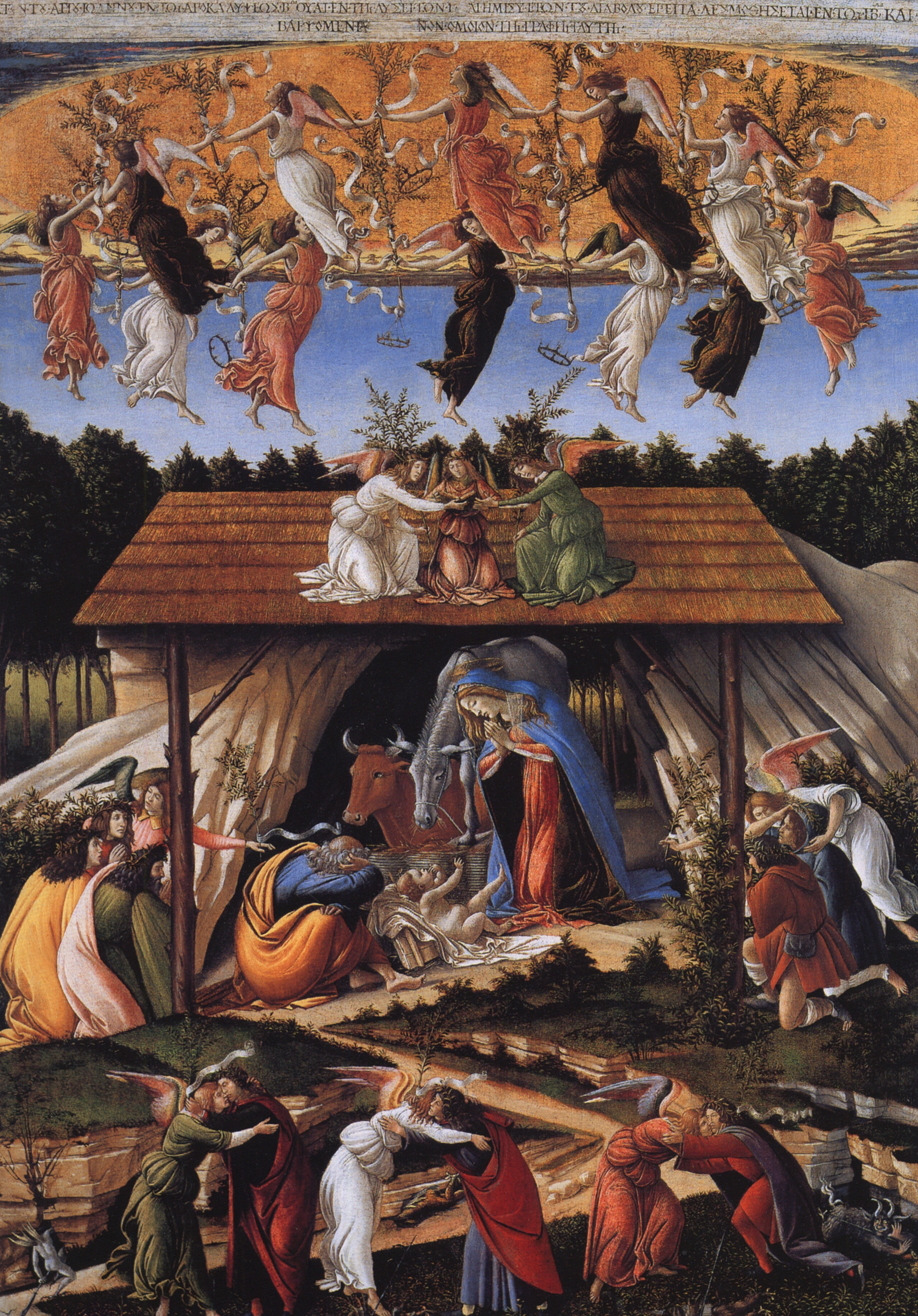
If that isn’t a cause for celebration, I honestly don’t know what is. However, we are so familiar with the story of Christmas that I wonder whether we, myself included, really take the time to ponder, and to marvel at the mystery which unfolded two thousand years ago in Bethlehem. Almighty God, who made all that is, comes to dwell among us. He took flesh in the womb of a teenage girl through the power of His Holy Spirit, so that in His Son we might see and experience God and His divine love for us. 

God comes among us not in power or splendour, but as a weak, vulnerable child, depending on others for love, food, and warmth. He is laid in an animal’s feeding trough, insulated from the cold hard stone by straw — beginning his days as he will end them placed in a stranger’s tomb. 

Throughout His life, all that Jesus says and does shows us how much God loves us. The Word becomes flesh, and enters the world. He dwells among us. This is a wondrous mystery which inspires us to worship. We stand and kneel with the shepherds and adore the God who comes among us. He shares our human life so that we might share His divine life. This is not because we have done something to deserve it: we haven’t worked for it, or earned it. Rather, it is the free gift of a loving and merciful God. This, then, is the glory of God — being born in simple poverty, surrounded by those on the margins of society. Our Heavenly Father calls humanity to a new way of being a community. The old order is cast aside, turning the world upside down and offering us the possibility of living in a radically different way. One founded on peace, love, and joy, rather than wealth and power. Heaven comes to earth, carried in the womb of a Virgin, so that we might behold the glory of God in a new-born child. So that we might experience the deep love and eternal truth of God.

The word is made flesh so that prophesy might be fulfilled. So that the hope of salvation might unfold. So that a people who have languished long in darkness might behold the glory of God in the place where Heaven and Earth meet: in a lowly stable in Bethlehem. Where men and angels may sing together: ‘Alleluia, Glory be to God on high, and on earth peace to people of goodwill’. The worship of Heaven is joined with Earth on this most holy night. In the quiet and stillness humans and animals join together to praise Almighty God, who stoops to save humanity in the birth of His Son. 

Despite the worrying state of the world around us, we can be filled with joy and hope: because Christ is born! No matter what difficulties we have to face, what fears and hardships may assail us and those we love, the birth of Our Saviour in Bethlehem is a cause for hope and joy, both in this world, and the next. God comes among us, as a baby, into a world of pain, fear, and misery; just as He did two thousand years ago. The God who made all that exists enters our world weak and helpless. Just as we were when we were born. He is totally dependent on others for food, warmth, shelter, and security. In doing so, God takes a huge risk to save humanity and to give us hope for the future.

Tonight we see God’s healing and reconciling love made manifest: to save us from ourselves, from sin, selfishness, and greed. At first this act of generosity and weakness does not appear to change things, and yet it does. God transforms our world; sometimes quickly, and sometimes slowly. Humanity is not always good at listening or waiting. It is easy to become so wrapped up in our own anxieties and yearnings that we close ourselves off from God’s transformative power. This Christmastime is an opportunity to open ourselves to God, to His transforming love.

There is also fear in the Christmas story. This is an understandable human reaction. When the shepherds saw the Heavenly Host, the angel said to them: ‘Paid ag ofni’ ‘Fear not, for behold I bring you good news of great joy that will be for all people’ (Lk 2:10). God comes among us to dispel our fears and to invite us to trust in Him. This Good News is as true today as it was two thousand years ago. The love and peace which Christ comes to bring can be made real and visible in our hearts and lives. It still has the power to change the world. God’s kingdom can be a reality, here and now. Jesus taught us to pray for God’s glorious kingdom to come on earth in the same way that it is in Heaven: ‘Thy Kingdom come, Thy will be done, on earth as it is in heaven’.  

The true gift of Christmas is the Good News that Christ is born; that God becomes one of us. Our humanity is reconciled to God in, and through, Jesus. God saves us, and sets us free to worship Him, to love Him, and to serve Him. In the fourth century, a bishop in Asia Minor, Theodotus of Ancyra, said in a Christmas homily: ‘He whose godhead made him rich became poor for our sake, so as to put salvation within the reach of everyone’ [Theodotus of Ancyra (Homily 1 on Christmas: PG 77: 1360-1361)]. Such is the wonder and mystery of God’s love for us. It is a love made perfect in weakness, yet with the strength to transform the lives of everyone including each and every one of us gathered here on this most holy night. 

God is with us. For two thousand years Christians have proclaimed this truth. Jesus is born for us, to set us free from sin. Jesus is born for us to give us eternal life. Jesus is born for us to pour out God’s love and reconciliation upon a world longing for healing and wholeness. Tonight, as the mystery of God’s love is made manifest, may we be filled with that love. May our voices echo the song of the angels to the shepherds in giving praise to God the Father, God the Son, and God the Holy Spirit, Duw Dad, Duw y Mab, a Duw yr Ysbryd Glân. To whom be ascribed all might, majesty, glory, dominion, and power, now and forever. Amen.

May I take this opportunity to wish you all a joyful, peaceful, and love-filled Christmas!

Gallaf gymryd y cyfle hwn i dymuno Nadolig llawen, heddychlon, ac llawn cariad i bawb!Incarnation

Pentecost 2025

Every Sunday, and also on solemn Feast days, Christians make a public declaration of their faith in God, Father, Son, and Holy Spirit, using the words of the Nicene Creed — which we will all say together in a few minutes time. This statement of belief was drawn up seventeen hundred years ago at the First Ecumenical Council, which was called by the Roman Emperor Constantine to sort out divisions within the Church concerning the Divinity of Jesus Christ. The council met at Nicaea in Asia Minor (modern day Turkey) and comprised of three hundred and eighteen bishops of the Church. One of these was Nicholas of Myra, St Nicholas, the patron saint of this church. 

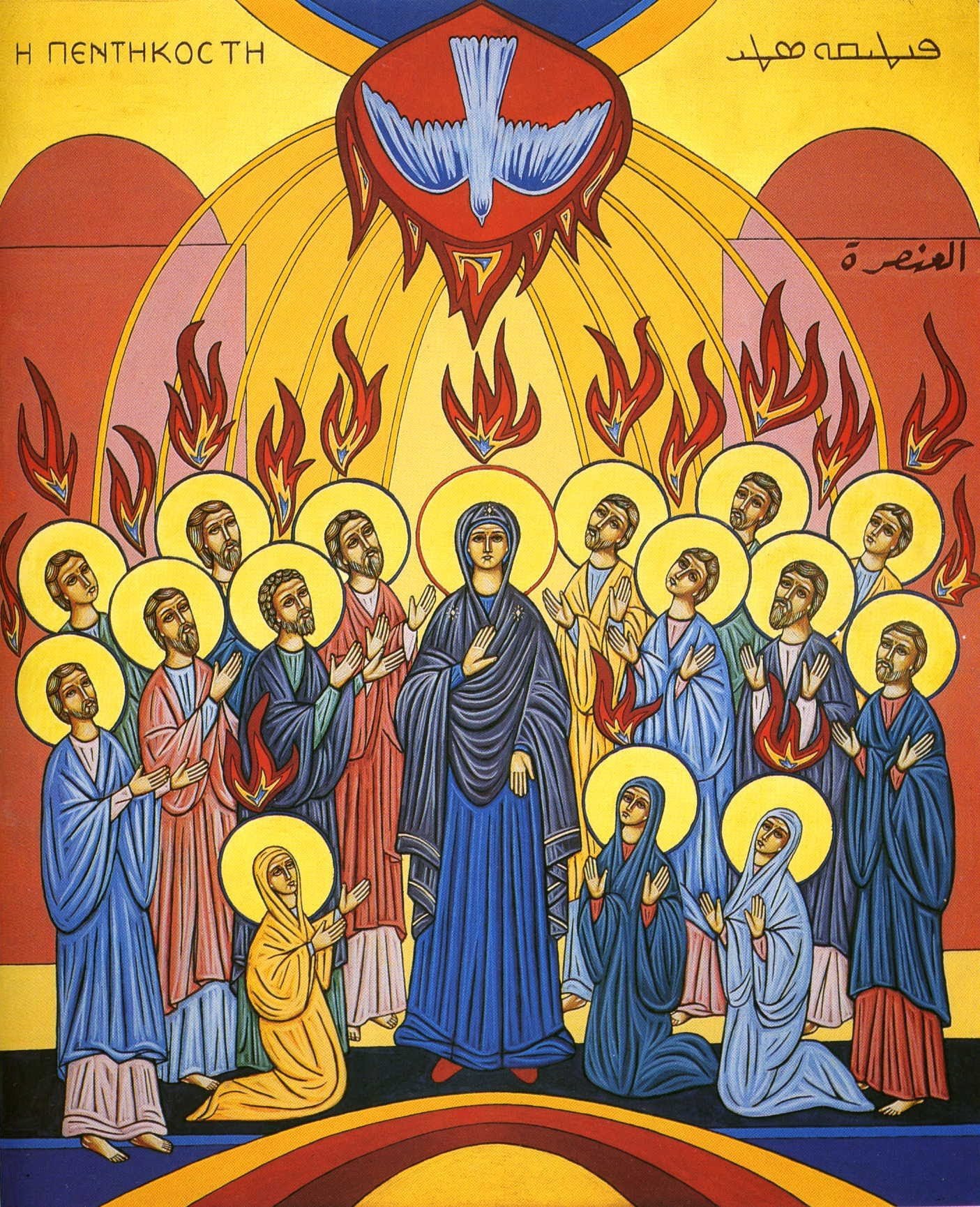
Questions about belief matter. They have the potential to divide the Church. Taking it away from its core purpose of being united in a common faith, and making a consistent proclamation of that faith. This is the situation in today’s reading from the Acts of the Apostles. Having been promised the Holy Spirit by Our Lord at His Ascension, the disciples wait and pray. At Pentecost they are filled with the Spirit. Emboldened, they are able to tell Jews from all over the Mediterranean world, who have gathered in Jerusalem, who Jesus is, and what He has done. From this moment on the disciples are known as Apostles from the Greek ἀπόστολος (meaning one who is sent, a messenger). The message they deliver is that all people should repent and believe the Good News of Jesus Christ. 

The outpouring of the Holy Spirit is not a one-off event, but rather a permanent state of affairs. This is how God continues to be active in the world: inspiring and strengthening Christ’s followers in living and proclaiming their faith. In John’s Gospel, Jesus promises His disciples:

‘Os ydych yn fy ngharu i, fe gadwch fy ngorchmynion i. Ac fe ofynnaf finnau i’m Tad, ac fe rydd ef i chwi Eiriolwr arall i fod gyda chwi am byth,’

‘If you love me, you will keep my commandments. And I will ask the Father, and he will give you another Helper, to be with you for ever.’ (Jn 14:15-16)

The promise is that God’s Spirit will be present in perpetuity. God will continue to pour out His Spirit to strengthen the Church. This is what we are celebrating today at Pentecost. Indeed, during the Eucharistic Prayer I, as your priest,  will pray that God continues to do this and ‘trwy nerth dy Ysbryd, i’r rhoddion hyn o fara a gwin fod i ni ei gorff a’i waed ef’ ‘that, by the power of your [God’s] Spirit, these gifts of bread and wine may be for us his body and blood’. Our heavenly Father makes wonderful things happen. Disciples who have been scared and have been in hiding are transformed into fearless evangelists, going out to preach Christ’s message of love and forgiveness. They become enthusiastic fellow-workers in the vineyard. God is able to completely change people and situations, because His love for us knows no bounds.  

The 318 bishops, who met at Nicaea, in 325AD, were able to put into words what Christians believe because they began their deliberations by praying for the gift of the Holy Spirit to guide and direct their thoughts and actions. This is entirely in line with Our Lord’s teaching in the Gospel: 

‘Ond bydd yr Eiriolwr, yr Ysbryd Glân, a anfona’r Tad yn fy enw i, yn dysgu popeth ichwi, ac yn dwyn ar gof ichwi y cwbl a ddywedais i wrthych.’

‘But the Helper, the Holy Spirit, whom the Father will send in my name, he will teach you all things and bring to your remembrance all that I have said to you.’ (Jn 14:26)

The Bishops, including St Nicholas, were strengthened by God to proclaim the truth, and to bear witness to it, in the face of those who would deny it. They bore witness to the truth of Jesus Christ: true God and true man, who promised the gift of the Holy Spirit. God’s Spirit gives Christians strength and brings us together as brothers and sisters in a new family, which we call the Church. 

It is thanks to the preaching of the Gospel begun by the Apostles at Pentecost, and continued by their successors at Nicaea, that we are here today. It is how billions of people have come to know, love, and serve Our Lord Jesus Christ. As people who are in Christ, who have entered the Church through our Baptism, we are given a very important job to do. We need to tell people about Jesus!

The world-wide Christian Church is wonderful in its diversity. We are all different, we do not speak the same language, or have the same culture. However, we are all equally empowered through having received the Holy Spirit at our Baptism, in our Confirmation, and through all the sacramental actions of the church, which are the outward and visible signs of the inward and spiritual grace of God. This is how the Holy Spirit works. This is how God builds us up together in love. Through the Eucharist, through prayer and through Scripture, we are nourished spiritually to keep doing all that God desires of us.

So, my brothers and sisters in Christ, let us pray earnestly for the gift of the Spirit. Just as St Nicholas was inspired by the Spirit, may God also fill us with His love and equip us to proclaim the Good News of the Kingdom. May the fire of the Holy Spirit embolden us to encourage others to come to know, and love Duw Dad, Duw y Mab, a Duw yr Ysbryd Glân. God the Father, God the Son, and God the Holy Spirit. I’r hwn y priodoler pob gogoniant, arglwyddiaeth, a gallu, yn awr, ac yn oes oesoedd. To whom be ascribed all glory, dominion and power, now and forever. Amen.

Candelmas 2025

As a child growing up in Wales in the 1980s, I was brought up with tales of rugby glory, which then (as now) seemed sadly lacking. We had won the Five Nations Championship eight times between 1969-1980, but it wasn’t until 2005 that I saw Wales win a Grand Slam. It was a long time to wait. As someone who has spend a large part of their life living in England, rugby mattered. It was part of my identity, I was proud to be Welsh, and I wanted them to win. I wanted more glory days.

Seeing glory return is at the heart of today’s celebration. Forty days after the birth of a first-born son, the Law of Moses required the sacrifice of two doves be made at the Temple. At the same time the mother was purified in a mikvah, a ritual bath. Today the Church celebrates the Presentation of Christ in the Temple, also known as the Purification of the Blessed Virgin Mary, and commonly called Candlemas. The name Candlemas comes from the fact that this is the day when the candles to be used in church over the coming year are traditionally blessed. This is so that they may burn as lights which proclaim Christ, the true Light, the light to lighten the world. Today, therefore has three different titles, but it is one feast. On February 2nd, Christians celebrate who and what Jesus Christ is, and what He does. We give thanks that in Him we see the glory of God. 

The account of presentation of Christ in the Temple begins with the obedience of Mary and Joseph, the Holy Family, as they follow the law of Moses. The focus then moves to Simeon:

‘dyn cyfiawn a duwiol oedd hwn, yn disgwyl am ddiddanwch Israel; ac yr oedd yr Ysbryd Glân arno. Yr oedd wedi cael datguddiad gan yr Ysbryd Glân na welai farwolaeth cyn gweld Meseia’r Arglwydd’

this man was righteous and devout, waiting for the consolation of Israel, and the Holy Spirit was upon him. And it had been revealed to him by the Holy Spirit that he would not see death before he had seen the Lord’s Christ.’(Lk 2:25-26)

God has spoken to Simeon, telling him that during his lifetime he will see the Messiah, the consolation of Israel. This elderly holy man longs to see God put things right once again. And today the promise made to him by God, revealed through the Holy Spirit, has been fulfilled in the six-week-old infant he holds in his arms. Simeon can prepare to meet his maker happy in the knowledge that Salvation has dawned in this little child.

At Epiphany Christ was made manifest to the whole world. Now His saving message is proclaimed, so that all people may know that salvation has come in the person of Jesus Christ. The Glory of God has returned to the Temple. However, along with the joy there is sadness. Simeon speaks to the Blessed Virgin Mary of her Son’s future, and of the pain she will endure at the foot of the Cross. Before he dies Simeon is looking to the Cross, the vehicle of our salvation. It is at the Cross that Mary will stand to see humanity freed from its sin through God’s love and mercy. Through grace, the free gift of God in Christ.

Candlemas marks the conclusion of our celebration of Christmas. We now move on from the mystery of the Incarnation, to that which gives it its true meaning: the Death and Resurrection of Jesus Christ. Candlemas is a preparation for the coming season of Lent. It changes our focus and attention from Jesus’ birth to His death, on the Cross.

The significance of what is happening is not only recognised by Simeon, but also by Anna. Anna is a woman who is close to God, a woman of prayer, a holy woman. She recognises what God is doing in Christ, and she proclaims it, so that God’s redemption of His people may be known. As Christians we are called to be like her. Our lives, everything that we say, or think, or do, should proclaim the saving truth of God’s love to the world. 

After leaving the Temple the Holy Family finally return to Nazareth. There Jesus begins to grow up, obedient to God and to His parents. In today’s Gospel we see all of human life — birth, death, work, and normality — all hallowed by the God who loves us, and who gives His Son for us. God shares our human life, as He will share our death, to restore us, to heal us.

For almost two thousand years Christians have celebrated the proclamation of the Glory of God through the Eucharist. This is the Thanksgiving which Our Lord entrusted to us, so that we can be nourished and healed by Him by partaking in His Body and Blood. We do this so that we might be transformed. Nourished by Word and Sacrament, we are sent out into the world to invite others to share the joy and love of the Lord. United with our brothers and sisters in every land we give glory i’r Duw Dad, Duw y Mab, a Duw yr Ysbryd Glân. I’r hwn y priodoler pob gogoniant, arglwyddiaeth, a gallu, yn awr, ac yn oes oesoedd. Amen.

Christmas 2024

Christmas is a time for many seasonal activities, including spending time with family and friends, eating special foods and enjoying Christmas Carols. Also, most of us will spend some time over the festive period watching films on the television, or in the cinema. Movies can, surprisingly, be particularly useful when we try and get our heads around the wonderful events of Christmas. I would like to begin by focussing on a film from my childhood — the 1981 adventure Raiders of the Lost Ark. In this film, the intrepid archaeologist Indiana Jones is competing with Nazi forces to discover the Ark of the Covenant, which, it is believed, has the power to make an army invincible. At the climax of the film, the villains open the Ark on an island in the Aegean Sea. Immediately, spirits and bolts of lightning are released, which kill the Nazis and free Indiana and his companion Marion. Other than being the sort of film one might watch at Christmas, what is the relevance of the scene?

The film’s denouement relies upon the heroes averting their gaze, while the villains do not, and are therefore destroyed. The plot draws upon the biblical idea that the glory of God, which the Ark is said to contain, is not something which humanity should gaze upon. In the Book of Exodus, when Moses asks to see God, he is told that if he does so he will die. The glory of God is not something humans are able to behold. 

Yet, the first reading this morning reaches its climax with the statement that:

‘fe wêl holl gyrrau’r ddaear iachawduriaeth ein Duw ni’

‘all the ends of the earth shall see the salvation of our God.’ (Isa 52:10)

There appears to be something strange going on here. Likewise, the one who begins His life wrapped in cloth and placed in a stone feeding trough, will end it taken down from a Cross, wrapped in cloth and placed in a stone tomb. ‘In my beginning is my end …. In my end is my beginning’ wrote T.S. Elliot in his poem ‘East Coker’, the second of his Four Quartets. And yet this end is but a prelude to Christ’s Resurrection, Ascension, and the Second Coming. 

In the great turnaround of salvation history, humanity goes from being unable to look upon the divine, to being able to behold Him in a manger, surrounded by farm animals. To put the mystery of our salvation into context, this morning’s Gospel goes back to the beginning, which is a very good place to start. Not to the Annunciation, where in the power of the Holy Spirit Christ takes flesh in the womb of His Mother, but to the beginning of time and the Creation of the Universe:

‘Yn y dechreuad yr oedd y Gair, a’r Gair oedd gyda Duw, a Duw oedd y Gair. Hwn oedd yn y dechreuad gyda Duw.’

‘In the beginning was the Word, and the Word was with God, and the Word was God. He was in the beginning with God.’ (Jn 1:1)

The Word which spoke the Universe into being exists in eternity with God, and is God. This is whom we worship: the one who will save humanity, and who offers us eternal life with God. 

Today we celebrate Divine generosity and humility. God is among us. Mae Duw yn eich plith ni. Born as a weak and vulnerable baby, he is utterly dependent upon Mary and Joseph. In time this divine generosity will be refused:

‘At ei eiddo ei hun y daeth, a’r eiddo ei hun nis derbyniasant ef.’

‘He came to his own, and his own people did not receive him.’ (Jn 1:11)

Ours is a God who does not force Himself upon us. Instead, He comes to us in love, to draw us out in love, that we might share in that love, and share it with others: 

‘A’r Gair a wnaethpwyd yn gnawd, ac a drigodd yn ein plith ni, (ac ni a welsom ei ogoniant ef, gogoniant megis yr Unig‐anedig oddi wrth y Tad,) yn llawn gras a gwirionedd.’

‘And the Word became flesh and dwelt among us, and we have seen his glory, glory as of the only Son from the Father, full of grace and truth.’ (Jn 1:14)

God pitches His tent, and tabernacles among us. The invisible becomes visible. The God who is beyond human understanding becomes human, and shares our human life from its beginning to its end. This is no unapproachable divinity, remote and uncaring, but one who experiences our existence, who understands us from the inside out. Humanity beholds the glory of God, in a baby who will die on a Cross to redeem us. 

Not only that, but Christ continues to give Himself to us, every time the Eucharist is celebrated, so that the Word can continue to become flesh, so that we can be transformed by Him, and share in God’s life. 

As we celebrate the birth of Our Saviour we need to ask ourselves: have we made room for Jesus in our lives? Have we really? If we haven’t, we need to let our hearts and our lives become the stable in which the Christ-child can be born. We need to see Him in the outcast, in the stranger, in the people which the world shuns. As Christians, we have to welcome such people, for in welcoming them we welcome Our Lord and Saviour. This is how we live out His love in our lives.

This is the true meaning of Christmas — this is the love which can transform the world. It is radical and costly. This love terrified the might of the Roman Empire, and showed human power that it was as nothing compared to Divine Love. Soul by individual soul, for the past two thousand years, the world has been changed by ordinary people living out the love shown to the world by, and through, this little vulnerable child.

So, today as we celebrate Jesus’ birth, let us raise our voices to join with the angels and give praise and honour to God the Father, God the Son, and God the Holy Spirit. To whom be ascribed all glory, dominion and power, now and forever. Amen.

Merry Christmas to you all!

Nadolig Llawen i chi gyd! 

Harvest 2024

Many of you may have seen ‘Clarkson’s Farm’ on the television, where Jeremy Clarkson attempts to run a mixed farm in West Oxfordshire. This popular TV programme has been running for a few years now, and is a window into the lives of farmers. It highlights the pressures they are under, the long hours, the problems of the weather, and the ever-increasing paperwork and bureaucracy. The programme also explains the modern farming methods used to produce the food we eat. As we give thanks for the harvest, we also give thanks to those who work the land, those who care for livestock, and those who transport, distribute, and sell our food. 

This morning’s Gospel is taken from the middle of the Sermon on the Mount, an extended series of teaching by Jesus about how to live a Christian life. It begins with an encouragement not to be anxious or afraid, ‘Paid ag ofni’, those oft-repeated words which stress the importance of combatting fear and anxiety. Many people worry about food and clothing, as well as heating and maintaining where they live. These things constitute our basic needs as human beings: what we need in order to be healthy and happy. Yet Our Lord tells us not to become over-concerned about such things. 

Jesus uses an example to make His point:

‘Look at the birds of the air: they neither sow nor reap nor gather into barns, and yet your heavenly Father feeds them. Are you not of more value than they?’

‘Edrychwch ar adar yr awyr: nid ydynt yn hau nac yn medi nac yn casglu i ysguboriau, ac eto y mae eich Tad nefol yn eu bwydo. Onid ydych chwi yn llawer mwy gwerthfawr na hwy?’ (Mt 6:26)

God feeds the birds. If we are worth more than birds, whom God looks after, will He not care for us even more? Our Lord reinforces this point by stressing how worry about such things is self-defeating:

‘And which of you by being anxious can add a single hour to his span of life?’

‘Prun ohonoch a all ychwanegu un funud at ei oes trwy bryderu?’ (Mt 6:27)

We know this to be true, and yet we still worry. It is human nature. Often we have everything we need, but the pressures of the world make us think we need more. Adverts, social influencers, and the fashion industry all tell us that we need the latest thing in order to be happy. However, as Jesus reminds us: 

‘But if God so clothes the grass of the field, which today is alive and tomorrow is thrown into the oven, will he not much more clothe you, O you of little faith?’

‘Os yw Duw yn dilladu felly laswellt y maes, sydd yno heddiw ac yfory yn cael ei daflu i’r ffwrn, onid llawer mwy y dillada chwi, chwi o ychydig ffydd?’ (Mt 6:30)

We often fall down by becoming too involved in the things of this world, rather than trusting in God. We want to be in charge of our lives, when instead we should listen to the words of Jesus:

‘But seek first the kingdom of God and his righteousness, and all these things will be added to you.’

‘Ond ceisiwch yn gyntaf deyrnas Dduw a’i gyfiawnder ef, a rhoir y pethau hyn i gyd yn ychwaneg i chwi.’ (Mt 6:33)

Rather than worrying about the practicalities of daily life, our focus needs to be the Kingdom of God — in other words how we live our lives. Are we grateful, generous people, caring for those in need, showing love and forgiveness? If we live this way, then we create a society where the values of God’s Kingdom shape our every action: who are, what we do. We become people characterised by joy, and not fear. Joy is infectious, it simply has to be shared, which leads to thankfulness and gratitude.

The prophet Joel, in this morning’s first reading, presents us with a vision of plenty:

‘Fear not, O land; be glad and rejoice, for the Lord has done great things!’

‘Paid ag ofni, ddaear; bydd lawen a gorfoledda, oherwydd fe wnaeth yr Arglwydd bethau mawrion.’ (Joel 2:21)

The benefits for God’s people are clear, as is what they must do:

‘You shall eat in plenty and be satisfied, and praise the name of the Lord your God, who has dealt wondrously with you.’

‘Fe fwytewch yn helaeth, nes eich digoni, a moliannu enw’r Arglwydd eich Duw, a wnaeth ryfeddod â chwi.’ (Joel 2:26)

Thanksgiving for the harvest is important, because, first and foremost, by giving thanks we are recognising that we are not in control, God is. Christians are called to work, to enjoy the fruits of God’s creation, and to share the bounty of the earth so that none are hungry, and that all people may live in peace and plenty. 

It is good to gather together to give thanks to God. To celebrate the Eucharist together, the great prayer of thanksgiving which Jesus taught His disciples to offer. The more we come together to do this, the more we are formed into people who are thankful and generous. We are nourished not only by the fruits of the earth, but by God, and with God, so that we may be transformed into His likeness. This is the Kingdom of God, here and now, among us. This is the reality which Christ came to bring though His Life, His Death, and His Resurrection. 

By giving thanks for our daily bread, we are following God’s commands, and helping to make His Kingdom a reality. Filled with joy and gratitude for what God has done for us, we give thanks to God, and follow His instructions to feed the hungry, and clothe the naked. By doing so, we embody the love, forgiveness, and generosity which are the hallmarks of a loving, forgiving, generous God.

And so, my brothers and sisters in Christ, as we give thanks to God for the Harvest and His abundant loving kindness towards us, may we continue the work of His Kingdom. Let us trust in our Heavenly Father and help others to come to know and love God the Father, God the Son, and God the Holy Spirit. To whom be ascribed all glory, dominion and power, now and forever. Amen.

Trinity XII: The Bread of Life

THE poet Robert Browning once wrote: ‘If thou tastest a crust of bread, thou tastest all the stars and all the heavens’. This connection between bread and Heaven is the subject of today’s Gospel.

Our Lord has been teaching His followers about the Bread of Life. This is a topic which He returns to at the Last Supper. Seated with His disciples, Jesus says, ‘This is My Body’ ‘hwn yw nghorff’ and ‘This is My Blood’ ‘hwn yw fy ngwaed i’. He means what He says. For a hundred thousand successive Sundays the Church has followed Christ’s instruction to ‘do this in memory of me’. Not simply as a memorial, but to feed God’s people with God Himself: Body, Blood, Soul, and Divinity. To transform us, and prepare us for Heaven.

During the Roman Empire, when the Church was persecuted, followers of Jesus were accused of three false things. Firstly, atheism, because of their refusal to believe in, or worship pagan gods. Secondly, incest, because Christians called each other brother and sister, and loved each other. Thirdly, cannibalism — Christians were accused of eating human flesh. These last two charges are rooted in a misunderstanding of Christian worship. They are also evidence that, from the beginning, Christians were gathering for worship and consuming the Body and Blood of Christ.

Christ is being controversial when He teaches the people,

“I am the living bread that came down from heaven. If anyone eats of this bread, he will live for ever. And the bread that I will give for the life of the world is my flesh.”

“Myfi yw’r bara bywiol hwn a ddisgynnodd o’r nef. Caiff pwy bynnag sy’n bwyta o’r bara hwn fyw am byth. A’r bara sydd gennyf fi i’w roi yw fy nghnawd; a’i roi a wnaf dros fywyd y byd.” (Jn 6:51)

Our Lord is greater than the manna which God sent down to the Israelites during their wanderings in the desert. He is living bread. He is the bread which gives eternal life. God shares Himself with us, so that we might live in Him. But Christ’s teaching is deeply problematic for His audience. Jewish law prohibited the consumption of blood and human flesh. So what Jesus is proposing is impossible for His followers to accept. It is something that they cannot do, and yet they are told that they must. 

Jesus then repeats His teaching. He explains that anyone who wants to have life, needs to eat His Flesh and drink His Blood. Christ invites believers to the Eucharist and, in doing so, pledges to them that they will share in His Resurrection:

‘Whoever feeds on my flesh and drinks my blood has eternal life, and I will raise him up on the last day.’

‘Y mae gan y sawl sy’n bwyta fy nghnawd i ac yn yfed fy ngwaed i fywyd tragwyddol, a byddaf fi’n ei atgyfodi yn y dydd olaf.’ (Jn 6:54)

The purpose of the Eucharist is to transform us, to give us Eternal Life in Christ, so that we are part of Him. United with God and incorporated with Him forever.  As the bread is broken, and the wine is poured, so Jesus suffers and dies on the Cross. Our Lord’s Passion, Death and Resurrection are the core of our faith as Christians. In them we see how much God loves us. God’s love is freely given. We do not earn it, we do not deserve it; yet it is given to us. It is through Divine love that we may grow into something better, something greater, something more Christ-like. Such is the power of God’s sacrificial love at work in our lives. This is the treasure which we have come here to receive today. If it were ordinary food then we would eat it, and remain unchanged. But, instead, we who eat the Bread of Heaven are united with Christ. This is strong food! 

The Book of Proverbs speaks of Wisdom, which in the Christian tradition is identified with Christ, the Word made Flesh. Wisdom issues an invitation. She has constructed a house — the Church — and she has built seven pillars — the sacraments of the Church — the means of God’s grace to be active in our lives. The people of God are called to eat and drink, to live, and to walk in the way of wisdom, by following Jesus Christ. The message of New Testament is prefigured in the Hebrew Scriptures, which point to — and find their fulfilment in — Jesus Christ. He is the Wisdom of God, and the Word made Flesh. Christ’s invitation is an echo of the words of the Book of Proverbs:

“Come, eat of my bread and drink of the wine I have mixed. Leave your simple ways, and live, and walk in the way of insight.”

“Dewch, bwytewch gyda mi, ac yfwch y gwin a gymysgais. Gadewch eich gwiriondeb, ichwi gael byw; rhodiwch yn ffordd deall.” (Prov 9:5-6)

Throughout the Scriptures God issues an invitation to His people to be nourished, and walk in the way of truth. So my brothers and sisters in Christ, let us come to the banquet of the Lord, the feast of the Kingdom. May God’s grace transform us more and more into His likeness, and give us eternal life in Him. In the name of God the Father, God the Son, and God the Holy Spirit. Amen.

Trinity X: Sir, give us this bread always

Food plays a huge part in the formation of human memory. Our memories of childhood are filled with the cooking of significant people or significant occasions. Our sense of taste can evoke these memories, allowing us to relive moments from the past. As the people of Israel are journeying through the wilderness towards the Promised Land, they are not happy. They would prefer to have died in Egypt with plenty to eat, rather than the hunger they are experiencing in the wilderness. So God promises to feed His people with quail and bread. Israel is fed by a miracle. God feeds us, as was shown by last week’s Multiplication of the Loaves and Fishes. Our Heavenly Father hears our prayers, and answers them. He takes care of His people.

In the Gospel, the miraculous feeding by the Sea of Galilee has caused something of a commotion. The people have continued to follow Jesus, who had gone off to pray and be alone. When they catch up with Him, He replies:

“Truly, truly, I say to you, you are seeking me, not because you saw signs, but because you ate your fill of the loaves. Do not labour for the food that perishes, but for the food that endures to eternal life, which the Son of Man will give to you.”

“Yn wir, yn wir, rwy’n dweud wrthych, yr ydych yn fy ngheisio i, nid am ichwi weld arwyddion, ond am ichwi fwyta’r bara a chael digon. Gweithiwch, nid am y bwyd sy’n darfod, ond am y bwyd sy’n para i fywyd tragwyddol. Mab y Dyn a rydd hwn ichwi,” (Jn 6:26-27)

The people can understand what is going on at a superficial level, but have failed to understand that Israel’s Messiah is leading them to a new Exodus, feeding them with new manna, to lead them to Heaven. He doesn’t want to be an earthly ruler, His Kingdom is not of this world. Instead, Our Lord wants to transform their souls, and their lives, by His gift of Himself: ‘food that endures to eternal life’, ‘y bwyd sy’n para i fywyd tragwyddol’. Jesus gives Himself to us, so that we might have eternal life in Him.

The Eucharist is not simply a memorial of Our Lord’s death, but a real sharing in His Body and Blood. God loves us, you and me — all of us — so much, that He longs to feed us with Himself. He loves us so much that He gives Himself to be tortured and to die on the Cross for us. This is the central message of Christianity: God loves us, and wants us to share Eternal Life with Him.

Those following Our Lord still do not seem to have grasped what is going on, so the people interrogate Jesus further:

Then what sign do you do, that we may see and believe you? What work do you perform? Our fathers ate the manna in the wilderness; as it is written, ‘He gave them bread from heaven to eat.’”

“Os felly,” meddent wrtho, “pa arwydd a wnei di, i ni gael gweld a chredu ynot? Beth fedri di ei wneud? Cafodd ein hynafiaid fanna i’w fwyta yn yr anialwch, fel y mae’n ysgrifenedig, ‘Rhoddodd iddynt fara o’r nef i’w fwyta.’” (Jn 6:30-31)

The people want to see more signs. The Feeding of the Five Thousand was not enough for them. Jesus asks them to believe in Him, and to put their trust in God. He then explains what is happening in the Exodus story:

Jesus then said to them, “Truly, truly, I say to you, it was not Moses who gave you the bread from heaven, but my Father gives you the true bread from heaven. For the bread of God is he who comes down from heaven and gives life to the world.” They said to him, “Sir, give us this bread always.”

Yna dywedodd Iesu wrthynt, “Yn wir, yn wir, rwy’n dweud wrthych, nid Moses sydd wedi rhoi’r bara o’r nef ichwi, ond fy Nhad sydd yn rhoi ichwi y gwir fara o’r nef. Oherwydd bara Duw yw’r hwn sy’n disgyn o’r nef ac yn rhoi bywyd i’r byd.” (Jn 6:32-4)

The people’s request is to continue to be fed: they are still hungry, hungry for the teaching which Jesus is providing. Christ is the one who can satisfy the deepest longing of the human heart, for intimacy with God. This is what Our Heavenly Father longs to provide for us.

Finally, Jesus says to them:

“I am the bread of life; whoever comes to me shall not hunger, and whoever believes in me shall never thirst.”

“Myfi yw bara’r bywyd. Ni bydd eisiau bwyd byth ar y sawl sy’n dod ataf fi, ac ni bydd syched byth ar y sawl sy’n credu ynof fi.” (Jn 6:35)

These are words we can trust: Christ yw bara bywyd, Christ is the Bread of Life. This is the first of seven sayings in John’s Gospel where Jesus describes who He is, and what He does by saying ‘I am …’ This is a direct echo of when God speaks to Moses at the Burning Bush in Exodus 3:14 and says:

I am who I am

So here Jesus is telling us who He is, who God is, so that we can believe in Him, and be nourished by Him. Our Lord is teaching us about the Eucharist. In it we truly receive the Body and Blood of Christ. Not as ordinary food, but as spiritual nourishment so that we may become what He is. So that God’s love may transform us, making us more Christlike.

Our response should be, in the words of the Gospel:

“Sir, give us this bread always.”

“Syr, rho’r bara hwn inni bob amser.” (Jn 6:34)

This sentiment is echoed in the words of the Lord’s Prayer: ‘Dyro i ni heddiw ein bara beunyddiol, Give us this day our daily bread’. This prayer is fulfilled in the Eucharist. Here Jesus gives us the Bread of Heaven, so that we might be fed by Him, and with His Body and Blood, so that we might have a foretaste of Heaven and a pledge of Eternal Life in Christ.

A miraculous feeding will happen here today, when we, the people of God, united in love and faith, offer ourselves and the bread that we have, so that it may be taken, blessed, broken, and shared. It is given so that we may be partakers in the mystical supper of the Kingdom of God, and a sign of the Heavenly Banquet. Where we hope to sing the praises of God the Father, God the Son, and God the Holy Spirit. To whom be ascribed all glory, dominion, and power, now and forever. Amen.

Leonardo da Vinci, The Last Supper, Santa Maria delle Grazie, Milan

Trinity IX – The God of Surprises

A surprise present or a visit from a loved one often brings great joy. One of the loveliest and yet most challenging aspects of Christianity is the fact that we worship a surprising God. Our Heavenly Father uses all sorts of people, and situations, in ways which we do not expect. The Christian journey is not always straightforward. The key is faith: trusting God to be at work, and knowing that everything will be good in the end.

In the Gospel, the people of Israel are like sheep without a shepherd. They feel let down and abandoned by their political and religious leaders. Such sentiments are widespread and understandable. However, there has been something of a religious revival in Galilee, and Our Lord has attracted quite a considerable following, numbering over five thousand people. After the proclamation of the Kingdom of God, the call to repentance and baptism, and some inspiring healing and teaching, people are excited. Prophecies are being fulfilled. The question on everyone’s lips is: Could this man really be the Messiah? 

Once again Jesus has taken His disciples across the See of Galilee for some rest and recuperation. However, the people’s need is great. They understand Christ’s healing miracles as a sign of the Kingdom, and they are keen to learn, and to be fed and nourished, both physically, and spiritually. Our Lord goes up onto higher ground and sits down. This makes perfect sense, especially as He is about to address the large number of people following Him. We should note the context. It is almost the Feast of Passover, the holiest day of the Jewish year, which marked their journey from slavery in Egypt to freedom in the Promised Land. The Passover was the time when people expected the Messiah to return, to lead the people to freedom. 

Then Jesus asks the disciple named Philip a question:

“Where are we to buy bread, so that these people may eat?”

“Ble y gallwn brynu bara i’r rhain gael bwyta?” (Jn 6:5)

Our Lord already knows the answer, but He wants to see what Philip thinks. The disciple replies:

“Two hundred denarii would not buy enough bread for each of them to get a little.”

“Ni byddai bara gwerth dau gant o ddarnau arian yn ddigon i roi tamaid bach i bob un ohonynt.” (Jn 6:7)

Two hundred denarii was over six months wages for a labourer. It is a large sum of money, which would buy a lot of food. Also feeding such a large crowd would be a logistical nightmare. Apart from the cost, there is the question of how you would get the food in the first place. Then Peter’s brother Andrew makes an intervention:

“There is a boy here who has five barley loaves and two fish, but what are they for so many?”

“Y mae bachgen yma a phum torth haidd a dau bysgodyn ganddo, ond beth yw hynny rhwng cynifer?” (Jn 6:9)

Andrew has a point: if £10,000 worth of food would only give people a mouthful, then a small bag full of food is a drop in an ocean of need. The situation appears to be an impossible one. Then Jesus acts.

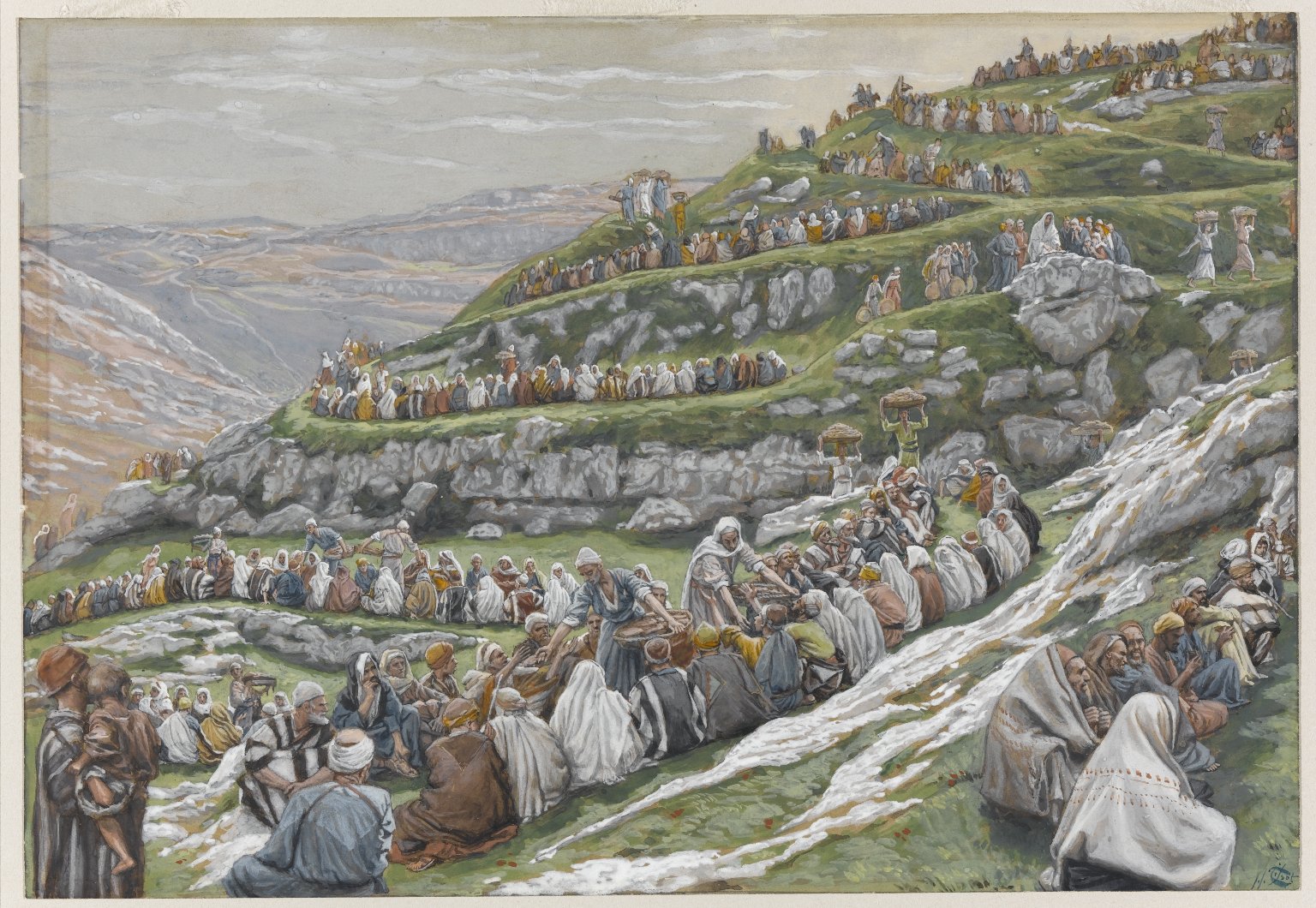
Our Lord asks the people to sit down. There are five thousand men, and possibly another fifteen thousand women and children. Jesus takes the loaves and fishes, and blesses them. After thanking God for the food, He gives it to be distributed among the people. Not only does everyone eat as much as they want, but at the end there are twelve baskets of leftovers. It is through prayer and blessing that bread can be broken, distributed, and provide sustenance on a scale, and in a way, that defies human expectation and understanding. Not only are a huge number of people fed, but, as a sign of the super-abundance of God’s love and mercy, there is more left over at the end than there was to begin with! In the same way, the kingdom of God, of which the bread is a sign, grows when God’s love is shared. This love satisfies people’s deepest needs. The more we share it, the more there is. The Kingdom of God is a place of generosity and love, a place where our needs are answered and we are transformed.

John’s Gospel describes how Jesus takes, blesses, breaks and distributes bread, demonstrating how the Kingdom of God works. This looks forward to the Institution of the Eucharist by Jesus at the Last Supper.

The same miraculous feeding that took place by the shore of the Sea of Galilee will also happen here today. We gather as the people of God, united in love and faith, and offer ourselves. Like the small boy, we give the bread that we have, so that it may be taken, blessed, broken and given out. In this way we become partakers in the mystical supper of the Kingdom of God. We eat the Body of Christ not as ordinary food, but as bread for the journey of faith. The Eucharist is the sign and token of God’s love. This is the means by which we enjoy the close presence of God.

The crowd recognises the miraculous feeding as a sign, signifying God’s love, and the presence of the Messiah in their midst. In response they want to enact a political coup, and make Jesus a king. This is not what Our Lord wants, so He withdraws, to be alone, to be with God. The multiplication of the loaves and fishes shows us that God is active in the world, pouring out His generous love, meeting our needs, and healing our wounds. This is not the start of a political campaign. Christ does not want earthly power. Instead, He wants to reign in our hearts, and in our lives.

God uses barley bread — the bread of the poor — to feed His people. This points to the Eucharist and to the Cross as the place where humanity is nourished and healed. We follow Christ’s example week by week, because without Him, our hunger remains unsatisfied. 

Today and every day we give thanks that God loves us. He reveals His love in ways which often surprise us, and which defy our expectations. When we trust in Christ we are transformed in this life, and the next. We become prepared for Heaven, where we, and all the faithful, will sing the praises of God the Father, God the Son, and God the Holy Spirit. To whom be ascribed all glory, dominion, and power, now and forever. Amen.

James Tissot – The Multiplication of the Loaves and Fishes (Brooklyn Museum)