Trinity XXII

‘As for you, brothers and sisters, do not grow weary in doing good’ 

‘A pheidiwch chwithau, frodyr a chwiorydd, â blino ar wneud daioni’ (2Thess 3:13)

Have you ever visited Greece or one of the Greek Islands? I have been lucky to have had the opportunity to do so. Saint Paul visited Northern Greece, founded Churches, and  wrote his earliest letters to a Christian community there. Thessalonica is now the second largest city in Greece. It was always important as a trading port, and also lay on the Via Egnatia, the route which connected the Adriatic Sea in the West with the Black Sea in the East. In Thessalonica the Christian community grew out of the synagogue. Because Paul, trained as a Pharisee, he began his evangelism within the community and traditions in which he had been raised. However, relations deteriorated and the new Christians found themselves facing persecution from the synagogue and its members. This, understandably, led the Christian community to focus, even to fixate, upon the Second Coming of Jesus Christ. They imagined that Our Lord’s Return was immanent, and that He would come back, and sort everything out.

Some people, however, took advantage of the situation as an excuse for laziness, and relying upon the generosity of others. Such behaviour was bound to attract the attention of St Paul. As well as being a religious and legal expert, Paul was a tent-maker. While he was in Corinth he lodged with Priscilla and Aquila, who also made their living through this trade, and perhaps he aided them in their work during his stay. The Apostle did not wish to be a burden for the communities he visited as he travelled around the Mediterranean proclaiming the Good News of Jesus Christ. 

In our epistle this morning, Paul begins by issuing a stern warning:

‘Now we command you, brothers, in the name of our Lord Jesus Christ, that you keep away from any brother who is walking in idleness and not in accord with the tradition that you received from us.’ (2Thess 3:6)

The Christian Community was not supposed to a place for idle freeloaders. It was a place where people lived out generous love, but of course this could be taken advantage of. Paul offers the Thessalonians an example of how to live, and goes on to say:

‘For you yourselves know how you ought to imitate us, because we were not idle when we were with you, nor did we eat anyone’s bread without paying for it, but with toil and labour we worked night and day, that we might not be a burden to any of you.’ (2Thess 3:7-8)

Paul’s vision of a Christian community is one that is well-ordered, with everyone contributing. Each member has their part to play. Living a Christian life is something which we do both as individuals and as a community. Hence St Paul’s advice to the Thessalonians: ‘As for you, brothers, do not grow weary in doing good’ (2Thess 3:13). We are called to be active and make a difference, here and now, in our community. As a Church we have been striving to do this for nearly two thousand years. It remains a work in progress. 

We may encounter problems in our life of faith, and all of St Paul’s Letters to Churches address these. Christians learn to overcome difficulties together, growing in grace, in love, and in forgiveness, as a family, brothers and sisters in Christ. And this is what the Kingdom of God looks like: people such as you and me, deepening our faith, growing in the love of God and the love of each other. Living the life of Heaven here on earth, today. 

This loving fellowship is what makes the Church attractive. The world around us finds it all to easy to get wrapped up in selfishness, concerned with wealth, power, and status. Whereas Christians value love and service — of God and each other — to help build a new society where all are loved, all are valued, and all are cared for. 

On the night before He died, Our Lord and Saviour washed His disciples feet, before celebrating the Eucharist with them. He commanded us to ‘do this in remembrance of him’, so that service and self-giving love should remain at the heart of who and what we are. This is the source and summit of the Christian life. Participating in the Eucharist helps us to grow together in love, and to proclaim God’s saving truth in who and what we are, and what we do. Christ offers the world the alternative which it longs for deeply.

Let us then come to Him, to be healed by Him. Let us be nourished with His Body and Blood and strengthened to proclaim Him in word and deed, so that the world may come to believe and sing the praises of God the Father, God the Son, and God the Holy Spirit, Duw Dad, Duw y Mab, a Duw yr Ysbryd Glân. To whom be ascribed all glory, dominion and power, now and forever. Amen

Sexagesima 2025

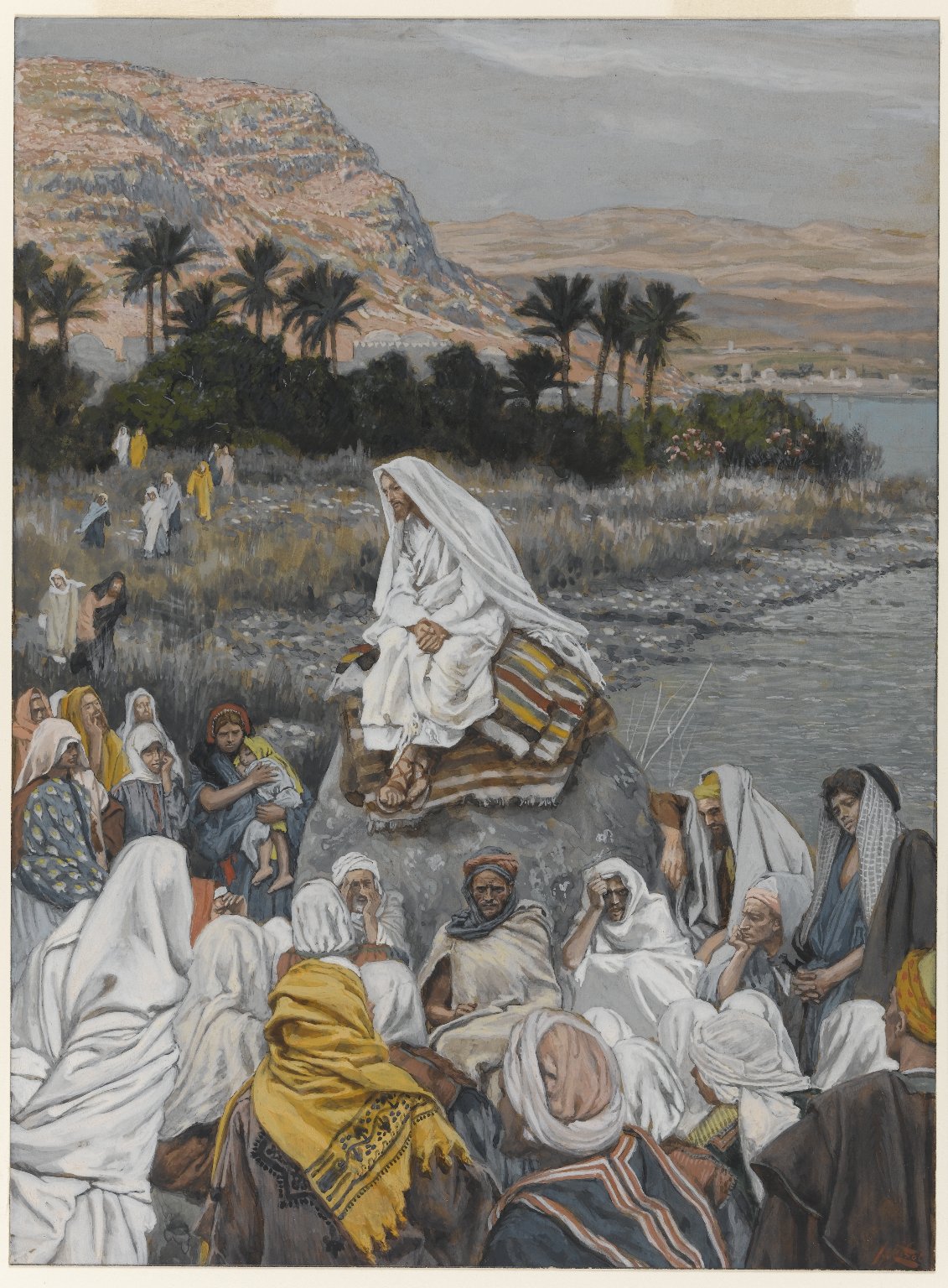
The majority of human civilisations, religions, and philosophies champion some version of the phrase ‘Do unto others as you would have them do unto you’. This doctrine is known as The Golden Rule, and it is good advice. If we want other people to be nice to us, then being nice to them is a good place to start. However, is it enough? No, not as far as Our Lord is concerned. He calls us to something deeper, something more radical, and more world-changing.

‘Meddai’r Iesu wrth ei ddisgyblion, “Ond wrthych chwi sy’n gwrando rwy’n dweud: carwch eich gelynion, gwnewch ddaioni i’r rhai sy’n eich casáu, bendithiwch y rhai sy’n eich melltithio, gweddïwch dros y rhai sy’n eich cam-drin.”’

‘Jesus said to his disciples, “But I say to you who hear, Love your enemies, do good to those who hate you, bless those who curse you, pray for those who abuse you.”’ (Lk 6:27-28)

At the heart of Christianity is an idea: love your enemies. To love one’s enemies seems completely counter-intuitive. Our enemies often want to harm us. Naturally, we want to resist them, even crush them. But instead we are told to love them! We do this because love is at the heart of the Gospel. God loves us and God is born as one of us in order to transform each and every one of us, by His Grace. Jesus dies on the Cross for love of us, that we might be healed and reconciled with God. Love wills the good of another, and has the power to end conflict. This is what Jesus shows us. He bridges the gulf between God and humanity by dying for us. As Christians we are called to follow Christ’s example and put His love into practice in our lives. Jesus asks us to follow His example, living lives which are radically distinct from the ways of the world.

Just as Jesus calls us to live differently and provides us with an example of how to put the theory into practice, He also teaches us what God expects of us in terms of generous love:

‘Pan fydd rhywun yn dy daro di ar dy foch, cynigia’r llall iddo hefyd; pan fydd un yn cymryd dy fantell, paid â’i rwystro rhag cymryd dy grys hefyd. Rho i bawb sy’n gofyn gennyt, ac os bydd rhywun yn cymryd dy eiddo, paid â gofyn amdano’n ôl. Fel y dymunwch i eraill wneud i chwi, gwnewch chwithau yr un fath iddynt hwy’

‘To one who strikes you on the cheek, offer the other also, and from one who takes away your cloak do not withhold your tunic either. Give to everyone who begs from you, and from one who takes away your goods do not demand them back. And as you wish that others would do to you, do so to them.’ (Lk 6:29-31)

The generosity Jesus expects of His followers is exacting. We are told not to react to violence with violence, to give away what we have, and also to follow the Golden Rule, treating others as we would wish to be treated. 

The world around us is not very good at forgiveness, or turning the other cheek. It prefers to write people off than to admit the possibility of change: that’s how someone is, and that’s how they are going to stay. In showing forgiveness and generosity we recognise the fact that we too are human, that we too are flawed, and that we too make mistakes. Change is possible; things do not have to stay the same. People tend to love those who love them back, and hate those who hate them. The point is to also show love to those who do not love us, so that they become lovely to us, and loveable in themselves. Only love can transform something filled with hate and anger. Love and generosity are how God in Christ shows humanity how to live. Jesus’ life and death demonstrate what love in action means.

Jesus then reiterates His teaching to His disciples:

‘Nage, carwch eich gelynion a gwnewch ddaioni a rhowch fenthyg heb ddisgwyl dim yn ôl. Bydd eich gwobr yn fawr a byddwch yn blant y Goruchaf, oherwydd y mae ef yn garedig wrth yr anniolchgar a’r drygionus. Byddwch yn drugarog fel y mae eich Tad yn drugarog.’

“But love your enemies, and do good, and lend, expecting nothing in return, and your reward will be great, and you will be sons of the Most High, for he is kind to the ungrateful and the evil. Be merciful, even as your Father is merciful.” (Lk 6:35-36)

There is a paradoxical quality to what Jesus demands of us. We are to expect nothing, and yet we are told that we will receive everything. God’s love and mercy are to be experienced rather than understood. We can be merciful because God has shown us mercy, and continues so to do. The transforming power of God’s love and mercy is shown fully in the Mystery of the Eucharist, where we are fed by God and fed with God, so that His Love might transform us. This is God’s generosity, shown to us so that we might be generous in return. Through this generosity we have the opportunity to live in a different way, and encourage others to do the same. Jesus offers the world a way out of selfishness and sin, a chance to be God’s people living life in all its fulness.

As well as being non-violent and generous, Christ calls us to be non-judgemental:

“Peidiwch â barnu, ac ni chewch eich barnu. Peidiwch â chondemnio, ac ni chewch eich condemnio. Maddeuwch, ac fe faddeuir i chwi. Rhowch, ac fe roir i chwi; rhoir yn eich côl fesur da, wedi ei wasgu i lawr a’i ysgwyd ynghyd nes gorlifo; oherwydd â’r mesur y rhowch y rhoir i chwi yn ôl.”

“Judge not, and you will not be judged; condemn not, and you will not be condemned; forgive, and you will be forgiven; give, and it will be given to you. Good measure, pressed down, shaken together, running over, will be put into your lap. For with the measure you use it will be measured back to you.” (Lk 6:37-38)

If we want God to be loving and merciful towards us, then we need to demonstrate in our lives that we are living the way God wants us to live. What Jesus proposes is something costly and difficult, which requires us to go against the human instincts which lead us to be selfish, judgmental and unkind. But if we all try to follow this teaching together we will be built up as a community of loving generosity,making the Kingdom a reality here and now.

Each of us, on our own, is not able to do this. Even as a Christian community we will struggle. But if we trust God to be at work in us, with His Grace perfecting our nature, then it becomes a possibility. God asks the impossible of us, not so that we will fail, but so that we rely entirely upon our Creator and Sustainer to bring this miracle to pass. 

When we rely upon God together then we can be built up in love, as living stones, a temple to God’s glory. We proclaim God’s love and truth to the world, through forgiveness and sacrificial love. Clothed in the humility of our knowledge of our need of God’s love and mercy, let us come to Him. Let us be fed by Him, be fed with Him. Let us be healed and restored by Him, so that we can live lives which speak of the power of His kingdom. So that the world may believe and give glory i Duw Dad, Duw y Mab, a Duw yr Ysbryd Glân. I’r hwn y priodoler pob gogoniant, arglwyddiaeth, a gallu, yn awr, ac yn oes oesoedd. Amen.