Candelmas 2025

As a child growing up in Wales in the 1980s, I was brought up with tales of rugby glory, which then (as now) seemed sadly lacking. We had won the Five Nations Championship eight times between 1969-1980, but it wasn’t until 2005 that I saw Wales win a Grand Slam. It was a long time to wait. As someone who has spend a large part of their life living in England, rugby mattered. It was part of my identity, I was proud to be Welsh, and I wanted them to win. I wanted more glory days.

Seeing glory return is at the heart of today’s celebration. Forty days after the birth of a first-born son, the Law of Moses required the sacrifice of two doves be made at the Temple. At the same time the mother was purified in a mikvah, a ritual bath. Today the Church celebrates the Presentation of Christ in the Temple, also known as the Purification of the Blessed Virgin Mary, and commonly called Candlemas. The name Candlemas comes from the fact that this is the day when the candles to be used in church over the coming year are traditionally blessed. This is so that they may burn as lights which proclaim Christ, the true Light, the light to lighten the world. Today, therefore has three different titles, but it is one feast. On February 2nd, Christians celebrate who and what Jesus Christ is, and what He does. We give thanks that in Him we see the glory of God. 

The account of presentation of Christ in the Temple begins with the obedience of Mary and Joseph, the Holy Family, as they follow the law of Moses. The focus then moves to Simeon:

‘dyn cyfiawn a duwiol oedd hwn, yn disgwyl am ddiddanwch Israel; ac yr oedd yr Ysbryd Glân arno. Yr oedd wedi cael datguddiad gan yr Ysbryd Glân na welai farwolaeth cyn gweld Meseia’r Arglwydd’

this man was righteous and devout, waiting for the consolation of Israel, and the Holy Spirit was upon him. And it had been revealed to him by the Holy Spirit that he would not see death before he had seen the Lord’s Christ.’(Lk 2:25-26)

God has spoken to Simeon, telling him that during his lifetime he will see the Messiah, the consolation of Israel. This elderly holy man longs to see God put things right once again. And today the promise made to him by God, revealed through the Holy Spirit, has been fulfilled in the six-week-old infant he holds in his arms. Simeon can prepare to meet his maker happy in the knowledge that Salvation has dawned in this little child.

At Epiphany Christ was made manifest to the whole world. Now His saving message is proclaimed, so that all people may know that salvation has come in the person of Jesus Christ. The Glory of God has returned to the Temple. However, along with the joy there is sadness. Simeon speaks to the Blessed Virgin Mary of her Son’s future, and of the pain she will endure at the foot of the Cross. Before he dies Simeon is looking to the Cross, the vehicle of our salvation. It is at the Cross that Mary will stand to see humanity freed from its sin through God’s love and mercy. Through grace, the free gift of God in Christ.

Candlemas marks the conclusion of our celebration of Christmas. We now move on from the mystery of the Incarnation, to that which gives it its true meaning: the Death and Resurrection of Jesus Christ. Candlemas is a preparation for the coming season of Lent. It changes our focus and attention from Jesus’ birth to His death, on the Cross.

The significance of what is happening is not only recognised by Simeon, but also by Anna. Anna is a woman who is close to God, a woman of prayer, a holy woman. She recognises what God is doing in Christ, and she proclaims it, so that God’s redemption of His people may be known. As Christians we are called to be like her. Our lives, everything that we say, or think, or do, should proclaim the saving truth of God’s love to the world. 

After leaving the Temple the Holy Family finally return to Nazareth. There Jesus begins to grow up, obedient to God and to His parents. In today’s Gospel we see all of human life — birth, death, work, and normality — all hallowed by the God who loves us, and who gives His Son for us. God shares our human life, as He will share our death, to restore us, to heal us.

For almost two thousand years Christians have celebrated the proclamation of the Glory of God through the Eucharist. This is the Thanksgiving which Our Lord entrusted to us, so that we can be nourished and healed by Him by partaking in His Body and Blood. We do this so that we might be transformed. Nourished by Word and Sacrament, we are sent out into the world to invite others to share the joy and love of the Lord. United with our brothers and sisters in every land we give glory i’r Duw Dad, Duw y Mab, a Duw yr Ysbryd Glân. I’r hwn y priodoler pob gogoniant, arglwyddiaeth, a gallu, yn awr, ac yn oes oesoedd. Amen.

Epiphany 2025

IN Britain there is a tradition that royal births are announced by a notice placed on an easel outside Buckingham Palace. When the present King was born in 1948 the notice read: ‘Buckingham Palace November 14th, The Princess Elizabeth, Duchess of Edinburgh was safely delivered of a prince at nine fourteen pm today. Her Royal Highness and her son are both doing well.’ Historically, royal births were witnessed by important people. They were public occasions rather than private ones. Everyone wants to know what is happening. 

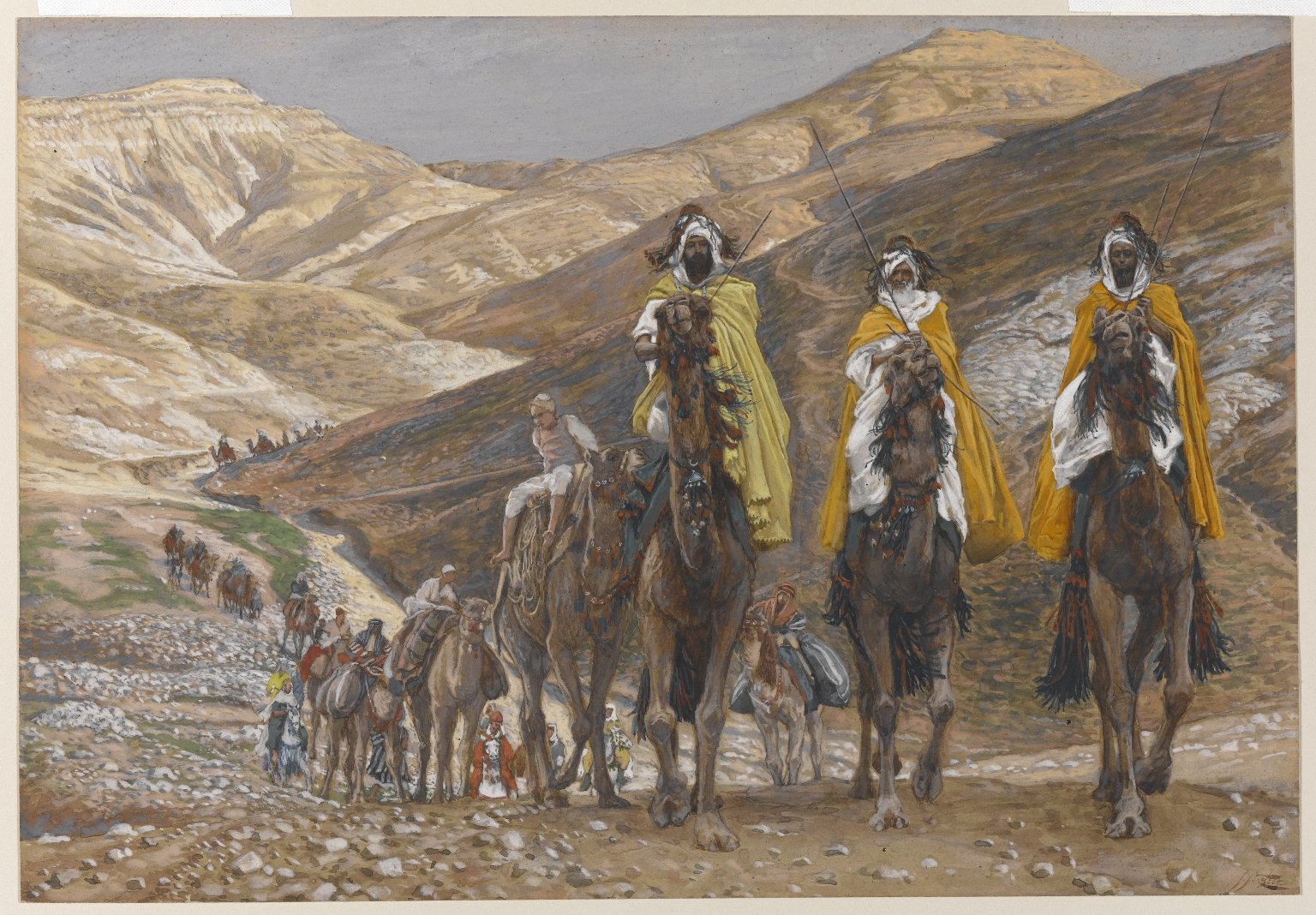
Meanwhile, out in the East, in what is now modern day Iraq and Iran, astrologers noticed something in the sky. This phenomenon possibly involved Jupiter and either Saturn, or the star Regulus in the constellation Leo. It was a significant astronomical event, which signified a royal birth. These Magi travelled to Judaea, as that was the direction that the celestial sign was pointing them towards. As they were looking for a royal birth, their first stop was, naturally, the palace. When they arrived at Herod’s palace they asked:

‘Ble mae’r hwn a anwyd yn frenin yr Iddewon? Oherwydd gwelsom ei seren ef ar ei chyfodiad, a daethom i’w addoli.’

‘Where is he who has been born king of the Jews? For we saw his star when it rose and have come to worship him.’ (Mt 2:2)

They make a reasonable statement, but their words have a strange effect:

‘A phan glywodd y Brenin Herod hyn, cythruddwyd ef, a Jerwsalem i gyd gydag ef. Galwodd ynghyd yr holl brif offeiriaid ac ysgrifenyddion y bobl, a holi ganddynt ble yr oedd y Meseia i gael ei eni’

‘When Herod the king heard this, he was troubled, and all Jerusalem with him; and assembling all the chief priests and scribes of the people, he enquired of them where the Christ was to be born’ (Mt 2:3-4)

News of a royal birth is troubling to Herod, an Aramean who bought the right to be king by paying the Romans. He was very concerned by questions of legitimacy because his own claim was based on shaky ground. Herod’s religious experts then explain where the child will be born, quoting a prophecy of Micah, which we heard on the Fourth Sunday of Advent:

“Ym Methlehem Jwdea, oherwydd felly yr ysgrifennwyd gan y proffwyd: ‘A thithau Bethlehem yng ngwlad Jwda, nid y lleiaf wyt ti o lawer ymysg tywysogion Jwda, canys ohonot ti y daw allan arweinydd a fydd yn fugail ar fy mhobl Israel.'”

‘In Bethlehem of Judea, for so it is written by the prophet: “And you, O Bethlehem, in the land of Judah, are by no means least among the rulers of Judah; for from you shall come a ruler who will shepherd my people Israel.”’ (Mt 2:5-6)

Bethlehem, the city of David, is where a King of the lineage of David will be born. A Davidic King poses a huge threat to Herod. There could be an uprising, and regime change. Herod needs to know what is going on. Since knowledge is power, he sends the Magi off to find the child and to report back.

What looks like a simple and straightforward enquiry is actually the first part of a plan to eliminate this potential threat to Herod’s rule. This will later be carried out in the Massacre of the Innocents — the wholesale slaughter of young male children in Bethlehem. Herod certainly has no intention of relinquishing his power, his behaviour is a sham. The Wise Men then leave the royal palace and head for Bethlehem.

‘a dyma’r seren a welsent ar ei chyfodiad yn mynd o’u blaen hyd nes iddi ddod ac aros uwchlaw’r man lle’r oedd y plentyn. A phan welsant y seren, yr oeddent yn llawen dros ben.’

‘And behold, the star that they had seen when it rose went before them until it came to rest over the place where the child was. When they saw the star, they rejoiced exceedingly with great joy.’ (Mt 2:9-10)

The Magi have journeyed hundreds of miles because they saw a celestial event. Now this heavenly light is above Bethlehem, and the travellers have reached the new-born King. 

‘Daethant i’r tŷ a gweld y plentyn gyda Mair ei fam; syrthiasant i lawr a’i addoli, ac wedi agor eu trysorau offrymasant iddo anrhegion, aur a thus a myrr.’

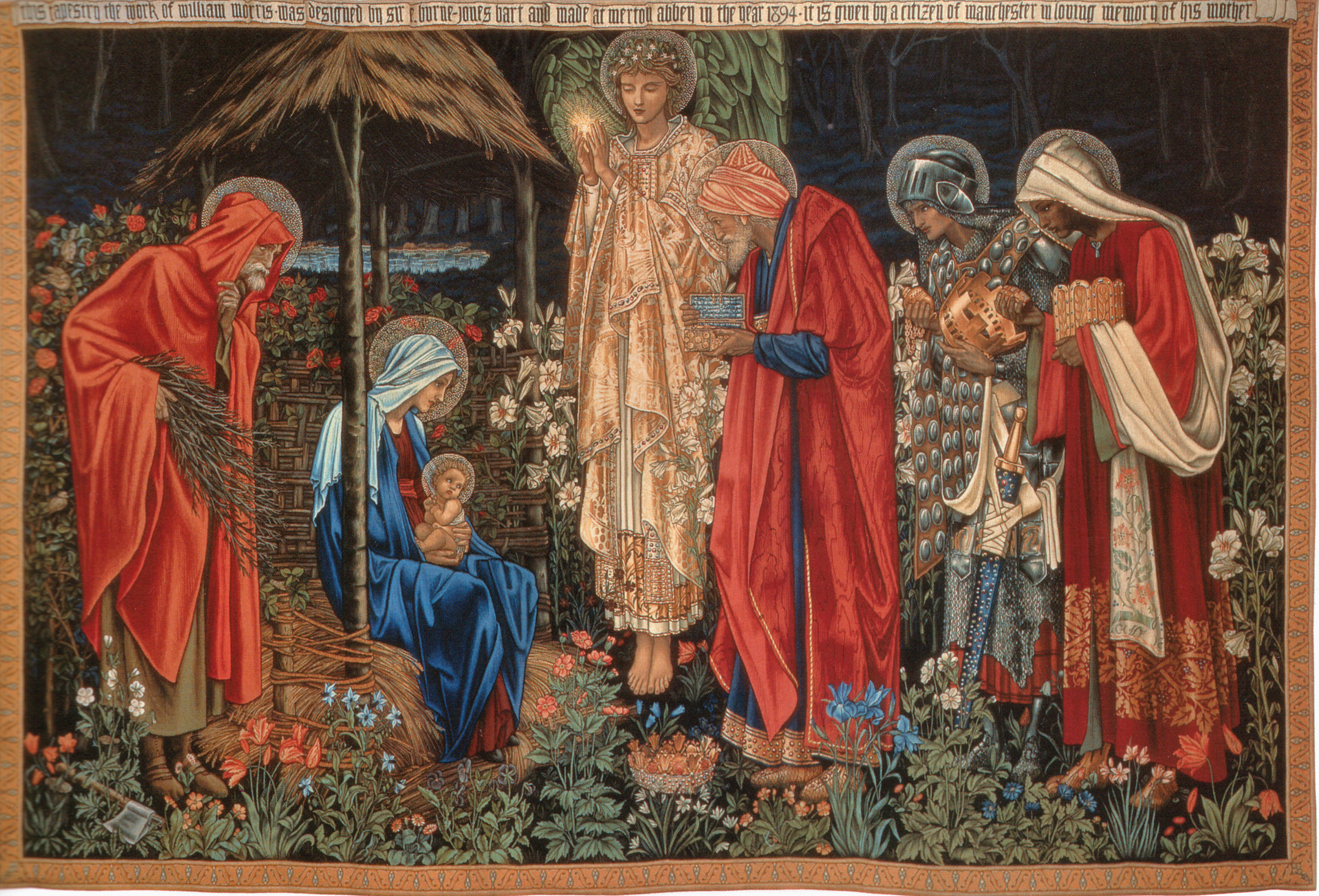
‘And going into the house they saw the child with Mary his mother, and they fell down and worshipped him. Then, opening their treasures, they offered him gifts, gold and frankincense and myrrh.’ (Mt 2:11) 

Gold, frankincense, and myrrh seem to us unusual presents. They are, however, all expensive, costly, and precious things, and therefore suitable royal gifts. These offerings were prophesied by Isaiah: 

‘byddant i gyd yn cludo aur a thus, ac yn mynegi moliant yr Arglwydd.’

‘They shall bring gold and frankincense, and shall bring good news, the praises of the Lord’ (Isa 60:6)

Gold, is a precious metal, which is pure and does not tarnish. It is a gift fit for a king. Gold’s purity points to a life of perfect obedience, the pattern of how life should be lived. Incense, from Arabia, was offered to God in the Temple in Jerusalem. As the sweet-smelling smoke rose, it looked like prayers rising to God. Frankincense is a sign of worship, and honour, representing how humanity should respond to God. Myrrh was often a component of the ointment used for embalming bodies. These three gifts given at Jesus’ birth point to Christ’s kingly power, and His role in worship as our great High Priest, which leads to His to Death and Burial.

The Wise Men are warned by a dream not to go back to Herod, and not to tell him who Jesus is. This is because the Judean king does not want to worship Jesus, he wants to kill Him, and safeguard his own position. And so the unexpected visitors leave as mysteriously as they arrived. These pilgrims from afar gave Our Lord gifts which celebrate His Humanity and Divinity, and which look forward to His Death and Resurrection. The beginning of Jesus’ earthly life looks to its end, because it is all part of the outworking of salvation history.

The events that we are celebrating today were prophesied by Isaiah in the first reading this morning:

‘Cod, llewyrcha, oherwydd daeth dy oleuni; llewyrchodd gogoniant yr Arglwydd arnat.’

‘Arise, shine, for your light has come, and the glory of the Lord has risen upon you’ (Isa 60:1)

The birth of the Messiah is a sign of God’s glory, and the salvation He will bring for all people: 

‘Fe ddaw’r cenhedloedd at dy oleuni, a brenhinoedd at ddisgleirdeb dy wawr.’

‘And nations shall come to your light, and kings to the brightness of your rising’ (Isa 60:3)

These pilgrims are the Magi, the Wise Men, the Kings who represent the entire Gentile (non-Jewish) World. They have come to worship God born among us. The travellers recognise who it is they have come to see, and their gifts fulfil Isaiah’s prophecy. What might appear strange at first sight is, in fact, both apt and right: to worship God and honour a King, and to recognise the Saviour in their midst. Today, the World recognises the Birth of Jesus Christ, and the mystery of salvation is proclaimed to all.

Likewise, as we celebrate the Feast of the Epiphany, we also look forward.Both to Our Lord’s Baptism in the River Jordan and to His first miracle at the Wedding at Cana. Christ, He who is without sin shows humanity how to be freed from sin and to have new life in Him.

So, today, as we continue to celebrate Jesus’ birth, let us raise our voices to join with the wise men in giving praise and honour to God the Father, God the Son, and God the Holy Spirit. To whom be ascribed all glory, dominion and power, now and forever. Amen.
Advent IV: The Visitation

OVER the Christmas and New Year period many of us will be travelling to visit friends and relatives, or will have visitors to stay. Our normal routines may have to be changed, but any disruption is outweighed by the joy that company brings. This Sunday is all about journeys to visit family. It takes the best part of a week to walk the ninety miles from Nazareth to Bethlehem. This is a difficult journey, which is uphill all the way. The Gospel this morning tells the story of the Visitation, when Mary went to visit her cousin Elizabeth, to help her during her pregnancy. Two expectant mothers together and two journeys to be with family. These journeys form an important part of the Christmas story, and change the world.

What was about to happen in Bethlehem had been announced. The prophet Micah contains one of the great Messianic prophecies:

‘ohonot ti y daw allan i mi un i fod yn llywodraethwr yn Israel, a’i darddiad yn y gorffennol, mewn dyddiau gynt.’

‘from you shall come forth for me one who is to be ruler in Israel, whose coming forth is from of old, from ancient days.’ (Micah 5:2)

Christ’s coming is ordained: He will be Israel’s true king. God’s plan of salvation has always been that Jesus should be born, and all of human history from the Creation onwards has been leading up to this point. Jesus will:

‘Fe arwain y praidd yn nerth yr Arglwydd, ac ym mawredd enw’r Arglwydd ei Dduw. A byddant yn ddiogel, oherwydd bydd ef yn fawr hyd derfynau’r ddaear; ac yna bydd heddwch.’

‘shepherd his flock in the strength of the Lord, in the majesty of the name of the Lord his God. And they shall dwell secure, for now he shall be great to the ends of the earth. And he shall be their peace.’ (Micah 5:4-5a)

Our Lord is the Good Shepherd who cares for His flock and lays down His life for us. We can dwell secure because Christ is our peace, and in Him we have the hope of Heaven and the promise of eternal life. These are huge claims to make, and yet Jesus will fulfil them. 

This is why the author of the Letter to the Hebrews can be confident that:

‘â’r ewyllys honno yr ydym wedi ein sancteiddio, trwy gorff Iesu Grist sydd wedi ei offrymu un waith am byth.’

‘by that will we have been sanctified through the offering of the body of Jesus Christ once for all’ (Hebrews 10:10)

The eternal offering of a sinless victim, both frees humanity of its sins, and also restores our relationship with God and with one another. It is an act of perfect obedience: prepared by God for Christ to do His will and sanctify humanity, to heal us and restore us. The Incarnation IS God’s plan for the salvation of humanity, it is not Plan B!

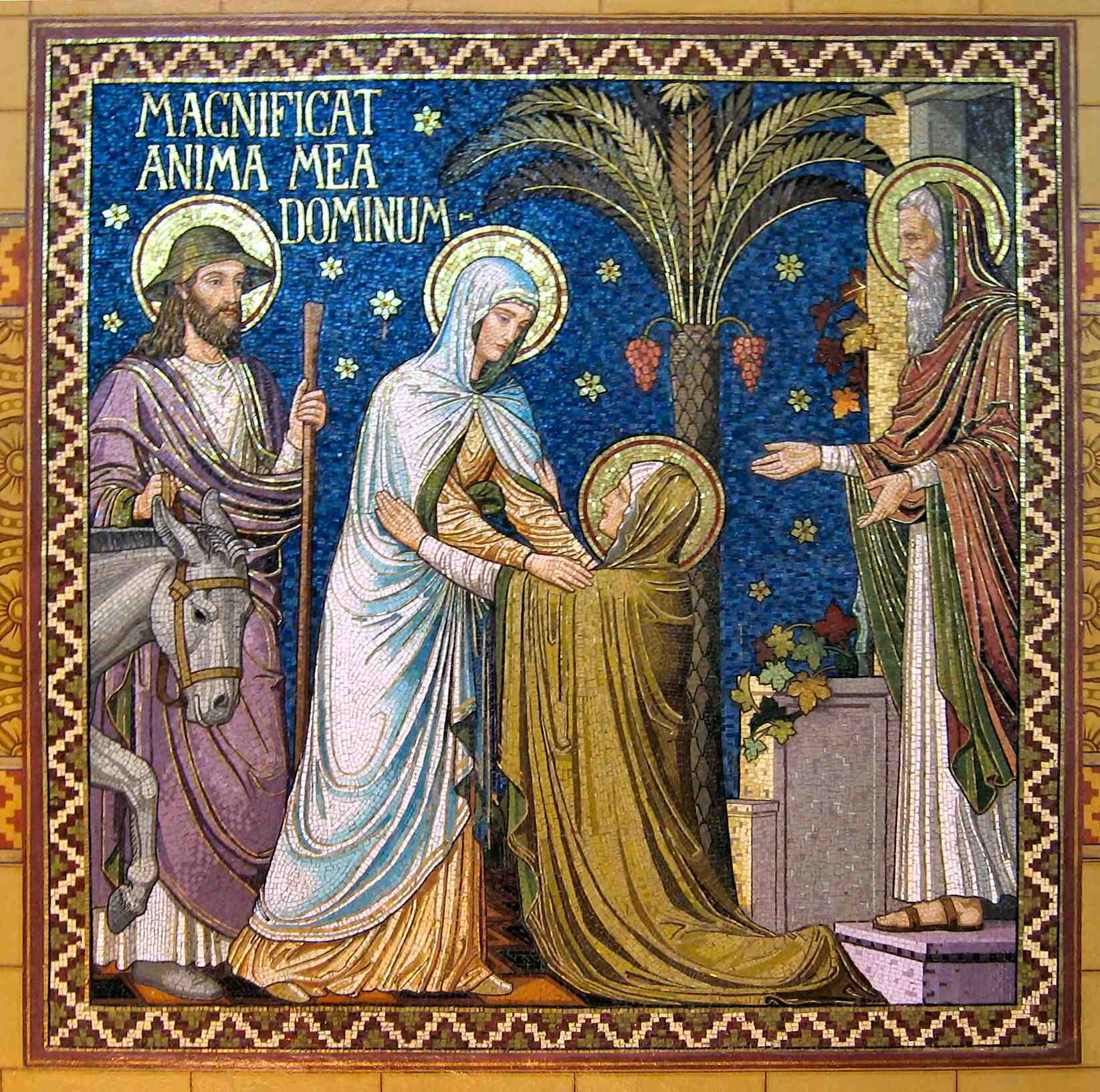
So while Mary, Joseph, and the donkey are making their way to Bethlehem, we turn our eyes elsewhere. The Gospel this morning is St Luke’s account of the Visitation, when Mary goes to see her older cousin Elizabeth, who is pregnant with her son, John the Baptist.

Pan glywodd hi gyfarchiad Mair, llamodd y plentyn yn ei chroth

And when Elizabeth heard the greeting of Mary, the baby leaped in her womb.’ (Lk 1:41)

Even before he was born, John recognises Jesus, and leaps for joy, announcing Christ’s presence and preparing His way. This leads Elizabeth to say to Mary:

‘Bendigedig wyt ti ymhlith gwragedd, a bendigedig yw ffrwyth dy groth.’

Blessed are you among women, and blessed is the fruit of your womb!’ (Lk 1:42)

Mary is blessed, because she says, ‘Yes’ to God, and she will soon give birth to a baby boy. This is no ordinary child, but God with us, Emmanuel. Elizabeth recognises that Mary’s obedience and humility undoes the sinfulness of Eve. That she who knew no sin might give birth to Him who would save us and all humanity from our sin. It is through the love and obedience of Mary that God’s love and obedience in Christ can be shown to the world. This is demonstrated in absolute perfection when, for love of us, Jesus opens His arms to embrace the world with the healing love of God on the Cross. Mary’s child will grow to be the good Shepherd, laying down his life for His flock, so that we may have life in all its fullness. As Christians, we prepare to celebrate Christmas because it points us to the Cross and beyond, and shows us once and for all, God’s great love for us.

We celebrate Mary because in all things she points to her Son. It is not about her, it is all about Jesus. We honour the Mother of God; and we worship the Son of God. We worship Him who died for love of us and all humankind. Jesus, who gave himself, to die so that we might live. The process of salvation starts with a young woman being greeted by an angel, and saying, ‘Yes’ to God.

Our salvation is very close indeed. We can feel it. We know that God keeps His promises. We can prepare to celebrate this Christmas festival with joy, because we know what is about to happen: a baby will be born who will save humanity from their sins. He is the one whom John the Baptist recognises as the Lamb of God, the one who takes away the sins of the world. This is the Good news we share with the world around us: that God loves us, was born for us, and dies and rises again, for us. Everything: all that Jesus is and says and does — from His taking flesh in the womb of His mother, His Birth, His Life, Death and Resurrection — proclaim God’s love to us. This is what we are preparing to celebrate: God’s love of humanity. Our Heavenly Father has always loved us, and always will. God is love. 

Let us therefore prepare to celebrate that love, so that it can fill our hearts and minds, making us into living proclamations of God’s love. God loves us so that we might become lovely, and gave His life for us, so that we may come to share  in His life. This is the hope proclaimed by the prophets. This is the hope of Advent. This is our hope! And, as we await Christ’s Coming, let us give praise and honour to God the Father, God the Son, and God the Holy Spirit. To whom be ascribed all glory, dominion and power, now and forever. Amen.
Epiphany 2023

Every year the Oxford English Dictionary creates a shortlist of eight words,  which are ‘chosen to reflect the mood, ethos, or preoccupations of the past year.’ The words are then put to a public vote. In 2023 the word selected to be the Oxford Word of the Year was ‘rizz’. This is a colloquial word meaning ‘style, charm, or attractiveness’, and is a shortened form of the word ‘charisma’. I would like to propose a word of the year for 2024: ‘hope’. Each one of us longs, from the very core of our being, to hear a message of hope. Hope for the future, something to inspire us. Today we continue to celebrate Christ’s birth at Christmas, as we mark the Solemn Feast of the Lord’s Epiphany: His coming into the world to bring hope. Wise men recognise who Jesus is and why He is important. As Christians, we continue to place our hope in the Word made flesh, Jesus Christ, born among us, and now made manifest to the world as its saviour. 

The Feast of Epiphany celebrates the coming of Wise Men from the East who followed a star, looking for a baby, who has been born king of the Jews. They go to Jerusalem, to see King Herod, as they assume that a king will be born to a royal family, in a palace. You cannot fault their reasoning. The Magi see a sign prefiguring a royal birth and go to the place where they think it will occur. Their arrival, however, does not quite have the effect they were expecting:

‘When Herod the king heard this, he was troubled, and all Jerusalem with him; and assembling all the chief priests and scribes of the people, he enquired of them where the Christ was to be born.’ 

‘Ond pan glybu Herod frenin, efe a gyffrowyd, a holl Jerwsalem gydag ef. A chwedi dwyn ynghyd yr holl archoffeiriaid ac ysgrifenyddion y bobl, efe a ymofynnodd â hwynt pa le y genid Crist.’ (Mt 2:3-4)

The wise men assume that the birth of a royal baby is a cause for celebration, but is certainly isn’t for Herod! His family bribed the Romans to gain the throne. They were not related to King David, and they were not even from Israel. So, on hearing the news from the wise men, Herod assembles all the religious and legal experts he can find. He is terrified that his position as king is under serious threat. The child could have a legitimate claim. There could be a revolution and regime change. Herod needs to know where this child will be born.

They told him, “In Bethlehem of Judea, for so it is written by the prophet: ‘And you, O Bethlehem, in the land of Judah, are by no means least among the rulers of Judah; for from you shall come a ruler who will shepherd my people Israel.’” 

‘A hwy a ddywedasant wrtho, Ym Methlehem Jwdea: canys felly yr ysgrifennwyd trwy’r proffwyd; A thithau, Bethlehem, tir Jwda, nid lleiaf wyt ymhlith tywysogion Jwda: canys ohonot ti y daw Tywysog, yr hwn a fugeilia fy mhobl Israel.’(Mt 2:5-6)

Once Herod knows where the child is expected to be born, the next thing is to find out when the birth will take place, and finally to establish who this royal baby is. Bethlehem is the birthplace of the Davidic monarchy: King David was born there, and so was Jesus. The Gospel quotes a prophecy of Micah ‘And you, O Bethlehem, in the land of Judah, are by no means least among the rulers of Judah; for from you shall come a ruler who will shepherd my people Israel.’ (Micah 5:2) to support the claim. 

‘Then Herod summoned the wise men secretly and ascertained from them what time the star had appeared. And he sent them to Bethlehem, saying, “Go and search diligently for the child, and when you have found him, bring me word, that I too may come and worship him.” After listening to the king, they went on their way.’ 

‘Yna Herod, wedi galw y doethion yn ddirgel, a’u holodd hwynt yn fanwl am yr amser yr ymddangosasai y seren. Ac wedi eu danfon hwy i Fethlehem, efe a ddywedodd, Ewch, ac ymofynnwch yn fanwl am y mab bychan; a phan gaffoch ef, mynegwch i mi, fel y gallwyf finnau ddyfod a’i addoli ef. Hwythau, wedi clywed y brenin, a aethant;’(Mt 2:7-9)

Herod claims that he wants to know when the baby was born, so that he may come and worship the infant king. However, he has no intention of relinquishing his power, his behaviour is a sham. The Wise Men leave the royal palace and head for Bethlehem.

‘And behold, the star that they had seen when it rose went before them until it came to rest over the place where the child was. When they saw the star, they rejoiced exceedingly with great joy.’ 

‘ac wele, y seren a welsent yn y dwyrain a aeth o’u blaen hwy, hyd oni ddaeth hi a sefyll goruwch y lle yr oedd y mab bychan. A phan welsant y seren, llawenychasant â llawenydd mawr dros ben’ (Mt 2:9-10)

The Magi have travelled hundreds of miles because they saw a star in the heavens. Now it is above Bethlehem, and they have reached the new-born King. 

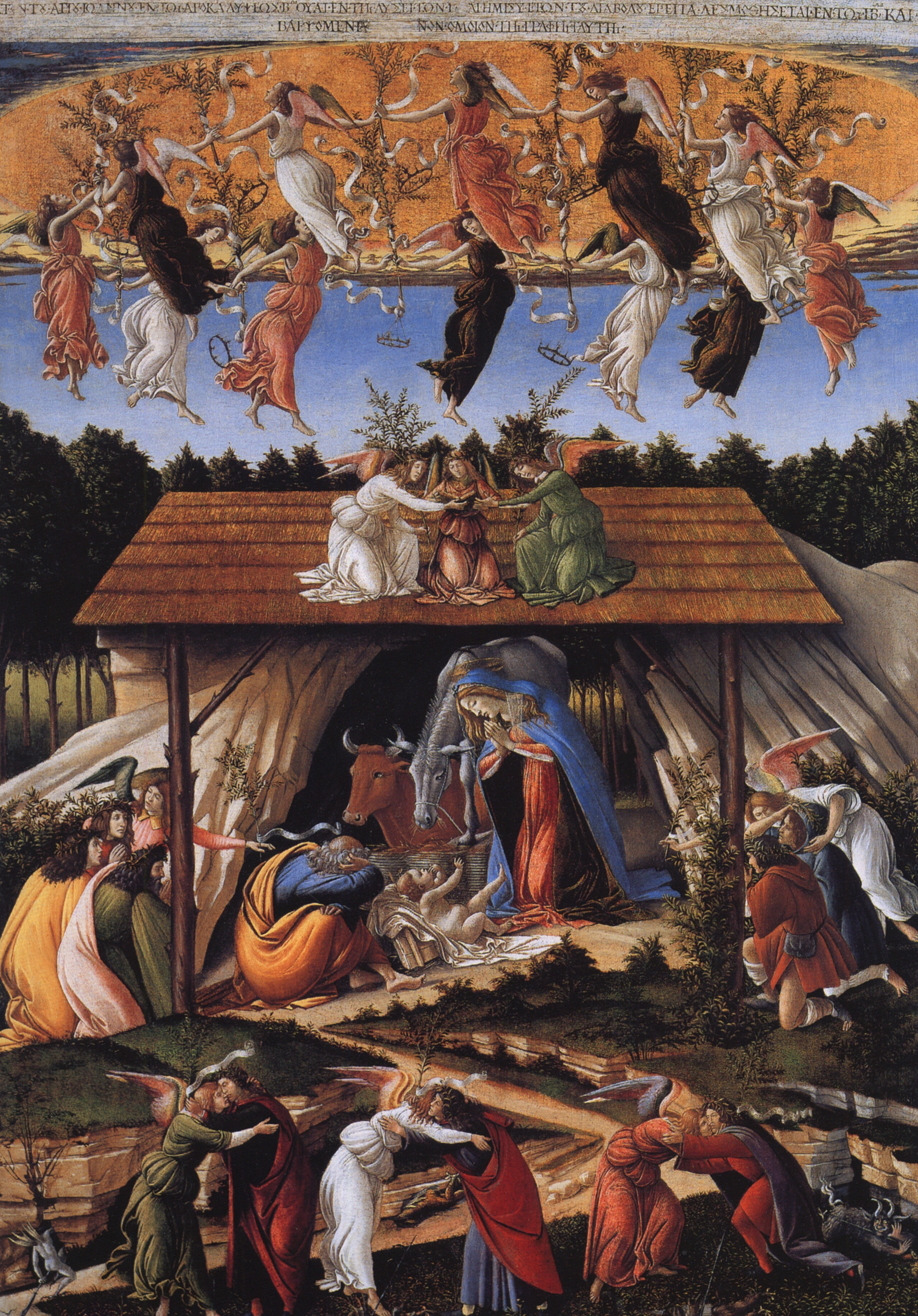
‘And going into the house they saw the child with Mary his mother, and they fell down and worshipped him. Then, opening their treasures, they offered him gifts, gold and frankincense and myrrh.’ 

‘A phan ddaethant i’r tŷ, hwy a welsant y mab bychan gyda Mair ei fam; a hwy a syrthiasant i lawr, ac a’i haddolasant ef: ac wedi agoryd eu trysorau, a offrymasant iddo anrhegion; aur, a thus, a myrr.’ (Mt 2:11) 

Gold, frankincense, and myrrh are unusual gifts for a baby, even a royal one. They are, however, all precious and expensive. The first gift, gold, is a precious metal, which is pure and does not tarnish. It is a gift fit for a king. Gold’s purity points to a life of perfect obedience, the pattern of how life should be lived. The second gift is frankincense from Arabia, which was offered to God in the Temple in Jerusalem. As the sweet-smelling smoke rose, it looked like prayers rising to God. Frankincense is a sign of worship, and honour, representing how humanity should respond to God. The final gift, Myrrh, was an ointment, used for embalming. It speaks of death. Even in Jesus’ birth, we see Christ’s kingly power, and His obedience to the will of the Father. We see His role in worship as our great High Priest, which leads Him to Death and Burial.

‘And being warned in a dream not to return to Herod, they departed to their own country by another way.’ 

‘Ac wedi eu rhybuddio hwy gan Dduw trwy freuddwyd, na ddychwelent at Herod, hwy a aethant drachefn i’w gwlad ar hyd ffordd arall.’ (Mt 2:12)

The Wise Men are warned to neither go back to Herod, nor to tell him who Jesus is. This is because Herod does not want to worship Jesus, he wants to kill Him, in order to safeguard his own position on the throne. And so the unexpected visitors leave as mysteriously as they arrived. These pilgrims from afar gave Our Lord gifts which celebrate His Humanity and Divinity, and which point towards His Death and Burial. The beginning of Jesus’ earthly life looks to its end, because it is all part of the outworking of salvation history.

The Wise Men recognise the baby as the Messiah, the one who brings hope. They are gentiles from a distant land and show that the hope that Jesus brings is for all the peoples of the earth. The Magi recognise that the star points to a royal baby, of the House of David. Jesus is the true king, who will give hope and freedom to His people, and all the earth, through His life, death, and Resurrection. Here at the beginning of Christ’s earthly life we can see where it leads. Jesus gives us hope, hope in God who keeps His promises and offers salvation to His people.

So in 2024 let us be filled with the hope, joy and love. Let us give thanks for the Saviour made manifest, and may we proclaim the Good News of Our Salvation. In the name of the Father, the Son, and the Holy Spirit. Amen

James Tissot – The Magi journeying (Brooklyn Museum)

Advent IV – Trust!

Those of you who are fans of The Sound of Music will know that to begin at the beginning is a very good place to start. This morning’s Gospel does exactly that, by going back to the Annunciation of the Angel Gabriel to the Blessed Virgin Mary, the beginning of the story of Christmas. As we prepare to celebrate Christ’s birth this evening and tomorrow, it is only natural to return to the point of Our Lord’s Conception to help us to ponder the wonderful mystery which God accomplishes for our sake. 

At its heart, Christianity is a religion which declares that God becomes a human being, so that humanity can share in the life of God. This is what we believe as Christians, and why we proclaim this truth to the world. The greatest news in human history is a teenage pregnancy — something that is shocking and scandalous, is how God saves us. This is why St Paul can write to the Romans:

the revelation of the mystery that was kept secret for long ages but has now been disclosed and through the prophetic writings has been made known to all nations (Rom 16:25-26)

This is the proclamation of the Good News of Jesus Christ. It starts with an encounter in Nazareth. A young woman is engaged to be married and receives a visitor, who says:

“Greetings, O favoured one, the Lord is with you!” (Lk 1:28)

Mary is confused, she cannot understand what is going on. Biblical accounts of the interaction between God and humanity show us that ours is a God who takes risks. Mary could refuse, she could say no, and human history would be profoundly different. So the angel Gabriel says, ‘Paid ag ofni, Do not be afraid’. Mary does not need to be afraid because God is doing something wonderful. She will bear a son and call him Jesus, which means ‘God saves’. Jesus the Son of God will save God’s people from their sins, and will fulfil the promise made to David, which we heard in our first reading. 

Mary cannot understand how this will happen. The Holy Spirit, God active in the world, and the bond of love between God the Father and God the Son, will overshadow her. God will take flesh in her womb and be born as one of us. So Mary replies:

“Behold, I am the servant of the Lord; let it be to me according to your word.” (Lk 1:38)

Mary says ‘Yes’ to God. This is a ‘Yes’ which undoes the ‘No’ of Eve. It brings about the salvation of humanity, through the Life, Death, and Resurrection of her Son. Mary’s obedience to the will of God, ‘the obedience of faith’ (Rom 16:26), both trusts God to be at work, and makes it possible. We can be joyful because of Mary’s ‘yes’ to God. In her we have a pattern of obedience to the will of God which all Christians are to follow.

In the first reading this morning King David is worried. He says to Nathan the prophet:

“See now, I dwell in a house of cedar, but the ark of God dwells in a tent.” (2 Samuel 7:2)

Since the Exodus from Egypt, the Ark of the Covenant has resided in a  tabernacle, a tent, a temporary dwelling. This worries David, but God is not concerned whether he lives in a tent or a temple. It does not matter. God’s response is not to accept David’s offer, but instead to make David an amazing counter-offer:

Moreover, the Lord declares to you that the Lord will make you a house. When your days are fulfilled and you lie down with your fathers, I will raise up your offspring after you, who shall come from your body, and I will establish his kingdom…  I will be to him a father, and he shall be to me a son… And your house and your kingdom shall be made sure for ever before me. Your throne shall be established for ever.’” (2 Samuel 7:11-12, 14, 16)

God offers David a family, a Royal House. This is a promise which bears fruit with the coming of Jesus, born of the House of David, and the Son of God. Jesus’ mother Mary will be the living Ark of the New Covenant. This will be a covenant that is not made in stone, but rather in flesh; the flesh of the Son of God, who is born for us, and who dies for us. Mary’s womb will be the place where the Son of God will begin to dwell with us:

Therefore the Lord himself will give you a sign. Behold, the virgin shall conceive and bear a son, and shall call his name Immanuel. (Isa 7:14)

Immanuel in Hebrew means ‘God (is) with us’ and this is what we are preparing to celebrate at Christmas: God being among us. Let us then follow Mary’s example of obedience, listen to God, and trust Him to be at work in us. Let us welcome Jesus both in Bethlehem and here upon the altar, where God, who became flesh and blood in the womb of Mary, offers us His Body and Blood in the Eucharist, so that we might share His Life. Let us, like Mary, say, ‘Yes’ to God, welcome him into our hearts. Let us be beacons in the world, shining with God’s love. May all this Christmas come to believe and trust in God the Father, God the Son, and God the Holy Spirit. To whom be ascribed all glory, dominion, and power, now and forever. Amen.

Sr. Grace Remington OCSO, Mary and Eve, crayon and pencil, 2005

The First Sunday of Advent

THE recent changes to speed limits on the roads in Wales have made everyone who drives much more interested in reading road signs. Gone are the old certainties, and instead we are left unsure. Not long ago things used to be relatively simple, now they have become far more complex. At times, it can be hard to know exactly what speed we are supposed to be doing, and we can end up concentrating more on the signs than on the road ahead. This situation is far from ideal, but in some ways it mirrors the confusion and lack of certainty that many Christians feel regarding the second coming of Our Lord and Saviour Jesus Christ. But we are given signs to follow.

The season of Advent begins today. Four weeks of preparation, of getting ready. At this time of year the Church prepares to meet Christ in two ways. Firstly, in the annual celebration of His Birth at Christmas, and also by preparing for His Second Coming as our Saviour and our Judge. During the four weeks of Advent the Liturgy encourages us to ponder the Four Last Things: Death, Judgement, Heaven, and Hell. It is important to think about such things. Our earthly lives are finite, but afterwards we have an eternal destiny. Christians believe that Jesus was born, lived, died, and rose again to give us the hope of eternal life in Him. In the grand scheme of things, what really matters are our lives and our souls: who we are, what we are, what we do, and where our motivations come from.

Our readings over the last few weeks have been preparing us for the change of season with their focus on judgement and Our Lord’s Return. They highlight a paradox. We do not know when Christ will return, but we are told that the signs will be clear. 

Jesus says:

“But concerning that day or that hour, no one knows, not even the angels in heaven, nor the Son, but only the Father. Be on guard, keep awake. For you do not know when the time will come.” (Mk 13:32-33)

There is no way that we can know exactly when Jesus will return, so all we can do is be vigilant and be alert. We can live lives that demonstrate our readiness by living out our faith, here and now, every single day. We have only one life to live here on Earth, and we must try, with God’s grace, to do the best we can. In today’s world, the idea of living for today is frequently seen as more important than caring about what will happen to us when we die. However, as Christians, we know that how we live our lives matters not just for today, but for eternity. Jesus calls all people to repentance — to turn around and change the whole of their lives and follow Him in their thoughts, their words, and their deeds. We need to follow Jesus’ teachings for the Kingdom of God is close at hand.

What matters is not when Our Lord returns, but whether we are ready to meet him, when that day comes. The words of Isaiah from this morning’s first reading can help us. The prophet is looking forward to the redemption of Israel, the coming of the Messiah, and a new future after exile. Against a picture of human sin, and rebellion against God, there is the implicit possibility of something better. God has plan, a plan for good things, and this plan is for our well-being, brought about through Jesus. Isaiah is convinced of both the power and the love of God, to remake us, and restore us, to enrich us with His grace.

We are not left alone in all this. God both tells us the nature and source of the problem, and provides us with a solution. He helps us along our way: strengthening and encouraging us to turn our lives around, and follow Him. Jesus instructs us to be vigilant, to keep awake, and be ready to greet Him, when He comes.

Our Lord will return, and we look forward to this as each year we celebrate His first coming as a baby in Bethlehem. The prophet Isaiah eagerly anticipates the Incarnation, when he asks God:

‘Oh that you would rend the heavens and come down,’ (Isa 64:1)

This is exactly what God does at the Annunciation, when Mary conceives through the power of the Holy Spirit, so that He can be born in Bethlehem. Christ comes among us, as a weak and vulnerable child, to show all humanity that we are loved and valued. His birth demonstrates that healing and reconciliation are possible. Scripture is fulfilled, and we can have hope for the future. Christmas, Christ’s birth, should fill us with joy, and wonder. What greater present could we offer to the Infant Jesus than hearts filled with love and lives lived in the true freedom proclaimed by the Gospel. At one level, it doesn’t matter when the Second Coming is. What matters is living lives infused with the values of the Kingdom of God, here and now.

Christ’s first coming in Bethlehem was proclaimed through signs, in the prophecy of Isaiah and others. The star proclaimed the Messiah’s birth, guiding wise men from the East. In a similar way, Our Lord’s Second Coming will be announced in the celestial realms:

“But in those days, after that tribulation, the sun will be darkened, and the moon will not give its light, and the stars will be falling from heaven, and the powers in the heavens will be shaken. And then they will see the Son of Man coming in clouds with great power and glory. And then he will send out the angels and gather his elect from the four winds, from the ends of the earth to the ends of heaven.” (Mk 13:24-26)

When Jesus comes the signs will be clear, just as the fig tree heralds the start of summer. God gives us signs so that we can be sure and ready to meet Him when He comes.

This Advent, God asks us, to turn our lives around, and prepare ourselves to meet our Lord, just as He meets us today. We encounter Him at the altar in His body and blood, in His words proclaimed in Scripture, in the yearly remembrance of His Nativity, and in His coming in glory as our Saviour and our Judge. God was prepared to go to any length to meet us, to be with us, and to heal us. In turn we need to prepare ourselves, our souls and our lives to meet Him. We do this so that we may be united with Him forever. In anticipation of this day we sing the praises of God the Father, God the Son, and God the Holy Spirit. To whom be ascribed all glory, dominion, and power, now and forever. Amen.

Michelangelo The Last Judgement, Sistine Chapel