Trinity XII: Take up your Cross

One of the curious aspects of life as a clergyman is the number of times that people ask you to pray for specific weather: be it rain, or sunshine. The 1662 Book of Common Prayer actually contains prayers for rain and fair weather, just after the Litany, after Morning and Evening Prayer. Therefore, I can only assume that weather-related prayers have always been high on the list of people’s priorities. Generally speaking, however, my response has been to say, “Sorry I’m in Sales, not Management”. I have always been concerned that people seem to think that I am somehow able to influence the Almighty when it comes to matters meteorological. Fundamentally, prayer doesn’t change God, it changes us. Now, on reflection, I’m more inclined to listen to their prayer request and honour it, as I do every other. 

All Christians are called to evangelise, to share the Good News of the Kingdom of God. However, doing so can feel a bit like being a salesperson. To some people you are just annoying. Most people show varying degrees of disinterest, but a few people are genuinely interested in what you have to say. However, if you were to use this morning’s Gospel as a sales-pitch, I doubt that you would meet with much success. Jesus’ stark presentation of the cost of discipleship is not necessarily an easy way to win people round. 

Christ has attracted a large group of people eager to hear what He has to say, so Our Lord explains what discipleship is all about:

“Os daw rhywun ataf fi heb gasáu ei dad ei hun, a’i fam a’i wraig a’i blant a’i frodyr a’i chwiorydd, a hyd yn oed ei fywyd ei hun, ni all fod yn ddisgybl imi.”

“If anyone comes to me and does not hate his own father and mother and wife and children and brothers and sisters, yes, and even his own life, he cannot be my disciple. Whoever does not bear his own cross and come after me cannot be my disciple.” (Lk 14:26-27)

Families do not always get on well, but Christians are called to ‘love their enemies’ (Lk 6:27) and to despise our own families, and even our own lives. This seems strange, and paradoxical. Aren’t Christians called to be people of love? Indeed we are, and the primary focus of our love as Christians should be God. Jesus is saying that God must be the most important thing in our life. Nothing should get in the way of the fact that our primary relationship is not with our parents, siblings, spouse, or offspring, but with the God in whose image we were created.

To make this a reality each and every one of us is called to bear a cross, to risk torture and death, and offer the whole of our lives to God. We are told we must follow Jesus, wherever that may lead. Our commitment has to be total, there is no room here for half-measures. Hence the stark imagery employed by Our Lord. Jesus uses strong and disturbing language to shock us. He reminds us that in Him we are called to a new relationship which takes us away from traditional social structures. That means that everyone in the Church becomes our brother and sister, and that our primary responsibility is to love Christ, and follow Him. To imitate Him, and take up our own Cross.

Our Lord then uses the images of a construction project and of warfare to reinforce the point that we need to see the matter through to its conclusion. Jerusalem was no stranger to either. King Herod’s rebuilding of the Temple took 46 years to complete, and war (or the threat of it) was a constant factor of everyday life. The point is being made that there is nothing worse than a half-finished building. It says, ‘The constructors didn’t plan properly, or get the finances in place first’. Likewise, in war you fight believing that you can win, otherwise you sue for peace. At this point, we remember and pray for our brothers and sisters in Ukraine and the Holy Land and throughout all the world where there is violence and war.

At the end of the Gospel passage Jesus reiterates His main point:

“Yr un modd, gan hynny, ni all neb ohonoch nad yw’n ymwrthod â’i holl feddiannau fod yn ddisgybl i mi.”

“So therefore, any one of you who does not renounce all that he has cannot be my disciple.” (Lk 14:33)

Over-attachment to material things is a problem: our stuff cannot save us, only God can. Are possessions useful or pleasant? Certainly. Can we enjoy them? Yes. But the problem occurs when their importance becomes misplaced. All that really matters is eternal life with God, sharing the Divine life of Love. Nothing we ‘have’ is really ours. We can enjoy material things and share them with others, but in a few years time our earthly life will have ended. There are no pockets in shrouds! As the old saying goes: ‘you can’t take it with you when you go’. 

As Christians, we gather, to hear God’s word read and explained; to pray together; to be nourished together. We do these things so that we may grow together in love, and to embrace the Cross. Having died with Christ in our baptism, and being raised to new life with Him, we live out our faith in our lives. Our discipleship can be costly and difficult. It calls us to renounce the world and rely upon God, together, as a community of faith. To form a new community where old ties and distinctions are done away with, where we have a new identity, and where we are called to a higher purpose. 

These are not easy things to achieve, and the Christian community has, for two thousand years, struggled to live up to these goals. But we put our trust in a God who forgives our sins and failings, who understands our humanity from the inside. We are not written off, or cast aside. We are not abandoned or discarded. This is because we are all made in God’s image, people of infinite intrinsic value. Christ died for us, to give us eternal life, to heal our wounds. He calls us to follow Him, so that we may find His freedom, and share in His triumph over death and sin. 

As Christians, we are called to something great and wonderful: to stand, like Christ as a contradiction, offering the world a new way to live; a way of life not of death; a way of generosity rather than selfishness. We are called to renounce the world and instead to embrace the freedom, and joy, that is the life of the Kingdom of God. 

It is truly liberating to look at the world as Jesus wants us to, knowing that all that really matters is loving God, and loving our neighbour. Doing this can be difficult, especially when times are uncertain as they are today, but we know that we can trust the God who loves us, who gives His life for us. The God who comes to us to feed us with Himself. So let us together follow him and invite others to do so. Let us give thanks for all our blessings and sing the praises of God, Duw Dad, Duw y Mab, a Duw yr Ysbryd Glân. God the Father, God the Son, and God the Holy Spirit. I’r hwn y priodoler pob gogoniant, arglwyddiaeth, a gallu, yn awr, ac yn oes oesoedd. To whom be ascribed all glory, dominion and power, now and forever. Amen

Trinity Sunday 2025

In the Science fiction film, ‘The Matrix’ and its sequels there is a character called ‘Trinity’, played by Carrie-Anne Moss. The name comes from her handle as a computer hacker. She, apparently, chose this moniker to give the impression that she is as mysterious and enigmatic as the concept of a Three-in-one being (God the Holy Trinity: Father, Son, and Holy Spirit). So what do Christians believe about the Trinity?

In today’s Gospel Jesus promises His disciples that,

“Ond pan ddaw ef, Ysbryd y Gwirionedd, fe’ch arwain chwi yn yr holl wirionedd. Oherwydd nid ohono’i hun y bydd yn llefaru; ond yr hyn a glyw y bydd yn ei lefaru, a’r hyn sy’n dod y bydd yn ei fynegi i chwi.”

“When the Spirit of truth comes, he will guide you into all the truth, for he will not speak on his own authority, but whatever he hears he will speak, and he will declare to you the things that are to come.” (Jn 16:13)

God gives us the Holy Spirit to guide us and lead us in our lives. We are invited into a relationship and journey of faith, which enables us to grow and develop. As Christians, we worship One God, Father, Son, and Holy Spirit. They are not three Gods, but one God. That the three persons of the Trinity are one God is itself a mystery. It is the enigma of God’s very self: a Trinity of Persons, consubstantial, co-equal, and co-eternal. ‘Consubstantial’ means ‘of one being’, i.e. they are One. ‘Co-equal’ means that the persons of the Trinity are equal to one another, none is greater or lesser than another. ‘Co-eternal’ means that they all have no beginning in time all three are eternal. We know God most fully in the person of Jesus Christ, the Incarnate Word of God, who was born of the Virgin Mary, died upon the Cross for our sins, was raised to New Life at Easter, and sent the Holy Spirit at Pentecost. In Christ, God discloses who and what He is. We know Him through His outpouring of love into our lives.

All Christians are baptised in the name of the Trinity. Our worship is Trinitarian. The service this morning began with the words ‘Yn enw’r Tad, a’r Mab, a’r Ysbryd Glân, In the name of the Father, and of the Son, and of the Holy Spirit, Amen.’ Eucharistic Services have begun by invoking the name of the Trinity, and making the sign of the Cross, for as long as we have descriptions of them, going back almost 1900 years. And 1700 years ago just before the Council of Nicaea, this morning’s first reading was one of the most controversial passages in Scripture: 

“Lluniodd yr Arglwydd fi ar ddechrau ei waith, yn gyntaf o’i weithredoedd gynt.”

“The Lord possessed me at the beginning of his work, the first of his acts of old.” (Proverbs 8:22)

In the Greek text of Proverbs, used widely around the Mediterranean at that time, the verb translated as ‘possessed’ was one that meant ‘created’. This lead some people — the followers of Arius — to argue that this passage means that Jesus Christ was created and not begotten. This would therefore mean that Jesus had a beginning in time, and was not eternal. He was therefore somewhat lesser than God the Father. To discuss this theological issue Church Councils were called at Nicaea in ad325, and Constantinople in ad381. These meetings of bishops rejected the Arian ideas and gave us the doctrinal statement known as the Nicene Creed, which we will say together in a few minutes time. Our faith, as Christians, is rooted in our belief in God: Father, Son, and Holy Spirit, consubstantial, co-equal, and co-eternal. This is why the Creed is made up of three sections. It begins by stating what we believe about God the Father. The text then moves on to what we believe about Jesus the Son. The statement of faith then finishes with the Christian beliefs concerning the Holy Spirit. What we believe and how we worship God matters.

Last Sunday we celebrated Whitsun, Y Sulgwyn, the Feast of Pentecost: the Descent of the Holy Spirit upon the disciples in the Upper Room, fifty days after Easter, and ten days after Jesus’ Ascension into Heaven. With the coming of the Holy Spirit, we see the fullness of who God is. As St Paul puts it in his Letter to the Romans:

“oherwydd y mae cariad Duw wedi ei dywallt yn ein calonnau trwy’r Ysbryd Glân y mae ef wedi ei roi i ni.”

“God’s love has been poured into our hearts through the Holy Spirit who has been given to us.” (Romans 5:5)

As Christians, we are given the gift of the Holy Spirit — a spirit of love and joy. This allows us to experience God as He is: the Father who created all that exists; the Son who redeemed humanity; and the Spirit who sanctifies and encourages God’s people. God calls us into a relationship and we respond with worship which honours our Creator and Sustainer. We do this not because God requires our worship, but because of our own need to acknowledge our dependance upon Him. God loves us, and because we know that we are loved, we respond with love and praise. 

The wonderful thing about the outpouring of the Holy Spirit at Pentecost is that it enables us to encounter and experience God in a deeper way. We can know Jesus Christ, the Word made flesh. He speaks to us in Scripture, and He comes to us in the Eucharist, so that we may be nourished by God. In our prayer and worship, we are filled with the Holy Spirit, who transforms us. The Trinity is not an abstract philosophical concept, but rather the manifestation of a generous and loving God. The Christian understanding of God is not of a remote being. God makes His home with us. He gives us His life, and He transforms and heals us in love. This is all possible through the relationship God has with us, through His Son and His Spirit, which is personal to each and every one of us. That is why we celebrate the Trinity today.

In Christ God becomes human, allowing Him to understand us from the inside, so to speak. This is not a distant, impersonal divinity, but one who lives a human life. One who understands our frailty, and who loves us. God sends His Spirit so that we may be encouraged and live out our true potential. We will face difficulties and hardships. Christ promises us no less, as does St Paul in our second reading. But the point is that these experiences, while difficult to endure, can also be positive: we grow and develop through them. It is often through the experience of suffering that we become more loving and forgiving.

God makes us new by his redeeming love and transforms us into what He wants us to be. God — Father, Son, and Holy Spirit — offers us all the opportunity to be something different, something more than we are. If we let Him change us. If we co-operate with His grace. When we are filled with the Holy Spirit, and nourished by Word and Sacrament, God is at work in us, transforming us into His likeness.

So, as we celebrate the mystery of the Holy and Life-giving Trinity, let us pray that we may be changed by God’s love, and share this love with others. Let us give thanks for the mystery and wonder that is God, Duw Dad, Duw y Mab, a Duw yr Ysbryd Glân. God the Father, God the Son, and God the Holy Spirit. I’r hwn y priodoler pob gogoniant, arglwyddiaeth, a gallu, yn awr, ac yn oes oesoedd. To whom be ascribed all glory, dominion and power, now and forever. Amen.
The Trinity Lance McNeel 2009

The Baptism of the Lord 2025

TWO of the most important days of our lives are ones that many of us cannot remember. The first is the day of our birth, and the second is the day of our baptism. While people are often baptised when they are children or adults, many people in this country are baptised as infants. We may have photos of our baptism, and we may remember it or have been told about it by our families. People usually know where and when their baptism took place. Also, having been to other baptisms we know what will have happened on this significant day of our life, when we were welcomed as a member of the Christian community. Jesus’ baptism was in many ways similar to our own, and in some ways it was significantly different.

Early in Luke’s Gospel we hear about John the Baptist, a holy man who has been proclaiming a baptism of repentance for the forgiveness of sins (Lk 2:3). John has been calling people to turn away from their sins, and to turn back to God, and live holy lives. This has a significant effect on the people of Judea. There is an increase in religious observance; something like a religious revival. This, in turn, leads to speculation:

‘Gan fod y bobl yn disgwyl, a phawb yn ystyried yn ei galon tybed ai Ioan oedd y Meseia,’

‘As the people were filled with expectation, and all were questioning in their hearts concerning John, whether he might be the Christ,’ (Lk 3:15)

The people of Israel were longing for the Messiah, the Christ, the Anointed One. The prophesied Messiah is a charismatic King figure, anointed by God, and descended from David, who will make Israel flourish and re-establish the Kingdom of God. 

John the Baptist goes to great lengths to argue that he is not the Messiah. John is the messenger, preparing the way:

‘Yr wyf fi yn eich bedyddio â dŵr; ond y mae un cryfach na mi yn dod. Nid wyf fi’n deilwng i ddatod carrai ei sandalau ef. Bydd ef yn eich bedyddio â’r Ysbryd Glân ac â thân.’

‘I baptize you with water, but he who is mightier than I is coming, the strap of whose sandals I am not worthy to untie. He will baptize you with the Holy Spirit and with fire.’ (Lk 3:16)

The Baptist sees himself as not even worthy to untie the sandals of the Messiah, something a servant would do for their master. John demonstrates great humility, and his actions point forward to the baptism of the Church, instituted by Jesus in the River Jordan. Whereas John baptizes with water, Jesus will baptize with the Holy Spirit and fire. This looks forward to both Our Lord’s death on the Cross, and to Pentecost, when the Apostles are filled with the Holy Spirit.

‘Pan oedd yr holl bobl yn cael eu bedyddio, yr oedd Iesu, ar ôl ei fedydd ef, yn gweddïo. Agorwyd y nef, a disgynnodd yr Ysbryd Glân arno mewn ffurf gorfforol fel colomen; a daeth llais o’r nef: “Ti yw fy Mab, yr Anwylyd; ynot ti yr wyf yn ymhyfrydu.”’

‘Now when all the people were baptized, and when Jesus also had been baptized and was praying, the heavens were opened, and the Holy Spirit descended on him in bodily form, like a dove; and a voice came from heaven, “You are my beloved Son; with you I am well pleased.”’ (Lk 3:21-22)

We then have to ask ourselves why is Jesus being baptized? Jesus is not a sinner. He has no sins from which to repent, and yet He is in the River Jordan, being baptized by John. An explanation is that in His Baptism Jesus is in solidarity with sinful humanity: He does not wish us, His followers, to undergo anything that He would not undergo Himself. Christ is an example of how to come to God and have new life: He shows us the Way. As a sign of divine approval after the Baptism, as Jesus is praying, the heavens open, and the Holy Spirit descends upon Him in the form of a dove. God then says: ‘Ti yw fy Mab, yr Anwylyd; ynot ti yr wyf yn ymhyfrydu. You are my beloved Son; with you I am well pleased.’ (Lk 3:22)

At the beginning of his public ministry, Jesus shows humanity the way to the Father, through Himself. The world sees the generous love of God, which heals and restores us to the light and life of the Kingdom of God. As our baptism is a sharing in the death and resurrection of Jesus, so His Baptism points to the Cross, where streams of blood and water flow to cleanse and heal the world. We see the love of the Father, the power of the Spirit, and the obedience of Son, all for us — people who need God’s love, forgiveness, and healing.

At the moment of Jesus’ Baptism, the fullness of the Godhead is manifested in glory and the divine presence. In the account of Noah’s Ark God makes his love manifest in the form of a dove. At the end of the Flood a dove brings an olive branch back to the Ark, a sign of peace and new life. So now, the Holy Spirit appears in the form of a dove to show us the fullness of God, a relationship of love, which is opened up to us in our baptism. Through our baptism we are invited into the embrace of God’s eternal love. 

The Divine Trinity makes itself manifest in recognition of the Son’s obedience to the Father, and looks forward to the Cross, where God’s love is poured out upon the world, and through which we are saved. In our own baptism, we share in Christ’s Death and Resurrection. In His Baptism, as in His Death, Christ shows us the way to the Father in the power of the Holy Spirit. We are baptised in the name of the Holy and life-giving Trinity. Similarly, our worship this morning began by invoking the name of the Trinity: the Father, the Son, and the Holy Spirit (Yn enw’r Tad, a’r Mab, a’r Ysbryd Glân). And so all of our life as Christians is Trinitarian.

As we celebrate Our Lord’s Baptism in the River Jordan, and as we remember our own baptism, we also look forward to His first miracle at the Wedding at Cana. Christ, He who is without sin, shows humanity how to be freed from transgression and to have new life in Him.

So, today and every day, let us all draw strength from our Baptism and grow in faith, hope, and love, nourished by Christ, and with Christ. Let us share that love with others and give praise and honour i’r Duw Dad, Duw y Mab, a Duw yr Ysbryd Glân. I’r hwn y priodoler pob gogoniant, arglwyddiaeth a gallu, yn awr ac yn oes oesoedd. Amen.

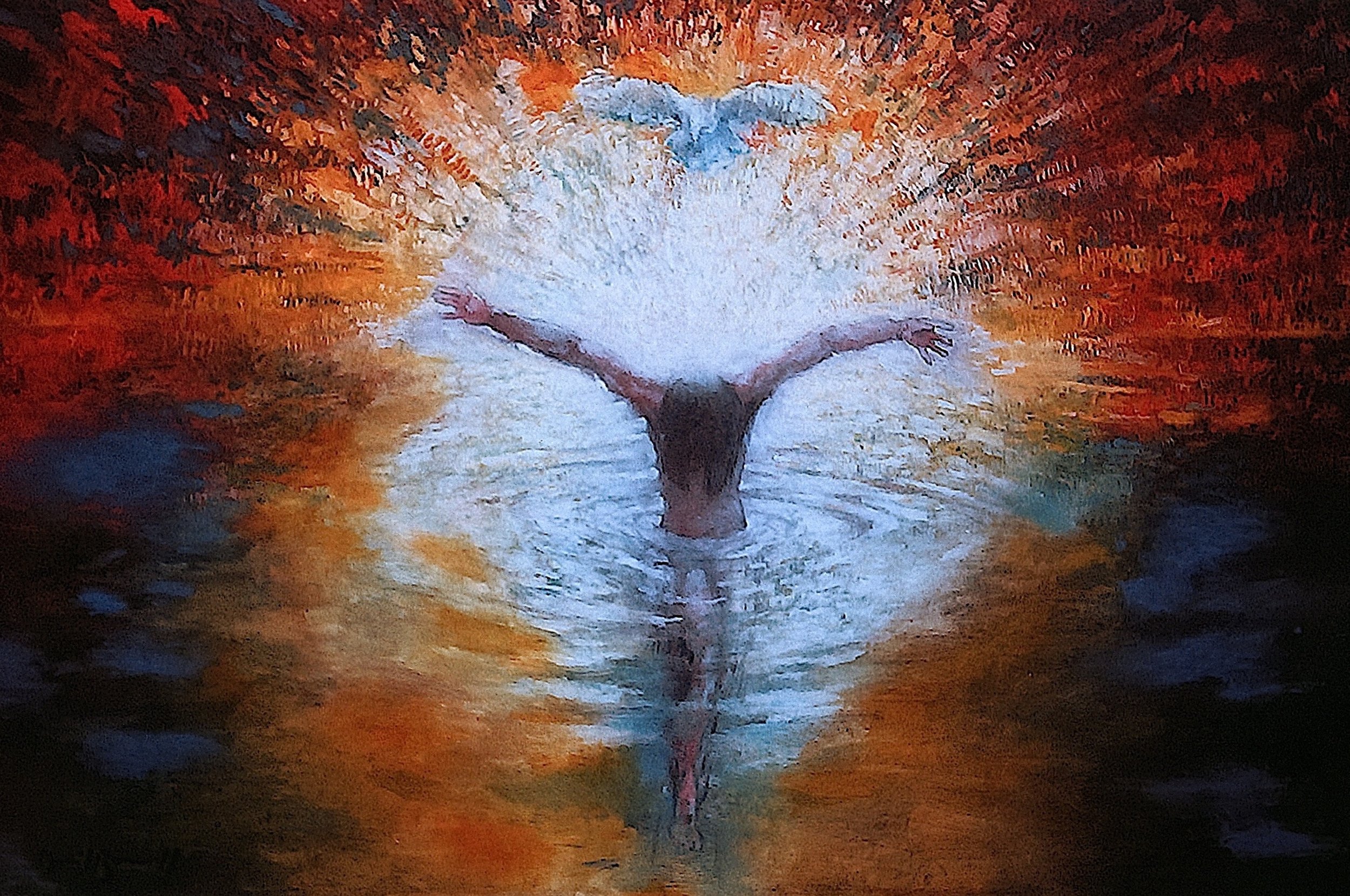
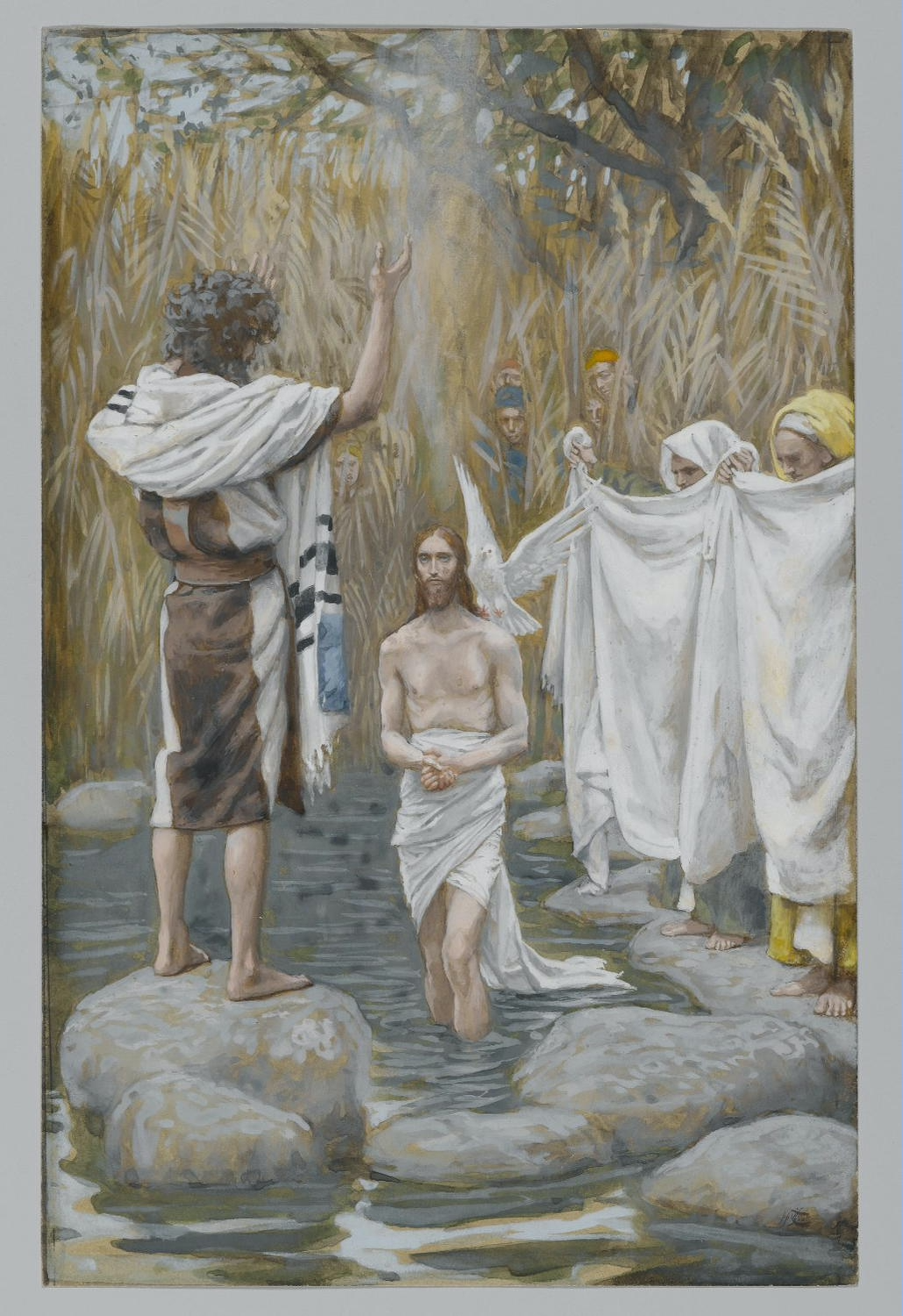
The Baptism of Christ – Daniel Bonnell

Trinity II: ‘Who are my mother and my brothers?’

I grew up listening to the music of the 1960s and 1970s. The large size of an LP record sleeve is a great vehicle for artwork, and photography in particular. The shots are often in soft focus, giving the subjects a gentle dreamlike quality. It can be easy to think that the whole of Our Lord’s ministry was gentle and easy, especially because of how it is shown in Victorian religious art. However, today’s Gospel shows us that this was not always the case. As the passage begins there are so many people gathered around Jesus that He and His disciples are not even able to eat. People are desperate to hear what He has to say, they are desperate for healing. While their need is great, without rest and refreshment, there is no way that Christ can minister to them effectively in the long term without taking care of himself. 

We can have a lot of sympathy for Our Lord’s family, who are genuinely concerned for His wellbeing and that of His friends. They want to take care of His physical needs, as Jesus seems to be prioritising God’s people over Himself.

The religious authorities, however, have a completely different understanding of what is going on:

‘And the scribes who came down from Jerusalem were saying, “He is possessed by Beelzebul,” and “by the prince of demons he casts out the demons.”’

‘A’r ysgrifenyddion hefyd, a oedd wedi dod i lawr o Jerwsalem, yr oeddent hwythau’n dweud, “Y mae Beelsebwl ynddo”, a, “Trwy bennaeth y cythreuliaid y mae’n bwrw allan gythreuliaid.”’ (Mk 3:22)

The scribes understand the actions of this charismatic healer and teacher from Galilee as being the result of demonic possession. This is another way of saying, ‘Jesus is a fraud’ and ‘This isn’t the work of God’. Their attempt to write Christ off not only flies in the face of the evidence, but also does not follow through logically. Jesus challenges them saying: 

“How can Satan cast out Satan? If a kingdom is divided against itself, that kingdom cannot stand. And if a house is divided against itself, that house will not be able to stand. And if Satan has risen up against himself and is divided, he cannot stand, but is coming to an end.” 

“Pa fodd y gall Satan fwrw allan Satan? Os bydd teyrnas yn ymrannu yn ei herbyn ei hun, ni all y deyrnas honno sefyll. Ac os bydd tŷ yn ymrannu yn ei erbyn ei hun, ni all y tŷ hwnnw sefyll. Ac os yw Satan wedi codi yn ei erbyn ei hun ac ymrannu, ni all yntau sefyll; y mae ar ben arno.”(Mk 3:23-26)

If Jesus is possessed by the Devil, how can He cast the Devil out? His accusers have failed to see the spirit of God, the Holy Spirit, at work in Christ. The scribes refusal to see God at work is a sign of their pride and hardness of heart. They cannot discern the works of God, and write off as evil a wondrous demonstration of God’s love for humanity. The religious authorities have failed to discern what is actually going on, and have taken the easy step of finding someone to blame, someone to write off. God’s healing love is being dismissed as the work of the Devil. This is a serious matter, as Jesus explains:

“Truly, I say to you, all sins will be forgiven the children of man, and whatever blasphemies they utter, but whoever blasphemes against the Holy Spirit never has forgiveness, but is guilty of an eternal sin”— for they were saying, “He has an unclean spirit.”

“Yn wir, rwy’n dweud wrthych, maddeuir popeth i blant y ddaear, eu pechodau a’u cableddau, beth bynnag fyddant; ond pwy bynnag a gabla yn erbyn yr Ysbryd Glân, ni chaiff faddeuant byth; y mae’n euog o bechod tragwyddol.” Dywedodd hyn oherwydd iddynt ddweud, “Y mae ysbryd aflan ynddo.” (Mk 3:28-30)

The scribes have condemned themselves. Whereas they have accused Jesus of blasphemy, they are in fact the blasphemers. Jesus does not condemn them, but rather offers humanity the forgiveness of sins. This is another demonstration of God’s love being poured out on the world. The Kingdom of God is a place of healing and restoration.

Our Lord then has a confrontation with His relatives, which leads to a profound moment of teaching. When the crowd tell him that His family are outside, He answers, “Who are my mother and my brothers?””Pwy yw fy mam i a’m brodyr?” (Mk 3:33). Then, looking round, He says: ‘Here are my mother and my brothers!’ ‘Dyma fy mam a’m brodyr i’ (Mk 3:34). 

Family was, and continues to be, important, for Jews juke like it is for people in general. The family unit is the basic building block of society. But Our Lord points out that ties of kinship are less important than humanity’s relationship with God. In our baptism, we all became brothers and sisters in Christ. The Church is our family, which calls us to live in a new way with each other, a way defined by love, and not the exercise of power or control. God offers us healing and wholeness, the forgiveness of our sins, so that we can be in a new relationship both with God and with each other.

The Church comes together as a family to experience forgiveness and to be nourished by Word and Sacrament in the Eucharist. This is the most profound and meaningful thing we, as human beings, can do together. It gives us a foretaste of the joy of Heaven. In it we are fed by God, and with God. God gives himself for us, so that we might have life in Him. 

Let us therefore come and be nourished. Let us invite others to become part of God’s family. Joining with Christians throughout the world, may we sing the praises of God the Father, God the Son, and God the Holy Spirit. To whom be ascribed all glory, dominion, and power, now and forever. Amen.

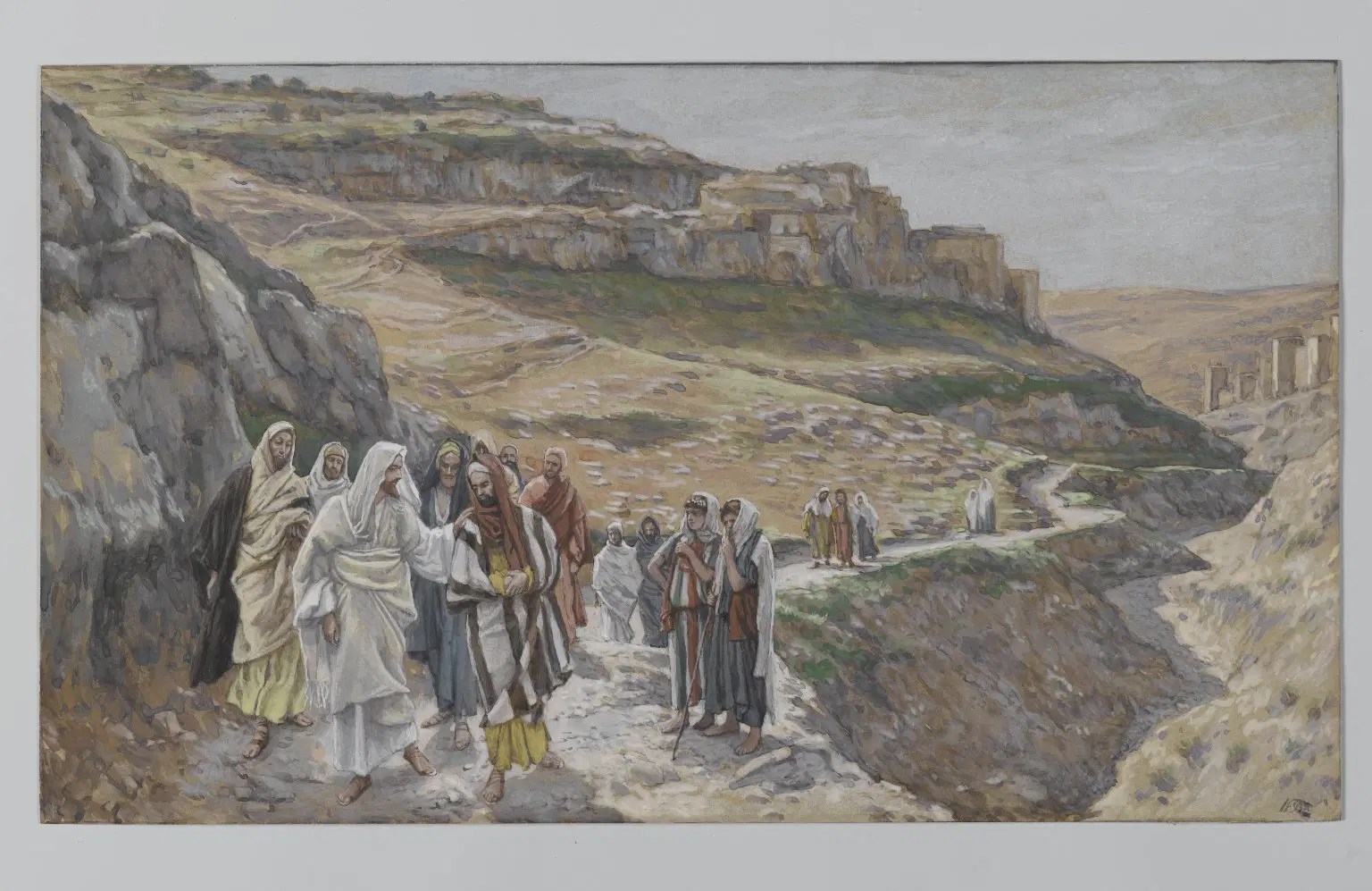
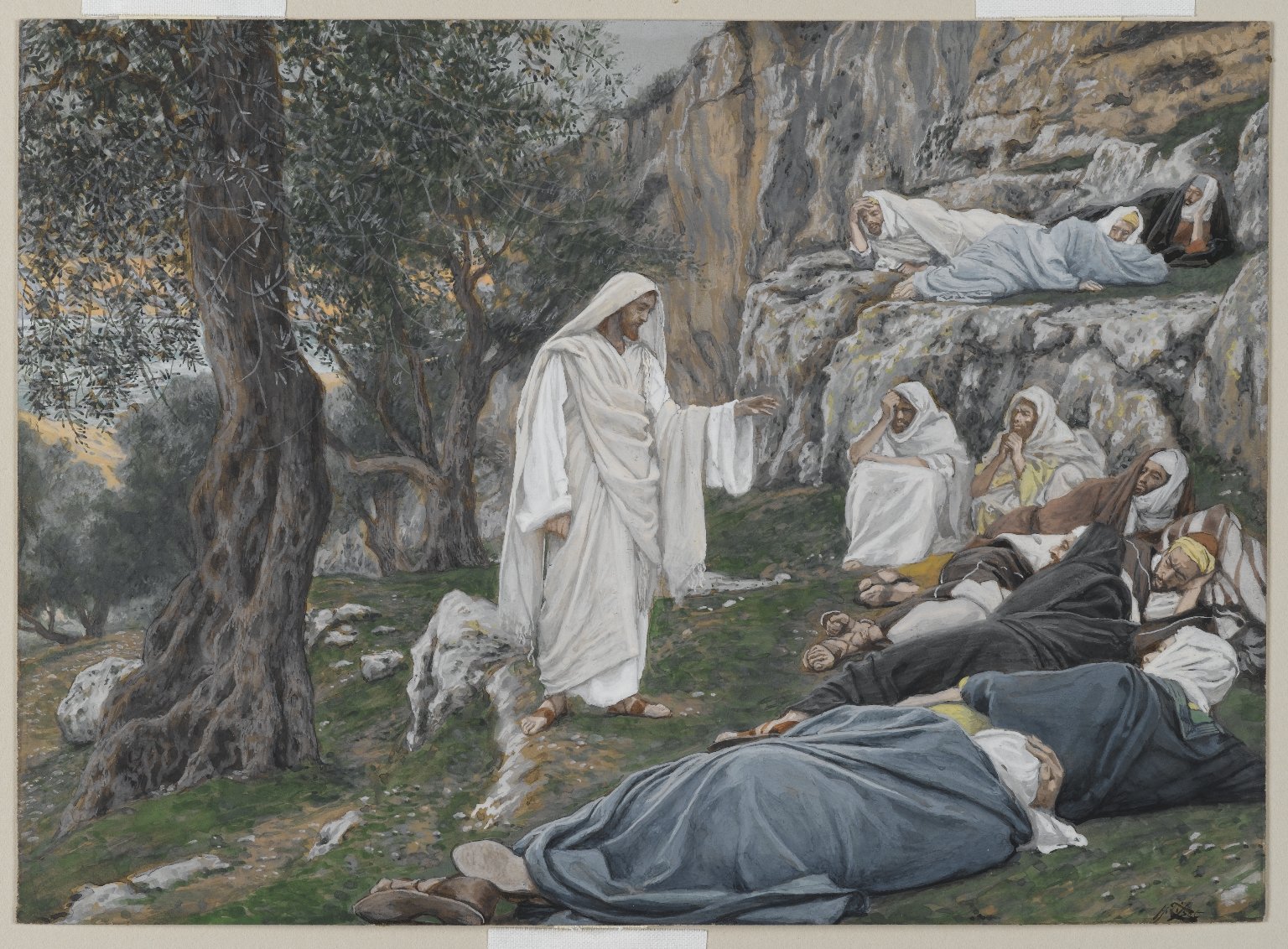
James Tissot Jesus Commands the Apostles to Rest (Brooklyn Museum)