‘For the Lord sees not as man sees: man looks on the outward appearance, but the Lord looks on the heart.’
‘oblegid nid yr hyn a wêl meidrolyn y mae Duw’n ei weld. Yr hyn sydd yn y golwg a wêl meidrolyn, ond y mae’r Arglwydd yn gweld beth sydd yn y galon.’ (1Sam 16:7)
People in general want to be taken seriously, and to be trusted. For a society to function and flourish, people need to be able to trust each other. One of the main ways in which we earn people’s trust is by honesty and authenticity. When our words and actions align, we are people of integrity. If what we do and what we say do not match up, we leave ourselves open to an accusation of hypocrisy: of playing a role rather than being genuine.
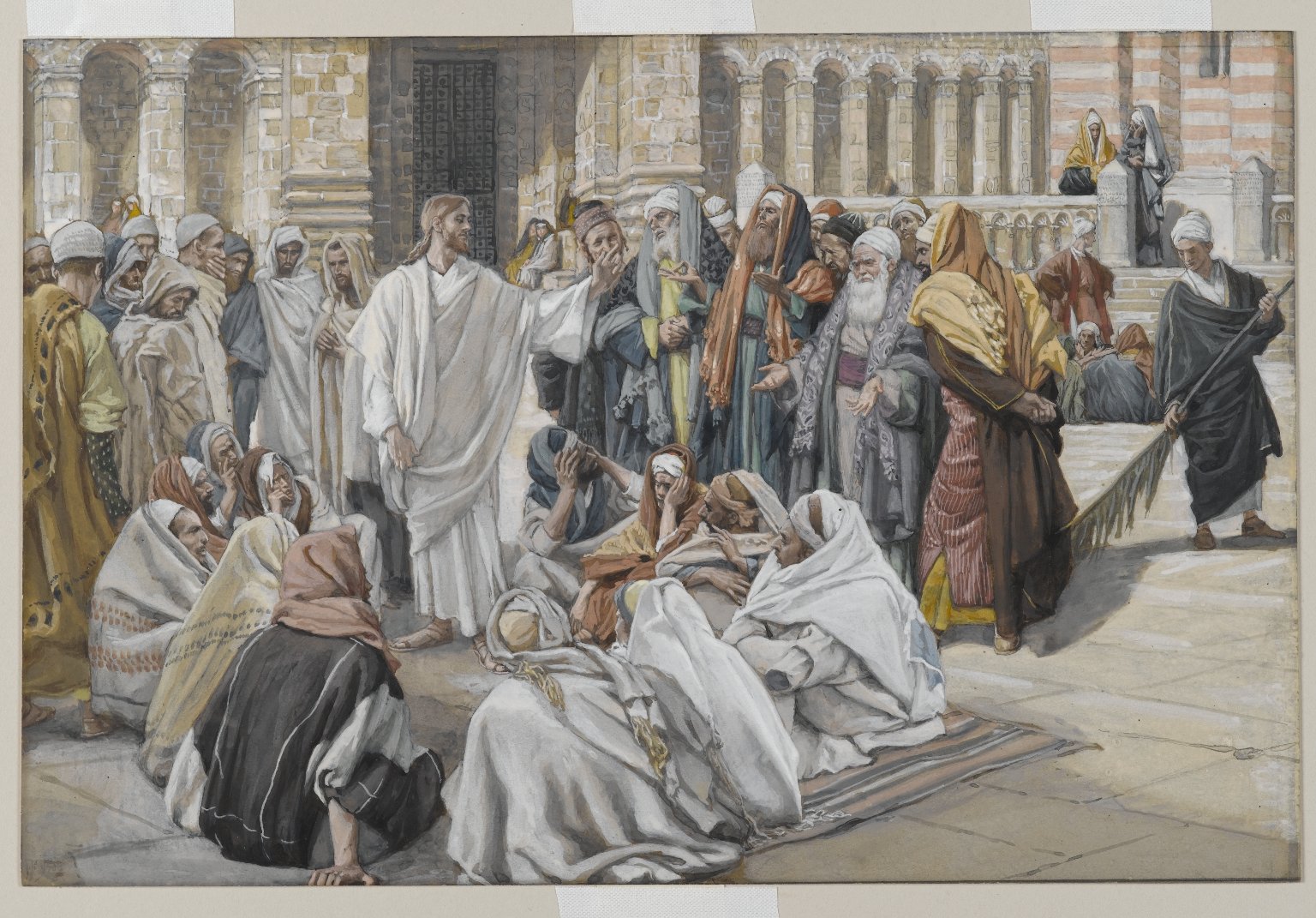
This morning’s Gospel begins with a striking scene. Jesus’ disciples are observed by the Scribes and Pharisees to be eating food without having washed their hands beforehand. The Pharisees are unhappy that the disciples are failing to comply with the outward practice of their religion. What the Religious Authorities are advocating is not just good hygiene but ritual cleanliness. After washing one’s hands, and before drying them, the tradition was to recite the following prayer:
Blessed are You, Lord our God, King of the universe, who has sanctified us with Your commandments, and commanded us concerning the washing of the hands.
The Gospel writer, Mark has to explain the practice to his non-Jewish audience, who are not necessarily familiar with such things. He shows how concerned the religious leaders are with what is going on, reporting their question to Jesus:
“Why do your disciples not walk according to the tradition of the elders, but eat with defiled hands?”
“Pam nad yw dy ddisgyblion di’n dilyn traddodiad yr hynafiaid, ond yn bwyta’u bwyd â dwylo halogedig?” (Mk 7:5)
This leads Our Lord to reply:
“Well did Isaiah prophesy of you hypocrites, as it is written, “‘This people honours me with their lips, but their heart is far from me; in vain do they worship me, teaching as doctrines the commandments of men.’ You leave the commandment of God and hold to the tradition of men.”
“Da y proffwydodd Eseia amdanoch chwi ragrithwyr, fel y mae’n ysgrifenedig: ‘Y mae’r bobl hyn yn fy anrhydeddu â’u gwefusau, ond y mae eu calon ymhell oddi wrthyf; yn ofer y maent yn fy addoli, gan ddysgu gorchmynion dynol fel athrawiaethau.’ Yr ydych yn anwybyddu gorchymyn Duw ac yn glynu wrth draddodiad dynol.” (Mk 7:6-8)
Jesus is questioning why the religious authorities are making up rules and stressing the importance of outward compliance with God’s commandments. He quotes from the prophet Isaiah to show that while the Scribes and Pharisees pay lip-service to God, they are not close to Him in their hearts. The Commandments are not an end in themselves, but a means to an end: namely, closeness with God. The Pharisees’ desire for outward conformity and rule-following has led them to drive people away from God, rather than bringing them closer.
The point Jesus is making is also made clear in this morning’s reading from the book of Deuteronomy, where Moses says to the people of Israel:
‘You shall not add to the word that I command you, nor take from it, that you may keep the commandments of the Lord your God that I command you.’
‘Peidiwch ag ychwanegu dim at yr hyn yr wyf yn ei orchymyn ichwi, nac ychwaith dynnu oddi wrtho, ond cadw at orchmynion yr Arglwydd eich Duw yr wyf fi yn eu gorchymyn ichwi.’ (Deut 4:2)
God has made His commands clear. The people should neither add to them, nor ignore them. However, in their desire to be seen to be keeping God’s commands the religious leaders are making up their own laws, and forcing them upon God’s people. They are reducing religion into something done for show, for outward appearance, rather than to help people to grow in holiness.
Christ then develops His teaching, stating:
“There is nothing outside a person that by going into him can defile him, but the things that come out of a person are what defile him.”
“Nid oes dim sy’n mynd i mewn i rywun o’r tu allan iddo yn gallu ei halogi; ond y pethau sy’n dod allan o rywun, dyna sy’n ei halogi.” (Mk 7:15)
Food does not defile us. Defilement is something that we do to ourselves. What we think and feel affects our relationship with God much more than our outward conformity with a religious ritual. This is made clear in God’s words to Samuel before anointing David King of Israel:
‘For the Lord sees not as man sees: man looks on the outward appearance, but the Lord looks on the heart.’
‘oblegid nid yr hyn a wêl meidrolyn y mae Duw’n ei weld. Yr hyn sydd yn y golwg a wêl meidrolyn, ond y mae’r Arglwydd yn gweld beth sydd yn y galon.’ (1Sam 16:7)
Jesus then proceeds to give examples of the human sins which come ‘out of the heart of man’ ‘o galon dynion’ and cause defilement. These include what became known as the seven deadly sins: pride, greed, wrath, envy, lust, gluttony and sloth.
Christ is uncompromising in diagnosing the problem — these are all things which separate God and humanity. Our Lord is concerned with the cleanliness of people’s souls. It is from within, from the human heart, that sinfulness springs. Jesus’ point is a simple one: we become what we do. Thus, the formation of a moral character is important, and can only be brought about by doing the right things for the right reasons.
However, despite our best efforts, we will never fully succeed. Sin is a problem which only God can sort out. This is why Christ died for us: taking the burden of our wrongdoings upon Himself. He defeats Sin and Death, to reconcile us, and heal us. The Cross is the most important demonstration of Divine Love and Forgiveness. The right action can help form our moral character, but it is God’s Grace which brings about the reconciliation which our efforts cannot.
My brothers and sisters in Christ, let us live out our faith in our lives. Let us proclaim the kingdom in an authentic way, so that others will be drawn to the words and example of Jesus. Clothed in the humility of our need of God, His love and mercy, let us come to Him. To be fed by Him, to be fed with Him, to be healed and restored by Him. With pure hearts, let us give praise to God the Father, God the Son, and God the Holy Spirit. To whom be ascribed all glory, dominion and power, now and forever. Amen.
 Novus Motus Oxoniensis