Trinity XIII: Lord, to whom shall we go? You have the words of eternal life!

LIFE in the twenty-first century seems to involve an ever-increasing amount of decisions. If we want to buy a cup of coffee we have to make many quick decisions about size, strength, type of coffee, milk, sugar, etc. It can be quite exhausting. Our readings this week focus on the choices and decisions people make. To follow the Christian faith is something we choose to do. We choose to trust God, we are not forced to. The decision to follow Christ is the most important choice we ever make. It affects both our life on earth and in the hereafter.

This morning’s first reading is an account of the renewal of the covenant between God and Israel brought about by Joshua at Shechem. The people of Israel are asked if they want to worship God and follow his laws. Joshua makes his position clear:

“But as for me and my house, we will serve the Lord.”

“Ond byddaf fi a’m teulu yn gwasanaethu’r Arglwydd.” (Josh 24:15)

The people of Israel follow his example and renew their covenant with God:

“Therefore we also will serve the Lord, for he is our God.”

“Yr ydym ninnau hefyd am wasanaethu’r Arglwydd, oherwydd ef yw ein Duw.” (Josh 24:18)

Their religious faith is a conscious act of the will. They choose to serve the God who has saved them. God has shown that He is their God.

In a similar way, the events of Chapter 6 of St John’s Gospel happen around the time of Passover, the festival which marks Israel’s deliverance from slavery in Egypt and the start of their journey to the Promised Land. This is a key moment in Salvation history. Our Lord has been teaching about the Bread of Life, and stressing the importance of eating His flesh and drinking His blood. Such teaching was difficult for a Jewish audience to hear, as it violated fundamental principles of their dietary laws. 

When many of his disciples heard it, they said, “This is a hard saying; who can listen to it?”

Wedi iddynt ei glywed, meddai llawer o’i ddisgyblion, “Geiriau caled yw’r rhain. Pwy all wrando arnynt?” (Jn 6:60)

Jesus is teaching in a synagogue in Capernaum, and those present are not used to this kind of instruction. It turns everything they know on its head. In Hebrew the word for flesh (baśar) and the word for good news, glad tidings, or the Gospel(besorah), sound similar. Such word-play is intentional, and may be linked to the Hebrew Wisdom tradition, such as we heard last week in the Book of Proverbs. Our Lord does not, however, back down, or change His teaching, but instead develops it further:

“Do you take offence at this? Then what if you were to see the Son of Man ascending to where he was before? It is the Spirit who gives life; the flesh is no help at all. The words that I have spoken to you are spirit and life. But there are some of you who do not believe.”

“A yw hyn yn peri tramgwydd i chwi? Beth ynteu os gwelwch Fab y Dyn yn esgyn i’r lle’r oedd o’r blaen? Yr Ysbryd sy’n rhoi bywyd; nid yw’r cnawd yn tycio dim. Y mae’r geiriau yr wyf fi wedi eu llefaru wrthych yn ysbryd ac yn fywyd. Ac eto y mae rhai ohonoch sydd heb gredu.” (Jn 6:61-64)

Having described the Institution of the Eucharist as a way of understanding His Passion and Death, Jesus goes on to talk about events after His Resurrection, namely His Ascension, and the Sending of the Holy Spirit at Pentecost. These are all linked, because they form the culmination of Salvation History. This is the Good News of Jesus Christ. This is God saving His people, the outworking of the covenant at Shechem into the New Covenant of Our Lord and Saviour. However its proclamation does not draw people to Jesus, instead it has the opposite effect:

After this many of his disciples turned back and no longer walked with him. So Jesus said to the Twelve, “Do you want to go away as well?”

O’r amser hwn trodd llawer o’i ddisgyblion yn eu holau a pheidio mwyach â mynd o gwmpas gydag ef. Yna gofynnodd Iesu i’r Deuddeg, “A ydych chwithau hefyd, efallai, am fy ngadael?” (Jn 6:66-67)

Jesus does not force people to follow Him. Then, as now, the choice to follow (or not follow) Christ is a personal decision made freely by each individual. Our Lord asks the Twelve if they want to leave as well, which leads to the following declaration of faith by St Peter:

Simon Peter answered him, “Lord, to whom shall we go? You have the words of eternal life, and we have believed, and have come to know, that you are the Holy One of God.”

Atebodd Simon Pedr ef, “Arglwydd, at bwy yr awn ni? Y mae geiriau bywyd tragwyddol gennyt ti, ac yr ydym ni wedi dod i gredu a gwybod mai ti yw Sanct Duw.” (Jn 6:68-69)

Simon Peter trusts Our Lord. He expresses that faith and trust. No-one else can offer what Jesus does, because He is God. Only God can make such incredible claims. To be a Christian is to make the same confession as Peter, and to have the same hope of eternal life in and through Jesus Christ. 

Jesus’ teaching is hard to accept, and difficult to understand, but we can experience it, when we receive Holy Communion. For Peter, and for us, belief precedes knowledge. We believe and then we come to understand.

Faith revolves around the question of commitment. It involves love and sacrifice — the two go hand in hand. This is what marriage is all about, and commitment also describes God’s relationship with us, and ours with God. It will see Jesus die on the Cross for us, to show us just how much God loves us, and wants to restore our relationship with Him, and with each other. To be close to God is wonderful, but it isn’t something God forces us into: we may choose to accept God’s love, or to refuse it. This love is freely given.

St Paul’s advice to the Christians in Ephesus is another difficult text, which revolves around making a choice. For St Paul, Christian marriage is all about loving service of one another, as demonstrated by Christ. Jesus lays down His life for us, so we should do the same for each other. Thus, in marriage in particular, and in society in general, loving service and self-sacrifice are the ways by which we should live. It is a generous form of life, because its model is Jesus, the most unselfish person ever, who created all that there is, and who redeemed it by offering His life as a ransom for many. We see this on the Cross and we commemorate it in the Eucharist, where Christ continues to feed us —His people— with Himself, so that we might have life in Him.

So, my brothers and sister in Christ, let us follow the example of St Peter and St Paul in trusting Jesus and being fed with Him, to prepare us for Heaven. Let us demonstrate our commitment by singing the praises of God the Father, God the Son, and God the Holy Spirit. To whom be ascribed all glory, dominion and power, now and forever. Amen.

Jesus Teaches in the Synagogues – James Tissot (Brooklyn Museum)

Easter VII

In 1959 the first photograph of the Earth was taken from space by an unmanned satellite called Explorer 6. The image was blurry and very basic by today’s standards. Almost a decade later, the crew of Apollo 8 took a famous picture of our planet rising over the lunar landscape. It was named Earthrise. This iconic photograph helped people to understand the world better and take greater interest in environmental issues. As Christians we are called to care for our planet and all the people, plants, and creatures that dwell on it. At the same time, as Christians we are called to be in the world, but not of the world. This world is simply somewhere we will reside for a short while. Our citizenship is in Heaven, our true home, where we long to spend eternity with God. One of the ways in which the Church lives out this other-worldliness is shown in today’s reading from the Acts of the Apostles.

After Jesus’ Ascension, the disciples spend time together in prayer and fellowship. One of their first actions is to appoint a replacement for Judas Iscariot, so that the Eleven Apostles may become Twelve again. For Jews the number twelve is very significant. It stands for wholeness and the completion of God’s purpose. There are twelve months in a year, and twelve tribes of Israel. It was therefore important to the Apostles that they were restored to their proper number of twelve. So, out of all the current followers of Jesus, Peter states that they need someone who has been with them from the beginning, to act as a witness to Jesus’ resurrection. Two candidates are put forward: Justus and Matthias. Peter then prays for guidance:

You, Lord, who know the hearts of all, show which one of these two you have chosen to take the place in this ministry and apostleship from which Judas turned aside to go to his own place.” 

“Adwaenost ti, Arglwydd, galonnau pawb. Amlyga prun o’r ddau hyn a ddewisaist i gymryd ei le yn y weinidogaeth a’r apostolaeth hon, y cefnodd Jwdas arni i fynd i’w le ei hun.” (Acts 1: 24-25)

The disciples do not decide for themselves, they leave the choice up to God. Through the random process of casting lots, God can show them whom He wants to be an apostle. This feels strange to us nowadays. We want to be in control. We want to choose. Perhaps we would be better served by putting God back in control. 

The Gospel reading continues the exploration of the Farewell Discourses between the Last Supper and Jesus’ Arrest. Today we have arrived at Chapter 17, known as Jesus’ High Priestly Prayer. This is a truly solemn moment of intimate conversation between the Father and the Son. Before His Passion and Death, Christ is entrusting His Church to the Father, that it may be kept safe, and that it may be filled with the glory of God, and also strengthened to proclaim the Good News of the Kingdom. This is a moment of profound emotion and intimacy, a window into a conversation between two Persons of the Holy Trinity. 

Jesus is committing us, His Church to God, for God to care for us. His prayer sees His followers as being in opposition to a world which rebels against God; a world of sin and corruption; a world of power and politics. Christ prays that His people may be set apart, to be holy, devoted to God, and filled with love. To love is to will the good of the other. God loves us, and it is God’s will that we flourish and enjoy life in all its fulness, united to Him. This is why Jesus taught us to pray,

Thy kingdom come, thy will be done, on earth as it is in heaven.

“deled dy deyrnas, gwneler dy ewyllys; megis yn y nef, felly ar y ddaear hefyd.”(Mt 6:10)

Christ is praying that we, His Church, stay close to God. That we be united with God’s will, and filled with God’s love. This is why we look forward to next Sunday, when we celebrate Pentecost, the outpouring of the Holy Spirit. This is a sign of God’s love for us, the love which unites Father, Son and Holy Spirit. God invites us to be united with the life of the Trinity, and wants us to offer that invitation to others. If we place ourselves in God’s hands He will take the initiative, just as He did in choosing Matthias to replace Judas.

Th name Matthias means ‘gift of God’. The disciples receive this gift after praying together and asking for God’s guidance. As Christians we too need to spend time together, to pray for our needs and those of the world. In prayer we are united with each other and with God. Together we are nourished by sharing the Eucharist and hearing the Word of God. These things are crucial to who and what we are. United together we experience the love of God and the joy of community. The world may be indifferent to what we do, or it may mock us when we fail to live up to the example of Jesus. But, as Christians, we strive to live in the love of God, and forgive each other our trespasses. We aim to live out that same radical love and forgiveness which sees Jesus die upon the Cross and be raised to New Life for love of us, and for all the world.

This message of profound love and forgiveness is one that much of the world cannot or does not want to understand. We may not understand the depths of God’s love, but we know that it can be experienced, through personal encounter with Jesus in prayer, Word, and Sacrament. We are living testimony to love’s power to change lives. It sets us free to live for God and to proclaim his saving truth in our words and actions.

As I mentioned earlier in this sermon, Matthias’ name means ‘gift of God’, and his appointment comes just before God’s wonderful gift of the Holy Spirit. So as we wait with the Apostles for this gift, let us pray that God may be at work in us, building us up, and giving us strength to live the Christian life. Let us then share these gifts with others, so that they may also come to believe and give glory to God the Father, God the Son, and God the Holy Spirit. To whom be ascribed all glory, dominion, and power, now and forever. Amen.

Peter Paul Rubens Matthias (Museo del Prado, Madrid)

Ascension 2024

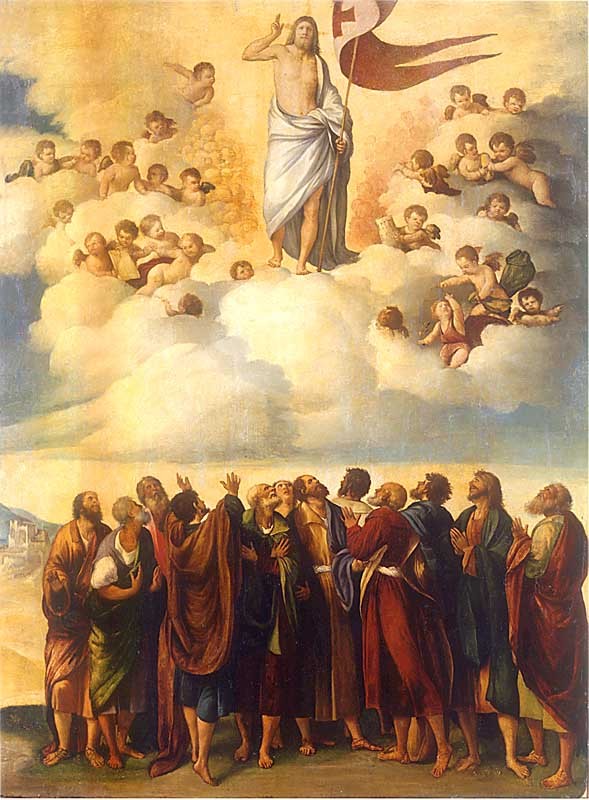
Ascension Day is a time for celebration. However, we are not commemorating Jesus’ departure from the earth, but instead His return to God the Father. We celebrate Christ’s abiding presence with us, and also those things that He asks of us, and promises to us. It is a day of festivity and expectation, looking forward to the future in love and hope. 

Before Jesus returns to the Father, He makes the apostles a three-part promise: Firstly that they will be baptized with the Holy Spirit (Acts 1:4), secondly that they will receive power, and thirdly they will be Christ’s witnesses to the ends of the earth (Acts 1:8). Through this promise Christ is looking forward to Pentecost, and to the church’s future. To the time in which we live now.

One of the most important questions in the entire Bible is found in today’s Gospel: who do you say that Jesus is? How we answer this question can tell us a lot about our own faith. Who we say Jesus is matters. In fact it is central to who and what we are as Christians.

In the Gospel, Jesus and his disciples had ventured into the District of Caesarea Philippi, an area about 25 miles northeast of the Sea of Galilee. This region had tremendous religious implications. The place was littered with the temples of Syrian gods. Caesarea Philippi was where Herod the Great, father of the then-ruling Herod Antipas, had erected an elaborate marble temple. Here you could even worship the Roman Emperor as a God himself. You might say that the religions of the known world were on display in this town. It was with this multi-religious background that Jesus chose to ask the most crucial question of his ministry.

Jesus asks his disciples, ‘But who do YOU say that I am?‘A chwithau pwy meddwch chwi ydwyf fi?’ (Mt 16:15) Peter answers: ‘You are the Messiah, the Son of the Living God‘Ti yw’r Meseia, Mab y Duw byw’ (Mt 16:16). This is a big claim to make. Saying that Jesus is divine was problematic, as these words undermined both what Jews thought about religion, and also the claims made by Romans about the Emperor. To say that Jesus is the Anointed One, the Hope of Israel, who fulfils the promises in the Prophets is a very radical statement indeed.

Peter’s answer demonstrates his faith. He believes in Jesus, and trusts Him. Because of this, Our Lord makes him the principal disciple and gives him a primary role in leading and building the Church. Christ is looking towards the future where the disciples will carry on what He has started. They are charged with sharing the Good News, and offering forgiveness in Jesus’ name.

Our Lord ascends to Heaven forty days after the Resurrection, but Christ does not leave us. Instead He takes our humanity to be with God. This process began with the breaking open of the gates of Hell at Easter. Having conquered death itself, Jesus returns to the Father, taking us with Him. This is also a prelude to the outpouring of the Holy Spirit at Pentecost. God is generous. He saves humanity. He opens Heaven to us. He promises us the Holy Spirit, to strengthen us as we live our lives of faith. 

If we truly believe that Jesus Christ is the Son of the Living God, the Messiah — the anointed one who delivers us from our sins, who died, rose again, and who sends us His Holy Spirit — then this faith should have a profound effect on who we are and how we live our lives. This is why we have gathered here this evening to be nourished by Word and Sacrament. We have come together to pray for the world and for each other, and to be built up in love, as we await Our Lord’s Second Coming as Judge and Ruler of all.

Jesus makes promises which are true. We can trust Him, and like the apostles we can prepare for the Coming of the Holy Spirit at Pentecost in prayer, and joyful expectation. We know that we will never be abandoned, because we are always united with, and loved by the Triune God. United with our Christian brothers and sisters around the world we give praise to God the Father, God the Son, and God the Holy Spirit, to whom be ascribed all glory, dominion, and power, now and forever.

Dosso Dossi – The Ascension (Private Collection)