The Cross had asked the questions; the Resurrection had answered them…. The Cross had asked ‘Why does God permit evil and sin to nail Justice to a tree?’ The Resurrection answered: ‘That sin, having done its worst, might exhaust itself and thus be overcome by Love that is stronger than either sin or death.’
Thus there emerges the Easter lesson that the power of evil and the chaos of the moment can be defied and conquered, for the basis of our hope is not in any construct of human power but in the power of God, who has given to the evil of this earth its one mortal wound—an open tomb, a gaping sepulchre, an empty grave.
Fulton J. Sheen Cross-Ways
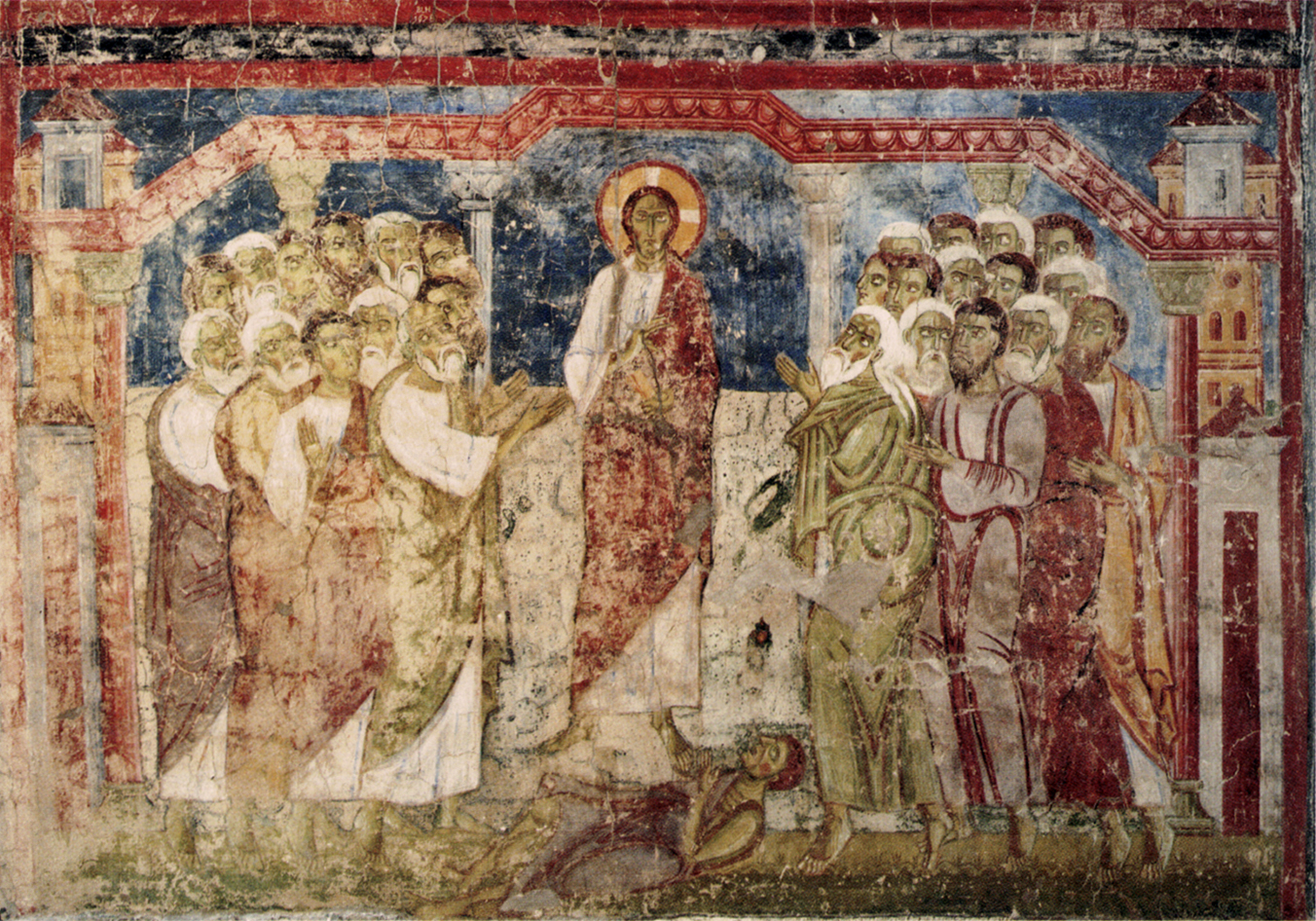
This morning as we rejoice in the joy of the Risen Lord, as we are filled with joy, with hope and with love, we can reflect on what the Resurrection does: when Jesus comes and stands among the disciples he says ‘Peace be with you’ Christ’s gift to the world in His Death and Resurrection is Peace, the Peace ‘which passes all understanding’. He shows the disciples his hands and side so that they can see the wounds of love, through which God’s Mercy is poured out on the world to heal it and restore it. In this peace Christ can say to them ‘As the Father sent me, so I send you’ as the baptised people of God the Church is to be a missionary community – one sent to proclaim the Good News of Jesus Christ to the world, that it may share the joy and life of the Risen Lord.
As well as giving the Apostles the Holy Spirit, ordaining them as the first bishops of the Church, we see that the power of the Cross to bring peace to the world is also the power to absolve sins – priests and bishops can absolve the people of God in God’s name, and by God’s power – this is what the Cross achieves – reconciling us to God and each other. The Church, then, is to be a community of reconciliation, where we are forgiven and we, in turn, forgive, where we are freed from sin, its power and its effects.
When Christ breathes on the disciples and says ‘Receive the Holy Spirit’ it is this gift of God’s Holy Spirit which transforms them from frightened people sat in a locked room in fear into the confident, joyous proclaimers of the Gospel, such as Peter in his sermon to the people of Jerusalem. In Peter’s sermon we see that all that Christ is and does is confirmed by Scripture – it is the fulfilment of prophesy, such as we find in Isaiah 25:6—9:
On this mountain the Lord of hosts will make for all peoples a feast of rich food, a feast of well-aged wine, of rich food full of marrow, of aged wine well refined. And he will swallow up on this mountain the covering that is cast over all peoples, the veil that is spread over all nations. He will swallow up death for ever; and the Lord God will wipe away tears from all faces, and the reproach of his people he will take away from all the earth, for the Lord has spoken. It will be said on that day, “Behold, this is our God; we have waited for him, that he might save us. This is the Lord; we have waited for him; let us be glad and rejoice in his salvation.”
As the Church we know that Jesus is the Messiah, the one who gives freedom to Israel, a freedom from sin – a bringing to completion of what God started in the Exodus, in the crossing of the Red Sea – we too are free, freed by the waters of baptism, sharing in Christ’s Death and Resurrection.
Thomas was not present with the disciples, he cannot believe in the reality of Jesus’ Resurrection unless he sees with his own eyes, and feels with his own hands – such is his grief, such is his love for Jesus. Our Lord says to him ‘Doubt no longer but believe’ which leads to his confession ‘My Lord and my God’. Blessed are we who have not seen and yet have come to believe, and through this belief we have live in Christ’s name, we have the hope of eternal life and joy with him forever.
The disciples go from being scared and stuck in an upper room to missionaries, evangelists, spreading the Good News around the world, regardless of the cost, even of sacrificing their own lives to bear witness to the fact that Jesus Christ is the Son of God, that he died for our sins, and that he rose again, on this day for us, that God loves us and tells us to love Him and to love one another. It is a simple and effective message which people still want to hear – we need to tell it to them, in our thoughts, our words and our actions.
The heart of our faith and the Gospel is forgiveness – no matter how many times we mess things up, we are forgiven. It is this reckless generosity of spirit which people find hard – to believe that they toocan be forgiven, by a loving God, and by their fellow Christians. That we can, despite our manifold shortcomings be a people of love, and forgiveness, and reconciliation. That God’s Grace will in the end not abolish our nature, but perfect it, that being fed by Christ, with Christ: so that we too may become what He is. That faced with the sad emptiness of the world, and its selfishness, its greed, we can be filled with joy, and life, and hope. That like the first apostles we too can spread the Gospel: that the world may believe.
It’s a tall order, perhaps, but one which God promises us. That is what the reality of the Resurrection is all about, it’s either nothing, in which case we are the most pitiable of deluded fools – idiots who are more to be pitied than blamed, orit is the single most important thing in the world. It should affect allof us, every part of our life, every minute of every day, allthat we do, all that we say, all that we are. This may not fit in with a reserved British mentality, we think we’re supposed to be polite and not force our views on others. But this simply will not do. We are, after all, dealing with people’s souls, their eternal salvation, it’s a serious matter. And what we offer people is entirely free, can change their lives for the better, and make life worth living.
So let us be filled with the joy of the Resurrection this Easter, let us share that joy with others, may it fill our lives and those of whom we meet with the joy and love of God, who has triumphed and who offers us all new life in Him, that all that we do, all that we are, all that we say or think may give glory to God the Father, God the Son, and God the Holy Spirit, to whom be ascribed as is most right and just, all might, majesty, dominion and power, now and forever.


 Novus Motus Oxoniensis