The Ascension of the Lord Mt 28:16-20

We have come here today to celebrate Our Lord’s Ascension into heaven. The world around us may well find the idea quaint or laughable – or at least physically impossible. But it is no less hard to believe than Our Lord becoming incarnate by the power of the Holy Spirit in the womb of the Blessed Virgin Mary, or his rising from the dead at Easter. The world, with the greatest confidence, will tell us that what we are celebrating are myths and fairy stories, but they fail to get the point of what’s really going on.
          Our Lord ascends, body and soul into heaven, to the closer presence of God the Father, and to prepare for the sending of the Holy Spirit on his disciples at Pentecost. He who shares our humanity takes it into heaven, into the very life of the Godhead; so that where he is we may be also. We have seen the promise of new life in Easter, a new life which is in the closer presence of God, which we celebrate today. We can see where it leads – what started at the Incarnation finds its goal and truest meaning in the unity of the human and the divine.
But rather than seeing this as an end it is surely far better to see in it a beginning – a beginning of the Church as we know it – a church which goes and makes disciples of all nations, baptizing them in the Father and of the Son and of the Holy Spirit, teaching them to observe all that Our Lord commanded us. This is exactly where we have been for nearly two thousand years. Inspired by the Holy Spirit they did what their Lord commanded them to do and that is why we are here today celebrating this fact.
But like them we too are called to follow Our Lord’s commands and to share his good news with the world so that it may believe. We are called to live lives where our faith is enfleshed in us – it is not abstract and private, but concrete and public. The Atheist who finds our beliefs laughable now joins forces with an Enlightenment Rationalist who wishes faith to be a private matter rather than a public one. This will not do: Our Lord did not say ‘Don’t do this if it’s inconvenient’ or ‘There’s no need to make a fuss in public about me’. He speaks as one given authority, ‘all authority in heaven and on earth’, so we can gladly place ourselves under His authority, to do his will.
He makes us a promise: ‘Behold, I am with you always, to the end of the age.’ He is with us by sending His Spirit on the Church at Pentecost and ever since. He is with us in his Word, Holy Scripture and in the Sacrament of His Body and Blood. It is through this (and the other Sacraments of the Church) that God’s grace can perfect our human nature – so that we can prepare to share the divine life of love in Heaven. Where our Lord goes we can hope to follow, through his sacrifice of Himself upon the Cross, a sacrifice made present here and on the altars of churches all throughout the world, to strengthen us, so that we may be close to him, sharing in the divine life of love poured out on us.
We can hope to follow Him, and to spend eternity contemplating the Beatific Vision, caught up in that love which is the Divine Nature, sharing in the praise of all creation of the God who creates, who redeems, and who sustains all. We can have this hope because Christ has gone before us, he has prepared the way for humanity to follow him and share in the divine life of love.
Let us prepare for this by living the life of faith, strengthened by Him, proclaiming his truth, praying for the gift of His Spirit at Pentecost, that the Church may be strengthened to proclaim His saving truth and the baptism of repentance, so that we and all the world may sing the praise of God the Father, God the Son, and God the Holy Spirit, to whom be ascribed as is most right and just all might, majesty, glory, dominion, and power, now and forever.
Homily for the Sixth Sunday of Easter: Jn 14:23-29


God does not love us because we are lovely or loveable; His love exists not on account of our character, but on account of His. Our highest experience is responsive not initiative. And it is only because we are loved by Him that we are loveable.
Fulton Sheen Rejoice, 1984, 9
God loves us; we can say this with the utmost confidence because of the life, death, and resurrection of Jesus Christ. It is what we celebrate at Easter. We show our love for God by keeping his word, by loving each other as he has loved us. We are called to the same sacrificial, self-giving love which Our Lord shows us. It’s a big ask. It should make us stop in our tracks and realise the enormity of the task and our utter reliance upon God’s grace. We show this love by keeping God’s word, by doing what Jesus tells us to do and not simply going along with the ways of the world.
            Our Lord promises his disciples that the Father will send the Holy Spirit in Jesus’ name to teach us all things and to bring to our remembrance all that he said to us. The Holy Spirit speaks through the Church so that we can profess our faith in the co-eternal and consubstantial Trinity. His gift to us is His peace – not as in the absence of war or violence, but something deeper and more profound. The peace that Jesus promises is that which characterises the life of the Godhead: a peace which passes all human understanding.
            We can have peace through our relationship with the Trinity, the source of our peace, and joy, and love. Grounded in this relationship we need not be afraid or troubled – we are free to live lives which proclaim God’s love and victory so that the world may believe. Through God loving us, we can truly love him and each other. We experience this most clearly at the Eucharist when God feeds us with His Body and Blood, which he as both priest and victim offers to God on the Altar of the Cross. That self same sacrifice which heals the world through the pouring out of God’s love feeds us here and now. We are fed so that we may be nourished and share in the divine life. We receive the free gift of God’s grace so that it may perfect our human nature, so that we may go where Our Lord is going and share in the joy, and love, and peace of the Triune God.
            We should rejoice in the coming of the Spirit at Pentecost after Our Lord has ascended, as in this we see the birth and spread of the Church – it’s why we are here, because people filled with the love of God and His Holy Spirit have brought us into His loving embrace. Loved by him, we are to share that love with others, so that the world may believe and share in the source of all love, and peace, and joy. It’s not somebody else’s responsibility but ours as the baptised people of God to follow in the footsteps of the apostles and share what we have received so that we and all the world may sing the praise of God the Father, God the Son, and God the Holy Spirit, to whom be ascribed as is most right and just all might, majesty, glory, dominion, and power, now and forever.
Homily for the Third Sunday of Easter (Yr C) ‘Feed my Sheep’


In this morning’s first reading Saint Peter and the apostles are told not to preach in the name of Jesus. Naturally, it is impossible for them to do this; they have to tell the world about him and his resurrection. They do this so that the gospel may be proclaimed: the gospel of repentance and forgiveness of sins through him. To be a Christian is to turn away from the ways of sin, the ways of the world – we are obedient to God, we hear what he is said in Christ and we obey him. The church then must always be on its guard lest it ceases to be obedient to God and turns instead to the ways of the world, the ways of humanity. As St Paul says in his Letter to the Romans ‘be not conformed to this world’. It is a difficult thing to do, it is hard, it takes strength of character and confidence, and it will not be popular. But just as the apostles rejoiced that they were counted worthy to suffer dishonour for the name, and did not cease teaching and preaching Jesus Christ, so the church is always called to do the same: to risk persecution, to speak the uncomfortable truth which the world does not want to hear.
          In this morning’s gospel the risen Lord gives an invitation to his disciples: ‘come and have breakfast’ he feeds his disciples before asking Peter if he loves him and commanding him to feed his lambs. He asks him the same questions three times, something which clearly looks back to Peter’s denial on the night of his arrest. Peter is upset: it’s his conscience at work reminding him of his failure. But Jesus does not condemn him, he simply reminds him so that he may be encouraged in his task: to feedChrist’s sheep, to be a shepherd, a good Shepherd, and to lay down his life for his sheep after the example of his Lord and Master. This is how Peter is to fulfil his command ’Follow me’.
          Peter is fed by the Lord before he is called to go and feed others, and to care for them. We too have come here today to be fed by the Lord, to be fed with the Lord, with his body and blood, under the outward forms of bread and wine, to share in his divine life, so that we may become what he is, and have a foretaste of heaven. We are fed so that we may go out and feed others, so that we may follow the example of the apostles and not cease teaching and preaching Jesus Christ. When we do this we will give honour and worship to God no different from the heavenly worship we have seen described in this morning’s second reading. This is the heavenly glory of which we have a foretaste here on Earth. We are to bear witness to our faith in the world so that it may believe. We are called to be witnesses regardless of the cost. We may not face persecution in this country; we are more likely to be faced with indifference, a coldness of heart, which denies the fact that what we are and what we say is important or has value. Yet we are to live lives which proclaim the fact that our life and death have meaning and value through Jesus Christ, who loves us, who died for us, and rose again so that we might have eternal life in him. It is a gift so precious that we have to share it, we cannot keep it for ourselves. In sharing it, it becomes a greater and more wonderful gift. In sharing it we are preparing for that moment seen by St John when all of creation will sing the praise of God, filled with his love, healed and restored by him.
          We are preparing for that moment here and now preparing to be fed by him, to be fed with him, looking forward to that time when we and all creation will sing the praise of God the Father, God the Son, and God the Holy Spirit, to whom be ascribed as it most right and just, all might, majesty, glory, dominion, and power, now and forever.

Sermon for Evensong of the First Sunday after Easter: Isaiah 52:13–53:12; Luke 23:13–35


Then they told what had happened on the road, and how he was known to them in the breaking of the bread
The Disciples on the Road to Emmaus are astounded when the man to whom they are talking does not know what has been going on: ‘Are you the only visitor to Jerusalem who does not know the things that have happened there in these days?’ He asks them so that they may tell him. They ‘hoped that he was the one to redeem Israel’, they have been told of the Empty Tomb, but do not yet believe. They need Jesus to explain the Scriptures to them in order to show them that what happened had been foretold in the Law and the Prophets.
        In this evening’s first lesson from the Prophet Isaiah we have the greatest of the prophesies of Our Lord’s Passion and Death. It is read on Good Friday because it shows us how what happened was clearly foretold. In Acts 8, when the apostle Philip meets the Ethiopian eunuch, he is reading this passage. When he is asked if he understands what he is reading he replies ‘How can I, unless someone guides me?’ Philip shows him how verses 7 & 8 of Isaiah 53 point to Jesus, the Lamb of God, who takes away the sins of the world,
The Ethiopian needs Philip, the disciples need Jesus, and we need the Church to show us how scripture is to be read: it’s meaning is not necessarily plain and while anyone could read Scripture in any way in which they chose, the Church has never said that all interpretations are ok, or that any one is as good as another. Instead, the proper interpretation of Scripture is rightly the teaching office of the Church, through the Apostolic Tradition: to unfold the mystery of Christ, to proclaim Him, and to save souls.
The Church reads the Old Testament christologically, because it points to Christ, it finds its fulfillment and its fullest and truest meaning in him, who is the Way and the Truth. As Our Lord says, ‘Was it not necessary that the Christ should suffer these things and enter into his glory?’ In other words through Our Lord’s suffering, and death, and resurrection we behold God’s glory, the glory of the divine life of love, poured out on the world to heal it and to save it. We see both what God is and how he loves us, to the extent of giving his only Son to die for us, to heal the wound of sin, to restore our humanity, and so that we may share eternal life with him.
As a foretaste of this heavenly joy he takes bread and blesses it and gives it to them. Christ, who as both priest and victim offered himself upon the altar of the Cross, as a willing, spotless pure and sinless victim, now feeds his people with himself so that they may share his risen life – so that they may be given a foretaste of the heavenly glory and the divine life of love. That is why we day by day and week by week we too come to be fed by him, so that we too may share, having first heard the Scriptures explained to us.
We see here in this evening’s second lesson how and why the Church looks and feels like it does, why it understands Scripture in the way that it does, how errors may come about, and how the Church guards against these by deciding what is authentic in terms of Scripture and Tradition. Almost two thousand years after these events took place there is something fresh and current about what we have heard read to us this evening, it doesn’t feel odd, or strange, or backward or outdated, but simply part of how the Church is. It is good that after two thousand years the message has not changed; it shows us that it is authentic: that it is of God, and not of the world.
So let us be like the disciples at Emmaus with warmed hearts, fed by our Lord with word and sacrament, sharing his Easter Joy and his victory over sin and the world and sharing his peace and joy with the world, so that it may believe and give praise to God the Father, God the Son and God the Holy Ghost, to whom be ascribed as is most right and just, all might, majesty, glory, dominion, and power, now and forever.

Good Friday

The green tree was Christ himself; the dry tree the world. He was the green tree of life transplanted from Eden; the dry tree was Jerusalem first, and then the unconverted world. If the Romans so treated him who was innocent, how would they treat the Truth that is in his Church; in an uneasy conscience perhaps he beckoned you to his confessional; in a passing prayer he called you to greater prayerfulness….You accepted the truth, you confessed your sins, you perfected your spiritual life, and lo! in those moments when you thought you were losing everything, you found everything; when you thought you were going into your grave, you were walking in the newness of life….The antiphon of the Empty Tomb was striking on the chords of your heart. It was not you who died; it was sin. It was not Christ who died it was death.
Fulton J. Sheen The Eternal Galilean
So much of the action of this week has taken place so that Scripture may be fulfilled. What God told the people of Israel through his prophets comes about in His Son’s death. It shows us in the clearest possible way that what we see in the prophetic descriptions is true.
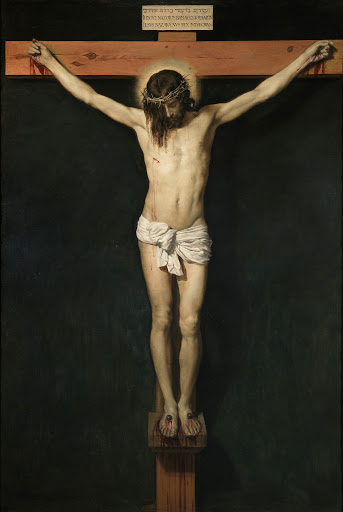
          If the truth be told, the suffering, the rejection, torture, and death of our Lord and Saviour, Jesus Christ, is beyond our understanding. We stand silent before the Cross, unable to take the cruelty, the horror and the profound beauty of it. It is a mystery, the mystery of God’s love: an act of loving service, the power of silent love overcoming a world of political scheming, deception, self-interest and sin. The chief priests and elders can only think of a threat to earthly power; they fail to see that here, now, is the salvation for which they long. That God’s own son should come from heaven and die to save a sinner like you or me is extraordinary. We are shown today in the clearest possible terms how much God loves us: that there is no length to which he will not go to save us, to embrace us his prodigal children. The chief priests and elders think that they’re ridding themselves of an heretic, a potential troublemaker, a fool who claims to be the son of God and King of Israel. When Pilate asks “Quid est Veritas – What is Truth?” he does not wait for an answer, or understand that the source of all truth, the word of God incarnate, is stood in front of him: ‘est vir qui adest – it is the man who is present, who is standing in front of him’. He is the Way, the Truth, and the Life of the whole world.
After scourging him the soldiers put a purple robe around our Lord, they crown him with thorns, and give him a reed for a sceptre. They think they’re being clever and funny: they’re having a laugh, mocking a man about to be executed, but thisis God showing the world what true kingship is: it is not pomp, or power, the ability to have one’s own way, but the Silent Way of suffering love. It shows us what God’s glory is really like: it turns our human values on their head and inaugurates a new age, according to new values, and restores a relationship broken by human sin.
          In being raised upon the Cross, our Lord is not dying the death of a common criminal, but rather reigning in glory – the glory of God’s free love given to restore humanity, to have new life in him. His hands and feet and side are pierced, as wounds of love, to pour out God’s healing life upon the world. In his obedience to the Father’s will, he puts to an end the disobedience of humanity’s first parent. Here mankind who fell because of a tree are raised to new life in Christ through his hanging on the tree.  Christ is a willing victim, the Lamb of God who takes away the sins of the world, the Silent lamb led to his slaughter, the Good Shepherd who lays down his life for his sheep that have gone astray. At the time when the Passover lambs are slaughtered in the temple, upon the Altar of the Cross, Christ as both priest and victim offers himself as the true lamb to take away the sins of the whole world, offers his death so that we may have life, new life in Him.
          Death and hell, the reward of sin, have no power over us: for in dying, and being laid in a stranger’s tomb, Christ will go down to Hell, to break down its doors, to lead souls to heaven, to alter the nature of the afterlife, once and for all. Just when the devil thinks he’s won, then in his weakness and in his silence Christ overcomes the world, the flesh, and the devil. The burden of sin which separates humanity from God is carried on the wood of the Cross.
On the way to Calvary our Lord falls three times such is the way, such was the burden, so we too as Christians, despite being reconciled to God by the Cross, will fall on our road too. We will continue to sin, but also we will continue to ask God for his love and mercy. But those arms which were opened on the cross will always continue to embrace the world with God’s love.
We don’t deserve it, that’s the point, but it is there to help us become the people God wants us to be: to be strengthened, fed, healed, and restored by him: to die to sin and be raised to new life, and to share that life and love with others, that the world might believe and be saved through him. Christ pays the debt which we cannot to reconcile humanity to his loving and merciful Father. He shows us the meaning of true love: that we might live it out in our lives, forgiving one another, bearing our own cross, and living lives of love for love of him who died for love of us.
          We should glory in the Cross of our Lord Jesus Christ, for he is our salvation, our life, and our resurrection, through him we are saved and made free.

Feria V in Cena Domini – The Mass of the Lord’s Supper: Exod. 12:1-8; ICor 11:23-26; Jn 13:1-15

Since our Divine Lord came to die, it was fitting that there be a Memorial of his death. Since he was God, as well a man, and since he never spoke of his death without speaking of his Resurrection, should he not himself institute the precise memorial of his own death? And this is exactly what he did the night of the Last Supper….His memorial was instituted, not because he would die and be buried, but because he would live again after the Resurrection. His Memorial would be the fulfillment of the Law and the prophets; it would be one in which there would be a Lamb sacrificed to commemorate spiritual freedom; above all it would be a Memorial of a New Covenant…a Testament between God and man.
Fulton J. Sheen Life of Christ
My brothers and sisters, we have come together on this most holy night to enter into the Mystery of Our Lord’s Passion: to be with him in the Upper Room and in the garden of Gethsemane, and to prepare to celebrate his suffering and death – to behold the glory of the Lord and his love for the world he created and came to save.
          Obedient to the Old Covenant, Our Lord and his disciples prepare to celebrate the Passover: the mystery of Israel’s deliverance from slavery in Egypt to the new life in the Promised Land. While they are at table Our Lord lays aside his outer garments and takes a basin and a towel and washes the Apostles’ feet. He then says to them ‘Do you understand what I have done to you? You call me Teacher and Lord, and you are right, for so I am. If I then, your Lord and Teacher, have washed your feet, you also ought to wash one another’s feet. For I have given you an example, that you also should do just as I have done to you. Truly, truly, I say to you, a servant is not greater than his master, nor is a messenger greater than the one who sent him. If you know these things, blessed are you if you do them.’ (Jn 13:12–16 ESV) God who created the universe and who will redeem it kneels and washes the feet of sinful humanity. This is true love in action. Only having done this can Jesus say ‘A new commandment I give to you, that you love one another: just as I have loved you, you also are to love one another. By this all people will know that you are my disciples, if you have love for one another.’(Jn 13:34–35 ESV) What he says to his disciples he says to us here tonight. As Christians we are to love him and one another, we are to show this love in all that we say, or think, or do, so that the world may believe.
          Christ then takes bread and wine and blesses them and gives them to his disciples. Again, this would look and feel like the Passover celebration to which they were accustomed. Except that before he broke and distributed the bread he said ‘Take, Eat. This is my body, which is given for you. Do this in remembrance of me.’ And before the Cup was distributed he said ‘Drink of it, all of you, for this is my blood of the new covenant, which is poured out for many for the forgiveness of sins. Do this, as often as you drink it, in remembrance of me.’ He feeds his disciples with his own body and blood to strengthen them, to show them what he is about to do for love of them and of the whole world. When, earlier in his public ministry, he has fed people he taught them in the synagogue at Capernaum ‘Truly, truly, I say to you, unless you eat the flesh of the Son of Man and drink his blood, you have no life in you. Whoever feeds on my flesh and drinks my blood has eternal life, and I will raise him up on the last day. For my flesh is true food, and my blood is true drink.  Whoever feeds on my flesh and drinks my blood abides in me, and I in him. As the living Father sent me, and I live because of the Father, so whoever feeds on me, he also will live because of me.’ (Jn 6:52–7 ESV). ‘Was ever another command so obeyed? For century after century, spreading slowly to every continent and country and among every race on earth, this action has been done, in every conceivable human circumstance, for every conceivable human need from infancy and before it to extreme old age and after it, ….  just to make the plebs sancta Dei—the holy common people of God’ [Dix The Shape of the Liturgy 744] Our Lord institutes the Eucharist, the Sacrament of His Body and Blood, to feed us, to nourish us, so that we may become what he is, that we may have a foretaste of heaven and the divine life of love, of the beatific vision of God, Father, Son, and Holy Spirit, the Holy, Eternal and Consubstantial Trinity. It re-presents, it makes present again, here and now, the sacrifice of Calvary, where upon the Altar of the Cross, as both priest and victim, Christ sacrifices himself for the sins of the whole world. He is the Lamb of God, foreshadowed in the ram offered by Abraham and Isaac, in the bread and wine offered by Melchisedek. In the blood and water which will flow from his side we are washed and creation is renewed. Christ gives the Church the Eucharist so that his saving work may continue, so that people may be given a pledge and token of their eternal life in him.
          Christ sets apart his disciples so that they may be priests of the new covenant in his blood, so that they may continue to share in the offering of himself for their sins and those of the whole world. They are washed, and fed, and taught – prepared for the work of the Gospel: spreading the Good News of Jesus Christ and feeding his faithful with his body and blood. They are told to do this and they still do. Never have such words and actions had such a profound effect in all of human history. This is the glory of God: in transforming bread and wine into his very self for the life of the whole world – a sign of love and a pledge and foretaste of eternal life. This is love that we can touch and feel and taste – given for us so that we might have life in him.
So let us come to him, to be fed by Him, and with Him, healed and restored by Him, through the sacraments of the Church, his body, so that we may be prepared to share in his Passion and Death and to celebrate with joy the triumph of His Paschal victory, so that we and all the earth may give praise to God the Father, God the Son, and God the Holy Spirit, to whom be ascribed as is most right and just, all might, majesty, glory dominion and power, now and forever

Wednesday in Holy Week Isa 50:4–9; Mt 26:14–25

Our Lord described himself as having a baptism wherewith he was to be baptized. John gave him the baptism of water, but the Roman soldiers have him his baptism of blood. After opening his sacred flesh with violent stripes, they now put on him a purple robe which adhered to his bleeding body. Then they plaited a crown of thorns which they placed on his head. They mocked him and put a rod in his hand after beating him on the head. Then they knelt down before him in feigned adoration.
Fulton J. Sheen Life of Christ
In today’s first reading we hear ‘I gave my back to those who strike, and my cheeks to those who pull out the beard; I hid not my face from disgrace and spitting.’ (Isa 50:6 ESV) The suffering servant’s treatment points forward to Our Lord’s mistreatment at the hands of Roman soldiers and the crowd on his way to Calvary. It is brutal and unpleasant, even more so when we consider that He had preached and lived God’s love and healing and forgiveness. We see God incarnate mocked and physically abused by those he came to save. Nowadays the Church, certainly in this land, faces less scorn, hatred, and violence than elsewhere, but far more indifference, which is worse in many ways. People have grown cold to the message of love, and prefer to ignore it, safely cosseted in a cocoon of materialism, obsessed with self – spiritually empty and miserable.
          In the Gospel we see Judas is still concerned with material things, having criticised the reckless generosity of Mary’s anointing Jesus’ feet, he now goes to the chief priests and asks them ‘What will you give me if I deliver him over to you?’ (Mt 26:15 ESV). These are words for the church: we still have modern-day Judases willing to betray our Lord, his Gospel and his Church for the sake of ambition and advancement. Perhaps a pointy hat is today’s thirty pieces of silver, and too many in the church follow Judas in preferring the ways of the world to those of God. But we must follow Our Lord’s example and love them. This is after all what we are preparing to celebrate: the fact that the love of God can be ignored and rejected but never overcome – in Christ the victory of the Cross is complete and absolute, it restores our relationship with God and each other and allows us to live in a community of love, close to God, fed by him, with him, healed and restored by him, prepared for and given the hope of heaven where we may enjoy eternity in the presence of the Trinity.
          In Christ we see a life lived not for self, not to acquire wealth, or status, or power, but lived for others – to share with them the love of God, to heal and restore them – offering them an alternative to the ways of the world with its selfishness, its greed, the desire for power and domination. Instead, he offers humble service and power shown in weakness – this is the power of God to transform the world. This is what the Church is called to follow and live out in the world – a life of self-giving, sacrificial love – this is what we are called to in our baptism, that we may embody and live out the faith which we profess to help transform the world. We need to be reminded of it, day by day and year by year because the Church has to remain true to her calling to help share the love of God with the world around us, so that it may believe and be transformed after the likeness of our crucified and risen Saviour. After nearly two thousand years we have not got there yet, but we still press on, changing the world one soul at a time, confident in the victory and the saving love of him who died and rose again for us.
 So let us come to him, to be fed by Him, and with Him, healed and restored by Him, through the sacraments of the Church, his body, so that we may be prepared to celebrate with joy the triumph of His Paschal victory, so that we and all the earth may give praise to God the Father, God the Son, and God the Holy Spirit, to whom be ascribed as is most right and just, all might, majesty, glory dominion and power, now and forever

Monday in Holy Week – Isa 42:17; Jn 12:1-11

Many a cross we bear is of our own manufacture; we made it by our sins. But the cross which the Saviour carried was not his but ours. One beam in contradiction to another beam was the symbol of our will in contradiction to his own. To the women who met him on the roadway, he said: ‘Weep not for me.’ To shed tears for the dying Saviour is to lament the remedy; it were wiser to lament the sin that caused it. If Innocence itself took a Cross, then how shall we who are guilty complain against it?

Fulton J. Sheen The World’s First Love

The Suffering Servant spoken of by the prophet Isaiah in today’s first reading has always been understood by the Church as a prophesy which points to and finds its fulfillment in Jesus Christ. He is the chosen one in whom God delights, filled with his Spirit, who will bring forth God’s justice to the nations. We must always remember that God’s idea of justice is not ours. If it were, we would not be preparing to celebrate the Passion, Death, and Resurrection of Jesus, only the condemnation of sinful humanity – there could be no such thing as hope.
                Christ, then, is a light to the nations, who will open the eyes of the blind, and free captives from prison, they will be freed from darkness by the light of the World. He frees humanity from the prison of sin, setting us free to have life in all its fullness. He is given as a new covenant in his blood to restore the relationship between humanity and God. In what he is and does we will see God’s Glory: the glory of love and absolute gift: extravagant, risky, costly.
                Those people who are forever saying that the Church must sell all its gold and silver need to remember that when they say this they are speaking the words of Judas Iscariot, who betrayed Our Lord and Saviour. The care of the poor and the needy is and will always be an important part of the Church, but social justice is not the whole of the Gospel. The Church wears beautiful vestments and uses precious metal because what it is and does is important: we wouldn’t ask people to wear wooden or ceramic wedding rings, after all. No, in today’s Gospel we see a picture of risky and costly generosity in the love and care which Mary shows for Jesus, her Lord and Saviour, which reinforces what Jesus will do for the world on Good Friday: it is the most costly and extravagant gesture there could be, which costs something which money cannot buy, and for the sake of you, and me, and all humanity! In this version of justice the judge sentences himself the death penalty instead of condemned humanity, so that we might be free.
                In taking the risk to defy convention, to be costly, risky and extravagant, not caring what the world thinks, putting aside the mundane concerns of Judas, Mary shows what it is to love and follow Jesus. She responds to the source of all love and generosity by preparing Him for his death and burial. She anticipates the act of generous love and shows the Church how it too should take risks and be extravagant in its service of Our Lord and Saviour, so that we too may share in his work of reconciling and healing humanity, anointing it with the love of God.
                The religious authorities are troubled by what has gone on: they see people following Jesus as a threat to their own power and control and they want to stop this at all costs. They stand for fear and hatred and dominance, as opposed to the freedom, and love, and new life of the Gospel. They cannot put a stop to the movement: the more they persecute the stronger it becomes because it trusts in the God who loves and who saves. It is a lesson which the repressive regimes of this world have yet to learn in the past two thousand years. It is a light which cannot be extinguished, a love which casts out fear whereby we are freed to serve the God who loves us and saves us.
Let us rejoice in this as we are fed by Word and Sacrament, strengthened to live God’s life in the world, proclaiming his truth and his victory, so that all humanity may believe and praise God the Father, God the Son, and God the Holy Spirit, to whom be ascribed as is most right and just, all might, majesty, glory dominion and power, now and forever

A Prayer for the Day

Almighty everlasting Father, who hast promised unto thy faithful people life by thine incarnate Son, even as he liveth by thee; Grant unto us all, and especially to those whom thy Providence hath in anyway entrusted with the treasure of thy holy doctrine amongst us, thy good Spirit, always so to believe and understand, to feel and firmly to hold, to speak and think, concerning the mystery of the Communion of the Body and Blood of thy dear Son, as shall be well pleasing to thee, and profitable to our souls; through the same our Lord Jesus Christ, who liveth and reigneth with thee in the unity of the same Spirit, one God, world without end. Amen

John Keble

Homily for Lent V

The forgiveness of God is one thing, but the proof that we want that forgiveness is the energy we expend to make amends for the wrong.
Fulton J. Sheen Thoughts for Daily Living (1955) 106–7

What a week it has been. And yet we live in a world where the colour and age of the new Pope’s shoes is deemed as newsworthy. We should realise that such things do not matter. There are far more important things to worry about.

          In this morning’s Gospel we see a woman caught in the act of adultery. By the law of Moses she should be stoned to death. But Jesus shows the world another way – it is the way of love and not of judgement. Every single one of us sins: we say, and think, and do things which we should not, which separate us from God and our neighbour. But instead of condemning humanity, God in Christ loves us and gives himself for us. He suffers and dies and rises again to show us the way of love. He gives us his word and feeds us with his body and blood so that we can share in his divine life, so that we can have a hope of heaven.

          Rather than condemning the woman, Jesus challenges those around him: ‘Let him who is without sin among you be the first to throw a stone at her’ rather than judging others we need to look at ourselves and recognise that we too are sinners. It should force us to take a long, hard look at ourselves – at our lives, and recognise that we need to conform ourselves to Christ – to live, and think, and speak like him. We need to be nourished by him, healed and restored by him, to live lives which proclaim his love and his truth to the world, living out our faith in our lives so that the world may believe.

          Once the people had gone ‘Jesus stood up and said to her, “Woman, where are they? Has no one condemned you?” She said, “No one, Lord.” And Jesus said, “Neither do I condemn you; go, and from now on sin no more.”’ We are loved, healed and restored by God, but with that comes a challenge: as Christians we are to turn away from sin. We are challenged to turn away from the ways of sin, the ways of the world, to find life in him, the perfection that comes through faith in Christ, and is from God and based on faith. We need to ‘know him and the power of his resurrection, and … share his sufferings, becoming like him in his death’.

This is what we are trying to do in Lent, preparing our souls and our lives so that we celebrate his death and resurrection and our reconciliation with God. It is done so that his grace may perfect our nature and fit us for heaven, sharing the divine life of love, through a conscious turning away from the ways of the world, of sin, and of death: losing our lives to find them in him. It’s difficult. St Paul in his Letter to the Philippians didn’t find it easy, nor should we. Just because living the life of faith is something difficult doesn’t mean that we shouldn’t try. We will fail, but our failure is not necessarily a problem. What matters is that we keep trying, together: supporting, loving and forgiving each other to live a life of love, so that the world may believe. Let us recognise our human sin and weakness so that we can turn away from it. We are to transform the whole world and everyone in it, so that they may have live and life in all its fullness. We are fed by the word of God and by the sacrament of His Body and Blood to be strengthened, to share in His divine life, to fit us for Heaven, and to transform all of creation that it may resound his praise and share in his life of the Resurrection, washed in His Blood and the saving waters of Baptism: forgiven and forgiving so that all that we say, or think, or do, all that we are may be for the praise of God the Father, God the Son, and God the Holy Spirit, to whom be ascribed as is most right and just, all might, majesty, glory dominion and power, now and forever

Lent IV Evensong: IITim 4:1-18

Lent is a time of repentance, of turning away from sin, and back to God. As we saw in this morning’s Gospel the prodigal son leaves his dissolute ways and goes back to his father: he is contrite, truly sorry for his sins, and his father runs to meet him, embracing him before he has even had chance to say sorry. Likewise God forgives us before we ask him, but that does not mean we do not have to ask, that sin is not a serious problem. It is: it nailed Jesus to the Cross. In Jesus we see the arms of the Father embracing us his prodigal children, arms flung open, bleeding and beaten and nailed for love of us. We should meditate upon Our Lord’s Passion, his suffering and death, so that we might prepare ourselves to celebrate his Resurrection.
          Sin matters, and so does orthodoxy. Christianity is not a pick-and-mix religion: we cannot choose which bits to believe and which not to believe. What the church teaches matters: it always has and always will. It may well not make for easy or for pleasant reading, nor should it. There are those who wish to water down the message of the Gospel, to make it conform to the ways of the world, and in their easy and comfortable message do not bring life, but quite the opposite. This is not a new situation, as this evening’s second lesson makes clear. The church has always faced this problem, and will continue to in the future.
As one ordained to preach the word, I have to take this responsibility seriously and be ready to ‘reprove, rebuke, and exhort, with complete patience, and teaching’ I owe it to you, the people of God, and Him whom I serve. I recognise that I am a wretched sinner in need of God’s love and mercy, and I can only do this in the power of Him who saves us and gives us new life in him.
The time is coming when people will not endure sound teaching, but having itching ears they will accumulate for themselves teachers to suit their own passions, and will turn away from listening to the truth and wander off into myths. That time is now, and the church must be vigilant: to defend the revealed truth of sacred scripture, the Bible, the word of God, and the tradition of the Church which comes to us from the apostles, guided by the Holy Spirit. It must be vigilant to defend against errors, knowing that as we live after the Resurrection we await our Lord’s Second Coming as our Judge. The time is short, and the task is not an easy one, but it is what we are called to.
As one called to feed Christ’s sheep I would be failing if the food I offered was not truly nourishing, and did not build up the body of Christ, the Church. It’s the work of a lifetime, and not a single sermon. It’s difficult and costly, being poured out like a libation, imitating the mystery we celebrate, being conformed to our crucified Saviour. Quite often it can feel like the church and the world aren’t listening or understanding orthodoxy – it’s frustrating and hard, but it must be done so that ‘the message might be fully proclaimed’ so that people may know the truth which sets them free, free from sin and the ways of the world. On a day when we celebrate the motherhood of the church: the ark of salvation which saves humanity from sin, the world and the Devil, we should likewise celebrate the Faith which she teaches, cleansed from the filth of error, and heresy. We should rejoice in the beauty and goodness of the truth, and turn away from the ugliness of sin, welcoming people so that the wounds of the Body of Christ may be healed, or as a favourite hymn puts it:
We pray thee too for wanderers from thy fold;
O bring them back, good Shepherd of the sheep,
back to the faith which saints believed of old,
back to the Church which still that faith doth keep;
soon may we all one Bread, one Body be,
through this blest Sacrament of unity.
This is what we are called to, this must be our prayer as Christians, to fulfil Our Lord and Saviour’s wish in Gethsemane that we may all be one. It’s God’s will, and we his prodigal children must come back to him, united in love and faith, so that the world may believe and give glory to God the Father, God the Son, and God the Holy Ghost, to whom be ascribed as is most right and just, all might, majesty, glory do-minion and power, now and forever

Homily for Tuesday in the Third Week of Lent: Mt 18:21-35


The forgiveness of God is one thing, but the proof that we want that forgiveness is the energy we expend to make amends for the wrong.
Fulton J. Sheen Thoughts for Daily Living (1955) 106–7
The need for forgiveness is something of which we are, I suspect, all too aware. The last few years have seen our politicians making fraudulent expenses claims, journalists engaging in shady, underhand and illegal practices, the church continues to be rocked by immoral behaviour which falls short of what it expects of its clergy. People are hurt and they find it very hard indeed to trust many of our public institutions. The wounds are deep, they will not be healed easily. It will take time, and effort, and energy. There needs to be the recognition of having done things wrong and a desire and heartfelt commitment to turn away from the sins of the past and to work to make things better: this is what repentance is, what it looks like in practice.
            Today’s Gospel begins with a very human question about forgiveness. In answer to Peter’s question Jesus tells him to forgive his brother not seven times but seventy-seven times. We are to forgive each other as many times as is necessary because God in Christ forgives us. God loves us even to the extent of giving His only Son to die for us, to take our sins upon Himself; to heal our wounds through the shedding of His Blood upon the Cross. God demonstrates to the world the costly nature of this forgiveness – it is not easy, it is painful, nasty, and cruel. But in the midst of this evil and cruelty God’s love and life shine through: an act of torture, sending an innocent man to His death, can become the place where our human nature is restored and we can share in the divine life of love.
            Our response to such divine compassion has to be that we, as Christians, live lives of love and forgiveness: we live it out as a sign to the world that the ways of cruelty and retribution do not achieve anything. This will not be easy, it will be difficult: impossible on our own, and still barely achievable when we do it as a community, unless we rely upon the God who loves us and forgives us, who heals and restores us. It will look like foolishness to the world, which demands retribution: there must be someone to blame, someone must pay the price.
Well, someone did, two thousand years ago in a town in the Eastern Mediterranean – a troublemaker, a prophet, who said he was the Son of God. He was not just a man, but God himself, who came to preach Good News to a world which did not want to hear him, which found it easier to kill a man who made people feel uncomfortable, who offered a radically different way of living and being. He offers the world unlimited forgiveness, not so that it can just carry on regardless, but so that it can be transformed into a community of radical love. This is not to disregard the matter of judgement: the master settles his accounts but is willing to give the servant a chance to make amends. We are the servant: we have a debt which we cannot pay. We have been forgiven, and so we are expected to do likewise. We live lives of truth and love and forgiveness to proclaim God’s marvellous love to the world and to invite it to join in. That is why every day we pray ‘forgive us our sins, as we forgive those who sin against us’ so that the ways of envy, of hatred, of retribution, are replaced with those of love and forgiveness. God does it for us, so that we can do it to others: recognising our human sin and weakness so that we can turn away from it. We are to transform the whole world and everyone in it, so that they may have live and life in all its fullness. We are fed by the word of God and by the sacrament of His Body and Blood to be strengthened, to share in His divine life, to fit us for Heaven, and to transform all of creation that it may resound his praise and share in his life of the Resurrection, washed in His Blood and the saving waters of Baptism: forgiven and forgiving so that all that we say, or think, or do, all that we are may be for the praise of God the Father, God the Son, and God the Holy Spirit, to whom be ascribed as is most right and just, all might, majesty, glory dominion and power, now and forever

Homily for Lent III


God does not love us because we are lovely or loveable; His love exists not on account of our character, but on account of His. Our highest experience is responsive, not initiative. And it is only because we are loved by Him that we are loveable
Fulton Sheen Rejoice (1984) 9
There exists a great spiritual thirst both outside the church in the world around us and in the church itself. We are like people in the desert, not just in this period of 40 days but throughout our lives. The modern world is deeply consumerist: shopping centres replace cathedrals and yet we are still thirsty, thirsty for the living water, thirsty that our needs may be satisfied. We all of us realise, deep down, that commercialism cannot save us: that what we buy doesn’t really nourish or satisfy us. There can be no commercial exchange with God; we simply have to receive his gifts. We are not worthy of them are, that’s the point: God satisfies our deepest needs and desires out of love for us, wretched miserable sinners that we are, so that enfolded in his love we might become more lovely. Only if we are watered by God can we truly bear fruit, only if we are born again by water and the spirit in baptism can we have any hope. This is what the season of Lent is for: it is a time to prepare for baptism – to share in our Lord’s death and his new life. We do this as individuals and indeed as an institution, so that the church may be born again, renewed with living water, so that it may be poured out over all the world to satisfy the thirst which commercialism cannot.
            In our second reading St Paul writes the church in Corinth to warn them to keep vigilant: the church can never be complacent. For us Lent is to be a time when we learn not to desire evil: we have to turn away from sexual immorality and idolatry. In the last couple of generations the laissez-faire attitude in the world around us has not empowered people, it is not made them happier, it has just given us a world of fornication and adultery, where people worship false gods: Reason, Consumerism, Fulfilment, Money and Power. The ways of the world will always leave humanity empty. It’s why the Gospels show Jesus living a radically different life, a life in all its fullness, which he offers to people: to turn their lives around, losing their lives to find true life in him. He suffers and dies for love of us, to heal us, and restore us, so that we may share in his life of love, nourished by his body and blood, strengthened by his word and sacraments, and to share this free gift of the world around us.
            This morning’s gospel acts as a warning to us: that we are in danger if we continue to sin. We are, however, not simply condemned but offered another chance. The gardener gives a fig tree another chance. This is grace: the free gift of God, not something which we have earned, and only through God’s grace can we hope to bear fruit. The gardener, who created man in Paradise, who will offer himself as both priest and victim upon the tree of life, to bleed and die for love of us, this gardener will meet Mary Magdalene by the empty tomb on Easter day, so that we all humanity may share his risen life.
            So let us turn away from the ways of the world, its emptiness, its false promises, its sexuality immorality, the ways of emptiness and death, to be nourished by the living water, which satisfies our deepest thirst, which makes us turn our lives around, so that we may live in him, who loves us, who heals us and who restores us. The world may not understand this, it may be scandalised by it, it will laugh at us and mock us, in the same way that it mocked our Lord on the way to Calvary and upon the cross. Let us share in his sufferings, knowing that we are loved by him who died for love of us. Let us live as a witness, to share in his work of drawing all humanity to him: so that all people may come to the living water and finds new life in God the Father, God the Son, and God the Holy Spirit, to whom be ascribed as is most right and just, all might, majesty, glory do-minion and power, now and forever

A Thought for the Day from Fulton Sheen

As a reflection upon today’s Gospel at Mass:

Clothing therefore tells the story of inner and outer worth. It is a symbol of lost innocence, a memento of former glory. There are therefore two fashions: the passing fashion of the world and the enduring fashion of the spiritual. In the final reckoning it will not matter how we are dressed on the outside; one can go into the Kingdom of Heaven in rags; but it makes an eternity of difference as to how we are dressed on the inside

Fulton J Sheen Life is Worth Living 5th series (1957), 240

Homily for Shrove Tuesday : Mark 7:1-13


Even when the will is perverse – even when a creature is enthralled and captivated by one great sinful adhesion, which makes one’s days a flight from God towards lust or power – even then some few good and commendable acts contradict one’s general attitude. These isolated acts of virtue are like a clean handle on a dirty bucket; with them, God can lift a soul to his peace.
Fulton J Sheen Lift Up Your Heart

In this evening’s first reading we see God’s Creation in its perfection and its peace: ‘God saw that it was good’. Here we find all that is needed for human flourishing through staying close to Him and listening to what he says to us and doing it. We see the traditional notions of marriage and family as ordained by God, for our good, and with which we meddle at our peril, and that of the whole of society in general. We see the need for rest – it’s something ordained by God, and which the modern world with its 24/7 always on mindset seeks to erode. It’s something against which we need to fight, because it is wrong and it’s not good for us. We need to rest, to have time off, to spend it in rest and relaxation with our nearest and dearest, it helps give our lives value and worth and first and foremost it is holy, it is set apart for rest and refreshment by God – we cannot simply disregard this divine command because it’s inconvenient in the modern world. It shows us that when the world and the Church are in conflict it is the Church which truly values humanity and affords them proper dignity and respect, rather than seeing them as a commodity which is to be exploited.
          As someone who is part of the religious establishment I must admit that I always get more than a bit concerned when I am faced with Our Lord confronting the Pharisees. It is, I would suggest, a good and a healthy thing simply because it reminds me that I am never to ask the people of God to do something which I do not. It forces me to examine who and what I am, and what I say and think and do, which is never a bad thing.
          The Pharisees approach Jesus to point out that his disciples have not been following the letter of the law, and eating with unclean hands. They are, as ever, keen to point out minor outward transgressions, and are themselves unable to see the bigger spiritual picture. Our Lord is right to say to them:

 “Well did Isaiah prophesy of you hypocrites, as it is written,

“‘This people honours me with their lips,
    but their heart is far from me;
in vain do they worship me,
    teaching as doctrines the commandments of men.’
You leave the commandment of God and hold to the tradition of men.” Mk 7:6-8

Outward conformity then just will not do; we cannot simply go through the motions and expect everything to be alright in the end. We need to honour God with our lips and with our hearts, so that what we think, what we say, and what we do are all in accord with each other: otherwise we are hypocrites and no better than the Pharisees.
          They saw the law as salvific: if you do the right thing, everything will be fine. Their mechanistic approach to religion is cold, dead and empty, and through the words of Jesus we know that it is not pleasing to God. We cannot and should not fall into the same trap as them.
          We are here tonight to take time to begin our preparations for Lent, to prepare to enter into the desert of repentance, like our Lord spending forty days in the desert before starting his public ministry. We are to give our souls and lives a spiritual spring-clean. We prepare to celebrate Our Lord’s Passion, Death and Resurrection just like those preparing for Baptism did and still do: in prayer, with fasting, with self-denial, and through the Sacrament of Penance and Reconciliation. We prepare by examining our lives and our consciences to confess our sins to God, so that he can heal and restore us. It may sound scary, but take it from me, as someone who does it regularly, it really isn’t: it’s wonderful, it’s a chance to lay down your burden and feel the embrace of a loving Father around one of his prodigal children. It’s why today is called Shrove Tuesday – people were shriven – they confessed their sins as they prepared to enter this solemn time. They faced up to the fact that they were sinners in need of God’s love and mercy, who needed to be healed and restored by him, it wasn’t something they could just do on their own. It is not easy to recognise that we are work in progress, and that we need God to be at work in us; but this is exactly what Jesus came to show us. He came to heal and restore us, to forgive us our sins, suffering and dying for us – weak, foolish sinful humanity that we are. He came to restore the image of God in us, to take us back to the perfection of Creation, to turn us from the disobedience of Adam and Eve to the obedience shown by his mother, the Blessed Virgin Mary, and the obedience which her Son lives out even to his death on the Cross for our sake, and beyond.
          So let us prepare to worship him in spirit and in truth, not just with our lips, but with hearts, minds, and souls and lives  cleansed, healed, and restored by the one perfect sacrifice for sin, who gives himself, in his word, in his Body and Blood, in the Sacraments, and the teaching of the Church, his body, filled with his Spirit, so that we may have live in all its fullness and give glory to God the Father, God the Son, and God the Holy Spirit, to whom be ascribed as is most right and just, all might, majesty, glory dominion and power, now and forever


Homily for the 4th Sunday of Year C – Being prophetic


Many people nowadays want God, but on their own terms, not on his. They insist that their wishes shall determine the kind of religion that is true, rather than letting God reveal his truth to them. So their dissatisfaction continues and grows. But God finds us lovable, even in our rebellion against him.
Fulton J. Sheen ­Lift up your heart
Throughout the Scriptures we see that the calling, life and witness of the prophet is a difficult and a costly one. In this morning’s first reading we see Jeremiah being called to proclaim the word of the Lord. He is set apart for this task, he is made holy, and God says ‘I consecrated you; I appointed you a prophet to the nations’ – in order to do what a prophet does, he has to be what a prophet is, function follows and flows from ontology, what he is, is prior, it is done to him, so that God may work through him.
            It is a difficult and a costly task, and a prophet has to be prepared for rejection: ‘they will fight against you, but they shall not prevail against you, for I am with you, declares the Lord, to deliver you.’ It is far too easy especially in the current climate for the Church to be downhearted, when we are assailed by secular power, but we have to be like Jeremiah, and trust in God safe in the knowledge that that the one who called is faithful and will not disappoint us. We can trust in God, we can have faith and hope in him, so that we can speak the truth in love.
            The People of Jesus’ home town cannot see what’s going on, they simply see what they want to see, they see a mouthy jumped-up carpenter’s son who has the temerity to challenge their preconceptions and their lack of faith, who tells is like it is, the uncomfortable truth, which they do not want to hear, but which they needto hear.
            Currently we are being told that our understanding of Holy Order and Marriage need to be changed to conform to the ways of the world; it can only be a matter of time before legislation allowing assisted suicide to be made legal will be considered, so that we no longer have to value life either at its beginning, or its end, that the vulnerable and inconvenient can be disposed of by medical means, cast off, in private and away from prying eyes. Against the vision of a secular state which does not truly value life from its conception to a natural death, which does not value marriage as the lifelong and indivisible union of a man and a woman for their mutual benefit and that of society, and for the procreation and education of children, which seeks to tell the church what it should do and how and why it should do it, we have to offer an alternative.
            It may not be popular to stand up and proclaim the ultimate and absolute Truth found in Scripture and the tradition of the Church, guided by the Holy Spirit, but that is what the Church is called to do. It may not be easy, people are not willing to listen, but prefer to mock and to jeer, to remain safe and secure in their liberal secular prejudices, looking down their noses at poor deluded fools who stand up for a truth which they see as only one out of a myriad possible options in this post-modern world. It is easier to persecute the church under the fig leaf of upholding equality and diversity, of protecting religion while undermining it, unless it conforms to the secular viewpoint.
            We believe in saying that certain actions are right and others are wrong, they will harm your soul, and affect your relationship with God and each other, that life is precious and must be valued, and we do this because we are loved by a God who lived among us, who died for us, to heal our wounds, who rose again, to give us the hope of glory. He knew rejection, throughout his earthly life, but he was not afraid to speak the truth in love, regardless of the cost. It’s generous; it’s extravagant, in a way which people just cannot understand – entering into glory by being executed like a common criminal, for the love of us, of you and me – to give us new life in him. He is the Truth, the Way and the Life.
            He knew that in the end the power of God’s love was greater than that of the world, the flesh and the devil – all these were beaten on a hill outside Jerusalem. So confident in his victory, in his strength and his truth, let us continue to proclaim it in word and deed so that the world may believe and give glory to God the Father, God the Son, and God the Holy Spirit, to whom be ascribed as is most right and just, all might, majesty, glory dominion and power, now and forever

The Baptism of the Lord

Though time is too precious to waste, it must never be thought that what was lost is irretrievable. Once the Divine is introduced, then comes the opportunity to make up for losses. God is the God of the second chance …. Being ‘born again’ means that all that went before is not held against us.

Fulton J. Sheen Peace of Soul

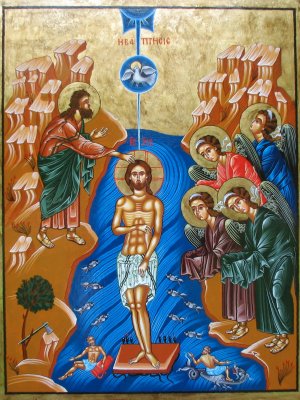
The Baptism of Our Lord in the River Jordan by John the Baptist, which we celebrate today, can leave us asking a question: if we are baptised to be born again by water and the Spirit, for our sins to be washed away, and to become part of the Body of Christ, the Church, why is Our Lord, who is without sin, being baptised. He does not need to be, but in being baptised shows us that God is not constrained by necessity. Christ does not need to be baptised, as we do, but does so to show us the way to new life in him.

In Christ’s Baptism we see a God who walks with us, who is not a cold, remote figure; but who, for love of us, comes among us, and is one with us, and who shows us the way to his Father. Christ’s Baptism is an act of obedience to God the Father, an act of humility and of healing and restoration – the work of God in Christ, done for our sake. What began at the Annunciation, and was brought about at the Incarnation, and made manifest to the whole world at the Epiphany, is deepened: the world is invited to share in the saving love of God through baptism.

At the beginning of his public ministry, Jesus shows humanity the way to the Father, through himself. The world sees the generous love of God, which heals and restores us, from the darkness of the dungeon of sin and evil, to the light and life of the Kingdom of God. As our baptism is a sharing in the death and resurrection of Jesus, so his baptism points to the Cross, where streams of blood and water flow to cleanse and heal the world. We see the love of the Father, the power of the Spirit, and the obedience of Son, and all for us, who are so weak and foolish, and who need God’s love and healing, and forgiveness.

We need this, the whole world needs it, but is too proud to turn to a God of love, for fear of judgement, knowing that they deserve to be cut off forever, and yet it is exactly such people, such lost sheep that Our Lord comes to seek, whom he enfolds in his loving arms on the Cross, whom he washes in the waters of baptism, so that all may be a part of him, regardless of whom or what they are, and what they have done. Salvation is the free gift of God and open to all who turn to him.

In our suspicious modern world that gift is spurned and mocked, by those who feel that they can no longer trust the church, or denounce it is as hypocritical, an oppressor of one group or another. To which we can only reply with open doors, open arms, and open hearts – the church may be full of sinners and hypocrites and there’s always room for a few more! God in Christ is nothing if not generous, and so the Church, his body is called to the same generosity of spirit. With the open invitation comes a call to repentance, to a fundamental change of mind, which sees us turn away from sin to God.

Here is where I suspect it gets difficult for humanity, we know that sin is wrong, but we enjoy it, we can soothe our conscience with the fiction that something is not a sin: that it doesn’t hurt or harm us, we can even twist the Gospel to our own ends. But these will not do, because in them we say that we know better than God – the sin of pride, that primal sin which separates humanity from God. This was the problem Christ comes to fix, to heal and restore our nature, through his grace, to feed us with Word and Sacrament that we might share in the life and love of God.

We need to take to heart the words of advice written by St Paul to Titus and the Church in Crete: given that ‘the grace of God has appeared, bringing salvation for all people’ (Titus 2:11) the Church has to respond to that grace, that free gift of a loving God, by living in a certain way, the Church is there to train us to renounce, to turn our back on ‘ungodliness and worldly passions’ – using our lives and our bodies which fall short of what is expected of us. Notice the word ‘train’: it’s a process, very few people indeed can run a marathon without training; we need help and practice to turn our lives around together, as a community of faith. It takes time, and hard work and love, but it is something which we can do together – people will fail, but can be picked up, and helped to continue, that’s what healing and repentance are all about. It’s about saying ‘we can be better, we can do better together’ if we truly let the love of God into our hearts and turn away from the past and look forward to a future of hope and glory in Christ. So then, let us live out our faith and our baptism together, turning from sin to new life in Christ, and encourage others so to do, so that all creation may resound with the praise of God the Father, God the Son, and God the Holy Spirit, to whom be ascribed as is most right and just, all might, majesty, glory, dominion, and power, now and forever.